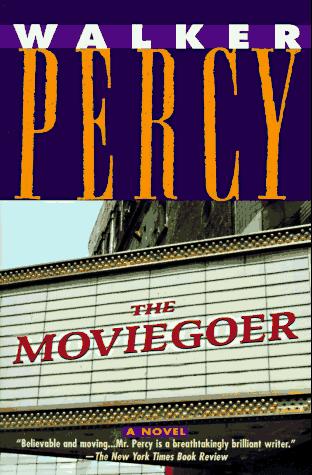
A paradox: how can an author — say, Walker Percy — get the reader to care about a protagonist — say, Binx Bolling — who is stuck in a malaise and doesn’t himself particularly care about anything?
A corollary: how can a book club have an engaging discussion when they don’t particularly care about said book and said protagonist?
Honestly you might as well skip the first 10 minutes or so in which we half-assedly try to talk about the actual plot elements.
Luckily Cam saves the day with an impromptu lecture on Kierkegaard and we get to yapping about the meaning of life instead:
- Is it patronising to claim that everyone is living in a state of despair?
- Is self-gratification and individualism actually bad?
- What are the main avenues for having a meaningful life?
- How does society stigmatise or incentivise meaning-making activities?
- Has the existentialist project more or less been a success?
- Which of Popper’s three worlds does ‘meaning’ fall into?
I can’t be bothered doing chapter markers for this one so just take a leap of faith you cowards
An elephant-in-the-room book
Cam: Welcome back to the book club podcast, Do You Even Lit? Where three former STEM tragics try their hand at fiction, one novel at a time. This is Cam, and today we’re discussing Walker Percy’s 1960s novel, The Moviegoer. It’s a sort of southern novel, sort of but not quite Catholic novel, where actually not all that much moviegoing takes place. As always, I’m joined by my friends Rich and Benny. We discuss the Kierkegaardian influence of the novel, potential chicanery at the National Book Awards, and whether you should even lit when it comes to this book. Hope you enjoy.
Cam: So yeah, we just read Walker Percy’s The Moviegoer, released in the early 60s — I think set in the 50s — about a man around 30 called Binx Bolling. He lives in New Orleans, comes from a rich southern Catholic family, and where the book gets its name from is he goes to movies. I mean, he doesn’t go to a lot of movies. He works as a stockbroker and dates his secretaries. He has money, but he seems to have this malaise — or potential depression — in life. The book is just kind of capturing his life and his quote “search for meaning”. And that’s kind of what the book’s about, really.
Cam: I think we can maybe get straight into what we thought. So I’ll throw to Rich first. What did you think of The Moviegoer?
Rich: Yeah, I think the elephant in the room is that we all really struggled with this book. Not because it’s challenging, but just because it doesn’t grab your interest really at all. Something you mentioned earlier is a lot of characters get brought up, especially in the first 50 pages, and it’s totally unclear which of them are going to be important to the plot — and which of them is like Great Uncle Johnson who has some obscure family backstory. There’s a paragraph about him and then it moves on to some other family member, and you can’t really remember who anyone is. Also it seems like almost none of them are actually plot-relevant. The bit where it really lost me, and where I had to fight to get back in the game, was this multi-page retelling of some frat house power dynamics — it was just a total snooze fest and waste of time at the end as well.
Rich: Binx seems to think he’s interesting — he says things that could be interesting — but to me he’s a very dull person. And the philosophy, to the extent that there is any — hopefully you’ll be able to help us out, Cam — but I couldn’t figure out anything. I didn’t try very hard, to be completely honest. What about you, Benny? Because you were in a similar boat, right?
Benny: Yeah, so I’m annoyed with this whole process, but I’m mostly annoyed with myself. Because I think if someone told me the thesis of this book — and broadly the themes, how it was written, even the time period — on paper I actually should really like it. It’s got a bit of a Stoner-esque quality, it’s got a bit of a Razor’s Edge quality. Stoner was a little older, but Binx is just about to turn 30, so he’s right around our age. He feels a little out of step with the current culture, and we all have elements of that to greater and lesser degrees. He’s a guy who’s a little bit confused and conflicted about what he’s supposed to be doing and what others expect of him. He’s wandering around the US, going to several different cities looking for meaning. I tend to really enjoy those sorts of books without very explicit problems and directions — I can enjoy those sorts of books — so I thought I was going to be spending 200 pages in the head of someone like Stoner or Larry Darrell from Razor’s Edge. And I think that’s even what the author was going for. But I just couldn’t do it. I couldn’t get myself into it.
Benny: I’m not sure if it was my headspace as I was trying to read it. I’m not sure if it was the writing. There was something about the character that I just couldn’t identify with. My eyes would glaze over and I’d get bored. So I’m just sort of confused by the whole process. On paper it actually looks like a cool book, one I would have expected I should have liked, but then the process of reading it was just fucking painful. I couldn’t do it. I started off a couple of pages over 100 or whatever and would just lose the plot constantly — forget what city he was in at one point. Where is he again? What’s he doing? Part of me wonders if I just read it at a slightly different time, maybe when I was less busy, I could have really liked it. So I’m a little confused about how I should feel about it.
Cam: I’m just thinking of our listener Rio — about us talking about struggling with the book. But yeah, I think it’s the writing. It’s a weird decision. It’s convoluted. These long pages or long paragraphs that are not super clear — like, almost obfuscatory. Say that five times.
Benny: Speaking of obfuscator —
Rich: I’ll fix that in post.
Cam: And the characters — it’s this weird choice of throwing in lots of characters, a lot of whom don’t have any point. Okay, so here’s maybe one steel man for that: this is from Binx’s point of view, and he is struggling with connecting meaning in life, and that includes meeting a bunch of faceless people constantly that you don’t feel any kinship with. So it’s capturing that. And we’ve talked about this before with Knausgaard’s My Struggle — if the theme in a meta sense fits the lines with the saviour. Or perhaps not, perhaps it’s just cope. But yeah, it’s weird. People will have this experience. And here’s the other puzzle — it makes all these lists. It won the National Book Award.
Benny: Where did you find this book? Where did this wreck come from?
Cam: Well, you search philosophical books and it comes up — “this guy’s sort of struggling with meaning” — and it looks pretty good.
Rich: The book award thing is controversial. Do you guys know about this?
Benny: No.
Rich: So it was a total outsider choice. Someone on the committee — their wife or husband pitched it to them — and it came from behind and beat out this incredible field. It beat Catch-22. What was another one? What’s the Salinger book called?
Cam: Was that at the same time?
Benny: Catcher in the Rye.
Cam: Not Catcher in the Rye. I mean, Catcher in the Rye and Catch-22 is the classic.
Rich: Franny and Zooey. And then a couple of other big famous books. It was totally unheard of, and people still wonder if it was a stitch-up. It took the author by surprise.
Cam: It stitched us up. It makes you wonder — these contemporaneous awards are a bit silly. You kind of need to wait five, ten years.
Rich: So how did this get on our radar? You put it on our radar, Cam — how did it come to you?
Cam: Just from Googling philosophical books. We’ll get to the philosophy of this, but my quick take is it’s hard to see straight away. The existentialism is obviously there, but it’s also hard to glean a lot of insight from it without doing extra work — understanding what that philosophy is. Maybe that’s defensible. For people who are very steeped in Kierkegaard — the Danish proto-existentialist philosopher, who Percy was very influenced by — if you come across this it might be very deep and meaningful for you. But without doing that work, the book standing on its own isn’t. It almost feels a bit odd to call it a philosophical book for me. It’s just all these writing-style choices. I didn’t bother, but I think you could have gotten snippets out of these long, convoluted, meandering, non-descriptive stuff with lots of characters. It just kind of was annoying.
Rich: I think one problem when you have a protagonist who is trapped in this existential malaise — they don’t particularly care about anything, they’re struggling to make anything seem meaningful — it just makes it that much harder for the author to make the book interesting and meaningful, because you’re reading everything from the perspective of this person stuck in the malaise. So it’s a real challenge.
Cam: It’s kind of a paradox, though.
Rich: The way I want it to go is for there to be some resolution where they find their path and develop their character, or come to some new information. To be fair, maybe that does happen at the end of the book.
Cam: It kind of does. But just on the first point — at some point it clicked to me that this is Kierkegaardian, mainly because I saw some commentary. I also had this realisation that David Foster Wallace’s Infinite Jest has a lot of Kierkegaardian readings, and I suddenly thought: if you want to read fiction with this philosophy, I’d just direct people towards Infinite Jest. And if you don’t want to be as focused on Kierkegaard but just more on this general malaise or search for meaning, I’d point them to some of the other books we’ve read, like John Williams’ Stoner, or even Maugham’s Razor’s Edge.
Rich: Before we go much further, Cam, can you try and lay out what ideas Kierkegaard focused on, and maybe what his solution was? The basic premise of existentialism is: how do you find meaning in a meaningless universe? So what is the Kierkegaardian response to that, or even his description of the problem? That might be interesting.
Kierkegaard 101: despair and distraction
Cam: Yeah. Just some context: existentialism as a movement wasn’t really a thing — it became more of a thing in the 40s, 50s, 60s, with the French existentialists, Sartre and the people everyone knows —
Rich: All of whom deny that they are existentialists, but yeah.
Cam: — who wrote novels, and all of whom read Kierkegaard. Kierkegaard’s actually a Christian writer. There’s a couple of things from Kierkegaard that relate to this book. One is his idea of despair. This book opens up with a quote on the inner page — the opening page has this Kierkegaard quote: “The specific character of despair is precisely this: it is unaware that it is despair.” So it starts off with that. Kierkegaard wrote an essay on despair — essentially that’s what despair is. Despair is not this temporary emotional state of being sad or something. It’s this fundamental state of being. I think it comes from not being authentically yourself. With Kierkegaard, that kind of means not being authentically spiritual, or aligned with God. And what happens is people aren’t aware of this. The reason we’re not aware of this is we distract ourselves. We distract ourselves with Netflix and social media and chocolate and Uber Eats and Tinder and porn and all this stuff. Or even lists of stuff that we wouldn’t all nod along and say “yeah, that’s bad for you” — like having a good job, all these things that look like you’re having a good life.
Benny: Book club.
Cam: And that’s what is happening with Binx Bolling, right? He’s —
Rich: Holidays to the gulf and chasing tail.
Cam: Yeah. He’s rich, comes from a rich family, got nice cars. And I also wondered about — what’s that celebrity chef’s name, who died?
Rich: Bourdain?
Benny: Gordon Ramsay.
Cam: Yeah, Bourdain. People see that — he’s got this TV show, he’s going everywhere, he’s this cool guy, and then he kills himself, right? With him there’s a potential — his girlfriend might’ve been this BPD person who cheated on him. But to me, yeah, there is this thing of this malaise, this kind of despair that a lot of us aren’t aware of. And then I started wondering — is this just a symptom or a sign of depression? Kierkegaard probably had depression. David Foster Wallace probably had depression. Or is this just a universal description of man, of humanity?
Is everyone really in existential despair?
Rich: Yeah, I was about to ask you about that, because it could come across as pretty patronising, right? To be like, everyone is actually existing in a state of despair, which they don’t realise because they’re so busy distracting themselves with these frivolous things that they think are meaningful and make them happy. I don’t think that’s true. I think only a certain type of person falls into — I’m not convinced that everyone experiences deep existential malaise, even if they’re not religious or whatever, even if they’re just classical hedonistic materialists. I’m not sure if that’s true. I think it’s more true of weird introspective people who maybe are prone to overthinking. You know, our type of people. David Foster Wallace type people.
Cam: Yeah, I wonder how universal it is for our type of people as well, even within that subset. By definition, those are the people that suffer it. But even if it’s not everybody.
Rich: I don’t even know if I’ve experienced existential malaise really. I’ve experienced meaning deficits, but I’ve managed to fill them with non-worthless activities. Like book club.
Cam: I want to hear Benny’s take. What do you think, Benny?
Benny: Yeah, I’m sure there’s super high variance among people. I was actually going to say, before Rich said that, yeah — I don’t really consider myself the type of person who has gone through deep existential dread, or who has days where I struggle to get out of bed because I find whatever I’m doing to be ultimately meaningless. It’s quite easy for me to get engaged in various activities that make my life seem meaningful and productive and enjoyable. I wouldn’t say I sink to the bottom of that pit of potential meaninglessness very easily. I’m doubtful that this is a common trait to everyone, and I totally agree with Rich that there is this weird condescending move being made — that everyone’s actually in despair all the time, and there’s only some subset of us brave enough to realise that fact. It’s only when you put down your books and your math and your toys and your foods and your girlfriends and stuff that you can realise that life actually truly sucks, and you can be wise enough to recognise that, and then you can wander around New Orleans for 150 pages of a book and not do much. I have trouble with that super pessimistic view of humanity. What happiness is cashed out in, at the end of the day, is just mental states in terms of conscious humans. If people are happy more than they’re sad, I think that’s a good thing. So it’s sort of meaningless to say that everyone’s in despair without realising it. I think that actually is probably false by definition.
Cam: So you two are still unaware.
Benny: Yeah, you haven’t been enlightened yet.
Cam: Interesting.
Rich: We’ve successfully fooled ourselves. But this is the other thing — even if it was true, it’s an info hazard, right? You’d be better off if you didn’t actually —
Cam: Don’t read again, yeah. As false.
Rich: Yeah.
Cam: It’s going to set you off.
Benny: I do struggle with this even with Buddhism, to be honest, when they say all life is suffering. Okay, well maybe for you. I understand what they’re trying to get at — there’s this fact of the matter that when you get something, you want now something else. You can recognise this in yourself. There is such a thing as a hedonic treadmill. These are real phenomena. But also there are some extremely good parts of life, and life can be fulfilling in extremely meaningful and fantastic ways. The Buddhist 101 view is way too keen to toss that aside. Maybe it’s great to just be totally enlightened and never want anything for the rest of your life, but I think that’s probably a bad thing in some sense. Even if I could snap my fingers and get there, I think I wouldn’t. So anyway, this is a total tangent.
Rich: Yeah, me neither.
Cam: One interesting thing I noticed around Binx the character — he has this good life, he’s travelling and getting girls, but he doesn’t have a kid, he doesn’t have family. What is the potential escape from this malaise? For Kierkegaard, it’s this kind of finding God, this leap of faith, finding something bigger than yourself to finally get you out of despair. I would have thought, potentially, family and children can do that — one of the few things that can get you out of the solipsism or narcissism of being bigger than yourself. And that potentially. Maybe not kids — maybe just love as well does that. Binx kind of potentially finds that at the end. So I thought that could be an escape. I think Kierkegaard would think that’s not going far enough. But yeah, maybe that would be quasi-spiritual enough.
Benny: This quote at the beginning — I think it’s right at the beginning — he says: “The search is what anyone would undertake if he were not sunk in the everydayness of his own life. To become aware of the possibility of the search is to be onto something. Not to be onto something is to be in despair.” Is that straight out of Kierkegaard, basically?
Cam: Yeah, I haven’t read Kierkegaard — I’ve just done small readings for this — but that’s my understanding. If you take the existentialists seriously, this hard-to-swallow fact of the meaninglessness of the universe, you can see why you get to despair. You can see how scary that is, and why you distract yourself. And then descriptively, when you see a lot of people’s behaviour, it looks like a lot of people are distracting themselves constantly. A Deutschian frame would be: no, this is just fun, we’re not addicted. But a more common-sense framework would be: no, the person is video gaming all night, or addicted to social media all night and porn — that’s not good for the soul, that’s not flourishing them. A lot of people relate to this feeling — at night, suddenly you’re at home with your thoughts and it’s like, fuck, it’s kind of scary. Especially if you go through a breakup or something. Being alone sucks. It feels scary, and we distract ourselves. This is a common thing — to distract ourselves. And we’ve got the best junk food, metaphorically speaking. Digital junk food now to distract ourselves with, and you never have to feel that. So I think Kierkegaard is getting at something.
Rich: Can I take a step back and try to actually steel man what I think is right about that position? Because I actually do agree with it on the whole. The refinement of my argument is that a lot of people don’t struggle that much to put themselves in positions to have meaningful lives — that not everyone is living in despair. It might be a selection thing because of who I hang out with, like you guys, that we’re able to solve this problem. But I think the central point stands: especially modernity pushes further and further towards self-stimulation and individualism. The dream is to have your own freedom, to live for yourself, to do what you want at any given point in time. And I do think that’s unwise — maybe not for everyone, but certainly for me and a lot of people I know. I’m thinking of people who have explicitly rejected — they don’t want to try to have a meaningful career, they just want to earn money and clock off. They don’t want to have a partner, they’re happier by themselves because they don’t have to compromise on anything. They don’t want to have children, they’re not interested in art perhaps.
Cam: What’s that movement on TikTok? There’s a phrase for people who don’t have children — DINKs. Double income, no kids.
Rich: Yeah.
Cam: Did you see that? They’re all talking about how great it is. “Yeah, we went out for Chinese last night. We got home and had three wines. That’s why we’re DINKs.” To kind of fit that theme.
Rich: It’s this long-running trend that is only exacerbated today. If you’ve systematically decided not to seek meaning in any of those traditional pathways, you’re going to be fighting an uphill battle, because the hedonistic, self-stimulating stuff does leave a deficit. In my own experience, I’ve had a time in my life where I’ve been able to just pursue whatever hedonistic end I want pretty much, and didn’t feel great about it. All the material comforts. And then having a family has been extremely good for me. I feel my life is a lot more meaningful than it was two years ago or five years ago. It would have been harder if I’d closed that avenue off to myself — I would have had to probably look for a career where I was finding a sense of meaning.
Rich: A lot of people just do that, even unconsciously — they gravitate towards doing meaningful work, or they have a family, and I just don’t think they live in despair. But I do think this can happen, and probably does happen. So I just want to walk it back and say I don’t think it’s ridiculous. I just think it’s patronising to assume that everyone is in this situation all the time.
Cam: Yeah, I hear the patronising point. To make another point, it is interesting to think — maybe some people don’t need that high-level meaning or nourishment from literature or ideas or community. Maybe some people are fine just living this hedonistic life. I can’t shake this feeling when I see Seth Rogen talk about how great it is not having kids in his forties because he can smoke weed all day and masturbate and travel. It feels like something very depressing about that. It’s hard not to start invoking spiritual-goods type stuff to argue against that, but I have that feeling.
Benny: Listening to how you guys are talking, I’m a little bit confused now with the core claims of the existentialists. Can I just lay out my confusion and then you can unburden me?
Cam: Yeah.
Benny: So the claim is that meaning is not a part of the universe. It’s not just there to be found. Ultimately the universe is meaningless. And so the question is, what do humans do about that? The claim seems to be that whenever we go out and search for meaning, we’re just doing this in some vacuous way that’s trying to fill this inherent gap that’s going to be part of any thinking person’s life once they realise the universe is ultimately meaningless. But I’m confused about what the appropriate response is then. You would think that once you realise meaning doesn’t come pre-packaged for you as part of the fibre of the universe, then what are you supposed to do? You’re supposed to go out and create your own meaning. And different people are going to do this in different ways, right? Family, certain hobbies, giving back, volunteering — things like that. People do that sort of stuff all the time, and arguably most people do at least one of those things, and it brings their life some sort of meaning. Maybe not our generation, but there are lots of people doing those sorts of things.
Benny: And then the way you’re talking with the existentialists makes it sound as though once people reach for these sort of solutions, they still want to say: hey, this is not good enough. Because once again, let me remind you that the universe is ultimately meaningless. But then it’s like — well, what’s your claim here exactly? Is the claim that the universe is ultimately meaningless, therefore you need to go out and create your own meaning? And that’s what seems to be what most people are doing — probably some people doing that much more effectively than other people, no doubt about that. But it seems like the existentialist always retreats to this place of cynicism, where they say: no matter how you’re trying to actually do this in practice, this is bound to fail because meaning is sort of not there to be found. You could imagine a sort of optimistic spin on existentialism where you say: the world is yours for the taking, go out and create your own meaning —
Cam: Thank God we have cat videos and chess.com.
Benny: — exactly, thank God we have all this stuff. Which is kind of the way I would lean. You’re in this position where you can go out and create your own meaning, and tradition holds that we should do this in some ways. There’ll be some parts that are correct about that, some parts that are incorrect, but ultimately meaning is there to be constructed. But there’s also this pessimistic vision that says you can never accomplish that.
Cam: Quickly — is your question: if there are these things that can plug it, whether that be family or religion, why can that stuff plug it when ultimately there’s no meaning and the world’s nihilistic, but these other things that we’re just calling distractions — why are they not plugging it sufficiently?
Benny: No, not quite. Would Kierkegaard say that family is effectively plugging this? I guess that’s my question. Are they saying that there are solutions to be had here, or no?
The three lives: aesthetic, ethical, religious
Cam: I’ll get some more Kierkegaard out there. I don’t think Kierkegaard emphasised the meaninglessness, the absurdness of the universe — I think that was kind of there in his work, but not the focus. So Kierkegaard talks about the three lives, or three ways of living: the aesthetic, the ethical, and the religious. His books often contrast them. His first book Either/Or contrasts the aesthetic versus the ethical, and his book Sickness Unto Death contrasts the religious and the ethical. He’s got another book that contrasts them all. They’re all written from these — it kind of sounds Nabokovian — they’re all written by these different pseudonyms that aren’t him, and they’re kind of talking to each other. Then there are these critics talking about that.
Rich: Could we do Either/Or for book club, if it’s written in the form of fictional — is it written as fiction, sort of, or not really?
Benny: Is it easy to read?
Cam: I think it’s not that easy to read. But it is this kind of Nietzschean, Platonic middle ground of fiction and non-fiction.
Cam: So he describes those lives. The aesthetic life is kind of what we’re touching at — it’s like hedonism, almost. But not just the obvious stuff like too much junk food. It’s also stuff where you look at someone and you’d say, “that’s quite a respectable life” — that people will get behind. The ethical life is the replacement of finding meaning yourself — it’s like ethics based on society’s values. The way I think about it: people doing EA movements, or any kind of ethical finding — a lot of that is filtered through current societal norms. Hegel’s actually got a German word, I forget what it was, for ethics based on the norms and traditions and culture of the time. There’s that life, and I think Kierkegaard also thinks that doesn’t plug the hole ultimately — we’re always going to have this spiritual gap. Then the religious life finally does. But he’s kind of a rationalist deep down as well, and he’s very aware religion’s hard to get into rationally. He’s the one that coined the phrase “the leap of faith” — you have to make this leap of faith.
Cam: I’ve got this Reddit tier atheist in me of just saying, well, that’s obviously wrong, and we’re done. But when I read Infinite Jest, that kind of unlocked it for me. Wallace is talking around this paradox of really needing religion — or the way he described it, like something bigger than you. That’s the key. Something bigger than you that you can’t quite articulate, that’s almost ineffable. The only way is to make a leap of faith, but then the paradox is you can’t. Kierkegaard just says: you get to this point where you see that’s the only solution, and you make this jump.
Benny: It’d be fun to do actually. This is making me extremely intrigued about his thought.
Cam: Yeah. But I remind the listeners — if we release this — this book that we read kind of sucks. Even if some of this discussion is interesting, we can kind of think of Binx Bolling: he doesn’t have this meaningful life and he’s trying to find it, but yeah, it’s boring.
Rich: So the aesthetic for him is things like seducing his secretaries, driving in his car, catching buses, watching movies. And then the ethical life is the norms and constraints that he quite explicitly doesn’t want to go along with — where his aunt and his family are always asking about his intentions and plans, and he’s clearly not interested in meeting their expectations.
Cam: But funnily enough, that was also religion, right? His family was Catholic. He said explicitly himself: how can that be the answer when — and this is a different time — 95 per cent of people are Christian, they haven’t found it either. Maybe most normies’ relationship with religion is not this sufficient Kierkegaardian relationship. But that’s odd, because then we kind of talk about our decline, or the rise of scientism and GDP but also the increase of alienation, lack of community, lack of freedom and bureaucracy — this spiritual decline kind of implies that we used to have more of it. But I feel like Binx is even finding his Catholic family doesn’t have it either.
Rich: If Kierkegaard defines the spiritual life explicitly as embracing God, then I straightforwardly reject that and think it’s wrong. But if we broaden it out and define the spiritual life as giving your life to something bigger than yourself and your own self-interest, then I pretty much co-sign it, like almost 100 per cent — that is, weirdly and counter-intuitively, the route to having a good life. It also explains why we do have these feelings about the Seth Rogen lifestyle of the self-stimulating life. Why do we have those societal norms where we think we should be less enthusiastic about that, or even look down upon people who do that? It’s because anything that you do that requires you to subsume your desires to the desires of other people is more of a pro-social thing that benefits everyone. It’s good to have children. It’s good to start a startup, even though entrepreneurs on net lose — they are doing a public service. It’s good to fight in wars, assuming they are a just war, because you sacrifice on behalf of the collective. Almost all of these sources of meaning, arguably with the exception of religion, are pro-social positive-sum games. And it’s not a surprise that we stigmatise the negative-sum or zero-sum games that people might rather play instead.
Rich: So depending on exactly how he defines the spiritual life, I’m pretty much on board with that — both in the sense of what is good for the individual, and in the sense of what social and cultural norms should be around the good life, the eudaimonic, fuller meaningful life.
Cam: He might not invoke God specifically, but I do get the feeling he does evoke this kind of irrational — or maybe it’s better to say non-rational — aspect to it. So maybe that’s where it departs, instead of justifying it in a utilitarian framework, that it’s better for you long-term or for everybody. There’s this feeling where I get the sense you just have to go to the irrational or the non-rational to escape it. Maybe that’s where we depart from him.
Rich: Yeah, I think it still can be rational. It’s self-serving even if it’s not always obvious. You serve to serve others, serves yourself — it’s just hard, sometimes it doesn’t seem that way, or there’s initial resistance, or we don’t realise it until after you make the leap. Parenting is a good example of that, where you’re like, why would I do this? And then after you do it, you’re like, of course I should do this — it makes perfect sense.
Cam: What is hard, though — if we’re just doing hard things, like living a kind of hard life for the greater good for yourself and for others, and that ultimately cashes out in a utilitarian or consequentialist frame, maybe it then becomes harder to argue against these other lifestyles of: “oh yeah sure, but for me, it’s just good that I’m having sex 10 times a day, or watching porn 10 times a day, and smoking weed. That’s just great. Wrap me up to the experience machine.” I suppose we’re just saying, yeah, but that’s not going to ultimately nourish you, even if they’re acting like it does.
Benny: Yeah, the claim is just that they’re missing something. They’re objectively missing something about how good their life can be — and they think it’s good. Part of what happens there is, it’s a tragedy because you think — I guess I kind of take back what I was saying earlier, maybe I’m ready to be more condescending. Because you do have situations in life where you look at someone and you think: I know you think you’re happy like this, but you have a strong suspicion that someone could improve their life a lot by doing something. It could just be something as simple as going to the gym, right? You look at someone, you’re like: I know you don’t think you want to go to the gym, but I almost promise you that you do, and it’ll make your life that much better. That’s a very trivial example, but then you can go more and more from there.
Cam: When you get to a certain age, you realise a lot of your parents’ advice — like “trust me, add a point to it” — even though they said that very thing at the time.
Benny: Yeah, exactly. Do you guys think the existentialist project has been successfully completed, in some sense — in that most people would probably sign off on the idea that at least some aspect of your life should be dedicated to some cause bigger than yourself? My sense is that that’s quite a popular and common idea, even if a lot of people don’t perhaps enact it. There’s an open question about how many people do. But the idea of “live for something bigger than yourself” — that’s extremely popular advice. It’d be probably self-help bullet point number one on curing depression or something.
Rich: And it’s apolitical too.
Cam: Yeah. I wonder — it can be quite hard to do successfully, because there’s a lot of things you think — and we’re getting back into signalling — you think it’s bigger than yourself, but ultimately it’s not. You’re doing this for status ultimately, or for ideological reasons. Well, by definition maybe it’s not for yourself. Kierkegaard often talks about not authentically doing it. That seems to be his point — to authentically actually get there, you have to make this irrational, non-rational, leap of faith, which seems absolutely crazy especially for people like us. Otherwise you’re just not fully there. Which, maybe is wrong — maybe we can be fine without this crazy leap of faith. But I just look at Wallace’s life — he seemed himself just like that’s what he felt like he needed. And he had this paradox where he feels like — there’s a quote somewhere that he’s better than everyone else because he can see this malaise or this unsatisfactoriness, but then he’s worse than everyone else because he can’t function. He needs to somehow make this leap. He can get that in dancing and literature sometimes. But ultimately, I feel like he wants to get that via God or religion.
Rich: Ways to do the art version of meaning-making give the false sense of sacrifice but where you are actually self-aggrandising or trying to get status. It’s easier to be — to fool yourself about that, and to fool other people. If you just straightforwardly go and join a soup kitchen or have a child or go fight in a war or something, it’s an extremely costly signal — there’s not really a way to fake it. I think it’s easier to be authentic about things like that. No one’s going to have a child for clout, right?
Cam: Well, you do have children for social norms and social pressure. I think part of the low fertility is because you’re around people that don’t have it.
Rich: Yeah, totally. You get bullied into it, or cajoled into it basically. But I think that’s a good thing because it is good. Like I was saying, it is good societally and for individuals. It’s one of those things where sometimes you don’t know until you’re kind of forced to do it — or not forced to, but gently pressured to do it. And it’s good that that gentle pressure exists. I have this specific person in my mind who is really going their own way. They quit their career-style job to work a pays-the-bills style job. They’ve explicitly decided they don’t want to have a partner because they don’t need that and it doesn’t fit with their lifestyle. They’ve explicitly said they don’t want kids. They used to be religious but have rejected religion, partly from some childhood stuff. They have cut out relationships with their family and parents, again for classic millennial type reasons. And they’re not into art or anything like that particularly. It’s like, man, you’re setting yourself up for such a hard path. What’s left? A lot of self-development, yoga and psychedelics type stuff. I obviously really hope they succeed, but I feel that you’re just needlessly making life hard on yourself by rejecting almost all the pathways to having a meaningful life.
Rich: And that’s the countervailing set of norms, right? This TikTok stuff, these new memes of anti-family values — I don’t know what it’s called, is it a Trump backlash thing? We probably shouldn’t even get into it. But like, don’t settle down with men and don’t have their children, this kind of thing. Stuff that works well for online activism and probably doesn’t work very well for a life that spans decades.
Cam: That current-thing cycle was like two weeks ago, Rich. Come on, keep up.
Rich: Hey, I’m off Twitter now. I don’t know what’s going on.
Mardi Gras, the dying half-brother, and Kate
Cam: Just to mention something else in the book — to bring it back to Percy’s Moviegoer. I think it’s ultimately not worth reading, even though there is kind of a there there. So Binx wasn’t raised by his parents — his dad died when he was young. Interestingly, Percy the author — his mum moved on and had a second family, so he’s got quite a lot of half-siblings. Binx was raised by his aunt who was super rich and super well off. He goes and visits his aunt at one point with the secretary, early on, and they meet all the half-siblings. One of his half-brothers is in a wheelchair and super sick, and he’s very piously religious. The secretary is kind of like, “what’s up with this kid?” — turned off. The kid wants — because the setting is New Orleans as well, and there’s the big Mardi Gras festival. Mardi Gras is, of course, traditionally Catholic. You can even make a meditational —
Rich: Wait, Mardi Gras is Catholic? I didn’t even know that. I thought it was all about showing your titties and stuff.
Cam: Originally. You can make a meditational claim around the decline of Mardi Gras — now become hedonistic, just showing tits, going to party. It’s even sort of “dress up and party” now, when traditionally it’s this Catholic celebration. Mardi Gras is — Benny, what’s the exact translation? It’s like Big Tuesday or Fat Tuesday or something. I think it’s French.
Benny: It’s Spanish, right? I mean —
Rich: No, it’s not Spanish.
Benny: Okay, Mardi is Tuesday — and Tuesday. Yeah, it’s not French or it’s not Spanish.
Cam: It’s Fat Tuesday. Okay, what is — Mardi, what day, yeah. So I think it’s the last —
Rich: I don’t know.
Benny: French or Fat Tuesday?
Rich: Fat Tuesday.
Cam: It’s the last big celebration before the 40 days of Lent. Ash Wednesday is the day after, where you go on Lent. That’s a big part of the setting of New Orleans — that’s the other thing about this book, you get this feeling of place. I’ll park that for now. Everyone’s celebrating, but Binx is in this malaise where he can’t really celebrate. He ultimately goes away with his step-cousin who he ultimately kind of falls in love with — Kate. They go to Chicago, have a shit time in Chicago. They get back and Mardi Gras has finished. There’s something about getting back after Mardi Gras and it’s during Lent — after the big celebrations. That’s the context. His half-brother is super sick, but he’s doing Lent — he’s going to fast. Everyone’s like, “you shouldn’t, you’re anaemic, you’re sick.” But it’s just really important to him.
Cam: We get to the end of the book and Binx kind of connects with him in a sense. He kind of sees where he’s coming from. But sadly the brother dies — I think not because of this, but the brother dies because he’s pretty sick. It did remind me of the character in Infinite Jest, Mario, who’s physically deformed but is also religious and is potentially the one that’s happy. Well, maybe that’s the wrong word, but he certainly doesn’t have this affliction of malaise. Maybe it’s a worse life ultimately, but he’s not suffering this thing that Binx is suffering — to show that if you weren’t in a wheelchair and you have all the girls and all the money, you can’t necessarily solve this thing. Maybe that’s the better life, or at least just asking the question of who’s living the better life there. I don’t know, maybe that’s silly though.
Rich: So the kid who fasts, the sickly kid, dies at the end?
Cam: Yeah. Not from the fasting, but he ultimately does die.
Rich: And Binx admires him, right? He really likes him.
Cam: And the kid admires Binx. Binx kind of sees the kid, he respects him, doesn’t patronise him. He also views him as a fellow moviegoer. He doesn’t pity him. And I don’t quite know why Binx is not pitying him. It seems related to his depression.
Rich: He doesn’t pity him because he thinks he moves serenely through life, basically.
Cam: Yeah, he envies him.
Rich: I don’t know if he envies him, but he says he doesn’t feel like he has a worse life than anyone else, because he has a nice countenance, or — yeah, he moves through it smoothly.
Cam: And then the other character, Kate — she’s a step-cousin but ultimately is the love interest. She’s super depressed — like, almost looks clinically depressed. She has breakdowns. Her ex-fiance or husband died in an accident that she was in, so she has a trauma, but she just seems to potentially have borderline, or maybe bipolar, or something. He connects with her as well. He’s had all these flings of these hot girls where he’s not connecting, and finally connects with Kate. What’s interesting with Kate and the half-brother is — to go back to that original Kierkegaard quote — their suffering is very obvious and conspicuous. And Binx’s quote-unquote suffering is this unawareness that everyone has, going through life distracting yourselves. Then you see these people that are conspicuously suffering, but potentially it sounds like Kierkegaard is saying potentially that’s better. I don’t know, which seems kind of crazy.
Rich: It’s also worth noting that the moment when Binx proposes to Kate — which he does in a very casual way — is when Kate is having a manic episode and is on the verge of probably entering a depressive funk. Binx says, “Hey, come live here, I’m going to build a petrol station and we’ll have a nice little business, we’ll make $15,000 a year.” And she’s like, “Are you asking me to marry you?” And he’s like, “Yeah, sure.” I feel like there’s a little moment of him actually — Kate is one that he really cares about the welfare of. In that moment when he’s asking her, she probably is not very appealing compared to his fun, whimsical secretaries and so on. But he wants to do his duty and wants to help her out. So is that a step on his pathway to taking a leap of faith? I don’t even know how that plays out in the end. Do they get married? Does Kate end up happy? How does it go?
Cam: Yeah, I think so. They get married and they seem happy. Embarrassingly, I’m a little bit loose on exactly how it ended, which I kind of didn’t want to admit.
Rich: Well, you can tell us — we won’t know.
Cam: To the audience.
Benny: Yeah, you can do — we didn’t even fucking finish it, so.
Rich: It could be like aliens come down.
Cam: No, I didn’t really — I kind of did, I was kind of skimming the end.
Rich: Jesus Christ. I thought you at least kind of liked this book by the end and got into it.
Cam: No, I didn’t like — remind the audience, I didn’t like this book. I ultimately liked some of these ideas which we’re talking about, which it seems like you guys do as well. These are interesting ideas to ponder. It is hard to capture and talk about these ideas, and I think fiction is the way to do that. I just think this is maybe unsuccessful in doing that — at least standing on itself as a book. Infinite Jest does it better, I suppose. Other books do the search for meaning or the okayness with everyday life and not chasing status —
Did we fail the book?
Rich: Yeah. I just want to quickly acknowledge that I may have failed this book rather than the other way around. I’m not certain that it was the other way around, because part of our duty is to try and read generously and thoughtfully and with active engagement, and try and see what the author is trying to do. I really didn’t do that on this book. I think I really dropped the ball. Doesn’t necessarily mean that the book is good and I’m an idiot, but I’m not sure about it. So I’m not really even willing to condemn it. I feel like a missed opportunity that — similar to you, Benny — it actually has all the kinds of things I like. I did start getting a little more into it around the later sections, when he’s at the beach with the secretary and stuff. So I just want to flag that I did not bring my full self to this reading experience.
Benny: Yeah, same.
Cam: Well, there’s this interesting question I’ll put to you guys. What is a sufficient effort? What is our duty? Is it reading three fucking Kierkegaard volumes and understanding them? That just seems totally unfair to expect on the readers. I think we did do some, right? This is kind of a boring, hard-to-read book that requires probably a lot of extra philosophical reading to get anything out of it.
Benny: But I sort of agree with Rich, where I think your job is to at least read something like the first 50 pages in a pretty open-minded way, and really try and get behind and give the author the benefit of the doubt and really try to understand their project and figure out what they’re trying to do. Similarly to Rich, I don’t feel like I did this consciously. I wanted to be into it, but I just wasn’t getting into it. And then I think I probably closed myself off to it too early, perhaps.
Rich: We all memed each other into it too, right? In the chat we were like, “oh, this is kind of a drag”, and then no one wanted to invest because we thought we might even cancel it. So no one could —
Benny: Yeah, my bad, I shouldn’t have brought it up.
Cam: Funnily enough, the only reason I did kind of invest was because I was the one that put it on the list and it’s kind of sunk cost. I just didn’t want to fully throw it out. But I struggled. I wouldn’t recommend this to people. If they say “should you read it” —
Rich: Yeah, I wouldn’t either. That is the ultimate test, right?
Cam: Listen to this — this is a better way to spend your time.
Benny: Straight to the good stuff.
Rich: So Benny, you have to go soon. Is there anything you want to chuck in there before we wrap up?
Benny: No, not really. I really enjoyed the discussion. I’d be happy to do more existentialist-themed work in the future. Perhaps we should take prior reviews a little more seriously when we dive into it. But yeah, I thought the discussion was actually much more interesting — probably more interesting because we veered away from the book.
Where meaning lives — Popper’s three worlds
Rich: Yeah. Oh, that reminds me — before you go, I just am compelled to make a very sperg-y point. The existentialists’ claim that some of them make is that there is no inherent meaning in the universe at all, and others claim that maybe there is, but it’s only accessible via faith in God or something. I think this could be a situation where it’s actually helpful to talk about Popper’s worlds — his three worlds — to clarify what the claim being made is. I think the existentialists are right that meaning doesn’t exist in world one, the world of actual physical beings and objects. It arguably doesn’t exist in world three, which is the world of abstractions and ideas that live on beyond the humans that had them. But I think it unambiguously exists in world two, which is the world of qualia and subjective experiences. That’s why, on that front, I think if the existentialists claim meaning isn’t real, they’re kind of doing a sleight of hand. We say “yes it is, look at all these people experience meaning” — talking about world two — and they’re saying, “okay, but these people are wrong because it doesn’t exist in world three”. So maybe that helps to somewhat — I don’t know if that makes things more confusing or less. Does it exist as an abstract thing in the universe in the way that mathematics does? Probably not, I think. But it certainly exists for all practical purposes in world two, which seems to be for me the most relevant thing. I don’t really care if it exists in world three or not.
Benny: That’s interesting. I’m tempted to treat meaning the same way roughly as I treat morality, in the sense that I also don’t think there are moral laws baked into the fabric of the universe. I think those are extremely contingent on the kind of minds people have. I could imagine what moral behaviour is for humans being completely different from what moral behaviour is for some alien species, because we like and need different things. But once you grant that humans can have different shades of experiences, that’s when the reality of morality enters into the picture, because now you can talk about better and worse ways to get to states of pleasure and pain and stuff. There is such a thing as a painful —
Cam: But there’s a premise baked under that, that that’s what’s good. Potentially baked into the universe.
Benny: Right. And so that’s what I mean by, like, not baked into the laws of the universe. I’m not a moral — there are various shades of moral realism, but I think it’s pretty silly to think that without humans there’s such a thing as moral truths. I don’t really buy that sort of view. It’s always going to be premised on the kinds of experiences humans have. And then I agree, you have to also make the additional step that we want to seek — you know, the classic Sam Harris thing of hand on a burning stove. You have to grant that as an assumption. But I’m totally unbothered by that because we do that in every other realm of human endeavour as well. Once you grant that assumption, now there are better and worse — there are more correct answers to the question of how to lead a good life. I want to make a similar claim about meaning. It’s also not embedded into the fabric of the universe, but once you have a human mind, now you can ask the question of what is going to make this human mind experience states of more and less meaning. And I think there are right and wrong answers.
Rich: Yeah, totally. It becomes like an empirical question, not a metaphysical question, to which you can actually give good concrete answers. People want to insist it’s metaphysical, but it doesn’t have to be.
Benny: And I think the people saying there’s no meaning are doing a bit of the thing that people do when they say there’s no morality. It’s like — it’s sort of what you were saying, Rich — they’re kind of looking in the wrong place. Yeah, there’s no morality in the sense that you can’t derive principles if there are no humans in the universe. But that’s too high a bar for anything.
Cam: That’s the point, right? They’re right.
Benny: Yeah, they are right in that sense. But it’s like — I’m just not sure how it could be any other way, to be honest. I don’t know if it’s crazy, and I don’t think it does anything. I don’t think they carry the consequences of that way too far. They’re ready to say that, because of that, now there are no better and worse ways to treat other humans. And I think that’s obviously false.
Cam: Well, that is the crux of it, right? Like, I think you just don’t want to grant that. For me, where physical realism differs is David Deutsch’s solipsism argument — solipsism is a bad explanation, reality truly existing doesn’t require these extra epicycles of “it looks like reality exists, but…”. I’m not sure if there’s an equivalent knockdown moral realism argument for that as well. Unless it’s just almost the exact analogy: “it seems like morality exists, why would it seem like that?” — but I think that can be explained by our evolutionary psychology, why we care about certain things. Anyway, that’s kind of a big discussion.
Benny: I’m like, I have to go, just drop a bomb about objective morality.
Rich: Yeah, sorry.
Cam: You gotta go. Yeah, let’s talk about moral realism.
Benny: By the way — moral realism. Okay, see you.
Rich: Well, you guys brought it onto morality. I just wanted to say the difference between subjective experience and abstraction that exists independent of subjective experience.
Benny: Yeah. There’s probably an interesting essay there actually, about the analogies between meaninglessness and lack of morality and stuff like that.
Cam: Maybe a book.
Benny: Add that to the pile of 150 unfinished essays I have.
Cam: I did have one quick point around Kierkegaard in the book. This idea that the leap of faith is perhaps the solution — when I think of that, I kind of think maybe slightly different to you guys. Maybe I have slightly more depressive tendencies or something, but I slightly relate. I think I relate more to that need, potentially. But then I think, yeah, so maybe a leap of faith would be good for me. But then I just think — that’s just cope. I can never fully make it, because the reason I want to make this leap of faith is — that’s just another distraction. It’s just this thing that would maybe — and maybe that’s Wallace’s paradox — but I would just feel like, going to religion, like I’m faking it. Doing this because I think it’s good for me, the same way I’m trying to distract myself with other stuff. It would just feel like cope. It’s this total paradox.
Rich: Just make leaps that you can’t go back from, man. You’ve got to start hitting that rock.
Benny: Yeah, true. You gotta start eating it raw. “Listen babe, I just need some more meaning in my life, so I’m gonna forget the rubbers. Syphilis or pregnancy is what I’m going for.”
Cam: What’s that — “I know your secretaries”. Fuck. I tell you what — the true suffering, man, if my medical condition doesn’t get better, like, I would probably fucking top myself. No jokes. Sorry to be dark, but suffering is true chronic pain. I don’t know how those guys get through it.
Benny: Yeah, it’s crazy.
Cam: I don’t mean that, don’t worry, I won’t kill myself.
Rich: How’s your ass? Oh, we better let Benny go. Should we wind it up? And then we can chat.
Cam: Yeah, I mean, we’ve talked enough I think about the book.
Rich: Right, so next week we’re doing Cormac McCarthy’s Blood Meridian, which I’m extremely excited about. Super brutal, super grim, incredibly beautiful poetic language. And it’s our first McCarthy. It’s like the lit-bro stereotypical classic. Come on, it’s crazy it’s taken us this long.
Cam: How do we ask the question “do you even lit, bro?” and we haven’t done Cormac McCarthy?
Rich: I know, it’s embarrassing. So yeah, we’ll do that in two parts probably, coming up next. We’ll do that next time, because I actually want to address it — I don’t want to rush through it.
Cam: Yeah, shout out to Rio.
Rich: If you want to write in: douevenlit@gmail.com. Thank you very much. Bye bye.