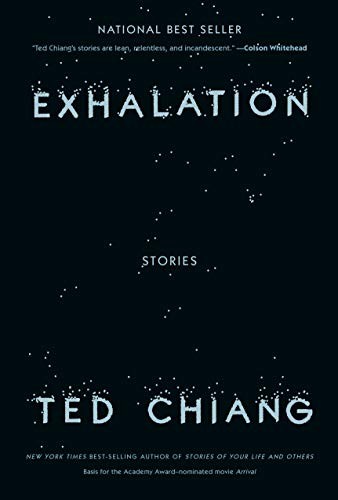
This week we tackle another short story by Ted Chiang: from his 2019 Exhalation collection, “Truth of Fact, Truth of Feeling”. Luddism and cognitive tool breakthroughs: we go through the pros and cons. Rich wants to go to the moon. We’re not sure how much of a luddite — or dare we say relativist — we should make Chiang out to be. Fallible memories: just how bad are our memories? Benny and Rich have opposing intuitions. Special guest episode coming soon!
Summary
Rich: The worst thing about podcasts is they’re a permanent record of all the dumb shit that we’ve said that just exists out in the world forever.
Benny: Someday you’re going to release the unedited version of these convos and the world will shudder in horror at all of Cam’s mispronunciations.
Rich: I’m just going to keep them as an insurance policy if you guys go rogue.
Cam: I just remember Richard’s guide for my pronunciation for Baudrillard. He’s like, “bow” is for bow when you shoot, “tree” sounds like tree.
Benny: Did I say it?
Rich: You didn’t sing it. The hardest start — of the aardvark. By Arthur.
Cam: Anyway. Oh, brother.
Rich: So, no notes, Benny, eh? Doesn’t sound like you.
Benny: You guys have personal notes for this one?
Cam: Oh, yeah. Always have a couple notes, mate, nearby.
Benny: I read it this morning, to be honest with you, so it’s fresh — fresh in the noggin. I don’t need notes. Notes destroy my ability to craft my own narrative about what I thought this short story was about.
Cam: Yeah, but you’re instantly negating it by vomiting all your thoughts into a medium that will be preserved forever, so it’s kind of a wash in the end.
Benny: True, but at least I can’t search this medium at will. There’s too many hours of me word-vomiting my thoughts for any efficient search engine to be able to pull things up. So —
Rich: Wait, I think you guys might be referring to themes of the book, if I’m not mistaken. Memory, augmenting intelligence, changing our relationship with our identity. Someone want to give a plot summary?
Benny: Uh, well, I was going to ask you if any of this sounds like — you don’t know the names or what happened or the plot?
Cam: Yeah, I can do that. Pull up your life log.
Cam: Today we’re reading another Ted Chiang from his later collection Exhalation. This one we’re reading, “Truth of Fact, Truth of Feeling”. It’s a short story that is about the near future, and there’s this technology called Remem, and it allows you instant access to all your memories, because it’s recording every moment. And this had already existed for a while, this ability to lifelog, but the new technology has made it easier to get every bit of your life.
Benny: We should say it’s both audio and video, not just audio or anything.
Rich: I thought you meant the book.
Cam: Yeah, yeah. So it’s like a video recording, and it surfaces stuff unprompted. Now it’s like listening in real time to your conversations and it’s like, oh, here’s a little video clip of the thing that’s being referenced in the convo. You used to have to manually search stuff out, and now it’ll just actually surface relevant memories for you, and they’ll be playing in some overlay of your vision basically. You can turn it off, but you can’t really stop it from doing its thing.
Rich: Yeah, kind of like your iPhone will like, come on, it’s been two years since this photo, it’s like of your ex or something, just like prompt you.
Cam: Yeah, so the main guy is sort of skeptical — at least hesitant — of this technology. He doesn’t really like it. He likes to write, he likes to remember himself. What’s also happening is it’s kind of flipping narratives every small chapter to a Nigerian tribe, the Tiv people. And these are like a sort of pre-civilization-contact tribe who don’t write and don’t read. And they’re —
Benny: Well, it’s not pre-contact, but —
Cam: This is like colonial Nigeria and they’re the last holdouts against the colonial forces who have been, you know, trying to impose legibility on all of the various tribes and groups and whatnot. And these people are, like, traditionally have no kings, have no leaders, have no writing, only have an oral tradition. And it’s about the British colonial powers trying to impose legibility on them and how that changes their culture. And it makes you think this must have happened to almost every group, right? The introduction from kind of an oral tribe culture to a written culture. And so obviously seeing this happen while this kind of near-future technology is happening — going from relying on our memory to having this Remem technology — so, kind of a similar leap.
Rich: Yeah, the big idea here is: do you want to be able to have a highly specific, accurate recall of past events and of your history, of your personal life and of your society — or is it in some sense better to be able to forget things, to be able to create narratives that aren’t true but are helpful to you personally or for your society more broadly, by not having clear records or clear memories. That’s the big idea that Chiang’s playing with in those two storylines. But should we start with one of them? And there you go, Benny.
Benny: I was just going to say, I respect him as a writer. And the fact that he chose to also do this parallel storyline with these tribes in — what did we say, Nigeria? Where is this?
Cam: Yeah, Tiv people in Nigeria.
Benny: Because you can imagine this being done by a less well-talented writer who just focused on sort of the modern story. And it would be very easy for this to just be cast as like a techno-dystopian scenario where, you know, everything’s being recorded, it erases our ability to forge, you know, these subjective autobiographical memories that bring meaning to our lives and stuff. And it would have been easy to write that story, have that be the thrust of what’s going on here, and then sort of take your hands off the wheel. But the fact that he introduces this parallel story with this tribe, and you start to realize the similarities and the degradation between just writing and cameras as memory devices — right, you sort of realize, oh, the tradeoff’s not so simple here. If we were ready to just say like, we never want to remember things clearly, we don’t want every moment to be recorded — then you have to wrestle with, well, was writing a good thing? Because most of us do feel like writing was a good thing. And so anyway, I just appreciated that he actually chose to go there a bit as a writer and introduce some of the nuance.
Cam: Yeah, it’s cool that we’ve got that parallel. And it seems to be — I mean, I haven’t looked into it deeply, but it seems to be at least plausibly based on the true events of history, like how that actually played out.
Chiang, a luddite?
Rich: But I’m going to come in with my screaming hot take right out the gates, which is that Ted Chiang is, like, off his rocker with all of this stuff in the story. It’s like, I think he’s actually a Luddite, basically, and I’ve seen it before with his comments on AI and ChatGPT, and stories like this. It’s a fun and interesting story, but I think assuming that the views of the narrator are roughly representative of what he thinks — which I’m sure they are, because it’s an incredibly didactic story which tells you exactly what to think — yeah, he’s just absolutely tripping. And I’m looking forward to going through both of these scenarios, but I’m going to be arguing that, no, all of this stuff is good actually, and you have to draw some pretty long bows to argue otherwise. It’s just sort of a basic Deutschian argument, really, that new technologies create new problems, but you can solve the new problems, you can change your norms, and so on. For instance, it’s completely mental to say that developing writing is bad for society, because historically that’s been one of the first steps of leaping to universality and being able to compound your knowledge over time and solve better and better problems. And it’s very noble-savage romanticism to think otherwise. That’s where I’m coming from.
Benny: Oh, interesting. Okay, because my previous comment was sort of framed against the assumption that he’s kind of self-aware — like the fact that he’s doing this for writing sort of speaks that he’s self-aware about this problem and is saying, like, clearly overall writing has been a good thing. There’s a couple of these minor drawbacks, but I think the average reader coming out of the story thinks, okay, it’s good these tribes are learning how to write, because, you know, they can’t just be going to court lying about their ancestral histories. That’s just going to cause chaos. And the sorts of norms and written records actually bring a bunch of stability to society. And so anyway, I guess I’m interested to hear you talk more about why you think Chiang is even sympathetic to the idea that the development of writing was a bad idea.
Cam: Just quickly — accusing them of lying, you’re conflating mimi with vor. Accuracy versus being correct. When I read those words, I was like, man, this is clearly some Westerner coming up with cringe fake words for an alien culture, and then I realized it was a real culture, and I was like, no, those words are really cool sounding, and not silly at all. It’s going to be the new meme of the podcast, though — whenever I say something that’s wrong, I’m just going to say I was speaking mimi.
Rich: I’m sorry, where should we go? Because we could try and hash it out, or should we just go through one of the branches and talk about the technology and “is writing good?”
Cam: Let’s hash that out. Also Ted Chiang’s view, because just quickly, I think Benny’s right that he’s aware the reader’s probably going to think writing is good. And he very generously concedes that writing on net, on balance, is probably good. But he has to do all this throat-clearing where he’s like, “Well, I’m from a literate culture, so of course I think that. I’m so biased. It’s easier for me to see the benefits of literacy.” It’s like, get the fuck out of here. It just is good. Come on, man.
Rich: Yeah, I was kind of rolling my eyes at that as well. “Positives outweigh the negatives — probably. Sure, yeah.” And even in that, kind of shit around it’s all subjective and there are facts, and who’s to say —
Cam: Who’s to say history is different? Like, who’s to say your grandpa wasn’t actually this other person? Yeah, yeah, yeah.
Rich: Well, okay, let’s do the specifics then. Alright, so the main conflict in that story is the tribe is having to resolve this conflict about whether or not they belong to this branch of the patrilineal tree or this other branch, and it depends upon who a certain ancestor was, basically. And there’s two tribes who have differing opinions about it. And the relativistic thing here is that they make a claim which is best for their tribe, which is divorced from the actual reality, and that’s not even wrong. It’s like — which one is it, is that mimi or — that’s mimi, right?
Cam: Yeah, the mimi is like my subjective feelings, what’s the right thing to do.
Rich: But like in this specific instance, they’re trying to resolve — is it who — what is it they’re trying to resolve, who gets to be in charge of this little —
Cam: Yeah, it’s like what tribe do they join, and probably who’s going to be the leader. It’s like, who was your most recent ancestor, and they were conflicting over who they thought it was. And then they dug up some European records from several generations back which said the main chief was wrong. He didn’t want to believe it, really.
Rich: So basically someone’s going to get shafted here. Presumably the person who should get shafted is the one who’s wrong about their claim on the ancestry. And the same with all the other examples they give of the tribal conflict resolution scheme, which is like, “Oh, you paid me this bride price at this time, and now my bride has left me, therefore you have to refund me,” and they’re arguing about what the sum was. It’s like, yeah, if they had records of that, that would just be better, because it would lead to a more just outcome. You would actually know who paid what bride price at what time. Like, you’d have contracts, you’d have contract law. More information is better than less, otherwise you just have, like, who’s more persuasive at arguing or what mood the arbitrator is in that day or whatever. It’s just, from my point of view, like, straightforwardly better that you could have some records — even imperfect records is better than just vibe-based reinventing of history, which is the tough sell that he’s making, that actually vibe-based reinvention of history is in some sense better. And I’m just like, no, it’s not.
Benny: I agree with you that Chiang seems to be somewhat sympathetic to this idea — we can’t necessarily say that record-keeping is a better situation and more fair in this specific instance, as it so obviously is. There’s even a quote, I’ll quote it: “So anthropologists will tell you that oral cultures understand the past differently. For them, their histories don’t need to be accurate so much as they need to validate the community’s understanding of itself, so it wouldn’t be correct to say their histories are unreliable. Their histories do what they need to do.” And of course he does set up this analogy with the future technology, which we’re going to get to as well. But there is this thing around what happens if this technology conflicts with your personal memory, and what do you rely on in that situation. But yeah, it’s certainly — in legal situations you’ve got to rely on the facts, right? There’s a separate question of, like, maybe lying about things, and big psyops and stuff — maybe that’s better for group cohesion, in our culture and their culture. And in a personal sense, maybe self-deception is better for personal well-being. That’s a separate argument, an interesting argument, and it’s hard to know the answer to that in all cases. But I think for this branch we should focus on the group-cohesion argument, and the individual cohesion is more relevant to the future scenario. But for this one, I think he maybe needed better examples. Because you’re the guy who paid this bride price at this time, and you’re like, I want my $12.73 back, and this other guy’s saying, no, you only paid me five dollars. It’s like, how is it going to be good for group cohesion that the tribal court is just like, “Oh, you know, we’ll meet in the middle, or no, it was only five dollars”? That guy’s going to be mad, I would have thought. Because he’s like, I know what I paid. Surely — and maybe this is my own bias from living in this type of society — but I would have thought the way to reduce conflict amongst people in that scenario is to have the actual certainty. You can be like, you go through the due process, you find the record and you’re like, damn, it’s written down, he’s right, I’m wrong. And maybe you had a false memory of it, and you just have to accept it, because you can realize that you were mistaken about something. Or you can not be taken advantage of by bad actors who are trying to take the piss by literally rewriting history to benefit themselves, which is what we’re talking about here.
Founding myths
Rich: So we’ve got to come up with some examples of how it’s good to rewrite history for the benefit of the collective.
Cam: Well, I think there’s this tension with this sort of thing, because there’s always going to be many, many examples where it’s just obviously good — you know, make sure you’re correctly counting the grain and what’s owed and all that, and legal disputes, it’s just clearly helpful to have an accurate record that can hopefully be verified. I mean, there’s a second question of whether or not this writing is inaccurate — at some point the tribe sometimes questions that, like, you know, it’s just a piece of paper, like, how do we know it’s right? But assuming it is and you can rely on it, there’s so many cases where it’s good and beneficial. But there may be other examples where, you know, breaking the founding myth or a religious myth or something like that — like, this actually didn’t happen, this founding myth didn’t happen, there’s no proof of it — that may be a very important thing for this culture or religious group.
Benny: Yeah, or even in our culture, you know, there may be certain narratives of history that can be falsified with further science or history. And then it’s like, maybe — yeah.
Rich: The death-of-God stuff, right, that we talk about a bunch.
Benny: Maybe it would have been, in some sense, that certain groups have chosen to not accept that evidence because they want to preserve their cultural and spiritual heritage. And that might be the right choice for them.
Cam: One concrete example — like, in population genetics, ancient DNA — it shows that North Indians get a lot of ancestry that’s related to the Yamnaya, or the Aryans. There’s a million different names, but like, from the kind of Pontic steppe, that a lot of Europeans have. And you have to now call it like “North Indian ancestry,” because there’s a huge controversial thing within India: the idea that some of their peoples came from Europe essentially. In my view it’s kind of denial. But even David Reich on Dwarkesh’s podcast, he uses the kind of euphemism of “North Indian ancestry,” and he’s very aware of this controversy where it’s European steppe ancestry that he’s referring to. But it breaks this founding myth.
Benny: Wait, can you unpack that a little? Like, why do they not want to be descended from Indo-European Aryans?
Cam: I think the founding people, and potentially the founding people of a lot of important religious ideas and civilization, weren’t from India. So there’s this feeling of like, “No, we’re from there, we’ve always been from here.” Yeah, so this is kind of effort to deny that. And you think of other examples where, you know, religion is a classic one — finding out the real history of the Mormon leader and stuff. You kind of want to be in denial of that, right? But then there are all these instances just day to day where it’s of course very, very useful. But I suppose the thing with universality is, once you bring those in, you kind of have to start falsifying everything.
Rich: Yeah, once you’re in, you’re in, right? You’ve got to keep moving with it.
Cam: Yeah, but I mean, I don’t doubt that it’s helpful to be able to forge some sort of national identity by appealing to some sort of foundational myth for your culture or your country, right? And a lot of countries have that, and a lot of civilizations had that. There was potentially every — like, every Romulus and — who’s Romulus’s brother? Remus, Remus.
Rich: Yeah, oh dude, I saw the funniest tweet the other day. You know how they’re bringing back dire wolves? They’re managing to bring back, you know, representation of dire wolves. They’ve called them Romulus and Remus, and I saw someone — or maybe it was taking the piss — they were like, “Oh my God, I can’t believe there’s a Harry Potter shout-out to Remus.”
Cam: Universes — Game of Thrones meeting Harry Potter, yeah, it’s so good. It’s like, man, we got to be reading the classics. And we’re getting Baudrillardian with the dire wolves — whether it’s the real thing or not. Yeah, yeah. Anyway, sorry — Romulus and Remus, founding myth. Yeah, you’re like, okay, maybe they didn’t suckle on a — maybe they didn’t suckle on the wolf, you’re like, okay, but at least they existed. And that’s kind of what happens with Jesus as well, you’re like, well, at least he definitely existed. But then, you know, there is this risk — imagine finding out he didn’t. And you can kind of be sympathetic with a lot of tribes not wanting to know that, you know, what’s right, what’s mimi. And it’s kind of like the noble lie, right? It’s kind of like Plato’s —
Benny: I mean, this is also an interesting instance where, if you’re just a consequentialist about lying, and you think whether a lie is justified just comes down to whether it has good or bad consequences at the end of the day, it’s kind of unclear whether founding myths are good or bad things, right? So you can imagine going to bat for “just truth will out, regardless of the history of this group of people, we should know exactly how it is.” But you can imagine a founding myth does a lot to, not only garner a lot of group cohesion within the group, but also to just elevate them aspirationally to higher morals and ethics and things like this, right? Because they believe good things of their past. And, you know, it’s not clear to me that the pros of just truth-seeking actually outweigh the pros of being able to cultivate this sort of national heritage that you’re really proud of that maybe makes you act like better people in some way.
Rich: Yeah, the argument I have is just that, pragmatically speaking, unless you’re in this pre-modern isolated world, it just doesn’t matter, because you’re going to have to keep up anyway. And in that case, clinging onto your noble lies is just not going to work — you’re going to get kind of the worst of all worlds, where your narrative decoheres and you have people questioning it and leaving and so on. But you don’t just update and start trying to become a truth-focused, science-based culture. And you’re just sort of trapped in the middle. And I think that’s coming for everyone. It clearly came for these tribes during colonial Africa. I think the only way to respond to it is to just go all in, basically, work through the new set of problems that are created. And the only way it works otherwise is if you imagine an isolated world in which you can just happily continue with these foundational myths. But when there’s flow of information between groups, and an increasingly connected world, like, what are you going to do? You know, the same with China and its attempts — all of the modern attempts to stop the flow of information. Yeah, I think it’s a stopgap measure at best, and at worst it’s just keeping you trapped in a really bad worst-of-all-worlds outcome. Maybe it’s fine for a Papua New Guinean tribe who live in this little valley that will never be contacted by anyone or something.
Benny: Yeah. I mean, I think I agree. I would also — I mean, all of this is a bit academic for me, because I do feel like Chiang actually wasn’t taking the side of the tribes pre-writing in this case. I did get the sense that he was sort of resigned to the fact that writing is overall good, and maybe he has a bit more nostalgia for the era before writing than I would ideally like, as a solid, you know, Enlightenment-driven, European-descended fellow. But, you know, I just — I didn’t actually take him to be saying, you know, “There were tribes pre-writing, and they had these cultural myths, and that was really good. Writing came along, sure it had some pros, but it destroyed a bunch of things in the process, and now we’re sort of in this state of ambiguity and who’s to say which one of these eras was actually better.” I don’t really actually think he’s taking that side, as a writer.
Cognitive tools
Cam: Yeah, well, he’s potentially taking the side with memory. But yeah, I mean, the other thing he’s saying is — and this is kind of a Marshall McLuhan kind of point, right — that the invention of writing changed society, and it can change your identity and personhood as well. It augments your way of how you interact with the world and how you grow knowledge probably in a far deeper sense than we think. Because I think McLuhan, he even talks about there’s four main cultures — like, oral tribe culture, and then the manuscript culture is the invention of writing, and then the Gutenberg galaxy — no, that might be handwritten culture then, but then essentially media, and then TikTok.
Rich: Yeah, well, then he predicted the digital age — that was, he was like, that’s the big thing that’s going to change everything, and it’s going to increase atomization, and a bunch of stuff that kind of came true.
Cam: This is the kind of thing, right? There’s certain mediums are going to affect our relationship with ourselves and our cognitive abilities and society.
Benny: I mean, I did think one really interesting detail of this story was when Mosby the missionary — which is a great name. Was he English, Mosby? It’s got to be English, right? If he wasn’t a missionary, he’d be a butler, I think. It’s a perfect butler name. He has to write everything down, and he tells Jijingwe, who’s sort of his protégé from one of these tribes, that he has to write everything down so that he can remember it. He likes to transcribe his speeches, for instance, so he can deliver the kind of speech he wants to. And Jijingwe thinks this is hilarious, and he’s making fun of Mosby with his friends saying, “You know, this guy has to write everything down so he remembers it.” And, you know, there is some truth to the idea that once you really get used to note-taking, and writing all your thoughts down and exploring ideas as you’re writing — either digitally or with a pad of paper in front of you — it does get harder to think clearly without writing. And I have no doubt that Jijingwe could have thought more clearly or held more things in his memory, at least, than I can without writing. So I think, you know, obviously I’m very —
Rich: Oh, you don’t think this happens?
Benny: No, no, it’s just saying he’d be very, very good without writing.
Rich: Maybe much better than Jijingwe? No, I think this is the point of the cognitive cyborg thing of what Cam was saying about how the medium actually changes the way you are in the world — is that you’re capable of having different thoughts when you have this technology. Deeper thoughts, more abstract thoughts, more consistent thoughts. And Richard Feynman made this point really nicely — I can’t remember exactly what he said, but it was something like, people were asking him when he’s doing all his writing, they were like, “What are you — you’ve thought about it, and then you write it down?” or something. He’s like, “No, the writing is the thinking. The writing is not the output of the thinking, the writing itself is the thinking.” And this is why I’m so into knowledge management tools and note-taking and so on, because that’s absolutely true of me as well. That’s where the thinking happens. That’s the external brain where it’s happening to a large degree, and it doesn’t make sense to divorce them from one another. So, like, maybe Jijingwe can hold — yeah, okay, maybe he can — I mean, I don’t even really buy that, but maybe he can plan something in his head a bit better than you or I could. I still don’t really think that’s true. And even in the story, remember, he practices trying to write stuff and it’s really bad. And he’s like, “Oh, I thought this guy was crazy for writing stuff down in advance, because you should be able to just speak extemporaneously. Why wouldn’t you be able to just speak straight off the dome?” And then he sees the value in it, that you can actually refine things and prepare them and come up with a better version of a sermon before you deliver it. So he even comes to acknowledge that point himself, I think, just the value of writing as thinking. I’ll see if I can pull up that Feynman anecdote. But yeah, I actually really disagree with that.
Benny: Yeah, I’m not sure to what extent I’m disagreeing with you, I guess. So, I don’t disagree that technology changes the nature of your thoughts. But I think it does make you reliant on certain media more than you were before. So both of us are going to be worse at manipulating math in our head than Stephen Hawking is. And that’s because we rely on paper much more when doing math than he does. And, you know, he’s been able to train himself to hold multi-line equations in his head, and I stand zero chance of doing that and not scrambling things. And this is not to say that I think there’s a real trade-off to be made here, because, yeah, I can be much more productive when I’m writing my stuff down on paper. But it is to say that — I’m hesitant to say “change the structure of your brain,” because I’m not sure what that means. It’s either false or vacuously true. But, you know, it does change something fundamental about how you relate to the world, maybe, or the nature of your thoughts, and what you’re able to do without external media. And you can argue that’s all to the good, because, fine, I mean, we’re never in a situation now where we don’t have paper with us or we don’t have a computer with us. And yeah, point taken. It’s not as if I would choose to go back pre-paper, pre-computer. But, you know, it’s hard for me to get research done except at the most abstract level when I’m walking around my neighborhood, because I can’t do detailed calculations in my head. You can think about certain broad patterns and broad abstractions, but you can’t do the nitty-gritty without a big pad of paper in front of you.
Rich: So I think I can reconcile this, because one of my big theses is that the move away from rote memorization in education has actually been a terrible idea. And I don’t see that in conflict with my love of note-taking and of knowledge management tools. So, yeah, I think the reconciliation is that rote memorization — like the Anki stuff that we are all into — is extremely important. Because you need to have concepts and abstractions chunked up already in your brain. If you have to go and look for something but you don’t know what it is that you’re looking for, then you’re in shambles. It needs to be up there, cached in your memory somewhere. And hence the problem of LLMs that are potentially going to rot people’s brains. Because it’s like, if you’re searching for something, you need to first know what to search for or what would be a fruitful avenue to explore, but you can’t know that unless you already have some ideas tucked away. So I think rote memorization is actually super useful. It’s just that when you are trying to do the actual analysis, it’s really great to have some surface to do that analysis on, whether it’s a bit of paper or a Word document or whatever. And then when you’re walking around, you can be thinking about those abstractions. Or when you hear a new idea in conversation, you can compare it to your mental map of concepts that you’ve got up in your brain.
Benny: Yeah, and that is still really important and necessary.
Rich: But it’s like a “why not both” type situation, I guess — have a really good mental map of concepts and abstractions, as many as you can rote-memorize, and have your detailed notes and written records for working through them, generating conflicts, trying to resolve problems, etc. And then it’s like a feedback cycle where you go through that process and it gives you a new idea, and then you think, oh, I had an insight, and then you make an Anki card to remember that insight, or whatever it might be. And just, like, update your model over time.
Cam: Well, first of all, I think, like, the invention of writing — I think memory has got worse, because you didn’t have to. And that probably happened with Google as well. But I think what you’re saying is, insofar as memory is good, there are these other practices that can potentially mimic the old practices of improving our memory. And yeah, and then you have both, and then it’s good. But if you weren’t working on rote memorization, and you’re just relying on Googling, or relying on writing — whatever stage of the culture you’re at — there potentially is these trade-offs around memory. I think on net, obviously, it’s good.
Rich: The bit I’m not clear on is, like, why isn’t it just additive? You just have more tools, you have more things you can use.
Cam: Well, yeah, if you’re using all the tools. I suppose, like, most people are not trying to — I imagine most people, the average memory probably went down from the invention of writing, and probably went down after the invention of Google. Now there are probably super-people that are better than ever. The best memory in history, I imagine, is someone born fairly recently. Well, I don’t know — there’s that freak that — it’s funny, Chiang even mentions Solomon Shereshevsky, or Luria’s “S,” I think he gets called, to more easily remember his name. Who could just remember, like, anything. It’s like — but it sounds like something that was just natural. It was bizarre.
Benny: Or so crazy is unbelievable, right? Like, they’d give him nonsense words or different languages, not even tell him to remember it, and then, you know, five months later they’d ask him about it.
Cam: And I mean, apparently John von Neumann could say every bloody word of Great Expectations as well.
Rich: But it’s described here as a curse, right?
Benny: Yeah, yeah. That’s the eidetic memory.
Rich: Because your brain is filled up with all kinds of completely stupid nonsense, and recall gets triggered all the time as well. So that’s not good. But that’s a misfiring. That’s not what’s happening in this sci-fi story, or what happens with our current tools. Because for Anki, for our spaced-repetition-type stuff, obviously we’re curating what we want to memorize. And while we might have disagreements about why the fuck you want to remember the name of the Dutch mystic mentioned in The Razor’s Edge for the rest of time —
Cam: John van Ruysbroek.
Rich: So we’re all aware.
Benny: Yeah, like, you’ve chosen what —
Cam: Flemish mystic. Sorry.
Rich: See, there you go. Pull it together, dude.
Cam: No, I wanted to give you an opportunity to clown on me. That was the layup. You’re welcome.
Rich: But you’re choosing what you put in Anki. So it’s only good assuming your judgment is good. You’re not memorizing random strings of numbers or Great Expectations, every single line. And then this other stuff, if you have the video recording or around-the-clock access to things, you can choose what gets surfaced or not. It doesn’t just — I mean, in this story, it sort of does, so we should probably get into the specifics of it. But if you can control having that information available, but not taking up your mental bandwidth — great. That’s amazing. You can query the database whenever you want, but it doesn’t annoyingly keep free-associating to random-ass nonsense from a lifetime’s worth of sensory data. Sounds awesome to me.
Benny: I mean, I think you’re just arguing about what’s possible. And I think Cam and I are just pointing out that, in practice, people’s memories have gotten worse since the advent of Google, for instance.
Rich: Or do we know that?
Cam: Taxi drivers don’t have to memorize the entire layout of New York City anymore — they just have Google Maps.
Rich: I know it based on vibes.
Cam: Sounds like mimi to me. As is most of my knowledge. Which — I just want to say a quick thing about, and something I like about him: as people who read a lot of science and non-fiction-type stuff, I feel like when you read Chiang, there’s all these little Easter eggs of real important phenomenon or thinkers.
Benny: Oh, yeah, like he mentions Solomon Shereshevsky.
Cam: And it’s not science as well. Like, I think with a lot of sci-fi it’s all physics stuff, but with Chiang you’re like, okay, here’s a bit of linguistics, here’s a bit of anthropology that seems to correspond with my understanding of the latest literature. Which I find nice. And maybe it’s just one of the reasons why people like sci-fi in general, I don’t know if it’s particular to Chiang.
Cam: Yeah, what you’re saying, Rich, reminds me of Douglas Engelbart’s stuff from the ’60s, of augmenting human intellect — all these tools will change the way we interact with the world, and for the good, like we can think more abstractly, and then there’s this recursive improvement that can take off. Once you build tools to improve your thinking, those tools can improve that, and then there’s kind of a takeoff.
Fallible memories
Cam: Yeah, let’s move on to the other part of the story. What’s happening in the other part of the story again, Benny? Let’s test that memory, baby.
Benny: Yeah, I needed to put this in my Anki. Yikes. So, yeah, the narrator is mostly disgusted, actually, with the advent of this technology, and so he gets it for himself. He’s a little skeptical of it at first, but he finds himself playing with it. You know, most people in society have sort of adopted this thing, and it comes to the point where, like we were saying in the intro, just every memory you have can be more or less recalled instantly and shown to you on camera. And so this erases many of the ambiguities of your past, right? So if you have a disagreement with your spouse, your girlfriend, about who insulted whose mother on Thanksgiving dinner, you can just pull that scene up and resolve that disagreement immediately. Should I just give the punchline of the story, and then we can talk about it, or is it holding off for a bit?
Cam: Yeah, no, go for it.
Benny: So the character, as he’s sort of exploring this technology, he’s recalling that he had gone through this difficult time with his daughter where his wife had died or left —
Cam: No, she just left, she just ran out, she left, sort of like early on in his daughter’s life. And obviously this caused problems for both of them.
Rich: Sorry — well, because the punchline is, like, whose fault is it that she left? And like, she died — it’s like, I thought you killed her.
Cam: No, no, no. You’re misremembering. You killed mom.
Rich: Right, that’s fair. I’ve been suppressing that for like 10 years. That was very deep down. Yeah, yeah. So the idea of, like, an eight-year-old girl murdering her mother. Yeah, yeah, yeah. Like, by graduation, I’ve forgiven her, because she got like honors.
Benny: Finished failing the memory test.
Cam: Yeah, yeah, totally. Yeah.
Rich: And the logic tests simultaneously, somehow.
Benny: Okay, so as Cam alluded to, sort of the crux of the story is that the narrator, this whole time, you know, he’s weaving in this backstory about the difficult relationship that he had with his daughter, and his daughter really blamed him for the mother running away. And he had worked really hard to be a good father to her and to repair their relationship. And in particular, his memory focuses on this one outburst that his daughter had at him, where she said, “You know, you’re the reason your mom left.” And this really cut him very deeply, and he really worked hard on forgiving her. But eventually they repaired the relationship, etc., and she’s like a grown woman now living on her own. And then, using Remem — once he gets his hands on it — he goes back to revisit that scene and realizes that he was the one that actually yelled at his daughter, and he insinuated that his daughter was at fault for his wife leaving. And this sort of just obviously left him shocked, because he had crafted this whole narrative arc of his life and his relationship with his daughter around the fact that he was sort of in the right and had to forgive his daughter. But in fact, he was the one who was being an absolute jackass in the moment. And then this sort of tears the memory of his life to shreds, and he has to go over to his daughter and ask, “What else did I do wrong?” Yeah, it turns out he’s just sort of been a dickish dad the whole time. But then, I guess just to get into more of the morals of this — you know, as the reader, as this is happening, you’re thinking to yourself, okay, maybe it is a bad thing to have every memory be able to be recalled perfectly on video, so there’s no ambiguity whatsoever, right? There’s sort of a reason that we’re maybe naively optimistic about our past, or we misremember things purposefully to give our life meaning and stuff. And there is an interesting idea to explore there. But by the end of this story, he has sort of realized that he’s been a jackass — objectively been a jackass — there’s no running away from it. And now he’s actually working to repair his relationship with his daughter in a much more clear-eyed way. And now they’re both totally on the same page with respect to what sort of relationship they actually had. So by the end of this story, I’m sort of thinking as a reader, wasn’t this technology a good thing overall? Like, didn’t this do exactly what we wanted to do, which was to be able to actually provide some sort of bedrock of honesty on which this father and daughter can now build a real relationship instead of each having sort of crafted their own little narrative of what they thought actually happened. So, yeah, it’s interesting — as the reader, as you’re going through it, he’s sort of introducing you to all these possible negatives, but then by the time you get to the end of the story, you’re sort of thinking, like, well, everything sort of turned out perfectly. Maybe this technology is actually great.
Rich: “You’re just — well actually” — and your wife at every dinner party, it’s just, no, no negative downsides. Actually, this morning you were wrong about that, as I predicted.
Cam: But can we just linger on the twist for a second? Because Benny, you kind of glossed over it, but, like, did you guys buy that insane —
Benny: I know what you’re going to say. Okay, yeah, yeah, yeah, alright, I’m not crazy.
Cam: Well, okay, so we know how memory works. Your memories are fake — whenever you remember things, you have the outline of it, and you confabulate, and the brain fills in details between the actual points, right? And every time you remember something, you remember a slightly different memory, and your memory is just straight-up wrong. But does memory just flip 180, so that you yelling at your daughter — “you’re the reason she left, it’s all your fault” — becomes her yelling that at you? I don’t buy that for a fucking second. I did not like that twist. It did not work for me at all. And, I don’t know, it’s just clumsy, I think. Did you guys buy that? Because for me, I was like, nah.
Benny: When I was reading, my initial reaction was like, yeah, this seems implausible.
Cam: But now thinking about it now, I was like, fucking maybe. Like, maybe — I think in general that’s pretty BS, like, yeah, someone’s like, no, no, there’s you that said that, like, it’s something that’s significant. But I suppose he’s in big denial and suppression around it. But yeah, memory’s fallible. Like, I’ve got this autistic thing when I’m, like, maybe in an argument or something. I’m always like, “Well, memory’s fallible. We don’t know exactly.” Like, it’s just so annoying. I’m like, “We don’t know exactly who said what.”
Rich: And it’s like, shut the fuck up. Your girlfriend’s mad that you yelled at her, and you’re like, “Well, actually, you probably yelled at me.” Yeah, yeah. The way I remember it, you ate the last bagel. It’s like, “You might have ate the last bagel, because memory is totally fallible, so I’m mad with you.”
Cam: Actually, I think in terms of those high and emotional things, that maybe that could happen. It’s like, you’re so like, “Did I really say, like, ‘Fuck, I fucking hate you’ or something like this?” Like, is it just — if it’s so incongruous with your identity and stuff — yeah, I can imagine, like, there’s kind of no way I would — I mean, I have this with my fucking hedgehog. You know, I kicked a hedgehog when I was eight. And I can’t remember if, like, I thought it was dead or not, you know, because it’s like before or after — yeah, I was definitely dead after, I fucking flew it into the bushes. But —
Rich: Yeah, you were an almost-great football player. That’s a hell of a kick. You got a hell of a right boot.
Benny: Known for the power and accuracy of the shot.
Cam: Yeah. But, like, I don’t know, I’ve totally refactored that memory. But, you know, I mean, there is this, as Chiang said, there’s this childhood amnesia as well, we can’t really remember stuff from young.
Rich: But no, okay, let’s walk through this scenario. Like, the way that this works is, you change things to make yourself seem more like the hero or the victim or the sympathetic — once you change little details, and in your mind you’re like, “You know, they provoked me a bit,” or, “It was reasonable given the circumstances,” or something. What I object to here is the total switcheroo. Because imagine this happens, right? In that moment, you yell at your daughter. The next day, the weeks following, et cetera, you’re going to be feeling like shit. You’re going to be like, “I can’t believe I did that.” There’s not time for you to have repressed that. You’re going to be dwelling on it right then and there as it’s happened. You’ve done this horrible thing. Maybe you’re trying to reconcile. And all of that process will be in your memory. There’s no way that thing gets 180’d. Like, it happens, this huge blow-up, and then you perfectly block it off, and then years later you remember it except in reverse. I just don’t buy it one little bit. Like, that’s — if you imagine yourself in that scenario, there’s ways that you soften what you did and try and justify what you did, definitely. I think I’m sure I do that all the time. I know I do, actually. There’s no way for you to 180 it and be like —
Cam: Yeah. I mean, I’m not sure about 180, but I fully agree with you. That just seemed very unlikely. And at the very least, not a very representative example of these sort of fallible memories.
Benny: Okay, no, I don’t — I think you guys are just — no, no, I think this is wrong. I think this could easily happen, to be honest.
Rich: In one year’s time, you’ll think that you were making our argument, and we’re making your argument.
Cam: Let’s go back and start listening to the beginning of these podcast episodes and who said what.
Rich: Have a game of predicted takes.
Benny: I mean, okay — one, we have just evidence of people confabulating crazy shit under duress. So the question is just, was there enough emotional duress during this conversation to gaslight yourself into thinking something that’s not true? And I totally buy there could have been, right? He didn’t just shout this out of nowhere. So they’re in some sort of confrontation. His wife had left him. They’re both probably emotionally traumatized to some extent. And I’m sure they’re both saying mean things. Like, they’re in a yelling match with each other. And both of them surely are feeling really mad and already victimized by the other person. Like, life’s being unfair to them, now this person’s being an asshole to me, this is my only remaining family member. Like, you know, why can’t they understand me? All this stuff. So, you know, there’s all this stuff bubbling underneath. You’re already feeling like life sort of stacked against you. Then you shout this thing out. It’s no surprise to me that just your memory could over — and just, you know, you were feeling like a victim that whole time anyway, and so you flip the script on who actually just said those particular words. Yeah, I’d easily buy that could happen.
Cam: I didn’t read it as saying that. I didn’t read it as, like, we’re trying to decide about one particular sentence within an overall dispute where both sides were really heated and flinging stuff around. I read it as about, like, who was the aggressor, in a very obvious way, in that particular interaction. But I’d have to read the text again.
Benny: It was about the sentence, right? Like, it was about who literally said —
Cam: I don’t think it was about one sentence within a giant argument. It was about, like, who did this horrible thing, basically. If it was — and also, that would kind of cut against the whole point as well, right? It would be like, “Oh, you said this one mean thing, but you said that mean thing, and therefore we’re still equal.” But no, it, like, traumatized this girl. She had to go to therapy, she hated her dad and had to work through that over time, and stuff, right?
Rich: Yeah. The context wasn’t given, at the very least, that everyone has been nasty on both sides, and he happened to say the really nasty kind of long-lasting-impact thing that he thought.
Cam: But, you know, Benny’s point’s right as well. Like, I can imagine certain severely emotionally heightened scenarios where, like, everyone’s being angry and upset with each other, and you kind of totally forget. And people are sort of hinting at the same thing — we were projecting sometimes, and you think the other person is saying stuff to you. But yeah, I mean, I thought this example was not the best example to represent, like, “memory is fallible, and this technology is going to show you that you’ve been wrong about this for 10 years.”
Benny: I mean, but have you guys never had disagreements with, like, your girlfriends about who said what, or who had what opinion about that restaurant or that movie, or something like that? This has never happened to you?
Cam: Well, I’m always saying memory is fallible, baby. I don’t know if I said that, yeah.
Rich: Apparently this happens to Cam all the time, so —
Benny: Out of trouble. I’m just surprised you think this can’t happen. I mean, that’s just —
Cam: It’s not that it can’t happen. It’s like this scenario just seemed too extreme. Like, what you’re talking about —
Rich: Yeah, what you’re talking about is so different to — like, imagine you punch some guy in the face, but you remember it as he punched you in the face. Like, those flips don’t happen. Whether or not you thought a movie was good or something — yeah, like, it’s the magnitude of it. It’s just not viable. But if you make some offhand comment about something, or whatever, like, of course you could misremember, or what you thought about — I don’t know, the fight, it’s —
Cam: I could imagine misremembering, like, who threw the first punch in a fight. And I imagine the situation more like that.
Rich: Han shot first.
Cam: Yeah, yeah, I could have sworn Han shot first.
Benny: Yeah, yeah, yeah. Fucking getting gaslit.
Rich: Let’s move on, I think. Alright, alright. You guys remember the story?
Cam: Yeah. We’ll bring this back up in a year, to see our views — and we’ve got a recording of it.
Rich: So I think, Benny, you were touching on some other implications that I’ve forgotten now.
Benny: Yeah, I mean — okay, sort of the obvious question around this technology is just, are we ready to sacrifice the narrative that we’re constructing for us throughout our lives for perfect recollected accuracy? So it’s pretty well understood now that we don’t remember things perfectly. We craft a narrative for ourselves, some sort of post-hoc rationalization, to make our life feel like it’s very purposeful and meaningful and driven. And, you know, where we sort of are now is where we’re always trying to end up, and things happen for a reason — all this stuff. And we all do this to greater and lesser extents. And this technology would erase our ability to do that in some way, because we wouldn’t be able to sugarcoat the past. You’d always have, like, perfect recollection of exactly what happened, how you’re feeling at the time, what the tone of the conversation was. If that picnic with your girlfriend was exactly as good and romantic as you remember it. Or, you know, when you go back, do you actually remember, “Oh, my stomach was actually hurting that day, and actually we had a slight bit of a fight in the car drive on the way over, and I was feeling a bit anxious about that, or, you know, there’s some other nagging issue that was bugging me in the background” — all of that sort of stuff you’d now remember. And that’s sort of normal details that you wash away in service of, you know, very much like a foundational myth for a country, you have a foundational myth sort of for yourself. And that’s the question he’s driving at throughout this whole thing — like, is this perfect accuracy worth it to sort of replace that and shatter this sort of self-image that we have for ourselves? And when I was reading this story, I got the sense that, unlike for the writing — for this more modern technology, he was coming down on the side of, “We should not record everything, because having these narratives about ourselves, these constructed narratives about ourselves, is very important for our well-being and our sense as individuals.” But then at the end of the story, you kind of come out feeling like, maybe it was all worth it, because now, like I said earlier, they can actually know what happened and they can talk about it. And so, yeah, I think I sort of emerge on Rich’s side here, where, of course, there are downsides to remembering everything in crystal-clear mode. But yeah, that is just another problem. We just solved that in another way. And it’s usually good to just see things as more true rather than less true.
Cam: Quick question — does the narrator, does he keep using it going forward, or does he choose not to?
Benny: He does keep using it going forward. And moreover, he makes all his data public, I think, so that other people can look at his life story as well. Which is, yeah, an interesting choice.
Rich: Where I’m the most uneasy about this is that, like, I am — I’m totally sympathetic to these concerns, Benny. The way I’m thinking about it, it’s like an option value — that you’ve got the stuff, you can choose to review it or not as you think it will be helpful. Where I’m concerned about it is similar to my concerns around therapy culture gone wrong, sort of thing. Where it’s like, actually I believe that a lot of stuff you should just try and forget about. If bad stuff happened, it’s actually generally not good to relive it over and over and keep opening the wound. Only in certain circumstances is that actually helpful — I happen to think, like, for instance, if you’re trying to do some exposure therapy to get rid of a phobia or something. But generally, it’s better to not relive bad events from your life if you can help it. And one trap of therapy culture is you get almost like in a perpetual cycle of reopening a wound over and over again. And there’s like that David Foster Wallace point around turning your attention constantly towards yourself and not away from yourself, and getting into that kind of loop of fixating on the past and so on. And so if you can relive traumatic events in, like, HD clarity — I think that’s probably — I mean, I don’t know, maybe that could be healing in some context. But I think that could be definitely — could be bad, and I am uneasy about that. Like, you know, all that stuff about adults remembering childhood traumas that they’d suppressed — I’m pretty sure it’s bullshit, mostly. It’s bullshit, and it was just a testament to the suggestibility of the mind. But even so, I’d be 99% sure that I never got abused when I was a kid or whatever, but I still choose not to think about it too carefully, just in case. Because it’s, like, all downside and no upside. Like, I’m fine, and if anything happened to me, I don’t need to know about it, I don’t want to know about it. I’m better off not knowing about it.
Cam: Same. That’s what I say to myself every morning — nothing happens, nothing, I’m fine.
Rich: But do you know what I mean? Like, de-escalate it from that very difficult-to-talk-about subject matter, to like shameful things that you have done in the past, or that someone in your life has done — it’s best to just not think about it. Whatever lesson you’ve learned, you’ve taken it. I can’t really see any value in playing those horrible moments over and over. I honestly just — my mind just, I know those things are there, and my mind just sort of skitters off it to an angle, and I’m like, yeah, that’s good, that’s my natural psychological defense mechanisms doing what they should be doing. I do not want to see an HD video of that scene.
Cam: Yeah, I agree, that’s a risk. I was just thinking — there’s another risk with this stuff that, because humans have such great ability — like cognitive dissonance — like, I could imagine you — I’m just thinking of like theory of culture as well — like, you’re going back, and in this kind of narcissistic sense, you’re still kind of crafting this narrative that’s ultimately wrong and, you know, focused on yourself. I could imagine we’re so good at that, even with a big video of our life, you can still craft this slightly perverted narrative — or, not perverted — that was using the Baudrillardian sense of perversion — of what’s happening. And then, yeah, you could — I’m just thinking now, like, with AI and stuff, these tools are so powerful now that one is more easy to look at actual history and kind of debunk things, but in another sense it’s more powerful to create fake histories as well. I’m not sure if this Remem technology potentially has that. But there is this risk with augmenting technology like — and so far as myth-building is good, you actually may create technology that makes it more easy, you know — this idea of misinformation, or we’re watching different movies of society, and it could be the end of real history with this technology. And I’m just wondering if the Remem — yeah, I don’t know what I’m saying here, I thought there was a point there.
Rich: Yeah, I’m not quite following it. Wouldn’t it make it better, or how does it make it — like —
Cam: I think — yeah, I just — well, I think I was making two separate points. I think the first was, I think humans are so good at cognitive dissonance and bias that even with Remem, that wouldn’t necessarily puncture through everything. So I’m showing you what happened, and you could kind of craft this narrative —
Rich: So I see, yeah, you can selectively recall things that support your point. Yeah, but as long as that’s a two-way interaction, the other person can just show you the other side of it or the fuller clip or whatever.
Cam: Yeah.
Rich: And it’s almost never going to be a one-person interaction, because, you know, apart from being a hedgehog or whatever — I guess the hedgehog doesn’t have Remem tech. Before Remem was so good, it was like, who was most conscientious and who cared about it the most? Who’s going to dig up all this stuff? And, you know, someone digging up everything, yes, selectively — you could probably still craft an incorrect narrative about yourself based on real events, as long as you were selective about it, and unless you had mechanisms to self-correct that.
Cam: Yeah. But intriguingly, if that’s the case, then it almost whitewashes the concerns, because we’re doing that anyway. So if this technology still allows you to do it, then it’s the same status quo, but now you have the upside of being able to remember crystal-clear events when you want to. So, you know, my point is, is this potential irony, whereas it becomes more effective because now you’ve got, okay, now I’ve got, like, hundreds and hundreds of data points to confirm my point.
Rich: Yeah, and I think in most cases it would be less effective, because you’re like, “Oh wow, this falsified — it was me telling my daughter that she ruined my life, not the other way around.”
Cam: They’d probably falsify that the hedgehog kicked you across —
Benny: The hitchhiker text me.
Rich: You could just walk around your house all day predicting random events, just sub-vocalizing, and then when something happened, you just say, “Play the clip of me predicting that.” It would be spot on all the time.
Final thoughts
Cam: Nice. Okay, well, how do we feel about our second Chiang story overall?
Rich: Yeah, I love Chiang. I just want to say, like — this is going to happen. This is going to happen. Something like this is going to happen, and it’s going to be good, because something I’ve been fantasizing about with LLMs is, get yourself being recorded around the clock — it could just be audio for now, to save on memory — and then have an LLM automatically chunking it up into notes. You could keep the whole transcript, and then each transcript could be bulleted, the bullets could be bulleted, people can be tagged, so that you have this record of everything. That’s extremely useful to me, and I’m really excited about that, and I think it’s near viability. It’s gonna be happening soon, both for my own note-taking, like as an excessive hoarder of information — or, you know, the conversations we had on our boys’ trip, right, and various blog-post ideas we had — I’d love to have records of that. Or just like conversations I have with Phoebe — I think that would be great. But also, you have this huge database of who you are as a person, and you can have an AI-GPT or Cam-GPT that gets fine-tuned on all of your conversations, all of your written output, and nothing gets missed, and you can have an AI instantiation of yourself after you die, or before you die as well, but after you die it’s really cool. I think it’s going to be great.
Benny: Yeah, no, that is cool, and I view that as a very Cowen-esque kind of take on the possibilities. I do have a little bit of Chiang in me that is a bit worried that, you know, maybe our kind of self-deception and fallible memory is a very important evolutionary function. Especially, like, childhood amnesia — the fact everyone has that, it must serve an evolutionary function. You do have to worry about learning the truth of things and learning the truth about human nature, like, that could destabilize people and make you worse off. I think you have to take that risk seriously while noting the tremendous upside.
Cam: Richard, the acceleration, let’s fucking go.
Rich: Let’s go, man. Put me in the pod. Give me the Google Glasses, I will eat the bugs.
Cam: Yeah, yeah, yeah. But it’s like, okay, my memory is bad. This is part of it, right? I don’t know when you guys can remember stuff from, but I’ve got nothing for like 10 years. And if I’m feeling resentful towards my parents for some reason, I’d love to go and access my starred list of favorite video memories of them being great parents and loving me and having a great time. And I’d love to see my younger self. I don’t know who my younger self was. It’d be fascinating.
Rich: And I’ve been thinking about this because of my daughter. I just can’t capture what it’s like. Like, I take photos and videos, but, you know, inevitably you miss the best moments — you can’t be filming stuff all the time. And as soon as you get the camera out as well, it changes what she’s doing and often shuts down what’s happening. And when I look back on my photo or video of her from, like, a year ago, I’ve already forgotten it. She — I don’t even recognize what she looks like, I’ve forgotten that scene that happened. And it’s so devastating, because I want to have — I’d love to have perfect crystal-clear memories of my daughter on tap throughout the years. Because these, my memories I have now, are the best they’ll ever be. They’re going to get so much worse and worse, one year from now, 10 years from now. All I’ll have is some videos and a sort of a vibe, and the few times I managed to write journal entries. But I think that would provide me so much joy later in life to have, like, crisp high-fidelity videos of me spending time with my daughter over the years. I couldn’t put a price on how valuable that would be to me.
Cam: I definitely see the upside. But, like, that very example of, like, trying to like, “Wouldn’t it be nice to see how your parents interacted with you or how you were?” — like, that is the risk that Chiang kind of points to of, like, you could find out, “Okay, my mom was actually distant and not a good mom,” and might ruin your current relationship. Or you look at yourself and you’re like, “Oh man, like, I was a brat, like, I was not a nice person.” In a sense. And like, yeah. So, I mean, I think there are risks, but yeah, the upside’s pretty big.
Rich: You’re right. Actually, I think for me personally, it feels like upside, because I already know about bad things. I think I’m pretty sure I know the bad things, and I can avoid them. Like, for instance, my dad was very angry and violent at times. He didn’t, like, beat the shit out of us, but he did, like, quite bad violent things. But I already know that —
Cam: It might have been you doing the violent things.
Benny: Yeah, yeah, as Benny says — it’s very, very likely and believably you as well.
Rich: Well, I also know that I would have been an insufferable little shit, right? And I know that too, so that won’t be new info to me. I’ll be like, I had it coming, kind of thing. So from my point of view, I can be like, yeah, it would be cool to just see some videos of me and my dad just hanging out and having fun and him being a good dad, because I already know about his weaknesses and his failures at certain high-stress points, kind of thing. But that’s — I mean, that’s not true of everyone. Like, some people might have, you’re right, they might have worse things to discover.
Cam: Even some of the bad things, if you have enough effective distance from it, it could be kind of interesting. Like, I have this one memory of when my parents were divorced, like, you know, maybe a year into it or something — I think my mom was, like, so upset, I think she, like, kicked the door and, like, kicked a hole in the door, she was so upset. And, like, I don’t really know what caused that. And I think I was being a little brat, because I was upset. And I would love to see if I was or not. Like, I have no memory of how I was interacting with my mom, but I know there must have been some type of shit going on to make her so upset.
Rich: She’s like, “Cam, shut up about the genetics of the Polynesian people, I can’t fucking take it anymore.”
Benny: Would you re-watch the hedgehog incident?
Cam: Yeah, but fuck it, this is — I’ve got, like, enough distance, like, either way. I think I’m okay with it. I’m okay with myself. I’m very interested now, like, in sort of a scientific spectacle sense of, like, what the fuck happened there.
Rich: If you had to put money on it, what side would you put money on if you had to bet on it? Like, are you truly 50-50, totally uncertain, or do you, like, slightly lean one way?
Cam: That makes me think — if this Remem technology could prove it, because I think there would have been uncertainty at the time, you know, not like a full awareness. And if you go back and watch the recording, are you getting the mind state of yourself? Because, or are you sort of just as a third party observer saying, like, “Oh yeah, you know, this thing happened, this event happened, and these things were said,” but I’m not sure if you could actually capture the mindset, which is very important. And seems more philosophically dubious of ever being able to do.
Benny: If you remember it as the worst, then hopefully when you see it you’ll actually be like, “Oh, it wasn’t as bad as I thought it was.”
Cam: Yeah, just remember.
Rich: Just make, like, this pessimistic tinge on every memory of your life. Just constantly protect yourself of potential destabilization.
Cam: Yeah, yeah. “I’m a bad person, no one likes me.” “Yeah, that person was definitely been snarky with me, and has a problem with my presence — just in case that’s true.”
Rich: Yeah. Okay, cool.
Cam: Yeah, so Chiang. I mean, to answer your question before, I like Chiang, even though I’ve read the least of the three of us. I’m keen to just do a Chiang story every now and then. It’s cool.
Rich: Every week.
Benny: Yeah, I love Chiang. Of course I love Chiang. This is just thought experiments, thinly dressed up in fictional guise. Yeah, totally. Yeah, I mean, it’s great. I do think this one is, like, this stuff is not literature, you know, like, it’s so didactic, the characters are so basic, the dialogue is not very good. Yeah, it’s sort of message fiction, or whatever, but that’s fine for what it is. Like, I used to think that Chiang was the modern Borges, but I don’t know, actually. I think Borges is a lot more sophisticated and artful and, like, hides the ball more, and Chiang is just like, “I’m going to tell you about” — like, Chiang is like Black Mirror, basically. It’s Black Mirror level stuff, really, isn’t it?
Cam: Let’s not get too excited.
Rich: Well, yeah, I would give him slightly more credit than Black Mirror. I think Black Mirror — the whole agenda is, like, techno-dystopianism, and I think Chiang is a bit more ambiguous. He explores some of the possible upsides and whatnot as well, and I think he’s a bit more careful to not totally lean into that side of stuff. I agree that even in interviews, his temperament is sort of a bit, you know, anti-capitalism, a bit, like, suspicious of new technology, etc. But I don’t view him as pessimistic, or at least as predictably pessimistic, as Black Mirror is — which, I think, especially in later seasons, it was quite disappointing, because every episode is like, “Okay, ramp a fear up to 10 and run with it.” And it’s kind of fun, but it’s not hard, it’s not —
Cam: Yeah, no, this is heightened versus Black Mirror, actually. You’re right, it’s not a fair comparison, because he brings in the cool historical parallels and it’s more thoughtful and deeper. Yeah, no, it’s good stuff. And yeah, he has lots of stories that aren’t kind of doomery or Luddite-y. We just happened to choose this one.
Rich: Yeah, I’m excited to do others. I like some of his more fantastical ones in particular, like the Tower of Babel one.
Benny: Or the Hell and Heaven one.
Rich: Yeah, yeah. Hell is the absence of God.
Cam: I mean, speaking of this theme, I think in our next book — so our next book we’re going to do is Everything Is Illuminated by Jonathan — I’m going to get the name wrong — Safran Foer.
Benny: Safran, I think.
Cam: Safran, sorry, yeah. Jonathan Safran Foer. And I think the theme — one of the themes — is sort of similar, this idea of fiction versus facts.
Rich: Yeah, which — I kept wanting to call the story “Facts Don’t Care About Your Feelings,” because I could never remember what it’s called.
Cam: That can be the title of our podcast.
Rich: Yeah, cool. I’m excited for that. Anything you guys want to plug, or anything you want to say before we wrap up?
Cam: I’m interested in — Rich, what your earliest memory is.
Rich: I don’t even know, man. I don’t have anything distinct.
Cam: Like, people always talk about, like, “I remember when I was four and my mother reading me this book,” whatever.
Rich: No, I mean, like, if I see a photo I think that I remember stuff, but I don’t think that’s actually what’s happening.
Cam: But you’ve got no experiences that had no photos that you’re like — I can slightly create the feeling?
Rich: Okay, so I see why you’re excited about the Remem.
Cam: I’m filling up my brain with too many Anki cards, man. Yeah. Anyway. Yeah, nice. Accelerationist, let’s fucking go.
Benny: Well, you may not have high-quality video with your daughter, but at least you have high-quality video with us. Which is perhaps not priceless, but certainly —
Rich: The memories that matter.
Cam: You could just become one of those TikTok moms, just like constantly videoing.
Rich: Oh, yeah, I should do it more. It’s one of the cliché parenting things — everyone’s like, “Take more videos and photos than you think.” And it’s like, yeah, whatever. But it’s true. Yeah.
Benny: Anyway, I can’t wait to re-listen to this one in one year from now and figure out how deluded and wrong you guys were.