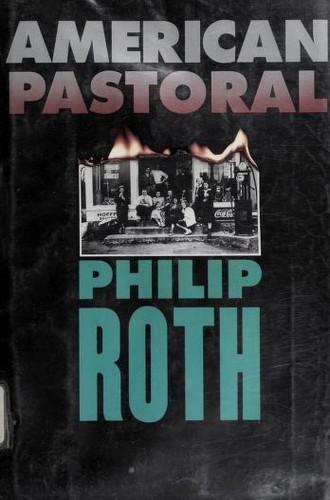
Wrapping up our discussion of Philip Roth’s American Pastoral, in which the Swede is finally reunited with his missing daughter. it’s bleak.
On losing your daughter: Can you save people from themselves? Should the Swede have dragged Merry out by the hair? Did he do anything wrong, or is he torturing himself for nothing?
The American berserk: Was ’60s counterculture violence a freak aberration, or just a manifestation of the undercurrent that lies beneath the pastoral dream? Is Roth an old man shaking his fist at clouds? Or is he making a clever point about the obliviousness of those who live behind white picket fences?
Plus: Roth vs Dostoevsky, in praise of blue-haired activist types, and the problem of assimilation.
Roth vs Dostoevsky
Cam: So I think the first question I had was — Rich, do you still hate Philip Roth? You mentioned that you didn’t love the start of the book, perhaps it was overwritten, or maybe just plain or boring — the first section, the first few hundred pages. Is this mainly a first-section issue, or did it evolve? And has the hatred flipped to Benny?
Rich: Isn’t it “I hate Benny now”?
Benny: Yeah, I’m not sure if that’s a flip.
Rich: Yeah, I don’t know, this will be interesting, because we might have switched positions. So my beef was basically how repetitive and redundant that first part of the book was, and what continues throughout the book is that it’s just talking about one single question, really, which is: how can my daughter — my precious daughter, born to loving and caring parents, who is the beneficiary of so much privilege and has so many opportunities that we’ve been working to build over generations of American immigrants — how can she squander that opportunity, reject the American dream, blow up her own life and blow up our lives with it? And that’s the book, interrogating that question over and over from every conceivable angle. And as he does it, he pulls on new threads: let’s go further into the Swede’s biography, let’s look at his hopes and dreams and his failures; then let’s look at Dawn, Mary’s mother’s biography, her upbringing, her values. But it just keeps circling around the same question, and it circles around more or less fruitlessly, I think.
And so it’s surprising, because it should just become more and more dull and more and more redundant as it keeps just asking the same thing over and over. But it doesn’t, I think. It gets more and more interesting. And I felt more and more emotionally connected with the book. The pace grew and grew and grew. And I respected Roth’s writing more and more and more. And yeah, just got more and more captivated. So it’s been good for me. I still think I’m not a Roth guy, this book isn’t for me, for reasons that I’m sure we’ll get to later, and I kind of sort of disagree with it, but I respect him. And I think there’s a very distinct transition between the frame story part of this book — which in my opinion is just a mistake — and the rest of the book. Glove factory onwards, honestly, that’s when it starts getting good.
Cam: Once the kid gloves were off. I mean, for what it’s worth, you did convince me around the first part — it is a bit odd, and it did feel overwritten. But then, I mean, we talked about it as well: Nathan Zuckerman is the Philip Roth stand-in, who is an author, and so perhaps it was designed that way, touching on the theme of, do I really know these people, which is one of the themes of the book. Rich convinced me maybe — and then maybe Benny convinced me otherwise. We needed the high school reunion. I like the middle.
Benny: Yeah, the middle is definitely the most action-packed. Before I defend anything more, I just wanted to actually take a moment to compare Roth with Dostoyevsky, and in particular this book with Crime and Punishment. At the core of both books is a story about the power of ideas, and in particular the power of bad ideas. In Crime and Punishment, you follow the internal psychology of Raskolnikov, who’s been gripped by the bad ideas, and you know precisely what those ideas were. You became deeply familiar with him as he engaged with the ideas, as he was slowly swayed into them, then as he actually committed this wanton act of violence, and then the contours of his regret throughout the next X number of years as he grappled with what he had done. So you get this intimate familiarity with his inner psychological workings as he goes through this journey of being gripped by these ideas and then having to deal with what the consequences were of following those ideas.
Roth is completely the opposite. You get zero insight into how the ideas themselves affected the internal psychology of the person who carried out the act of violence. You never see anything from Mary’s perspective. You know the general shape of the ideas that influenced her — so it was this sort of radical, anti-war, communist, leftism style of thought. You roughly know that those are the ideas that gripped her, but beyond that, you don’t know anything. So you can sort of try and surmise why she did what she did, but even then, you don’t get very far. And you don’t know if she regrets it. You don’t know what actually caused her transition to Jainism, which we’ll probably talk about at some point. So she’s totally this opaque character. The psychology that you do inhabit throughout Roth is her father’s — who’s this sort of genuinely innocent guy who is just trying to understand from the outside what happened at all, just searching for these answers even when there might not be answers. So the psychological torment that you’re witnessing is on not the central character who’s actually carried out the violence; it’s on someone completely different.
Cam: Yeah, no, I like the contrast. It’s a similar thing from a different perspective.
Benny: And I realized while reading it that I actually found Roth’s version of that more disturbing, because the story’s focused on this genuinely good guy who’s just trying to lead a very simple, happy life with his friends and family, and the life is just blown to bits by this outside force that’s wrapped in this shroud of uncertainty the whole time. And then what you get from that in Roth is also an understanding of how violence disrupts the life of people who are only tangentially related to the act — so in this case, her family and stuff. You don’t get that in Dostoevsky at all; it’s very much focused on just Raskolnikov himself.
And so I think if you look at the book in this way, this does help defend the Zuckerman piece a bit — of why we needed Zuckerman to introduce things. It’s because you need this other extra layer of uncertainty for Roth to really drive his message home. You have the Swede who can’t really understand Mary’s mind, but then we can’t even really understand the Swede’s mind, because this whole story is being told by Zuckerman. The Swede is shrouded in uncertainty when it comes to Mary, and then we’re shrouded in uncertainty when it comes to the Swede. And just as the Swede can only guess and guess and guess and torment himself about what really happened to Mary, what she was feeling, what she was thinking — so too are we in that position with respect to the Swede.
And then there’s one more side point, which is that the book really requires that the Swede is this innocent, all-American hero, basically, who’s aspiring for the American pastoral life. And if you had just gotten it from his perspective the whole time, you wouldn’t have been sure if that was reliable narration. So to know that he was held in such high esteem by everyone else, you sort of need the story to actually come from someone else’s perspective. Anyway, I’ll shut up now, but those are my major points.
Rich: That’s good points, I think I agree. I don’t exactly have a problem with using a frame story at all; I think it just was the sheer length of it and the lack of subtlety. It was just a bit heavy-handed and a bit much, perhaps. But yeah, I think you’re right, though, it is good. It sort of ties into what I sort of meanly said last time about this being sort of like spoon-feeding people literary fiction. But a kind of way to say it is just that every book is going to be more or less accessible, and there’s nothing actually wrong with being on the more accessible end of the spectrum. And if we’ve graduated from that at all, it’s only been recently, and arguably we haven’t graduated.
Benny: Yeah, that’s why I liked it. That’s why I’m ready to defend it. I need to be spoon-fed my fiction, so I appreciated it.
Rich: Exactly. There’s a big part of why we like Stoner, I think, and why maybe people in general like Stoner — because it has a similarly expository style, and it makes it quite clear and explicit what the themes are. And what I mean literally in the case of this framing story is, it frames what is coming both formally and descriptively. I don’t hate that — it’s more maybe just the execution of it. And I think you’re right, it probably does add something.
Merry’s motivations and lack of interiority
Cam: Just on your point, Benny — that you were more disturbed at the fact we got Raskolnikov’s point of view and we don’t really get Mary’s point of view. Well, I mean, it’s not like we think this is completely random act of violence that we don’t understand at all, right? We do get some dialogue from her, and then we get the Swede’s hypothesizing around it. But we kind of roughly understand where it’s coming from — it’s this radical leftist anti-colonial worldview, that these institutions are invalid and should be destroyed. And the confusion, I suppose, comes from: how can this come from my daughter, who — we live this normal life and this good life — and how is she being influenced this way?
Benny: Yeah. The disturbing bit for me ties in because you feel quite helpless, I suppose, as the reader, in some ways. Whereas with Raskolnikov, because you get to glimpse his internal psychology, you do understand at least some of the compelling points of his arguments. He’s got this whole bit about basically utilitarian argument gone bad, where he says, you know, this pawnbroker is ripping everyone off, she’s sitting on all this money, she’s not doing anything useful with it, there’s tons of starving people who could use this money better, I could use this money better. Now, you might not agree with that argument, but that argument has a certain force. And I’m sure most people have told themselves stories that had that sort of contour.
Whereas to just see Mary sort of superficially engaging with some of her dad’s questions, and to feel that she’s going down this road, and you’re quite helpless about it — that’s what I felt was disturbing. And then also maybe the fact that, you know, hopefully I’m a dad someday, and yeah, you can’t get the thought out of your head. Like, oh man, what if this was my daughter? Would you actually have the ability to control that? Who knows, right? It seems more and more like you kind of give them your genetics and then watch them go. And so you never know — that’s a frightening prospect.
Rich: And I was actually going to ask Rich, like, in a non-ironic way — do you have any concerns around that? Obviously not domestic terrorism, but just in terms of your kids making choices that you don’t like?
Cam: Richard, is your daughter stuttering already? Rich, age two.
Benny: Yeah, exactly.
Rich: No, I told you, I’ve made a solemn vow to never kiss her on the lips, so everything will turn out fine. Just to address the Dosto thing quickly — no, there’s no interiority for Mary, it’s totally just we don’t understand her whatsoever, and that’s deliberate. We understand the Swede extremely well, and that’s deliberate. And like Raskolnikov, there’s lots of guilt and recrimination and questioning oneself going on, but it’s just one step removed from the violence. It’s interesting to get the perspective of someone who’s not sort of the protagonist in some way — they’re the person to whom things are happening.
Yeah, so we have no interiority for Mary. Or we would know what it felt like when she had the blood on her hands, what it felt like to go on till we learn that she kills three more people, or that she commits more bombings that lead to the deaths of three more people. What was it exactly that prompted her to convert to Jainism, which holds as its principle that you shall harm no life forms, including freaking bugs — she wears a veil, doesn’t inhale single-cell organisms or something.
Cam: Doesn’t wash.
Benny: And she doesn’t want to shower, right? Because she doesn’t want to kill the organisms on her skin or something.
Cam: Yeah, she doesn’t wash. I thought this would be the one episode we don’t talk about — and then you get someone who doesn’t wash.
Benny: Aella the Jainist. Oh my god.
Rich: So we probably should just get whatever limited plot elements on the table here. Five years after Mary disappears, the Swede, who’s been desperately hoping that he can see her again and get in touch with her again, gets his wish, and is given a tip-off as to where she’s working at the moment, and goes to find her. And yeah, she’s just living in total self-imposed poverty and squalor. Some of her teeth are missing. She’s completely underweight because she hardly eats anything. She lives in some kind of a flop house where vagrants live in the hallway, wrecks of piss, and she just has filthy rags for clothing.
Cam: And she’s been assaulted as well, as she mentions.
Rich: Yeah, she tells him his story, but even, interestingly, that kind of happens off-screen, as it were. We get the precis of it that the Swede is ruminating on and thinking about. We don’t get it in her words at all, or we get very little of it in her words. And the bit that we do get in her words is — like, I have this image of her in my head where she’s sort of sitting there kind of like monk-like, like an ascetic, and she’s just very calmly answering his questions but without pouring her heart out to him, without being super emotionally charged, just dispassionately, and interestingly without stuttering at all. Stutter is finally gone. She’s just very calmly and dispassionately answering his questions. So there’s still so many big mysteries. I mean, almost all the mysteries we know what’s happened to her in the five years since the bombing, and we learn a few things that are sort of incidental, like whose house she sheltered at, who took her in in the community initially, and where she ended up and what she ended up doing.
Benny: And that she’s killed others — is that also when we learned that she’s killed other people?
Rich: Yeah, yeah. So those are two things that the Swede is obsessing about as he goes to the dinner party. I mean, well, a bunch of things, but one of them is: she’s killed more people, and therefore anyone who could have sort of paternalistically intervened and stopped her from getting away — even if it meant restraining her by force — could have blood on their hands. The second is that she was raped, which, you know, as the father of a daughter is kind of real nightmare territory. And so he’s fantasizing about how he could find out who did it and how they did it and how he could take revenge.
Cam: He even feels guilty at one point, because he’s so focused on that. He’s like, you know, she’s killed four people and it’s horrible, but he’s just so focused that she was abused at one point and that that was taking up so much of his thoughts.
Coercing loved ones to save them from themselves
Rich: Reunited with my daughter, but there still seems like there’s nothing I can do for her. She won’t listen. She still rejects all of my offers of help. And unless I physically carry her out of here kicking and screaming, I’m still completely powerless. And he gets on the phone with his little brother, Jerry, and Jerry just chews him out and says, you know, tie her up and take her by any means necessary and haul her out of there. Take some fucking responsibility for once in your life. Stop being such a sensitive new-age guy, or whatever — I can’t remember the terms he uses, but he’s incredibly demeaning of how he is so passive, and has not been willing to step up and sort of — you know, what we would probably call coerce someone, or force them to do something that we believe is for their own good.
Benny: I was quite sympathetic with Jerry’s arguments. I don’t know. What about you guys?
Rich: You are?
Benny: Sort of. Yeah, I mean, I think in that extreme of a situation, to just let your daughter languish in this —
Rich: Have you ever heard of taking children seriously, Benny? Coercive authoritarian piece of shit.
Benny: Trial and error. Trial and error, blow up a few people, that’s an error, do a bit better next time.
Cam: It did make me think of an extended family member who was having difficulty with the child — getting into a lot of pretty serious trouble, hanging out with the wrong crowd, stuff. And it’s like, this is a real thing of: do you kind of just let it happen and give up almost, so you feel like you’ve tried anything, nothing’s working? And this person, she kind of had that approach in the end, and part of me judged her for it. I was like, I kind of had a Jerry thought — maybe not grabbing them by the hair, but like, don’t give up on this person and be the bad guy if you have to.
Rich: Yeah, it’s an understandable reaction, but I’m still skeptical that it works. Like, my take with this book is that the Swede did nothing wrong, and that he is a perfectly innocent victim who’s desperately flailing around to try and figure out what he could have done otherwise. But I feel that he did nothing wrong, and that this is just how life is. And similarly with situations like that, where you think someone’s life has been fucked up and you start blaming maybe the parents, or people who could have done something, and you say, oh, they should have been harder on them, or whatever — I think that’s probably wrong. Counterfactually, you’re just trying to grope around for something. And almost always with people, when they want to change, they have to just change themselves. And it’s really, really hard to force people to do something that they don’t want to do from a place of internal motivation. So as long as you’re not actively enabling them in something, then I find that to be a pretty unlikely story of human motivations, sadly.
Cam: Yeah, I logically agree that he’s a victim, really.
Benny: Yeah, it’s not that I found him blameworthy for not running in there and dragging his daughter out of there. But I don’t really buy the coercion Taking Children Seriously critique here, because their whole framing is that you should treat a child how you should treat a close adult friend, and I think I’d be quite ready to drag a close adult friend out of those circumstances as well. So I don’t view it as coercing children. I just view it as perhaps an instance where coercion is necessary, or the best solution you have on offer.
Rich: Yeah, but like, just to make it visceral, Benny — we’re talking about a 23- or 24-year-old person. So what we’re talking about here is, you literally have to physically drag them out where they’re screaming and kicking and saying no, no, no, and then you need to lock them up in your house somewhere with restraints or whatever. Like, are you seriously gonna do that?
Cam: Britney Spears did nothing wrong.
Rich: Yeah, I mean, maybe if she’s literally on death’s door, I don’t know. The implication is that she’s going to die from malnutrition or getting murdered by a junkie or some disease or something. Maybe it is like a last, kind of nothing-to-lose gambit — she’s gonna die, so anything I do that has some chance of preventing that outcome becomes worthwhile, without getting into the right to die and stuff like that, which is a whole other — or maybe it does inevitably get into that territory, I don’t know.
Cam: I did wonder if the Weather Underground activists did kind of live in this level of squalor. I was doing a little bit of reading about it. I think some of the leaders actually were probably doing alright. They were underground in terms of in hiding, but it was probably more of the foot soldiers, probably, that Mary was — that were living pretty rough. Maybe not to this extent. This was, yeah, this scene where he meets Mary was definitely the most memorable part of the book for me.
Benny: Yeah, it was rough.
Cam: And one of the most memorable things I’ve read, I think. I mean, it reminded me a little bit of Karla when he goes to his grandma’s house and stuff.
Benny: Oh, I’d forgotten about that.
Cam: But more so just the state of her as well. I would add to the disbelief of it all when we’re talking about it, just trying to understand where she’s coming from. How could anyone take this trade-off?
Rich: We’re still asking the question — here we are. How could she do it? How could this happen? We still are asking. It’s terrifying. This is your parent’s worst nightmare. And especially if you did nothing wrong — because if you did something wrong, then you can say, oh, it’s because of that, and you read the story and you think, oh, I just won’t do that. Or you think, I will take my child seriously and not be authoritarian, and we’ll have a really good relationship, they’ll come to me with their problems, we’ll talk about things, I can de-escalate them, they’ll trust me. And I think, from this fantasy view, at least, with all of its possible inconsistencies or rose-tinted glasses — the Swede had that relationship, and it didn’t change anything. So yeah, it’s horrible to think about. I’m just good at compartmentalizing, so I’m just like, no, that won’t happen to me, that won’t happen to my kids. And I think that’s probably the smartest thing to do anyway. Like, what else can you do? If definitionally it’s out of your control, then don’t suffer twice, right?
Champagne socialists are good akshully
Cam: Yeah. I was just wandering around like, trying to understand where she’s coming from. And I just had — you know this idea that often it can be annoying when someone’s, I suppose, what’s called a champagne socialist or something, where they may say certain radical things, but they’re actually not really living by that, and so people call them out for being a hypocrite. And like, that can kind of grate on you a bit, but you know, some people just — like, it’s kind of, this is probably better. It may be more annoying, but it’s probably better than truly believing the stuff. Because yeah, what was that meme? It was like, what do you think decolonization means? Like, it doesn’t mean vibes. It’s like, you know, it means the stuff. It means bombing this person or this institution or something. Maybe the hypocrite’s actually better. It’s like, okay yeah, say the things, but you know, don’t actually dismantle properly.
Rich: Does it feel true to you guys that there aren’t really many real revolutionaries these days, and they are more just like — you can’t imagine them not having an iPhone or not having running hot water or pumpkin spice latte or whatever? Like, I don’t know if it’s true or not, but I don’t know any — I don’t know if I’ve ever met any true sort of monk-like revolutionaries like Mary, who would be willing to destroy every creature comfort in life for the cause.
Cam: Certainly in terms of violence — well, it feels like violence, there seems to be less of that now. Like, when you sort of read about essentially what’s happening, what Mary is involved in, in the ’60s and ’70s, there was quite a lot of bombs going off, like every week. And yeah, it makes current activist stuff look quite different in comparison.
Rich: Yeah. I guess I just don’t move in those circles.
Cam: Throwing paint on paintings, sit-ins to block the motorway and stuff. Still very annoying, but a bit different to killing people.
Rich: Yeah, yeah. Just like, the image of a revolutionary is the blue-haired piercing person shrieking, rather than like a cell of terrorists who are gonna blow up your general store, or mail bombs to people — which is good, I’m happy about that.
Violence in america always has been meme
Rich: But we should talk about — so obviously, this book is — a big part of it is just chronicling what it was like to be a person of this generation, of the Swede’s generation in particular. So pre-boomer, I guess, sort of like maybe greatest generation, and you’re seeing this huge wave of violence and bombings and counterculture and stuff, and just thinking, what the hell is happening to our society? What is wrong with the kids these days? And being nostalgic about how things used to be, and so on. And it’s very interesting to read that perspective.
But my open question for this book is whether the ’60s bombings, the days of chaos, is meant to be this anomalous break from tradition — which it seems that it is, based on the focus on that — or whether it’s meant to be that there was always this undercurrent of violence that permeates American society, and the “always has been” kind of meme, and that the ’60s counterculture violence is just this particular manifestation of this deeper current that runs through American society. And the text I find to be quite confused on that. So I don’t know if this is quite an incoherent book or if I’m missing the point, because textually it says stuff like the famous line about the American indigenous berserk that underlies the American pastoral — which implies this is the status quo, and these guys, these WASPs with their white picket fences and American dream, this is just like a fantasy, they’re just insulating themselves from the true reality of violence that is behind the good life — you know, the exploited labor, the racial segregation, the limited rights of women, the wars of hegemony, all this kind of stuff. But then the text is so focused on the ’60s counterculture in particular being this bad thing, and that everything was great beforehand. So what do you guys make of that, if anything?
Cam: It talks about entropy as well, right? When the Swede —
Benny: Did someone say entropy?
Cam: Don’t go into thermodynamics. Just this realization, I think kind of what you were saying — this realization that disorder is the kind of baseline, and things will return to disorder no matter how hard he tries or how hard America tries.
Rich: I can’t believe I missed that.
Cam: Yeah. Benny, what do you think of Richard’s question?
Benny: I mean, yeah, correct me if I’m wrong, but I believe the phrase “American berserk” actually comes from the book jacket and not the book itself. Do I have that right? Which is typically not written by the author.
Rich: No, it’s from — it’s a quote.
Cam: No, I think it’s in there.
Benny: Where is it?
Rich: I’m almost certain. Maybe just read that quote out, because that’s sort of the bit where it’s like, here’s where I’m going to tell you what the book’s about. It is odd, yeah.
Cam: It’s an odd phrasing. Yeah, okay, so…
Benny: Just while Cam’s looking, I guess, to directly answer your question — yeah, I interpreted it as being much more about the ’60s and ’70s and where America was at that time. I think actually the book would fall more flat to me if it was supposed to be just a broader message about how America always has been and will always be. I don’t find those sort of messages as compelling, I think. And I wanted to view it as a particular commentary on a particular time. And I think it has much more value as a commentary on a particular time as well.
Rich: Yeah, this is where it might be confused or inconsistent, I think. Because — not to do the word-by-word analysis thing — but this is an important quote that Cam’s about to read, and it says “indigenous berserk,” meaning it was always there, it’s not a new thing. Anyway, read the quote, Cam.
Cam: Just wondering how far back to start, but —
The daughter who transports him out of the longed-for American pastoral and into everything that is its antithesis and its enemy, into the fury, the violence, and the desperation of the counter-pastoral — into the indigenous American berserk.
Benny: But so, you’re sure this is in the book? Because for me that exact quote is on the back of the book, it’s not — I mean, maybe I’m just missing it, or it wasn’t in the book.
Rich: That’s definitely in the book.
Cam: I was just reading the back. Yeah.
Benny: Okay, so what part is this in? Where is this in the book?
Rich: You don’t believe me?
Cam: Oh, va bene.
Benny: Well, no, I’m just trying to get a sense of where it was introduced. Because I mean, arguably, the entire book is really focused on a particular immigrant experience, right? It’s the assimilation of this Jewish American family into this American life. And that’s an important part of the book, because they’re pursuing what I guess we would lamely call the American dream. And the type of immigration that was happening at that point, and against a certain cultural backdrop, that’s all very specific to a certain time and place — to how America was then. It’s not that way now. So you’d have a very different immigrant experience now in the US. So I guess this to say like, yeah, insofar as it’s actually confused on that point, I agree that that’s bad, and it should have just focused more as a narrative on ’60s, ’70s America. But at the same time, I’m not convinced yet that it’s actually confused on this point. I think it does a pretty good job of situating the story in a very particular time and place.
Cam: Well, potentially — by the way, it’s in chapter three, Benny. But it’s in the book.
Benny: Line number?
Cam: Yeah, yeah, Benny didn’t get up to it.
Rich: I guess you made it as far as chapter three, right?
Benny: It wasn’t in the Spark Notes, I don’t know.
Cam: There’s potentially different ways to read this book, but one way to reconcile is this feeling that — yeah, if it popped up, this thing that pops up in the ’60s and ’70s of kind of radical activism and violence, I suppose his thinking was like, it’s kind of always there. And potentially what’s holding it down is certain types of culture or traditions or something, and that maybe being a good thing, and then this kind of bubbles up. But whatever was holding it down is not the baseline. It’s kind of like wealth — it’s not the baseline. That needs to be built. And then this will keep coming back in. But it’s also kind of a cultural question as well.
Benny: I mean, okay. Maybe to actually just argue against myself here for a second. The overall narrative that you have people that are compelled by certain bad ideas and then do bad things, and that leaves a wake of destruction behind them — that is sort of a timeless story, right? And you could investigate that sort of storyline wherever. So I guess my sympathetic take on his confusion here is just that he’s pointing out that this sort of uncertainty about why people, even coming from good families, do bad things — that is this sort of almost unresolvable uncertainty that will probably always be with us and always has been with us. From the outside, why someone becomes something like a domestic terrorist, or just something where they’re committing violence or dedicated to ideas that we would consider very bad ideas — that always has a certain mystery to it. But the actual details of the book are very focused on mid-to-late-century America.
Rich: Yeah, but the question is, ’60s counterculture: abomination or business as usual? And I actually think — like, a smarter reading, or like maybe I think you and I maybe disagree on this — I think that it would be a more clever message to portray the residents of that time painting it as an aberration, which it was to their lifestyle and their way of being, but while just sort of obliquely hinting at the fact that that was always happening in other ways for other communities that weren’t relevant to, you know, wealthy Jewish or WASPy people living in the countryside.
So it’s hard for me to say, because — like, Roth is alive through all of this, but just for some context, throughout the ’50s and ’60s you still have lynchings of Black people. You have the FBI doing some of its most nefarious work of infiltrating civil rights organizations, trying to jail or otherwise remove their leaders. You’ve got the whole Newark situation, the racial powder keg, which is described in the book, which is prior to the counterculture. Union bosses ruling everything, breaking kneecaps. You know, law enforcement committing violence — not with impunity, but a lot more than we would accept today. And then within households as well, basically the man is the king of the household. There’s no such thing as domestic violence, that’s just a family matter to resolve yourself. There’s no such thing as child abuse. All of that just happens without any legal recourse. There’s no such thing as marital rape. Women just have less rights. And then you have these aggressive wars, Korea and Vietnam — all of that is happening prior to the things that the Seymour Levovs and the Lou Levovs of the world are outraged about and concerned about.
So my idea of a smart reading of this book is that the Old Rimrock pastoral existence is like a fantasy for privileged people that lets you sort of paper over or not have to look at all of these things that were facilitating your lifestyle and your comfortable life, and that Mary really did just bring it home to you and shattered your escapism, bringing home the actual conditions of it. And then my confusion is that I don’t know if that’s the message that Roth intended with this book. I think he probably just is like a kind of a nostalgic neocon kind of a guy who’s like, these damn hippies kind of thing. Because the references to any of that stuff is either not there or extremely oblique, so you’d need a lot of cultural context and reading between the lines to even frame it that way. And Philip Roth is not the kind of guy who asks the reader to do much work and to bring their own frames to things to unlock what he really meant to say. So that’s why I don’t know what his politics are, but he seems like sort of an old-man-shaking-fist-at-cloud — it seems more like the straightforward reading of ’60s counterculture bad. And of course, the extremity of a lot of it is in fact bad, but really what’s happening is just a sort of a trade-off that we’ve talked about for Atomised as well — of, you want to make an omelette, you’ve got to break some eggs. You increase certain liberal individual freedoms, and it comes at the cost of certain traditional patriarchal community norms that are no longer going to serve. And then it’s a question of where you want to draw that trade-off, which, you know, there’s a lot of nitty-gritty there.
Cam: I agree that Roth’s — well, I think you can read the book probably both ways. I think you can read the book of, there’s this idolized American dream, and then why does that fail? Maybe it’s because America has always been built on unjust things. Or maybe it’s that this leftist activism has come and spoiled America. So you can read it both ways, I think. I think you’re right, Roth’s probably more sympathetic to the latter. And my guess is, politically he’s kind of a centrist liberal, and then like, kind of lived through the radical ’60s and ’70s, and like a lot of people, was just like, cor, like, this got pretty extreme, pretty crazy. And a lot of that history is kind of forgotten about as well, the extent of it. And he’s kind of reflecting on it in the ’90s.
But I think another interesting aspect to it as well is around this assimilation question. The Swede seems to be getting accused by his father and his brother at different points that part of it is because he seems to be pretending to be a WASP, or trying to assimilate, but you sort of can’t escape your fate and identity, and whether — as he can’t, and whether maybe he can himself, but through his kids as well. It’s like there’s something around him maybe being this Ellis Island immigrant as well, and that he will never have that idyllic WASP life, or his family never will. That also seems to be a question. And you know, Philip Roth himself is a Jewish American as well, and I think he is pondering on that as well — like, should the Swede have just sort of stayed in his own lane, and would things have been better in that sense?
I mean, it’s funny, because the Swede — I’m not even sure if it’s right to say he’s pretending to be WASP as well, like, you know, he’s this genetic anomaly. But he truly does buy into this sort of civic nationalism, Americanism, that he wants to be part of.
Roth’s pessimism about assimilation
Rich: Yeah, which is another way that I part ways with this book and don’t like this book or think it’s not for me — is that it’s very pessimistic about the project of assimilation and multiculturalism and the American dream in general. Right? Because every single thing that the Swede does to try and assimilate and put aside his particular ethnic or religious values and replace them with American values — like, he wants to move to the countryside, he marries a shiksa, he wants to be Johnny Appleseed rather than some Jewish hero, or whatever. He’s got letterman jerseys in high school sports, and his wife is literally running to be Miss America. And all along, his dad — Lou Levov — is saying to him, oh, don’t do it, it’s all gonna go wrong, you’ve got to stay with your own people. And then Mary is literally the product of this interfaith marriage and interfaith union, and she fucks everything up. And Lou Levov is just right about everything, basically. He is just saying, yes, stick with your own kind, this is not for you.
And so I think it’s possible that there’s some message in there that resonates with American Jews in particular, that me as a gentile, or us as gentiles, are not quite going to pick up on. But the deeper message I just find to be like, again, like, this very paranoid conservative thing about the — you know, the hubris where you’ve got to stick with your own kind, and when the Blacks start taking over, you better get out too. And it’s futile and hubristic to try and be something that you’re not and try and buy into this American dream myth. But again, my claim is the Swede did nothing wrong. He did nothing wrong by staying in Newark when the other Jewish business owners were moving. He did nothing wrong by trying to employ Blacks in his workforce and stand by them and that kind of thing. He did nothing wrong by marrying an Irish Catholic. He did nothing wrong by wanting to have a nice house in the countryside. And my claim is that if you looked at American history more broadly, you’d find many more cases of that going fine or great than you’d find cases of that being a disaster that destroys everyone’s lives and is like a metaphor for why this should never work. And that in fact America’s success is — America is like the case study for this going right. Assimilation is not only possible but good and necessary, and it can be done very well with amazing productive benefits for everyone involved.
Cam: Yeah, I mean, but it is pretty squarely the cultural issue itself now, of like the success of post-’60s America, or whether there has been a state of managed decline with technological advancement —
Rich: But this is almost from the other side of the wars, saying, you know, we had this thing of being like, oh no, we don’t want to have a melting pot, we want to have a salad bowl where everyone has different ingredients but they don’t combine together. And now we’re flipping to saying, actually, assimilation is important and we need to make sure it happens, it’s actually necessary and good. And this book is saying assimilation is not possible. So that’s kind of the opposite of the traditional —
Cam: Yeah, I think it’s saying it’s not a completely possible path. But Benny, you have a go.
Benny: Yeah, it’s very interesting. I just didn’t even analyze the book along that dimension, so it’s fun to think about for the first time. I’m not sure I agree with you that Roth is as pessimistic as you paint him — one, because the Swede is such a sympathetic character. As you say, I think most readers come away thinking this guy did nothing wrong, or at least all of the choices he made were totally understandable. What happened to him was a tragedy, but as a person, you know, I sort of respect and admire him. And that includes the choices that were pro-immigration, pro-assimilation. So the fact that he is such a sympathetic character sort of shows you that Roth is sympathetic to the struggles that this guy is undergoing. So, yeah, did the project not work out in the end? I don’t know. We kind of don’t get far enough to see. Mary put a big dent in it, obviously, but the book sort of just ends at this dinner party, and we don’t know if the Swede and Dawn actually make it. We don’t know what happens to them in the end.
Roth’s pessimism about knowing your fellow man
Cam: Should we talk about the dinner party a little bit, and how that may tie in? Because I think, Benny, you didn’t see it obviously tied into these themes. So I mean, it’s about — it’s almost the whole last third of the book, right? Is the Swede and his wife and several other couples and neighbors. I think some of them are Jews and some are gentiles, and his father’s there. And we find out that Dawn has had an affair with their neighbor, Bill Orcutt, who’s an architect. And Dawn always hated the stone pastoral house, and they want this new flash house, and she wants to end up with the WASP. And then we also find out that the Swede also had an affair with Sheila. And Sheila’s been hiding a young Mary as well, which he feels betrayed over and confused over as well.
And the kind of backdrop, I think, is the Watergate scandal as well, sort of sets the time. And Lou Levov, the Swede’s father, is very kind of angry with the Nixon administration. I think he writes letters to Congress or whoever with different bits of advice and stuff like that. And one of the final scenes is the Orcutt’s wife, who seems to be an alcoholic — she’s sloppy — and Lou Levov, the Swede’s father, tells her off, and I think she stabs him with a fork or something, and he’s bleeding. And then Mary kind of appears as well, right? And everyone finds out.
Benny: No, I think that was in his imagining. She didn’t actually appear.
Cam: Okay, yeah, my bad.
Rich: I was like, wait, what?
Cam: It was all a dream.
Benny: Yeah, yeah. He heard the commotion. He was in the garage though, right? After him and Mary had had the conversation, and he hears the big kerfuffle going on in the front and the yelling, and he imagines that Mary had walked up the driveway and that’s why everyone’s yelling. But then he goes to find out that it’s just his dad had been stabbed in the face with a fork.
Cam: Yeah, sure, okay, that makes more sense. And this is quite shortly after he sees Mary for the first time, so it’s real fresh in him, and he knows and no one else knows. And they’ve got this cope — like, oh, maybe she’s in Canada and doing well. And I think he even gets a call from Rita Cohen as well, and she’s like, we’re monitoring you. And I mean, yeah, if Rita Cohen exists. But yeah, I mean, what do we think of this dinner thing? I think, Rich, you quite liked it. Benny, maybe you’re still not sure about it.
Benny: Yeah, I mean, I thought it was good. It’s making the consequences of this traumatic event manifest on the family and how it’s disrupted everyone’s lives. And before Mary had gone out and blown up the post office, you had this basically picture-perfect family. The parents were madly in love with each other, had a perfect sex life, were stuck up for each other. The Swede couldn’t have been prouder of Dawn and what she had done with starting her own business, raising cows, selling them. And then that just all gets totally ripped apart afterwards. And Dawn becomes a shell of herself. They both have affairs, which I think we’re supposed to read as being very out of character. The Swede can barely describe why he even did it, except that it just reminded him of something different than Dawn — it was just someone else’s face to look into to relieve some of the stress and some of the anxiety of the outside world. So I mostly read it as sort of this just extended meditation on how this act of violence can have these terrible upstream consequences.
Rich: Yeah, and the other thing it really sheets home is this idea that it’s impossible to ever really know another person, and that everyone is harboring these secrets from one another. So Bill Orcutt is cheating on his wife with Dawn. The Swede has had his own affair. There’s all of these betrayals going on, and they can’t — Sheila was hiding Mary. And it’s not just the betrayals, it’s the fact that they’ve all hidden it so effortlessly and fluidly that from the Swede’s point of view, he’s just like, oh great, I’m just oblivious to what’s going on — reinforcing Nathan’s original point about the impossibility of knowing another person.
And yeah, I really like this scene because each participant is kind of giving voice to the meta argument about the nature of violence and vulgarity and the decay in moral standards in American society and so on. And you get to contrast what they say versus their actual actions as well. But what I don’t like, again, is just — it’s just such this paranoid and pessimistic take about human nature and about relating to other people, where again it seems like he’s saying, like, if we can’t know other people very well, then you better make sure you’re around the people who you can know very well, and stay away from the ones who are different to you, because they’re going to be even harder to get to know. And you’re going to be just really setting yourself up for failure. And I just can’t get past Lou Levov being the authorial voice here of saying, basically, like, I told you so. You starry-eyed naive fools, of course this was going to happen. And I know he’s written in a kind of a hectoring, annoying way, but he is basically right from the point of view of the plot events of the book. And sure, the Swede is a sympathetic character, but that doesn’t wipe out the reading of being like, oh, you know, I love you, you’re a great boy, but gosh, you’re naive and starry-eyed about all of this stuff. I just find it so pessimistic.
Benny: Yeah, I agree. I think you’ve definitely convinced me on that reading. For some reason, that doesn’t make me enjoy the book less. Like, I think it’s a thesis that I ultimately disagree with — I think you can get closer to people, and like you were saying, assimilation is good. But yeah, I still enjoyed the actual exploration of those ideas in the book.
Rich: You needed to have the trouble come home to Old Rimrock, right? And it did when Mary set the bomb. And then this was the final proper explosion, where — well, not everything becomes aired, but you get the sort of interpersonal eruptions and the airing of things that have been buried, and putting the lie to this idea of this idyllic pastoral life where we are all good people living our lives in the right way. In fact, we’re all hypocrites. The boil needed to be lanced, I think. And there’s that one intellectual lady there who’s basically just sort of mocking everyone, and she just eventually just collapses in laughter — she just finds it so funny that people are no longer able to keep up these pretenses. And that Lou Levov, who’s kind of like — not the voice of reason, but I guess like the prophet or something — gets stabbed and almost has his eyes pricked out. And we knew at that point as well that we weren’t going to get further resolution on Mary. There’s not going to be reconciliation.
Cam: Well, yeah, not with Mary. But I mean, we do — at the start, you know, we find out that he has seemingly remarried, and he has new kids that he’s proud of, and that’s what Zuckerman’s first takeaway was — this guy’s, why is he just talking about how well off his kids are, I don’t really care. And partly is to probably convince the Swede himself, but there perhaps was a semi-happy ever after with the Swede.
Rich: And he says that Mary is dead, right? That’s what he tells —
Cam: Yeah, we don’t know.
Rich: Yeah, well, that’s what Jerry tells Nathan. I think we also don’t know if that’s true, or if it’s just — like, she’s dead, but we have to assume that either way Mary does not get a happy ending.
Cam: I think Zuckerman even was surprised to hear that, perhaps. Like, but I think he hadn’t even heard of Mary as well. A lot of people probably had in the world.
Rich: She either dies literally, or the Swede and his family just write her off and banish her, basically.
Cam: Yeah. It’s funny — I remember that intellectual dinner party guest as well, I think she was a professor as well, and she almost fit into, I think, the view of the American berserk somewhat. I thought she was kind of saying that you need transgression for progress and knowledge and stuff, and I think she even questioned decency as well. She’s like, sort of, what’s so important about decency? Which I suppose is this question that Roth himself is struggling with.
Rich: So Roth is kind of a sexual libertine guy, is he? Like, he wrote a filthy — another book that was really filthy.
Cam: Well, yeah, the thing is, early ones had that. And then he had this American trilogy in the ’90s, you know, when he’s older, seemingly looking from the opposite side of that, perhaps.
next book(s) announcement
Benny: Nice. Well, I enjoyed it. I thought it was a good pick. Nice job, Cam.
Cam: Cool. So email us with comments and questions as usual at doyouevenlit — with the letter U — at gmail.com. And we look forward to checking in next time. Rich, what will we be reading, if you’re ready and you’ve made the pick?
Benny: If you’re prepared.
Rich: Yeah, I’ve chosen a short story, which was easy. We’re going to do Ursula Le Guin’s “The Ones Who Walk Away from Omelas,” because it’s time to find out who’s the most ute-brained of us all. So yeah, I feel like I’ve been going back and forth on consequentialism lately, and I don’t know, I want to actually grapple with the thought experiment and try and figure out where I’m at and whether my mind has changed. And I’ll be interested to hear what you guys think as well. Well, I think I can kind of guess, but yeah, it should be good.
And then for the novel, our next novel, I can’t decide. I’ve got a few contenders and I just can’t quite make my mind up, so I might message you guys offline and get you to weigh in on it. Feeling indecisive.
Benny: Do you want to say what the candidates are? Or do you want to keep it secret in case you make the wrong choice in the listener’s mind and they hold it against you forever more?
Rich: Oh, I’ll read them out in case anyone wants to write in and put their thumb on the scale.
Benny: Sure, in four months when we’ve already read the book.
Cam: Well, we can announce it next.
Rich: No, because I can read the email right away, at least.
Benny: That’s true, but that depends on the release schedule though, yeah.
Rich: Yeah, true. Oh, okay. Well, just as a taster, so people know what I’m thinking about. I’ve got either Sula or Beloved by Toni Morrison — leaning towards Sula. Middlemarch by George Eliot, which I really want to do, but it’s just such a big book, that’s my main candidate that I’m just not quite ready to sign off on. Solenoid by Mircea Cărtărescu, which I’ve heard really good things about. The Tunnel by Ernesto Sabato, which is a nice short existentialist book. In Search of Lost Time by Proust, I think we should do at some point, but again I’m a bit intimidated by the length of it.
Cam: By the 12,000 pages?
Benny: 12,000?
Cam: No, I made that up, but it’s massive.
Benny: Certainly not. 12,000.
Rich: What’s seven volumes. We’d obviously just do the first one, Swann’s Way. But it’s still very immersive. And then I want to do some Faulkner, and I’m looking at As I Lay Dying — I think would be a good starting point — or possibly The Sound and the Fury. So yeah, I can’t figure out which of those to do. So if anyone has opinions, write in: doyouevenlit@gmail.com, send us some.
Cam: And for now, we’ll do “The Ones Who Walk Away from Omelas.”
Rich: And if you don’t like this episode, go and bomb your local general store.
Benny: Post office.
Rich: Or post office. Don’t be a pussy-ass liberal.
Cam: Or stab your father-in-law with a fork.
Rich: Old school.