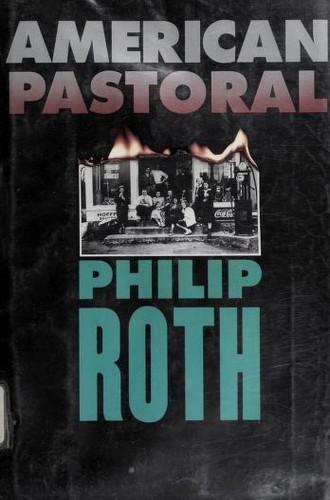
The Swede was the poster boy for the American dream.
Football star. Marine. Marries a beauty queen. Inherits dad’s glove factory and treats the workers like family. Buys the stone farmhouse in Old Rimrock, New Jersey. Loves his daughter unconditionally. Protests the Vietnam War in his own measured way, just to show her he’s on her side.
Then his precious little girl blows up the local post office and kills a man.
“This says a lot about Society.”—Philip Roth
In this episode, covering the first five chapters of Roth’s Pullitzer prize-winning novel, we find ourselves a book club divided.
Rich hated the opening frame story. Nathan’s over-interpretation of the Swede’s every fart is written that way on purpose but that doesn’t make it any less of a suffocating 80 pages to wade through. File under ‘writers wanking themselves off about writing’.
meanwhile Ben is deeply moved. He defends the frame story and mounts a convincing case that it’s doing real work on memory, regret, and mortality.
Cam is kind of on the fence but overall he likes the book. “I like the book.”—Cam
Opinions will no doubt change as we move into the second half but there’s one thing we can say for sure: Basketball was never like this, Skip.
hot takes: mid-wit or masterpiece?
Cam: What do you think, guys? High-level reaction, Benny?
Rich: Yeah, classic Cam answer — what do you guys think?
Benny: I like it, I like it. I find it quite emotional to be honest reading it, in a good way. It makes me sad but in a good thought-provoking way. It dives deep into issues of memory and regret and time passing and wishing that you would have acted otherwise when you had the opportunity to, and towns disappearing and dying and all of that good stuff that you start reflecting on more and more as you get older. So I don’t know if I was just in a ripe life stage to appreciate what he was discussing, but yeah, I find myself quite taken with it. I find it quite emotional. What do you guys think?
Cam: Makes you feel things, man.
Benny: Yeah, I’m feeling all the feels, man.
Cam: Rich is about to dunk on it, although superficially.
Benny: Yeah, he’s like, I hate this book. Just do it, dude. Dunk on it. Really?
Rich: Oh no, I don’t know what to do. Yeah, I don’t like this book, I don’t like this book one little bit. It feels like a real midwit book, so it’s not surprising that you really are enjoying it. I probably won’t go into it too much up top to avoid derailing because we might need to sketch it out more, but I’m struggling to get through it. The first 100 pages I found really punishing and just deathly boring to be honest, and suffocating.
Benny: Oof. The man is pulling no punches. Holy smokes.
Rich: A lot of it felt like Grandpa Simpson telling you a story about Shelbyville or something, and being like — and then, and then — and a few pages later he forgets he’s already told you the story so he tells it to you again but with slightly different details. I have more substantive criticisms, but it was a relief when we got to the passage describing exactly how gloves are made. I was like, oh, this is so much better. So yeah, I think that tells you —
Cam: I thought you were going to say that’s the boring part.
Rich: Well, that’s the sweet relief compared to the fucking high school reunion.
Cam: Oh man, that’s… lucky you went first, man. I like it. I like it so far.
Rich: OK, cool.
Benny: All right, well how do we want to do this — do we want to do plot stuff or do we want to just hit themes?
Cam: Maybe it was just the midwit explainers of everything.
Benny: Wait, Cam, I mean, do you want to say a bit about why you like it?
Cam: Yeah, yeah. Well, I mean… it’s hard to follow that.
Benny: It’s like, I’m not ready to defend my position, actually, after that fucking aerial bombardment by Rich.
Rich: I just blew up your town’s general store, Daddy. I’m a wild child.
synopsis and the Zuckerman frame story
Cam: Yeah, I mean, I’ve just liked it. I think we’ll come through when we talk about it, but I like the writing, I like the themes, I haven’t been bored, I haven’t found it slow going. So the first section, I think “Paradise Remembered”, we’ve done and it was partway through “The Fall”, section two — so there’ll be no spoilers after that.
The book starts off kind of like a frame story, which is from the perspective of Zuckerman — is it Nathan Zuckerman? — who I think is like the general alter ego of Phil Roth himself. This Jewish guy from New Jersey, and he’s at a high school reunion and he is talking to old classmates, one of which is this guy Jerry, Jerry Levov, and they’re reminiscing about Jerry’s brother Seymour Levov, i.e. the Swede, the man, the myth, the legend, which we’ll get into. But it was interesting, like —
Rich: Levov, Levov. That one thing I’ll say in favour of this book: every book that has a character with an ethnic-sounding name should include a cheerleader chant that tells you exactly how to pronounce it. So that’s a good innovation, I think. Philip, what is it? Seymour Levov, it rhymes with “the love”.
Cam: Oh, I don’t even remember that. Yeah, yeah, it can be hard when you’re reading like Dostoevsky or something, of how to pronounce things. I remember — I know I talk about Harry Potter every episode, but it wasn’t until book four or something I think that they talked about Hermione’s name. I think that Bulgarian guy was mispronouncing it and someone corrected him. But it’s quite common for people to say “Hermy-own” before that.
Benny: I mean, that’s a weird-looking name, honestly.
Cam: It’s a weird name, yeah. I think there’s more a question around how the story’s — they’re reminiscing about the Swede, and then the Swede asks Zuckerman to write about him, and then we start hearing about the Swede, and this is Zuckerman just writing about him. And are we sure it kind of happened this way, or is he making this up?
Benny: I mean, yeah, he’s the narrator, so it is all coming from his memory. Later on, when he’s actually discussing Merry, the issue of Merry and whatnot —
Cam: Yeah, that’s what I mean. That stuff about the details of the Swede and stuff.
Benny: Yeah, that he’s just making up because he missed out on actually having the conversation with him, and he regrets that. And then he’s sort of posthumously just imagining what this guy’s life might have been like, which is definitely a very interesting storytelling device.
Cam: Yeah, it’s kind of an odd —
Rich: Except that there’s a confusing transition, right? Because he doesn’t tell you that’s what he’s doing. He just disappears from the story, and then — as far as I know, because I did Google about this — he doesn’t come back. So Zuckerman’s gone, and we’re just in his either invented story, or this is like now god’s-eye view, and this is what actually happened.
Benny: Yeah, hard to follow a transition unless you’re actually reading the book, and then it’s not too bad.
Cam: Yeah, I think it’s just from his point of view, but you can’t help reading it from god’s view, right? Sorry — I must say jokes.
Benny: Yeah, and I mean, I think part of the point —
Rich: Well, you don’t have to read this book thoroughly because he’ll repeat every single thing at least three times. So you can skim liberally and you’ll still manage to get the point, because he’ll make sure that you don’t have to do any thinking of your own. Although, interesting, you guys still managed to miss “Seymour Levov, it rhymes with ‘the love’” despite that being in there three times.
Benny: I see that you don’t read books like a true Straussian, hey?
Cam: It didn’t feel like a repetitive book, man.
Benny: Leo Strauss has this thing where he says you should treat books like every word that’s in there needs to be in there for it to be the right book — especially when it comes to great literature. So, yeah, anyway.
Rich: Hmm, no, this is in keeping with my thesis that it’s a midwit book. And what do you have to do for midwits? You have to spoon-feed them. This is baby’s first lit fic. You spoon-feed, and then sometimes baby spits it back up, or they don’t swallow it properly, so you give them another spoon, you give them another spoon, and you make sure that they’ve eaten it all up, had a nice little feed. So yeah, I agree with Strauss.
Benny: I’ll defend the structure later.
Cam: Yeah, it just didn’t feel that obviously repetitive to me, but I’ll look up for now.
Rich: OK, more about it later. But let’s just say more about who the characters are and what’s going on.
the Swede as WASP-adjacent golden boy
Cam: Yeah, well, I mean, the main character I think we’ll talk about now is the Swede, who is also this Jewish guy. When we went to high school around World War II, late ’40s, he’s a strong, athletic, blonde, WASP-like almost guy. He’s good at the three sports and is generally well liked, and everyone’s reminiscing on what a guy this was. He’s Jewish but he doesn’t really seem Jewish — is part of the story — and he’s called the Swede because he looks like a Viking, right?
Rich: Or he’s blonde and blue-eyed, which is probably pretty uncommon amongst Jews, right?
Cam: Yeah, yeah, yeah. Benny, do you want to tell us a bit about your thoughts on the Swede?
Benny: Yeah. So he’s described as this character for whom everything is easy in life, especially when he’s young. So he’s tall, good-looking, extremely athletic. Everyone loves him at school. He doesn’t seem to really soak in the adoration, or at least he doesn’t act on it. He doesn’t become a jerk, it doesn’t go to his head. But he always seems somewhat detached, almost, from other people, as if there’s no inner life in there. I think that’s how it’s described a few times — it’s like he’s sort of all this outer shell who’s just acting in accordance with social convention. It’s unclear if there’s really any sort of deeper introspection going on underneath. But especially as a kid, everyone really admires him, especially this Nathan Zuckerman who’s our protagonist, our narrator, and he basically just admires the Swede from afar as he’s growing up. And the Swede is a couple years his senior, I think — so when the Swede is a senior in high school, Nathan is in grade nine or grade eight or something like that. But Nathan happens to be good friends with the Swede’s younger brother Jerry, who invites Nathan over primarily to just kick his ass at ping pong in their basement, but seems like a relatively sweet kid nonetheless. And so anyway, that’s the Swede as a kid. And then, you know, flash forward a few —
Cam: Yeah, I thought part of the admiration of him as a kid — from Nathan Zuckerman’s point of view — felt a little bit like… the Jewishness seemed like to be one of the big themes of this book, I suppose. Like American Jewishness, where there’s maybe like a pride in this guy who resembles an all-American kind of WASP, eventually wanting this American pastoral life, and in the football and basketball teams.
Rich: He marries a non-Jew, a Gentile. He marries Miss New Jersey.
Cam: Yeah, marries a shiksa. But then maybe like an envy as well of this dynamic of Ellis Islanders coming to New York and New Jersey and stuff — and perhaps that’s part of people’s feelings towards him as well. But I think mainly a pride: this guy is from our community and he’s doing well.
Benny: Yeah, and well by the traditional metrics, I think. I think that’s important, right? So well by the traditional American metrics of doing well — good at sports, popular at school, good looking — as opposed to, for instance, like getting lots of degrees and pursuing a PhD in theoretical physics, right? Which we know that —
Rich: And what else did you do, Benny? Let’s hear all the tropes. Making lots of money.
Benny: No, we just know that they’re like an extremely accomplished subgroup in America, right? And so the way they had fought persecution in many ways is to become the best in all these ways that weren’t necessarily traditional American ways. But now they have this kid who can fit in as an American and beat the Americans at the things the Americans really care about. And so yeah, I think they felt a lot of pride in that.
Cam: It’s kind of funny, I imagine like Philip Roth’s like, what if I just imagine the Superman-type guy at high school — you may even know what I mean, that guys used to know, and just like everyone liked, guys wanted to be him, girls wanted to be with him — and let’s just make him Jewish as well. Like, what if he is Jewish but he’s like all these WASP-like characteristics? But I do think — I don’t know — it seems to be part of the Swede’s relationship with himself as well. There’s a singer’s described where, I don’t know, maybe he’s not being authentic. He’s trying to be something. And maybe that’s like doomed because he didn’t know his lane.
Benny: Yeah, and I mean, I think that pops up later. Like, you know, he seems to perhaps even have this somewhat empty personality as a kid, and that gets projected on by everyone else in the community. He becomes the superstar to them. But then I think this sort of lack of personality backfires when he’s older because he has nothing to help fill the void in his daughter’s life, maybe, about the sort of radicalization that she’s undergoing.
Cam: So there was that first convo they had — when they went for dinner, right? — that Zuckerman came away thinking this guy was quite hollow. He’s just sort of, so things are going well, kids are doing well, and they didn’t really talk much, and he thought this guy was quite superficial. And then we find out later when he talked to his brother Jerry that, well, actually the Swede had a tough time, mainly with his radical daughter.
Benny: And at that point he had cancer, right? And knew he was going to die shortly thereafter.
Cam: Yeah, died from cancer. I think one of his final words apparently was — he needed to make the high school reunion. He was so disappointed he wasn’t going to make the high school reunion because he’d let people down. They had this phrase — I forgot what it was exactly — but like “wedded to responsibility”. He just had this feeling of responsibility, as opposed to his community, to his country and his family, that he wouldn’t lose face or anything, I think.
is the American Dream ever not a fantasy
Rich: Hmm. It’s not clear to me from this part of the book that the Swede’s done anything wrong at all, and that he has tried to be something he’s not, or anything like that. What I’m taking from it is that he was himself in a very authentic way, and he is and was a good man — which is quite a rare character to come across in fiction. Like so much so that it is a bit fake. He’s not only a jock and handsome and popular, but he’s also like a really lovely guy and a really patient great father and so on. And he’s married to a beautiful Miss New Jersey, etc. But it’s more like he’s bought into this fantasy and done everything right, and then it’s still blown up in his face just because that is the undercurrent of violence in American society, or something like that. Or the American Dream was always fake, or always had a hidden undercurrent of violence beneath it.
And I don’t think of him so far as being in any way bringing about his own downfall. It just seems like a bit of a meditation on how random chance events can totally destroy or derail your life. Not unlike getting aggressive cancer that metastasises, right? And then there’s nothing you can do about it. There’s no moral culpability. There’s a few grey area things that we’ll probably talk about later with some of the reminiscing of Merry’s upbringing. But in this first part of the book where the Swede is the golden boy, as mediated through Zuckerman’s rosy-eyed glasses, at least, I think it’s just a straightforward tragedy.
Benny: I don’t know. I mean, so I think this is where it gets quite interesting. So on one hand, you have to remember that we’re actually not hearing about the Swede’s adult life and his relationship with his daughter Merry from himself. We’re hearing it as imagined by this other person who actually didn’t even know the Swede as an adult. So that just gives the whole thing a layer of ambiguity. And you can ask, OK, if you have a daughter that commits some terrorist act, is it believable that the relationship with your daughter was as clean as maybe Nathan’s making it out to be? I think that’s like a question that’s just obviously posed for the reader.
Secondly, you know, Nathan, when he’s telling the story of the Swede, he has this whole device that he uses where he imagines Merry, who is this stuttering, very awkward, somewhat introverted child —
Cam: Maybe overweight as well, was it? Overweight as well, maybe.
Benny: So at some point, I think because of her stutter and because of various social upheavals, at some point she starts eating a bunch of ice cream and gets really overweight. But I think that only happens around 16 or 17. But Nathan posits that around age 11 — remember, the Swede has this sort of weirdly intimate kiss with his daughter as they’re driving back from the beach. She’s like, kiss me how you kiss Mom. And he sort of does it. And there’s like weird sort of shades of — is this just like a dad sort of innocently play-acting along with his daughter, or is there something more weird and disturbing going on here? And so I’m not sure how rosy-eyed Zuckerman’s portrayal of the Swede actually is.
Merry gets radicalised: a parent’s worst nightmare
Cam: All right. To be honest, I took that kiss thing as more just him searching for an explanation. Just to give more context to the listeners — the main thing is, his daughter Merry, M-E-R-R-Y, became like a leftist radical, sort of domestic terrorist, protesting Vietnam War, which she’s really obsessed with. I think also just generally is like essentially the Weather Underground movement in the late ’60s and ’70s.
And yeah, he’s sort of just confused why she sets a bomb off — which is a thing they’re having quite a lot in the early ’70s — and kills an innocent mailman, a doctor, I think, retrieving his mail. He’s kind of searching for a reason. To Rich’s point of cancer, this just seems to —
Benny: What possibly could apply to this, yeah.
Cam: I had this thought as well: could this sort of happen to anyone? Because in one sense I sort of sympathise with this idea of, you know, just imagine being a normal nice person and giving a good upbringing to a kid, and then they just get radicalized — which, like, people talk about now, and was happening in the ’60s and ’70s. But now with the internet, people talk about both ends politically just happening, and jump on Discord, get radicalized by some crazies and do some insane shit, and you’d just be questioning your whole parenthood. There must have been something that happened to explain all this stuff.
Then I did also wonder, like, how often would it happen to a normal good parent as well? Like, is that just kind of cope, and most of these radicals’ parents would also just be, you know — it would be less surprising. Like either a broken home, or just a kind of radical parent as well, who’s up to the same things.
Benny: Yeah, yeah. Do you think that’s true? I actually realised I don’t really have an initial thought on that. When I think about criminality full stop, I think there often are unhealthy familial dynamics going on there, right? When you imagine criminality, especially of the worst kinds. But when you imagine political radicalization, do you think that has to happen in some sort of broken home situation? Or do you think the ideas themselves can just be powerful enough, but just pull people away from normal families?
Cam: I think the guy that shot Charlie Kirk was just like — you probably wouldn’t have necessarily guessed it from the family stuff, if not the opposite, and then just sort of got radicalized online. So I think it obviously can happen.
Rich: Doesn’t the research say that once you’re in your teens, whatever your parents do more or less doesn’t matter, and it’s all about your peers? And in this case your peers could include whatever weird Discord groups that you’re in and stuff.
Benny: Yeah, but your parents influence who your peers are, though.
Rich: To a degree, yeah — what school they send you to and stuff like that. But if you fall in with a group of radicals, then there’s probably not much that you as a parent could do about it. Yeah, apart from set the initial conditions and continue to have open and honest conversations — which you can see the Swede having, like, being very, trying to be very patient, tolerant, understanding. And even protesting the war himself in his own way to try and show to his daughter that he’s on the same side as her, and he thinks it’s a good thing that she’s doing at the heart of it.
Cam: Well, I think he even says a phrase that haunts him as well. When she starts going to New York, I think she says originally it’s for window shopping, and she comes back with like communist agitprop and stuff. And he’s just like, where you getting this from? And then he’s just sort of realizing that she’s got a bunch of radical friends and that she wants to stay with them. He’s like, well, if you go to New York, you have to stay with our family friends. And she’s not wanting to do that — she’s like, the whole point is they got laid and stuff. But I think he says one phrase, which is like, “why don’t you bring the war home with you?”, which probably would haunt him as well, because he wants her to come home.
Rich: Yeah, he encourages her to do local action and local protest, and then she does. She blows up their town’s general store. Because at first she’s mocking him, she’s like, should I march around the general store and to all 20 people who live in this town, kind of thing. And then later on that’s the exact building that she targets.
Benny: I mean, yeah, obviously Rich didn’t feel this way, but I had significant sympathy with the Swede, or at least with Zuckerman’s imaginings of the Swede in these parts. Because I can only imagine that as a parent, if your kid does something bad, you just torture yourself. You’re constantly asking, like, what did I do? Was that this one line that I said this one time that drove them to do this thing? And take domestic terrorism out of the picture — even like hitting another kid at school or being accused of bullying or whatever it is. If you’re actually convinced that your kid’s done a bad thing, it would be so hard. Even though, again, yeah, as you say, Rich, we know most of the research is the parents have much less an effect on how their kids turn out than we’d like to think. You sort of give them genetics and that’s sort of it. But it would be so hard to not blame yourself and not be constantly searching your memory for that one conversation you had with them that went sideways, or that one time you raised your voice a little too much, or…
Cam: It’s like one of my fears, y’all — getting a fucked up kid, man. Like, it would be one of the worst. And of course you still love them, and you want to help, and you want to defend them — which he has aspects of — and blame yourself. At one point the Swede and his wife Dawn are wondering, is it the stutter? Like, is it growing up with a stutter that causes it? And I think that’s what the psychologist says — she’s like, she’s doing this almost on purpose, trying to manipulate you. And he’s offended by that. He’s just like, no, that’s BS, that she’s trying to manipulate the parents. Because she seems to have resentment towards her mother — this sort of beautiful former Miss New Jersey. At one point she says, like, you colonized my looks, or something like that. But she has resentment towards her mother as well. I mean, yeah, what would you do as a parent? It’d be hard.
Rich: I like Jerry’s advice, where it’s like, she was never a real part of your family, just tear her out, walk away, leave it alone, you know — get over it, she was always a brat.
Cam: Certainly one approach, yeah. And he just let him have it.
Rich: Very pragmatic. I mean, that would never work on me, but yeah, it would be one coping mechanism.
Benny: You almost wonder as well — like, even if Jerry didn’t believe that, maybe it’s useful to have someone advocating for that in your life, to try and give you some sort of mental shield for it. If you had a friend that was just like, here’s what you got to do.
Rich: No children are really evil, right? Like, you could say that about someone’s ex or something — you could be like, real talk, she was a bitch, you know, you’re better off without her. But you can’t say that about a child, I don’t think, because it’s harder to see how that could be true.
Benny: I mean, there are some psychopaths out there.
Cam: You probably could, I reckon, when they’re old enough and you’ve got a lot of data coming.
Rich: I guess so. Or that it’s not your fault in some way. Like, of course — I mean, I feel bad about not intervening to help some of my friends or family members who aren’t my children a little bit, and how if their lives could have gone a bit differently, could I have done something a bit differently. Let alone my own child. So yeah, no more open-mouth kisses — that’s my main takeaway. Just in case.
Benny: Do you want to hit us with some criticism, Rich? I feel like you’ve been holding back this whole time. You want to let us have it?
Cam: Repeats the things four times.
Rich rant on Zuckerman/Roth’s cloying line-by-line exegesis
Rich: Have I? Yeah, yeah, let me repeat it. OK, I didn’t want to totally rain on it, like he’s a very talented writer, he can write a really nice line, and a few bits that definitely made me feel something as well — especially in the second act, the part where we learn what Merry has done and how she has blown up the Swede’s life. But what happened in that first 100 pages for me is that I just found there was too little plot and too little action, and the ratio of learning new information versus Roth slash Zuckerberg — not Zuckerberg, what is it, Zucker — Zuckerman —
Benny: Zuckerman.
Rich: Roth slash Zuckerman’s exegesis line by line as he’s telling you things. That’s what I found so suffocating. I’ll give you an example so you know what I’m talking about. So at one point when he’s having dinner with the Swede, the Swede smiles. OK, so if this was Cormac McCarthy, the Swede would smile, and that would be the end of that, and you would infer what you infer from it. If it was another writer, maybe they’d try and say something. But Roth slash Zuckerman says:
The smile again. The vulnerability in that smile was a surprising element — the vulnerability of our record-breaking muscle man faced with all the crudeness it takes to stay alive. The smile’s refusal to recognize, let alone to sanction in himself, the savage obstinacy that seven decades of surviving requires of a man. As though anyone over ten believes you can subjugate with a smile — even one that kind and warm — all the things that are out to get you. With a smile, hold it all together when the strong arm of the unforeseen comes crashing down on your head.
So this is from a single smile. You can’t make a single facial expression without bringing down these huge breathless paragraphs of explaining to you what it all means and what it all signifies and how it ties into the broader point that he’s trying to make. I think it’s partially a dose-response thing, where if you did that once in a while that would be OK, but it’s just so unrelenting — every tiny thing he over-interprets and narrativizes and reminds you of the theme that he keeps hammering, of like, how could this wonderful beautiful giant of a man be toppled in such a fell swoop.
So the defence of it is that this is kind of the point. Zuckerman himself is a writer, he’s a novelist, and he can’t stop himself from over-reading into things and into the Swede’s story. He’s so fascinated by the story that he keeps inventing all of these details, and then admonishing himself for the fact that as a writer it’s an impossible goal to actually characterize someone accurately and capture their true spirit. That you will always be wrong, and like, basically the language problem stuff that we’ve talked about with David Foster Wallace — you can never have direct access into another mind. You just — yeah, go for it, Cam.
Cam: Yeah, I do think that is one of the mild themes of it. Like, I think even at the high school reunion, someone talks to the woman or something, and she forgets who he is, and she’s like — she has a really fond memory of his father, I think — and he just has kind of no memory of it. To show, you know, the fallibility of memory, I suppose, as a novelist as you say. Doesn’t necessarily get him out of all these showdown instances. Yeah, I mean, that’s the one sort of subjective event that — and you know, of course it’s set up that we don’t really know if his whole recounting of the Swede’s life is real or not.
Rich: Yeah, so as you get further on, you realize that the Zuckerman character — this is his central problem, is that he wants to narrativize, he wants to find an explanation, and he’s fascinated by the story, and so he keeps reading into things too much. And he comes up with an assessment of the Swede at that dinner which he then realizes is completely wrong. And then that’s just this general problem that he will never actually — he’ll never truly understand another person. So the Swede will never truly understand Merry, at least at this point in the book, maybe later. But the Swede is desperate to understand where he went wrong and what happened to his lovely daughter, and Zuckerman in turn is desperate to understand how this giant from his high school could have toppled.
So I understand it, but we’ve talked about this a bit before, where the style imitates the theme as a sort of an excuse for bad writing — or writing that I’m going to say is not my cup of tea, at least. Where, you know, in Hemingway — in what was the book we read?
Cam: I want to say… I don’t want to get it wrong —
Benny: A Farewell to Arms.
Rich: A Farewell to Arms, yeah. We were talking about, like, there’s quite a lot of boring bits and then some sudden action, where we’re like, oh well, that’s a reflection of the fact that — yeah, that’s what war is like. Or with Ubik it’s like quite incoherent and there’s loose ends, and you know, a defence is sort of like, well, that’s just a reflection of the plot, that reality is not grounded in anything and we’re just constantly grasping for a phantom, kind of thing. And I think from memory we sort of agreed that that’s a bit of a cheap excuse. Because if you write a book that’s boring and then you say, oh, that’s because it’s about boredom, or you write a book that’s incoherent and you say it’s about incoherency, it’s like — nevertheless, you’ve written a book which has unfavourable aesthetic characteristics, of being self-important or turgid or boring, or whatever the sin might be. And here for me, the sin is this over-explanatory narrativizing of everything, spoon-feeding constant discursive analysis of the Swede’s every fart. And I just find it so over the top. And if it’s the point, OK, but it doesn’t solve the problem for me.
So I think the first 100 pages is a big hurdle. You get past that and things have turned up for sure. But that first 100 pages felt hard to get through for me.
Cam: Yeah, it certainly picks up. Chapters even three, but yeah chapters four or five, I think picks up and has less of these instances, I think.
Benny’s defence of the frame story
Benny: I mean, you offered the defence that I would have offered, so I won’t repeat it. But I find the defence compelling and you don’t, which is interesting. But maybe just as one attempt to get you to sympathize a bit with Roth: imagine he had written the dinner scene between Seymour and Nathan, and imagine that he had performed the show-don’t-tell technique. And so he didn’t narrativize all of this — he didn’t try and read into what the Swede’s smile meant or what his foot tapping meant or whatever.
Then the realization later coming from Jerry that the Swede had actually had cancer during that entire dinner, and that he had totally misread the situation, was reading into the wrong details, had convinced himself that there was nothing interesting here — because he leaves the dinner being totally uncompelled by the Swede and basically thinking, OK, I idolized him when I was young, but there’s really nothing here, the guy kind of is boring now and he lives his perfect life, and I actually kind of dislike him a little bit now because he just invited me to dinner and then wasted my time — all of that would just be totally lost on you. Or the realization later on that he had cancer would just be much less hard-hitting, because he wouldn’t have done all the work of falsely reading into him. Like, the point is that he got it wrong.
And then it sets up this very interesting dynamic for you later as the reader, where now he’s purporting to tell you the Swede’s life story, and you’re wondering, well, can I trust you now? Like, you had already read him wrong once. Like, who else knows what’s going on here? And so it sets up this dichotomy for you as the reader, where we’re like, OK, there’s the real Swede, then there’s Zuckerman’s portrayal of the Swede. But later on in the book, all I have is the portrayal to go on — how much can I trust that? And that’s like a fascinating, I think, dynamic to set up for the reader that wouldn’t have been accomplished if he did the show-don’t-tell technique during the dinner.
Rich: Yeah, I agree with you, actually. So just to clarify, like, there’s nothing wrong with a bit of telling, and you know, show-don’t-tell is not inviolable. It’s probably just like a dose-response thing. And then you would want to do more of it here for this exact reason, that it’s part of what you’re showing about the narrator himself, not about the Swede, but about the problem of trying to understand other people and how hard that is. But yeah, I think it’s just too much of it for me personally.
And then the other thing is that this whole very humble “oh, we writers, it’s impossible, all we do is get it wrong and wrong, and then we think about it some more and get it wrong again” — it’s like, that actually kind of kills for me the enthusiasm to keep listening to this guy who’s just told you how useless he is at understanding people, to then fantasize about this guy’s life. It’s like, well, you’ve just told me — it’s sort of like someone who says, like, “I’m terrible at thing X. Now, anyway, I’m going to teach you how to do thing X.” It’s like, well, you just told me that you’re the last person that I should… So then you have to think, OK, is it going to be an entertaining story told well, and it doesn’t matter whether or not he’s captured the reality. Hopefully it will be, but it doesn’t fill you with confidence as a reader.
To me, this is the kind of thing that writers love, which I find annoying, especially with writer-insert characters where they’re talking about craft and the difficulty of being a writer and stuff like that. It’s interesting that you guys should like that, but I don’t like that.
Cam: Well, no, I don’t think the first 100 pages were the strongest. I certainly think it picks up. It’s kind of like an intro. And that risk you said there didn’t follow through to me, where essentially we start getting on what the relationship was with the Swede and Merry and friends. And I just start sort of buying it really — like, this is kind of what happened.
Rich: No, you’re right. It’s actually way more interesting than what we’ve been given prior to that point. Don’t you think? Like, what I’m trying to get at is, couldn’t you have just jumped into the story there? Like, the frame story — I don’t like the frame story, is what I’m trying to say. Just don’t do all this.
would you go to your 50-year high school reunion?
OK, here’s another question for you guys to try and tease apart our different reactions: would you go to your high school reunion, or have you been to your high school reunion?
Cam: I don’t buy it. 50 years later…
Benny: I would. Yeah, I would go.
Cam: Yeah, I think it’ll be fun. I don’t think it’ll be as fun as an American one. I don’t know, I went to like an all-boys school in New Zealand, but —
Benny: Yeah, that’s much less fun.
Cam: But you see where everyone’s at. I mean, I wasn’t… yeah. Would you?
Rich: No, I wouldn’t. You’d have to pay me money to go. Like, it doesn’t appeal to me at all. So maybe that’s why I’ve found it less interesting or tolerable. Like, I don’t want to get nostalgic about my own past and hear stories from my own past, much less from someone I don’t know, much less from fictional characters who don’t exist.
I’ll read out just a little bit, which you guys will enjoy because you like this stuff, so don’t complain. So we got to hear about:
It was Mendy Gurlik — now Garr — who’d taken me with him to the Adams Theater to hear Illinois Jacquet, Buddy Johnson, and Newark’s own Sarah Vaughan, who’d got the tickets and taken me with him to hear Mr. B, Billy Eckstine, in concert at the Mosque, who in ‘49 had got tickets for us to the Miss America beauty contest at Laurel Garden…
And it goes on. I don’t give a shit about any of this.
Cam: I agree. This stuff was boring, man. To be honest, I skimmed some of this. I agree, that stuff was boring. It’s almost like I almost wanted to say, like, when Benny was behind on the readings — it’s like, skip a bit of this, skip a bit of the glove factory stuff.
Rich: No, don’t skip the glove factory.
Cam: I just wonder, if you didn’t have the frame story set up at all… because I mean, I think it does add a few things. One of the themes seems to be around this potential decline, or this longing for an idyllic America — is one of the things. And then this other one around — particularly instantiated in like one man from the outside seems so amazing. And you know, you often have that thought — like everyone has it — people talk about it in like a kind of banal way around like Instagram or Facebook or something. We just see people’s best parts of their life, and what’s really going on? And then you get under the covers and that’s actually like, he’s having a really horrible time. So you set those things up a bit. But I agree it was maybe a bit long and a bit boring in places. There’s like a couple of sections, yeah. And you’re not really sure where it’s going.
Sorry, Benny, you go.
Benny: I wonder if this comes down a bit to our preferences over talking or thinking about death as well. Because I know Rich doesn’t like to think about it, just wants to shove it into the closet, never reflect on it. I think —
Cam: And he’s convinced we do that, right?
Benny: I think it’s useful and good and healthy to think about death a fair bit. Cam I think is somewhere in the middle, I can’t really remember. And that seems to be our reactions here too. Like, I think it’s normal and good and probably healthy to reminisce about high school and any time in your past, both to just remember your life — which has fun elements and sad elements — but also as a device to help you try and live a life with as few regrets as possible in the moment. And I think reflecting about your past can help you do that. And I think that’s why I found, yeah, the first 100 pages, sure, a bit slow at times, but again, I found it quite emotional and pretty powerful in many ways, as like this older gentleman who has no family — he’s got no kids or grandkids — going to his high school reunion, remembering what his first kiss was like and the girls he had crushes on, and going to these dances and being smitten with the Swede, and how fast that disappears.
And that’s going to be us pretty soon. You know, you like to think you’re in this state of eternal youth, and as is common wisdom, that sort of state doesn’t last for too long. Snap your fingers and you’re the 60-year-old one at your 40th high school reunion. And I don’t know — yeah, I just find it reflective somehow of the human experience. So I think Roth did a pretty good job of capturing that. And there’s just this emotional undertone to the whole thing, the slight ache of sadness of like, I’m not young anymore. Yeah, I found that pretty gripping. So that’s my only defence of the first 100 pages. I’ll shut the fuck up about it now. But I think the frame story was useful for that reason, and the theme of regret and stuff is obviously front and centre of the whole book.
Rich: Yeah, that’s cool. It’s good to know your subjective experience with it. So I’m flinching away from it because it’s too painful for me to bear, actually. It’s too close to home.
Benny: Yeah, you must have had a terrible high school experience. You had your head in the toilet half the time. So that’s rough.
Rich: Well, maybe it is. Maybe I just don’t particularly care to see those people or something. It could just be something as simple as that. Because my friends from there, I’ve kept my friends, and then I sort of chose who I want to be friends with, and the others I didn’t, for whatever reason. It’s not like that’s changed.
There’s also just a thing where I don’t feel connected to my past that strongly. Like, I don’t feel like I am that person, and so I want to keep going forward, always going forward, not backwards. So I don’t know if it’s unhealthy or healthy, but I just really don’t want to idealize the past or be wistful about it or try and re-enact it.
Cam: Yeah, I was going to ask, like, as part of it as well — yeah, from a personal perspective, don’t get too caught up on it and stuff, but like, even — I think one of the subjects here is this thought of, like, the things used to be better back in the day, and reminiscing on that as well. And from previous conversations I think you think a lot of that’s just maybe cope. Like, things generally are better, and you can have rose-tinted glasses around that. So maybe not buying the premise so much there.
Rich: Yeah, that’s true. Certainly in my personal life history, my life is vastly better than it was when I was in high school, so I don’t feel that nostalgic for that — only for certain things. But basically not really. And then I’m also such a pro-progress, relatively optimistic person about where society’s going and stuff, that I also don’t have an idealized vision that society was better when I was a youth or something. Although maybe it’s just going to take me another 20, 30 years to get there. And then maybe I probably will get there, no doubt about it. All right, I’ll come back to this book in my 60s, 70s.
Cam: Is it in the ’60s, also — this is in a particular place as well, of the decline of Detroit and the decline of New York. Sort of more visible — like, oh wow, I remember what it was. There’s massive demographic shifts and white flight and high crime and stuff, and lots of industry —
Rich: Yeah, there’s blacks there now.
Cam: Yeah, no, totally, you’re right that that’s a big piece of it.
Rich: So OK, this has been good. I think it’s not connecting with me personally, but it’s not an indictment on Roth as a storyteller. It’s just a bit — it just doesn’t work that well with my personal history or what I’ve observed. But it definitely would hit with a lot of other people — that feeling of decline and the golden age, the halcyon years that have gone by. I’m living my halcyon years, baby — this is it, this is my year.
Cam: Also, I mean, I know this session was about the first section really. Good — we might be over-indexing too much as well on the first 100 pages, which I do tend to agree, I think was maybe a little long. But we —
Rich: Just think of, like — actually, I’ve talked enough. Keep going. You go.
Cam: No, no, I was just going to check in on time.
Benny: Yeah, I gotta run pretty quick. Is there other stuff you want to touch?
Cam: Well, we probably don’t have time. So I think we can get into Merry next session.
Benny: Are we gonna finish it for next session?
Cam: I think we’ll try and finish it and talk about it.
Benny: OK, yeah, I gotta run.
Cam: Cool. Later, Ben.
Benny: Are you guys gonna stay on?
Rich: Yeah, we’ve got to do a higher-energy ending than that. We can’t just trail off.
Benny: OK, one sec, just give me a sec. See you, Benny.
Rich: All right, Cam, let’s go out with a bang. One more hot take. One more great observation.
Cam: Well, I just don’t want to open up a new line of thought. I think we did close off that quite nicely, I think.
Rich: Yeah. I’ll walk back my criticism a little bit.
Cam: You did convince me somewhat as well.
Woolf did it better tho
Rich: You know what this made me nostalgic for? Virginia Woolf, To the Lighthouse.
Cam: When things used to be better three years ago.
Rich: It’s sort of like the same themes of nostalgia, and like, you know, that middle passage where there’s the time warp and the island is just — the house is falling into decay, and then there’s just this leap and the son is dead at war and everything is not the way it used to be. To me, that’s just so much better. It’s such a more artful way of getting at the same thing, but you leave something for the reader to do. Do you guys feel like you have anything to do as a reader? I feel like there’s not problems to be solved, there’s no ambiguity, there’s no interpretation to do. That’s what I think is missing — it feels like it’s too easy to read. Give me something to do, give me some work.
Benny: I mean, literally the central mystery of the book is unresolved, which is why this daughter who grew up in a sort of idyllic home turned into a domestic terrorist. That’s a big question.
Rich: Yeah, but do you think we’re gonna get these breadcrumbs that let the savvy reader figure out what it actually was? Because I don’t think it’s that kind of book, Benny. I think it’s just gonna be like, oh, and we’ll never — you know, we’re never gonna get — it’s about people, we just, sometimes things just happen, maybe. I might be wrong, I could be a —
Benny: That is a good open question. I feel like Roth is — yeah, I’m ready to give him enough benefit of the doubt that there is more interesting context around that that he will slowly reveal. But you’re right — if there is none and it’s just this sort of reflection for the rest of the book, that would be disappointing.
Rich: OK, so next week we find out what went wrong. We get some parenting do’s and don’ts.
Cam: I’m not sure what we want, but we found out what she did, I think. What did Merry get up to?
Rich: Yeah. Oh, OK. I’m back in, I’m excited. Let’s do it.
Benny: It’s like Gravity’s Rainbow Part 2. Amp ourselves up. Rich will come back swinging next week. Yikes.
Cam: Good book, good book.
Rich: Cam, sign us off.
Cam: See you guys next time for sections two and three. And contact us with questions, criticisms, whatever. Do You Even Lit — “you” spelt with U — at gmail.com. We love hearing from you. And we’ll get back some listener mail next week.
Rich: Yeah, we might have to implement a word limit, too, on there.
Cam: Yeah, we got a big one.