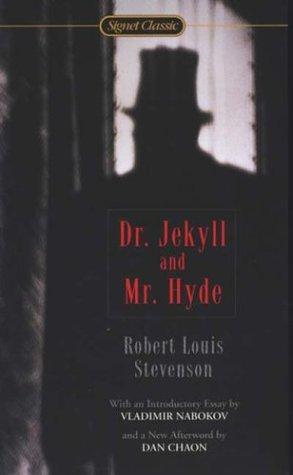
Robert Louis Stevenson’s 1886 novella The Strange Case of Dr Jekyll and Mr Hyde really gets the juices flowing. Rich tells on himself big time, we find out we’re all faking our authentic selves, and Benny is forced to bite some weird philosophical bullets.
The Ring of Gyges: Are all men secretly depraved? How much bad stuff would you actually do if you had total anonymity? Rich says a lot; Benny is suspiciously optimistic.
A typology of evil: Teasing out the banality of evil vs sociopathic indifference vs pure sadism. Where does Hyde fit? How does someone develop a taste for cruelty? On the opponent process model, why serial killers escalate, and our porn viewing habits.
Virtue ethics vs utilitarian brain: Rich is losing faith in galaxy-brained consequentialist reasoning. Can you corrupt yourself by consuming bad things even if no one is harmed? On the Westworld problem, violent video games, and other gnarly thought experiments.
Listener mail: Nicole and Stefan
Cam: Welcome back to Do You Even Lit. We are going to do some listener mail today — finally.
Rich: We could whistle through these, it’s pretty quick. You want to take us, Rich? Yep. Message from Nicole. She says: “I found your podcast after reading Ben’s research notes, so I assume that’s how you get most of your listeners.”
Benny: Yeah, that was — is that just a backhanded compliment? I don’t know about that.
Rich: I don’t like the implication there, Nicole. For one thing, we received…
Benny: Honestly, the fact that she’s reading my research notes is compliment enough on my end, so that’s fine with me.
Rich: There’s a double backhander. It’s not being sure if we receive any fan mail when actually our mailbox is overflowing, and thinking it’s insane to say that she’s been enjoying it. You don’t have to be crazy to listen to this podcast, but it helps.
Cam: Although out of our thousands of listeners now, she is the first girl. So maybe — maybe she isn’t.
Rich: By the way, it’s not that Nicole. It’s that we’ve got more than one Nicole.
Benny: Wow, we’re already double-dipping in names. Our listenership is huge, that’s amazing.
Rich: Yeah. Nicole says: “I’ve been listening to the 100 Years of Solitude episode and it’s nice to hear how other people — parentheses, who aren’t of the critic/reviewer type…” Oh my god, Nicole, come on.
Benny: It’s nice to hear our absolute dumb normies think about this book. People who don’t know what they’re talking about. Oh man, you’re on thin ice.
Rich: “I still don’t know what to make of it. I’ve been feeling like a reread would be helpful, but I don’t think I could handle that to be honest.” Yeah, me neither. “Thanks for the podcast.” And I won’t read this thing that reveals when we receive this message.
Benny: I was gonna say, either she is crazy, or Rich has neglected to do his duty in many months.
Rich: I can’t believe people read your research notes and then find us via that avenue. I mean, honestly, we’re so bad at telling anyone about the existence of this thing that I guess that is probably one of the leading funnels, so yeah.
Cam: And did you just have book club episodes cited throughout your research?
Benny: Yeah, I just like advertisements, banner advertisements on the side, except it’s my own book club.
Rich: So sad. Or was this through your one reference to the Library of Babel that you snuck into one of your papers?
Benny: I don’t think so. I have actual just notes about things on my site that honestly, I didn’t think anyone read, but that is useful for me to make public, because if I’m writing notes and know that they’re going to be public, then it puts more pressure on me to make sure I know what I’m talking about and perhaps put a more personalized spin on it. So I put them up there, but besides the fact that those are on my website and the book club link is on my website — those are sort of the only connection between those two things. I don’t think I would ever talk about the book in the middle of — excuse me — in the middle of a math research note. So anyway.
Rich: Yeah, that’s cool. Thanks for the message, Nicole, appreciate it. Cam, you want to read that next one from Stephan?
Cam: Oh yeah, sure. Stefan? Yeah, so — hey, Stefan, or Stefan. He’s essentially recommended, would we consider doing some Updike, Rabbit Run couples? So yeah, I think definitely we’ll consider that, Stefan.
Rich: I feel like Roth is in the same ballpark as Updike, right? Sort of pale, stale male.
Cam: Yep. That’s the 20th century. I imagine Updike might have come up naturally, eventually.
Rich: Yeah, I think he’d be up your alley, Cam.
Benny: I won’t say Stefan’s last name because I don’t know if he wants to be de-anonymized like that, but I should say that he’s potentially related to an ex-president. I wonder if that — because, I mean, in all seriousness, I don’t know if that’s a common last name or not. Maybe it is.
Rich: Oh, great. Stefan Garfield, you’ve earned it.
Cam: Obama.
Rich: Stefan Hussein Obama.
Cam: Should we just keep naming rear president last names, see how long the joke lasts?
Rich: I think it’s probably run its course.
Cam: Nah.
Rich: Cool, alright. Keep writing — keep writing — doyouevenlit@gmail.com. D-O-U, just the letter U, even lit at gmail.com.
Benny: How long ago was Stefan’s email, by the way? How long?
Rich: It’s not important.
Cam: Two Christmases ago.
Rich: I also need to — someone needs to reply to people and say “we did get there” so that they know, because it would be quite a crapshoot to actually hear the answer to your query, or — incentivizes people that they have to listen all the way to the end of every episode.
Cam: Exactly. It’s like the lecturer that gives the pop quiz, right? That’s worth credits. You don’t know which one to come to. You just have to come to every lecture.
Rich: Yep, that’s true.
Cam: So now these guys are listening to every episode.
Rich: We’ve locked them in.
Benny: I think you’re assuming the reward of hearing us talk about the review is maybe higher than it is, but yeah.
Rich: Alright, Cam, what are we doing this week?
Synopsis and the big twist
Cam: Yeah, so today we’re doing Robert Louis Stevenson’s Jekyll and Hyde. It’s a nice short novella, under 100 pages, and this is our little refresher in between. So we start off with this guy, Mr. Utterson, who is a sort of simple, austere man who enjoys going on walks and drinks gin. And he’s sort of our narrator — well, at least our main character. One of the first scenes — I can’t remember if he witnesses this or just hears about it — but the first mention of Mr. Hyde, who is this kind of scary, ugly man, small man, is there’s this young 10-year-old girl and she gets violently trampled. Which I thought was kind of weird to visualize.
Benny: Yeah, exactly.
Cam: What do you think trampling is? Is that just stomping her head in? What do you guys think about that?
Benny: I kind of thought just knocking her to the ground and like maybe stepping on her as he ran over her. But when that scene is originally described, you imagine sort of this very tall antagonist who pushes her over, and then, you know, perhaps steps on her. But then you realize that he’s actually this very short, sort of dwarf-like fellow. And so he might’ve been like the same height as the girl. So it’s a bit hard to imagine the mechanics there.
Cam: Yeah, he’s picking on someone his own size.
Rich: And also, they’re described as coming at right angles to one another, down two alleyways, and then they collide. So I reckon the girl should have helped him up.
Cam: Yeah, it’s just a mistake, like spilling your Jamba Juice or your hot coffee on someone around the corner.
Rich: Yeah, and he should have sued her for 100 pounds.
Benny: Is this our hot take? That Hyde was not bad after all? Hyde was misunderstood.
Cam: But it’s in public, and a crowd forms, and they’re very angry about him trampling this little girl, and he offers a hundred dollars to be like, we’re all good, right? And I suppose a hundred dollars is a lot back then. It’s funny, whenever old books — I read “money,” I just kind of automatically think of it on today’s money, and I’m like, “a hundred bucks to get this.” But that’s probably like 10K, or maybe more, maybe like 50K — I haven’t done the conversion.
Benny: Probably not 50K, but that would be —
Cam: Yeah, and they let him go. But the big mystery that Utterson hears is that the check he used to partly pay this fee is signed by Dr. Jekyll, who is this upstanding guy in the community that I think is even Utterson’s friend.
Benny: Utterson’s the lawyer. Jekyll’s his client.
Cam: Lawyer-turned-detective Utterson decides to take it upon himself to investigate this whole thing. I think he even makes like a hide-and-seek pun, am I misremembering that?
Rich: Yes: “If he be Mr. Hyde, I will be Mr. Seek.”
Benny: Yeah, that was awesome.
Cam: Yeah. It takes to the handwriting expert — like, we’ve got Hyde’s writing and it’s similar to Dr. Jekyll’s. It’s weird reading this, because we all kind of know — I mean, even the phrase “Jekyll and Hyde” itself is a euphemism, or a concept handle, to mean sort of split personality or something. But I imagine when this came out this was like a genuine mystery, and even this particular thing that’s been given away — like, we’ve had a lot of tropes now, like doubles, or “it was the guy who we’re trying to help” is the guy behind it — but this might have been early on for that as well. So I imagine audiences back then were actually wondering what’s behind this mystery.
Benny: I mean, I’m just going to admit the embarrassing fact that I did not know this story beforehand. So I was reading it afresh, and yeah, I suppose if people had said it in context, I would have inferred what they meant, but I definitely didn’t know the end of the story. So for me, it was basically like reading it the first time. Maybe I’m just bad at absorbing this cultural knowledge for books, because the same thing happened to me with Moby Dick. I didn’t know the ending before reading it. I figured out the ending about a quarter of the way through the book, given how the book is written, but yeah, I didn’t know it going in. So it was a fresher reading experience for me, honestly.
Cam: Okay, so this was a mystery, like, most of the time? Or did you catch it early?
Benny: I mean, that’s like one of the main hypotheses — if you’re trying to hypothesize about what could be going on here, I would say that’s one of the hypotheses that jumps to mind. But at the same time, there’s no hint of any sort of supernatural-type stuff throughout most of the rest of the novella, so in that sense it’s a bit of a departure from what you might think.
Rich: So did you like it? Did you think it was a cool twist and a cool mystery? Was it satisfying?
Benny: I really liked the reading experience. It hooked me, and it was cool, and I thought it was well done. I think there is an open question about to what extent you want to drop hints that you’re in a supernatural world, because I think one trap an author can fall into is — if you don’t provide any hints and then just introduce it at the end as a plot device to resolve whatever the issue was, that can obviously be a bit cheap. Oh man, I’m blanking on the word — what’s the word for this where you just introduce a device to save —
Rich: Deus ex machina.
Benny: Yeah, exactly. So it could have been that, but for whatever reason I thought he did it quite artfully, and I wasn’t mad at the introduction of this like magical potion at the end that transforms people.
Cam: Well — sorry — I’m not sure if it’s meant to be magical or supernatural, like, is it not just kind of science?
Rich: Could almost be science-fiction-y, right?
Benny: Yeah, maybe that’s why it works. But still — again, I didn’t actually mind it at all when he introduced that. But it is true that the rest of the book adheres to our completely normal physics and science and knowledge, right? You don’t feel like you’re in a world where that sort of thing could happen before it does actually happen in the book.
Cam: Yeah, like, if this was a scientific potion, why is he turning evil? And a midget. Like, what’s the mechanism?
Rich: I’ve got a bad batch of salts. I guess you could read it as a — oh no, that doesn’t work. I was going to say it’s like a drug trip gone wrong or something. Got a bad batch. Started hallucinating that he was a separate guy.
Cam: Well, it’s definitely a science experiment gone wrong.
Rich: It very much did seem to me like that was motivated, to give us this allegorical reading about good and evil within mankind and that kind of thing, which I’m sure we’ll get to.
Benny: See if Cam ever finishes his 30-minute-long summary here.
Cam: I was stuck on “trample,” you know? I was just shocked.
Benny: It’s like the physics simply do not add up here.
Rich: Do our traditional close reading of one word at a time.
Cam: Call me Hyde.
Rich: But he’s a good writer. I mean, I’m really surprised that you didn’t know this, Benny, but I’m kind of jealous. It’s so cool. It was enjoyable for me to read even though I knew from word one the twist, and I was just thinking, man, this guy’s a great writer. I’m having a good time.
Cam: Yeah, tempted to read some others, maybe Treasure Island. It’s funny — I mean, you guys might not have seen it because, you know, it’s online — but there was this semi-viral thing of Andrew Tate doing this video where he doesn’t read, dunking on people who read. He’s like, “you’re just an idiot if you read, I don’t have time to read.” But his example at the end was like, “what am I gonna do — you’re gonna read this page, and like, oh there’s this pirate, why am I reading about — like, his example is just talking about a fucking pirate.” I was like, what is he talking about, like a pirate story? But like, maybe he’s talking about Robert Louis Stevenson.
Benny: That’s a generous interpretation. He probably meant like Captain Hook or something, you know.
Rich: That’s kind of sad though, because he thinks reading — even his dunk on reading — makes reading sound cooler than it actually is. I wish there were more pirates.
Cam: My conceptual analysis. So I won’t dwell too long then, but two other things happen. Essentially there’s another murder, which is a big mystery, the Carew murder. And there’s another character, Dr. Lanyon, who has found out the truth about Hyde, but he doesn’t say it. And he’s sick and even dies from shock, seemingly. He gives Utterson, our main guy, a letter, which I also didn’t quite get — it’s just like, this is the truth about Mr. Hyde, but don’t open it until Jekyll’s dead. And Utterson holds by that, out of a sense of ethics, I suppose.
Rich: I’d be opening that letter the instant that I stepped out of his office.
Cam: The murderer that I’m trying to find out about, yeah. I suppose it’s just a sense of ethics that he — I think he’s tempted to open it.
Benny: I bet you you wouldn’t, Rich. I don’t know. Cam for sure. No, I’m kidding.
Rich: No, I would. Well, you don’t really know — you don’t really know me. I might have a hidden secret dark nature that you don’t know about.
Cam: Yeah, yeah, I now look at everybody differently.
The perfect crime
Rich: That’s the perfect kind of crime for a good person, actually, because it’s something you can do privately, and no one will know that you did a bad thing, that you betrayed someone’s confidence.
Cam: Well, the guy that — he’s dead, so you can just read his letter.
Rich: Perfect. That’s exactly the kind of thing that I would do, actually.
Cam: I suppose it holds with wills, right? Just ignore them.
Rich: Ignoring the world?
Cam: Yeah, well, you know, ignoring their wishes. Dead anyway.
Rich: No, it’s about being able to get away with it. It’s about whether or not you get shamed by the community, or you can be a little sneaky goblin in private.
Cam: Yeah okay, so you’re super attuned to the risks of getting caught, you think?
Rich: This is going to be me telling on myself for the rest of this.
Cam: Stealing avocados from the farmer’s market and stuff.
Rich: Yeah.
Cam: Yeah, so then we finally find out what happens at the end, because Jekyll’s butler comes rushing to Utterson saying there’s this weird creep in the house, we think Jekyll’s gone. They want to find out, and they essentially break down the little outhouse door, and they find a dead Hyde, I believe, in oversized clothes that are Jekyll’s clothes. So Hyde’s been — sorry, I’m losing my place — and then we get a couple of letters at the end that explain all. One from Dr. Lanyon, the one he’s been saving this whole time, and then one from Jekyll himself, that explains everything. So I knew the idea, but I didn’t know the details here, that he was taking this potion to turn into an evil person momentarily, I suppose there’s an outlet to trample girls and other things. And then they take the potion back to turn back to Dr. Jekyll. And then after a while, he just turned automatically to Hyde. He turned into the dark side — that took over and he wasn’t able to stop it. So suicide is the way out.
Benny: I don’t fully understand the suicide at the end, because his whole last thing is about how Hyde clinged so firmly to life. If it was up to Jekyll, he would have committed suicide to save himself. But when he’s Hyde, Hyde is so addicted to a certain lifestyle that he’s been able to cultivate for himself, that he wouldn’t want to die. But he dies as Hyde at the end, right? When they barge into the room, it’s Hyde on the ground who has committed suicide. So I don’t fully understand why he did that as opposed to trying to run or something.
Cam: Yeah, plot hole. And the only thing I can think of why Stevenson did it is because, first of all, the secret hasn’t been revealed, so you see Hyde and there’s still this mystery. Like if you saw Jekyll dead now, I don’t know.
Rich: I think it works as an ending. It’s a nice little touch of ambiguity to end on, in an otherwise non-ambiguous story where you have this whole explanatory letter telling you exactly what happened and why it happened. But because there’s two possibilities — either Hyde had some small remnant of goodness left within him and killed himself, which would be interesting; or Jekyll killed himself, which is what he’d been planning to do, and he transformed into Hyde during his death, at the moment of his death, because it had been happening more and more often to him. The reason that this whole thing started getting away from him is because of these uncontrolled transformations. So at first he started turning into Hyde while he was asleep, and then it started happening while he was awake, and Hyde was like taking over more and more — which is what precipitated all of this, having to make the decision to bring an end to it. I thought it was cool how the one thing that wasn’t spelled out was who was it who killed themselves, which part of the person killed themselves.
Cam: Yeah, you’ve convinced me now. I feel dumb, thanks Rich. I think that’s probably right.
Hyde’s sordid pleasures
Rich: There’s a couple of interesting things in there. One is the motivation of why Jekyll did this, which I think we should explore — why he wanted to carve apart this second part of him. And the second is why it became more and more dominant over time. So starting with the first question: what is your guys’ theory on what Jekyll was trying to achieve by bringing about this transformation in the first place? Because Hyde’s crimes are fairly — they’re mostly just hinted at, they’re not explicit. The only explicit ones we have are trampling over the little girl, which kind of just seems like an accident which he didn’t repent of, rather than a deliberate act; and murdering that gentleman in the street, which also was certainly not premeditated — it was just like, he enjoyed the act of killing, for sure. But you still get the sense that his comings and goings were for some other, different purpose.
Okay, I’m seeing blank faces, so I’ll just keep going. Alright, so one idea I had is that maybe it’s like a homosexuality parable, right? Because there’s a part of him —
Benny: I hate this. I hate this already.
Rich: Well, I don’t think it is this, but it did occur to me. He has these urges within him, and he feels like a hypocrite, or he feels like a bad guy, because he presents to the world as being this good citizen in the community, but he has these dark urges. And so his solution is to compartmentalize it into its own entity that can go and do its own thing, and he can be free of it. I don’t actually think it is a gayness parable, but I don’t know why Stevenson left this so open as to what it is specifically that Hyde was doing.
Cam: Well, I suppose — two things actually. I didn’t realize it was actually left so open, but I think you can map onto that sort of anything. There’s a side of you — there’s definitely a suppression/repression element to this thing, whether it’s violence or a sexual thing or whatever. I took it at more face value of the violence aspects, rather than — hmm, this actually, Hyde doesn’t seem that bad, so maybe there’s something else. Like, I thought it was telling us that there are these violent urges in humanity, or in a man, that he was letting loose to go and be violent essentially. And then come back.
Benny: I think there’s an interesting thesis in here about Stevenson’s view of human nature. So I think this plot makes sense if your view of human nature is that, when possible, we’re as greedy and selfish and violent as we want to be — when we can get away with it. To everyone else, to society at large, we want to present as gentlemen. But if no one was looking and we could get away with it, we would like kill and rape and trample.
Cam: Trample.
Benny: Right. Which is one view of human nature. I don’t think it’s one I agree with. Adam Smith has this line that I only know because of Russ Roberts, but it’s in A Theory of Moral Sentiments. The line is that man desires not only to be loved, but to be lovely — so, to be held in high esteem by those around him in the community. And yeah, I just — I guess I’m struggling with the extent to which people are good only because they have to be in order to maintain some sort of social standing, or if you’re good because it’s some innate desire, some intrinsic value that you have that’s tied to some view of morality that you have. And I like to think it’s the second one. I like to think that people are good not only when people are watching, but when people aren’t watching and when you’re alone. But I think the picture Stevenson’s painting here is that that’s not true, right? There’s this part of you that you’d like to offload if you could. You maintain this pristine public image when you can, and then you run off and trample people when, if you can get away with it.
Cam: Yeah, like, would you do it?
The Ring of Gyges: are people good when no one’s watching?
Rich: Well, it’s like the Ring of Gyges example from Plato, right? I’m way more on the side that most people with the Ring of Gyges would in fact do exactly whatever they could get away with, and would find a way to justify that — especially something like property crimes, like stealing just stealing shit, enriching yourself, whatever. I would be amazed if people didn’t, for the most part, take advantage of perfect privacy. Like what Jekyll wants here is being insulated from his own actions, so that if Hyde ever gets caught — which he does — it’s under a different person and different name, and he’s totally absolved of any blame for it. If all of us had access to that, I think we would behave really immorally.
Cam: This is just because you’re the guy who reads the letter, man. Like, everyone would read the letter, even though you’re told not to. You said you would read Lanyon’s letter, what he says don’t read. You’re like, well, if there’s no punishment here, I’ll read this letter.
Rich: Yeah, I totally — I mean, I don’t know how other people think. I’m willing to admit that I’m not that moral a person, right? Now I guess by saying that, that’s the kind of thing that I would do.
Cam: I don’t believe that about you, I don’t believe you’re like —
Benny: Yeah, me neither.
Rich: You wouldn’t believe I’d read a letter that someone told me not to read?
Cam: Oh no, no, I’d read that — but the fact you do that is because that’s not that bad. Yeah, I’ll do that as well, to be honest. Who wouldn’t read the letter? You’re obsessed with finding out this killer. But yeah, I don’t buy that you’d do super bad stuff if you could.
Benny: Yeah, I mean, I’m not sure I even buy that most people would. There is something that feels good about being good and having a clean conscience. And the fact that Jekyll knows that Hyde is running around causing mayhem causes himself often to be psychologically uncomfortable and shaken by it. And that’s evidenced by the fact that he goes through a period of several months where he doesn’t transform into Hyde, and he feels very good about himself, but then these demons start creeping back in and he feels the pull of it. Maybe this is just I have some naive optimism about humanity, but —
Cam: Well, you probably got a little bit of that, me, but yeah, on the —
Benny: It’s the libtard in me, bro.
Cam: Yeah, everyone’s good, we just need to give them the right idea and they’ll stop committing crimes, man. We don’t need prisons. No no no, I’m somewhere between you guys.
Rich: Yeah, you guys are way more optimistic about this than I thought you would be. Just imagine a society where everyone owns the Ring of Gyges. I think society would just suddenly become pure, unadulterated chaos. I don’t think everyone would use it judiciously, or not at all.
Benny: But that’s somehow the wrong thought experiment, because if everyone has it, does everyone know that everyone has it?
Cam: We’re getting some common knowledge problems now, man. Yeah. You’re like, did you eat the cookie? It’s kind of like when you’re a teenager and your browser history is cleared, and your parents see it, and you’ve been on the internet for like two hours, and there’s like no history. Like, something happened, I think.
Benny: Yeah, exactly. The trick is to delete the history like one item at a time, you know — you gotta leave the innocuous stuff.
Cam: Yeah.
A typology of evil
Rich: I’ve got a typology of evil I want to introduce — this is a good moment to do it — because I got thinking about what is good and evil. My first thought was that it’s really stupid and naive to even think that that exists, that people just respond to incentives and to their genetic directions, and that’s all there is. Like, you know, if you put me in 1930s Germany, I would probably be a goose-stepping Nazi, and it doesn’t say anything about me being good or evil. It’s just being transported into a different environment where I’m incentivized to act differently. But then I realized, well, we’re going to talk about evil, we need to figure out what we’re talking about here.
So my three categories I came up with: the first is like the banality-of-evil type evil, which is most of, you know, even Nazi Germany, the Hannah Arendt Eichmann in Jerusalem stuff, where you get caught up in your little pocket of social reality and you just go along with the crowd. I even think in some sense it’s not even evil, because within your local social reality what you’re doing is good or virtuous, or at least neutral. So your sense of right or wrong is incredibly warped, but according to the norms of the weird thing happening at that point in time and space, it’s fine or good, right? So that’s not the type of evil that we’re talking about here. That’s evil from the point of view of the universe or something.
The second type would be evil where you know you’re causing suffering to others, but you’re indifferent to it. Which I think is where a lot of sociopaths and other people with personality disorders fit in. You have perfectly normal theory of mind so you understand how people are modeling the world, but you don’t have the normal affective thing that kicks in and that would stop people from misusing the Ring of Gyges, where you come face to face with the suffering you cause and it causes this huge aversion, revulsion, guilt — kind of like what’s his name in Crime and Punishment? Raskolnikov. He tries to do something and he’s just absolutely sickened, and it destroys his psychology. That’s a normal biological reaction because of our being social animals. So there’s a type of people who don’t feel that, and they do things — they steal the money from the pawn broker, it’s all instrumental. That’s type two — but it’s instrumental, they’re not trying to cause suffering, the suffering is instrumental to getting money or sex or power or whatever.
And then the third type, which I think is the pure evil, is like sadism, where the suffering is the point. So you’re not causing suffering in service of some other thing and sort of inuring yourself to it — you’re getting off on the suffering. That’s like what we think of as true evil, I think — like serial killers and child abusers and stuff like that. And it’s really rare and unusual. I think that kind of evil is actually super unusual.
To your point about what I would do with the Ring of Gyges, or what most people would do — I think most people would not do things that are evil in any of those categories, because of how we’re wired up to feel disgust and self-recrimination and all that kind of thing. But anything where you don’t come face to face with the suffering that you’re causing — sure, absolutely. Does that make sense?
Benny: Sure, yeah, I like that a lot, actually. I think a large part of culture and setting up the right institutions is guiding precisely that kind of behavior that can get away from you when you’re not coming face to face with the suffering — when the natural thing to do is just do what’s in your own self-interest because you don’t notice any detrimental effects on other people. The point of setting up the right cultural institutions is either to make that suffering legible in some way, or just to push your incentives in opposite directions towards more pro-social behaviors. But then, society has a much harder time dealing with outright sadism or anything bordering on that, which is why we just have prisons. At some point we’re just like, okay, incentives aren’t enough to do it here, you just have to be locked up.
Cam: Well yeah, and it’s also norms is a big thing, right? We have high-trust norms — those are slightly different to carrot-and-stick incentives, although it’s related. I wonder with your taxonomy, Rich — I wonder if there’s too much of a difference between two and three. I get that you’re pointing out, like, someone’s end goal is to kill someone, rather than them just not caring about it. They’re slightly more dangerous, but I think number two is probably much more common. Whereas you get — it’s called like anti-social disorder or something, like people that just literally have no empathy. And then I think there’s also a theory of mind thing as well — they’re just like, why should I care? If you break someone, or you stole from them, or you killed their kid, they’re like, why does it matter? A lot of these people are in prisons and stuff. Yeah, I think that’s not that common.
But your type one, I think it’s quite easy for people to get to that. Even we see now, our empathy or sympathy towards innocent victims of suffering — you can think of a lot of current global crises over the last several years, the level that we often care about it and feel genuinely emotionally sad about, that’s politically mediated. So yeah, it’s so clear.
Rich: I’m thinking of calling our last episode “Sympathy for the Incel.” So that might be —
Cam: Yeah. So people don’t have sympathy for themselves. And like, you pick whatever global conflict there is now — people have sympathy, depending on your political inclinations, for genuine suffering going on on one side, but then you see examples of similar suffering going on on another side, or a different conflict that’s part of — it’s not part of your tribal allegiance, and you don’t think about it. It’s out of mind. And if it’s not politically mediated at all, like there’s just some conflict in Africa or something, you don’t usually think about it. We do sleep fine. But these are genuine feelings as well — you genuinely feel sad. That idea of sort of not caring or apologizing for innocent victims because of political reasons — that gets pretty close to evil, right? Not giving your sympathy to people because of political reasons, or ideological reasons, or incentive reasons.
Rich: But there’s the commission-omission distinction there, I think. You didn’t bomb the kids in Iran, so if you don’t feel sympathy for them it’s not great, but it’s not like you did that. So I’m struggling to call that evil. It’s more just symptomatic of tribalism, or — what Benny was saying about having to make suffering at a distance salient to you in some way for you to actually care about it or take action about it.
Cam: Well, I don’t know. When I hear some people sometimes just defending pretty bad things, essentially because of tribalistic reasons — I agree with you that’s a difference to someone just wanting another’s self — but it doesn’t feel crazy to me to call that evil. Someone sometimes even celebrating and relishing it.
Rich: Oh, I see, like endorsing bad things happening. Like the Nazi example — we’ve, I realize I’m immediately Godwin’s-lawed — yeah, I’ve Godwin’s Law’d the conversation right out the gates. But yeah, there’s milder versions of that that definitely happen all the time, that I’m sure we’re all aware of, of people endorsing bad norms that are harmful, including to the groups that they claim to care about. But of course that just becomes a matter of debate, right? That’s always up for — history will be the judge of that.
Cam: I mean, one thing just around the violence stuff — there is this thing around, like, you look at history, it’s just filled with violence, right? A lot of it’s male violence. And then there is just more recent history, or examples of, as soon as — yeah, it’s almost like the Ring of Gyges. As soon as there’s an example of a norm failing, or some civil war or something, it’s just suddenly this flood of violence that happens. It’s always latent. And that’s what the story was somewhat getting at — does every man have this hidden nature that is getting bottled up by the norms of society and stuff, and needs to be let out? And then I suppose the other thing, Rich said is the second point — if you dabble in it too much, that’s a risk in itself. You dabble a little bit, like it may take over.
Developing a taste for sin
Rich: Yeah. It rings so true to me. For one thing, what happens to Jekyll is that as soon as he lets Hyde out of confinement, he starts to lose a grip on the containment, because Hyde’s behavior escalates and Hyde’s control over Jekyll escalates, and Hyde becomes a bigger and bigger portion of the entity over time. That just intuitively rings true to me, that you get a taste for sin or violence and it feeds upon itself. I was thinking of that quote, “do not let evil into your heart” or something — just don’t start this flywheel turning.
As I was trying to research my typology of evil, I was thinking about type three evil, the people who actually get off on the suffering of others — the most extreme cases, not just blunted empathy, but who enjoy the suffering of others. I was trying to figure out what causes that. I found Roy Baumeister, who’s a psychologist. His theory is that there is a habituation response going on. It’s called the opponent process model. Normally you have, say you do a behavior that’s really scary, like skydiving, and you’re terrified of it — it’s so freaky. And then as you land you’re relieved that you’re not dead, and you get a little high. That’s the first time you go skydiving. And then if you keep going skydiving, those two processes start to invert. So you become habituated to the fear — which is meant to tell you, what the fuck are you doing, do not jump out of an aircraft, you’re going to die — that blunts. And then the thrill and pleasure that you get from it escalates. And that just continues. If you become a seasoned skydiver, you’re not really scared at all, but you’re absolutely elated and you’re having a wonderful time.
So the parallel with people who develop a taste for sadism and suffering is that normally you do cross some threshold, kind of like Raskolnikov, right? You do some act and you have some little thrill, perhaps, but a much greater sense of guilt, recrimination, disgust, etc., if you have a normal affective response. People who start down that path typically just stop there, because it’s like, oh, I tried something bad, that did not go the way that I thought it would go, I’m not an extraordinary man. And then some people, if you manage to keep pushing through, you habituate yourself to the bad responses, and the thrill and joy grows and grows. That’s why you have this thing where serial killers typically have to — their tastes keep becoming more and more depraved. Some of that is kind of rock-solid neuroscience, and some of it is more of a speculative model. But I was so impressed that Stevenson captures this dynamic incredibly accurately, more than a hundred years before we had any of the relevant science of how my type three evil comes about. I think it’s depicted well here.
Benny: So people have to differ in their initial proclivities, though, presumably. Because otherwise, what explains why some people push through the initial disgust response and continually seek out that experience, even if the first few times the bad sort of outweighs the good? And why do some people just stop the first time they do something wrong and they realize they have an overwhelming sense of guilt or shame, and then they stop? Does he say what personality characteristics ensure that you keep going versus stop? Or is it just the size of the response, the magnitude of the bad-to-good response?
Rich: Yeah, you’re exactly right. There’s certain preconditions, and one of them is how much of that baseline empathic distress that you have. So for me, if I cause someone to suffer, I feel very strongly — it makes me suffer as well, because I have that normal instinct. I mean, everyone does, but I feel it very keenly compared to some people. And other people feel that much, much less strongly, so they’re much less moved by the suffering of other people. There’s natural variation within the population, where sociopaths are like the disordered version of that, where they hardly have it at all. He says other things — like early exposure to instrumental cruelty, where cruelty is modeled as effective in some way, or where they themselves were the victim of cruelty, so they see how someone threatening or harming them can get a result that they want. And then he says there’s also often a boundary crossing, which is when you’re in a context which gives cover to your actions, like war, or you’re in an authority position or in an abusive relationship, and you find that the expected consequences like some kind of social collapse or punishment don’t materialize — that’s very reinforcing as well. So the feedback loop can really take hold because the negative consequences don’t materialize.
So yeah, some of it is environmental, some of it is genetic, but it’s sort of rare conditions that would start this spiral from taking off at all.
But I think the reason why I felt this to be so intuitively true — and I’m going to tell on myself here, and I may edit it out — is that I’ve very much had this with porn viewing, where I’ve watched porn, and then over a period of years I’ve found myself watching weirder and weirder, more niche, degrading, bizarre types of porn. And then afterwards I’m like, what the fuck is this? This is horrible. And I’m pretty much of the mind that porn is bad, to be honest. I don’t watch porn if I can help it, and certainly try to just watch more vanilla porn, because I think —
Benny: “If I can help it.” Classic.
Cam: You stopped taking the potion for a year and then you suddenly didn’t require the potion, and you’re just watching them.
Rich: I’m just a man, my — the flesh is weak, you know. But the spiral of escalation of escalating desires and habituating yourself to the disgust reaction — I believe that this is why porn has become insane and crazy, the genres are just absolutely out of this world. Because I — and I’ve heard other people have similar experiences — you can’t get off, the things that I would have found super erotic and arousing when I first encountered porn morphed dramatically by the time that I was like, okay, this fucking is terrible, in a way that’s very obviously bad and unnatural and makes me feel bad long-term, and probably has bad abstract suffering in the world as well, of that I’m not having to deal with myself but which probably exists. So yeah, that’s a good example, I think.
Cam: We just watch — I don’t know what to tell you, we just watch vanilla regular porn, I don’t know what to tell you, man.
Benny: Get yourself checked in, dude.
Cam: No, I think — I remember Tyler Cowen dunks on TV, says all TV’s bad, but there’s a few exceptions, and a couple of them — there’s these Israeli shows actually he quite likes — and he said he thinks part of it is because, one of them, you had more taboo and tradition around sex and sexual dynamics as well. Which you don’t have now in normal TV, so it’s also boring and vanilla, and you kind of have to ratchet it up to get something. So yeah, you have these cultural norms around it. Again, we’re probably touching on Atomised territory. But yeah, the dynamic you’re talking about is right. One of my Hydes, my Jekyll-and-Hyde dynamics, is fucking food, man. I’m someone — and my dad’s the same — it has to be like zero sugar in the house, so — and as soon as that breaks, like, I eat a whole packet of lollies or biscuits or candy.
Benny: That’s probably a very common one. Probably the most common one.
Rich: It’s also not shameful to admit that, right? It’s not embarrassing. You don’t have to hide that away. Or maybe you have to hide it a little bit.
Benny: It depends on the social circles, probably.
Cam: Yeah, it’s not that shameful. I have hidden, you know, drinking a can of coke in a spare room before, though.
Rich: Does it have that escalating quality to it, where you know you open the floodgates and then it keeps ratcheting up?
Cam: Oh, hell yeah. But I think that differs with people, like there’s a distribution. I remember I went to a movie with a bunch of friends, went to a shop — this was when I was being healthy and eating zero bad things — and everyone just got like one chocolate bar. Another guy got like one ice cream or something. And I was sitting there — we’re going to a movie — I was like, how’s this guy getting one chocolate bar? Like, I’d be sitting there, I’d be getting like some chips, chocolate bar, drinks, all these. So it often differs. And this guy’s just normal, just want one chocolate bar. So yeah, there’s levels. I’m not that fat, listeners, by the way.
Benny: That’s why we stopped doing the video. We stopped doing YouTube. Cam was getting huge. Yeah, my Hyde is that I killed the occasional person. But other than that, I lost.
Rich: I’ve been like, Benny, I genuinely can’t imagine doing anything bad. But I think I should be suspicious of you, just based off the fact that you think the same of me.
Cam: That’s what everyone thought about Jekyll, man. An upstanding guy.
Rich: I’m suspicious of everyone because I know that I could be bad. But it’s interesting that you guys don’t feel that way.
Benny: But when you say “I could be bad,” what do you mean by that? Because everyone is tempted — like, thoughts cross your mind of things that you want, or — I don’t even know how to say it — in a different world, things you might pursue. But then what happens is that you actually think through the second-order consequences of pursuing that thing, and you realize, all else equal, it’s not worth it, because if I was to actually do this, then I’d have internal shame and guilt, and I’d also have public remonstration perhaps, depending on the circumstances. And so I don’t want to say people are bad because they have that occasional thought of, you know, whatever it happens to be — stealing something, sleeping with someone else, whatever. Everyone has those thoughts. So if we’re going to call that bad, like, okay sure, then everyone is bad in some trivial sense.
Cam: Well it’s not just like everyone’s equal — it’s not like everyone has like fleeting thoughts. I think there’s two metrics. One is the neuroticism around getting caught, and people differ. Some people are so worried — my partner’s like that. Oh my god, we like didn’t do this, we left the shop, we didn’t pay for the coffee, and they’re so worried, like what would happen, like we go back. That’s a bad example, but — and I’m like, this won’t be an issue, like no one’s gonna find out about it. There’s that. And then the other one is just this kind of okay-ness of doing selfishly motivated things that might hurt someone. That just differs with people. And Benny, you’re probably quite on the extreme of just like never doing the selfish things.
Benny: Well no, I think — Rich just acknowledged, he just admitted that he’s on the extreme. Right? If you consider doing something bad to someone, you would feel their suffering quite a bit. If you were to cause someone harm, then you would feel bad about it. So that’s not an incentive problem, that’s not like, well, if no one was looking, I would do this bad thing. That’s not what’s going on. It’s just the fact that causing suffering has discomforting and negative psychological elements that go along with it.
Cam: Yeah, but we’re not antisocial disorder, but there’s a spectrum of that. Some normal people are closer to the antisocial disorder, and some normal people are further away. There’s a distribution. So suddenly, like, the incentives are aligned, or you’re not going to get caught, or is it not that bad?
Utilitarian brain vs virtue ethics
Rich: I think my particular problem is utilitarian brain, and thinking actually like —
Benny: “Actually, if I — if I was to sleep with this guy’s wife, the wife would be happy, and I would be happy, therefore —”
Rich: Well yeah, you know, you can run versions of utilitarian thought experiments where it’s like, what if you harvest the organs of the person and no one ever finds out about it, and your reputation is never tarnished etc., right? You’ve specified all the negative consequences away. And I’m subject to that kind of thing, where I will rationalize about things. I’m like, oh, well, it’s actually okay because — in some elaborate thing. Right? Exactly like Raskolnikov.
Benny: How much you resemble Raskolnikov.
Rich: It’s only in retrospect that I realize how much Raskolnikov — yeah, I’ve been thinking about it more and more, but not so much while I was reading it, which is funny. Because I think he was going to steal the money from the pawn broker — what for? I can’t remember, he had some goal with it, right? It was to — yeah, but he could turn it to some noble end. And I think I can do that.
Cam: Yeah, I thought the money would be — she doesn’t really use the money, and it would be — maybe even for selfish reasons, it would be rationalized that would be better for him, as a student.
Benny: I mean, he was poor, so he just wanted to pay rent and food and whatnot.
Rich: I see other utilitarian-brained people, and I — who have a worse case of it than me, and I look down on them, I think they’ve got it wrong. I’m becoming more interested in virtue ethics, just this idea of like, you should practice being good. It’s a skill that you obtain, and you don’t do these galaxy-brain youth — if it’s a bad thing, you kind of know it’s bad, just don’t fucking do it, and practice acquiring virtue. And then the corollary of that is that you can practice acquiring vice, and that’s what happens — if you act in a viceful way, a sinful way, I guess, like you are actually becoming the type of person who enjoys sinful things. I don’t know what am I saying — like the slippery slope is real, or something. If you behave in a way that is in some sense bad, you will develop a taste for behaving that way, your rationalizations will get more complex, and virtue ethics is just — I don’t know, I’m very early in my thinking about this — but it’s simple. It’s just, like, don’t be bad, end of story, and don’t try and do some galaxy-brain calculations about it. Just don’t do the obviously bad thing.
To give another example — I’m sorry that I always pick on Aella, but it’s just the first thing that comes to mind — like, I’m not even on the Sankey diagram. She says stuff like, oh, we should create lots and lots of AI-generated kiddie porn because no one’s being harmed, and it’s just bringing utility to pedos, and maybe it’ll be like a diversion activity so that they won’t consume actual kiddie porn or whatever. And these are the super utilitarian-brain arguments of like — the model is not capturing all of the complexities of reality there, I think. It’s like, no, just don’t fucking look at kiddie porn, and much less make it, even if it’s fake, because you’re corrupting yourself and becoming the kind of person who’s inclined to do things like that. Yeah, I’m becoming way less sympathetic to those types of arguments, I think.
Benny: Oh, we just got our episode title.
Cam: Let’s park that one, Pinochle. Like —
Rich: But we’ll lose our last remaining listeners after “Sympathy for the Incel.”
Benny: I hope you still read my math, Nicole. I hope, even if you’re not in for the kiddie porn, that you’re in for the math. Wouldn’t those same arguments have applied to violent video games, though? Like, what — don’t indulge in violent video games, because then you’ll slide further into moral retrograde, and soon you’ll be committing violence in the streets? Like, that’s not at all what happened.
Rich: I don’t — I mean, yes, on some level — I don’t know, I can immediately think of a couple of ways it’s not analogous. One is that violence in video games — maybe you’re doing righteous violence, which is a necessary function of society, you’re fighting off the alien invaders or whatever. But the kiddie porn — it has exactly one purpose.
Benny: This is a mad post-hoc rationalization right here.
Rich: And you’re trying to make it as hyper-realistic as possible. It’s quite different to role-playing something which does happen in life and that you might actually need to do in certain circumstances.
Cam: Yeah, I mean, I’ll bite the bullet — the consuming of the act is what’s bad as well. It’s just in a virtue ethics sense. With ethics, we pull ourselves up by our bootstraps anyway. We say, why do we care about coms? Why do we care about this? It’s bad to do.
Rich: To take it to the extreme, Benny — take like the Westworld example. You’ve got extremely lifelike AI automatons; raping and murdering them, you would have to bite the bullet and say it’s totally fine. Whereas I would say, no, that’s bad for your soul. We shouldn’t encourage that. It doesn’t matter if it’s just an inanimate object — it is bad.
Benny: Yeah, I mean, I’d bite the bullet in the other way, I guess, and just say, like, yeah, it depends on the consequences. If you saw a rise in antisocial behavior as a result of Westworld in the real world, then I would say yeah, that’s bad. Insofar as pedophiles are less likely to rape actual kids in the world and are more likely to spend time in their basements looking at AI-generated kids, then I think that’s good.
Rich: So it’s just an empirical question for you.
Benny: For sure, yeah. I care about suffering in the real world. So things that reduce suffering in the real world overall, which might be — again, like the classic utilitarian issue is, like, how do we even know? It can be a tough calculation. Sure, of course it’s a tough calculation, but everything — all social policies are a tough calculation. But insofar as we can get a handle on it, then yeah, I want social policies that reduce suffering.
Cam: To be honest, the hardcore psychopaths that are at risk of being violent and stuff — I’m not sure if they should be playing these violent video games, you know. In a hypothetical world they didn’t exist, it might be better, right? A lot of normal people, it’s fine. Anyway.
Rich: Yeah, I’ve got a half-formed blog post idea, which takes all of these ideas about how the novel was considered to be bad for society — you know, reading too much is considered to be bad — and then radio, and then TV, and then video games, and now AI, or whatever, or short-form video. And to just be like, yes, it was — yes.
Benny: It is bad. That would be epic. Yeah, really bite the bullet. Yeah. Printing press bad.
Rich: I’ve honestly got a half-formed idea about it. Oh, and with the violent video games, like, it could just be bad for kids to play certain types of games where you do really grotesque things to people and think it’s cool. But it could be such a minor harm, and so non-realistic and so non-transferable to the real world, that it hardly has any effect. But it could still be a mildly bad thing, that scales in relation with how realistic it is, how norm-violating it is, all this kind of stuff. And that within a normal middle-class Western childhood where you get brought up with all these other moral values, it doesn’t even register, possibly. But it could still in some sense be bad. I’m not going to be one of these guys who’s not letting my kids play with toy guns and stuff like that — I’m fine with — and I like violent movies and — but I don’t know if that’s an ironclad principle. It might just be a dose-response type thing. Anyway, Benny’s more EA-brained than me. Interesting.
Cam: So Benny, take the potion, and then assess the consequences afterwards, determine if it’s bad, and then your soul will be corrupted.
Benny: Yeah, I mean, one aspect of this I don’t fully understand: from Jekyll’s perspective, offloading your bad behavior onto Hyde makes sense socially, in the sense that, you know, people see Hyde running around on the street, then they’ll judge Hyde as being a bad character, and that’s not traced back to Jekyll. So when he’s in Jekyll’s body, then he feels fine. But like, Hyde would care — no, I guess the point of the story is that Hyde is a complete psychopath and doesn’t care at all about other people’s opinions. But in reality, people doing bad things, I think, still care about their social station, I suppose. So yeah, that’s one aspect of this I didn’t fully buy.
Cam: Hyde in a moment of vulnerability, you know — no one really asks what it’s like, you know, I have to do all the bad things, you know. But to be honest, the way I — where I thought you were going is that there’s actually a straight line of consciousness or memory between the two. It’s not like, oh, this is a person, I can just — it’s not like that show Severed or whatever, the Ben Stiller show, where you go and do something else and you come back and you have no memory of it.
Benny: Right.
Cam: So it’s not even — I mean, maybe it would slightly clear conscience, but it probably doesn’t even fully clear conscience because you’re like, I consciously drank this, and when I did this, and I remember it all. So maybe it’s more this social reason of, like, yeah, I can just get away with it because he looks different to me. And that was actually my misunderstanding, from osmosis, of this. I just assumed it was like split-brain, like, total blank when you’re the other person. And it was just like a release valve of, like, yeah, go go kill someone. I mean, there are those movies of, like, what’s it called, The Purge and stuff, where it’s like one day a year the whole society just lets it out, and that keeps everyone non-violent the rest of the time. I don’t know much about that.
Rich: It is interesting as a maybe metaphor that Jekyll has kind of made the worst possible decision, where he’s let the evil out to do evil things, but he still is sort of hovering in the background, subconscious, watching over it and being horrified by it, and then still has to live with the consequences of it — albeit not that he’s going to be brought to the gallows, right, which is the thing that he’s concerned about. But psychologically and morally he still has to, and at least his own death. But yeah, it also reaffirms that Jekyll himself is not really a good guy. It’s not really good versus evil, because he wanted to make the separation, and then he kept doing it even when he knew he would retain the memories and in some sense experience whatever it is that Hyde does. So it seems more like protect his reputation and his good name, and a defense against any litigation or jail.
Cam: Do we know — when he was first trying to make this discovery, the scientific discovery, was he just trying to make a discovery of, like, split personality or something like that? Or transformation, really? Or was he actually looking — was his intention to be bad? Or was that just like an unintended consequence and then he kept doing it?
Benny: Yeah, I’m not sure, there’s only a couple of sentences about it. My sense was that he had this desire all the time, in the sense that he identified this part of himself that wanted to go do bad things, but the rest of him couldn’t condone it, and he felt like he had this split personality in some sense. But then my sense was that his scientific work was almost orthogonal, and then it was almost by mistake that he discovered that this potion could quite literally split his personality.
Cam: I’ve thought this is aspect of me — I used to play a lot of sport growing up, and it was almost schizophrenic sometimes, the amount of hatred and competitiveness you had sometimes playing this person, like you just really want to almost hurt them sometimes. And then like after the whistle was blown, you’d shake hands and you’re really nice and you’re respectful. I imagine, to an extent, that happens in war and stuff — obvious boundaries — but there was something that I kind of liked about, yeah, like, we’re going to battle now, and we’ll do what we need to achieve this. And that’s not what I’m like outside of that at all. So maybe not so different.
Benny: I mean, yeah, that’s probably part of the healthy aspect of sports, is like learning how to harness those sorts of feelings in you, right? When you’re like, especially young guys who are just filled with testosterone and ready to punch everyone’s lights out, and being in situations where you’re hyper-competitive — yeah, I’m sure everyone has felt those feelings where, like, something happens on the field and you detest this person. And then you have to, in the game, sort of unleash that in rage in some sort of positive direction, or rein it in by the end of the game. It’s probably a healthy way to learn how to deal with that stuff. You could be Hyde on the field, basically.
Cam: Just trample a 10-year-old girl playing beach soccer or something.
Rich: Yeah, you didn’t mention that you were playing against a junior girls’ team.
Cam: Yeah, everyone else is trying to let the youngest daughter of the family, like, score, and I just — in the pack —
Benny: No!
Is there anything beneath the mask
Rich: This was a question I had for you guys actually. So Jekyll talks about how “man is not truly one but truly two. I say two because the state of my own knowledge does not pass beyond that point. Man will ultimately be known for a mere polity of multifarious, incongruous and independent denizens.” So my question for you guys is: do you feel more like a coherent individual? Is there just one canonical Benny, one canonical Cam? Or do you feel more like a coalition of entities which have competing desires and which express themselves in quite different ways in different contexts? Because something I’ve been wondering about is — all the stuff around aphantasia and examining the contents of people’s consciousnesses — there’s actually huge variation in what your internal thought process looks like, and how you visualize things and stuff. So I was thinking, maybe people are really different on this too, and maybe people feel way more like an assemblage of — I feel more like an assemblage of entities than a single thing, I think.
Cam: Paradoxically, I feel like a bit of both, and there’s cognitive dissonance around it. I definitely feel like a coherent whole, but I’m very aware of all my inconsistencies that are fighting against each other and arguing against each other.
Rich: So there’s a part of you that’s watching all the other parts squabble, and that’s the part that is, like, the real-you part.
Cam: Yeah. I mean, most of the time. This is kind of like the self-illusion, I suppose. It’s quite strong with me.
Rich: What about you, Benny?
Benny: Yeah, I think I feel more simply like a unified self, with different desires that pop up in different contexts. But in terms of the phenomenology of how it actually feels moment to moment, I feel like a singular self who then has competing interests that I just have to navigate, and that I decide upon. But it doesn’t feel intrinsically, somehow, like my personality is split into various versions of me that surface in different contexts. I’m not sure what that would actually feel like phenomenologically. I think there’s just something about the fact that you have this through-line of memory, moment to moment and day to day and week to week, that gives me this unified feeling, even if my desires can change from the morning to the evening, or based on my mood.
Cam: So yeah, even Jekyll and Hyde actually, they feel — you know, just one person, really — got the memory. Just parts of me.
Benny: Yeah, but I mean, that was sort of your point earlier, Cam — there is this weird asymmetry where Jekyll really remembers what it’s like to be Hyde, and so like, are they really different people? I’m not sure. I think even he makes some allusions to the fact that maybe Hyde has less memory of being Jekyll when he’s Hyde. He’s sort of more instantaneous, perhaps, in his desires, or has less psychological continuity somehow.
Cam: Well, I almost thought of it like Gollum and Smeagol, of vying for control over this person, but they’re having memories and awareness of the other one as well.
Benny: Yeah. Rich, when you say you feel like multiple people — is that how you describe it? Or you feel like one person with multiple sets of desires in different contexts? Can you elaborate on what you actually mean by that? Like, does it feel like you have a different personality?
Rich: Hmm. Yeah, now that you say it, I think phenomenologically it doesn’t feel too different, actually. But it does in that there’ll be times when, let’s say I’m behaving badly — like I’m really angry or frustrated and I’m poorly emotionally regulated, and I’m acting badly. And there’s a little part of me that’s just watching myself, and I have no power whatsoever to change what I’m doing, and I’m just watching and being like, what the fuck are you doing? So it’s like this very real tension where I’m like, I’m behaving in a way that I don’t like and I don’t want to do, but I can’t not do, and it’s really frustrating. Phenomenologically, I suppose that is a feeling of watching a movie of my own life or something.
But usually what I realized is, it’s more that I present my actions in the world very differently depending on context, and who I’m around. I think I’m very chameleonic, and just like, changing how I talk and how I behave and all kinds of things to adapt to the situation I’m in. And I feel like other people just go through life completely themselves and never adapt. I feel like I wear masks, a lot of different masks for different things, and then it gets confusing to be like, what is under all of the masks? But yeah, I think this is very close to the true me, or something, that you guys get, because I don’t really need to try.
Benny: Do you think the fact that the mic is on changes it though?
Rich: Yeah, that will a little bit, but in the best case I just forget about it, right? If we get heated enough I just forget about what we’re doing and get lost.
Cam: Start talking about your porn preferences, even.
Benny: So your true self is the one that’s mad at Cam all the time.
Rich: No, “pretends to be mad at Cam” — that’s a mask. Anytime I say something bad or stupid, that’s a mask. And if I say something really true and cool, that’s my true self. So that’s how you can tell.
Benny: Anytime I’m not super verbally fluent, that’s not my true self.
Rich: But do you know what I mean? Do you guys ever talk down to people? Like, don’t use certain words or terminology, just because, you know, they won’t get it, or you’re preempting?
Benny: Oh, 100%, yeah.
Cam: Oh yeah, no, I fully relate to that.
Rich: I mirror the way that people talk.
Cam: Yeah, it’s kind of code-switching as well. Sometimes it’s non-conscious, you just drop into it, right?
Benny: Yeah, I mean, that’s what it is, I think. It’s funny that you said chameleon because I literally described myself as a chameleon to someone that I was hanging out with last night. Just said, I think not in a super perverse way where I’m totally ignoring any of my underlying desires or ethics or anything, but there is a way in which, like, around people who play a bunch of sports I’m one way, and then a bunch of academics I’m another way, and around you guys I’m a different way. And yeah, I do just code-switch, I think is a good term for it. I do switch depending on what the social dynamics of the groups are.
Cam: Fuck, do you know it’s funny — both of you guys actually, I thought that would be far less true of you. And that was like a redeeming quality of you guys, because I was almost envious sometimes. I was like — it’s so true of me, and less true of you guys, even in other contexts, with other friends or things like that. And I was like, man, if I could be a bit more like that.
Rich: Is this related to being in your head, Cam, of trying to think about how other people are perceiving you all the time?
Cam: I don’t know. I explicitly had that thought around you, actually, just like, meeting some of your friends, kind of outside of the intellectual spheres that we frequent online. I thought you were quite consistent and similar.
Rich: Okay yeah.
Cam: And then I wondered that about me and my friends. Particularly with my dad’s side — it’s a working-class background — and I really dumbed myself down. One time my uncle came over, I was like, hid my books. I was so embarrassed, I didn’t want to talk about books. But it’s funny, because I got all these books behind me, so I was very used —
Rich: He was worried he was gonna call you a pussy or something.
Cam: Yeah, yeah, exactly.
Benny: He lies down on your mattress, he’s like, wow, this is a very uncomfortable, uneven mattress, what’s going on here?
Rich: That is so funny.
Benny: That’s crazy.
Cam: But yeah, it is interesting that you also —
Rich: You must be one of these “incongruous” — you’re one of these incongruous shaggots, boy.
Cam: Yeah yeah yeah exactly. Well, not so much — I was very confused when you changed the group chat and then I saw it. I was like, oh, I get it.
Rich: Did you guys laugh when you hit that line, by the way? I have to ask. I was just giggling for like five minutes.
Cam: It did make me wonder how — because assuming he’s talking about, like, sticks, right? And when that meaning changed so clearly — anyway, I’m looking at the time. Sorry, I have to run on that note.
Benny: Yeah, I guess we should run. At least we did listener mail at the beginning. We should do that every time, I think.
Rich: Yeah, if it’s a nice easy one.
Benny: Because we always have listener mail, so surely we can always do it at the beginning.
Rich: Oh, there’s a really long one actually, so we’re not going to do that one at the beginning, coming up. Maybe I’ll break it into bits.
Benny: Man, when we get huge, we can just do off-cycle episodes on just listener mail. That’d be fun.
Rich: Yeah, exactly, that would be really good actually. But I don’t think anyone’s got time for that yet.
Benny: Alright, well, on that note, write in to us at doyouevenlit@gmail.com, just the letter U. And then Rich will ensure that we get to your listener mail in approximately three months after you sent it.
Rich: Oh, we don’t need to say the exact time frame. It’s a variable reward schedule. It’s important that you don’t know. And you don’t know which self you’re going to encounter either. You don’t know what tab I’ll have open in my browser at the same time.
Benny: Nice.
Rich: Alright, cool, good one, fellas.
Benny: Alright, did we say what book we’re doing next? We already announced. Is that right?
Cam: Roth’s American Pastoral. So if you want to go get it, enter that, get that on Amazon now.
Rich: Yeah, cool, alright. See you guys soon.
Benny: See you guys next time.
Cam: See you guys.