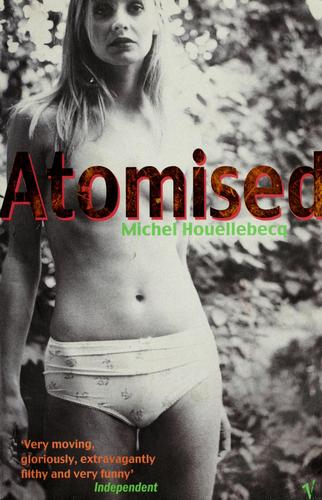
IMMORTAL ASEXUAL CLONES: YES NO? Did aella’s birthday gangbang generate positive externalities? Why is Cam’s fridge full of dead chickens?
These are the big questions of our age and we are the only ones brave enough to tackle them.
Join us as we wrap up our discussion of Houellebecq’s Atomised (also known as The Elementary Particles).
The sexual marketplace has no safety net: Houellebecq says individualism devours the rational structures meant to protect us. Rich argues we’ve already mostly solved this problem in the economic realm. Sex is harder tho. Are there any positive-sum status games to play here? Why do we tolerate redistributive policy for wealth but not for sex? Is Freddie deBoer a hypocrite for clowning on incels?
Bruno visits the Lieu de Changement: A sex commune with much kindly compassion for the outcasts masturbating on the fringes. Could this scale beyond extremely rule-following Germans? Is enforced monogamy the real solution, or has that ship long since sailed?
Houellebecq’s rhetorical sleight of hand: is paternal love purely instrumental? Do hippies really have a direct lineage to sadists and serial killers? Is the hedonic treadmill of transgression a real thing? Probably not, but we love our cheeky boy.
One trillion identical Cams: Michel’s solution is to eliminate sexual reproduction, individuality, and desire entirely. Would this even work? Is H being serious or just proving the problem is insoluble? What happens to science and progress in a world with no genetic or ideological diversity?
penis size chat
Rich: Just do another PhD. Can you do that?
Benny: Don’t tempt me. Some people do. I don’t think it’s ever economically very smart, though. Doing a first PhD is also economically disastrous, so that’s — yeah.
Cam: It’s all about the sexual marketplace, though, the gains of the PhD.
Rich: Yep. Pretty huge dick — that’s what it stands for, right?
Benny: Yeah, somehow mine hasn’t been growing the whole time, but I’m assuming at convocation it just magically magnifies in size.
Rich: You gotta — yeah, it probably will just start sprouting from that point on, because you haven’t really earned it yet.
Cam: Yeah, it’s like the sheepskin effect.
Benny: Yeah, that’s true. Once you really defend yourself against the big heavy hitters, that’s when you grow a foot in size. And a foot elsewhere.
Rich: Yeah, you might get your first facial hair.
Benny: Or it’ll just start coming out of my nostril or something. I’ll just get a really long nose hair.
Rich: Yeah, skip straight to ear hair and nostril hair. You pass perfectly from twink to elder bear. Nothing in between.
Benny: That would be so tragic. It will happen, I think.
Cam: You’ll change from like a 30-year-old in the 2020s to like a 30-year-old in the 1980s, like overnight.
Rich: Just completely busted.
Cam: Yeah.
Benny: On the plane ride on the way back, the steward called me little buddy. Like, when he was asking for my drink. I was like, how old do I look right now? I couldn’t believe it. I was like, this guy thinks I’m some 14-year-old kid traveling by himself for the first time. He’s like, you want something to drink, little buddy? I’m like, bro.
Cam: As long as he doesn’t rough you up.
Rich: Oh, cute. Was it a patronizing older gay?
Benny: Yeah, brutal. Absolutely brutal. And then some girls there guessed I was 19. It’s like, mother of god, dude. I’m reverting. I don’t know what’s happening, but it’s rough.
Rich: That’s awesome, man. I’m jealous.
Benny: I don’t know if it’s patronizing. Yeah, maybe. It was probably because I’m just actually so massive and muscular, he wanted to put me in my place. It’s probably a passive-aggressive remark, surely.
Cam: Yojo’s irony. You’re just a big guy calling them tiny.
Benny: Yeah, exactly. So I’m taking up two seats basically because I’m so big, and he just wanted to —
Cam: Big bartender.
Rich: It’s like how they always used to call me needle dick in high school.
Cam: Yeah, exactly. Bring it down a peg. Speaking of —
Rich: One of the funniest passages in the book — where I actually laughed out loud — was, I don’t know if you guys remember this, but it was like: you won’t believe this, but in the 70s people were not really insecure about their penis size. But then I was in the locker room, and I started thinking about it, and I realized that it was rather small. I went and measured it, and the key goes on for a while. And then at the end of the paragraph it’s like, and from that point on is when I began to hate blacks.
Benny: Yeah.
Cam: Yeah, that was fine. I just forget it, though.
Benny: Oh my god.
Cam: My first thought around that, though, is like, that’s probably a real effect. And I have that with height. Like 10 years ago, maybe longer, I used to not think about height or worry about it at all. But because it’s been memed in social media and stuff so much now, like now I’m more likely to somewhat notice it. I used to never notice it at all. I mean, I still think this shouldn’t really matter, but it’s sort of been memed and now you sort of notice it. And I imagine that was true for — yeah.
Rich: And now you hate the Dutch.
Cam: No, I hate the Dutch, yeah.
Rich: So that’s what it’s like to be a zoomer. Like, you’re conscious of your dick size, your height, but then your cheekbone protrusion, and your canthal tilt, and whatever other weird stuff that they’re coming up with to get concerned about. Yeah, the ever-growing list of —
Cam: Well, that’s the high-IQ zoomers, I suppose. It’s going to optimize all that stuff.
Rich: — things to have a complex about.
Benny: Yeah. But surely that wasn’t true in the 70s, right? Surely dick size mattered to some extent, at least in the limit.
Cam: Well, I think, like height — it always has, probably, a little bit, but nowhere near it does now.
Benny: Yeah. And people didn’t talk about it as much, maybe.
Rich: Like before porn as well, right? You just wouldn’t have seen that many dicks, and the ones you’ve seen would have been more in the middle of the bell curve. Or if you’re a heterosexual male, you’ve probably only seen soft penises, so they all look more or less the same.
Cam: That face when you’re seeing everyone in the middle of the bell curve and you’re still getting worried — what’s up with selection effects going on here?
Benny: Trying to tell yourself a story about selection effects — surely all the people here must have big dicks, right? That’s surely how it is.
Cam: Exactly.
Benny: All right. Should we summarize, or should we just dive into talking points?
Cam: I think we should mention that we’re doing part two. We’ve already discussed the first half — or most of the first half.
Rich: And maybe just to say up front: what a crazy fucking book, man. This turned out to be like a sci-fi book written by our alien post-human descendants. Like, what the fuck? This is not how I thought it would go.
Benny: No, but I love Houellebecq, man. He just gives you so much food for thought. It’s so much fun reading his books, and they’re easy to read. Touches on lots of topics and lots of taboo topics. Just so much fun.
Rich: Yeah. And we’ve got a full docket that we may or may not get through.
Brave New World and other failed utopias
Benny: You guys want to talk about the Huxleys?
Rich: Yep. So this is fairly soon after the halfway point. The two brothers, Michel and Bruno, having one of their drunken midnight conversations. Bruno’s talking about the Huxley brothers. So Aldous Huxley, author of Brave New World and Island, sort of proto-happy. And then his brother Julian Huxley — who, I knew that Aldous was related to — what’s the other more famous Huxley, the original eugenicist?
Cam: Thomas? Darwin’s Bulldog.
Rich: Darwin’s Bulldog, yeah. But I didn’t realize that Julian Huxley wrote the book on eugenics, and had this very technocratic, utilitarian mindset of how we could optimize the human race. And so Houellebecq claims in here that Brave New World was written sincerely originally — where Aldous stole all his brother’s ideas, and then after the fact he was like, “psych, just kidding, it’s a satire, I didn’t mean to actually endorse this dystopian future.”
Rich: But anyway, it sets up what I think is Houellebecq’s central idea. He describes the two big ideas that come out of the scientific enlightenment as being rationalism and individualism, and that they’re in tension with one another, and one has to die, basically. And the type of rationalism that he means is not like Cartesian rationalism or Yudkowskian rationalism, but just the idea of technocrats optimizing society — like doing social engineering to try and increase aggregate well-being for humankind. So we’re pretty familiar with that, I think, these days. And then individualism being this undercurrent that cuts against that, of having people pursuing their own self-interest in increasingly liberated ways — which, you know, is what he’s been describing about the sexual revolution. People being free of the family unit, people being free to sleep around, and then that turning towards other types of pleasures. And he sees that as being like this — what does he say? How would you describe that? I’m getting a little bit stuck here.
Cam: No, you’re right. I think it even says it devours the rational structures that are meant to protect the individual.
Rich: Yeah. So he sees the individualism strain that drives forward our society now as winning against the more collectivist, aggregate-utility strain. So what does he say? Well, actually I don’t have a good quote here, but I’ll just throw that back to you. I have an opinion about whether or — oh, come on, you surely have read Brave New World?
Cam: At some point. No, I didn’t read Brave New World.
Benny: Yeah, surely in grade seven you read your book.
Cam: I thought everyone’s kind of like quietly read it. You know, you sort of don’t need to read it.
Rich: You illiterate fuck.
Cam: Well, maybe we should discuss —
Benny: That’s what Cam tells himself when he hasn’t read a book. He’s like, I didn’t think you needed to read this, it’s just in the cultural waters.
Cam: Yeah. I’m more of an Island guy, I think.
Rich: Have you read Island?
Cam: No, no. But — so, was it Michel in the book? He had that provocative claim that they were the same thing as well. And I think they’re kind of set up as very different things. Brave New World is authoritarian with engineered happiness. And then Island is, I think, voluntary, psychedelic enlightenment and spirituality, later on in his career. And then, I mean, I think Michel, the character, is the same. Like, they’re both trying to solve suffering by engineering human psychology, I suppose. Sorry, I know that’s not quite what your question was, Rich, but I think we’ll get there.
Rich: No, no, hold forth more on two books that you haven’t read.
Cam: So the novel was less prophecy and more logical extrapolation of these ideas already circling amongst the Huxleys.
Benny: I think Michel’s critique of the Huxleys is that, even leveraging technology to reach this sort of utopic collectivism, they were still trying to harness individualism. Right? They tried to still maximize freedom and plenty and optionality for each individual person, and augmented with technology. And then they thought that would get us to some sort of paradise. But I think Michel’s critique — and probably Houellebecq’s critique — is just that you’ll never get to that utopic point, because, as you wrote, Rich, individualism beats rationalism every time. As soon as you grant people enough freedom, then individualism emerges and differences between people emerge. And then as soon as you get that, you get winners and losers in every marketplace, but in particular in the sexual marketplace. And then that gives rise to these dynamics where it’s just like, well, you’re going to have people who are more desirable for whatever reason, along whatever metric you choose. And that means you’re going to have people at the top and people at the bottom. And then, you know, Houellebecq’s focus is on the people at the bottom — pointing out that they’ll always have this problem.
Benny: And so, it seems put like that — and then you put your sort of Deutschian optimism hat on — it seems like maybe a bit of an insoluble problem, right? You might just want to argue that it’s not a problem, or that individualism and freedom is worth having these sorts of problems. But it does seem inevitable that, yeah, if you grant people more and more freedom, then what remains, basically, are whether innate or cultural differences — whatever — between people. But that just means there’s going to be winners and losers. And Houellebecq in the book is very focused on winners and losers in the sexual realm. But he’s focused on the sexual side of it — I don’t see why that criticism doesn’t actually apply more broadly. Like, whatever metric you want to talk about, it seems right.
Rich: Yeah, yeah. You’ve hit the nail on the head there. What he’s critical of is the optimism about human nature — that humans will choose not to compete in some way. And he says, no, this is how we’re wired. We will always be that way, and nothing will ever change that. We’ll just change the landscape on which we compete. And I think that is right. But — you go, Cam, you want to jump in?
Cam: I was just going to reiterate, like, that is the crucial insight. This struggle is inescapable, it’s insoluble, as long as sex is a biological imperative in the sexual realm — like, as long as human nature is the way it is. And, I mean, we’ll get to it later, but this book posits: if you solve that part of human nature, then maybe it is solvable.
The intractable problem of inceldom
Rich: Yeah, I’m interested to argue about whether his solution even works. But before we get there — I think I agree with this, but I want to invert it slightly to the more positive framing of it, which I think is true. We’ve talked about this before, but the clamoring for position, and social status, sexual status, et cetera, is kind of what makes the world go around. So it’s not that nothing is intrinsically motivated, that people are never intrinsically motivated to do cool stuff. But so much of it ultimately does cash out in this and is driven by this. And that’s good. It’s often positive-sum, and I think the entire way in which humans have become awesome is through channeling more and more of our animalistic desires towards positive-sum games — like science, and starting startups, and taking risks that benefit the collective and cover you in glory if you win. And we keep getting better and better at channeling those desires in the positive-sum direction.
Rich: And I think we’ve actually already landed on — I don’t know if we’re at the perfect equilibrium — but I think everyone clearly recognizes that there’s a tension between individual success and collective well-being. And if you run rampant with individualism, then you’re going to get a bad outcome — either we’re all going to kill the billionaires, or society will crumble, because there won’t be enough sense that individual people’s talents are contributing back to the collective. And the other way around, there’s also the sense that if you’re too concerned about optimizing everyone’s aggregate well-being, then you crush the spirit of individualism, which brings us all this good stuff. I reckon we already know — we’ve already designed societies that work on that basis — and that it’s naive to think that we would ever be able to go fully one way or the other. We know that that doesn’t work. It’s always just a trade-off. And so, pessimistically, maybe we’re already close to the best possible structure, which is something like the social democracy we have. Like, market-based economies and competitive status games, but you also have redistributive policies. And, like, everyone does redistributive tax policy — even very conservative people. It’s just kind of taken for granted at this point, and then we’re arguing about specific policy stuff. There’s heaps of fine detail to still figure out — the optimal policy settings — but I’m kind of of the mindset that we’ve already solved this problem in the broad strokes, and this is probably roughly as good as it gets.
Cam: Well — but, I mean, one — I think we talked about this a little bit last week — but one well-being point is, there is kind of a double standard, justified or not, with the sexual realm. We don’t have distributive policies around sex. You know, people think of forcing someone to share the sandwich is different to sharing the wife or whatever.
Benny: To share the sandwich is a different sense.
Cam: Yeah — in one sense, you know, to cut the lunch. But yeah, in one sense the sandwich doesn’t have desires itself, you know, you don’t always have to be coercive — but so potentially there should be double standards, or maybe you can make arguments around that as well, that it shouldn’t be quite as free. And even, I did think about even libertarians as well, who push for freedom and stuff — I think the only thing that they successfully get is in the sexual realm, really. You get more and more freedom of all this stuff, but not really in the economic realm. Like, you’re still going to get tax — you’re not going to remove tax — but you’re going to totally liberate. They’re just two realms essentially, and people have very different instincts around that, whether that’s good. Even with these coercion-type considerations aside — I think, even if you could find a way where there was less coercive — like, people I think have different instincts around whether they’d be good. There’s often no charity towards the incels, or the lowercase incels, the losers, from some people. Who would usually care about losers in the economic world. And there’s overlap, of course, because, as Rich said —
Rich: You could be poor and an incel.
Cam: Exactly. You could be rich and getting a lot of girls. I think that can happen.
Rich: Yeah, yeah, dude.
Benny: It’s been known to happen. I mean, I think one possible reading of Houellebecq’s point is that in these other realms outside of the sexual realm, you can invent collectively better and better games to play. Now, within those games, there’s always going to be winners and losers, but the academic game — the game of science and advancing knowledge and progress — that’s a better game to be playing than running around throwing sticks at each other over our campfires and trying to steal each other’s women, right? And so you’ll get much more collective progress out of that game, even though, of course, within that game there’s still — there’s scientists with extremely high status, there’s scientists with low status, there’s scientists that are mocked, there’s scientists that are revered. And so it is with the various political games we can play, around taxation, various ways to organize institutions and whatnot. So you can slowly invent better and better games to play that — they’re never going to equalize the field, because, again, there’s always going to be winners and losers insofar as you just let people pursue interests and passions. But it does mean that people at the bottom can live better and better lives, as we figure out these better and better games.
Benny: In the sexual realm, it’s kind of harder to see how you could do something like that, right? Like, we’re sort of still at brute ape, instinctual levels around sex and who you want to be with. And it’s hard to see a way out of that that doesn’t fundamentally alter our psychology or our sexual preferences in some sort of gross way. And so his point might be: there’s not really an escape from this particular game we’re playing.
Cam: He even makes the point that the game in the sexual realm can trump these other realms. There’s this point — I think he says like, Bill Gates is jealous of Snoop Doggy Dogg and some other people who were getting all the girls. And, like, we know recent stuff of Bill Gates in the news — we kind of know there’s truth there.
Benny: Sure, yeah, yeah.
Cam: And I remember as well, there was this viral reel or thing a few years ago of Jeff Bezos and his girlfriend, and he was like talking to Leo, and Leo was like, as the youth say these days, like, mogging him. Yeah, so there is an aspect to this in reality.
Rich: Yeah. So Houellebecq’s definitely pointing out this inconsistency, where the way that we talk about how we might resolve those competitive dynamics in the economic realm is very different to how we talk about how we might resolve those competitive dynamics in the sexual realm. As always with Houellebecq, I don’t actually know what side he comes down on, or whether he’s just pointing out the hypocrisy or the lack of consistency.
Rich: But I was thinking, just to give a concrete example to what you were saying, Cam, about people who can be very concerned about the well-being of people who occupy tenuous positions in society — Freddie deBoer, I don’t know if you guys read him, but he’s a card-carrying Marxist, and he wrote this post on Substack recently that was basically clowning on incels, saying, like, it’s not that hard to get pussy, fellas. Let’s not pretend this is the most difficult achievement ever. Ugly people manage to do it, poor people manage to do it, weird people manage to do it. It’s kind of on you. And I was just imagining if you went through, copy-pasted this post, and changed every reference to: it’s not that hard to get a job, fellas, let’s not act like it’s this incredible achievement to manage to find work. You know, ugly people manage to do it, dumb people manage to do it. It’s like the total lack of compassion for one group of disadvantaged, marginalized people. I understand why — it’s because so many incels do have odious opinions, or bring it on themselves. Like, the main thing that makes me sad — that we talked about a bit last time — is this idea that you just meme yourself into it, in a way that’s probably less relevant to your economic fortunes. If you are convinced by online rhetoric, or watching Clavicular or whatever, that you are not worthy of a woman’s love, or that you are ugly, or whatever, and you have no hope — if you believe that hard enough, then it becomes true. It becomes a self-fulfilling prophecy, and now it is true. You’re right to think that. So there’s an element of that. But there’s also just — you get what you get. You rolled the dice in life and that’s what you got to work with.
Cam: Yeah. I mean, well — I think with the deBoer thing, you’re right, that he probably has double standards. But, like, both cases are somewhat true, right? You can make that case to the incel and to the poor person as well. Like, you’re potentially overstating the problem. Go and do the thing.
Benny: Yeah. I like that reading. I was like, yeah, he’s actually right. And then he’s right in these other realms as well — go get a job.
Cam: Yeah. Well, the part — I mean, the thing is, like Rich was getting at — it’s partly true, but it’s partly not true. Like, just to say it’s like — you know that rich person who’s like, well, yeah, here’s my 20 reasons to success. It’s just like, no idea of the role that luck has played.
Benny: Yeah, but it does just seem like — we know hypergamy is a real phenomenon, in terms of women wanting to date up the status ladder. So, as you get a society that is increasingly divided along those sorts of lines — there’s ever more opportunity to increase high-wage jobs, increasingly more education, et cetera. So, as soon as you can stratify more and more and have ever finer-grained levels of status, it seems like you’ll always have some subset of guys then at the bottom who are having trouble getting women. And so Freddie’s critique in that sense just misses a fundamental, systemic reason why this group is always going to exist, and might even be sort of growing over time. He’s missing that this is — it’s a social problem, it’s not just an individual problem. Even if one of these guys goes and gets a well-paying job, cleans himself up — okay, he’s put himself higher up the status hierarchy. Now there’s someone else who has correspondingly fallen down. Because women only have so much attention to give men.
Rich: Yeah, it’s purely positional, right? Because you’ve got one scarce resource. And that means that it has to be purely positional.
Benny: Yeah.
Cam: Polygyny — that we see now with, especially with the same famous guy that has a lot of girls. You know, what was that guy, Caleb from Brooklyn, that guy on Tinder, that came out on TikTok with the other 10 girls who were dating this guy.
Benny: That makes it even worse, though. That doesn’t help your case.
Rich: So if you get a glow-up, you steal one of Caleb from Brooklyn’s girls, is that the idea?
Cam: Yeah, yeah — well, you share. Not even — still, you maybe share.
Rich: Yeah, okay, that’s true. There’s probably also women who think — a lot of women who can’t find a man worthy of them, right? So if all men glow up, then maybe there is an untapped pool of —
Benny: An untapped pool of the untapped.
Rich: So, okay, it’s not perfectly zero-sum.
Benny: Yeah, that’s fair, I guess. Although insofar as hypergamy becomes more and more popular, that could also just make the problem worse. Because now you have like 10 women willing to all date the same guy, and that just leaves more guys at the bottom as well. Take that logic to the limit.
Rich: Yeah. And this is worse for women as well, if they have other goals than hooking up with Caleb from Brooklyn or whatever he’s called.
Cam: Dating Drake in your 20s.
Rich: Well, you would, wouldn’t you? I mean, just like, you playing football at a high level in your youth and then —
Cam: I would just be Drake for a few years.
Rich: Yeah, and all these are different —
Cam: Yeah. And then do a book club.
Rich: Yeah.
Sexual social democracy and compassion for the lone masturbator
Benny: I mean, maybe let’s talk about the sex commune — the Lieu de Changement. Because I think this is sort of Houellebecq exploring what a naive solution to this problem might be. Which is that you get a bunch of people together, and they say to themselves, okay, we’re just going to have free-flowing sexual activity here. We’re just going to be full-on hippie culture. Everyone will sort of sleep with everyone, so everyone’s sexual desires in some sense are filled. But by the time Bruno gets there, this thing is many years old. Everyone there is out of their sexual prime, and more focused on weird sort of self-help-style seminars that have been corporatized in odd ways. And they’re obsessed with various herbal medicines and astrology, and they fall prey to slogans. And then he shows up, and he’s still having trouble finding women for a long time. He’s going back to his tent at night and just masturbating in his tent, like, thinking the next day, okay, I’ll approach some women — and doesn’t for a long time. And then finally manages to find this woman, Christiane. They spend, I guess, several years together — maybe several months, I don’t know, it was a bit hard to track the timeline. And they’re relatively happy, but their happiness is basically because in some ways they’ve escaped this game, or at least have leveraged it in a way that is satisfying for both of them. And then as soon as she can’t have sex anymore — as soon as they can’t fulfill each other sexually — he basically leaves her, and then she commits suicide.
Cam: Yeah, well, she gets paralyzed almost from too much sex, right? And then it doesn’t work out, and then —
Benny: Well, I don’t know if it was —
Cam: No, no, this has been a little bit — no, that was the mum, that cancer.
Benny: Was it from too much sex? Wasn’t it cancer or something?
Cam: No, I thought she had some condition — some bad condition. I think her sexual lifestyle wasn’t necessarily the best prescription for it. And then she ultimately killed herself.
Rich: Oh, man. That was so sad, because they had something sweet going. He just rips your heart out — he can’t let any — there can’t be any trace of a happy ending.
Rich: Because Bruno’s trajectory — Bruno has a pretty nice trajectory here. He is kind of an incel red-pill archetype guy, says horrible things about women. He meets — how do you say it, Benny? Christiane, which — I just noticed the obvious naming significance — and he changes almost on the spot. There’s this really funny dialogue where she’s bitterly talking about feminism, and Bruno goes, oh, feminism’s not also bad, or something like that. Which is such a strange thing to hear come out of his lips. But yeah, she really softens him, and they fall in love, and it’s very genuine.
Rich: And part of it is they have great sex, and she is his ticket to explore this promised land of sexual liberation. Because when they go to the next resort in Germany — which I’m not going to try to say what it’s called — it’s a similar thing. It’s a nudist resort. It’s a bit more modern, a bit more classy. And they meet several couples, and they have a great time doing partner-swapping and participating in this promised land of the sexual revolution. And Bruno writes an essay about it, where he claims that he’s not depicting it as an idyllic paradise. He says, quote:
As anywhere, beautiful firm young women and seductive virile men will find themselves inundated by flattering propositions. But as anywhere else, the obese, the old and the ugly are condemned to solitary masturbation. The sole difference being that whereas masturbation is generally prohibited in public, here it is looked upon with kindly compassion.
Rich: So I thought this was interesting. Because, okay, it doesn’t solve the problem — if you’re old or obese, or in some way undesirable, you still can’t get laid. But people have changed their attitude towards you at least, and they sort of let you participate, if only from a voyeuristic point of view. And certainly no one is mad with you, or calling you disgusting or a creep or whatever. So you’re part of the community. And I think Bruno is actually also kind of moved by that, and thinks that, if not idyllic, it’s an improvement upon the status quo. So I wondered what you guys thought about whether that could be some kind of a progression from what we have now, which he describes as a sexual social democracy. And he points out — I mean, the rug-pull he does is that this only works well because it’s Germans, and they’re extremely good at following the social contract. And if we let in any of those dastardly Muslims, or National Front members, or other freaks, then they would ruin the whole thing. Actually, he says obliquely, this is the same kind of adherence to social norms that led to Nazi Germany, or led to two world wars — which I think is pretty tenuous. I think it’s better than he’s portraying it.
Benny: Yeah, this is an interesting part of the book, and I’m a bit torn what to think about it. So, despite what I said earlier about him sort of painting a picture of what a utopia might be and then tearing it down — showing that it can’t work — that’s not quite true, because there are, as you say, parts of the book where it seems like people are living relatively happily with very swinger-esque sort of lifestyles, where there’s people going to sex clubs and everything’s fairly compassionate and people are fairly happy. And yeah, there’s still winners and losers in this world in terms of people who are having sex more or less. But people at the bottom are viewed with compassion. It’s understood that they’re going to do what they’re going to do, and everyone looks upon that kindly. And it doesn’t strike me as absurd that this sort of society or subculture could exist. It probably does in some places, or something close to this, right?
Cam: Yeah, I think there’s different versions of it.
Benny: Like, obviously, yeah. And maybe slightly smaller versions than the large-scale commune that he’s painting. But clearly, some sub-communities are able to have extremely liberal sexual norms, and it works. Yeah, I guess maybe it’s just an issue of, how compatible is this with most people’s individual psychologies? And maybe for most of us, it’s not, but for some subgroup it is. But I’m not really sure what to think about that. Is he saying this could work for everyone if we had the right cultural norms to support this — like, we were all more like the Germans, this could work the world over, and this is actually a possible solution to the problem he’s painting? Or is he saying, no, something about this will fundamentally break and it doesn’t work over time?
Cam: Yeah, I mean, I don’t think the narrative is sympathetic to this place and to this sexual social democracy. I was going to cite some of the texts that Rich already cited. But Bruno is suffering still from deep insecurities regarding his appearance and performance.
Benny: Yeah, true.
Cam: And even at the resort, there’s this — I think a quote — savage competition, like that we usually find outside the world, and it persists in the resort. I take your point, though, you have some compassion for the guys masturbating in the corner. But they’re not getting the attention, and so the older women are not getting the attention that they want, and the non-virile guys are not getting the access to the women that they want. So it’s still benefiting some to the others, and causing insecurities. And I thought the narrative was kind of saying individualism leads to stuff like this. Sexual competition is this inescapable part of life. If anything, things like this — like hardcore progressivism that leads to things like this — if anything, may exacerbate the problem. Because it elevates sex and lewdness to the highest form of virtue. I’m sure there are definitely subcultures like this that exist, and have for a long time. You know, there’s some coming and the fluffer going on, and some coyotes. I kind of know what you mean — that, you know, it works well, yeah, maybe.
Benny: What a reference.
Cam: There’s an element where you get this weird group of people, or there’s this homogenous group, the high group of people — maybe it works for them somewhat, but it’s not scalable. But, like, potentially even amongst them — yeah, yeah. So one of the counter —
Rich: Actually, he asks, how would it go in Japan or Korea? He’s like, I wonder if this would work well in other highly homogenous populations with strong social-norm-abiding populations.
Cam: One of the counter-arguments, though, is that it’s not human nature that causes the issues here — it’s like the taboo from society. And then so you get this kind of circular issue of saying, well, if you just removed all these taboos around it, people would be fine. But, I mean, my problem is, you’d still have winners and losers, I suppose. And people are always going to feel inadequate around that.
Rich: Yeah, that’s where I most strongly agree with Houellebecq — that merely continuing the process of liberation will never change this dynamic. And as you say, Cam, it might even — it probably just makes it worse. Like, the thing that you could do to address this problem, if you felt really strongly about it, would be to go back to having strong social norms around monogamy and against adultery, right? And then that would go a fairly long way towards solving this particular problem. And clearly that’s just not the direction that things are going, and that by revealed preference is not what people want to do. But that would be the best solution available.
Benny: And that might be changing somewhat, to be honest.
Cam: Yeah. I think the other Houellebecq-ian point is, like, maybe returning — you know, becoming a Catholic, returning to these as one option — or just returning society to these norms — won’t work. We need this new way forward.
Rich: Yeah — not back, but through. Someone said last time, right?
Cam: Yeah. Which I think is a theme of some of his other books as well. That’s not to say he’s right about that. You know, maybe it would be best to return, or return at the margin. But yeah.
Houellebecq’s rhetorical sleight of hand
Benny: Do you want to talk about paternal love at all, Rich?
Rich: I’ll just whistle through this one, just because it gives me a chance to point out a little trick that Houellebecq is doing that I’ve been noticing. So this is another drunk conversation between the brothers, where Bruno is holding forth on his theory that he has no real relationship with his son Victor, because paternal love is no longer required in modernity, because it was always instrumental. It was about forming a bond because you had something to pass on to your son — be it skills, bringing him into your family business, or an inheritance, or just sharing your experience and knowledge with him. But in a rapidly changing world, that doesn’t even make sense anymore, because your kid — whatever you know — will be almost irrelevant to them and their life. And also he says, I rent my apartment from someone else, there’s nothing for my son to inherit, I have no craft to teach him. By the time he grows up, the rules I lived by will be meaningless, the world will be completely different.
Rich: Which is this fascinating and true observation that I’ve heard before — that for old people in particular, the revered place that they had in society is gone, because their knowledge is mostly going to be obsolete. You know, the meme of helping granddad figure out how to work the DVD player or something — it should be the other way around. In previous cultures it was: granddad is teaching you his incredible stock of knowledge. And now it’s like, oh man, these people can’t keep up. After a certain point, they’re not designed for modernity.
Rich: And so he goes on to say, like, kids are a trap, they’re your enemy, you have to pay for them all your life and they outlive you. To which Michel responds, like, oh my gosh, Bruno’s right — paternal love is a lie, a fiction. A lie is useful if it transforms reality, but if it fails, then all that’s left is the lie.
Rich: So I really like this, because it is a true and interesting insight. But it’s not true that paternal love is just instrumental. The true observation is that the social structures around fatherhood have decayed and fallen away. But then he smuggles in this much stronger claim that the feeling of paternal love itself was always just a byproduct of those structures. And so there’s this real seductive quality to his writing which I keep noticing, where I’m like, damn, that is such a good point. And it’ll often be something that’s really controversial or forbidden outside the Overton window — or something, for instance, like this. But then when you think about it, the specific interesting claim does not support the bigger argument that he makes. So, you know, it’s probably obvious, but in this case, biologically, it’s not true that men don’t have a bond to their children. They do. And the more involved they are, the more they have hormonal changes and stuff, the same as what women have. And then just empirically, the phenomenological experience of being a father — you could just survey a lot of fathers: do you love your child? And a lot of them would not only say yes, they’d say it’s like the most sublime experience of their life, blah blah blah, right? So it’s just wrong. But he keeps doing this. And it reminds me of the same type of trap that incels fall into, where they make what are genuinely interesting, almost like forbidden-knowledge-type observations — so, pointing out that your ability to get sex or find a partner in life are determined in part by your sexual market value, or pointing out that female hypergamy exists. But then they smuggle in much broader claims than that — like, that you will never succeed unless you can be six-foot-three and earn blah-blah money, or all women are this, all men are that. They make these really over-determined claims about this one interesting thing.
Rich: Yeah. So it’s just the seductive nature of it. And I love Houellebecq, because he’s just a master of this kind of thing. He makes these provocative statements, and you tend to get swept up in it a little bit, and you have to step back and be like, is it really true that the hippies are a direct line of heritage through to satanic serial killers? Like, he says this.
Benny: Yeah, yeah, yeah.
The hedonic treadmill of transgression: hippies to serial killers
Benny: That claim did make me give me pause, though. Like, I had to think about it for a bit. I was like, okay, I see where he’s coming from. I’m not sure I buy it. But the idea of — it’s like the hedonic treadmill, but applied to norm violation. Right? Like, the hippies are being transgressive in a certain way, and pushing back against various cultural norms at that point. But as soon as those norms become common, then the hippiedom sort of loses its allure. And then you graduate, as it were, to more intense forms of transgressivism in turn —
Cam: Yeah, I mean, but you do see elements of that —
Benny: Including satanism and serial killing, you know.
Cam: Like, maybe not circling with it, but —
Rich: I’ll just read one quote quickly, Cam:
According to Macmillan, the decline in Western civilization since 1945 was simply a return to the cult of power, a rejection of the secular rules slowly built up in the name of justice and morality. Actionists, beatniks, hippies and serial killers were all pure libertarians who advanced the rights of the individual against social norms and against what they believed to be the hypocrisy of morality, sentiment, justice and pity. From this point of view, Charles Manson was not some monstrous aberration in the hippie movement, but its logical conclusion.
Benny: Yeah, I like that a lot.
Rich: Sorry, Cam, you go for it. I just wanted to give the context.
Cam: No, I was just going to say, I think we even see elements over now — it gets a bit culture-war-y though — of just where total freedom around sex can lead. We’ve all seen sort of photos of, like, children being exposed to pretty explicitly sexual stuff at parades and stuff. And, you know, it’s a cultural point how people feel about it, but you can kind of see what kind of leads — you transgress things, and you want to keep on transgressing things, in a kind of trivial sense.
Rich: I hadn’t thought about it in that context. Like, drag queen story hour and that kind of stuff — is that what you’re talking about?
Cam: Yeah. So that would be like the conservative critique. But, I mean, for the people that want total sexual freedom, the main argument for them is around harm. Because it’s not harmful, that’s the whole thing. So it’s like, you know, I’m fucking my parrot — well, maybe not, maybe that’s harming the parrot — but it’s the same as eating the parrot, you know what I mean? So let me fuck the parrot. I mean, part of my reaction is just like the midwit meme of just like, no, don’t fuck the parrot. But my point being is, the harm is this big thing as well. So the reason it’s okay is because no one’s being harmed. That’s why I’m not sure if the serial killer stuff would go fully away, because they’ll be like, well, no, that’s not okay, because you’re harming people. So that’s why it’s different. But then —
Rich: Exactly. Like, it’s not fair to lump these people in as libertarians, right? Because, unlike libertines, libertarians have a principle that other people are not allowed to harm me, and I’m not allowed to harm other people. And I think that’s a pretty good place to draw boundaries for personal freedom and liberation against the extremes of, you know, the Judge Holdens of the world, or the Marquis de Sades, or whoever.
Cam: Yeah, yeah. Then you get into this question of, like, what is harm, and what is harm at a societal level. They kind of bite the bullet of, like, yeah, don’t fuck the dead chicken for spiritual reasons, perhaps. Which, you know — you haven’t seen my fridge.
Rich: You’re such a prude. We’ve got so much more work to do.
Rich: You know, you’re meant to thaw them out first.
Positive externalities of aella’s birthday gangbang and other status games
Benny: I have a — Aella, so Aella and one of her friends made a card game. It’s called Asshole. And it’s got a bunch of, on various topics, a bunch of either very personal or very sexual or very controversial questions. And it’s sort of a party game, but you’d want to be fairly close to the people you’re playing it with, because it could get heated otherwise. One of the cards just asks, are you a vegan, and then is bestiality wrong? And it’s always fun to see people trip up on that pretty hard.
Cam: I just got to bite the bullet, man.
Rich: Didn’t you piss off your Colombian friends one time, by making an impassioned Jonathan Haidt-style defense of incest?
Benny: Yeah, probably. Oh yeah, I forgot about that. That’s hilarious.
Cam: I think that was me. Maybe. When I was in my 20s, I remember I was — yeah, it made some smartass — it was like how I used to piss off my mom with religion in high school — but it made some smartass comment at a uni party, a girl threw a glass at me. Not even just the drink — the whole glass hit me in the face.
Benny: Oh, shit. Wow, that’s crazy. Because when you mentioned that, I think that card actually came up with my Colombian friends, and I think there was a similar reaction. It was just such a cultural gap between, you know, the veganism and bestiality stuff. It’s just hard for them to wrap their minds around that — which is fair.
Rich: You know you’ve gone too deep into your own little weird bubble when you’re like, oh yeah, other people out in the world do not swim in the same water as I do. What do you mean you’ve never heard of Peter Singer?
Benny: Yeah, yeah, exactly. Oh, man. I know, it’s bad, but it’s also good to interact with normal people who aren’t fucking weirdos like us.
Cam: But I think — change the topic slightly — right back to, I think Rich’s original point, that we have these different status games, and how to escape them. But like in the economic realm — sorry, Rich made the point that there are positive externalities of these things. You know, like, that’s why we do a book club, and that’s why I learned guitar — it’s partly because of, like, sexual competition, right? But in the economic realm, I would think, there’s more chance for positive externalities, I suppose, rather than when it’s, like, rewarding debauchery, or more than sex. It just feels like, when that becomes more virtuous — just around seduction and promiscuity — I just feel like there’s less chance for positive-sum games, I suppose. I mean, that’s one of the points as well — I’ve heard this as criticism of Aella and the rationalists as well — just pointing out that they’re just wanting to bring pleasure to the highest form of good. It’s kind of what’s happening, right? They’re like, this is fine, it’s not harming, and we should go for it. It’s just seeking pleasure, and in one sense that’s fine, but in one sense it feels hollow and superficial. There are other things that maybe trade off against it, based on responsibility and other things like that, and then just totally pursuing pleasure —
Rich: You have to imagine that, at least at some point in the future, we should be doing that, right? Like, once we’ve solved other problems, it should be cool to just have incredibly boutique aesthetic experiences in every realm. It’d be a really cool future to explore. So these people are at the vanguard of that.
Cam: Well, I mean, then it sounds like Brave New World, I suppose. It’s just like, just do drugs and do nothing. But I suppose we’re getting into, like, what is pleasure, and what is joy, and what is creativity. I mean, maybe we get into the new world in this book. Because these people are just seeking pleasure, but they feel very non-human, which is, you know, the point — that it feels alien to us, and something feels like it’s lost.
Benny: I mean, your point that there are externalities is a good one, but I hadn’t really thought that much about before. Which I think also makes some sense of why these conversations can go off the rails. So Aella will throw some insane gangbang, and a lot of people have an intuition that there’s something off here. But then she’ll say, well, I really like doing this, and like, who are you to say no to whatever — if it’s all consensual, it’s just my pleasure, and that’s fine. And that’s true insofar as it goes. But it’s possible there are just downstream consequences of the kind of society where everyone is constantly having gangbangs for their 34th birthday or whatever, that we can’t conceive of, right? And, you know, that’s a very classic conservative-style critique — Chesterton’s fence style — of, like, you don’t know, you can’t foresee all the consequences of different policies, whether they’re political policies or social policies. And, you know, you should be a bit careful before you embark on just a purely pleasure-filled existence, I guess. Which I think is a valid point.
Cam: Yeah. I mean, and the main Houellebecq-ian critique is that we have this inbuilt competition based on our biology, that this is potentially going to exacerbate, and not be good, unless you can fix that aspect.
Benny: To be fair, the gangbang seems like not a bad way to fix it, you know, just in terms of the numbers.
Cam: Well — yeah, I mean —
Rich: It’s like that meme about, like, the average number of spiders humans have eaten is 10, but this is an outlier because of so-and-so Greg, who’s eaten 6,000 spiders, and they should be excluded.
Cam: I haven’t seen that one. That’s fine. I just prefer to drink my spiders in smoothies. I’m not sure if this is, like, a Berenstain Mandela effect sort of thing, but I swear to god, I was at a museum in the early 2000s, before the internet was totally ubiquitous, and I swear I saw a little — in the kids section, there was a placard saying that as a fact — like, we all eat like 12 spiders.
Benny: That kept you up for years, probably. That’s why you’re such a bad sleeper.
Rich: Taping your mouth shut.
Cam: Well, I heard it on the schoolyard. Yeah, they always tell you that it looks like a cave.
Rich: You were ahead of the mouth-taping trend for the spider-eating reason.
Cam: Yeah, I was mewing back in the day for different reasons.
Rich: Yeah. I can’t let the Aella reference go without saying that she equivocates between saying it’s fine for me to have this gangbang and who are you to tell me what my own desires and pleasures are — but then there’s an implicit claim being made. The fact that she is such an attention-seeker, wants everyone to know all about it in great detail, means that she is trying to change the social norms to make that more acceptable. You know, turn other people onto the possibility of doing things like that. And very clearly wants society to be other than what it is. So she is making an argument, implicitly or explicitly, that social norms should shift in that direction. And then that means it’s very much up for debate. We are entitled to an opinion, to say no, we don’t want to do that. The same for, like, polyamory, which is a whole other topic that we can’t get into right now, because that could be a discussion in and of itself.
Cam: Yeah, yeah. I mean, without getting into it as well — I struggle with this as well, because, you know, I know a guy that is very, very close friends with Aella, for instance, and Benny met her and stuff, and like —
Rich: How close?
Cam: That’s — I hadn’t thought about that. I hadn’t —
Rich: Yeah. What’s his Aella score?
Cam: Yeah. Yeah, you do — actually, haven’t even coined that Aella score. Yeah.
Benny: Wait, do we know this person? Do I know this person?
Cam: Yeah, yeah. And, like, my point is — I know others, I don’t need to know Aella — but, you know, I kind of want my own little Aella double standard, where I kind of want to enforce some sort of taboo, as well as having all these close friends that are subverting it somewhat, and it’s kind of working fine for them. But I can’t have my cake and eat it too.
Rich rants about positivism and quantum physics woo
Benny: Yeah, Rich, I noticed you have a note on positivism here, and as I was reading it, I could — it was obviously a theme of the book in terms of what Houellebecq was trying to say, but I honestly was having trouble grokking what he was saying, or if this was actually an important part of the plot or not. So I’d be curious about your thoughts there.
Rich: Do you think this will be interesting for anyone apart from us?
Benny: Maybe give the 30-second gloss on your thoughts on it, and then we can decide.
Rich: It just made me laugh, because it’s such a — so the argument in this book is that materialism has led us all into this sort of psychological, metaphysical spiral that we’re struggling to escape from. The argument in favor of positivism, which is just this philosophical idea that our knowledge comes only from observations about the world — it doesn’t come from any sort of ungrounded theories, and metaphysics, it just wipes out the field, basically. Or it pushes it to the side and says it’s either useless or meaningless, depending on how far you take the idea. The logical positivist would say it’s not only useless, it’s literally meaningless to have a theory rather than just knowledge that is derived from specific empirical observations.
Rich: But anyway, the idea here with Comte is that you keep the scientific method — at least the positivist version of it, which we believe is wrong for reasons that definitely will be too boring for the listener — but you don’t commit to any underlying material reality. So you just have relationships between empirical observations. And if you took it really strictly, like maybe like an instrumentalist view — this predicts this which predicts that, and we run the test and it works, and that’s the end of the story — and then it just leaves room for whatever other thing that you want to be your metaphysics underneath that. So in other words, it sort of sets back that problem of materialism of having to ground things out in actual reality.
Rich: And then he ties it into the Copenhagen interpretation of quantum mechanics, which he interprets as saying that there is no ground reality. You know, there’s no deeper reality beneath our observations — our observations are all there are. So he thinks that Comte is vindicated by our most current physics. And, again, we disagree with that, and that’s wrong. But I just thought that was funny. I was like, oh, okay, the argument for positivism from a meaning-making perspective.
Benny: I see, okay. So, maybe one way to say it is that — so, he posits these various metaphysical mutations. The first sort of got rid of God. That was the beginning of the material scientific age. But God was obviously a big part of how people had a hold on the world, and how they gained certainty. So if they were confused about something, if they were torn about what to do, they could look in the holy book and get an answer there. So it grounded them in some way. And then sort of the scientific revolution took over. But at least there was still an ontology, or maybe more precisely, there was a commitment to, like, there’s an objective world out there that we’re trying to discover. And then it sounds like he’s saying, well, at some point that actually started to get subverted as well. And there’s not necessarily — especially, you know, the Copenhagen interpretation comes in here, especially if you lace it with all the woo, conscious-type interpretations that people like to give it — so then it’s like, well, there’s not necessarily this objective foundation to reality that we’re exploring. It’s, you know, it’s just kind of in our heads. And so we’re sort of losing ground ontologically somehow over time with these mutations.
Rich: Yes. And he presents that as being a good thing. He says, quote:
A second barrier had been broken down, this time in Copenhagen. Man no longer needed God, nor even the idea of an underlying reality.
Rich: So that is the liberating move there. And it’s funny, because from my point of view, that’s just so backwards. He wants Copenhagen to be this big metaphysical breakthrough of discovering something — of saying, oh, we can just do away with this idea of there being some underlying physical reality, and we can just go with our extremely accurate predictions that enable us to use lasers and do quantum computing and do all this amazing stuff. But from my point of view, it’s like the opposite. It’s like you’re worshipping your ignorance. Copenhagen means physicists being like, fucked if I know, but the maths works. There’s no barrier being broken through. You’re just realizing the barrier is further off, and that you still have uncertainty about it. And it’s a travesty that physicists embrace the “shut up and calculate” mindset rather than actually — like, this is the whole problem with positivism, right, is that it leads you towards this weird sort of fetishization of your own ignorance, because instrumentally it works.
Rich: Anyway. It’s ironic, because this book is about the illusions of modernism that paper over real problems in the world. And that’s exactly in that category, right? It’s an illusion that papers over a real problem. It’s not a breakthrough. Anyway, I’m getting way too heated.
Benny: The man’s getting fired up about positivism.
Cam: Have you guys been nerd-sniping each other for 10 minutes around logical positivism?
Rich: Benny gave me 30 seconds and I took —
Benny: It’s okay. I feel like our audience knows what they’re getting at this point.
Cam: Nah, I take one call for five.
Benny: They know they’re not getting real plot summaries, and they know they’re getting a lot of tangents into our various areas of interest, though. Exactly. If you’re still here, god bless.
Rich: Yeah. Hey, we’re an hour deep, talk about what the fuck we want at this point. No one’s listening.
Cam: I don’t have too much longer, by the way.
Benny: Yeah, we can call it if you want. I don’t have much more, to be honest. Got through more than I thought we would.
Rich: Well, the big thing we haven’t talked about is —
Cam: Well, the main stuff is at the end. Yeah, yeah, yeah.
Rich: — is the third metaphysical mutation, the big transhuman, post-human future.
Benny: Yeah, okay, yeah.
The third metaphysical mutation: asexual immortal clones
Rich: But, Cam, just whistle through the actual solution — Michel’s actual big breakthrough.
Cam: Yeah, well, okay. So, I mean, the character Michel — named after Michel, by the way — their mother as well, who abandoned them both, is named after Houellebecq’s mother in real life. So there’s heaps of working through that, and she came out — yeah, I mean, she shot back as well in print.
Rich: Oh, interesting.
Benny: Oh, shots fired, man. It’s intense.
Cam: So I was just like, I hate this guy.
Rich: No way. So this is partly autobiographical, this novel?
Cam: Yeah, yeah. It’s just like — yeah, well —
Benny: Whoa.
Rich: I had a sense some of the incel-y stuff was, but —
Cam: Yeah, and interesting. You imagine some of the Bruno stuff potentially could be, and then he calls the other guy his first name —
Rich: Oh, yeah, that incredible zinger about writing as a displacement activity, too, where he’s like: when an animal is frustrated and not achieving any of its real goals in life, it will turn to a displacement activity. Anyway, at age 30, Bruno began to write. So I assume it’s like a self-burn, yeah.
Cam: Yeah, a pot shot and stuff. Yeah, yeah. What was there, Benny?
Benny: I wonder if Anna — the character Anna in the novel, who Michel sort of was in some sort of pseudo-relationship with — I wonder if she represented someone real in his life.
Cam: The perfect gorgeous model that was in love with Michel.
Benny: Never took anyone else.
Rich: That definitely happened to him.
Cam: Yeah, yeah, potentially. It potentially happens to him now.
Benny: Never took anyone else and just waited for him her whole life.
Cam: I think he was abandoned by his mother as well. I hope I’m not speaking out of turn. But so Michel, the character — the one character in this whole book that hasn’t been obsessed with sex — gets obsessed with maths and science, and he creates a way to reproduce non-sexually. And then he goes missing for a decade, because he’s out in like Western Ireland. And some other guy, I’m forgetting his name, had a sort of Polish or Slavic name, picks up his theory and takes it to the conclusion of, actually, you know, we can create a society of these people, and that would be good. And they’re kind of essentially clones somewhat, was my take, that had no individuation.
Rich: They all have the same genetic code. And as I understand it, they’ve dicked with the DNA molecules such that it can’t sustain any mutations. So it can be perfectly self-preserving.
Benny: You’re just locked in forever. Yeah.
Cam: One point I chuckled was when he said they created a prime number amount of them, and that was so you can’t divide them up into groups that will cause conflict. My first thought was like, oh, that’s funny. But that wouldn’t work, because you don’t need exact-size groups, you just have different-size groups. But then I thought, well, maybe in this weird utopia, where they’re all super-rational and they realize, well, if you’re down in numbers, and there’s no creativity and stuff, you’ll lose.
Benny: Maybe, yeah.
Cam: But then it’s kind of like, I don’t know, a challenge point. Form the biggest group first, get the biggest alliance first, and then you dominate the others. So I think there’d still be incentives to do that. Anyway, it was kind of a funny point of like, I’ll make a prime number amount.
Cam: Yeah. I mean, have I left anything important off, with the successor — the Slavic name’s ideas around this metaphysical breakthrough?
Rich: Maybe just a quick quote. Quote:
Humanity must disappear and give way to a new species which was asexual and immortal, a species which had outgrown individuality, individuation and progress.
Rich: So this is the end goal, and this is Djerzinski’s proposals.
Cam: That’s Michel, right?
Rich: Oh yeah, sorry, that’s Michel. Yeah, yeah. The other guy is called, I’m not — Hubczejak or something, I don’t know how to say his name.
Cam: Yeah, that’s right. We won’t judge you for that.
Rich: And then we get the post-human assessment of how it’s all gone, which is that we’ve overcome the monstrous egotism, cruelty and anger which they could not. We live very different lives. Science and art is still a part of our society, but without the stimulus of personal vanity, the pursuit of truth and beauty has taken on a less urgent aspect.
Benny: It’s like the least Deutschian ending you could possibly imagine. Just a bunch of the same individuals not trying to solve really any new problems —
Cam: Yeah, just like taking heroin and watching porn and reading Harry Potter.
Benny: — just forever. Yeah, exactly. Forever locked into their current state of progress, and that’s it.
Rich: So the question in my mind is, does this even work? I’m not sure if you get any progress whatsoever in this world.
Benny: No, I don’t think you do. I mean, my view of this is that this is obviously a totally untenable solution, and he’s using this as a way to say that the only solutions are basically impossible to this problem. And so we’re forever going to be locked into these sexual dynamics, and these zero-sum, or perhaps even negative-sum, sexual games. And so, because of that, I take the tone overall of the book to be quite negative and pessimistic. The solution he’s offering you is clearly not a solution at all. And so —
Rich: It’s like cutting your dick off or something, right? It’s like, oh, you’re an incel, just castrate yourself.
Cam: Yeah, well, everything was, like, sterilized and castrated. Maybe — I mean, it certainly would have pretty societal-wide effects.
Rich: Yeah. I think — and it’s all just one guy, right? It’s all just copies of one — just like a trillion Cams or something.
Cam: Yeah, so that’s kind of different than just removing sexual desire or status. I mean, that’s the thing as well — you still have status desire. It’d still be status. Let’s say you can remove that — you remove the human one for sex and status, that’s all there. There’s a different world when, like, everyone is the same. And that’s also true.
Rich: Yeah, this is the ultimate lack of ideological diversity.
Cam: Yeah, and creativity.
Rich: There’s no diversity in genetics, and there’s probably not much diversity in environmental upbringings and so on. And then the difference in wants and needs between people, and the friction that comes up between them, is all going to be totally bland and washed out as well. So you’ve eliminated all the sources of opportunities to create new knowledge, because there’s no sexual selection and there’s no genetic diversity.
Cam: It reminds me a little bit of, like, a version of, like — is it Harrison Bergeron or whatever, the Vonnegut short story, where, you know, they’re, like, egalitarianism gone wild and gone extreme, and the way they do it in that story is, like, totalitarian enforcement of it. But this is — if we can just change human biology, which, you know, you can kind of think of some of these sci-fi things happening as well. I’m not sure about, like, turning our desires off, but divorcing reproduction from —
Rich: This is the one thing in line with Deutsch, right? It’s like, if you think that human nature is ultimately the problem — well, guess what, there’s no such thing as human nature, because in principle we can change it. And this is one instantiation of that. Which obviously Deutsch would hate, this particular instantiation of it. But it is in line with the same principle that, you know, you can fix any arbitrary problem.
Cam: If you have a human-nature problem, it’s just a skill issue, right?
Rich: Yeah, yeah.
Benny: I mean, it just seems so absurd. If everyone’s the same — I mean, one, just being genetically diverse is useful. So, like, a virus comes along that’s targeted towards someone’s biology, then all these people are going to be in significant trouble. But moreover, they’re going to have trouble making progress, because science, et cetera, presumably depends on different people having different ideas and fighting for those ideas. But it sounds like most of these people will just be quite homogenous in terms of their views of the world. I guess that requires acknowledging that your views of the world are determined in some measure by your genetics. But insofar as that’s true, there wouldn’t be much diversity of opinion or anything in this population. Which I think would be a huge barrier to making any sort of progress, or solving any problems that surely you need to solve to just survive.
Rich: Yeah, exactly. You’re toast. You can’t mutate. You’re toast, unless you’ve already reached the point of technology where you can do arbitrarily powerful things to solve any given problem. And that’s not what’s being — so, okay, we all agree it doesn’t work.
Rich: But the other big question on my mind is, is Houellebecq putting this forward as a silly joke to take the piss out of the whole idea of over-optimized, eugenicized rationalism? Or is this, like, metaphorically in line with what he believes the actual future could or should look like? Because there’s definite hints throughout here of “not backwards, but through,” as we’ve said, which would imply something like this. But it’s so ridiculous that I find it hard to believe that this is in any sense meant to be a serious proposal.
Cam: Yeah, I mean, also, there’s a big difference between whether he thinks it will happen, or, like, a slightly different version of this will happen, or that it should. I mean, maybe it’s just me predicting my own thoughts, but I thought the narrator wasn’t saying this would be, like, good.
Benny: Yeah, I can’t help reading it as him taking the piss, and just saying that we’re kind of screwed, and these dynamics will be with us forever, until something fundamental changes about our biology, I guess. Which you can either take in a utopian direction or not. But I think he’s basically saying we’re locked into these dynamics until something extremely radical changes to do with our biology slash psychology. Which I think is probably true.
Rich: It’s just he’s so pessimistic, though. Like, I agree, but it’s like, gives the darkest possible read on that.
Benny: I know.
Cam: There’s kind of an analogous situation around reproduction — like, female reproduction, right? We’re having this fertility crisis around the world, and that’s linked with female working. This is part of it. So, how do we — this is kind of the reality of the dynamic, and then one way through is this biological invention of fake wombs and shit like that.
Rich: Okay, we did the fertility crisis last week.
Cam: Did that? Okay. Pause that.
Next book announcement
Cam: Anyway, I pretty much got to go.
Benny: Yeah, fair. Do you want to announce next book quickly?
Cam: So let’s tie it up if you guys are happy to.
Rich: Yeah.
Cam: Yeah, sure. So we’re going to do another — what do we call them? Refresher. Another short novella in between books. I thought we’ll try Robert Louis Stevenson. Wait, did I say that right? Jekyll and Hyde.
Rich: Cool.
Benny: Nice, Helzer.
Cam: So, I mean, one of the issues is, everyone kind of knows what it’s about, so we probably won’t get the big surprise and reveals through it. But I think it’ll be cool to read anyway.
Benny: Nice.
Cam: Do you want me to announce the other book, or should we wait for next time? The main book.
Benny: Yeah, might as well announce it.
Rich: Yeah, go on.
Cam: Yeah, I thought we’d try some Roth — Philip Roth — as well, because it means you guys can buy it as well. And I chose American Pastoral. I haven’t read it. I’m keen to try out Roth. We just did a degenerate sex book, so I won’t pick Portnoy’s Complaint to follow this one. But we’ll try American Pastoral.
Benny: Hell yeah, sounds great. I guess we won’t do any listener mail or anything, because Rich is having baby issues, so — contact us if you want. Is he fine?
Rich: Oh, man. No, no, he’s fine. Oh, we just don’t have time, I reckon. But yeah, please write in. We need more. We’re running low.
Benny: Yeah, true. doyouevenlit@gmail.com, just the letter U. All right, see you guys next time.
Rich: All right, bye, everyone.