The Library of Babel
1941
Short fiction
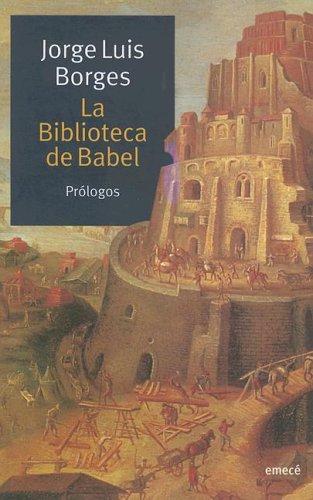
"The Library of Babel" is a short story by Jorge Luis Borges, first published in 1941 in the collection *El jardín de senderos que se bifurcan* and later included in *Ficciones* (1944). The story describes a universe consisting entirely of an enormous (perhaps infinite) library of hexagonal rooms, whose shelves contain every possible 410-page book that can be produced by permuting a fixed alphabet of 25 orthographic symbols. Within this near-infinite collection, every meaningful text exists — every true scientific theory, every accurate biography, the catalog of catalogs — but it is buried within an overwhelming sea of gibberish, surrounded by countless false and almost-correct variants. The librarians who inhabit the library wander it across generations searching for sense, falling variously into mystical reverence, depressive nihilism, or book-burning fanaticism. Borges turns a piece of combinatorial mathematics into a vertiginous meditation on meaning, knowledge, and the limits of interpretation.