The Do You Even Lit boys put down the heavy tomes and choose a short story. Well, we’re not sure if it counts as a story. Maybe a thought experiment?
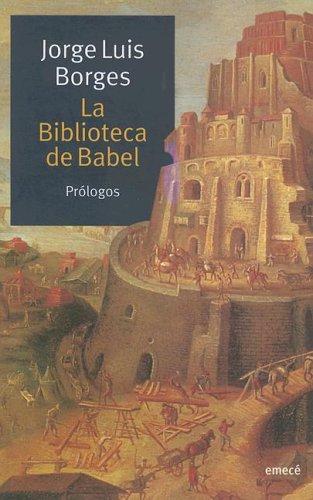
This week we’re talking about one of our favourite authors: Jorge Luis Borges. We read The Library of Babel, Borges’s classic meditation on infinity (well, not infinity exactly — but an almost-might-as-well-be infinity). There are a lot of books.
Nonsense: Not to complain about pLoT hOlEz, but we take slight issue with the fact that it’s no feasible for a librarian to find any coherent passages, even if the library contains everything collectively.
How would you know? We worry about the metaphysical horror of not being able to know you found the book with all the codes in it even if you found it. We’re reassured by reminding ourselves that we won’t stumble across
The library: How are the hexagons actually connected? Can you piss off the railing? Was it designed to be pissed off? And if you jumped, which book would you bring on the way down?
Banter and boners
Cam: Do you guys still get boners when you wake up in the morning? Like, do you always wake up with a boner?
Benny: I haven’t counted the rate.
Rich: I’d be interested in the rate. I just noticed that it’s dropping off for me, but it’s slow enough that I didn’t really notice, and then I was like, wait, I hardly ever wake up with a boner now, whereas I’m sure like a couple of years ago I would have almost always woken up with a boner. And something’s changed — maybe toddler. Having a toddler.
Cam: Instant boner kill.
Benny: Yeah, probably if you’re not sleeping as well, your boner is less likely to make an appearance, right? I mean, it’s also tired.
Rich: The weird thing is I’ve been sleeping pretty good — like, now, not in the early stages, but in the last year or so it’s been pretty good.
Cam: You can get your boner nightly ratio measured. I think they can hook you up with a little device and measure what percentage of the night you have a boner. I remember there’s one of those Netflix docos — I’m never sure how —
Rich: Yeah, that one’s bullshit, I think.
Cam: Is that the one about veganism, right? Yeah, yeah, yeah. I remember a bunch of rugby players at my school watching that and they went vegan.
Rich: No way.
Cam: But, yeah, the boners set a lot of people off, right? In the doco, the vegan people had more boners overnight than meat eaters.
Benny: Hmm. I always thought it was just whether you wake up with a boner as, like, some kind of good heuristic or something.
Rich: I imagine it is. Because I think waking up with a boner is probably a function of having lots during the night. It’s probably just, like, a random sample of where you were.
Rich: Oh, I sense an opportunity for a spreadsheet coming on, when you find out that 99% of the boners you have are when you’re unconscious. As Borges says, the proportional depression kicks in.
Cam: Wait, what does Borges say about boners?
Rich: Not about boners — about the universe. I think he had a line saying the depression kicks in once you realize the sad fact about the world, right?
Cam: Yeah. All right, should we kick this bad boy off?
Cam: Welcome back to Do You Even Lit. Today we’re doing a shorter episode, we’ll see. Today we’re talking about Borges — Joey Lewis Borges. Richard probably be able to pronounce.
Rich: Jorge Luis Borges. Yeah, Jorge Luis Borges.
Cam: And we’re looking at a story, The Library of Babel. So it’s a very short story, I think about 10 pages in the collection, and one of his more famous ones. Yeah, so we decided to have a break somewhat from the big tomes and dive into a short story.
Thought experiments vs short stories
Benny: Yeah, short story — I was thinking about this, like, it’s very strange to even call it a short story, right? Because there’s no real story, much of an arc. There’s no arc. There’s sort of one character, I guess, kind of. But it’s like, what do you even call this genre that Borges does?
Rich: It’s verging on just thought experiment.
Benny: Yeah, thought experiment, like a philosophical thought experiment with a literary style.
Cam: Yeah, I love it though. I wish there was more writing like this — sort of speculative fiction or something, I don’t know.
Rich: I’m just thinking, you get a bunch of probably pretty cool thought experiments in philosophy papers, but they’ve always started off as, like, you know, the boring kind of academic introductions — this is the state of the discipline — rather than just sort of diving into a story about it.
Benny: Yeah, it would have way more mimetic potential, right? And it would maybe even do a better job of conveying the actual underlying idea. But someone should — I was thinking, if I had infinite time I’d like to go through a bunch of thought experiments and sort of lightly fictionalize them, just for fun, and to try and live within that world in a more immersive way. But before we get too far —
Cam: Before we get too far into your fictional matrix.
Benny: Into all my alternate lives where I actually do something cool.
Summary
Cam: Yeah, so the thought experiment here is: we are in a world which consists of hexagonal chambers stacked one on top of another, and also from side to side in every direction. And each chamber has five — or no, is it four? — of the walls are covered in bookshelves, which are full of books. And each book is full of writing. No two books are the same, and it is discovered at some point — or it’s theorized at some point — that the books contain every conceivable combination of letters within the alphabet of this world.
Cam: And the world is populated by librarians who’ve been there for at least hundreds, maybe thousands of years, who are sort of wandering around this extremely large space trying to figure out what it all means. You know, what are the limits of the books? Do the books contain the secret to unlocking the structure of their reality that they’re in? Can they find out how their life ends in one of these books, etc? So just kind of like people who are being forced in a very direct way to contend with the infinite — or the near infinite, because this world would not be infinite. Did anyone — did you guys do the numbers on this?
How many books is it really?
Rich: Wikipedia has done the numbers.
Benny: Oh, nice.
Rich: Which I did write down — roughly 10 to the 2 million. It’s slightly under that — 10 to the 1 million 834,000, I saw somewhere. Maybe something times that, but you know, in that ballpark.
Cam: Yeah, we need context for that. What does that mean? Give an idea.
Rich: There’s a problem, if you see these like 10-to-the-something — you’re sort of like, well, yeah. I think there are like 10 to the 80 atoms in the universe.
Benny: Exactly, give some context.
Rich: So that’s pretty — 10 to the 80, and we’re talking about 10 to the 2 million, roughly.
Cam: Holy shit.
Rich: Every nanosecond since the start of the universe is 10 to the 26. So, yeah.
Cam: You sort of can’t — I mean, I can’t even think of the difference between those numbers and that number. I just don’t know. They’re all the same number gauge, yeah.
Benny: Does that surprise — that kind of surprises me, that you take — they have 22 letters and three symbols: a comma, a space, and a full stop. So 25 symbols. So the number of permutations of 25 symbols is 10 to the 2 million? That actually —
Rich: No, no, no. For some reason it’s — because it’s each at each point in the book. So these books are all 410 pages, I think, right? 420 pages. Yeah, right. And each page — so each line has about 88 characters, and there are, let’s say, like — I forget — 20 lines per page. I forget how many he actually gives. He gives the numbers at some point. And each one of those points has 25 possible options, right? So it’s not the number of permutations of like 25. It’s that each of those 400 times 80, you know, 88 characters per line, times the number of lines per page — has each of those as 25 possible options. And that’s what gives you the multiplicity, which is huge.
Rich: And I mean, like every book — at some point he says, there’s people going around this library looking for books that have meaning, that are coherent stories, that say things about their lives or other people’s lives. But the chances of finding a book that isn’t pure drivel is, like, as close to zero as you can get, basically.
It’d all be nonsense, practically speaking
Cam: Yeah, you basically — you’d walk around your whole life looking at books and they’d all just contain absolute gibberish. What a horrible life. Oh my god.
Benny: I had read this story before a few times, and I think every time I was sort of swept away by the majesty of imagining all these possibilities, right? Like, you get caught in the combinatorics of these books and you think — and as he says in the story, right, there’s books that contain the story of the universe, that contain all the explanations of all the math and physics that you could ever want to know, that explain your life and explain the lives of your friends and family, right? So there’s all these secrets out there that you can imagine getting excited about and looking for.
Benny: But I think this time when I read it, what really hit me is just the absolute futility that you’d feel about actually living in this library, and about how it’s really these people who have to live there, who have to start trying to give these symbols meaning. And I read it much more as, like, in an existentialist vibe, I think, this time than I had before.
Rich: I mean, it’s an interesting question — is it worse to have this tantalizing prospect of being able to read, for instance, the book that is the greatest novel that has ever been written? Or that perfectly appeals to your taste? Or you can read all Cormac McCarthy’s books and a hundred more that seem exactly like they’re written by him. You know, like, everything’s in there. You’ve got your whole life story. You’ve got things that will move you to ecstasies and unlock scientific knowledge and so on. They all are in there.
Cam: And it’s mirrored by the characters in the book, actually, because they have this revelation that the library is perfect — meaning that it contains every conceivable book that could be written with those characters. And they’re overjoyed by that, and they start looking for the books, or it renews their search.
Rich: And then, yeah, I think you’re right. If you ran the numbers, you will essentially never find anything, right? Like, they mention in here someone found a two-sentence passage of homogenous text, and that was like a huge discovery 500 years ago or something. So, like, in practice — is it worse knowing that all that amazing stuff is out there and you’ll never find it? I don’t know.
Metaphysical layers 1 and 2
Benny: I mean, that’s metaphysical layer one — knowing that that amazing stuff exists, but just because it’s a numbers game you’ll probably never come across it. Metaphysical mind fuck number two is that, like, fiction is one thing because you can find a good book that you just enjoy. But if you want to unlock the secret of this universe — they think, like, they pin their hopes on finding the, what do they call it? Like the codex, or the manual, or something that unlocks the structure.
Benny: But this is epistemological hell, because you will never know. It’s impossible to know when you’ve found that book, because there’s a billion books that are like that except all slightly different, and all of them are wrong except one, but you have no way — I mean, this is something I wanted to ask you guys, because I actually haven’t thought about it that much, but, epistemological hell: is there any way of determining what’s true and what’s not? Because when you find a text, you find the theory compelling or whatever, but that doesn’t mean anything, because every single possible theory is written down somewhere as well. Like, it wasn’t designed by an intelligent mind. It’s pure monkeys typing on typewriters to kind of output. You could never discern what’s true and what’s not, right?
Rich: Yeah, I guess insofar as they cohered with the actual reality going on around you, right? Like, presumably there’d be some books that say, you know, we all inhabit a library, but all the rooms are circular, or all the rooms are square or something, but everything else is correct. And they could — you know, they can falsify that sort of theory.
Cam: Well, yeah, I mean, there is a scientific theory in the book, which the narrator first says is incontrovertible. Is one of the findings that — you know, I think 500 years ago, they thought, is this Portuguese, is this Yiddish? And then they realized, I don’t know, indigenous Lithuanian or something like that. And then they realize that the quote incontrovertible fact that every book is unique. And therefore, what follows from that, I think, was, you know, that we get every book of everything — you know, you get a book of a thousand Shakespeares writing a story about monkeys and stuff. So that’s a scientific hypothesis, which I think they say has also kind of been, quote, confirmed — you know, isn’t quite the language we’d use from Karl Popper — but by, you know, these other librarians searching for books.
Cam: So every one they found — I did wonder, if some of the burners — I imagine you found a duplicated book and you burn that, you know, that’s your big secret. So I sort of wondered how they kind of knew that. And I suppose it could get falsified, and there is — I think that that book they found, you know, had the theory and had some code that said it.
Cam: But to go back to Benny’s point quickly — like, yeah, I mean, I actually ran this through ChatGPT earlier. Like, what’s the likelihood of finding a book with one coherent sentence in this? And they were kind of generous and they said 10 to the 10 years until you found a book in this with one coherent sentence. Which, 10 billion years — kind of feels like, I don’t mean to be that guy doing a movie pointing out plot holes, like, how they found a bunch of books that have meaning. You almost wouldn’t find one, right? Or you wouldn’t know someone that found one with a meaningful sentence. Or especially that — I have a theory of combinatorics.
Rich: Yeah, yeah, yeah, yeah.
Benny: There was an MCV, MCV, MCV.
Rich: That’s a good point. It’s a bit of a plot hole, maybe. But, I mean, there are some unknown number of librarians in here — perhaps also a very large number of librarians. It might have even been one per hexagon. So…
Cam: I think I said 1.3 maybe, but he just said the ratios —
Benny: Or maybe it’s 1.3 now. The ratio is down because everyone’s depressed.
Cam: Yeah, yeah. Jumping over the railing.
Rich: Yeah, I wanted to ask you guys, like, how long do you think it would take to kill yourself in this environment? Because I’m pretty sure I would. Once I’d process this I would kill myself.
Benny: Like, okay, so put it another way: there are people in the book who say that trying to look through the books and look for the secrets and so on and find interesting passages that will tell them about the world is a vain and superstitious habit. And those people are described as barbarians, but I think they are straightforwardly right about that. Because you can’t — it’s like, it’s really strange, counterintuitive idea. So you have a graph with lots of nodes and none of the nodes are connected to any other node. There’s no information contained within the graph. But if you have a maximally connected graph where every node is connected to every other node, there’s also no information contained within the graph.
Benny: I don’t know quite how this maps onto that, but it’s like, as soon as you know that every single possible combination exists and that it exists one time, then it’s equivalent of a fully connected graph. So you could look at any given point and it will tell you — contains no information, because it just had to be there. It can’t update you about the state of the world or anything like that. Apart from in a limited way that you mentioned, Benny, it’s like — you know, just straight up comparing it to your empirical observations.
Benny: But I also think empirically, there’s virtually nothing of interest that you could do. You can, you know, look at how many rooms, you look at the shape of the rooms, and, I don’t know, you could sort of survey it fairly quickly.
Rich: Yeah, I think the only thing I’d be tempted to do is just try and walk down those stairs — these infinite circular staircases — as far as I could for, like, my entire life, to try and get out of this place. But I agree, it would be a very bleak and depressing existence. And I wouldn’t at all be tempted to actually search for books with meaning in them.
Benny: Because also there’s this paradox where they already are bringing to the table what is meaningful, right? And then they’re trying to find it in books. Like, they have to know what they’re looking for and what counts as gibberish beforehand, right? And so, I mean, one interesting thing is, we live in this world already, in the sense that we can just generate huge amounts of text continuously if we wanted to, and then just keep looking at it to see if the next great sonnet pops out of it.
Rich: I have a spreadsheet. I’ve only done about 13.
Cam: Cam’s doing it by hand too.
Rich: No, this one doesn’t look promising. That one wasn’t random.
Benny: Yeah, so I mean, like, this is — yeah, it is still the world we live in. But no one’s obviously tempted to do that.
The real world website
Cam: Well, no, someone’s made a website. There’s a Library of Babel website, you guys should definitely check it out, because it gives you a sense of — it’s called libraryofbabel.info.
Benny: Yeah, so — but I’m saying no one’s looked. No scientist is just looking at regenerating the pages every day and hoping that something interesting comes out, right?
Rich: Yeah, that’s right. So it’s kind of, to me — I don’t think I’d get depressed or excited when you sort of grok what it actually means, because it’s just a bunch of generated stuff which we can already do. And this website, I’m not sure if this website has the full library, because of course, as we just said, the number of atoms in the universe — there couldn’t be stored. But I think he has some fancy mathematics that he regenerates a new one, but it sits in a given space.
Cam: So they’re not moving around, so as you explore the library it auto-populates? But he’s not making representations of every possible book?
Rich: Well, he can’t, because there’s not — it wouldn’t be enough compute. Yeah, there’s definitely not enough compute for him to store it. My guess is he’s just generating it randomly for each different user.
Cam: Like, how would users know?
Rich: No, I mean, like, generating it on demand kind of thing. And no matter how much demand there is, it will never come close to 10 to the 2 million. Maybe when the AI boom crashes, we can use all the data centers to build out the Library of Babel. Just scan it.
Cam: But there is a Reddit thread. There’s a Reddit thread of librarians. And they post — most of it’s like memes with, you know, like, Epstein didn’t kill himself, like, inserted. Thousands of gibberish. But, yeah, so some people are — I mean, it would be pretty fun finding, like, a word. You’d probably find a pretty small word, like “poo” or something. But you should be able to find words pretty easily. Like, three little words, come on. Surely find your name.
Rich: Find the book where Cam has wonderful verbal acuity.
Benny: Yeah, Cam finished.
Cam: Yeah, so I’m just wondering — yeah, it sort of doesn’t actually impact me that much, thinking of — well, it depends what else you’re allowed to do in this library if you live there. So it sort of sounds — they almost sound like they’re — I assume it’s full of, like, hot librarians, right? Like, yeah, yeah, yeah, glasses, ponytail.
Rich: Yeah, yeah. High bun, high ponytail.
Benny: Yeah. Didn’t specify what gender they are.
Cam: Yeah, that’s actually a totally different story, isn’t it.
Falling down the shaft
Rich: There was one little reference to, like, some chamber that lets you take care of bodily requirements or something, I guess. It’s like a toilet. But I would just shit into the chasm that goes forever, because why not, right? Imagine, like, taking a — you’re definitely taking a piss over the railing, and your piss just like goes for infinity. Or not infinity, but near infinity. And they said, like, low railing, right? So it’s just — would be so tempting, kind of like how every sink is just, like, built — you know.
Cam: Yeah, because, you know, I’ve built this railing. You’d have to do it once or twice. There’s probably norms and rules around that, though. They toss dead bodies down those stairwells, right? Which I was thinking would be quite shocking, like every once in a while, you know, you’re in your hexagon and then beside you —
Benny: Truman.
Cam: Now, trying to think of, like, the noise as well. I imagine if a skull was just knocking, you know, like with that kind of echo through the whole thing, you know.
Benny: I’m just thinking, the librarian, like, halfway through his code. So if you commit suicide, actually you die by dying.
Rich: Yeah, you’d be in free fall for, I don’t know, days until you — you’d probably have a heart attack or something. Yeah, surely you’re going pretty fast. It’d be like skydiving. Like, if you just — no, but you’d hit terminal velocity. You don’t — you wouldn’t necessarily die from being at terminal velocity, would you?
Benny: I can imagine at first you sort of start trying different moves and stuff, you know.
Rich: Yeah, yeah, exactly. You’d probably try different moves. And honestly, you’d probably hit the banister and then just die like that.
Cam: Yeah, just take a few of those books as well on the way. You find — you find the codex, it’s the one you took on the way down.
Rich: Oh, that’s so good. That’s so good. You’d have time to read it too. You’d have time to read the whole walk. You’re like — no, just — this enlightened being just flying down the stairwell.
Cam: Oh, when I first read that there was a code book, I had the dumb thought of, like, how do all the books fit into the book? It’s like one book with, like, 400 pages, and inside there’s this code for every book. And I was like, how would that fit? And I thought that, and then it explains it, you know — so it’s go to book A and they’ll tell you about book B and go to book B.
Rich: Yeah. If you had like a parachute or something, it’d be a cool way to get around. You just like free fall. Well, only works in one direction, but, just, base jumpers. Yeah, some wingsuits going. I don’t know, I still think I’d probably kill myself pretty quickly. I don’t know. I don’t know, maybe not.
Benny: I mean, that is an interesting question, though — that’s, like, even just stated in the text. It is that very existential question. If, when you know that there’s no meaning that you can discern, as far as I can figure out, you have to manufacture meaning yourself by doing things that you know are futile. Is it so different to our lives? I mean, it seems to be a metaphor for the universe.
Benny: So yeah, I think that’s what I meant by, like, the existentialist reading of it hit me harder this time. Where it just — it actually doesn’t seem so different. Like, it just seems clear that you have to construct meaning for yourself. And that’s quite obvious when you’re looking at the characters in the play, but that now also seems quite obvious when it comes to life.
Cam: Yeah, I think the problem with this world is you just — you don’t come across anything that even seems like it could make sense. You know, you’re literally just coming across a scramble of letters.
Rich: Yeah, that’s like the part one existential horror. And then the part two is the fact that from, like, an information-theoretic point of view, everything that you come across is definitionally noise. It can’t contain any signal. Or, like, if it does, that’s the meaning that you map onto it, I guess, because it happens to be written in English and it happens to cohere into a story and so on.
Rich: But it’s also kind of an interesting question of, like — if the monkeys pounding on the typewriters did write something — or actually, we have a better example now, because we have people who don’t want to read or consume art that’s generated by AI, because they think it lacks soul or something, it wasn’t written by an actual person who had some motives and who felt some feelings and who was trying to work a certain problem or anything. It’s kind of like a more sophisticated version of this slot machine generation strategy — arguably better, because LLMs are all based on human art in the first place, so at least they are not pure randomness, they’re sort of mirroring back our own art at us. But, you know, some people definitely have an objection to that.
Rich: I actually haven’t really thought about it myself. I do think I would want to read something written by a human with intentionality that wasn’t just, like, random or quasi-random output.
Cam: Yeah, it’s interesting to think how you’d feel with it in your hands. So let’s just say they build a supercomputer with enough compute, and then someone just had a good search function and then found one that had a page worth of Shakespeare word for word, and you came across it. I suppose it almost feels trivial. I think you’d be like, oh yeah, I suppose it’s interesting, it’s the same. But then there’s this second layer of, what if it was something new that felt as good as that page of Shakespeare? I suppose it would feel a little spooky, but yeah, weird. Yeah, whether it’s good or not was up to us, I suppose.
No author doesn’t quite hit the same
Rich: Yeah, I mean, maybe contra to some of my death-of-the-author opinions that I’ve expressed on the pod before, there is something about knowing that the books we’re reading were generated by a mind that had intent, and that wanted to say something, and that had opinions about the world, and you’re trying to figure out what those opinions were, what these characters represent, what problems the author was trying to solve, etc. And knowing that there was no one behind the page, that you were just seeing the output of some random process, would rob me of some of the joy of trying to interpret a text. Like if you come across a few pages of Anna Karenina in this library, just knowing that there was no Tolstoy behind them would make it difficult for me to actually even try to interpret the work somehow. I just don’t think I’d get the same enjoyment out of — I wouldn’t have the same motivation. Which is, yeah, maybe contrary to like all my takes on you should try and separate the author from their work and interpret it regardless of what the actual author thought about it. But still, there’s, like, something about knowing that an author did mean something — even if you disagree with what that something was — like, knowing someone put thought into choosing this word over that word, you know, makes a very meaningful difference.
Benny: Yeah, no, I think we can reconcile that. Like, that’s okay, because we need to — we have, like, finite time to read stuff, so it makes total sense to filter it down to the set of things that someone has tried to imbue with meaning or significance or something. And then we can — knowing that that’s a good enough first pass that we can then ignore exactly what they wanted to do, and sort of interpret it on its own terms. But if you couldn’t do that, then you’d be like the librarians, basically. You’d be spending all of your time trying to find patterns which almost certainly there are none of interest. And then you can have, like, meta-heuristics where you’re like, I know Nabokov is a smart guy who worked on interesting problems, and therefore I’m sure there’ll be some interesting problems to work in his books regardless of whether or not I agree with his solutions to them. But it’s like, it just helps you filter down on the set of things that it’s worth even trying to analyze.
Cam: It’s been one week on Beckett out of your 10 years of reading. This is — yeah, because you’re, one, non-meaning. Imagine I’m in the library and then I finally come across a coherent book, and it’s Waiting for Godot.
Rich: Yeah, yeah. I’m jumping straight over there. As you said, impossible to ever know if there’s meaning or not.
Rich: Yeah, yeah. I was just going to take it a little bit back to the epistemological implications of this, which is that, uh, another way to read this story is kind of like a skewering of reductionism. So if you think about where knowledge comes from, it’s this two-step process. First, you have to come up with some kind of novelty — some novel arrangement of, you know, semantic signifiers or genes or whatever — and then you have to criticize and select upon your novel generation. So, like, evolution gets base pairs A, G, C, T, throws them together in a new way, see if the creature gets eaten or not, and so on, and iterates. And like, if you had to do it at the level of literally randomly drawing 25 — one of 25 symbols out of a bucket — that’s just, like, a really, really stupid and inefficient way to do it.
Rich: And so, like, we tend to talk about the selection side as being where — like, we focus more on selection and criticism as how we get to knowledge and good ideas and so on. But I think this helps me realize that the creating randomness or novelty side is actually, way, maybe arguably way more important, because there’s essentially, like, an unbounded near-infinite search space, and you have to be able to, like, usefully constrain the search space. And that’s what humans are, like, really good at. We don’t just pound away randomly on the typewriter. There’s infinite ideas we could come up with, and we generally don’t waste our time coming up with, like, completely stupid, useless ones. So reductionism is basically, like, the worst possible way of doing things.
Cam: It made me think of when we were talking about Ted Chiang and Cam — we were talking about chunking up ideas.
Rich: Yeah, I think chunking is actually how we do get to make progress, and potentially, like, infinite progress, is that you can just keep chunking stuff up indefinitely into higher and higher layers. But if you work at these fine-grain levels, it’s, like, computationally impossible to work with. Literally, you’re going to run out — that you’ll get to the heat death of the universe before you get anywhere. And it’s just, like, in general, just incredibly stupid and inefficient way of selecting things to consider. Anyway, I don’t know if that’s probably a completely obvious point, but something about this drove it home to me a little more strongly.
Benny: Yeah, it gives you almost some sort of hierarchy by which you can start judging different forms of intelligence. So something like natural selection does basically just have blind randomness thrown in, right? It’s just, like, mutation of base pairs. There’s four base pairs to choose from. From what we can tell, there’s no guided process by which it’s, like, choosing the mutations. Mutations just happen randomly because of copying errors. And it’s exploring that whole space. The space is small, but it’s exploring the whole space uniformly, basically. And then you have humans on the other side, which have a huge possible space of new ideas you can think of in each moment. But we’re clearly only exploring, like you said, an extremely small subset of that space.
Benny: And then you might argue that, like, current LLMs are somewhere in the middle, where they’re, like, generating more randomness than a human would in terms of their guesses, because they’re just doing, like, next-token type prediction stuff. And then they’re selecting based on patterns in their training data. And that’s, like, something in between a pure uniform guess for what the next thing should be, but not as targeted and inspired somehow as what the human would think given the same information.
Rich: It gets a bit fuzzy because, like, the distinction between generating the hypotheses and then selecting them can get blurred, right? Because it’s, like, it’s unclear to what extent we’re just generating a bunch of thoughts, maybe subconsciously, and then pruning them before they even rise to the level of conscious thought. Like, that’s more of a question for neuroscience or something. And so it could be that we’re exploring the space pretty inefficiently, but just subconsciously, and then our selection mechanisms are just kicking in at a very low level, and then only the best of that process, as judged by some unknown metric, is actually rising to the top. But I sort of doubt it. I have a feeling that you’re right, that, like, humans, when we’re just, like, coming up with new random ideas before we’re even being that critical of them, somehow we’re just not actually thinking of that many new ideas at once. Like, we have this inbuilt plausibility checking that’s doing a lot of pruning for us even beforehand somehow. There’s no way we can be generating nonsense stuff like the library is.
Cam: Yeah, and going through it all, it’s almost a defense of the book burners.
Rich: A nonsense, yeah.
Cam: We’ll chunk that — chunk that, the nonsense. Yeah, yeah. No, yeah, yeah, I can understand where they’re coming from. Like, let’s just — yeah, all this shit — would I be a burner, right? As soon as you — at what point do you know — do you have to go through the whole book, or do you, it’s the three pages of nonsense, no?
Benny: No, I think you see any nonsense, you toss, because, you know, a better — like, there’s any nonsense in the book, there exists a version of that book with the same content that doesn’t have that nonsense. So like, get that shit out of here. Yeah. And then you could have this, like, project — this multi-generational project of burners — where it’s like, yeah, you only have, you have 10-to-the-200 books to go through, but, you know, if we live — it could be quick.
Rich: Yeah. I’m just imagining a burner who, like, starts reading. It’s Anna Karenina, and then there’s, like, a typo at the end of page one, and they’re like, chuck it over the edge, there’s a better one out there somewhere.
Cam: It’s a really sort of picky eater or something. For fine taste.
Benny: Yeah. Franzen — nah, they didn’t like — when Frou-Frou died.
Rich: Yeah, yeah, exactly. This can’t be right, fuck this.
Benny: They didn’t like Levin’s come-to-Jesus moment at the end. I would have burnt that shit too. This kid — this cannot be — yeah, rebel — what is this?
Cam: But, um, Borges, or the narrator, seems to be quite focused on — yeah, so when he talks about these book burners, it’s controversial because people are like, well, what if you burn the book? Or what if you burn some good books? And then he says, well, but some people in response say, well, you know, even if you burn a pretty good book, there’s going to be another one the exact same with a comma or a full stop — uh, no em dashes, actually, I think — so it’s not ChatGPT. But, uh, so yeah, what’s the big deal? Although I mean, I don’t think — I’m not sure if the argument holds for, like, if you had a book that was a code, because that seems more like a kind of follow-the-baking-recipe exactly, rather than a cooking recipe of a novel or something.
Cam: But, yeah, he seems really focused on this risk — what if you throw away the wrong book? And I’m just not concerned about that at all. I suppose, like, he’s quite enchanted with this idea of, like, one book can unlock everything, which I suppose it does point — you know, that does theoretically exist. I think in terms of not necessarily, like, giving your life meaning or something, but in terms of a catalog. Catalog in every book. But yeah, I just wouldn’t be concerned. Like, even when I go on that Library of Babel website and I generate stuff, you know, just, yeah, delete, delete, delete, you know.
Rich: Like, yeah, if you had enough people doing that, you potentially could — I don’t know, could you efficiently get somewhere?
Benny: Dude, there’s 10 to the 200.
Rich: Didn’t we just figure out it was like a billion years to find one coherent sentence?
Cam: Well, for one person, I think — that was for one person, wasn’t it? Like, for, you know, it depends how many people there are.
Benny: No one will fuck it. Just listen, they’re all killing themselves — just listen, guys, I’ve got the plan.
Rich: But how would you even disseminate the plan?
Benny: Yeah, coordination problems. Being the head librarian and trying to do, like, KPIs and stuff. It’s like, right, we need to find one sentence every 5 billion years. Please don’t kill yourself. Like, everyone’s working massive overtime.
Cam: But if there was one person per hexagon — I know you can’t coordinate this — assuming you can coordinate, there’s one person per hexagon or one person per couple of hexagons.
Rich: How many books?
Benny: Well, there used to be.
How do they have history?
Cam: Yeah. I think they’ve all gone. 500 years ago — I did wonder how do they knew stuff. Like, how they kind of knows history, right? So 500 years ago this happened. So yeah, it almost felt like this is kind of separate — you kind of got your personal library, you know, it’s just normal books and shit, like your history books. And then there’s like the — or is it just all word of mouth?
Rich: Isn’t there some sect of people who have kind of inverted it and they try and shuffle symbols together randomly or something? Oh, they’re fucking with a fucking catalog.
Cam: Yeah, yeah. I wasn’t clear if they were, like, writing their own books, or — but they have some way of manipulating symbols themselves, so maybe they can kind of take notes. And I don’t know, hopefully they got, like, a pen and an inkwell or something. Yeah, hopefully they’re at least typewriters, and they can write their own books, like, oh my god.
Rich: Well, this is the craziest reaction — was these guys whose response to the revelation was that they will also just start typing garbage. Like, like, as if it’s like — come on, man. It’s like, like, spitting into the ocean. Like, we’ve already — you’re making the problem worse. There’s literally no shortage of random nonsense. Your response is to make more of it.
Cam: Interestingly, it said there were 22 letters and a period, a comma, and a space, which — I don’t know — you speak Spanish, Rich, how many letters are in Spanish?
Rich: There’s 27 letters in Spanish, or arguably 28, but I think probably it could be because, um, a lot of letters in Spanish are redundant. And I think there might even be introduced because of English, like using loan words like C.
Cam: Yeah, K in Spanish is redundant. You don’t need K. You don’t need W. You don’t — like, a double L is — I don’t know if you could count that as a letter or not, but — the Bloods gang showed that you don’t need C. Do you know they replace — sometimes they replace it with B. I’m being bull, being cool. Bick and back. But sometimes they just replace it with K. Because you can just replace Cs with Ks or Ss. Don’t need it.
Benny: In English, you mean? Or Spanish?
Cam: I think in English. Don’t you see? I think K and S.
Rich: Yeah, let me think about that. Well, there’s hard —
Benny: Yeah, exactly. What about CH? Actually, you need a CH.
Cam: Maybe CH. You’d have to get rid of CH to get down to 22.
Rich: But in Spanish, there’s only — Spanish has far fewer phonemes than English. Like, English is a stupid-ass language. Spanish has five vowels and —
Cam: Borges’ favorite language, by the way.
Rich: Eighteen consonants.
Cam: Do you know that? Watch what you say about it.
Rich: Yeah, Borges’ favorite language, yeah, yeah. No, I mean, the trade-off with English is — no, I’ve seen that clip and he’s right. Like, the trade-off with English is you get way better specificity and composite — what would you call it? Like, compositionality or something. Like, you’ve got way more, way more diverse ways of saying things. But Spanish is vastly more internally consistent and logical. Its structures make much more sense. So, yeah, there’s, like, 23 phonemes or something. And English has, like, how many vowels alone? Like, I think English is like double as many phonemes, and then is full of, like, totally inconsistent rules. And I have no idea how people learn English as a second language. I’m so glad that I got it for free growing up. Oh my god.
Cam: They do it early these days.
Benny: Yeah. Sounds like Spanish might be a language for me. Not so many — just keep it tight. You don’t have to be articulate.
Rich: Dude, it’s so simple. And the vowels are literally A, E, I, O, U. You can read a sentence in Spanish and you know exactly how to pronounce it every single time. There’s no extra knowledge required once you know the vowel sounds and the consonant sounds.
Cam: I have not found a full word yet.
Rich: You guys — you’ve been generating random pages of these things. You haven’t found “I”?
Cam: I suppose the “I” has got to be by itself.
What does the library look like?
Cam: I suppose the other thing was just — did you guys find it hard to imagine the library sort of visually? Or, I suppose, you read it a while ago, so you kind of had it in your head. I saw one quote online describing it as “both vividly described and impossible to imagine,” which I thought was nice, because he does actually get into details. And as we said, you know, the railing is not too high. I think the rooms themselves, he said, are scarcely higher than a librarian. So you see some visualizations online — these kind of vast, beautiful libraries — probably aren’t right.
Rich: Yeah, he actually describes them in very unflattering ways. Like, the light bulbs are all really dim and barely give enough light. So all these poor librarians have probably horrible eye problems from straining to read this gobbledygook.
Benny: I mean, where are they getting the replacement light bulbs from? Like, where’s that?
Cam: Yeah, yeah, yeah. Well, he says it’s all from God, isn’t it, this library? It’s almost like a —
Rich: But why is it hard to visualize, Cam? Like, is there some geometric reason why it can’t work or something?
Cam: I think, potentially, yeah, I think online — I was looking at a few people try to visualize it, and they do pretty good jobs, but they usually leave things out. Because potentially things are inconsistent. Because, as you said, it’s like a hexagon, so like six sides. And then I think there’s this question of how many hallways or doors there are. And I think — one of the — so four of the walls of bookshelves, one of the walls is maybe not a wall, and it kind of opens into this chamber where you’re looking over this void. But in terms of getting, I think, the right number of doors and stuff, it can then be quite difficult. Because if it only had one door, they all kind of — I don’t think you could have kind of infinite stacking widthways, and it almost maybe have to be this big tower, which, you know, surely it’s not, like, four hexagons just towered up and down. It kind of is described in this way where it’s almost like beehive-like going outwards as well. But you, I think, probably need two doors for that. I can’t remember how many doors.
Rich: I see. Yeah, I’m looking at the images now. So, yeah, it’s so rude that to have this infinite library, and it’s not even, like, big grandiose vaulted caverns. It’s like, you have to be stooped over. What a sting in the tail, man.
Benny: Yeah, for the tall librarian. I hope there’s no Dutch librarians.
Rich: Don’t get me started, mate.
Cam: Yeah, I had to kind of see some visualizations too. I mean, I knew it was, you know, a labyrinth type thing, but just to see how it actually worked — it kind of nerds not me in that sense. So, at Borges — Borges actually worked in a library when he wrote this, and he didn’t like his time there. Here’s a quote: “At the library we did very little work. There were some 50 of us doing what 15 could easily have done. My particular job, shared with 15 or 20 colleagues, was classifying and cataloguing the library’s holdings, which until that time were uncatalogued.” And he gets pretty negative about it. And he worked there for nine years.
Cam: “They were nine years of solid unhappiness at work. The other men were interested in nothing but horse racing, soccer matches, and smutty stories. Sometimes in the evening, as I walked the 10 blocks to the tram line, my eyes would be filled with tears. I would do all my library work in the first hour and steal away from the basement and pass the other five hours and read and write.”
Rich: Well, that last thing does sound not too bad.
Benny: Yeah. Yeah, for a generational author.
Cam: But, yeah, some of that kind of depressing notion of living in this big library seems somewhat influenced by his time cataloguing things. Funny.
Multiverse
Rich: One last note I had to bring up is the multiverse stuff. So it got me thinking about it that there are people who are chasing — I can’t remember what it’s called — but a fantasy of finding, like, a justification for their life or something like that. Basically something that explains their own lives to themselves. Or, I mean, anyway, you could say there are parallel histories. You could read every possible life story of yourself, necessarily, is in here. And it just got me thinking — we know that Borges is aware of multiverse, he’s written about it in other works. Something that’s really existentially creepy about many-worlds interpretation as well is that something like that is true, where you can be, like, totally wrong about the world — about the physical world — just by the law of large numbers.
Rich: So, like, every time I have book club with you guys, I’m actually just hallucinating and I’m talking to myself right now. You guys don’t even exist. Not only is that possible, it must exist. It has to exist somewhere. And, like, that’s bundled up in every other possible world where, like, my life is incredibly amazing or incredibly terrible and everything in between. And it’s kind of terrifying to think that that’s true, which is maybe something that, Benny, you and I will talk to Sam about on another — because I might be still misunderstanding that.
Rich: But, like, if you straighten it out — here’s a better way of saying what I’m trying to get at. We can do things like derive the rules of probability or whatever. But there is a universe where every time you flip a coin it always comes up heads. And so their physics is different than ours, and it’s sort of true for them. Like, they’re, from our point of view, wrong about physics, but it works for them, and it’s perfectly predictive for them. Say every time you flip a coin, it comes up heads — that has to happen, that has to be a world. And so what kind of freakish world do we live in, potentially? We might live in a freakish world. We might be wrong about reality, right? And we don’t know.
Benny: Okay, but in the world where they’re flipping coins — so it’s true that they would have perfect predictive capacity if they were to just say “this coin’s landing heads.” But assuming the actual laws of physics are the same, some of them would probably realize that there’s actually, like, no good explanation for why this is happening, right? Like, that, in theory, you could make something land tails. And they could even do simulations where they’d be like, we’ll manually make it land tails, right? Like, you can imagine somehow still getting a handle on the problem. I agree, it would be this incredibly bizarre world, like — but somehow it’s like when you’re playing a ball game against someone that doesn’t have an expected value, and you’re like, yeah, but if — yeah, I know that did roll that, you know, but if it didn’t — didn’t turn up heads — like, what are you talking about? It’s no —
Rich: Yeah, so they could maybe infer that. I mean, I suppose, if you’re really sophisticated, you could be like, oh, this must be a quantum effect, and it must be we must live in a vanishingly unlikely universe. But I don’t think anyone would be able to get there. It would be like if you’re dropping a lead ball off the tower, and the lead ball floats into the sky every time you do it. It’ll just stop you from ever getting the laws of physics. That wouldn’t actually happen, right? That one — it could happen. The lead ball — yeah. Oh, I guess it could, yeah, I guess it could. Yeah, this is, like, more and more absurd. It could. Good, no. But, like, isn’t it — I mean, again, I should probably ask this to Sam — but isn’t it better to say not that it could but that it must? Sam Kuiper’s — no, yeah, he’s Deutsch — is it Deutsch — is one of Deutsch’s grad students, is that right? He — no, he wasn’t actually his grad student, but he worked with Deutsch a bit during his PhD. But, yeah, roughly, yeah.
Cam: All right. With that stuff. But that shit is so fascinating. Or, like, the classic, like, every time people wave these sticks like, you know, magic shit — like the whole thing they’re like, yeah, Harry Potter is real in one world, that happens. Yeah, yeah.
Rich: But you have — and you have to say, like, to real Wingardium Leviosa or whatever, like, you actually have to do the incantation right to make the — yeah, exactly. Every time you do it wrong, it doesn’t actually work. Ron’s got a magic — don’t get me started on that.
Cam: Just on that explanation, though, like, with the world that the coin lands heads every time — I imagine scientists would create explanations for that, right? They have a theory for why that must happen.
Rich: And then let’s kind of — but it would be wrong, right? That’s the point. Like — well, our explanations are just, you know, come from us, right? They’re come from our imagination.
Cam: No, I would be wrong, though, in the sense that, like, it would have — it would posit the structure of the world, whatever that would have to be to explain that the coin always lands heads. I don’t know — they would have some rule.
Rich: But that rule would be, like, demonstrably false in other ways, right? They’d be able to realize, like, this is an anomaly with this coin, like, this doesn’t happen with —
Cam: But couldn’t you just keep it pushing a bit? There’s a world where, like —
Rich: Yeah, you can always do that, but then — fix a world. Like, just fix — like, it’s a quantification problem, right? Like, fix the world first, make it as weird as you want, but, like, you have to fix its rules, and then you ask, like, okay, what are scientists in that world doing? And there’s always going to be weird ways they could in theory start realizing that, like, something doesn’t add up here. Because, like, the laws of physics — they would be wrong, right? And so there’d be ways to identify that they were wrong — experiments that they could run, even, again, in theory, that would falsify them. And so, like, yeah, I don’t know how likely this —
Benny: Yeah, I’m not sure if it’s possible to posit a world that, like, it’s impossible to disprove the certain laws of physics. Yeah, that’s an interesting question. And if, like, just — that would become a law of physics, like, that — maybe not.
Rich: I think it’s, um, a sort of an objection to maybe Deutsch’s idea that you can make infinite progress and that all problems can be soluble. It’s like, well — what if — I mean, it’s a very fringe stupid objection, but it’s like, what if you live in the world where the lead balls keep floating into space, and your beakers keep, like, spontaneously dissolving, and you can sometimes walk through walls and stuff? It’s like, you’re never going to be able to find any regularities in anything. But anyway, sucks for those guys in that world.
Cam: There’s an element of just not believing that stuff, hey? And I don’t believe it, as I said. You’re just like, no, you’re like, yeah, well, I can’t do it. It’s fucking milk everywhere and it explodes, and you’re just like, nah, it doesn’t happen. I suppose it’s just unfathomable. Like, it’s hard to grok. And same as, I suppose, same with this library, like, you know, sorts of books are in there, or chains of books.
Rich: But, like, there’s also some sort of contradiction for me with how — I’m sure I’ve mentioned this before — with just how this actually dovetails with reason and, like, our ability to be persuaded by ideas, because, like, in — so there’s, like — up till now, I’m identical, I’m the same person. Now, the universe splits. And in some universe, I just smash through my window right now, I just get naked and I jump through my window. And then you have to ask —
Cam: You’re always naked with me, mate. Every time you do this example.
Benny: What if I just stripped now?
Cam: Yeah, what if I was just magically naked? Wouldn’t that be weird? Yeah, wouldn’t we?
Benny: We’re all naked. Should we all do it? Should we all do it just to test the theory?
Cam: I’m just trying to test the theory, guys.
Rich: Yeah, like, what does that say about your capacity to reason? Like, your brain was the same up until the moment you decided to do that, and then it’s just like, you decided to do that. Yeah, I mean, you could just say, like, whatever — like, again, reductionistically — whatever the end state is where you’re crazy, all every atom in your brain just suddenly shifts into a different position into that end state, and that’s that. Or you don’t even need to — you could do it more physically, and, like, you don’t exactly throw yourself out the window, it’s just that the atoms in your body all shift cohesively together so that you’re two meters to the left out the window. Which, apparently, is again not only possible but inevitable in some fraction of worlds. And absolutely mind-meltingly weird, because technically the atom on the tip of your nose could be, like, 20 meters away, from moment to moment. It’s like, we’re on the other side of the universe technically, okay?
Cam: Yeah, exactly. Yeah, it’s got its own suit on. It’s bigger than me all of a sudden, it’s walking up and down the street. Yeah, taking the position of my PhD. Fuck.
Rich: As long as it doesn’t violate the laws of physics, it has to happen somewhere, yeah.
Cam: I think part of my reaction to all these things are, like, yeah, sure, but, like, it doesn’t matter. Nah, like, it’s just so — it’s like, it’s kind of meaningless just thinking of all that. And then you’re, surely not —
Rich: Dude, you’re in the wrong business, man. This is, like, all we do is be like, wow, isn’t that crazy, you know, this obscure thing — or this reading Borges’ stories.
Cam: But that is my approach almost to this Library of Babel. Like, we already have it. Literally, in principle, you could kind of make it. It wouldn’t really be a big deal.
Rich: It would be a big deal if you lived there. I think that’s the point.
Cam: Yeah, condemned. One toilet. But just getting caught up in the importance of the books, like — I think I’m not imputing — is that the right word — meaning to these books, even though, you know, you might — well, you won’t — but you might come across one that’s, um —
Benny: Yeah, that’s the horror of it. I think that’s where we end up, and that’s where most of them seem to end up too. They just got various copes. Our copes do feel different — our existential copes — because, like, we can solve problems durably and we can make progress on some axes, and, like, you know, create negative little pockets of negative entropy and stuff like that, which is, if you zoom out far enough, still meaningless. But it’s, I don’t know, it’s a lot easier to find — to make meaning in our universe than it is in the library.
Cam: Imagine in Borges’ mind, he would have — he had a lot of, like, visual kind of dream-like infinity-type liminal spaces to create all these stories. Would be my guess. Like, he’s just, especially when he’s blind, I could just imagine he’s just constantly, like, imagining these rooms and having these dreams of his room.
Wrap up
Rich: All right. Cool. Has anyone got anything else to talk about? Should we keep it nice and snappy? A mere one hour.
Cam: What are we doing next?
Benny: We’re doing — it’s my pick, wasn’t it? Yeah, sorry. What was that guy’s name again?
Cam: John Williams.
Rich: Your favorite author.
Benny: Wait, didn’t we — we announced it last time, right? Yeah. Just a reminder. Do the sign-off. Do a smooth sign-off. Come on.
Cam: John Williams. I’m actually forgetting the name of the book.
Rich: Butcher’s Crossing.
Cam: Who is the amazing author of Stoner. We’re reading his first book, which is a kind of neo-Western, which looks pretty good. Neo-Western. And don’t forget to write in. We love —
Rich: I thought that was your part. Don’t forget to write in. doyouevenlit@gmail.com. That’s you, just the letter U.
Cam: U, what are you? Do you even lit. We love hearing from our listeners, and we’ll give you a shout-out and try to respond. We do get to them all.
Benny: Eventually.
Rich: Eventually, yeah. Sweet. See you next week.
Cam: See you guys.