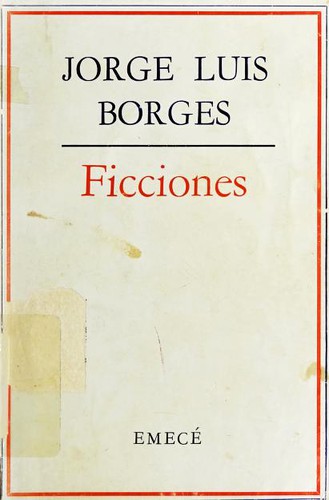
These days the ‘multiverse’ idea is standard marvel slop. But if we read this story in 1941 it would have blown our tiny little minds.
How did Borges sit at the cutting edge of philosophy and physics without doing the info-dump spergy thing?
We read one of our favourite stories in search of Clues.
Synopsis and first impressions
Cam: All right. Welcome. It’s no longer safe to talk about exes.
Rich: Yeah, exactly. All nice things.
Cam: Speaking of my five BPD exes.
Rich: Where were we? I’ll just do a real quick summary. So: during World War I, a spy embedded in England visits a professor of Chinese and is astonished to find that he happens to be the foremost scholar on the spy’s great-grandfather, Sui Pen. The scholar has discovered the lost labyrinth hidden in Sui Pen’s novel, in which every possible future happens simultaneously — something which had caused critics to write off the manuscript as chaotic nonsense. The spy is deeply moved by the revelation, but guns the professor down in cold blood. The twist ending is that he’s about to be captured, and in desperation to get a message to his spy masters in Berlin, he’s murdered the professor to signal that the next bombing target should be the town of Albert — which he has learned is the location of a new artillery park — and the professor’s name is Albert.
Rich: So that’s the only way he can figure out to get the message across. It’s so inefficient. Imagine if the town had three parts to its name — he’d have to travel around finding someone with a double-barrelled surname.
Benny: Good recap. How many times did you read it?
Cam: I think I’ve read it three to four times. I listened to it once as well.
Rich: I’m on three, I think — you have to do it twice, and then I actually had a look at the Spanish version to see if—
Benny: Yeah, that would be cool. I feel like everyone says this about every foreign author, but you can really tell with Borges — he’s supposed to be excellent in Spanish.
Rich: Interestingly, my translation is a very literal one, basically word for word. I was searching for quotes in free versions online and they were translated quite differently.
Benny: Yeah, there are a few different translations, which is maybe incidental but kind of on theme, right? Some of the translations I saw online had introduced errors in them. Maybe there are a lot of unauthorised ones, or fan translations — things just get translated incorrectly. Or they could be intentional. Textual trolls.
Cam: How many times have you read it, Benny, including past times?
Benny: Probably three or four. I definitely caught more interesting bits these times around. I think the first time you read it you’re just taking in the actual story, and you get to the end and you’re like, oh, that’s interesting, weird multiverse themes. Then you read it again and you start picking up all these weird little details, and each of those details can send you down different rabbit holes — which is classic for us. This is why I love him so much as a reader. He seems a bit like Nabokov in that sense. I keep thinking of Nabokov when reading this.
Cam: Yeah, OG Nabokov. I want to talk about originality and influence at some point, but I keep reading this and thinking: it’s very similar to a lot of the stuff we’ve read — Nabokov, Wallace. And it made me think about just how many other influences there are that we haven’t read.
Borges the troll: publicly denying your own depth
Cam: I think one of Borges’ themes — not so much in this book, or actually kind of in this book — is the idea that everything’s a remix. There’s another Borges story, the Pierre Menard one, about copying another book, questioning authorship and originality, the idea that everything is reprinted. I read that Borges has said — I should have dug up the quote — that he doesn’t really believe in originality, that everything’s a reprint, which I’ve definitely heard argued before. Obviously it’s not strictly true — new discoveries happen. But there’s a certain irony with Borges. He seems so particularly influential — on magical realism, on metafiction, on this recursiveness, on hypertextual links, on blending reality, on the idea that all of reality is a kind of social construct or is the map. Maybe there are antecedents to him, but it’s kind of sad when one of the most original thinkers you come across doesn’t think of himself as original.
Benny: I’ve heard — I haven’t actually read any interviews with him, but I’ve heard others say — that he never would admit or acknowledge that his stories contained all these interesting multiplicities and rabbit holes and deeper meanings. He always just claimed to be writing stories and would shrug off any sort of deeper reading. The consensus among people interested in Borges is that that was basically another level of fucker — he was introducing yet another layer of complexity to all the stories by telling people in public that they weren’t actually that complex. Most people discount what he said and are confident there’s definitely a there there.
Rich: Nabokov did the same thing, didn’t he? Did Wallace say something like that as well?
Cam: Yeah, I felt Wallace did that — maybe not at the same level. I never felt he said it’s just a simple story. But he often downplayed the significance of depression in his life. Maybe that’s a slightly different thing. I think he also said about Infinite Jest that there’s no real way to resolve the ending. But I think there sort of is. No — I think he says everyone does. He says he feels like there’s… anyway.
Cam: That’s interesting about Borges. And it’s funny you bring up Nabokov and Infinite Jest, because I was thinking about writing an essay on the whole death of the author thing — these are perfect examples of not taking the author at their own word about their own work. The work stands on its own, and the author can actually be an unreliable narrator about their own work.
Benny: Right — as a literary critic, you’re under no obligation to take the author at their own word about what they’ve written. It’s a totally legitimate enterprise to analyse it on its own.
Cam: There’s almost an inversion though — because Borges is Borges, and Nabokov is Nabokov. We’re analysing what they’re saying about the work because of their work, and what we know about them as paradoxical thinkers. We’re interpreting what they say through the lens of their work or the spirit of their work, and that becomes part of the canon of talking about it as well. It’s like the work being metafictional because the author themselves is being misleading. And then this inversion of interpreting their statements.
How dead is the author?
Rich: I’m a hardliner — author is dead, whatever you want to call that position.
Cam: Are you hardline? I’m more a soft version.
Rich: If the author says something, I’d privilege their hypothesis among the infinite hypotheses to explore — but I don’t give it actual extra weight just because they’re the author.
Cam: Didn’t you just say you’re giving extra weight to it?
Rich: No — it’s an immediate contender. As in, I’d be more likely to explore that theory before random fan theories. But I won’t give it more credence. I’ll still judge it purely on the weight of evidence within the text. The author can be wrong about their own book — they can be ignorant of things, and they can change their mind over time.
Benny: Yeah, and they’re probably less likely to be wrong than some internet stranger, so I’d still want to hear what they said. I’d almost say that’s not as hardline as possible — the fact that we think Nabokov probably has some insight, so we should probably listen, even if he might be wrong.
Cam: I think that’s relatively hardline, honestly. My sense is that most people would just privilege the author’s opinion — assume they have the truth of it. The average person reading books, if they hear the author say this is what was driving this character, would be like, oh, that’s the answer.
Benny: I suppose something less hardline is: they’re usually right, they’re probably right, and they might not be. And if it’s not implied anywhere in the text and we’re only going off something they said later, then it’s kind of like, oh, you forgot to put it in there. You might have meant to, but it’s not part of it. But for stuff that is implied, and then they say this is literally what I’m trying to do — there’s obviously a reading there, probably, but they may be mistaken about it.
Rich: I don’t want to put words in Vaden’s mouth, but I seem to remember him coming down on a different side of this question, which surprised me. I think the Deutschian framing is that the author puts forward an explanation, and then you go out and criticise it — see what you can find in the text that supports or doesn’t support that explanation — and then decide whether it’s the best explanation. I don’t see anything beyond the fact that the author could be a good starting place for explanations to subject to criticism.
Benny: Yeah — even Deutsch himself says Popper could be wrong about Popper, that Popperianism is grander than Popper. And Marx: people say by the end of his life, Marx was less Marxist than other people. Giving weight to the author independent of other evidence feels more like an argument from authority.
Cam: So that’s why I was a bit surprised by that. And it’s funny — we all say that, but then everyone is so keen to hear what Borges says. I think the resolution is that you want to hear what they say because it’s a great source of theories to investigate — which is different from saying that independent of the actual evidence in the text, it’s more likely to be true. You could also be Bayesian about it: it is more likely I’m missing something. Not that it’s 100% right, but I know he’s thought about this deeply.
Rich: I did see some quote near the end of his life that he’s almost winking at the camera. I forgot it exactly, but he’s like, “unfortunately, reality is reality, and I am Borges,” or something like that.
Benny: There’s also something interesting about him aesthetically — I’m assuming you’ve all seen pictures of him, but just the way he looks: mystical, almost alien. It fits the labyrinth stuff. Him being older and blind, the wise guru you’d go visit at Delphi back in the day.
Rich: Yeah, I’d love to read a biography of him. I was meaning to read one before this, but I think Wallace reviewed one — I tried to look at Wallace’s essay collection and couldn’t find it, so maybe I’m mixing it up.
Cam: Different timeline, bro. I think he reviewed a biography he didn’t love because he thought it was too focused on personal details rather than the work — which, for Borges, is the whole point. And maybe Wallace was projecting a little bit, given he used to get annoyed when people always asked how much drugs he did, how depressed was he.
Singular genius or low-hanging fruit? The art-science fusion
Rich: Do we think Borges is a singular genius in being one of the first guys to talk about all these ideas in such a clever way, or is it a low-hanging-fruit, progress-studies kind of thing? Like, in the forties, there was so much ripe potential for science fiction authors. And today, many worlds is basically Marvel slop — every single show has got the multiverse in it.
Cam: Well, Marvel literally cites Deutsch. Robert Downey Jr.’s character is building some parallel universes contraption — that’s the Deutschian construct. I think it came up around quantum computing. He’s named on a famous paper, right?
Benny: I feel like low-hanging fruit applies less to literature somehow. I’m thinking of Ted Chiang, who’s an amazing writer, a modern writer who’s written in what I view as a Borgesian style. If the low-hanging-fruit hypothesis were true, you’d think someone like Ted Chiang would come right after Borges, and there would have been more attempts at similar writing. But it’s like we had Borges and then a big break — yeah, there were some other writers, but in terms of interesting, provocative short stories, it’s him and Ted Chiang, and I can’t really think of anyone else in that same tradition.
Cam: That’s a great point. There might be a function of how much we’ve read — there are some self-published sci-fi authors doing really cool stuff, and there are the Greg Egans of the world. But there aren’t many who are at the boundary of literature and hard science fiction or hard philosophy fiction. Stephenson often gets cited in this sort of thing.
Rich: I don’t consider him to be on the same level, in a literary sense. Yeah, I know you didn’t love him, but he’s certainly popular. I’ve got Snow Crash on my shelf. I think he’s also been recently influenced by Deutsch somewhat.
Benny: To answer the question — in the Deutschian sense there’s never truly low-hanging fruit, which just seems implausible. But in terms of Borges’ themes, specifically infinity: there’s obviously a timeline thing. He must have read Georg Cantor, who was writing in the late 1800s. So there’s still a decent gap between Cantor and when Borges first wrote this in the forties where no one else had touched on it. And when you start dealing with infinity you start dealing with these puzzles and paradoxes — Cantor did it with the Hilbert Hotel, and then Borges starts exploring the implications through fiction.
Cam: There’s another element too. It seems genuinely hard to write about scientific themes in a way that feels artful or soulful — almost like by definition it feels sterile, which feels related to C.P. Snow’s two cultures: the science stuff is all nerdy and the literary stuff is artful and soulful. Borges — arguably through philosophy rather than science — is someone who has fused the two and made it part of the literary canon.
Benny: That’s such a good way of putting it, Cam — the artful, soulful thing. That’s it. Neal Stephenson is obviously brilliant, but it’s not artful or soulful. It’s more like gigantic nerd info dumps. Borges would never. I keep wondering: is it partly the topic, or is it someone really skillful who can do it? It’s also the constraints of the form — writing a short story. Ted Chiang — he feels that way. And I’m not sure if it’s Chiang or Chang, by the way.
Rich: Most people just say Chang. I don’t know if they’re mispronouncing it.
Did Borges invent the multiverse?
Cam: On the question of how original Borges was: let’s go first things first — did he invent the multiverse? Which is insane to even ask.
Rich: I don’t think so. Deutsch says the first scientific reference is Schrödinger in 1952, and I trust Deutsch to be a good historian of that. In the fictional realm, Wikipedia says Borges was influenced by Olaf Stapledon, a science fiction author — not a huge name, but Borges credited him specifically, there’s a thing where Borges talked admiringly about his work. So he’s clearly an influence on Borges in general. Whether Stapledon got there first with the multiverse — I think there’s literally an essay Wikipedia links to that I didn’t read because I was at work and couldn’t get onto Sci-Hub. But someone in 2012 or so wrote a history of the multiverse in fiction, and the thinking is: it kind of was Borges — or maybe Stapledon has a rough antecedent of it, not exactly this one, but something close.
Cam: What’s remarkable about it — as Deutschians, I mean, he says that’s reality, like curved spacetime is reality, like atoms are real — the fact that Borges just kind of nailed it and described it in a way that would describe it now exactly. It’s perfect.
Benny: Bryce DeWitt — I think he was Deutsch’s advisor — he popularised it. Hugh Everett wrote in the 50s and just got slept on for about twenty years. He stopped doing physics and was apparently just some genius making bank somewhere else. And then DeWitt popularised it in the 70s, and that’s when it started gaining traction. It’s still the minority position, I think, but it’s gained more and more ground over the last fifty years.
Cam: Actually, DeWitt quotes Borges — quotes this very story — in his scientific article to bring forth Everett’s work. Just one of the passages about how the multiverse works, drawn from Borges to illustrate. That’s cool.
Benny: Yeah, I don’t really know the full history of magical realism, but everyone talks about him alongside post-modernism — I think a lot of the big American and European post-modernists in the 50s and 60s were really influenced by him.
Cam: It’s funny now — it’s part of the water supply, especially as Deutschians. Even without that, there’ve been movies about parallel universes forever and everyone kind of knows about it, but it feels obvious now. It’s hard to register what it would have felt like. I didn’t get the gut punch of it until I registered what you said in your message — “did he invent the multiverse?” — and I was like, hold on a second. And then I really felt the enormity of it, because I imagined trying to conceive of that from nowhere. It’s so much harder to do than when you’ve seen fifty movies that use some kind of parallel universe trope to the point where it actually seems kind of hacky. Rick and Morty has infinite universes. It kind of seems played out.
Benny: Yeah, and trying to put myself back in the 40s or 60s reading this description for the first time — just being like, whoa, what is this.
Rich: I came across the multiverse via Yudkowsky, who’s a strong supporter of the Everett interpretation and uses it as a central example of how non-experts can reason their way to the correct solution to supposedly highly contentious intellectual problems. His two examples are that p-zombies don’t exist and that the Everett interpretation is the obvious answer to quantum mechanics — the obvious interpretation.
Benny: The multiverse is just in the water supply now. I would have no idea when I first came across that concept — probably when I was like eight or ten in some book. The Chrestomanci books, Diana Wynne Jones — I really loved those. His Dark Materials, Philip Pullman. It’s just in the water supply.
Cam: I’m trying to think about how much — like, especially when I was younger, I remember watching Sliding Doors with my mum when I was really young, and I still don’t viscerally believe it. It’s nuts. I mean, I’m not sure what to think about it intellectually either. Do you see this Churchill quote on the Wikipedia page?
Rich: What was that?
Cam: It’s kind of what you’re saying. He says: “Nothing could be more repulsive to both our minds and feelings than the spectacle of thousands of millions of universes, all knocking about together forever without any rational or good purpose behind them.”
Rich: That is just the argument from aesthetics. We like things that make sense. I think that’s certainly one reason why people don’t think about it often — we’re so embedded here. And I think there are also some genuinely counterintuitive moral consequences that I haven’t seen a lot of people discuss. I’m also still not quite sure about the actual branching process. When they say “everything happens,” in some sense that’s tautological — everything according to the wave function happens. But if it’s unclear when that implies splitting, it’s unclear what “everything” means. Is there a universe right now in which I just stop mid-sentence and jump out the window?
Benny: Buy us a drink first.
Rich: But what does that say about rationality and explanations? Your brain state is literally identical, and in one universe you continue this sentence and in another you go completely bananas. It’s very hard for me to think that’s true. I feel like there’s just not enough discussion of what exactly it implies — are we saying literally every configuration of atoms that’s physically possible happens?
The Liddell Hart frame: reality deliberately blurred from the start
Rich: This is one of the things I wanted to bring up about the story itself. Let me resolve what that first segment actually means. The initial paragraph describes how the Allied plans were delayed — but they put the delay down to torrential rain, not to a bombing. And they also say the delay was inconsequential anyway. Which goes against the whole multiverse idea, or at least suggests a weird inevitability. Or they’re in an alternate reality and Yu Tsun is describing some different outcome.
Benny: OK, so just so I’m on the same page — Yu Tsun is the spy, and Sui Pen is his great-grandfather?
Rich: Right. And Stephen Albert is the scholar. So Yu Tsun kills Albert to communicate the town of Albert to Germany, and he says they got the message. But what you’re saying is: the first section implies there was this delay in British military operations, but it wasn’t due to Germany destroying the artillery park. The British still won that battle. Which, we know in our world. And then if you want to, you can say, well, there are many alternative universes. But also they say torrential rains were the cause. And there’s another line: “the account below may shed further light” — so they are clearly linking the two things. And here’s another weird inevitability thing: when Stephen is talking with Yu Tsun and describing the infinite nature of the book, he describes two versions of a single chapter. In the first, an army marches to battle through a mountain wilderness; the horror of rocks and darkness inspires them to value their lives, and they go on to easy victory. In the second, the same army passes through a palace where a ball is being held; the brilliant battle seems to them a continuation of the celebration, and they win it easily too. So in both cases they win easily — there’s a weird inevitability to that. And that inevitability seems to be paralleled by the first paragraph where, despite everything Yu Tsun did, it seems like the British were going to win regardless.
Cam: I think these are nice catches. They’re somewhat hinting at the idea that this happens — but a lot of Sui Pen’s discussion in the book, or Albert’s analysis of it, was that just different things can happen. It’s kind of funny when Albert says “in one universe I could be your enemy” — and maybe you make the inevitability argument, and so this is the universe where they get on and they’re still your enemy. But at least one reading is: different shit happens in different universes, and in one of them Germany wins the war.
Rich: Also — so Liddell Hart is a real person, which is classic Borges: something’s real, something’s unreal. He was a military historian. The book he cites is probably not quite the right title — in the Spanish version it’s called The History of the European War. So either Borges is slightly changing it or got it slightly wrong, though more likely the former. He’s bringing reality in, slightly altering it, leaving you confused about what’s historical and what’s not.
Cam: Liddell Hart was known for writing about the indirect approach. He criticised World War I strategies where the direct approach — just targeting the enemy’s main position — creates gridlock because it’s so defensive. He argued for the indirect approach, which apparently influenced Germany’s World War II Blitzkrieg strategy: target the weakest point and hit it hard, and to get there you sometimes have to disturb the equilibrium or create a distraction. Which feels like another thing to think about — this idea of distractions and what’s the real point of the story. But maybe it’s not that at all.
Yu Tsun as a clockwork man: the fatalistic reading
Rich: I also want to say my reading of this, which I think is more fatalistic and inevitable. I wouldn’t say he’s saying that one future will come to pass no matter what. My reading was that you might find yourself in the branch of the universe where this crazy sequence of events happens, and whatever you do, you’re not going to be able to deviate from it — in some sense because that outcome is going to happen somewhere, and it just so happens to be this somewhere, because everything that happens happens to me in the current moment. So it’s deterministic for you, kind of in an anthropic sense.
Rich: And I think the main evidence for that is vibe-based — Yu Tsun acts very wary and resigned to his fate. And there are textual bits: he knows he’s going to get caught and he knows he’s going to kill this guy even though he abhors the act. In Sui Pen’s book, at the end of each chapter there’s a recurring motif: “thus the heroes fought with tranquil heart and bloody sword. They were resigned to killing and to dying.” For me, there’s a real tone of resignation in here. Yu Tsun just knows that whatever he does, there’s going to be this branch of the multiverse in which he does this crazy thing. And so there’s in some sense nothing he can do about it. Or even if he did otherwise, it would happen elsewhere. And he talks about being really contrite and really tired at the end.
Cam: Yeah. So it’s kind of a metaphysical horror thing — because it actually breaks your brain to think that whatever you do personally, there will be an infinite number of multiverses where you also do the horrible thing. And that therefore there’s no point to trying to act otherwise.
Benny: I wonder: the fact he seems to know about stuff — is that just because he’s at the deposition now and he’s recounting it all? Or are there clues that he always kind of knew what was going to happen?
Rich: I think he has the realisation when Stephen is describing to him the true meaning of Sui Pen’s labyrinth, and he’s having that metaphysical horror of thinking about the world as a branching multiverse of infinities. Stephen says to him, “in one world you’re my enemy,” because he tries to protest: oh, I’m your friend. And Stephen says, well, not in some worlds. So I think he’s just internalising that, and that’s what makes him resigned to his fate, and that’s what makes him pull the trigger. He’s almost like a clockwork man where his motivations are weird — he’s not passionate about acting on behalf of Germany. I hate some barbarians, it’s like. He just wants to prove that he can do it in some sense. “The yellow man” — that’s a reference from the book, not from me.
Rich: There are so many good symmetries and ironies in here. I’ve talked a bit, so someone else can go.
Cam: Just quickly on one thing — on coincidence. The main coincidence being that the random person in the phone book Yu Tsun wants to kill happens to be the sinologist and scholar of his great-grandfather, who has finally unlocked the secret of the labyrinth. It’s unbelievable. And I wondered if part of it is just magic realism — and another part is a comment on this anthropic multiverse thing, where it’s like, yeah, this is crazy, but there is one universe where crazy shit happens, and this is that one. That’s the kind of way to think about it. It makes that point of the book — what would otherwise be cheap and unbelievable — into something that’s part of it. You feel like it’s totally wrapped up in the idea that there are universes where this happened. And also, in some sense, it’s just meant to be a bit magic, which is another reading.
Benny: But with Anthropics, it doesn’t have to be magic. No, I agree — Anthropics is one way of reading it. It is funny that he’s obviously impressed with Stephen Albert, enjoying the conversation, and then he shoots him anyway. Because he had to. Part of you thinks — so why doesn’t he change his mind? Why doesn’t he spare this innocent man? It’s somewhat surprising that he still has the motive to shoot him when he turns around.
Rich: That’s the big thing. And he has that whole prep to himself too, where he says if you have to do something horrendous you’ve got to act like it’s already done — he’s giving advice to the reader about what to do.
Benny: Is there a line that says that? I don’t remember that.
Rich: “He who is to perform a horrendous act should imagine to himself that it is already done, should impose upon himself a future as irrevocable as the past.”
Cam: That’s great. Just imagining people justifying anything to themselves. And it’s funny — when you really deal with fatalism or determinism, it is kind of: regardless of what I think about it now, I’m going to do what I’m going to do.
How many-worlds breaks our intuitions about infinity
Cam: Can we do a quick sidebar on what the actual implications of many worlds are? Like, if Yu Tsun thought he had free will, he could actually improve some infinity of worlds for the better. It’s not like every outcome happens with the same frequency — there’s just a normal probability distribution of likely and unlikely events. If you flip a coin, 50% of universes are heads and 50% are tails.
Rich: Right, but I think it’s even wrong to talk about infinities with proportions. The idea that all the integers — one, two, a gazillion — form a set, and then you say, well, what about the even numbers? Our intuition is that they must be half the size because it’s half of them. But it’s the same size in Georg Cantor’s correspondence work: two corresponds to one, four corresponds to two, and it keeps going forever. They’re the same size infinities. It kind of breaks down talking about proportions of infinities. I don’t know if you can do maths with proportions in infinities.
Cam: There are bigger and smaller infinities though, right? Those would be the same size, and then the real numbers would be a bigger one. What Cantor showed is that you can’t get a one-to-one correspondence — you’re always going to have leftover ones. In the first case we have intuitions that one set feels like a subset of the other, but it’s actually the exact same size as the integers. So in some sense it breaks down to talk about distributions and proportions.
Rich: I think you’re saved actually, because I don’t think — except for Tegmark’s multiverse stuff — I don’t actually think, in Deutsch’s conception, the multiverse is infinite. I think it’s massively big but not infinite, because you started with one thing and it just keeps branching off. You don’t actually hit infinity at any time. Suppose the universe branches every second into two competing histories — then in X number of seconds you’re going to have two-to-the-X universes. That’s never infinite no matter how big X gets. Unfathomably big, but there’s still a finite number of universes at any point in time.
Cam: There are other conceptions though. Tegmark has this thing where if spatially the universe is actually infinite, there’s a different notion of the multiverse — not branching, but based on basic facts of infinity, where if you go far enough in some direction there are nearly identical versions of ourselves having a nearly identical conversation where I stuttered in the last sentence instead of this one.
Benny: OK, but for the actual branching process, at this instant there’s a certain finite number of multiverses. Yeah, so it’s infinite in the colloquial sense but not mathematically infinite. And it grows. If you include future branches, definitely. Put it in your Google Calendar.
Free will under many worlds
Cam: What does it mean for free will then? Assuming Yu Tsun is being fatalistic — being like, well, it’s going to happen in some zany multiverse and I’m already in the zany multiverse — is he right or wrong? Should you still try and do the right thing, even though in an unfathomably large number of universes you’ll still do the wrong thing?
Rich: Well, in a proportionately much higher number of universes you’ll do the right thing. So he’s kind of wrong to be fatalistic, if he is fatalistic. Although leaving aside the question of whether there even is free will — I mean, I think we’d all pretty much agree —
Benny: No, I honestly thought you were going to say “don’t do something bad.” But if there’s no free will then he’s not changing anything in the proportions of universes, so.
Cam: Granting from his point of view — or from maybe Borges’s point of view — if he could act with free will: he might be thinking, in this world I have free will and I do this, and in another world the conditions are sufficiently different that I panic or I see Madden coming, and in other worlds I’d act differently. Not in the world which branched off the millisecond before I pulled the trigger, but in the entire sphere of worlds in which they live — some of which he’s not a spy at all, some of which he’s best friends with this guy, etc. I mean, it depends on how the branching happens — whether it’s random or based on human choice.
Rich: Because in one sense if it’s human choice, that almost is free will — I could have done otherwise, because I did do otherwise. Both are happening. But in another sense, you didn’t choose which branch of the multiverse you entered. And if you did, then what happened to the version of you in the other branch? He didn’t have free will, but your version did? It doesn’t make sense to say both these things happen and you chose the one that happened. They both happened. You didn’t have a choice.
Cam: The version of you that didn’t take a bite is sitting there thinking, I had the choice and I didn’t take it. The version that did is thinking, of course I had the choice, I took the bite. But in no real sense did either of you have free will, right? Either both of you have free will or neither of you do. And I don’t see how both of you can, if you both did different things.
Rich: Well, your brain states are exactly the same up to that point. I think we’re going to rehash the Sam Harris stuff, and I can foresee it getting a bit boring.
Cam: Sam Harris doesn’t have to talk about the multiverse. I just don’t see how the multiverse can be a thing and you believe in free will. That just doesn’t make sense. I’m either confused about it, or I’m going to park it.
Yu Tsun’s motivations and the ultimate irony
Rich: Why don’t we talk a bit more about his motivations. Back to Yu Tsun — he claims he’s acting out of a desire to prove to the Germans that the Chinese are not an inferior race, that he wants to do it on behalf of his ancestors. And I thought one beautiful, ironic twist is that the act which he thinks will raise his status with the Germans involves killing literally the one man on Earth — or in the multiverse, maybe — who has done more than anyone else ever to restore the illustrious status of his ancestors. That’s crazy.
Benny: Yeah, because Sui Pen was viewed as crazy, right? Everyone had lost respect for him. They thought he went mad — he was a super high-status exalted figure before embarking on this project, and then he was seen as someone who’d wasted his life trying to write a chaotic book and find a labyrinth, and then Stephen is the one who realises it was the same thing.
Rich: And then there’s that beautiful little bit that you only get on the reread — where he says “Germany is a land of barbarians, but England contains at least one man who is equal to Goethe.” That’s Stephen. He spent one hour in his presence and he says that — and in the same breath he shoots him. Just incredibly twisting the knife.
Benny: I sort of don’t get why the Chinese man is there working for Germany in England. I mean, we can say Anthropics, but like — is this just like, it happened? Were there Chinese spies for Germany?
Cam: I feel like it is in the sense that Borges put it in there for a reason. Part of it is just to be confusing — why is there a Chinese man in England who’s for the Germans? There’s a kind of puzzle there. But yeah, the ultimate Anthropics: we’re reading about it because it makes very good stuff.
Rich: Is Richard Madden English? No, he’s Irish and acting under the orders of the English. So Yu Tsun is either projecting onto him or it’s another parallel — Madden is trying to prove himself to the English because the Irish are considered second-class citizens, and Yu Tsun is trying to prove himself to the Germans. And then we have Albert who’s a sinologist. Everyone in this story is in some sense dedicated to a culture that’s not theirs. It’s very odd. Even the other spy — he’s Prussian, right? Which is like its own thing within Germany.
Cam: Actually, there’s a joke about different Germans: you go to a bar and there’s a Prussian, a Bavarian, and a Swabian — that’s southwest German. A fly lands in each of their beers. The Prussian throws it out and demands a new beer, angrily. The Bavarian just pulls out the fly and drinks it casually. And the Swabian takes out the fly, rings it out, and drains every last drop before drinking the rest of the beer. Doesn’t waste a drop. That would work way better if you were already familiar with Germanic regional stereotypes.
Rich: Now you are. So when you go to Germany and you meet someone from one of those regions, you’re all set. One other cool parallel — great little irony — is that Sui Pen devoted thirteen years to his labours before he was murdered at the hands of a foreigner. And Stephen has been devoting some unknown number of years to his labours studying Sui Pen, and then he gets murdered at the hands of a foreigner. Those two are definitely meant to be the symmetrical figures.
Cam: So good book. Good story. Borges, pretty good.
The maze, the labyrinth, and always turning left
Benny: It’s weird — he gets off the train and he’s not sure where he is, and then there are these random kids who just know where he’s going, like they’re directing him.
Rich: Yeah — he specifically set out to find this person, but at the same time, it’s like someone knew. They’re looking at this Chinese man and like, are you going to see the Chinese professor? He entertains Chinese consulate-type figures all the time, right? That explains it. And the other reading is yeah, everyone knows everything.
Cam: And then at the station, there’s only one path, and he keeps turning left.
Rich: Right — “the boy’s advice to always turn to the left reminded me that this was the common way of discovering the central point of a certain type of maze.” So it’s in the text, which I actually missed. He just makes the offhand comment and you have to know outside of it that it’s a known maze strategy. But it is in there.
Benny: It’s interesting too: we’ve been talking about the labyrinth, but a maze and a labyrinth are actually different things. A maze has potential different ways to go. A labyrinth, apparently, actually has just one path — two walls and you’re just following it. Like a really long single corridor. So Borges’ labyrinth is a maze and Sui Pen’s labyrinth is a maze. What does it say in Spanish?
Cam: Bifurcate. It definitely says bifurcate — forking. So this is definitely a metaphor. And in Spanish it’s probably “labyrinth” both times. I don’t think Borges makes a maze-labyrinth distinction, and I don’t think the English translators would have either.
Benny: It’s one of those nitpicky things. Like, well, technically black’s not a colour. Come on. Are we done? Is that it?
Verdict: the story that doesn’t need its history
Cam: Yeah. Let me just check my notes. Did you guys like it? Did you fuck with it?
Benny: Yeah, I love Borges. It’s like all the mystery of Nabokov but in a short story. It’s amazing.
Rich: Yeah. Why do I like Nabokov? Part of it is because it’s short, genuinely. I think the other thing is that this guy was doing it first. And I think it’s awesome because — normally when we have this reading-philosophy-backwards problem, we read something and we’re like, oh, this kind of sucks, but we have to give them credit for being the first. But here, it’s not only presenting new ideas — it holds up perfectly. You don’t have to work hard to give credit for the originality. Even if I’d read this story with no idea who would have written about these things first, it would still work.
Cam: The first time I read it I was kind of like, here we go again, and I was confused. But actually it’s kind of easy to read — once you get past that, it’s a fairly straightforward story. And we’ve got a lot of background knowledge around philosophy and the multiverse in particular, which makes it easier. I wish I could have the experience of reading this story having never heard of the multiverse, and just reading his description of it and being like — whoa, what the hell.
The structure that makes you want to start again
Rich: Actually, I think one passage in this story offers a potential way you kind of get there. When he says that the Garden of Forking Paths — the fictional one inside Borges’ story — was described as infinite, and then one of the characters is thinking: well, how would it be infinite? It could be circular, or it could be recursive like the 1001 Nights, where you’re reading the 1001 Nights and in that they’re reading the 1001 Nights. And then he considers: what are the different ways infinity can manifest? One solution he potentially arrives at — and likely influenced by Stapledon — is similar to the time-book structure, but with multiple universes sprouting from every decision.
Benny: I also thought it was cool in that section: this story is not quite a loop, because he mentions that’s one way you could make an infinite story. It’s not a loop, but it’s written such that as soon as you end it you want to start again — because all the stuff at the beginning about Madden picking up the phone and answering in German, when you’re reading it cold you have no idea what any of it means. And there are all these awesome little breadcrumbs which become much more satisfying the second time. We noticed how he structured it so as soon as you finish, you immediately want to read at least the first chapter again, because it sheds so much light. So it’s not an infinite book, but he’s made a story that basically makes you want to finish it and immediately start again.
Cam: Yeah, I think this is an interesting question: how labyrinthine is this book? One argument is maybe it’s not — it’s a kind of straightforward story and you just have to read it twice to catch some stuff. To further unpack that process: the first time I read it, I didn’t finish it. I was just confused. It starts with this citation about some random military thing — okay — and then it just seems to go sideways. I was confused about who was what, and then eventually I got to the part describing multiverse-type stuff and I was like, okay, that’s cool. And I just sort of didn’t know what was going on and didn’t finish it.
Cam: The next time I read it was my proper first time, and the feeling was more like: you get to the end and the end closes — oh, okay, this is why he’s trying to see this person, he kills this guy Albert, and the reason he did it is to communicate the city of Albert to the Germans. And then there’s this other feeling: what were all those other random things? The coincidences, the ancestry, then of course the idea of infinity. Are those just digressions from the main plot? And then you kind of think — no, that seems to be the main meat itself. All that stuff. And you just want to uncover some of this confusing stuff. I can imagine some readers just moving on. But then you realise that’s the main substance and you want to go back.
Rich: The mystery alone is nice — it’s a neat little twist — and all the other flourishes and parallels and symmetries are what make it a great work. But it could already have been a good work if it were just a fairly straight short story.
Benny: Just quickly on whether the plan even worked. He just gets into the train and needs a clean way to send the message. It’s kind of an insane way to send a message, but he notes that his spy master spends all day poring over the newspapers, so that’s how it was intended to work. My first thought was that the death might just go unnoticed. But if he were a big enough name — a German-Chinese spy found and murdered this professor — they’d be like, okay. The name of the town was the information.
Rich: I was trying to think how unbelievable it was as a thing, but maybe it’s fine. This is the thing to resolve in terms of all the metatextual stuff about infinite glimpses within this actual story. What do we make of that very first segment? It describes how the Allied plans were delayed, but they put the delay down to torrential rain, not to a bombing. And they also say the delay was inconsequential anyway. So — is that just inevitable? Which goes against the whole multiverse sort of idea. Or they’re in an alternate reality, and Yu Tsun is describing some different outcome.
Benny: Quickly so I’m on the same page — it’s possible the communication did work, but it just didn’t help. Germany still didn’t win. We know that in our world. And then if you want you can say, well, there are many alternative universes. But also they say torrential rains were the cause. And the note says: “the account below may shed further light” — so they are clearly linking the two. And here’s another weird inevitability thing: when Stephen is describing two versions of a single chapter of Sui Pen’s book, in both versions the army wins easily. So like, there’s a weird inevitability regardless of the branch.
Cam: I think these are nice catches and they’re hinting at something. But at least one reading is: different shit happens in different universes, and in one of them Germany wins the war, and in one of them the signal did help.
Rich: And on Liddell Hart — so the book Borges cites, in the Spanish version it’s called The History of the European War. Either Borges is slightly changing it or got it slightly wrong, though more likely the former. He’s bringing reality in, slightly altering it, leaving you confused about what’s historical and what’s not.
Rich: Then there’s also just a beautiful additional layer of irony with the motivations. Yu Tsun claims he’s acting to prove that the Chinese are not an inferior race. And the act which he thinks will raise his status with the Germans involves killing literally the one man on Earth who has done more than anyone to restore the illustrious status of his ancestors. That’s genuinely staggering when you sit with it.
Rich: And then that beautiful line that only lands on the reread: “Germany is a land of barbarians, but England contains at least one man who is equal to Goethe.” Because by then you know it’s Stephen. He spent one hour with him and he says that — and in the same breath he shoots him. Just twisting the knife.
Cam: There are so many of these. Let me just look at my notes. Do you guys like it? Did you fuck with it?
Benny: Yeah, I love Borges. It’s like all the mystery of Nabokov but right there in short stories.
Rich: Yeah. And I think it’s awesome because normally when we have this reading-philosophy-backwards problem, we read something and we’re like, oh, this kind of sucks but we have to give them credit for being first. But here, not only is he presenting new ideas, it holds up perfectly. You don’t have to work hard to give credit for the originality. It still works even without knowing any of the history.
Cam: This is cool. I wish I could have the experience of reading this story having never heard of the multiverse, and just reading his description of it and being like — whoa, what the hell.
Borges as prophet of hypertext and knowledge work
Benny: On Borges’ influence — it’s more in the water now than the multiverse specifically, but the idea of hypertext. And Wallace gets talked about in the same vein, and Nabokov, as kind of prescient of the internet. Because we’re internet children, we’re so used to it that you just branch off all these things. But at the time it would have been difficult for people to really grasp how that works and all the significance of it. And Borges is obviously thinking about this, in some sense — Sui Pen’s book is kind of like the internet. I know he’s kind of talking about time and anything, but like, that kind of — a garden of forking paths book, you know. I feel like I’m going down the garden of forking paths every time I try to put something on my Anki because I’m working, and you’re going — it’s just never-ending.
Rich: I’ve learned firsthand how people including myself do not grasp these concepts of hypertext. Ted Nelson came up with this decades ago and no one manifested it in knowledge work properly until this new generation with Roam and all the others. The idea of having bidirectional hyperlinks, having atomic units of knowledge that you can use throughout a directed graph after you’ve made it — it’s obvious in retrospect. But before, literally we didn’t have this until three years ago. That’s crazy.
Cam: Well, we have the internet. You’re saying we didn’t have Roam specifically — we didn’t have hypertextual knowledge systems for storing our own knowledge. We had Wikipedia, which is like… But the internet kind of is that. It’s just not as smooth and frictionless, and it’s not personal. When you follow a hyperlink, it doesn’t say where it came from. It doesn’t go in both directions. And when you look at a unit of information, it doesn’t say from what context it was drawn and in what other contexts it’s used.
Benny: When did Conor crack the bidirectional thing as being a very useful element to it? Was that very early on or did he suddenly think, oh, that would be useful?
Rich: I think the bidirectional bit was pretty early on. Just knowing that it didn’t exist and building around it. Yeah, that is crazy. And then having the atomic notes as making it a graph database so that you could refer to atomic bits of information in infinitely many contexts, with a unique identification for each bit — that’s the other thing. Kind of obvious, but only in retrospect.
Cam: Yeah, these ideas have been out there for ages. Ted Nelson says he reckons we’re still on crack — he’s got the Xanadu project, total vaporware, they’ll never get it done. But I think he still thinks the internet’s not quite there, hasn’t quite reached what he had in mind.
Rich: I think his vision is something like Roam, but for everyone — where everyone is using the same terminology, and you can use the same context in a sort of multiplayer way, not just in a siloed individual way. You’d have actually infinitely many branching knowledge graphs where you can fork a tree off or propose a new branch, and you don’t have consensus-based decision-making, you don’t have one single source of truth, but you still have some way of weighting which particular branch you want to use for your purposes. Various consensus mechanisms that you need for navigating your way through the multiverse of knowledge. So I think that architecture hasn’t been built yet.
Benny: I don’t even know how well multiplayer Roam works. I don’t think it is that different. One issue when we were doing it: like, version control — we were sometimes saying “Rich says” or “Cam says” and if I wanted to I could just overwrite it. Sometimes we would improve the writing of it. Yeah, I feel like that is an issue. There is version control in Roam — just right-click a bullet and you can put however many versions you want. We probably should have used that.
Cam: I sort of mean — yeah, I take the point that Roam is a nice leap forward. But even though, I mean, the internet itself is this kind of garden of forking paths, and it doesn’t have bidirectional linking but it has recursion — you can have a wiki page that includes another wiki page, and that one includes a million others, and you’re just kind of used to that, used to surfing the web where you get absolutely lost and there’s no end. And Wallace especially — Borges — just feels very prescient. This is essentially what information is and how you can store it. Back then it would have been so much less obvious when you had your books.
How did Borges know everything without Anki?
Benny: I was thinking the other day when I was doing my Anki — I’ve been putting in these random niche facts, maybe even from Borges — about how the fuck people were so erudite back then without Anki. There’s no way. Borges comes across as encyclopedic, referencing this random ancient region called Greater Khorasan and some random philosopher no one’s heard of. He just seems to know all this stuff. How did people know that back in the day without all these productivity tools?
Cam: Probably in some sense there was less information to master. You weren’t being overwhelmed in the same way — part of what happens today is it’s so obvious how many insights and interesting things there are out on the internet, where before you’d access the libraries, you didn’t have an internet or a billion blog posts to read. But even still, someone like Borges, or Francis Bacon — without something like Anki, there’s no way I could store everything. When there’s just libraries and stuff, you’ll know perhaps less overall but somehow know it more solidly.
Rich: There’s a whole culture of memorising things in previous generations that we don’t have because everything’s Googleable. As part of your schooling you would do a lot of rote memorisation — dates, names, vocabulary, poems and stuff. My granddad could just recite random poems that he memorised in school, because that was just how things were done.
Benny: I do wonder if school should go back to that a little. I know it’s more coercive but like I have to do Anki anyway, wrote memorising things — that’s pretty useful. There must be a selection filter too where we see the erudition because that’s the type of stuff we’re seeking out. I guess it’s kind of what you said — some people are just really good at that and have really good recall. Yeah, I’m way more on your level — I have to write stuff down. And we’d be better than average, right? And then Anki’s a superpower where you get to like a hundred times that, and it’s like, wow.
Rich: I suppose some people were just reading almost every minute of the day as well. I always love the Derek Parfit anecdote where he ate apples and chicken niblets because it always had to be something you could eat with one hand so he could keep reading. And he had a cycling machine with the book propped up on it.
Cam: Indoor cycling machine. Yeah.
Cam: I wish I got a run in — it’s been like two and a half hours. Let’s wrap it up. What are we reading next?
Rich: Ah, damn. We’ve just been messaging about that. But quickly again —