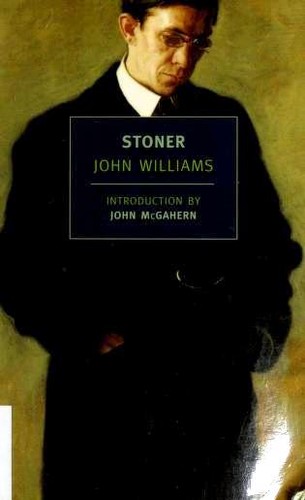
Our critical consensus on John William’s sleeper bestseller Stoner:
- There is almost no plot
- The main character doesn’t get the girl, or really succeed at anything
- Gigantic violation of ‘show don’t tell’, starting on literally page one
- WE FUCKING LOVE THIS BOOK
could it be…a perfect novel?
we try figure out why we relate so hard to Mr William Stoner, the great shining exemplar of principled mediocrity.
Is Stoner the perfect novel?
Benny: I might have a new favorite book, boys. This is a great one. I love it.
Rich: How fucking good is this book?
Cam: Is it the perfect novel? That’s my opening question. It actually, I think, famously got called the perfect novel in someone’s review in the New York Times.
I think it was underrated for ages. It only sold one or two thousand copies when it first came out.
Benny: Yeah, and then — which was when actually?
Cam: Came out in ‘67. And the author seems a little bit like Stoner himself — he’s kind of this not-super-well-known guy. He had written some other books that seem quite eclectic. His earlier one was a western called Butcher’s Crossing. I heard someone say “Blood Meridian meets Emerson” which sounds tempting. And then after Stoner he writes Augustus, which won an award — it’s like a historical ancient Roman fiction. It kind of reminded me of the Coen Brothers — like they choose these different genres: True Grit, then a crime thing, then a musical, and everything is very good and has a discernible thread.
Yeah, it didn’t sell hugely. But I think it might have been a “favorite writer’s favorite writer” sort of thing. Like the Velvet Underground — didn’t have many fans of the first album, but all of them started bands. And C.P. Snow wrote a positive review in the ’70s. And then it’s had this renaissance in the last twenty years. I saw it went wild in Europe in the early 2000s, when it was translated and got a whole new lease on life.
Yeah. I mean, there’s one question to ask — is it not an American novel, sort of thing? Or is there something more European about it? I’m not sure I could answer that.
Benny: But it’s also interesting because a major theme of the book is the war, and it’s a very Americanized perspective — they were in isolationist mode at first, they didn’t want to get into it, and then finally they joined. At least with the Second World War. Well, that just wouldn’t be a European perspective on the war — it’s set very far away from it.
Cam: Yeah, yeah. I did wonder if you could think of it as a war novel, or an anti-war novel. Like — probably not the main part of it — but I think you could kind of read it as an anti-war novel where he sort of chooses not to go.
Rich: I felt like that was going to be more of a plot element when Finch chews him out and is like, “You’re going to regret this, man.” And then it doesn’t — except that he finds himself in the situation that Sloane was in originally, of watching all these talented young men go to war while he stays behind, and feeling incredibly bitter about it.
Benny: Well, I think that’s a big part of the point. He developed some bloodlust, right? There was a part during the Second World War where he feels himself wanting to be physical, wanting to fuck some people up. It doesn’t last very long, but I think it maybe suggests the question of to what extent the regret of not going to the First World War is embedded in his psyche somehow.
Cam: At what point did you know you loved this book? Was it like straight away?
Rich: I was pretty sold on the first page.
Cam: The first page is even better going back once you’ve read it — you go back to that first page and you’re like, holy shit, it just pretty much outlines the whole thing from the start.
Rich: Benny sent that quote through to the chat and I was like, oh, this sounds good. But it’s just — yeah.
Benny: It seemed like — did you like it as much as I did? I guess that’s the question. It took you longer to read it.
Cam: It’s partly because my life went on pause — I didn’t go to the gym, I didn’t read. Also I just can’t really read compared to you guys. But yeah, I was losing to him in tennis. Although I didn’t get - the term is “getting bageled” when you don’t win any games.
Rich: I should have bageled you. You did well. It’s embarrassing for me.
Cam: Yeah, so no — I really liked it. I’m keen to reread it in a few years as well. I think we read it at the right time. I’m not sure if I would have liked it as much as a 19-year-old.
Yeah, yeah, I agree. I mean, who knows, but — yeah. Also I wasn’t in love with literature and learning as I am now, which is a big part of the appreciation.
Benny: Yeah, and I think being older helps — just recognizing some of the monotony and repetitiveness he’s dealing with as his life goes on. Everything is pretty novel and new when you’re 19 and you haven’t really experienced it. Like doing your laundry for the thousandth time, sort of thing — which is not explicitly talked about in the book, but just like years going by, and family going by, and feeling like a lot of your life is not the best, and you’re living for some parts and not others, and other parts kind of suck. You don’t experience that until you’re at least mid-twenties onwards.
Cam: I was wondering about doing a very quick summary. I think we’ve done them a bit too long in the past, if that’s alright.
Rich: Yeah, go for it — like two minutes around there.
Synopsis: forty years at a Missouri university
Cam: Yeah, so — as we said, the first page gives us this overview: we get this guy who started uni before the First World War, graduates during World War One, and then teaches at the University of Missouri until he dies in the ’50s, I think. Comes from a small town.
Rich: I thought that was going to be your summary.
Cam: Yeah, yeah, it almost is. Comes from a small farm town, goes to uni to study agriculture, then falls in love with English literature and decides to devote himself to that. He meets Edith, his future wife — I think it’s an open question of how much they loved and liked each other at the start — but their marriage is kind of tragic and a disaster, really, and they stay together. They have a little baby daughter, which is an interesting relationship we can talk about. And then there’s Sloane, who’s another important character — he was his lecturer when he fell in love with English. Then when he becomes a professor, he has a couple of friends and an enemy, Lomax, who’s hunchbacked. We’ll talk about their rivalry and feud. There’s a student who’s annoying and incompetent and also crippled, who causes issues. And there’s another student, Katherine, who seems quite precocious and talented, and he has an affair with her and falls in love with her. However, that doesn’t work out, which we’ll talk about. Then he grows old, the daughter has a kid, he gets cancer, he passes, and he reflects on his life. And that’s kind of it.
Cam: Yeah — sort of not heaps happening, but it feels very deep as well.
Rich: Yeah, the big crazy meta note about this book is that if you described its plot to anyone and they said, “And then what? Okay, but what happened?” — I think it is the best novel I can think of reading, and it’s not plot-driven at all. It’s purely humanistic. It’s not big dramatic beats or anything, really. There’s some tension, but even then things just sort of gently deflate most of the time, rather than having big reversals or swings of fortune or whatever. It’s insane to write a book this good where not a whole lot happens.
Why each of us loved this book
Benny: So why did we love it so much? The obvious question.
Cam: I think a big part of it is we’re all a little bit like Stoner — we’re into reading and learning, and it’s one of if not the most important thing in our lives, and that’s the case for Stoner. I think that’s got to be a big part of it. There are parts when he’s teaching English and he’s just in love with it, and that enthusiasm is contagious — when he realizes who he is and what’s most important to him. I think that’s a big part of it, for sure. But not the only reason we loved it. Any theories, Benny?
Benny: Honestly, I had a bit of a hard time justifying it to myself. I’m not sure.
Cam: Cos it failed the Beschel test… do you know the Bechdel test? You try to count how many times women talk to another woman and they’re not talking about men?
Benny: That’s not what I was thinking at all.
Benny: kay, yeah. Which I will get to as well, because I think there’s some discussion around that.
Rich: Wait, what is that? What does that mean?
Cam: I think it was like a feminist thing?
Rich: Oh, interesting. Yeah, yeah.
Cam: So Master and Commander is supposedly the best movie because it fails the test most comprehensively — and that’s just how we imagine women acting in our daily lives, I’m assuming. That’s the underlying criticism, right? It’s like men’s mental models of women is just them going around — well, I think that’s interesting to note, but it’s more about the Edith character. I think there’s a little discussion around her portrayal, or at least understanding her motivations, which we’ll get to. Anyway — why do you like it? You’d better say.
Benny: Um, well, I’m not entirely sure, to be honest. One part of it is the literature. I think he feels similar to myself in some sense of coming later in life to a love of knowledge and literature, and only realizing that about himself later — later meaning sometime during undergrad. But I feel like that was also my life arc in some sense. Some people know that about themselves from a very early age and are just precocious youths. That was not my situation at all. I was just totally —
Rich: It would be dope if we were like this when we were 17.
Rich: Well, it’s a very silly thing to regret in some sense, because you are who you are because of things you did at 17.
Benny: Yeah, but I definitely have a part of me that’s like, yeah, I should have been — especially, I should have been doing Anki earlier. And imagine just talking to — I mean, Rich’s kids. You get them and it becomes a habit, it’s just part of life. But anyway, so part of it is that personal element where you go to university and you start out in one subject — a very applied subject — and then you end up falling in love with something else and you can’t quite justify it in terms of its utility to the world. And that parallels my story a lot. I went to do medicine, which you can justify, and everyone’s excited for you to go do medicine so you can be a doctor. And I just ended up gravitating towards maths and physics, and then went for maths and computer science in the end. And so my point is that I ended up being captured by theory and maths for the sake of it. And if I’m being honest, well — I didn’t exactly excel in maths class and stuff either. But first year medicine is just all biology, just memorizing the Krebs cycle, and it’s purely driven by how much you can memorize, which is interesting. But anyway, the point of it is I sort of identified with his dawning realization that he was in love with a subject that in some sense he refused to recognize in himself for a long time. It took Sloane at the beginning to tell him he was going to be a teacher — and it was obviously obvious to Sloane that this guy was on the path.
Benny: Yeah, so as an academic as well, that’s extra meaningful — just that whole “I’m staying, I’m never leaving this world.” But then also just the general — putting aside academia — I’m sure we all have that feeling of some of your best hours spent just sitting with a coffee and a book, just pouring over something, or just understanding something, or even just at a computer. When the author talks about just him and his personal library, just really loving those hours when he’s on his own learning — yeah, fuck yeah, you can really identify with that.
Benny: I think another part of it for me was — and I don’t think this is like myself — but there was something about his stoicism throughout it all. Like, he’s a fucking master, bro. He’s a saint. He totally is. And he basically kept his cool throughout. His wife is kind of basically a psychopath, I would say. But he also had deep underlying values that he stood up for, right? When he refused to give in to Lomax and his student — the evil cripple — what’s his student’s name?
Cam: Walker.
Rich: Master Daywalker, yeah.
Benny: Which was pretty interesting, because he’s this very down-to-earth guy and you could tell he wasn’t doing it out of a desire to make himself feel special or important. He didn’t want to elevate himself above them. He just felt that universities exist for a reason and these people were basically the antithesis of what the university stood for. And so there was part of that too where he let most things go, but he had a few bedrock principles that he refused to give up. And I don’t know. You could make an argument he’s too stoic — or maybe stoic is even the wrong word — that he’s too much of a pushover. He definitely stands up for himself occasionally, not often though.
Benny: He just kind of takes it. In one sense that’s cool — he’s this kind of martyr — but in another sense you could make an argument that he could be more agentic and actually resolve things.
Cam: Yeah, yeah. He’s too passive. Right.
Cam: Rich, do you want to chime in a bit? And then I’ll say what I think I loved, and we can talk more about a bunch of that stuff.
Rich: Yeah, a lot of it is similar to what you said, Benny — coming late to the intellectual life and recognizing that flourishing and that longing, and feeling a sense of sort of disappointment that you’ll never get to all the things that you want to get to, and wishing you could have started earlier. And also — is there one nice line that everyone relates to, about realizing you’re never gonna — something about not being able to read all the books?
Cam: Yeah, I forgot to highlight it.
Mediocrity as the modal outcome
Rich: That hits you so hard. That hits you so hard. And then he also feels isolated from people, which I think we could talk about — I’m curious whether you guys have experience like that. But the main reason that I identify with him — and that I might not have when I was younger — is that if I’d read this when I was 21 or something I would have been mad at him for what I would perceive to be not fighting hard enough, being a pushover, not being ambitious enough. Like, you know, leave your wife, rescue your daughter, get a promotion, compromise with Lomax if you have to, put your stamp on the world and be somebody. And I would have found it odd to read a book about a guy who ultimately is like a footnote to history and doesn’t have any real impact on the world and doesn’t get the girl. And I’d be like, what is the point of this book?
Rich: And now I think I’ve been humbled enough by life and also my own personal path through life, realizing that mediocrity is sort of the modal outcome for people like me. And I’ve sort of come to terms with that, and realize that you can still live a good life — that there are certain things that I do which are ultimately not means to an end, they are just ends unto themselves. Which includes the learning stuff, the book club stuff — a lot of what I’m interested in, I think I won’t end up applying it for the betterment of mankind, and I don’t think anyone will remember me in the history books. And that’s been hard for me to come to grips with, having been infected with Silicon Valley memes and effective altruism memes and stuff. But now I’m okay with it. And I love to see a fellow traveller — I love to empathize with this fellow traveller and see how he can live a good principled life in spite of, in some sense, not deserving to have a book written about it, you know.
Cam: Yeah, because I mean, it could be read as an existential book — what’s the meaning of all this? And then there is meaning: he realizes his identity at the end, and maybe even earlier when he talks to Katherine they kind of say that we know who we are. And it’s quite a deep and meaningful life that we relate to. And yeah — it would feel a bit odd calling it mediocre, but I think that’s right. He’s got this one book that some people at the university kind of remember him by. And yeah, that’s like — you think of the lecturers you had and the smart people you know. That’s just the case.
Rich: Well, I mean, mediocre relative to the reference class of other smart, maybe academic people. I think that’s right — not relative to the whole world it’s just like — or relative to your own expectations even, or other people’s expectations of you.
Cam: Yeah. That’s just how life is. And I think it still is relative to the whole world, to be honest — like, he’s probably doing better than most people. But I kind of think it depends how much importance you place on this kind of learning. He’s obviously a smart, insightful guy who reads all the time. That’s not a very common thing to do.
Rich: Sorry, I don’t mean in terms of his life lived from his perspective and the meaning of it. I just mean in terms of stamp on the world.
Cam: No, I know. But yeah, my point being — for people like him or like us, we kind of feel like we’re a bit special. And in one sense we are — you know, top five, top ten percent of whatever, at least in terms of raw smarts and interest in things. Most people don’t read, right, that’s just kind of facts. But then the next layer is, well, actually what am I doing? I don’t have much of a stamp on the world. And then yeah, you are just kind of mediocre in that sense — or at least not significant. And that’s fine, and it can still be meaningful to live a good life.
Benny: Yeah. I would like to talk at some point about his daughter.
Cam: Oh yeah, we need to talk about the daughter. We need to talk about the wife.
Is Stoner a good stoic, or too passive?
Benny: I think an interesting line of inquiry is to what extent he’s too passive. I used “stoic” at the beginning, which — certainly he does seem to have done the right thing in many circumstances. But when it comes to the obvious maltreatment of his daughter, I get off the road a bit. I’m like, okay, maybe you should have done a little more. Because his daughter basically — we’re meant to picture her as this bright, cheerful child who could have done a lot, who really loved her dad, who was extremely happy — and she becomes an alcoholic. In one sense it’s partly his fault. He’s letting it happen, and he’s okay with it because he reads all the time — it’s like his escape, like Edith’s escape. Because Edith at one point, when she has friends around, makes out like Grace loves her dad but her dad’s never got time for her. And obviously she pulled Grace away from him and kind of manipulated her. But there’s a kernel of truth there where he was reading all the time. And instead of fighting it, he prioritized just reading all the time and being passive about it.
Rich: I think the move that the author pulls, which sort of confounds it, is that he makes it seem as though this is inevitable and that Edith has Stoner outmaneuvered at every turn. And so I kind of wanted Stoner to kick off and lash out a bit, but I also could tell that within this world, that would have been the undignified option, and we’re meant to infer that it would also have been futile or made things worse, and that all he could do is sort of grin and bear it with the best grace possible. So I was thinking about this and I couldn’t see anywhere really obvious in the text where he made a definitely wrong decision. Except obviously I think I would fight for my daughter, and I would be willing to make a scene and embarrass myself and create disharmony and so on. But the way it was written was kind of clever, where it seems as if Edith just masterfully manages to ruin his relationship with Grace. And I’m not sure how he would have done it differently.
Cam: I think it’s also — there are a few sentences where the realization probably happened later. I don’t have the quotes, but the narrator is almost like, “which he would come to realize was the start of the great battle.” But he probably didn’t realize it at first, all these moves that Edith was making.
Rich: Yeah, I don’t know. There do seem like choice points in there, though, right? You’re coming home every day, you’re aware you’re not seeing your daughter for most of the day — you don’t see her at breakfast, you see her for a few minutes at dinner, and she’s kind of afraid to talk to you because Edith will jump on her if she does. Consistently letting that slide is a choice, right? To never pull Edith aside and say, she’s also my daughter and this is unacceptable. To never do that is also — well, he does say that at one point. He says, “I know you hate me — don’t use her.”
Benny: Yeah, but he never really does the thing. And there’s also: different social pressures around divorce. And if you get the divorce, you’re not necessarily keeping the kid.
Rich: Yeah, that’s true. I think there’s some truth there. That could be the stronger criticism of his passive behavior — with the daughter, specifically.
Cam: Just quickly, what do you think about the war? Like, what are we meant to think of him not going? Gordon Finch is quite positive — he almost can’t believe that Stoner’s not going to war. And then David Masters — he went, but he seemed a bit cynical about it as well. He went for odd reasons. And I don’t think it’s right to say that Stoner was scared. It just felt like indifference.
Rich: It actually feels — just as you’re saying that — he refused to go to war for the country and for his family, right? And he was sort of indifferent about both of them. He took a similar attitude to both.
Benny: I think part of it is because he just wants to read, man.
Benny: Yeah, and I think that’s maybe the author’s point. I mean, from what I remember of the First World War, he struggled a bit — there were a couple of weeks of indecision where he was wondering if he should go or not. And then I think Sloane encouraged him not to. But in either case, he sort of becomes this indifferent guy who takes refuge in learning and books. And I don’t know if we’re supposed to read that as the author saying, be careful what can come of you if you don’t also prioritize things in the world, if you don’t keep yourself tethered to other people and things — or if the author views this positively. Like, not going to war is maybe a positive, and not fighting for his kid is a negative. Being attached to the world of ideas and books has both benefits and costs.
Cam: Yeah, Sloane’s response to him suggests to me that we’re meant to interpret it positively, or at least neutrally. “You must remember what you are and what you have chosen to become, and the significance of what you are doing. There are wars and defeats and victories of the human race that are not military and that are not recorded in the annals of history. Remember that while you’re trying to decide what to do.” He’s basically endorsing the decision not to go to war. And you could even read that as the parallel to his personal life and his refusal to fight there too. He is a very principled man, to the point of stubbornness, to the point of potentially making what we think are bad decisions. But he sort of knows what he’s about, and he just steadfastly, resolutely commits to it through all crises — geopolitical or personal.
Rich: So — I mean, it’s obviously ambiguous. Like, partly you want to shake this guy, right? Come on. But through my whole read I felt good feelings towards him, good vibes towards him, in spite of these decisions. So the author must have been trying to convey that, at least to some degree.
Benny: No, definitely. I think he’s overall meant to be viewed as a bit of a saint. But you can look at the passivity of his life and ask how much of his failure was his fault. I mean, he even says that, right? Near the end — this was the life he chose. Which I thought was great. And he just cops it — he’s like, fuck it, yeah, this is kind of the way I am and how I do things, and that’s fine, rather than blame others.
Cam: The one thing he does fight for is the integrity of the institution at one point, and that seems to be the only thing he’s really willing to put his foot down for. But the other thing I just realized is there is one point in the book where he doesn’t just take it on the chin and actually fights back — which is when Lomax is continuously giving him a bad lecture schedule, always teaching undergrads. At some point he gets fed up with this and just teaches his graduate seminar to the undergrad class — a bunch of English 101 students — and starts lecturing them about medieval trends in literature. Which is hilarious.
Rich: And it’s Lomax’s content, right? He’s teaching Lomax’s material, stealing it?
Cam: Oh, was it? I thought it was his senior stuff — material that got taken off him and then given back.
Cam: I think it might have been his seminar material. But anyway — what was interesting is that part of me expected, after he does that, for him to also display a bunch of agency in the rest of his life. Like, he’s made this decision to push — at least push in the direction of getting his preferred schedule. I kind of expected him to then go home and be like, okay, I’m demonstrating agency in one part of my life, now I’m going to apply this to the other parts. But he doesn’t do that at all. He just leaves his family life as it is and is now somewhat happy to have a slightly better lecture schedule, and kind of loses it there.
Rich: So he is capable of standing up for himself every once in a while, but even that is like non-violent resistance — weaponizing his own stubbornness and willingness to endure discomfort. It doesn’t involve going on the attack or making someone else uncomfortable. He’s just willing to eat shit for his beliefs, basically. And yeah, he wins. But —
Cam: The one time he wasn’t just eating shit was when he was failing Walker. But he’s the one who suffered for all those choices, right?
Rich: Yeah, I suppose — he threw away Katherine for that ultimately. Which is an insane decision.
Benny: That’s wild.
Cam: Well, maybe let’s talk about the relationships. We’ve got the wife. And I think — I kept imagining, if my partner was reading this, what she would say is there’s probably a good novel here from the wife’s perspective as well. I had that ringing in my head a little bit. I think you can go too far criticizing it as sexist, but I think that’s right — part of it is probably just that as a male author it can sometimes be a little hard to write from the female perspective. I thought she was an interesting character — it’s just that she was an extremely unsympathetic character.
Edith: trapped, resentful, and difficult to read
Benny: Well, she’s extremely unsympathetic, but I think the criticism — which has some truth to it — is that her motivations aren’t super clear. Like, why is she so histrionic and toxic all the time? I think at one point there’s an indication that maybe she was kind of messed with by her dad, but I think it’s kind of a stretch. When her dad died, one, she seemed kind of better off, and two, the mother said a couple of things — she said they were very close.
Cam: But I wondered, does that explain her? I picked up on that subtext as well.
Benny: Yeah, and then of course she’s got this aversion to sex — like when they lose their virginity she kind of vomits, and she’s sort of scared of it, and she kind of potentially has this Miss Havisham quality. But yeah, some of those motives — maybe he points at that, but I think it’s not obvious that she was abused by her father. So maybe she’s just toxic, and like, some people are toxic. You can even call it toxic femininity — it’s like a feminized way of being toxic. And I think that should be portrayed sometimes. You can make an argument that if that’s the only — but there is another strong female character who’s portrayed super positively. But wait — where are you coming from with this stuff? Do people say that this book is misogynistic, or are you preempting a claim?
Cam: There was a review out there from a woman who criticizes it for that. She also has some criticisms of the other villains being disabled. But I also — I mean, before I even came across that, when I was reading it I was a little bit sometimes puzzled by her motivations. But I also could imagine it. I think I’ve been in relationships — not to that extent — where it is a little bit like that. It’s like you just meet a bit of a bitch and then you just withdraw and read. I think it captured an aspect of that. It’s kind of like if you were reading a woke book these days and the male character is just this caricatured evil white man who you don’t know where he’s coming from — that would be annoying, and that happens sometimes when you watch TV. So I kind of see where they’re coming from, but I’m not fully on board with it. And even if there’s truth to it, I probably don’t mind — toxic female characters, why not?
Benny: Oh yeah, I love the book. And even if there is truth to it, I probably don’t mind.
Cam: Why do we think he married her? Did he love her at the start?
Benny: I think he’s just attracted to her, and then that’s kind of what you do — he’s this naive guy from the sticks. He’s probably seen like three women in his life. And she’s marrying down, right? She comes from this rich family.
Cam: I mean, I think that explains her behavior. She’s sort of marrying down, and then there’s this guy who doesn’t love her in the end. She doesn’t love him, and he just reads all the time. He’s passive and infuriates her. She’s marrying into potential which is never fulfilled, right? Because at this point he could yet be somebody.
Benny: Yeah, true.
Cam: And he could rise through the ranks. I mean, he only gets made a proper professor on his deathbed, right? He’s just a competent teacher. And she feels trapped by that.
Rich: The other thing is — the Edith before she gets into pottery and cuts her hair short and stuff — that is a whole trope that existed at that point in time which people are probably less familiar with today: neurasthenia. It was a real affliction that women had, where they would just not want to do anything and just sort of lie around in bed with the blinds drawn and stuff like that. It was a whole phenomenon amongst exactly that type of person, from that social background — upper-class women who basically had no real role to fill. And it probably exists today in different forms, possibly in some of the chronic illness type things which affect women a lot more than they do men. It was captured a little bit in that Blue Jasmine film that you loved so much, right? She was kind of losing her shit because she was kind of — well, she was more obsessed with status and didn’t really know what to do with herself.
Cam: Yeah.
Rich: So this was a thing where women of a certain class would go to the seaside with their aunt or whatever, or lie in a room with the drapes drawn all day because they felt so weak and they needed to lie down. And it’s this very strongly culture-bound medical condition which doesn’t seem to have any obvious physiological causes. William James apparently called it “Americanitis” because it was so common in Americans in particular.
Rich: Anyway, but that’s the context that’s probably missing for modern readers of that depiction. And then she sort of has these spasms where she breaks free from it — the first when she gets it in her head to have a child, and then once again it’s like, oh, this is too much, she’s not prepared to actually deal with the consequences. And then when she sort of reinvents herself as a potter and starts wearing makeup and cuts her hair and wears flapper dresses and stuff, she’s trying to find herself. But she can never quite break free from the strictures of her life in a Missouri university town. So that’s my best attempt at trying to analyze her motives — she just resents Stoner on some level, and maybe even sees him as a representation of her father or her mother, and the only way that she can self-actualize is by playing these psycho games.
Cam: Yeah, I think that’s right. That’s the only way she gets to flex her agency and power.
Benny: Yeah. I mean, I could imagine — I was in a university relationship near the end where we just hadn’t broken up and we should have, and there was no love there. She doesn’t act like Edith acted, but in a different culture where you can’t divorce, you just kind of deal with it. And I remember seeing some friends where they were obviously just — they were incompatible and still living together. But he just gamed at night and she went out with her friends. They’re broken up now, but it is a thing that sometimes happens. And he totally withdraws and she resents him.
Subverting the hero and saviour narrative
Rich: Yeah, that’s why this feels more true to life to me — both with Grace and with Edith. I feel like it’s subversive, in that normally when you read a novel or watch a movie it’s a hero’s journey style narrative where if not the guy gets the girl, at least he shows some agency and saves someone or tries to. But in real life it doesn’t tend to happen that way. And even with Grace — I think in real life people will be who they will be. One of the worst experiences, and it’s very common, is realizing that even with someone you really love, there may not be anything you can do short of watching it unfold. You can try to provide support and you can try to intervene in certain ways, but people will run their lives the way they want to run their lives. Given a long enough life I think everyone has that realization — I’ve already had that realization with people in my life — that ultimately they need to make a decision to be a certain way and nothing that I can do is going to change that. So it feels really realistic to not have Stoner swoop in and win his wife over, or divorce her and win his daughter back. I think possibly it’s more realistic to just have it end the way it ends.
Cam: Man, some of those scenes though — I was like, fuck, that would be so annoying. Like, she starts embarrassing herself in front of the students, and it’s just — and there’s this cry for help.
Benny: Oh yeah. I felt that. Yeah.
Rich: Nah, I mean, she’s a piece of work. Not the book’s fault. And like, the man just wants to fucking read, right? There’s that whole scene where he’s working on his office — shaving the old paint off and sanding it, refinishing it, building bookcases. And he’s like, oh, I imagine this is the process of becoming for me. I am making this space in the mold of who I am and who I want to be. It’s more than just an office. There’s a really nice passage about it. And then it’s so sad that he just —
Cam: I know.
Rich: And then he just takes it. Man just rolls with a punch. If I came home and all my stuff was like out in the hallway — boots spilling everywhere — and I was told it’s her pottery studio now, I’d be like, hold the fuck up. We’re going to have a conversation about this. That’s not how it works.
Benny: Yeah. In one sense he is too much of a pushover. It’s insane.
Cam: Yeah, yeah, yeah. It’s also kind of — maybe Stoner is more of a passive archetype, and Edith is more like the masculine one. Because it’s kind of insane to just let that slide. She’s been passive-aggressive too.
Benny: Yeah, but to just roll with that and not make it into a confrontation. But he doesn’t really fight.
Cam: I think she’s crying for help. She fucking hates him and resents him, in a fair way to some extent — not completely, because she’s nasty. But it’s a hard life for her as well.
Rich: “Passive-aggressive” doesn’t seem correct for him, though, because he doesn’t seem aggressive. I think he’s just stoic and takes it. He doesn’t seem to hold whatever she’s done against her in the next days or weeks after a confrontation. He truly does seem to just take it. Passive-aggressive, I associate with biding your time until you can make them feel uncomfortable enough, or until they notice your discomfort. I think there’s this interesting mix of feelings he has — which was well done — where he no longer loves her, if he ever did, but he still has this feeling of pity for her and kind of a connection to her as well. Near the end there’s a bit of that as well. Just this later family loyalty. And yeah, they kind of have this bond, which I think is often true. You can even have some resentment but still have loyalty, and do the right things at times.
The Lomax–Walker feud
Cam: Yeah. So should we move on to the feud at the university?
Benny: Yeah, yeah. To be honest, that’s when I realized I was just so gripped — the Walker stuff building and building, and then the Lomax-Walker alliance just building and building.
Rich: Lomax is such a good villain.
Cam: He’s a great villain because he’s not like a bad guy. I think Stoner even calls him a good man and a good teacher in the end.
Benny: I think he is kind of a bad guy — there are aspects — but he’s not motivated by malice. He’s just too caught up in his own personal life tragedy. It’s misdirected compassion. The reason he favors the student — well, I think there’s a bit of proto-PC-ness and early HR affirmative action type stuff there. Stoner is meritocratic, and back then especially, for postgraduate study, you have to be good. But there are obviously these other agendas which you can understand — Lomax thinks Walker gets prejudiced against because of his limp, and Walker is a kindred spirit because of the disability. But yeah, dealing with this bullshit bureaucratic kind of stuff felt a little bit prescient.
Rich: Can we just do a sidebar on how crazy the requirements are for the undergraduate English program in the ’20s? What the hell? There’s one where the student’s like, “Well, my topic is going to be reading the Romantic poets through the lens of Neoplatonism with reference to blah and blah.” I’m like, what? When I was that age, I was just reading my first book.
Cam: Well, people don’t even do the readings these days.
Benny: Yeah. Actually, I think part of the feud was to do with the topic and the approach to academics. Stoner is classical — he’s into the medieval and classical analysis of poetry and the more logical stuff. And I think Lomax was a Romanticist. And Walker was — well, that’s when he first started kicking off and being rude: “Romantic poetry is the real poetry and none of this classical stuff matters, this stuff didn’t influence anything.” So I think there’s part of it that is this different view of academia, and it’s not obvious who’s right.
Rich: Does Walker try to say Shakespeare’s not special? Does he do the — ?
Benny: No, he was trying to say that Shakespeare wasn’t influenced by someone — I forget who.
Rich: Yeah, oh that’s right. He just doesn’t like all this classical tradition and lineage stuff. And I think he views it as, you know, someone can just be an amazing poet without any influence and without any hard work, and we should just analyze it on those terms. Also he’s totally incompetent in lots of other ways. But in one sense you probably could make that argument — there are kind of two schools of thought there. And Lomax is also on that side of Walker.
Cam: So it’s actually like an intellectual fight hidden behind the surface-level fight?
Benny: I think it’s a little bit the kindred spirit of the disabilities, and then a little bit of intellectual allegiances. But then there’s just — I don’t know. I think I might disagree with that, to be honest, just a little bit. I’m not even sure it’s the main driver. It’s there, it’s definitely there. But in some sense Walker is just totally incompetent and totally chimping out, and there’s no kernel of truth to what he’s saying. And when he’s reading out his theory he’s just making stuff up.
Cam: That’s so awesome, that bit.
Benny: Yeah, yeah, that’s one of the great scenes. And then he’s ripping into Katherine Driscoll — he’s late, there’s all this shit that he just can’t do. But I think he is into the Romantic stuff, and Lomax is as well — it comes from that field.
Rich: Oh, I see, I agree — maybe from their perspective. But I don’t think Stoner harbors any — he just seems like he’s going to give Lomax’s graduate student the same standards any other graduate student gets. Because when Lomax is questioning Walker, Stoner is pleasantly surprised and obviously pleased that Walker seems to be able to answer all these questions really well. He sits up in his chair and gives Finch a small smile. And then it’s when the second part comes —
Cam: That’s good. Lomax probably coached him, but that’s pretty good.
Rich: No, I think he was just legitimately impressed. Because that’s an interesting question that I think the book doesn’t resolve and I’m not sure what we’re supposed to think — to what extent were those answers coached, to what extent is Walker just brilliant at making stuff up about a certain subset of subjects, and all Lomax had to do was orient the exam towards this subset of topics that he could just riff on? I think part of it is this slightly different approach I’m getting at — the person who’s not worried about theory and all the history of stuff, who just wants to write beautiful poetry and has a certain talent to it, but then can’t answer basic questions and has no time for them, and lies about them as well.
Benny: Yeah. But I mean, Lomax never tries to say the standards are the wrong standards, right? If that was the debate, you’d think Lomax would say, yeah, you’re right, we just wanted to give him a pass. And he seemed to say, oh, that was fine, his knowledge was a bit lacking when it came to Stoner’s questions, but otherwise he did pretty well. And everyone else was like, what the fuck are you talking about?
Cam: Do you reckon the audience is meant to take it that Walker doesn’t really know his shit and is just making stuff up? He knows something about his interest area and he can kind of riff on that for a bit, but in general he’s not very impressive. And he’s obviously extremely good at just oration — just waffling on about a topic and spitting out a word salad that sounds good. It reminded me a little bit of — you know, you’re just kind of going off, and you’re the clown, and you just sort of keep doing it.
Rich: Yeah, that’s a good comparison. And you get all wounded when your motives are impugned — “Me, sir? Me?” That is fun.
Benny: There’s almost an element of comedy in a lot of the Walker interactions, when Stoner’s like, “Alright, well then, show me your paper.” And Walker’s like, “Now, did you ask everyone else to show their papers?” He’s quite good at making those excuses.
Rich: He’s pretty good. Also, I was pretty confused about that, though. In what universe do you write a final paper for a course and then not actually deliver it? That seemed extremely bizarre to me.
Cam: Oh, no, I thought it was all oral at that point — they’re just reading it off, and then he grades it based on that. So he doesn’t need to actually see the paper.
Rich: Yeah, but why would Walker say, “did you ask everyone else?” — I mean, I think they were supposed to write a paper and then deliver an oral presentation. It just seems like an odd class structure. It seemed like a bit of a plot device to make things work.
Cam: I mean, the other thing is — and you might relate to this more, Benny — it definitely seemed like a bit of commentary on annoying students and annoying academic bureaucracy, like when you just want to teach and read and write and you kind of have to deal with all this. It’s like a love letter to academia but also with the issues — the feuds. I imagine there are often feuds between different professors. I remember two economics professors who hated each other — one couldn’t really do maths but was really good at describing economic principles, and the other was a bore but I think he was a genius. They had totally different views on what was valuable. In one of my courses one was the lecturer and one was the tutor and they were always bitching about each other. At the time I liked the maths guy. Now I look back and I’m like, actually the other guy — I think he’s writing children’s books now. Sure, but he was a good expositor. Anyway, yeah, feuds are a thing you have to navigate. And some people are assholes, even if they happen to be crippled.
Academia as an asylum for misfits
Rich: Should we do the thing about academia as an asylum for the misfits of the world to hide? Because that was pretty funny. I don’t know how seriously we were meant to take it, but it comes up again multiple times throughout the book when he’s reminiscing about good old Dave Masters. Because it feels true of Stoner, right? Like, this is his enclave, this is his refuge.
Cam: Yeah, yeah. And he never wants to leave.
Rich: Yeah, and Dave Masters’s criticism feels true — that the world will chew you up and spit you out. What does Masters say? He says Finch’s model of himself was like, oh, I’m the kindly old scholar who’s doling out the good medicine to the students as they come through the door, giving them a bit of wisdom to prepare them for the world. That’s his model. But Masters says Finch actually knows he’s not as smart as he thinks he is, and also knows well that he will never amount to much in the world, and this is the best that he can do. Like the “those who can’t do, teach” kind of thing — that was his sick burn.
Cam: Yeah. Is it Finch or Fincher?
Rich: I think Gordon Finch. Finch, yeah. Who’s a character who really grew on me throughout the book, by the way.
Rich: Yeah, exactly — from seeming like the buffoon, and then occasionally just straight up siding with Stoner and refusing to go along with Lomax and it’s like, well, come on now, you know that’s not gonna happen. And I’m not sure what we’re supposed to make of the fact that Masters has this somewhat lowly opinion of Finch, but then Finch obviously ends up being this totally stand-up guy — basically the only friend Stoner has, the only one who stands up for him. And also that he ends up being the department head is quite interesting. I’m not sure if that’s also commentary on who ends up leading these kinds of departments — the true academics remain academics and get short-shrifted for further careers, and then it’s the people who — well, a little bit of that was implied, I think.
Cam: I didn’t quite get — what position was Lomax and what position was Finch? I could never tell who had more authority.
Benny: Finch was higher, but there were some things outside his purview that Lomax could do. Well, I think Lomax is the English department head, and then Finch was like a dean or something over multiple departments. And Finch would have to deal with the fights when they escalated.
Rich: Yeah, like it would look bad if Finch stepped in and just exerted power — that was clear. There were a few comments that felt a little — not anachronistic, I’m not sure they’re out of place for the times — but where there were certain moves Lomax made or Stoner made where the other person just can’t respond, because telling a senior English professor how to teach is so out of line. And I just thought, these days HR would come in and be like, yeah, I’ll fucking deal with that, no issue.
Benny: Yeah, I mean, maybe even then — having tenure is really important, right? They make references to tenure.
Cam: Well, so that’s why Lomax tries to bring down Katherine, right? Because he can’t get rid of Stoner. And it’s kind of a brilliant and evil move.
Rich: Oh, so sad, man.
Lust and learning: the Katherine Driscoll affair
Rich: Okay, let’s go. You know, you get these little glimmers — the kind of thing that cheers Stoner up is that his wife calls him “Willie,” even when she’s being like a total — like she’s evil, but this is like the thread he hangs onto. Oh, it’s quite endearing, she’s got a little nickname for me while she’s ruining my life. And that’s like all that you get — these tiny little things where he’s trying to grasp onto silver linings in this miserable life. And then you get this one actually amazing thing: he falls in love. I was so excited. I was so happy for him.
Benny: That’s the other thing — it’s cliché, but the whole “it’s better to have loved and lost.” He had real love, right? And he had however long it was.
Cam: When she dedicates her book to him.
Rich: Oh, I know. Man, I actually — I was pretty misty-eyed in this book. I think it was the end and the Katherine stuff. The end, and “The Craftsman.” And he reads it in one night, right? And he kind of knows who — And that was it. In another world or another novel, you could imagine he leaves. He’s got cancer and he’s got a few months or a year to live and he goes to find her.
Cam: I like how this one is like — he’s just got her book and reads it and that was enough. There’s no reconciliation. They never speak again. It’s perfect. It’s so true to life.
Rich: I suppose nowadays you’d like to send them a message request on Facebook or something.
Benny: These days you’re stalking them on Instagram. Every night.
Cam: Yeah, so — we’re meant to read her as talented, precocious and talented. And at the start he just thinks she’s a great student, and then he realizes he’s spending a night in the library to find her a quote, and maybe he’s got feelings for her. Their courtship is so cute — both of them being very careful not to overstep the boundaries.
Benny: Also felt relatable to me, the chronic overthinking.
Rich: Oh, man, it was so adorable. I almost thought they were going to fumble the bag because he doesn’t realize. I thought that was going to happen. And then when they didn’t, that was like a good release of tension. I was like, oh, thank God, things are turning up — Stoner catches a break for the first time in this incredibly bleak life. And they’re blissful times together, where they’re just hanging out all day and reading and then lying down together.
Benny: Reading and — man, this is the best thing ever.
Rich: To be a humanities professor in the ’60s and ’70s. Even in the ’90s, if I were —
Cam: Katherine says, “Lust and learning — that’s really all there is, isn’t it?” And I’m pretty sure that’s a riff on Freud.
Benny: I was just going to say it reminded me of that Freud quote.
Cam: Yeah. He says, love and work, love and work. And she says, “Lust and learning.” All there is to happiness.
Rich: I like her refinement better. That’s nice. I mean, you’d put that in your book these days if you were writing it now. “Lust and learning, that’s all there is.” Well, like, as a joke you’d say the Freud one, and then you’d say — or it’s in Stoner.
Benny: Yeah. That does feel like an allusion. I’m guessing it is.
Cam: And then — does Stoner break it off and then she leaves, or does she just leave?
Rich: They both kind of realize they can’t. I think — she does it, and she also perfectly anticipates his decision. She knows him so well that she just takes the decision out of his hands and does what she would have had to do anyway. Which again just makes her seem so perfect, and there’s no note of disharmony where she’s asking him to make a sacrifice for her.
Benny: I suppose there’s another area where he wasn’t super passive, actually. He was passive in the breakup, but at the start of it — during the courtship — a super passive guy might have just not done it or fumbled the bag. But he did kind of put the matzo ball out there.
Rich: That’s a big one. Yeah, true.
Cam: Or as in When Harry Met Sally — once you put it out there, you can’t just — “oh, just take it back then.” You can’t take it back. You can’t.
Rich: It’s funny, whenever you read a review of When Harry Met Sally these days, they always say, “Well, the premise is obviously false — women and men can be friends.” But it’s a good movie anyway.
Dying on your own terms
Cam: Yeah. I mean, we’ve covered most of the book, and then I suppose the Second World War happening and the Grace stuff, which we touched on, and then his sort of slowly dying and accepting his life — which was a good ending, I thought.
Benny: Yeah, just some kind of accepting it.
Cam: What did you expect? — that’s what he keeps saying, right? What was that in response to?
Rich: He’s reflecting on all of his failures. Yeah, that’s the thing — he owns it. It’s kind of a callback to the Dave Masters comment, where Dave Masters is like, “You’re a dreamer, you’re a Don Quixote wandering around. The world will chew you up and spit you out because you think there’s something there and that you can find it, but there’s not.” But I think by the end he’s internalized it — life has knocked him around sufficiently. His life has taught him the lessons that Dave Masters thought he was yet to learn.
Benny: Yeah. I think the other thing with this book is it’s a peaceful death, even though it’s grim.
Cam: He’s a badass with the cancer, by the way. I respect the hell out of that. Just delaying it for a few weeks while reading. Refusing to tell anyone. Not being interested in life extension. Refusing to take Lomax’s deal.
Rich: He went out on his own terms, for sure. Yeah. Right until the end.
Benny: Also, the writing was incredible around his death. I’ve never read such good writing around how one might actually die. It seems so realistic — coming in and out of yourself, having almost out-of-body experiences, sometimes your hearing is very keen. Obviously I don’t know what it’s like, but I was like, wow, this feels like what it could be like. You’re just in and out of it, you can feel yourself getting weaker, you sort of know what’s coming, you feel this tingling sensation. I was like, holy shit, this person’s been to the other side. This is the most realistic accounting of death.
Cam: Yeah, it was captured a little bit in that film Hunger with Michael Fassbender, which is kind of an artsy, slow film in some ways. It has like three parts, and the last third was just him dying of starvation, and it had to kind of capture that kind of almost —
Rich: Is that based on the Knut Hamsun book of the same name?
Cam: I’m not sure, but it’s about an IRA activist in prison who does a hunger strike. Bobby Sands.
Rich: Oh — Bobby something, probably, yeah.
Where Stoner stands in the canon
Cam: I think the other thing with this book — since it was underrated for so long, it kind of gets used for aspiring writers and stuff, that whole feeling of like, my stuff’s good and it’s not selling, but one day it’ll get its recognition. Like John Williams — yeah, one day someone will pick this up and realize it is really good. And there’s always a chance it’s this hidden gem. Herman Melville — Moby Dick didn’t sell super well at first. And then it becomes — most of the time of course it’s not like that. But I feel like if you write something that’s good, you know it’s good, right?
Benny: Yeah, well I think even Williams said — he backed it, and it didn’t make a huge — is that — hopefully one day people realize this.
Rich: It’s so fitting as well that the book didn’t do well. It’s thematically perfect.
Cam: Yeah, it’s crazy. And I assume he died before he got any real kudos?
Benny: Well, no — he won an award later for his next book, Augustus. And then there were — it was kind of happening. Like C.P. Snow wrote about it and asked the question that all people who love this book have asked since: why is this book not famous? So that was kind of happening. He died in the ’90s. I think the main resurgence happened in 2005 and after. So it became super famous after his death. But I think he would have known that it was well regarded, just not like a super bestseller.
Rich: I’m a little bit scared to read any of his other books, because I don’t think they could possibly be as good as this.
Cam: Once you do the ancient Rome one, we can read that. We can read Augustus. But you’ve got to imagine — maybe he improved as a writer. But it’s certainly — okay, so is this the favorite one you’ve read? In book club, if you want to take that.
Rich: Um, I’d put this up there. I mean, there are such different books. Yeah, this is really up there. It’s sort of apples and oranges, right? I mean, I really enjoyed this — it’s much easier to read than Infinite Jest. Even though I liked that, there was a part of me that every time I had finished my allotted pages, I was ready to put it down because my brain was spinning and I wasn’t sure what just happened. But whereas this one I was having a hard time putting it down. There were some mornings I would just spend the whole morning on it, and I was like, I need to start doing work, but I just couldn’t.
Cam: I mean, I was like that in the middle. And then maybe because I stopped reading for five days — yeah, yeah — I had that page-turner experience of staying up late and wanting to finish the book, and I just made myself put it down because of the higher-level concern of — exactly. It’s such a good decision to have to make, where you’re like, I’d love to keep reading it, but I also get the most out of it when I’m fresh. And it’s so rare to have that feeling.
Rich: And what a mercifully short book too. It’s perfect length. Not too — you don’t, like, with modern stuff — well, Wallace and friends, right — Franzen and Roth and stuff like that, they’re fucking long books. Well, Infinite Jest is a completely different book. But who’s writing two-hundred-page perfect books these days? This is like three hundred pages. But it’s a very non-grandiose, non-ostentatious book. It’s very simple, understated. It’s quiet. It’s like a quiet book. It’s not doing the six different parallel voices and storylines type thing. It’s also not doing the postmodern stuff. The grandiose — this is war, or this is a battle, or this is a champion — and also not the postmodern stuff. The postmodern stuff is distracting from a fundamental inability to tell one story really well, by having to add in big allusions and big references and multiple parallel storylines and B-plots and C-plots and stuff. It’s like — maybe this is more what a great book is.
Benny: I mean, I’d love to know what Wallace thought about this book.
Cam: Yeah. And what writers in general think about this book. I know Ian McEwan is a fan, back in the day.
Cam: Yeah, no, it’s really good. Even talking now — we’ve just been praising it this whole time — it’s still kind of hard to nail down why it’s so good. This understated, quiet deepness to it.
Rich: The prose is so good as well, and I think you can’t separate that out. Because it could be mawkish and sentimental, but it’s not. I think that has a lot to do with the restraint in the prose, but it’s like perfectly walking the line where it is evocative but not over the top. And the narrator sometimes just says things as they are.
The courage of plain, sincere prose
Cam: Yeah, yeah. It’s weird, because some of it is kind of tell-don’t-show, right? Where he just says what the lesson is. Like that first page, for instance, or Stoner’s updated views on love as time goes on — it’s not revealed through his actions, the author just tells you.
Rich: Yeah, and that’s different from someone like Hemingway, who would let you gradually realize, oh, this character is traumatized, by the way they make their bed. Williams would just tell you. And it worked. It’s the kind of thing which ought to bother you but doesn’t for some reason.
Benny: He knows that Stoner had learned over his years that love is actually this and not this, or whatever. It’s kind of bald exposition. Maybe that’s why it didn’t do so well at the start. I suppose post-modernism was happening in the ’60s. And then this one suddenly comes out as this kind of plain narration, one step after the other of this life, no subplots.
Rich: It’s so sincere as well. There’s not one drop of irony or — what would you call it — embarrassment or anything in there. He just fucking goes for it and lets it rip. It’s not trying to be cute. It is bold in that sense — it’s trying to relay all these great truths, and it just does so kind of unabashedly, which is ambitious when you think about it.
Cam: I saw there were plans of a movie. Casey Affleck.
Rich: Yeah. Don’t know about that.
Benny: Yeah, I could see that, to be honest. He’s a pretty good actor. Although Manchester by the Sea should come with a fucking trigger warning.
Cam: Casey Affleck is not the Stoner in my head.
Rich: Oh, Casey Affleck. He got in trouble for being angry on some set, didn’t he? I would cast Daniel Day-Lewis. That would be Stoner for me, for sure. But I think he’s retired from acting.
Cam: That’s pretty good. You need to find your Stoner. I don’t know. I wasn’t really imagining a face. I mean, the problem is my cover — I don’t have it near me — which is infinitely better than yours.
Rich: Do you have yours near, Ben?
Benny: Yeah, I do.
Cam: Yeah, I’m jealous of your guys’ covers. I was imagining him. Yeah, is that — yeah. And your cover looks like some young guy. Looks like it’s a still from Reservoir Dogs or something.
Rich: I was imagining some reality TV show or something. Or like Gossip Girl.
Cam: Yeah, oh yeah. It’s really odd. No, it’s terrible. I actually saw that on Amazon — I’m not getting that one.
Benny: Damn it. I think I paid like three bucks more or something.
Rich: Oh, fuck. Yeah, it’s worth it. It also ruined our synchronized reading photo.
Cam: Oh, yeah. Yeah, it just doesn’t look like we’re reading the same book.
Rich: Yeah, good book, lads.
Benny: Good book.
Cam: Nice. Good one. I definitely want to try and write a review of that one. I know I said that about The Glass Bead Game too, though, so I’m a little bit of a rep.
Rich: Yeah, because I think you liked The Glass Bead Game more than us, right?
Cam: I did, for sure.
Rich: Were you a bit worried this time? Like, opening thing, everyone’s like, this is shit?
Cam: No, I wouldn’t care. I would have stood up for this one. I mean, I think I stood up for The Glass Bead Game even though you guys didn’t like it as much.
Benny: I unabashedly liked it.
Rich: Yeah, you started it, bro.
Cam: You guys don’t know — The Glass Bead Game was good.
Benny: I thought it was a bit long. That’s the main thing. I think Richard liked it less than me as well.
Cam: I think it was fertile ground for stuff to talk about.
Rich: Yeah, and too much nature. I’m never going to read it again. I’m a hundred percent going to read this book again.
Cam: Yeah, no. In a couple of years, I reckon. I think we read so many books now. I’m going to get my partner to read it and then I’ll get to talk about it again, which is exciting.
Benny: I’d be fascinated to hear her view of Edith.
Cam: Yeah. The portrayal. She’s probably not even going to be thinking about it that way.
Benny: I think she will. I think there’s a there there. It’s not that she’s just a toxic character — I think it’s just I’m missing a little bit of motivation for her. It could be a bit more there.
Rich: I felt that confusion too, but it just wasn’t enough to pull me out of it. And I thought that if I was paying closer attention I would get it, or if I thought about it carefully I would get it.
Cam: So I’m being the most woke here. You’ve got some compensating to do for all your other sins.
Benny: Yeah, yeah.
Woke narratives and the bigotry of low expectations
Cam: No Black characters. No Black characters. Yeah. And the representation of disabled people.
Benny: I know. But it’s kind of funny — wait, no, there was a Black character. Remember the farmhand?
Cam: Oh yeah, yeah.
Benny: He was a good-ass worker. He worked more efficiently than Stoner and his dad did.
Cam: I think the disability was relevant, though. I mean, I think that was why Lomax had this kinship with Walker and was looking past Walker’s failings — because he’s a kindred spirit. And it’s why he thought the world was kind of against him as well, and it maybe was a little bit. And you couldn’t do it these days, but that probably happens as well. You can imagine a Black professor protecting a struggling Black student purely out of cultural loyalty even though the student isn’t good enough. And if you wrote about it accurately, that would have felt different. But yeah, that would be interesting.
Rich: And I mean, it also just brings out the tension of what the university is for, right? On the one hand, Lomax feels that he’s in some sense protecting his student because the student would have a rough time in the world — that’s his perspective. Like, we kind of owe him a place here in some sense, because he’s not going to fit in elsewhere, and he’s smart enough, so we should have him regardless of whether he knows his history and his English literature. And then from Stoner’s perspective — or maybe it’s more the Dave Masters perspective — the university is also a place where people are being protected from the outside world, and the question is, what class of person are you trying to protect?
Benny: Yeah. What I kind of liked about older books — and not even that old — that dealt with some of these cultural issues, race relations and sex relations: like Richard Wright in the ’40s and ’50s, or early Spike Lee movies. They simultaneously captured this potential unfairness that Lomax is concerned about — there’s a there there — but they also capture the other person being an asshole as well. Like, even though they’ve been downtrodden, they can also be doing some genuinely toxic and negative behaviors. I think these days with more woke movies it’s more like — they’ve been downtrodden, but they’re just perfect otherwise.
Rich: That’s the most patronizing thing ever, right? If you want real equality then you grant women and minorities the privilege of being terrible people, just like everyone else. Flawed people.
Benny: Yeah, I mean, you can rationalize that too much either way. But yeah — it’s just as bad to go out of your way to make Black people or disabled people the good heroes who can do no wrong as it is to make them the evil baddies. It feels like a mistaken understanding of how to correct that particular historical injustice — to just invert it. It’s related to the bigotry of low expectations.
Cam: Yeah, exactly. We’ve got this thing in New Zealand politics at the moment where this MP — who’s like the first refugee MP — got caught shoplifting on multiple occasions, really expensive designer clothes or something. And then the big media-constructed narrative has been, instead of “MPs should be held to a high standard, don’t be nicking stuff,” it’s like, “This is what happens to Brown women who are —” Is that what’s happening in the media at the moment?
Benny: 100%, yeah. It’s like, Brown women who are up against it — did you ever think about how much pressure they’re under? And it’s not going to happen to a white guy. It’s the most crazy patronizing thing ever. Like if you flip it around — oh, Brown people are going to steal stuff because they’re so fragile or whatever? I would be so fucking mad if I were a Brown woman. I mean, I thought everyone in New Zealand kind of knows about it. And then over here I doubt people would know about it too much. But I went for dinner with like two Kiwi couples the other day and I mentioned it — we were talking about other things that just related — and one of the guys is like, oh, Gab’s been defending her this whole time. I was like, she needs to do it because of the pressure. But even if you take it on its own terms — a mental health problem so bad you have to steal designer clothes — oh, she probably shouldn’t be in fucking office. If she can’t handle that.
Cam: You’ve got to actually go solve a trade recap. Listen to all my policies, but —
Rich: To be fair, I think even the people running this narrative were like, yes, she should have resigned, and yes, we can’t have people like that in leadership positions, but blah, blah, blah.
Rich: Did you say the bigotry of low expectations, Benny? Is that the term you used? That’s such a good term. I’ve got to remember that.
Cam: Put it in Anki, mate.
Rich: Not for Anki — too precious for Anki. That doesn’t come from me, by the way. That’s a thing.
Benny: Yeah. But even with the New Zealand case, I think it is true that a lot of the backlash — people getting angry with her, the fact that she is foreign and that she is a woman, a young woman, and that she is woke — that’s all kind of part of the ritual as well. Part of it is just like when one tribe does something, the other tribe goes nuts. But I think it can be gendered and racialized as well. So — yeah. But obviously the stealing’s bad, right? Like, real bad.
Cam: Sorry boys, I’ve got to run. But I can stay on this.
Choosing the next book
Rich: No, no, I think we can call it. We need to choose a new book. I mean, we could just do Disgrace since we all have it.
Cam: I have Disgrace and Virginia Woolf and Gravity’s Rainbow.
Rich: Yeah. Are we going to shoot for a meeting on Tuesday or skip a week?
Cam: I actually can’t do Tuesday because I’ve got a grad starting that I have to conduct.
Benny: I’d be down to skip a week because I have a paper deadline on Thursday, so I’ll probably be busy.
Rich: So we’ll skip a week and go back to — choose this? Yeah, Monday. What about timing? Is this a bad time?
Cam: No, this is an okay time. Does this time work for you guys?
Benny: Well, I’ve got — it’s Australia Day at the moment, that’s why it worked for me. But in general when work starts — I could probably do it. What if we split the difference? What if we did an hour?
Cam: Like, on my Mondays I mean I could swing it — we go quite long sometimes and I’m just like, you know, if I start at nine and it’s fucking lunchtime, I’ve just been — which, you know, most work days for me I could get away with. Sometimes I can’t. What if we did one hour?
Rich: So that’s your 4pm?
Cam: Yeah, 4pm sounds good.
Benny: My boss knows I can’t come in the office on Tuesdays and he just has no idea why, because I’ve got book club on at 9am.
Rich: Yeah, yeah. Let’s do one that works. Let’s lock in the time.
Cam: I mean, I don’t feel super strongly about it. Whatever book we pick is going to have a rough fucking go of it — well, I’m a bit worried. Like, you might not like Virginia Woolf, and then we’re going after Stoner with this?
Rich: I’m kind of leaning — we’ve got Disgrace, then Woolf, then Pynchon. Gravity’s Rainbow.
Cam: Yeah, let’s do that. I’ll see. Okay, nice. Sweet, catch you later, boys.
Rich: Good to see you guys.
Benny: Alright, see you guys.
Cam: See ya.