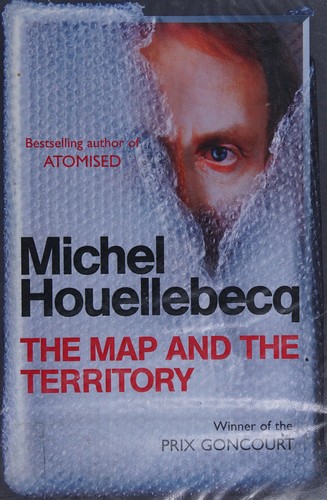
closing out the last section of the book with death, entropy, and thwarted ambitions:
- Why David Deutsch wouldn’t approve of Houellebecg
- True artists impose their vision upon the world
- Sacred values and euthanasia
- Should kanye get back on his meds
Not sure why the audio cuts off abruptly at the end but it does feel appropriate
Third act murder mystery wtf
Yeah, what do you guys think overall? What’s your view? Rate it out of 10. What’s your rating?
I don’t know, man. I think all these books I need to settle on — like, look back in a year and kind of write them up. What do you reckon, Rich?
Hard to assign a number scale. I was thinking about this too because Phoebe asked, like, what are the best — what are your top five books this year? And it’s not obvious to me. Jest is obvious, but then something like Brothers K or this book, I don’t actually know. I got a lot out of it, but I don’t know if I’d full-throatedly recommend it to a friend. I think it worked really well in this environment, but I don’t know if you would read it as a beach read or something.
True.
It’s a really good book though. My vibe check this week was basically: what the fuck, we got a third-act murder mystery out of nowhere. Like, that’s not how it’s done.
It’s similar to Brothers K in some sense, right, where the murder actually doesn’t happen until later on in the book.
Yeah, but I mean this one opens page one — there’s gonna be a murder. That’s just what it’s about. This one’s about the map and the territory versus capitalism, art critique. And then suddenly it ends and it’s like this murder mystery. It’s annoying to introduce a whole new cast of characters and suddenly become a police procedural. So fascinating, but at first I found that pretty discontinuous. And I was annoyed because I felt we were onto something last week of being like, oh, this is what the book is about, these are the critiques in it. And then Jed doesn’t even feature in it so much. But after I thought about it more and reflected on it, I feel more continuity from the third part to the first two.
I mean, as you finished last week, you were like, let’s talk about death.
Yeah. And that’s it. Lucky we saved it.
Yeah, totally. So that’s why we didn’t want to listen to you last week.
Thanks, man, that’s so thoughtful.
That’s why you kept doing tangents constantly every time I tried to bring it up.
I usually stay on topic. It’s not because of your undiagnosed ADHD.
Self-diagnosed.
I was surprised you guys weren’t reading it. I found it went by pretty… I suppose you guys are busy, but it went by pretty quickly because it’s a murder mystery. And then I wasn’t sure how much it says about me — I’m suddenly reading quite quickly, reading a murder mystery quite quickly, and then all these other books fucking struggling, including this one. It moved quite quickly. I wanted to find out about it. With murder mysteries, I suppose it’s just literally because it’s a mystery — I wanted to find out. And it was kind of revealed before it was finished, right, like halfway through this act, and then it meditated on some other stuff. Not even an interesting resolution to the mystery, although we can talk about that later. But yeah, like, introducing another character that you hadn’t heard of — it didn’t feel interesting, didn’t feel satisfying.
Do another vibe check?
Yeah, I think my sense is, I’m probably at the point, Rich, you were at a couple of days ago. The first two parts and third part are somewhat discontinuous aside from the theme of death, I suppose. I’m having a hard time grasping the themes of the book. I’m having a hard time figuring out what I’m supposed to think about it. There seem like a lot of micro parts of the novel that you can zoom in on and talk about, but holistically it’s unclear to me. It’s still very mysterious to me what even the main… I know we kind of put a finger on one of the major themes maybe last week, but I’m not fully convinced by my own thesis there, and now I’m even less convinced because of the last part. There’s just a lot of choices he made that I’m unsure about. Like, what was the point of having the murder be super gruesome and the murderer be someone we hadn’t seen before? I’m not sure what I’m supposed to take away from those kinds of facts that I wouldn’t have just gotten from his dad dying, for instance. It’s supposed to be a meditation on death in some way. His dad’s death seemed much more significant to the plot and to the earlier themes than Houellebecq’s death. So I think in general I’m just a little bit confused about how to think about Houellebecq’s death and what was going on there and what he was actually trying to say.
It seems fractal in some sense, the book. There’s just all these different things going on. You could zoom in on lots of different themes. It’s unclear to me how everything kind of comes together. And a lot of stuff went unresolved, right? Like, him and Olga was kind of unresolved.
I think part of it is the point of it. We’re used to trying to boil it down into bullet-point takeaways of, the message is this, this, and this. But this book is partly — it’s ambitious, so it’s talking about many things at once, and it’s okay if there’s not one overarching theme that touches everything. But also it feels to me more like a feeling or a vibe or an evocation of some primal fear than it does an actual factual message about capitalism or whatever. It’s evoking something.
I wonder to what extent this is just his perspective on life. Like, this is his sort of meditation on the major themes of life and dealing with loneliness and all these kinds of things, and it’s just kind of him — not word-vomiting, but just sort of writing a book about all the kinds of things he deals with and just leaving it at that.
Loneliness did stick out. Then there’s this question of how true Houellebecq was to himself as the character. But I mean, he definitely was described as plainly. I knew him, right? That’s why they couldn’t solve the… it sounds like he’s got one friend who didn’t even know him that well.
Takes a lot of guts to write about yourself like that in the third person. I think it’s very interesting when the police are describing, wow, this guy had no close friends, not much going on in his life, no visitors, wasn’t doing anything interesting with his time. It’s sort of impressive that an author can write about themselves stuff like that.
Maybe if we knew him better, we’d know how much he was winking at the audience with some of these descriptions. Even early on, when he’s introducing the Houellebecq character, he describes him as misanthropic and stuff like that.
Or it’s just his attempt at modeling himself.
Yearning for some bygone era
So there’s an epigraph at the start from an old French guy that is, the world is weary of me and I am weary of it. And I think that pretty much encapsulates the vibe of this book — it’s resignation and yearning for some bygone era, whether it’s your own youth, your sexual dynamism that you once had, purity of something, purity of industry or commerce that’s been corrupted, purity of nature been corrupted. It’s a real bummer because no one gets what they want in this book, but not even in a way that they learn something or attain some higher thing that they didn’t realize they actually wanted. Everyone’s ambitions get thwarted and everyone is just sort of captured by entropic forces or something.
Helene has lost her faith in economics having any validity, and she thinks kids these days are too dumb and not even worth teaching. Houellebecq has no friends, no intimates. He has like six people in his address book, and he just wants to be left alone. And he even is denied that, right? He basically wants to rot in peace, and he instead is murdered in a grisly way. Inspector Jasselin retires before he can solve the case, and he’s also impotent, which is very obvious sexual decline type energy. And he’s not even that bothered about that, but his dog is also impotent and he’s quite upset about his dog not being able to carry on the line. Franz, who must be mega rich, is like a drunk, and the wealth is not sitting well with him. Olga doesn’t get Jed. Jean-Pierre — his creative work is stymied, and he basically works for the man and then gets euthanized. Who else?
What about Jed? I mean, Jed’s the main one. Who gets rich, right? But also feels lonely. What would you say about Jed to fit in this?
I think you’re right with everything you said so far. I don’t know if Jed is a counterexample, but he doesn’t fit the pattern quite as clearly because it still feels like he is living out his true artistic vision where he says, I just want to — I can’t remember what he says — I just want to make an accurate or faithful representation. But it is sort of noteworthy that he ends up misanthropic. He ends up with virtually no friends, no lover. But he carries —
He’s misanthropic? Sorry, Benny, you go.
Well, I mean, he definitely lost in terms of he didn’t want his dad to go to Switzerland, right? He fought pretty hard with that, which happened. And now he’s kind of had both parents…
Yeah. But the big bummer feeling that you get from this book is basically just everyone coming up against the fact that you can’t reverse entropy or something like that. And not even fighting it, but just accepting it with better or worse grace and being resigned to it. It feels like a book written by an old man. They’re bitter about the way things have gone, but they don’t even care about trying to be inspirational or trying to change it or whatever. They’re just coming to terms with it and trying to portray the world as it is, even if it’s not a cheerful portrayal.
Deutschian critique of MH’s pessimism
I think that’s a nice take on the book. To be slightly autistic about the claim around entropy — one aspect about reality is that it’s extremely hard, but we can kind of fight entropy, to be Deutschian about it, with creating knowledge. That said, it is this incessant phenomenon that we’re always fighting and that comes for us without knowledge. I like that take on the book. I hadn’t really thought about it.
The reason I started thinking about it is the very first epigraph and then the very last scene where it’s describing his video montages. The final scene is quite literally a portrayal of industrial objects, like keyboards and microchips and stuff, which are being corroded by sulfuric acid. And it’s transposed on top of it as grass growing or a return to nature or something like that. And ultimately the industrial stuff is completely destroyed and returns to sort of the before times, which seems like a representation of entropy, right? That we can create little patches of negative entropy, but ultimately that is a short-term thing. I don’t think he’s thinking about it in those terms. I don’t think he would necessarily use those words, but that’s more like the vibe. And it’s also the reason why my critique of this book that doesn’t sit well with me is, from a Deutschian perspective, I don’t agree with this portrayal.
I empathize. It’s not impossible to fight. Nostalgia for the past, loss of innocence, being scared of death, losing your sexual drive and aging and being controlled by optimization processes that are completely alien to your world and to humanity — that’s all extremely resonant with me. But I don’t like the idea that we just face it all with grim resignation, because I think there are potential answers to all of those problems.
I wonder about all of them. I don’t know which inscribed problems are solvable in the rock, but certainly building houses and building society — you sort of fight. But a lot of personal stuff of like… well, I suppose that’s what aging technology is trying to do. So even then, people can fight it on a personal level. It’s hard for you to fight it. You can kind of try and slow entropy — you lift weights and you exercise — but at the end of the day it sort of comes for you unless there are new discoveries.
So do you think — the stuff we talked about last week about Jed, creativity versus these optimization processes and it being corrupted by those sorts of things — do you view that in the same lens as creativity in some sense trying to reduce entropy locally, and there’s a lot of people who just get caught up in this? Is the analogy that the optimization process and entropy are in some sense similar and push people towards similar ends?
There’s the optimization process, the incentives that push us away from creativity to instead scale and stuff like that.
Stuff like that. And most people give in to that. Jed for a while was able to fight it artistically. Personally, it seems like he wasn’t.
One quick thought on that — I’m not sure if I’m missing a point — but around the complaint of scaling things up as the incentive rather than new discoveries — sure, scaling up’s good because you add a lot of good to the world, but it also gives you room to be creative, right? I suppose maybe if all you’re personally doing is scaling up, and maybe all everyone’s doing is scaling up, it doesn’t.
It’s not just the scale thing. I think it’s more all of the perverse incentives of capitalism that are not aligned with the good. So it’s not a simple trade-off of scale versus new things.
Yeah, so I was just trying to be concrete around what are all those things that aren’t aligned. I suppose I’m a little more sympathetic to capitalism. And, you know, externalities and all that, sure.
And maybe that’s just the point. There’s all that classical stuff, but there’s heaps of concrete examples in here as well. For instance, death is for sale and commodified for 5,000 euros a pop.
Like a roaring trade.
You know — or a very expensive nursing home which still won’t give you any actual satisfaction. So you still can’t even buy the thing that you actually want. Jed’s father is miserable until the end — even when he’s living in opulence, he still kills himself.
It’s a bit Wallacean in that sense — we surround ourselves by pleasure and luxury, and then there’s these sacred things, connecting with humans and other stuff, that don’t get satiated.
Euthanasia and sacred values
So it’s not only capitalism’s failure to solve some of the main problems of human existence, it’s that it also creates markets and things that are corrosive to the soul and exploitative from cradle to grave, right? Where it costs $20 to buy the sodium pentothal or whatever it’s called to kill someone, and they charge 5,000, and they’ve got a revolving door of these crappy plyboard coffins just coming straight out the door, and they do the most cursory examination.
It’s funny. I share the instinct that corroding sacred values feels — we should at least be chastened and fancy about it, and it just feels wrong. But there are other examples where I think sacredness is the issue sometimes. The conflict in Israel-Palestine — part of that conflict is the land is sacred to both parties. And I’m just gonna make a mark for editing — I won’t get into the rights and wrongs of the war — but part of the problem is the sacredness of it. If people were less sacred about it… or, another thing — let’s say you had concerns of long-term global warming and people in the low-lying islands in the Pacific are going to lose their homes. In one sense, you could give them money and they could just move to New Zealand, Australia. But then you lose this sacred homeland and refuse to leave or refuse for it to be possible. If they were less sacred about it, you could kind of solve that problem. So reducing sacredness sometimes is a good thing. But on the flip side, I do share that commoditizing sex and love and family and goals that you want to achieve isn’t necessarily good, and it’s anti-human as well.
To be clear, I’m obviously a big fan of capitalism, at least in the sense of nothing is better than it. And I’m not really that interested in litigating exactly whether each of Houellebecq’s criticisms is true. I just think that’s what he’s going for, and I think it’s directionally correct, if not on every specific case. It’s really hard about the policy settings for euthanasia. I actually think euthanasia is a good thing, but maybe it should only be run by the state, not for profit, that kind of thing.
Sometimes I see an argument — it’s almost like there’s a status quo bias of, we have these sacred values and we don’t want to lose them. And it’s kind of circular. It’s like, because they’re sacred, that’s why. And if they weren’t sacred, then it wasn’t… I think I’ve heard Aella talk around sex work and stuff and the stigma discussion. She talks about — some people bring up the criticism, they’re like, a lot of girls would be on OnlyFans when you’re 17, and you’re very likely going to regret that shit when you’ve got kids or even when you’re 25, and it’s like, don’t fucking do it. They don’t quite get the Pandora’s box, you know, the Ring of Sauron — it’s just the level of it when you’re so young. Porn’s bad for boys, but at least you’re not going to potentially ruin your life in one decision. And her point is, but if you stripped away — the stigmatization of society is built in there — and if you somehow managed to strip all that away, then do the costs go? I think it’s a fair point and hard to grapple with.
That’s a game theoretic thing, right? It’s still good advice to any given individual.
Yes, and I think she’d concede that, and then she’d say, well, the higher level thing is, maybe you push back against stigmatization. So then it’s kind of like that whole argument of, would it be better to be a sexual minority around proclivities and stuff? It might be bad — it may be worse off, I’d rather my kid not be there because it’s gonna be worse off — and then you say, well, if it wasn’t stigmatized, then it should be fine. But to go back to our examples, our sacred — like, selling kidneys online and stuff — you lose this sacred human value, but if we just weren’t sacred about it, it would be fine. And you get this kind of circular thing of, well, I just want to keep being sacred about it because that’s what it means to be human. And then you have this other person argument — well, it’d just be better if you stripped all that away and we were all commoditizing everything and everyone’s better off.
But you’re not at a deadlock, really. You just have to do good criticism and argumentation about it. It’s like the Chesterton’s fence thing, right? Why does that tradition exist, why is that thing considered sacred? Once you fully understand why and can articulate why, then you can decide, oh, we can move on without this. We can now have full civil rights for blacks, or we can let gay people…
I suppose it’s hard sometimes because a lot of these things are a bit more illegible, and they’re like religion and traditions. They have this implicit knowledge. Chesterton’s fence — they must be doing something. And actually, sorry, I’m going to go on a slight tangent, but I just listened to — Benny, your and Vaden’s podcast recently — about anti-rational and rational memes. Rational memes are solving problems, and anti-rational memes are stopping criticism, and that’s how they spread. But I think it’s also important — a lot of anti-rational memes do solve problems and they have a rational meme element. So something like religion is probably solving a problem for societies and for people, and it’s also got this replication mechanism where it disables criticism. And as you guys pointed out, anti-rational memes aren’t necessarily bad. It might be a good thing that we have religion. It just has this additional mechanism. So religion is probably solving problems in society, and stripping society from it is potentially one of the greatest mistakes. I’m not sure about it, but we’ve done the experiment and we’ll find out. We’re fucked around. But it’s kind of hard to know because it’s all this implicit knowledge, illegible stuff, and then you kind of find out after. And even after, it’s hard to causally point to all of it and say it is the problem. It’s just one of the hard things about some of these sacred — I think Robin Hanson says a lot of sacred stuff is in the far mode in terms of near mode, far mode, and far mode is harder to see and analyze.
A lot of Houellebecq’s themes, though, I think — most people would agree they’re sort of objectively good things that are being corroded by these entropic processes. So something like creativity and doing what you love, right? I don’t think many people would say those are… I think we can articulate why those sort of sacred values are just good in and of themselves. I don’t think they have this circular element of just being good because they’re sacred and sacred because they’re good.
Whereas I don’t think every sacred thing has that. Sometimes it’s hard to make the case. Carry on.
But the point is, a lot of these themes, I don’t think it’s that hard to make the case, right? Following what you’re actually interested in instead of the money seems objectively good. Same with family and stuff like that. The stuff Jed’s struggling with — relationships and family — also seem good. We don’t have a hard reason articulating why those kinds of things are sacred and why having them be corrupted is a bad thing.
I mean, I’ll drop this, but I could imagine some nerdy LessWrong type argument: this feeling that we have, are obliged to people that share our DNA, is kind of understandable for evolutionary reasons, but it’s kind of arbitrary, and we shouldn’t need that. We’re better off if you could relinquish that feeling. Who cares if you don’t see your family at all? You guys — I share, it’s kind of this horrendous thing, but I also can see the argument against it. Creativity is a bit hard to talk about, but anyway.
It almost doesn’t matter, the argument about if you could shift everyone all at once into a new equilibrium, because you can’t. So I think that’s right as well. To be a distraction, basically everything is socially mediated, including your experience in life. And sure, you should try and change some obviously bad traditions, but for anyone that requires galaxy brain rationalization like that, 99.9% of people are going to be fine with saying, let’s continue to value our families. There are excellent reasons for doing that — you have way more information about the people closest to you, etc. And it incentivizes people to have children, which perpetuates our civilization.
I take your point, Cam, but I think most of these are actually fairly uncontroversial. Even the euthanasia thing — I know that I don’t hold it to be a sacred value because I do support legal euthanasia, and I still find this particular depiction of it disgusting or upsetting in some way. So I’m kind of on Jed’s side, or on Houellebecq’s side. I know that can’t be a sacred value thing.
Euthanasia is a classic example of, it is the sacred value, death and suicide.
I’m saying that it’s not, in this instance. You could plausibly support euthanasia in principle and still object to the commercialization, you know, death-as-a-service revolving door.
That sounds like — okay, you legalize it, but you’re trying to keep the sacredness around it.
No, it’s not sacred. It’s not about being sacred. It’s about making sure that you don’t start optimizing for the wrong thing. So there should be a high barrier to be euthanized. It shouldn’t be done for profit because of this corrupting structure.
Leading cause of death in Canada.
So New Zealand’s implementing it, right? We have it. We have it as ours as liberal as Canada… Canada’s actually isn’t very liberal.
Surprising. Why is there so many memes about Canada?
I honestly don’t know. But the Canadian system — it’s quite hard, and it’s got a bit of a chicken-and-egg problem. If you’re deemed to be at all not in your right mind — say you have dementia or something, even if when you’re lucid you clearly express a preference for wanting to be euthanized — they won’t take your word for it. You can’t do it because you have to be 100% of sound mind and body. Obviously, the difficulty is that when people are 100% of sound mind and body, they typically don’t want to be euthanized, because that typically means they have a good life, right? At that point, they’re not ready for it to happen. So there’s this weird problem where you have to sort of be able to foresee a few months in advance how my life’s going to be, and then say, I want this to be done. But that’s very hard for most people to do because you often don’t see deterioration of health coming around the corner. So a lot of people find themselves in a situation where, for instance, their parents — it’s clear, they know that their parents would have wanted in that situation to die, but now they can’t do it because they can’t get the person to sign off, and they’re deemed to be too sick already. So the Canadian system is actually kind of hard to navigate, and I would say is too risk-averse with respect to it. I understand there’s reasons why you want to be somewhat risk-averse, and that’s an interesting line to try and draw.
One of my underrated Scott Alexander pieces — “Who By Very Slow Decay” — is around just how bad it is to die in our current system that gets prolonged for years.
It sounds fucking horrible.
So I agree with you, Rich, that I’m kind of pro it, but it does feel a bit icky sometimes in the excesses.
What does Houellebecq’s death signify?
Okay, so here’s a question for you, Rich, which is that on your reading of the book, it seems like it would have been in keeping with those themes if the murder had never been solved. So if Houellebecq had just been killed and that was that, and then Jasselin never figured out — or the police department never figured out who did it — no one would have had closure. In some sense, this would have just tied in with the fact that everyone… well, I suppose the fact that it got solved but it was random kind of does fit. It was like, this is also meaningless and random, and it’s kind of like it being unsolved — there’s no grander meaning here, there’s just some psychopath who collects art.
That’s interesting.
It’s not quite that, Rich, man. It was a funny psychology throwaway, which I think was interesting actually, to think about the different types of evil. But yeah, you go, Rich.
Well, it’s not quite the randomness of it. It’s designed to foil Inspector Jasselin’s expectations or hopes. He says, it’s always about money, it’s always about the money. And then when Jed identifies the painting is missing, he’s like, okay, the case is solved, it’s about the money. So on the one hand he’s happy. But in the back of his mind he’s thinking, in my entire career in the police, I’ve had a number of cases I could count on the fingers of one hand which weren’t about money or sex, for sexual crimes. And then when it’s discovered that it’s simply — when he gets the closure in some sense, he doesn’t feel good. He feels depressed. And his exact thought process is, I ought to feel good that this is sort of affirmation that there are very few purely evil beings in the world who do these things just for the thrill of it. Instead, they’re motivated by money. But nevertheless, he feels sad because he wanted it to be different in this one time. He wanted there to be a creative spark or some kind of perverse passion or something.
I gotta confess, I’m a little confused about this, because in my mind, there’s something I’m missing about the murderer — the fact that he does these almost artistic creations, and perhaps he is motivated by something other than money. Unexplained there.
It feels a bit that way. He could have just killed Houellebecq and stolen the painting. The ritualistic display is clearly his own art form or his own self-expression. So I’m not clear on that. He definitely planted the Jackson Pollock. But maybe in other senses, it’s calling out Jackson Pollock’s paintings, and the guy’s just kind of a psychopath torturer because he had that stuff in his basement.
Pollock did?
Oh, no, no — the murderer, because he had the paintings in the four corners and dismembered body parts and stuff. If I remember, he had a Francis Bacon, he had Jed’s Houellebecq portrait, and he had two of those plastinated corpse things from that crazy Dutch scientist or whoever — German guy.
Just to go back on your comment about the impotent dog, I also liked when Houellebecq died, how his dog got decapitated as well. I always think the first rule in movies is to make you hate someone — just get them to kill someone’s dog. It just adds, you know…
Well explained. Absolutely hacked to pieces. And the dog?
I kind of liked — you just reminded me — there’s a couple of comments in two places around the predictability and boringness of all crime, or almost all crime, it sounds like. When they were talking about economics as a science — it doesn’t even… well, then it’s about Popper, I felt like leaping. That was…
But she talked about how it doesn’t even verify. It’s just this off-comment.
That was hilarious.
How did that feel to read, Benny?
I was like, say more, say more. Well, because it ridicules…
But then they go on to — someone made some comment about all criminals, like, they’re very predictable in their behavior. And there was another comment. I suppose that fits the same theme around — I think it was Jasselin, who doesn’t enjoy detective novels, and then he finally read some novelist’s somewhat biographical novels in Thailand, and he liked the short story collection because they’re all the same. They’re all the exact same.
This felt — going back to map and territory — this felt realistic. The reason I liked about this is because it captured realism.
It’s kind of this empirical question, I suppose, of how true it is that a lot of crime is very similar and very boring, and it’s kind of a sad fact about the world. It goes a little bit against the kind of Deutschian creativity that you maybe expect — a bit more creativity within crime as well. So does the murderer fit the pattern or violate the pattern? That’s what I can’t figure out.
It definitely fits your theory of entropy, the pattern of entropy eroding. In terms of the pattern of all crime being boring and predictable — serial killers, as a phenomenon, feels like a counterexample. This guy is like this genuine psychopath. He’s not a serial — problem maybe — but I think that probably… in some way, he interestingly was not subject to the same sort of corruption pressures that a lot of people were, right? He had this $12 million painting in his house, he was obviously keeping the painting for the sake of the painting and not trying to sell it. He wasn’t just trying to make a bunch of money.
Because the surgeon, or Houellebecq?
Yeah, the surgeon — or Houellebecq. Both, but the surgeon — the only way I could think of to maintain the overall pattern is that the surgeon is a representation of the creative spirit, but he is the grotesque inverse version of… and then the reason he’s able to do that — like, how did he get so wealthy? Well, he’s a cosmetic surgeon. He literally is, as you said, Cam, this beautiful, handsome, tanned surgeon from Cannes, who presumably makes his money by exploiting people’s problems. It’s almost like — this was BAP. You know, everyone who likes Houellebecq likes BAP.
BAP.
BAP. Bronze Age Pervert.
All his dismembered bodies in his basement. He’s enriched himself by feeding off people’s fear of aging and death in some sense. And that’s what allows him to pursue his fucked up passion projects and live an artistically unencumbered life of making tarantulas fight against centipedes and stuff.
It’s funny because I heard about Houellebecq being shock value and stuff in a lot of his early books, and I was like, oh, this doesn’t really have it. And then you get to the third act and it’s just brutalized. There’s a comment around one of the women — I can’t remember whose wife — had like fake breasts.
Helene has fake breasts, and it extends the sex life — but, you know, just going back to commoditizing things and commoditizing the sacred. In one sense it’s a good thing. And then he had another comment in the very old age, it kind of looks like it doesn’t fit. He says, at that point you don’t care, because you’re more worried about coronary bypasses and tracheotomies, and at least saggy weird plastic tits are the least of your concern.
Final thoughts on map vs territory
What do we think the title’s about at the end?
It seems like we’re leaning more towards something like expectations versus reality, which is what the map and territory is getting at. But I think one of the big things is, can you model the reality, and is it a worthwhile goal to do that, either epistemologically or scientifically? In this sense, it’s like artistically representing it, perhaps, being sort of the same thing. That’s Jed’s main goal in life. And I don’t really know if the book makes the claim if it’s quixotic or successful. And this book itself in a meta sense, perhaps, is its goal as well. But yeah, you don’t quite think that’s…
In terms of whether that’s Jed’s goal — I agree, especially his paintings were trying to model some part of the actual production. I think that’s what I said at the end, right? That was what his artistic purpose was. The other thing to be an artist was, be submissive, right? To… is it, be submissive just to create art, really?
Yeah, it seems like — it means it’s destroying it, which feels true about artists, that they do it. And so I’m not sure how good it is to be submissive.
I think we first have to circle back to your original question, Benny, which is, has Jed escaped from this failure mode that everyone else is falling into? Is he the counterexample to every single other character? I think there’s a pretty good case that he is, because he never sells out. He becomes filthy rich, but he doesn’t fall into decadence. He uses his money in like an insane artist way, which is in keeping with his service to the muse, right? He moves home to his grandparents’ house, and then he buys like 500 hectares of surrounding land and fences it all up, becomes like a crazy eccentric artist. And he dedicates his final 30 years of life to making his artistic project. So he doesn’t care about commercialization, he doesn’t care about cashing in, and he’s not driven by mortal timelines or capitalistic — he’s not driven by status or popularity. Who takes 30 years to work on something? Only a true artist, right? It doesn’t hurt that he’s filthy rich. His life from my point of view is extremely alien and not something I would want for myself, but from his point of view, I think he succeeds on his own terms. He not only resists these corrupting forces and stays true to the muse, but his final project is basically capturing exactly this — capturing the struggle.
But would you say his muse is trying to map reality, right? That seemed to be what his raison d’être was.
I don’t even know if it matters. We could talk about that, but I don’t even know if it matters. The main thing is that he does what his artistic impulses tell him to do. We could sort of argue about what those impulses are. But he’s not trying to do what the market wants, put it that way. He lives in squalor pretty much his whole life. He doesn’t chase women. He doesn’t become…
As a slight side point around his paintings, his series — I was kind of re-flicking through it. I think it was a brilliant idea from Houellebecq the author, the series of paintings around the series of professions. The first ones being ones that are dying, and another one, and then culminating in Bill Gates and Steve Jobs and Damien Hirst and Jeff Koons. I was kind of imagining these paintings, and I was like, yeah, I could really see these being an awesome series. It was really trying to — I’d love to… I wonder if they’re real. I’m not sure.
Houellebecq could be the funnest company. He’d be interesting, man.
Yeah, he would be. I remember Tyler Cowen, the one I’m saying, who’s people you’d like to have on. They’re like, you’d struggle to get on, and he says Houellebecq, because I think Houellebecq’s analysis is pretty shit. He’s just not getting up.
You should have a translator. Fuck it. It’d be worth it.
Yeah, I listened to like the first minute or two of — was on the Red Scare podcast.
Oh, did they get him on? Because I know they’re fucking…
Yeah, I know they’re fans. Do they speak French?
No, and they did have a translator, and it was just so awkward. It was awkward enough that I just felt cringe, and I just turned it off.
It might be worth persevering with.
Didn’t really work?
I don’t know. Especially their whole shtick is comedy and not caring and irreverence, and then you just lose that in translation. I don’t have much patience with them.
Oh, you’re going off them?
I mean, I never really liked them, but yeah.
Cute girls and funny.
I’ve never seen a tweet I think summed it up. Essentially, they’re so polarizing — people think they’re idiots, and people think they’re geniuses, and this guy was just like, I just think the reason is, they’re kind of funny and that’s why people like them.
I think they sort of say, you don’t really know language until you can kind of joke in it. And I always imagine, like, the idea of translations — imagine trying to translate Infinite Jest, just feels — I mean, maybe you’ll be fine. I can imagine David Foster Wallace getting a bit neurotic around that. Seeing the Chinese version and just thinking, fuck, is this just capturing under what… you really have to trust the translators.
I mean, really, at that point, the translators are becoming authors in some sense, right? For Brothers K that we — or that you guys read, I guess — Larissa Volokhonsky and Richard Pevear…
Sorry, Richard Pevear.
Richard, yeah. The original was the Garnett guy.
Oh, interesting.
So I’m just gonna do something. I’ll be with you guys in a sec. Thanks, man.
The very fact that the translations are different sort of implies that the translators are now taking on part of the role of the author. I think that’s true about translation. It’s funny though — it’s kind of getting back into map and territory as well. It does feel like this kind of territory there of the original text. Sometimes I look at different translations side by side, and it’s like, yeah, they’re a bit different, and every now and then you get a big difference, but a lot of the time I say, oh wow, this really is — you’re kind of constrained to whatever the sentence was, right? You sort of translate it, and they’re often very similar and reworded a little bit — more than Claudine Gay or something — but they are kind of almost isomorphic a lot of the time. In Brothers K, for example, one of the examples is, there’s a chapter called Strains, and another translation was called Lacerations. It’s metaphorically talking about strains on the soul, and there’s a Russian word that’s quite specific of what it is, and you don’t have perfect…
Yeah, I see.
The enduring impression I have of Houellebecq after this book, and the reason why I do really like this book, is that he simply does not give a fuck. I do not believe he cares about what sort of regional element…
Hasn’t it, yeah. I think so.
And I don’t think it’s some meta counter-signaling thing where he portrays himself as a dweeb to ironically signal how cool and self-deprecating he is. I think he is honest. He is pursuing his honest creative vision, including introducing a murder mystery in the third act. Obviously he knows that that’s in violation of genre conventions, and he doesn’t care. It’s not that he holds the reader in contempt either. I just don’t think he’s too interested.
You’re right though, and it’s a pretty big thing of praise. I always talk about Wallace, but I remember Wallace talking about David Lynch, and being this lightbulb moment when he went and watched Blue Velvet, I think, in the 90s with some friends. He’s just like, Lynch was just doing all these avant-garde, I suppose, but, you know, just original things that were subversive, and it just unlocked him. And he’s like, as an artist, you can just do these things. And Houellebecq does, and he doesn’t, yeah, at all.
It makes me think about how hard it must be to impose your vision upon the world. This is the thing that we value amongst artists. It must be really hard in any collaborative type situation, like making a film, for instance, which is why you have these directors who are just fucking tyrants. It’s not a coincidence, I think. Maybe you don’t get Kubrick films without Kubrick being micromanaging.
It is one of the interesting differences about the medium of a book — and a painting, probably as well — as an artist you are completely in your control. A book is not, because your publisher will fuck it up.
True.
More so. But yeah, not completely. And then there are other mediums which are very collaborative, and you hear all these stories of director tyrants.
I think I heard the Red Scare girls or someone say that, why are there so many great male artists in history, or why are there so few great female artists? Obviously there’s a ton of historical reasons for that. But part of it might be that men are more disagreeable, and anything that involves any kind of collaboration — an editor, a collaborator — you have to impose your singular vision upon the world and not compromise on it. And men are on aggregate at population level better at doing that. And it’s obviously higher variance. So you get a whole lot of total shit as well, where it would have been way better with outside opinions.
Yeah, you get a greater variance.
I think of Kanye like that as well. He produces some of the greatest work and the most completely stupid, insane work.
And he’s a big confounder, of course, with mental illness. The hard thing with someone like Kanye, when he becomes mentally ill, is — he’s got these delusions of grandeur, but it must be so hard to snap out of it, because he’s got a claim to be the best artist alive, the best musician alive, right? He’s got a non-crazy claim to make that. And he’s like, fuck you guys, you guys don’t understand, don’t try to tell Steve Jobs what to do.
He was also a crazy dickhead. He was right. You guys were wrong.
He obviously is genuinely mentally ill, but it’s much harder for him — his delusions of grandeur are somewhat substantiated, right?
Also, his history is basically one of people telling him he wasn’t going to be good at what he tried to do. Music producers early on, and he just did it and then became the best. And same with his whole clothing branding stuff — they were like, no, we know what we’re doing, this is a terrible idea, other musicians have tried to do this — and then he succeeded at that too. So he’s got this history of people telling him he can’t do something and then just fucking blowing it out of the water. You can see from his perspective why he would just totally stop taking any of this seriously. In some sense he’s like, fuck you, I’ve seen this before.
Yeah, exactly. There is a kernel of truth there as well. And you can go too far with it and turn it into an anti-rational meme. But the other interesting thing about Kanye as a case study is this idea of musical genius and artistic genius. Is Jed a genius, and is Kanye a genius? You hear Kanye talk on Lex Fridman or whatever, and you’re like, this guy would sound like an idiot in a discussion with us right now. He’s not following the links sometimes and he’s just going off. And it’s like, this guy’s obviously not a genius. But then his music is — I mean, you can have arguments, but let’s just grant that his music is amazing, which I agree with. And we couldn’t do that. And it feels right to call it genius, but it kind of feels different in some sense. There’s a qualitatively different thing going on, perhaps. But maybe not, as well. It’s just like, this is the creative spark, and it is a qualitatively different output.
Well, I think it’s pretty common for quote-unquote geniuses to not be geniuses in all areas, right? It’s unlike intelligence in that way, where typically, if you’re smarter than average, typically that’s correlated, and typically you’re smarter than average in most areas. So it’s very rare to be extremely good at math, for instance, or extremely good at writing, and be extremely bad at the other one, just because G seems to be like a…
Yeah, but often we call — the genius seems to be the people that are just the high intelligence as genius. You call Einstein a genius, or you call Shakespeare a genius — across the board, or like Borges is a genius. They’d be very smart and insightful across the board. And then sometimes — Wallace used to sometimes call athletes a genius, and there you can maybe not — metaphorically maybe, or you’re talking about a different thing there, perhaps. And then sometimes I think with music and painting, it’s like, it’s gotta be — they truly are the best.
Type two and type one geniuses, right? Instinctive, heuristic-driven, intuitive yields versus highly explicit, formal thinking.
Sorry, I said Shakespeare — I should have said Richard Hanania.
Literary genius. SBF would be pissed, dude.
The Kanye example is too muddied by the mental illness thing, because for a lot of his career he should have ignored the critics and stayed true to his vision. But right now he should listen to other people telling him to get back on his meds.
Do you know, though, I wonder, because his shit is so deranged, right — or maybe it’s as deranged as fucking Jed might be. The reason we have a different view of it is how harmful it might be when you get into racism and stuff. But sometimes I wonder, if it was less harmful and he was just chomping out about some crazy shit and still producing art, I would just be like, oh, fuck it, he’s just a crazy…
UFOs and stuff.
Like UFOs, yeah. Some harmless shit. And he’s been at it for fucking ages. But he was released — I remember the early days. The proof is in the pudding. I mean, even in the greatest video of all time, right, this is like ‘07-‘08, is the big moment…
Taylor Swift.
Yeah, exactly. He made a famous… You kind of wonder about his medical history of when did he start going on meds, when did he go off them, did they hamper his creativity or not? To be fair, I actually think a lot of Donda was really good. But when did that come out? That must have been like 2016 or something, right?
It was more recent than that. It was like two years ago.
I mean, to my shame, I don’t really listen to any music anymore.
It was 2021?
No way.
It was recent.
Yeah, it was good, actually. So maybe he should just stay off his meds. The problem now, though, is there’s so much baggage with Kanye. But it’s interesting — if he truly made transcendent, truly great music, people would probably begrudgingly say, yeah, it’s pretty good.
Being open to criticism vs imposing a singular artistic vision upon the world
An interesting conflict I’m realizing is the one between being open to criticism and imposing your singular vision on something. That even comes up, I think, in microcosm even if you’re just writing an essay. Often you have a particular angle or style that you think is good, you get some feedback, people are like, this doesn’t make any sense, and then you have to draw the line — figure out, okay, do I listen to them, or do I just publish this sucker? Typically I err on the side of really being extremely open to criticism — someone tells me something… I’ve heard some advice that it can be bad if you’re too biddable. So maybe hear it from a few people, and then if two different people were saying the same thing — I mean, it depends how much you trust someone as well.
But there is an interesting thing there, right? Probably most people, the median person, should be more open to criticism. But if everyone was extremely open to criticism, would you have sort of moonshot artists that just did their thing, that most people thought wouldn’t work out, and it just worked out? I don’t know.
This is how you get the 100 Rotten Tomatoes thing, right? Designed by a committee, inoffensive slop.
Exactly. I think it doesn’t work — it’s domain specific. For questions of fact, criticism is always useful and always should be listened to. But for questions of taste, first you have to know who your audience is that you want to resonate with, and then get their opinions. And then for the greatest artists of all, your audience is one person — yourself. You only care about making art that you yourself like, and therefore you don’t need to solicit any opinion, because you’ve got the ear for it, you’ve got the eye for it.
But writing, or a book, kind of blurs it of, like, is this just taste? Sometimes it is just like, yeah, I prefer writing that’s like this. But there’s also objectively better. Sometimes it’s like, yeah, this is not clear here. You might have… for sure. Or, I disagree with this, this seems wrong. And then as the writer you’re kind of like, I’m not sure if I agree with that, and I’m going to ignore the criticism. And sometimes it might be good to ignore the criticism. Hopefully you should understand the criticism and be able to point to why you disagree with it. And then it might be it. I guess that’s values or context.
But I fucking hate it with my boss sometimes. Even just products and work, I’m like, I point to improvements, and then he wanted a certain way, and I’m like, give me a reason, at least. Or at least just say, like, I just want it this way — because, like, sorry, but there’s no reason with it. I’m giving you this reason. Give me a response why my reason is wrong. I’m just improving this for the audience. And I might be wrong, but I hate not getting a reason.