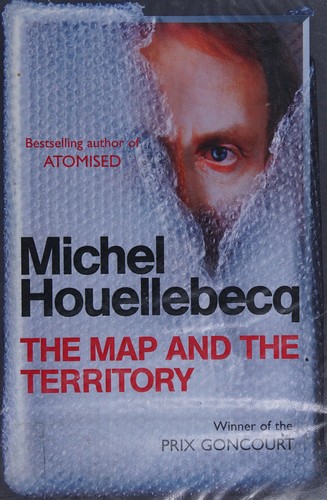
This section is light on plot but we do get a coherent theme: the perversions that emerge from consumer capitalism’s relentless optimisation process.
will our hero Jed maintain his artistic integrity and stop feeding the beast? does Houellebecq think of himself as a kind of ethnographer? Does the g-spot actually exist? etc
benny’s audio still sucks. actual book content starts at 00:06:19
What if we kissed under the mistletoe
Rich: We’re getting married, so God will be happy. And I can call her my wife without it being stolen valor. That’s honestly the biggest reason.
Cam: Which I think shows there’s something to the wife, right?
Rich: Might be a language thing. You can’t call someone your girlfriend when you have a child with them. And then the word “partner” just sucks.
Cam: Even “old girlfriend” sounds odd. And then it’s ambiguous of, like, gender.
Rich: I’m not even worried about that. I don’t care about that. I just don’t like the word. Partner — it’s too general, right? Are they my climbing partner?
Cam: It usually means relationship now. I think aside from whether you’re insecure about it or not for yourself, I think there’s an issue —
Rich: It’s a language thing. Partner is not gendered.
Cam: Because there’s not full information. So it’s always been the case, even 20 years ago. Because girlfriend sounds — you need a gendered version of partner that sounds serious.
Rich: I don’t think so. In Spanish, you can say “mi mujer,” which is “my woman,” which I would be happy to say. Or you can say “mi pareja,” which means “couple.” Either of those would be fine. So there’s just a weird language gap in English.
Cam: Well, sorry, that’s what I’m saying, yeah. There’s a gap of a gendered serious romantic partner. And like nowadays, with the current climate, they wouldn’t want it because you kind of want to not gender things — that’s the main thrust.
Rich: It doesn’t seem necessary for the language to have gendered romantic partner.
Cam: Well, it’s just like more information, right? There seems to be a gap. Why do you have husband and wife and why do you have boyfriend, girlfriend? It’s not necessary to have that, but it’s more useful.
Rich: Yeah, but you can make that argument about anything, right? Like if you get fine-grained enough, no word is —
Cam: But it’s not fine-grained, it’s just like — it’s the equivalent to boyfriend, girlfriend, husband, wife, just for in between, that’s not married.
Rich: Oh, so I see what you’re saying. There’s already concepts when you’re not —
Cam: Yeah, and it’s odd you don’t have it. You either have to be ambiguous with the gender, or you have to be too serious, or kind of lying about being a wife.
Rich: We just got to bring back strong marriage norms — you date someone and then you get engaged after like three weeks or whatever.
Cam: Yeah, that would fix it. And that’s maybe why it didn’t exist, and now it slowly had — the marriage norm is —
Benny: My betrothed.
Cam: Imagine being at a work icebreaker or something and some guy is just like, “and then my partner,” and he’s just looking around and he’s like, “and I’m not gay.”
Cam: So you know if I have work Christmas stuff this week?
Rich: Speaking of hiding your latent homo —
Cam: Yeah, I got a big bash this week.
Rich: You gotta try not to get handsy under the mistletoe outside of work.
Cam: I feel like that wasn’t a thing in New Zealand. I always remember reading it in Harry Potter — speaking of Cho Chang, that was like my introduction to the mistletoe. No one’s talking about Cho Chang in the room. Are we gonna be the ones with a crush on her? Yeah, she was cute, man.
Rich: So mistletoe is like free kiss rules, right? Like if it’s there, you’re like, well — sorry. It’s not sexual. I invoke the mistletoe clause.
Cam: It probably does give one a good — you know, it can be hard for people to make the move to do the kiss. It’s weird how hard that is. You’ve been on a few dates and you know it’s going well, you like — and you just can’t.
Benny: You feel it sometimes — it’s a big gap. I never realized how far that is, fuck.
Rich: You lean too far and you fall over, it’s embarrassing.
Cam: It’s like you need to stop in a place where it’s appropriate, especially if you’re out and about.
Rich: You gotta take the leap of faith and you could get shut down. That’s scary stuff. Or you could get like a total — kids’ complaints or whatever.
Cam: Have you guys been shut down on a kiss? Like on a date? Not in a club or something.
Rich: I haven’t, but only because I always wait until I’m really sure.
Cam: But I feel like almost everyone must. Like you must be totally reading it wrong. Or maybe a first date and then it’s going badly, but you don’t think it’s going badly.
Benny: It’s the only kind of thing — I think it’s hard to be asymmetric about how bad a date’s going. I think if one of you is not having a great time, there’s no way —
Cam: well, the first date they might be faking it because they just want to get away with it. And most people don’t kiss on the first date. Well, I don’t know, that’s true, but a lot of people don’t. I guess if one person’s faking it, that’s true.
Rich: It must be hard with the modern culture though, right? Where people don’t want to make people uncomfortable. I was already like this, so if I was growing up today, I’d probably be hyper conservative to the point of never kissing anyone.
Cam: Three days is old fashioned. Like Rich is pushing it. We’re worried about him.
Rich: Please. May I hold your hand? I’ve got a consent form here ready for you to sign.
Cam: We’ve a girl had to tell him off.
Rich: It’s incredibly unsexy in my opinion.
Cam: Yeah, no. And we know that, but it’s crazy how you still — too much of a pussy. Like even knowing it would be the right thing to do, and you still don’t do it because you’re too scared.
Rich: Well, we’ve all done it. We’re brave boys.
Man defined by his role in industrial society
Cam: All right. And so you’re a bit behind on the readings, Ben?
Benny: I’m a little bit behind, boys. But I kind of know what happens, I think.
Rich: So I think for me, this middle section dragged a little bit in terms of the reading experience. I didn’t enjoy it as much as book one, but I think at least a clear theme has emerged, and it pretty much almost directly tells us what the theme is. And then there’s a lot of basically philosophy put in the mouths of characters, just straight up regurgitated, with all the stuff around post-industrial society and man as defined by his role in industrial processes.
And yeah, I think that becomes more clear. So keen to talk about —
Cam: What do you say is a clear theme?
Rich: It’s about man being defined by his role in a productive society and in industrial processes specifically. And then I think at the heart of it is a critique of post-industrial society. So like moving from production of goods to provision of services, and from artisanal handmade things and domestic produce and agriculture and so on, to globalized supply chains and, you know, blue collar to white collar, unions to capitalists, all that kind of stuff.
It was like kind of honing in a little more on what his specific beef is with consumer capitalism. I don’t have a perfect handle on it, but hopefully we can sort of figure it out as we talk about it.
Cam: Any other quick thoughts? How do you view Jed’s art exactly as fitting in? Like, is it counter-theme, is it pro-theme? What’s your opinion on how — like first the Michelin maps, and then secondly —
Rich: Definitely in a meta way it fits the theme.
Cam: That there are these products that he’s kind of viewing and seems to find some sort of artistic mirror in. And then his paintings are also on theme of the Bill Gates and Steve Jobs. And certainly Jed doesn’t seem to be influenced by the profit motive, which seems to be some of the criticism from Houellebecq on the modern art world. But also the dad says, you know, maybe you need the profit motive. It’s not clear how much this consumerist society corrupts art, but it seems like it does. And Jed and Houellebecq are kind of kindred spirits — when maybe they’re not, but they’re also both getting rich off it as well. And it’s probably this weird paradox where good art also sells for lots, or like — how much does — I actually remember seeing on Twitter some discourse around Rothko’s. Do you know the Rothkos, Rich? Where it’s like —
Rich: Yeah.
Cam: One of them went for — hundreds of millions, 80 mil. And someone was like, “someone just explain to me what’s good about this.” And then I saw a few — like Sam Kriss, who’s a post-rationalist kind of writer, did a good job of explaining it. But it’s this weird thing where I wonder what Rothko himself would think of his art going for 80 mil. He probably wouldn’t be happy with it. He’d probably be disgusted by it. And like, how does Jed — well, Jed doesn’t think that much about this sort of stuff, but how would Jed and Houellebecq think about becoming millionaires? I mean, Houellebecq explicitly asked from Jed for a lot of money, right? Houellebecq said Jed would set up — which Houellebecq said, “you might find big bet has said you might find surprising about him.” Yeah, which is interesting.
Rich: Yeah, I think this whole middle section is Jed realizing his role in this process and wanting, on some level, either no more part of it, or it killing his artistic drive. The main things that happen are: he has a long conversation with his father, which we should talk about, where his father outlines how his own artistic vision was basically crushed in service of making money. And then they’re talking about those Marxist or communist philosophers who are interested in returning to an artisanal goods type industry rather than industrial production. And then he has a very similar conversation with Houellebecq.
And there’s all these little clues that there’s something wrong with this process. Like, for instance, when he’s at the New Year’s Eve party and he gets pulled into the office of the host, whose name I think is also Jean-Pierre or something like that, and the host has bought one of his Michelin maps from 10 years ago, and he says, “I’m an admirer of your work.” He’s like a true admirer, right? He has this unusual print from the series. He’s hung it in his most intimate space. And he says, “I would have loved to have bought the portrait of me that you painted, but I couldn’t afford it. I got outbid by so-and-so.” And so-and-so is described as this guy who would definitely have had no interest in that style and that aesthetic at all, and has bought it purely as an investment, you know, to hopefully flick it at some point, right? So it’s like these works of art are not even going to the people who appreciate them. They’re going to people who probably straightforwardly dislike them. And Jed is realizing that he is facilitating this process.
Cam: I think one side note around that — even if this guy does appreciate his art, there is something weird around wanting the one that’s painted of you. It’s very human. Like, I’d probably want it as well — “Picasso did a painting about me, literally me.” But it certainly seemed like, you know, once they made millions of dollars from the exhibition, and then suddenly Franz is getting all these calls from rich billionaires who want their own painting and offering lots of money — it seems like this vanity project. And even in this guy that does appreciate them somewhat, there is something a bit funny. But Houellebecq wants the one of him — I think also that’s defensible.
Rich: No, Houellebecq’s position is more interesting, because he doesn’t give a fuck about his portrait.
Cam: Yeah, you’re right. He doesn’t. But he puts it up, is what I mean.
Rich: He puts it up, but they specifically mention that he hardly even glances at it.
Cam: Yeah. And he’s more —
Rich: He’s more interested in like, “oh, should it go over the sofa, or how high off the ground?”
Cam: And they make a comment — Jed even realizes that art somewhat is just expensive furniture. Which I think has a lot of truth to it as well.
Art as expensive furniture
Cam: Yeah, there’s this question of what art is. And in art, it functions as several things at once. And a big part of that is signaling. A big part of that is furniture, decorative. And another part of that is connecting with emotions or humanity. And, you know, some piece might be doing all of the above, and that’s why it can get a little bit complicated. And some pieces can be doing less of the connecting. And I suppose, yeah, people disagree about what are important things to get from art. But yeah, that’s another theme of course — what the purpose of art is and how does it get corrupted by this industrialist pattern.
What did you guys think of the extended commentary on Bill Gates versus Steve Jobs?
Benny: I might need to get refreshed on that, if you don’t mind.
Cam: So this is when Houellebecq has written the manuscript for Jed. And the book just doesn’t actually quote from that manuscript, but talks about his perspective on Jed’s work a bit. And he discusses the portrait of Bill Gates and Steve Jobs sitting in Steve’s apartment with the chessboard on the side, with Bill Gates looking like he’s sort of at the peak of his fame in some sense, and Steve Jobs looking like the disturbed genius that he is. Which I’m not sure — I feel like there’s something a little more nuanced to play with that painting. Almost as if Bill Gates is representing the side of capitalism that in some sense is strategic and the weird incentives that can be brought to bear by the profit mechanism. Namely, because he has that line where Bill Gates admitted that the smartest thing is not always for a company to actually build the most innovative product that they can, but instead to sort of wait in hiding and let other companies do it, and then produce whatever they had produced at scale. And so that’s the nefarious aspect of capitalism, maybe.
But then he also says Gates balanced this with also this paradoxical love of the invisible hand, thinking that it generates all these amazing products and everything. And then Steve Jobs seemed to be like maybe a parallel to Jed in some sense — that’s what I got from it — in that he seemed to not care that much about the profit and was just obsessed about making the perfect — didn’t care that much about the money.
Rich: I think you’re right. Jobs certainly has more of an artistic or artisan bent, and more of a — certainly more of a dictator thing. Houellebecq — or Jed — had a comment, I think it was Houellebecq the character, around wanting things from the start of the design to the end product. He kind of wanted a full link there.
Cam: Yeah, I think you’re right. By the way, there’s actually a couple of photos of Steve Jobs and Bill Gates discussing the PC’s future in Jobs’ Palo Alto home, which doesn’t have a chessboard on it.
Yeah, I mean, to put my cards on the table, I’m not as anti-capitalistic as Houellebecq. I’ve got a bit of Jobs in me — innovation comes from it, and even if you’re just scaling up something else, that’s a good thing. But I also, and maybe over time I’ve had a bit of that Houellebecq in me of like, if everything turns to Legoland — this is awesome, and you lose this kind of individuality and humanity — like, it seems to be something there. It’s kind of hard to put your finger on. But that whole Walden go-in-the-cabin stuff, like, I’ve got a part of me there as well. But there’s been a lot of progress with industrial society, so you can’t obviously throw it all away.
Rich: His critique — I don’t think it’s actually like “capitalism bad, communism or cottage industry good” type. It’s not that. It’s more what you said, Benny — it’s about the perverse incentives of globalization and capitalism. So it’s things that I think even a supporter of capitalism would agree are in some sense bad. So I’m thinking of it as kind of like Scott Alexander’s Moloch character representing thorny coordination problems. I’m thinking about this as almost anthropomorphizing the perverse optimization process of capitalism, where in its current form, it doesn’t optimize necessarily for the good or quality. It optimizes for its own inscrutable aims, which could involve things like bribery, political blocks and intervention, inferior quality, poor workmanship.
So one of the examples where he really spells it out, I think, is he’s talking about the cast iron radiator. He gets so excited about how he could write a whole novel about the provenance of this crappy cast iron radiator in the house that he’s renting or the house that he owns. And he says basically it’s strictly inferior to other products, but it exists in the world because of these various warped incentive structures, which include those things I just mentioned, as well as a principal-agent problem between a landlord and a tenant, where the landlord does not have the tenant’s best interest in mind in some sense. And so you get this outcome where there are thousands of these radiators bought en masse and installed, and they’re strictly worse than some other — there’s like a Pareto-optimal solution that has not been landed upon for game-theoretic reasons. That’s my reading of his critique. These warped incentive structures that you wouldn’t have got when you had the illegible, lossier, artisanal industry — or like at least industry, rather than post-industry.
Cam: I mean, I agree, of course, with Moloch happens, and principal-agent problems happen, and some things are — I do sort of wonder, on net, though. I mean, things are probably made better than they used to be. It’s an empirical question, I suppose.
Benny: I think more for me is —
Cam: Sorry, you go, Ben. You’re on.
Benny: I was just gonna say, more for me than the shoddy work is this whole loss of individuality. There’s just mass-produced almost soulless consumer products, and there’s something yuck about it. And I think you can go too far from the aesthetic aversion to it and then hate it all, even though a lot of it’s great. But I think most things don’t break down. Yeah, I kind of take the point that some things — like the dishwasher hasn’t seemed to improve for like 30 years, but I’m not sure that’s true. You lose craftsmanship, but you can probably pay more and get a well-made thing, and if you want a cheap thing, there’s probably cases where the only thing you can get is less well-made. My instinct is overall things are probably better produced now.
What were you going to say, Benny? Sorry — yeah, just bringing it back to the book. I think Rich, you’re right. I’d want to say that in particular, Houellebecq is focused on how true creativity or inspiration can be corrupted by perverse incentives, profit-making mechanisms.
So if you trace Jed’s career — he starts with these photos of these Michelin maps. I think it’s unclear exactly how we’re supposed to feel about that, but he’s making a lot of money, and then stops, and that’s somewhat surprising for the reader, right? Sort of the clear thing for him to do, and what most people probably would have done, is say, “fuck it, I’ll just make a career out of this.”
Rich: Cashing in on your charms as it’s so, about Genevieve. Yeah, exactly.
Cam: But he stops, which is somewhat of a surprise. We see that he’s actually rewarded for stopping, because he moves on and becomes this amazing painter and produces this whole line of art that I think we’re supposed to think is, in some sense, higher quality than photographs of the Michelin maps. That’s sort of left unsaid.
Rich: I agree, I had that.
Cam: Sorry? Okay, interesting. I also had that feeling that they were better, but now I’m just wondering if it’s because of a preference for paintings.
Rich: Yeah, okay.
Cam: We’ll just run with that for a second. So he sort of abandons profit-making — certainly makes more money then again. He gets big. Interestingly, he makes this painting for Houellebecq that’s just for him, that many people seem to would have paid a lot of money for, but instead he gives it to this guy for free, which is also a surprise. And then again says, “I’m going to stop painting” — whereas again, I think the normal route would have been keep painting. These things people are asking insane amounts of money for them, like just go. And he doesn’t seem to care about the money, right? He’s sort of just selling for whatever. Which I think we’re supposed to respond to as readers — I think it’s hard to take it any other way. From the outside view, you’re supposed to identify with this.
Rich: Yeah, that’s right.
Cam: He was sort of pursuing his creative passions in some way. And then back to the Steve Jobs / Bill Gates thing — I think Steve Jobs is supposed to be sort of the heroine there of “fuck the profit-making, I’m just going to be as creative as possible and create the best fucking product ever,” contrast against Bill Gates’s more strategic vision for how to manipulate.
Rich: I think you’re right actually with the contrast.
Cam: Yeah, I agree, it’s like the perverse incentives. It’s not capitalism versus socialism, but it’s just like, let’s examine closely the profit-making mechanism and what incentives that puts into play, but in particular around our true creative works, how it can manipulate that. And in the end, if you were to just follow those incentives as Jed would have done, by just continuing to paint Michelin maps or take pictures of Michelin maps, we wouldn’t have gotten the paintings at the end, which — if you think the paintings are more valuable than the pictures, then that is a bad thing. But if you don’t, then I guess whatever.
Rich: I think that’s perfect.
Cam: Do we agree? We’ll see.
Why Jed kept painting (and why it still sold)
Rich: The only thing that could be challenged is — well, I mean, it doesn’t, it still supports your point, but I think perhaps the paintings did really well, A, because they were good, sure, but B, because, as he tells Houellebecq, it’s like a return to painting trend, whereby anything that is an object is easy to sell rather than an installation or a performance. So paintings and sculpture are being like very hot because they can be fed into this machine more effectively. And that’s another one of his many points that he drops throughout this section, where I see him becoming more aware of this process that he’s unconsciously feeding into, that is feeding upon his passion and his creative spirit.
But yeah, I think that actually supports your point, if anything, because his reasons for painting are pure. They are that he wants to — he talks about formalism, I think, where he says when you’re portraying the human form, there’s something about painting as a medium that works better than photography. Whereas, you know, the counterpoint is he thinks still lifes are basically dead, because you should use photography for capturing objects.
So I don’t really know if that makes any sense or not, but his reason for returning to painting is not the economic motive, but it just so happens to line up with what is maximally marketable and lucrative.
Cam: So I think Jed is sometimes less a stand-in for Houellebecq the author. I sometimes think the Houellebecq character as Jed is — and maybe even the father could be at times — at different stages of Houellebecq’s life. Not so sure about the father, but the dynamics in the life of Jed, you guys just outlined, and him slowly becoming aware of it and that he’s been unawarely part of the process — that all could apply to Houellebecq in real life, right? Like, he’s this artist who just trying to — there’s a description of ethnography over politics. He’s just trying to describe people and relationships with people, and he’s trying to view the world. And then he’s become extremely popular, and it’s this weird dynamic of what sells well. And Houellebecq got criticized lots for shock value in his early books, and this is probably a good one to start with — one that doesn’t have that. And there’s not enough —
Rich: Japanese woman fucking dogs in this book.
Cam: At least one — just give us at least one.
Rich: Yeah, come on.
Cam: I saw this tweet thread of polls of versus, like, kind of recent famous tweets against each other. So you saw an Aella one about washing or dog fucking or something, and then versus someone else’s super controversial one. But there was one that was put out there in the polls — this person who said they would rather fuck a girl who had fucked dogs but had had zero body count for men.
Rich: Absolutely deranged.
Cam: And he’s like, “I think quite a lot of people are like this. This is the thing you need to understand about men.” I gave him my vote for that one. I thought that is just absolutely deranged.
Rich: What is it? The most deranged tweet competition?
Cam: Someone — I liked that, so I can flick it to you. It’s worth scrolling through, because there’s a lot of bangers I missed. They’re putting the Kanye West water bottle tweet — when he’s like “I hate it when you have a water bottle” — and then the Dawkins homeless tweet. But he’s not doing old classic ones. He’s doing ones from the last few years. And I’m kind of thinking, oh yeah, Twitter’s not dead. There’s just quite a lot of bangers. Absolutely crazy takes. One of the most — guys saying that men in general would prefer women’s sexual history to be dogs than other men. Like, must be trolling, surely. Anyway, sorry.
Rich: Well, he loses either way with Aella, probably. Yeah, I know.
Cam: Yeah. So the monkey paw — “I want a girl that’s fucked.”
Rich: ¿Por qué no los dos?
Is Houellebecq the real Jed Martin?
Rich: I think you’re onto something, Cam. It’s interesting to wonder if Houellebecq sees himself — I hadn’t thought about this, but I was thinking he’s obviously a political writer. He’s a troll. He’s a provocateur. He has opinions about Islam and migrants.
Cam: Yeah, you can’t ignore that. Globalization.
Rich: But from his point of view, perhaps you’re right, and he’s the Jed character, and his obsession is capturing an objective portrait of the world, apolitically, and ethnography, as you say. And then he’s surprised when people hate him and talk shit about him and interpret it politically. To me, that feels pretty naive if that is the case. But, you know, maybe.
Cam: Yeah, he’s almost saying the world itself is the one that’s obsessed with the culture wars and the politics.
Rich: This is what every provocateur says, right? They’re like, “facts don’t care about your feelings, you know, I’m just interested in telling it like it is.” I don’t find that a very compelling argument, but you might be right about it.
Cam: To still mention somewhat — there is a territory. There is a reality. And certainly it’s possible to describe it more or less closely with a map. And then it’s potentially going to — it’s not going to perfectly be in the central political view, a little bit of this, a little bit of that. It’s potentially going to be saying things that some political parties are going to be more or less annoyed with. Surely it’s possible. Maybe it’s very hard for anyone to do because we’re also into the culture wars.
Rich: Yeah, it’s harder than it is to describe any territory that is non-political, non-sociological.
Cam: But yeah — Submission itself is a pretty explicitly political book. I’m not sure if you’ve heard of that book, Benny, but it was crazily released on the same day as Houellebecq’s book called Submission. Probably worth reading at some point — maybe not the book club. But it was released on the same day as the Charlie Hebdo shooting, so it sold like fucking wildfire. Because it was about Islamists taking over France and having an alliance with the leftists, because the leftists were so concerned — so this is 2015 — leftists were so concerned on the far right coming to power that the only way was to form an alliance with the Islamist party. And then Sharia law took over France. So there’s prescience around that as well. But very explicitly political. And I think one of the things is, Houellebecq doesn’t want to — doesn’t think a return is possible, and there needs to be some new way forward. Anyway, that’s my understanding of that book. Very political, maybe more so than his other books.
Rich: Yeah, this is a pretty nice neutral one, I think, as far as he goes.
Cam: Well, there’s discussion around capitalism.
Rich: Again, he’d probably just say he’s just talking about what he thinks is happening from it.
Cam: But it’s —
Rich: It’s nice to read an anti-capitalist book that isn’t retarded, you know, where he’s kind of dunking on communists and —
Cam: Yeah, kind of like David Foster Wallace is about utopians and so on as well.
Rich: Okay, that’s somewhat anti-capitalist book. Yeah, I love that vignette where he talks about his favorite boots and his favorite raincoat.
Cam: Yeah.
Rich: And he starts crying. It’s so good. It’s silly, but it’s fun. So he’s like, “what do we actually think?” There’s this amazing line where he’s like, the most insignificant animal species might stick around for tens of millions of years without being made extinct, but these incredible products, these pinnacles of consumerism — they take them away from me after like three short years or something. Which is this funny comment around: make the animals go extinct so he can have his jacket.
Cam: But there’s this interesting thing of being kind of anti-consumerism, anti-capitalism, and then really wanting some of these products as well. And part of your issue is they don’t produce them all, maybe because of bad incentives, but you do really want the good products.
Rich: But then the other warped incentive that he’s highlighting in that particular example is the endless variation and causing people to desire a new version of the thing. So you can’t even do the buy-it-for-life thing with so many things. You get the one thing, and then they have to even take that away from you. So he’s kind of saying even when they do really good, they fuck it up. I mean, I’ve experienced this myself — now if I find an item of clothing that I like, I buy 10 of them. Yeah, well, not that many — but I’ve got a couple of shirts that I really like, just in plastic in my closet.
Cam: I always, every time I buy new shoes, I always think I should always buy one or two more, because the edition sometimes doesn’t last. But I never do. That’s like the whole new — different boots theory.
Rich: Vimes’s theory of boots.
Cam: Just can’t bring myself to — you’re gonna say something, Benny? You might have forgot now.
Well, yeah — so if Jed represents Houellebecq, or aspects of Houellebecq, what are we actually supposed to make of Houellebecq? Well, I think Houellebecq probably does as well, but I think it’s interesting — there’s now this larger question. Houellebecq’s obviously in the book, and there’s probably biographical — I haven’t confirmed any of it, but my guess is there’s probably some biographical elements to it. But there’s an open question of how much is it. Is this meant to represent Houellebecq? Or is he kind of playing with us? Or is he somewhat — sometimes they’re commenting on how Houellebecq’s viewed from others. He gets viewed as a misanthropic, and he gets viewed as a drunk. And then he’s making this character a bit like that.
Rich: He’s like, “they’ve got the causality backwards.”
Cam: Yeah, that was funny. “I don’t drink that much, but to put up with these fucking journalists —”
Rich: Yeah, that’s so funny.
Cam: That potshot was funny. But yeah, the whole book’s called The Map and the Territory. I don’t think we know to what extent Houellebecq is accurate.
Do you even lift, Scott Alexander?
Cam: You have a freaking rig outside? Go to what — you got a little rig back there? You got a little pull-up rig with rings and shit on it?
Rich: Maybe same music, on camera.
Cam: Yeah, that’s sick.
Rich: Can you squat and stuff?
Cam: Do you have a bar and stuff?
Rich: Yep. Got an Olympic bar. I got all this stuff during lockdown, or before lockdown, because I was like, “I’m never getting caught without a place to do exercise again.”
Cam: Nice, yeah.
Rich: It’s so good with baby life because it’s hard to make time to go to the gym, so I can easily just walk out, walk five meters.
Cam: Nice, yeah. You don’t get the social — lifting of the weights. There’s a lot of stuff —
Rich: I miss about going to actual gyms, but it’s, you know, whatever. It’s not my main focus right now. My main focus is on Exegesis, the map and the territory.
Cam: It’s funny, we went and got a photo yesterday. It’s kind of Christmas-themed, it’s a bit silly, but I was — seen as a postcard.
Rich: Sitting on Santa’s knee?
Cam: Almost. But there’s this one young family that had this really young kid. They kind of got matching outfits, but the guy was just like — it was certainly jacked day, and it just ruined the whole aesthetic.
Rich: It’s like a Christmas outfit.
Cam: Yeah, the cozy Christmas outfit, like the newborn — like, why is this guy a bodybuilder with this newborn?
Rich: I had this impulse when my kid was coming — like, I gotta get jacked, set a good example for my kid. I don’t know why.
Cam: You want to be strong. I think that bod’s fine. I mean, that’s the whole thing, right?
Rich: Yeah, I mean, you can’t build muscle —
Cam: Yeah, you want to lift. Like, if you don’t lift — it’s kind of, I mean, getting distracted — it’s kind of crazy that quite a few people just don’t lift. More and more people are lifting these days.
Rich: I find it insane. It’s one of my big critiques of rationalists and stuff.
Cam: More and more of them are. But interested in immortality and stuff.
Rich: It’s like, do you even fucking lift? It’s the number one thing you could do to extend longevity, right? Healthspan and lifespan. But also just the —
Cam: Aesthetics, and being stronger, and all that.
Rich: Oh, that’s so good. There’s this awesome thing where people are asking Scott Alexander why he doesn’t lift.
Cam: Yeah, like, Scott probably doesn’t lift.
Rich: “I don’t want to become too powerful.”
Cam: That’s a great answer. It’s hilarious. Imagine Scott was like fucking jacked.
Rich: I wouldn’t — I don’t like that. I need him to be a little dweeby.
Cam: There’s something about the comedian — can’t be too good looking. You need to be cracking jokes, right? You can’t shake this feeling of “fuck you” for this guy that seems to be like ultimate. Have you heard of Matt Rife, the comedian?
Rich: No.
Cam: He’s actually extremely funny. Also good looking. And it’s pretty confusing. I wasn’t quite sure it could happen, but somehow he broke the territory.
Rich: There’s this election thing too, right, where comics usually are compensating for something, or they’re trying to get attention because they couldn’t get it through other avenues. And normally if you’re really hot, you just get attention for free.
Cam: Yeah, that’s why you get a lot of hot girls who are just fucking boring. I think it’s environmental a lot of the time. But I almost couldn’t believe it one time — I was talking to this — pretty cute, but like the blandest. And in real time I was just thinking, this is just from a lifetime of — and even me knowing this, I’m still wanting to buy a fucking meal. I’m not walking away. And like, a lot of time for signaling as well, like the trophy wife.
Rich: But it must be cultural, because genetically, hot people should be more intelligent on average, because of mutational load. So beauty and intelligence are all weakly correlated. So all else being equal, hotter people should be smarter than uglier people.
Cam: I think that’s true, even though that’s surprising — most jocks and stuff are less smart, like in some sense. But it’s just all — they all represent good genes, and so they’re correlated to the extent that those are all — yes, exactly. You almost want to remove the kind of bimodal hump. It would probably still hold. Because the most ugly people you think of probably aren’t smart as well. But aside from them, anyway. The more relevant —
Rich: Thing for dating is the efficient markets thing, where you should basically trade off looks for other attributes if you want to get a bargain, or whatever you want to call it. I think I saw Bryan Caplan wrote a post along those lines recently, and I think that is true.
Cam: Well, I think girls should trade off height, because there’s so much alpha in invaders. I just think of my ex-flatmate who’s very short. He’ll be like — I sort of don’t know heights that well, but he’s noticeably short.
Rich: How tall are you fellas? I’ve never met Ben in real life.
Cam: I’m short. I’m like 5’9”.
Rich: No, that’s normal.
Cam: Yeah, it’s normal — I don’t feel self-conscious about it, but I’m not tall.
Rich: You’re slightly below average. Or are you average?
Cam: Probably slightly below average. I think people don’t notice. That’s what I’m hoping for in the other department. But if you’re sort of near average — yeah, I think that’s exactly — I’m not abnormally short, so that’s good.
Rich: And it doesn’t matter. You just need to be taller than the girl, because they have no idea what the difference in heights are.
Cam: Yeah, or you could be a short king and just date tall girls as well. Like, I think I’ve said this before, but I swear the height discourse is more of a thing now because of the internet. I used to never even think of it. I had short mates and tall mates, and I knew tall girls and short — I never would even think of height, really. And in the last few years, it’s like — seems to be this dating meme. And I notice it more. Like, if I see a really tall guy, I’m like, “that guy’s tall.” Do you reckon it’s more of a thing now? And maybe it’s not as big a thing in real life and it’s just all online — Twitter’s not real life.
Rich: Yeah, that’s my guess.
Cam: It’s probably a big thing on dating apps because it’s just an easily selected-for variable.
Rich: Yeah, it’s legible.
Cam: But the discourse online though — there certainly seems to be a height discourse thing.
Rich: I feel like it used to be a thing. Do you come across profiles that say, like, “six foot and above only” or whatever? Because if not, then it seems like —
Cam: Very rarely. But you can put it on some of the apps, right? And so there’s probably an implicit selection effect going on, where girls look for your height, and then if it’s not, you know, six feet or whatever —
Rich: Well, on Tinder you can filter for height and stuff.
Cam: Yeah, if people choose to put it in. But if they don’t choose to put it in — like, I don’t put mine in.
Rich: That indicates you’re probably short, right? So I didn’t put six foot and brackets saying five inch.
Cam: Sorry. Yeah, so it’s hard to know how much of an effect it plays, to be honest, unless you got all the data. But anyway, my old flatmate, he’s like — I don’t know, five-three. Maybe that’s too short. But he’s got his own business, he’s lovely, he’s a family guy, he works out. He’d be a great catch. And he doesn’t actually have trouble with women. He has partners. But, you know, girls should be lining up for him. Are they? Well, yeah, I think a little bit — he does it right. But like, my other flatmate is a girl. She ended up getting a crush on him, just because he’s a bit of a catch. But at the start she was like, “he’s short” — that was one of her comments. But if you just didn’t worry about that, I think there’s quite a lot of alpha there. He said he sometimes arrives at dates and it’s like — he’s aware of it.
Rich: You just got to get the date right and then you can actually have the human connection. So you just got to get past the —
Cam: Well, I think — but I can imagine with dating apps you get the date, and then the whole time they’re thinking, “this guy is like five-three. I shouldn’t see on the photos.” And like, probably have to shake. But I don’t know, let’s just make that up really.
Rich: He is like a one-percentile —
Cam: Slandering your man, like, friend. What’s 5’3” in centimeters?
Rich: That’s pretty short, I think. Yeah, maybe that’s —
Cam: He’s probably like 5’6”.
Rich: He’s shorter than Ellen.
Cam: And Ellen’s like average female height. Oh yeah, Ellen’s slightly below average female height. What is average female height? Yeah, good question.
Rich: Which is weird, because Ellen’s got a real tall family.
Cam: So Ellen’s got tall genes, probably. Yeah, I’ve honestly never — it’s very rare that I’m like “oh shit, I wish I was taller.” I wonder if you were like 5’4” though, or — you know, I’m sure you would.
Rich: Yeah, you’d think about it. There’s no way that 5’9” is a problem because it’s roughly average at least, and it’s over average globally surely, because there’s lots of short kings in Asia.
Cam: Become a passport bro.
William Morris and the thinkers we’ve forgotten
Rich: Well, should we try and get back on track? Is there something else? Well, okay, I left it —
Cam: We didn’t really delve into — people wanted to more, but I kind of wandered around the whole fact-versus-fiction of Houellebecq the character. Does that represent Houellebecq? We should know. It doesn’t matter. I know some of the biographical details. I think even all Houellebecq’s characters — influences. He doesn’t have a lot of novels, and he’s got a lot of philosophy and politics. Is that true? I know that Houellebecq in real life did like the thinker Comte, who he mentioned, which makes me think it probably is true. But also Houellebecq’s biggest influence is Schopenhauer, which wasn’t mentioned.
Rich: It was kind of funny when Jed went to visit him to drop off the painting and he was looking at the bookshelf, and he mentions that he’d been talking to his dad about this somewhat forgotten theorist whose name has escaped me.
Cam: William — no, someone else. Keep wanting to say William James, but it’s not, obviously.
Rich: Is that the guy that was anti-school and anti-prison, the utopian guy?
Cam: Yeah. Anyway —
Rich: It was funny when Houellebecq’s like, “whoa, you were talking to your dad about that?”
Cam: William Morris.
Rich: William Morris. He’s like, “I can’t believe that. No one talks about this guy anymore.”
Cam: Yeah.
Rich: And I was like, well, yeah, because it’s Houellebecq writing a book in which a character just discusses philosophy that’s interesting to him.
Cam: Yeah, yeah, yeah.
Rich: Isn’t it? It actually felt a bit, not cringey, but just a bit like — no shit. Like, you’ve just got these two characters talking about this obscure theorist that you have —
Cam: But that does happen sometimes. I mean, it happens with us a little bit. Maybe not because we’re not really into super niche stuff, but it is kind of odd when you meet —
Rich: We’re into pretty niche shit, I would say.
Cam: Yeah. Actually, we are.
Rich: David Foster Wallace —
Cam: Well, David Foster Wallace is in that niche, but yeah, I take your point — that I think actually reading Infinite Jest is quite niche, to be honest.
Rich: Yeah, it’s uncommon, but he’s a household name though, right?
Cam: Yeah, he’s not like William Morris or something. David Deutsch is more obscure. He’s becoming less obscure. Yeah.
Anyway, even at our level — I always — you know, you meet, and I know it’s this global thing, but we’re Kiwis, so it’s not just that — you meet someone who’s like, “man, you seem to read everything that I read.” It’s like, sometimes you’re like, “what the fuck?” Because I’m so used to my friends in real life not even — the guys that have some intellectual curiosity, but not really to the same extent that we do.
Rich: Like, every Tuesday my mind gets blown because I’m like, “what have you been reading?” And then you’re like, “Brothers Karamazov section two through four.” I’m like, “what the fuck, that’s exactly what I was reading.”
Cam: Oh my god. But on that, there is — I do sometimes feel a bit of a concern that we just all read the same things now because of book club. And it’s like, you know, three years’ time, I’ve read 30 books, and so it’s funny — we’re all just the exact same person in three years.
Rich: Oh, what’s — say hi to Fumi first.
Cam: Yeah, anyway. So I think you’re right with the William Morris. I think, Benny — just the way Richard was saying it, it’s kind of funny that Houellebecq was shocked that Jed was into William Morris. This is just Houellebecq writing about one of his favorite philosophers that fits the thing.
But interestingly though, because I hadn’t heard of William Morris and I googled him — he’s got a big fucking wiki. He was a big name.
Rich: What’s his main thing?
Cam: This artisan shit was his thing. I think he and this other guy were the first to design a house by an independent architect, technically. And they designed this kind of art house where it became a bit of a hub. It’s somewhere you go see in East London. It’s called the Red House. So it was a big name, which one somewhat black-pilled me — like, yeah, there’s so much shit to read about. You’re never going to learn it all.
Rich: They inspired Chesterton to write that weird novel as well, which I’m kind of interested to read now. Like a revolution based upon artisanal industry and Christianity spreading throughout Europe or something.
Cam: But it also reminded me of — there are so many thinkers who were massive of their time and we just don’t read anymore.
Rich: It’d be fun to do Chesterton, because he’s got some fiction.
Cam: Yeah. No, Chesterton sounds good. He comes up in the rat-sphere a little bit, mainly of course Chesterton’s fence.
Rich: Yeah.
Cam: Is he Christian? Someone —
Rich: Yeah, yeah. He’s conservative, he’s a Christian. He has this amazing work of Christian apologetics called Orthodoxy, which I really enjoyed even as a non-agnostic — atheist — because he’s super witty and he can argue that black is white. You can argue in a circle and it’s just delightful to see it happen. It’s playful and, yeah, very clever.
Cam: Yeah, I’ll add him on the list.
Death (first attempt)
Rich: The other thing I think we should maybe talk about, if we have time, is death. I think it’s a big theme in this section.
Cam: So I have to come back in a minute. I’m sorry.
Rich: Are you going to a bathroom break? Yeah.
Cam: I need to take those too. Sorry.
Rich: Yeah, let’s talk about death because Jean-Pierre finally opens up to his son about his own — I also found this a little bit confounding, that these two sit in silence and eat their meal normally and never have anything to say to each other, and then Jean-Pierre just delivers this gigantic monologue and Jed is hanging off of every word. And then luckily, right at the end, Jed’s like, “why did you talk so much? Why don’t you normally talk this much?” — so it’s kind of asking the exact question that I was having as a reader. And he says, “it’s because I’m going to die soon,” which I guess is like a deus ex machina. And then obviously Houellebecq is also approaching death and very cognizant of it, and is quite peaceful about it, and just wants to be taken from this earth in a gentle, non-painful way.
Cam: That scene made me wonder if Jean-Pierre was standing for Houellebecq as well, but then you get this issue with — I think Jean-Pierre and Houellebecq are definitely —
Rich: Like, Houellebecq becomes a sort of father figure to Jed very quickly, who he looks up to and is interested in getting his advice and so on. And then when Houellebecq says that he just wants to die, he’s ready to die and he just wants it to be relatively merciful, Jed says literally, “oh, you sound like my father” or something like that.
Cam: So Jean-Pierre — his whole thing — he was this very successful architect that he seemed to get maybe a god-shaped hole from. And then near the end of it, he seemed to be a bit of a workaholic, couldn’t stop, neglected Jed a little bit, and maybe felt a bit empty near the end of it. Was that correct? Of his career? And then questions how much was it due to just following his profit motive and losing creativity. And now has cancer and is an asshole.
Rich: He’s going to need an artificial anus.
Cam: Actually, I got — started getting worried about that.
Rich: You want to let us in on your worries a bit?
Cam: I’ve let Richard know, but I have arse issues that I’m trying to fix. But I’m more sort of worried about if you got ass cancer. That would suck. But also, I think it would particularly suck for me because I’ve got issues.
Benny: Is ass cancer actually colon?
Cam: You would think ass cancer — like, do you mean colon cancer or — I don’t know.
Rich: Yeah, I suppose. Colorectal.
Benny: Prostate?
Cam: Sort of — I don’t even know where the fuck — I used to always think your prostate was your balls. I don’t even really know what your prostate is. I don’t know, it’s a dude thing. My biology is pretty weak.
Benny: All I know is the bears doing the balls.
Cam: Yeah, exactly. It feels like it would be — yeah. Like, that’s your bladder, that’s your bladder and your prostate. That’s why you hold them. Well, the big one was learning that women have several holes, right? Two or three. I think it’s best to be a little bit ignorant of the female biological system. You don’t want to make it too — as Michel Houellebecq might say — too sterile and scientific.
Rich: So what you’re saying is, you don’t know where the clit is.
Cam: I’ve been in session for 10 years, man.
How many holes are down there anyway?
Cam: Well, okay, here’s a question. Is the G-spot a thing?
Rich: Yeah.
Cam: Is it? Yeah, I don’t know if it’s as active for everyone, but it’s definitely a thing.
Rich: With variation, but yes.
Cam: Yeah, exactly.
Rich: Just checking.
Cam: Sure, sure.
Rich: They — part of me thinks it’s BS as well.
Cam: Have you guys read any — this is bullshit, you’re just trying to get me to —
Rich: Who’s that female science writer Tyler Cowen had on ages ago? She wrote about cadavers and sex.
Cam: Oh, Mary Roach. Mary Roach. Yeah. She’s funny, she’s kind of like Bill Bryson. But she wrote one about sex, and she’s got a whole chapter around the whole debate of whether women can reach orgasm. Is there two types of orgasms — one purely from clitoral stimulation and one from penetration — or is it just the same thing? And her conclusion was: it’s all just clitoral stimulation, and penetration can sometimes maybe help towards that, but it’s not like this — a lot of girls think it’s kind of — you like, “oh, I came this way and then I came this way,” and it’s like a different thing. And it probably is like psychologically the interpretation of it, but I think physiologically it’s the same thing.
Rich: Oh, interesting. I totally thought it was two different things. No, I think for all intents and purposes there are two different things.
Cam: Yeah. Because psychologically —
Rich: It doesn’t matter that it’s technically caused by — like, the deep roots of the nerve tissue are going through under there or whatever. Like, if it has a different feeling and character to it —
Cam: Yeah, like the same way that — yeah, but I think physiologically it’s the same thing. But girls seem to feel differently about them. They’ll say like, “oh —”
Rich: Yeah, definitely. When you say something’s different, what matters is your subjective —
Cam: I agree. But like, the man’s playing her with this —
Rich: This is a — definitely different. Well actually, that was so different for me, that was amazing.
Cam: No, I think you’ll find that —
Rich: Oh brother.
Cam: I’m gonna fucking edit all these crazy conversations out. Now can we talk about death?
Rich: Edit that. Yeah. Jesus Christ.
Cam: I didn’t get to the conversation, sadly, so I’m not gonna be able to contribute much between Jed and his dad. I’m not there yet. What do you want to say, Rich?
Rich: Dunhill or — what was the other one? Gabani’s? Gabani’s? Yeah, Dunhills. I used to smoke Dunhills.
Cam: I used to smoke Dunhills.
Rich: Yeah, I was a Marlboro man.
Cam: I can see that.
Rich: Dunhills is like Bogan, kind of. Is it? Oh, damn. I didn’t realize. Well, I don’t know, I never really understood the difference between them.
Cam: I think it’s a step-by-step.
Rich: Conor and Josh are American Spirits.
Cam: They seem popular. I think if I go to America to see Benny and the crew, I think I’ll try some American Spirits.
Rich: Yeah, you’ve got to.
Cam: It’s like — I went around. There’s somewhat of a chance I go to Spain next May. We should all just do a fucking Balkans trip if I do that. Just meet in the Balkans and fuck around.
Rich: Why the Balkans?
Cam: Because I feel like I’ve always wanted to go to the Balkans. I feel like partying in the Balkans would be so much fun, man.
Rich: What do you mean? Like Croatia?
Cam: That, you know — yeah.
Rich: I’ve —
Cam: I’ve sort of done that, because of my ex-Serbian, but we could do it again. But I’d probably rather do something else.
Rich: I would like to do that, but I don’t think I’ll be able to in the next year or two.
Cam: I’d probably rather do Greece. Just leave the baby at home.
Rich: Yeah.
Cam: Fucking toxic masculinity on this podcast. They’ll search for the G-spot.
Rich: What —
Cam: Is the point of a female orgasm? Interesting evolutionary question. Anyway — death. What do you want to say?
Rich: What do you want to say? Fuck it.
Benny: Yeah. Now you’ve like built it up and —
Cam: I’ve got nothing to say. Fuck you.
Rich: Well, I —