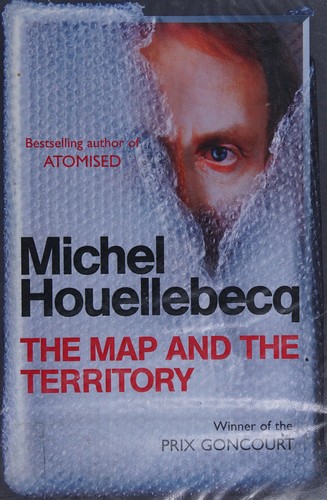
Some good stuff coming up already in part 1 of The Map and The Territory:
- how our models of the world can change underlying physical reality
- is modern art a psyop?
- why plato would hate ‘brand-name’ tourism experience
benny’s audio is completely cooked on this. I lost the files so I can’t fix it sorry
Damien Hirst, Jeff Koons, and the postmodern art market
Alright, does anyone want to kick things off?
I wish I was also dating Olga. She sounds hot.
There’s that line where he’s like, it seemed almost unbelievable that this incredibly hot woman would date this as yet unknown dweeb.
Like, is this a biography?
Yeah, exactly. And then there’s the other guy who is like a real dude. A few of these characters are real people. He gave Olga a kiss to meet her and was really extravagant, and then he talks to Jed and he’s just like, how do you do it? He’s like, I’m an artist. He realizes he’s an artist and he’s like, wants to become an artist now — I must be an artist. So that guy, he’s like a literary commentator and TV presenter in France.
Oh cool, I didn’t realize there are other real people in here. Well of course there are — actually there’s the artists at the start, the Damien Hirst who looks like the quote rank-and-file Arsenal supporter. Some of his famous pieces are like a dead shark in a box, cut in half or something, isn’t it?
Yes. I saw one that was, is it like long ways it’s cut in half? I think so, yeah.
And then Jeff Koons — skull covered in diamonds and stuff. He’s got some diamond shit. And then Jeff Koons, who doesn’t look like an Arsenal supporter, does balloon — you know when you go to a street performer and they make a balloon dog? It just looks like that. And they’re both super rich. And quite polarizing — whether they’re good art or not.
They’re cashing in on the whole post-modernist wave, right? Which is obviously something that is up for debate in this book. The classic “modern art is fake” type arguments. Is it like a money laundering scheme for rich people?
Plato’s cave, Schopenhauer, and the map/territory distinction
I mean, what do you think the book’s saying so far about that? There’s quite a few interesting things. The central theme is the map/territory distinction, right? So going back to Plato, the Platonists have beef with the very idea of conceiving, like drawing up maps, of making art, making representations of the real physical reality. They didn’t like art. Was that the reason? Yeah.
Plato is fucking crazy, man. Read the Republic — which a lot of people claim is their favorite book or whatever. He’s insane. He’s like a crazy fascist. He wants to ban all art. I thought he wanted to ban art because it corrupted people morally — is that consistent? Yes, it’s because of his cave allegory where you’re looking at the shadows on the wall.
Dope story. I mean, it’s classic. It goes hard. I wish I was one of the dudes doing the shadow games for them, doing rabbits and stuff, making them do lewd positions. Wait, okay. So Plato’s beef, I think, is that these things are distractions from actual underlying reality. And that if you do more conceptual art that strays even further from realism, as we’ve seen in our progression through time, you’re making sort of representations of representations, and then possibly representations of representations of representations.
I thought this sounds like Baudrillard or Bacon. Yeah, I’m not sure exactly how Plato put it, but anyway, the central point is there’s something corrupting about making fake representations of the true Platonic world, of the true forms. So that’s why certain people would have a beef with art — that’s the heart of the corruption.
But yeah, I think most people have a commonsensical view on that, which is that they get off the bus somewhere. Like, for me, I get off the bus around the modernists, where I like a lot of modernist art, and I like some of the abstract art, and I get off with the Damien Hirsts and with the banana taped to the wall and that kind of thing.
The toilet seat? The toilet seat? Oh yeah. No, it’s just a toilet, isn’t it? It’s a toilet, yeah. Urinal. Yeah, I get off there. Yeah.
Did I tell you, once I was at an art museum with Ellen, I don’t know, with my sister or something, and I was looking at — I had to get pointed out — I was looking at plumbing for a while. Like, I just didn’t know. Someone said that’s plumbing, but it’s kind of — you needed someone to tap you on the shoulder, like, the security exhibits this way? You found it. And then you go to the exhibit and it’s just slightly different plumbing.
Yeah, it was external pipes and shit on the wall. It definitely felt like your bathroom could have been an exhibit. Which kind of makes the point, right? Yeah, well, one of the most absurd ones I remember hearing about was a blank paper going for heaps because the artist had just looked at it for ages.
I had a look at some Jackson Pollocks and Rothkos and stuff when I was — which I had never seen in real life before. And I tried really hard to be generous and look at them the way that people tell you to look at them. Get up really close, get absorbed in them, and just try and think about the depth or the layers, rather than trying to expect it to tick all of the boxes that you might want from art. And I’ve still got nothing. I’m still convinced that it’s a scam.
Well, the weird thing is I don’t mind a Pollock or some others, and then I’m not sure if it’s just because of overexposure and you’ve seen it and it looks alright, or there’s something there. I mean, I certainly wouldn’t pay hundreds of millions for it. Yeah, the other big thing about art is — like tens of millions. Oh, is it? Yeah.
Do you know Pollock was a CIA psyop? Nah. Really? Yeah. I mean, I haven’t looked deeply into this, so it might be a conspiracy. Leave it there, bro. Leave it there. Yeah, that’s good. No, they funded a bunch of postmodern artists like Pollock, American artists, so that the Russians would think that American culture had not stagnated, and that American consumers and artists were so free that they could totally dismantle the form. They could push the boundaries beyond anything that the Russian traditionalists could conceive of. And so they created these artists in some sense. They didn’t emerge through their own merit.
I mean, Warhol’s an interesting one — some of his stuff’s kind of cool, but it definitely fits into this category of what Houellebecq, Michel Houellebecq, is pointing to — this kind of consumerist bend to it, and losing the territory.
So, okay. So Plato might have been the first dude who pointed out the difference between our representations and natural reality. Do you agree with them? Yeah. There might have been a pre-Socratic. But then Yud, of course, talked about the sequences. I think I should really — Plato and Yud, the big two philosophers.
I’ve heard some interesting takes recently that Plato — like, I think of more — Plato got it from Yud. Yeah, Plato got it from Yud. Yud is the true OG. He’s the philosopher king that Plato was talking about.
No, I think more people are starting to actually wonder if Plato was serious or if he was writing it as — what’s the word Tyler Cowen always likes to use when he’s reading this book? Yeah, the Straussian reading of Plato is like, this shit is obviously a bad idea, and we shouldn’t have a society ruled by philosopher kings, and this would all be really bad. And it’s sort of like the strongest arguments for a position that collapsed in on itself.
Well, I know Bronze Age Pervert recently wrote around the Straussian reading of Plato around different stuff, like borderline saying Plato wanted eugenics and stuff. But is Straussian reading just a new way to say, I’m going to choose to interpret this figure in a way that’s consistent with my own beliefs and just be like, no, it’s Straussian, you dummy — he actually meant exactly what I thought.
It probably does that in practice. But I mean, I think in theory, it’s meant to be the idea that you think of what could they not say at the time, and then you do a Straussian reading. I don’t know why Cowen always says it. I feel like Cowen just means it as a different reading. He’s always like, my Straussian take on this. And it’s just like, he’s just having this different interpretation rather than they can’t talk about this because of being worried about being censored.
Yeah, that’s the only way that it works for me — they have to hide the message for reasons of political expediency, or maybe they’re a big troll or something. And in Plato’s case, I can’t see how either would apply. He was a prominent philosopher. Why would he need to? Yeah, it’s hard to know.
He doesn’t have a reputation for being a troll, right? Yeah, I mean, I assume he’s still prone to the norms at the time, and it’s hard to know. He’s the most contentious, cantankerous guy ever, isn’t he? I kind of know what you’re saying. He was a boss. These guys, you don’t picture them as having a big desire to fit into society.
Well, I’ve heard some people joke around that the Straussian reading is — a lot of Socrates’ arguments are so bad. So you have to say philosophy is great and Socrates is great, but then you give him these pretty bad arguments. Or you give his interlocutors worse arguments. So he’s not even having to deal with hard stuff. The arguments are bad, but they’re just — it’s just incredible. Imagine inventing the concept of having a dialectical style of conversation.
Or the atomists correctly understanding something that we wouldn’t be able to verify for thousands of years. There’s big reasons to admire them. Even if Plato’s the first one thinking about the map/territory distinction, it’s still impressive, even if his distinction is a little bit wrong — if he thinks it’s a mystical realm of true forms of everything, and that our Earth is the first layer of falsehood. He might actually be right about that if we’re in a simulation or something.
Yeah, well, even — Plato’s day winning. Even if not, it kind of feels like, yeah, the Popperian take is everything’s an interpretation. I know Houellebecq’s super influenced by Schopenhauer — he wrote a book about it, I think. He wrote a non-fiction book about it, right? Yeah, I think something like In the Presence of Schopenhauer or something.
And Schop’s big philosophy that he wrote when he was 30 was The World as Will and Representation. And it sounds like it’s to do with this stuff. And I know Bryan Magee, who is a great popularizer of Popper, loved Kant and Schopenhauer and thought Schopenhauer unlocked Kant. Oh, wow. But then Schopenhauer got famous 30 years later in his 60s when he wrote a bunch of essays, and then he found fame. And then retrospectively, people were like, oh yeah, this philosophy is pretty important as well.
But yeah, my guess is there’s a lot of map/territory shit in there — probably quite directly influences Houellebecq. So in what sense has map and territory come up so far? There’s obviously the actual fact that he’s taking pictures of maps, right? His photography is of maps. Yeah, against some backdrop. So he calls his exhibition — what’s it called? The Map Is More Interesting. More interesting.
Which, you know, there’s a final flag there. But other than that, has he — I don’t think they’ve referenced — I mean, the title. There’s the Houellebecq appearance in his own novel. Yeah, so I’ve read two chapters behind you guys, but we’ve only had a brief appearance, right? I reckon let’s leave that for a future convo, because I’m sure we’ll have more to talk about when he actually — it’s good, yeah. It becomes a bigger thing pretty quickly, actually.
Okay, but up to part one, all we’ve had is he just referenced him to his dad, right? Yeah.
So the map/territory thing with the Michelin maps — I think it’s consistent with almost a consumerist critique of fetishizing the abstract conceptions of things relative to the underlying territory. Because these maps that he’s photographing are worthless. The Michelin executive is so mad when he realizes he’s been pulping all the old maps, which are now worth money because people are buying them as collector’s items. He’s like, we were just throwing them away.
It’s the fetishization of the actual thing that people are interested in, which is the French countryside. And then that itself, I think he’s also claiming as being in some sense fetishized in the actual way that tourists experience the French — there’s definitely a few comments on that. French can’t afford it. That was a nice comment. French can’t afford to holiday in France anymore. And then it’s all flashy hotels.
So what’s he literally doing as a photographer? They’ve got these maps. I mean, we just use Google Maps now, so I had to sort of Google what a Michelin map was. And are you saying that within the maps you see pictures of the countryside, or is it like what we’d expect from a normal map? Yeah, I was unclear if he was just taking photographs of Michelin maps, or if he was taking photographs of Michelin maps against the country — like there was something else besides the map in the picture. I never quite — I’m not sure how important that detail is, but I mean, I think the main element of the photographs are these pre-existing Michelin maps, right? And that’s probably the most important thing.
But why are people liking them? Just because it’s different? I don’t think it’s a straight answer. What did you mean, Rich, when you said people actually like the French countryside? Is it just because they’re seeing a map and it’s reminding them of traveling France?
I think the notion of traveling around the countryside in France is very romantic. And it’s possible that it’s, for some people, more of a brand-name experience than it is an appreciation of the thing qua the thing, you know? Yeah, yeah. I mean, that’s definitely true about travel.
And so I’m thinking the map is one further layer of abstraction of that, where it’s a distillation of the idea of traveling to the Michelin star hotels and restaurants. And now you literally just have lines on a map, and it’s the most distilled version of that abstract idea. And then the critique is that people give universal acclaim for this, and they snap up all of his prints for crazy prices, and he starts getting rich.
Jed Martin and the submissive artist
What makes me a little bit uncertain — and maybe we should talk about this later and stay on this topic for a bit — is that Jed Martin is a true artist. I think he’s portrayed as a true artist. He’s not interested in money and he’s not pursuing money. And he does have a true sort of outside eye. And so maybe there really is something to his art.
And the other point that Houellebecq makes is that normally journalists and critics sort of manufacture trends, where they almost form a committee and decide what’s going to be hot and what’s not. And he says it’s rare that a trend just organically happens by itself. And I’m pretty sure he says that in this particular case it does happen by itself — that it is universally acclaimed and it just becomes a trend without being dictated from the top down. So that cuts against the idea that this is a wanky representation of a wanky representation of the underlying reality.
It’s kind of this paradox — maybe a lot of people, the reason they like it is because of that, but there’s some kernel of real art in there as well. That feels true for a lot of famous art — like, probably appeals to Hansonian signaling more than mapping the territory distinctions. But most people are going to see this art for signaling reasons, and even traveling to these places — you could be a pure appreciator as well and get stuff out of it.
I remember the dad — Jean-Pierre, Jed’s dad — saying that artists don’t make it as artists if they’ve come from a rich family or benefactor, because just trying to express yourself doesn’t seem to be enough to make it as an artist; you need to be hungry and have some profit motive. And I wasn’t really sure how to take that — like, whether all famous artists are kind of corrupt in some sense and not just expressing themselves, or whether the profit motive fuels the fire in the belly.
I think Jean-Pierre is straight up wrong about that, because a lot of great artists have had — yeah, I think sinecures on the side which have allowed them to, or they’ve had wealthy patrons that have allowed them to practice their art.
Unfortunately a quick break — oh sorry, yeah, no worries. Sorry, I was listening to all that, I just couldn’t fucking say anything. It sounds like you guys are a little more convinced that the book is casting sort of negative aspersions on the style of art, but I don’t actually get that sense. The upfront narration is pretty ambivalent — maybe is the right word — or just kind of neutral with respect to the presentation of the art. It doesn’t pass that much judgment on first why people like it, but also on whether it’s a good or bad thing, which I thought was interesting. You have to sort of infer that for yourself.
Yeah, and I think Jed is very distanced from his own success and fortune, right? He’s not portrayed as greedy at all, and he destroys all his work when Olga leaves. And there’s this really great line — the one thing that he says when he goes to these soirées and people ask him his thoughts on art, he doesn’t have much to say, but his one defining thought is that a true artist is submissive. That was interesting. Yeah, super interesting. I’ve never heard that line.
Even reading his reasoning though, I was a little bit confused. I’m still not sure submissive is the right word. He kind of wanted to say that you’re just struck — you can’t help but be struck by certain aspects of reality as you’re trying to live your day-to-day life, and you feel like you’re in some sense submissive to your own interests. You just can’t help but focus on these certain weird things that other people either don’t like or seem to ignore. And then you become obsessed with that thing.
It’s not clear to me that that’s just not true of everyone, right? I’m still not sure — like, he’s being submissive to what exactly? Your own interests? Aren’t we all submissive to our own interests in some sense? Yeah, I was confused.
No, I 100% agree. It doesn’t make sense to call him submissive without adding the extra descriptor of submissive to the muse or something. Because the thing that he thinks is the important attribute is that he doesn’t care about social niceties or the way that normal people live, or friendship groups or money. Like, the bit that Houellebecq adds is that you even have to lose any notion of self-respect and integrity, and you have to not even care about yourself, and give yourself over to this sort of higher power. And it does feel submissive. But yeah, it’s not like he’s going to be submissive in relationships or in social dynamics or in what the world might expect from a person.
There was that comment around him having a small stature, and famous people felt comfortable around him. He said it kind of helped when he started becoming famous, because he’d just be quiet and small. And I think he even used the word submissive. Yeah. It is that conversational dynamic where you just say nothing, and then occasionally you’re like, oh really? Yeah. You’re sure right about that.
I was liking all the kind of noticing of social things or human nature in this book, just popping up. Things like that. I love this. This is one point where he said Jed likes to walk to the park with a philosophy book, and he just said that he doesn’t usually open it. It’s like — that’s so true. He just sits there and observes people. Yeah, I always walk somewhere with some book and I just don’t — there’s no point taking it.
It’s kind of like sometimes when you go away camping or to a bach or something for a few days, and you pack three or four books — you know, I’ll get all these books, and you crack none of them, or you read 10 pages of one of them. It’s silly thinking, but part of it’s the options. Yeah.
So do you think we’re supposed to sympathize with Jed? What are we supposed to think of him? I agree he’s got a true artist temperament, in the sense that he seems to just do this thing without desire for fame or money. We’re a little unclear on his motivations. Yeah, I think we’re unclear right now — introduced to why he felt like he wanted to photograph Michelin maps. I don’t think we even got an insight into whether he thinks they’re very beautiful. It kind of felt like all of a sudden he was just doing this thing.
Well, I guess he was really interested in the camera work, right? It talks about that when he was a kid, finding his dad’s camera, and then getting really obsessed with axis tilt and all that stuff. But it’s unclear why he actually photographed Michelin maps in the first place, and how he actually feels about his own art.
So in terms of the timeline — we get the stuff at the start with his Christmas with his dad, and it’s all quite lonely, and he kind of thinks it’d be a bit easier if he had a wife and kids, because they’re good at this stuff. Oh yeah, the descriptor of women’s roles and those kind of interactions — even if he didn’t have kids, they’d be good at it. In terms of socially smoothing over situations, being able to make small talk and remember the names of nephews. Yeah, that’s a classic one — remember the birthdays and names. Yeah, that’s honestly the truest motherfucking thing ever.
It works well because it’s very funny in a non-PC way, right? He’s really quite apt with some of these observations, even though they’re somewhat naughty things to say. Yeah. He also said something around the connection with grandparents and kids. So he said something to do with cycles — the death of the grandfather, and then the grandson is the rebirth. Or revenge. Yeah. Which is great.
I mean, I don’t really have relationships with — they’re not around anymore — with my grandfather. So I didn’t really know how to take that. But it sounded cool.
I related to that. I feel like my dad at his worst could see me as some kind of rival, or at least see enough of himself in me that he could be threatened by a younger, more handsome, more successful version of him or whatever. Smarter and better looking version of himself, bro. Yeah, all the adjectives. You can keep listing more if you want.
But like his grandkids, obviously no one is perceiving a little kid as being a threat. It’s like the narcissism of small differences, right? You just got to get one more step removed and then suddenly you can form allies against the parents. I’ve never heard that insight before. That’s kind of funny.
There’s definitely a trope in fiction where the kid has a good relationship with the grandparent — the grandparent’s the one person who kind of understands them, or at least is there to listen to them, and the parents aren’t seeing them.
I just have this thought now, because my dad had new kids in a second marriage, and he’s much older. I wonder if that sort of grandchild effect is somewhat at play, just because he’s older. And he’s certainly loosened up — not completely — but a bit, compared to how he treated me. That can also just happen with siblings, though, right? Like, I think parents in general get less uptight — second, third, fourth kids.
I just wonder when you have kids 15 years later, it kind of feels like a grandkid almost. That was my first thought — me and my sister kind of like the kids, and then he’s got these new kids, and it’s sort of doing it again. I don’t know.
A digression on discipline and parenting
There’s gonna be something about the drop off in T that happens as you age too. At least in our generation — they’ve got lots of good therapy for it these days, but fundamentally when you age, boy give me a note — you and your dad are like, which one of us could beat the other one up, either in jest or in seriousness, in discipline, right? I feel like the threat of violence is such a motivational, powerful parenting tool, and I’m wondering how the hell people manage these days without the distant threat of violence looming.
Because when your kid gets old enough, you can’t plausibly threaten violence against them. And nowadays, smacking and stuff is totally frowned upon, so you never have that in the first place.
I feel like it kind of governed my childhood discipline. I don’t want to test my parents, and I especially don’t want to test my dad. Yeah, I suppose there’s always this very latent threat — if things got really bad, your parents could grab you and constrain you, if not smack you. But more for getting the kids to do something that they need to do, or acting up or swearing at you.
I remember talking to people that obviously were more ratbags than we were, and there was this big shift when they realized as teenagers — there was one point, if it’s a girl was usually with their mom, if it’s guys with dad — they can’t physically control me. It’s not a fair game now. And it just totally changes the dynamics.
This is a slight digression, but I was thinking about this this week — around taking children seriously. Everyone in the Deutsch crowd is just like, it’s gonna be fine, and in a lot of cases it would be fine. But if you’re behavioral-genetics-pilled, it’s like, well, most people reading a bunch of Deutsch are gonna have kids who are probably gonna be pretty easy.
And then there’s this one kid who’s like — he’s a fucking ratbag, man. And again, you just keep ramping it up. He’s done some real bad — I won’t even speak of them — but he’s done some real bad shit, and the parents don’t know what to do. It feels like he just has to be sent to a boarding school or something. When he’s getting into criminal shit and dangerous shit with siblings and other kids, I feel like you can’t take “taking children seriously” — yeah, and I think there’s just typical mind fallacy or typical-my-kids fallacy. Like, everything’s fine. It’s like, no, no — people are different, and some kids are ratbags, and it’s not purely because of parenting.
Anyway, that’s a digression. Book club session wouldn’t be complete without a little bit of Cam. One of the most elaborate ways to segue into it. Yeah, how do we even get here? What were we talking about? That was my fault, I was just talking about your daddy issues. My daddy issues, yeah.
What is Jed’s artistic project? Michelin maps and industrial photography
Okay, so there’s something I wanted to say. Oh yeah — we were talking before about what is Jed’s artistic project. I think we do actually have some — I asked about the timeline. The other timeline — okay, but you can go ahead, we’ll come back to the timeline.
We don’t know exactly what they look like, but I think we do have a sense of what he’s trying to achieve, which is — I think he’s trying to break down the map/territory distinction. Well, you know, he fumbles Olga, so Jed or Houellebecq is trying to break down — Jed, I mean. We also think Jed’s a stand-in for Houellebecq somewhat. I’ve been kind of reading it that way, but I know Houellebecq gets referenced in the novel as well.
But like, this kind of guy bags this hot girl because his art suddenly — I just think Houellebecq was probably this unknown. Houellebecq was unknown for ages, and now he’s getting some model pussy and shit. I don’t think Houellebecq — I’m sure he does it right with the ladies, but he’s not a good-looking man. I think he’s gonna struggle to get the hottest girl in Paris or whatever in France. But I don’t think Jed was said to be good-looking, right? Or was he? He’s like effeminate but good-looking-ish. Right.
But no, I’m talking about Jed’s artistic project, which is — it’s important to know what his motivations are. And I think he’s trying to break down the map/territory distinction and elevate — he’s trying to elevate the map, basically. And his latest project is the industrial photos of parts that are machined with ever increasingly low tolerances. So within a few microns range.
And I think the way his photography is described is also that he’s not that interested in doing crazy manipulations to the images. He’s more interested in capturing them very authentically with really good clean lighting. Even his early work, where he’s basically doing product photography for various companies — he gets paid pretty well for it because he’s just really good at representing things objectively. That’s what he’s trying to do. He’s not trying to manipulate them too much. He’s trying to capture them as they really are.
And I think Houellebecq has a meta comment — or, you know, the author — saying he doesn’t realize how illusory his quest is, or how futile it is to try and capture objective reality through the lens or on the print, or however you want to say. So we think definitely early Jed is trying to capture reality.
Or even with the Hirst scene, which is later on in the timeline, he’s so mad because he can’t quite get — I can’t remember which one of them it is — but he can’t quite represent them the way he wants. And interestingly, he said one of them he found easier; one of them he wasn’t having troubles with. Yeah. And then the other — it’s funny, I remember the first couple of pages, I was a bit confused at first when it turns out he’s painting painters that exist in real life. Yeah. And he can’t capture the essence of one of them. It’s Koons. He can’t get Koons. But he could capture — yeah.
Because Damien Hirst is like — what did he say? The Liverpool thing? He’s like a — rangey-looking Arsenal supporter. Well, he looks like one. And when you Google, I mean, he does. Jeff — like, he looks kind of working class, or like he could be.
Yeah, is he sort of saying, if we were to try and understand Hirst’s and Koons’ motivations for doing what they do, Koons is a little bit more mysterious, perhaps.
Yeah, maybe just quickly on the timeline. So we start with him painting, using actual paint, these guys. And then it’s the Christmas that he wants with his dad. And there’s the boiler issue. But then at one point it’s a year later, the boiler — the boiler seemed to last for a year. And then it was Christmas again, and it was sort of, which is which. And then it seems like we go back in time. Is that our understanding?
He started with photography, and he remembers Genevieve, the one he lost his virginity with. Okay, so just quickly on that — yeah, yeah. She also sounds hot. This guy’s cranky. He does it right. Well, I mean, she was a prozzie, right? Yeah, that’s true.
And then Houellebecq’s got this thing where male jealousy is such a classic thing — whenever you’re with someone, you can’t help thinking previous lovers were better. It’s just better to fucking bury that shit deep down. Never talk about it. Yeah. But then he’s like — he said Jed doesn’t get jealous with her, even contemporaneous, but at least in the past, with prostitution. And maybe it’s a different thing, but I definitely feel like I’d think about that shit. It just didn’t feel — didn’t feel like that. Strikes the core with me. Maybe I wouldn’t be jealous, but I’d maybe get the heebie-jeebies about it.
This is consistent with Jed’s character, right? He’s like very detached. And I can’t actually tell — do you think he feels strong emotions about anything? Or is it portrayed as if he doesn’t? Well, he cries a few times. He cries a few times when he, you know, accidentally walks to Olga’s place and then sits on the bench and starts crying. Or is that when he starts crying? Anyway, he definitely cried a few times after Olga left.
Well, even that comment around the jealousy though — it kind of said he would get jealous around her previous partners, and then as soon as it was transactional, he was like — which sounds like a comment around art being consumerist and transactional, and real sex in relationships being like real art and meaningful. But then he’s like, yeah, as soon as it’s transactional, it’s like whatever. He just didn’t even think about it.
Because he did seem sad that she found a lover, and then she moved on, and he’s like, I’m sad about that. He seems to dwell on her a lot. He thinks about her all the time. But anyway, so then he got with Olga.
So we’re behind the timeline of him having Christmas with his dad and painting the guys. Is that right? Yes, we haven’t quite caught up to it yet. Yeah, because at that point he’s famous for his paintings, right? At the beginning of the book. He’s almost like post-famous, but yeah. But he’s gone through his family. Well, it’s not clear why — because it said Damien Hirst and Jeff Koons are the richest artists in the world at his peak 10 years ago, it says. At his peak, he was 593rd. It’s not clear if that was for Michelin Maps. But 17th in France, dude. I mean, that’s pretty good. It’s pretty famous.
It wasn’t clear what he got famous for. It might have been this Michelin map era — I mean, it seems plausible they’re blowing the fuck up. I think the map era blows up around 2000, but he gets really rich off of his series of paintings, culminating in the Damien Hirst / Jeff Koons one. And the other ones are like — the most famous one from that series is called something like Steve Jobs Summit with Bill Gates Talking About the Future of Technology in Palo Alto. Yeah, exactly. Yeah, that’s it. That’s what makes him all the money.
And then he’s really unsatisfied with this work. And I think — you know how when Olga leaves, he finishes up the Michelin project, he’s like, fuck this, and just throws all the prints out and it’s like, it’s over. I think the same thing happens for this phase of his career, because — I don’t know if you guys are up to it or not yet, but it’s not a huge spoiler — he slashes the Hirst painting and then stamps on it. Oh really? Okay, yeah. So he’s following his submissive dedication to the muse again, or whatever you want to call it, where he’s like — it probably took him a crazy amount of time and is worth heaps of money, and he’s like, no, this sucks.
It’s funny when you hear stories of famous writers and stuff trying to — even Nabokov tried to throw out Pale Fire, and his wife stopped him from doing that. It’s kind of crazy — like, no, this is not good enough, I need to burn it all. And you should spend like two years on this very good work that’s not what you want — it’s fine.
On this map and territory thing — I remember, I’m a Woody Allen movie fan. Have you been watching some Woody’s yet, Rich? I’m still not sold. I started on Blue Jasmine, I think. I sent you the list of ones to watch. Wasn’t it near the top? No, no. Blue Jasmine — so Woody Allen from the 90s, it was so bad. Went trash bad and culminating in the early 2000s, like unwatchable bad. Then post-2007 there’s the occasional okay one. Blue Jasmine is okay. It’s not a great movie. It’s a great performance by Cate Blanchett. It’s watchable. It’s not great.
Is it the one with the sisters? Because that’s the one I watched. Hannah and Her Sisters? Oh, you didn’t know that. Wait. No, it was this one — Cate Blanchett, Sally Hawkins. Ginger and Jasmine. Right, yeah. So I think that’s like a late Woody Allen, not very good movie, good performance by Cate Blanchett. Definitely nowhere near his — maybe it’s his 20th best movie, I’m not sure. Anyway, doesn’t matter.
Alright, what’s the number one? It was the sisters one, right? Yeah, I’m not — usually people would say Annie Hall maybe, but I think Hannah and Her Sisters. Annie Hall’s very good. Manhattan’s very good. Crimes and Misdemeanors extremely good. One of those four. Husbands and Wives, Sleeper.
But anyway — he has different favorite movies to most consensus about his best movies. And his reasoning for why he likes his movies is because they turned out better than what he had in his head. Sorry, they turned out more similar to what he had in his head. He was able to capture — he’s got this movie I think ‘05, ‘06, one of his more recent ones that’s actually alright, even though one of the problems with later Woody Allen movies — touched on the same themes — but called Match Point, and he really likes that, because I think it just was what was in his head. And then something like Manhattan, which is always viewed as a classic, he doesn’t like, because it’s not quite what he had in his head. Which I find interesting.
Yeah, he should burn the celluloid if he’s a true artist. Yeah, yeah. But also, another thing I think he’s wrong about — like what is his best art — again, sort of death of the author.
I’ll give him another chance. I just found his movies — it’s kind of like watching cringe comedy except without the comedy. It’s just painful interactions between awkward, painful people. No, I mean, that’s right. It might not be — it might be a taste. It’s interesting because we’ve got quite similar tastes. Yeah, no, I trust you. I’ll definitely — I mean, I’ve watched Midnight in Paris, and I’ve watched the first half hour of Blue Jasmine, so I could try harder. It’s basically the stuff in the 70s and 80s is good. Not a huge deal. Maybe before you go to New York or something, watch a couple.
Yeah. Anyway, sorry, I got us distracted a bit again.
Universal acclaim, Rotten Tomatoes, and the manufacture of mediocrity
On map and territory though — here’s a question that you guys touched on earlier, but I couldn’t say anything. What do we make of the fact that he did need a publicist to make his art reach wide audiences? But the publicist’s job was obviously very easy, in that it seemed like — she said this was the most successful project of my career, and all the reviews were positive, and it didn’t seem like much of an uphill battle. People were willing to consume it pretty easily.
So what do we make of the fact that people are willing to consume this art, and there’s all positive reviews, no negative reviews? It seems very rare, right? And it’s referenced as rare in the book — he’s basically just on an uphill trajectory, and then Olga leaves and he flatlines his own career. But there’s no external barrier. Usually most art is polarizing, or perhaps most good art is polarizing.
Maybe that’s just an interesting fact. There’s got to be a reason he chose for his rise to prominence to be quick and easy in some sense, right? He faced very little opposition, and the fact that French high society was so willing to buy in to the photographs as Michelin maps — like, obviously this is people’s psychology being primed for this in some sense. What do we make of that? Why do people like Jed so much, I guess? It’s the general question.
Well, it does seem to hint that part of it is because it was good, because it wasn’t due to top-down. I mean, I feel like he’s — that feels wrong as well, to think that most trends are due to top-down force. Most fads seem to be bottom-up, kind of random. In the art world I think things are a lot more manufactured than perhaps in other areas of culture. Critics really are powerful, and gallerists, curators have huge power of who they decide to show.
The funniest shit I was reading — I think I mentioned Spenny before — I was reading Cowen’s latest book on who’s the best economist. And he was talking about John Maynard Keynes, and he’s like, a non-trivial reason of why Keynes is up there for Cowen is because Keynes was a good art taster. And he cultivated it and bought a bunch, and Cowen’s just like, yeah, shows he’s got good taste, well-rounded. It’s pretty funny.
Yeah, he’s the kind of guy Cowen would love, right? In the Bloomsbury group, with Virginia Woolf and — oh, yeah, yeah. I think he just loved the generalist aspect to him. Also, apparently he was trying to cultivate in Cambridge an intellectual scene, an art scene, and I think Cowen’s big on scenes, and he tries to do that. Although it’s interesting — Cowen’s not part of the traditional — I associate the GMU scene to be somewhat different in flavor than the Cambridge scene, right? Which seems probably more like just high society, something like modern-day Harvard. Cowen seems to be part of a completely different intellectual scene.
Yeah, it’s interesting. No, I think you like the aspect of a scene in general. I agree. They’re different.
Just on the comment of everyone liking the art — I don’t know if this is what you were pointing at. I was just wondering about movies, right? It seems to be over time, because people start using Rotten Tomatoes now often to check a movie out before you see it. It meets this threshold, and Rotten Tomatoes is this weird rating system that everyone kind of knows now, where it’s like either it gets positive or negative. So it’s not — it also is a separate rating system where you give it like an eight out of 10 or five out of 10 and gets the average of that. But people don’t really look at that. People look at the meter, which is — you know, the 90% actually means 90% of reviews were positive and 10% were negative. So it’s just yes or no.
It’s a perfectly mediocre film that has a 100% fresh rating. Yeah, well, like above mediocre, but yeah. Like a middling film. Yeah, yeah.
And I think over time, because Rotten Tomatoes — I mean, in terms of that driving reality and stuff — now you see it quite clearly in like Disney movies and stuff. Whereas you don’t want to be polarizing — the incentive’s just to be above average, fine. And then so people say, yep, that was fine, it’s positive. And then you get this 90% plus for a pretty average movie. That’s pretty crazy.
That’s an interesting example of Goodhart’s law, maybe, or something. It’s not quite Goodhart. Yeah, I think it’s something similar, right? You’ve chosen a specific metric, and then the result is that if people are optimizing for that, they’re going to do something that broadly is appealing to everyone. It doesn’t have to be everyone’s top movie. It just has to be — okay, what you’re trying to do is maximize the minimum, basically. Right, instead of making something that’s edgy and possibly will piss a bunch of people off, you avoid variance, you just try and do low variance.
And you see we like a lot of sequels, a lot of cape movies, and a lot of remakes. Everyone’s like, yeah, that’s pretty well done. Kind of death of the movies, right? Yeah, that’s interesting.
So does that imply that if something receives universal acclaim, does that almost by definition suggest that it’s a solid, unpolarizing piece of work? It could still be good, but perhaps not great. And that you’d almost expect some people to dislike a truly great book of us. Yeah, that’s what I was wondering.
It’s like — if it has mass appeal, does that mean it’s bland? I don’t know if I fully am ready to commit to that position. There seems to be something there though. But yeah, there also seems to be examples of movies that are good but also accessible. They have universal acclaim but aren’t safe. Goodfellas or Pulp Fiction — or maybe not. But yeah, like Goodfellas. But even that’s quite male, within me at least. It’s like, everyone loves it, and then the most wanky person will be like, yeah no, it’s good. Yeah, Godfather and stuff gets a bit more interesting, because people low-key find that a bit boring when they first watch it, but anyway.
Sorry, you go, Rich. I was just gonna say I think we should probably assume that Jed’s work is actually meant to be good. And that’s sort of consistent with — I don’t know, my photography or just well — like the map. I mean, probably all his work, but the map thing in particular. Because I admire his approach and his way of being in the world. It seems like the type of person who is probably likely to produce good art. So that’s probably the simplest explanation.
One thing I was thinking is maybe Houellebecq’s not really weighing in on what we should think about abstract representations or postmodernism. Maybe he’s more interested in the sort of quixotic quest of Jed Martin to represent — try to represent reality — and how ultimately he fails. I don’t know what the final answer will be in the book, but how he gives up on the map series, and how he maybe is giving up on the painting portraits series. So he’s driven by this fundamentally quixotic project, maybe.
So how would taking photos of maps be trying to do this project? I’m not saying you’re wrong, I’m just struggling to see it. Is it just photography in general, or is reality this kind of more abstract thing as well? I don’t know. It’s like elevating the map at the expense of the territory.
I mean, yeah, okay. No, it doesn’t really work, actually. I was thinking of trying to get a map with as high fidelity as possible to the underlying territory, which is what he’s doing with his photos of industrial objects, but it’s not really what he’s doing with his photographs of the maps, is it?
There’s something around — this Michelin map is a map of the territory, but then the Michelin map is part of the territory because it exists. And then you’re taking a photo of that. I can’t remember which French author it is, but it’s one of those postmoderns talking about how you mimic art, or sometimes you mimic reality.
Did you guys see that thing that went viral of those girls who — like everyone’s liking it, all their followers, and it’s like little cartoon fruits come in and they’re like, yum. Okay. Did you guys see it? Oh yeah, yeah. It was crazy. They’re like superbar, and you watch it and it’s kind of hot — like the elf is — but fuck man, you could definitely get some French postmodern shit going on there. Because there’s this white girl who was mimicking an anime character, and the anime character itself is probably mimicking a fucking white girl, and it’s fake fruit. So many layers of getting away from actual reality. And then it was just catnip for people.
When the map reshapes the territory: the Michelin guide and the French countryside
Something interesting to be on the lookout for in this book is whether or not there are instances where the way the map is drawn reshapes the underlying territory. Which I don’t think is — I mean, it is possible in the case of the Michelin star guide, because I’m sure hotels and vineyards and stuff are created or fail on the basis of the map.
That reflexivity, I remember, was a thing in Infinite Jest in the Eschaton scene, right? Where the characters were getting mad about the map/territory distinction breaking down, and we were wondering if Wallace is making some kind of warning about your depiction of the map mattering, because it does shape the underlying reality, which in turn changes the map and so on. I don’t know if I’ve seen any examples of that in this book yet.
So what was the thing — Olga — so when Olga and him, right before she tells him she’s going to Russia, they’re on a vacation in the French countryside, and she’s talking about how she put out a survey — no, but she put out a survey after the fact. Anyway, they basically found that people preferred certain kinds of food. And then what kinds of food did they prefer? I have a feeling there’s something going on here, where it’s like people’s preferences are then reshaping the actual French countryside and what sort of restaurants exist there.
Yeah, she was saying that their thesis was that the type of people who go to these hotels would probably be interested in the new trendy fusion-type foods — so Peruvian-French or — that was wrong, right? She wanted French. Yeah, she wanted French. And so did the tourists, even the Chinese tourists and so on. And so what they were selling loads of was quail and grouse and escargot and so on.
So I think the way that I read this — I’m pretty uncertain about all of this stuff — is that this is proof that people are in some sense buying an experience rather than buying the thing itself. And the experience that they’re interested in buying is the French traditional countryside experience.
So the actual culinary attributes of the food or the wine or whatever matters less than the marketing material or the overall vibe or the overall conception. They make fun of the new use of the word terroir to describe the attribute in winemaking of all the surrounding land and the overall holistic context of where the grapes are grown — which is apparently some new trend to talk about the terroir where otherwise they might not have. And I think that’s a good way to sum it up. It also has a direct parallel with the territory, right? It’s a perversion of the actual territory.
Yeah, I don’t know, I’m not that confident in my interpretation there. But I know that Houellebecq is a critic of capitalism more broadly, and consumer capitalism. So I’m thinking that’s where he’s coming from.
Brand-name experiences, hedonic expectations, and the optionality principle
To me — I used to think people were wrong to want to have cultivated experiences over the actual sort of objective nature of the food or drink or whatever. And I think that’s wrong, and there is no objective nature, because especially when you’re having a gustatory experience or something, it’s completely informed by the ambiance and the setting and the company. I wouldn’t say completely, but yeah. Okay, yeah. That’s true.
But it’s wrong to separate that into like, how good does this food taste? Because the way that you perceive the taste is shaped by the label on the bottle and the silverware on the table and so on. So it’s reductionist, incorrect to be like, oh well, you could objectively have better food for a fraction of the price if you went to blah blah blah. I used to think like that, and I think — but what’s weird is, as soon as you become conscious of buying the experience as part of it, it dampens it.
You kind of want to live this lie that it’s not there. The reason we’re going there is just to have a buzz and have a feeling, and we’ll pay lots just for that. And then when that gets made explicit, it kind of takes it away a little bit, and you want the illusion that actually this is really good.
Yeah, that’s true. That’s like an inversion of the prostitution thing — where he’s big mad and jealous when it’s all organic and natural, but when it becomes transactional he’s like, oh whatever, I don’t care.
I heard Agnes Callard talking recently around — I think she was at a restaurant with her ex-husband, and for whatever reason they usually talk lots about philosophy when they’re eating, but for whatever reason — I think just heaps of food kept coming out and they weren’t really talking — and she just said it was like an overload. It was like a sensual overload that was not enjoyable. It’s not really related to what we’re saying exactly.
No, she says something around the ambience of the chatting — you don’t want too much of a direct sensual experience ever. But she’s autistic, right? So she’s probably very easily overloaded by sensory experiences.
Yeah, I went to a Michelin restaurant in Madrid, and it had 21 — it was like a 21-course degustation. And it wasn’t exactly sensory overwhelm, but once we entered the teens, I was so full and my taste buds were so overwhelmed, I honestly just wanted it to end. Oh wow. The first couple of amuse-bouches that come out, I’m so fascinated and really thinking about it, and the end ones, I’m like, just — I don’t care, just put it in my mouth and take the plate away. Took like three hours. Wow, that’s crazy.
Oh yeah, I’ve been to Michelin restaurants twice in my entire life, and both times I was — I wouldn’t say underwhelmed, but it’s just not the kind of thing — it’s hard when the expectations are so high because it’s so famous.
Just on your comment earlier around the ambience and experience mattering — and you used to think it’s overrated completely, you’ve changed your mind — but I think your old self had a point as well. The truth is somewhere in the middle. Of course this stuff matters, but I think it’s also true that a lot of people, because of signaling reasons and other stuff, they’re thinking this thing is great when actually some of it’s fake. Not all of it. I think you can go too far, but you kind of convince yourself that this fine wine is worth it when it’s mainly around signaling and feeling flash and stuff.
Oh yeah. If you could convert it into hedons, the math would still not work out for a lot of stuff, right? If you bought a $100 bottle of wine and it gave you twice as much pleasure as a $20 bottle of wine, independent of its subjective quality, that’s still a bad deal in some sense, right? Assuming at the margin you only have a limited amount of disposable income, you should probably buy the $20 bottle of wine rather than get $40 of value from a $100 bottle.
So yeah, I just think I was — I don’t know what you’d call it — I was wrong about it philosophically or something, but pragmatically I wouldn’t always be wrong. And the other thing is that my research suggests that, far and away, the main thing that drives your pleasure from anything is the gulf between expectations and reality.
And as you said, if you go to a Michelin-starred restaurant or you get a $100 bottle of wine, yes, it primes you to think it tastes better, but also you’re expecting it to taste good. And then if it disappoints, you get surprised to the downside. It tastes better than it would if you just went in randomly, but relativistically you’re more let down. So the overall appreciation of it is maybe lower than if you’d just gone in cold.
Yeah, in my book, I put it like this — it’s basically the optionality approach to experiences, which is, if you go for a brand-name experience, you’ve got kind of unlimited downside and fairly limited upside. But if you go for a hole in the wall or sort of non-brand-name experience, you’ve got unbounded upside and unbounded downside, because you could be really pleasantly surprised to the upside, and if you don’t like it, you’re like, well, I didn’t really expect much from it.
So what happens if someone you trust recommends something? Does that count as a brand-name experience? If you were like, this hole in the wall was fucking amazing, right? Yeah, anything that raises your expectations. It’s about where you’re at when you come to have this experience, which is informed by everything.
But the problem is cultivation, trusting someone’s taste. If you were to recommend a book, you’re saying, Cam, I think you’d really like this. There’s so much information there, and it’s going to affect my expectations.
There’s layers of this, right? When someone recommends a book, you’ve got your whole life’s experience, which tells you that even if you trust this person’s judgment and stuff, that doesn’t mean you’re going to love this book. So you’re not necessarily like, this is going to be the best book ever. You’re just like, oh yeah, much better than chance. Yeah.
I mean, I do miss serendipity of things truly. I remember one time it was around Christmas time, and a TV movie was on. I hadn’t even heard of it. Watched it with my mom. It wasn’t great, but it was a good movie, and I was just pleasantly surprised. And it doesn’t happen a lot, because you’re usually choosing off Netflix or choosing off some lists you’ve got. And either getting let down or meeting expectations.
So that’s cool, but it also is really great that you have all these — I can find some lists of recommended movies that fit my cup of tea. It cuts down a lot of search costs. And yeah, it does affect your expectations of it. I’m finding out with a lot of these books — I mean, this is an interesting case where it’s a more modern book, but even then, he’s well regarded in some circles. But certainly with Brothers K and all that, the fact it’s a sepia-tinted canonical author — yeah, it affects my experience of it hugely.
It cuts both ways though, because that’s what drives us to make the effort in the first place that we otherwise wouldn’t have done.
Modern books, the Lindy filter, and cultural distance
Yeah, but I agree. Just quickly on this book, because I’m finding it quite easy to read — how about you guys? Yep, easier than Possession for sure. I think he’s funny and witty, and yeah, I’m loving it. Yeah, it’s good. I mean, some bits are a little bit boring, but I wonder how much of the easiness is just that it’s modern. You know, it’s 10 years old rather than 100 years old. Maybe not.
But yeah, I was just trying to think, why am I finding this so much easier to read than Brothers K? I think that’s definitely a factor when comparing to something like Brothers K, right? Even though it’s translated, you can’t just deny the fact that it was written — when was it written, actually? 2010. Oh, Brothers K was over 100 years old. I think it was 1870. So 150 years ago. Yeah, but this — yeah, 2010.
Also, I mean, there’s even just less cognitive work to do because you understand a lot of the references — you know, the Steve Jobs, Bill Gates painting. You know who those people are. You know where Palo Alto is.
Well, it did make me wonder as well. Can you truly — like, these old stuff where you don’t know the cultural feel at the time. I’m just wondering, how many references are just alluding to the culture at the time? And without that, you’re missing a big part of it. And maybe you can learn that by doing a bunch of research, but maybe not.
I’ve heard, maybe it was Cowen or someone else’s theory, around humor being a big aspect of that as the culture of the time. You’d see some comedy about it from seven years ago — it’s usually not very funny.
Yeah, I remember when we were reading Dostoevsky, our experience got better, or at least minded — once I read a bit about the freeing of the serfs and the changing of the social climate with the atheism and other ideas coming in from the West, and all of those things that in Dostoevsky’s time would have been — everyone would have been perfectly aware of them. Those are the big changes he’s really commenting on. So we have to actually work hard to get on the level of the reader.
I suppose I’m wondering, even if we work hard, is there some stuff that’s a bit more illegible and implicit, like living in the culture. Living in the 90s and the 2000s, we kind of get what Infinite Jest is. Yes, that would be very hard to convey otherwise. Or living through internet culture, which we do now — you’ll kind of feel what it’s like to be going on Reddit and just see memes and stuff. And good fiction sometimes captures that. That’s often why we like it. But someone from outside the culture trying to — yeah, it’s just hard.
The problem is kind of — it hasn’t exactly been solved for us, but it’s ameliorated by the fact that whatever old-ass books we’re reading, like, we’re reading some fucking dusty old book, the reason that we’re reading it is because it’s Lindy. And the reason that it’s Lindy is because the central message or theme has continued to resonate even in modernity. So it means that — I’m sure we’re missing a lot of cultural illusions, things that a Russian would get more out of at the turn of the 20th century, but it’s still good. And that’s why we’re reading it. So it kind of makes it not such a big problem.
You know, the kind of themes that Dostoevsky is talking about — they’re not going out of fashion. Maybe these will age more poorly. I don’t know. Well, yeah, the Lindy argument is — watch out for these recent books we’ve got a few of them coming up. Well, like, Houellebecq’s main things are about inceldom, the darker side of male sexuality, refugee and immigrant crisis in Europe, decline, alienation, and isolation, globalization, the formation of the EU versus traditional agriculture and traditional products, stuff like that. Maybe it’s too specific in time and space to hold up that well. But I don’t know.
It’s still pretty — I think it’s pretty funny and observant. You know, I like it for the NS. I’m really liking this book. It is observant. I think it’s honest about some things as well that maybe — partly it’s 2010 and partly it’s French, and partly he’s just not politically correct. You know, nothing that bad.
So Benny, are you reading two books at the same time? I’m disappointed that there’s no race science in it yet. Where’s the bit where he talks about the Islamists? Where’s the Soumission section?
Memeing beauty standards into existence: wrong models that reshape physical reality
Oh, there was one bit about African asses that I saw and I thought you would like. Do you remember that? What did he say? It was something like — jealous of Naomi Campbell’s big booty, although this is now a passé, except with perverts and Africans or something like that. And I thought of you when I saw that.
I mean, the whole how much of attraction and stuff is based on memes and fads is kind of interesting. That girls used to be kind of like heroin chic, skinny, and then sort of more voluptuous, really emphasizing that came in. And now it’s just reverting a little bit. I’ve heard it’s going back a bit. Yeah. And I think people overdo it a little bit, because, you know, say like Kim K is skinniest she’s ever been, but she’s still really curvy.
But I think it’s also true that you can — I mean, if you can meme preferences, I get a bit worried about all the fucking porn around brothers and sisters, making that the new kind of like hot, because it’s too thin. Because it does seem plausible that guys liking lesbian shit is a bit of a fetish, seems somewhat memed by porn. Anyway.
It’s kind of map and territory though, right? Maybe not. Yeah, the way that women’s portrayal memes into existence future women’s bodies, or how women want to be — yeah, just been influenced by, yeah, like beauty standards.
And then also now we have fat acceptance — like, how much is that gonna impact people’s actual — so you guys are saying there’s been a backlash, or like the fat acceptance thing is waning? No, it’s not fat acceptance — well, fat acceptance seems different. But like, pausing right now — for the last 10 years, it seems to be like — I don’t know how much it’s because of black culture and hip-hop and stuff, but, you know, like fat ass — you’d watch older movies and it would be like, you don’t want a fat ass, or like an ass that fat in this would be bad, and then it became good. Yeah. It seems to be declining a bit now, that — I think literally the Kardashians are getting pretty ano now.
And so old Kate Moss heroin shit, is that back in? That’s kind of the talk. Interesting how powerful black culture is on the culture more broadly. Oh yeah, it’s got hugely outsized influence, man. Every young guy talks like a black person on the internet now. Including me. Especially me. Yeah, no cap. For real, for real. Yeah, no cap. But yeah, it’s huge.
Anyway, sorry, Benny, I think you were going to ask something about the book. No, I was just — coming to the end of this, like, do we like it? What has it ranking compared to the other books? I had to make a call now that we’re only a third of the way through. I’m liking this. I didn’t know what to expect from Houellebecq, and I’m enjoying it.
I mean, I’m enjoying that it’s easy to read. I’m not finding the themes to jump out. Maybe they haven’t jumped out yet. And I’m not sure if that’s just for a lack of trying or whether they’re not as apparent. Yeah, good point. It’s hard to know if it’s going to come out more, this map and territory stuff, or you’re going to have to do a lot of hard work to find it, or it’s not there so much.
Yeah, I mean, I think there’s also a bit of risk with something like the map/territory analogy to over-analogize it somehow, like over-apply it. You just start seeing everything as map and territory and argue that the map is whatever.
Part of me doesn’t see the big deal with the map/territory distinction, which is kind of weird. I mean, model is a model of reality. Yeah, yeah, model and then this reality. But like — model of reality. That’s quite important, I think, to recognize — that how you’re thinking about something is not necessarily reflective of what’s actually going on. Or observations are theory-laden and all that. It’s like an important Popperian, Deutschian thing to keep in mind too, right? Yeah, everything’s in the interpretation.
What map to use in different circumstances, et cetera. And like, even the idea — I know we’ve talked about it here — the idea of the map influencing the territory, I’m a little uncomfortable. I’m not sure if that’s the actual right frame on the situation. In the book or in the world more broadly? No, just in the world more broadly.
Like, okay, it’s one thing to say — I mean, it’s truly true to say what you think about the world and your preferences shape the world in some sense. Whether that’s the same thing as your map influencing the territory is unclear to me. I’m not sure if that has anything to do with your model of reality. I’m not sure to what extent your preferences are the same as your model of reality.
Yeah. I think what I was saying before is that your preferences have been psyoped and not really coming from you, which is maybe also not the same thing as map/territory. Society psyoping.
That’s true, but I’m not sure that it’s true memetically, right? It’s not true about — the laws of physics don’t change depending on our conception of them, but everything else does — up to and including things like physical landscapes. Even when our conception is not an accurate description of reality. So think of any bad meme that you don’t like that has resulted in bad outcomes despite not being true — like an anti-rational meme. That would be an example, right? Would that satisfy you, or you have a deeper complaint?
For instance, say that everyone thinks that women would be more beautiful if they had big asses, even if that’s not true, but say that it gets memed enough that it causes women to work out in such a way or eat in such a way that they get big asses. That was an example where a concept influenced the actual physical reality, even when the concept was not an accurate mapping of the underlying reality.
Yeah, I mean, I agree. But what’s the map there? What’s your map? That’s what I mean by map. The map’s not your preferences. The map is your model of the world.
So let’s say that your model of the world gets distorted. Another example could be — a lot of people’s model of the world got distorted such that they thought that white cops are murdering a lot of black young people, or black men. I think the statistics don’t really bear that out. So their model of the world was wrong. And then you act on that, and then it may cause — yeah. Well, that’s a bad example, because I don’t know if there is actually any reflexivity there, because I don’t think that that caused cops to — no, I think it did.
Well, no, potentially it does. If you think Scott Alexander was right about the crime increase in the US being a result of people being harsh on cops, and then a lot of cops resigning and cop departments being defunded and stuff. There’s pretty plausible arguments to make that. Only the bad cops stay, and that they really will gun down black men? No, not even that only the bad cops stay. Just like, cops were defunded to some extent. There was huge stigma against being a cop. And cops just psychologically were much more disengaged with black people, right? A proportion of things are going to go wrong, and if it goes wrong, you’re going to end up in jail. And so you’ve got a huge pullout of certain neighborhoods, and just left various places alone.
But even just the idea of seeing everything through the lens of a particular identity. So if my brother or my stepmom were to do that — which exists sometimes. I remember in the airport once, she was going to a lounge — if anyone knows what that means, what’s the general word for it? An airport lounge. An airport lounge thing. An airline lounge. And people sort of started by like, are you in the right place sort of thing. And — is it because I was black? Like, almost. And there it seems very plausible that was part of it.
And it happens. But there’s also plausible there’s other instances where you’re wrong, your model of reality is wrong — like this cop was just being an asshole, or this person — which I hear about it when my parents talk about my brothers as well getting in trouble in school, and it’s always like, was race a part of it? I’m like, well, maybe it’s boys being boys and getting in trouble.
And it’s hard to know in each instance what was right. But the lens that everything is influenced by that — like, everyone’s being mean to me because of this, every instance of someone being mean to me is because of this — it’s going to influence your reality big time. I think there was actually an old Scott essay around this. When you talk to people — like, you might talk to someone like Coleman Hughes or some other black person, and they’re both being honest, and they both seem to be accurate about what’s happened. But Coleman’s just like, man, no one’s been racist to me. It’s just weird. It’s like, everyone’s nice to me. And then someone else has heaps of instances of it. And in both cases seem to be true, but their kind of outlook on life seems to have influenced it as well.
Yeah, it’s like the self-fulfilling prophecy type stuff. Yeah, it’s a bit of that. Another way to say it is — if your model of the world is wrong, usually reality will stay the way it is and you will have some kind of repercussions because your model was wrong. But sometimes, if your model of the world is wrong, you will change reality such that your model of the world becomes right. And that’s what happens in self-fulfilling prophecies.
Yeah. Like, if you’re an incel and you’re convinced that you have no value or worth, even though you’re wrong about that, your belief itself will become self-fulfilling, and you can dive in.
I suppose sometimes your wrong model changes reality, and your model is still wrong. It doesn’t change reality so it becomes right, but you’re still wrong, but it changes reality. In a different way. It impacts reality. Yes, that’s true. And then other people’s models that were more right are now less right. Yeah. Because of wrong models out there.
Yeah, I agree. Sweet. Cracked it. Cracked it. Alright, I should probably go soon. Yeah. Sweet. Well, we’ll let you go, Benny. Nice. Alright, boys. Thanks again, lads. Cool. Catch you later, fellas.