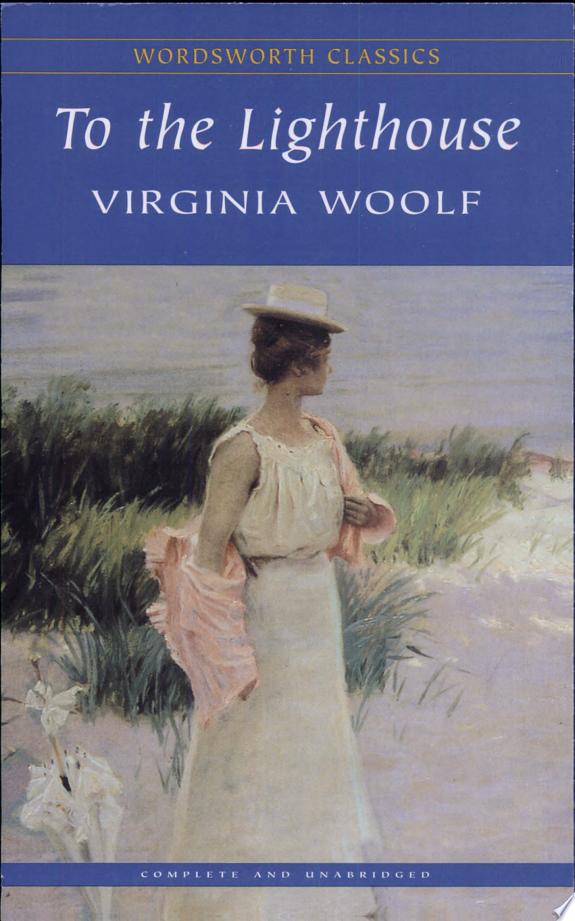
A fragmented jumble of multiple shifting perspectives, punctuated by abrupt jumps between topics and timelines, infused with the frustration of trying to express intensely-felt experiences within the bounds of mere words.
(oh and we also talked about a Virginia Woolf book)
we are NOT going to the lighthouse
Benny: Jesus Christ, Rich, what the fuck did you do?
Cam: We had a good run, boys. We had a good run.
Rich: Should we go to the lighthouse, boys?
Benny: I was like, can I call in sick? Or how does this work?
Cam: Where’s my notes? Has anyone done the reading?
Rich: I mean, I’ve dropped the ball. I’m only 50 pages in.
Benny: I’m only like 25 pages in.
Rich: Oh, really?
Cam: I skimmed around a bit — I don’t know how many pages I’ve read.
Benny: Cam’s read the ending. Cam’s read the wiki page.
Cam: I read a lot about the book. I read some of the book. I hated reading the book.
Benny: The stream of consciousness is rough, man. Holy smokes.
Rich: I’ve enjoyed learning a lot about modernism and Woolf.
Cam: Yeah, I mean, to be upfront, I don’t think modernism is for me. So I changed my vetoes back to Ulysses — I’ve extended it for three years.
Rich makes the case for persevering
Rich: Okay, all right. I’m interested. I had the same reaction as you guys. I still somewhat do. I’m keen to talk about it. But I’ve started to come around to it more. Like the first 20, 25 pages, I was totally overwhelmed and didn’t know what the fuck was happening. And then in the second 20 pages that I’ve read, I’ve started to actually kind of love it. I’m getting into it, and I’m admiring it, and I’m kind of vibing with it — I think I’ve done a full 180.
Cam: All right, pitch it. Where do we start?
Rich: So I think stylistically, I was absolutely thrown immediately by all the constant run-on sentences. And it also moves around in time, which took me a moment to realize.
Benny: When — are you reading about it, or are you just realizing this all by yourself?
Rich: No, I went back and reread the first few pages to try and —
Benny: No commentary around it? That’s impressive.
Rich: Well, I’ve only read 50 pages of the book. I just wanted to figure some of these things out. Yeah, I mean, I have a little bit of background knowledge about Woolf’s place in the canon. I didn’t, so I spent this week kind of learning about that.
Rich: Yeah, so this is basically one of the big innovations, right — stream of consciousness storytelling. This is the hallmark of modernism, along with multi-perspective storytelling and a focus on subjective experience. In a way, this is like the modernist book, because — I think it’s actually about subjective experience, not only as a literary device, but I think that might be — I’m sensing some themes around subjectivity and objectivity as the actual meat of the book as well.
Cam: Some more context around her place in the canon: she had this feud with this guy called Arnold Bennett, who was a famous author and critic before the modernists in the early 20th century. He kind of criticized the modernists, saying it just didn’t feel realistic. And then she had two big arguments: one, that writers should write what interests them and what is real to them; the second was kind of like, yeah, what even is real? A relativistic argument. And then I saw some other critics saying the subjective experience is more real than the chair we’re sitting on as well. I suppose it’s kind of a Cartesian sort of thing. But yeah, I think that is part of the fabric of the modernist approach.
Rich: Do you guys want to say up top what your initial responses are?
Cam: I can’t really read it. I really, really struggled — like I think I’ll talk about it in a bit — I think I could eventually get there. I’m worried about this week, like I’m not going to be able to finish it. I really, really struggled.
Cam pleads preference for plain prose
Cam: Yeah, I think it’s kind of not for me.
Cam: I felt like — almost like if you watch The Extras with Ricky Gervais, his friend, the character Maggie plays — she dates this black guy and she gets worked up because she doesn’t like jazz. And he tells her it’s fine not to like jazz. And then she goes up to him and says “I hate jazz.” And he’s like, “I don’t really like jazz either. Well, I hate reggae.” Anyway, she’s getting worked up. And I kind of — I can see her, the first female author, and she’s proto-feminist as well. And it’s like, I was just like, I couldn’t do it. Yeah, so I feel guilty about it, but I think it’s more the modernism rather than the female author. But I think there’s something interesting about that being relevant as well — the fact that she’s female, and maybe even this approach in general, certainly in this book. She wrote a quite famous feminist essay, A Room of One’s Own. Yeah, there’s definitely something there. And so it’s just on hard mode for us. But this is not a phony book — that’s what I’m very confident about saying.
Benny: Yeah, I agree. And I have some direct evidence — personally — why I might make the breakthrough. But I also think this preference thing feels really kind of — you know, rap versus rock versus, let’s call it something else — you can have better or worse versions of those, but at some point it’s either for you or not. I remember — I forgot who he had on — but Cowen had someone on and asked him why some people aren’t into artsy movies. And the guy had a shit answer for that. He didn’t really know. He kind of misunderstood the question. But I feel like it’s related to this. This book, actually, in passages, reminded me of watching a surreal black and white abstract movie. It’s poetic, it’s metaphorical. Some people aren’t that into that — and they can be really smart. Part of me feels like it’s a preference thing.
Rich: I think it’s a skill issue, baby.
Cam: Maybe. But to never see any value in it — maybe. But just to enjoy it or not — I mean, there’s got to be an aspect of it just being a preference thing. Anyway, I’ll let Benny say his reactions.
Benny: Yeah, I don’t know. What are my reactions? Maybe — based on what Rich has said — maybe I’m just too close to the beginning still to have that many reactions. I am open to the possibility that I’m just missing something, or lack the skill of precisely how to read it. That said, it’s unclear to me what one obtains from a book like this over just reading about it. There are some books where — I mean, there’s an interesting discussion to be had about her place at the vanguard of the modernist movement, and I feel like you can understand a lot of that debate without actually reading a book like this. So I guess it’s unclear to me what one gets out of reading it beyond understanding the stream of consciousness style, which you get after — well, it’s probably like letting it seep into you and actually fully appreciating it. It’s like experiencing a painting or an indie movie.
Rich: Yeah, and how long do you need for that?
Benny: Same with a painting — there’s a legitimate question of, if you don’t appreciate a painting after 20 minutes of staring at it… If you walked up to a Rothko and looked at it — if you’re not enjoying it, you should probably stop.
Rich: I don’t know, because I needed longer than that first 20 pages, and I needed two runs at it to give it the attention it deserved. Well, here’s my personal example — I think she directly influences Wallace.
Cam: Yeah, I was going to bring that up. She’s a direct influence on Wallace. Because I’m rereading it — the Joelle Van Dyne section, her first section about her walk and suicide attempt, and the Poor Tony Krause section around his seizure. Interestingly, the first time we read it, I hated those sections. They’re my worst — I borderline couldn’t get through them. It’s a mixture of Infinite Jest being so hard already, and I didn’t know what was going on, and then I get this stuff I don’t even know what’s going on times ten. And what was kind of annoying is there are some more important plot and character details in that Joelle section — around James Incandenza and stuff — so I kind of missed that and just relied on you guys.
Cam: The second time rereading, I still found it kind of hard, but I enjoyed it — both sections. The Joelle section is around this flickering between what’s going on and her memories of the walk, and it’s not clear what’s what, and there’s this passage of time. And Poor Tony Krause. I think she’s a direct influence on some parts of Infinite Jest, and I ended up liking those sections out of hard work. But I had to be quite invested — invested in these characters, invested in Infinite Jest — and it felt worth it to me. And then this style kind of captured something that is hard to capture otherwise: this stream of consciousness, blurring of time, multiple perspective style. Yeah, modernist style. So I do think there’s a there there.
Cam: I mean, what’s interesting about To the Lighthouse — I don’t think there’s much plot to it. I think there is quite a loose plot, but it’s very secondary. It’s about the internal worlds of these characters, really, isn’t it?
Rich: Yeah, but even that — I kind of feel like it’s about subjective experience. I’m not even sure if it’s about it; it just is. Yeah. And it doesn’t have these things to catch on to — like, I’m interested in the plot or the characters — and I’m just finding it pretty hard. It’s probably also because it’s 100 years old, and there’s a little bit of reading history backwards as well. You kind of imagine reading this for the first time, being part of the Bloomsbury Circle of great minds, and they’re like, oh wow, books can do this. This is groundbreaking, avant-garde.
Rich: I want to tentatively suggest that this is not just a philosophy-read-backwards situation — that this is art and it is enjoyable unto itself.
Cam: Yeah, I don’t think it’s just that.
Rich: There are some passages I’m curious about when you guys get to them — I just found them delightful. Let me mark some out for you. So the one I really loved was when Mr. Ramsay is going through the letters of the alphabet and contemplating the fact that he’s probably going to fade from the history books and not going to have a lasting contribution, and he keeps comparing himself to Amundsen or Scott, like great explorers. And it’s really funny and kind of relatable and absurd. And he comes in to get sympathy and comfort from his wife, and the language is fantastic and understandable enough to just enjoy it without your brain constantly getting caught up on, “wait, what the fuck does this mean?” I think that was the first example where I started to be like, damn, this is actually really good.
Rich: And then when I went back, I noticed that part of what is so bamboozling about the first 20 pages is that — as you said, Cam — it’s like with the Joelle monologue: she just name-drops characters left, right and center, and you have no idea who they are. And there are a lot of them — it’s a big family, lots of house guests. Rose said this, Prue said that — you don’t know why these people are there. They don’t bother with exposition, because it’s told from someone’s internal experience. There’s no exposition whatsoever; it’s just flitting from thought to thought. But when you go back and read it, and you know who those people are, and you remember who Mr. Tansley is and some stuff about his character and so on, it becomes a lot more compelling.
Cam: One of my issues is I’m not sure if the payoff is worth it, even if there are little uncut gems throughout. I do think it’s a taste thing, and I think you can cultivate taste. I remember doing some random philosophy paper over some summer course — we had these pop quizzes throughout, so people would come for like 10 pop quizzes. And this one girl I remember talking to in the foyer beforehand — I was kind of making a pickup line about how shit the reading was that week and how I hadn’t done it — and she said she loved it. She said it was the best, most beautiful writing she’d ever read. And it was super poetic.
Cam: And yeah, interestingly, reading about modernism and types — I’d already read this critic Cyril Connolly talking about two types of writing fiction, and then I read some stuff around David Lodge, who’s an author and also a potential book for us to read one time — Small World, he’s got this campus trilogy about conferences, Benny might like it. But he had a couple of books on writing: one’s called Modern Modes of Writing and one’s called The Art of Fiction. In The Art of Fiction he devotes a chapter to stream of consciousness, and in Modern Modes of Writing he talks about these two types of fiction.
Cam: He kind of says: before the modernists, we had what he calls realism — it’s a clunky label, because the modernists would argue this stuff is real as well, maybe even more real. But then you have the modernists: Joyce and Woolf, the best exemplars. And it’s all that stuff we’ve talked about — stream of consciousness, multiple views, passage of time, very poetic, metaphorical. And then after that, he says, you had this reversion away from that in the 30s and 40s, with Graham Greene and George Orwell — quite plain language, influenced by empiricism, commonsensical. And I think I do just — there’s a preference thing somewhere. I think you can be someone that enjoys them all. But I certainly prefer those writers more. Even one of my favorite poets, Philip Larkin, who is this almost shockingly unpoetic poet. Yeah. So David Lodge called them something like “metonymic” — I don’t know quite what he meant by that, because a metonym is like a synecdoche, something representing the whole — like you say “Number 10” or “the White House” for the government, rather than metaphorical. But yeah, if I’m honest with myself, I don’t love that kind of poetic stuff.
Rich: There are too many shrubs, yeah?
Cam: Well, it’s all related — it’s all coalescing and making sense. The “too many shrubs” stuff, like, it might be a skill issue. I think it’s partly a skill issue, partly taste, partly cultivated. But I certainly struggle. And I know there’s other good, valuable, smart stuff that isn’t that. It’s not like I have to read lowest common denominator stuff. But I also think it’s very relatable — a lot of people struggle with this. If you gave this to a year 11 English class, everyone would be like — that’s why they hate assigned readings, probably.
Ideas that can only be conveyed through fiction
Rich: But I just want to quickly argue that it is definitely a skill issue to some degree. I’m not denying that we might like different styles. But it’s not a coincidence that you can do George Orwell in fifth form English class, because Orwell is extremely accessible. He doesn’t write in poetic prose; he writes in very plain but good prose — Strunk and White style, right? Yeah, it’s accessible. But the point I want to make — and part of the reason I’m enjoying our whole adventure that we’re on — is that my realization is this: there are ideas that can be conveyed through nonfiction, usually systematic factual things; or you could convey them through Orwellian-style allegories, where this maps very clearly onto that, quite straightforwardly; and then there are other things that can only be conveyed through the primacy of subjective experience. And I think that’s where literature is most interesting — where it’s this language-problem type stuff. There are certain feelings or moods or states of being that you cannot possibly bullet-point and chunk out, but you can get a little bit closer to them by using poetic language, and by using textual elements to get your reader into the frame of mind necessary to receive them. And I argue that they are ideas just as much as Orwell has ideas — but they are harder to — well, to go back to Benny’s point — they would sort of become dry and fall apart if you just said them without the text.
Rich: You know, “some men can be so dedicated to truth that they hurt the feelings of children” — “some women have a lot of maternal energy” — those are not interesting things to say outside of the text, but you sort of inhabit the body within the text. Sometimes — I think at one point — I’ve read so much other stuff I don’t know where this comes from — but I think Woolf described thoughts as an ink blot dropping on a page and sort of expanding. And we can just talk about that — I think that’s a useful metaphor for what she’s trying to get at with this book: that this is how thoughts kind of work, and they don’t work in this linear sense that novels are restricted to.
Cam: Sorry, I’m jumping around a bit. The other aspect to this kind of artistic, literary style — movies and poems and books like this — is the pretension aspect. I’m not going to say it’s all pretentious or that you have to be pretentious to like it. But we’re all fans of the Hansonian signaling stuff, The Elephant in the Brain. We know there’s also an aspect to this, the same way that an accessible author can be read by a year 10 but you can’t read this stuff because you have to be more sophisticated to appreciate and understand it — which has truth to it, I think, but also has status games built in. And sometimes it takes the boy calling out the emperor’s new clothes: “this is just annoying and flowery.” Not to say it’s all that. So maybe let’s talk about the actual reading experience a bit.
Benny: With a book like this, do you think you’re supposed to understand every sentence on every page, or is there a sense in which you’re supposed to let it wash over you, the same way thoughts sort of wash over you? Maybe the latter. I mean, I agree that the point of the genre is to reflect in some sense the nature of human thought — all its scatterings and its wanderings. But are you supposed to read it like that? Yeah, it’s unclear to me how you’re supposed to read a book like this, and I think that’s maybe part of what I’m missing and part of the skill component.
Benny: Well, part of it — I think it would be easier if you knew the plot and knew the characters, so you’re not doing all this work downloading all that. It’d be kind of useful just to know all that — almost read a summary and load it into your long-term memory, and then you can actually just focus. But that’s kind of why I think I enjoyed the Woolfian Infinite Jest sections — I knew all that background and I was just taking it in. Because I remember when we first read it, Rich kind of talked about these passages, this kind of getting into the subjective experience of time, and I sort of skipped it at the time. And then rereading it I was like — I was really getting a bit lost in it. And these are the kind of passages that you would skip in a fiction book that wasn’t entirely comprised of these passages, right? Especially here, you can’t get away with it. That’s why I bounced around this book quite a bit, because it was just getting worse and worse.
Rich: I can speak to my experience: when I tried to do my default method — which is to skim flowery, vague things that are too hard and would require very careful exegesis — I found myself flicking through pages and being like, wait, I don’t even know what I just read. And then when I had a more intentional, careful experience — also when I was less tired — and tried to see what she was saying by certain things, it was much richer and more rewarding. Obviously, right? But I don’t think that necessarily means you have to understand the exact choice of every metaphor or every piece of implied action within the book. But it is hard work — a lot harder work than most other books we’ve been reading, where they don’t exactly spoon-feed you but they come a lot closer to spoon-feeding than this does.
Cam: One of my problems is I’m just not sure I’ve got time for this — I’ll flag that we can talk about that later. I’m struggling.
Rich: You’d be reading a book anyway — what do you mean you don’t have time for it?
Cam: Well, the amount of emotional energy and time to — yeah, I suppose I’m just finding it tough. I kind of wonder if there’s a gendered aspect to this.
Rich: How far in are you?
Cam: Come to think of it — probably — I’ve bounced around the whole book, so I don’t know exactly.
Rich: So you’re reading it in the most confusing way possible.
Synopsis of part 1: The Window
Cam: I’ve kind of read — I could summarize the whole of section one for the audience if we wanted, and I think it might actually help the reading. But I don’t have to if you don’t want.
Rich: Should we just get concrete? It might be interesting to talk about what we know about Mr. Ramsay, what we know about Mrs. Ramsay, what motivates them, what might they represent. Should we do that?
Cam: Yeah, sure. I wrote a really quick summary — I’ll stick to the two-minute rule. So part one: The Window. It all takes place on a single day. It’s about the Ramsays, a family at their holiday home in the Hebrides, which is rural northwest Scotland. They’re there with their eight children and lots of family friends. The youngest son, James, wants to go to the lighthouse. Mr. Ramsay and his friend, and their family friend Tansley, say they can’t because of bad weather. The son is pretty upset with the dad and happy with the mum, who kind of comforts him. The narration flickers back and forth between characters’ thoughts and feelings, as we’ve indicated. Mr. Ramsay is worried about his academic work, as Rich alluded to. He’s also reciting a Tennyson poem out loud and gets embarrassed when people overhear him. One of the family friend characters, Lily, is painting a picture — turns out to be of Mrs. Ramsay, but that’s a little confusing. There’s another character, Augustus Carmichael, who’s a poet — he’s just lounging in a lawn chair. There’s a potential wedding happening or going to happen down by the beach between some other guests. Mrs. Ramsay and Tansley go to the shops and visit someone who is ill. Ramsay finds Tansley very difficult, but she still cares for him and makes things easy. She hosts the dinner party, which goes well. And then at the end, the Ramsays are reading to each other and feel at peace. Nice.
Cam: So that’s kind of the main points, which I’m not sure are that important anyway. Well, at least we have a framework to talk about it now, especially since we haven’t all read to the end of that section.
Rich: Mrs. Ramsay — I think she’s the first character whose head we’re inside. Should we start with her?
Autobiographical elements from Woolf’s life
Cam: Yeah. She’s probably the main character of this section — mainly from her perspective. I also read about this book that there are biographical elements. Yeah, Woolf used to go to a family holiday home, and the Ramsays are probably her parents. Yeah, her father was a philosopher — a metaphysician.
Benny: Oh, was he?
Cam: Maybe both, actually.
Cam: But yeah, big autobiographical energy here. Her sister said, when she read it, that she’d never read something that felt like it was bringing their parents back to life on the page.
Rich: Yeah, there’s also a Freudian thing going on with the opening page, where young James wants to — how can you be bored by a book where on the first page this little boy is plotting how to murder his dad? It’s funny that that was the one time it was so much telling not showing — it was just like, “he had murderous rage for his father.”
Benny: I kind of don’t know what to think about Freudian stuff. I kind of feel like it’s either in there because it’s meant to capture human nature, or if you think Freud was kind of wrong about the big things, then it’s just — oh, okay, this happens to be Freudian. The kid character wants to kill the father character, wants to marry the mother character, there are allusions to that. And that’s an allusion and kind of all it is. Freud was a big Woolf fan — I think they met and hung out. Who’s Afraid of Virginia Woolf? I’m not sure who influenced who. What’s the timeline — this is the 20s? Freud was late 19th century, right? Earlier, yeah.
What ideas would a modern Bloomsbury group explore?
Cam: But I also didn’t realize she was part of the whole Bloomsbury group with Keynes and all the rest. And the Cambridge group — which would be cool to be part of. Do you think there are any modern groups like that? I think the George Mason group, yeah — I think Cowen is influenced by these groups, he’s trying to do that. But they’re very different — you don’t have a Woolf next to a Keynes at George Mason.
Benny: You might have two Keyneses or two Hayeks.
Rich: Yeah, probably two Masers or Hayeks. I mean, there’s also just — we don’t have the same geographical needs for people to congregate together anymore. But I could imagine Cowen collaborating with someone from some other discipline, like writing.
Rich: Yeah, this is what I’ve been wondering too through this project — we can look back and see how the big philosophical and scientific ideas of the age are reflected in the art and the literature. Yeah, in terms of Einstein and relativity — the phenomenology of time and passage of time being different from your subjective experience, which would have been a decade or two before. And the Borgesian stuff that we looked at — the modernists in art playing with the phenomenology of objecthood and perspectival shifts. And I can’t quite put my finger on what it would be for this age. I can’t think of any places where you get this cross-contamination like you did with the Hemingways and the Steins, or the Woolfs and the Keyneses. What are the ideas of the 21st century that people are sort of trying to explore in art as well as in science and philosophy?
Benny: Often that’s not obvious until a few decades hence, I think.
Rich: Yeah. Well, I guess that’s not necessarily true, because Woolf was writing rebuttals to various criticisms and she knew what she was up to. But yeah, what the world-moving trends are isn’t always obvious in the moment — and it could be because of stagnation in the sciences and philosophies.
C.P. Snow’s The Two Cultures: literature as status game
Cam: I wonder if there’s been this relative lowering of status of the arts among intellectuals — at least the intellectuals that we follow. There’s this very rationalistic, empiricist sort of intellectual nerd. And maybe it’s just our siloed space, but — kind of guys who just read the Wikipedia article. I’m always thinking of C.P. Snow’s famous essay from the 50s, The Two Cultures. C.P. Snow is another example of that kind of post-modernism writer who’s quite plain and simple, who would have grown up reading the modernists, and wrote The Two Cultures saying: you can be totally innumerate and scientifically illiterate and still be viewed as an intellectual if you’re across the arts and Shakespeare and stuff, but you can never be the opposite. And that feels like it’s kind of inverted a little bit now, at least in our space. You can have these shape rotators who are totally culturally illiterate and still have really high status — like, oh, they’re super smart — and none of that other shit matters.
Cam: I think Cowen is a little exception, trying to raise the status of culture and the arts. I don’t know — if you think of Dwarkesh’s podcast, it’s just deep history basically. If you think of other popular podcasts like Fridman and Harris, a lot of that isn’t necessarily scientific per se, but very kind of logical — British empiricism, logical positivism, that tradition. That was influential on people like Dawkins, and also whether you’re talking about Pinker talking about the history of violence — that kind of approach. People would say “scientific” if they were being disparaging, but certainly not exalting literature and poems the way the Bloomsbury group would have been. And every now and then I see sprinkles of it within Scott Alexander’s work — references to Moloch, or Kipling, or something. But it’s certainly not the background — you can read Zvi and these big writers and never even have touched the arts.
Rich: I’d separate history a little bit; it’s not quite the humanities that the Bloomsbury group was big on and C.P. Snow complained about being everything.
Cam: Yeah, I mean, I feel like it’s inverted a bit. What influenced us to do this, then? I mean, we’re not in our own echo chamber, right — presumably we were influenced to some amount by the status of being very well read. And I think that is still pretty high status, even in — like, you can still show up and talk about having read every book. But there’s a type of guy — when you see the bookshelf, and we were probably those type of guys, though probably never as bad — you see Thinking, Fast and Slow, and then a bit of philosophy: Meditations, and then the Holocaust survivor book, Frankl’s Man’s Search for Meaning, all those ones, and they haven’t really read any fiction. And SBF best exemplifies it. And I think Hanania’s status, with his opinion as well — SBF said don’t read fiction. He might have said don’t read books, but there’s definitely this tacit assumption when these people say “books are overrated” that they mean nonfiction books, and there’s a tacit assumption that you don’t even bother with fiction. I’ve seen some smart women online complain about this — these guys totally disparaging fiction or totally illiterate to it. Like I was, you know — apart from Harry Potter, I sort of heard the big names but didn’t really read it.
Rich: Yeah, I think you’re onto something, Cam. It’s partly a narcissism of small differences thing — I don’t know if this is what motivates me, but the uncharitable way of saying it would be that I want to differentiate myself from these dorks who have never read an actual work of literature in their lives, who are so obsessed with empiricism and scientism that they refuse to engage with anything that isn’t easily measured and pinned to the page, and that requires a different mode of thought. But I think the more positive, charitable way of putting it is what I was trying to say before: my little awakening moment is the realization that — if you want to put it in dorky nerd language — qualia are information about the world. And that you can access different states of being only through works of literature. They cannot be algorithmically compressed into a bullet point. You have to actually live a certain experience, and you can get that through reading someone’s words — the closest approximation of it — which you simply cannot get by reading the Wikipedia page of the book.
Cam: I think that’s right. That said, I’m not yet in the place in my life where I’m getting that value from modernism specifically — though fiction more broadly, yeah. But there’s this balance you have to strike of not being pulled by the status of being this very very cultured person who’s read all the classics. And like you sometimes see those YouTube book reviewers who are just talking, and it’s all a bit banal — “this was amazing, the poet” — and they don’t really pin it down, and they’re not being that insightful about it. And to invoke Hanson: who are we signaling for? I’m not telling people about this. No, I’m not saying it’s all signaling — I’m just saying there’s this balance I feel like I have to strike. I think there’s a there there, I agree with what you said — I just think you have to make sure you’re always finding that there there, and also not throwing out the nerdy dork stuff either. We’re at no risk of throwing that out.
Rich: Yeah. To invoke C.P. Snow, you kind of want to combine them. And the great writers of our time, like Scott Alexander, do that.
Rich: Yeah, I accept that pretentiousness exists and that it exists in literature. I haven’t had that experience reading Woolf, and I don’t think Woolf is pretentious at all. It’s more like fans of Woolf. I think Woolf is a genius, probably. Totally original — not many people can say that. I mean, I don’t know if Joyce — Joyce was slightly, but who knows. I just don’t think we’re at risk of falling into that trap. If anything, the opposite — we have to be really convinced of something’s merit; we’re very skeptical, and we really come from the tradition of the dorky, systematizing “everything must be made tangible.” But there’s just something inherent about stuff that’s difficult — you fake it till you make it, and then you eventually get this breakthrough. And it’s so difficult, and then you kind of feel like, well, I’m more cultivated, I get it and others don’t — there’s something inherent to difficult work that makes the incentives slightly off. But yeah, I’m being a little handwavy, so —
Rich: The final random idea I had about this —
Cam: The Titanic was a pretty big ship.
Bryan Boyd lens on the importance of stories for advancing knowledge
Rich: The final random idea is that getting more into the crit-rat stuff, and the Brian Boyd type stuff, has made me appreciate the power of narrative and story a lot more for conveying information. Boyd’s theory is something to do with playing with patterns of information, especially social information. And maybe that is something that a lot of other people have been doing since day dot, and that’s their primary game. Jordan Peterson was so popular as well — they kind of talk about these narratives and archetypes, and all these young guys are just like, oh wow, look at all this cool stuff in the story of, like, Cain that you can pull out — the kind of classic humanities take. But I think the main point is that moving away from empiricism necessitates the primacy of stories and explanations, over scientism, over arbitrary measurement and stripping things from their context. So that’s what feels important to me about this.
Benny: I feel like you have to have this concatenation of both, because you can go too far. The people that loved Freud and still love Freud — it’s because he’s such a great literary writer, referencing Homer and everything. At times he’s totally making things up, and it’s literature, and it doesn’t have to be strictly true. But then you get these guys on the other side who just throw that out because they heard this one thing about “girls have penis envy.” And you can see — like obvious genius, there’s clearly something to him. So I feel like you kind of need both, which we all agree with. That’s what we’re trying to do.
Cam: I only had an hour to give today sadly — too much Woolf.
Benny: Yeah, too much. But I think it’s okay because I’m only 25 pages in anyway, so I’m not going to get much out of you guys.
Benny: Well, let’s just cut it here.
Rich: I didn’t want to — I did kind of want to talk about — yeah, I think I’m down to finish it.
exquisite peer pressuring Cam into continuing with the book
Cam: I’m not that down to finish it. I’m happy to talk about the later two sections and I’ll do my best if we want to.
Rich: This little tiny book — going to be the first one you give up on?
Cam: Well, I’m not sure if there’s too much more to get into apart from what you said.
Rich: No, there are 100% more things to get into. We literally haven’t talked about anything about the book. We haven’t said a single word about any of the characters.
Cam: That’s the point, mate.
Rich: All you’ve done is —
Cam: Spoiler, mate. It ain’t about the characters, bro. No, like — that’s what they say about Everybody Loves Raymond: it’s not about the kids. Don’t worry.
Rich: I think you’ve made a mistake with how you’ve approached this — reading about the writing devices as if that’s the interesting bit. That’s not the interesting bit. No — I think it’s letting that soak into you more. But at the end of the day, I’m just going to be like, oh, this was amazing — example 1, 2, 3, 4, 5 — I got into this mood which I’m not sure I’m going to get into. But kind of the themes of what we’ve been talking about — experiencing consciousness as an aspect of life that can’t be captured in normal linear storytelling.
Cam: Yeah, I mean, my worry is I’m just going to struggle with it and not complete the reading.
Rich: That’s fine — just struggle through it and we’ll do our best next week and then it’ll be over soon.
Rich: So what 25 pages are you going to read, Benny?
Benny: I mean, if both of you guys want to quit, then yeah, we can definitely quit.
Cam: No, part of me doesn’t want to quit. No, you’ve convinced me. Who doesn’t even win.
Rich: I’m down. But I kind of think — well, it depends how many sessions we want to do — it might be worth reading a bit of section two, Benny, and then a bit of section three, because they’re quite distinct as well. Section two is quite distinct from one.
Cam: How long is it?
Rich: I think shorter. I think section one is the biggest. My copy is 195 pages — it’s about 190 pages. So we could do it as part one, part two, part three, because it’s divided into three parts. Or if you guys want to get it out of the way, we could just do our best next week with however far we’ve got and then move on. I’m keen for that, but I think it would be a shame if you guys hadn’t read some of the later sections.
Benny: I’m going to finish the book either way.
Cam: Oh, you’re into it now?
Benny: Yeah. No, I’m enjoying it now, but I don’t necessarily want to rush through it.
Rich: I just imagine you in front of your bathroom mirror going — “I’m enjoying Woolf.”
Rich: Yeah. I mean, I think we’re going to do it. Let’s do it right. Unless Cam’s going to — I don’t know where this is coming from, you’ve read five pages. Yeah, I’m convincing you. I’m going to smash it out. I’m open to it. I love being told I’m missing something and there’s more to appreciate than what I’m grasping — that’s how I live my life. People are like, there’s something interesting here, and I say, fuck yeah, let’s do it.
Rich: Yeah. And like, I had the exact same experience in the first 25 pages: being totally overwhelmed and not into it. I started talking shit in the group chat about it and then deleted it.
Benny: Yeah — no, I had the experience of being wrong about things all the time. I’ll be recommended something and think I won’t like it. Maybe it’s a personality thing.
Cam: I think I had that experience directly with Wallace. Now I know I could potentially get there, but I just can’t be bothered. I invoke Infinite Jest every week, but that whole discussion of plateaus — John Wayne talking to the buddies, the different plateaus — some people are happy just being below the plateau. And maybe I’m just okay with that. There’s so much other good stuff out there that I’m happy to access that. Fair enough. I think you should challenge yourself, Rich. And I’ll have to start our own book club.
Rich: Just do your own — you’ll have to rename yours Finite Jest. Yeah. Okay, well, fuck it, maybe I —
Benny: oh my god. Just read it, maybe.
Cam: Some Virginia Woolf thought just came into my mind — maybe I’ll have to read it. Oh my god, shit. I’m definitely quitting football now, sorry boys — I’ve got to read To the Lighthouse.
Rich: This is sweet revenge, man. I tried, man.
Rich: Just get on the call next week and give it a try — if you still don’t like it, that’s fine. It doesn’t matter if you don’t like it. Just take two bites.
Rich: It’s not a skill issue — I was wrong about it being a skill issue. It’s totally taste, all personality. Some people like hamburgers. No one’s right and no one’s wrong. Some people like McDonald’s.
Benny: Yeah. I mean, this discussion’s been generative, I think. I definitely had a valuable week.
Rich: I still have notes here, mate.
Cam: I’ve got lots of notes too. We never talked about the book!
Rich: We have talked about the book, somewhat. Multi-perspectives, mate. I get it.
Cam: What a fragmented call — just jumping around from one perspective to another.
Rich: Well, since Benny’s got to go, let’s call it.
Rich: Yeah, let’s call it and we’ll leave something in the tank for next time. Hopefully. Benny’s done another 15.
Rich: Cam’s read another three theorists and six Wikipedia pages but still hasn’t read any more of the book. So much literary criticism on Virginia Woolf — holy shit.
Rich: What are you doing? Just read the fucking book.
Cam: I tried!
Rich: He’s Anki’d more of the book than he’s actually read.
Cam: All right, catch you later boys. Jesus Christ. Next week.
Rich: To the Lighthouse.
Benny: Yeah.