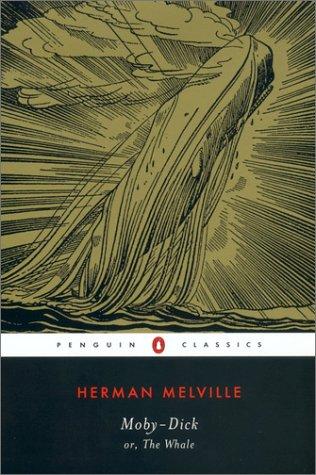
Starting the year off right by signing on for an epic voyage with Herman Melville’s Moby Dick; or, The Whale, published in 1851, and widely considered to be the great American novel.
It’s quite the beast so we’re dividing it into three parts, with this first convo covering chapters 1-40.
Call me Ishmael: Dissecting the iconic opening line, why we love Ishmael as a narrator, on the optimal strategy for getting snuggly in bed, the precise nature of his relationship with (we claim) our fellow New Zealand native Queequeg, and the question of race and class politics onboard a whaling ship.
The mysterious Captain Ahab: various ominous warnings, initial thoughts on Ahab’s motivations, punching through the pasteboard mask, and a climactic ritual atop the Quarter-deck.
Infamous infodumps: Benny’s eyes glazed over at times, Cam skimmed the Cetology chapter, but Rich makes the case for soldiering through. Plus we look at some of the interesting formal choices Melville makes, the early seeds of modernism, and can’t help but make some comparisons to Blood Meridian and Butcher’s Crossing.
Ahoy shipmates
Benny: I wanted you to show up in your sexy sailor outfit. That’s what I was hoping for. Ripped sleeves and a sailor hat.
Rich: This book is a little bit homoerotic, I have to say. Tiny bit.
Benny: I think that’s an open question that I actually do want to talk about. What’s the deal with their relationship?
Rich: Fellas, is it gay to cuddle your best male friend in bed together?
Benny: Well, he might want to eat you, but maybe eating takes on a whole different undertone in this book.
Rich: Yeah, it’s a metaphor. Imagine getting head from someone with filed teeth — there’d be a real thrill to it I guess. Living dangerously. Okay, welcome to Do You Even Lit, where we’re signing on for an epic voyage in pursuit of the great white whale, Moby Dick, written by Herman Melville in the year of our lord 1851, widely considered to be the greatest American novel of all time. Now before we make sail, some introductions. On my left hand we have, up in the northernmost masthead, Benny Chug, keeping watch from Vancouver Island. How are you doing, Benny?
Benny: I’m good. It’s true, I’m on the masthead. I’m actually in the crow’s nest up here hanging out. So it’s not, I guess, on a whaling ship — it’s on some other ship that has a crow’s nest. Yeah, it’s very nice up here.
Rich: Did you spy any killer whales on the ferry? Did you take the ferry over?
Benny: No, I did not take the ferry over. I took a little plane. But yeah, I was doing my mightiest to look out for the 17 genera of whales that we will soon be accustomed to. But sadly spotted zero. I did see some bald eagles.
Rich: Not just daydreaming about babes from up there?
Benny: Babes and whales are the same to me. It’s all one big game.
Cam: Every hole’s a hole, right?
Rich: Every hole’s a goal. And that sultry voice belonged to my right-hand shipmate, the South Sea savage himself — don’t be put off by his fearsome appearance — Cam Peters, who almost got to see your noble people represented in print, which must have been a thrill.
Cam: Yeah, well, from the South Pacific down here. Rokovoko Island, is it? I think that’s a fictional uncharted island.
Rich: I want to get to that actually, because I was so excited for a minute there. And, of course, you can call me — call me Rich.
Cam: Call me what? What do you mean by “call me”?
Call me Ishmael analysis
Rich: Oh, a little homage. I think this book has inspired one or two references throughout other works of fiction, so I’ve slipped one in there that you picked up on. Call me Ishmael — iconic opening line. Cam, what do you reckon?
Cam: Yeah, I mean, one of the most famous lines in literature. Embarrassingly, whenever I used to hear about this line, I didn’t actually know what it was from. You know sometimes there’d be like a list of arresting lines — “it was the best of times, the worst of times,” there’s always “call me Ishmael.” I was always confused, like, it didn’t seem like a great line when I read the list.
Rich: Well, it’s not a very arresting line. It sort of depends on the context a lot, doesn’t it?
Cam: Yeah, well, kind of is now I suppose.
Benny: But I think it is only because the book is great.
Cam: It’s got to be part of it for sure. But also, you know, you could probably do a lecture on this opening line. Obviously the name Ishmael is named after the famous outcast in the Bible — Abraham’s outcast, his son. So immediately he sets himself up as an outcast, isolated from others. And the other interesting thing about the line is the “call me” — which I hadn’t really thought about until reading this time. The “call” and the “me”…
Rich: Let’s go word by word.
Cam: No, but it is odd, right? It’s not “I am Ishmael,” right? So it seems like I don’t even know what his name is now, you know, or there is some looseness…
Benny: I knew you’d be all over this. You’d be like, “Unreliable narrator, is his name even Ishmael? We don’t know.”
Cam: Well, like he’s claiming the identity I suppose, so there is this looseness to his identity, or his isolatedness. One interesting thing as well is in the first chapter, at the end of “Loomings,” there’s a slight contradiction almost to him being an outcast. I’ll just get the quote, but essentially he’s talking around this kind of common thread to all of humanity around wanting to go to the ocean, or wanting to do an epic. He says, “if they but knew it, almost all men cherish very nearly the same feelings toward the ocean with me.” So in one sense he’s kind of setting himself up as an outcast and a loner, and then in another he, I think quite persuasively, is making the case of the call to action that humans, or young men, feel to go on these epic adventures.
Rich: But you could have a band of misfits, I suppose, like a bunch of lonely men who go to sea to find companionship with one another.
Cam: Yeah, I suppose. Like the Pequod.
Rich: The male depressive urge to sign on for a whaling ship when your spirits are low.
Cam: For three years.
Rich: It is a good line because it’s so personal as well. It doesn’t start setting the scene or whatever — it’s like someone is confiding in you, and we’re seeing everything through Ishmael’s eyes in this first part of the book at least, and he’s such a wonderful pair of eyes to be looking through. So I mentioned in the group chat — I was so surprised that this book is funny. Like Ishmael is such a funny narrator. I mean it’s not exactly laugh-out-loud funny, but it’s just a lot of silly observations and there’s like a real playfulness to him. So I want to go to the first scene which I really enjoyed, and you can jump back if there’s anything else you want to talk about. Which is when he’s arrived in the whaling town and he’s looking for accommodation, and the only bed left that he can afford — he has to share a bed with this cannibal who the barman is winding him up about. He’s lying there sort of waiting for him to come in and getting more and more nervous that it’s past midnight, and then it’s just this almost like a farce of a scene, like a slapstick kind of a scene, where he comes in and doesn’t see him and he’s worshipping at the idol, and then he gets in bed and he’s smoking in bed, he wakes up the next morning and he’s wrapped up in his embrace. And yeah, it’s just silly and really endearing and cute. Because so this is Queequeg, the native from the South Seas, from Rokovoko Island or something. And yeah, it hooked me right away. It hooked me immediately and surprised me that this wasn’t the book I was expecting it to be, some incredibly sombre monolith of a book.
Benny: Actually, thinking back to the beginning, I’m realizing that I don’t really know the main character Ishmael’s motivations for becoming a whaler in the first place. Do we know about that?
Cam: Well, he said he was suicidal. But you kind of had to Google it necessarily, because he said, instead of the “ball and…” — I forget the phrase as well.
Rich: “Whenever it is a damp, drizzly November in my soul, and whenever I find myself involuntarily pausing before coffin warehouses…” So yeah, he gets down in the dumps and he wants to go to sea. “I count it high time to get to sea as soon as I can. This is my substitute for pistol and ball.” Is that a reference to suicide or to killing other men? I wasn’t sure.
Cam: I think — I just Googled “pistol and ball” and it’s mainly based on this book, but obviously firearms, but I think it metaphorically referred to suicide. But you’re right, that’s Googling based on someone’s reading of Moby Dick, so I don’t think it’s the final word.
Rich: He’s definitely talking about depression.
Cam: He mentions Cato in the line too, from ancient Rome, who kills himself in Tunisia. So I think yeah, it’s not a big part of the book after that, but I think yeah.
Benny: But this all explains why — I mean, he talks about why he sails as sort of a cure for his depression, but I don’t think he talks about why he is becoming a green hand on a whaling ship specifically, right? So we know he’s experienced at sea, just not as a harpooner.
Rich: He’s a deeply curious guy and he’s especially curious about whales. This guy is a fanatic, he’s got a special interest, doesn’t he? I guess we’re hearing from Ishmael presumably having completed his voyage, recounting his story to us, so possibly the interest is developing at some point that we haven’t yet reached. But yeah, he says that he loves to go sail in parts unknown and have wild adventures — and what could be cooler than this great leviathan of the depths?
Benny: Maybe it’s just something you do at that point. Fine. But I mean, it’s odd, right? Because he’s not going to get paid that much. He’s a green hand, as they say, just meaning a novice when it comes to whaling. And so his remuneration is pretty low of all the other people on the ship. Presumably he could have just been a normal sailor and actually gotten paid wages as opposed to lays.
Rich: He’s getting paid in life’s rich experiences.
Cam: Hopefully by the end of the book we’ll understand. Or in 10 years we’ll understand, and we can reread it.
Rich: It’s not all about money, Benny, come on man. Why are you a PhD student?
Benny: It’s all just a fade so he could meet his bed buddy. His bed buddy, Queequeg.
Rich: Actually, you know what he says — the whaling ship was my Harvard and my Yale college or something like that. So I think he genuinely is considering it like he’s going to get himself a free education. All the food and board is provided, all the salted pork that you can eat and all the ship’s biscuit…
Benny: Unless you’re eating with Ahab, in which case you’re too afraid to actually chew your food. You don’t eat anything.
Cam: Well, depending on your hierarchy.
NEW ZEALAND MENTIONED!!!
Rich: So coming back to Queequeg — anything that you guys want to say? I wish we could describe him a little bit. I just want to say: New Zealand mentioned!! I got so excited when they said that he had shrunken heads from New Zealand, and I thought he was a New Zealand Maori for a while because he was described as tattooed and a cannibal, and he’s got the shrunken heads. And New Zealand Maori were like big whalers, they participated a lot in the whaling industry. Was that what you were thinking too, Cam? That’s what I meant about you getting representation for your people.
Cam: Yeah, I assumed he was New Zealand Maori, but he kind of is. He seems to be Polynesian, seems to be kind of a fictionalized version of that. He’s got New Zealand Maori heads that he’s selling.
Rich: But the name is wrong and some of the physical descriptions are wrong.
Cam: Yeah, and then they explicitly say he’s from Rokovoko or whatever, which is made up. But you assume it’s in the Pacific, the South Pacific. It’s funny because I Googled around — or ChatGPT’d these days — around New England, like New Bedford where he starts, and Nantucket Island where they go to, and just like would there be Polynesian men walking around and stuff like that? And there was. It’s like realistic. New Bedford sounded like a real sort of bustling, you know — he describes Nantucket as the corner of the world, but he describes New Bedford as the land of oil. But yeah, it wouldn’t have been surprising to see someone like Queequeg walking around in that place.
Benny: In the book too he says like just seeing this cannibal walking down the street wouldn’t have been so surprising for people. But what was surprising was seeing him walking arm in arm with Ishmael as if they were the best of buddies and had no cares in the world. And I gotta say I find those scenes pretty delightful, when they like, you know, they bond really quickly and they just become the best of friends and they stay up all night in bed with their knees to their chests just gossiping about stuff. And then eventually fall asleep, and Sharon smokes, and Queequeg at one point puts his forehead to Ishmael’s brow and — I guess what does he call him — just like, we’re bosom friends or something. Yeah, meaning we’re like now bonded for life. And I mean, I think one open question is whether there actually are some homosexual elements at play here and whether Melville was commenting on that, or whether it’s purely about just male friendship.
Cam: I think you can take it both ways. There’s obviously some homoerotic readings of them sharing a bed and stuff and being like lifelong partners, almost. But also I think it’s setting up him to have a buddy that he can trust, a fellow outcast. Ishmael is a self-described outcast, and then you have this literal cannibal pagan in Christian land who is an ultimate outcast — and so they’re kind of outcasts together.
Rich: The fact that Melville points to it himself so directly makes me think that it’s maybe like homoerotic, like a bit of fun between the boys, but it’s not meant to be like a secret gay relationship or something. Because he says, “thus then in our hearts’ honeymoon lay I and Queequeg, a cozy loving pair.” So he’s winking and pointing to it very directly himself — of how funny it is that these men are acting like an old married couple, along with wonderful ruminations about like optimal strategy for being cozy in bed, like long digressions on how to position your blanket and get the maximum contrast.
Benny: Like legs draped over each other.
Rich: Yeah. So Moby Dick is a book about, in part, how to be really snuggly in bed with your best mate. Seriously, it’s so funny.
Cam: Knowing what the boundaries are.
Rich: And Queequeg is cool because he’s kind of noble savage but not really. Like it’s more as if Queequeg is just so secure in his own self that he’s described as like a true philosopher, or what a philosopher ought to be — because he’s completely self-assured and has this quiet, calm presence and he’s just incredibly grounded. And I don’t know if he’s unaware of his own strangeness, or he’s aware and he doesn’t care. I think it’s probably the latter, because he’s not stupid or anything like that. He’s clearly very clever and very capable.
Cam: Well, it did comment on that. Originally he was interested in converting to Christianity — that’s part of why he came back, or came to the West, and I think he was sincere about that. But then, Melville was kind of commenting on this as well, he noticed potential contradictions or immorality amongst the Christian Americans, and so decided to stay a pagan and have his idol and smokes. So I think he is aware and somewhat self-consciously resisting, or being an outcast.
Rich: But he’s not embarrassed about it at all, right? He just does what he wants to do, even if it means shutting himself up in his room while people try and beat the door down to observe his Ramadan-style fasting.
Cam: No, he’s stoic. Meditation, yeah.
Rich: And Cam, did you enjoy the phrenology note?
Cam: I missed it, unfortunately.
Race politics in international waters
Rich: So part of the description was that his head was “phrenologically an excellent one. It may seem ridiculous, but it reminded me of General Washington’s head as seen in the popular…” — talking about his sloping brow. And I wonder, in the mid-19th century, this is a very warm and companionable description of non-white people, and I wonder if that would have been surprising or shocking. But it’s also like not at all browbeating you of like “these men are equal” or whatever, and it even still describes them in some slightly antiquated ways that people would find rude, like calling them savages and stuff like that. But how do you think that would go down in mid-19th century America?
Cam: Yeah, I think it would have been a bit subversive, especially him being a non-Christian, and them still bonding. And you’re right, it’s not too overbearing, but there’s a warmth and respect towards Queequeg and the other non-whites. I think there’s an American Indian and a black guy on the ship as well, which we haven’t got too much from yet.
Rich: Yeah, the three harpooners, who I guess are the second most ring of importance, are all non-whites — and like, among those who are allowed to dine in the cabin and so on.
Benny: Oh, are they? I missed that. Interesting.
Cam: Yeah, it was kind of odd, because when you first read it you think they’re not, because they’re kind of described as squires to the knights. But maybe I just didn’t know what squire knights were. But then later on, the harpooners — they’re the ones that eat, they’re allowed to eat as much as they want, and then the shipmates in descending order. So Starbuck is the chief mate, so he’s not too bad, but the lowest shipmate is right at the bottom and not getting any food.
Rich: The shipmates are above the harpooners. It’s just the lowest shipmate had his own problems going on with getting enough food to eat. So Starbuck is, you know, the head below captain, and then the other mates and then the harpooners. But because the harpooners are eating together and it’s just them, it seems like they have no problem like eating their fill and terrorizing the poor scullery guy and threatening to cannibalize him and so on. So one of them’s this enormous black guy who’s described as like a giant — but who eats very daintily. And another one is a…
Cam: Dago or something. Yeah, it’s like a gentle giant, right?
Rich: I think a Nantucket native, like a Native American off of Nantucket. One of the original whaling peoples.
Cam: I can’t remember if it was Nantucket.
Rich: Maybe not, but it’s somewhere off New England, right?
Cam: Just quickly on your question, though, around treating the non-whites — similar to perhaps Blood Meridian, which we’ll probably compare at points during this episode and next episode — where they also have a multi-ethnic group, and there’s sometimes verbal kind of racism or prejudice, but then the way you treat them is more equal and bonded. When Ishmael wants to go on the Pequod and he’s talking to Captain Peleg and Captain Bildad, and he gets offered a really low lay, a really low share of the profits — one out of 777, because of, you know, Christian significance — he’s trying to get away with sort of ripping him off. But Queequeg — well, Ishmael asks Queequeg to come on, and they initially don’t want him. They said well, he has to show that he’s converted to Christianity and have to show his papers, and they’re really anti him. But then he shows how good a harpooner he is and how skilled he is by throwing his harpoon, and then they give him a far bigger lay than Ishmael himself — and it sounded like just bigger lay than any harpooner ever gets, really. So there was kind of this respect for his skill, and then he’s part of the crew. But an initial kind of prejudice.
Rich: It was something to do with, are we not all God’s children linking hands together? And Ishmael basically sweet-talked the really religious captain into letting him on board. And he was so impressed by his sermon. He was like, oh yeah, you should be up there with Father Mapple with sermons like that. All right, come aboard kind of thing. Or maybe that was just meant to be like a funny riff and it was just the harpooning prowess that really won him his spot.
Cam: I think for Queequeg, yeah, I think it was mainly that. But yeah, I can’t quite remember now. You’re perhaps right as well.
Rich: By the way, the Pequod, just for reference, is the ship that they’ve signed on to. So Ishmael goes down to the docks and I think there are three ships that he looks at, and the Pequod just immediately is sort of luminous to him. And the way it’s described is so cool. I was actually planning to see if I could find like an artist’s render of it, but it’s rock and roll. It’s got a huge whale’s jawbone along the prow I think, and then like teeth — sperm whale teeth — like embedded all along the bulwarks or something like that. So it’s like some kind of steampunk death-metal whaling ship. Sounds awesome.
Cam: I remember the teeth, because they also remind me a little bit of Glanton’s gang in Blood Meridian.
Rich: Yeah, so we had that chat about like the egalitarian Glanton gang, and it seems like the same kind of thing here.
Cam: Yeah. There’s a strict hierarchy, but it’s more of a sea voyage hierarchy.
Rich: Yep. The sense that different rules apply than they would in polite society.
Cam: And you get the sense that Ahab doesn’t really care about it as well. But I mean, we’ll talk about Ahab later. Ahab’s got other things on his mind, I think.
Rich: Yeah, can go a long way without talking about Ahab — a third of the book. We mentioned New England and Nantucket. Did you want to say anything about the geography, Cam?
Perilous adventures for young men
Cam: Yeah, I think it’s just interesting — I mean, that’s the starting place. And kind of what I mentioned, New Bedford was really rich and bustling and industrious and described as, you know, the land of oil and where everything was happening. But I just had this thought — it’s interesting because it’s on this East Coast, and you know, there’s this Polynesian man, and they’re planning on going all the way around Cape Horn, which is at the bottom of Chile, all the way to the Pacific. And it’s just a very long journey, it’s a three-year journey. And I sort of wonder why that was the base. And of course California hadn’t quite been set up properly — I think what is it, the 49ers, the American football team, that’s the gold rush — it’s just sort of starting to be a place. So they must have, of course, kind of depleted the Atlantic. And when I was sort of Googling around which whales are which, you see that you have these right whales in Greenland and kind of North Atlantic…
Rich: You need to do more whale research.
Cam: I need to put a picture to some of these words. And it’s funny — I think the right whale was called that because they were said to be the right ones to hunt, apparently, because they were so easy to get, and they got almost depleted in that one.
Benny: So all those whales were real? That’s what I actually wasn’t sure about.
Cam: I don’t know about that, but they’re not fish, I know that’s one thing.
Benny: No, they are fish.
Cam: But yeah, just this, that the fact is like on the East Coast and they’re going all the way to the Pacific added this sort of grandeur and epicness to it. Kind of Benny’s question of like why does someone do this, this adventure. It made me think of, I don’t know, like the kind of BAP’s book of the tiger being encaged, being against his kind of vital self. Just something like this — I kind of related to that a little bit, you know? Like, it’s just been all my day on spreadsheets, and don’t get me wrong, like I like spreadsheets, I kind of do that in my spare time as well, but you know, something like this adventure, and the fact it was so grand, I think.
Rich: That’s a good point. I hadn’t visualized that — pre-Panama Canal you have to sail all the way down the Americas just to get to the Pacific Ocean. And so it was the idea that they won’t find any whales in the Atlantic, they won’t find anything until they…
Cam: Well, I think there’s just less, yeah. They almost went extinct, I think. That’s why they depleted the Atlantic, and America is the richest place, the whalers — so that was kind of the network that the Polynesians and everyone ends up at. Japanese perhaps are knocking about. Yeah, so they go to the Pacific and probably go to Japan and the islands. It reminded me — there’s that Alex Jones bit where he’s like, “have you seen…” — there’s some really good edits of it where they put over like a Madonna prayer or some Hans Zimmer song or something, but he’s going on this rant against like Justin Bieber. And he’s like, kids, like Justin Bieber is not cool. He’s like, Nikola Tesla is cool, he’s like, Magellan, who’s like this explorer, like Magellan’s cool, he circumnavigated the globe. And he’s like, and when he returns, like the ship was rotting. It’s just like, yeah. Anyway, but it reminded me of that.
Rich: It is — this is rock and roll, man. These ships are the entrepreneurial equivalent. They take on investors, and the crew only get paid according to what kind of bounty they actually are able to find. They get a certain part in the share of however much whale oil they collect. So it’s super entrepreneurial — this is why you do it, I guess. You could get really rich, or you could die. This is probably one of the coolest things you could do at this point in history. You’re either — it’s this or the Glanton gang, right? This is probably contemporaneous roughly.
Benny: Yeah, I guess so. We should also say at this point that everything from the whale is actually being used and is quite precious. Like most of the oils is coming from whales at this point. You know, the blubber is being used to make candles. It’s power in the global economy, all the whales.
Cam: From their sperm. I didn’t know the sperm was in the head.
Rich: Sperm is stored in the head.
Rich: There’s one line that made me laugh out loud — something about you wouldn’t be even one pint of sperm the richer. A pint!
Benny: Yeah, gives “thinking with your dick” a whole new meaning. Sperm in the head.
Rich: So I looked up the etymology because I was a little confused — it never occurred to me why sperm whales are called sperm whales. But it just means seed. But they genuinely thought it was sperm, like the same sperm that we talk about.
Cam: It occurred to me as a kid, but I never really followed it up. I always just thought it was like, oh that’s so funny, but there must be another reason for it. It’s so funny that a sperm whale is called a sperm whale and like Moby Dick is called Moby Dick. Yeah, and the humpback.
Rich: And the humpback whales also.
Cam: I mean the other embarrassing thing I didn’t realize is this kind of difference between — and I don’t even think Melville actually includes this in his taxonomy — but this difference between the baleen whales and the toothed whales. So the baleen are those kind of fake teeth, big gentle giants that eat krill. But like these sperm whales have these like massive fangs, you know, like they were gnarly. I sort of didn’t realize how — because you kind of know that about killer whales and orcas, but like these sperm whales, you know, they eat like squids and sharks and shit.
Rich: And blue whales and stuff like that, then like they couldn’t pose any threat to you.
Cam: Yeah, just end up in their belly.
Benny: They don’t really mention blue whales, actually. Even when he’s listing all his whales, he only mentions it briefly at the end.
Cam: It’s the big gap in his list there.
Benny: I know, which surprised me. But made me think, well, maybe they just didn’t know much about blue whales at that point, because presumably those are not the ones being killed. They’re just so big — how are you going to send a harpoon through them? So they must have just not really known that much about them. Crazy.
Rich: He did, in his defense, say that he was merely trying to lay out an initial classification of the types of whales, and that others might need to come along and build upon his work. Or maybe blue whales are really rare or something, I don’t know.
Cam: That’s like Moby Dick 2, right? Like Ahab’s like, now for the blue whale.
Rich: We’re gonna go bigger — the Jurassic Park directors’ modus operandi.
Cam: Moby Dick 2: there’s always a bigger fish.
The infamous cetology chapter
Rich: Yeah. Benny, did you want to say some more about — I think there is an entire section called Cetology, right? Notes on whales.
Benny: Yeah. I don’t think it’s actually worth going into the genealogy or his classification or anything like that. What I am interested in is why, as the author, he’s opting to include all of this. And whether he’s sneaking in actual whale research into the book and this is like a way of getting contemporary scientists to actually take his theories seriously. Or whether he just can’t help himself because he’s so interested in whales, and he just figures everyone is as equally interested in whales, and so therefore all of this detail on whales will of course be appreciated by the readers. But like, what’s his mental model of why he should put all this in the book? And you can ask this question of the other details too — he includes tons of details of the sailing and the mastheads and everyone’s jobs. And, you know, it’s hard not to get a little bleary-eyed as you read some of those sections.
Cam: It’s just like the 1850s version of like Terrence Howard or something — you know, that actor who, like, gets famous first and he’s like, “I’ve got this theory of physics, man.”
Benny: I got a theory.
Cam: They’re like, yeah, yeah, everyone needs to hear.
Rich: That’s a good question, Benny. I will say, I had heard that this was an info dump about whales and whaling disguised as a novel, so I was ready for this. But it wasn’t as boring as I thought it would be. I kind of enjoyed it. Even this section where he starts off with “and now I will tell you about all of the whales,” and I think he says like, there’s going to be book one with sub-book A and sub-sub-book B, and I was like, oh my God. But it’s actually fairly short and I found it perfectly interesting. I didn’t have to skim it too hard or anything like that.
Benny: I did skim it, I would say. I was in skim mode.
Cam: Well I said, you can skim it. It’s not vital for the work. It’s incorrect to describe it as this whaling encyclopedic tome hidden as a book. It’s the opposite.
Rich: Yeah, I had this idea when I was at my family-in-law Christmas. My sister-in-law was talking about the Romantasy genre, which she’s a big fan of. There’s that main series called A Court of Roses or something like that, it’s like one of the most popular ones. Just to set the context, this is smut for women, basically. It’s like soft porn or maybe even hard porn.
Cam: Yeah, the message has her books.
Benny: They’re on the shelf behind the camera.
Rich: Yeah. So you get through the first book and I think she said there’s no sex — it’s not sexy until later in the series. And I was like, come on, like there’s foreplay and then there’s reading an entire book just to set up the context so that you can finally get off. And then I was thinking, Moby Dick is exactly like that for men, right? Like this is romantic for the fellas, because you know that there’s something awesome going to happen, and he just keeps circling around it and giving you more and more cool background infodumps about the Massachusetts coastline and the history of whaling and the various types of whales and the social structure of, you know, the chain of command. And he just keeps skirting around it delicately. And honestly, it’s like being edged or something. The first mention of Moby Dick is not until chapter 36, like a third of the way into the book. It kept building and building up. I wouldn’t have said earlier on in the book that I was that crazy about this book — I think I was just moderately interested in it. And then by the time we get to the climax — the early climax bit, which we’ll talk about soon — I was like, oh yeah, this has been such a great slow build and I’m so clued in on the whaling world now. And I’m like, I’m ready to slam my harpoon home, you know? Just like, I’ll sign on tomorrow.
Jonah and the whale/biblical allusions
Cam: Yeah, well, and part of the buildup as well is all these allusions to the biblical tales of Jonah and the whale. The Spouter Inn is apparently shaped like a whale. And then there’s that painting that he looks at, which is dark, and there’s this whale that looks like it’s going to land on a boat. And then Father Mapple actually gives this long sermon on the story of Jonah and the belly of the fish, and how important it is to…
Rich: Yeah, we need to talk about that, because I didn’t understand how important that would be until we got to the second sermon of the book, which is Captain Ahab’s sermon to his men in chapter 36. So then on reflection, I was thinking about the story of Jonah, which we get really early on — I think it’s maybe pretty soon after the in-bed-with-Queequeg scene, where he’s like before he goes to ship out.
Benny: It’s the next day, yeah.
Rich: Do you want to describe that, one of you guys?
Benny: Yeah, I can give it a gloss I guess. So the next day, I guess before signing up to actually be a member of the Pequod, he goes to church. Queequeg actually happens to be there — so this guy’s full of mysteries, he like walks into church and Queequeg is just like sitting there already listening to the sermon. And anyway…
Cam: Kind of one of the only few guys there, right?
Benny: Yeah, and he’s kind of looking around because I think his English is maybe not good enough to understand what the priest is actually saying, but you know, he’s trying to pay attention the best he can. And anyway, Ishmael sits down and Father — is it Mapple, I guess I suppose — gets up and starts talking about the story of Jonah.
Rich: He doesn’t just get up — he climbs up a rope ladder into his pulpit, like he’s got a crow’s nest kind of thing for his pulpit.
Benny: That’s true. The pulpit is like the bow of a ship almost. Or yeah, maybe more like the crow’s-nest. And so it’s kind of unclear if this is the kind of sermon that’s being delivered every week, whether it’s always maritime tinged, or whether this just is good timing on Ishmael’s part. But regardless, he retells the story of Jonah, but with some additional… So one question I had was like, how much additional context is added here that’s not in the Bible? I don’t know, I’ve never actually read the original story of Jonah in the Bible. So I can’t remember if you get all the background info of what he had done, and then him trying to escape onto a ship, originally not telling his shipmates that he’s a wanted man, but then it actually coming out that he is. So there’s a big storm that was sent by God to punish Jonah, and the shipmates eventually find out, press Jonah — like, why are there so many storms coming after us, he must have done something wrong — eventually he admits that he’s guilty, and the shipmates throw him overboard, and then the seas quiet immediately, and this is when he’s swallowed by the whale. But the important part of the story is that while he’s in the belly of the beast, he sort of accepts his punishment from God, is cognizant of his own guilt, admits that he’s guilty, and really accepts the punishment. And only when he’s done that does the whale actually end up spitting him back out on land, and so he escapes the belly of the whale.
Benny: And this sort of attitude of accepting your guilt and seeking repentance, I think, is going to be juxtaposed in interesting ways with some other attitudes in the book and some other sermons that we’ll hear. But yeah, that’s roughly Father Mapple’s story. And I think halfway through this, actually — which is maybe some foreshadowing, which I think is interesting — by the time Father Mapple gets to the end of his sermon, Ishmael looks around him and realizes Queequeg is actually gone. So I think he actually left about halfway through that sermon and didn’t actually make it through to the end. Which I think is actually probably important to note for later.
Cam: Yeah, I mean my only introduction to the belly of the whale story before this was, I think actually from your blog post on Jordan Peterson, Rich, where there’s that meme. He’s like, hey buckle, want to go save your father from the belly of the whale? Any apes, roughly speaking.
Rich: Roughly speaking. Yeah, Jordan Peterson loves this story.
Cam: It’s a nice phrase, the belly of the beast, belly of the whale.
Rich: I haven’t read the Jonah story either — I just know it from all of its depictions, and like Pinocchio, and Jordan Peterson’s interpretation, which I can see why he loves it. Because it’s about squaring up your shoulders and accepting the duties that are bestowed upon you. And if you reject them, like Jonah does, you will spiral into — Jordan Peterson would probably call it chaos — you pay a visit to the underworld and your world is in turmoil, and you have to reflect upon the events that have led you there. And then to get out of that position, the only way you can do it is by, again, taking responsibility and fronting up to what’s happened. And in Jonah’s case, I think he says that he’s grateful for the punishment, which is a lot to ask of someone from the stinking belly of a whale. I’d be like, fuck you, God, I hate you more than ever. But Jonah’s — I think Father Mapple says he’s not a good model of a sinner, but he’s a good model of a repenter. This is what repentance looks like — you must shoulder your burden and free yourself from the chaotic belly of the whale. Anyway, as you said, Benny, it’s going to be important, no doubt about it. And we’ll juxtapose it soon with I think Captain Ahab’s religious vision, or religious mission in life.
Cam: Also with foreshadowing, though, there’s another somewhat important scene, I suppose, where they’re called — the Prophet chapter. Just before they’re going to head out, they run into this kind of quirky, weird stranger and ends up being called Elijah, which is an allusion to Elijah in the Bible, who was a prophet, who warns them essentially of Ahab being like a nutcase. Do you know him and how he’d lost his leg and stuff? But he even says something like, have you signed away your souls? Or have you signed up yourselves? And they’re like, what? Well, maybe you don’t have any. So yeah, just this sort of great foreboding of the perils of what they’re about to undertake and perhaps they should not take this trip. Which — I didn’t catch it myself, but I did read that there’s also a direct analog in Blood Meridian, if you guys recall from the…
Rich: I was just about to say that, yeah. The Mennonite, right?
Cam: Yeah, who just before they’re about to head off says essentially don’t do it, you won’t be able to come back.
Rich: Yeah — “you carry more of a madman’s making onto a foreign land. You’ll wake more than the dogs.” That was one of the lines that really stuck out from Blood Meridian. It’s surely just ripped straight from here, right?
Cam: Yeah, I think it almost follows very closely, I think.
Rich: Well, I have to say, Cormac kind of did it better, but he didn’t do it first.
Cam: Well, there are differences, right? This Elijah is like — he was a bit jokey and a bit friendly, I think.
We need to talk about Ahab
Rich: All right, so is it time to talk about Ahab?
Benny: Let’s get him in here.
Rich: Cam, who’s this Ahab guy?
Cam: Who is Ahab? Well, he’s what most people know about the novel — which, I mean, as you said, has not come up very often. And I think, add a snippet at the start, that we’re just doing the first 40 chapters in the 200 pages of this book for this episode. And when he does come up, he is sick and he is waiting in his cabin. You know, Ishmael was signing up, and part of him is starting to really worry. Like he’s had this comment from Elijah, he’s just realizing it’s like this three-year voyage, and all he’s heard is like this guy’s like this potential kind of authoritarian-type dictator, and he hasn’t met this guy. And he’s starting to really worry about him. And they’re all packing the ship up — I think Aunt Charity is one of the characters, and she’s making sure they’ve got all the trimmings and everything for the few years. And they still haven’t met Ahab. And then finally he kind of appears, and he’s got this big white scar across his eye, and he’s got a missing leg, it’s made out of ivory — whale bone, it turns out. And one of the lower shipmates even suggests, like, can we put some cloth around your fake leg because it’s so noisy? And he just goes fucking berserk. That’s our first kind of introduction on what this guy’s like. He’s like, you dog, go sleep in your kennel. And this guy’s just like shocked. He’s like, no captain’s ever spoken to me like this.
Rich: All we see of him at first is pacing around up and down the deck on his peg leg, noisily, and just like paying no attention to any of the men. And yeah, he’s a total enigma. So Elijah, the prophet, keeps doing these like funny little hints where he’d be like, oh, but do you know the story of this man, and oh, don’t worry about it, don’t worry about it. Good morning to you, good morning to you. Just being like really annoying and not just spitting it out — he knows some dark truth about Captain Ahab. And then we get also little hints from the various other characters, like the captains who sign them onto the ship have things to say about Captain Ahab. But I don’t know, they don’t have a definitive thing. It’s just like he is a myth, like a living myth, it’s like, goes beyond description or something like that. So he’s being really built up as this incredibly mercurial figure, inhuman in some way.
Cam: Yeah, but I think the shipmates, some say that he’s a good captain and he’s a good sailor. He’s good at his job as well, so there is this kind of respect as well.
Rich: There’s always a sort of a “but” floating, right? They’re always like, oh okay, Captain Ahab, great seaman, great captain, and then sort of like trailing off.
Benny: A little bonkers, yeah.
Rich: But no one quite says what it is about him. Maybe they’re too scared to give a name to it.
Benny: Yeah, and he doesn’t even emerge from the cabin quickly after they set sail. It sort of takes them — I’m not sure if it’s a couple days or a couple weeks, but sort of while they’re still inside of land, it seems like he’s actually unwilling to come out of his cabin, stays put. Which is even more unnerving for Ishmael because he’s fully committed to this voyage now. He’s been on the ship a while, still hasn’t seen the captain, which is bizarre. And then all of a sudden he starts emerging from his rooms, not saying anything, just sort of standing on the deck, not even giving instructions to people, but just watching the skies, watching the oceans, and spends more and more time out there, starts clanking around on his leg. And it seems like actually, when he’s just sort of watching the water, it seems like the ship comes with this little, maybe notch that’s been placed somewhere in the ship, and he actually just screws his leg into it. Did I understand that correctly? Did you guys also pick that up, like, he just screws his leg into it?
Rich: I think he rests it in the divot. Yeah, it’s like carved out to fit the tip of his leg.
Benny: Yeah, so that he’s not stumbling all over the place. Which is pretty funny, just like, yeah, attaches himself to the ship.
Cam: And he’s got a pipe that he starts smoking at one point when he’s sort of meditating around this trip. And he sort of realizes he’s not even enjoying the pipe. And he can appreciate the aesthetic beauty of it, perhaps, but he’s not even enjoying it. And he throws it overboard into the sea. But it’s like this symbol of this last — you know, almost imagine being in a war or something, doing one last charge or something, you throw away your canteen or whatever it is. And he’s like, yeah, we’re going out to sea — and we would talk about kind of why he’s, why that analogy kind of fits. But yeah, he throws the pipe overboard. I don’t even need these earthly comforts anymore.
Rich: Yeah, there’s nothing that can bring him pleasure on earth, I think. It’s just consumed by his one mission. And we mentioned earlier that even the shipmates who are his direct reports — they go and dine with him in his cabin. You’d think it would be very convivial, but they dine in total silence. And these are like grown-ass weathered men…
Benny: Afraid to eat.
Rich: …and they’re like feeling really nervous about squeaking their forks too loudly on the plate, or like chewing too loudly.
Rich: Should we talk about when we get to know the real Ahab?
Benny: Yeah, I think it’s time.
Rich: So this is chapter 36, which is called The Quarter-Deck. They’ve been at sea for a while, and ostensibly they’re on a regular whaling mission to catch as many whales as they possibly can, bring home the harvest, the oil, bring it home and sell it for a fat profit. Ahab comes out and calls everyone up to the quarter-deck, but it’s not like a regular weekly stand-up meeting or whatever. He’s like — well, maybe it is. Even though he doesn’t speak often, when he does, he’s incredibly captivating, and he uses all the powers at his disposal to win over the men and convert them to his personal mission of vengeance upon this great white whale called Moby Dick, who took his leg, who dismasted him. And he just straight up tells them that he doesn’t care about whaling — choir whaling. All he cares about is chasing Moby Dick all over the ocean, and he wants that whale dead by any means necessary. This is my favorite scene in the book so far, because it’s incredible writing. Ahab’s energy is so infectious and intoxicating that I was just getting so swept up in it. He does this great ritual where he’s riling up the men and getting them to chant in unison, and he gets the harpooners to unscrew the heads of their harpoons and turn them upside down and turn them into goblets and fill them up with grog, and they’re all doing like drinking rituals and stuff. So he says: “Stab me not with that keen steel! Cant them; cant them over! Know ye not the goblet end? Turn up the socket! So, so; now, ye cup-bearers, advance. The irons! take them; hold them while I fill!” Forthwith, slowly going from one officer to the other, he brimmed the harpoon sockets with the fiery waters from the pewter. It’s so powerful.
Cam: Yeah, it’s like a cultic religious version. And even before that, I think he posts like Spanish dollars on the mast, and he says whoever, you know, brings this white whale… And even when he first is starting to magnetize the crew, I think it’s described when he’s walking around, he’s so intense that his peg leg is causing like dents in the deck. He’s got this intensity to him.
Benny: Yeah, he offers a reward for even just seeing Moby Dick, and then an even bigger reward if someone kills it. So yeah, the man is bent upon vengeance. I mean, although you know, at one point — who is it that says, I’m not sure if I’m here for vengeance, I’m here to make money?
Cam: Starbuck. Starbuck is the one that pushes back.
Rich: It’s interesting also to see product placement this early in literature.
Cam: Yeah, it’s just like Fight Club — every scene there’s a Starbucks cup. Ahab doesn’t mention Moby Dick’s name at first. He describes the whale, and some of the harpooners I think recognize that’s Moby Dick, and I think they know maybe the story…
Rich: I think some of them have encountered Moby Dick on other expeditions, and Moby Dick has like a legend and mythology of his own. And now they’re sort of piecing together that, oh, it was Moby Dick who took Ahab’s leg. And it’s not even clear whether Ahab knows that this whale goes by the name Moby Dick.
Benny: And we learned that Queequeg has seen him before, which is an interesting tidbit. So I think the three harpooners all give details, like, oh, was it a whale that had, I don’t know, something lodged in its jaw and then it looks like this, et cetera, et cetera. I forget what the details are. And so each of them say it and Ahab’s like, yeah, that’s the one, that’s the whale. And Queequeg is one of the ones offering up these details.
Cam: Yeah, and so Starbuck does object, and he calls Ahab like a dumb brute. He’s like, this is ridiculous.
Benny: Right, yeah, it’s just the whale.
Cam: Yeah, but this is when Ahab kind of responds with his philosophical defense, I suppose. He describes — I kind of have to Google this phrase — but he describes the whale as a pasteboard mask, which I think is just like a cardboard mask. He must strike through the mask. So it’s like this fake superficial thing that is much more important for him that he must do.
Benny: Yeah, so I actually had a couple questions about this. I couldn’t quite tell what he was saying here. Because I was sort of expecting him to say, actually these beasts are sort of very smart and like are worthy of being tracked down by us, they’re worthy opponents in some sense. But he seems to have gone the opposite direction and said, yeah, even if they’re only beasts, they’re still constraining us in these ways. And just as you would try and like break out of an enclosed chamber that’s trying to keep you, so too must you kill the whale. And yeah, so is that roughly what he was saying? Is that also what you guys got?
Rich: I got it something like — I’m also a little confused on this — but something like the whale represents the boundaries of what is possible. And he’s just as mad about the inscrutability of God’s creation as he is about the personal injury that it’s inflicted upon him. And so when he’s talking about you have to like strike through the mask, and like a prisoner trying to bust through the wall or something, I think it’s this kind of hubristic idea of wanting dominion over all things, and that being like a good end unto itself. That sort of man ought to be able to knock down any barrier in front of you. Like it’s an insult to him that any whale should be able to not only evade him, but sort of get one over him. I mean, maybe that just circles right back to the personal vengeance thing, but I think there is something a little deeper than that.
Cam: Well, yeah, I mean, he’s literally saying it’s like a cardboard façade, the whale itself. I suppose it’s open to what actually is the hidden force behind this whale. And that’s why this book is so lasting, I think, to your point, Benny, on previous episodes of how you interpret things. And there’s lots of different readings to what it actually represents. But there’s certainly some — he thinks there’s some kind of hidden force behind this thing that he must strike through.
Benny: Yeah, I’m excited to see how this plays out. And presumably he’s going to have more conversations about this, and presumably they’re going to have multiple encounters with the whale. And so yeah, that speech made me incredibly excited for what’s to come.
Cam: Presumably.
Benny: I think I’m a bit different than Rich in feeling that the cetology and the details were necessary to enjoy Ahab’s speech as much as I did. I’m not sure, had this book been written now, that an editor wouldn’t suggest taking those parts out. I’m not sure the editor would be wrong to do so. Which I guess is like the classic plebeian take on Moby Dick, which is, you know, like, oh, it’s a good book, could have been a little shorter, could have omitted some of those details. But I think that’s actually a defensible reading. In some ways, there are just too many of those details, and you can still write an excellent book without discussing your three books on whales and their subchapters and their sub-subchapters.
Cam: Yeah, and the book does move slow, as we hinted at. Like they’re only sort of getting going now and 200 pages in. Which I think Rich quite persuasively made the case that that’s good. But I can see why people kind of give up on it. I had a thought — because I’m enjoying it and I’m wanting to get to the end, but I think part of it is that I’ve read — we’ve read Butcher’s Crossing, which is a retelling, and we’ve read Blood Meridian, which is a kind of subverted retelling. And I don’t know that I’d probably start with those and then do Moby Dick is how I’d recommend it to others.
Rich: Well yeah, I mean, that’s what I was going to ask you guys — like, do you like this book so far? Sounds like Benny’s somewhat lukewarm on it. I will say, I really enjoyed it to begin with. And certainly there were bits where I wasn’t particularly interested, but I never found it boring. And then it was only towards this end that I realized that it had been sort of building and building and building, and that it was done in I think quite a clever way. Doesn’t mean to say that it’s like the most gripping story from a narrative point of view, but I like it. And now I’m really fired up and I can’t wait to see what happens next.
Benny: I’m more than lukewarm. I like it more than that, so I don’t want to leave that impression. But yeah, I just do think there’s something to be said for the sort of obvious, even amateurish reading of it that says, like, yeah, some of this detail doesn’t need to be there. Because you’re forgetting that detail almost immediately. Like, I know, Rich, you said you didn’t skim the whale parts, but I’m pretty sure if I was to ask you, okay, what were the different subtypes of — what were those three families of whales by size? And then what are the subclasses? I’m pretty sure you have forgotten that by now.
Rich: Yeah, but it’s not about that. It’s about being inside this delightful mind of Ishmael. I love him, and I find him very funny, and he’s got all these interesting little insights. So I want to know: how does Ishmael think about taxonomizing the whale family? If I wanted to learn about the correct taxonomy of the whale family, I would open Wikipedia. But I want to know it through his perspective, and with his little digressions and asides and funny little psychological insights.
Benny: Yeah, that’s fair.
Cam: His one was kind of like big ones, middle ones, like small ones. And then he’s like, and sperm whales are the best — like sperm whales are the best, like because how ferocious they are and because of all the oil and their big heads.
Rich: Yeah. And some of it’s just really good writing too. There’s lots of passages that I am really enjoying — things that reward… I mean, I’ve quite often had to read something and not get it and have to read it again. So having to pay quite close attention, especially to Ahab’s speech and Ahab’s internal ruminations — but I think there’s a real poetic quality to a lot of it as well.
Cam: I’ve heard it described as like better to think of it as like an epic poem in that tradition. And even things like all their names and stuff — they’re obviously departing from realism, and it’s just to be thought of as an epic poem.
Rich: So there should be some — maybe we’ll find some footnotes to the Odyssey in here as well, I don’t know.
Benny: Yeah, that’d be cool.
Infodumps, genre mashups and the roots of modernism
Cam: I mean, one really quick comment on the cetology chapter and just including things like that and the history of Nantucket and stuff in terms of influence — it did make me think of Pynchon and Wallace. Like I can imagine that he’d probably put that as a footnote. But this kind of exhaustive thing of like, I want to include this in because this is like part of the world, and for whatever reason the audience needs to know it. And even — we talked around like maybe some subversive elements in the 1850s of this book. But like, there is a novel, and it’s just like, yeah, I’m reading this novel and this plot, and then suddenly there’s kind of this encyclopedia entry. It would have been really odd.
Rich: Totally. And you can see the roots of post-modernism in it too, I think, where you have all of these changes in style and form, where at some points it becomes a play and it says like, enter Ahab stage left, and there’s even like a whispered aside to the audience and stuff like that. That’s got to be like the clear antecedent of the post-modern stuff where you do like genre mashups and stylistic changes from chapter to chapter and stuff like that.
Benny: That’s a good point.
Cam: I have to admit, though, I did skim the cetology section.
Rich: Fair enough.
Benny: I figured it was either you were going to skim it or you were going to go real deep and Wiki the whole thing.
Cam: Well, I did both, actually, yeah. I ended up on Wiki, started learning about the whales.
Rich: Cool. All right, should we leave it there? Has anyone got anything else on Moby Dick?
Cam: Nah, that sounds good.
Listener mail: Adam G in NYC
Rich: All right. We do have some listener mail to get to. This one comes from Adam. He says: I’ve really enjoyed this podcast over the past year. I was searching the podcast store for English-language podcasts on Michel Houellebecq and came across your series on The Map and the Territory. I work a finance job in New York City and historically I’ve had little outlet for the books I like. Glad I found this podcast — it’s inspired me to form a book club with co-workers, half of whom read brutal shitty fantasy, Benny, and the other half have better taste. We recently read A Feast of Snakes by Harry Crews, which I enjoyed. Would love to hear your take on a Ben Lerner book or another Houellebecq, as they are two of my favourite authors. And he says, I recently had surgery and can’t exercise, so I’ve been walking in Central Park and listening to you guys. It’s brought me a lot of joy. Thanks and all the best from NYC.
Rich: Thank you for that, Adam. That’s awesome.
Cam: Cool, man.
Benny: It’s good to have contacts in NYC, too. So let’s, I think, book-club trip to NYC. Let’s go, boys.
Rich: Hell yeah. Well, we’ve got to go to Massachusetts first.
Benny: For Moby Dick.
Rich: Another Houellebecq, what do you reckon?
Benny: I mean, I was just saying, Cowen recommended Submission. So I’d be down for that.
Cam: Yeah, I think any Houellebecq would be good. Feast of Snakes is on my list as well.
Rich: What is Feast of Snakes? I haven’t heard of that.
Cam: I don’t know too much about it, but…
Rich: Is it contemporary?
Cam: No, it’s semi-contemporary, kind of like John Williams, sort of 60s or 70s, I think. I think it’s about a man who’s perhaps not a great man, in the South, I think. I don’t know too much about it.
Rich: Oh yeah, this sounds good. “Coming up is this year’s Rattlesnake Roundup, a time when people come to hunt, kill and eat snakes in the town. Joe Lon’s old high-school sweetheart has come back to town for the hunt and the old romance is rekindled.” Thanks for the recommendation. I would love to do another Houellebecq. I think we got a lot out of The Map and the Territory, actually, even if we didn’t realize it at the time. So hopefully we’ll get to that, maybe this year. I’d be down for that.
Benny: Yeah, me too.
Rich: Yeah, anyway, that was from Adam, who I won’t say his last name, but he is a good man. If you want to write in, our email address is doyouevenlit@gmail.com — just the letter “u,” not the word “you.” We’d love to hear your feedback on any of our previous episodes, or on Moby Dick, if you want to join us for this particular voyage. We’ll read it out on here and we’ll see you next time for the second third of Moby Dick. See you later, everybody.