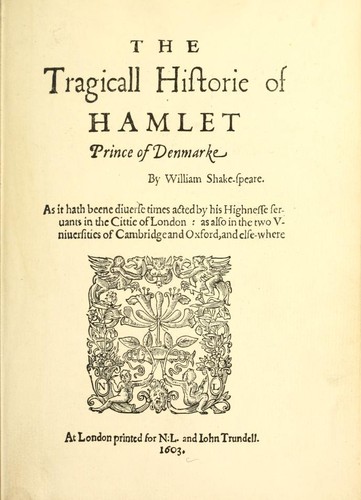
holy shit this was hard. Our first attempt at Shakespeare and it was a doozy!
Rich struggled through the original text and only had the vaguest idea what was going on. Cam watched every single movie adaptation and studied for two weeks but still got casually mogged by his girlfriend.
By the time we got done with the discussion we were all actually hyped to read more Shakespeare so something must have gone right.
Covering such topics as:
The impenetrability of Shakespearean english, whether it’s better to read modern translations or the original text, our favourite lines and soliloquies, shitting on the Freudian reading, connections to David Foster Wallace’s Infinite Jest, and Hamlet as the archetypal annoying theatre kid.
intro
Rich: All right. Three, two, one, and go.
Benny: Why don’t you just try it? If you just try it, and then if it’s super awkward, we’ll just jump in somewhere else. It doesn’t matter.
Cam: Well it’s 100% going to be awkward now.
Rich: No, I won’t laugh. I’m supporting you. Look at my supportive face.
Cam: That’s even worse. I always feel supported by you man.
Benny: It’s the same face he uses when his child is trying to poop. Similar.
Cam: Okay, I need like a thing of water or something. I feel like Eminem in 8 Mile.
Rich: Cam, you’re the producer this episode. Its success or failure is completely up to you.
Cam: I’ve already been banned from intro, bro. I am producing shit.
Rich: No, I want it. I want you to do the intro. I really want you to.
Cam: Okay.
Benny: I thought he already did it. I thought we were flying. You guys didn’t feel that momentum.
Cam: Yeah I reckon we just keep going. I’ll do it next time.
Benny: I’m just kidding. Do it.
Cam: I feel a bit embarrassed. It’s not going to sound natural. All right. Hell no, brown cow. The problem is I mumble too much. Yeah, maybe I’m the wrong guy to do it.
Benny: No, that’s our signature.
Cam: All right. Welcome. No, no, no. I can’t do it. I can’t do it. I can’t do it. I’m in my head.
Benny: That was actually good. That was a good first word. I was excited.
Rich: I felt welcomed.
Cam: That was a good performance.
Rich: I can tell that no one actually enjoyed Hamlet because we’re running down the clock so hard.
Benny: They go, we have 15 minutes to talk about Hamlet.
Cam: All right, yeah, fuck the intro, let’s get into it. So let’s talk about Hamlet, I reckon. So today we’re talking about Hamlet, a play about the prince of Denmark.
Rich: What did we say — the short king of Denmark?
Cam: Yeah, sure, the short king of Denmark and prince of Denmark. And everyone kind of knows the story. Well actually, I kind of thought I knew the story but I didn’t really.
Rich: I didn’t know the story.
Cam: Like, everyone kind of knows it’s about a prince and his dad who was the king just died, and then his uncle married the wife. That’s kind of the stuff I knew.
Rich: All I knew is that the Lion King is meant to be a Hamlet parallel or Hamlet remake.
Cam: Yeah, it’s inspired.
Rich: But there’s quite a lot different about it in my opinion. He’s a lion for one thing.
Cam: Yeah, like he’s a lion. So his mother Gertrude remarries to his uncle Claudius, and then Hamlet’s very torn up about this, somewhat understandably, and then he sort of kills everyone, directly or indirectly, maybe less understandably.
Rich: Hold on, did you say that Hamlet’s dad was killed by his uncle?
Cam: Everyone dies. Not yet, so —
Benny: Thanks for the spoiler, Rich. Jeez.
Rich: Oh my god, Jesus Christ.
Cam: Yeah, end of podcast. So Hamlet’s father died and he’s all torn up about that because his mom’s married, and then he gets visited by his father’s ghost who says, you know, my brother your uncle did me in. And then he’s led to believe that’s true but he’s not sure of it at first, and then when he does believe it he’s very torn up about whether he does anything. And then I thought we’d talk about things as they come.
Rich: Guys, should we just zoom out a bit and talk about Shakespeare for a minute? Because this is literally the first Shakespeare that I’ve read since high school.
Benny: Really?
Cam: What one did you do in high school?
Rich: King Lear. And that was good. And I’ve seen The Lion King.
Cam: Classic.
Rich: And I’ve seen Baz Luhrmann’s Romeo and Juliet.
Cam: That’s good. I kind of wish I rewatched it.
Rich: I’m kind of surprised that we read Shakespeare in school because this shit’s hard.
Cam: This shit is so hard.
ye olde Shakesperean english vs modern translations
Benny: Oh, so here’s one meta question actually — did you guys read it in old English or did you read an accompanying modern translation?
Rich: I read the original. I didn’t realize there was a modern one.
Benny: Oh yeah, there are many modern translations.
Rich: Oh, fuck. So we should have agreed about which one to read, I guess.
Benny: Oh, sorry. Maybe let me make the case for the modern translation, just because that might be something that people have strong opinions about. I think a lot of English teachers —
Cam: Just been brushing up on your John McWhorter?
Benny: Yeah no exactly, that’s exactly — I’m just gonna steal the words right out of his mouth basically. But I think if you read Shakespeare in English class in high school you’re often forced to read it in old English.
Rich: But it’s not old English, it’s modern English. It’s just old.
Cam: Yeah, it ain’t no old English bro. Well, it’s like modern English with a capital M.
Rich: Like colloquially.
Cam: But it’s not like modern English, you know — it’s not generally old English right, it’s Shakespearean English.
Benny: Oh, is it not?
Rich: I was like, oh you know, go easy on yourself, you’re literally reading a different language. And then I googled it because I thought it was middle English, and it’s not — it’s modern English.
Cam: But like, it’s a different dialect at least, right?
Benny: I mean at that point you’re just arguing about definitions, though, right? Because clearly if you handed in an essay in school I’ve written in that sort of prose right now, your teacher would look at you and be like, what the fuck is this shit, right? It’s 400 years old, counts as old English.
Cam: Yeah, they actually probably do — if they recognize it as Shakespearean.
Rich: But finish your point.
Benny: So sorry, just as a matter of historical accuracy — what is the actual definition of old English? 500 to 800, you said? Oh perfect. And then middle English is —
Rich: Before 1100. And then middle English goes right up to 15th century. So this is a solid couple of centuries into modern English technically, because this is like 1600, right?
Benny: Yeah, interesting. Okay, well those definitions aside, I mean it’s clearly almost a different language to read, and many of the words are used differently even if they’re the same word. They’re often used differently and there are many words that we’re just totally unfamiliar with as modern English speakers. And so I much more buy the case of current linguists who just say you should read it translated into language you’re more familiar with, because the point of Shakespeare is not to confuse you and be written in another language. When they were presented as plays, everyone was speaking that way, and so they were much easier to understand. And what you’re trying to conserve is the accuracy of the actual storyline, not just each word that the characters are trying to say. So that was my take. And so I mostly read a modern translation, and then I would go back sometimes just to see various interesting soliloquies and stuff and check it out as it was originally written. But they actually keep track of the story, I found. I basically needed to read a translation.
Cam: I think this take’s a little more nuanced. I remember I brought that up at a party once and this guy got so angry, he’s like, you’re a fucking idiot. There’s a reason why a current movie uses Shakespearean language, right? And even McWhorter probably isn’t arguing against that, and he’s not arguing when you go to a play — like say you go to the play and you listen to Shakespearean English. I think he’s saying beforehand read it, understand it in modern translation, because some words are literally different. Even in this play itself there’s — I think at one point he’s putting his head between Ophelia’s lap and he’s kind of flirting with her, and she says nothing, and they kind of joke about nothing. But I think at the time, nothing was a euphemism for the vagina, because of like zero. So you totally missed that. And something like a word like “silly” just means something different back then than it does now.
Rich: We gotta bring that back. Benny the nothing slayer.
Cam: Yeah. So you totally missed that.
Rich: Oh, half of this fucking book — because I did not read the modern version of it, I read the original version — half the book is incomprehensible. I had to stop constantly, and I had no idea what was going on.
Cam: Yeah no, that’s McWhorter’s point.
Benny: No wonder you didn’t like it. It’s for precisely this reason that I think people should read the modern — I’m just gonna keep saying “modern translation,” you’re gonna know what I mean. I’m not gonna say like modern modern translation. I’m on board with reading it however you need to read it to understand the storyline.
Rich: Yeah, okay, you guys are all on board with this.
Cam: I thought it was just known that’s what you do. Damn — anyone says they don’t.
Benny: I dispute your point a bit with plays, Cam, because there you have many other signals to understand what’s going on, right? If it’s actually acted well then you can tell what’s going on, and it’s not just the prose you’re relying on — it’s the body language, it’s the emphasis, it’s the actual acting.
Cam: Oh yeah, what was my point with plays?
Benny: Well you said, you know, a lot of plays — like modern day plays when they put it on will still use the original Shakespearean dialect, which I agree, and that’s cool to watch. Like the one I was watching with what’s his name that I sent around? Andrew Scott or whatever. That one was in Shakespearean English.
Cam: Yeah, well, the case for Shakespeare’s language is, one, meter, and two, he’s arguably the best writer ever. So you lose some of his nice phrases.
Rich: Best according to whose lights? He might be best circa 1600, but I would say almost like tautologically he’s not the —
Cam: Richard Hanania is much better now.
Rich: Well, putting that argument aside though, it’s always contextual right? I’m thinking it’s actually crazy to make school kids read the original Shakespeare. I’m wondering if making kids do that is actually just putting people off literature, where they’re like, this fucking sucks, I have no idea what’s going on and I’m reading another language that I don’t speak. It makes no sense — why would you try and read something functionally another language, and you have to just look at footnotes or whatever guide that you guys had to explain every single thing? It’s the opposite of immersive.
Cam: Yeah, it’s fucking nuts. They hate it. A thousand percent. Well actually, did you hate it at school?
Rich: I actually still enjoyed it. But it reminds me of what we talk about sometimes of reading philosophy backwards as well, where a lot of philosophy that people say you should read, you really should read if you’re interested in history or the history of ideas, but you shouldn’t read it as the way to get the best cutting-edge thought on philosophy. And I feel like this is maybe more interesting for linguistics or history class and less interesting for English class, because it’s not the best representation of writing or of these ideas — it’s just like a historical curiosity talking about the original text.
Cam: I don’t think it’s just that. Regardless if he’s the best or not, the reason people don’t like translating it is because you lose his nice writing, his turns of phrases slightly. I’m with you guys, I read the modern. But here’s the problem — you watch a modern movie, it’s going to be hard. And like, half the phrases everyone knows, right? “Doth protest too much,” “to be or not to be,” etc. What do you do with those? Do you slightly amend them?
Rich: But why don’t you just keep the ones everyone’s familiar with? That seems like an easy problem.
Cam: Well that would be a bit weird if they’re written and — well, I mean, yeah.
Rich: Why? So say you have a word like — they use the word “anon” I noticed, and I was like, what is this, fucking 4chan speak or something? They keep talking about “anon” and it means soon. So just change the word “anon” to “soon,” easy, it loses nothing. Keep “to be or not to be,” keep “methinks the lady doth protest too much,” because that makes perfect sense in our modern English as well, but it still preserves the fun old-timey way of speaking.
Cam: Yo Anon, kill the king man. Yeah.
Benny: Yeah, I think you’re giving too short a shrift to translators here, Cam. There are people who, just as there are people who make their living translating Russian into English and try and keep not just the spirit of the work, but also the tempo of the phrases, etc., I think you can also do that with Shakespearean English.
Rich: Yeah, this dude’s translating fucking ancient Greek and shit, then it should be a lot easier for Shakespeare.
Cam: No no, I’m for the translations. I can’t believe Richard read it without it. I’d be pulling my hair out.
Benny: That’s insane, good for you man.
Rich: God damn it, I was wondering why you guys were so fast at reading this, because I was honestly lagging. I just made it over the finish line.
Cam: I wasn’t that fast man. I was ready to push it again.
Benny: We should ask Rich to summarize it just in case he doesn’t actually know what the hell happens.
Cam: I don’t know what the fuck happened. He’s gonna start describing Lion King, man.
Rich: Okay. I read the plot synopsis on Wiki after I’d finished and I was like, oh, so that’s what was happening. Like so much stuff totally passed me by, even though I was reading all the footnotes to try and understand what was going on.
Cam: My story of Shakespeare was kind of like you guys — like, hated it at school. And even this was tough, and to be honest it took about two weeks to have been studying this motherfucking text. And then I watched some plays and I watched some movies, and by the end of it I was like, oh, that was — like last night Ellen and I watched a movie and that was the first Shakespeare I enjoyed, didn’t feel like homework. But I kind of needed to know the story. I needed to — even then, I don’t know, it’s probably being low verbal or something, I was still missing half of it.
Rich: Did you watch the Lion King?
Cam: I’ve watched a few of the movies now. But even last night, she was translating half of it for me, and I was like, fuck, I’ve just been studying this for two weeks, it’s still going over my head.
Benny: Does Ellen really know her Shakespeare?
Cam: No, no, I think just probably to a normal person can kind of get the vibe.
Rich: I don’t think you should be embarrassed that it takes two weeks to try and get to grips with it, because it’s almost like saying within two weeks I should be able to read a totally different dialect that I’ve never encountered before. You know, that’s not a minor thing to accomplish. It just seems that way because everyone talks about Shakespeare all the time and it’s in the canon and you learn from school and so on.
Cam’s film corner segment
Cam: Oh, I agree. Kind of funny, me studying it for two weeks and saying let’s watch it, and then like half an hour in she’s explaining to me. Kind of remember when I went to France — I’d been studying French for six months and this guy that doesn’t really study it, he ended up kind of being the translator, he was just better at languages. Although I think his dad spoke French. So yeah, I watched the play that Benny sent through, and then I watched Mel Gibson’s performance in the 1990 movie, and the Bernard movie in 1996 which was the only full text film. So it’s like four hours, because this is quite a long play, so most plays and movies abridge it and cut it out. A common thing to cut out is the whole Fortinbras subplot, where the Norwegian king wants to come in and take over, because you can kind of keep a lot of the text without that.
Rich: How did he cut that out, because isn’t at the end he relinquishes the throne to Fortinbras?
Cam: Yeah. The Mel Gibson movie, he just died at the end.
Rich: Oh yeah, I guess that works.
Cam: But some people probably feel quite strongly that’s very important. Because the cool thing about Hamlet, I suppose, is it’s a very personal story about the family, and then also it’s like a whole country changes leader. It’s a very important political story too.
Benny: Also it’s kind of indicative of Hamlet’s fuck-up, right? Like how many things he let go wrong by the end. Now his country is taken over by another country, like, oh boy.
Cam: And then there’s a 2000 movie with Ethan Hawke as Hamlet, like a modernized one, which is less well-received. I quite like the Mel Gibson one. I looked online and I couldn’t tell how much people just don’t like Mel Gibson because, like, he hates Jews and stuff. He’s had several outbursts, I think. He’s like a bit racist and a bit sexist and stuff, he’s been blacklisted from Hollywood. So I think there’s a slightly revisionist history with Mel Gibson, that people don’t like him now when actually he’s really good and he’s a really good director. And he was good at Hamlet.
Rich: He had a feature-length film outburst called The Passion of the Christ, in which all the Jews are like these hook-nosed, greasy-looking motherfuckers.
Cam: Oh no, I think he’s definitely anti-Semitic. And I think there was some phone call where he was complaining about the Jews or something. But I think there’s this —
Rich: Hey, he was a hit of the time, man, we’re all anti-Semitic these days.
Cam: I know. Now there’s this new revisionist history where all the protesters like him and Kanye. But there were differences between a lot of the Hamlets — so Mel Gibson did that sort of anger very well, which kind of makes sense, like he can do angry well. But Kenneth Branagh, he was kind of the performance side of it, the theatrical side of it. And then it just made me think — I mean, this is why people like Hamlet so much, because there’s all these sides to Hamlet. And then there’s the crazy side. I haven’t seen it, but apparently David Tennant, you know, from Doctor Who and Broadchurch and stuff, he did the crazy side of it very well. And then I suppose there’s the indecisive side of it. In one sense it’s kind of hard to believe how indecisive Mel Gibson’s Hamlet was, because he was quite a strong character, and you kind of think actually I can imagine this guy just toppling Claudius.
Hamlet’s pathological indecisiveness
Benny: Should we just move on to opinions of Hamlet, maybe? That’s a good place to go. What do we actually think of Hamlet the character? I think there’s somewhat split opinion about whether he is sort of doing his duty towards his father and is displaying strength by trying to avenge him — and eventually I guess in some sense he does sort of avenge him — or if he’s sort of this weakling that’s torn between action and inaction, can’t quite make up his mind, is sort of making excuses about whether he should kill Claudius or not, he’s given an opportunity to kill Claudius and doesn’t. So I guess, how did you guys actually view Hamlet, the character?
Cam: What do I think of Hamlet? I think he’s obviously depressed and has mental illness in like a modern setting, and I think it’s cool that an old text like this kind of captures that. He’s obviously very intelligent. I think his argument could be made he’s cowardly. I saw myself of him with this kind of pathological indecisiveness, just not being able to take action with things and then ending up in worse situations.
Rich: You can see why Wallace loved this guy, right?
Cam: Hell yeah. I mean, that’s another thing reading this book, it’s just informing lots of other texts.
Benny: He’s in his own head a lot.
Rich: He’s smarter than everyone and he’s like subtly making fun of them all the time. Like he’s taking the piss out of Polonius without Polonius realizing it.
Cam: Yeah, so let’s quickly get some more plot points out. There’s also a love interest, Ophelia. She’s got a father Polonius, who’s the king’s — sorry, king’s servant — and he’s kind of this bumbling guy that just kind of says silly things sometimes. He’s also got a son Laertes, and both Laertes and the father Polonius are very controlling over Ophelia, and they wanted her to watch out for Hamlet. I think that might be enough now.
Rich: I might just say my impression of Hamlet before we move on. I was surprised to find that I just really didn’t like him. He’s kind of — I found him to be a real brat. I don’t know if it subverted the tropes or if the tropes didn’t exist yet, but Claudius just seemed like a normal-ass dude. He had no villainous overtones at all really. If you compare to like Scar, the Disney equivalent, the Jeremy Irons type performance — Claudius is just a straight shooter pretty much. Polonius is, I know, but not the way he acts. And he doesn’t display — he doesn’t seem like a jerk really, other than the fact that he killed his brother and is conspiring to kill Hamlet. And then Hamlet is kind of really passive aggressive and like he’s a little bitch basically. He never says what he means and he’s just sassing people. And he gets Ophelia killed, which really pissed me off — I feel like that’s basically his fault. And, you know, it’s an unenviable position to be in, I feel sorry for the guy obviously, I don’t know if I would have handled it any better. But it was interesting to note that I don’t perceive him as a hero. I perceive him as more complicated than that.
Cam: Claudius has got a lot of love. I think that he has his supporters. But I don’t think he’s a normal dude. I think he’s Machiavellian and cynical, and definitely you can juxtapose that with Hamlet’s kind of inwardness or bitchiness or indecisiveness. Claudius kind of knows what he wants to do and he manipulates everyone else to get that shit done, like, you know, in some Nietzschean sense.
Rich: And I was just thinking, if I heard Claudius’s voice as rendered by Jeremy Irons, then yeah, maybe it would actually convey some of the villainy and Machiavellian stuff. But yeah, I’m just reading it dry on the page and it’s not really coming through that well.
Cam: I’ve seen different videos of just Jeremy Irons talking in interviews, and then people like, can you just dub this over a Scar scene? And they’re just like Scar talking to Zazu or something, and it makes it so menacing. But even Jeremy Irons’ Scar — it’s kind of evil and menacing, but there’s the sophistication and likability of Scar, you know, which I think Claudius has.
Benny: It is amazing to watch a play after you’ve read it and realize how much work actors have to do to draw the characters out from the page. When you see it written, at least when I’m reading it myself, I’m projecting like a tiny bit of emotion maybe into the scene. But then to actually watch it and see them be laughing or crying or turn it into jokes, and the kind of pauses they add, and to really make it very emotional — it’s very impressive. Actors are good at what they do for precisely that reason, but it’s impressive nonetheless.
Rich: Yeah. Especially on the stage, right? No cuts, no ambient music, no retakes, no different camera angles.
To be, or not to be?
Cam: I think it would be cool becoming a Shakespeare nerd, and then you really kind of compare all the different — you know, you go see there and you think about what that actor did for this performance, and what you disagree with or what you thought kind of subverts the original text, and whether you think, oh, they’re actually taking away some sadness there, kind of worked. One thing I was thinking — a lot of performances of it with the famous “to be or not to be” line, they kind of go “to be” and like do a big pause, like “or not to be.” And I don’t really like that to be honest. I just think you wouldn’t pause there.
Rich: Maybe they just forgot the line.
Cam: Yeah, M&M 8 Mile. One talking point on that line. So “to be or not to be” — one interpretation of that is he’s contemplating suicide because he’s so upset about his situation. So to live or not to live, to exist or not to exist.
Rich: When does that line come up, just to give us a bit of context?
Benny: I think it’s right before the nunnery scene, right? The soliloquy right before the nunnery scene.
Rich: So he’s breaking off ties with Ophelia?
Cam: Yeah, this is sort of just before that. But there’s other people I was reading online who think actually people read too much into this being suicide ideation. The actual text — yep, there’s a little bit of that in there. But “to be or not to be,” another way of interpreting that is “to act or not to act,” and it’s more around this indecisiveness of whether he avenges his father or not.
Benny: Oh, that’s interesting.
Cam: Then there’s other clues. I think people nerd out around, like, this is obviously meaning suicide. My overall take is, yep, he’s kind of considering it, but maybe the kind of cultural criticism around it emphasizes it too strongly.
Benny: I actually like the second interpretation more now that you bring it up. I hadn’t actually heard that one. I had always heard it referred to as suicide, but I actually like the just action versus inaction framing a lot more, because I feel like that meshes much better with what he’s struggling with throughout the rest of it, where it’s like every scene he’s kind of in his own head, doesn’t quite know what to do, can’t quite make a decision, which is ultimately disastrous for him by the end.
shitting on the Freudian/oedipal reading
Cam: And the other big thing as well around interpretation of this is his relationship with his mother. So like Freud fucking loves this story. And he thinks Hamlet is in love with his mother and there’s a big Oedipal reading. And I’m not sure how much I’d buy that to be honest. And it’s interesting watching some movies — they kind of buy into that and there’s sexual undertones between him and his mum.
Rich: Apparently he was thinking about calling it like the Hamlet complex instead of the Oedipal complex, because he thought Hamlet was an even better exemplar than Oedipus Rex. But it’s crazy to me — I mean, obviously I struggled with my reading so you guys might have a better sense, but I didn’t notice any textual evidence for him wanting to fuck his mom.
Cam: No. A lot of people reject this. Like Harold Bloom totally rejects this.
Benny: So just to spell that reading out a little more — it’s that he is mad that he wanted to sleep with his mom. Basically, he’s envious of Claudius in some sense. Is that the reading?
Cam: Yeah. I suppose because — it’s interesting, it differs in the normal Oedipal complex it was like, I hate my dad and I want to kill my dad, and he doesn’t have that at all. But then maybe you kind of subverted —
Rich: And he hates his uncle for reasons that are extremely well-founded and have nothing to do with his mom. Well, they do have to do with his mom but —
Benny: Well, maybe he hates his uncle because his uncle got to kill his dad. I think that’s probably what Freud would say, right? He’d say like, Hamlet did want to kill his dad, but then Claudius got to him first, and this is causing Hamlet all this anxiety or something.
Cam: But I think you have to add these stipulations, right?
Rich: Are we all kind of on board with the idea that Freud is a total crank on all this stuff and that it’s just kind of silly to even talk about? Like, we don’t — we’ve talked about how we don’t want to kill our dads.
Cam: On this stuff particularly, yeah. I think it’s just showing cultural knowledge that you’re aware of Freud by citing the Oedipal complex. I don’t think it actually is a driver of — well actually, sorry, it depends what you mean. The wanting to sleep with your mom thing I think is total BS. The rivalry with your dad I think there’s something there, which doesn’t exist so much in Hamlet.
Rich: Yeah, there’s a little grain of truth there but it never rises to the level of —
Cam: He’s got rivalry with the uncle. But yeah, it kind of took over. A lot of people think that’s the main reading of Hamlet. And some of the movies, that’s —
Rich: What’s the main reading, the passivity-activity thing or —
Cam: Oh no, just this sexuality. And that causes his psychotic break and stuff.
Benny: It strikes me there’s a Good Will Hunting scene here where you’re in the bar with someone and they start rattling off the Oedipal interpretation of Hamlet —
Rich: Yeah, of course, that’s your contention.
Benny: And you’re like, yeah, of course you think that Freud was right about Hamlet because you’re only halfway through.
Cam: And then you get some textual evidence just in the window and you’re like, holding up “for them apples.” I mean to be fair, I think people that buy into it are probably aware of the arguments. The serious scholars that still buy into it.
Rich: There’s just something funny about why do we just keep talking about these stupid fucking ideas that aren’t true? It’s kind of funny.
Cam: Well, they were so big, they were the thing, right? Also Freud’s a little underrated because of this, because everyone’s like, oh wow, like penis envy’s BS, Oedipal complex’s BS, but then I mean Freud talked about the subconscious, right? Which is — I’ve got some anal stage going on now, I don’t know.
Rich: Wait, you mean the anal stages of development are not true? You’re permanently trapped in the anal stage.
Cam: I actually awkwardly told on myself, because I was away with a group over the long weekend, and people talking about being ticklish, and I said, well, one bit I’m not ticklish is — and I said, well, when I used to fight with my sister I sometimes got, you know, two fingers up the ass. And I was like, is that a thing? That’s my own anal stage. But it was more like when you’re play fighting with your sister and they can’t do anything, they have to bite you or punch you in the balls. And sometimes she’d shove two fingers up there. Not strongly. Not like —
Rich: Damn, like penetration, or just like in the vicinity?
Cam: No, no, no. Just a slight, you know, a warm-up.
Rich: You got molested, bro, I’m sorry.
Cam: Yeah, this is my Oedipal complex.
Rich: That’s called the Hopoate special.
Cam: Yeah, that’s a New Zealand deep cut. There’s a rugby player that used to shove his finger up people’s asses. Not in a sexual way.
Benny: What? Is that allowed?
Cam: Yeah, that’s part of the game man. We teach Benny the fucking game, which is just part of it. Don’t worry, trust us.
Benny: But is it explicitly prohibited? Because I can’t imagine a lot of sports —
Rich: Well I doubt they put it on the rule book, but they just never imagined someone would do that. It happens in wrestling as well, it’s called like an oil check or something.
Benny: Like, what’s the call? Like, if someone does that —
Rich: But it breaks someone’s concentration, right.
Cam: Water polo is big as well, and that’s like punching the nuts and shoving fingers up. Water polo, you know what happens under the water stays under the water all the time. Water polo is next level.
Rich: Yeah, fucking savages man.
Benny: Let’s take a turn.
Cam: So Freud was right about that, whatever he said about that.
Benny: Or if it’s right about water polo. Whatever.
Rich: We gotta give Freud credit for the concept of the unconscious. That’s what he got right and that’s what is huge.
Cam: Which is like fucking massive. Which is like almost like Darwin evolution level massive.
Rich: Absolutely.
Cam: But then I think Freud was a really good writer, and he was really familiar with all the ancients and all classic literature. And everyone’s just, you know, all these word cell liberals are just coming themselves over this stuff. Like, everything about human nature is in Homer and stuff.
Benny: Was he really the first person to write about the subconscious?
Rich: No, it goes all the way back to Plato. But he articulated it, he brought it into public consciousness, I guess.
Benny: He brought it into the public subconscious.
Cam: So anyway, back to Hamlet. So we think he probably isn’t in love with his mum, and he’s just understandably upset that she’s marrying his uncle straight away.
Ophelia and Gertrude’s motivations
Benny: Which is odd. Even by the end of the book, I wasn’t sure exactly what was going on with Gertrude.
Rich: We get nothing about her motivations, right?
Benny: Is there a reading where she knew?
Cam: I think the female characters in this are a bit underwritten. I’m not sure if they always are, because you have like Portia in Merchant of Venice, and Juliet — like strong characters. But certainly in this book —
Rich: Ophelia just exists as like an object of his affections who dies. She has no apparent will of her own.
Cam: Yeah, who goes crazy and then dies.
Cam: There’s that funny Simpsons scene, did you guys watch it, where Lisa’s Ophelia and she’s like, Hamlet, you won’t — how crazy Ophelia? And she just runs on the table and kicks all the food off and then jumps out the window into the water. And that’s kind of it. That’s kind of Ophelia.
Rich: Ophelia’s death is so sudden and abrupt as well. It’s like off stage and you’re just like, oh yeah, Ophelia died, and then no one even reacts with what I would expect to be the grief and despondence that would be appropriate to that. They’re just like, oh, damn, now Ophelia too.
Cam: Well the brother’s pretty upset, right? Hamlet’s upset. And this is the thing, you’re not sure about Hamlet’s interpretation, because he’s just told her, like, don’t believe me, I don’t love you. And then when she dies he gets super upset and how much he loves her and stuff.
Rich: So did Hamlet love Ophelia and he was just trying to distance her so that he could carry out this violence?
Cam: I think that’s an open question. And the bigger open question is whether he’s feigning the madness — how much he’s feigning the madness — because at one point he’s acting crazy with her and he’s acting angry, saying I don’t love you, and then half an hour later he’s flirting with her at the play.
Rich: Putting his head in her lap.
Cam: Yeah, in the nothing area. And then half an hour later she dies heartbroken.
Benny: Importantly, though, when he’s feigning madness he knows Polonius and Claudius are listening in, right? So that’s a big variable.
Cam: When he’s been crazy towards Ophelia, you mean that particular scene?
Benny: Exactly. He knows they’re listening.
Rich: So he kills Polonius by accident when Polonius is trying to eavesdrop on his conversation with the queen, and he’s hiding behind what I interpret to be like a tapestry or something. And Hamlet thinks that it’s Claudius the king and he just stabs through the curtain and then realizes it’s Polonius. Is that what happened, because I was unsure of what was happening?
Cam: Yeah, that’s what happened. The ultimate wrong place, wrong time. No indecisiveness about this.
protestant heaven loophole
Rich: But why did he feel — this is maybe sort of revelatory — that he felt okay to kill what he thought was a king when there’s like a barrier so he doesn’t have to literally see him? Yeah, but he doesn’t feel okay to kill the king when he walks right past him and he thinks about killing him beforehand, in the previous scene.
Cam: Well the prior scene the king’s repenting, right? And Hamlet plans to do it, but then he’s like — and this is something Ellen pointed out to me — if I kill him now, he’ll go to heaven, but if I kill him in a bad action, he’ll go to hell. So part of it’s just, you know, that’s not a fate I want for him. Part of it’s like, I’m not sure if he wants to do it. And then he goes bursting into his mum’s bedroom.
Rich: Why does he think he’ll go to heaven? Unpack the theology there.
Cam: Because he was repenting.
Rich: Oh, and because he’s a Catholic, and because Catholicism lets you —
Benny: But don’t you have to repent to someone for to go to heaven if you’re a Catholic? I mean, you can’t just do it to yourself. The whole Protestant Reformation was about, like, can you have a personal connection with God or not, and Catholicism said no, it’s got to be mediated.
Cam: But I mean Hamlet’s not the Pope, right? I mean, he’s just seeing this guy being honest and repenting, and just this is the wrong time.
Rich: So the Protestants would say you can give a personal confession, as it were, you can have a personal communion with God and be forgiven, but the Catholics would say you have to actually give confession to a priest. Is that the distinction?
Benny: Yeah, exactly. And I don’t think Protestants believe in purgatory, so it’s like, I guess if he had prayed — if he had killed him and if Hamlet believes in Protestantism, he just would have gone immediately to either heaven or hell, and I guess would have been heaven in that case. I mean honestly, I’m a little bit unsure about the relationship between just like prayer and going to heaven in Protestantism. There’s this whole notion of cleansing yourself of your sins in Catholicism, but I’m not actually sure Protestantism has the same notion, exactly.
Cam: Yeah, it’s more about your personal conversation with God, right? And it’s an important aspect of the faith, but it’s not like it cleanses you in the same way. It’s not like a get-out-of-jail-free card.
Rich: Yeah, the Catholics got carried away with that shit, right? They’re selling the indulgences and so on. They were making it way too loophole-y and transactional.
Cam: Yeah, that’s why Martin Luther kind of — what drove him. But anyway, I think the religious is part of it, and also just his indecisiveness. And then he goes in and he’s angry at his mum, and like — imagine coming in and you think he’s hiding behind the curtains, you’re like, are you just fucking him or something? So I think that just fueled him. And it’s part of this almost bipolar personality as well, that he suddenly has this spur of action and anger and stuff.
Benny: Here’s another basic question I had about the reading. After he stages the play, the characters deliver this line — so, you know, we have this play within a play situation. The characters deliver this line and basically mimic what happened to the late King Hamlet via Claudius. Claudius sort of understandably leaves the play. He’s kind of shook. And I think demands for it to be stopped even.
Cam: Is it hot in here? Is it hot in here? Yeah, I’m fucking out.
Benny: So he walks out. And then Gertrude basically — the queen — confronts Hamlet and says, you know, what is wrong with you? That was really rude of you. You’re acting like a spoiled brat, etc. I was just confused at an object level about what she’s so mad about. Like, from her perspective, assuming she knew nothing about the murder, this is just a play, and her now husband walked out in a huff. Why is she so mad at Hamlet all of a sudden? What exactly did he do wrong? He brought in this troop to put on a play, and he put in 16 extra lines for this guy to say.
Cam: Well in the play, was the queen then shown love towards the murderer? That’s kind of — he walked out before that even happened.
Rich: I think it does make sense from her point of view, because she’s not stupid basically, right? She knows that of all the plays you could choose to stage, you’ve had one staged in which a king dies at the hand of his brother who steals his crown, and this is while her husband has died one month ago or two months ago. It doesn’t seem that crazy to me that she’s mad about that.
Cam: Take my mind off life, you know what I mean? Been rough. Like, fucking hell.
Rich: Yeah. And I don’t think it implies her guilt or participation. What do we think — do we think that she’s in on it?
Cam: The most confusing thing for me is how quick she was to marry. Okay, maybe they were having an affair beforehand — that’s the only way it makes sense to me, that they had some sort of relationship beforehand. And the way I interpreted, just my own reading of it, or like having divorced and struggling with a stepdad for a bit, being a nine-year-old — it doesn’t matter that it was so quick. It’s a very common trope, part of human nature, to have issues with your mother moving on with a stepdad, or your father moving on with a stepmum. That sucks and it causes turmoil. But yeah, within this text, maybe it’s just —
Rich: Would it feel better or worse if it’s your uncle? You’re not my real dad, but you do share 50% of his DNA.
Cam: I think — if you’re young, maybe better. When you’re older, you’re kind of like, this is a bit fucked up. It is fucked up, right?
Rich: Is there some cultural context that we might be missing around a chain of inheritance and so on as well? That maybe you can’t have an empty throne for too long, and you need to quickly come up with some arrangement that ensures the royal lineage or whatever. I mean, I guess Hamlet would just inherit the throne otherwise.
Cam: Well I think partly why it was set in Denmark and not England, it would have just been the heir. But even here it was probably like — young Hamlet had an obvious claim. And then this was confused about as well, why didn’t young Hamlet just inherit it? But I think because if he marries quickly, that’s Claudius’s motivation. We can marry quickly and, like, I’m with the queen now, and it’s all about kind of support. He’s the second heir.
Rich: But also, can you marry into the royal family like that? I mean, I know he is the brother, but —
Cam: He’s the second heir.
Rich: Oh yeah, he would actually be — would he be first in line or second in line?
Benny: He might be, depending on Hamlet’s age. I think Hamlet is supposed to be sort of a teenager, right? Or like an older teenager, because he’s in school. I was reading some stuff around that — it seems like the original, it seems like that’s sort of a mistranslation, I think is the consensus. I think he’s sort of more supposed to be 16, which makes more sense with him being a student and stuff. But there’s some debate about it for sure.
Cam: At one point he says he’s 30. On this question I think it’s kind of open. There was like this open kind of spot. They both have claims to it. Young Hamlet’s is probably a bit stronger, but young Hamlet also left, right? That’s another thing of his indecisiveness and stuff. A strong Hamlet could have just been like, I’m the king, like early on, and I’ll have support. And he didn’t.
favourite lines and famous quotes
Rich: Did you guys say this is Shakespeare’s best play or something, or most — longest play, right?
Cam: I ain’t really read much, yeah, out of the ones I read.
Benny: I said longest. I think by a fair few people, though, it’s considered the best, yeah.
Cam: A lot of people say it’s the best.
Rich: It’s got a lot of famous quotes in it. I recognized so many lines, including ones I didn’t even realize were from it.
Cam: That’s the other thing — you don’t know, you’re like, fuck, I’ve seen this reference in some blog. Or it’s just some general phrase. Even like “the method to my madness” — like, Shakespeare says that about Hamlet. And I was like, that was probably just coined then.
Rich: Honestly I think that was a big part of what kept me trucking through the original version is this slot machine effect of, I’d be kind of getting bored and my eyes would glaze over, and then I’d see a little line that I recognized and be like, oh wow, yeah, add that one to the list. “Outrageous fortune” was in here. It’s like a cult New Zealand TV show.
Cam: Yeah, yeah. Again, another great phrase. Actually, a lot of TV shows, episodes, Shakespeare quotes, by the way. Even just “be true to yourself.” I mean, he says it in Shakespearean English.
Rich: “For thine own self be true.”
Cam: When Polonius is talking to his son. “Brevity is the soul of wit.” But there’s this irony within that in Hamlet where it comes from Polonius, who’s, like, always going on and babbling.
Benny: It was a buffoon, yeah.
Cam: And then he says to them — he’s like, oh, I’ll just get there, I’ll just get there, trying to make a point. “Brevity is soul of wit.”
Rich: I mean Hamlet could onboard that as well. As motherfuckers can’t stop soliloquizing at every opportunity.
Cam: Well, that is kind of a weird thing about this play, right? And I was thinking, hmm, maybe you’re meant to read this as — this is just, in a normal person, this would just be internal. In a play, that wouldn’t work, right? But that’s how you actually deal with these anxieties and recursive loops. You’re totally questioning yourself, you’re just thinking about that.
Rich: I like the soliloquies a lot actually for that exact reason. And I think in my edition they were called asides or something, meaning I guess that the other characters are not meant to —
Cam: Yeah, yeah. Another phrase I loved was — I think maybe Hamlet’s first line was when Claudius says he’s his uncle and stuff, and he goes, “a little more than kin and less than kind.” The first I stumbled across that was actually a Razib Khan blog, like a brilliant blog around Jewish genetics and Palestinian genetics, how they’re actually very close genetically. And it’s just the perfect label for this — they are close in kin but very, very less than kind.
Rich: Yeah, there’s some good puns in here that still make sense to this day. And then there are a bunch of others that I would never have got if it weren’t for footnotes explaining why it’s actually very funny if you understand the context.
Influence on DFW and other theatre kids
Cam: And I suppose, as big Infinite Jest fans, right, we get to the graveyard scene —
Rich: Yeah, let’s talk about that.
Cam: And he says, “a man of infinite jest.”
Benny: Does he? Oh, I think I missed that.
Rich: Leo DiCaprio pointing meme.
Cam: I was like Hamlet looking at Claudius with the missus last night during that scene. I was just waiting for a reaction. Well, she noticed because I had said about three or four times beforehand, this is the infinite, this is the infinite —
Benny: Wait, sorry, what scene is this?
Rich: Yeah, so this is the scene where Hamlet goes to visit the graveyard, I can’t remember why. He’s talking to the grave diggers, and the grave diggers are digging up — for whatever reason they’re disinterring a tomb or a corpse, and they’re holding the guy some random skull. And then I think Hamlet just recognizes — does he recognize the skull, or they tell him whose skull it is?
Benny: They tell him who it was, I think.
Cam: Hamlet asked, “who is that?”
Rich: Like, “oh wow, poor Yorick, I knew this person.”
Cam: And he goes, “it was the king’s jester.” And then one of the famous scenes in Hamlet’s like, oh wow, I knew this person, and holds up — and it’s kind of memento mori.
Rich: It’s so trippy to think of just holding the skull of someone who you grew up with, a person in your life, just holding their skull in your hand and being like, damn, this is what happens. This is what happens to jesters.
Cam: That’s something that hit me, watching actually a play of that, where you kind of read it, but then you see it, and it’s just like, you know, looking at the skull’s eyes and dealing with the emotion of that, it hit me much harder. Even just before they get Yorick’s skull, Hamlet asks the gravediggers, “what grave are you in? Whose grave is that?” And he’s like, “nobody’s.” And he’s like, “oh, it’s mine,” he goes, “it’s mine.” But he’s kind of playing with Hamlet. And he’s like, “is it a man or is it a woman?” He goes, “no, no” — so they’ve died. He’s just messing with him. But Hamlet even does this sort of thing earlier on when Polonius asks what he’s reading and Hamlet’s like, “words, words —”
Rich: “Words, words, words.”
Cam: Which is, I think, the name of the Bo Burnham — I’m not sure. But there’s this thing — and it kind of fits into this broader theme right of acting and performing and lying, but just kind of these fun little ways of using language in a way where you’re not technically lying. It’s like there’s a scene in The Ringer, the Jackass guy — he’s a disabled kid, he’s trying to win gold, but he just asks fellow disabled guys, can you pass the ketchup, and they all crack up. They’re like, we can pass the ketchup, but we won’t. Just playing on words like that. There’s a couple of instances of that in this.
There is nothing either good or bad, but thinking makes it so
Benny: What’d you guys make of the line, “there is nothing either good or bad, but thinking makes it so”? Is this some sort of Buddhist enlightened take, or is this like moral relativism, or something like that?
Cam: I mean, that’s a banger, right? That’s Marcus Aurelius right there, right?
Rich: Or even like idealism or something — that the universe is —
Cam: I definitely interpreted that as stoicism. And in the context of this play, like Hamlet’s turning himself and fucking not making things worse.
Benny: To be honest, I forget the exact context, though, where it’s said.
Cam: It is amazing in Shakespeare — I’m not saying anything super impressive, but you get these lines that sum up stoicism, where you get this other line that sums up something else. There’s dozens and dozens of these, a very deep insight into ethics or philosophy or human nature, which have come — cliched ways of referring to them now. “The lady doth protest too much,” right? Like, they’re so cliched, and we kind of get it now, but very strong insight into human nature, right? When the person starts protesting, it’s telling on themselves. And it’s just full of them, he’s full of like 30 layers of this shit.
Rich: Yeah, but then what is he actually trying to say with any one of them? We probably pattern match quite a lot, right? Like, what do you think he actually meant by “there is nothing good or bad but thinking makes it so”?
Cam: Yeah, maybe we over-index on his genius by 400 years of analysis.
Rich: So, moral relativism, idealism versus physicalism, or stoicism — those are the three main ways you could take it I think. My man Hamlet is not living up to his stated ideals, it’s funny.
Cam: I interpret it as stoicism. But yeah, I was primed, right? Because I think you read that in like a three-boy kind of how-to-live book and it sort of cites Buddha and it cites Aurelius and it cites this — it even cited Hamlet, one of them. And I was like, I just thought that was the meaning of it.
Rich: Bo Burnham connection — I hadn’t thought about it, but Hamlet is a perfect like whiny theater kid bitch character, right? Like, that’s why Wallace loves him, that’s why Bo Burnham loves him.
Cam: He’s a kid, man. He wants to be a theater kid.
Benny: Totally.
Rich: Yeah, it’s a real archetype, and it’s interesting to see the source of the archetype at the heart of those type of people.
Cam: And I suppose Shakespeare was the ultimate theater kid, right?
Benny: Yeah, who else would design their revenge to be about a play? Like, “oh, I know what I’ll get — I’ll make him confess by putting on a play. It’ll be amazing.”
Cam: But even like — I mean, Hamlet seems like he just liked the actors and stuff. I think those were his people, right? And he’s kind of bored by all the court shit, and he’s also quite intellectually isolated as well, because he’s obviously very smart, but you know all this politics and stuff — I think he just wants to be with the other theater kids.
Benny: I mean, honestly, if your interpretation of “there’s nothing good or bad, but thinking makes it so” is correct, it’s extremely impressive because, I mean, this is prior to any sort of Eastern thought parading across into —
Cam: Prior to the Buddha.
Benny: I mean, yeah, it’s hard to say what the intellectual milieu of the time was, but I doubt these sorts of ideas are really in the air much.
Rich: I mean, I guarantee he was reading Seneca, right? So I’m sure that would be a big influence.
Cam: I kind of love it when someone’s just like, Hamlet’s about X, and it’s just about some niche thing that they’re into. You can kind of see how they’ve made that connection, but just the boldness of saying like, oh yeah, Hamlet’s about, you know, the Israel war or something. Like, that’s a terrible example, but —
Rich: It’s obviously about behavior of genetics.
Cam: Yeah. Well, Hamlet is probably fucked up because of his genetics, right? Let’s be real.
Rich: Yeah, he’s a product of incestuous union.
Cam: That’s consistent.
we rescue the freudian/oedipal reading!
Rich: What if the uncle was his dad? Could be that, and then the Freudian interpretation becomes true.
Cam: Yeah, there you go, mate.
Benny: Oh, and then that makes all sense.
Rich: Yeah, holy shit, we solved it boys.
Cam: Whole circle.
Benny: Wait, why are his genetics fucked up?
Cam: Oh no, it’s because he’s crazy bro.
Benny: Oh I see, but not because — yeah, okay.
Cam: Motherfucking insane in the membrane. Just being insane in the membrane is partly because —
Benny: That was a Shakespeare line, I think.
Cam: Oh, was it? Cypress Hill or Shakespeare? Um. I know that’s Ice Ice Baby. Also a Shakespeare line. I think we’ve covered most of it, right? Is there anything else we’re leaving off?
what does the clusterfuck of an ending signify
Benny: Yeah, I don’t have much more, honestly. I mean, maybe one thing we didn’t really touch on is just the whole ending, right? In the sense that basically everything goes wrong. Ophelia dies, Claudius and Laertes try and kill Hamlet but they end up both dying, Gertrude also dies accidentally, and then Hamlet himself dies. And then the kingdom gets handed over to Fortinbras, who’s the king of Norway, and he basically comes in and Hamlet I guess at the end sort of gives him his blessing and is like, you should now be the king. But I mean from a perspective of the Danes, this is weird — now you just have a new king who’s from a new country all of a sudden. So I view that as sort of a loss. And so I think maybe the way to tie this back into self-consciousness is just, Hamlet thought himself right into a Gordian knot here and fucked absolutely everything up. If he had taken action much sooner and just killed Claudius when he was praying — like, okay, sure, Claudius goes to heaven by Hamlet’s lights, but your country’s still intact, and your mom’s still alive, and your future betrothed is still alive, and you’re alive, so it’s much better. So I don’t know if Shakespeare was trying to say beware the dangers of overthinking here, but certainly Hamlet doesn’t come out — you know, his plans didn’t come out having gone so great.
Cam: Yeah, I think so. And I think Shakespeare’s also saying, like, wow, look at the significance of a family drama, but it’s also, you know, it changes who leads the country.
Rich: Yeah, the perils of internal division that weakens you to external forces.
Benny: Like these petty squabbles —
Rich: To the point that they just waltz right in and you hand them the crown.
Benny: They just walk into this death scene, like, whoa, something crazy must have happened here.
Rich: Maybe they just — I would just back straight back out of the room. You know what? You guys keep this country.
Cam: There’s something rotten in Denmark. When Gertrude takes the sip, I was wondering how much Claudius — because he kind of hesitantly tried to stop her, but I suppose he didn’t want to make himself look guilty. But he almost felt okay with her dying. And then I was wondering how much he loved her. He was like, don’t drink it. And then he just sort of let it happen.
Benny: I was thinking about that too, just in the context of, if you were the director of a play you’d have a lot of leeway with that scene about, like, if you seat them apart, then it could be much harder for him to stop her. And yeah, maybe he doesn’t want it to happen but he can’t yell across the whole room or whatever, he can’t charge over there. But if they’re seated right beside each other you could just knock it out of her hand or something, right? Like much more in his power. So I totally thought the same thing — like, on text it feels like he doesn’t try too hard, but you could make it such that he says those exact words and it was kind of impossible for him to get there in time.
Cam: So were you guys rooting for Hamlet at the end there? Like, I was hoping he didn’t die. I was kind of gutted when he got the nick.
Benny: I wanted them all to fucking die.
Cam: You were gutted when Claudius died?
Rich: I got the best possible outcome. I don’t know, I think I wasn’t too invested in it, just in the sense of, I wasn’t fully engaged with the story. I was doing this project of deciphering things, so I wasn’t really feeling an emotional connection to the characters to be honest. I was trying to figure out what’s happening. So I wasn’t having the greatest reading experience to let me feel or emote really.
Cam: Yeah, I’d recommend trying one of the films. I was like that, and then no, it kind of wasn’t until I watched that when I’m like, oh wow, I’m actually consuming a story just on a stories level.
Rich: Yeah, I will actually. But do they — I was gonna ask, does Russell Crowe do it in the original text, or does he do a modernized version? Sorry — Mel Gibson.
Cam: It’s Mel Gibson, but yes, it’s all in the original text. So there’s a 2000 movie with Ethan Hawke who does it in the original text, but it’s like modernized, which people don’t love. Then there’s a four-hour long one, which is like the exact text, every scene is not cut out. A 1996 one. But yeah, I thought the Mel Gibson one was quite good. It definitely has the Freudian interpretation lingering on it, and it cuts out the Fortinbras stuff. I kind of like the setting, it’s like this sort of medieval castle.
Rich: I would watch the shit out of a Coen Brothers one, because I loved The Tragedy of Macbeth. I didn’t really know what was going on and I still had a great time.
Cam: I mean, back to translations, I would watch the shit out of a well-done, you know, lowercase-m modern English translation. Like, you know, something like the best of Game of Thrones — some of those, you know, from season two or three. Just a well-done, well-written, yeah, Hamlet.
will we engage with W. Shakespeare again in future
Benny: It’d be cool. We should do some more Shakespeare eventually. I think it was fun, and we got to give Rich a chance to redeem himself and read something that’s actually legible.
Rich: Yeah, and any other play we do will be shorter than this one as well, by what you guys are saying. So what are the underrated ones? I’ve heard that there are some that are better than — like, maybe Julius Caesar is pretty good. That would be cool because we could combine Roman empire with that.
Benny: That would be cool. That’s the dream.
Benny: I really like Othello, or at least I remember liking it. I haven’t read it in a long time.
Cam: I mean, it’s probably one of those ones, even if you just go with the classics, it’s hard to go too wrong. He’s got so many, right? I mean, it is interesting — there’s not that many people who, you know, he’s got these tragedies, these serious stuff, and then these comedies that are both really really good. I sort of wonder how many people are like that — they can sort of do both extremely well.
Rich: Does he have distinct tragedies and comedies, or are they more like this one where they’re funny but they’re tragedies?
Benny: We should also just say the word — like, speak in translations — the word “comedy” has changed in meaning, right? So when Shakespeare was writing, the word “comedy” just meant that not everyone dies at the end, and “tragedy” means everyone dies.
Rich: Really?
Benny: Yeah. So when they say it’s a comedy, it doesn’t mean it’s, you know, Seinfeld written in Shakespeare’s day. It could be quite serious. It just means that not everyone dies.
Cam: But a lot of Shakespeare’s other ones that are cool comedies are more — I suppose death is the reason — but more lighthearted, and still kind of serious, but a lot of them are quite whimsy.
Rich: But is Shakespeare even meant to be high high culture? Doesn’t it always contain silly gags and bits where the audience is supposed to be — it’s like satirical quite often. We think it’s high culture, but it’s not. Isn’t that the general consensus?
Cam: Yeah. Well, it was very popular.
Rich: Yeah, popular culture of its day.
Benny: That’s right.
Cam: And maybe the reason it’s high culture now is because no one can understand it, and so you have to impressively signal speaking another language. But that said, there’s all this deep insight, right? But I suppose there are good movies now. There’s Scorsese or Coen Brothers and stuff, that’s very popular, very deep psychologically and metaphorically, politically, etc.
Benny: My favorite review of Hamlet is by Voltaire in 1768, and he said it is a “vulgar and barbarous drama which would not be tolerated by the vilest populace of France or Italy. One would imagine this piece to be the work of a drunken savage.” Awesome.
Cam: Funny. Speaking of turns of phrases. I mean, one funny thing I was thinking — and this is more of a decade or two decades ago, a kind of cultural war point where conservatives would worry about violence in video games or movies or something, and then be very okay with Shakespeare in school. And it’s like the most barbarous shit ever. Like, violence is not this new thing in art, right? It’s been around, and it’s in our most treasured sort of pieces of works. One small thing I found — Hamlet keeps calling it incest. It’s not technically incest.
Benny: Between who, sorry? Oh, between Claudius and Gertrude?
Cam: Hamlet kept talking about his uncle. I mean, I kind of see why it’s incest-related.
Benny: Or maybe Hamlet was just a schizophrenic and his dad and his uncle were the same person. His dad never really died, and it was just his dad the whole time. And so maybe that’s the Freudian interpretation — he was trying to kill his dad. Surprise, the whole thing was a dream.
Cam: It’s just a dream. The whole thing was a dream.
Rich: One reading I thought would have been cool, but we’re not allowed, is that there was no ghost and he hallucinated the ghost, and maybe Claudius didn’t kill his dad. But then, you know, as someone said, like, other people see the ghost. So that ruins that. But it would have been cool if no one else saw the ghost, because then it’s an epistemological conundrum as well.
Cam: Basically anyone that talked to the ghost — so maybe that’s still preserved a little, that he is crazy. I think there is kind of a reading there, like, to what extent is this ghost actually there versus him going insane. I remember Tyler Cowen had Margaret Atwood on and she had just written some Hamlet-inspired thing with ghosts in it. And Cowen asked her, do you believe in ghosts? And she kind of hesitated, and she thought, well, Shakespeare believed in ghosts. I’m now interpreting that as kind of a religious question — are you a Catholic or a Protestant? But yeah, to the extent that he’s insane. Have you guys read the Ian McEwan book, Nutshell? Which is essentially Hamlet, but the protagonist is a fetus. And he’s realized that his mom’s now with his uncle, and he wants to take revenge.
Rich: No.
Cam: He’s quite cultured. He also has a fine taste of good wines when his mum drinks wine. He likes an aged Merlot.
Rich: That sounds awesome. Ian McEwan wrote this?
Cam: Yeah, it’s quite good. It’ll be good now that you know the plot.
Terrence Howard penis size analysis
Benny: I’ve just been on that Terrence Howard binge of him waking up in his mom’s womb six months in, so now I just can’t help thinking, a little Terrence Howard down there, who’s simultaneously inventing new physics and plotting the death of his uncle.
Cam: Is this him saying periodic table is bisexual or something?
Benny: Oh, I watched way too many of his videos, but he’s just fully insane. I mean, he gave this Oxford Union speech, and that’s what brought all his crazy stuff to attention. But he’s been saying all of it for many years. He gave this speech to the Oxford Union six years ago I think, maybe when I was there, to be honest, and same sort of insane nonsense. And then the questions after were so funny — I just like these polite students trying to figure out how to ask him questions about all his nonsense.
Rich: He’s also got a micropenis.
Benny: Terrence Howard?
Rich: Seriously, yeah. Google. He did full frontal in one film. Hold on, let me see if I can pull it up. And his wife left him because of his penis or something. Wait, I don’t know, I might be tripping. Have we talked about how, if you’re like a huge man, it must be always disappointing —
Cam: He’s a grower bro.
Benny: Poor bastard.
Cam: He’s black as well, right? That’s you dealing with that expectation. I even remember 50 Cent got told by some girl — they’re like, you know — I think he was just normal size. I remember some groupie saying, I’m a bit disappointed, because he’s like this massive thug.
Rich: That you don’t have a proportionally scaled dick. Like the Rock, let’s say he has a big hog on him, which he probably does — no matter how big it is, it’s gonna look comically small just next to his enormous body, because it doesn’t scale that way.
Cam: Oh, he’s been juicing, right? Small balls, I suppose. Richard’s just getting up some naked photos.
Rich: Oh, they’re all blurred. I can’t see the uncensored one even though it’s in a movie.
Cam: It’s like Japanese porn.
Rich: Anyway.
Cam: I actually do remember that movie, and I remember noticing it was on the small side.
Rich: Well maybe it’s not a micropenis, maybe it’s just, as you say, a grower and not a shower.
Cam: I think it is. I’m sending you this right now.
Rich: He also fumbled the bag so hard on Iron Man. That’s the only other thing I know about him.
Cam: I remember him being all right as an actor.
Rich: No, he was fine, but he lost the role. It went to Don Cheadle from Iron Man 2 onwards.
Cam: Oh, hey, what? My Marvel knowledge is less strong than yours.
Rich: Very cool bro, thanks for flexing on me like that.
Cam: I just say them because you love them, man.
Rich: You want to flex on Marvel bros with your fucking Harry Potter references.
Cam: Yeah, I think he’s good.
Benny: It’s better than Marvel. I would say the Harry Potter franchise is better than the Marvel franchise.
Rich: I will look forward to reading it to my daughter, put it that way. But I’m not going to read it as an adult. Like, better than Hamlet?
Cam: Better than Hamlet? Chamber of Secrets better than Hamlet?
Benny: Actually, to be honest, I read them — I reread them when I moved to Pittsburgh, because they’re like very feel-good books for me. I was just sad because I had moved away from my girlfriend and my friends and all this stuff. It was like starting this new life and I just needed something to read at night. It was very comforting. So I just reread the Harry Potter series. It was great.
Rich: All right, Harry Potter, there’s the next book.
Benny: It’s a Harry Potter summer.
Cam: Fuck me, that would exist. Imagine doing a serious book club on Harry Potter.
Rich: Dude, I bet you there’s a million Harry Potter book clubs.
Cam: And that’ll be about nerding out big time. I remember talking to a girl at a party, she was a huge Harry Potter fan. I said, yeah, I know her pretty well. But then she was like, who was the fourth creature in Hagrid’s lesson or something? It was like Blast-Ended Skrewt or something. And I was like, oh no, there’s levels of Potter knowledge.
Rich: Isn’t that your nickname, Cam? The Blast-Ended Skrewt?
Cam: That’s my micro penis’s nickname, yeah.
Benny: All right boys, well that was pretty fun.
Cam: Shakespeare — we’re officially liberals.
Rich: Yeah, cool. I don’t know if we had any riveting insights about it.
Benny: Next time Rich can read the actual book. That’s understandable, that will help a bit.
Rich: I brought nothing to the table, to be fair. I just read the book and just said my emotional reaction to it.
Benny: I thought it was fun. That’s a good chat.
Rich: So, okay, next week we’re doing Piranesi by Susanna Clarke, if anyone wants to read along.
Benny: Piranesi, and then Crime and Punishment. Not next week — two weeks. You got two weeks to read it.
Rich: Yeah, and then we’re going to do Crime and Punishment. So cue those up. And we’ve also got an email address now if you want to send us feedback. It is doyouevenlitbro at gmail.com. Don’t forget the bro, because some other motherfuckers stole the address.
Cam: That’s confusing. Someone misspelled “do you even lift bro” with that email.
Benny: Let’s just send them a bunch of spam until they give up the email address. Bombard them with Terrence Howard nudes.
Rich: Well they’re going to get bombarded by all of our many listeners who are confused.
Benny: All the hate mail can go to Do You Even Lit, and then all of the good stuff can go to Do You Even Lit, bro.
Rich: Send all the hate mail to cam.peters.
Benny: That’s Peters with an S.
Cam: It’s a good name. It’s a strong name.
Benny: All right boys, I should probably go.
Cam: Yeah dog.
Rich: Good night, sweet princes.
Cam: What’s a Shakespeare quote for goodnight? You got any?
Rich: I just said one, fuck.
Cam: No, in Shakespeare language, not modern English.
Rich: That’s a line from Hamlet. “Good night, sweet prince” — that’s from Hamlet.
Cam: Was that sweet princess? Oh my bad. I haven’t seen that one.
Rich: God damn it, you ruin my exit segue.
Cam: Damn, my bad.
Benny: We gotta restart the episode.
Cam: Yeah, I’m just googling it. Oh, that’s in Big Lebowski as well.
Rich: Is it? I wonder who did it first.
Cam: I don’t know.