This one starts slow but it ends up being one of my favourite book clubs ever.
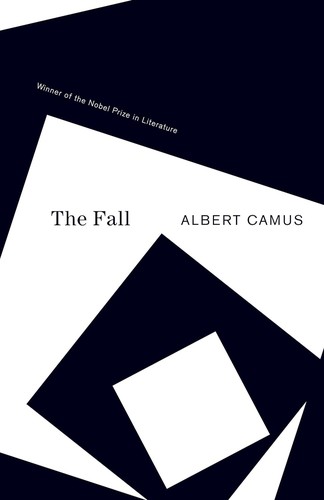
Camus’s last finished novel was The Fall (1956). It has a lot of personal resonance for Rich and the other boys loved it too.
Loss of innocence: how much of our behaviour comes down to signalling? Is there such a thing as genuine altruism? Is it dangerous to learn about this stuff? Was David Foster Wallace’s ‘new sincerity’ idea doomed from the outset?
Escaping the double bind: Choosing which status games to play, finding solace in sports and other explicit games, why hedonism doesn’t work, moving awareness away from the self and towards others, dissolving the problem of a meaningless universe.
Performative castigation: Is Jean-Baptiste’s judge-penitent stance actually coherent? The pitfalls of woke ideology, recursive traps of judging people, and why virtue signalling is good, actually.
Religious interpretations: The biblical fall, Jean-Baptiste as antichrist, the death of God, and organised religion as laundering scheme.
Worst opening segue competition
Benny: 3-0, man. Knees are starting to creak, my sleep immediately declined in quality. That’s my life now.
Cam: I wonder what the age is that you stop falling over and start having a fall. You know that? Like when you’re sort of granddad — like, “he had a fall.”
Rich: Is this your segue?
Cam: Yeah, this is a segue, man. But seriously, what age do you think it is? What age did you start having a fall? Is that sort of 60?
Rich: Yeah, when your bones are all fucked and brittle.
Benny: Yeah, if you’re old and you break your hip, it’s a huge problem.
Cam: It’s all in the hip, eh?
Benny: It’s all in the hip. You gotta do those hip thrusts for life.
Cam: I’m a hip thrust enthusiast, to be honest. All the girls love them.
Rich: About three reps isn’t enough, bro.
Cam: Yeah, I remember there’s that point when you’re a teenager talking to other guys and you realize that, okay, three reps is common with other dudes. You know what I mean? No one’s reacting. Early on, early on.
Benny: Three pumps is all that’s needed.
Cam: Three pumps.
Benny: Less self-conscious and more happy, basically linearly, as I get older.
Cam: I definitely prefer myself and my life now I’m older. I feel like I’m more honest. I have more built up — I mean, talking like crystallized versus fluid. I think I have more crystallized anxiety, or just like ten years now worth of anxious thoughts rather than one year.
Benny: More knowledge of stuff that can go wrong, so now you have more to meditate on. That’s fascinating.
Cam: Yeah, well, more experience of the tough parts of life that you can build on.
Rich: Would you say like some kind of loss of innocence?
Cam: Is this your segue?
Benny: Let’s all do one segue. Let’s figure out which one’s the best. I’m judging you guys pretty harshly, and your segue is over here. How do you guys think you’re going to escape this feeling of being judged?
Cam: Let’s start. Rich, did you want to give a brief overview of some of the stuff?
Rich: Yeah, I’ll do a little overview. So we’re reading Albert Camus — was that a faithful rendition, Benny?
Benny: I think that’s exactly how he said his own name.
Rich: Yeah, I’ve been working on my impressions.
Cam: Working on your French. Well, they say to get an accent down, really you want to almost satirize it, parody it — and then suddenly people start understanding you better, but you feel like you’ve been so silly. If you actually parody a French accent, then the French can finally understand you.
Is the pre-fall Jean-Baptiste a virtuous person?
Rich: Anyway, we’re doing Camus’s The Fall, which is a short novel — maybe more like a novella. It’s less than 100 pages. It is basically one monologue, or a series of monologues stitched together, from a guy named Jean-Baptiste who is in a bar in the Netherlands — a bar called Mexico City. And he’s telling his story to some unknown person. He’s just bending someone’s ear, basically.
Cam: Cher ami, or monsieur.
Rich: Yeah, a very patient man, we assume. He’s telling about his life in Paris when he used to be a defense lawyer, and his loss of innocence, his fall from grace, and how his life has changed for the worse — maybe. I don’t know, I’m not doing a very good job here.
Cam: No, that’s all good. In this bar talking to someone who we never get introduced to — and I wonder if he even exists at points, or whether it’s just a monologue to himself or to the reader.
Rich: A fever dream, perhaps. He’s often getting temperatures.
Cam: He talks about his life and he seems like a very virtuous person, right? He works hard, he’s nice to people, he helps others. My reading of it is you’re meant to just think at first he’s a good person — there’s nothing to judge him about. Do you think that’s correct, or even early on is there something to judge him about?
Benny: It gives it away at the beginning that something happens to him. It’s clear that he perhaps dislikes himself or dislikes his situation early on. So as the reader, you sort of know that there’s this foreshadowing. But I think what is clear is when he’s describing this period pre-fall, he was very self-satisfied. He viewed his life as very complete, nearly perfect. He was the successful defense lawyer in Paris who basically had everything put together. He thought he was extremely well respected. Every aspect of his life was sort of optimized in some way. And he sort of delighted in himself.
Rich: I believe him, because he’s talking about himself in a very self-deprecating way after the fact. He’s describing this period — so I think we can trust him that people thought the sun shone out of his ass, basically, and he had a great time. He’s like a good citizen, doing his civic duty. There’s nothing he loves more than helping some blind guy across the street. He gives his money generously and conceives of himself as a good person, and acts in ways that we associate with good people.
Cam: Yeah, all his actions are great, right? He helps others. He feels good about helping others.
Benny: He’s a defense lawyer for the poor and disabled, and often takes their cases pro bono if there’s a client in need. He often refuses to take their money. And he’s very good with their families — offering condolences when appropriate at the courthouse, always acting with grace towards people.
Rich: The way he talks about all this stuff is sort of poisoned by his later mindset, so he’s very contemptuous of this phase of his life in the retelling of it. But I think he probably was a good, innocent man before he received this knowledge and had this awakening that upset the apple cart and changed his conception of who he is.
Some personal reflections
Rich: Can I just step back a little bit? I think it would be good to contextualize this — my history with this book, because I have read it before. I think I read it around 2018 or so, and it just happened to map onto all of these problems I was having, or self-doubt I was having, around things like signaling, authenticity, questioning my own motivations — I think you could call it scrupulosity, basically. Becoming self-conscious about your own intent and your own motivations. And I was so surprised to find it out in the wild. No one directed me to it, I just randomly came across this book, and it matched onto so many things that happened to be really personally resonant for me. I got a lot out of it, I wrote a lot of notes at the time and thought about it quite a bit. And then I never talked to a single soul about it up until now, and I also never read the book again up until now. So it’s been a really interesting exercise to go back and have another think about it, and I’m quite hyped to talk about it, and talk about how I have navigated through these kinds of problems that he’s having as well. Just to set the scene a little bit.
Benny: That’s funny because, yeah, from what you put in the chat, I gathered that you did like it and there’s lots of themes you wanted to discuss. But if I had to guess before you put that stuff in the chat, I would have guessed that you actually didn’t like it. Because it strikes me as very on-the-nose, in the sense that you just have this guy monologuing about all these problems, and the philosophy is right on the surface of all this stuff he’s dealing with. It seems to me that in lots of the other books we’ve dealt with, those are precisely the parts of the book you don’t like that much. You didn’t like the chapters in Infinite Jest with Steeply and Marathe because it was sort of two-pointed — they were discussing human nature too superficially in some sense. So I’m kind of surprised you like it as much as you do. I’m happy you do, because I loved it as well. So I’m also hyped to talk about it. But I’m curious — why did you like this so much? Do you think it’s just because it’s resonant with your life? Or because he’s maybe not trying to hide it in fiction? Like the whole thing is on the nose as opposed to being 50-50 split between fiction and philosophy.
Rich: Yeah, that’s a great way of putting it. It’s not attempting to be something other than what it is. And to be clear, it does fail on the points of characterization and arc and so on — it’s just this classic philosophical-novel type thing, right? It’s absolutely a delivery mechanism. But the reason I like it better is just that I really love how it’s written. There are a lot of quotes that have honestly just stuck in my mind forever — very evocative. The themes are extremely personally resonant, but it’s not a very good book as a novel, I think. It’s more just like a springboard.
Cam: So we were around the book — a monologue or philosophy. Yeah, no, I liked it, I think it’s great, I think it’s funny. I used to not like Camus very much. I read The Stranger when I was a teenager, like everyone else. I don’t know if maybe on theme I was sort of judging it because I was into empiricism or analytical philosophy. And just Camus in general — my introduction to Camus was The Stranger and The Myth of Sisyphus. I didn’t think as a philosopher he was that great. I think the philosophy in this is stronger. So I kind of went in a little bit skeptical of whether I’d like him. There’s this thing about Camus around like — maybe it’s that thing where people who haven’t read that much philosophy may have read a bit of Camus and exalt it higher than they should. And then it’s about actually accepting, well, that’s fine and this is actually good, and you shouldn’t be hipster about it.
Rich: This is kind of like practical old-school philosophy, right? It’s how to live and how to be in the world type philosophy. So I think of it as the same kind of thing as David Foster Wallace, where you’re not asking them to invent a new ontological framework or come up with some big new innovation. It is more like moral and spiritual guidance, or just illuminating some particular human experience.
Cam: Well, funnily enough, in the 40s, 50s, and 60s, a lot of the thought around someone like Camus and of course Sartre and others was around creating this new framework of truly accepting the kind of Nietzschean idea that God is dead — which Jean-Baptiste explicitly says at one point in this book — and then in this kind of nihilism, how do we cope, how do we live? What framework do we have to get us out of this double bind? I’m not sure if The Fall is successful at that, but there is certainly the thought around these writers that they’re trying to create this new kind of philosophy — whether it’s absurdism, existentialism. You know, it goes by different names, and there are slight differences, I’m sure, between Camus’s brand and others’ brands.
Rich: Are they making truth claims about the world, or is it practical guidance type claims?
Benny: No, I think there are some truth claims built in. Among various existentialist philosophers there are true claims built in — like Sartre’s “existence precedes essence” and stuff. That’s a claim about human nature and about the ability to define meaning-making systems for yourself so that life becomes meaningful. You can argue, I think, about how free humans actually are, whether there is such a thing as essential human nature, all that stuff which we probably all have views on. That’s a metaphysical claim about how humans operate. And I view this novel especially as playing with meaning-making systems and the question of how you do that. I basically view this novel as a cautionary tale of how not to do that. I don’t think this provides positive answers, but I think it does provide a negative answer in the sense of — he is picking up on something that a lot of people fall prey to, probably to a less extreme extent than Jean-Baptiste here. He’s picking on some tendency of humans to deal with the question of judgment from other people and trying to create a meaning-making system in a world without God. I basically view him as saying Jean-Baptiste is doing a really bad job of this, and we need to figure out a different solution.
Cam: So it’s probably worth just unpacking a little bit more of what happened in the book. Jean-Baptiste is talking to this guy, and how he used to live quite a virtuous life — or at least he thought he did. And then he talks about how he is walking down the Amsterdam canals and hears this laughter, and it totally disturbs him. We find out later that what it was, is he saw a woman throw herself into the water and commit suicide. He decided not to do anything about it, and he sort of let it happen. And that instigated this total feeling — well, quote, the fall, right? And she literally falls — she falls into the water. He’s actually not a good person. He let this person die, and part of the reason why he let her die — no one was around to signal to. He suddenly realizes, wow, my whole life has just been impressing others, signaling to others. And not only that — that’s the whole of humanity. And then he just has this descent into kind of a depression, I suppose. He reminisces on all the women he’s seen that he kind of uses — he’s a womanizer. Later on, there are these religious themes, and he talks around the little-ease of this old torture chamber. I think — did he say he was in it himself, or is he just describing this little torture chamber where you have to hunch over, that you sort of feel a strong feeling of guilt the whole time you’re in there?
Signalling theory and loss of innocence
Rich: Should we pause for a second there? That’s a good summary, Cam. Let’s talk about this idea of suddenly losing your innocence and re-conceptualizing your own motivations, because I think that’s a very powerful, interesting idea. I don’t know if it’s a universal experience or not, because I guess people have been having this experience for a long time. But I feel like I had a very similar experience — not caused by me failing to do something, but just through reading the literature on this kind of stuff, and specifically reading Hansonian — Robin Hanson’s — stuff on signaling, and how much you can deceive yourself. According to Hanson, it’s advantageous to deceive yourself, because it gives you plausible deniability in certain situations and makes the signal that much more credible. I think learning about that actually sent me into a bit of a tailspin, because once you see that, you can’t stop noticing that pattern everywhere. I don’t know if you guys have had similar experiences with it, but you become very jaded about human nature, about other people’s motivations — sure. But the most harmful expression of it is when you become jaded about your own motivations. That’s a pretty grim headspace to get into: whatever I do, I’m inevitably trying to stroke my own ego on some level. I don’t know if you guys want to talk about the old saw about whether true altruism exists, or just whether you guys had any similar kind of experience like that.
Cam: Oh, hell yeah. Exactly.
Benny: For me, it’s interesting to hear you guys talk about that, because we have obviously all read the same sort of literature around that. I found it less jolting somehow than I think you guys did. One of the reasons is perhaps that this question about how pure are my motivations has always struck me as somewhat of a weird question. Not that it’s totally meritless, but we wouldn’t make these sort of judgments about any other field of human endeavor. If someone is a brilliant scientist or playwright or entrepreneur, we wouldn’t begrudge them the fact that their ego is obviously playing some part of what they’re doing. People’s motivations are multivariate — I don’t think it makes sense to talk about a single motivation for doing something. Typically it’s some bundle of reasons you want to do something, and the fact that ego plays some part of that strikes me as somewhat obvious. I agree there is some sort of striking realization to realize how much of the action is signaling. But yeah, for whatever reason, I found it less psychologically jolting than I think you guys did. I don’t think I was ever tempted to say something like, pure altruism does exist.
Cam: I wonder if it hasn’t struck you to the core as it struck Jean-Baptiste. And Jean-Baptiste might be wrong — that just of, “wow, everything’s a facade, and it’s like 90% about being impressive to others.”
Rich: It’s about the proportion too, right? I always acknowledge there’s an element of ego and selfishness in everything. But just thinking about — if I was on a desert island, would I want to write a blog or make music or whatever? And thinking, well, no, I probably wouldn’t. So much of what I’m driven by is performative if I think about it carefully enough. It’s that sort of realization of how consuming it can be.
Benny: But performativity is not necessarily a bad thing, right? There’s also good reason to be performative — in that if you’re giving other people pleasure with your performance, that’s good. I agree, if you’re on a desert island, you’re not going to write a blog. Part of the blog is showcasing that you’re smart and well-read, etc. But part of it’s also just contributing to the knowledge base of the world. I think that’s a fundamentally cool and good thing, and I don’t begrudge you that some percentage of your motivation. Even talking about percentages, I’m not sure makes sense. I think it’s just this big bundle of stuff. And there are lots of other things you could do that wouldn’t be writing your blog, that would cater more towards pure egoism. Then the question is, why aren’t you doing those things? It’s because you also think writing blog posts is useful and valuable for both you and other people. I think that’s fine and good.
Rich: Where I ultimately landed on this, and why I don’t feel angst about it anymore, is basically realizing that there is no escape from the way that humans are wired as a social animal. It’s naive to think that you could be otherwise. And then also realizing that you can choose what games you play. There are all kinds of status games, and you can compete in whichever one makes sense to you. Some of them are positive, some are negative, some are neutral-ish. And if you just play positive-sum status games — great. You can encourage other people to play those games with you and everyone wins. It’s like being rescued by my consequentialist morality, basically, where what matters is the outcomes. I don’t actually particularly care about intent. There are parallels in here too about that, but I think that’s not necessarily obvious to people — that what really matters is where the good things happen in the world. The way I put it in my book was something like: do the poor kids whose villages are being dewormed care whether true altruism exists? Of course they don’t, who gives a fuck? Like, they’re getting clean water, they’re getting dewormed. Who cares? It just doesn’t matter. From the point of view of the universe, it doesn’t matter.
Cam: I suppose I just have a bit of virtue ethicist in me — that I feel like intent does matter. I’ll definitely grant that, okay, we choose to write a book and part of that is to be impressive. But I love when I stumble across a new blog that’s amazing, it’s so beneficial to me. And so if we’re doing that to others, it’s a beneficial thing to do. Or helping others, helping young African children even though you’re just kind of virtue-signaling — if you can align it with good in the world, that’s a good thing. Even if it’s a personal thing — if I go and exercise or eat well and it’s kind of, you know, to try and get a six-pack, it’s good that I’m exercising. It’s good that I’m reading, even if part of it is to have a big bookshelf in the back of my room. It’s better off that I can leverage things that improve my life and improve other lives. I agree with that. But I suppose — Jean-Baptiste before his fall kind of aligned his signaling with doing good in the world. An EA nerd could maybe say you could optimize a bit more, but there’s something around — it’s not like absolving of the soul or something. I still suffer with that, you’re kind of fooling yourself.
Cam: The funny thing with this dynamic is when you learn about it, and you learn this is a big part of human nature, you still kind of apply it — it’s very easy to apply it to others than yourself. You start noticing it in everyone else. And it’s probably true that different people have different extent of signaling. You kind of notice this person’s virtue-signaling in heaps. You can be consciously lying and signaling when you actually don’t care about this thing. Or there are people that actually do care about the thing, but the reason they care about the thing is because they’re kind of deluded, and it’s because it makes them feel good and get the warm fuzzies. But they do really believe in doing the good thing, and they do really want to help others. If you took away all the incentives of signaling, they wouldn’t. And then you get people maybe where we’ve come to — where we’re aware that signaling is a big motivation, but we’re also aware about the principles, and we kind of think, well, if we align them, that’s a good thing, and both are driving us.
Cam: But in terms of just the human soul — it is a depressing thought, if you really take it, that everyone is just out for themselves trying to look impressive. That’s at least descriptively explaining a lot of behavior. It’s explaining Jean-Baptiste’s early behavior. In some sense, Jean-Baptiste realizes this about himself and others, and in some sense, he’s more virtuous. But then he’s the bad guy because he realizes — one reading is, okay, maybe this guy’s a sociopath, he doesn’t care about anyone else. And you just say, well, that’s human nature. But in another sense, maybe this guy has enlightened, and he realizes that everyone’s just like him. I don’t know where I land on that, to be honest.
Benny: Just the topic of cultural norms. Signaling takes place in a social context, obviously. What behaviors you engage in to signal matter, and which ones you’re going to engage in depend on which ones you think will actually get you status — which is some cultural convention. So the fact that he was trying to get status by helping the poor and the elderly is, I think, a fundamentally good thing, and is much better than if he was in, I don’t know, Genghis Khan society trying to get status by beheading other tribes or whatever. I guess one way to maybe bring this to a head is just to say — if you were to have a conversation with him after his fall, what would you tell him? I feel like I would tell him something along the lines of: it’s good to be aware of your own motivations. That’s just part of what it means to live a self-reflective life. Understanding that egoism is part of your own motivations is a beneficial thing. But that doesn’t take away from the goodness of the kinds of deeds you were doing. From society’s perspective, Jean-Baptiste pre-fall was a much more productive and useful member of society than Jean-Baptiste post-fall, who’s now sitting in this bar in Amsterdam trying to make himself feel better, trying to escape this game by just judging everyone all the time.
Cam: And just judge others.
Rich: And infecting everyone with the same mind virus, right?
Cam: But I’m not sure if you guys truly believe that. Like, if you really let’s say I was doing these good things, and then you really found out — Cam just legitimately does not care, and he’ll laugh about it with you guys, but it’s just doing the — like, compared to someone who genuinely believes it, that person seems more virtuous. And then the added stipulation is, well, actually, that person who seems more virtuous actually isn’t, and they’re just driven by incentives. I suppose one of the problems is — yes, it’s good if it’s aligned. But at any point it feels — if it’s just driven largely by social incentives, it can be broke. Jean-Baptiste, suddenly there’s no one around to get fuzzy points around, and he doesn’t do the good thing. Like, that’s the risk. And as effective altruists might point out, it can get totally misaligned and be totally ineffectual. But I think EA itself is also a victim to some of these social dynamics and Overton window dynamics, like everyone else. And they’re better, I suppose, but the same things kind of apply. That’s the risk of it all.
How to cope with a bottomless pit of suffering
Rich: Yeah. If you’re in the Genghis Khan society, the most virtuous thing that you could do is try to shift your society towards a new set of social norms — which is going to make you a pariah and maybe endanger your own life and so on. So the real virtuous people throughout history are often deep contrarians, like Thoreau, or, I don’t know, the abolitionists, the suffragettes. Peter Singer is a great example.
Rich: So I think there’s an element of that in here as well, which is that what Camus — or what Jean-Baptiste — is really upset about is the sheer scale of suffering. And again, this really hit me hard because it’s so similar to the Peter Singer stuff, where the woman falling in the canal and drowning is like the drowning-child thought experiment right in front of you. Where of course you should jump in and do it. But there’s all this suffering that he is aware of that’s happening that he does nothing about. And he employs the utilitarian calculus for this — he says, “I deny the good intention, the respectable mistake, the indiscretion, the extenuating circumstance. Everything is simply totted up, and then it comes to so much. You’re an evildoer, a satyr, a congenital liar, a homosexual, an artist, et cetera. Just like that, just as flatly.” So there’s a concern here about — I think Scott has called it a bottomless pit of suffering, or something like that. How much is enough? The way that the EA people tend to resolve it is just by saying, give 10% of your income, as a sort of fairly arbitrary bar. But if you do that, give that to effective causes and you can feel like you’re actually making a real impact and you don’t have to torture yourself psychologically. Of course, that is totally arbitrary, and you theoretically should be giving more, and you should be doing more. I used to find that quite psychologically hard as well, because I do think it’s true on some level. And then the way that I get out of it is just compartmentalization — I just think, oh well, I’m imperfect, but I’m doing my part. I could be doing better, but I’m not going to lose any sleep over it. That’s hard to get away from, and it can also catalyze some kind of self-loathing or dark night of the soul.
Cam: There’s almost this double bind where, even if you get to this point where it would be better if I’m just being okay with doing the good stuff, or believing it would be good to do the good stuff — you’re in a place where you sort of just can’t force yourself to believe in your motivation. It would be better off to be deluded somewhat that everything you’re doing is just this big way to save face. Almost like believing in God sometimes — people have the view that it could be better off if you believed, but you sort of can’t make that jump once Pandora’s box has been opened. Like Benny said earlier, that it’s better to be self-aware — I’m not sure if it is better to know the extent of this. Hanson and similar talk about this. Potentially this is a massive info hazard. We’ve obviously evolved pretty strong mechanisms to hide this part of our nature, to the extent — insofar as you’re Hansonian, which we are — we think it’s very strong, and the average person doesn’t view that. They view that the good things they worry about are truly principled, rather than just being about status.
Benny: I think maybe we just have a disagreement over how persuasive Hanson is. Signaling is a big component of social life, but I think you guys are overrating it. You’re veering into territory of like, every action you take is signaling.
Cam: You’re literally signaling right now.
Benny: Yeah, yeah. We’re all just signaling right now. I do dislike the signaling discourse, because it has this element of — lo and behold, I’m going to say the word — unfalsifiability. You can always put down any sort of action and say, oh, this was signaling. There’s always some sort of signaling element you can find to it. That doesn’t mean it’s not there, but it also means we need to be very wary about over-applying this framework, just because it’s so easy to apply. It’s similar to evolutionary psychology in that it’s super easy to come up with post-hoc explanations of how so-and-so’s actions were dominated by signaling concerns. Signaling — going back to my main point — undoubtedly is a big part of social life, but it also doesn’t explain why there are outliers in terms of altruism and truth-seeking and stuff. And I think altruism and truth-seeking do exist, and there are people who are concerned with various causes or finding things out to the detriment of their social life — Peter Singer being an excellent example.
Cam: Even on Singer — Singer has tremendous status anyway. We might be getting too distracted there, to carry on.
Benny: But he only gained that later. I think his earlier work, you know — he was just kind of this pariah in philosophy circles, this annoying little moral philosopher who came in when moral philosophy had gone in a completely different direction. Practical ethics was not a serious subject in academic circles. And then Singer just came in — it was like, all everything you’re doing is bullshit, think about this child drowning in a pond. There was no way to foresee that that was going to lead him to be one of the world’s greatest philosophers.
Cam: I suppose I just have contention with this idea that Singer is this person completely outside the Overton window who people view as a total pariah. I don’t think that’s correct. I agree he’s controversial to an extent, but —
Benny: I just think it’s hard to make the claim that all of Singer’s written works, especially early on — Animal Liberation, ethics of helping poor people — were all status-driven. You have to do some serious mental gymnastics.
Cam: I wasn’t making that claim.
Rich: Just the lower bar is that he’s capable of behavior that’s not status-driven.
Benny: Okay, yeah. That’s all I mean.
Rich: Which is what we’re kind of arguing about. Picking your nose, was it?
Cam: Yeah, and when I think about it, it is probably these things that would have evolved in and of themselves to want to satisfy. But then even sometimes those things become a combination of practically satisfying that thing, as well as signaling components. Even eating now — we all want to eat. But eating nice food and being cultured in food has a signaling component.
Rich: So the other thing we should note here is that the signaling-as-info-hazard argument doesn’t actually rely on signaling being true. It doesn’t rely on signaling explaining all of human behavior.
Cam: Yeah, Jean-Baptiste might be wrong, right?
David Foster Wallace and the curse of pathological self-awareness
Rich: You can get in your own head about this, and that’s still bad. It doesn’t matter that you’re wrong unless you can find out a way to course-correct. This is what I’m really interested in — I think there are big parallels with David Foster Wallace, with too many layers of self-awareness, basically. I don’t know how you get off the ride once you’re on the ride.
Cam: I mean, in some sense, I feel like you almost can get off the ride, because it’s so ingrained in us to be deluded about these things. Wallace even talked about this as water. It’s very easy to turn back into the default settings. You have this revelation, and half an hour later you’re in the default setting, getting annoyed at someone, or doing something with a signaling component, or thinking of yourself as a good person. In some sense, it’s kind of easy to get off the ride. Maybe not ever fully. It’s easy to get back on the ride and fully feel absolved.
Rich: I think Wallace didn’t manage to, right? The double bind, as I see it, is that you realize the irony of life — maybe not quite signaling for Wallace, but basically a similar elevation of consciousness to a painful level — and then you try and save yourself by rejecting irony and trying to champion sincerity, trying to be sincere and to connect with other people and asking other people do that too. And it doesn’t work, because as soon as you are tactically trying to be sincere, or strategically trying to be sincere, you’re not being sincere. It doesn’t come organically from the heart, from the mind.
Cam: Yeah, it’s a total double bind.
Rich: As far as I can tell, you can’t escape that. There are certain layers of metacognition that once crossed, you can’t uncross. You can’t unthink things that you’ve thought. I feel like that’s what happened to Wallace, and I don’t know if his new-sincerity thing even makes any sense. Even that might be a low-level info hazard or something. Maybe you should just not be too introspective, basically — it can be a bad idea. It might have been better for Wallace if he was somewhat less introspective, at least for his own mental health. It made him produce some great art.
Benny: I feel like this is part of what Sartre — well, both of them are wrestling with this. But this is where I think you need to invoke some notion of an external framework for living, or some external meaning-making system that you can latch back onto and have it, in moments of despair, illuminate the actions that you think are good to take. To tell you how to live, such that it can just act as an anchor in your life when you’re going through these turbulent psychological times.
Cam: I feel like it’s the same kind of brand of problem though, where you need some form of meaning to function. And it’s just so hard to actually have genuine faith in that thing when you’re pulled by nihilism or absurdism or signaling driving everything. It’s so hard to get to the place that absolves you from that when you know you’re seeking that to function. And there’s this other irony as well — when you’re the person who has become aware, and this is to bring it back to Jean-Baptiste, you almost feel better than others. Because it’s like, yes, we’re all motivated by selfishness or signaling, but I see through all the bullshit that you don’t. So in some sense, I feel more enlightened than you, and I’m working on not doing all the obvious stuff that’s just BS. I’ll just do the reading and I’ll do this other stuff that’s attached with noble motives. Jean-Baptiste kind of feels that he feels better than everyone else because he’s the one that’s kind of seen the truth, but he still has all of this guilt that he knows — well actually, he’s just as bad as everyone else. But it almost invokes Jesus at a point, like he can sacrifice himself, or — I don’t know if that’s the correct reading, but it does get at this dynamic of, I think Wallace even says it as well at some point, of like — he feels better than others sometimes because he sees through the bullshit, but he feels so much worse than others because he can’t even fucking function.
Rich: It’s bittersweet, right? Because you also envy people who are not having these conundrums at all. Jean-Baptiste describes the barman in the first couple of paragraphs as ape-like, and then he later admits that he envies him, or he admires him, because man can’t help but admire the primates because they have no ulterior motives — which is a pretty mean thing to say about the barman. But it is funny: the beasts are innocent, beasts cannot experience this fall and this loss of innocence. You feel superior to the beast, but you also envy it in that sense.
Cam: People even have that around other humans though, if they’re a bit more simple — or in some sense you think it’s so ridiculous, being philistines or being stupid or ignorant. And in another sense you’re like, well, actually, they’re living pretty happy, and that’s kind of a good way to live. They’re much more happy than you potentially are.
Benny: There’s this tweet by, I think, Sasha Chapin, maybe a year or so ago that’s always stuck with me a bit. He was discussing the fact that there’s apparently all these people who become enlightened according to the Buddhist tradition sometimes, and the question was — where are all those people? He was positing that there’s these levels of enlightenment, and the people who are sort of initiates and lower down the enlightenment ladder, if you will, are the ones screaming at everyone about how it’s important to meditate for five hours a day and go on all these retreats and all this stuff. They’re the most vocal people on Twitter, writing blog posts and all this stuff. And then he was like, but the truly enlightened people are probably the ones that are past all that bullshit and are just hanging out with their family, eating chicken wings and watching sports, because they realized that’s what’s actually important in life.
Benny: It strikes me there’s a bit of that element here as well, where it’s like the people who realize that signaling comprises part of their actions are paralyzed by that fact. Then if you just come to terms with that, you can just be the kind of person who recognizes those impulses in yourself and then does the right thing anyway. You can be Jean-Baptiste and then just rescue the girl in the middle of the night who’s drowning off the bridge, or walk the blind person across the street, and then recognize that there’s a part of me who wants to tip my hat to this blind person, but I notice that, and that’s for other people’s benefit, not mine or the blind person’s. So I’m just not going to do that. This element of self-knowledge allows you to transcend the signaling element in some sense. So there’s a way in which just being aware of it — I think, back to Cam, your point about, is it better to be aware of it? I think it is better to be aware of it, because then you can sort of attack those aspects of it that you deem to be problematic. The paradox here, I think, is that he would have been happier had he just saved the woman and continued on with his life, realizing — oh my gosh, I almost didn’t save her, and yeah, this now shines some light on the kind of person I was, but now I can just keep doing the deeds that I think are good, and this meta-awareness lets me escape this cycle of constant signaling.
Cam: It’s funny — not helping someone about to kill themselves, that’s quite an extreme thing that most people probably wouldn’t fall victim to. But I think the point of this book is that, metaphorically, there’s always going to be a woman jumping off that we’re not going to do anything about, and we kind of convince ourselves — I’d save the woman, because we think about it. Of course I’d save the woman. But there’s lots of stuff that we’re not aware of that we don’t do. And then Jean-Baptiste realizes that even the person that’s seemingly living a pretty good life isn’t saving a lot of women if the incentives are aligned.
Benny: Yeah, that’s a good point.
Cam: I do wonder how biographical this is, in some sense. I wonder, is this just Camus talking to us and confessing that he is Jean-Baptiste, essentially, and this is what he views about himself and humanity. There are these little biographical coincidences in there — I think Jean-Baptiste is good-looking, he used to play sport, and Camus used to play soccer, and then he’s like this womanizer.
Rich: Should we talk about those two things, because they’re kind of interesting examples. He finds himself to be a giant hypocrite, right? And then his initial way through that is to engage in activities that are not at all hypocritical, where you’re just straightforwardly seeking pleasure, or you’re in the construct of a literal game — like a literal sports game or whatever. I remember having that same realization, that I like games that are defined as games, because you don’t have to feel bad or have complicated feelings about your motivations — you’re just straightforwardly playing a game, and everyone knows the rules of it. So it’s very liberating. He says, “I’ve never been really sincere and enthusiastic except when I used to indulge in sports, and in the army when I used to act and play as we put on for our own amusement.” So that’s another thing — you’re in a framework where you’re explicitly allowed to be pretending and lying and playing a certain role, and everyone knows that, so it makes it totally okay. You can be authentically inauthentic.
Rich: And then the hedonism as well — like, was it kind of the picking-your-nose thing? There’s not a huge amount of signaling value in being passed out surrounded by beer cans and covered in Dorito crumbs or whatever. It’s not cool.
Cam: I don’t know about that. When people are young, there’s this real pressure for men to drink as much as they can, right? You kind of know that guy who can smash 20 cans and eventually pass out.
Rich: So why doesn’t that keep working? I think because you rise through different levels of status hierarchies where that’s no longer considered cool. There’s also something fucked up about a 40-something-year-old or 50-something-year-old guy who’s getting smashed and is at bars where everyone’s 20 or 30 years younger than him. It’s the Peter Pan syndrome type thing.
Cam: Oh yeah, no, it’s pathetic.
Rich: It’s interesting, I couldn’t quite get why he said that this didn’t work for him, except the only thing I could find is that he finds himself unable to maintain this lifestyle due to his personal failings — “my liver and an exhaustion so terrible that it still has not left me.” I guess it’s just not sustainable.
Cam: It’s funny, I view them as quite different. In terms of getting lost in sport or something like that, I view that closer to Wallace’s kind of new sincerity — of getting to a place where, maybe you’re watching the sport, and there are people, and they feel emotional when the country wins the World Cup, and you’ve achieved — and when you take a step back you say, this is all arbitrary and silly, like, why do I care about this? But when they’re in it, it’s just total devotion and connecting with others. And that’s a good place to be. Or when you’re playing sport and you have passion, and you do anything for your teammates and anything to win — it’s totally silly when you take a step back, but it’s quite a good place to be.
Cam: But I view the drinking, and certainly the womanizing, that’s more kind of pathological, I suppose. When we first actually get introduced to that side of Jean-Baptiste, we think — yeah, this person is not a good person, he’s using women, he doesn’t really care about women. It’s true in Camus’s life that he was this total womanizer. I think he’s probably confessing at some points — he says at one point he’d trade ten conversations with Einstein or something like that with just a moment, one drink, with a pretty girl. Just that tension within a man like that, where he knows the stuff that really fulfills him is intellectualism and having those discussions, but then he finds himself talking to a maybe non-intelligent but pretty woman and trying his hardest to impress them. He sort of can’t shake that.
Cam: I know Camus’s wife in real life, Francine — he was cheating on her all the time, and she attempted suicide not long before this book was written. I think a lot of his friends thought, well actually, the woman who falls that Camus didn’t help is his wife, who attempted suicide that he didn’t help — and suddenly realizing, yes, I haven’t treated my wife right, and I’m selfish, and I didn’t try to help her.
Rich: Least hedonistic French intellectual.
Judging the judge-penitent: has Jean-Baptiste really solved his problem?
Rich: Should we go to Jean-Baptiste the judge-penitent, and just describe how he’s taken on this new role? How he’s tried to solve this problem?
Cam: Yeah, so tell me what a judge-penitent is.
Rich: It’s an oxymoron, I think, right? It seems that he sits in judgment of others as a way of elevating himself to be above other people and not having to judge himself. His argument is that we should all declare ourselves guilty, to get ahead of the game, basically. Because it’s impossible to be innocent in this world, and there’s an endless well of suffering, and you are deluding yourself if you think otherwise. So once you declare yourself guilty, it lifts the burden of responsibility or freedom off of you — which I think is a totally morally bankrupt, logically incoherent thing to believe. I don’t know if I fully understand it, so I don’t know if you guys want to weigh in on what he’s getting at.
Cam: Yeah, I’m not sure if I fully understand it either.
Rich: It means you don’t have to be judged — and he hates to be judged — because he’s preemptively judging himself. Is it something like that?
Benny: I think I can understand the psychology around it. I think the problem he’s trying to solve is how to escape this judgment, right? This laughter that he was encountering — he’s realizing the world is sort of laughing at him, and then the question is, how do I escape this? I can’t live like this. One interesting observation he makes just before he introduces the judge-penitent thing is that wealth is basically the ability to avoid being judged, and that’s its primary purpose, because you don’t have to go out in public as much. You have to see people face-to-face less. You have other people to do your chores that would have you out in public shopping or driving around. Being wealthy is basically a way to escape being judged as much as possible, because you can send other people out in the world for you. Which I think is an interesting little insight, actually.
Cam: So you hide — is that essentially?
Benny: Yeah, you get to hide more. You get to choose when and where you make your appearances, and you can craft them around whatever narrative you want to construct. As opposed to if you’re poorer in the world, you don’t have those same opportunities — you can’t construct your meeting with other people to be subservient to whatever needs you have.
Benny: Anyway, so I think this judge-penitent thing is the recognition that — it’s the same psychology that goes around where if you make fun of yourself, it’s harder for other people to make fun of you. You’re trying to stay ahead of the game by saying, yeah, I recognize I’m a piece of shit, and I’m doing all these things because I’m egotistical and all this stuff. And if I confess my own sins before other people can attack me for them, then I basically take the wind out of their sails.
Rich: It’s almost like a counter-signaling thing.
Benny: Yeah, it’s a technique to remain feeling superior. I think you could see this play out in certain subgroups. So I’ll just pick on wokeness because it’s so prominent these days. I think the same tendencies arise in super woke circles. If you take your classical, highly educated, white, super woke person, what is tons of their rhetoric about? It’s about saying white people suck. “I was born with this sort of original sin. I need to repent for my whiteness and having all this privilege. And I’m by default bad.” I think it’s a way to escape judgment, basically. Now you don’t have to do anything real. You can just sit there — and tons of university students do exactly that, to the exclusion of solving any real problems or dealing with the world as it is.
Cam: And you’re sort of judging others more than you’re judging yourself, but then you kind of bring it on to judge yourself.
Rich: You judge yourself, not to be self-critical, but because you expect to get applauded for that too. You want to have your cake and eat it too — you enjoy your liberal rich white lifestyle, and then you performatively castigate yourself and others like you, and you enjoy that as well.
Cam: And not only that, you judge anyone severely who doesn’t do that. You have no tolerance for anyone who doesn’t do the requisite things that make a good person, and you judge them more than anything else.
Cam: And then it’s almost recursive as well. You get to this point where we’re judging these people, and then we think, well, that genuinely is bad behavior and I’m someone who’s better — and then you just kind of get caught in… where’s the end?
Rich: So the way out of this virtue-signaling thing is, if you’re signaling actual virtue, then great — keep virtue-signaling. The only escape route is to try and cash out: what are the long-term, nth-order consequences of my actions, and if they are good, then signal away. But if they’re not, then be more thoughtful about it, I guess. What we’re probably really arguing is that certain positions political ideologues take are not actually net-good positions. As we talked about before, it’s not necessarily bad to signal in and of itself.
Rich: But I’m confused about Jean-Baptiste specifically, as maybe an unreliable narrator in this bit, because he seems to say, my way out of this — I enjoy my pleasures and I fuck people over and I do what I want, and then I get to feel the thrill of repentance and castigating myself, so I win coming and going. But he also sounds like a miserable guy, right? I’m thinking we should not believe him about this. There are also other bits which suggest otherwise — especially that final paragraph, the final paragraph of the story, which makes me think, I don’t think he’s chosen a good way out of his spiral. It’s like he’s almost got the worst of all worlds, because he is still pathologically aware of everything that he’s doing, and I think it is still torturing him on some level. But it won’t change how he feels about himself. He’s still doing all the bad things — he’s getting the worst possible way to resolve it.
Benny: Do you want to actually read those last few lines of the book just to put a point on that?
Rich: Yeah, so he says: “Say the words that for years have not ceased echoing through my nights and that I shall finally speak through your mouth — ‘O young woman, throw yourself in the water again, so that I might have once more the opportunity to save us both.’ A second time, huh? That would be rash. Just imagine, dear colleague, if someone were to take us at our word — you’d have to do it. The water’s so cold! But don’t worry — it’s too late now. It will always be too late. Thank goodness.” Even that’s ambiguous. I’m not entirely sure — I think you could take it either way. But it’s definitely not that he has clarity about the course of action that he’s taken and he feels great about it. You can tell that he’s still thinking about that night a lot. It’s weighing on him. He’s confessing his sins to this guy in part because he gets off on it, but I think the trauma is unresolved.
Pro and anti-religious interpretations
Rich: And he wants to bring everyone down to his level as well, doesn’t he? Which is — maybe we should talk about the religious interpretations, because that could be an interesting way to think about it too, and it might shed some light on what he’s actually trying to accomplish here. You guys talk about — I’m just going to take a piss, but I can still hear everything — talk about the circles of hell and Virgil and so on.
Benny: One way to kick it off, maybe, is just to say — and I guess this ties in with how we’re supposed to view him by the end of the book — that Paris is sort of this lofty city, right? That’s where he starts his career. And then we find him as this drunk in Amsterdam, which is literally below sea level. So that’s in reference to the fall a bit. He even says personality-wise, he’s always liked to be elevated. He likes lofty places, he doesn’t like spending time in basements. And now he’s in this city where he’s literally below sea level. Amsterdam is often described — it’s a circular city, it’s got these seven circles, I think. And he’s right in the center of the city, which I think is supposed to —
Cam: What does he say himself? It reminds him of Dante’s Inferno. I can’t remember — I think he maybe says it. Certainly a lot of commentary says it as well. I think he says at one point it literally reminds him of Dante’s Inferno. It feels like he’s in hell.
Benny: Right. I think the center of that circle actually is the red light district in Amsterdam, which is maybe indicative of permissiveness of everything and just living however you want to live, et cetera. I’m putting aside that I’m actually in favor of legalized prostitution and stuff like that, but that doesn’t fit in too well with the themes.
Cam: You’re in favor of Dante’s Inferno. Has Inferno everywhere. Expand the Inferno circles.
Benny: Expand the circle of red light district everywhere. I was reading some commentary about it, and there have been some religious thinkers who thought the text was pro-religion. They viewed this guy as basically living selfishly beforehand, and then the fall coming and realizing that he’s this flawed individual, and basically reading it as some sort of lesson that you need a God or something to cling onto in your life.
Cam: Maybe just spell that as well — the fall itself often gets compared to the fall in the Garden of Eden, the fall from innocence. Adam and Eve are innocent, and then you finally have this self-knowledge about yourself and have this fall into flawed humanity.
Rich: And you get shame for the first time, and guilt and things like that. Like, you were naked and now you have to be clothed.
Cam: So you’re saying some people argue that this fall is actually good?
Benny: Yeah, it’s sort of a sinner who repented. He saw the error of his ways, and is now repenting to this guy. But I don’t really read it like that. I view it as sort of an anti-religious text.
Cam: Well, then maybe the problem is, you need God. And then at one point he says God is dead — he says the Nietzschean “God is dead.” I was wondering, how much is this problem of virtue-signaling a result of Christianity? I think you can make arguments — Christianity was founded on exalting the victim, caring about others, and victims. And then you keep pushing, and then people make somewhat cogent arguments that current wokeism is even an offbranch of Protestantism, the latest reformation — that we just keep exalting the victims. So how much is this pointing out that Christianity has driven the cycle of virtue-signaling? But then at one point he says, well, it’s not just Christians — he invokes Descartes. I can’t remember exactly what he says about Descartes, but I think he says that there are atheistic lenses of this happening as well. But then you can kind of make the argument that a lot of Western culture is just downstream of Christianity anyway. So even if it’s atheistic, it’s all downstream of Christian morality, this virtue-signaling cycle. I don’t know. Maybe God and faith get you out of it, but then you’re in this double bind of not believing in that.
Benny: Also, by the end of the book, he’s not a respectable character. He’s not reformed. So I think that’s the trouble with the religious reading — it’s hard to view him as a positive example of someone who has come to see the error of their ways and is now making an effort to change. He’s certainly not making an effort to change in any respectable way. He’s making an effort to change so he can basically do whatever he wants and not feel bad about it. So I feel like the pro-religious reading is a hard one for me to make.
Rich: He’s like an inverse Christ, or an inverse John the Baptist. John the Baptist baptized Christ — that’s all I know.
Cam: We’ll spell out who John the Baptist was.
Rich: He was beheaded. I don’t know much about him, but he baptized Christ — it’s kind of a big deal. I think part of his duty within this book is inculcating the same worldview in other people. So he describes Mexico City, the bar, as his church that he goes to to preach. He’s converting this particular guy who he’s telling the story to. But it seems that’s not a one-off occurrence — this is what he does. He wants to spread this message of permanent guilt, or inescapable guilt, and that you need to accept that, and that that will liberate you from the burden of responsibility of having to forge your own freedom and defend your own innocence at every moment of every day.
Cam: Now you’re saying that, even the bar — Mexico City, the idea of evangelizing people in Mexico City is probably a reference to the conquistadors going to — what was it called, Tenochtitlán, the Aztec Empire.
Rich: One wrinkle was that there actually is a bar called Mexico City — there was a real bar. But I’m sure he chose to set it there for some reason.
Cam: The evangelizing that went on by the Spanish conquistadors to the Aztecs, providing them Christianity, but also a lot of the brutality, right? That Jean-Baptiste is dealing with — the brutality of humanity that we can’t escape, and the brutality of the Aztecs themselves beforehand.
Rich: I think this is an anti-religious novel, is my interpretation of it. It is trying to point out the futility of submitting to authority as a means of absolving yourself of responsibility, and how that does not fall in line with the good. Part of it gets confusing because it’s trying to talk about the death of God at the same time, and what you’re meant to do in a post-God world. But I think it is ultimately condemning the practice of submitting to an authority figure so that you don’t have to think for yourself. It’s saying that having true freedom — the freedoms that are afforded to us post-God — are scary and powerful and have to be reckoned with. But I think he is an anti-role model, as far as I can tell. I don’t think this would represent what Camus actually thinks is a good way to be in the world. It’s like, who was saying at the start — Benny or Cam — it’s like pointing out a whole lot of ways to do the wrong thing. It’s a what-not-to-do book.
Cam: I can’t tell how much Camus endorses it though.
Benny: I mostly agree with you, Rich, but here’s one possible pro-religious reading that I just came up with — see what you guys think about this. It has to do with baptism. Baptism is this ceremony by which you get dunked in six inches of water, and then basically your sins are washed away. More generally, Christianity is all about Christ dying for your sins, and that absolves you of the guilt of being this less-than-perfect human who’s not perfectly altruistic, and is selfish and egotistical. Perhaps you can read the book as saying you need these religious rituals to cleanse people of this guilt that they’re going to carry around — if you don’t have any external mechanism by which they can shed it, otherwise people are going to try and come up with their own systems, and these systems are going to be imperfect and very flawed, just as we’re seeing in Jean-Baptiste. So it’s still cautionary in the sense that Jean-Baptiste did the wrong thing, but it’s pro-religious in the sense of — okay, if you have these sorts of rituals that can make people feel like, yes, I am flawed but that’s okay, then maybe that’s a good thing overall. I’m still quite anti-religious, but that’s a possible reading of the book, I guess.
Cam: Yeah, and I’m more pro-religious now.
Rich: There’s the long tradition in Catholicism in particular, right, of offering indulgences, and basically letting rich people — in the same way that he describes in this book — distance themselves from the consequences of their actions, or just distance themselves from suffering in the world. He describes religion as a laundering operation, where you can get yourself cleaned up. He says our faces are filthy forever, or that we have to spit on our hands to try and clean ourselves. I agree — my personal view is that something like religion is very instrumentally useful and probably leads to better outcomes for all the reasons that this text discusses. But it could be bad if you have a system that will absolve you of any sin just by flagellating and saying, I am not worthy, I carry the mark of Cain or whatever — the same thing that the most unpalatable factions of the left have today, this original-sin type ideas that mistake self-flagellation for actually taking useful actions in the world. If you mix up those two things, I think it can be really bad. But that’s probably highly contingent on what type of religion you follow. I’m not nearly enough of an expert on different Christian sects to know which ones of them are good or which ones of them have fallen more into that trap.
Cam: I wonder how universal existential angst is. Because it’s a theme in a lot of high-culture literature, and then smart people read it and talk about it and relate to it. I wonder if it is this kind of universal thing that people suffer with. Perhaps it is. There’s that whole deaths-of-despair stuff that Angus Deaton talks about, of poor people then turning to fentanyl and stuff. But this thing that Jean-Baptiste is struggling with, his particular conflicts —
Rich: I think they don’t. I think most people probably don’t think about this too much, right?
Benny: Oh really? I would have said it’s pretty universal.
Cam: Just think about the game and the grill.
Benny: That’s interesting. Think about the game. I don’t know. This is slightly infantilizing to most people. Most people are pretty complex in their lives, and probably do ponder the meaning of their life and the extent to which their actions are driven by —
Cam: I mean, there might be typical mind bias of you, though.
Rich: You’re ruining my ability to feel elevated above people, Benny.
Cam: This adds to it — go back to the recursion. You can feel elevated against people who feel better than others. That’s like what Sam Harris and similar used to respond to when people would say, well, what about religion for the masses? Sam Harris would say, well, that’s just so patronizing. He often, I think, wouldn’t actually give a response. He’d just say, that’s insulting and patronizing and unimaginative. He wouldn’t say why it’s wrong — that, yeah, maybe others are different from this 145-verbal-IQ guy. I viewed it as a way of feeling good about himself, potentially.
Free will and (dis)continuity of personal identity
Rich: Speaking of Sam Harris, you guys haven’t mentioned the free will / determinism stuff in here yet. I thought you’d be all over that.
Cam: I didn’t catch it, man.
Benny: Yeah, neither did I to be honest.
Cam: It’s not my fault there. I had no option to miss it.
Benny: Where did it come up?
Rich: It couldn’t have been any other way. Maybe we don’t need to talk about that — we talk about that enough. Well, there’s this really good bit about how no one can take responsibility for their successes. He says: “You won’t delight a man by complimenting him on the efforts by which he’s become intelligent or generous, but he’ll beam if you admire his natural generosity.” And inversely, if you tell a criminal that his crime is not due to his nature or his character but to circumstances, he’ll be extravagantly grateful to you. Yet there is no credit in being honest or intelligent by birth. So that’s a similar to the classic Sam Harris point.
Cam: It is another thing that can set off a black pill in yourself. Similar to “everything I do is to be impressive” — but also it’s like, my impressive attributes are just these things that I don’t take credit for, and are potentially shallow as well. This person likes being around me because I’m good-looking, or because I’m interested in something. But when you separate that from yourself, then you view everything as pointless and shallow, and potentially get depressed on that.
Cam: I mean, lucky we’re all not that impressive. So we don’t have to worry about that.
Rich: I don’t even know how to think about that stuff. It’s impossible to disambiguate luck from anything, really, isn’t it? I don’t actually know how to think about that, but it doesn’t really bother me, I have to say.
Benny: I think it really depends on the context. If you’re talking about a specific skill or trying to work on something, it’s not very useful to use the language of determinism. But if you’re talking about moral blame and punishment, and how to organize the judicial system or something like that, then I think it’s more relevant to think of ultimate causes of people’s behavior. It depends a bit on what problem you’re trying to solve at any given time.
Cam: I feel like there’s this weird thing about identity as well. Let’s use Rich’s example — he puts himself out there and writes this book, and then maybe people want to hang out with him or date him because he’s this published author. And let’s just say it was an even bigger book.
Rich: Whoa. I’m really turning down too many marriage applicants, man. I have to get a personal assistant.
Benny: You’re already sending out your sperm on a weekly basis. We can populate the world with more Riches.
Cam: That’s the one thing that’s not signaling, it’s just shipping your sperm out to everyone, in and of itself. I’m not really sure what I’m saying there — just, when you kind of divorce yourself from your achievements, but you’re kind of proud of your achievements, but you see other people being impressed by these achievements, but it feels kind of separate from you sometimes. That whole idea — this person likes me.
Rich: I mean, I feel that about myself in general — stability of selfhood over time. I feel like the person who wrote that book, now that it’s a few years ago, was in some sense a different person. I don’t feel pride when people give me a compliment about it.
Benny: Really? That’s fascinating. I can understand intellectually feeling like that person is a different person, but I feel like in my case, if someone was to compliment me based on something I’d done a few years ago, I would still feel good about it and accept the compliment.
Rich: I just think Parfit is right about that stuff, so I don’t fight it. Looking more into the volitional self and neuroscience, I think it basically proves that Parfit is totally right about it, and that selfhood — stable selfhood — is very much an illusion.
Benny: That’s very Parfitian of you. You’ve really imbued all the lessons of Reasons and Persons. Nice. I agree, I 100% agree. But psychologically recognizing that is different from intellectually recognizing it. I think it’s still hard for most people to —
Cam: Until you get in the transporter, you don’t really feel it.
Rich: Actually, now that I think about it, it’s less about identity. Maybe more about — I feel cringe about everything I’ve ever done ever. So if someone compliments it, I’m like, you’re wrong.
Cam: I have this weird complex relationship with signaling sometimes.
Rich: This book was written for you, Cam. You’re the most pathologically self-conscious of the three of us, and I’m next, and I think Benny is the most psychologically healthy in that particular regard. But if you think about — like, when you were 17 and you were almost great at soccer or whatever — I think the Parfitian point actually is true. Can you really be proud of, if someone says, “that’s so cool” — do you really feel proud? It’s more like, oh, this kid that I used to know really well did it, right? Does it really feel like I did that, and I’m proud, from 20 years ago, or 15 years ago or whatever?
Cam: I think in my weird recursive sense, I’m sort of proud of my detachment from that, that I know other people maybe wouldn’t be. It’s kind of natural — let’s say you meet someone and you’re like, oh wow, it turns out he’s friends with Sam Harris and he never mentioned it. Or like Brad Pitt, but never mentioned it. He’s like, oh yeah, he’s a cool guy. And you’re like, wow, that guy is just awesome, he’s just not showing off. That’s a cool guy to be. So it’s trying to cultivate that attitude to things. But there’s this kind of irony where I know that’s quite a virtuous, impressive way to be.
Cam: With the Parfit stuff, I think I still feel connected to my past life. The way I feel it’s connected though is — you feel like, I’m the type of person who could be so great at X. Maybe not because of old age because of sport, but if X was something different now, I’d be so great at that. Just being an impressive person — it feels kind of connected.
Rich: I mean, there is totally continuity, right? You have many of the same talents and skills, and it says something about you for sure. It’s just psychologically feels quite far removed. I think you’re right, Benny — maybe it will become more of a logarithmic dropoff, because your identity probably becomes more stable. Whereas I just feel so distanced from my teenage self, but I probably won’t feel that distance from this self in the equivalent amount of time. It would be cool if I did, though. My best possible life scenario is just always reinvention, always creative destruction and trying to grow and move — not to become stultified, or whatever you want to call it. It would imply that you will never get any better or that you will never grow.
Benny: I don’t know if I agree with that. Take someone who’s trying to just be an excellent writer or something — if you focus on writing for 50 years, I can see you getting much better at your craft, but at the same time feeling like, yeah, that young writer was still me, just with a couple worse ideas, or I hadn’t ironed out my talent yet. I feel like it depends on what you’re trying to do. He says self-consciously, because my personality is not changing that much over time.
Rich: No, you stay right where you are, my man. I like who I am, I like myself a lot, and I didn’t always like myself. So maybe you can just hit a nice pretty stable spot and stick around there, but just try and change your mind on ideas, which might not change your personality very much.
Benny: Probably also you’ll always feel like a dad, right? There are probably facets of your personality that won’t change. You’ll recognize that 32-year-old you was a dad, and 50-year-old you will also be a dad. But there could be other aspects of your personality that change more.
Cam: I can’t see myself changing as much as I have changed. I think from like 15 to late 20s, you change a lot because of all the incentives at play. There’s this homogeneity effect of wanting to, at school, be popular. You more come into yourself, I think, and you find what’s important to you. For us, it’s doing this sort of thing and finding other people like that. I can imagine when I’m 40 that will also be important to me, unless I drastically change. But I feel like I’m already doing the stuff where I’m less influenced by these other social incentives and dynamics.
Rich: That’s true. Talking about getting old, Benny hitting the big three-oh — the main thing that I feel nostalgic and wistful about is the sense of possibility and embryonic-ness of not knowing who you are and where you’re going. Because it’s a bit scary in the dark moments, but it’s really exciting as well, because you don’t know what your impact will be, and you don’t know who you’ll meet and you don’t know what work you end up doing. It’s really cool to have all those pathways opening up in front of you. And now I’ve landed on a certain pathway. I’m getting married, I’ve got a kid, I’ve got a house. I know who I am, and I really like my life, and I am so happy and grateful. But I still am wistful for the sense of possibility, which now is more or less forever shut to me. The sensation of being a uni student or being in your twenties — life unfilled before you.
Cam: Just knowing you might meet someone or do something that totally changes your life. You just kind of have less opportunities now.
Rich: It’s crazy to be in your thirties, and that’s behind you, and your whole life is going to be more or less the same from here on in.
Cam: Well, I think for a lot of 30-year-olds, actually it hasn’t changed too much. But when you get married and have kids, that’s when it’s kind of like — well, okay, I have to sort of stay put.
Strategies for escaping from the spiral of self-awareness
Rich: This is the other thing I wanted to mention — about how do you get off the ride. Honestly, I think you can’t fight your biology in this regard, and so you just lean into it and do all the things that people would put under the category of touching grass. Sports is a great one. I love when I’m playing tennis — it’s so meditative, because I am not doing bullshit metacognition. Except maybe about my own game or my own psychology, but it’s meditative because you’re just moving your body through space, and you’re playing this game with rules. It’s pro-social, it’s positive-sum, it’s a good thing to do. And then the same with having a kid — it honestly has made my life much more meaningful in a way that I hoped that it would. I’m just fulfilling my biological imperative, and it works because you have to pull your head out of your own ass, basically. You’re very connected to the world physically, and just doing important, useful things moment after moment and day after day, instead of sitting around idly thinking about things. I know full well that I’m just fooling myself on some level, and it works perfectly for me. I find it very joyful and meaningful.
Cam: You got your new pimp coat as well. So there are new things in the future.
Cam: Anyway, I’ve got to go because I’ve got a team meeting in a couple of minutes. And I go back to the most boring, bureaucratic, meaning-soul-destroying thing ever.
Benny: All right. Well, quickly, what are we doing next?
Cam: Well, I only have Hamlet and Gravity’s Rainbow on my shelf, but I’m keen to buy all the books. I say that every week, but I will do it this time.
Rich: I just bought them all the other day.
Cam: Nice.
Rich: Should we do Hamlet then? Easy.
Cam: Sweet.
Benny: Sure, sounds good.
Rich: Are you going to go right now, Cam?
Cam: No, just in the next minute or two.
Rich: Okay. Does anyone have any last thoughts, or want to summarize?
Cam: I liked Camus. I’d read more of him.
Rich: You go, Benny.
Benny: I liked this much more than other Camus I’ve read. Makes me want to give some of his other work a chance. I think I will come back to this and read it. While reading it, I was having so many thoughts, and there are a lot of details that we didn’t even discuss. Probably a lot of themes that we could dive a lot deeper into that we just touched on. I’m pretty excited to read it again in even a year or two. I think I would get a lot, honestly — I think I’d get a lot out of it if I was to reread it right now. But I’ll certainly reread it in the next few years. I’m pretty excited for it.
Cam: I think I’d like to increase my biblical literacy as well. So in ten years time, when that’s improved, I think I could get more out of it.
Rich: That would be handy. I think this is also a good novel that helps you realize Camus is not just the absurdist guy. There are elements of absurdism in here for sure, but there’s a lot of other stuff. You can’t really pigeonhole him — he has broad interests that he’s exploring. And this actually, I think, I find more interesting than the absurdist type stuff, which is — maybe there’s not a huge amount to say about.
Cam: I think this is a better book than The Stranger.
Benny: Me too.
Rich: Yeah, I like this better as well. Although I do like that book. The Plague I didn’t like that much, and we talked about The Myth of Sisyphus before.
Benny: This is also just hugely relevant for a lot of people in our circles and generation. Anyone who’s thought about EA-related issues — anyone in a society that’s wealthy enough where you can start thinking about, what am I really doing with my time? How should I really spend my money? You start to hit on these sorts of issues, perhaps not in the same extreme way that Jean-Baptiste does. But you do start having these questions of, okay, what is the most meaningful thing I can do with my money? How much do I actually care about other people versus buying a new car or book, in our case?
Cam: I’m just imagining a version of The Fall about some EA person.
Benny: I always buy used books, that’s fine.
Rich: Okay Benny, we get it, you’re better than us. Doffing your hat when the listeners can’t see you. Wait, no, that’s the opposite of what I wanted to say. Damn it.
Cam: I can imagine a version of The Fall just about an EA person, and they sort of realize that they thought they’re doing all this good stuff — they’d seen through all the BS — and then suddenly they have their own fall, realizing they’re just as victim to all this stuff and it’s all BS. That’s the other thing we didn’t touch on as well — with the absurdism and nihilism, that’s part of it as well. It’s not only that you realize it’s all performative, but then you realize there’s no ultimate meaning above it all as well. Virtue in itself is hard to justify. But I have to roll, so on that, you guys continue.
Rich: All right, can I just continue with Benny for one more minute? Yeah, all right, see you, dude.
Cam: Yeah, of course. Catch you guys up later.
Benny: See you, dude.
Is the idea of a meaningless universe a reductionist mistake?
Rich: Benny, you were saying something before about — we were talking about the appropriate level of emergent abstraction to talk about something. What was that?
Benny: Oh, we were talking about free will, right?
Rich: In reference to free will again. So I realized on this read of the book that a lot of these problems have fallen away for me somewhat — the free will stuff and the absurdist existentialist stuff, the lack of meaning, finding meaning in a meaningless universe stuff — because I think it is something to do with the tendency to think in a reductionist way about life and the universe and physics and morality. Reading Deutsch has been really clarifying for me, and clarifying for me why those things no longer seem like condemnations. Because I used to think, oh, you could scour the universe and you’d never find a molecule of meaning, or a molecule of good or evil or whatever. I used to think that was a compelling argument. And now I realize that that’s just a category error, basically — that it’s not useful to talk about those things on the level of bouncing atoms. Basically Deutsch would say that abstractions are real and exist, I think is what I’m trying to get at, and that’s all you need to be able to feel good about this kind of stuff. Realizing that the reductionistic view of science or philosophy is basically just not correct — it’s naive.
Benny: That’s fascinating. That’s a fascinating connection that I’ve never made — the one between reductionism and meaninglessness. I wonder how many people have that implicit connection in their head. And it could be fixed by just introducing them to something like the reality of abstractions.
Rich: I don’t know if it’s a common experience or not, but definitely my teenage atheist phase and beyond, I’m definitely thinking in those very reductionistic terms. Even though I think you could jolt someone out of it very easily by saying something like, well, you could search the universe for a McDonald’s particle and you won’t find one, but that doesn’t mean that McDonald’s doesn’t exist.
Benny: I mean, does this help you with something like absurdism, though? I don’t know if just because abstractions are real, that automatically imports meaning into a meaningless universe. Assuming you buy that it’s a meaningless universe — all of Camus’s critiques about, we just have these routines we’re following day to day, and ultimately we live and die, et cetera. Well, maybe it is tied to reductionism. I don’t know.
Rich: I think the way I’d challenge it is by saying the statement that it’s a meaningless universe is false. Because we can observe this thing that people call meaning, that they have and that they experience, and it clearly exists. It just straightforwardly exists, in the same way as other abstractions exist. There’s no fundamental particle for it, but it is an emergent property of physics to chemistry to biology to consciousness to meaning. So I would just challenge that starting premise.
Benny: Interesting. I’m just looking up absurdism.
Rich: It is kind of an empirical question, right? Because you can just ask people if they have meaningful lives, and a lot of them will say yes. And then you can say, what do you find meaningful, and they’ll give answers. And then you can explore — you can try on religion, or try on having children, or try on doing work that helps others, or whatever.
Benny: It is kind of a weird philosophy in that it’s somehow immediately negated by the fact that people just feel like they have meaningful lives. Insofar as you have people who just say, oh, I like my life and I find it meaningful — doesn’t that just contradict the whole premise? You can argue they’re wrong, I guess, but that’s a weird claim to make. I mean, in some sense it’s subjective anyway. It’s weird.
Rich: It maps really nicely onto the free will thing actually. The Deutschian — I don’t know enough, maybe you know more about this — but when Deutsch is trying to say that free will exists, I don’t think he’s saying it in a non-deterministic way. He’s more saying that the sensation of free will exists. He’s not saying you could have done otherwise. It’s basically an argument against reductionism — that it doesn’t help to talk about problem solving, decisions, choices, in a deterministic reductionist way. It’s way better to talk about them through the emergent lens that we call free will, which is not really fundamentally deterministically true but is descriptively useful.
Benny: I agree with him insofar as it’s useful. It’s very rarely useful to talk about decision-making at a deterministic level — it’s better to just talk about choices. But then I think he plays a sleight of hand where he uses that to justify something that he calls free will, but very few people mean that when they say free will. And then he just kind of redefines the term and says free will exists.
Rich: Deutsch wouldn’t redefine a commonly used term to mean something completely different.
Benny: Yeah, I know. Dude, that’s so frustrating. But dude, you got all the retweets and stuff. You’re freaking Deutsch-famous now.
Rich: Oh, I got my first interaction with Daddy Deutsch — honestly, that was satisfying. I felt good about it.
Benny: Yeah, that is satisfying. That’s nice.
Rich: I don’t know if he read my post, but I’m guessing he must have read a couple of paragraphs at least, if he’s gonna blast it out.
Benny: At the bottom, there’s like a surprise: “this book fucking sucks.”
Rich: Yeah, and I’m so glad I didn’t put him in full clown makeup on the meme, because I don’t think he would have tweeted that out.
Benny: That was the perfect decision. That was good.
Rich: Anyway, let’s wrap it up. Is there anything else you wanted to say, or should we leave it there?
Benny: We should probably leave it there. Sick book though, I’m stoked we did that one. That was a nice one. We actually skipped over the slavery stuff too — in terms of it being — which I didn’t take him to mean literally, but more just like — I guess we kind of talked about it with respect to meaning-making systems and stuff — but being a slave to some broader framework can actually leave you more free.
Rich: Yes, we tackled it but we didn’t tackle it head on. I think he’s riffing on the Rousseau stuff as well — the little-ease, the prison and all that kind of stuff. We didn’t get to. But so good.
Benny: I’d like to understand his — he had a big debate with Sartre, I think, about communism. I would like to understand that more now, because I think they were really good friends at the beginning of their life, and then they had this huge split over whether they should basically be on Stalin’s team or not.
Rich: So they were homies and then they fell out.
Benny: I forget what Camus wrote, and then it contradicted a lot of Sartre’s philosophy at that time. And instead of responding to it, Sartre got his student to respond to it, as a sign of like — I don’t care, your work is so worthless that I’m just gonna get some student to write a few paragraphs about it instead of me dealing with it, because it’s not even worth my time. Which is a huge flex.
Rich: That’s a flex.
Benny: That’d be fun. I’d like to read some Sartre now, honestly. Now I’m a little more warmed up to it. The existentialism stuff would be fun.
Rich: Maybe we should just keep going in this vein a little bit. Nietzsche will be really interesting to do as well, because apparently Camus claims his real influence is the Nietzschean vitalism type stuff, and he denies being an existentialist. I tried to understand that, and I just couldn’t. It also didn’t seem that interesting, and I’m familiar with neither of them. So that would be good. I’m looking forward to that.
Benny: One issue is if we veer away too much from fiction and start doing too much philosophy. But I guess as long as we stick with these philosophical-fiction tracks, then it should be okay.
Rich: For sure. For Sartre, we can do one of his plays. What was the one that you suggested?
Benny: Yeah, Nausea.
Rich: Oh, Nausea, yeah. I think that’s pretty short, right?
Benny: Yeah, it’s not that long. Which one did you suggest?
Rich: I was saying No Exit, just because it’s the famous one — the “hell is other people” one. Nausea is 240 pages — that’s a two-meeting book, that’s not bad.
Benny: Okay, how long is No Exit?
Rich: Oh, it’s super short. It’s like less than 50 pages.
Benny: Oh really? Okay, that’d be fun.
Rich: And then we should see — maybe Kierkegaard has some fiction. I think Either/Or is quasi-fictional. It might be a bit ambitious, but — or for Nietzsche, we’re doing Zarathustra, which is again a quasi-fictional book. We’re still within — technically we’re kind of pushing it, but —
Benny: We’re within our bounds, yeah.
Rich: I like this kind of thing.
Benny: Yeah, same.
Rich: That sounds good.