The beauty of this book is immeasurable, and its kindness is infinite.
We all love Susanna Clarke’s 2012 metaphysical thriller, which feels like a mashup of Borges/C.S. Lewis/Gone Girl.
Venture deeper into the labyrinth with us:
Piranesi as amateur scientist: On indigenous knowledge, the dangers of naïve empiricism, achieving dominion over nature, and whether the Other kind of had a point.
Metaphysics of the House: Are abstractions real, revisiting Plato’s world of perfect forms, and whether the world is fundamentally Good.
Identity and mental illness: The illusion of stable personhood over time, repressed memories as trauma response, and how a person with dementia or psychosis can maintain a consistent internal worldview.
meet the Beloved Child of the House
Cam: This whole week I’ve just been saying Piranesi in an Italian accent. Piranesi! It’s just annoying the message. Piranesi!
Rich: Do you reckon when the other is talking to him, he’s like doing it because he is kind of mocking him, right?
Cam: Then the hand gestures. Piranesi! Listen!
Rich: Snapping handfuls of spaghetti in front of him.
Cam: And then Piranesi is just logging down all the ways he’s talking, the hand gestures.
Rich: Yeah, this book’s dope. I was hyped to do this one. I have read it before, roughly when it came out.
Cam: You didn’t tell us that.
Rich: Yeah. It’s actually nice to do books you’ve already read, so don’t rule it out if there’s one that you think we’d benefit from riffing on.
Cam: Yeah, I think it could arguably be better.
Benny: Crime and Punishment will be that for me.
Rich: Oh, sweet. It’s even great if some people have and some people haven’t, and then you get the fresh eyes on it.
Cam: We could maybe do Infinite Jest at some point.
Rich: Yeah, so I was really excited to read this again. It’s like a Borges story, I think, but it’s as if Borges was writing today, so it’s less challenging to get into and fleshed out into a novel — a very easy to read novel. I think it’s just a really nice format, but playing with the same kind of weird metaphysics and labyrinths and unreliable narrators and references to the real world that you have to unpack.
Cam: Yeah, it’s like Borges meshed with C.S. Lewis, meshed with Donna Tartt or just murder mystery.
Rich: Yeah, something very modern about it.
Cam: It kind of reminded me at points with the sort of mystery aspect to it. I’m not sure if pulpy is the right word, but you know those books where Gone Girl is like —
Rich: Like Gone Girl, yeah.
Cam: Yeah, Gone Girl is a good example of this book, but there’s like a million of them. The Mrs. sometimes reads them. And it’s always about the wife, and then she’s like, how can I trust my psychiatrist? Or my husband, or my neighbour. It had that element to it. You see why it’s a mechanism, because it’s a page turner. And you’re like, I want to find this out.
Rich: Yeah, it does feel a bit gendered actually, that true crime psychological thriller type stuff where you can’t tell who you can trust. But yeah, before we go too much further, I’ll just quickly lay out what the premise of the book is. So the title character, Piranesi, we’re introduced to, and he’s this guy who is living in a house, which turns out to be basically a giant labyrinth. It’s an old-fashioned classical building with an endless number of rooms in it, or halls and vestibules that stretch out in every direction. It has three layers. The bottom layer is submerged in the ocean, the middle layer is where he lives, and the top story I think is literally in the cloud, which is quite hard to see, and so he doesn’t go up there very often.
Cam: And the birds. Which I suppose shows how big that middle layer is, the fact that birds live there, right?
Rich: Yeah. I think he said each hall is a couple hundred metres square roughly, so perhaps it’s the same in height, which would kind of make sense. And he talks about how arduous it is climbing up the stairs, which also makes sense. But anyway, he is living there. He’s one of only two living people in this world. What he’s trying to do is mostly just survive, so he goes fishing and collects seaweed and tries to repair his clothes and shoes and whatnot.
Cam: He’s a bit of a survivalist there.
Benny: Yeah, it’s impressive.
Rich: He’s very inventive and resourceful. So the one other living person is called the Other, and he’s this older man who’s kind of a gentleman scientist, and Piranesi has been tasked with helping him discover the secret knowledge within this world. He’s basically like his research assistant, I guess you’d say. He goes out and scopes out various rooms in the labyrinth and takes measurements and —
Cam: And he enjoys it. He likes exploring. And generally he just loves the house, he finds it beautiful.
Rich: Yes, yeah. And he looks up to the Other and really admires him. He only gets to meet him twice for I think one hour per meeting, so obviously you’d be absolutely hanging out for some human contact if you are all alone.
Cam: One hour. Tuesdays for others.
Rich: Yeah, he gets to see this guy for an hour, and then this guy disappears to somewhere that Piranesi doesn’t know. He thinks he just goes to some distant hall within the labyrinth.
Cam: As the reader, you kind of think maybe there’s something else.
Rich: Yeah. So we start out from Piranesi’s point of view, we don’t know what’s going on. And the entire story is composed of his journal entries in order, basically. It’s first person, we’re within his head, and we are bearing direct witness to his observations and his reflections. Except that it quickly becomes clear that we know things that he doesn’t, just because we’re able to contextualize certain clues that he is missing. So, for example, about the Other, it’s very clear to us almost immediately that the Other comes from our world — the real world, our human world — and that he has a computer or an iPad or something, which he describes as a glowing device that he taps in.
Cam: There’s a little throng saying right at the start, you kind of immediately know he’s from our world, but you know he’s kind of different. He’s kind of wearing a suit, and he has things that Piranesi doesn’t have. But I remember the first few chapters, there’s definitely a sort of WTF element to this thing, and that’s why the journal entries was, I think, quite a good mechanism — you’re just kind of thrown in. And he’s just like in this magnificent house, and you spend a lot of time reading about — and it’s quite an amazing set piece, this house that will stay with us for life, really. And then there’s the odd things. Of course there’s like no one else living there. And he just sort of says, like, oh wow, this is kind of crazy. Where are we? What’s the explanation for this house?
Rich: Did you think it was full fantasy world at first for the first few chapters?
Cam: Yeah, I didn’t know what to think. I thought it might just be this fantasy world. I was confused. I was just like, when he’s like, there’s only two people — well, there’s like 15 people in this universe, or in this house, which are the same thing. And 13 of them are dead. And then he wonders, maybe there’s more people. He’s like, there could be like 70 people. And then he’s like, no, no, no, I’m getting ahead of myself.
Rich: Yeah, yeah, it’s like, I dared to imagine a number that couldn’t possibly be true, perhaps as many as 70. I think that was one of the only laugh-out-loud moments I had in the book.
Cam: Yeah, that’d be crazy.
Benny: Yeah, we should also say there’s something about the reading experience where — you know, we were talking about my depressive journal entries earlier — reading Piranesi’s journal is exactly the opposite. It’s like you’re inside the head of someone who’s just very innocent, very goodwilled, wants the best for the world, is totally enchanted with everything that’s going on around him. So for the first few chapters you’re pretty confused about the worldbuilding and what’s actually going on, but it’s quite clear that this character is just brimming, in some sense, with joy and goodwill towards the world, and feels very protected, loves the house as he calls it, loves where he is. And as it goes further on, yeah, you start to get these clues that the Other is perhaps not a benevolent character, and you start to get clues that Piranesi is maybe an unreliable narrator. I think the first clue is that he’s going back through some old journal entries and realises that he changed the years — at one point he was recording the years as normal years AD, so 2011, 2012, 2013, or maybe it stops at 2012 actually — and then starts renaming the years to just sort of arbitrary events that happened to him in the course of the house. He just picks out something that happened to him. So the actual book takes place in a span of, I think, probably several months, in the year of what he calls “the year the albatross visited the southern halls,” I think, if that’s right. And so he comes up with his own numbering system for the years.
Cam: Year of the Whopper. Year of the —
Benny: Year of the Whopper.
Cam: It reminded me of Infinite Jest.
Benny: Yeah, exactly. There’s something quite delightful about being inside this character’s head. At some points you start to maybe get slightly frustrated because he’s perhaps verging on the naive, and you start to be a couple steps —
Cam: Yeah, he’s a bit childlike, right?
Benny: Yeah, he’s childlike in a nice refreshing way.
Cam: Which is cool, because he’s like awe-inspiring.
Benny: But pretty quickly after the first few chapters are over, I would say, you start to be a couple steps ahead of him in terms of what’s going on, and in terms of who’s good, who’s bad, and what’s actually happening. And basically your predictions are more or less borne out through the rest of the book.
Cam: Yeah, he’s never really ahead of you.
Benny: No, he’s never really ahead of you. And I think in that way it departs from Borges. So I agree it’s got some of the infinity elements and fantastical elements that Borges has. But with Borges, it’s harder to get a grasp of what exactly is going on, and I think there’s more twists and turns. And in particular, Borges leaves things, I think, more ambiguous by the end. Whereas in this book — and I’ve yet to determine if I like this or don’t like this — but it’s sort of resolved at the end. You can say pretty concretely.
Rich: I think there’s a big philosophical question unresolved, but the plot elements, yeah, absolutely they are.
Benny: Yeah, the plot. Maybe I’ll just say more resolved than some of the other works, especially the Borges works that we’ve read before.
Rich: Yeah. So we’re going to get to, I guess, the metaphysics of this world is, and what the philosophical questions are, which are definitely up for grabs and up for debate. But yeah, before we do that — Benny, do you want to talk a little bit about — basically, you know, we get frustrated with him after a certain point because we can see things that he can’t see. He considers himself a scientist. I think he even refers to himself as a scientist, right? In what ways does he behave like a scientist, and in what ways would we perhaps think that he could improve upon his scientific method?
Piranesi as amateur scientist
Benny: Yeah, I think he goes about things pretty well, honestly. So he’s in this situation that very few of us are ever in, in our lives, where you’re just put in this world and now you’re expected to try and figure out how the world works. And it’s sort of understandable that as readers, you’re a couple steps ahead of him with respect to what’s going on, because you can use the tools of knowing how the usual world works. And so you start picking up on clues that, for instance, the Other is leaving the house and coming back with things from the rest of the world. But Piranesi has no way to know that. And that’s not the first kind of thing you’d hypothesise if all you’ve ever seen is this huge labyrinth type of world. So I guess from my perspective, he does things pretty well. He takes a lot of notes — let’s look at, for instance, how he maps the tides and stuff. He basically has this chart of looking at how the water rises and falls in various halls, and when there are storms, and he’s developed a system of prediction that he uses to say when certain rooms will be flooded, when there will be big storms, etc. And he basically tests all of his predictions. And I would say internally his monologue is basically one of posing questions to the house and then seeing logically if he can answer them. So I was pretty impressed with him as a scientist qua scientist, if you will. And so yeah, I noticed in some of the notes one of you put that he’s perhaps got some naive empiricism in there, but I didn’t pick up on much of that, honestly. So yeah, I’m curious what —
Cam: Rich wrote that. I find it interesting you rate him highly. I was actually just seeing some people earlier today, and one of them happened to have read it. And the first thing he said when I asked him his thoughts was around the contrast between Piranesi’s attitude towards knowledge and science versus the Other’s approach — capital O, the Other. And the reason the Other is there is because he wants to kind of understand the dark magic or the dark arts — or not necessarily dark arts, but he wants to understand the knowledge of the house, and he believes he can understand it and then use it. And it’s stuff like live forever and — do you guys have a list of things?
Benny: Be able to fly like the birds, and turn yourself into birds and stuff like that.
Cam: Yeah, so like all this really —
Rich: That one sounds cool, but I don’t know about the others.
Cam: But he kind of wants to use the knowledge for himself.
Benny: The Other does, you mean?
Cam: Yeah, the Other does, sorry. And then Piranesi is more like — he’s just tracking everything. You can just imagine him in this vast house and he’s just walking around, writing down, like, that looks cool. He’s trying to understand it, but in and of itself, for his own sake. That was what this guy said, and I said, yeah, I think actually the book is doing that a bit. And then — well, actually, in a sense, from where I come from, the Other is kind of right. The reason I think we want to understand things and use knowledge is to use it for ourselves and then to kind of dominate nature. And it’s kind of this ugly thing to talk about, especially with environmentalists and stuff. But I do think it’s kind of the human condition, right? And that’s what you’d want to do. If you find yourself in this magic fucking house, like, yeah, understand how it works and then try to do stuff with it. But it’s kind of contrasted more with this kind of, the Earth is the main kind of mother nature. Like, don’t impact mother nature too much, just enjoy it, understand it, be symbiotic with it, care for it and it will care for you. But, like, don’t try and use it for yourself.
Benny: Okay, let’s maybe separate what their goals are versus how they’re going about it — so process versus what objectives they’re actually trying to accomplish. I agree there’s an interesting conversation to have around this sort of great and secret knowledge — I think that’s what the Other calls it — that he’s trying to pursue. But he does it in this weird, ritualistic, very unscientific way of just setting up various rituals and then screaming into the void some name that I forget, right? He’s just doing this random stuff. Whereas Piranesi is much more careful and methodical in his thought, and has predictions and tests them. He is willing to really go with whatever the house provides him as evidence. Like, he doesn’t have super strong priors. Maybe he’s just ready to follow with whatever the house leads.
Cam: But he often imbues meaning to things, right? Like, something will happen —
Benny: Yeah, so there is some mysticism there, so I agree. I think that’s another thing we’ll probably get to later — he probably attributes benevolence to the house. Well, maybe it’s an open question if the house is actually benevolent, but I would say he probably underrates his own ability to find food and furnish himself. He thinks it’s sort of the house is doing it, but it’s really his own ingenuity that’s allowing him to survive.
Rich: Yeah, he doesn’t realise that he is actually anomalous, right? We will later find out that other people have come and gone in the labyrinth and they have died, perhaps from failure to have the same survival skills that he has. So I’ll just maybe explain what I mean by the naive empiricism thing. But I like both of your points, and I agree that actually he is a great scientist, especially when put next to the Other. He’s extremely conscientious. I would definitely trust this guy with my life if he was guiding me around the house and telling me when it is and isn’t safe with the tides. And he’s always been chronicling things very carefully, and he writes a detailed journal and so on. I think it’s extremely admirable. So what I mean about the naive empiricism is that I think there’s quite a few examples where he is somewhat undone by under-theorising things. So he says, “it’s certain that there have existed 15 people since the world began. Perhaps there are more, but I can’t say because I’m a scientist and I have to go where the evidence takes me.” And that’s a very strange thing to say, actually, because he understands a lot of background context about biology and humans and reproduction and so on. It doesn’t make any sense to not theorise about how there could only be 15 people. You would actually know that that makes no sense at all, and that would lead you to start generating some other possible explanations.
Benny: Do we know he knows about biology and where kids come from and stuff? Because he doesn’t even remember where he comes from.
Rich: Yeah, I mean, we don’t know for sure, to be fair. But he just has a ton of general background knowledge about the world. He’s not like a wolf child out in the wilderness kind of thing. On some level he still retains the concepts from his life.
Cam: Yeah, which is kind of funny when you’re reading it first — you know, you’re in this confusing place and he’s the only one there, but he’s got this rich vocabulary, and he understands what all these statues are, and you’re like, how the fuck does he know this shit?
Benny: Like, how do you know what a minotaur is?
Rich: I mean, yeah, the statue thing is the perfect example. How could he know what anything is if he hadn’t retained it from his general knowledge before? But another example that might be more straightforward is, like, when the Other disappears, we’re like, well, yeah, he’s obviously going back to the real world. And Piranesi is like, oh, he just goes to another hall. And why wouldn’t you want to know why and where he goes, and why he’ll only come for one hour a week?
Cam: Yeah, his conjectures are not super bold.
Rich: So I think perhaps possibly he just relies very much on — I mean, a related thing is kind of authoritarianism, I guess. The reason that it takes him so long to reconceptualise his relationship with the Other is because he just sort of hangs off every — he does what he’s told and he follows him, even when he sort of suspects on some level that he’s a bit of a phony, or that he says some silly things. But he’s so innocent that he can’t — obviously his explanatory set should include the possibility of him being deceived and being used. But, I mean, now that I’m saying it out loud, you know what, that’s just him being innocent, and I can’t even fault him for that. And the other thing is maybe like a psychological defence mechanism, that there are certain questions that he couldn’t ask because, on some level, maybe he knows it will cause his whole world to crumble and implode. So I guess maybe I partly take that back.
Cam: He reminded me a little bit of, like, reading about Aristotle’s biology — how he just kind of would go to Anatolia and literally just record everything. But also, just when I stayed in Samoa for a while, and you go on these guided tours with locals and they have all this indigenous knowledge — knowledge of the trees and stuff. It definitely felt like it had this indigenous feel to it. His life is kind of pre-civilisation in a sense — there’s no specialisation, he’s doing everything himself, fishing and seaweed, and he’s just understanding his world, which is pretty vast, but it’s just this house.
metaphysics of the House and Plato’s theory of forms
Benny: Yeah. Speaking of the house, Richie boy, you want to talk more about the metaphysical aspects of the house?
Rich: Yeah, absolutely. So, first, like, what is the house? Oh, maybe — are we going to spoil stuff yet? I guess not yet.
Cam: We could now.
Benny: Yeah, we’ve had some minor spoilers, I guess.
Cam: There’s two spoilers. I think we’ve already minor-spoiled it, but I think we spoil a little bit now — warning around what the house is in relation to the world. And there’s a twist later, which we can spoil later, around the people.
Rich: Yeah, let’s leave that bit. Obviously every time we do a book club, in theory, we should do a spoiler warning, and I don’t care because, you know, whatever. But this book feels like the kind of book where I actually think you should just read it, also because it’s easy to read — it’s just a pleasant, fun, relatively short read. So if anyone is listening to this and they haven’t read it, I actually highly suggest you stop listening and read it, and then you can come back to it, because it’s such a delight.
Cam: Or don’t. Read it and keep listening.
Rich: Yeah, whatever, I don’t give a fuck. You’ve been warned, you’ve been warned.
Cam: As long as you’re listening, as long as you listen.
Rich: So, yeah, let’s say what the house is. So I’ve described it physically, but what is it? How did it come to be? It’s a separate world, and the in-text explanation for what happened is something like: there was a time prior to modernity when the ancients, our ancestors, communed with nature and with the world and with the gods — some kind of animism, or a sort of vital spirit possessed by the world, or Shintoism, or something like that. And this was the age in which there were lots of gods and there were satyrs and nymphs and all this kind of stuff. And then we stopped talking to the world and became more clinical and closed off. And all that vital energy, that magic or whatever you want to call it, had to go somewhere, so it just sort of built up, and then maybe flowed out of our world — the Earth that we know — and created some new repositories that carved out new spaces in a parallel dimension, or however you want to conceptualise it. And I think there are many worlds, and one such world is this house, which is a place where this energy flows, which has been created by runoff from our world basically.
Cam: This world has been discovered by this professor. It’s not fully explained why he has this inkling of it existing. But he’s kind of this occultist, and he reveres the ancients and stuff. And anyway, he believes it exists, and no one kind of believes him, and then eventually he can sort of teleport — somehow he gets to the world. And he does it by kind of imagining himself, like, a childlike escape from reason, like pure emotions or, you know, the heart. He can get to this new world. But a lot of other people travel to this world via a kind of ritual. He comes and visits Piranesi and explains this to him. So, as Rich was saying, the professor believes that this new world depends on the other world — couldn’t exist without the other world, and they’re interrelated. And then Piranesi goes, hmm, I wonder if the statues are sort of representations of —
Benny: Of our ideas and stuff in the real world.
Cam: Of our ideas. And then the professor’s just like — which was a cool moment from this professor, who is, like, you’re kind of grown to think, not a great guy. He’s been in jail. He sort of takes people to this world. That was a bit weird.
Rich: I kind of thought it was weird that the professor wouldn’t have thought of that, because, like, come on. But I also don’t know if we actually said — all of the halls of the labyrinth are filled with these enormous, beautiful stone statues that depict people, mythical beasts, animals, and every single one of them is unique.
Cam: Yeah, probably name a few of them. There’s a gorilla, and there’s like thousands of minotaurs.
Rich: There’s a beehive with some bees crawling across it.
Cam: There’s a woman with a beehive — that was quite memorable — with a king’s plain chest. An angel caught in a rose bush. It has this Greco-Roman feel, but quite an eclectic bunch of statues.
Rich: And they stretch on and on. There’s untold thousands of rooms in this labyrinth, and every room has statues, and he’s never seen two statues the same. And he’s gone hundreds of rooms deep in some directions, and he’s never found any repeating statues.
Cam: And he has this seemingly photographic memory.
Rich: Yeah, which is funny.
Cam: In one sense he’s got a terrible memory, so — I’m not even sure if we mentioned that this world, this house, affects the memory when you travel there, and you kind of lose your memory.
Rich: Yeah. And again, not a spoiler, we know this from quite early on, that he doesn’t remember how he got to the world. He doesn’t remember who he was. He doesn’t even think his real name is Piranesi.
Cam: Yeah, that’s what the Other calls him.
Rich: And this is also part of what I was meaning about under-theorising — where it just seems like he doesn’t probe at those incredibly important questions. He’s like a total spurg about, like, the exact hour at which a certain variety of bird will fly to its nest or something. It’s, like, kind of not seeing the forest for the trees here.
Cam: But then he’s got a photographic memory of all the stuff, all the science he’s doing, and all the rooms he’s been to. Well, we believe.
Rich: I don’t think it’s quite photographic, but it’s very good. So, yeah, the statues are really important. They are a central motif that helps us understand what this world actually represents. So we have the Piranesi theory — well, actually, what Piranesi says to the guy, whose name is Laurence Arne-Sayles, the professor who found the connection, is actually contrary to his own philosophy about what the world represents. So there’s two ways of looking at it. One is that this world is a subsidiary of the main world, and the ideas and vital essences of the main world flow into it, and that’s what the statues represent. And the other way of looking at it, which is the one that Piranesi I think actually holds, is that the house is the real world where the real forms live, and the other world is a sort of imitation of it, or provides inspiration for it. And the way he puts it is, like, “oh, I can’t remember ever seeing a statue of a university, but I could imagine the scholars’ statues coming together, and then that gives me the concept of a university,” even though it’s not depicted in the house. And that’s how he explains, like, concepts that he has in his mind which aren’t actually available to him there. It’s kind of like a symbolic calculus or something, where you could take whatever you wanted to explain — you could take these component pieces, like the goodness of the bear statue and combine it with the wisdom of the king statue or whatever — kind of like the glass bead game stuff. And you could put them together and form whatever specific thing you needed out of the elemental parts of it.
Cam: I think it could go either way, like whether the house is the real world or our world — Earth — is the real world. You could kind of view it that way. But the professor’s theory, that the statues are a kind of representation of our world, it’s kind of an inverse Plato, in a sense, right? These kind of other forms —
Rich: So do you want to just explain the forms idea? Because it is actually really important, I think.
Cam: Yeah, here you go, Benny. I’ll pun that one over.
Benny: Sure. So, yeah, Plato famously has this idea of the world of forms. And this comes from the idea that everything — all objects, people, etc. — have an essence to them. So take the idea of a table, right? We have all these different objects in the world that we call tables, but it’s sort of a natural thought to think they all have something in common. They have this essence of a table. And Plato would call this the Platonic form — there’s the ideal form of a table, from which all tables in the world are really derived. And you can do this with everything. You can do this with ideas like justice and peace — there’s the ideal of justice and peace, and then those ideals get instantiated in the real world in imperfect ways. But they all reflect their sort of ideal, their essence. And these things all live in a realm, which people usually call the Platonic realm, or — I think Plato just called it the world of forms. So yeah, the question is, are these statues sort of the Platonic ideals of, for instance, minotaurs and people and kings and stuff like that? Or is it sort of the opposite of that? Which — I agree, I sort of like the opposite reading more, but that’s probably just because I’m partial to like Popper and Deutsch and stuff. I like to think of it as the world of abstractions. So we came up with these ideas here in the real world, say, and then these ideas sort of got taken to this — they become abstractions in our minds, because we start playing with them and whatnot — and then they sort of get filtered to this other world and then take on a life of their own there. So the two interpretations, I think, are sort of a battle between Plato’s world of forms, or something like Popper’s “world three,” or the world of abstractions as Deutsch calls it.
Rich: Which is that we create these emergent categories of things — they weren’t there in the universe prior. On one level it sounds insane. Like, it could be easy to dunk on Plato — why on earth would he think this was a thing that existed? But it is kind of a mindfuck when you think about, like, there is no such thing as a chair, strictly speaking. Like, famously, if you tell people to try to define a chair in a perfectly airtight way, it’s impossible to do.
Benny: Yeah, exactly.
Rich: It’s contextual and multi-dimensional, and also words don’t carve reality at its joints, they’re just useful things for us. And so, in some sense — I mean, abstract concepts are real and true, I really believe that. But I still think they exist to the extent that we find them useful, not the other way around. So I’m kind of on team — I’m not on Piranesi’s team on this.
Benny: Yeah, I like that reading more as well. But I think the piece of evidence that maybe cuts across that is — while the professor, Sayles, at some point says, oh, maybe there are rooms filled with, for instance, laptop computers and stuff that we’ve invented as a civilisation, that would be sort of evidence in favour of our preferred theory here, but we don’t actually ever see that. And Piranesi never runs across that, right? The only kinds of statues he seems to see are sort of animals and people, from what I can gather. So we never actually see statues of mathematics or other inventions we’ve made. We just see people and stuff. So I’m not really sure what to do with that. And you can always say, well, it’s an infinitely big space and there are infinitely many statues — so he would have run across them eventually if he kept exploring. But that seems to be reaching a little bit.
Rich: Sayles’ argument is maybe that the new statues are forming in the furthest-flung reaches of the labyrinth, which would be somewhat more defensible if the labyrinth started forming when the magic started flowing out of the world at the time of kings and gardeners and beekeepers — but not at the time of, you know, personal computers and Facebook and vaping. So it’s like, yeah, that’s a good point, but it’s perhaps not totally wrong. There’s one kind of meta-mindfuck thing in here, which I don’t know if it’s intended or not, but you could make a similar comparison to the allegory of the cave, also from Plato. Which is that Piranesi is equivalent to the people in the cave, and he is seeing, like, shadows of the real world on the wall of the cave in front of him. He just sees crude, symbolic representations, and he’s convinced that that is the true reality, and he’s totally oblivious of the actual real world with all of its complexity and richness. But then the confusing bit there, and something I don’t understand about Plato, is that one of the things that you supposedly can’t see from the cave is the world of forms, right? So when you’re in the cave, you don’t see the real world. But remember that Plato considers the real world to be also an illusion. And what he thinks you should be looking at is — yeah, you’re still in the cave, basically.
Cam: A cave within a cave.
Rich: And then it’s very interesting that, if Piranesi is right, he has direct access to the world of forms, even though in some sense he’s just looking at these shadows and reflections. So it seems inconsistent, but it’s, like, a playful riff perhaps. I don’t know to what extent she intended it that way.
Cam: And then Piranesi brings out his coin and there’s a face of Joe Chip on it.
Rich: Yeah, yeah, I sound like I’m obsessed with Plato — it’s like the third time we’ve talked about the forms.
Cam: Yeah, yeah, so we need the Ubik orange spray can that you could just graffiti all the statues, like all the protesters.
Rich: Yeah, yeah, and they suddenly start, like, getting broccoli haircuts and sucking on Juul pens and stuff.
Benny: Yeah, that’s a good point about the tension between the forms and the cave. Another thing is just that the whole Deutsch–Popper idea of the world of abstractions and stuff is they can take on a life of their own. So, for instance, in math, this is very evident, where you can posit some axioms, and then you can start playing around with the axioms together with some rules of deduction, and then you can discover sort of consequences of these axioms that you didn’t foresee in the beginning. So in this sense, the world of ideas can take on a life of its own. And same with language, right? You can have the grammatical rules for English, but that doesn’t immediately give you all the plays and stories and stuff that you can construct using the English language. But there’s none of that sort of emergence in Piranesi’s world, right? Aside from the fact that the world exists — but you don’t get, I guess, other than the literal fact that the world exists on its own — so that’s sort of the world coming into existence. But you don’t get this spiralling of consequences of your ideas that I think Popper and Deutsch would really emphasise.
Rich: Yeah, he hints at the possibility of being able to combine them, but there’s no actual process for that to take place. There’s no combinatorial system going on, and there’s no actual framework for doing the calculus, or using the ideas — he just mentions it, I think, literally one time. So yeah, it’s further evidence against his case.
Benny: I have one question for you guys. It kind of went over my head a bit, I’m still not sure what to make of it. But when the Other is trying to perform his rituals in order to access the great and secret knowledge, Piranesi starts to get sceptical of this way of doing things. And at some point the Other says, Piranesi, don’t go down this path of not wanting to pursue the knowledge. Other civilisations have done this, and they pursued what we call progress in place of knowledge. So he sets up this dichotomy between progress and knowledge. And it was just a little line in there, but I thought this must be some sort of important line. I have no idea what Clarke was trying to say, because to someone like me, progress and knowledge are in some sense intertwined and almost one and the same.
Cam: Well, you know how some people, when they talk about wisdom — it’s like, what the fuck do you mean by wisdom? In some sense, it’s just this thing you say to sound a little bit more sacred than knowledge. Like, you know, that guy’s smart, but he’s not wise. But there also seems to be something there. And in Arne-Sayles and probably Ketterley — i.e. the Other — there’s an aspect of them exalting the ancient, or the past, in this Confucian sense. And, to be honest, almost in a ubiquitous sense — maybe apart from our culture, but it’s also a little bit in our culture — every culture has always kind of done that. Back in deep history, these people had this kind of knowledge or wisdom that we’ve lost. And in some sense, we may have lost it by this path of scientism or industrialism, perhaps. And then it’s like, you know, leaving being one with the Earth and nature and stuff. I was kind of picking that up a little bit from it. So progress meaning, like, our material stuff is getting better and better and better, but we’re kind of like — and you can make that argument now about our society, right? We’ve potentially lost a lot of wisdom or knowledge that previous generations had.
Rich: Yeah, I see it as a materialist thing of juxtaposing progress and atoms and bits against turning away from the spiritual world, or whatever you want to call the world of mind and the world of consciousness — which is a bigger deal in this book than it is in our world, I think. But the actual reason why I think she has him say that when he’s the baddie is that it sort of sets him up as a counterpoint to the good kind of dualism that I think she wants to convey in this book. We’re getting ahead of ourselves a little bit, but yeah, I think that’s something that we should talk about — what is the thing that she thinks is good that perhaps materialism misses?
C.S. Lewis allusions
Cam: I think it’s probably right to talk about now. But if not, I did want to mention — and there’s kind of a religious aspect to this — another reading of this house as this kind of otherworld and portal. It’s quite a direct influence, or allusion, from C.S. Lewis, Chronicles of Narnia, particularly —
Benny: Even the name Ketterley, I think, comes from Chronicles of Narnia, right?
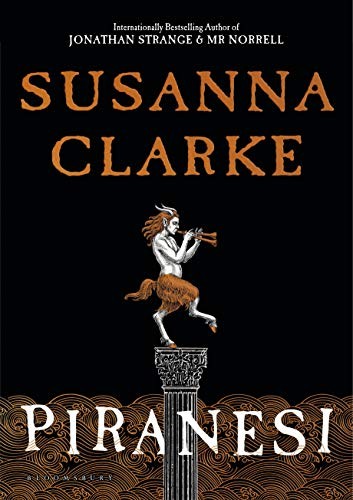
Cam: Yeah, what was the book — The Magician’s Nephew. And that’s kind of like a prequel of The Lion, The Witch and The Wardrobe. It’s how the worlds are created, and Uncle Andrew Ketterley is a character in that C.S. Lewis book, and Andrew Ketterley is the kind of dark magician. And he takes kids — in C.S. Lewis, he takes kids to this other world, and it’s like the woods between worlds. And famously everyone knows from Lion, Witch and the Wardrobe, Mr Tumnus is there, right, who’s this kind of half-faun, half-man. And there’s a statue, which I think is on the cover of most copies of Piranesi — the statue of this half-faun, half-human, which is a pretty direct influence from Mr Tumnus. Anyway, all that to say — C.S. Lewis was obviously very religious, and one would guess Clarke — but this other reading of what this world is, and maybe it’s not religious, but there’s this kind of supernatural, this magic element to it. It’s kind of like magic exists in this world. And Arne-Sayles, the professor, is fed up with no one believing him that it does. But even Piranesi’s attitude towards the house, this kind of spiritual side of things — sorry if I’m jumping ahead a little bit, Rich.
Rich: Follow the fucking outline, cunt.
Cam: Well, I didn’t want to talk about all the religious stuff, it was just more the — I’m just Piranesi-ing it. No, I thought it was just important to talk about the C.S. Lewis, because that’s, like, what the world is, right? Everything’s a remix. It’s a version of the woods.
Rich: Yeah, and she doesn’t hide it. I mean, I know nothing about C.S. Lewis, but in the very good Astral Codex Ten book review they go through all the parallels and explore it in depth.
Cam: Well, I think the original quote is from there as well.
Rich: Yeah, it’s from The Magician’s Nephew.
Cam: And while we’re talking about influences, it’s also worth just mentioning — Piranesi was an Italian painter who —
Rich: I thought he was an architect.
Cam: Oh, well — both maybe.
Benny: He painted — I think he painted, he was an architect, but he also painted jails and stuff.
Cam: Yeah, so he painted these metaphysical-looking prisons, you could call them. He called them prisons, which obviously influences what the house is and the name of the book. And, you know, Piranesi himself feels like he is in a prison in a sense. I think Piranesi the painter slash architect — kind of the one way to think about it, I mean, it’s easy to just Google it — is, is he influenced like Escher? Like proto-Escher. Anyway, back to the script, Rich. Sorry, bro. Just Piranesi-ing it, man.
The BIG REVEAL (spoilers)
Rich: So, yes, we’re going to talk about what actually happened. Like, how did Piranesi get into the house? Just some basic overview of how that happened, and then what’s the big mystery reveal. So yeah, do you want to give a little overview of how he actually ended up in the house, Cam?
Cam: Yeah, sure. I’m not sure how much we’re spoiling yet, but okay. So Piranesi, you know, he’s only interacting with the Other. Then he runs into Arne-Sayles, who’s like, come to visit, and he finds out about that. And he’s obsessed with this — what he calls 16 — who is, like, the 16th person, because there are 13 decomposed bodies, and him and the Other. And the Other kind of warns him. He’s like, don’t talk to 16, like, no matter what you do, because otherwise you’re going to go mad.
Rich: It’s like a Memento — like, don’t believe his lies or whatever, right?
Cam: It’s funny as well, because at one point, the Other fucks up big time. He’s like, if you talk to 16, you’re going to go mad, so don’t do it. But if you do, I’m going to have to kill you. Like, don’t fucking say that, man. Because that just sets Piranesi off. He’s like, hmm, maybe I can’t trust the Other. There’s, like, no need — just tell me, avoid 16 all you can, just tell me if you talk to —
Rich: Yeah.
Cam: That kind of sets Piranesi off, and then Piranesi doesn’t fully trust the Other, but kind of does as well, because he likes him so much. So he’s like, okay, maybe I won’t be fully honest with the Other anymore. And maybe I’ll talk to 16. But he’s also scared of talking to 16. So there’s this theme of forbidden knowledge as well — being bad for you. Like, he doesn’t want to turn mad. It’s like, you know, when you’re fucking wiki-ing something that you know it’s going to set you off, and you’re just like, oh yeah, but I just want to keep reading it.
Rich: The funniest example of, like, the duality of man is when 16 writes him a message in chalk, and he approaches it blindfolded to rub it all off, but obviously he misses a few spots, and he peeks at the spots that he didn’t wipe off. He’s like, well, I just couldn’t quite help myself.
Cam: Exactly. That’s exactly it. I just want to partly read it. I don’t want to fully blackpill myself.
Cam: Anyway, the essence is, we find out that Piranesi gets triggered — some of his memories start getting triggered. And he finds some of his old journals, and this big reveal is, “I’m Ghanaian, and I’m Sorensen.”
Rich: That was the big reveal for you?
Cam: So you’re getting your 23andMe back: oh, I’m Ghanaian.
Rich: If you’re reading any books in the 2020s, you should be envisioning the protagonist is always going to be a homosexual person of colour, you know, disabled, whatever — like, come on, man, what did you think?
Cam: And a dishy Italian.
Rich: I actually love — Robert Heinlein used to do that, in an age where all the protagonists really were white guys. He would not talk about the ethnicity of his characters at all, and then they’d be, like, Latino-revealed right at the very end or something, just to subvert your expectations.
Cam: Like the Scooby-Doo mask coming off. Anyway, so he kind of gets triggered, starts realising who he is, finds his old journals, and reads them all, and realises he was actually a journalist on the other side, who was just kind of interested in Arne-Sayles and Ketterley’s work and wants to do a piece on them. But he’s kind of a sceptic, right? He’s a bit — you get the sense he’s kind of a cynical journalist, but he’s going to go check it out, and he’s a little bit arrogant. Because Piranesi is so innocent and pure, then you’re kind of like, well, what he was like on the other side was maybe not so much.
Rich: Yeah, Arne-Sayles says he was arrogant. He didn’t believe. He was writing a book on something like outsider art, or outsider —
Benny: Transgressive thought, right?
Rich: Sorry, yeah, that’s right. Transgressive thought.
Cam: And so he’s interviewing Ketterley, and kind of no one believes these academics that they can do it, including Piranesi’s former self. And they eventually do a ritual.
Benny: Have we said Ketterley is the Other, by the way? We made that clear?
Cam: I think a few times, yeah.
Benny: Okay.
Cam: And essentially what the Other — i.e. Ketterley’s — plan was, was to kidnap someone and take him to this world to be his research assistant, and just get his memory wiped, and essentially what Piranesi is doing — which is super immoral, right? As evil as it gets. But then there’s this interesting aspect where Piranesi is living a good life, and the house is good. Like, the house isn’t, like, hell, even though he’s kind of in prison there. But as a reader, and Piranesi, you kind of believe that the house is good — not even morally neutral, like, you get the sense it’s good. But it is kind of this evil act of bringing someone there. And I think that’s true in C.S. Lewis as well, right? You bring these kids to the other realm. So yeah, his memory’s wiped, and then he starts recollecting and starts getting pretty stressed. Like, how does he trust the Other? Like, who is he? And he has his identity crisis, right? It’s like, am I Sorensen, his previous self? But no, I am Piranesi. Well, that’s not even my name. At some point he looks like Sorensen on the outside, but he’s not really. So there’s definitely this kind of Derek Parfit philosophy aspect there, which we can talk about. So, Benny, do you want to spell out what relevant part of Derek Parfit’s philosophy is to Piranesi?
The illusion of stable personhood
Benny: Yeah, so Parfit did a lot of work on personal identity. And basically the thesis is that our personal identity, even though we feel like we’re the same person we were when we were 10 — this is, in some sense, back to essences, right? We feel like there’s an essence of a person that stays with us as we age. Parfit’s basic contention is this is sort of an illusion. And we should, in some sense, let go of the idea that we’re the same person as we were 10 years ago — that there’s this well-defined notion of the continuity of self that we’re always carrying with us. And he does this usually via tons of thought experiments, as was his go-to methodology of philosophising. But I’m pretty sympathetic to his point of view. Even though a lot of his conclusions in his magnum opus, Reasons and Persons, I’m still not quite on board with — especially a lot of the population ethics stuff — I am pretty on board with his take on personal identity, and basically just thinking that our connection to our past and future selves is much more ephemeral than we usually think. And so, obviously this comes up with respect to Piranesi, because Pete forgets who he is once he enters the labyrinth, the house. And we should say that both Ketterley and the professor, Arne-Sayles, know that the house has this effect on people’s memories. So this seems to be a well-understood phenomenon of being in the house for too long. And the other people, the last 13 people who had entered the house, seem to have gone mad and died — or not necessarily died, but sort of gone mad — much sooner than Piranesi did. And there’s an open question as to why Piranesi —
Cam: He’s the chosen one.
Benny: — lasted so long in the house without going fully crazy.
Rich: That wasn’t a mystery to me, but I might have misinterpreted. I think the thing that Piranesi did differently to the others is that he had this mental break and created this new personality — the Child of the House, Piranesi — to inhabit. And he made a clean break with Matthew Rose Sorensen, whereas the others tried to cling on to whatever their actual true identities were and went mad. So I think he compartmentalised hard and just forged himself a new identity. That was how I read it. Which is also interestingly different to the Parfittian idea, where presumably it happens more as a matter of degrees, rather than quite abrupt changes in personal identity.
Cam: Yeah, it’s quite different from Parfit — this is, like, totally gets wiped. And I think everyone would be on board, like, if you got totally wiped you kind of are a different person, and there was no way of retrieving those memories. The lay understanding of the continuity of us — like the 10-year-old and 20-year-old — memory is a fundamental part of that. It’s like, my memories are of those people, right?
Rich: Like, let’s say we lost our memories right now, from the last 10 years’ worth or 20 years’ worth — I feel like some important part of us would still be us. I think I would still be friends with you guys once I got to know you again, even though I had no memory of you whatsoever. Because something would persist.
Cam: Yeah. Part of your personality. I remember Naval saying once, like, if he was suddenly broke, he believes he’d be able to do all the things to get rich again — because that’s kind of part of who he is and what he would do.
Rich: Yeah, so our identity is obviously not just the sum of our memories, even though it’s really important. So when Piranesi went back to Matthew Rose Sorensen’s family, hopefully they were able to recognise some element of him in there, even though he had had such a —
Cam: Well, that’s why it’s kind of interesting that Piranesi himself seems to be — I mean, we don’t know too much about Sorensen, but it seems to be a bit different personality-wise after being wiped. It almost kind of felt like it was this sort of blank slate, and then he’s this kind of noble savage, childlike, child of the house, rather than this kind of annoying journalist. He’s kind of arrogant and cynical.
Rich: Although you start to see, even from Piranesi, snarkier sides about the Other. There’s some flashes of sharp wit.
Cam: Yeah, because he kind of doesn’t believe — he doesn’t buy the Other’s attitude towards knowledge, right? He thinks it’s a little bit wishy-washy. He’s like, yeah, I don’t think these are going to work. And it’s kind of funny, he’s just, like, totally naive, this person running around the house. And then when Arne-Sayles comes and visits him, he’s like, oh, they have this academic disagreement. He’s like, no, no, you know, Ketterley, the Other, has no idea what he’s doing. And Piranesi’s like, you know, I didn’t want to say anything. He feels quite good about that. He’s just like, “now you mention him, I’ve just spent the last two months cataloguing everything for him.”
Rich: So what was the noble savage thing, Cam? What do you mean by that?
Cam: I mean — Benny, can you describe for our audience what the noble savage is, if you want? You’re good at describing things. It’s like the Rousseau idea — the Rousseau–Hobbes dichotomy that gets talked about, which is a little bit overrated, but that our natural selves, our pre-civilisation selves, were good and pure and free, and then it was society that kind of corrupted us. And we’re kind of blank slates is the other thing — we’re not necessarily inherently violent. The noble savage idea — like, Franz Boas and his graduate — do you remember who wrote Coming of Age in Samoa and stuff? Famous anthropologist.
Rich: Is it the idea that these more primitive cultures are just better people on some level?
Cam: Yeah, yeah.
Benny: They were living in harmony with nature, and they were more peaceful.
Cam: In one sense, I’m imagining Piranesi as almost like the Avatar guy. You know what I mean? He’s one with the house. And humans come over, and they want to subdue the house, understand it and extract from it. And Piranesi — he’s the child of the house.
Rich: So maybe relevant here is that he actually doesn’t survive purely on the providence of the house, unless you extend that metaphor really far. Because he survives the winter because he’s got a very nice sleeping bag that Ketterley has brought him, and Ketterley also brings him various other supplies, like multivitamins — things like that that actually enable him to survive.
Benny: And, like, a ham sandwich at some point.
Rich: Yeah, a big journal entry on the day he gets a ham sandwich.
Cam: Year of the ham sandwich.
Rich: Yeah, fuck me.
Benny: Only eating fish and seaweed, and then gets this ham sandwich.
Cam: It’s fucking — decade of the motherfucking ham sandwiches.
Rich: He’s tying his glasses together with seaweed leather or something, or bird-shit glue. Like, yeah, this guy’s life sucks.
Cam: No, there’s a funny element where the Other has all this shit, right, and gives him a sleeping bag, but he kind of views it as — because he’s not aware the Other is coming from the world and bringing this stuff — he’s just like, the house gives me seaweed, so the house provided —
Rich: The house has provided.
Cam: He views it, as we kind of see it, he underrates his own ability. He’s like, the house provides me with fish, and the house provides the Other with all this shit. He’s just kind of like, the Other probably wouldn’t manage if he didn’t get the flash photos and stuff.
Benny: Yeah, he wouldn’t be able to.
Rich: Yeah, that’s right. He rationalises it, but he is jealous of his sweet suits and stuff. He’s like, damn, this guy’s always looking immaculate, he’s got the latest MacBook Pro, and I’m over here, like, throwing pebbles at the wall.
Internal consistency of dementia or psychosis patients
Benny: Do you guys have any grandmas or grandpas or anything that have, like, amnesia or —
Cam: My grandma, before she passed away, had dementia for like the last few years.
Benny: Dementia, that’s the word I was thinking for. Do you ever get the sense that there’s — my current surviving grandma has pretty severe dementia, to the point where every 30 seconds she doesn’t really know what’s going on. Her short-term memory is totally obliterated, and she can just remember long-term stuff. But she’s still this very happy person. And my sense is that it sort of goes one of two ways. Like, once you sort of lose the anchor of your day-to-day moment — like what’s going on right now — it’s almost like your true personality emerges. And you either just become this sort of miserable person who’s just grumpy all the time because you don’t know what’s going on, or you just sort of relax into not knowing anything, and your happiness just sort of emerges.
Cam: So you don’t know what a person’s like until they have dementia?
Benny: Yeah, almost.
Cam: You can never propose to someone until you see them with dementia, then you know what you’re in for.
Benny: Yeah, exactly. Like, I’m going to need to put you into an amnesic state and see what happens. But I always think that about myself — like, which one of those two people would I be? You know, if you just started wiping all my memories and stuff, would a happy, very contented Buddhist-like person emerge, who’s just content to not know what the fuck’s going on and just kind of smiling about it? Or would I be on edge and super nervous and anxious and yelling at everyone around me because I couldn’t figure out what was happening? I don’t know. But Piranesi sort of struck me as the former.
Rich: I’d be the second one, 100%.
Benny: Yeah.
Rich: There’s this really good bit in the Slate Star Codex review of this book. He or she was talking about their grandma, I think, with dementia.
Benny: Oh, what? Are you serious? Oh, shit. I should read that. That’s cool.
Cam: And just quickly, this is not Scott writing this is one of the contests —
Rich: Yeah, it’s an entry in the book review contest. And they say, from the point of view of grandma, they feel like no one is on their wavelength, because they inhabit this reality so fully. And that’s the thing that it’s really hard for us to internalise, because we have the god’s-eye view. But Piranesi’s worldview is incredibly consistent and makes sense from his perspective, even though we want to kind of shake him at the point where he’s still not realising that the Other is playing him and so on. So I think it’s a really nice depiction of how you can actually have a coherent worldview even as the result of having had major psychic damage of one form or another — to the point that you are, in fact, detached from reality. But from your point of view, you’re not, and perhaps other people are. Or in the case of someone with dementia, you’re like, why are they getting frustrated when I ask them this question? And it’s because you’ve asked them that question 20 times in a row. Or, like, why aren’t they playing this game with me? And it’s because you just had the game out on your table, you thought you were playing it, but you have no idea that they don’t realise that they’re not playing it. I think that was the example in the Slate Star Codex review. And you’re like, why aren’t my relatives doing — like, what’s going on? We were halfway through the game and now they’re leaving, that’s so rude or whatever. From your point of view, you’re sane. You perhaps think you’re totally sane, and you’re experiencing a coherent vision of reality, even though, unbeknownst to you, it resets every few minutes or every hour or whatever. To empathise fully we have to realise how coherent it is from the inside. And that’s fucking crazy-making to think about, because it could be happening to you right now.
Benny: That is crazy.
Rich: That’s the Ubik stuff again, yeah. It’s just paranoid.
Cam: Yeah, well, that’s when you get into your Uber and Gongu and all that — can you trust? I remember my grandma, on her way — so it wasn’t completely amnesia, but on the way to dementia — I just remember she made these kind of shitty videos. She used to film lots of stuff. And I just remember one day, honestly, I think she showed me that, like, 10 times. And they’re just, like, ducks in a pond. Like, for 20 minutes, just filming ducks. And then she asked me my feedback. And by, like, the fifth time I’d watched it, I was like — well, I said, maybe too many ducks.
Rich: Feedback?
Benny: Yeah, they maybe had some transitions.
Rich: Jesus.
Cam: She’s like, oh yeah, no, fair. But also the other thing with her — I mean, back to your personality/identity thing — is when she really struggled and started getting really grumpy is when she could no longer read music and play piano. Because in her youth she was a concert pianist and stuff, and that was a huge feeling of joy. There was a big difference once she lost that, and then there was almost like nothing she could do that she’d enjoy. The other thing I want to mention around this memory thing is just the role that memory has in suffering. You know, the previous book we did, with Hamlet and stuff — I think often thinking about and ruminating about things, that’s what’s bad. And then, like, Piranesi, he’s just kind of living his best life, right? He’s totally wiped. And even when he comes back — right at the end he manages to get back to the world, and he can go back and forth between them. And his family are kind of living with him, but they’re probably not that happy with things. But he’s kind of all good. He’s the new person and enjoys going back and visiting the world. Him not having all of his memories is actually quite a good thing for him in one sense.
Rich: Yeah, I’ve had this thought before, that, like — you know how there’s that whole “suppressed memory” idea, which I think is mostly proven to be total bullshit, but basically if you were abused or traumatised as a kid you might have suppressed it and you might be totally unaware that it happened to you? I always think, if that was true of me, I’m happy with that status quo, and I don’t even want to think about it too much, just in case. I’d rather not know forever.
Cam: That’s why we don’t tell you, Rich.
Benny: Although I think the claim there is that it comes out subconsciously in other ways that negatively impact your life.
Cam: You get triggered and stuff, right?
Rich: Yeah, but I believe that is massively overstated. It could be healthy to simply forget about bad things that happen to you.
Cam: Well, yeah, if you could, and you guarantee it, definitely. There’s kind of a balance, I suppose. If someone had very psychotic tendencies and stuff, you’d be like, yeah, maybe don’t take the shrooms with us. It’s probably a good idea not to test that. But other people, it might be a good idea to take it and understand themselves more. So I think that’s sort of case by case, depending on what the trauma is.
Piranesi’s escape and reintegration
Rich: Yeah. But in the case of Piranesi — and even the one other guy who managed to get out of the labyrinth — it’s not just that they don’t mind, or that Piranesi doesn’t mind because he’s forgotten what it was like to be Matthew Rose Sorensen. He also just fucking loves the house. And even once he gets out, he loves going back there. He finds it very peaceful and soothing. So there is something — there’s a positive element there, not just the absence of a negative. To circle back to, like, what is the significance of the house, and what is Clarke actually trying to tell us — Benny, do you want to do a quick recap of how Piranesi gets out, and sort of what that looks like when he’s spanning two worlds?
Benny: So basically, I believe it’s Piranesi’s family on the outside — or rather, Matthew Rose Sorensen’s family on the outside — that’s hired this detective, who is looking for him because he’s been gone for, like, six years. So that’s where we realise that he’s been in the house for quite a long time. And she, via some coincidences, realises that he was trying to write a book on these transgressive thinkers, namely — and his focus, his centrepiece of the book, I believe, was going to be Professor Arne-Sayles. And so she goes to him and starts interviewing him. And he knows that Matthew was taken by Ketterley into the house, and almost just acknowledges this to the detective, which is sort of weird. He’s so arrogant in some sense that he’s just ready to tell her almost exactly what happened. And says, “I know now as well that you are going to try the same ritual that Sorensen did, because neither of you believed me about this tributary world that I’m talking about, or that Ketterley’s talking about, but I know Sorensen wanted to experience what Ketterley meant. He just wanted to get inside Ketterley’s head, so he let himself go through the ritual, and then ended up in the house. And the same thing, the exact same thing, is going to happen to you, because you want to understand my thinking in case it helps you with the case.” And so indeed she does do the ritual, and the entrance to the house shows itself to her, and she goes into the house, and then she starts leaving clues for Sorensen in the house, asking, are you Matthew Rose Sorensen? Ketterley sort of knows she’s on the case. So she’s number 16, who Piranesi is being warned by the Other to stay away from. Her name is Sarah Raphael. Is that right?
Rich: Yeah, I think so.
Benny: So anyway, she obviously wants to get in contact with Piranesi, and Piranesi sees some of her messages, feels strangely sort of drawn to her. And, as we’ve said, goes through this tumultuous phase where he simultaneously wants to contact her and wants to be contacted by her, but is also taking the warnings from the Other seriously — so it’s erasing her messages and stuff. Then he finds out the Other’s true name by going backwards in his journals and starts reading about how he ended up in the house in the first place, which Cam covered a bit. And then realises the Other is basically untrustworthy. And then tries to seek out 16. And basically this all comes to a head when, on a Thursday, he’s realised there’s going to be a flood that day.
Cam: Which I thought was a pretty cool action set piece, eh? Just the idea of, like, the great tidal wave is coming, and this already cool set piece of, like, the basement floor is these tides. And it’s like, this is the crescendo of the action and the conflict — this mythical event.
Rich: Yeah, it’s biblical.
Benny: Yeah, actually, speaking of that, I think someone just bought the movie rights to it, and they’re going to do it as an animated movie.
Cam: It would be a cool movie. I kept imagining.
Benny: So basically this final action scene is him and 16 facing off against the Other. The Other has brought this inflatable boat to try and save himself, and a gun, and he starts shooting at the Other — at Piranesi and 16.
Cam: And he’s prioritising that rather than, like, you get in the boat. He just really wants to kill them, and that’s kind of his downfall, right? And then it gets too bad.
Benny: Yeah, exactly.
Rich: Piranesi gets saved by the grace of the house, because he literally takes shelter behind a protective statue, that first protects him from the literal bullets — they’re flying off the marble. And then I think a giant wave — a bunch of waves form together and slam headily against the wall and kill him. And they don’t pluck Piranesi and Raphael off the ledge that they’re hiding on, because they’re like in the nook behind a statue basically.
Cam: And then Ketterley’s dead, right, and he just found out it’s, like, the ultimate villain. And Piranesi’s like, I need to save Ketterley, I need to preserve — because one of his activities he’s been doing is preserving all the bones and stuff. He’s so pure, and he wants it. And Raphael is like, fuck that, man, who cares? Let’s get the fuck out of here.
Benny: Yeah, like, let’s get out of here.
Rich: Yeah, Raphael, this cop who’s been trying to rescue him for months, and she finally does it. She’s like, come on, let’s go see your family who you haven’t seen in six years. And he’s like, well, I’m going to need a few weeks, because I need to sort out all the bones of the guy who was trying to kill me. And then I need to move them to a safe niche.
Benny: Yeah, so he’s really hesitant to go back, and Raphael is quite patient with him.
Rich: She’s so patient.
Benny: As you said. And it’s sort of the opposite of the Other in that way — sort of just letting him take his time. But she does tell him, you know, you have family out there, you have two sisters, they haven’t seen you in a long time, they would like to know that you’re okay, they would like to see you. And he says, you know, Matthew Rose Sorensen is not me, he’s tucked away — I think he pats his chest or something — he’s tucked away in here, and he’s basically sleeping for now. He’s okay, don’t worry about him. But I’m not him, and so I don’t really feel the need to commune with his family. But yeah, then he goes back eventually and sort of builds this third identity. It seems like aspects of Matthew Rose Sorensen start emerging a little bit when he’s back in the world, but he comes back to the house occasionally.
Cam: Did you take that — because at one point he said he looks like Sorensen but he just doesn’t feel like he is.
Rich: He forms a third distinct identity, because he doesn’t think of himself as Piranesi either. I don’t know if he has a new name for himself.
Cam: But I would have thought there’s more of a continuous streak with the Piranesi identity, because he can remember that.
Rich: Well, there is, but he straightforwardly says that he doesn’t consider himself as Piranesi either. So — and he never even, he knows that — yeah.
Cam: Yeah, we’re just dead-naming him this whole time.
Rich: Well, he knows that Ketterley gave him that name to mock him, and he knew that right from the outset, that that wasn’t his name.
Cam: It’s a shame, though, it’s a good name.
Rich: Yeah, you come out with one good thing.
Cam: You have to let it go.
Benny: That’s a cool fucking name.
Cam: You just can’t beat the name.
Rich: You come out with a sack full of seaweed and a good name. It was all worthwhile. But yeah, the thing is, he doesn’t want to leave the house. And he even finds the one other guy who was once imprisoned in the house and got away, and takes him for a visit to the house. Poor Jimmy Ritter.
Cam: James Ritter, was it? Was it someone Ritter? Poor James Ritter. It reminded me of Poor Tony Krause.
Benny: Yeah, James Ritter.
Rich: Poor Tony Krause, yeah. And then Raphael as well really loves the house, and she loves to go there, sometimes by herself, sometimes with Piranesi. It has this real allure.
Cam: Do you think it has an allure for everyone, or do you think it’s a type of person who has this kind of spiritual side, and the sacred side, and this reverence?
Rich: We know it doesn’t have an allure for everyone, because Arne-Sayles and Ketterley don’t give a fuck about it except as a means to an end. So this is where I think it’s good to think about, like, what those guys represent, and the power that they’re trying to access, versus what people like Piranesi and Raphael represent — something like, they just want to inhabit the world for what it is and enjoy it for what it is. Like, see the beauty in all of its actions and all of the gifts that it bestows, without wanting to exploit it for some other end. Right? They just take it for exactly for what it is — a big, cool old building full of birds and fish and waves.
Cam: Sexy albatross. I’m a bit schizoid around this sort of stuff. In one sense I do kind of agree with the idea that our current society has lost this — I’m not sure spiritual is the right word, or sacred — but, you know, there’s something around this just materialism, and lack of religion, and nihilism, narcissism, you know, atomisation and isolation. Like, I think we’re missing a lot. In that sense I’m quite sympathetic to the Piranesi side of the book. But then in another sense, the supernatural stuff I don’t believe in. And, like — you can be wrong, sacred. You can be too sacred about something. Like, you’ve got this war in the Middle East, where two sides are very sacred about it. That’s part of it. Or you might have a culture that lives on a low-lying island, and then the seas rise, and you could pay them to move, but it’s just so sacred to them. So sacred can be difficult as well. And, you know, science — I think science and human nature is about understanding it and subduing it. The villains in Avatar, although they were mean and wanted to kill people — if you took that away — well, speaking of which, how do you pronounce Piranesi? How did I do it?
Rich: Yeah, it’s like the advice you gave me on my French last time. Yeah, just gotta go full send to the point of potentially offensive caricature. You gotta go right up to the brink.
Cam: I suppose I see what I want to say. In another sense, I view it as — you would want to understand how the world works, and you would want to use it for human flourishment, rather than just lay on the beaches and enjoy the conch shells. If there was genuine knowledge that you could extract. And then also — supernatural stuff isn’t real, but in this world it kind of is. It’s like, we’ve got this big thing where actually, you know, doing the rain dance actually gets you to see the ghosts. And so in one sense we should do it. But in our world, we don’t.
Is the world (or the House) fundamentally Good?
Rich: Something that we need to make explicit is that Piranesi is this good scientist, but he also has this mystic side, where he does things like listen to the omens of the birds, and he also just has this deeply held faith that the house provides for him, the house keeps him safe — “the beauty of the house is immeasurable, its kindness is total,” or whatever it was he was always saying. And he’s not wrong about that. So actually the birds’ omens are correct, and the house does protect him.
Cam: Metaphorically that, right?
Rich: Literally there’s never any element of supernatural activity there. It’s possible — I mean, well, there may be, but it’s possible that on some level the house really is a good place that is looking out for him. The question there is less about exploitative natural resources versus living in harmony with nature, and it’s something like — there’s a quote in the Astral Codex Ten book review, which is really great, which I think perfectly helps to understand what Susanna Clarke is getting at for me. Which is that she’s described it as she was working on an anti-horror novel. And so she said: horror novels have this idea that there’s a kind of secret at the centre of the world, and that secret is horrific. So this would be more about the fact that at the centre of things there’s a secret, or mystery, and it is joyful.
Cam: That’s nice.
Rich: Yeah, and it’s, like, a very religious idea, which is where I actually part ways with her — which is that, like, God is good, or the world is good, or something like that. And that is Piranesi’s deeply held belief, that he reiterates all the way through, in spite of the terrible things that happened to him.
Cam: The house is kind. Yeah.
Rich: And it’s this kind of leap of faith type thing. I don’t really find it to be a criticism of this book, but obviously I just sort of straightforwardly and maybe boringly disagree with Susanna Clarke about that. And with C.S. Lewis, who I think has the same kind of — I suppose this is, like, a central tenet of Christianity.
Cam: Well, this is interesting. I think it’s in the review as well — some people take the approach that religion and science can be separated. Like, I think Stephen Jay Gould, who was sympathetic to religion, kind of said that — like, non-overlapping magisteria. And I think even Schopenhauer sort of says this — you have the departments. But I think in this book it’s more, actually, they’re one and the same. And that’s maybe in the ancients as well, and in a lot of indigenous cultures, and indigenous knowledge — that’s the same as well. It’s like, we learn from the trees, we understand it, but we also have the spiritual side where, like, this tree has a soul, and you have to nurture it, and it provides for us. I get off a little bit there, right? Especially when it conflicts with actual science.
Rich: Actual history.
Cam: Yeah, and actual history. As soon as it starts conflicting. But where I’m maybe more sympathetic — and maybe even more sympathetic to you — is, like, maybe that’s the faith side. Maybe it’s what we need to feel human, or to fully flourish as a society, as social animals.
Rich: I don’t think she’s making an instrumental claim. I think it’s more of, like, an ontological claim about what is. I’m a boring materialist, basically, and there’s not that much more to say about that.
Cam: Yeah, no, I agree. But then you get into this David Foster Wallace double bind, if there is an instrumental reason for it, and then you’re stuck with, like, oh, I just can’t believe, and then I suffer. And to be virtuous, or to be moral, maybe you need to have the leap of faith.
Rich: Yeah, it’s not obvious to me even that it would be a good instrumental thing. If you believe that God is good and that the world is fundamentally good, then it leads to all that problem of evil stuff, where you can just come up with some super-complicated gymnastics for why your child dying gruesomely is actually good — because it’s all part of God’s plan, and no, we don’t need to invent medicine or better obstetrician technology or whatever it might be. I think it’s sort of antithetical to progress in science. But, like, none of this bugs me at all. I find it to be a really beautiful book. I’m not exactly sure why. I just find it, like, aesthetically pleasing, even though I don’t think that God is good or that the world is good.
Rich: Benny, do you have a take on what the message is here?
Benny: Yeah, it’s interesting. I was always thinking about house as neither good nor bad. And this, I guess, ties back into some of the religious themes we were talking about earlier. Like, as much as you want to say it was actively benevolent towards Piranesi, you could almost say it was actively maleficent — no, malevolent.
Rich: Malevolent. I threw you.
Cam: There’s a movie — there’s a queen called that — Angelina Jolie.
Benny: Maleficent, keep that in there, yeah.
Rich: I threw you by saying beneficent, which I don’t even know if there’s a real word.
Benny: No, I think that is a word.
Cam: That would be Benny’s name in Piranesi world.
Benny: I was getting confused for sure. It might have been actively malevolent towards the Other, and some of the other characters that we don’t know as well, who got caught in there earlier and died sooner. So I was wondering if it was sort of a reflection of, maybe, purgatory or something. In that it’s good for the good people and bad for the bad people.
Cam: It’s just, like, super tribal. The wrong religious person comes in and is, like, dead.
Benny: Yeah, you’re just fucked. You’re pursuing progress, not knowledge — fuck you.
Rich: That’s to do with — Ketterley doesn’t engage with the world at all, right? He ultimately dies because he doesn’t understand it and doesn’t engage with it. I think the house didn’t want him dead, in some sense. I think he just took the wrong path, and it’s an illustration of that.
Cam: I thought it’s more — he took the wrong path, then he didn’t understand it. There’s an element of him, like, he’s not as prepared for it. But it’s like, he was so hell-bent on killing them right there and then, that’s the reason he died.
Benny: What about the other 13 people, though, who died sooner or who lost their mind sooner? Like, it wasn’t your niece.
Cam: Druggies, prostitutes, mate. They’re not living a life of —
Rich: Some of them would choose.
Benny: Yeah, so I don’t know.
Rich: Price-killers.
Cam: True.
Rich: This is one of the things that is ambiguous, and which enriches the book — is the house good, and therefore Piranesi is justified, and therefore he’s somewhat less of a heroic figure? Or is the house exactly like our world — i.e. totally amoral, has no intent at all — and we can just take some real inspiration from Piranesi’s character, and how he handles living in this kind of world? And that too could be kind of metaphorical, I think.
Cam: Yeah, and then part of me thinks, like, that’s the same thing, almost. If you can fool yourself, but they’ve been the same — like, our world is good, and act accordingly.
Rich: Yeah, exactly. You know — “nothing is good or bad but thinking makes it so.” It’s that thing all over again, right? I think perhaps the reason I really like it is that he’s just such a good character, and an inspiring depiction of a person, especially someone who’s really going through it. You know, life has not been kind to our mate Matthew Sorensen. And you don’t often read stories of people who’ve had, like, incredibly traumatic events happen to them, and they come out, like, very psychologically resilient and happy, and with some kind of deep spiritual knowledge.
Benny: One question is just, does he come out happier? My sense is the Piranesi in the house is a happier character than Piranesi by the end, who’s sort of tried to merge Matthew Rose Sorensen and Piranesi, and is spending some time in the house and some time back in the real world. My sense is that character is still struggling a bit to be integrated and to find themselves in the world, whereas the Piranesi in the house seems goal-directed and totally content.
Cam: Yeah. The world will be super overwhelming as well. And I did have this thought of, like, how long is it going to last, still enjoying that house? You know, once you get given the iPad and the internet — and, like, it’s Instagram, and he’s like — it comes to you. He’s got, like —
Benny: Gotta go back and watch the porn. Oh man.
Cam: Like, yeah, yeah, yeah. Give them fucking porn — like, if you give any primitive culture, they all get, like, addicted to it straight away. Like, i.e. they all become like the rest of the West.
Rich: We do have some textual evidence, which is the last thing — the very last chapter in the book — which I was reading as more of a hopeful synthesis. He’s walking in London, and he picks out this face in the crowd, this old man, I think, who’s meant to be a wino or a beggar or something. And he recognises him. He recognises his face, and it’s a statue of a king — one of the kings playing chess. And it is that guy. So he realises that either the statues directly represent people in the world, or vice versa. And then he sees a couple of girls who I think have recorders or flutes or something. And again he recognises them as — he’s seen those exact girls or their essences in the statues. And then the last thing he says is something like — he repeats that the beauty of the house is immeasurable and its kindness is infinite. And the implication is that he realises that the house and the real world are not necessarily two distinct entities, that there is the house — or he considers the house a good thing. Or, we could just say it more simply: that the house still is present in the exterior real world, and it still has some kind of effect, or its beauty permeates the real world as well. And I think he finds that encouraging, and gives some hope that he can have a good full life. That’s how I like to imagine it. Obviously it’s ambiguous. Maybe he just saw some random guy and was like, hey, looks like that statue.
Cam: Yeah, here he goes again. He sort of has to Arne-Sayles it with him. Oh yeah, sure, sure, tell me about 16. Tell me about the king.
Benny: Yeah, I wasn’t sure what to make of that.
Rich: Like, his only reference points are statues. He’s just comparing everything to statues.
Benny: Yeah, exactly.
Cam: I mean, the other reading is, this guy is absolutely crazy, right? And it obviously must be quite hard to get to the world, because otherwise you could just prove it for people to actually test it and come back. Because Arne-Sayles really wanted to prove it. Ketterley maybe not, and wanted to use it. And maybe only a few people can make the leap of faith.
Rich: But I think he certainly doesn’t want to, like, bust the doors down and lead a whole lot of people to ruin his sanctuary. He’s got, like, fucking prime waterfront real estate, man. He’s got the biggest mansion ever built. He wants to keep that shit to himself.
Cam: 70 people is too many.
Cam: Five years later, he’s got, like, “Britain for Britain” type signs around the house, like, keep the house —
Rich: He’s literally getting annoyed at people’s chip packets blowing through the door, like, fucking tourists.
Cam: Yeah, that was cool. That was a good book. And I’d definitely read her other one.
Benny: Yep. I was very pleasantly surprised. I mean, I thought — yeah, a more very popular modern book — I was sceptical that it would be as good as that, to be honest. But it totally was. I enjoyed it a lot, and now I’m pretty keen to read her first novel. So we should do that maybe at some point.
Rich: Yeah, put it on the list for sure. And it holds up to rereads as well, because I really enjoyed all the twists and turns, even though I mostly remember what happened. I still found — it’s actually really fun, because you can go through and see all the clues that you don’t pick up. So definitely read it again in a few years.
Cam: So before then, we are thinking of Dostoevsky’s Crime and Punishment.
Rich: Yeah, boy. So we’re saying we’re going to do part one and part two.
Benny: Let’s go.
Rich: So yeah, let’s wrap up. If you guys have got anything that you want to plug for our large and growing listenership. You want to plug a tweet?
Cam: No. I saw this cool tweet, but — yeah, plug my tweet. Yeah, it’s been slipped on, there’s no lives.
Benny: Individual tweets.
Rich: I’m going to plug my blog. If anyone doesn’t know, it’s called thedeepdish.org, and I’m starting blogging again on a pretty consistent schedule — hopefully every two weeks is my target. So get amongst it. I just published a post about the connection between autism and the secret of human creativity. So come and check that out. And see you next time. Bye-bye.
Benny: Bom.
Cam: Notice.
Rich: Bye.