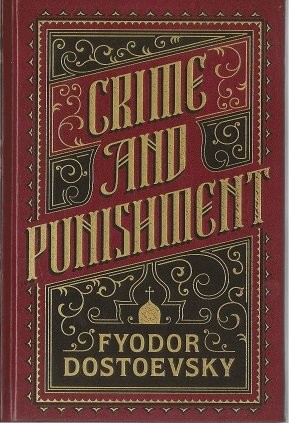
Not too much plot to cover in parts 5 and 6; mostly we’re hashing out our final thoughts on the book and Dostoevsky’s legacy.
First up is the controversial epilogue. The boys are not sure how believable Rodya’s redemption is. It feels kinda cheap? Dostoevsky is not very good at character development but maybe it doesn’t matter. Sonya is a perfectly implausible character who exists only as a sort of a prop for Rodya. How on earth does Dosto have a reputation for writing realistic characters? Again, it prob doesn’t matter.
Svidrigailov sneaks up on us as perhaps the most interesting (or at least the most underrated) character in the book. We talk about the three incredible scenes that bring his journey to an end: kidnapping Donya, the feverish hotel dream, and the dramatic exit.
Finally quite a bit of discussion about whether Dostoevsky is actually any good as a thinker. Rich is not sold: the critique of utilitarianism is unfair, blind deference to tradition leaves no room for progress, and God has been pretty neatly replaced by secular humanism. Benny pushes back and adds some nuance to the problem Dosto was trying to describe, and Cam talks about how he still feels the tension between nihilism and common-sense morality.
Don’t miss the surprise guest appearance from Cam’s manager. Is this the week he gets busted? will he live to skive off another day?? Tune in now to find out.
intriguing and important discussion on different translations (do NOT skip)
Cam: Benny, okay, I’m just going in, Rich. I’m going in.
Rich: No no no, don’t go in yet, don’t go in yet. Come on you guys, we just finished this book — you got nothing? You got no actual reaction? How do you feel? We’re done, the journey’s over.
Cam: I had coffee. No, that’s… I was just… I was going when my reaction takes me.
Rich: You got nothing to say, you’re just gonna start talking about fucking fans here. Anyway, we finished this monumental novel and now for a word on the different translators. Okay so yeah.
Cam: I think I sort of take it for granted. I just mentioned to a couple of guys who finished Crime and Punishment, and they’re like, oh wow, what an achievement. I’ve met so many guys who have read like 50 to 100 pages of Crime and Punishment, including myself when I was like 20.
Benny: How could you only read 100 pages? That’s right when the murder happens and they just put it down.
Rich: That’s the good bit to be fair.
Cam: I mean yeah, maybe you don’t even make that. Maybe you make 150.
Rich: It is an achievement. I was thinking we could jerk each other off a little bit first, you know.
Cam: Yeah no, it’s good. We’re over halfway to all CFC’s classics — three out of five.
Rich: What are the five classics?
Cam: Notes from Underground, Crime and Punishment, The Idiot, Demons — which is apparently the hardest to read — and then Brothers K is the classic. So, three out of five.
Rich: Oh yeah yeah yeah, that’s good. It’s enough to have an opinion anyway. Like I’ve definitely got way more of an opinion about Dostoevsky than I did before. I got Dostoevsky — I fucking earned them, I fucking earned them, I put work in.
Cam: When you say at a party that those CFCs are overrated, you’re in the right, right?
Rich: I feel like I’m going crazy with this. Like during part five in particular I was like — couldn’t stop thinking about all the elements that I dislike about it, and I was gonna just rant that Dostoevsky’s overrated. And then as I got towards part six he just sucked me back in and I was like, damn, this is pretty good actually. The story got good, and there was all those big dramatic scenes, and the epilogue was dope. And then I just can’t bring myself to go on the rant. I’m sure I have some criticisms throughout this combo, but yeah, I do think it’s important to make the case.
Cam: Your melodramatic rant and conflict would have been a good scene in the book. It would have fit right in.
Rich: Like everyone rides this guy’s dick, and it’s surprising in certain ways. We should — we’ll talk about it more throughout, but anyway, that’s my — that was my reaction. I love the ending and I’m actually really excited to talk about the end of it.
Benny: Is it true that everyone rides his dick? Like, I’m not — he’s definitely popular among lit heads, but it’s not as if he’s a very popular author in general.
Cam: He is unanimously praised. It’s like —
Rich: Not through action, but through what people say.
Cam: But to be honest, even through revealed, in terms of classics that are continuously read by people — this is one of them, right? So, say you read the old Greco-Roman literature and then you read Dostoevsky and other classics, Moby Dick. People put him in their top five, top ten of all time, and no one in respected circles is blinking an eye.
Rich: Yeah yeah. The incongruity is that literary people are for the most part good liberal leftists. And this is like, you know, we talked about previously — it’s kind of like Christian apologia, or reactionary. It’s nationalistic. And I’m surprised that it made it. I mean, I don’t personally care about any of that, I’m just surprised it’s almost a bit incongruous that it’s so revered. And it makes me wonder if people just don’t read it very critically, or they focus on other great elements that don’t have to do with his politics and his vision of what a good world would be like.
Benny: I also think those are two distinct groups of people that you’re maybe referring to. I’m not sure if it’s the same group of people who are reading Crime and Punishment and praising it as the people who are totally unsympathetic to tradition and cultural norms and the West and things like that.
Cam: I mean, I agree that part of the praise — or just liking it — is to do with the non-political aspects of it, you know, the psychology. But I think actually, when you look at a lot of classics, you can make an argument a lot of them are fairly small-c conservative, or you know, at least traditional, right, almost by definition. And there is this tension now. Like, the people that actually go to the mat saying read the classics — they’re like Harold Bloom in the 90s saying, all these people are trying to get rid of all these old white men.
Cam: I think the incongruity though — if I was to rescue the incongruity, I think, you know, if this came out today, people wouldn’t defend it when they have potentially quite left-wing politics. But you could have a person who is quite leftist who also really, really loves this and other things that might be, quote, traditional or trad. And yeah, it seems to be kind of like a Dostoevsky compartmentalization or schizoid element to that. Maybe just because it’s been enough time that it just feels like, yeah, the old trad stuff that we read 150 years ago is fine. And maybe they don’t take it seriously as well.
Rich: Well let’s table that anyway. I don’t want to get — let’s not get too far into that. Why don’t you — you had something you wanted to say about the translations.
Cam: Yeah. Hi Benny, you me, man, you me so bad. Well okay. So when we actually read Brothers Karamazov, okay, I want to first say this from Benny. So Benny says, make sure you get the Pevear and Volokhonsky translations. So Richard Pevear and maybe his partner or his friend Larissa Volokhonsky, who translated a bunch in the 90s. You were like, okay, why? I just want to hear this.
Rich: P&V, baby.
Cam: Why are you arguing with the P&V, which is well respected? But I just want to understand where you’re coming from, because you said, I went out of my way to buy this version.
Benny: I don’t think I had any super principled reason. I think the first time I read Crime and Punishment I read a P&V translation. When I read Brothers K it was P&V. And then I think I retroactively learned that P&V is widely considered one of the best translations, and so I went with that. And I also think these combinations are good as opposed to a single person that’s not going to be a native speaker in one of the two languages. Right, so most translators most of the time, it’s done — it’s just a single translator. And as good as they are going to be at either Russian or English, one of them is not going to be their native language. Whereas if you have this duo — like Richard Pevear is English, Larissa, what’s her last name, she’s Russian. Yeah yeah, Larissa, Russian last name —
Cam: Volokhonsky.
Benny: Vladimir Obda or something. No, just kidding.
Rich: Well that’s racist, guys. Wind it back a little.
Benny: Yeah, Balansky. So she’s Russian. So I think that, yeah, without knowing anything about the world of translation or anything about Russian itself, somehow I just have more trust in a duo that can kind of sort it out between them, because they can discuss and argue back and forth about what the correct thing is, as opposed to just relying on one of them.
Cam: I’ll ask you to stop telling people to make sure they grab the P&V.
Benny: So why, you think they’re bad?
Cam: Well, no. Anything by — I only read books written by duos now.
Benny: Translated by duos.
Cam: Well, Will and Ariel Durant —
Benny: This is a fucking cross-examination. I was not ready for this.
Rich: Get to your point. What do you want to say?
Benny: Are you claiming they’re not good?
Cam: I’m just amazed. So you just read that and then you were like, yeah, there’s a duo, everyone should read this — because you will like make sure —
Rich: He just explained everything. Get to your fucking point.
Cam: Make sure it’s really important, you like, make sure you get this.
Benny: Did I say that, Rich?
Cam: He probably can’t remember. It’ll be in the deep cuts of BK if we still got those. Anyway, so they are well respected, with a massive caveat — it’s actually pretty controversial. My reaction is they’re fucking hard to read. Like I changed over to the one that Richard has, by Oliver Ready, which is a 2014 translation. And then there’s a guy called Katz, what’s his first name, 2019. The problem with Oliver Ready is he’s only translated Crime and Punishment, and Katz has translated lots, but they’re pretty similar — they’re just modern translations, much easier to read. Then you had the classic ones, Constance Garnett, who’s this Victorian British — she was like an amateur who translated all of them. Like, that’s what most people read. P&V is hard to read because it’s like awkward sentences. It’s just got such clunky sentence structure. And the reason it is awkward sentence structure is because — the reason they get praise is because it’s very close to the original Russian. So, I was meant to get an example, but like, you read this unnatural English sentence structure because that’s how the Russian goes. And it’s just like, it’s not how you’d say it, and it’s just harder to read it. And then the Katz and Ready just clean up the sentence structure. And so some people argue, like hardcore Dostoevsky scholars would argue, we kind of want to just read it as close to as is as it was, regardless of how easy it is to read. We want it as accurate as possible — so like, that’s what you should do. But a lot of people are like, well actually, we want to balance. And it’s not like Ready and Katz is inaccurate, they’re just easy to read, especially for people like us and for our listeners. I think you’d pick those.
Cam: But like, you know, try them all. Anyway, I found it much more enjoyable reading Katz and Ready. Started Ready.
Rich: So I actually had a leg up on you guys this time, because I was reading the modern one this whole time. I learned my lesson from Hamlet.
Cam: The opposite of Shakespeare.
Cam: Yeah, I know, Benny — the guy that argues for modern translations, he’s like, no no no, not when it comes to Dosto. We need duos, man.
Benny: You need as many awkward sentences in there as possible.
Benny: Yeah, no wonder you didn’t like it as much, Rich, because you weren’t hewing to the spirit of the text. That’s what really happened.
Rich: I know. We should just jump straight back into it, but with the original text. We gotta learn Russian, boys.
Cam: Sorry, I just have a — shouldn’t take long, just my manager.
Benny: Oh god. Alright.
Rich: Wait isn’t it — what time is it over there?
Cam: Yeah it’s — so it’s unlikely, but I just need to send like one link to people. So maybe… herbal coffee brook, seriously.
Rich: Yeah, do your thing.
Benny: Do you feel the power of editing — speaking of clunky sentences.
Cam: I imagine next week Benny is going to say I didn’t even make the case for it. It’s just going to cast like me —
Benny: You didn’t even make any arguments, bro. I didn’t see any numbers, I didn’t see any statistics. You’re just claiming. It’s just pure vibes. What was that, bro?
Rich: Did you just fucking ambush Benny with this attack?
Cam: I gave you guys warning. We were talking about translations.
Benny: You said I’m going to discuss translations, not come prepared and battle-hardened for a debate over which translation is optimal.
Cam: Ah fuck. Sorry, manager’s calling, manager’s calling, I’m just gonna mute.
Benny: Nice.
Cam: That was annoying, sorry, but I said to him that I had to leave, so he won’t be calling me again.
Rich: What did you tell him? I’ve gotta — oh, I’ve gotta get my sick dog?
Cam: I said, oh yeah, and I said that because Ellen’s getting that, so it’s only half a lie. I said, got the dog.
Rich: Nice. Um, Cam, are you done with your translation stuff or do you want to keep going?
Benny: Where were we?
Cam: Yeah, no, I just wanted to make sure our listeners weren’t put through the same thing as Benny put me through.
Rich: Yeah, you’re a real piece of shit, Benny.
Benny: My recollection of what happened is, you guys asked me what translation I liked. I told you the P&V translation, and I said that it was probably good for us all to read the same translation, and that I would suggest reading the P&V translation.
Rich: So Benny’s a sex fiend. He hears P&V and he just can’t help himself.
Benny: I’ve been outed.
Rich: It’s all starting to fit together.
Cam: Yeah, P&V, good point.
Epilogue: Raskolnikov speedruns character development
Rich: Should we talk about our boy Raskolnikov? His suffering comes to an end.
Cam: Roger.
Rich: So not much happens to him throughout this whole book in some sense, but he finally confesses and he finally relieves himself of this burden.
Cam: It’s a book about nothing.
Rich: Larry David was the third translator on this copy.
Rich: So the main plot beats is, he confesses finally, in sequence, to Sonya — not in so many words but such that she knows what’s happened — and then to his sister, and then also not in so many words to his mother, and then finally to the police. And his very last words — literally the very last words of the book save the epilogue — are like, I killed the pawnbroker with an axe. You know, I cannot lie, I did it with my hatchet kind of thing.
Rich: So yeah, what do you guys think of Rodya in the end? What’s the final assessment? Good? Bad? All right, I’ll just keep talking then, fuck you.
Cam: No no, go on Benny. I’m trying my — I’m trying to let another’s talk.
Rich: Real great notes, fascinating thoughts.
Cam: The podcast just goes dead.
Benny: Cam’s still trying to get his recording in order. Still trying to clap, like, where do I go here.
Benny: Okay yeah, so my final assessment — I feel like by the end of the book I had a better sense of why he actually committed the crime, and then also understood why he had this alternating desire between this sort of yearn to confess and the desire to stay secretive and not tell anyone. And I felt like by the end of the book, I was a little bit more in his ethic and understand his motivations a little more. So I feel like in the epilogue, he sort of admits he did want to be this great man. He wanted to almost convince himself that he was not ordinary, which is extremely relatable. I think probably everyone has a little bit of that in them. And I feel like that’s one of the major themes of this book, is like the lengths you’ll go to to convince yourself that you’re not just someone else, that you’re someone extraordinary.
Benny: And then I feel like this desire to confess actually probably came about because he wanted to prove to people he’s not ordinary, right? He’d go through these sort of tortured conversations with Porfiry and with prosecutors, etc, where he’d be toying with them and almost confess. And I think that’s a pretty understandable desire — like you’ve done this thing and you want to convince yourself you’re not ordinary, and you also kind of want people to know about it, right? Because it would be almost justifying his claim that he’s one of these extraordinary men if he’s able to — you know, if people think he killed this person and doesn’t really care about it. But then he’s also dealing with the actual consequences of killing her, and he can’t stand that. And it’s that part of him that doesn’t want to be caught and just wants to hide and, you know, is shocked at what he’s done. So I feel like by the end of the book, I understood his psychology a little better, which was satisfying.
Rich: Yeah, I’m not sure if I agree with that assessment, but that is interesting. I hadn’t thought about that. Cam, do you have a view?
Cam: I’m Benny’s clone. Or I’m Raskolnikov.
Rich: Benny’s clone, or your own? Like, what I’m trying to get at is, what have we learned in this back half of the book that we didn’t know at the beginning? I feel like we knew about the great man theory fairly early on, and even before he gave it a name we knew that was the struggle that he was going through, so we knew that he wasn’t that guy. But something at the very end — and I hadn’t thought about that — he’s at this — this is his twisted version of trying to be a great man. I think it’s something else, but yeah, what do you think?
Cam: I think the main shift is this Christian theme of salvation, which is funny because it’s kind of like — he’s been dealing with conflict this whole time, and he’ll go, it’ll be nice to someone random, and then he’ll be like, no no, don’t be nice. And then he’ll want to confess, and he doesn’t want to confess. And then right near the end, he finally confesses. He finally confesses to Sonya, and then he finally confesses to the cops. And then we get this epilogue where he’s finally found salvation. One of my thoughts was, I just couldn’t imagine that undoing your conflict. Like, you finally made this confession to the cops, I reckon five minutes later I’ll be like, oh fuck. Like, why did I?
Rich: Yeah, I could have gotten away with it.
Cam: Holy shit. Like, how has this changed anything? And now I’m just — now I’m just going to suffer for like 10 years. I’m not going to bring it back. And like, this sucks.
Rich: But it has been like hammered home to us that he can’t live like this, right, that he’s going to be living a horrible tortured half-life at best, even if he doesn’t go to prison. So there’s no doubt in our mind and in his mind that he can’t go on like this. So it kind of makes sense within the context of the book, at least.
Cam: I suppose it’s more like, I can’t see it undoing it. Because, like, you’re still a murderer. And yes, you’re just like — now all I’ve done is admit to it and said sorry, and now I’m suffering, and I still have all this guilt. I find it hard to absolve. I mean — and that’s the point of this. This is like — yeah, kind of, which is just interesting.
Rich: Because it doesn’t bring them back, and it doesn’t change anything.
Cam: And I suppose, in terms of just what does confession do, and being punished —
Rich: Yeah exactly, that’s a Christian thing right?
Cam: And you’re being punished by society, right? Like, he said during this book, he’s not sure if he agrees with the laws in Russia, you know. And he gets quite a light sentence as well, because they say well this guy’s obviously crazy, and he could have got away with it. But there’s kind of this tacit endorsement of Russian society at the time, and the laws at the time, like, that’s an adequate punishment of me, and I will be redeemed now, and in 10 years time when I’m out, I can finally live a good life. Because if you just made the change, you just become a Christian — it’s like, okay, I’m going to stop killing bitches for now. You could maybe also — back in my 20s I wasn’t a great guy. I’m struggling to relate to how the feeling of being redeemed just from doing the punishment or just from confessing — I don’t know.
Benny: Yeah, I think that is a Christian theme of the book, and it’s not something I find super persuasive. But I think a lot of people do, in that suffering for your sins can absolve you of those sins. And so I think suffering, in Dostoevsky’s mind, can be a good thing insofar as it can cleanse you of things you’ve done wrong. So I think once he actually submits to the suffering of going to Siberia — you know, once he’s ready to suffer for eight years — then yeah, we get that he’s going to be redeemed and that he can now finally find love. So one thing we should maybe bring in here is that Sonya follows him to Siberia, and they basically find love in the first year.
Cam: Yeah, he sort of takes a while, like a year into prison there, and he’s like, oh actually, she’s alright. Yeah, she’s just like doing all these chores, and like the one time she can’t make a sort of meet-and-greet visit, he kind of misses her. And so actually —
Benny: But I read it more though as Dostoevsky saying that now he’s allowing himself to love after he submitted himself to punishment, right, and actually relieving himself of this burden and submitting himself to society’s norms around punishment. And now that he’s done that, you know, he has the sentence of eight years, and now he’s allowed psychologically to find love and to let himself live this happy life. Like, I don’t resonate too much with this suffering-absolves-you-of-your-sins line. I think that’s a very Christian take, and I think is actually a big part of the book. So I wouldn’t want to try and argue it’s not there. But I think it’s sort of the least persuasive element of the book, or maybe at least one of the least relevant themes, especially for today, when I think both me personally and probably society as a whole has endorsed a more consequentialist ethic where it doesn’t matter so much. Just deserts isn’t really a thing.
Rich: We don’t punish people just to cause them misery. We punish them for other reasons.
Benny: And for good reason, we don’t view ethics in terms of a cosmic balancing of the scale.
Cam: Well, that is a thing.
Benny: Or, like, I don’t think it should be a thing. And I think mostly societies — when we argue about it — maybe a way to say it is, it’s becoming less of a big thing.
Cam: No, but it’s a main thing descriptively. It’s like a big —
Rich: Yeah, I think like the reason that I struggled with this — and maybe you guys can relate — is that he has no character development throughout the whole book. Like, he has a lot of psychological turmoil, but he doesn’t learn anything and he doesn’t feel bad for the right reasons or anything. And then I find it very unsatisfying to just have his character development happen all at once and happen in the epilogue and happen for reasons that to me are bordering on supernatural or mystical. It doesn’t ring true to me about human psychology. I find it surprising that that is what would do the trick, as it were. Because he just — he has no character development. I mean, correct me if I’m wrong about that, but right from the outset, before the crime even, he’s not that different to after the crime. Like, he never really gets a good understanding of himself, and shows any kind of repentance, and he says as much to all of his confessors — he says it to his sister. I think even in the epilogue he still hasn’t repented.
Cam: Oh, I think you can say right at the end —
Rich: At the start of the epilogue, as it were, when he’s in Siberia in prison, he’s still like, my only fault was incompetence and my own feebleness, and that was my mistake, that was my crime. The actual events are fine, she was a louse, she deserved to die, she was a parasite. Like, that’s his position the whole way through, and it’s a bit of a Hail Mary. But yeah, I think definitely there is a strong Christian element here, and Sonya’s character is really important. So maybe we can talk about her influence. There’s two events actually — I think there’s Sonya, and then there’s the death of Svidrigailov, is the other important event potentially.
Cam: Just quickly, just on your point — are you aware the epilogue is very controversial by Dostoevsky fans? It’s like, but that is the reason why you said people feel like it’s this speed run of, right at the end and like 20 pages of his redemption, and it’s just unbelievable, and it’s not drawn out, and it’s just like he’s just chucked it in there at the end. And however, you don’t have that — you kind of have no redemption at all.
Rich: It’s, you know what, it’s the Grand Inquisitor’s kiss all over again, right? It’s Jesus’s kiss all over again. Like, it’s hearing a big, long, serious argument against a position, and then thinking that a full answer is to just make a leap of faith, to give yourself over to God, to give a single kiss in response to a detailed critical argument and think that that is enough. From Dostoevsky’s point of view, that’s like a virtue, that it happens like that and that it’s not done through reason and rationality and over a long period of time and so on. That’s my understanding. And I don’t like that. It’s aesthetically kind of cool, maybe, or something. But like, I don’t think it resembles reality very closely.
Cam: Well, I think also the difference with Brothers Karamazov, and maybe why he got it better, is you have the kiss in the novel as the response, and then you have, I don’t know, 500 pages of Alyosha living virtuously. And like, I mean, we sort of just had the kiss in this case, and you know, like, oh, finally repents and he turns Christian, and like everything’s fine. And it’s all very quick. Like, we’re sort of potentially missing like a third — crime and punishment and redemption.
Rich: Exactly.
Cam: I’m not sure if I’d want another 200, 300 pages.
Benny: Cam’s hot take is, this book is not long enough.
Cam: Well yeah, maybe. Or you get rid of the epilogue. I know some people feel strongly about the epilogue being in there.
Rich: So Benny, is your position that the epilogue doesn’t matter that much, that this isn’t the central theme, and it would have been okay if he hadn’t have been absolved at the end?
Benny: I think the epilogue is important from the book’s perspective, and I’ll elaborate on that in a second. I don’t find it personally appealing in terms of how I conceive of ethics and rationality and stuff. But I think the book without the epilogue wouldn’t have been complete vis-à-vis what Dostoevsky was trying to get across, what he was trying to say. And I also think looking at Raskolnikov’s character development is sort of missing the point of the book. Like, character development is not a good in and of itself. Character development is used as a tool in certain books to convey certain messages. And I think the lack of character development here is important and highlights one of the major themes of the book, which is that there is a danger in feeling superior to both your fellow man, but also to tradition and cultural norms that basically keep people in place and give them a way to lead their life. So this is back, I guess, to the conservative critique that highlights or that undergirds a lot of Dostoevsky’s thinking.
Benny: And what’s the book about? The book is about this young man who’s convinced that just by reasoning through things himself, he can step out of the bounds of tradition and culture, because he can figure out how to live best for himself, right? Because he’s extraordinary. And tradition, culture don’t bear that much of an imprint on him. And Dostoevsky is saying, thinking yourself above tradition in this way is very dangerous. And until you submit or have respect for tradition and norms, you’re not going to be able to bear the weight of your decisions, and you’re going to make lots of bad, mistaken decisions that are going to lead you down bad paths. And so I view the book as him struggling and slowly coming to that realization, and then the epilogue saying, okay, now he’s submitted to his culture’s tradition, and now he feels much better about it.
Cam: It’s not — sorry, well, it’s not just tradition, it’s also Christianity. And I’d even extend, for us — it’s kind of like large-scope, like big-tent Christianity, we kind of have a faith in innocent victims being a concept that one cares about. And we kind of say, well, this is humanistic, but at the end of the day, it’s the Bootstraps thing, and it comes from Christianity. And the whole argument of the extraordinary man is to try and relinquish that, but we can’t. We’re attached to this faith in a way, of these kind of bedrock morals, which I think big-tent Christian —
Benny: Yeah, I mean by tradition I mean all of that. That’s exactly right, yeah. And trying to think through how to live your life ex nihilo, forgetting all of that, is extremely dangerous. Now personally, I’m not as skeptical as Dostoevsky is that we can’t question tradition and that we sort of have to submit to it. I think he comes out more conservative than I am. And I want to maintain a respect for cultural norms, values, and tradition. But I also think progress entails changing those over time, and it is possible to understand them and change them etc, especially if we do it slowly and incrementally. But I think this was basically Dostoevsky’s big concern, that you get a bunch of young idealists who are ready to overstep these bounds and have no idea the kind of trouble they’re about to step into. And his solution was too reactionary, and was to say just submit yourself to your culture, and you know, that’s how you can find peace. But I think you know why it’s so valuable — that’s why is Dostoevsky such a great writer — it’s because that is a perennially useful lesson, even now, right, where you have people who don’t respect, you know, we’re in the West, so let’s say like Western tradition and values, who think you can just redesign a system from scratch using nothing but reason and rationality. And that’s a huge mistake. That’s my spiel.
Rich: Yeah, that’s good. I like that explanation for the character development, or lack thereof. I thought that was kind of maybe a flaw in his writing, and I like your explanation better, that it’s done on purpose. I still think it’s too cute to do a 180 right at the very end, but I also see now that that actually had to be done from his point of view. Otherwise it would be like a negative book rather than a positive book — it would be a what-not-to-do book.
Benny: Also let me just maybe say that the 180 is done from a reader’s perspective, in that it happens in not that many pages, happens right at the end in his epilogue, which was like 20 pages. But you know from his perspective, it is like a year spent in the camps meditating on this stuff and realizing that he’s not that different from — you know, he develops respect for the fellow people in the camps, even though they’re not that educated and stuff like that. Comes to see them as not that different from himself, even comes to respect them in certain ways, and is admiring how they can take —
Rich: They hate him though.
Benny: Yeah, they don’t like him, but he admires that they can find beauty in all these small things and stuff. So I just want to emphasize that it’s not quick necessarily from Raskolnikov’s point of view.
Rich: On a timeline point of view, true.
Cam: Yeah, but I mean the problem is the author doesn’t take us through that journey, right? And it’s almost like this kind of Dosto-Dosto —
Rich: Yeah, yeah, you’re right Cam, we should have had a third section in the prison. That would have been interesting. I would have liked that better. And also, imagine how much he could have — because this is post his own imprisonment, right, and I think this is more or less exactly what happened to him. He was locked up with only the New Testament, and with working class Russians for the most part, and he was one of the gentry.
Benny: Isn’t that sort of Notes from Underground though? Isn’t that literally a separate book of his?
Rich: Uh, not the imprisonment. I mean all these blur together, they’re all similar characters.
Cam: Yeah, yeah, but I think that’s maybe what he gets right and gets better in Brothers Karamazov. That point where Alyosha is kind of questioning faith and kind of redeems himself, it’s just kind of more drawn out. I mean yeah, I’d need to revisit it now that I’m more attuned to Dostoevsky’s themes. And now I know which translation to read. I can’t believe — actually that reminds me, because this is your second time reading it. Not even just choosing the wrong translation, I’m just — interesting it shows the same one twice.
Benny: No, this is gonna piss you off — so I didn’t read the P&V translation this time, because that’s the one I have back in the US. But here I just picked up the book in a random bookstore, and this is actually a translator that you didn’t even mention — this is like a 2022 translation. No no no, it’s Roger Cockerell. Yeah anyway, that’s my attempt to defend Dostoevsky and my take on Raskolnikov.
Cam: So you’re not for extraordinary, you’re for, like, I don’t know, medium, or ordinary — I don’t know, that’s the wrong word — but somewhere in between ordinary and extraordinary.
Rich: Premium mediocre.
Benny: Yeah. Actually maybe just one more thing to bolster my point a bit. In the epilogue we also get that he’s been dreaming about this world of chaos where you have all these groups of people and they have no shared cultural values, and they’re just always fighting. They can’t coordinate to do anything, and so there’s nothing — they’re not bound together by anything, and everything’s just kind of unraveling. Even when they like try, and multiple groups try and go to war with other groups, then the in-groups start fighting, because there’s nothing — they can barely even communicate with one another, and any sort of hierarchy or system of government is just totally broken down. And I felt like that was a pretty revealing — this was a dream that Raskolnikov was having in the camps, in the epilogue. And I feel like that was quite a revealing few passages where he was describing his dream there. That’s what really, I think, tied everything together for me. Like, okay, it’s about sort of the unmooring that society will experience if you have too many Raskolnikovs, or if you have too many people who are convinced that they can just sort of rewrite the values and norms of a society by themselves.
Cam: I’m just imagining his mum now or something, you know, when he said, well, it doesn’t really matter, I just killed this one person. Yeah, but if you have everyone said that, everyone’s doing that —
Benny: What if everyone did that, Rodya?
Cam: It’s like leaving your shopping — yeah, leaving your grocery cart out. That’ll sign —
Cam: All right, should we — anything more, Rich, or should we touch on some of the other characters?
Sonya character analysis
Rich: Yeah, I want to talk about Sonya, because I think she plays a huge role. I mean, she is the hand of God in this book. But, like, the avatar of Christianity, I think. And I think maybe what finally tips him over — I mean, we don’t know, because we don’t actually, for once, we don’t get to see what the inside of his head looks like. But the fact that he loves her and she loves him is not enough, I believe, because loving someone would still be compatible with his amoral philosophy. I think what tips him over, maybe, is seeing Sonya’s selflessness — where she sacrificed, like, he knows that she’s sacrificed for her family and for the orphans to put food on the table. But she follows him to Siberia, and then just seeing her like show up day after day and make all these little sacrifices in sort of myriad, petty, boring, unsexy ways. She is living the true values of Christ, or of an altruistic good person, which sets in contrast against his rationalist, utilitarian, flawed version of what a good person does. Because she’s not even really devoting her life to — she’s not a good effective altruist, put it that way. Like, you know, she’s just chosen to follow this fucking schizo ragamuffin to Siberia who she hardly even knows. So, and I think that has to be it, right? Like, she saves him through her setting the example for him to follow. I think that’s probably a big part of it.
Rich: But yeah, it’d be a good time to just talk about Sonya’s character in general. Because I got to admit that I found her to be a totally paper-thin character who just stands in for this idea. And I don’t buy her as a real person at all. I think it’s inconceivable that a real person would follow this crazed bum who’s just barged into her life and would give up everything for him. Yeah, and I think she’s just like a cipher of a character, and I find it — she doesn’t live in my head in the same way that other characters do. I mean, I know that Dostoevsky can write a fucking character. She just doesn’t happen to be one of them. So I’m curious to see if you resonate with that at all.
Cam: Oh yeah, definitely. It’s like Dostoevsky has — I think he probably had like a thing for the pure-prostitute archetype and just kind of idolized them, and that was kind of it. And maybe that’s the point, like, just this pure person with not much to them.
Rich: She’s meant to be a contradiction as well, right?
Cam: She’s almost wholly full, in terms of her behavior and her beliefs —
Rich: Yeah, same as Raskolnikov and the other characters, of being split between different aspects of their being. You know, that humans can be complicated and can do good and evil things and have good and evil thoughts within the same mind, and so on. It seems less shocking to our sensibilities because prostitution is, like, not that big a deal. I mean —
Cam: Yeah well, I suppose you’re viewing how bad it is —
Rich: It’s nowhere near as big a deal as it was at this point in time.
Cam: Well, Benny’s like — Luzhin’s neighbour is arguing for prostitution everywhere, on every corner.
Rich: Like, a Christian prostitute just doesn’t even seem that weird. I’m like, I probably follow a few of them on Twitter or something, right? But it’s probably like a giant paradox at the time.
Cam: Didn’t you say that last time?
Rich: …
Cam: I thought you were going to say something else. Well, I’m not sure. I think one of Dostoevsky’s flaws is maybe writing relationships — like there’s something that seems implausible, or just like too rushed with them. It’s in his other books as well. It’s like, suddenly, you know, that Raskolnikov is suddenly super keen on Sonya, just like a couple of combos in, and then suddenly she’s ride or die. It’s like, she’s so ride or die for him. She’s like, you know — I killed your friend, oh by the way, we’ve been fucking — sorry, before that, he’s like, yeah, by the way, I’ll tell you who killed your friend. He’s like, holy shit. And then he’s like, by the way, that’s me. And she’s just like — she just hugs him and kisses him and she’s like, oh Rodya. I was just thinking, man — and somebody like — and yeah, it makes no sense.
Rich: It makes no sense, right? And he’s torturing her too. He’s like deliberately being mean to her and cruel to her.
Cam: Yeah, he’s just nagging her, like, you dumb bitch.
Rich: I guess he’s nagging her or something. Like, the hardest nagging you can do is like, I killed your friend.
Cam: Yeah, yeah. One trick.
Rich: Modern pickup artists got nothing on Raskolnikov.
Cam: And the famous Dostoevsky phrase that you see online — it’s like, you, like — I’m gonna butcher it — but like, you kind of ruined your soul, or you ruined yourself, all for nothing. Do you guys know that, off the top, the phrase? What’s the P&V phrase, Ben? Yeah, that’s it. Yeah, I always — because I knew it was from Crime and Punishment, I always thought that was going to be him about himself, of like, you’ve done all this stuff for nothing. Uh, and like, that’s part of his neck — sorry, part of his attack.
Rich: That’s what he says to Sonya, right? And he makes her cry.
Cam: Yeah, yeah, maybe. But yeah, it’s part of his attack, which is a great line. In terms of Dostoevsky as a writer, he does have a few bangers.
Rich: Yeah. Just that this character exists only as a sort of tool or an object to further the trajectory of a character. And it reads especially badly because it’s a woman who exists only to serve the trajectory of a man, as a sort of tool or like a prop basically. Like, you know, when they say that when you’re writing characters, every character should have a motivation, even if they just want to have a glass of water or something. Like, every single character needs a sort of coherent through-line and backstory and motivation. And Sonya — it makes sense to me that she wants to look after her family. I find it very bizarre that she wants to then abandon them, as long as they’ve got some money, and follow this guy who just fucking sucks and is a murderer and so on. But anyway, I’ve banged on enough about that.
Cam: There’s probably someone that can make the case for what she sees in Raskolnikov, so I’ll leave that caveat there. But otherwise, I agree — I find it a bit implausible. I mean, it’s kind of needed.
How realistic are Dostoevsky’s characters?
Rich: To broaden it out a little bit — like, people say that Dostoevsky writes incredibly realistic characters that sort of leap off the page, and I also just don’t think that’s true. Like, even leaving aside Sonya, like taking Raskolnikov — he’s very vivid, but I can’t imagine him in the world. I think he’s more like a caricature, or a like some kind of grotesque cartoon or something. I don’t think Raskolnikov really exists in the world, he’s more like an archetype. And the same for Dimitri — I remember having the same problem with him, where I’ve never met anyone even remotely like that. And so if you’re trying to investigate the human condition and point out the ways that people can be in the world, it sort of undermines it a little bit. But perhaps it’s not meant to be realistic. It’s meant to be more like a really exaggerated version of it, so that you can recognize a facet of it.
Cam: Nietzsche would say that’s what would make it good, that it’s an archetype. But Benny, do you want to make the case? I’ve got thoughts on this, but do you want to make the case for Dosto?
Benny: Yeah, I mean, in terms of character developments, I think he’s distilling certain traits that do appear, perhaps in all of us to some extent, but certainly in certain types of people, and distilling those traits into characters in as realistic a way as possible. So I agree it’s hard to imagine Raskolnikov walking around on the street. But also, you should remember that, you know, culture has changed a lot. So it might be hard to imagine any realistic Russian from 1866 walking around modern day Manhattan or something. So I think that’s part of the difficulty. Yeah, I’m not sure if it’s the job of the author to write a character that you can envision bumping into on the street. I think it’s more their job to write characters that remind you of certain traits in yourself and others that are real and consequential — certain traits that influence your behavior.
Cam: I suppose there’s different jobs of authors, right? And one job would be to be realistic, and then one job might be this kind of exaggerated archetype.
Rich: Yeah, this is the genre of realism, right? I mean, I know it doesn’t necessarily have to be like perfect verisimilitude, but I mean — leaving aside the author’s intentions…
Benny: Like, I find Raskolnikov super relatable, not to every part of my day. Like, there are parts of my day where they don’t remind me of Raskolnikov. But I find his — you know, the tension between the various desires he has, his sort of schizophrenic mind at times — really reminds me of certain thought patterns and stuff that I have all the time. And then you can say the same thing about the other characters, where he gets inside their head, right? Svidrigailov and his nihilism and like not caring about anyone else, I have those kinds of parts of me. And I think what makes Sonya so flat —
Cam: I just find out, this Benny’s like a schizo psychopath.
Rich: Well, I said that I related to his fantasies of murdering people, so yeah.
Benny: What makes Sonya so flat is, he never gets inside her head. He doesn’t even attempt to, right? There’s no — whereas we do get inside Razumikhin’s head, we get inside Svidrigailov’s head, even Dunya’s head I believe we get inside of at some point, just from the narrator’s perspective. Sonya’s head we never get inside of, and so I think that’s maybe an indication that, yeah, Dostoevsky almost doesn’t take her seriously as a character. I think her name is actually Wisdom or something in Russian. And I think she’s meant to be this just like symbol of love and forgiveness and purity, and we’re supposed to just read her as such, not as some realistic character that exists in the world. It’d be tempting to try and perhaps argue that she doesn’t actually exist, she’s just in Raskolnikov’s head. But I think that’s a difficult reading to sustain, because she does interact with, for instance, his family.
Cam: I think when people say, wow, this felt really realistic — we kind of say this every other episode, but I think reading history backwards is really important here. It’s like, this is maybe — I mean, that’s probably in Shakespeare and stuff. But this is an example of a strong emphasis on the subconscious being fundamental to human nature. One reading of him confessing at the end and finally being resolved is finally coming to terms with himself. I’ve been in denial of my actions and my life and who I am this whole time. I finally break down and can see this as myself. We’re just so used to the subconscious being — this is the big thing on Freud. Everyone says Freud’s crazy — because he probably was crazy and wanted to fuck his mom and he says some crazy shit — but you know, he brought in the subconscious. He brings in the subconscious, like, from Dostoevsky is his lineage. And yeah, it’s in Hamlet and stuff, sure, but this — and I can just imagine you coming across this and you’re like, wow, holy shit, this is capturing the subconscious that we don’t like to talk about. And I actually think this is kind of — you see it in other characters as well, but it’s also when his mom, who doesn’t want to admit what she knows — she’s in total denial about how bad it is. And that’s relatable. You see that in people, and you kind of see it less in yourself because you don’t like it. And it’s true for Sonya’s mom as well — she breaks down at the end, but she kind of wants to — the funeral for Sonya’s father goes badly, and she kind of wants to blame it on the landlords. She’s kind of in denial about things.
Cam: And we’ll talk to him more in depth, but also about Svidrigailov, who you finally think is this character who’s maybe not in denial. Maybe this is finally the extraordinary man. It’s like, well, actually, he’s having some fucked up dreams, which maybe tell us more about him than even he’s aware of. And that’s a realistic part of humans that maybe Dostoevsky earns the stripes of being great. And it’s kind of part of the water now, and if you didn’t have a bit of that, you’d kind of be questioning what you’re reading.
Rich: Yeah, you know, you’re 100% right about that. I think that’s the most unimpeachable praise for Dostoevsky that I can totally get behind, is this portrayal of the duality of man. And wiping away these very childish notions of people being good or evil or whatever, and just showing how you can have factions of the self that are in direct conflict with one another. Maybe he’s a pioneer of this, but it just holds up perfectly. It holds up great, and I think it’s really interesting.
Cam: Yeah, and would be hard to do as a writer. That’s alright, you go, move us forward.
Rich: You mentioned Svidrigailov, and I think he perhaps plays another important part, which I only just thought of now in this conversation, about why Raskolnikov ultimately decides to save himself. And that is — remember how Sonya tells Raskolnikov to go and prostrate himself on the ground and confess to being a murderer to the people, apologize to the sanctified ground, and then go and turn himself into the police. So he does that. He goes into the police and he can’t bring himself to do it, and he walks back out again. But he learns that Svidrigailov has killed himself, and that in conjunction with Sonya, who’s followed him and is watching to see that he goes through with it, causes him to turn back around and finally actually make the confession. And I hadn’t thought about the Svidrigailov connection just yet.
Cam: I thought you were getting that slightly wrong. I thought actually the learning — so he went in and he was bracing himself, Sonya says confess and he goes in and he’s going to confess, then he learns Svidrigailov killed himself, and then he decides, fuck this, I’m not confessing.
Rich: Uh, you might be right.
Cam: And he leaves. Because I think that triggers him to leave.
Benny: Yeah, he learns it in the police station, yeah.
Cam: Then he goes out, yeah, and then he leaves.
Rich: Do you think that’s what gives him the cold feet?
Cam: Yeah, I think so. I think that gives him the cold feet, which I think is interesting to talk about — like, I’m not exactly sure why. Then he comes out and he sees, like, those pure doe eyes.
Rich: I think it scares him. Yeah, I think I can save that, like, it gives him the heebie-jeebies.
Cam: You know, nothing behind them. Yeah, so — you go.
Rich: And it causes him to lose his nerve. But I think something about that stays with him, just because the parallels between Svidrigailov and Rodya are so close. And that’s the other pathway for him, right? His death — whether or not it’s a living death or a literal death. I mean, he contemplates suicide multiple times himself, and he almost throws himself in the river, I think.
Cam: Yeah, and he can’t bring himself to do it.
Svidrigailov meets his twisted end
Rich: Yeah, his sister’s got him on sui watch. And so I think that’s important. So let’s talk about Svidrigailov, who actually emerges for me in the final part of the book as maybe the most interesting character, and kind of like sneaking up on you on how complex and fascinating he is.
Cam: He’s an underrated character. Underrated because — it’s funny, I mean I thought, I had the same thought, and I was like, oh, this guy’s great. But then I thought, well okay, why does everyone love Crime and Punishment? Everyone remembers Raskolnikov. I imagine half the people that read it can’t even really remember Svidrigailov, especially if you kind of just skim read it. But it’s still — I think Raskolnikov’s still the core. It’s like this great kind of murder and conflict around that. But yeah, in terms of underrated characters, I think Svidrigailov’s great. So yeah, tell us — let’s give us a background of what he’s up to this part.
Rich: Yeah, so I think the first part is, he has this encounter with Dunya, where he sends a letter where he’s threatening to reveal the truth about what her brother has done. And then she meets him, and he manages to lure her back to his apartment, and he tells her about — he tells her that Raskolnikov is a murderer and reveals how he’s been listening in on his confessions to Sonya through the apartment wall. And then he locks her in. And it’s this really creepy, scary scene where basically he threatens to rape her, but doesn’t actually intend to. He’s just sort of flexing that he could do it if he wanted to. And he wants to use the power, the knowledge that he has about her brother, to sort of bend her to his will. And she still refuses and won’t go through with it, and he asks if she could ever love him, and she says no. And that just absolutely breaks him, I think. And Dunya pulls out a freaking gun.
Cam: Yeah — what I think — even he might even — sorry, carry on.
Rich: I can’t remember the exact chronology, but she pulls out a gun, she pulls a gun on him, she actually tries to shoot him, and it misses — it glances off his forehead. And then I think the gun jams. But he is not trying to defend himself, he wants her to kill him, and he walks up and gives her every chance in the world to kill him with the third bullet in the gun. And she ultimately won’t do it, and then Svidrigailov…
Rich: …instead of actually sort of forcing the process — he’s broken and he just lets her go. And we don’t yet know quite how broken he is, but we’re about to find out, right? Because he then goes sort of wandering on his weird life. He goes to a tavern and indulges in some of his last pleasures, again, even though they seem kind of empty. Like, he’s not really enjoying himself. He’s sort of going through the motions.
Cam: And he gives money to Sonya’s family, and then to that other family — of the young person that he probably abused.
Benny: Of his fiancée.
Cam: And then, as we know with Dosto, he has to throw in a Jew. He’s in a note —
Rich: Who’s the Jew?
Cam: Oh, so — he wanders around and then he decides to “visit America”, which is probably euphemism for killing himself. But he finds this guard, or, you know, this random guy on the street. He’s a Jewish man, and he’s got a Jewish accent, and he wears the Achilles helmet — it’s just this random…
Rich: Oh wait, there’s an important scene before that though. There’s the hotel.
Cam: Okay, so —
Rich: Yeah, that was one of my favorite scenes in the whole book, I think. So he’s wandering around and he’s given away all his money and he finds lodging for the night, and like the shittiest fucking filth-infested hotel you’ve ever heard of. He’s living in this tiny little closet and there’s like mice running over him.
Cam: It’s like Richard saving money in Southeast Asia in your 20s.
Rich: Yeah, worse than my six-dollar-a-week Thailand apartment, studio apartment.
Cam: Sort of hotels.
Rich: He’s having like tortured sleep and he has this dream which is like the most fucked up dream, which is — there’s this little child who’s lost in the hotel, and he goes and rescues her, or, you know, he sort of looks after her because she’s been kicked out by her parents — they’re sort of punishing her. And he takes her to his bed, and lets her sleep in his bed, and then when she wakes up, she has like the face of an adult or something. She’s transforming into a whore or like some kind of sexual being, even though I think this is like meant to be a five- or six-year-old child or thereabouts. And it’s grotesque, and like leering at him, and he’s terrified. And then he wakes up and it turns out to have been a dream. So yeah, I wanted to talk about that dream because I’m sure it’s symbolically important, and is leading up to him killing himself. So yeah, I mean, did you guys enjoy that scene, or did it sort of resonate with you at all?
Cam: Yep, but Benny, do — yeah I have thoughts.
Benny: I have thoughts about this dream in particular. So go ahead, and then I’ll talk about Svidrigailov more.
Cam: Well mine’s kind of both. I think the dream is fundamental, and I actually — it made me think also about his visions of the ghost. I think last episode I probably even said, is the extraordinary man like — he’s that’s how he’s different to Rodya, he actually does it and he feels fine. And I thought Dostoevsky was paralleling them, saying, you know, this is what it would be like if you truly did it, and it’s like you can kind of see how evil it is. But I actually don’t think he’s extraordinary either. He’s an ordinary man — maybe he’s a bit closer, but we learn that through his subconscious, through his dreams, and I think maybe through the ghost. Like, he’s saying he’s seen this ghost and he’s still being haunted by the woman he killed. Like, that’s his subconscious kind of confessing to us as the readers. And in this dream, it’s just like, yeah, he can’t — he’s trying to save this young innocent child, he’s like shivering and he can’t save it, and he’s not okay, he’s totally broken. And I think that causes him — the only option is to kill himself.
Cam: I also think part of it also was that scene with — she doesn’t love him. That feels important as well. Of like, is love what saves us and redeems us? And I even think maybe he was planning on raping her and changed his mind when he kind of realized she’ll never love him.
Rich: Yeah, I think so.
Cam: And then he’s like, well, he needs that. Because there’s also another comment, Razumikhin, Raskolnikov’s friend, when he talks about Raskolnikov to others, he’s like, oh, his love life’s like nothing. And he says, I think he could never love anyone. And so I think Dosto is sort of telling us that that kind of saves us and is important, and Raskolnikov finds it in the end. But I think it’s this combination of realizing Dunya doesn’t love him, and then his psyche telling him, yeah, you fucked up. And then he has to kill himself. And I agree that kind of sends Raskolnikov — like, that’s the only other option. It’s like, either you confess and redeem yourself and find love somehow, or you choose death.
Benny: Yeah, he’s sort of trying to create what Rodya has with Sonya, by force, with Dunya. Right, and like, comes to it of her own free will and of her own accord, and is thereby able to actually save Rodya. And I think we’re supposed to take away that Rodya wouldn’t have been saved without Sonya’s help, right? She’s the whole reason he’s able to redeem himself and is able to keep living.
Cam: Yeah, so she’s needed.
Benny: And so, yeah, she’s needed. Whereas Svidrigailov, maybe in some senses, is just unlucky. Like, I agree he doesn’t represent an extraordinary man, but he does seem to represent nihilism or something, right? So he’s totally unrepentant about manipulating others.
Cam: Well, that’s the same thing, right? Well, he’s not, until the dreams, right? I think he kind of —
Benny: Well, but yeah, we’re drawing the distinction between like nihilism and an extraordinary man. I view the extraordinary man as having more of like a vision of exactly how they want to change society. Whereas Svidrigailov is more hedonistic, right? He just has certain pleasures that he wants to pursue at any given moment, and he’s just unrepentant about pursuing those, and he manipulates others. He killed his wife because, you know, she was providing him with enough money and pleasure for a few years, but then he basically got bored and sick of her and killed her, and is almost ready to admit it to people, right. He’s pretty upfront about approaching Dunya and trying to get her to be his wife. Yeah, he never repents, never regrets it. He’s very transactional in his dealings with people and doesn’t seem to view them as other people that are worthy of his respect and admiration. And so some of this psychology seems to parallel that of Raskolnikov. But yeah, so once he commits his crimes, he doesn’t have this guilty conscience that Raskolnikov has, and presumably the guilty conscience is what draws Raskolnikov towards Sonya, whereas Svidrigailov tries to manufacture this with force and it just totally falls apart.
Benny: I mean, I think an interesting question — this is like maybe a slightly superficial analysis — because he does commit some altruistic acts, and if he was a pure nihilist or a pure hedonist it’s kind of unclear where those come from. Right, so like, you know, why give all his money away and actually take care of people before he ends his life? If he really didn’t care about people — is it because he had a change of heart at the very end? But if he did have a change of heart, presumably he’d be able to be redeemed, right, because that’s kind of what happened with Rodya. So I’m not sure what to make of his dream, and two, I’m not sure what to make of the fact that he was seemingly committing some acts of altruism towards the end.
Cam: I thought the thesis of nihilist slash extraordinary man — and I know the main difference being like, are you going to go conquer things — but was around, you know, you can do bad things. It’s about being amoral rather than immoral. You go do bad things, just be cool about it, it’s no issue. Go do good things, be cool about it. And Raskolnikov gets annoyed in himself — I think earlier in the book, you know, he helps that woman into the taxi and he gives money, and then he kind of gets annoyed at himself. He’s like, don’t do that. Like, why are you worrying about that? And it’s like, because that’s showing you’re not an extraordinary man. And so I think you can go — I think it’s consistent. You go do good things as long as you’re kind of nonplussed about it.
Cam: The other aspect around Svidrigailov which is, I think, interesting, is around his relationship with Raskolnikov. What’s motivating him there? And maybe vice versa. And I’m just thinking now, maybe it’s this kind of father figure that Raskolnikov doesn’t have. Now I think about it, Porfiry is maybe a father figure, and that kind of explains some of their relationship. Porfiry trying to kind of help him and want to redeem him. Or maybe Svidrigailov has just seen himself in Raskolnikov, that’s why he’s sort of attached. It’s kind of come from same stripes, and he’s kind of interested in him.
Rich: Yeah, I think they’re cut from the same cloth and, like, game recognized game, right? And he wants to — like, the question of why he helps him is interesting. I can’t quite remember the chronology, but I thought maybe he’d done it before meeting Dunya, and he still thought there could be a hope to win her over. But now that I think about it, I think he did that after that whole thing went down, right? So he can’t have been having any ulterior motives for it. Yeah, I think he’s a hedonist. If he was an extraordinary man — I think maybe there’s a case that he is, but he’s not by the end. He also has a conversion, it’s just a different kind of conversion, it’s like a negative conversion. But yeah, I guess that sort of depends on whether you think someone can —
Cam: I’d argue it reveals he never kind of was. But yeah, it’s a tech point as well.
Rich: I don’t know, yeah. But anyway, he is used to getting whatever he wants in life, and then he just comes across one thing that he can’t take by force, which is — or two things maybe — which is love of a woman freely given, and like absolution I suppose, if in fact he has lost his extraordinary man status and cares about such petty bullshit as that. And then it must be hard when you realize that no matter how much you indulge yourself, there’ll always be things outside of your reach, basically. And that would kind of send you mad, I think.
Rich: And then the other thing I wanted to note is that we also just get a little bit more ambiguity about his character, where there’s all these allegations levied against him, and I’m sure like where there’s smoke there’s fire. But we never actually find out the true content of his character. And when Raskolnikov brings it up — he who, in theory, we should think wouldn’t give a shit what anyone thinks — it’s like, no no no no, like, I can, if you’re really interested, I can explain all of that, like, that’s not how it went down kind of thing. Like, he is willing to try and explain away his wrongdoing, which also doesn’t accord that well with the extraordinary man. So I don’t know, he just emerges like a more — no, he doesn’t, he doesn’t admit to it.
Cam: But you’re right, he doesn’t actually admit to it. He’s alleged to all this stuff. I think the dream is a confession.
Rich: Yeah, no, I think he did it. But what the dream reveals — I don’t think the dream reveals that he —
Cam: It clutches it for me.
Rich: Well okay, it does reveal that he did it, but it also reveals that he is sort of a somewhat sensitive person. Yeah, no, you know what, I think you’re right. And he’s not an extraordinary man. He’s also in denial. And the dreams are so important here, because it reminds me of Rodya’s dream that we never talked about, about the beating of the horse, and how brutal and visceral that was, and how incredibly upset he was, and how he was the only one who was trying to save the horse. And sort of indicative of his true self — or maybe not his true self, because he is conflicted, but it’s indicative that that is a strong facet of his self that reveals itself subconsciously. And if that comes out in your dreams, that’s kind of just who you are, you know. Like, that’s bubbling up from somewhere primal and somewhere important in your psyche.
Rich: But yeah, so he got, as you were saying, he goes to find a guard —
Cam: The Jewish man.
Rich: A Jewish man, and then he just blows his brains out in front of him and hands him a note. I just didn’t see it coming for some reason. I just didn’t realize he was going to kill himself.
Cam: It’s a great set piece.
Rich: The whole sequence — the Dunya, the hotel, the dream, killing himself — like, that’s what sucked me back into the book. And I was like, damn, this is actually pretty — like, I don’t think this book, I don’t think the ideas of this book are actually that enlightening. And I was somewhat disappointed by not being dazzled by the brilliant philosophical wisdom. I just think it’s an entertaining book, and it has some great set pieces and some great dramatic scenes and stuff. So I think I just kind of tried to enjoy it more on the object level. And was like, oh, just zoom out and stop trying to be a big brain about it, and just enjoy these kind of cool, moving, badass scenes.
Cam: I definitely have the opposite reaction of why I like this book. It’s like 180 for me. I think it is the ideas, and the philosophy, and the archetype —
Rich: Can we get one thing straight? Is it archetype or arch-etype? Because you got me questioning myself.
Benny: I think it’s archetype.
Cam: Uh, no, don’t trust anything I pronounce, man, I’ve been laughed at.
Benny: I’m pretty sure it’s a hard “k”. Archetype.
Cam: Yeah, I’ve learned my pronunciations from reading, as the humble brag, because — okay, or the worst one I do is I fuck up — like, I didn’t even know it, gibberish.
Benny: He also says “avatar”.
Rich: “Avatar”, oh yeah.
Benny: So yeah, we don’t know.
Cam: Or gibberish, I don’t know. I don’t know what is it, gibberish? Yeah, that’s the one that gets…
Benny: Gibberish. We’re going to need a translator for this episode. Maybe two.
Rich: This is the English language’s fault, that there’s no regular rules for the hardness of consonants.
Cam: But I think the reason why it doesn’t hit as strong in terms of the philosophical ideas, is because, like — we probably could have had some of these discussions while citing CC, and Crime and Punishment, without having read this. You can read a little bit about Nietzsche, you kind of even know that he murders someone who thinks it’s good, and then he gets corrupted, and you kind of hear that, and then you can discuss that, and it’s interesting to discuss.
Benny: But what book is that not true of?
Cam: I don’t know, this book, when you’re reading it in the 1890s, or when Nietzsche finds this book in a dusty old bookshop. I’m not sure if that answers your question, but I just feel like we kind of knew some of these ideas. We probably talked about most of them in session one. We couldn’t have had the extent of those discussions if Dostoevsky wasn’t so influential and kind of part of the water somewhat. I don’t know, maybe that’s not true.
Benny: So Cam, are you resting your case that this is a good book, but perhaps easy to underrate because the ideas are common?
Cam: Well, I actually agree with Richard’s sentiments when I was reading it. You kind of like — you know, it’s like, this is the best book. You know when someone says it, like, if you’re going to fucking Google or go and read it, what’s a good philosophy book? Everyone would be like, Dostoevsky, man. And you’d be like, okay, go read some philosophy. And then you read and you’re like, sure, there’s philosophy in it, but it’s not super quake-booky.
Are Dostoevsky’s philosophical ideas actually any good?
Rich: Well no, it is a philosophy book, it’s just that all the ideas are wrong. And that’s what’s surprising to me. Like, obviously there’s value in reading bad philosophy or wrong philosophy, but — the subset of people who are like us, who are rationalists, not in the Bay Area sense, but in the sense of using reason and logic, who are not religious, who are cosmopolitan and not ultra-nationalistic, who are fans of Western liberal democracy, who lead good lives in the absence of God, just like every single other person we know — almost everything in here by our lights is wrong. And so it is a philosophical novel, and the philosophical ideas are not very good. Other elements of it are great. That’s my confusion. It’s not even really a complaint, it’s more like — I’m kind of circling back on what I said at the beginning. But like, if we could go through each idea one by one, because I want to know, like, which one do you like? He shits on utilitarianism by presenting kind of a straw man take on it. He basically is in support of virtue ethics, which as far as I know both you guys are more consequentialists than virtue ethicists. He is in general a reactionary old man shaking his fist at the idea of revolution or any kind of change in the cultural fabric. And all of these things are not what I would have thought — I wouldn’t have thought that you guys would agree with them, you know.
Benny: I agree with his criticisms, but not his prescription, is a good way to put it for me, I think.
Cam: I’m sympathetic to his point of view, I think.
Rich: You don’t believe in God, which seems like a big — I’ll let you talk, sorry.
Cam: Well, it’s almost — it’s kind of hard, like, which is a theme of his literature, it’s kind of hard to put into words, like, is this kind of form of defense. But I definitely relate to — I see kind of even our current world, you know, like, going a bit crazy and religion declining. And I think I do have a bit of a belief in belief. And it’s kind of hard to have this leap of faith, but that being a good thing. And then when I even take a step back and I think, well, we kind of have that anyway. I do kind of think of big-tent Christianity. We are kind of — it influences our morality, that’s why we care about suffering. And it’s certainly an argument against that. I think it’s hard to say why should we care about suffering if it’s not for our inherited Christian morality.
Rich: So you’re not like a consequentialist or a utilitarian at all? Because I find it very easy to say why we should care about suffering. I also find it easy to say that we should care about the effects of our actions, which is what he’s railing against throughout this whole book — is the very conception that we should be trying to model the consequences and the effects and the weightings of our actions. And we should just be like Sonya and spend our whole lives in service to one bad man instead. It’s kind of like the antithesis of EA, put it that way, however you feel about EA.
Cam: Yeah, I think I’ve maybe been moving away a little bit into more virtue-styled ethics. And I mean, morality is hard. And there’s actually one reason I kind of feel a bit like Dosto, when you’re kind of dealing with like rationalists and stuff. They kind of think morality is easy, and it’s like, it’s all solved. It’s just like — you talk to these people and you’re just like, it’s just in a spreadsheet, you just need to calculate it out. And it’s like, morality is hard, and I think they’re often not consistent. Like I think everyone has Kantian, you know, deontological, virtue-ethic axioms which they don’t want to cross. They just kind of don’t want to admit that to themselves. And yeah, I don’t know, I’m confused about my own morality. I am sympathetic to this kind of appeal to tradition or faith. And like, I mean, part of me feels like, sort of maybe it goes too far. Like, you don’t want to not appeal to consequences at all. Yeah, I don’t know — let’s see if there’s any thoughts on the matter. Mine are a bit vague.
Benny: Yeah, I mean Rich, I think when you say it’s an anti-EA book — that’s exactly right. And I think an anti-EA book is needed. Look what EA has drifted towards, right? We just saw the biggest financial fraud on the order of billions of dollars since Bernie Madoff. And we see millions of dollars of funding going towards preventing an AI robot overlord apocalypse in a thousand years, and people, you know, spending all their time writing papers about what the future looks like in a million years. And it’s precisely because they’re making this mistake that Dostoevsky is pointing out, which is putting too much faith in your ability to see clearly, to understand yourself, to step outside the bounds of current culture, current social convention, and the values that we’ve cultivated as a society.
Benny: Now, like I said earlier, I agree that that’s a very appropriate and needed criticism. But at the same time, I disagree with his prescription. His prescription is basically, okay, just don’t try and step out of that convention, and just submit yourself to sort of old-school values that society has adopted. We’ve adopted those for a reason. There’s a lot of wisdom in those values and you shouldn’t question them, full stop. And I’d want to say there can be a lot of wisdom in those values, but we need to put systems in place — like sort of Popper’s tradition of criticism — where we can slowly change them over time. Because, you know, like I said earlier, that’s what progress entails. And so I think this is a very needed criticism, especially that a lot of young people need to hear, because it’s a very natural phase of life to go through, to be too enamored by your ability to just reason yourself from the ground up about exactly how to live your life and what the optimal actions to take are.
Benny: But I think why Dostoevsky is relevant is — I think this tension is still with us. On the one hand, you know, maybe leftists are more likely to make this sort of mistake, right, because they’re maybe more optimistic in some sense about their ability to change the world. And they’re sick of social convention, they’re sick of history, and they want to sort of rewrite our morality in some sense. And then you have a big pushback, right? So there’s sort of this new religious movement, which is akin to the new atheists, but it’s like the next generation of it. So you have people like Ayaan Hirsi Ali, who were new atheists, who are now rediscovering religion. And I think basically they’re rehashing Dostoevsky’s critique and taking it to its logical conclusion. Like, okay, we have these Western traditions that, as Cam said, are pretty tied to Christian morality and Christianity, and so they say, okay, let’s just adopt Christianity. I think that’s a huge mistake. And I think there’s a deep cultural pessimism that goes along with this new tide of religiosity, especially among young people. Although it’s unclear how much they actually believe in it or if they’re just playing games or what’s going on there. But it’s because they’re trying to grapple with this exact problem that Dostoevsky was pointing out. You know, there is a middle ground here. And I think someone like Popper has found that middle ground, where, you know, you can respect tradition but criticize it. And anyway, so that needs more Popper.
Cam: Needs more —
Benny: Always needs more. We got to bring him up once per episode.
Cam: Can I say one thing quickly? I think just to describe where I’m coming from, it hits more of a chord for me, and David Foster Wallace, where it’s like, you’re in this total double bind. Where I kind of agree, like — I agree when you point out, like, consequentialism’s good, and reason and argument’s good, and you just can’t — it’s so hard to believe in God, like, the arguments for it not very good. But on the other hand, I just view it as this somewhat necessary — and I don’t know if it’s like Christianity per se, but this, yeah, kind of Kierkegaardian leap of faith or something. And whether it’s love in this book — it’s just something sacred. It’s like this feeling of sacredness. But it’s like this total double bind because you can’t get there, because you kind of — it’s very hard to make a leap of faith. And yeah, I just feel that tension within me strongly. And like, do you guys not feel that tension, and you’re just kind of happy with the more kind of secular humanism that you feel is kind of well-founded and is making society better?
Rich: Yeah, different people need to hear different advice, and I think I disagree with you Benny, because I think this is a very bad argument against utilitarianism. Sam Bankman-Fried needed to read this book. There’s some subset of people who are over-obsessed with their powers of reason and of their utilitarian calculus who need to read this book. The modal person on Earth absolutely needs to learn a bit more about EA values and gravitate a little bit more in that direction, not the other way. Like, people need to become more cold and calculating on average, rather than more hot-blooded and impulsive and warm-and-fuzzy based. You know, I think it’s not fair to say that because some very small subset of people, maybe even one guy who’s actually done this in a bad way, therefore the whole movement, the whole project is wrong. It’s kind of like saying that Adolf Hitler was an atheist or whatever.
Rich: Yeah, and I guess maybe contrary to your experience, Cam, I also just lean heavily on my own personal experience, which is, I don’t feel any conflict about this at all. I don’t long for God’s embrace or whatever. Like, I think I’ve said before — I feel like I have a strong sense of morality, and I judge myself and others quite harshly, and I try to do good in the world. I don’t feel like Raskolnikov in that sense at all. And I don’t find any of these characters to be realistic or relevant at all. And yet, Dostoevsky should in theory be predicting that we’re going to live in a world populated by Raskolnikovs and by Dmitri Karamazovs and by underground men. This is what Western materialism is meant to have brought us. And it just hasn’t. I mean, at least I don’t recognize these characters. I mean, you know, I recognize facets of them for various other reasons, but I don’t recognize this godless nihilistic — I think this was like a moral panic that failed to eventuate.
Cam: He took to give a certain — our head look at society and be a little bit shocked. And thanks, I didn’t listen to his warning. I also wanted to ask — have you ever felt the tension of nihilism and like, that kind of rock your core a little bit, and then you got out of it? I don’t know, I think I carry that around with me — like, this kind of feeling that morality doesn’t stand. Moral realism is very hard to argue for. And it’s a feeling like, it’s just all kind of on sand. And it’s probably because of our evolved morality. And I just kind of, you know, kind of bury that and think we’re actually, you know — but sometimes I feel like I need this kind of leap of faith to —
Rich: But what do you mean? Like, because common-sense morality is already in concord with almost everything that you’d come to if you followed various other systems, right? Do you actually find it hard to like not murder or rape or cheat or steal or whatever? Because I just don’t. So I think, with — no matter, like, on any system, your gut instinct is just — it’s not, I don’t have to galaxy-brain myself into anything. It’s just like the water in which you swim. It’s just obvious, and like, when you see suffering it feels bad. And I don’t know, it’s just like, always been that way.
Cam: How do I answer that? Yeah, no, I find it hard. Well, I agree with that as well. I agree with that as well, yeah, it feels obvious like, be normal, don’t do bad shit, and you know, I went watching psycho shit. It’s more like the next level of, why should that matter? It’s not —
Common-sense morality, nihilism and metaethics
Benny: I think you have to galaxy-brain yourself into nihilism, to be honest. Like, moralism is the default position because you realize that suffering sucks. And it’s very natural to think that other people feel like you do about suffering. That’s all you need, right? And so if you don’t think about it too much, you end up with something like moralism, where it’s like, yeah, you don’t want to suffer, and you don’t want other people to suffer. I think you have to galaxy-brain yourself into nihilism, and crazy takes like, who’s to say suffering doesn’t matter. Like, you’re to say suffering doesn’t matter by every action you take that tries to avoid suffering.
Cam: That’s just circular. I think this will be a long discussion and maybe not that good radio. So I’m wondering if we just park a discussion of whether moralism is, like, invincible or obvious.
Benny: Yeah, we should park it. The one thing about circularity I want to add is just, like, everything’s circular once you get down to it. So it’s like, I hate that — it’s just such a bad —
Cam: But this is my point.
Rich: And we’ve been ruined — like, philosophy took a wrong turn when it said that — or science did — when it said that qualia do not have any scientific status, but in fact they’re the truest things that they possibly are. Our experience of suffering is like the thing for which we have the most evidence in all of the world. It’s like the most easy thing to understand and to extrapolate to other people. Just because you experience it doesn’t mean it’s like not scientific, kind of thing. And everything follows from that. So only dorky philosophers actually, or like, overthinkers, actually get confused about this. Everyone else just intuits it because it’s right there in their life experience of like, sensory experience of suffering bad, pleasure good kind of thing.
Cam: Yeah, I mean, this is going to turn into the philosophy 101 tutorial, but I won’t respond.
Benny: Yeah, we can leave it there. What a good guy, taking the high ground. The last thing I’ll say is just, yeah, I also don’t want this to drag on too long. But Rich, I think it’s slightly unfair to just criticize Dostoevsky as himself just criticizing utilitarianism. I think utilitarianism was one basically post-hoc justification that Raskolnikov used to kill this old woman. I think it’s much more about stepping — trying to recreate a meaning system for yourself, and feeling superior to anything that society can maybe teach you, to not respecting tradition, to not respecting certain norms and values that you’ve been brought up with. So this is much broader than just a critique about utilitarianism. It’s about this feeling of superiority both to people and to ideas. And I think you’re just incorrect when you say most people don’t feel the pull of this. I think most people do feel the pull of this. And I think basically half the political spectrum feels the pull of this. This is like basically Thomas Sowell’s constrained-versus-unconstrained vision. This is what the unconstrained vision gets wrong, when they say humans have the ability to just reason from scratch and create a better world. And, you know, we do have the ability — don’t feel the pull of wanting to shed our dependence on tradition and cultural norms and values, and basically restart everything, and believing in our ability to successfully restart everything.
Rich: Wait, don’t feel the pull of what? Sorry, I’m slightly not following.
Benny: What do you think all of the —
Rich: Wait, I don’t think I disagreed with that, did I?
Benny: No no, but I was saying you were pointing out utilitarianism specifically, and I’m saying Dostoevsky’s critique is much broader. It’s much wider-ranging than just this critique of naive utilitarianism. I actually don’t view — I know I harped on about it in the first episode, but now I basically view Raskolnikov’s appeal to some concrete ideas, some concrete nihilistic and utilitarian and materialistic ideas, as basically justifications after coming to the conclusion that he wants to be superior. He wants to be a superior man. And then he looks for ways where he can justify what he’s about to do in order to convince himself and other people that he’s superior. So I think it’s much more about this element of being superior to people and ideas than it is about any of the particular ideas that he actually used to justify the murder.
Rich: Yeah, that’s a good distinction, I think that’s right. But like, if Dostoevsky is saying that he shouldn’t do that, I still think it’s a terrible argument. Because then you run into this problem of — like, if you are a trad or a conservative, well, at what point do you say that now we’ve got everything right? Like, Dostoevsky should in theory want to rewind whatever the repealing — the freeing of the
Rich: …serfs or whatever. You should just rewind all of history because there’s never any grounds for bold, stupid young people to put forward new ideas. And I realized something this week, which is that I was giving Dostoevsky a lot of credit for predicting the communist revolution, basically, even though it happened decades after — you know, at least two, three decades afterwards. And so I thought, oh man, this guy was really onto something. But I actually think he was making fairly generic — I mean yes, he was mad about socialism, but he was making quite generic anti-liberal, anti-progress type arguments. And a stopped clock will be right twice a day. If he’s talking about the motivation of Raskolnikov doing post-hoc reasoning to try and justify his own actions, then yeah, I think that’s a good criticism.
Cam: I don’t think that’s fair. He was saying, if we go with these radical new socialist ideas and relinquish our morality, we’re going to turn into psychopaths. And then you fast forward 80 years and you have half a century of more deaths than the Nazis, right?
Benny: I have psychopathy.
Cam: Yeah, like, so, and we’re kind of past that now. I mean, but I think — well, no, just in terms of predicting that, I can imagine it feels like, wow, like, he was worried about these people. And then you look at Mao and you look at Stalin, you look at Pol Pot, and you’re like, holy shit. Like, look what happened. This is crazy.
Benny: Yeah, I think you’re underrating how powerful those kind of tendencies and ideas at least were in the 20th century, Rich, in the late 19th and 20th century.
Rich: He was right about communism, but I think if you weren’t a socialist when socialist was a hot new thing, you must have had no soul, right? Like, he wasn’t rejecting it for clever Adam Smith-esque economic reasons. He was rejecting it more for boomer-esque traditional reasons, and Christian reasons, about the importance of like, individual sacrifice rather than, you know, making sacrifice by fiat or from on high, or from a non-holy authority.
Benny: Yeah, but the whole point of this book is the distinction between thought and action. So even at the end of the book, like you pointed out earlier, he actually doesn’t stop thinking that the pawnbroker was a bad person, right, and thinks that, yeah, like, in the most just world she probably does die, and her wealth is better spent on poor people or something. But then he realizes he shouldn’t have been willing to take that step of killing her himself, right? So the whole point is not just assuming that based on new ideas, you can just radically transform the world according to your whims. It’s not saying never hold those ideas. It’s saying be careful about how you go implementing new ideas.
Rich: Yeah, I mean that’s good wisdom, but also like, very obvious, I guess. Like, that form of utilitarianism is just incredibly naive. Like, obviously we don’t want extrajudicial killings. It reminds me of like the basic-ass-bitch trolley problem type stuff, of like, oh, what if you push the fat man onto the tracks or whatever. It’s like, that’s not a critique of utilitarianism. It’s a critique of failing to consider second-, third-, fourth-, nth-order effects of your actions. Like, it doesn’t mean that consequentialism is wrong. It means that we don’t want to live in a society where you live in terror of being murdered at any moment because it happens to save, you know, n-plus-one number of people.
Benny: Um, okay, sadly I really have to go. But maybe — I mean, if we still have more to say, or more arguments to add, maybe we could do like an epilogue chapter or something, right, where we just hop on this weekend for 30 minutes and yell at each other, see if it’s interesting.
Cam: Five minutes.
Rich: We’ve got weeks and months and years to argue about this shit until the end of time.
Cam: Yeah, yeah. And Richard saw the light.
Benny: Yeah, I mean, I think at least hopefully the listeners understand each of the perspectives and they can disagree with us at will.
Cam: I don’t know, I don’t even understand my perspective, man. They’re not going to understand.
Benny: Yeah, Cam’s a little confused.
Rich: Well don’t worry, I’m gonna cut yours right out so it’s fine. No, this was good. This is a good chat, good stimulating book.
Benny: Just be Rich and I chatting.
Cam: Good book.
Benny: Right after he said it wasn’t a good book, now he’s admitting it’s a good stimulating book. Make up your fucking mind.
Rich: Oh look, we all contain multitudes, man, have you learned nothing? Okay so yeah, we’re doing Voltaire’s Candide for our next book if anyone wants to tune in. And also, the mailbox is open — doyouevenlit at gmail dot com, just the letter, not the word. Write us in and let us know anything that we missed or argue with us, or, you know, abuse us, or whatever. Yeah, and until then, see you next time. Bye.
Cam: See you next time, buddies.