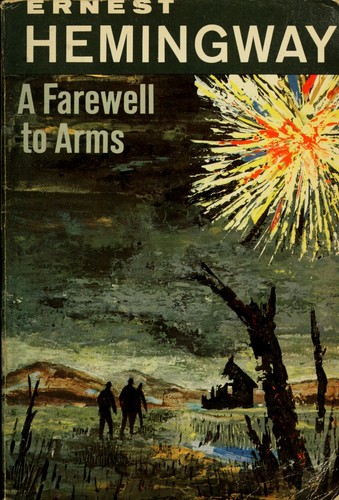
Hemingway’s 1929 semi-autobiographical classic tackles two big timeless themes: love and war. Two out of three of us can relate to the first one, but war feels pretty alien to us.
How would the boys do if they were conscripted? What made WWI so uniquely dispiriting? What is it about this novel that so faithfully captures the experience of war?
We also talk quite a bit about Hemingway’s laconic characters and terse writing style. How representative is this of his broader work? What do we think of the ‘iceberg method’? Why did he go with the most depressing possible ending?
and MORE
first reactions and synopsis
Cam: Benny, you caught up? We don’t have to worry about spoilers now.
Benny: I’m all caught up, baby. I even have a special edition with all the different endings that he wrote. Unfortunately, I actually didn’t get to them, so I’m not sure what they are.
Cam: And one of the endings, he loses both of his arms. Both get cut off.
Rich: Yeah, we got to that bit about his legs getting blown off and I was like, wait a second.
Cam: A farewell to legs.
Rich: Why is it called A Farewell to Arms? I thought his legs had been blown up, but they just got shrapneled.
Benny: Do you guys want to do a quick round of overrated/underrated for this book? I’m just curious if we just put it right out there at the beginning, like what we all thought, and then we can argue about it. Cam, you go first.
Cam: I’m not sure how he’s rated, actually, but these days I think maybe correctly rated, I’d say. This particular book, maybe slightly overrated, which I’ll get into, but I’m not sure about that. That might change at the end of this conversation.
Benny: What about you, Rich?
Rich: So at first I was reading this and I wasn’t very into it and I would have said overrated for a solid part of the book. At least a third of the way through, I thought it was like his weakest book that I’d read, and I was confused — it’s very stylistically different to the other books. And then by the time I got done with it, I can see why it occupies that place in the canon, and I would say it is well regarded and it should be well regarded.
Cam: Yeah, I suppose it’s an important point, though, for readers to maybe keep going.
Benny: And it’s not that hard to keep going in the sense that it’s an easy book to read. Like, you might be somewhat bored with the plot, but in terms of actual just sentence structure, it’s easy to read.
Cam: Bro, you two fucking say that about every fucking book I do. Like, struggling for weeks. Well, we’ll get into that.
Rich: Yeah, Benny, what do you reckon?
Benny: Actually, I think we’re all closer than I anticipated. I’m more on the overrated side. Like, if I had to pick over versus under, I would say over. But what happened was I finished the book and I thought it was — yeah, I was kind of underwhelmed. But then I read more about his sort of place in literature and like the kinds of styles that were around at the time and were popular while he was writing, and how he sort of changed that. And that made me revert my opinion a bit. And now I respect it a bit more just because of its historical place. But insofar as it’s just a book about some stuff that happened, I think if someone wrote this book today, no one would think it was that special. It might not even get published, to be honest. And so I think it’s more because of the historical context that it’s correctly rated for me than the actual content.
Rich: Hmm, that is kind of spicy actually.
Cam: So you didn’t like it that much, but you respected it?
Benny: It’s not that I didn’t like it, it’s just I didn’t think it was — yeah, maybe I’ll just go out on a limb and say I didn’t love it. Thought it had some interesting elements, some interesting writing, some interesting themes, but it’s nowhere near the best book I’ve ever read. I think it tries to deal with like two big themes of literature, war and love, has some interesting insights for each. But the characters are a little flat. I don’t love this thing he does — well, we can get into his style and everything. So anyway, I’ll just leave it there. I was just kind of curious, to set expectations a bit.
Cam: Anyway, should I give a quick summary?
Benny: Yeah, yeah.
Rich: Yeah.
Cam: So A Farewell to Arms is a war novel. It’s set in the Italian front of World War One, where Italy are part of the Allies and they’re fighting the Austrians, who are part of the Central Powers. That’s probably a lesser-known part of the war. You know, everyone’s so obsessed with carnage on the Western front. I’ve actually just been recently re-listening to Dan Carlin’s World War One series and I think he gives about 10–15 minutes to the Italian front over like a 20-hour series. So yeah, this is kind of an underrated part of the war. But anyway, our protagonist is Frederick Henry, and he’s an American — happens to be in Italy. However, the Americans haven’t actually joined the war yet, and Frederick has chosen to fight with the Italian army, mainly working as a medic.
Rich: And he speaks fluent Italian for reasons that we’re not privy to.
Cam: Yeah, he just speaks Italian and English. And anyway, so at one point Frederick injures his knee from a mortar blast, and he has to go to hospital to receive treatment. And he’s cared for, and ends up falling in love with an English nurse named Catherine, and she falls pregnant. But eventually Frederick has to rejoin the war, and this stage of war is now the real-life Battle of Caporetto, which the Italians had to retreat from the Austrians, who were supported by the Germans. I think this was kind of an infamous example of terrible leadership and bad organisation and bad comms from the Italians. I think it was all around a bit of a shit show. And during this stage, Frederick deserts the war and makes his way back to Catherine. And he’s reunited with her. They’re even more in love. And they escape for Switzerland, of course, famously neutral during the wars. And this loving and peaceful experience is kind of at the end of the book, out in the Swiss mountains. And it sort of can be contrasted with the kind of shit show of war we’ve just been in. But also this later part is characterized by disillusionment, moral uncertainties. And I’ll leave some of the last bits, which we’ll get into later. But that’s kind of the core plot of the book.
Benny: Nice.
Rich: Grazie.
Hemingway’s understated style and the ‘Iceberg method’
Cam: My opening question was what you guys thought of Hemingway’s writing style.
Benny: Yeah, I can’t quite decide. I don’t think I loved it. So I think maybe there’s a couple things to talk about here. One is just his sort of sentence structure, which is quite terse, very simple. I think him and Orwell thought along similar lines in terms of trying to speak as simply and clearly as possible. No complicated prose, very simple and short sentences. Almost feels childlike sometimes when you’re reading some sentences, just like this and this and point A and point B and point C.
Rich: And then we went to the beach.
Cam: And then we fed —
Rich: And then I got an ice cream.
Cam: Then I fed the dog.
Benny: My mom patted me on the head, day over.
Cam: He was happy.
Benny: So I don’t know. It was interesting, maybe somewhat refreshing, especially after reading like Dostoevsky — there’s a marked difference from that. And then there’s also this famous — I don’t know if this is a post hoc rationalization by him, but apparently he developed this whole iceberg theory of literature, right? Have you guys heard about this? Did you read about this at all?
Rich: Yeah.
Cam: Iceberg ahead.
Benny: And this is what made me, I think, respect him a little more. This was a huge departure from other 19th and 20th century literature, where people really got inside characters’ heads, put it all on the page, didn’t expect the reader to pick up on context. Mostly like, put it all on the page for the reader. And then Hemingway just kind of hides the ball. So by iceberg, he means he’ll sort of put 10% of the content out there and sort of hide the other 90% of the content from the reader, assuming that they’ll just pick it up by sort of reading between the lines and thinking hard about character motivations and stuff. And so you can definitely feel that when you’re reading the book — he very rarely dives too deeply into a character’s psychology. A lot of the book is just fairly simple speech between characters. And he doesn’t dive very deeply into various details, sort of just leaves it to the reader to pick up what’s actually going on.
Cam: Had you read Hemingway before?
Benny: No, this is my first Hemingway. So I don’t know to what extent this book is an outlier, or if that’s his sort of general pattern of writing, his general style. Yeah, I’m kind of torn. I sort of like it, I sort of dislike it. Sometimes it strikes me as a little bit lazy almost, but I also understand what he was trying to do, and that it was an interesting pushback against the style that was common at the time he was writing, and that I really respect — sort of like going against the grain and developing his own style. So I don’t have a very fleshed-out opinion about it. I’m kind of waffling back and forth as to whether I liked it, to be honest. What’d you guys think?
Rich: Let me try and situate you in the context a little bit, because I think this is exactly what people think of when they think of Hemingway’s prose style. But it was actually kind of foreign to me, because it’s not actually that representative, in my opinion. And just because I’ve happened to have read a couple of his other books within the last year. So this sort of very flat, terse, almost effectless prose is very, very different to — like the one that I, my favorite book is For Whom the Bell Tolls, which is actually Wallace-esque in its long, rambling, multi-clausal sentences and its interior metacognition and psychological examination of people’s characters and so on. So this is not all that Hemingway is. I think The Old Man and the Sea is like this as well, and I actually don’t like that book very much.
Benny: And what was the order, sorry — For Whom the Bell Tolls was published after?
Cam: The Sun Also Rises first, then this. And then For Whom the Bell Tolls is like 10 years later.
Benny: Right, okay, interesting.
Rich: I think For Whom the Bell Tolls is like his masterpiece.
Cam: Old Man and the Sea — is that a counter signal? Did you ever like it?
Rich: It’s just my opinion. I should probably reread it to get like a fresh opinion on it, because I haven’t read it recently. But it’s like this, except exaggerated, and it doesn’t have the saving grace that this has, which is — I’m going to make like the Ubik argument here, that this is, you know, scare quotes, “bad writing” or something, but it’s bad writing in service of creating a mood, and that works perfectly thematically in alignment with the mood. And the mood is the message, more or less, and so it couldn’t be a way other than this. And I know that he’s capable of writing differently to this, so I think the flat affect — like, basically Henry just takes everything in his stride and is a very laconic character, right? We have to read between the lines always, and it doesn’t matter whether he’s having shrapnel picked out of his legs or comforting a dying person or whatever tragedy befalls him — we get nothing of his psychological state at all.
Benny: Also, wait, Rich, do you have a Zara tattoo on your arm? On your bicep? Did I ever — do we know that? Is that new?
Cam: How fresh? Now that’s fresh.
Benny: Oh damn, dude.
Rich: 10 days ago or two weeks ago, yeah.
Benny: Nice. Oh wow. Cool. You’re gonna do that with all your kids? Just get a sleeve of names?
Rich: I put it low down so that maybe I can put more up here, and then by the time I get onto child numbers, I’m gonna have to step up my bicep regime, basically. Gotta create a bigger canvas.
Cam: I couldn’t think of any famous Zaras. I didn’t realize you’re such a big fan of — is there a famous Zara? I’m not sure. Is it maybe a new name?
Rich: There’s gonna be — watch this space.
Cam: That’s one of Tyler Cowen’s pieces of advice for naming kids. He said if you kind of back yourself and back your kids, give them an easy to google name.
Benny: A unique name.
Cam: So like an uncommon name. And if you think your kid’s going to be a criminal, give them a common name.
Rich: Oh yeah, she’s gonna have a unique name for sure, because we’re double barreling, and if you double barrel then that almost guarantees it. I won’t say it on the pod.
Benny: What’s Phoebe’s last name? Oh, I guess — yeah, that’s right.
Cam: I said it by the way, Rich, so just cut all this out.
Rich: Who said it, Cameron?
Benny: All right, gloves off, gloves off — shouting each other’s name.
Cam: I hear the feds.
Rich: From the department of — where were we? Yeah, yeah.
Benny: Writing style and stuff, you’re making the case. Just to be clear, I guess — just to be calm, I wasn’t saying it was bad. Like, I appreciate the historical context and the pushback.
Rich: I don’t know if I’d say bad, just dull, just flat affect, you know, just dull and understated. Really understated to the point of being almost goofy. Like, the events are so dramatic and the tone is so matter of fact — that disconnect.
Cam: I’m surprised you say it’s not representative, because he’s just known for this. I haven’t read his other novels. I read his short stories and Old Man and the Sea, which I think have it a bit. So I’ll take your word for the other ones.
Rich: I might be over-indexing on For Whom the Bell Tolls, which — like, it starts with this guy in the Spanish Civil War, he’s planning to blow up a bridge, 400 pages later he blows up the bridge, one tiny little act of sabotage within the context of this war. And then all in between is like ruminations and reflections on the war and on the nature of violence and on the factions and like miniature power struggles. Very Woolfian, yep. And it’s very different to this, so maybe I’m over-indexing on that. But this is the exaggerated version, though, right? Is it dull? I think it’s like, war is boring, right?
Cam: Yeah, no, I agree. I just get my thoughts out there. I’m kind of the same as you. I was really unsure about it at first. I’m still kind of agnostic about it. And when I sort of say I find it hard to read, it’s not because it’s a complicated book — I found it a bit boring, at least.
Benny: You keep telling yourself that. I’m just bored, I’m just bored.
Cam: 40% being retarded, 60% being bored and ADD.
Rich: That’s generous.
Cam: Well for this book — okay, so I’ve read his short stories and I reread some of them concurrently with this, which I think it works really well. And he’s one of the best short story writers ever. And I think he still is quite sort of bare and understated, you know, this kind of iceberg thing where you kind of leave stuff unsaid, like Hills Like White Elephants, when he’s having a discussion with this woman about abortion but abortion is never mentioned. And probably doesn’t hit as hard these days, because most people don’t really care about abortion and it’s kind of whatever. But it was kind of this masterful technique. That stuff’s probably in here as well, but I just wondered if the style can be a curse for longer novels, because it just becomes a bit monotonous, and you read 200 pages of understated descriptive writing and you’re just like, man. And we can get into the ending later with sort of payoff, but I agree with Richard’s point — it seems on theme as well for how kind of mundane it is. It’s this theme of this depersonalized account of war, and it’s showing how depersonalized and perhaps meaningless war can be.
Rich: Yeah, arbitrary and sort of, yeah.
Cam: So in a meta sense it seems to fit the theme. And there are pockets of it working really well. There are examples — there’s that moment later on where they run across like two girls in the woods, who can’t speak Italian or English. They’re terrified to be alone with men, it seems, and they kind of flinch at any gesture — is it gesture or gesture? — and they’re kind of this quintessential image of innocence or vulnerability. And I think at one point Frederick calls them wild birds, but it’s not gone into too much of their background, and it’s kind of all implied. So it works at times.
Rich: Soft G.
Rich: I just need to clarify what I said. I didn’t find it boring the whole way through. I only found it boring the first third or so. Basically, up until he gets injured and he’s recuperating in hospital, I found it dragged a little. I was fully invested once we got to him going back to the front, the retreat in the rain, the deserting soldiers, the officers getting shot, the escape on the rowboat to Switzerland, like all of that.
Cam: Yeah, there’s a lot of meaningful action.
Rich: And then the final set piece, like I was fully hooked in by that. I was no longer bored at all because the plot elements were doing work for me. It was only at the start where the plot — I mean, this is again the meta-textual point, right? Like, you don’t know who he is, you don’t know any of his backstory. Nothing happens. There’s a tiny fleeting moment of action, and then nothing happens again for a long time. And this is meant to mirror the experience of what war is actually like. Yeah, I didn’t love that, but I was thinking, this is a lesser Hemingway work. And then from the point of that retreat onwards, I thought it was terrific. That retreat in the rain was amazing. The relentless rain and the mud, it was a very good visceral description of the conditions and the chaos and the ways in which wars go wrong and in which the leadership fucks over the average troop, and how cheap life is and how random death is.
Cam: It’s so arbitrary, yeah, the deaths.
Rich: Yeah, the deaths.
Cam: I think this book was actually banned by Mussolini when he was in power, because it made Italy look bad — because it was such a shitshow.
Benny: And it was burned in Germany, dude. It was one of the books in 1933 that people burned, I think.
Rich: Really? What was the German beef with it?
Benny: Oh, it was viewed as part of this new modernist style — like literary style or something.
Rich: You can imagine it corrupting the youth and sapping the spirit to make war and stuff, right? Because it’s so bleak and disenchanted with power structures and the project of war.
Benny: Yeah. I mean, we should say that, yeah, Hemingway’s opinion of people who are waging this war is seriously negative. And we should imagine this is happening — so he wrote this 10 years after the First World War ends. I got a pretty negative impression of everything, just like the futility of it all.
Cam: I’m not sure if that’s seriously negative.
What made WWI a uniquely dispiriting war?
Benny: Basically, I didn’t get a negative impression of the actual soldiers who are fighting it. He seems to have respect for them, right? But I got the impression that he viewed the entire project as a whole, and the leadership that was actually waging the war, as totally futile and silly. And I think that was basically the opinion after World War One, right? You had this buildup of tension in Europe, and I think before the war and during the first year of the war, war was still viewed in these sort of medieval terms of honor and valor, and you march into the field and you win some glory and honor for your country and then you return home. And then by the end of the war, everyone was like, holy shit, that was just absolute chaos and was not at all what we thought and was just a gross waste of human potential and human life. And I think Hemingway was sort of writing that sort of public opinion.
Rich: Yeah, there’s no face-to-face battle between the opposing forces in this whole book that I can think of. You just get merked by a shell that you don’t even see coming, and that’s just that. Or you get shot by someone that you don’t even see the person, or you get killed by your own troops.
Cam: Or friendly fire.
Rich: Or this kind of thing. This is a faceless war. There’s no glory in it, there’s no heroics in it. Henry is not a hero himself either, as much as everyone tries to make him into one. He’s just some guy.
Benny: Yeah, exactly. Even when he gets injured, it wasn’t doing anything heroic. And so we should say, yeah, he’s an ambulance driver, never really drives an ambulance throughout the whole book, is mostly drinking and whoring, especially at the beginning.
Rich: Yeah, he drives an ambulance zero times maybe. To be fair, I think he’s kind of like the commander in charge of the ambulances, but still, he’s up to fuck all.
Rich: Well, to be fair, only Italians can drive in Italy. Like, holy shit, you know, especially in the mountains. Jesus Christ, they’re crazy.
Benny: But even when he gets injured, I mean, he was injured like he’s eating a snack or something, right? He’s eating a sandwich and then has his freaking leg blown up.
Rich: Eating some mac and cheese, wasn’t it? Like a big tub of mac and cheese.
Benny: Mac and cheese, yeah, exactly.
Rich: Macaroni, I swear it was macaroni.
Cam: But there’s one point, I think, in the hospital, Rinaldi calls him heroic. He says that was heroic of you. And then Frederick retorts and says, no, I’m not a hero.
Rich: Well, he didn’t do anything heroic. Like, we get to see what happened. He tried to save some guy who was already dead, and that was that. And then he got carried out by his drivers.
Cam: Yeah, so it’s just random. It’s interesting because Hemingway himself, who went to World War I in Italy — not for that long — and who was a medic, he got injured as well, and in some other way, I think a mortar hit him and blew up 200 shrapnels in his leg. But just before that happened, he saved someone else, carried them out, which, you know, that seems pretty heroic. But I wonder what Hemingway even thought of that.
Rich: Wait, Hemingway was legitimately a hero?
Cam: Well, yeah, I think he got a medal. He kind of saved someone and carried them out, and then some mortar blast smashed his knee, and he ended up in hospital. So, yeah, maybe not that similar to Frederick. I mean, maybe a little bit more heroic. But he might even have an issue with calling that heroic.
Rich: Not bad at this somewhere or?
Cam: Well, yeah, I can’t remember now. I’m sort of mixing them up if Frederick sort of helped someone. I think, yeah, so he tried to help someone. But yeah, there is this kind of funny thing — just getting injured sometimes it feels praiseworthy.
Rich: I mean, he was at the front. That’s the thing that he can take credit for, is that he was on the front lines, and he wanted to go back to the front once he was recuperated. And I think that is still heroic. Also, he didn’t need to be in this war. He’s a random ass American volunteer, same as Hemingway. He was fighting for someone else’s land, which is so crazy to think about today. I feel like people have such a lack of civic duty that they wouldn’t even fight for their own country, let alone go and fight the good fight on another continent. Like, Orwell went across and fought in the Spanish Civil War. Hemingway volunteered in World War I.
Cam: Yeah, and a lot of intellectuals back then, you know, like Lord Byron, I think, went to Greece. There’s lots of instances. And it’s just — to think of like academic elites now, like to go to one, it’s like, can you imagine? Yeah, not at all.
Benny: Robin DiAngelo goes to fight in Ukraine.
Cam: But I think there’s just a part of me that — you know, like this whole disillusionment, the lost generation, right? There was like the group of people that Hemingway was a part of in Paris, Gertrude Stein’s kind of coterie, where they all kind of came of age after World War One. And it’s a bit nihilistic. And this book is a bit nihilistic, and this book’s maybe a good representation of that whole mood. Which I understand, but there’s also a part of me that is just quite impressed with that — that people go to war, like there is something just heroic about that. And you can even come away thinking, yeah, this is all for nothing or such a waste, but there’s still an element of that in me, I view, when people go off to the army or someone’s a vet. It’s an impressive thing to do. It’s brave.
Rich: Would you guys go to war if we had World War Three and you had to defend some alliance of Western countries?
Benny: I like to think I’d be the next Alan Turing, actually. So I would go to war, but I’d just do math all day.
Rich: I’d be pulling a Stoner. I’d be like, no, I’ve got to study, I gotta read my book. I don’t know if I’d go or not, but I would be terrified, and I wouldn’t be all — everyone’s so laconic in this book, you know, like they don’t say how they feel or anything, they joke about it or they just say as few words as possible. But I don’t feel like it’s a very generational thing. I can’t imagine like the millennials and the zoomers just sort of quietly, bravely going along with things.
Cam: Yeah, in certain contexts I could imagine it being very easy to. And in some sense it’s hard to just imagine it ever feeling necessary, when you kind of live where we live, in the West. And like, now war is all like drones and shit. But like, I can imagine — like, you come of age in Israel or like Ukraine or Russia, like, I can imagine it feeling pretty straightforward. It’s like, yeah, it’s part of your duty and you go to war. And I think we all probably would, I mean, depending on —
Rich: You straight up have to in those places that you mentioned.
Cam: You straight up have to. But I feel like you would even just be like, yeah, like you have to do it. I can imagine it feeling like your duty. You know, you could try and jerk — what’s the word? — like, get out of it. But yeah, I can’t even imagine war happening, to be honest, with like America and England and Australia and stuff.
Rich: Well, you never read the Tomorrow When the War Began series?
Cam: No, I think I spark-noted that in school, maybe.
Rich: That’s a great young adult series, Benny, about Australia gets invaded and these teenagers have to become guerrilla warriors. It’s awesome.
Benny: Really? Awesome. Yeah, I think I would just die — be one of the people to die first, to be honest. I feel like I’d be the person in war who just, you know, you just wander off the trail —
Cam: I can see it.
Benny: — blown up by something. I’m the guy who, you know, the sort of nicest guy, like, in the boat on the way over and then is like one of the first to die. And then everyone else realizes, oh, this is quite serious, because of my death.
Rich: You charge out of the trench and you just immediately get headshot, and you’re like, oh, that’s why we have trenches.
Benny: Yeah. Oh, shit. I don’t think I would last.
Rich: We’d be good boys in like logistics or something, I reckon. You know, or like calculating trajectories for the munitions.
Benny: Yeah, I’d have to hope I’d be held back for something like that. Like, we need the nerds doing some math or something.
Rich: So 100% for the artillery, in a war of artillery, and they have to calculate it all with slide rules and stuff. I’m sure that they need some boffins back there.
Benny: Okay, should we summarize the ending?
Cam: Yeah, well, let’s talk about love in general, love and war.
Catherine and Henry are the same person
Rich: Yeah, we’ve hardly even talked about Catherine.
Cam: Yeah, let’s just talk about what we think about Catherine, and then you talk about what happens to their relationship. What do you guys think of her as a character and the representation of love?
Benny: Uh, yeah, pretty flat character.
Rich: Yeah, a bland, featureless character, kind of like a female version of Henry. Just like this stoic and chipper and little wry banter, but says very little about anything.
Benny: But even less so than Henry. Henry’s at least making decisions and is agentic to some extent, right? Decides he wants to go back to the front, decides on all these things. It seems like Catherine just goes along with stuff, can be talked into most things.
Cam: He decides he wants to leave, he decides he wants to desert, that’s a big decision.
Benny: Yeah, he jumps in the river to escape being shot from the Italians.
Rich: He’s about to get summarily executed.
Cam: Well, the choice is — but I mean, I think you’re sneaking in the conclusion there. I mean, the choice is to not desert.
Benny: Yeah, like most people didn’t jump in the river, right? Like the other officers were just being —
Rich: Oh, I see what you’re saying. Yeah, yeah, yes. No, he showed a lot of agency in that moment, that was so cool. He jumped in the river.
Benny: When they’re retreating from the front, they take this car, the car gets stuck in the mud.
Cam: Was he the one that shot? Or was it someone else?
Benny: No, he’s the one that shot. And he wasn’t a great shot, so the other guy had to then go and finish the first guy off.
Rich: He just winged him.
Benny: So these two other Italian officers were leaving them. They were deserting them, in some sense.
Cam: And they were deserting, right? They were viewed as deserting. Well, I think that was the whole problem with all the communication — they realized that they were meant to go to Udine, I think, but then the Germans were just everywhere, and so they had to retreat, and it wasn’t communicated to everyone else, and it looked like you were deserting to others. And especially when they got back to the police, they’re like, these guys are deserters, when it’s like, no, no, we’re — imagine that though, you’re fucking fighting for your country and you’re there and it’s just like absolute carnage for months, and then you have to move, and then you get back and then there’s some bloody snidey police officers thinking they’re doing —
Benny: Snot-nosed, yeah, exactly.
Cam: They have no idea. And it’s like, man — yeah, you’re not even who think that and think they’re doing this moral duty and being brave. And I said, yeah, you’re not with us. But, you know, at the same time, maybe that was the orders, you know, you don’t let people desert. But then he kind of runs away. It’s that classic, like, jumps in the water and it’s like bullets whizzing past in the water. And then he kind of grabs a log, doesn’t he? Just sails it. Eventually hitches the train, like a Huckleberry Finn.
Benny: Gollum style.
Rich: Yeah, so cool.
Cam: But anyway, Catherine. Back to the —
Rich: Catherine the do-nothing bitch.
Cam: Loki is a bit crazy as well, right?
Rich: She’s crazy at the start. I did not think they were going to be together.
Cam: I thought at the end, man, like when —
Rich: She slaps his face when he goes to kiss her and stuff, you remember?
Cam: Oh yeah. Then she warms up to him. Yeah, she slaps him. And then they kiss.
Rich: Yeah, and she keeps talking about how crazy she is.
Cam: The thing is, to remind ourselves, like, she lost her fiancé who died in the war, right? And so she’s a widow. And so in some sense, I don’t know, like, you gotta be — I mean, in terms of the iceberg theory, right, I mean, you gotta be fucked up from there. And then maybe Frederick is this kind of soothing thing for her at first. But when they fall in love, she started saying some stuff to him — at first it sounds lovey-dovey and then it’s kind of like, she’s always like, “I want to be you.” Like, almost self-effacing. And she’s like, “I want gonorrhea,” because she found out he had gonorrhea. She’s like, “I wish I had gonorrhea.” I’m like, at that point, I can imagine — it’s like five days into this burgeoning love and she’s like, “I wish I had gonorrhea with you.” Okay, maybe that’s a red flag. And she’s like, “Once we’ll all fall asleep at the exact same instant,” and stuff. It was all a little bit weird.
Rich: Cam’s like, why do the girls never want my gonorrhea?
Cam: It’s usually you usually have to keep quiet about that.
Rich: I think at the start he is not in love with her. He’s like, it’s just something fun, or he’s maybe using her, and he’s like a regular visitor to the whorehouse and stuff. He’s not much of a romantic. And then he actually just genuinely falls for her. I don’t know, do you guys have a sense of when they make that transition to genuinely fall for one another, rather than just there’s something to do?
Cam: I think he starts missing her when he goes back to war. He starts missing her, and then when he goes back, they certainly fall in love proper. There are a few comments when he was away at war and he just started thinking of her.
Rich: You mean when he goes back to the front lines after the recuperation, right?
Cam: Back to the front lines, yeah. Because I think that first instance, it is kind of —
Rich: He’s a fuckboy, kind of.
Cam: A little bit casual.
Benny: Yeah, but I think you can imagine that, right? They’re spending all this time together in the hospital. She starts taking more day shifts so she can just spend her night shifts with him in the room. And then he starts recuperating and gets shipped back out.
Rich: By drinking like heroic quantities of alcohol, incidentally.
Benny: Yeah, the whole situation is absolutely bizarre. He’s like the only person in this hospital, because this hospital is not that close to the front, and because it’s during winter time when he’s in the hospital, right, and they don’t fight much during the winter because it’s uncomfortable and cold. And so he’s basically the only person there. There’s like a couple of nurses looking after him. He convinces them to bring him alcohol all day long, basically gets jaundiced because of this, obviously. It’s a weird situation.
Cam: And then there’s the other nurse that doesn’t really like them, right? And she’s the one that finds all the alcohol bottles and kind of sends them back. She’s the one that forced them go back. She’s like, well, no, you can’t get sickly, like, you’re just drunk.
Rich: It’s such a reminder of when your mom discovers your stash or something and you’re so embarrassed. You’ve got a jar of pee in your closet or something. I remember my mom found a bottle of vodka in my room when I was a teenager, and she was like, we need to have a conversation about this or something. I don’t know, she got freaked out and made me go back to the war.
Cam: My mom found weed in my room and it actually was my friend’s weed there. And she didn’t believe — also, when I was younger, she found like — I had all the sandwiches down the back of my closet. Because I just used to not eat them in school. Like, you had to eat your sandwiches in lunchtime, and it’s hard to throw them out at school, the teacher’s like eyes on you like a fucking hawk. So I put them in my bag and I take them home, and then get home and just shove them down the back of my closet. And one time mom found them all, and I just denied it, and they’re all crumbly and moldy. I was denying it. I was like, they’re not mine. And yeah, I got sort of tears in my eyes, and all she wanted was to me to just say I’m sorry and like it was fine, and I was just like —
Rich: Yeah, kids are so fucking dumb. You’re like, I’ve got to deny this, I cannot cop to it.
Benny: That’s fucking nasty.
Rich: Those could be anybody’s sandwiches.
Cam: I mean, I suppose there probably is out there maybe some feminist critiques of this — that she felt even blander than normal, not much to it, and like she just felt like she was there for Frederick, in a sense, like she was so self-abnegating, self-effacing.
Rich: He wanted to be her too though, I’m sure that craziness went both ways. When they’re talking about, “Oh, I just want” — or at the very least he spurred her on. He was like, “Yeah, we’re the same person, we’re just one person,” kind of thing.
Cam: Maybe that’s just true love.
Benny: I mean, there’s also no doubt he was really in love with her.
Benny: By the time he came back from the front the second time, right, I think that was quite authentic.
Cam: No, for sure. I think they were in love. I thought about feminist critics of like what that meant, or what Hemingway’s views of that meant. I mean, I don’t know, maybe that’s not out there. But she didn’t want to bother him as well when she was pregnant and going into complications. She just kept feeling like such a bother.
Rich: But how is that — like, what’s the feminist thing there? Like, if anything that seems like a sensitive portrayal that points out how women, you know, lower themselves so as not to bother men or something.
Cam: I suppose it depends on what the book thinks of that, whether you sympathize with that, or whether that’s viewed as the ideal trad wife who does everything for her — and you ultimately care about Frederick, perhaps. I don’t know. We might as well say what happens, because we’re kind of there.
Rich: Well, they row across the lake to Switzerland in the middle of the night, which is another awesome scene, I think, where it’s a storm, it’s pissing down with rain, and he has to row for 10 hours straight or something, his hands are super blistered.
Downer ending
Cam: It seems like a fun adventure, right? Like, it seemed like a fun thing for them to be doing together. No, I thought given the circumstances they kind of seemed happy in that moment. I thought — maybe I’m misremembering, but —
Rich: Well, Katherine is such a trooper, you know. She’s so chipper. She’s pregnant and she just goes along with it all very happily and merrily. It’s incredible. She’s a hell of a catch, I think. She handles all of these situations so calmly, just like he does. But anyway, they safely make it to Switzerland and they are able to go and hole up in a nice little chalet in the mountains somewhere and have a little idyllic life through the later stages of the pregnancy, and go for walks in the woods. They’ve escaped from the war successfully, and the baby comes and they find a hospital and a doctor. Catherine is having some difficulties, it’s a protracted labor, so Henry goes to the pub and comes back, and the baby is born and the baby dies, which you get the feeling that Henry is not actually too worried about that. But then Catherine also hemorrhages and dies. He crawls into bed with her and forces the nurses out, and he’s like, oh, she was just like a statue, there was no point. And then the last line is like, “I left the hospital in the rain and went back to the hotel.” And it’s a very brutal down ending — that he’s built up this beautiful life, he’s finally found something to live for, built this really lovely idyllic life, and then once again through pure capricious fate it’s just arbitrarily snatched away from him. There’s no explanation, no rhyme or reason. It’s just, these things happen and that’s that.
Cam: Well, it’s the best of all possible worlds, right? It’s all for a greater reason.
Rich: Yeah, that episode’s not canon, so don’t refer to it ever again.
Cam: Voltaire is my favorite writer. You’re right though, you’re not sure how much sympathy there is for the child. And even before the birth there’s points where it seems like Frederick’s not necessarily keen. He says a few things, it’s almost like he just feels like the kids are going to get in the way of their love and stuff. You’re actually not sure.
Rich: No, that’s Catherine who says that, I’m pretty sure. I mean, he’s definitely not expressing much excitement about it. They’re the same person.
Cam: They’re the same person, man. Speaking as a parent.
Rich: Yeah, I think they’re being wry and self-deprecating. I don’t think they actually — I think they are happy about having a child and so on, or they call it the brat and so on, but they could easily have not had the kid if they didn’t want to. I think it’s just part of their understated, pithy, sort of laconic style that they have the whole way throughout.
Cam: And I think about the ending, I did have one reading that I can’t quite shake — of this feeling that in some sense Frederick wanted to shirk responsibility. You know, so he deserted the war and so he doesn’t want responsibility there, and he’s nihilistic, and even in his relationship, maybe part of him doesn’t want it, especially the kid. And then he kind of, in some sense, he’s been relinquished of it. And of course he’s upset about it, but I just — I don’t know if that was coming from Hemingway or something, but it felt slightly there.
Rich: I got kind of the opposite reading of that, which is that, like, he’s doing these super supererogatory things that he doesn’t need to, and then they fuck him over anyway. And it’s like, well, what was the point of that? Because he had no need to be in the war. He didn’t have to be in the war.
Benny: Also, he could have escaped to Switzerland by himself, presumably, right? So, the bartender tells him, oh, the police are showing up, they’re in Italy at this point, the police are showing up, they’re after you, they realize you’ve deserted, you should escape. And then he could just escape by himself, but he goes away — wakes Catherine up. You know, you could imagine a post-hoc rationalization there.
Rich: He goes to great lengths to find Catherine and track her down, and he’s really taking ownership. I don’t think he resents it. I think it’s more the opposite, that he is trying to do more — he’s trying to go above and beyond, and it still just is ultimately for nothing, which is even more devastating. Because you have to imagine, like, what’s he going to do now? He’s just had these two passions squashed in the most gruesome, horrible way. I mean, presumably he’ll be fucked up for his whole life now, but if not, he has to try and start a third act and just start again, find something else to live for all over again.
Cam: Yeah, I think that’s right. But I do think there’s something around — there’s a difference of just like shirking a responsibility, or then like having to, and then in some sense when you have to, it’s kind of like the Larry David joke — him leaving the wife with cancer, you can’t do that as an asshole, you’re an asshole, but he’s just hoping for a way that he can. But I’m not sure if that’s even there.
Rich: I think you’re projecting, Cam. There’s nothing — I don’t think there’s any textual evidence for any of this.
Benny: You missed the iceberg, dude. You dove right past the iceberg. You’re at the bottom.
Cam: I read this in a little bit of commentary around it, it’s not purely from my thoughts.
Rich: If you knock someone up, you hope they both die so that you can —
Cam: My wife and child — yeah, yeah. No, there’s just a little bit of commentary around that and I thought, yeah, it kind of struck a chord. Like, when the child and Catherine die, you’re kind of sad for Frederick as a reader, which of course is tragic, right? But you’re not — I just, that’s why I wondered, like, in some sense it found a bit unfair. You know, you’re not as sad for Catherine, the baby.
Rich: It doesn’t have a name. We’ve got no attachment to it. There’s nothing to be sad for, except in the abstract. And Catherine is also not a person.
Cam: They’re both — but that’s kind of my point, right? They’re kind of there for Frederick.
Rich: I mean, the horrible things keep happening to him. I think it’s fine that we’re meant to feel sorry for him. I mean, did you guys — like, I felt moved by that ending, I was pretty bummed out by it. I’ve had to like go outside and clasp my hands and look at a tree.
Cam: Yeah, no, definitely. It’s nihilistic. I mean, it’s going back to this kind of monotonous 250 pages of description and then — you get to this and it’s kind of this Schopenhauer-istic, pessimistic ending that hits you extremely hard.
Benny: And putting yourself in his head, like, imagine you’d just view the entire world as absolutely pointless and futile, right? So you’ve just been through this war where some of the most dangerous parts were you being almost shot by your own comrades, basically, your own side that you’re fighting for. You just view this total carnage, this waste of human life. You fight, you escape it somehow, you’re lucky, you escape it with this woman you love, you’re about to have this family, and then they both die, both the child and the woman. After that, you’d be so devastated. Like, it’s almost a miracle he doesn’t commit suicide or something afterwards.
Rich: Well, we don’t know what he’s going to do. I mean, probably he’ll drink. I mean, Hemingway was a drunk and killed himself, right?
Cam: Yeah. So Hemingway himself, right, so he goes to war.
Benny: Did Hemingway kill himself? I didn’t know that.
Cam: Yeah, man, with a shotgun. So during this era he goes to war when he’s like 18 and he gets injured, he falls in love with an American nurse — so there’s a lot of biography in here — but she sort of rejected him ultimately, I think. She said, you’re too young. But I think she always stuck with him as, you know, the one that got away. That his kid always thought about, from their letters and stuff. That was the big loss of his life. Which — certainly for Frederick Henry, right, you wouldn’t want to be following Catherine in the next relationship.
A catalogue of arbitrary and meaningless death
Rich: Well, I mean, he was following some other guy, like her childhood beau, right? Which is another pattern of like these deaths of the people who are closest to you, which just come out of nowhere and just mean nothing. So we should go through the deaths. There’s the death of Catherine’s beau — I believe he gets killed in an artillery shelling, right? Is that right? And they can’t even find his body because it’s just blown into smithereens or something.
Cam: Yep, split into bits.
Rich: Yeah, like, imagine not being able to find a body, like you’re just vaporized by — like, this is what’s happening to all these young men every day. It’s fucking crazy.
Benny: And also the backdrop there is Katherine’s expectation — you know, she’s this nurse and she dreams of her fiancé, or had dreamt of her fiancé, coming into the hospital where she works with this sort of heroic scar or something that he got in battle, right? Like, he has maybe a gash on his leg, and then she has to stitch him up, and he’s a war hero because of this. And instead that’s taken to the nth degree and he actually just — he’s blown up to smithereens. And that’s a good representation, I think, of people’s slow disillusionment with the entire project of war — what their expectations were at the beginning, and then the sort of results that were actually occurring.
Rich: That’s right, I forgot about that. Yeah, she fantasizes about bandaging his ear because he’s got like a — so sad. And then who else do we have? We have the other driver who is killed in the shelling, the same shelling in which Henry gets injured. He goes to try and stop the bleeding or something, and it’s just way too late, the guy’s already dead. And then he’s being driven back to the hospital in an ambulance by an English ambulance driver. And he’s in this ambulance stacked with beds, and the bed above him, there’s another guy, another injured guy, who just starts hemorrhaging. And the reason that Henry knows about it is because his blood is just pissing down onto him. And so he yells out to the driver to stop. He says, oh, someone’s dying back here. And the driver’s like, there’s nothing we can do, we’ll stop at the top of the hill. And they stop at the top of the hill, the guy’s dead, they dump his body out onto the road and make room to fit another injured person in, and just keep going. And every time someone dies, it’s not because of some valiant action or because it meant that they were able to achieve XYZ objective, and it never comes with any warning sign. Everything is so divorced of meaning. And I like this subversive kind of storytelling, which is not how Hollywood war movies go. I mean, they do go like this for non-main characters, but the main character — usually you achieve the mission or you get your comeuppance or your revenge or something, right? But nothing is like that in here. And then his other really good friend who is with —
Rich: — them when they’re deserting, I can’t remember what his name was, do you guys remember?
Cam: The ambulance driver — was it Piscini, or was that the first one?
Rich: Yeah, it starts with P, I think.
Cam: Maybe Piscini.
Rich: Well, he really liked him anyway, one of his underlings. And as they’re escaping, he gets killed instantly by a rifle shot from an unknown assailant, and that’s that. They never know who shot him, they never see who did it.
Cam: Oh, that one — yeah, that one might have been friendly fire, right?
Rich: Yeah, possibly. But again, you don’t even know, and it doesn’t mean anything.
Benny: Yeah, I think we don’t know is the point.
Cam: There’s something about the friendly fire as well — and not even, quote, “friendly fire” when it’s deserters and it’s intentional. It’s not just arbitrary deaths, but it just feels so absurd. I think a lot of soldiers read this book and really thought it was — they praised the accuracy. And Hemingway was only there for like a month, so he would have done extensive research and reading about it. But I think a lot of people felt like he got it.
Rich: He was only there for a month? Oh interesting. So he didn’t — like, you mean on the lines before he went to the hospital to rest up?
Cam: Well, probably when then he got injured. I think just in Italy. I think I have to check. But yeah, I think he had to read a lot and research a lot on what it was like because he wasn’t necessarily there for —
Rich: Interesting, I didn’t realize that. It’s so well described that I just kind of assumed that it was heavily biographical, like the retreat and that whole sequence with all the trucks stuck in the mud. The geography — that’s pretty cool, just the geography of it.
Cam: And I suppose, as you said, like Catherine’s death kind of fits this theme, right? Of just this arbitrary meaninglessness.
Rich: Yeah, there’s literally not even a proximate cause for it, right? They’re just like — oh, he says something like, “Oh, don’t worry, woman, these days women don’t die in childbirth.” And generally they don’t, but sometimes they still do, and she did. That’s the nightmare.
Cam: I suppose as well, because the Allies ultimately win the war, and you wouldn’t know that from this book — this book ends in failure for the Allies at the moment. And then Frederick leaves and you’re having all these deaths, and it’s not even this ending of, or at least, “a few of us won.”
Rich: What year is this? Like, how far into the war is it?
Cam: I think Caporetto — I mean, I can check Battle of Caporetto.
Benny: This is one of the only battles that Austria actually won, right?
Cam: Yeah, well, with the Germans. Caporetto was 1917. And I think Americans didn’t get in there until 1917 as well. So I suppose it was a few years leading up.
Rich: So this is actually near the end of the war, yeah.
Cam: And like the Western front, it was kind of characterized by just nothing happening for ages with the trenches and just the stalemate. And in Italy it’s like a stalemate in the mountains and it’s cold and it just sounded even more miserable. And then you get this random moment where Germany and Austria break through, and it’s just like mayhem for them all retreating.
Rich: It’s interesting. This is one year before the end of the war, and yet they think things are going terribly, and they don’t see any end to it. But yeah, I mean, a one year is still a long time, I guess.
Cam: Yeah, it’s so funny just knowing in hindsight what happens. I mean at the moment it would have felt like they’re losing. Because at one point someone says — because there’s a lot of anti-war themes in terms of the nihilism, but also in terms of some of the commentary, when Frederick realizes and he questions, I think at some point someone says, why doesn’t everyone just stop fighting, which kind of sounds like a — like a deputy, but, you know, it’s important to think about, like, why can’t that happen, and how all the soldiers themselves probably want that to happen. But then someone else says, well, what’s worse than war is defeat. Later on he talks to the priest, right, and the priest — you can tell in the hospital, Frederick and the priest, kind of anti-war. And suddenly the priest takes on a different meaning now, because earlier on everyone’s kind of making fun of him, but later on it’s like just that kind of symbol of God there, questioning God really. And I think at one point — I’m not sure, did he say like every thinking man’s an atheist or something? But yeah, it would make you an atheist, right?
Benny: Yeah, I’m sure. And I think the fact that his psychological state is sort of divorced from the actual outcome of the war is probably very reflective of reality. Right, like, just the difference between these big geopolitical chess moves being made and which country is actually winning, what treaties are being put in place, what sort of national agreements are occurring between governments — and then the actual day-to-day of soldiers, where it almost doesn’t matter who’s actually winning in the big scheme of things. All you care about is what’s going on in your trench, which of your friends have died, what sort of injuries you sustained, all this stuff. And so I think the fact that you don’t see him at the end of the war, or you know, even what’s happening in the war after he gets to Switzerland matters much to him, is probably pretty accurate for most of these guys. It’s just like they’re thrown in the middle of this absolute mayhem and like, you know, for them it’s like, who fucking cares what’s going on in terms of agreements between Germany and Italy or something. All they’re seeing is their day-to-day of their friends dying and them retreating and then attacking, retreating and attacking. They don’t care.
Rich: Yeah, it’s also something that’s so hard to relate to today, I think, where, you know, the best you can do for news is reading a bundle of three-month-old papers that the porter manages to find for you or something. The high command are total abstractions in this book. You never see — orders just come down, but you never see what’s happening, you have no sense of what the master plan is, and no high level sense of who’s winning the war. And it’s just very different to now, with Russia/Ukraine, we have experts who are giving constant running commentaries on who’s captured territory, like history in real time, none of which has ever been possible before. And yeah, it’s just so different. It does make it a little hard to relate to, I think. Was it you, Cam, who was saying at the start — well, Benny — that a book about war with war as its biggest theme is somewhat hard to relate to just because it’s —
Cam: It feels a bit alien.
Rich: Hopefully, yeah, hopefully we will never experience that.
Benny: Same with love. That’s out of reach.
Rich: Damn, dude. Well, Benny’s managing on the lust front, but —
Cam: He probably has gonorrhea, so at least he’s got that.
Benny: Okay.
Benny: All right, your last names are coming out right now. That’s it.
Rich: What would Benny’s version of a war wound be? Like a paper cut from a maths paper that he’s reading or something.
Benny: Just not understanding a proof so violently that it damages me psychologically.
Rich: He’s getting like a mild headache from looking at a screen too much.
Final thoughts and next book
Benny: All right, fellas, I gotta run fairly quick. Anything else we want to cover?
Rich: I think everyone said their opinion, but would you read more Hemingway, Benny? Or you sort of feel like you’ve had a taste and you’re not too worried about it?
Benny: No, I’m open to it. I mean, especially there seems to be some disagreement about whether this was his canonical style or not, so I’d be interested in exploring that. Obviously For Whom the Bell Tolls is very famous and certainly on my list, and now I’m even more intrigued because you say that it differs substantially in style from this one. So an author that can do both seems quite interesting.
Rich: Are you going to Spain on this trip?
Benny: No, I go to Poland next week, and then I go back, I got to go back to the US. No Spain, sadly.
Cam: The Sun Also Rises could be good. I think it’s about that lost generation in the 20s, kind of post-war.
Rich: It’s quite similar to this. It’s like Fitzgeraldian alcoholics at a loose end.
Cam: I read his short stories, a few of them, and they’re extremely good. So I’d recommend those to the listeners.
Rich: What’s your favorite?
Benny: And the man just had an interesting life, right? So I think, you know, stuff that’s going to be even semi-autobiographical will be quite interesting.
Cam: Yeah, I think his biographies tend to be pretty good. I liked the fish one as well, man — Old Man and the Sea — but my favorite —
Rich: Did you like it because you liked it, or did you like it because it was easy?
Cam: Both, man. It kind of is like one of those gateway books, you know. It’s like when you, if you just watch like Fight Club or Donnie Darko or something as a teenager, and you’re like, you’re gonna start reading books, and you read that because it’s like 100 pages.
Rich: No, I think it is a good book. It’s almost like a young adult book or something, right?
Cam: Yeah, it’s like a young adult book.
Rich: But there’s nothing wrong with that. It just doesn’t have the weight to it that these ones do.
Cam: My favorite short stories — my favorite would be A Clean, Well-Lighted Place, which is just a few pages, and Hills Like White Elephants. It’s good. And I’m forgetting the names.
Benny: Yeah, so anyway, let’s put some more of his stuff on the list. I’m down.
Rich: Yeah, now what are we doing next?
Cam: Well, we’ve mentioned Chekhov, but we haven’t admitted to anything.
Rich: Well, if you mention Chekhov, you have to actually follow through.
Benny: I’d be super down with the Chekhov for sure. I don’t have super strong opinions about which.
Rich: Right, so we’re reading The Cherry Orchard by Anton Chekhov. It’s nice and short. Read along. And if you have any feedback for us, just a reminder that the email address is doyouevenlit at gmail.com. You, the letter U, not the word U. There’s not very stiff competition for stuff being read out, so if you have some comments, just get in touch — or if you want us to bully Cam more, though.
Cam: Tell these guys to stop bullying me.
Rich: But yeah, I know you guys are listening, I see the numbers, but you don’t have anything to say, which suggests that we must be doing a perfect job. But yeah, if you do want us to bully Cam more, then please write in and we’ll see you next time. Bye bye.
Cam: See you guys.