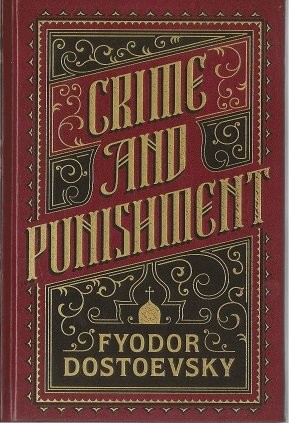
In parts 3 and 4 of Crime and Punishment we get a lot more meat on Raskolnikov’s ‘extraordinary man’ thesis.
How does it overlap with the concept of the Übermensch in Nietzsche and Hegel? Are we too deeply steeped in Christian morality to become ‘extraordinary’ without destroying ourselves?
We reconsider Raskolnikov, Svidrigailov, and Luzhin through this lens.
Plus: cam’s obligatory sibling inc*st fantasies, rich tries to give dostoyevsky writing advice, etc
hangry
Cam: Scratch this, Rich, I need to lose you guys’ body language — you’re probably right.
Rich: I’m not editing. It’s not in my hands.
Cam: This is fine, mate, this is classic stuff, mate.
Rich: No, I just want to start the episode. I want to have my dinner and shit.
Benny: Okay, okay, let’s get into it. Alright, so —
Cam: Okay, yeah, no no, I say no, okay, sorry — if you could just explain, like, I suppose we’ll give some background. I’m really tempted to just troll you now, but I promise I won’t.
Benny: Oh yeah, let me — I’ll just give like a couple of sentences of background. Sorry, I was just in my own head there around how much background to give. But if I miss stuff, then you guys can just fucking fill it in.
Cam: I just see Richard just getting more and more annoyed.
Benny: He just starts eating dinner on camera. Fuck these guys, I’m starting my day.
Rich: I’m gonna eat my lasagna.
Cam: Yeah, I forgot, I didn’t know you get hangry, Rich. Good to know.
Rich: Well, when this drink of wine wears off, you guys are in trouble. I’m gonna get surly.
Cam: You’re gonna get Rasko on us.
Rich: I reckon Raskolnikov was just hungry. His blood sugar was low.
Cam: Nah, I mean, for real, that was part of it. Like, that man was hungry-ass.
Benny: Yeah, but they’re all hungry, dude.
Rich: Yeah, living like a pauper, eating a crust of bread and a bit of cheese. I would do murder if I had to live like that. Six hours between meals, I would probably do murder.
Cam: Well, as either Razumikhin or Porphyry says, you know, the environment does contribute.
Rich: So we’ve got some actual motives now, right? From the lips of Raskolnikov himself.
Benny: Shut up, shut up, let me explain it before we get into it.
Rich: I’m trying to do it more organically.
Cam: This is good stuff, mate. I thought I was doing what you guys wanted.
Rich: No, just whatever, fuck, alright, go Benny, no no, just do it.
Cam: Carry on, Rich.
the Extraordinary Man thesis
Benny: Alright, so Part 3 opens with Raskolnikov actually wanting to go visit the head prosecutor, Porphyry. So Raskolnikov convinces Razumikhin, his friend who’s been looking out for him, to take him to Porphyry. And the motives aren’t entirely clear here. It’s almost like the kind of thing where if you suspect that you’re being suspected, you can’t handle that sort of uncertainty, and so he sort of wants to go face it head on. He’s got the sense that Porphyry might suspect him of the murder, so it’s like he wants to go investigate that himself. Or he thinks he’s just being clever by going to see him up front to try and dispel any possible suspicion.
While they’re over there, we learn about a manifesto — or maybe a better word is just a political opinion piece — that Raskolnikov had written, I guess when he was a law student, so a couple of months ago, that had shown up in the local newspaper. Porphyry had been in the middle of reading this, or had just completed it, when Raskolnikov shows up. And the thesis of the piece is that there are two types of people in the world: ordinary people and extraordinary people, or maybe great men and regular men. Extraordinary people are the people who are willing and capable of transgressing political and moral boundaries to implement some vision. So think of a great figure of history, like a Napoleon or something. And they’re often willing to kill people to enact this vision, for the greater good. Raskolnikov’s thesis is that these extraordinary people are sort of justified in wanting to transgress these boundaries and shouldn’t be judged harshly. So it’s okay for them to step over these moral and political boundaries.
Ordinary people, on the other hand, are basically the flock. They just go along with society. They never really think any new thoughts, or if they do think any new thoughts, they’re either scared or incapable of acting on them. And so an obvious question is, does Raskolnikov think of himself as one of these great, extraordinary men? And was he convincing himself that he was one of these men? And is that what enabled him to commit the murder? So what do you guys think?
Cam: They sort of wrote it for a university paper and then it just sort of pops out — it just sort of reminded me of like having a deep cut blog or something. You meet these people that are coming up, and someone mentions it and you’re like, oh fuck. It’s kind of funny. So sorry, what was your question — what do we think of the thesis? I’ll let Rich have a pop if he wants.
Rich: Yeah, I don’t know. I don’t think he thinks he’s one of these great men. Or maybe he had a fleeting fantasy. I feel validated because last week we talked about this a bit where it seemed like he wanted to be a type of guy, right? He wanted to be the kind of guy who can commit violence and walk away and sleep soundly in his bed that night. And then he sort of — it’s weird because he knew he’s not that guy. And then he did the act, and sure enough, it turns out he’s not that guy. But he had this fantasy that he could be a person capable of violence without it weighing on his soul.
So now we have like the actual theoretical underpinnings of when he thinks that might be justified. And it sort of explains his utilitarian-style calculus about wiping out the moneylender, who is a parasite, and then redistributing the money to, I don’t know, orphan girls or whatever. So yeah, I don’t know if he thinks he’s one of these great men, but maybe at one point he had the fantasy that he could be. And it just gave him the justification enough to actually pick up the fucking axe and do it. On some level, he thinks he’s a Napoleon type person. But after it happens, I don’t think he thinks it.
Cam: Do you guys view the utilitarian motive or rationale for the murder as separate from this kind of extraordinary man motive? Or kind of the same thing — the extraordinary man is justified in doing bad acts for utilitarian reasons, or just for their own reasons too, I suppose?
Nietzsche, Hegel and the RETVRN to bronze age morality
Rich: The Nietzsche distinction is subtly different to this, I think — the master/slave morality. It’s almost the opposite, where the master morality is, you do things for their own purpose. You behave in a noble, virtuous, brave way, and you’re not interested in maximizing global utility or whatever. And then the slave morality is looking after the victims of society and redistributing wealth and being a good Christian, that kind of thing — which is more in line with Raskolnikov’s stated aims. So the only framework I have for this is my vague bad understanding of Nietzsche.
Cam: Built it through Twitter accounts.
Rich: I mean, there is a common thread here of the Übermensch, the man who is not a slave to social norms or mores. They have massive agency in the world, they can just do whatever they please basically. That’s my vague understanding of what’s going on here. It’s pretty alien to me, to be completely honest.
Cam: Yeah, no, I think that’s understandable. I mean, that’s almost kind of the point of it. But yeah, this is so Nietzschean. And again, I’ve probably half read some intro stuff to him, and read Twitter accounts.
Rich: We’ve got to read Thus Spake Zarathustra, because that gets straight into all of this stuff.
Cam: But I just can’t believe that they didn’t read each other, if we were to believe them. So Nietzsche apparently read Dostoevsky in the late 1880s. But Zarathustra was early 1880s, and Dosti died before.
Rich: Yeah, Zarathustra was published after Dostoevsky died.
Cam: Yeah, but apparently before Nietzsche read him.
Rich: Presumably there’d be language barriers, right? I don’t know how quickly things were translated. Maybe it was fairly quickly.
Cam: Yeah, there’d be a bit of that. But apparently he came across Notes from Underground in this old bookstore, which is a great image — this kind of genius stumbling across this other genius’s work, and he just immediately fell in love with this author. I’m just still in disbelief. I suppose it goes back to the idea that sometimes it feels like there’s some ideas — the era is primed for ideas. You go back in time, there’s just a lot of things that happen at the same time. Matt Ridley talks about this in one of his books. Darwin and Alfred Russel Wallace both thought of evolution at the same time, and you famously had Newton and Leibniz with calculus, and even the lightbulb — I think there’s like ten independent inventions of the lightbulb. So Ridley’s idea was that the era is primed for discoveries — which somewhat makes sense, if some discoveries rely on previous discoveries that you couldn’t have made earlier. But in another sense, it might be a coincidence. So maybe the era was kind of primed for this Nietzschean idea of the Übermensch.
Rich: This is a reaction to the death of God stuff, right? Which is Nietzsche’s big concern, existentialism’s big concern, and I think Dostoevsky’s big concern as well — although he’s trying to turn people back towards Christian morality. It’s definitely in the air at this point in time. And I think this comes from Hegel as well — that’s a big influence — the concept of the Übermensch, the great man and so on. There’s a direct line of descent through both Nietzsche and Dostoevsky.
Cam: I ain’t reading Hegel, bro.
Rich: One in a thousand men, yeah.
Benny: What was Hegel’s timeline? Sorry, Hegel was writing before both of them, right?
Cam: Yeah, early 1800s.
Rich: He would have not even quite overlapped, or maybe slightly overlapped.
Benny: Okay, yeah, I’m not familiar enough with Hegelian thought, unfortunately, to point to anything specific. This helps a bit though, because one thing I was confused about was that very clearly Dostoevsky is writing about certain ideas in the air — namely utilitarianism and nihilism. I just wasn’t sure where this great man theory fit into those things. But I guess you guys are saying that some of these ideas did originate in Hegel and some other thinkers had these sort of thoughts.
Rich: The Übermensch idea comes from Hegel originally, as far as I know. But it’s also — I’m sure it’s older than that as well, right? If you think about the Homeric heroes and the way that the Greeks talked about greatness, it’s extremely similar to this kind of thing. They believe that there are different classes of people, the way they imbue it with godhood or demigodhood sometimes, but also ordinary men. And they have this concept of people who are obsessed with greatness at all costs and who are different from the rest of the pack. Like Achilles — if I remember correctly, he’s so fucked off with Agamemnon, he wants to leave the battle, but he decides to stay just because he wants to maximize glory, get as much glory as he possibly can. And there’s that Brad Pitt line — have you guys seen the Troy movie with Brad Pitt? He says to that kid, “that is why no one will ever remember your name,” this kind of thing.
Cam: No, I just read the Iliad, I haven’t seen the movie. But yeah, you’re right, and BAP talks about that, and Nietzsche probably talked about this. It’s kind of pre-Christian morality.
Rich: Yeah, Hegel would say that it comes in cycles, exactly like this. The great world spirit comes along, and you have these opposing forces that do battle, and one wins, and then the other one cycles back around. There’s a narrative thread to these cycles. So Christianity is the current paradigm, and then eventually we’re going to swing back around to Bronze Age Pervert values, Homeric heroes again, the great men. And in some sense we are — Donald Trump feels like a great man to me, in this use of the word great. He is one in a million or one in a billion, and he does have this like will to power that he just simply manifests his desires onto the earth somehow, in some way that seems like a demigod or something — and in a way that has nothing to do with morality or intelligence or goodness or anything like that.
Cam: Yeah, and there’s certainly people on the alt-right that hope that he is their sort of great man. Okay, I might just get into my takes on this as well.
Rich: You were keeping your takes back from us?
Cam: Well, no, it’s bouncing off this. I just knew we needed to describe what the extraordinary man was first. So okay — one reading of Crime and Punishment, I think, from Dostoevsky, is that it’s impossible to be the extraordinary man or the Übermensch in practice. You can intellectually understand it and potentially agree with it, but you can’t live it. And this is kind of like a Dostoevskian theme. It’s not only that you can intellectually agree with it — potentially it’s even quite hard to argue against. It’s notoriously quite hard to argue against nihilism, or to argue for moral realism. Dostoevsky kind of does the same thing with religion in Brothers K: it’s hard to argue against atheism, and then he shows that, well, it’s kind of hard to live as an atheist. And I think he’s potentially doing the same thing with this. Nihilism is hard to argue against, because at the end of the day you have to pull yourself up by your bootstraps, and as Nietzsche argues, these bootstraps, these boots, are kind of made by Christians.
Rich: I thought you were going to say, for walking.
Benny: For walking.
Cam: Very much better — these boots are Christian-made.
Rich: The Nietzsche / Dolly Parton crossover we never knew we needed.
Can you be an extraordinary man without breaking yourself?
Cam: Even if you don’t think it is, your bootstraps are Christian, and Western morality is Christian. Even if you’re an atheist — secular humanism is downstream of Christianity. Just to be clear what I mean by that: it’s this exultation of the victim, it’s compassion toward the victim. And to be post-Christian is to relinquish all of that and then be okay with murdering people. So one reading is Dostoevsky’s claim is, you can kind of agree and say, yeah, Christian morality or humanist morality is just as arbitrary as Nietzschean Übermensch morality, but in our guts you can’t live that. And I think Jordan Peterson talks about this as well: if you actually try to deny the sacredness of humanity or of other humans, you just break inside. He gets physically sick, his mind brain, and he just sort of gets paranoid and guilty — with the caveat that some of this paranoia is around getting caught and selfish reasons. But it also just seems to be this physical mental break of what he’s done. And we relate to that — we kind of think, if that were us, we would feel pretty shit if we did this, even if we can intellectually agree, oh yeah, sure, maybe there’s nothing objectively wrong with it.
Rich: Raskolnikov is like the worst candidate to be a great man, right? Because he’s such a sensitive petal. He’s incredibly sensitive and thoughtful and neurotic.
Cam: Yeah, sure, which apparently Nietzsche was as well, in his personal life. He was kind of soft. On the page —
Rich: On the page he goes so hard.
Benny: So Cam, on this reading, are you saying — assuming this is what Dostoevsky is trying to get across — that the extraordinary men that he uses as examples, like Napoleon, it’s impossible for them to live it as well? Because there’s two readings here, right? One is that if ordinary men try and act extraordinary, or adopt this extraordinary man morality, then they will just break inside. But there do exist extraordinary men who won’t break inside, right? And they can lead armies and change nations, et cetera. The other reading is that there are no such thing as extraordinary men. It’s all just ordinary men convincing themselves that they can be extraordinary, and they’re all going to break inside. But then that doesn’t seem to reconcile with the fact that there do seem to be people who don’t break inside, even when they’re —
Cam: Yeah, it seems like we’ve got evidence in history that you’ve had great men, which is the counter. I mean, my read of Dostoevsky is the former: it’s within all of us — like, you can’t do this. And to defend him, in an individual sense it is very hard to do, it would be very hard for us to do.
I always remember in some 101 philosophy tutorial, there’s this young first year, sort of nerdy guy with long hair, and he argues that murder’s not bad, and he’s super smart and super good at arguing. I can sort of see some of the girls’ faces that are sitting next to him just like, oh Jesus Christ. But you know, these are arguments you can make. You get to this point — I’ve talked to EAs and rationalists — there is no objective morality, and we just have to be like, oh fuck it, our morality is right. But on an individual level, to actually go and do this kind of extraordinary man stuff, I just think no one can. Maybe at a wider societal level, at a social level, you could, because maybe we’ve just been psyopped so hard with Christian morality, even though we think we’re not Christians anymore. It just seems like harming an innocent life — you feel that in your nerve endings, it just feels so wrong. But maybe your culture could change enough where that didn’t feel wrong, and people did it. Not even just Napoleon was a great man — and as we were sort of saying, back in the Bronze Age, back in the battles of Troy, you go and wipe out the other army and you do horrors, and you don’t blink.
Sorry, I’ve gone on a bit long, but one final thing: if I’m right that Dostoevsky is sort of claiming that we can’t do this as humans even if we intellectually agree — Dostoevsky is Christian, he’s ultimately Christian, and so there’s a sense of, well, this Christian morality, Christianity, is true, so to try and deny that breaks us, breaks human nature. But if you truly rejected that, maybe the way Nietzsche would take it, maybe we could. And maybe there’s just psychopaths, right?
Rich: Yeah, totally. And presumably a bunch of great men throughout history have been sociopaths. A lot of it is just cultural norms, but some of it is probably also your personal constitution and whether you feel bad about inflicting violence upon innocent people. It’s definitely going to select for sociopaths, even if not every great man is a sociopath.
Cam: And maybe a way to reconcile is that it’s very hard in a personal, micro sense to do something like this. But for all of us, it’s very easy to dull your emotions toward the other. Like Adam Smith’s famous quote in Theory of Moral Sentiments around if there’s an earthquake in China — we don’t really care when you hear things like that. You talk to the pro-Palestine protestors and they don’t really care about the Israelis, and you talk to the pro-Israeli protestors and they don’t really care about the Palestinians. It’s easy to not care about the others. And so for someone like Napoleon, your army, they just turn into numbers. The famous Lenin or Stalin quote — one death’s a tragedy and thousands is a statistic. That’s maybe why I always saw this murdering with the axe felt quite important. You’re really confronting the bad act right there and then, and if you do that, that kind of breaks you.
Benny: I think I do lean towards the reading that Raskolnikov is an ordinary man trying to convince himself that he’s extraordinary, in that in the big scheme of things, the act of killing this woman or these two women is relatively small potatoes compared to shaping nations. And so it does feel like a justification — or part of his stew of justifications — that he used in order to kill this woman, about convincing himself that he’d perhaps do great things with the money. If he was able to do this, then he could go back to law school and help lots of people, et cetera. But it’s not as if he is a Napoleonic figure, right? He’s not considering leading a nation to war or something. I don’t think we as the reader are supposed to be tempted even to the reading that he’s actually an extraordinary man.
Cam: Yeah, no, I definitely agree with that as well. If you take Raskolnikov on his own terms, I think he’s failed, and he’s wrong about himself if he ever thought he was. So not only is it like he hasn’t done anything impressive, but the other funny thing is, it turns out it was kind of unnecessary, because later on, as we discussed, the family come into some money, and that was the main motive in the first place. He needed money for his sister, for himself, for this family he cares about — and they come into money, so it’s kind of like, this murder’s all for nothing.
Svidrigailov introduction
I just wondered what you guys thought — and maybe, Benny, if you don’t mind, to quickly introduce him, but I might not even say the name right — we get introduced in this section to Svidrigailov.
Benny: I think it’s — now you’ve fucked with me. Sorry, I need to look at the name again.
Cam: We should call him Zvi.
Rich: Svidrigailov?
Benny: Yeah, it’s Svidrigailov, I think.
Cam: Nice accent. You got a rhyme for that, Rich?
Rich: I’m still working on it.
Cam: Just any name.
Cam: So he was the — Benny, do you want to tell us who that guy was?
Benny: Yeah, so Svidrigailov was Raskolnikov’s sister Dunya’s employer back in their hometown, which is outside of St. Petersburg. And he made inappropriate advances towards Dunya. Dunya rebuffed him, but — sorry, yeah, Dunya, not Sonya. We don’t want to get Dunya and Sonya confused, otherwise we’ll be in big trouble.
Cam: Well, there is a kind of “wanna fuck your sister” reading going on as well. I had a —
Rich: Oh, here we go again.
Benny: I could have predicted this was coming, dude.
Cam: Do you remember that Friends episode where — well, what I mean is, at that first point you just like, okay, maybe he just cares about his sister. He wants to provide, and then it’s like, don’t marry this guy, don’t, and all this stuff. And then finally, a few weeks later, they’re having a bath together, and you kind of think, oh yeah. I mean, that’s not canon, that doesn’t happen, the bath story. You know what I mean? You wouldn’t be too surprised.
Rich: Dude, when you were a small child with a malleable mind, your younger sister molested you. We’ve got that on the record, so I know that it’s a-work something in you, but sometimes a cigar is just a cigar.
Cam: Oh yeah, that actually happened. Millie Station. I’ve had ass problems for the last decade. I need to get a new doctor’s referral.
Rich: Anyway, Svidrigailov — what did he do? He came on to her inappropriately.
Benny: Yeah, she rebuffed him, but then the wife had originally assumed that it was Dunya who was coming on to him. This sort of socially ostracized her in the town, but then eventually the wife came around to realizing what actually happened. She went around to the town, told everyone, and that sort of restored Dunya’s nobility and pride in the town.
Cam: So we kind of know he’s a sketchy guy. Anyway, he’s in town, and he comes to visit Raskolnikov. His wife’s dead, and it’s like he’s probably killed the wife — we’re definitely led to believe he probably has. And we find out some other pretty unsavory things about him: there may be rumors around like he potentially raped some young girl. There’s a lot of smoke around this guy. The reason I brought him up — to bring it back to the extraordinary man — is, one take is, this guy is living out Raskolnikov’s thesis. And Raskolnikov is faced with that, and his reaction is pretty horrified, although he is a bit curious and intrigued as well.
Benny: Yeah, interesting. I hadn’t actually made that connection. I feel like I wasn’t tempted into that sort of reading because it’s unclear what he’s doing now. He’s just showed up in Raskolnikov’s life and makes a couple of these promises. For one thing, we should say — he said that his wife, who it seems like he’s killed, left Dunya 3,000 rubles, which is quite a sum of money, probably more than that family’s ever seen.
Cam: And he’s offering another 10K to marry his sister.
Benny: Or just to see her or something.
Cam: It’s like with a meeting arrangement. Just a date.
Rich: Raskolnikov turns it down. Like, what the fuck, are you crazy?
Cam: Just a dinner.
Benny: Well, I don’t think he gets the 10K automatically if he meets her, right?
Cam: His sister won’t be dating anyone, mate. Not on my watch.
Cam: I suppose the difference between Svidrigailov and Raskolnikov is, Raskolnikov is all nervy and paranoid and broken because of it, and this other guy has done all this — yeah, he’s done murder as well, like probably — and he’s so confident and he’s fine. He’s probably a psychopath would just be the modern non-literary reading. But in one sense, this is the extraordinary man who’s come up, and he’s fine with it. And you could argue he’s not doing anything more impressive, but then to go right back to Dostoevsky’s themes — or at least my main reading of Dostoevsky’s themes — when you actually see this play out, fiction is the vessel that gives it to us. You’re like, yeah, fuck that, that’s horrible. And it’s much better than any sort of argument against it. I mean, maybe it’s obvious — a psychopath doing psychopath shit.
Benny: Nice. I hadn’t actually thought of that contrast — where here you have Raskolnikov who committed this murder, and to be honest, of all the murders you could commit, was sort of the more righteous one, compared to this guy who killed his wife, which seems just totally indefensible. And here he is, Svidrigailov, who just doesn’t feel bad about it at all, and is now just trying — presumably he wants to pursue Dunya, and has no moral qualms about it at all.
Cam: And he’s rich. Yeah, so any other thoughts on the extraordinary man, or should we move on?
Benny: Which one of us is the most extraordinary?
Cam: Well, I did actually want to ask you guys — not sure if this is spoiling things, but Razumikhin, to remind the audience, is Raskolnikov’s best mate. It’s kind of hinted that he realizes Raskolnikov was the murderer. There’s a lovely passage I should dig up, but when they’re just like — there’s this moment and they look at each other, and it kind of goes quiet, and they’re both kind of aware. I thought that was great, because not in the context of murder, but I definitely related to that — this moment of kind of common knowledge, almost, or at least tenth-order shared knowledge, where you think, okay, I think they know, and I think they think I know. And you look at each other and you realize, and it just totally changes the dynamic. I thought that was a great passage.
So I wanted to ask you guys, because they’re best mates, and Razumikhin is this cool dude — you find out your best mate murdered this woman. Could you imagine still being friends? Richard, what if I killed someone?
Benny: I feel like I’d want to confront them about it.
What would you do if your best friend killed someone?
Cam: Hypothetically, yeah. What would you guys do if your friend killed someone?
Rich: Man, I’m like a Puritan. I hold people to high moral standards. Like, I don’t like people who shoplift and brag about it or whatever. I wouldn’t be okay with murder. I’d probably just rat them out, to be completely honest. I mean, it would be somewhat contextual, but yeah.
Benny: I would have definitely confronted them.
Rich: I think in the case of Razumikhin, he’s possibly in denial about it, or able to — we never get a straight confession, well, maybe we do later, but —
Cam: Yeah, I don’t think he fully knows.
Rich: We might find out the answer to this question later in the book, perhaps.
Benny: But that’s also sort of a weakness on his part, right? On Razumikhin’s part. He could get a straighter answer if he had the balls to actually ask Raskolnikov about it. But I take him to be hiding in this gray area where he can convince himself that, well, I don’t truly know he’s guilty, so I don’t have to look too hard at it. I’ll just — I don’t know for sure, so I won’t say anything because I could be wrong, et cetera. But he could significantly reduce his uncertainty by just asking or confronting him about it.
Cam: And he wasn’t always like that, because at the start he was incensed that anyone ever accused Raskolnikov, on Raskolnikov’s behalf. He was so angry — why are they interested in where you were on that day? And then he kind of finally gets there.
Rich: Yeah, I think for the plot purposes it’s important that he doesn’t get alienated from him, because he’s kind of being groomed to take over from Raskolnikov and look after his family. So maybe now will be the time to talk about what happens with the Luzhin bride-to-be subplot with Raskolnikov’s sister. Razumikhin plays a big part there, because when Raskolnikov’s mother and sister arrive in Petersburg in their crappy economy bumpy-ass coach, fried, Luzhin doesn’t meet them there because he’s too busy or something. They go to Raskolnikov’s house and they’re in total shock about what a wreck he is. It’s a very unpleasant situation, and Razumikhin steps up — like, he’s drunk, I’m pretty sure, at the time — but he shows them to their rooms, he gets a doctor for Raskolnikov, he keeps them in the loop about what’s happening, and he generally fills in the role of like a family member. He also gets sweet on Dunya — I think that happens very quickly, he is falling for her.
Cam: And he says it right when he’s drunk. Well, he doesn’t say he loves her, but he’s hitting on it.
Benny: It’s sort of obvious to everyone now, I think.
Rich: Yeah, it’s pretty odd. All of these fucking characters are so histrionic. They all wear their hearts on their sleeves — nothing is actually that subtle.
Cam: Is this just Russian? Is this how they acted?
Rich: Yeah, it’s so weird. This is like a redux of my complaint about Brothers K. Every character is like a 14-year-old girl, and they just yap and yap and yap, and nothing is left to the imagination. It has to get hashed out over hour-long conversations.
Cam: The one exception is Svidrigailov — just gets it done, gets the murder, doesn’t say anything.
Rich: Yeah. We have to read a book with no dialogue in it to counteract this one after we finish — Cormac McCarthy or something. All nature, all bushes.
Cam: Still talking about the heat of Western Texas.
lil dick Luzhin
Rich: So Luzhin arrives, and he has that big dust-up with Raskolnikov that we talked about last time, and he sends a letter to Pulkheria, the mother, and says, I want to meet you two at this time at this place, don’t bring Raskolnikov — like if you do, then I’m not gonna come, I’m not gonna meet with you. So he’s sort of arranging the marriage. He also reveals to the mother that Raskolnikov has given away the 25 rubles that she sent him, and he implies that he’s given it away to some random prostitute — which is not true, he gave it to Marmeladov’s widow, not to Sonya.
Cam: Half true.
Rich: So they get to the meeting place, and Raskolnikov is there, and it’s kind of funny because Luzhin’s got no spine at all. They meet in the atrium as they’re going in, it’s really awkward — like imagine you’re like, oh fuck, here’s this guy. And then he just goes through with it. He’s all bluster, basically. He doesn’t even leave. They just awkwardly go into the room and they have the meeting. And basically what happens is, Dunya just lays down the law and says, look, it’s either you or my brother. If my brother has slighted you, then he will apologize, he will be made to apologize. And before they can even get into arbitrating who’s done what to whom, Luzhin just completely makes an ass of himself and starts bridling at the implication that her brother is even worthy of being compared to him, and that it should be a totally obvious choice. So everyone just gets mad, and Luzhin just keeps putting his foot in it more and more, and he basically implies, or even says directly, you know, you owe me, I’m doing you a huge favor in marrying you given all the rumors that have swirled about you, and so on. And then he just gets basically kicked out of the room at threat of physical violence — at this point from every single person that’s completely turned against him. Razumikhin wants to kick his ass, Raskolnikov is just laughing, the mother is so upset, and the sister is like, get the fuck out of here, fuck you, we’re done. So they just send him packing, and that’s maybe the end of Luzhin for now.
At the same time, as you mentioned, Cam, Raskolnikov reveals — and Luzhin confirms — they’re going to inherit 3,000 rubles from the death of Marfa Petrovna, or I can’t remember her name. The wife. So there’s no pressing need to marry some other rich-ish guy, which is very convenient for everyone involved.
Benny: So is Luzhin the ordinary man who knows he’s ordinary? He’s got no spine, but he knows it, knows he can’t really change anything, so he has a bit of bluster but then backs down at the first sign of conflict, and he seems to know that about himself too.
Rich: Yeah, that’s interesting. He’s definitely all talk.
Cam: He’s a bit of a bird show.
Benny: Like you said, he shows at the restaurant, doesn’t immediately take action, only when he’s really pressured into bringing up the fact that Raskolnikov is actually there does he do it. And then sort of realizes he’s beat by Dunya very quickly and leaves with his tail between his legs. There’s one line at the end of the chapter when he leaves that says he didn’t think the relationship was over, that he could be made to amend things if only he could get Raskolnikov out of the way, or something to that effect. And I wasn’t sure exactly what to make of that. So that makes me think there’s some foreshadowing, obviously, so I think he will show up again. But right now he doesn’t seem like a very brave or courageous character.
Cam: Yeah, even his whole approach of how he’s trying to get one over Raskolnikov — it’s annoyed me so much. He kind of makes up these half-truths and full lies around what Raskolnikov was doing when he was helping Marmeladov, you know, being hit by a carriage, and then the daughter, helping her and the family. It’s almost passive-aggressive — he sort of writes this note, and it’s all these lies, and you can’t meet him. It’s just like, come on, man. And all these upper-class comments around, oh, you know, she’s no good and stuff.
Benny: We should say that we get a pretty unflattering portrayal of his personal psychology. The narrator goes into detail about the kind of woman he saw himself being with, and he basically is this insecure, power-hungry individual who wants this uneducated woman who’s gorgeous, who he can relieve from poverty and then be viewed as her savior for the rest of his life, such that she’ll do anything to please him. She’ll never think about running away with any other man because he rescued her from this life of poverty and depravity. So basically, just looking to be someone’s savior.
Rich: Yeah, that passage made me think — did he meet Dunya before? How does he not know that she’s not that type of girl? She’s not timid, she’s not a walkover at all. She’s the female Raskolnikov. Her mother often says that they’re alike — she’s just him in a woman’s body, basically, silly and argumentative. I don’t even understand how they got engaged in the first place. It must have been on the basis of one brief meeting or something, because it’s sort of a transactional affair.
Cam: Yeah, and just knowing about her that she’s poor, probably. I wonder how normal that was at that period — is that a type of guy that wants the poor woman that you sort of save and marry and is devoted to? Or was that just standard? Because, I mean, we’ll get to it, but Raskolnikov kind of heart-flutters in a similar sense with Sonya the prostitute. And it’s in other Dostoevsky —
Benny: Pretty different reasons though, I think.
Cam: Okay, yeah. It’s in other Dostoevsky novels. But yeah, I couldn’t tell — we don’t know the context of the time. Is this kind of rude, abnormal behavior by Luzhin? Or is this kind of standard?
Benny: Yeah, I don’t think it’s viewed as standard. I think we’re supposed to contrast his personality and psychology with the other characters, especially with Razumikhin, who is much more wholesome and really seems to want Dunya and her mother to do well for the sake of them doing well — not just for the sake of him being able to do well for them and making Dunya marry him.
Cam: Yeah. Do you guys like Razumikhin?
Rich: I’m pretty neutral on him, I think. I mean, he’s a good guy. I got excited when he talked about his publishing business that he wants to start. He’s clearly a talented scholar and good friend. But yeah, all these characters, they just blur together a little bit for me. They’re all so passionate, constantly driven to anger or joy, or they always jump getting down on their knees or kissing feet and stuff, and it’s all a bit much for me.
Cam: Not into feet shit.
Rich: It would be annoying being his friend. He’s incredibly dramatic, right? And he’s a drunk, I guess.
Benny: Imagine being Raskolnikov’s friend, though. Dude is just throwing temper tantrums all the time. Goddammit, that would be annoying. You’re having a nice dinner, and then all of a sudden he stands up and storms out.
Cam: Yeah, he’s so capricious and moody. But you kind of think he’s probably normal, I don’t know, before he had this kernel idea go off for his paper.
Benny: Raskolnikov?
Cam: Yeah, you think probably a year ago he seems like maybe a normal dude. Maybe not.
Rich: He got radicalized by YouTube videos, man.
Cam: Yeah, manifestos.
Rich: Yeah, so you’re going to talk about Sonya, I think, Cam. Is that right?
Cam: So just to remind people, Sonya is the sort of young prostitute who’s the daughter of Marmeladov — the alcoholic who got hit by the carriage that Raskolnikov tried to save, but passed away. And she comes over, and Raskolnikov kind of develops feelings for her, and even expresses that he wants to tell her stuff about the murder. Because it turns out that she was friends with Lizaveta, who’s the sister of the pawnbroker who also got killed.
Sorry, god, these are like — god, dead, god, dead. They got got. I remember seeing on Twitter someone watching The Wire — this autistic girl, and she’s like, I don’t understand the slang on it, and her boyfriend had to explain it. And I just commented saying, like, oh, you got got, or something. This one phrase that Marlow used to — oh, what’s his name? The psychopath guy used to always say. She’s, I think, self-proclaimed also. Hopefully.
Benny: Hopefully you didn’t just insult her.
Cam: Yeah, you’re going to have to go to my therapist now. Yeah, sorry, where was I?
Lazarus story (the ultimate flipperoo)
So Raskolnikov asks Sonya to read. She knows the Bible, and it turns out she got given it from Lizaveta, and they were both Christians. I think Dostoevsky probably views them both as the quote, sort of, “holy fools” — Raskolnikov even says that at some point. These kind of good people that have got rough upbringings and environments. Raskolnikov asks her to read a passage: the Raising of Lazarus. And Rich, you’re our Bible guy. Do you know much about that story?
Rich: No, not really. It’s such a condemnation upon us that I’m our Bible guy. Much like Raskolnikov, I’ve read the Bible once in my life, and it was when I was a student or something. I think that’s exactly what he says. So no, I don’t have deep insights.
Benny: I think the importance is just that he was raised by Jesus from the dead after being dead for four days, right? And I think this scene occurs four days after the murder. Is that right?
Cam: Yeah, that’s a good catch. I did wonder that, because they try to emphasize the day. It’s like four days.
Rich: Porphyry brings it up initially. He asks him in his initial non-interrogation interrogation, do you literally believe in the story of Lazarus? And Raskolnikov says, yes, literally. So it’s clearly very important to him.
Cam: Do you think he was lying there? Because I think at another point he says he doesn’t believe in God. He borderline says it to Sonya in this passage. I’m not quite sure of his beliefs on religion.
Benny: I think some of his initial motivation was that God is — the whole Nietzschean “God is dead, everything is permitted” thing. I think that played into the nihilism and some of the ideas that infected him at the beginning. So I definitely hadn’t interpreted him as a religious character. In fact, I think I interpreted him as an anti-religious character, because I think one of Dostoevsky’s things is warning us what happens in the vacuum that is left by an areligious society.
Cam: Yeah. But it is interesting who’s Christian, because I remember right at the start when Raskolnikov goes to the pawnbroker, he sees a cross and you kind of don’t know who owns it. But now we find out that Lizaveta is a really good person and committed Christian. But Alyona probably is too, and Sonya is, and she’s a good person. But so was Marmeladov, who had a lot of flaws. So it’s kind of interesting that it’s not like all the religious people are kind of these saints.
Rich: Yeah, that would be a bit too heavy-handed, right? You gotta propagandize a bit more subtly than that.
Cam: Yeah, a bit on the nose, isn’t it? Just make the one guy.
Rich: I think the Lazarus thing is important because from Raskolnikov’s point of view, it seems like he’s almost preparing to die, or he considers that his life is over even though he still draws breath. I wrote down this quote from the scene where he’s talking to his mom for the first time. He says, “Don’t worry, Mom, we’ll have plenty of time to talk.” And then he suddenly became troubled and pale. A sensation touched his soul with a deathly chill. It suddenly became crystal clear to him that he just told a dreadful lie, that not only would he never have plenty of time to talk, but that now it had become impossible for him to talk about anything with anyone ever again.
So I feel like his life is just over and he’s distancing himself from everyone. He’s making preparations, he’s sort of ushering in Razumikhin’s replacement to some degree. And then the Lazarus myth or story is like a chance for him to rise again as well. I don’t know if it even necessarily has to be a Christian thing, but if he’s dead, then he can come back. I don’t know if it’s any more deep than that. It’s the ultimate flipperoo. You take a dead guy, four days dead, you’re gonna be stinky, unless they’re embalmed and stuff I guess — but you take a four-day-old corpse, bring it back to life, that’s serious juju.
Benny: The technical term.
Porfiry’s police procedural: pragmatic pressure or pure punishment?
Cam: Yeah, I suppose it’s right. And it kind of brings us back to the title of the book — of punishment. This is his punishment. And actually one thing we haven’t talked about that much: so Porphyry is kind of on to Raskolnikov, and he starts playing sort of cat and mouse with him. He asks to see Raskolnikov because he’s investigating the murder now, and the reason why he’d even plausibly be seeing him is because he’s got the list of people who pawn stuff to the murder victim, and Raskolnikov’s the only ex-pawn person that hasn’t come to see him yet. But he kind of just keeps giving that he knows what’s up, but you’re kind of not sure how much he knows.
Rich: Well, in that first meeting, that’s when he brings up his article that got published about the great man. And he’s directly probing him about whether or not he considers that you could, for instance, commit murder and not feel bad about it. I’m pretty sure he knows right from the outset, and he’s just toying with Raskolnikov.
Cam: Yeah, and Raskolnikov’s kind of bouncing back a bit as well, you know, probing back.
Rich: He handles that first meeting pretty well. He’s come there in really good spirits. He’s been teasing Razumikhin about his infatuation with his sister, calling him Romeo and giving him shit. And then he’s cracking himself up so that he arrives at the prosecutor’s office literally in gales of laughter, so that it seems like maximally innocent and maximally lighthearted.
Cam: Yeah, that was his plan, eh?
Rich: And it works well. He holds his own okay in that one. And then there’s this second long non-interrogation interrogation.
Cam: Well, in that first one, Porphyry kind of lays a trap — that’s what Raskolnikov gets worried about. He asks, were the painters — did you see those painters on the way up the stairs? I thought Raskolnikov is a bit slow-witted at first. He’s like, I think he’s laying a trap here. But yeah, of course he is. And he realizes, well, the painters were only there on the day of the murder. That’s why he’s asking. And Raskolnikov says, oh, what painters? I don’t know what he’s talking about.
Rich: There’s decently good detective procedural elements in this story, considering that it’s 180 years old or whatever. All the attempted snares and loops and the evidence. I’m pretty surprised at the depth of the cat and mouse game. It’s like true crime. Did we say before, maybe when we were doing Brothers K, didn’t we find out that Dostoevsky is a true crime aficionado? He collects newspaper clippings.
Cam: Yeah, that’s right. That’s why all those characters — 15-year-old girls. It’s a true crime.
Benny: I mean, Porphyry is very clever. I would not want to be interrogated by him, because he’s got the psychological element down pat — coming across as your friend, and fucking with you just enough to start making you question yourself and question him, and question your memory. He says enough stuff in a friendly way to get you to go along with it, start agreeing to things before you realize what you’re agreeing to. I got the sense that if I was being interrogated by him and had actually committed murder, I think he’d get me. I think I’d crack. I don’t think I could take it.
Rich: He’s doing like triple bluffing or something, where he’s like, well, if I really thought you were guilty, then I wouldn’t be saying all this stuff directly to you. I’d go about it in such and such a way. But because I’m saying it to you like this, then that means that you can trust me. And then he adds another layer or something — I even got kind of lost by it. But yeah, basically you’re maximally bamboozled about, does he think I’m guilty or not? I mean, he does, obviously, but —
Benny: And he tells Raskolnikov, like, you must be innocent because you’re acting like this, and here’s what a guilty man would do, and you’re not doing any of these things, so you must be innocent. Yeah, it’s very well done.
Cam: Yeah, he does just enough that you’re not sure how much he knows or doesn’t know. It kind of reminded me of the Hans Landa character in Inglorious Basterds. You know the early scene with the milk at the start, you think he kind of doesn’t know about these people, and then it turns out he did know the whole time. But then there’s a later scene with the young Jewish girl, Shoshana, eating the strudel, and he’s like, they wait for the cream — you kind of don’t know if he knows, and he’s kind of playing with her. It could be taken either way. And Porphyry kind of acts like that, which is good.
Rich: Porphyry has somewhat less menace than Christoph Waltz. He’s described as looking like a woman with a fat face.
Cam: I kept imagining him as an older guy, but I think he’s only like 30 or something. 33.
Rich: He’s 35. He keeps calling Raskolnikov “young man” or like, when you get to my age, you start forgetting things or something. Actually, that is relatable, to be fair.
Cam: Yeah, and he’s like 23.
Rich: But what’s his game? What’s he playing at? He knows Raskolnikov did it, obviously. Is he just trying to get a confession? Is he trying to break him psychologically?
Cam: Well, that’s why I think the point is — doesn’t he say, if I was a detective and I found the person, I’d let them kind of breathe, I’d let them worry, because that’s the punishment. I wouldn’t take that punishment away quite yet.
Rich: So he’s actually fucking with him for the sake of fucking with him, right? That’s the vibe I’m getting. He’s kind of torturing him not just to elicit the confession but for fun or as a punishment.
Cam: But I also think he thinks, in a righteous sense, like — I don’t want to take away the punishment yet. To go back to this kind of, what is the punishment of Raskolnikov? There’s this feeling of guilt and psychic break. Going to prison might help redeem oneself, talking about coming back to life, that feeling of needing to confess to people. And Porphyry’s like, I won’t give you that. I’ll let you be so focused on self-preservation, which is part of human nature, and I’m not going to take that away from you. And this is your suffering.
Benny: I like that reading. I want to believe it’s true, but I’m not sure I’m convinced. I think we’re forgetting when this takes place. One of the only options available to you in terms of finding someone guilty is to have someone who spotted them committing the crime or to have them confess. There’s no cameras, there’s no fingerprint technology, none of these modern things. So I basically view it as him trying to torment him enough that he will confess. So yeah, which leads to the same sort of behavior.
Rich: He’s trying to break him. He’s trying to break his brain, right?
Cam: And he kind of does, right? In this scene, Raskolnikov cracks. He’s like, stop fucking with me. He’s upset, and you kind of feel bad for him. At points Porphyry’s talking shit, absolute nonsense, and at points he’s playing games around what does he know. And then Raskolnikov is just like, if you want to arrest me, like arrest me, just stop doing this bullshit. And he’s like, totally. And then right near the end of the section, one of the painters who are outside the apartment comes in and confesses to the murder. And you’re like, what the fuck, like how could that happen? And it becomes clear he’s obviously confessing because him and his friend or brother, who are painters together, are suspects, and he doesn’t want the other person to go down, so he’s just willing to dive on the sword and say it was just me acting alone. And then suddenly Porphyry’s like, what? Like what? And then Raskolnikov’s like, what? Like, okay, maybe Porphyry doesn’t have me.
Benny: Yeah, but I think okay, so regardless of Porphyry’s intentions, I think you guys are still highlighting an important theme of the book, which is just the uncertainty element — and how uncertainty can be even worse than, or as bad as, the ultimate punishment. It can be as bad as any other form of punishment. Not knowing whether you’re going to be caught, whether you’re going to get away with it, having uncertainty around your own motives and the motives of other people, are some of the most discombobulating aspects of life. We saw that before the murder with him being uncertain about whether to commit it and tormenting himself. Then we saw uncertainty during the murder when things got out of hand and he didn’t know how to react — he finds himself in this situation, he’s got to kill Lizaveta, and then everything gets out of control. And then afterwards he’s totally uncertain, starts to be uncertain about his own motivations, is uncertain about whether to confess or not. Just this whole psychological trauma I guess that goes along with uncertainty. I feel like it’s a pretty poignant part and through-line of everything that’s happened so far.
Cam: Yeah, it’s quite a common plot element in a lot of movies, where the need to confess and redeem oneself — probably some inspired by this book, now I think about it — where, right, will you or won’t you? And then maybe you get away with it. You’ve been trying to fight it this whole time, and then by the end, you need to confess because you can’t live with yourself.
Benny: I think part of the desire to be an extraordinary man is this sense that they are certain about their actions. They’re clear about what needs to happen in the world, about what they want, and they go and get after it and they do it. And even if from other people’s perspective they’re sort of in the wrong, at least they’re certain about it. They’re not second-guessing themselves. And Raskolnikov is basically the total opposite of this. So you can see why the desire to think of yourself as an extraordinary man would be tempting.
Benny: I’m curious if you guys liked the second part — or what we’re treating as the second part, Parts 3 and 4 — as much as the first part. Or if your worries from last time were sort of vindicated, in that you felt like he’s just still going through these psychological machinations and nothing much has actually happened.
could this be a shorter book
Rich: No, I feel happy. I think I was wrong about that. Dostoevsky delivered the goods. I was getting quite into actually the love stories in particular — or not the love stories, but the romance plotlines were quite fun and a bit more lighthearted. I really enjoyed them. And we didn’t get too much of Raskolnikov’s flip-flopping in his interior mental state. I do have to say, I think it drags a little bit. Like the scene with Porphyry, they do just end up kind of repeating themselves. I found that it would have everything be cooler if it was just tighter. There’s no subtlety in here at all because it just hammers out everything in immense detail. I think it’s just my beef with Dostoevsky in general — this doesn’t need to be a 600-page book. But it would still be incompressible if it was 400 pages.
Benny: But isn’t fiction incompressible knowledge, Rich? Isn’t that what you wrote?
Rich: They’re literally repeating themselves. It’s like, yeah, we’ve got that bit of information. I’m actually willing to go out on a limb and say I just don’t think I’m a big Dostoevsky fan. I don’t love his writing and his characterization in particular, and his messages are fine and good, but I think they’re less relevant than he thought they would be. The death of God we talked about last time. Anyway, that’s my hot take.
Cam: I struggle a bit as well — but I think with this —
Rich: I didn’t say I struggled.
Cam: I struggled liking it, but I sort of wonder if anyone likes his writing that much. It’s more like —
Benny: I’m being gaslit right now.
Cam: No no, he likes the writing.
Rich: The writing’s fine, it’s good, there’s good bits and pieces to it. I think it’s the characterization and the fat of it, the endless long-ass dialogues.
Cam: Yeah, that’s kind of what I meant. You get these great insights — you kind of flick to a page and you get this great insight, and the broader themes — I mean, we’re going to do three podcast episodes on them. That’s where I’m going to push back a little bit. I think Rich is saying maybe don’t hold up. I think — I mean, that’s why he’ll be read for hundreds and hundreds of years. The thing with Dostoevsky, I was just thinking — Freud loved them, Nietzsche loved them, and they had huge influence, and it was like a big part of the canon. I’m glad I’m reading them.
Rich: You can say a book is good and still not love every single facet about it. Of course it’s a good book. I’m just giving some constructive criticism — if Dostoevsky happens to be listening for how he could tighten things up for his next one and save me like four hours, which would be nice. I’d be fucking putting some red pen through large parts of this. I’d teach him a thing or two about writing. Alright, I’m done.
Benny: This man needed an editor. He’s just — this is amateur’s work here.
Rich: Yeah, it’s sloppy, frankly. Now I’m enjoying it, I just can’t resist the urge to be critical.
Benny: Alright, so I guess we’re finishing it up by next time, hey? No, I’m really liking it. I’m not even convinced that it could be shortened without losing a lot of the force or the potency. I’m not fully convinced of that, but I think you have to be really careful. Getting lost in a lot of these longer dialogues between these characters — the long dialogues between Raskolnikov and Porphyry — those have a certain character. Compressing the book without sacrificing any of the messages or the feeling you get when reading it is much easier said than done. So I’d be quite nervous about cutting much of it, to be honest. These last two parts that we read were like 140 pages.
Cam: And to be honest, it doesn’t read too slowly once you get into it. It is like a murder mystery — trying to find out.
Rich: It’s not too much of a slog.
Benny: We had some major scenes, right? We have the scene between Raskolnikov and Porphyry talking about his political thesis. We have the Dunya / Raskolnikov scene. We have the dinner scene with Luzhin and the family. We have the dialogue between Raskolnikov and Svidrigailov. And then we have the final scene, the interrogation with Porphyry. Each of those is quite meaty and important, right? And accomplishing that with all their details in like 140 pages — that doesn’t seem like a stretch to me. If you took 500 pages to explore each of those, then yeah, that’s an issue. We did page 190 to page 340 I think, so like 150 pages.
Rich: Wait, didn’t we just read like 300 pages? Or… oh, oh.
Cam: I think we did 160.
Benny: So anyway, my point is, that’s quite a few meaty scenes that are important for the themes of the book that just didn’t take that much page space.
Rich: Right, shall we wrap up? We’ve got to get to some listener mail before we go. So I changed the email address to make it — it’s still confusing, but maybe somewhat less confusing. It’s doyouevenlit at gmail.com, but the U is just the letter U, not the word U. So yeah, we still couldn’t get the proper address, but this one’s better. If you have any feedback or thoughts, or you want to correct something that we’ve said, then please write in, and we’re going to read stuff out.
Listener mail: revisiting Hamlet’s soliloquy
So we got our first bit of feedback, which comes from a gentleman named Vaden on our Hamlet episode. He’s giving feedback on “to be or not to be.” He says it’s one of his favorite poems ever, and it’s absolutely about death and suicide. So we were saying that maybe it’s about passivity and activity. The bulk of the poem is about comparing dying to sleep — “for in that sleep of death what dreams may come” — and the fact that death is a one-way trip, “the undiscovered country from whose bourn no traveler returns.” So thank you for that correction.
Cam: Would you call that a correction? It’s an opinion.
Benny: I would call that a thesis.
Rich: Well, there is a synthesis, which is that we said it’s Hamlet weighing up his own passivity, right? Whether he should act or not. So maybe you could just say it’s him weighing up whether or not to take the action of killing himself. So it’s not entirely inconsistent. I bet a lot of wannabe suicides don’t have the gumption to like go through with it, right? Not to be insensitive, but —
Cam: Well, I think Wallace was like that for a bit. He wrote a story about someone who had this morbid fear of, “I’m going to be the guy who fucks it up.”
Rich: Yeah.
Cam: Shoots it off and then you just become hermit disabled.
Rich: It would be really hard, yeah. You have to do this kind of transgression against yourself thing. I imagine it would take some real guts to kill yourself.
Cam: Extraordinary man.
Rich: I think so. I don’t know. Maybe you can reconcile it. Are you guys convinced?
Cam: Well, I thought that’s what we talked about — the time that, it’s like a double entendre.
Rich: No, that’s not what we said. Stop trying to retcon yourself to sound smart. It’s not what you said.
Cam: I might not have said those words exactly.
Benny: No, I don’t think we said it was definitely about action versus passivity, but yeah.
Cam: There’s just two ways to read it, and then Benny’s like, oh wow, yeah, that’s definitely a reading — the action — yeah, good point.
Benny: Yeah, I orgasmed as soon as Cam said that.
Cam: That’s the bigger thing.
Benny: No, I would still try — I’m not convinced which one is correct, but I would still be willing to defend Cam’s thesis there, to be honest. I think it does fit quite well into the rest of the book, arguably more so.
Rich: Don’t get used to hearing that, Cam.
Benny: Yeah, Cam just started pumping his fist in the air. It looks like Trump after he got shot. But yeah, no, I’d still be interested in defending that thesis. I think it is defensible that he was arguing about activity versus passivity instead of death versus life, because I don’t think we see him playing with the idea of suicide for the rest of the play. Anyway, we don’t have to go into this now.
Rich: Thanks for writing, Vaden. Hit us up if you have anything else. And that’s a wrap. Bye guys.
Benny: See you guys.
Rich: See ya.