All plots tend to move deathward. This is the nature of plots.
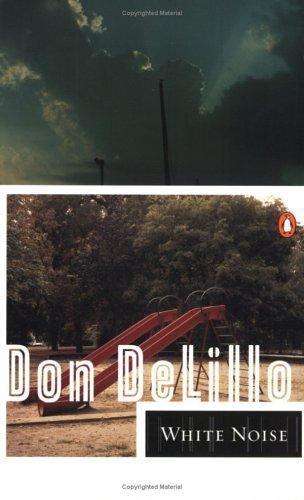
After a break, the boys jump into the 1980s po-mo White Noise by Don DeLillo. We talk about the denial of death, toxic airborne events, and Baudrillardian copies of copies of copies (of copies…)
Simulacra: The boys shake off their reddit I Love Science teenage years and start to embrace all things post-modernism. Namely, Baudrilliard’s idea of the Simulacra where some “signs” no longer point to any underlying reality.
Denial of Death: A fairly straight-forward retelling of Ernest Becker’s Denial of Death: We’re all terrified of death, so we build our entire lives to avoid confronting it. Cam and Benny try denying Becker’s denial thesis.
Chitter chatter
Rich: Welcome to Do You Even Lit? This is a book club for former STEM tragics who are trying to get a little bit of culture by dipping our toes into the world of literature. My name is Rich and I’m very happy to be joined today, as usual, by my co-host Cam, coming to you all the way from Melbourne, Australia. Cam, g’day, mate.
Cam: G’day, this is Cam here. Hoping I’m the last one to die out of the three of us today. Please don’t forget to download and subscribe and make us happy as podcasters. And email any feedback to douevenlit at gmail.com. And that’s U as just the letter U.
Rich: Yeah, like and subscribe.
I’m just getting a radio report coming in. It’s a great mass of hot air moving down from Canada, which I guess means that our third mike, Benny Chugg, is in the house. What are we doing today, Benny?
Benny: G’day, fellas. All right, that was the one time I’m practicing an Australian accent on the pod. What’s up, fellas? Yeah, today we’re doing Don DeLillo’s 1985 classic White Noise — a post-modern meditation about death, technology, and the absurdity of academia and modern life.
Quick takes — thumbs up, thumbs down, what’d you guys think?
Rich: Well, we got a silver star from Rochester. It was a silver star when I read it a few years ago. I’m changing my rating — there’s going to be a new ceremony. Yeah, what do you guys think?
Quick summary
Benny: Tentative thumbs up for me. I really enjoyed the reading experience. You know, we’ll get into the characters and whatnot in a bit here, but actually just being in Jack Gladney’s head throughout the book I found to be a fairly delightful experience. And the book was quite easy to read, very witty, very charming. I’m a little bit torn about how much I actually agree with and like what I take to be the overall thesis. And even sort of the main points that he was trying to make, I’m a little bit torn on in my own head. So I’m pretty excited to chat with you fellows today and kind of sort it out for myself, and then hopefully come away with just a more robust sense of what DeLillo was actually trying to do here. But overall, very enjoyable book.
So let me just do a very quick gloss on how the book begins and intro some of the characters. The book is written from Jack Gladney’s perspective. Gladney is a professor at the College on the Hill, as they call it, in Blacksmith, which we’re told is some sort of Midwestern, perhaps East Coast town in the U.S. somewhere. Just from the vibes of the book, it feels like probably somewhere upstate New York, maybe Pennsylvania, maybe Ohio, somewhere around there.
Rich: You’ve triangulated it very, very nicely.
Cam: We need the GeoGuessr guy. Read the first sentence of the novel.
Rich: Pittsburgh, Philadelphia.
Benny: Okay, so Jack Gladney is an academic. He lives with his family, which is a bit of a mishmash of various families. He lives with his current wife Babette — each of them is on their fourth or fifth marriage.
Cam: Yeah, I think fourth.
Benny: They each have kids from previous marriages, and some of those kids live with them, so they have a little family. There are four kids. They’ve actually had no natural kids together, so all of their kids are from previous —
Rich: Wait, isn’t Wilder their shared kid?
Benny: No, I think the movie changes that detail. Richard telling on himself, sorry — I read the book. No, I think Wilder and Denise are Babette’s, and Steffy and Heinrich are Jack’s. And I think there are other kids as well that live with ex-wives and ex-husbands.
Rich: Okay, yeah, so it’s a Brady Bunch kind of situation. Modern Family, Brady Bunch.
Benny: Yeah. So Babette is Jack’s wife. She teaches posture to the elderly. Then they have the son, Heinrich, who has a lot of opinions, perhaps even mildly autistic or something. You get the vibe of a smart teenage pessimist nihilist — someone who likes to question everything, but he’s doing so in a somewhat sophisticated way, at least for that age. Then there’s Denise, and Wilder, who’s the youngest.
So Jack is a professor of Hitler studies at the College on the Hill, which is a field that he introduced to academia by himself. And this is sort of how he’s become famous in that world. So now there are thousands of scholars across the world studying Hitler studies. There are people like his friend Murray, who would like to follow in his footsteps with other figures. His friend Murray wants to start a field of Elvis Presley studies.
And so the first third of the book roughly is following this family around, both at home and Jack at work. And it’s sort of a long disquisition on the absurdity of especially academic life. I’ll tell you some of the stuff is there and we’ll probably get more into that. But something that comes up pretty early in the book is a fear of death. Both Jack and Babette talk to each other about how afraid they are to die — hence Cam’s opening statements about death — and neither of them wants to be the one to die first, but they lie about it.
And so, Cam, you want to talk a bit about the paranoia and stuff that goes along with these feelings of death?
Cam: You know, Babette, the wife, takes a drug, and we’re not sure what it was, and she’s lying about it, and something seems a bit off kilter about that. And there are other things — there’s some neighbors went missing and you sort of don’t know, the Treadwells, and you don’t really know what happened to them. And the police get a psychic to find them, and the psychic takes them to a factory that’s cocaine in there. And I think at one point Jack says, “the American mystery deepens.” And I suppose the other setting is just the supermarket is like the kind of town square for them, and that’s often where they go and meet Jack’s friend Murray, who is always chum about some theory.
Benny: Yeah. How much did you guys like this first part of the book? We should say, up until page roughly 100, nothing much is happening besides sort of following Jack around. I’m torn about how much I like this part. We should keep in mind that this was written in 1985, right? So much has been written since then as parodies of how absurd academia can be. And there’s lots of those kinds of elements here. I doubt DeLillo’s the first people to do this, but it didn’t feel especially novel to me in the sense that DeLillo was doing something here that we’ve never seen before. And it was done in a relatively funny, charming way, so I didn’t have a huge problem with it, but I also didn’t find it incredibly illuminating.
Rich: Yeah, that was my first take as well, was that this is that thing we’ve talked about of reading the history of philosophy backwards, where ideas that were original at the time can seem a bit stale when you’ve been bombarded with them for decades like we have. And you go back to the source and it doesn’t really hit as hard. But now, actually, I’m way more bullish on this book. I actually think it is a really good book after all.
Benny: So just quickly, what would be a potential stale idea in this book?
Rich: The staleness for me is around what I at first took to be a sort of anti-consumerism message — of how we’re all bombarded by stimuli and ruled by television and we worship at the supermarket, and everyone loves to bomb all their suffering through shopping and purchases and material possessions and distractions of that nature. Which is kind of true, but it’s not an interesting observation to me, and I think it’s massively overstated in this book. But now I think I was naive about that and I wasn’t reading carefully enough. He’s actually sort of sending up — he’s even sending up that very notion itself, and deliberately being hyperbolic about it.
The most photographed barn in America
So the passage earlier on in the book which I think hooked me the first time I read it, which I still really like — and which gives a sense of the overall, the deeper themes which I think make this book actually worthy — is when Murray, Jack’s weird-ass professor friend, takes Jack out to, or vice versa, Jack takes Murray out to see the most photographed barn in America, which is this presumably picturesque barn. It’s about 20 miles out of town. And as you approach it, there’s all these signs saying, “the most photographed barn this way.” You get closer and there’s all these people with their tripods set up taking photos of the barn. There’s a kiosk with a guy selling postcards and souvenirs and so on. They’re standing there watching the people, watching people watching. I’ll just create a little excerpt from it:
No one sees the barn, Murray said finally. Once you’ve seen the signs about the barn, it becomes impossible to see the barn. We’re not here to capture an image, we’re here to maintain one. Every photograph reinforces the aura. Can you feel it, Jack? An accumulation of nameless energies. Being here is a kind of spiritual surrender. We see only what the others see. We’ve agreed to be part of a collective perception. It literally colors our vision. Another silence ensued. They’re taking pictures of taking pictures, he said.
Which I think is a great passage. And I was initially thinking that “it’s impossible to see the barn” is just kind of a silly statement to make — it’s like an overwrought thing about signaling or consumerism or something. But now I think there’s actually a there there, based in part on something you were saying off mic, Cam. So do you want to lay some sort of theory on us of what he’s actually referring to there?
Cam: Just quickly, it’s funny — I think when I first read that, and he said Murray said it’s impossible to see the barn, I think I took that literally. Like you can’t see it because everyone’s in their way. And I think Benny thought that as well. Or, speaking of social influence, I’m not sure if I said that and then you thought that about the barn as well or not, or maybe that was a misunderstanding.
Benny: Actually, I thought you couldn’t see the barn. I think we might be right.
Rich: No, don’t. I’m not sure. Anyway. No, there’s an elevated lookout point above the barn, from which point everyone’s taking photos. A barn is a big fucking object. Imagine how many people would have to be clustered around it to literally not be able to see it.
Cam: Well, it’s the most photographed barn, dude. What do you expect? Maybe the view is partly obscured because you’ve got all these people in there. But I think what he’s saying is you can’t see the barn for what it is. The barn now has changed. So it used to be this idyllic barn, and that’s why it became presumably this famous kind of barn. And now it’s kind of a different entity. It has a different essence. I think the Mona Lisa is something similar. You can’t really see the Mona Lisa for what it is now, because it’s been irreversibly changed by its status and culture, and you literally struggle to see it with all these people taking photos of it.
Rich: I actually kind of disagree with that reading. I think saying that there was sort of a base reality barn there to begin with, and then it got famous because it is presumably really nice in some way, is not what he wants us to take away from this. I take it that this barn is socially constructed by all the people partaking in this ritual of going to take pictures of it. I don’t think there is sort of an a priori barn without people. I think this is — and I guess you’ll get into this with the background on postmodernism — but part of the postmodern critique is that it’s not base reality, and then we’re adding layers of abstraction onto this as we engage in social rituals. It’s that the social rituals are creating base reality itself. And so there is no barn there without all these people. There’s no base barn. And this is obviously part of — this is what’s hard about postmodernism when taken to the nth degree. If you’re any sort of ontological realist, then you want to push back against that. But anyway, part of this is why I’m struggling a bit with how much I like the actual theories of the book, because I can’t tell to what extent DeLillo is fully embracing this postmodern critique of there being a base reality at all.
So anyway, with that, maybe Cam, yeah, go on to some postmodern details.
Post-modernism
Cam: The Stem tragedies can give a 101 of postmodernism. This is going to go well, I’m sure.
I mean, to answer your question before, what I think about this book — one thing this book did for me, I’m not even sure if it was this book or if it was happening anyway, but I think it slightly raised the status of postmodernism, or at least some ideas in postmodernism, which maybe I’d been underrating a bit before that. And this is mainly because I’m someone — and I think you guys are as well — who grew up intellectually in this neo-atheist empiricist tradition, reading lots of Dawkins and Steven Pinker and the like, and who’d trash on postmodernism. So I always had this reflexive reaction to just cast aside anything that could plausibly get the label postmodern. And there’s the slight irony here of maybe not understanding the ideas fully and just treating it as this kind of symbol word that you hear and you cast aside.
And the problem is, a lot of it is kind of crank, gobbledygook BS. And even the good stuff is often admittedly paradoxical and contradictory and hard to understand. And I also think with postmodernism, there’s this potential dynamic where the first order of postmodernists maybe had something to say, and then that gets diluted with second-order people that they learn from who are maybe less talented — and because it’s the stuff that’s hard to understand, you kind of lose the meaning, and then it kind of is just left as BS. And then you get third- and fourth-order postmodernists, and now it gets so intertwined with anti-Western ideas and stuff as well. And politics tends to melt people’s brain anyway. So you mix that in with contradictory stuff, and it’s probably not a great recipe.
But anyway — postmodernism. Most people have heard of this and roughly know what it is. In general, I think this is a vague set of ideas that tend to point towards there being no universal truth, this idea that maybe the society we live in is socially constructed. But you also have postmodernism in literature, which may be touching on these themes but also sometimes is better called something like metafiction. It’s fiction that has recursive elements or intertextual elements or meta aspects that call to attention the fact that we’re literally in the act of reading the story, or the storyteller self has certain motives and has a project — so just bringing that to the forefront. I think in postmodern literature, there’s a million — well, there’s several different guys called Barth, or some variation of Barth, that are all seen to be father figures in postmodern literature, which kind of feels like some sort of ironic joke that you’d find in DeLillo or a Pynchon novel.
Rich: There’s only one base-reality Barth, and the others are —
Cam: Yeah, there’s Barthelme, and there’s Barth, and there’s — yeah. And then there’s a thinker called — which I’ve been pronouncing incorrectly off mic — Baudrillard. How’s that voice?
Rich: Nailed it.
Baudrillard’s Simulacra
Cam: Who I think you can see his ideas potentially in this novel. He was famous for this idea of the simulacra, which is just this idea that there’s different layers to reality. So you have like layer one, which is — well, I assume layer zero potentially. Some people question if this exists, but it’s kind of ground-level reality. And then layer one is trying to represent that — so that might be a photo of a building. And then layer two is this perversion of reality — you’re still trying to represent it but you’re being hyperbolic or exaggerating something. So that might be, I don’t know, think of a historical movie or something which has a bit of narrative and story to it. Then the third layer is this pretense of reality — it’s no longer attached to anything real underneath, this is my understanding, but it’s kind of presenting as it is. I think one example that Baudrillard uses, there’s this fake town in Disneyland — I forget what it’s called — but it’s meant to represent this idyllic, quintessential American town, but that town didn’t exist.
Benny: Well, can you relate it to the barn, which is what we started talking about? I think the barn would be like layer three, maybe?
Cam: Well, quickly, so layer four is what he calls total simulation, and that’s when you’ve just totally lost grip of reality and everything’s based on all this fake stuff really. So it’s a little hard for me to determine what’s in layer three, what’s in layer four. Because I’m thinking of, you know, these days like reality TV seems to be this classic example of this thing that’s presenting — I mean, even its fucking name, right, it’s called reality TV — and we know it’s all scripted and it’s all this fake drama. It’s constructing this kind of new reality, which is super popular. And this even bleeds into non-TV, it just bleeds into social media and everyone’s Instagram and TikTok and stuff. We’re all presenting — there’s this effect that complaints about, you know, people presenting a non-real life on their Instagram. And of course, in this novel, as we mentioned, we get a bunch of advertising, which also potentially has this impact. Coca-Cola are selling us happiness but they’re really just selling us sugary drinks.
Benny: I mean, yeah, sugar drink makes me happy, man.
Cam: Yeah, I think Diet Coke might be as close as you can get to —
Benny: Ultimate serene happiness.
Rich: Can I try and layer the layers onto the barn? So let’s say it’s not denying physical reality, I think, which maybe helps to assuage some of your concerns, Benny. So base zero is the actual building — it’s actually a barn. Level one is, someone makes a representation of the barn, so they take a photo of it. Level two is that they distort it in some way, so maybe they put a filter on it, make it look particularly picturesque so that their Insta gets more likes, or they can sell a better postcard, or whatever it might be. Layer three —
Cam: Wait, was that layer — that’s layer two?
Rich: No, but that’s meant to be layer three, right?
Cam: Layer one’s photo, layer two is a filtered photo. Yeah. And then layer three is the highest layer.
Rich: No? Oh okay, well I don’t understand that then. But I was thinking the distinction is —
Cam: We’ll keep going, though.
Rich: Well, okay, so the — as far as I can remember from what you were saying, the distinction is when we have symbols for things and they have reference — they refer to something in the actual world. So the word “barn” is a symbol that refers to an actual object. A photo of a barn is a symbol that refers to an actual object. But where it crosses over into layer four is where you have symbols that don’t have reference — they only refer back to other symbols. They’re not grounded in anything. So I think arguably the most photographed barn in the world, as an abstraction, is a symbol, and it has a circular logic to it. So when you talk about that, you’re no longer talking about any actual thing — you’re talking about a socially constructed idea that this is the most photographed barn, that only maintains itself by virtue of this flywheel effect where people keep taking photos of it because they’re buying into that abstraction. So in some sense it seems silly because there is an obvious referent there, but I think if you take the abstract concept “the most photographed barn in America,” then you can see how that is a purely symbolic representation that is completely socially mediated.
Cam: Right. I sometimes think of, you know, meme stocks now seem to have this kind of Baudrillardian thing going on — which, from the finance background you’d be better at talking to this, but the idea that there are fundamentals, right, there’s a there there. But now you have this idea of these meme stocks, which are totally socially fabricated in everybody’s attitudes and behavior, and can all pop in this bubble, but it also is this new reality that is no longer connected to the original perhaps.
Benny: Well, I’ve also seen porn talked about in this sense as well. You first have like sex or making love, then you might have it in a movie or something where some things are exaggerated or taken out, and then you get to porn, and you can totally lose sight of what was originally in making love in real life. It becomes this whole new thing now, which everyone’s obsessed with, and potentially even becomes the main thing and goes back to affecting base reality. You know, these things do as well — which DeLillo plays with in the book later on.
Rich: Yeah, the meme stock thing is a good example because it’s completely divorced from fundamentals. And it is sort of a — it’s not an unheard-of phenomenon, but it is a really good example of it, where it’s just like pure reflexivity where something is popular. Like the other go-to example people say is stuff like, why is Paris Hilton famous, or why is Kim K famous? You know, they’re famous for being famous. And that eventually just becomes a self-fulfilling thing that is divorced from any of whatever the properties were that catalyzed that process from the beginning. Now it just exists as an endless symbolic circle jerk, right? Where you can just have TikToks and videos and news articles and whatever that are all riffing off one another, and they don’t even need to make contact with ground reality again. Or, as you point out, sometimes they can change ground reality again — they can actually have effects that ripple back down the chain. Which, for some reason, stuck in my mind — I remember we talked about way back in the day about memeing big asses into reality.
Benny: Yeah, that was the Houellebecq, right?
Rich: Yeah, yeah.
Cam: It’s the same kind of thing. That is potentially true, right? It becomes this psyop that potentially didn’t used to exist in the early 2000s, and comes in as Birkins potentially waning out, based on this social reality.
How po-mo is DeLillo himself
Rich: Well, so here’s a question for you guys. One possible reading of DeLillo is that he’s mourning the loss of this base layer of reality, and he thinks we’ve become too caught up in the simulation level, in these levels of abstraction. He’s mourning the fact that reality has just become whatever is collectively agreed upon, mediated by technology and capitalism and institutions. And another reading is that he’s not mourning this fact — he’s just pointing out, this is how it always is, and everyone’s behavior and social reality in general is always mediated by collective agreement of how things work and these abstract layers of expectations that we’re placing onto reality. And for DeLillo, often this comes from what I think he’d call late-stage capitalism, and sort of this is where the consumerist critique and stuff comes in. But to what extent — yeah, do you guys agree that he’s sort of mourning the loss of the base layer of reality? Like, to what extent is the barn scene, for instance, pointing out that this is absurd, that we all keep photographing this barn, and that we’re caught in this collective hallucination of the most photographed barn in America? Or is he just saying everything is like this, and this is just how the world works?
Cam: I think the barn scene shows it’s almost manifest that it’s absurd. But in terms of his description elsewhere, like the book’s pointing out that a lot of this simulation-type effect is coming from consumerism, it’s coming from advertising — and he is more ambivalent about that at times. I think he’s pointing out the absurdism of it, but he seems to be doing so in a way that’s quite warm and quite gentle with it. He obviously appreciates it to some extent, I think, and America itself. And Murray J. Siskind, you know, he has these theories and he’s quite enamored by it. He’s totally lost in it and he thinks car crashes in American movies are the last avant-garde — or maybe he actually said advertising in supermarkets was the last avant-garde. He loves the supermarket.
Benny: Yeah, he loves the supermarket.
Cam: And he refers to everything as psychic data, and he views it as quite spiritual. It’s the last kind of spiritual thing we have, I think, in his mind. So to go back to contradictions and stuff, he seems to be pointing out how absurd and soulless this is — and we’ll get later to potentially the effects on our attachment to life, and also a little bit of warmth towards it as well, I think. What about you, Rich, any thoughts there?
Rich: It hinges for me on whether DeLillo believes the stuff that Murray is spouting, or whether Murray is meant to be a mouthpiece for stupid nonsense, basically. And if it’s the latter I like it, and if it’s the former I don’t like it. Because Murray is talking absolute shit in my opinion, and it’s actually really hard — I tried hard to try and extract some meaning out of his monologue about the supermarket as some kind of wonderful waiting space before death and its connection to Tibetan Buddhism and all this kind of stuff. And I think it’s just nonsense. I don’t think people love going to the supermarket and are transfixed by all of the buying possibilities and find it refreshing. That’s not my experience at all. And so I think it works if it’s a critique of that view. In other words, it’s more clever than I thought it was — it’s not just a first-order “consumerism bad” type thing. I feel like it’s also making fun of the opposite position of that a little bit as well, by hamming it all the way up. And the whole thing gives me a vibe of like an amused cultural anthropologist looking out upon the way that humans are and the incredibly elaborate rationalizations and copes that they come up with for things. But if he believes some of the arguments that he puts in his characters’ mouths, then I’m not really a huge fan of that.
Cam: I was just going to echo that. I definitely think part of Murray’s theories — and later theories as well, around death — DeLillo’s actually pointing out how absurd academia can get, you know, this ivory tower emphasis on theory that you lose touch with the world. But also, I don’t know — you say you don’t relate to the supermarket, maybe the supermarket itself you don’t, but I can certainly imagine people, at least if not myself, who get a lot of utility and almost like god-shaped-hole type stuff from going shopping. I got this one family member, this cousin, who like it is like this coke for her life — she goes shopping, she gets the latest clothes and stuff. She’s seemingly trying to feel something.
Rich: Yeah, maybe it’s just a gender-coded thing or something, because I hate shopping. You know, like, it’s not my idea of a good time.
Benny: Yeah. So I think, for sure, Murray’s supposed to be sort of a reductio ad absurdum of this view. But I’m not sure that means it’s sufficient to say that DeLillo is therefore coming out on the other side and saying that if you take this view too far it’s absurd. I think he’s trying to point out maybe that we’re actually not so different from Murray. It’s easy to look at Murray and think that this guy has totally lost his mind and is completely divorced from reality. But in fact, we’re all doing that — whether it’s fear of death or obsession with metrics, or how we change ourselves to fit in with our professions like Jack does, right? And so I think he’s maybe using Murray as a mirror back onto yourself that exaggerates some of your positions in manifestly absurd ways. But yet, when you look at many of your own behaviors, I think DeLillo would want to say that you’re basically doing the same thing. I think no character comes out of this book looking like they’re more attached to reality than Murray when you really analyze it.
Fake preferences & signalling
Rich: Well, I mean, it’s only because Murray seems weirdly psychologically resilient, whereas Jack is an absolute wreck and is just lurching from failure to failure. I think Murray is reaching — he’s really reaching. And maybe that’s why I feel like it’s not a shallow consumerist critique, because Murray is reaching and working so hard to try and transform this banal experience into something that gives some kind of meaning to life. And I think what DeLillo is saying is that that is also just a silly cope. But it’s not necessarily a critique of capitalism per se — it’s just that that attempt, that’s one other avenue that you could pursue in your attempt to distract yourself from your impending death, or living in a non-perfect world or something like that. It’s one of many things that people find elaborate ways to theorize about and wax lyrical about, but all of them are making the same fundamental mistake, Murray included. But Murray’s not a pathetic figure because he’s not — it’s not causing him a great amount of psychic — he’s just happily living that particular delusion, so good for him. But Jack is not happy. He takes comfort from Murray temporarily during those talks, but I don’t think he manages to make it stick.
Cam: So just to quickly bring it back to this idea of simulation or socially mediated reality — because we’ve talked about the barn, and this is like chapter two or three and it kind of stands on its own — but there is this question of, how strong a theme is that in the book? There’s a few other examples. This idea that what’s important is media comes up a few times. So Heinrich, the spergy son who’s smart, is playing this mail chess game with a serial killer — or maybe not quite a serial killer but a convicted murderer — and he’s really nonplussed about the relationship. But he was saying that the murderer himself regrets not killing someone more famous and he should have been an assassin or something. Because it’s almost like, what’s the point — he had this view of what’s the point if he wasn’t famous. And there’s another scene as well, when Jack picks up one of his other daughters who doesn’t live with him, and she’s just been on the plane, and some other people came off the plane and they were complaining about — the plane had almost been in a crash. Well, I don’t know, I can’t quite remember — it was strong turbulence or something. And they got off, and again they wanted media there to interview them and validate the experience.
Benny: Yeah, validate them.
Cam: And I think his daughter even says, yeah, “man, they went all — they went through that for nothing.” It’s funny because it’s absurd and we laugh at it, but I relate to it in some aspects of my life, and I’m sure you guys do, you know. This idea of, you go out to a restaurant — and people differ to the extent of this — but a lot of people, I need a photo of the nice food, and if you don’t do that it hasn’t been worth it. Or, you go for a run, and you don’t — there’s this thing, if you don’t record it, you’re like, what’s the point? If it’s not on Strava, it didn’t happen.
Rich: Yeah, I know, it’s almost more important to have done a bad run for your health and fitness goals, but that’s impressive on Strava, than the opposite, I find.
Benny: And you stopped tweeting, me bro. Yeah, we know you didn’t actually run that half marathon, Rich — you were in a little ice cream cart driving around the forest just fast enough.
Rich: Oh, I literally was running. I was having this thought this morning, because I ran up this little hill thing a bunch of times this morning and I put it on Strava, and I got “local legend,” which means I’ve done that segment the most times. And I was like, yeah, I’m the local legend. I was thinking, what if there’s a bunch of other people out there who’ve done it more than me, but they just don’t use a Garmin and Strava and all that stuff, and it almost really doesn’t exist. Like, I am the local legend — that’s all that there is. Those people might as well be ghosts or dead or something. I don’t care if they’ve done it more than I have, because they’re not real to me.
Cam: Yeah, no, exactly. So that is a very relatable thing.
Airborne Toxic Event
The other way this theme, I think, is represented in this novel is the famous airborne toxic event, where, you know, the children are starting to show symptoms — but the symptoms of this air pollution event that’s just happened, being announced on the radio, and those are changing. I think it starts off saying vomiting, and then like Denise the daughter, she immediately goes to vomit. And then after that it says sweaty palms, and someone’s got sweaty palms. And then it says déjà vu, and someone’s got déjà vu. And Heinrich the son jokes — and doesn’t even joke, I think he says seriously — you’ve got the wrong symptom relative to what the radio has announced. And then the final one says convulsions and maybe miscarriages, and Jack wonders if his youngest daughter, who’s 11 or 12, could she potentially have a miscarriage just from hearing it on the radio. So he’s not sure if these are real symptoms because they’re happening immediately after the radio announced them, and it seems potentially psyop symptoms. But I think he wonders if one of the daughters has heard of déjà vu and so maybe it’s a real thing or not. And again, this is something I think that we can relate to as well — you know, this idea of the placebo effect of course, or the nocebo effect, or the media announcing what to think about a certain thing.
Benny: But just to backtrack for a sec, Cam, for context, the airborne toxic event is like the big turning point of the novel. It’s the big central event, where Jack’s low-level death fears become realized — an actual possibility of being exposed to a deadly event. So it’s the big important turning point for the novel, where things start to go from abstract to very real.
Cam: Yeah. Which, I mean, we should say, the novel sort of broken into three parts and we have mostly just been talking about the first part.
Benny: But the action really gets going in the second part, where there’s an airborne toxic event, like Cam was saying. You know, the family wakes up one morning and I think a train or something had tipped over, the news reports that there’s this plume of smoke in the sky, and no one’s sure what to make of it, and they’re listening to the news unfold as they’re eating breakfast. And the reports of the plume become more severe — black billowing cloud. It turns to — yeah, it’s a plume, and then it’s a black billowing cloud — and as the labels change, so too, as Cam was saying, do the symptoms. And the kids are having symptoms, the exact symptoms as the news is unfolding. Yes, sweaty palms, and then déjà vu, etc. And finally they announce that, it’s now — we’re calling it the airborne toxic event, and it turns out that it was a spill that spewed a bunch of toxic material into the sky, and it’s really bad for you, and they’re evacuating the neighborhood.
And the family’s in total denial about this, and Jack is saying, “you know, I’m a professor at a college. Professors at colleges do not get evacuated from their homes in the middle of the morning when they’re trying to eat breakfast with their family. There’s absolutely no way this can happen.”
Rich: I loved his initial reaction to son Heinrich, like Heinrich says, “what do you think, Dad, what’s going to happen?” He’s just like, “no, it’s going to move right past it.” It’s just total confabulation. But it’s a very natural reaction when things like this happen. You’re like, “don’t worry about it.”
Cam: Heinrich’s like, “the wind could blow it.” And he’s like, “no, the wind will move the other way.” There’s a large air mass heading down from Canada — so yeah, it’s going to be a wrap.
Yeah, like the parents are denying it because they try to have an early dinner. And just like, they’re obviously having an early dinner to try and just normalize everything. And then the sirens go off and they’re announcing you have to evacuate. And Heinrich comes and tells, you know, we have to evacuate. And then the parents are sort of saying, you know, “did that sound like a suggestion?” But Heinrich is almost like this foil for what the parents are doing. He kind of keeps “well actually-ing.”
Rich: Again, it seems to be playing with this idea that, even something like a chemical spill of, you know, the Nyodene derivative, Nyodene D, that definitely causes tumors in rats and we’re not quite sure what it does to humans yet — even something like that, what we think about it could have an impact on our health. But it certainly has impact on everyone’s reactions, right? So everyone’s reacting to the radio announcements and fire engine announcements, and then the whole town only evacuates when they’ve essentially been told to evacuate. And then they all suddenly rush out, and Jack gets exposed to it, right? I think they got to fill up gas, and so he has to step outside the car and use the gas station for two and a half minutes or something.
Benny: And then later, he’s being examined by one of the SIMUVAC employees, who’s reading him out the results from the computer, saying, “you have a certain amount of this in your blood and this will probably shorten your lifespan.” But the attendant himself is totally useless. He’s only able to read out what’s on the computer. And so he’s telling Jack, “this will probably kill you earlier, or it might not, or it might not.” Jack is trying to get details about how likely he is to die. This sort of really kicks off his psychological preoccupation with his own death. And he keeps this reality from Babette for a long time because he doesn’t want her to worry that now he will in fact die first and leave her alone.
And just to go back to what we were saying earlier in terms of social mediation and whatnot, it wasn’t a fact for him that he was standing outside in this black billowing cloud that caused him to start worrying about death. It was really getting the legible information about these concrete numbers and concrete metrics that made him worry about death.
Rich: Yeah, but even then — are they concrete numbers, right? Because there’s this really funny dialogue between him and the guy who’s running the numbers for him, where he keeps trying to push back on it and say, basically, “what does this mean? Are you sure?” And the guy running the tests can’t actually point anything back to concrete reality. He keeps using symbols to refer to other symbols. So, you know, Jack will say, “well, how serious is it?” And he’ll say, “well, you’ve got brackets and stars next to your name.”
Benny: “What does that mean?”
Rich: “What else do you want? I keep saying it’s a situation. It means we’ve got a situation.”
Cam: Yeah, and that’s a really nice interplay, because it’s the absurdity of it — he never grounds it back to “you have an x percent chance of this or that.” It’s just like, computer says this, therefore that’s bad. Why is that bad? Because computer says this. And no one actually knows what is going on.
Benny: Yeah, it’s not the details of the information, or it’s not the veracity of the information itself — it’s the fact that there just is information. Like, something is telling you something, and then you can’t help — even though he’s confused about it in the moment, he can’t help now ingesting that as part of his personality, part of how he thinks about the world. You know, it starts to infect his own psychology, like, “well, there were stars next to my name, that must be bad. No one else had stars next to their name.” After the third part of the book, when they’re sort of back to normal and they’re back home, he can’t help but visit the doctor more and stuff, because he says he feels physically completely normal, but this has really infected his psychology. Now he has to go get checkups every few months. And the doctor will say, “it’s nice that you’re coming in so often, but why is that?” And he says, “well, I was exposed. I had the exposure of it. I had stars.”
Cam: Well, at one point I think he asks, “is it coming up like you’d expect? I was exposed to this type of chemical.” And the doctor’s like, “well, have you been — have you been exposed?” He’s like, “well, is it? That’s what I’m asking.” Yeah.
Also just really quickly, going back to the simulation-type stuff — when they go to this evacuation camp, and Benny mentioned that the guy that’s running the numbers from the computer is part of a SIMUVAC organization, which is this big acronym that stands for simulated evacuation. So it’s a company that runs simulated evacuations. So Jack first thinks, “what is this — is it a simulation? Should I be worried?” “No, no, this is a real event, but we’re a simulation organization, and we’re using this real disaster to prepare for our simulated disaster we’re going to do in a few weeks.” And he’s mad that reality hasn’t neatly conformed to their simulations.
Benny: The bodies are in the wrong places.
Cam: Yeah, and it’s just all a bit more chaotic, and it’s not actually that realistic to an actual simulation, but we have to work with what we got. And then later, when they go home, because they’re allowed to go home after a few weeks, the SIMUVAC is running simulated evacuations, and Jack’s kids are playing roles. I think Steffy is sort of lying down dead. And what’s funny with those roles is how seriously they take them, right, and how unseriously they had taken the real evacuation and didn’t really feel the need to do anything there. But then, you know, Jack is trying to get Steffy to come do something with him, or come pick up Babette or something. And she’s like, “no, I can’t. I can’t leave, they need me lying on the sidewalk here.”
Benny: Yeah, I think she was going to go visit her dad in New Mexico or something, and she’s like, “no, no, yeah, I needed a simulated evacuation. I have a simulation scheduled for that weekend, I can’t go to New Mexico, are you crazy?”
Rich: So this goes back to the power of social reality. Which I just want to hammer one more time, going back to that really funny dinner scene where they’re just clinking cutlery and “pass the salt” while there’s sirens in the background. Which is why I’m sympathetic to the idea that Baudrillard is right in some sense, or DeLillo is right — is that we know that our perception of reality is wrong. We know that our visual perception is not how the world really is, and so on. I think there genuinely is a deeper sense in which we are divorced from physical reality by our nature as social animals. And the way it manifests is in these crazy behaviors where everyone’s in this sticky equilibrium where the dinner-table equilibrium is “nothing can go wrong, everything is fine,” and then you get these sudden dissolutions of social reality, and everyone sort of floods to inhabit the new social reality as if the old one never existed — or in a very inconsistent way that you wouldn’t expect if you were just reasoning through everything and trying to calculate risks and so on.
And it made me think of — I mean, we’ve had some modern examples with COVID and some of the riots and stuff like that — but a more neutral example is which I wonder if it inspired Don DeLillo: there’s this famous experiment where there’s these people waiting in a doctor’s waiting room and they start piping in some smoke through one of the vents, and everyone is a conspirator except for the test subject. And they just basically wait to see how long before the test subject will leave the room. But the conspirators just sit there and keep reading their magazines and so on, and it’s fucking crazy — almost all the people, or some very high proportion of them, just sit there while the room fills with smoke. They’re looking around confused, but they don’t take action, they don’t pull the fire alarm, they don’t — because they are trying to calibrate what their reaction ought to be based on the average reaction of the people around them. And they are disregarding the physical reality and the critical-thinking reasoning skills which would tell them, there’s a fire, raise the alarm, get out.
Cam: So your point is — carry on.
Rich: No, no, go.
Cam: Well, I suppose your point, I think, is that this is rational and expected a lot of the time — to calibrate social reality, or be impacted by it. Is that right?
Rich: Well, my first point is just that this is a real phenomenon. And it’s bizarrely powerful, more than we might care to believe, because we think that we are reasonable and rational. But yeah, you’re right. The other thing I thought might be important to do is just explain why it’s actually good and adaptive that we live in social reality for most of the time. So the tendency is to focus on examples of when it goes wrong, and it often does go horribly wrong when you have status — okay, there’s status signaling cascade type stuff, like the fact that everyone wants to see the Mona Lisa, no one gives a fuck about the empty galleries full of wonderful art next door. I think that’s more or less harmless — it’s annoying, but who cares? And then there’s the really bad dynamics like this where people are just, you know, all lemmings going off a cliff together because they’re all looking from side to side trying to calibrate their reactions based on other people, which has that reflexive element, which is extremely dangerous.
But most of the time it works great, because thinking hard and reasoning and so on, A, is costly and takes time and effort and so on. And B, often you have to actually experiment and try things to figure out what is dangerous or what is safe or how you should behave. And it’s way, way more effective to just copy the consensus position. Like, as a starting point, copying the consensus is a great idea, you know, as a base starting point for how to be in life. It’s not a mistake, it’s not an evolutionary aberration. We are social animals, and a big part of why we succeed is because we have this ability to learn through mimesis of what are the things worth pursuing and what are the things worth avoiding, without having to actually inject yourself with this particular venom or put your head in the lion’s jaws or whatever, right? You can just copy off. There’s some great quip about it, which is like, “only a fool learns from his own mistakes, the wise man learns from everyone else’s,” basically.
Cam: Yeah, sure. I suppose it needs to be paired with this kind of rational calibration a lot of the time, which maybe is demonstrated by Heinrich during everyone’s total delegation to authorities or the media as to what to do. It needs to be paired with some sort of theory or recognition of when people are mimicking. There’s correct circumstances in which to be mimicking people, and then there’s incorrect circumstances, right? And you need to try and form a theory of when it’s incorrect circumstances, and when mimicking is just happening because of pure social signaling, and you’re not actually following the wisdom of other people having learned stuff — you’re just in some ideological echo chamber or something, and just doing things for norm’s sake or signal’s sake or some other sake besides actually tracking reality.
Rich: You can go too far in either direction, and probably something like the Bay Area rationalists would be an example of a group of people that continually questions cultural wisdom — and this has let them be ahead of the curve on many things, and then also make some pretty big mistakes. And then you can have groups that are just way too conformist, right, and then sort of never question the status quo and aren’t risk-seeking enough, and we’ll never get big payoffs because of that. And so the trick, I think, is to form an accurate theory of in what domains following the crowd is going to be useful, in what domains it’s not.
Cam: I mean, there’s also, even with following the crowd, this question of, is this kind of natural grassroots voice-of-the-people type movement, or is this kind of psyop from the elites? How much is it based on real preferences? What does it mean to have a real ground-level preference that’s your own, versus a potentially psyop preference, or psyop symptom? And like, does that matter? Like, because, you kind of point out, in some sense, you know, it becomes your new preference, and it’s kind of as quite real as your previous real preference, but in some sense it feels fake and divorced from what’s actually true. And I’m just thinking now in terms of, like, consuming media or something. Everyone can be signed up to think a piece of art — well, even that Mona Lisa example, like, we probably overrate the Mona Lisa, but, you know, just whatever latest director or latest author or something, everyone can be signed up that’s really good. And yeah, and maybe people truly like it, but I think it potentially gets divorced from actual quality, perhaps, if it’s based on these dynamics. And you’d hope that a true preference would hopefully be based on rational deliberation of quality.
Rich: Yeah, the traditional dividing line for good mimesis versus bad mimesis is around acquisition. So if you are interested in learning versus acquisition — if you’re learning skills via mimesis, that’s good. And learning habits and practices that are useful without having to understand exactly why, it’s a very cheap, easy way to learn. But the acquisitive mimesis is the idea of — you know, if you’ve seen small children, you don’t want this toy until this other kid wants it, and now you want it more than anything in the world. And it’s like a very primal instinct for this — it’s like the backfiring of the same behavioral trait, right? And it lasts all the way through to adulthood, where you end up with preferences which you have inherited based on what — liking things because other people like them, and that can totally misfire. Like all of the stuff around, you want to drive a Lambo and have some particular McMansion or some style of life. I think when people interrogate that closely, or when they get there and realize that this still doesn’t make them happy, they realize that their acquisitive impulses have sort of led them astray. And it leads people to compete in basically what I would call negative-sum games.
Cam: Yeah. So the way that I’ve drawn it up before is like, what is the game you’re playing? Is it positive sum or is it negative sum? So when I’m on Strava, and maybe it gives me a little bit of motivation to work a bit harder, or just do the thing in general, which is good for my health, I’m playing a positive-sum game, and I don’t particularly care that I’m sort of doing a thing because I think other people also think it’s good on some level. But if I am buying a — trying to buy like a Rolex, even though I don’t care about watches and I know nothing about the collector craft or anything like that, I’m just trying to show off, I’m maybe, you know, let’s say I’m putting myself in debt or I’m jeopardizing some investment opportunity or something, then that’s fucking stupid, and that’s a negative-sum game that I should not play at all.
Benny: Well, I mean, the other idea that seems to be with Baudrillard is, can this new kind of fake reality — new examples before, of, you know, the smoke coming in the room — but you can kind of think, if you’ve viewed like a lot of politics is like this kayfabe, like can that then change reality as well, and become the only reality? That seems to be this idea as well, which I’m sort of less sure of, and it’s harder to be concrete about.
We don’t have to dwell on this too long, because we want to move on to the other major theme in this book — death. The way I’ll lead into it is, I think DeLillo seems to be saying the reason perhaps we’re in this media-saturated reality is because everyone has this strong anxiety of death, and perhaps the form of distraction or escape is via consumerism. Or, I think Benny, you were going to maybe talk about the fear of death as the driving impulse of all humanity.
Fear of Death
Benny: Yeah. I mean, I think an interesting question as it relates to this book is whether the fear of death of the characters — of Jack and Babette in particular — is primitive, in the sense that it exists independently of their environment and the influences, or to what extent it itself is influenced by their family, the news, the events around them, others, the culture, etc. And I’m actually not sure where I come down on that question. Yeah, before I go on, maybe — do you guys have strong opinions one way or the other on that?
Cam: No, partly because I mean, I don’t have the fear of death as well. So I haven’t pondered on it too much.
Rich: Bunch of pussies running around scared of death.
Cam: I mean, it’s funny because I’m the type of person you’d think would be primed for it. I often can overthink things and get stuck in these recursive loops. For some reason, I don’t really think about death. I understand the horror of it — the horror of the silence, or, as he describes potentially this white noise of death. And as Jack Gladney I think says to Murray at one point, we only have this vague understanding of what it even means or what it even is, which makes it a whole lot more scary. I kind of get that intellectually, I just don’t get anxious about it day to day. I pretty much never think about it. I think about death less than my mom thinks about the Roman Empire. It’s not on my mind. I sometimes get anxious about sleep before a big day’s work. My partner even jokes, like, when I finally die, on my graveyard, “I’m finally not worried about sleep.”
Benny: I’m going to quote Murray to you: “We all fear death to some extent. Those who claim otherwise are lying to themselves, shallow people.”
Cam: Yeah.
Benny: Okay, so I mean, so that’s the whole thesis, right? So do you guys think about death, or do you have some form of death anxiety? I mean, I don’t want to bring this out on you as well, speaking of socially mediated. Benny, you go first.
Benny: Sure. Yeah, Cam, I’m very much like you. I don’t have this inbuilt explicit fear of death. In fact, I try and explicitly make myself think about death more than I naturally do, because I think it’s helpful for rearranging certain priorities and stuff in your life. So for a while I had the classic — you know, the background of my laptop and stuff would be skulls, these sort of memento mori type of signals in your life to remind you that you will die someday, and do you want to spend your time being angry about some very minor slight that someone gave you at the superstore today? Probably not. There are important things to be concerned about in the world and less important things, and you should just focus on the important things. So I have to actively prod myself to think about death more, because it is such a non-existent feature. And even when I think about it, it’s not in a fearful way. It’s not as if I’m scared of dying, it’s more just I’m trying to get my priorities aligned. So yeah, very much like you on that.
Cam: I think I could get there. I think I could get scared of it if I —
Rich: Yeah, let’s get you.
Cam: But what you just said then runs — I think Winnie the chemist, she tests the dialer drug, I’m not sure if we should say —
Benny: We’ll get to that later. Yeah, okay, we’ll get to that.
Cam: But she has a theory of death anxiety as well. Well, not so much death anxiety, but she says one benefit of thinking about death is this kind of what you’re saying — to bring more meaning into life. I kind of get this whole memento mori Buddhist thing. I feel like there’s a slight tension with that idea and the Aubrey de Grey type stuff of solving death, or solving aging is a problem. And then does that make life less meaningful, if death is — or thinking about death is what brings meaning to it? And maybe that’s what people think. You know, when you talk about solving aging, solving death, a lot of people are a bit squirmish about that. Like, “well, yeah, I don’t want to die.” “Do you want to die now?” “No, but I want to die at some point.” But anyway. So Rich, how about you?
Rich: Yeah, you guys are tripping, man. You’re so deep in denial about this. Like, I just don’t even believe you. Like, come on, you’re going to not exist —
Cam: Now that you’re a father.
Rich: No, I’ve always been terrified of death since I can remember.
Cam: Oh, really?
Rich: Since I was five. You’re going to non-exist. The world will go on for infinity, or near infinity, without you, and you’re gone. You’re one shot. It’s not only that the party stops — it’s that the party keeps going on.
Benny: Yeah, yeah, yeah. FOMO, it’s the ultimate FOMO.
Rich: But I don’t feel it. It doesn’t cause me psychic agony, because it’s so hard to think about. Even if I try and think about it, it’s so horrifying that my mind just sort of skitters off of it. I can’t even inhabit that fear for long, because it’s just — my own sense of my own immortality, my incredible weapons-grade cope, just kicks back in and rescues me. To be clear, I’m terrified of death, and I think death is a bad thing, and all the standard stock responses about it gives your life meaning are total bullshit. But I also sleep easily at night and never think about it. I reckon if you get a terminal diagnosis, or you’re just old, it’s going to be harder to avoid thinking about it. And I wouldn’t be surprised if my fear of death becomes more present at some point in the future.
Benny: So let’s go through some of those copes real quick, because Murray’s got this good list of them, which I thought was quite fun. And I want to see if you guys agree or disagree, since you are not afraid of death, so you must have a cope. I want to find out what your particular copes are, and then dismantle them so that you can come and join me.
Cam: Quickly, speaking of cope, my partner knows someone who’s young with a terminal diagnosis — like sort of our age — and he’s in total denial around it. And it’s going to happen any day now, or any week.
Benny: Damn.
Cam: And he literally thinks everything’s fine and he’s going to survive right to the end.
Rich: Yeah, yeah. Jesus.
Cam: So there’s a strong denial-of-death impulse, at least in this person — it’s like the strongest I’ve ever heard about, really.
Benny: Yeah. So the ultimate Murray-ism. So what are some of Murray’s copes, Rich?
Rich: So one of them is that, once you’ve accomplished enough in your life, then that’s the main thing, and the fear of death is sort of subsidiary to that. Basically, you’ve got FOMO, you’ve got things you want to tick off. If you tick them off, no worries. And Murray’s response is like, are you crazy? “Would you ask a man who bags groceries if he fears death? Not because it is death, but because there are still some interesting groceries he would like to bag. I don’t want death to tarry a while so I can write a monograph. I want it to go away for 70 or 80 years.” So agree or disagree?
Cam: Yeah, as long as they’re meaningful things, of course, not packing grocery bags. But I can imagine — and there might even be a successful kind of family line — but more at peace with dying after feeling like you’ve lived a well-lived life, compared to not having done that. I can imagine being more at peace with that. I can imagine still — you know, it wouldn’t completely cure it, though. I mean, maybe it would. Maybe people are at peace with that.
Rich: The big confounder here is, once you get to that point where you’ve ticked off whatever your life goals are, you’ve had a good career, you’ve got a loving family or something, you’re retired, all of your capabilities are shrinking, and so there’s just not that much more you can do anyway. And it’s happening at the same time. You’re leveling off gradually — it’s usually not a sudden cliff, although there are some abrupt jumps downwards. So it’s hard to imagine day by day that you could be doing otherwise anyway. But if we changed it so it’s like, you have the mind and body of a 30-year-old indefinitely, when would be the day when you’d be like, “oh, now I want to die”? Do you think it would magically come when you turn 80 but you still got the mind and body of a 30-year-old? I simply do not buy that whatsoever. It doesn’t matter if you’ve had a great career and got kids and so on — it’s like, why wouldn’t you want to get up again the next morning? It’s more like, life’s not worth living for old people. It’s getting more marginal.
Cam: Yeah. Yeah. Maybe take 27 rather than 30.
Rich: This is a peak Cam bod.
Cam: Well, it’s peak fluid intelligence.
Rich: Oh, you should have seen me back then.
Cam: Well, it’s not like it’s peak for everyone. It’s peak for the average person at 27, right? So for you it could be 35, who knows.
Rich: Imagine peak fluid intelligence and then you’re just stacking up that crystal intelligence and stuff. Holy shit, what a weapon. And imagine still being able to drink and party with almost no repercussions. Oh, man.
Benny: All right, a couple more quick copes. “Doesn’t our knowledge of death make life more precious?”
Rich: So that’s Benny’s one, right? That’s on his laptop screen every morning.
Benny: I wanted to say this earlier, actually — I think this is a total non-sequitur by people who just aren’t understanding the nuances of what’s going on here. You can simultaneously recognize that, currently, you can use a bad event in your life that will probably happen — like death — to sort out your priorities day to day, and simultaneously want to push death further and further away or try and eliminate it altogether, right? Those are not incompatible at all. I don’t even buy that this is a feasible cope. I don’t think anyone’s doing this. I don’t really even understand this criticism.
Cam: Oh, I’m saying you could have fear of death and still work towards death ending, right?
Benny: I don’t understand how those are mutually —
Rich: So answer this question, Benny: “A person has to be told he’s going to die before he can begin to live life to the fullest.” True or false?
Benny: False.
Rich: Okay, so then why do you do your memento moris and stuff?
Benny: Oh, because it’s still an excellent motivator. It’s not perhaps the only motivator, but it is a good motivator. Just like — so just replace “death” with the word “ending,” right? So suppose, I don’t know, I’m going to die, but suppose I’m told, your relationship with the book club’s going to end at some point.
Rich: Makes every episode with you guys far more special.
Benny: Yeah, exactly.
Rich: Means I have to deal with Cam’s shitty jokes only finitely many times.
Cam: Yeah, you know, for only finitely many times.
Benny: Which just — think, yeah, you might not have him forever.
Rich: Cam, you got something you want to tell us, buddy?
Cam: The ass has gone downhill.
Benny: So yeah — does that mean that that’s the only way to appreciate the book club, is thinking about its ending? No, but that is one way to realize, we probably won’t do this forever, so you should probably enjoy it in the moment.
Rich: Hmm. Yeah, okay. Yeah, so the difference is that you’re not arguing that death is a good thing, or that endings are a good thing — you’re simply saying they are at this point in time inevitable, and therefore you could use them as a source of motivation, but without saying that death is in some sense good, like a net positive, or that endings are any positive.
Benny: Yeah. And I think it would be — you know, say we eliminated death — I think the question of meaning would be a very interesting one that as a culture we’d have to figure out how to solve, because I think a lot of people do use death as a source of meaning, and that’s not bad while it is an inevitable part of our life. And that doesn’t mean we should not work towards ending it. Once we have ended it, assuming that is feasible, then we’ll just need more cultural technology to figure out how to lead good infinite lives.
Cam: Yep. Makes sense to me. And so the other copes, like religion, right, is that one of them?
Benny: Yeah.
Cam: I think we were going to preface this, Benny — do you want to talk a little bit about Becker’s stuff on the denial of death? Because I think, reading this book, it’s clear to me that Don DeLillo surely must have read that book, or I’d be amazed if he didn’t. Or there’s an incredible synchronicity going on, because it’s like a fictionalized account of the thesis, I think, which I’d like to get out on the table.
Benny: Yeah, so I thought that at first as well, and now I’m actually not convinced of that thesis anymore. But let me just introduce some of Becker’s stuff so we can get into it. So I haven’t actually read Becker’s famous Denial of Death book, which I guess came out in the ’70s, maybe. Does anyone know?
Cam: Yeah, ’70s, yeah.
Benny: Yeah. Okay. I’m sure that cloud will go right by us. So he wrote The Denial of Death, and his main thesis is that humans have this authentic anxiety of death, and we do things both individually and culturally to mitigate that fear of death. And for him, it’s not necessarily always a bad thing. There are of course unhealthy ways to react to this information, but this also results in huge cultural achievements on our end. So like lots of the monuments we build — both physical monuments and intellectual monuments, in terms of intellectual achievements — and wanting to discover things about the world, and so that your descendants remember your name, and to do great things, build great companies, build great products —
Rich: Podcasts that will live on in history.
Benny: Yeah, exactly. Podcasts that will live on someone’s web server forever. All of this can be traced back to this primitive fear of death that we’re carrying around with us, and we’re engaged in these sorts of activities as a substitute for some sort of immortality, right. So we’ve recognized that we can’t have physical immortality, so we’re trying to gain immortality in name or deed, or in these other ways.
Cam: It reminds me of that Woody Allen joke — he says, “I don’t want to achieve immortality through my work, I want to achieve immortality through not dying.”
Rich: Yes, my man. Yeah, I’m on team — I’m on team Woody Allen on this one.
Benny: So why I asked you guys the question earlier about whether death is authentic in these characters — or rather, the fear of death is authentic in these characters, or whether it sort of comes culturally prepackaged — was precisely getting at the question of to what extent DeLillo’s book is a fictionalized account of Becker’s thesis. Right? So Becker’s thesis again sort of relies on this authentic fear of death and then examines how we spend a lot of time trying to achieve things in our life to mitigate this fear of death. White Noise, I’m leaning a bit more towards the reading that even the fear of death isn’t necessarily authentic — it’s also packaged via culture. So for instance, what we were just talking about in terms of Jack’s interaction with this SIMUVAC attendant, right? There he’s sort of being told how to fear death, like, okay, now you should be worried. Why exactly you should be worried, we’re not sure, but god damn it, you should be worried now, right? Yeah. It feels like fear in DeLillo’s world is sort of itself a cultural product, and it’s just manufactured and distributed like everything else, like shows on the news they’re watching, or academic departments and stuff.
Cam: In one sense, it’s obviously just a fictionalized, quite clear characterization of Becker’s thesis, right? Gladney, he’s totally encompassed by this fear of death. It’s like the one thing he’s not fully honest to his wife about. And then it turns out that she also is totally motivated by this fear of death. She loves her husband, but the one thing that’s greater than that is her fear of death, and she’ll do things to jeopardize that love. Maybe that’s cultural influence as well, but certainly their strongest driving force of their actions.
Rich: But we need to make the case for the primality, I think — which the obvious argument, which Becker is focused on, which justifies his belief, right, is that humans are a different kind of thing to the other animals because, uniquely probably, we know that we’re going to die. So he has that great line about, humans are both a worm and food for worms, or something like that. So our self-consciousness is what sort of dooms us, because we are elevated above all the other animals with our towering intellects and majesty and achievements, but we also have this cursed knowledge that nothing else has and which maybe doesn’t faze you guys but which certainly fazes a lot of people — or perhaps does faze you subconsciously on some level that you’re not aware of. So that’s the primal argument. And I find that compelling. I think you’re right though, that a lot of it is also amplified or exacerbated by cultural messaging. But like he thinks that the great project of human culture is the opposite of that — it’s suppressing it and trying to distract ourselves from it and trying to achieve some kind of symbolic immortality, even though, or literal if you’re religious and think the afterlife is true. But the primal argument’s right there.
Benny: For Becker, you’re saying, though, but not necessarily DeLillo.
Rich: I think I’m sure DeLillo is riffing on — I mean, he’s got a passage in here about imagining who’s the king of the Huns — was it Attila or someone?
Benny: Yeah.
Rich: He’s got a passage riffing where he says, like, “Attila did not look through the opening in his tent and gesture at some lame dog standing at the edge of the fire, saying, ‘that pathetic flea-ridden beast is better off than the greatest ruler of men.’ I want to believe he was not afraid.” So yeah, I think he is making that argument.
So, of the various attempts to achieve symbolic immortality, procreation is the most obvious one, right? So to live beyond your own death, you pass on your genes, you have some biological continuity. And again, I think that doesn’t require any complicated cultural argument. That’s actually hardwired in, as it happens. And then in this book, like Wilder, the two-year-old, is envied by all because he is so young. He is basically pre-conscious — he is not aware of his own death, his own impending death. And the other characters are so jealous of that. And there’s that big set piece when he’s so oblivious that he rides his tricycle across a busy highway, and all the adults are just freaking out. And he just doesn’t even — he’s complete, he doesn’t even realize why he should be concerned, and he just merrily cycles across and miraculously nothing happens.
And every time, I think Babette in particular finds Wilder to be a huge source of comfort and solace, because A, because of being in the presence of someone who has no fear of death, and B, I think because she feels comforted in some sense by having living descendants who will allow her in some sense to live beyond her own lifetime. Which I think is actually a pretty good cope. One of the better ones, and one that maybe has subconsciously influenced me. But yeah, also, since having a child, the main difference for me is that I relate to Jack and Babette’s discussions of like who should die first, where now I really want to die first.
Cam: Wunk wunk.
Rich: No, I mean — like, before my wife, that would be bad. But before my child, my daughter, like, no, I really want to die before that. And so now I fear something more than my own death now, which is interesting, which is a new position to be in. It’s technically still a fear of death, I guess, but at least it’s not my own death. Or I just have a whole other fear added onto the basic fear.
Cam: I imagine that, in this book, though, would — like Jack would, if Jack had said that himself, it would be a lie. And Jack is just totally — it wouldn’t have trumped his fear of his own death, would be my guess.
Benny: Were you guys saying that Jack and Babette were lying about wanting to die first?
Cam: Yeah, it didn’t — I thought that explicitly, even when he said it at the start, so that when they were sort of speaking sweet nothings to each other and reading each other erotic fiction. And I’m just thinking now, and she’s talking about how pleasure — it pleases her to give him pleasure. It was the other kind of socially mediated thing. But yeah, like, he says, “yeah, yeah, I, I wouldn’t want to die for you” — and then he sort of says to the reader, “hell no.” Like, that’s like his worst fear, I think. I’m not sure if she’s also lying.
And maybe we should talk around your next point, around another potential cope with this technological salvation. Which was Babette the wife’s ultimate, well, attempted solution.
Benny: Yeah, yeah. So let’s talk about dialer a bit, which is a big component of the book. And as you were saying, Babette has this fear of death, so much so that she went out of her way to try and find a company who could fix the fear of death with chemicals, by giving her certain pills that she would take. And it was a very experimental trial with possibly extremely worrying side effects. And as we’ll see, there actually were worrying side effects — one of them being that you start to not be able to tell the difference between reality and just words, people saying things. So there are some funny scenes at the end where someone who’s taking a lot of dialer — someone just says to them, “the plane is going down,” and they’re sitting in their chair, and they start covering their head and get into the safety crouch position. And so she’s willing to put all of these side effects aside just to get her hands on this pill that can sort of cure her of her fear. And she even lies about it to her husband, and to get the pill, agrees to sleep with the person who can provide the pill, because it’s the only way to get it.
Cam: Yeah, because she fears death so much.
Benny: Yeah, yeah. And then maybe it’s worth — I mean, I actually thought the ending of the book went on too long.
Cam: It was weaker.
Benny: It was weaker, and it was just overly long. So I mean, the last part of the book was actually about the second half of the book, because the airborne toxic event actually didn’t last too long in terms of page number. But the last part of the book is sort of more satire, in terms of just more conversations between Jack and Murray about various things at the supermarket and at the college and stuff, none of which I found particularly new. I didn’t think it added anything to the story beyond what we’d already seen in the first part.
The big plot unraveling is that Jack becomes obsessed with this guy who Babette had slept with to get her hands on the dialer. And she kept telling him to forget about it, “it doesn’t matter, it’s not happening anymore.” But he can’t get this guy out of his head. And his father-in-law at one point had given him this little handgun that he doesn’t know what to do with, because he’s just this liberal academic who’s never shot or carried a gun in his life. But he starts carrying this thing around with him — again, possibly something interesting there about what norms and social pressure from others can do to you. So someone tells him, “you probably should be carrying this gun around,” and then a couple pages later we find that he is in fact carrying the gun around. But he basically goes in search of the guy that Babette had slept with, who was providing her the dialer, and he has this plan to go in, kill him, and then plant the gun in his hand and make it look like a suicide and leave.
And he ends up going in. He talks to him for a bit. He shoots him twice in the gut, I believe, and then tries to put the gun in his hand — or succeeds in putting the gun in the dying man’s hands. But he takes a shot at Jack’s wrist and injures him a little bit. And for perhaps a variety of reasons, at that point Jack feels like he can’t actually go ahead with the murder. So he sort of drags him out across the parking lot to his car and goes in search of a hospital and saves his life, and has some interesting death-oriented conversations with the German nuns. Yeah, the German nuns that, I guess, are also acting as maids and nurses and doctors at the hospital. So ends up not killing him. I guess we suspect that this man survives. I forget his name — you guys remember the name of the guy that he shot? Mr. Gray, I think?
Cam: No, but isn’t it Mick Willie or something? Like, he actually —
Rich: Yeah, Willie, Willie Mink.
Benny: Oh, right. But Mr. Gray was Babette’s name for this person, to not think about it.
Cam: And before, when Jack was getting paranoid about him, it’s like, you couldn’t picture a crystallized man. I think even at one point he described it was like a feeling of white noise in his head — that was the conception of this person that he became obsessed about. And he also, I think, uses white noise as this description of death that he’s also anxious about.
Benny: Yeah. Yeah. So, I mean, I actually don’t have much to say about this part. I thought the pursuit of the drug Dilar was interesting, and the fact that Babette really wanted to take this drug despite the bad side effects. And just the whole meditation on trying to circumvent death via technology and stuff. But in terms of how that plot sort of unraveled here, I wasn’t particularly invested, nor do I really feel like I understand Jack’s choice at the end to save this guy instead of just letting him die in the motel. I’m not sure how well that was motivated. Perhaps I just missed something that happened there, but I didn’t feel like I really got inside his head. So I don’t know if you guys have anything to say here.
Cam: There’s a couple of interesting conversations that he had with the German nuns that we should perhaps touch on. Well, they’re pretending, right? They don’t actually believe in a religion or God themselves.
Benny: Yeah.
Cam: And one other thing as well is, before this happens, when Jack’s talking to Murray around all Murray’s different copes, another example was this dichotomy that he brings up of the killer or the dier. And becoming a killer yourself can be this way to escape death, or to transcend death, if you become — you kind of stare it in the face and kill others. And that kind of convinces Jack, along with kind of jealousy, to go kill this person. And then he ends up being a saver, perhaps, is another way to transcend death anxiety somehow as well.
Ending and Jack’s arc
Rich: Let me try and make this make sense for you, Benny, because I think it actually is quite good storytelling. The ending is ambiguous but it is sort of consistent. So if you think about Jack, his arc throughout the book is basically failing at all of these attempts to achieve his immortality project in succession, right? So it starts off with his career as a Hitler studies professor, which he is deeply insecure about because he can’t speak German, and he realizes that that is not buying him the kind of status and immortality that would allow him to feel good about the prospect of dying. The biological cope, he’s got four kids, or however many kids — that hasn’t worked for him. He’s got a lovely family — that hasn’t worked for him. And then when Babette gets on dialer, Jack becomes way more obsessive about it than Babette even was. His main motive at first is, he wants it for himself. That’s a huge part of why he’s so insistent on doing all the sleuthing to figure out what the hell is going on, because this is like a dream drug for him. This is the miracle that will — the next thing that will save him while everything else hasn’t. And then that devastatingly doesn’t work — that’s just some bullshit snake oil.
And then the killing thing is the only thing left to try, which, yeah, as you say, Cam, is motivated by Murray’s theorizing but which has been foreshadowed by — what was the name of the lady chemist?
Cam: Winnie.
Rich: Winnie, confusingly similar to Willie Mink. Yeah. So Winnie lays out her theory of why people are scared of death, and then she says, “perhaps you need to make death more familiar or less surprising.” Which, maybe in the olden days, when death is just a more ever-present part of life, perhaps counterintuitively, it’s actually less terrifying, because it’s so commonplace and normal — everyone’s probably lost half their kids, you know, before the age of five, kind of thing. But that leads to Murray saying that, yeah, you can become the killer, and you can sort of mete out death yourself. And I think that would be a way to make death your bitch basically, right? Like, you are the one who dispenses it.
So the reason why Jack’s failure to kill Mr. Gray, or Willie Mink, is significant, is that he’s failed again. He still can’t fucking do it. He’s tried the ultimate thing and he’s still — he’s got the guy there, he’s shot him, he shot him twice, he’s dying, he can’t even let him bleed out. So Jack is — one negative way, or one reading of this, is that Jack is just a failure this whole way through this entire book. So all of his attempts to become a master of death are futile the whole way through. And this is not a redemptive arc, because at first I was like, oh, I guess it’s kind of good that he saved him, and he’s showing that he can overcome his bad impulses or something. But I think it’s worse than that. I think he just is still a failure right until the very end. And then perhaps it’s good that he’s forced to acknowledge how futile all of this is, and maybe that leaves him a better person. But I think in the last few pages, it still seems like he still has not managed to escape this, and this is going to be a lifetime burden upon him. Yeah. So does that satisfy you a little bit better, Benny, of why it went through that progression?
Benny: Yeah, I think it does. That’s a very nice thesis. I still stand by the point that I think the novel could have been shorter, maybe by 100 pages or something at the end there. But I think that is a nice character arc, or rather, I guess, lack of an arc, in the sense that he’s not solving his problems and continually being foiled. But I do like that perspective on it. Yeah, that’s very nice. Somewhat unsatisfying, perhaps, because, I don’t know, this novel feels to me like descriptive in a fun and interesting way but not containing any good prescriptions. And also like — as far as I can tell, a lot more nihilistic than Becker was about this stuff, where everything in here is being lampooned. There’s no positive thing to cling on to. Because I think Becker was a bit more optimistic about channeling this kind of energy in productive directions. And yeah, I don’t know, I kind of think you can achieve a quasi-immortality through your actions, like everyone can, to some degree. And I do find that comforting, and I think if you play the right games, it can be positive sum and so on. But you don’t really get that in this book. So it’s kind of a downer ending.
Cam: I couldn’t tell if this book was sympathetic towards religion being a kind of salvation, because Murray mentions it to Jack as a potential option. There’s religion. And then Jack points out the problem with that is he can’t believe in himself. He’s in this double-bind where he can’t believe. But it sounded to me like perhaps it would be a salvation. Otherwise we just live in a secular world, with all the new atheist arguments as part of our cereal, that it’s very hard for us to make that jump. But you know, if we lived in a culture that didn’t have that, that would perhaps be a salvation. But, you know, even in this world, even the nuns pretend.
Benny: I mean, that seems to be — David Foster Wallace seems to make that conclusion, something like that. I mean, not so much around death anxiety, but just around kind of meaning, I suppose. It’s one of the few ways, a few things you can grab on to.
Rich: Yeah, I read that as him just kneecapping yet another popular cope, which he doesn’t spend a lot of time on, but it’s like, yeah, guess what — religion’s not going to do it either. Even the religious don’t really believe.
Cam: Yeah, no, I think he was doing that. It’s no longer an option for us. But I wasn’t sure if he was saying, and that’s kind of a criticism of our current secular world where we no longer have that, you know. We live in this kind of media-consumerist, nihilistic, secular world, which isn’t good for us. There’s another moment as well. So how — as you just mentioned, how Winnie the chemist said one method is to focus on death and be exposed to it — I remember at one point, I think Jack and Heinrich, they’re witnessing a fire of the psych ward, I think. And I think there’s a woman, there’s a patient, her gown’s on fire. And I think he’s finding it quite moving at first, and then he can smell the burning of polystyrene. And the stench is too strong that they can no longer witness it. And there’s something like that around this fake plastic — you know, technology now has even corrupted death. Even the reality of death, which is meant to be this personal and spiritual thing, has now been changed, in our current world. And I can imagine other ways that social media and stuff would impact the experience of losing someone. So he wasn’t even able to expose himself to death in that sense, in our current world.
Rich: Yeah.
Final thoughts
Benny: By the way, I have 20 minutes. So I mean, let’s just wrap it up. Like, overall, what’d you guys think? You like it, Rich? Does it still get a silver star?
Rich: Stop —
Benny: Or is it your second — do you have some gold star books or just —
Rich: I’ve got gold star and silver star. Everything else is presumed bronze, I guess, and I get rid of anything I don’t like. But man, I’m going on a real journey on this one, boys, because I was silver star, I was like, yeah, this is a good book. And then I was like, it’s a bit too cute, it didn’t stand up to the reread very well. And then you guys bring in Baudrillard and thinking more carefully about what is salvageable from po-mo stuff, and I was like, actually, this is way more nuanced than I thought it was. It’s not just a generic “consumerism bad” type novel of the period. It’s more clever than that. Now I’m circling back around and I’m like, I don’t actually know if I like this book all that much. It’s kind of didactic as well.
Cam: Because, you know, Murray just explains all of these things through their dialogues.
Rich: Well, Rich is in trouble. Bit of exposition, bit of theory coming from the —
Cam: Why did he want to kill the guy? “Oh, well, Murray says in a three-page exchange exactly why he might want to try that.” In theory, of course.
Benny: A lot of the dialogue felt inauthentic, right? They’re talking about these ideas between each other, but it didn’t feel like natural dialogue that would happen.
Rich: No, I mean, yeah, every character in this book talks the same in completely fake and non-real ways, which I think is okay because it’s not trying to be a realist book. It’s a silly satire. But it’s still not what I personally love. It is pretty funny, but the jokes didn’t land as well on the second time around. And it has the problem of, like, whenever I read — last time I read this, I had the same thought, that if you read David Foster Wallace first, you’re poisoned by having him in your mind, and you think this is like a cheap knockoff of David Foster Wallace, which is totally unfair, because it’s the other way around, that the inspiration goes in the other direction. But nevertheless, I think this is like a worse version of David Foster Wallace.
Cam, you?
Cam: Yeah, I mean, similar to you, it was kind of fun to read. I think at least for that middle third, the airborne toxic event was fun and kind of this mini little thriller. I think I read it at the right time. I was already starting to see some value in the big soup of seemingly valueless postmodern BS. And when I started reading this, I started thinking more and more around this kind of how much things are fake and so I hope and stuff. So I liked that. Yeah, no, I like the book, I’d recommend the book. And yeah, I mean, as you mentioned, it directly influences Wallace, so if you’re a Wallace fan, I think it’s worth checking this out, as I think he often cites his probably his primary contemporary influence — is that right?
Benny: Yeah. I think as he was reading Infinite Jest, he was reading DeLillo’s Underworld, which was kind of DeLillo’s other big magnum opus.
Cam: Which is really big.
Benny: They were kind of reading it at the same time and influencing each other, I think. But yeah, I mean, it’s harder to see in this book exactly what the — I saw snippets around — something’s obviously feeling like the most photographed barn feels like it could be something out of Jest, I suppose. This idea of TV — this feels very well seen. And when Murray starts waxing lyrical around the spiritual nature of TV and the whole world is kind of refactored because of TV — which, you know, now we think of in terms of the internet age. So it’s kind of a book of its time, as is Infinite Jest. But it feels even more true of how refactored reality is now, with social media, right?
Cam: And people say “online is not real life,” but online is real life now. It directly influences real life.
Benny: Yeah, nice. Yeah, I enjoyed the reading experience. I think I’m still a bit confused about my interpretation, and I think I sort of vomited that confusion throughout the episode, so I won’t relitigate it too much. But I think the basics are just that, I’m not sure how committed he is — or rather, I should say, I’m not sure how committed the book is to the thesis that everything is — reality is one totally fake and socially mediated, and that there’s no sort of base layer there, like the true postmodern critique — and to what extent it’s saying that there is a base layer, but we’ve sort of lost that because everything’s become — everything is become a product, basically. And then you start to slip into just, how much of this is — like Rich was saying at the beginning — how much of this is just a funny but somewhat shallow critique of late-stage capitalism and whatnot. And I think, you know, Rich was saying at the beginning of the ep that he sort of moved away from that reading. And that’s funny, because I think I’ve almost moved more towards that reading as I’ve thought about it more. And we actually didn’t talk about it that much here, but I do think a lot of this can just be seen — I think you could frame a lot of this in terms of commentary on everything being a product, and how that relates to consumerism and capitalism and whatnot. And I resist those kinds of readings, because one, especially now, in the last like five or ten years, those have become so common that it’s exhausting to some extent. And so, yeah, I resist that a bit, but I can’t help getting pulled towards that as I think about it more and more, and so that’s sort of disappointing. I would still recommend this book to people, I think — especially as a book that is really of its genre and maybe set the tone for a genre for the next 10 or 20 years. I’m still — yeah, I’m not exactly sure what my takeaways are yet, so hopefully they become a little more firm.
Cam: I think it was a big book at the time. Like, it was a bestseller, and put DeLillo on the map.
Benny: It won some big gong, didn’t it? Like the National Book Award or something.
Cam: Yeah, and you could no longer see it as the book it was before the award.
Rich: Yeah, exactly. The most awarded book — yeah, yeah — which happens right when a book gets an award.
Benny: Yeah, there’s a whole lens of criticism that you could have on the book club about that, right, where it’s like, we’re only reading books that have been praised by at least some corner of the literary culture. And like, what is that doing to our actual interpretation of all of these works, the fact that we know that other people esteem them really highly? And, you know, I know we’re trying to escape that — you know, we try and shit on books if we really didn’t like them — but no doubt that’s influencing our interpretations to some extent.
Rich: I disagree with that, but at the risk of going on —
Cam: Let’s call it here. Yeah.
Benny: I’m hearing a lot of fence sitting from all three of us, a lot of wishy-washy — or maybe I should say a lot of nuanced, carefully considered views on the novel.
Rich: It’s 350 pages, there’s a lot of ideas in it.
Cam: It’s fun to read, right?
Rich: Yeah, it’s fun to read, you chuckle, you smile a bunch of lines. It is cute, both in the good sense as well.
Benny: All right. What are we doing next, Cam? What’s the next book?
Cam: So next week we’re doing The Dispossessed by Ursula Le Guin. Or Le Guin.
Benny: Oh shit, I thought we were doing Atomised. I didn’t even realize. Yeah, I better get it. I thought we were doing Ursula Le Guin or Atomised, we’ll see.
Cam: We’re doing — yeah, we’re going to read The Dispossessed by Ursula. A lot of people know this book, it’s very famous, so I probably don’t have to introduce it too much.
Rich: No, what is it? What’s the book? Come on, why are we doing it? Why are we doing it?
Cam: I think we wanted to do some sci-fi, sci-fi with some ideas. I haven’t actually read much Le Guin. I’ve read her short stories. I’ve read “The Ones Who Walk Away from Omelas,” which would be a great episode, but I feel like everyone’s read it.
Benny: So this one’s about anarchy, right? Or do you guys not know much about it?
Cam: I don’t know. I don’t know anything.
Benny: I don’t know. This is so bad.