Hell ain’t half full. Hear me. Ye carry war of a madman’s making onto a foreign land. Ye’ll wake more than the dogs.
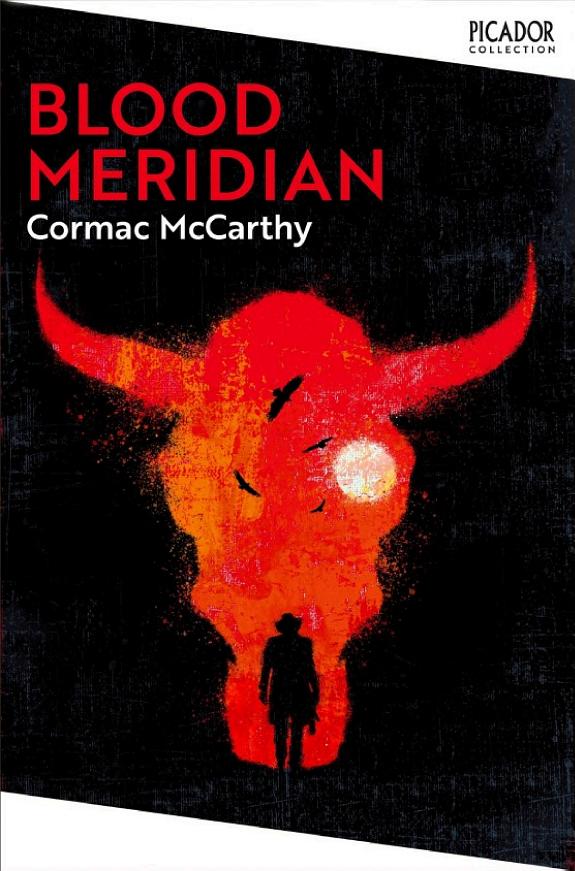
Rich is a big McCarthy head. For Benny and Cam, it’s their first taste, and we’re going straight to the top shelf: the 1985 epic historical novel Blood Meridian; or, The Evening Redness in the West.
In this discussion we cover the first half of the book (chapters 1-12) as a meditation on violence, manifest destiny, self-mythology, and McCarthy’s own cunning plot to positioning himself within the literary canon.
At the centre of it all there is the judge: a towering, hairless enigma who might be a false god, or a devil… or something even worse.
quick background
Rich: Welcome to Do You Even Lit? My name’s Rich and I’m extremely excited for today’s discussion because we are officially becoming fully fledged lit bros. Not only are we doing Cormac McCarthy, we’re doing freaking Blood Meridian, one of the most notoriously brutal novels ever written. It’s got scalp hunters, it’s got a gunfight on top of a volcano, it’s got a 7 foot tall hairless albino who may be God or maybe the devil or maybe something even worse.
Rich: We freaking love this book and we’ve got so much to talk about — whether or not humans are intrinsically violent, nihilism and meaning-making, and how to kindle a spark of knowledge that’s required to escape from the Hobbesian state of nature. As always, I’m joined by my good friends Cam and Benny. So, saddle up and let’s get into it. Cormac McCarthy’s Blood Meridian.
Benny: This week, we are tackling part one, probably of two parts, of Cormac McCarthy’s 1985 magnum opus, Blood Meridian.
Cam: We’re probably going up to about chapter 12 today. We might not make it all the way there, but we won’t do any spoilers after that.
Benny: Yeah. Chapter 12 inclusive. So if something crazy happens after that and we don’t mention it, that would be why. I think we’re mostly just going to go chronologically through it today and then pick up on themes as we run into them. But I thought I’d start with just a bit of background. The book is set immediately after the Mexican-American War of 1846 to 1848, sort of along the recently contested US-Mexico border. So parts happen in Mexico, a lot happen in like Southern Texas, etc.
Cam: And Texas was a republic and joined the US in 1845, which kicked off the Mexico-US war.
Benny: Cam with his Anki knowledge coming in hot here. So, I mean, it’s sort of Wild West-ish. So there’s Mexicans, there’s Americans, and then there’s, of course, various indigenous tribes. And the book’s really going to take place in combat between these various groups in various ways. So most of the book, at least what’s happened so far, follows this crew called the Glanton Gang, which is led by this guy called Glanton. And this was a real gang. We mostly know about them from, I think, the memoirs of this guy named Samuel Chamberlain, who was in the gang for a bit. They were hired by a local village to chase down and kill marauding tribes, as they’re called, of Apaches, which is a certain indigenous tribe. And they would prove their service by means of receipts, which is a euphemism for scalps. So they would literally, when they killed Apaches, they would scalp them and then bring the scalps back to the town to prove that they had done their job. And then that’s how they would get paid.
Rich: It’s so much more hardcore than modern receipts when people are like, make sure you bring receipts, and it’s like screenshots.
Benny: You can’t film this on your iPhone.
Cam: Literal seeds are maybe just as dangerous now when you touch that with the xenoestrogen — for your sperm count you’ve got to avoid touching those.
Benny: Okay, so that’s mostly the context. We’re going to follow this gang around for most of the book, and then just some context about the actual fights, which I thought was cool and is sort of relevant for the actual fight scenes to make sense of them. So the Americans at this point had rifles, obviously, but the rifles were very slow to reload. I saw an estimate that these indigenous raiding parties — they didn’t have guns, they were using bows and arrows — could fire about six shots with a bow and arrow in the time it took to reload a gun. And so they had this strategy where they would ride up sideways on their horses, hang off one side so they couldn’t be seen or directly targeted, and then at the last moment they would spin around their horse and fire off a bunch of shots. So while the Americans did have guns, because it took so long to reload, some of these parties still got absolutely demolished by some of these tribes that would show up on tons of horses and basically just overwhelm them with arrows and speed.
Cam: I think that the Comanche in particular were particularly badass, which we’ll get into later.
Cam: Yeah, I think that’s good context. Anything else for the quick history setting?
Rich: Can we just say a word about McCarthy himself? This is one of the great American novelists of the 20th and 21st century, and Blood Meridian is the —
Cam: This book kind of made him famous, right?
Rich: No, it didn’t make him famous.
Benny: No, I think it didn’t.
Rich: Blood Meridian is the fucking tidbit, Cam over here.
Cam: My bad.
Cam: They named the MacArthur Grant after him, didn’t they?
Cam: No.
Rich: The MacArthur grunt.
Cam: I think he actually had that maybe even before this. So he was…
Rich: That’s MacArthur, you fucking idiot.
Cam: No, no, no.
Rich: Oh, okay.
Benny: Just sounded better on paper so they changed the name. Oh my god.
Cam: They changed it to the Genius Grant after him.
Rich: He wrote this book in ‘85 and no one was particularly interested in it, and then later on he got famous with All the Pretty Horses, and then people I guess revisited his back catalog, and Blood Meridian has risen to become definitely the most famous and acclaimed of his works. It’s probably like the fan favorite and the critical favorite at the same time, I would guess. So it’s like the quintessential McCarthy novel, even though there’s some other famous ones in there as well.
Cam: Yeah, most normally will recognize No Country for Old Men and The Road from the very good movies that were made as well.
introducing the Kid and the judge
Cam: Okay, cool. So we get introduced to an anonymous protagonist simply referred to as “the kid,” which is kind of an interesting decision — just referring to him as the kid. I kind of liked it. It kind of removes him a bit from the reader potentially, maybe as well as the writing style of the lack of interiority of the kid — is that the word you use, Rich? — also maybe removes a little bit of uniqueness or individuality from the kid, which kind of fits into one of the overarching themes potentially of sort of fatalism.
Cam: But yeah, so we’re introduced to the kid and he’s born in Tennessee in 1833. The narrator tells us he’s illiterate and he has, quote, “a taste for mindless violence,” which will define his whole life. Yet he has oddly innocent eyes also. And the kid sets off to travel west. It’s kind of that trope, you know, “go west, young man.” West is all about opportunity. I mean, this book, and McCarthy potentially, inverts this. West is more about entropy and chaos, which we’ll get into. And yeah, the kid heads out, sails down on the boat down the Mississippi, ends up in New Orleans, gets into bar fights there. But then he ultimately leaves New Orleans and boats to Galveston, Texas, which is just near Houston. And then he travels up north to this town, which I think is the oldest town or one of the oldest towns in Texas, called Nacogdoches. I’ll probably pronounce it wrong, but Nacogdoches. He immediately goes to a tent which Reverend Green is giving a sermon about sin and hell. And it’s been raining for 16 days when he gets there, which immediately has this kind of biblical feeling to it. And then we’re introduced quite remarkably to this character that enters called the Judge, or Judge Holden. And he’s described as seven feet tall, has this oddly childlike face, and is completely hairless. So he’s bald, but he has no eyebrows and probably no hair on his whole body, and has these oddly small hands. So it’s just kind of a surreal figure that enters in. And then the judge accuses Reverend Green of molesting a young girl, and even molesting a goat. And it just causes kind of chaos. Everyone gets annoyed at Reverend Green, someone shoots, and the kid quickly escapes off to a hotel, where he also sees the judge — the judge pops up there, and the judge is kind of boasting to people at the hotel that he didn’t even know who Reverend Green was. He just made all that up. So this is an introduction to this kind of surreal character, which is like, what the hell? And it’s interesting to think whether it was completely made up or not, because there’s something about the judge of knowing things, somehow.
Rich: It’s interesting people’s reaction to that as well. Someone says, “Oh, so you spent some time over in such and such a town where the reverend came from,” and the judge just goes, “No, I never met that man before.” And there’s a big pause while everyone puzzles it out, and then everyone basically just starts laughing. So an innocent man presumably has just been probably murdered, and there’s been a huge brawl, and it’s considered like a pretty funny practical joke.
Cam: No, the pause is interesting though, right? It shows how much presence the judge has.
Rich: Yeah, exactly. His charisma to bring you with him on that kind of a practical joke is insane, right? Like, he’s out of pocket for pulling that stunt, but the townsfolk also — it gives us some indication of their baseline level of familiarity with violence.
Cam: Yeah, definitely. Although I actually took it as maybe that was their way of not getting on the wrong side of the judge as well. That kind of pause — everyone’s shocked and then you sort of laugh. Almost like that Goodfellas scene where Joe Pesci is like “funny like a clown” — everyone’s kind of worried and then you kind of, everyone laughs, but you’re still a little bit scared of the horrifying person.
Rich: Yeah, that’s true.
Cam: Yeah, so the kid then leaves west again. He’s earned himself a meal at the stage and he just travels to Bexar, which is modern day San Antonio. I’m not sure if he wanted to go west. It’s almost like he just felt like there was nothing else for him to do. Like he just kind of had to go. He couldn’t stay in New Orleans.
Rich: It feels like the kid gets sort of passively buffeted along by fate, or by the company of charismatic men, or something like that, right? He doesn’t feel like an agent throughout large parts of this book, even though he is doing very independent things for a young man. But part of it is also this lack of interiority, right, which is the term of art for the fact that we generally don’t get a sense of what he’s thinking and feeling. We have to evaluate him by his actions and by snatches of conversation, but he’s not exactly a big talker. It’s hard to understand what he’s trying to accomplish or whether he has any particular goals in the world at all.
Benny: Yeah. Well, okay, so we’re about to get to the point where he shows up at this bar and ends up whipping out a knife and is obviously an excellent fighter and kills someone. So you would need some agency to do that, right? I’m not sure if lack of agency is the right view to have of it. I think it’s just more that because you’re not privy to any of his internal thoughts, you have no idea what’s driving him. What is odd and a weird choice — but possibly a good one on McCarthy’s part — is to have the kid sort of disappear from large swaths of the book. So at the beginning he seems like he’s going to be the main protagonist and you’re sort of following him around, and then later on, it’s unclear if he’s even in a lot of the major scenes that we experience later on. I’m curious to see if he sort of makes a comeback in the second part of the book, or if he was just used as some sort of conduit into this violent, horrific world that McCarthy’s trying to paint at the beginning. Like, we needed some way to get there and he just used the kid, and now at chapter 10, 11, 12, etc. we’re sort of there already and then he doesn’t need him anymore.
Rich: It’s what it feels like to be the reader, right? It’s nice to have a bit of a blank slate if he is meant to be a conduit for the reader. But let’s move it along a bit. So in terms of being swept up by charismatic men: the first charismatic man he meets is a wonderful character called Toadvine. It’s been raining forever and it’s all muddy outside, they’re both trying to walk along a boardwalk between the toilets and neither will yield to the other, so they get into a knife fight, naturally, as you do. And it ends up being kind of a draw — like, they both get knocked out by some other person and just end up face down in the mud. Someone turns the kid over, otherwise he would have been suffocated by the mud. And then there’s this quite cute scene when they both wake up and they’re still kind of half drunk, and they help each other find their boots and their knife and become like best buddies.
Cam: Toadvine physically is quite conspicuous, right? He’s got this kind of long, oily, thin hair, he’s got no ears, and he has “HT” kind of knifed into his forehead and an F in between his eyebrows. So kind of a scary-looking character, right?
Rich: And is it him who wears a string of ears around his neck perhaps?
Cam: No, someone else does. But later on he wears gold teeth around his neck. I don’t know, I feel like he looks pretty old, however old he is.
Benny: Do we know how old he is?
Rich: Hmm. I think the implication is he’s seen some things, right?
Benny: He’s seen some stuff.
Rich: He’s really old, he’s like 24.
Cam: Yeah, 24 in West Texas.
Benny: Much more than halfway through his life.
Rich: Yeah, Toadvine is absolutely crazy. He tries to collect money from someone staying at the hotel — the door’s locked, so he sets a fire on the door to smoke him out — and then they get the guy, beat him up. The hotel keeper is protesting at the fact that his establishment’s burning down, so Toadvine kicks him in the face as he’s coming up the stairs or something. The kid jumps in and gives him a boot.
Cam: The kid kind of helps, right?
Rich: Yeah, the kid helps. I mean, he’s sort of just following along like Toadvine’s little minion at this point.
Cam: Well, just really quickly — the kid yeets out of there on his mule and sees the judge smiling at him. It’s just this kind of scary presence, like he’s propping up —
Rich: You don’t want to be noticed by the judge, or, you know, at least I wouldn’t. He’s spotted his potential.
why did Captain White’s expedition fail so badly?
Rich: So anyway, the next important plot beat is — the kid is camping out along the road somewhere and a rider comes upon him who is a recruiter called Sergeant Trammel, I think. He’s a recruiter for a band of US soldiers who are what was the term you used, Benny — filibusterers?
Benny: Yeah, filibusters.
Rich: Filibusterers who are effectively still trying to fight the Mexican-American War, even though the war is over — fighting an illegal war in pursuit of, well, A) justice, I suppose. They want to kill Mexicans. And B) this manifest destiny idea, right, where they’re going to conquer fertile lands and plunder the treasures, and drive the enemies before them.
Cam: I think they’re kind of indignant to the US government and stuff. They’re just like, “Yeah, they’ve kind of let us down and there’s still stuff to do.” I think he says at one point, maybe the California government’s still on side.
Rich: Yeah, they believe that the Mexicans are not fit to govern. So it’s hard to know what the true motivation is, but it’s a combination of vengeance — because these are actual soldiers who have seen their comrades fall — as well as believing that the US government is the organizing force for the region, as well as greed of wanting to capture large swaths of land that they can farm or ranch.
Cam: I also think the other part of the context with these guys and just sort of everyone involved is, you know, it’s just this recent war been going on with US and Mexico, and you know, the Native American tribes in the region who famously do raids on Mexicans and Americans — like, this has all just been happening and is happening, and you potentially lost family members to the Mexicans or to the natives. There’s probably a lot of retribution type, even on a personal level, for these people, from their family members, which, tit for tat, ends up in this endless cycle of violence. But I think that’s also part of the context as well.
Benny: There also just might not be that much else to do, right? It’s not like you go back to your 9 to 5 after this. You’ve been brought up in this life of violence and you were a soldier and now you’re wondering, what the hell do we do? I know how to kill people and that’s about it. So what do I do now?
Cam: That’s a big part of it as well.
Rich: It’s also interesting that even at this point in American history — and this might be just ignorance on my part as a non-American — but there’s such a powerful patriotism and imperialism, a feeling of US supremacy, even when the states have only just united, as it were.
Cam: Being quite recent. Yeah.
Rich: Yeah. So we’ll get the words straight out of Captain White’s mouth. He is the leader of this band of filibusterers that the sergeant is recruiting for. The kid goes back to White’s office and meets with him and he says: “We fought for it, lost friends and brothers down there. And then by God, if we didn’t give it back, back to a bunch of barbarians that even the most biased in their favor will admit have no least notion in God’s earth of honor or justice or the meaning of Republican government.” So he’s making an appeal to all of those motives that I mentioned before. White is the leader of this band. He recruits the kid, he successfully wins him over. Again, I don’t think the kid is particularly — it’s hard to know what the kid… gives nothing back. It’s hard to know why he’s convinced, why he wants to join up, but he goes along with it anyway.
Cam: For them they say, like, we’ll get you a horse, we’ll get you weapons, we’ll get you clothes, and you know, and potentially we’ll get some land and gold. Like, we’re just gonna loot everyone.
Rich: Yeah, and the manner in which they get the kid a horse in particular is extremely revealing. They go down to the pub when they’re getting ready to ride out the day before with some of the other new recruits, and inevitably things descend into violence and there’s a big bar fight — one of like dozens in this book — and one of the new recruits just gets killed. And then when they ride out, the kid has got himself a horse. He’s got the dead kid’s horse. And there’s another fascinating little bit at that bar scene which is important to mention, which is there’s this old, maybe kind of drunk guy called the Mennonite at the bar, and he’s warning the recruits against joining up with Captain White.
Cam: Which is like a Christian denomination, right?
Rich: Yeah. And he is a very Christian figure because he’s sort of prophesying about what will come to pass if the kid and his friends join up with White and invade Mexico. He says, “You won’t come back.”
Cam: Don’t go. You won’t come back.
Rich: We’re going to find out if it’s true. But he says: “The wrath of God lies sleeping. It was hid a million years before men were and only men have power to wake it. Hell ain’t half full. Hear me. Ye carry war of a madman’s making onto a foreign land. Ye’ll wake more than the dogs.” So anyway, they laugh at him and push him away.
Cam: Captain White’s site and his crew are like, “Who cares? We’re not coming back. We’re gonna get land, we’re gonna get gold, we don’t need to come back.”
Rich: Yeah, they say, “We don’t intend to come back.” And, spoiler alert, they don’t come back, for a different reason.
Cam: Yeah, why would we need to come back? No one comes back.
Rich: Anyway, it’s adding to this biblical feeling of this book. We get an actual preacher man prophesying, and this wonderful hellfire damnation type language which I personally love.
Cam: And I suppose this is a slight inversion to like the Odyssey, which is about returning home. This is kind of returning — not returning, like heading out to a new home, I suppose.
Rich: It’s the Iliad.
Cam: Yeah, the other one.
Benny: It’s all been done before.
Rich: I’m going to talk about the Comanche bit. Is there anything else before I get to that?
Cam: No, that’s good. They head to Mexico.
Benny: They head out, and let’s talk about the ambush a bit.
Cam: And get intercepted.
Rich: They roll out, they have a horrible journey. So what happens to them? They — there’s a sickness, a bunch of men just die of some kind of a sickness.
Cam: Yeah, I think they get cholera. And even now we’re getting moments of like the setting — it’s just like, it’s so hot they have to start traveling at night, and the horses run out of food and they’re eating grit, like almost as you imagine chickens would eat. And the wolves are following them, and coyotes are gnawing on dead men’s bones at one point, and the animals actually never really fuck with them — that’s one interesting thing — but they’re kind of there. And everyone gets sick. And yeah, it’s harsh.
Benny: McCarthy is inverting the tropes of the heroic noble Western who goes out and is riding on his horse, looking at the sunset and having a great time. So the inversion will happen more substantially later on as well, but this is sort of the initial burst of it that we get —
Cam: Well, even immediately now, which we’re going to get into, right?
Benny: Where it’s like, oh man, these guys — they leave the town all excited and then almost immediately are having an absolutely terrible time, but are now too far from home at some point to turn around. So they’re just kind of stuck between a rock and a hard place and have to go on.
Rich: It reminds me of that Joseph Henrich thing about how the most well-equipped, technologically advanced white colonists really struggle to survive in lands for which they don’t have indigenous knowledge of the conditions and of ways of finding food and so on. They just get themselves into all kinds of trouble even before — and then fittingly, they are undone by people who do know the land well.
Rich: Should I get straight into it?
Cam: Yeah, well, just quickly — I could imagine being this kid, right, and there’s the guys promised you, “You get a horse, you get a weapon, you’re getting land, this sounds great.” And then immediately you’re just, you know, in there.
Benny: Yeah, within a day, everyone’s got diarrhea.
Cam: Yeah, they get diarrhea, and the sun — I think at one point they’re described as faceless because they’re all wearing their hats and they’re leaning back over their head. And I think McCarthy also describes them as they look like ghosts in the landscape, like on their high road to hell, which again is kind of fitting in this biblical thing.
Rich: Yeah, they’re covered in white dust at the end from the white pumice sand or something. I mean, it’s also — Captain White, I think it’s not a coincidence. These are the white men, this is manifest destiny.
Cam: Yeah, and more so than the other gang that we’ll be introduced to later. Captain White really kind of hates the Mexicans and the natives, and he sort of says that. You can contrast that — it’s a little bit true with the next gang, but far less true.
Rich: Well, they’re fascinatingly egalitarian, all things considered. Yeah, the Glanton Gang.
Cam: The next gang, yeah. It’s kind of the gang and everyone else.
Rich: Okay, so there’s this big build-up — the outfitting, the inspirational speeches by the captain, the arduous journey — and then they come across, not their foes the Mexicans, but the dust rising in the horizon, and it turns out to be a Comanche war party.
Comanche war party run-on sentence fever dream
Rich: The way that it is introduced is, to my mind, the best passage in this entire book — or at least, one of many strong contenders, but maybe my favorite. And it’s just wonderful. So what you get is this huge run-on sentence which takes up the better part of a page, just connected by a lot of “and” words rather than clauses and sub-clauses.
Cam: Yeah, very memorable.
Rich: I’ll just read a little bit of it. “So the company had begun to soar back on their mounts and some to mill in confusion when up from the offside of those ponies there rose a fabled horde of mounted lances and archers bearing shields bedight with bits of broken mirror glass that cast a thousand unpieced suns against the eyes of their enemies. A legion of horribles, hundreds in number, half naked or clad in costumes attic or biblical or wardrobed out of a fevered dream with the skins of animals and silk finery and pieces of uniform still tracked with the blood of prior owners.” And it goes on and on like this. That’s like one-third of —
Cam: I love that phrase, “legion of horribles.” And they’re crazy, right? The way they’re described, they’re coming in — there’s hundreds of them on horses. And as Benny said, like, Comanche in particular, with these amazing horse riders and arrows, right? It was so amazing — there’s a couple of small Joe Rogan snippets when he’s talking some guys, you can’t believe how impressive these guys were. And there’s this one guy now on YouTube, he’s kind of trying and reenacting some of the stuff so people were like, “Oh, okay, it was possible to shoot five arrows in 30 seconds off a fucking horse while hiding it.” But the way it’s described — like, one’s wearing a stovepipe hat, like a top hat thing, and one’s holding an umbrella, another person’s got this bloodstained wedding veil.
Rich: Yeah, which is so ominous when you consider the implications of that.
Cam: Yeah, fuck. Why does he have a wedding veil and why is it bloodstained? And then one’s also wearing armor from like Spanish conquistador 1500s. And it’s just like, as McCarthy said, it’s like a fever dream, it’s like a nightmare, it’s like an acid trip of, you know, a legion of horribles.
Rich: Yeah, so I want to talk a little bit about the writing here, because it’s incredibly emblematic of the McCarthy style, which is this thing called polysyndeton — which is when you repeat a conjunction over and over, in this case the word “and” — and you have this run-on sentence, and it builds the pace and the intensity of the passage. And it’s also very reminiscent of classical work. The Homeric poets wrote in this way as well, with repeated conjunctions. And the St. James Bible has a lot of “and this and that and this and that.” So this thing that McCarthy is starting to do here is sort of building his work in the tradition of the classics. He’s putting himself in there, and there’s going to be quite a lot more of this coming. So I just want to kind of signpost some of the tricks that he’s doing. It’s called polysyndeton.
Benny: What did you say it was called, sorry?
Rich: Polysyndeton. I think McCarthy’s even cited on the Wikipedia page as a classic modern example of it.
Cam: Richard always hitting us with a theory.
Rich: I’ve had time, because I’ve read the book before, so I’ve had time to read a little more around it and think a little more around it. I’ve been watching some Yale lectures which were quite interesting. So the fusion with the modern, then — right after this giant page-long paragraph, the perfect little chaser: you get this perfect little chaser, a single line sentence: “Oh my god, said the sergeant.” So it’s almost laugh-out-loud funny, like how understated it is immediately following this incredibly rich and frantic fever-dream description. Anyway, I won’t go on about that, but I think that’s just an incredible page of the book.
Cam: Yeah, no, that’s cool. And like, they get murked, right? They get absolutely destroyed — pretty much almost every one of them. And it’s pretty nasty stuff, right? Like, they get scalped — you know, the people that get killed get scalped, and the people that don’t get killed are tortured and sodomized, it even says. Just like, total barbarity, really, a true nightmare for this kid.
Rich: Yeah, and correct me if I’m wrong, but I think they don’t even dwell too much on exactly what happens to each person. It’s not like a long battle scene. The entry scene is probably longer than the actual fighting, because they just get massacred.
Cam: Yeah. And the kid is one of the few survivors.
Rich: The kid survives.
Benny: I’m sure it’s coming across in how we’re describing things, but we should just signpost maybe for the reader that part of the distinctive style of this book is just the detail with which the violence is explored on the page. So they’ll talk about scalping in great depth. Like, everyone is just involved in some of the most violent horrific acts you’ve ever heard of. Babies just being smashed against the sides of buildings until their brains are coming out, of scalps being hung up by their throats, of people being raped and used for all manner of horrible things. And he just doesn’t shy away from it and just tells you very matter-of-factly what’s going on on the page. And this has turned, I think, some people off of the book, probably especially when it was unknown that it was sort of a masterpiece. If you had just picked up the book and started reading some of these passages, you can imagine someone just getting to page 70 of this thing and just saying, okay, that’s enough.
Cam: Just a gore flip.
Benny: That’s enough of this. This is horrific. It’s like nightmare-worthy, some of the scenes he describes. It’s horrifying.
Cam: And I think actually there’s a bit of discourse like, why is this not being made into a movie? And I think it’s had a bit of history, like it’s been tried a few times and it could never — and I think one of the reasons is because of all this violence. A movie would be great — like some of the descriptions of the setting, a movie could really bring that to life. But yeah, just this violence — like, you know, moments after this Comanche raid, the kid witnesses babies hanging from a tree, and vultures standing on dead children and stuff. It’s really there.
Benny: I’m sure Tarantino has thought about it, and if he’s thought about it and hasn’t done it, that should tell you something. I can’t guess.
Cam: Well, I think Ridley Scott tried to for ages, the Gladiator guy. I actually recently thought Mel Gibson would have been good, from like Apocalypto. And it’s actually been greenlit now — there’s going to be a movie, the same guy who did The Road, which is fairly good. I think James Franco tried to get it, which would have been shit, because he made another movie based on the carcass —
Rich: He did All the Pretty Horses and it was not good.
Cam: Yeah, so thank God James Franco didn’t get it.
Rich: I think McCarthy has been quite particular about people adapting his work as well. And now that he’s dead, perhaps it — and he was happy with The Road. And he was happy with No Country. There’s a cool little brief interview with him and the Coen brothers. I mean, No Country was basically a screenplay, so they did such a faithful adaptation of it. It was originally a screenplay, so it’s not that surprising. But he was happy with The Road, so that bodes well for this adaptation.
Cam: It’s funny like film nerds where they always get really worried, like, “Oh, who’s going to adapt it?” I sometimes don’t pay too much attention to that, but for this one I would be like, yeah, I’d only want a few directors to touch this. Like maybe Paul Thomas Anderson, Coen brothers. You could just imagine people getting this wrong. And in some sense, I’m perhaps — you know, it’s kind of cool that this isn’t a movie, because along with the violence, just the philosophy behind it, or this kind of fatalism, and some of these characters would potentially be hard to translate to the screen.
Rich: This one feels so precious to me that I would be pretty happy if they never adapted it, I think. I don’t want to see what the judge looks like — I just have him in my mind. I like the version in my mind. But yeah, it could be done really well.
Cam: It’s kind of like this and Infinite Jest, I just don’t want to —
Cam: Before you go to bed, you just keep the judge in your mind.
Benny: Yeah, you’re just thinking of the guy from Dune probably.
Rich: Oh, yeah. I mean, it’s not far off, actually. Yeah, get that guy. We got to cast this movie at the end.
Benny: That’s for our Patreon subscribers only. Let’s cast the movie.
Sometime come the mother, sometime come the wolf
Rich: I’ll just quickly wrap up the last remnants of the expedition. So there are two survivors that we know of at this point. There’s the kid out in the desert, desperate for water, and he runs into another survivor, a guy named Sproule, who’s got a wounded arm which is basically rotting and disgusting. So they’re making their way through the desert, trying to avoid the Indians obviously and just trying to survive, because remember they’ve been riding so far, this deep into the desert for days. And now they’re on foot, they’re in big trouble. Anyways, they get to this point where they’re extremely thirsty, maybe they’re kind of dying of thirst. They’re at the top of some bluff or mesa or something. They hear the echo of horseshoes or maybe they see a little bit of dust in the distance. They know that riders are coming, and they basically got nowhere to hide. And they just wait for about an hour for the riders to approach, knowing full well that it could well be the Indians, they’re about to die. And it’s this very fascinating scene which I really love, which is the riders’ approach — and they’re Mexicans, they’re not Indians, but they are bandits. And Sproule and the kid are just sitting there, and the bandits are sort of saying, “What — you didn’t even bother hiding from us? What’s going on?” And they just say very brazenly, like, “We’re thirsty,” and just kind of demand water. And the leader of the bandits is just quite impressed by their moxie. He just throws them a water bottle, he finds them pretty funny. And they drink and they don’t even give the canteen back to the guy when he asks for it. They’re really pushing their luck, basically. Anyway, the bandits say something fascinating, which is — wait, I should find the exact page actually.
Cam: Why do you find it? It is interesting. This is like another moment of humanity and mercy, which we don’t get many of. We had right at the start, a woman helping the kid, and then you have this.
Rich: Yeah, this is real duality of man stuff. So he says, just before he rides away, he leans down to them and he says, “When the lambs is lost in the mountain, they is cry. Sometime come the mother, sometime the wolf.” And then he smiles and rides off. It’s this real great representation of this duality of human nature in this book, where we’re seeing all these totally depraved violent acts where people would cut down someone else for a dollar, but we also do see a few acts of hospitality, in particular towards total strangers, and even a sort of code of honor between thieves or whatever, where people do these acts of kindness. And it’s really surprising, I think, because I know that the South, for instance, has a really strong hospitality culture today, where you would maybe ideally feed and take in a random traveler without knowing who they are or where they’re coming from. But to put it in this environment where said random traveler could also be a cutthroat killer — and in the case of this book, often is a cutthroat killer — you still have a culture of hospitality, and you share what little beans and rice you have, or your tortillas or whatever. It’s really interesting. Sometimes the mother comes and sometimes the wolf, you don’t know which it’s going to be. So yeah, I think that’s a nice little touch.
Benny: Also the wolf-sheep line just highlights how arbitrary it is who lives and dies. And that’s what it feels like — it feels like so many interactions in this book are just coin flips, right? It’s like, okay, you walk into a bar, maybe you’re leaving, maybe you’re not. And it seems like everyone’s sort of aware of that. Every encounter you have with someone else, you’re just taking your life in your own hands, and maybe it’s going to end really well — and by really well, meaning you leave alive — and then maybe it’s going to end really badly. And it just seems like it’s totally arbitrary if something happens or not. And then no one really holds a grudge against anyone else. Even if they had to kill a family member or something, or if they do, it’s just so clinical, right? It’s just like, yeah, this is how life works and someone had to die here.
Cam: I think that’s a good point. A big part of it is variance, which kind of feels opposed to — because this other theme is fatalism. Sometimes the narrator points and even mentions future events. Sometimes it feels fatalistic, but variance seems a big part of it. Captain White’s gang just gets totally annihilated by this Comanche raid, and that could happen to the later gang that we meet too. The kid survives — pure variance. And then Sproule, who’s the other survivor, ultimately dies, which we haven’t quite mentioned. But he’s got this rotting arm, and traveling with the kid, he just dies from it. It could just as easily be the kid as well. But on the flip side, it feels like this kid has this manifest destiny, or this inversion of this manifest destiny — this horrifying destiny where the path he’s about to take feels laid out for him as well. But there is this aspect of random arbitrary chance as well.
Rich: Yep, definitely. And Sproule’s death is particularly ironic, I think, in that he has been suffering for days, or maybe a week, with the wound, with the heat —
Cam: He has tuberculosis as well.
Rich: Yeah, he’s got tuberculosis and he’s been fighting for his life. And then the moment they get back to relative safety — they just climb onto the back of a wagon and end up in a little town — and the moment he gets there, he dies. When he’s in the town with water and food and security.
Cam: Their journey is horrifying as well. They go and stay at a church — a lot of times they stay at abandoned churches, which again brings a biblical theme. But it’s always horrifying at these churches: there’s dead bodies and animal excrement around. And speaking of animals actually, Sproule gets attacked by a vampire bat. They start sucking his blood, they pull it out, but it’s…
Rich: So what does that mean, the vampire bat? I wasn’t sure about that.
Cam: Yeah, I’m not sure either. I think it kind of goes opposed to the animals kind of leaving them a little bit. But yeah, in terms of literally sucking his blood, the environment just sucking his blood and life out of him. I suppose in a church — it’s demonic almost, things that happen in a church, right?
Benny: Yeah, yikes. All right.
Rich: Anyway, final bit of this chapter: they get arrested in this town that they end up in, and then they get taken in a convoy to Chihuahua, which is the big city in the region. Thrown into the Chihuahua jail, and the kid gets reconciled with none other than his good buddy Toadvine. And it’s sort of onto the next phase of the journey from there.
Cam: I remember seeing these TikTok videos of people trying to pronounce words they hadn’t seen and totally gaffing them. And one of them was Chihuahua, but this person’s reading and they’re like, “Chee-hua-hua… Chee-hua-hua.” And then it’s something like “Chihuahua,” and they’re like, “Oh yeah, the dog.” And I was just like, what the hell? But then I remember actually when I first read about the Chihuahuan desert, I used to call it mentally the Chee-hua-huan desert as well. And I didn’t even realize it’s obviously Chihuahua, the dog.
Rich: Humiliating to be from Chihuahua and have your city’s image be this like horrible, aggressive, neurotic little dog.
Benny: I know, that’s horrible.
Cam: Everyone would mention it as well, if you’re from Chihuahua, like, “Oh, the dog.”
Rich: Yeah, yeah, yeah.
the strangely egalitarian Glanton Gang
Benny: All right, Cam, you want to walk us through joining Glanton’s gang?
Cam: Me and my gang, me and my gang. Yeah, so he ends up — so a Mexican sergeant takes him to jail, takes him to Chihuahua City, which is the big city in the region, takes him to jail, and he meets Toadvine there. And he meets one other person — no sorry, I’m mixing up. He meets another person from Kentucky I think, called Granny Rat.
Rich: Wonderful name.
Rich: Toadvine and Granny Rat.
Cam: And there’s another guy called Bathcat.
Rich: Oh yeah, yeah.
Cam: They’re kind of peering out the jail cells and they see this — I think the quote is like “reeking horde of rabble” coming in. And it’s what we get to know is Glanton’s gang, i.e. the scalp hunters. They’re coming in with big animal pelts wearing on their horses and have this big presence. And led by this guy called John Glanton, who, as we noted, is actually a real person or based on a real person. And also one of these members is the judge. So the judge has kind of popped up again. And he’s wearing — I think he’s wearing skin boots which are kind of flash boots that you don’t really wear in the outback. Like, you might wear them at dinner parties and stuff. And they all come in and they strike a deal with Toadvine to release the prisoners if they join the gang. And they go and talk to the Mexican governor, and as we noted, it seems like they’ve got this deal with — sorry, that they have this deal with the Chihuahuan city governor to go and kill Indians, i.e. Native Americans, and specifically the Apache group. So we got the Comanches, which are kind of like West Texas, New Mexico area, who did raids south. And then you’ve got the Apache, which is more like North Mexico country and New Mexico state, another region, who are also causing issues for the Mexican towns, right? They come and do these raids, as do the Comanches. And there’s this real problem. And so the Mexican governor wants the problem dealt with. So he wants to hire people to kill them, essentially, and come and bring scalps.
Cam: Yeah, so they head again. The westward expansion continues. I mean, I think this time they’re not literally going west, they’re kind of going north from Chihuahuan City. They end up going towards a place called Janos. And it’s kind of like a similar setting in terms of this harsh journey, which McCarthy never stops talking about every chapter.
Rich: I’ve got to ask you here, Cam — how are you holding up with all of these nature scenes and descriptions of shrubberies? I was feeling for you when I was reading those.
Cam: I mean, yeah. I worry about my — our listener Rio — hearing me complain about reading about nature. But more generally, this is not only the violence, but this can be quite a tough read in terms of these run-on sentences. And dialogue sometimes — it’s hard to follow who exactly, because famously McCarthy doesn’t use quote marks. So yeah, it’s quite effortful to read. But I think what makes it easy to stay with is just the background kind of mythical nature of it. And these larger-than-life characters. And, for a dude, like the violence — I think that’s part of the appeal, right? Like this Comanche raid — I can imagine my dad, like my dad doesn’t read, but my dad would fucking love this. He’d love a movie of this. And it’d just be almost like a home improvement — like a Comanche raid.
Rich: For a dude.
Rich: There’s enough action, there’s good — you know, like you don’t have to go through too much scenery chewing before you get to another fight.
Cam: I think I just put in more effort around researching around this region, which as a non-American — but I think I imagine most Americans, anyway, are relatively ignorant of West Texas, North Mexico — so kind of put an effort there. And then it makes it quite enjoyable reading about these landscapes, and you know, there’s this high road to hell, man.
Rich: And just to reiterate what you said earlier — I can’t remember if it was on mic, but McCarthy traveled through these lands. And the way that I heard Werner Herzog describe it, I think he said McCarthy invented these lands, or brought them into reality, because he was meticulous in describing them: the actual botany of the actual plants, the geography, the — what do you call it — the geology of the rocks. And he did it in a way that hadn’t been done for these particular locations. So you’re reading like a real piece of crafted art. It’s not just someone sitting at their keyboard imagining, “Oh, and there’s a rock here and there’s some flowers there.”
Cam: Yeah, it’s really like Aristotle going to Turkey and noting everything down. I kept imagining McCarthy doing this journey, driving to these contemporary cities and towns and just looking at the landscape and writing about it, and it being real and imagining what it was like in the 1850s. One thing I wanted to bring up was — the most recent book we read, The Moviegoer, which we all didn’t really like that much — one of the ideas in that was the main character Binx Bolling’s idea of “certification.” He’s like, a place gets certified only when he sees a movie of it, and then suddenly it becomes real. Which is an odd thing to say, but immediately going to this book and reading about West Texas and northern Mexico feels certified to me now in a way that it never would have been. So yeah, I think there’s something to that.
Rich: Yeah, that’s what Herzog was saying. That’s a nice point.
Cam: Anyway, so we’re going north now and we’re kind of meeting the gang. And there’s this one of the members, an ex-priest called Tobin. Seems a little bit more reserved, a little bit less violent than the others. And then there’s these two characters, both called Jackson. One’s called Black Jackson, one’s called White Jackson, because one’s black and one’s white. And they just hate each other. They’ve got a long-standing feud. But at one point, they’re sitting down at nighttime over the fireplace. Black Jackson goes to join some people at the fireplace, but there’s a second fireplace, and White Jackson’s like, “Can’t sit with us.” And it’s not super clear if this is just this personal feud, but it definitely feels a little bit race-tinted, because I think the other fireplace — like the Mexican —
Rich: The Mexicans, the indigenous guys are sitting at the other fireplace.
Cam: Yeah, and the Indians, right? Which is worth just clarifying. So we’ve got this gang of misfit outlaws, and most of them are white American, but we got this black guy, and then we got the Mexican guy, and then we got these Native American — you know, Indians.
Rich: The Delawares.
Cam: Delawares, yeah. And their whole raison d’être for this gang is to go scalp a different Indian tribe, you know, but they’ve got three or four Indians with them. So I think they’re kind of sitting at one fireplace and maybe the new guys are, and then Black Jackson goes to try and join the main fireplace, and White Jackson says, “You can’t do it.” And then they have this argument, and then Black Jackson comes up and just beheads him from behind with this massive Bowie knife — which earlier on was described, their weapons just like these Bowie knives, I think the size of machetes, and shotguns with double barrels that you can put your thumbs in. These massive weapons, which they buy off this random German guy who’s like selling fucking arms to everybody, doing this show. But it just beheads them. And like, I think at one point, like Glanton or Tobin, the ex-priest, or maybe both of them kind of get up to maybe stop it, but let it — don’t stop it. And then it happens, and everyone just kind of accepts it, and Jackson joins them.
Rich: Don’t forget they’ve been taking bets on which Jackson will kill the other, right? They’re not only okay with it happening, they kind of consider it good sport.
Cam: Yeah, which is this interesting dynamic, right? You have this gang who’s less kind of racist or hatred of the others, as like Captain White’s filibusters. But there is that element of them — like, the leader often will say, like — I think at one point he’d go to an abandoned house and he’s like, “Come out if you’re white” and stuff like that. But they do accept their gang members, and there’s this kind of unity with them. But you don’t want to go too far with that — like, these guys just killed each other, right? And there’s other moments where, I think, the kid helps a gang member. He pulls an arrow out of one of one of their thighs. And the kid’s the only one that helps. No one else helps, and the kid helps. And then someone, the ex-priest, sort of says something like, “You’re lucky that worked, because if you didn’t do that successfully, he probably would have killed you.” So there is some love lost between these gang members. There is this unity as well. Like later on, the leader, Glanton, wants to go to a dinner and he says, only if my gang comes and joins me. So there is this kind of principle of this in-group.
Rich: Yeah, it’s egalitarian, right? Like, they all equals.
Benny: It feels more like — again, I guess using the word arbitrary seems appropriate here, right? So it’s like, yeah, you can earn your place in the gang if you want. You can come along with us and we won’t necessarily treat you differently because you’re not white. But we’re also not gonna put our foot down against racism or people making you sit at the other fire or something. It’s sort of like — anything goes. Like racism, non-racism, like, yeah, that’s okay.
Cam: It’s like amoralism to it, eh?
Benny: Yeah, like some amoral arbitrariness somehow where it’s like, yeah, some of us are gonna be racist, that’s how it is, just deal with it. There’s — we’re out here to do our job and get paid.
Rich: But don’t you still think it’s interesting that, sure, everything’s permitted, including racism — don’t you still think it’s interesting that some of them apparently choose not to be particularly racist? Or it’s more that their hatreds run so much deeper that racism is too entry-level for them or something, where they’re more fixated on — like, it’s not like whites against blacks for them, it’s me against the world for them, right?
Cam: Well, I think, to be honest, I think that’s always a little bit true. Like, you have these people that are like, their main thing is hatred of this other nation or group of people, but if you’ve got someone in your immediate in-group — like, even now when you look at online racists, like broad-tent racists online, more than half of them are non-white, right? Like, I think there’s this meme out there that, you know, as long as you’re racist, you can join us. It doesn’t matter what race you are. Sort of like — there’s kind of this element as well, like you’re part of our gang and you live by our code, it doesn’t really matter. But there are race dynamics as well.
Cam: I just quickly wanted to jump on — you said it’s egalitarian.
Rich: And we should defer to you, Cam, I realize, as a person of color reading this. It’s especially important to get your —
Cam: Yeah, for the listeners, I just found out I’m like five percent Maori indigenous.
Rich: Five percent? I thought it was three. We’re getting some inflation already.
Cam: Three to five, you know, my rounding with how many —
Benny: Using that privilege okay soon.
Cam: Uh, five percent at work.
Rich: Swedish rounding.
Cam: But I just want to quickly jump on, you’d said the gang’s egalitarian — which I mean, explicitly has a leader, which is John Glanton, who’s a scary guy. He’s a scary fellow himself. But then also Judge Holden is potentially the real leader, which it’s sort of said at one point. But yeah, not so much ordering around, but it just — again, it kind of fits into, it just sort of goes with whatever he wants. He’s kind of about control, but not necessarily heavy handed.
Rich: I feel like in the judge’s case, it’s somewhat more of a meritocracy.
Cam: Yep, he’s an interesting guy.
Rich: The judge possesses extraordinary leadership capabilities and all sorts of useful skills. And he’s not a tyrant who imposes his will on others. He is just excellent at what he does and saves their bacon.
Cam: I mean, let’s maybe just start talking about the judge. So I think after the fire, what happens is they talk to some Mexican sergeants. And the judge actually stops violence from breaking out. He calms everyone down. I think the Mexican sergeants are maybe being a bit racist, and the judge kind of — because the judge can speak like a million fucking languages. Like, he speaks Spanish, and it turns out he’s Dutch, and like, every Native American tribe, he can probably be the interpreter. Which just adds to this kind of surreal mythical quality of him. But it’s funny that the first instance of a potential scuffle, the judge kind of tempers, which maybe feels like it doesn’t fit with this character, but I think probably does — because I think that the judge is more about control. Control of things rather than senseless violence. So he’ll use violence kind of to this version of control — controlling the environment and others. But whereas in contrast to like John Glanton, the nominal leader of the gang, he’s maybe someone you’d more describe as just incredibly violent, sometimes for the sake of violence, sometimes for the avarice and greed of money.
Judge Holden piss-infused gunpowder volcano massacre
Benny: Yeah, let’s just dive into the judge. I think we’ve been talking for probably more than an hour about this book, and it’s astonishing we haven’t mentioned the judge more, because he’s sort of the mystery at the center of this book. And we’ll probably take up the rest of this episode and the second episode to figure out what exactly he’s about, what he wants, who he is, what he represents, et cetera. Yeah, I mean, as Cam said, he’s got this mythical quality to him. And it’s just slowly revealed throughout the book that he has more and more skills. He’s incredibly eloquent. He’s incredibly knowledgeable. He seems to have everything under control. He never seems astonished or surprised by certain situations. He seems to just exert a sort of power over these situations. He carries this little book around with him where he’s sort of cataloging nature as they go. And he makes some remarks that nothing feels real to him unless it’s in the book. And he doesn’t like things that exist and aren’t represented in the book, because he hasn’t sort of given them permission to exist, and that feels like a violation to him. So it’s not only that we, I think, as the reader feel his power, but he somehow has this sense that he should be the ultimate arbiter of what exists and what doesn’t, and who should live and who should die.
Cam: And he burns the pages of his book often, right, as well. So it’s kind of like he wants to leave — like, he understands something and then he’ll burn it, and then it’s like in his head. And it’s like for no one else, I think.
Benny: Right, yeah, like slowly cataloging and crafting the world around him as he goes. So just a couple of stories. So Tobin, the ex-priest, he’s telling the kid later on about how the gang fell in with the judge. And he says, like, who is this fucking guy?
Cam: Yeah, one of the kids is kind of like, “Tell me about this judge guy. What’s the deal with it?”
Benny: Mentions, “Oh, I’ve seen that guy before.” And he mentions the story about the tent and him chasing the priest out and getting the priest killed. And Tobin says, “You’re not alone. Every single member of this gang had a similar experience where they had run across the judge separately, in some past life, and then we refound him again with the gang.” So he’s just everywhere. And the gang first ran across him —
Cam: All at once.
Benny: When they were sort of in desperate straits. And they were more like Captain White’s band at that point and sort of roaming through the desert, had run out of food and water, were sort of desperate. And they ran across the judge sitting out in the desert himself with no canteen, just on a rock. There are no other rocks around, sort of just waiting for them, it seemed like.
Rich: They joke that he must have brought the rock with him.
Benny: Yeah, exactly.
Cam: But it’s crazy, right? It’s like this desert where we’ve talked about, like horses, like dehydrating and people want to — and they’re like, “There’s just Buddha-like perched —” I’m always imagining him in this kind of like lotus pose or something.
Rich: Now, the Buddha, right? The big bald Buddha.
Benny: The giant albino baby just out in the desert.
Cam: Just sitting on a fucking rock.
Benny: And they’re being chased, I think at this point, by a band of Apaches, and he helps them. They’ve run out of gunpowder at this point. So it seems like they’re all just about to be slaughtered. And they’re just sort of running away in desperation. And the judge takes them to — is it a volcano, or like some sort of cave, or some mountainside or something? And he leads them there, and he manufactures gunpowder out of nothing. He gets them to scrape some of the rock and asphalt from the side of this mountain, has them pee on it in some way, puts some more ingredients in there, he’s like massaging the earth.
Cam: Yeah, I think he has nitrate or — there’s some potassium or something from bat manure or something. He’s got deep knowledge of chemistry.
Rich: Yeah, there’s guano, saltpeter. What is it — what is the volcanic stuff? Brimstone, brimstone, right?
Cam: Oh, this is like brimstone or something, yeah.
Benny: Yeah, also needed some sulfur and stuff, exactly. And then, yeah, which I guess maybe they get — special ingredient.
Benny: Yeah, exactly. So he’s like —
Rich: He’s like, “Get your cocks out, boys,” and they’re all pissing into the cauldron.
Benny: And it’s just —
Cam: That almost felt like — you know, superfluous. He’s made the gunpowder, got a piss in an hour, come on.
Benny: Come on, yeah, everyone get it out. You know, they’re in a line, these Apaches approaching, just cocks out peeing. And he’s described with this maniacal grin massaging this paste together, and then he spreads it out over the mountain.
Cam: Yes, like dough. It’s called like — a heavy black dough or something, he’s just like —
Rich: Yeah, yeah, he’s just like fully elbows deep in the pissed dough powder.
Benny: Like this crazed baker in the piss, reeking and smelling, and like, oh my god.
Cam: Yeah, which is like — I mean, also the context of like, these guys find him, like, we’re getting chased, we have no gunpowder, the Apaches are coming for us. And I can just imagine if he’s just like, “No, just trust me. Trust me.” And they’re like, “Where the fuck are you taking us?” He’s like, “Come with me.”
Rich: He’s totally calm the whole time, right?
Cam: He’s making a joke.
Benny: Yeah, just sort of loving it. Spreads this stuff out in some sort of process I don’t really understand on the side of the mound. They wait like an hour or two for the sun to dry it just in time, and then they scrape it off, they’re able to load it into their guns again in some way I don’t quite understand.
Rich: One little bit in there that’s also fascinating, where there’s a cloud that looks like it’s going to obscure the sun and prevent it from drying out in time. And the judge just sits there serenely, looking at the cloud. And it’s another thing of this coin flip fate thing, right? It’s like, if the cloud crosses the sun, they die because it won’t dry out in time. And then at the last minute, it just clips the sun and moves on, and therefore they get to live. They get another purely arbitrary twist of fate.
Benny: It dries it out enough.
Cam: Yeah, there’s almost like this parallel universe, like multiverse theory going on here. The judge kind of — the judge probably views it himself as like he’s causing this cloud formation. Like, he just knows what’s happening, causes everything to happen. But in one world, this sort of all does happen. And it’s this world so far.
Benny: Yeah, well, I do want to explore the possibility of some supernatural type reading onto the judge, because it’s clearly being dangled in front of you as the reader. And so the question is, are we supposed to take that seriously? Like, how are we supposed to interpret this guy? And I think maybe we should have mentioned at the beginning that McCarthy himself, I think, was a Gnostic, or at least was sympathetic to the Gnostic tradition. And so there’s certainly a reading of the judge as this sort of antichrist type character from Gnosticism. So we’ll get more into that later, but that’s a possibility.
Cam: Yeah, I mean, without getting into it though, I just love that this has been dangled here. Like, before, this was kind of a realism book, based on real events and real history. And then you just have this surreal supernatural character perched up on a rock. It reminds me of David Foster Wallace talking about his first Lynch movie he went to, and it just totally unlocked things for him. Where it’s like 99% real and you just get this one moment of surrealism, it’s just there, and it’s kind of unexplained almost. And he was influenced by that and he has elements of that in Infinite Jest — of another kind of Lotus-type surreal angel in that book. But yeah, it’s just, it’s awesome.
Rich: But this has some strategic ambiguity, in that it’s a frame story, right? So a lot of the judge’s exploits we hear about as stories, including this one. Therefore something possibly has been added in the telling of the story, and his myth grows and grows. So McCarthy is deliberately giving himself — or making it not obvious whether there is a fantastical element at play here. Like, possibly, possibly not.
Cam: Yeah, just kind of feeding into this archetypal myth.
Benny: So that’s sort of Tobin’s story about the judge.
Cam: Just one final thing on that — he has this deep knowledge of geology and chemistry, and he’s explaining it over the fireplace. And I think he says something around — someone reads scripture to him, and he says God’s not scripture, like God is the earth. Like, this is kind of his philosophy of this knowledge of the earth, including making gunpowder from scratch. Which — I mean, so we’re all David Deutsch non-fiction philosopher readers, which I kind of joked around pre-record — but just this reminded me of kind of a Deutschianism. Part of his philosophy is like, knowledge is everything. You can create knowledge, you can go into empty space, and if you have knowledge, you can transmute things and create civilization. And there’s this aspect of the judge as like, he’s just trying to learn everything for himself to control his destiny and control the environment, and to make gunpowder and defeat this tribe that they’re on the bad foot against.
Rich: Yeah, that’s right. He’s like in a war against nature, basically. He wants ultimate freedom, and he considers every — at one point he kills some birds and he stuffs them, or maybe I — it might be from the second part. Yeah, sorry, well, maybe we talk about it again in the next episode.
Cam: I’m not sure we’re up to that — smaller than the bird.
Rich: But just something to start thinking about and being aware of is the scene on the mountaintop where he’s giving this rousing speech to everyone and talking about how they can use the natural bounty of the earth to enrich themselves and save themselves. This is like a first obvious parallel to Paradise Lost by John Milton. So this is setting up the judge as a counterpoint to Milton’s Satan, basically. And there’s a lot of stuff throughout this book that is Miltonian. But the main things to bear in mind is that Satan — his gift is the gift of the gab. He’s so convincing and such a great orator that in fact, when you read Paradise Lost, whether Milton intended it or not, you famously feel sympathy for the devil. And you start to think that perhaps the devil was actually the hero of the story, not what Milton intended. Anyway, he gives these great rousing speeches and spurs his fallen angels on. And Satan’s big concern is having ultimate freedom from all things and not being chained. And there’s a famous line about, “It’s better to reign in hell than to serve in heaven.” And I think this is very similar to the judge’s philosophy as well, where he is creating hellish conditions, or happy to live in hellish conditions, but everything he does, he does on his own terms. And he’s obsessed with personal freedom to the extremes, where you are free, so free that you can murder an infant baby and feel nothing, or as a perfect whim, right? So yeah, just something to keep an eye out for is maybe the satanic interpretation, whether like just allusion or perhaps more allusion than literal. But the meta there is that McCarthy is actually deliberately self-mythologizing his own work, by — he’s building directly on Paradise Lost, on Homeric poets, on Melville, Moby Dick. So he’s putting himself in the tradition quite deliberately, I think, and building and advancing upon those stories, hence the language and —
Cam: One weird trick to become a loved author.
Rich: I mean, yeah, like the judge is a character who will endure throughout history, perhaps. And Cormac McCarthy, in this body of this text, says that he proclaims it to be so and makes it so, right? That’s insane balls on this guy to do that, to put himself in the tradition deliberately. Anyway, it’s just something I got out of that Yale lecture, which I think is interesting and true.
Benny: Oh, nice, okay.
Cam: Yeah, I mean, just quickly on him convincing the rest of the gang with this kind of eloquence and persuasiveness — like, Tobin, when Tobin’s telling his story to the kid, it’s kind of in this context, like, you know, the judge is so scary and stuff, but Tobin’s like, “We feel indebted to him. We kind of love him. This guy saved us all at our worst moment.” And just the impressiveness of him — yeah, they’re kind of all his followers somewhat.
Benny: Yeah. And we should say that when Tobin finishes that story, he says, you know, because of that, Glanton took him aboard gladly to the gang and they formed an unholy covenant. So, getting more to the wordplay around potentially this guy kind of being this supernatural force, and Glanton has sort of given something up of himself and his gang in order to ally themselves with this person who can win them these sort of battles and just make sure that everything turns out, quote unquote, okay for them.
Cam: Yeah, there was a great moment, wasn’t it? So the covenant was with the judge and Glanton, the leader, right? And it didn’t say what it was — it’s kind of left unclear. And it’s just this —
Rich: The fluid bonding, man, the mixing of — I feel like the mixing of fluids is important. And it wasn’t just Glanton. In fact, I think Glanton actually notably abstained. Everyone else was pissing in the gunpowder mix.
Cam: Interesting, okay. Oh, I wasn’t — I suppose that was a covenant itself as well.
Benny: I missed that.
Cam: But Tobin mentions that it sounded like they had a conversation, and you didn’t get the details of it. But from then it’s like the judge was the true leader of the tribe. Reminds me of like — I don’t know, like taking on a — kind of like in Sopranos where, like, Orthodox Jewish people hired Tony Soprano to do some work, but just like taking on Tony Soprano is just like the father, the Orthodox Jewish father, just like, “What have we done? We’ve just signed the devil here.”
Benny: Yeah, that is what it feels like, yeah.
Cam: But it was the only way to get things done.
Benny: Yeah, nice. Okay, well —
Rich: Yeah, Benny, you should say what happens at the end with the gunpowder, just to cap that story off too.
Benny: Yeah, I guess we didn’t actually want to do so, but yeah, they use the gunpowder and just absolutely massacre the approaching Apaches. So they don’t just defend themselves — there’s perhaps a hundred in this band that’s coming to kill them, and they just absolutely massacre them on the mountainside, leaving bodies strewn in the trees and falling down these cliffs and stuff. And just — they demolish them in pretty significant ways.
Cam: Which shows the power of, you know, technology and weaponry. You have these Apache and Comanche especially — super impressive, but having these guns, yeah.
Rich: Well, don’t they have the high ground and they’ve tricked the Apaches into thinking they have no gunpowder? The judge plays that little extra little joke on them where he fires his pistols into the caldera to make it seem like they’ve all shot one another, and then he comes out waving the white flag, remember? And he says, “Oh, it’s done with those,” or something like that. And then the Indians are like, “Oh great, there’s only one guy left,” and then that’s the signal for the massacre to begin. So I’m sure they could have like starved them out, sieged them out, something like that if need be. But there’s also some tactical brilliance.
Cam: Yes, I suppose it’s like this wily kind of tactic at play.
Rich: Yeah, yeah.
Benny: Since you actually touched on the sort of devil interpretation, I think maybe just let me interject here with Gnosticism for a second. So Gnosticism, as I understand it, is basically the view that — instead of the world, you know, in religious lore, especially Christian lore, the world and man especially has this sort of fall from grace, so things start good and they become bad. I think Gnosticism basically inverts that. It just says things are bad, and somehow man is sort of trying to be good, but the default state, the status quo, is violence and death and bloodshed and evil. And that certainly applies to this novel —
Cam: And that certainly applies to the setting, right? That’s the default state.
Benny: Where it’s just like, yeah, this arbitrary massacre, like, yeah, exactly. And so that reading —
Cam: Entropy and chaos and violence.
Benny: Seems to fit quite well. And in that case, I guess the judge wouldn’t be this sort of anomalous character. He’s just representative of this barbaric, cruel world that, you know, now we can invoke all our Deutsch optimism and stuff and proclaim that we’ve exited somewhat miraculously. But especially at this time, you know, this was the default state of things. And so, yeah, the judge is not an anomaly in this sort of landscape. He’s just representative of that sort of world.
Cam: But the judge is interesting where he subdues the landscape as well, like all for his own terms. He is kind of a part of it, but he’s also kind of at odds with it.
Benny: Right. Well, he’s like the force you would need to overcome, I think. He’s like representation of the world as is, as this cruel, evil place. And then you have to figure out how to subvert him to actually improve the lot of men.
Decoding the story of the harness-maker and the traveller
Benny: So, okay, now I do want to come to his story about this old man, this old salesman on the side of a road and a murder. So he’s telling the group a story. And this is actually from the kid’s perspective. So unlike Tobin’s story, where we’re hearing this all about the judge secondhand, here we hear firsthand this judge’s story. And he basically just has this little monologue where he discusses an old salesman with a wife and kid.
Cam: Harness maker.
Benny: Harness maker, yeah. Long story short is that there’s this traveler who shows up and he has some wealth. And he offers a couple coins to this poor family, to the salesman and his wife and his son. But the harness maker is not satisfied with this display of generosity. He wants more coins. And when this traveler is about to leave, he offers to walk him down the road to point him in the right direction. And then he ends up killing him and taking his wealth. And then he bloodies himself up on the way back, and tells his wife that they were attacked, basically, and that the traveler died and he only barely got away. And the wife is very saddened by this, and she goes and collects his bones and I think buries him. She visits the grave until she’s an old woman. The man, the saddlemaker, keeps this to himself until he’s about to die, at which point he tells his son. And the second part of the story is that the traveler had been on his way to meet his, presumably his wife, who had been pregnant at that time. And his wife gives birth to a boy who now has no father. And there’s this sort of ambiguous ending to the story where the judge is basically saying, now there’s this man in the world who didn’t have a father figure. And there’s nothing to point him in the right direction. And he’s sort of lost because of this. And then he draws an analogy to the people who originally inhabited this land that they’re on now. And says that their disappearance is similar to the father’s disappearance. And is wreaking sort of an equivalent amount of havoc on the world. And I just want to read the group’s response to the end of the story, and one person trying to grapple with it. So I’m just quoting now: “None spoke. The judge sat half naked and sweating, for all the night was cool. At length the ex-priest Tobin looked up. It strikes me, he said, that either son is equal in the way of disadvantage. So what is the way of raising a child at a young age? said the judge. They should be put in a pit with wild dogs. They should be set to puzzle out from their proper clues the one of three doors that does not harbor wild lions. They should be made to run naked in the desert until — Hold now, said Tobin. The question was put in all earnestness. And the answer, said the judge: If God meant to interfere in the degeneracy of mankind, would he not have done so by now? Wolves cull themselves, man. What other creature could? And is the race of man not more predacious yet? The way of the world is to bloom and to flower and die, but in the affairs of men there is no waning, and the noon of his expression signals the onset of night. His spirit is exhausted at the peak of its achievement. His meridian is at once his darkening and the evening of his day. He loves games — let him play for stakes. This you see here, these ruins wandered at by tribes of savages — do you not think that this will be again? Aye, and again with other people and other sons.” So it’s like this fatalistic view that sort of all is lost. God’s not coming to save them. There’s no escaping this cycle. And the best you can do is maybe be as strong as possible and cull the people around you, because all there is is strength in the world. And that’s was my initial reading of it. I’m not super satisfied with that. I think there is some secret to be extracted from this story and the reactions to it, but I’m not quite sure what it is. So yeah, anyway, go ahead.
Cam: Microcosm — well, I think it’s a microcosm of his philosophy somewhat, where, you know, potentially self-consistent, right. It’s like a state of war, like Hobbes, not like state-sanctioned US-West-Mexico war, but like Hobbesian kind of war of all against all, of like state of nature. And there is no god. And, you know, I love that when he talks about the way of —
Benny: But what did the missing father have to do with it?
Cam: Well, yeah, on that, I actually wondered if the judge was the kid. But I don’t think he was.
Benny: That’s why I’m confused, I guess.
Cam: But just quickly on the game, though, that he plays the game of stakes — I am sympathetic to this idea, like human endeavor is kind of about playing games. And this is like the ultimate game that the judge wants to play. It’s like, you know, going to battle. And like, if you lose, it’s for keeps. Like, you know, the kid’s tough and violent, but he’s — I don’t think he’s all in. And the judge wants him to be, I think, and wants everyone to be.
Benny: I think I agree with that. And I’m sure maybe this will shed more light on this in part two, hopefully. But I still — there’s some link I’m not understanding where he’s analogizing the loss of the father to the loss of the original inhabitants of this land, as if he’s implying that had they stayed there somehow then things would be okay. Like, are we only in this state — is this like an original sin type of argument where maybe McCarthy via the judge is saying, you know, because we drove the original inhabitants of this land away, now we’re never going to be able to reclaim the moral high ground or something? Is that what’s going on? That feels like a weirdly naive reading given the rest of the book. Like, I feel like I don’t want to impose that sort of view on it, but —
Cam: Nice, let’s hear it.
Rich: I got a theory for this, if you want to have a crack at it. So okay, the harness maker kills the traveler, tells his son, the son becomes a killer of man — that’s important. The cycle of violence perpetuates. The other son, which is what we’re getting interested in — the bit I think that you guys are missing is that what the judge stresses is that that other son has been robbed of his patrimony, which he describes as — he’s been euchred out of his patrimony — the death of his father, to which the son is entitled and to which he is heir. And what it means is that the son has to live with the image of his father being eulogized and perhaps some kind of perfect figure, and you forget about all the petty meannesses of his day-to-day life. And the son is robbed of the true reputation of his father and in some sense being able to maybe in some Freudian sense kill his father. And then what’s happening with this ancient civilization — the connection there is that they’re lying amongst its ruins, and they’re looking at some of its achievements, the inscriptions on the walls and the knowledge that they possessed and so on, and speculating on what heights that civilization achieved. But again, it’s bearing false witness, because they don’t get to see the true nature of those people, because it’s not represented in their relics and what has survived. So my reading of it is that there’s a tendency to mythologize the past and think that it was a nicer time than it was, or more moralistic, that people were better than they in fact were. And so I think, if I remember correctly, there’s a quote right at the start of the book. Wait, let me just look it up. Here we go: “Clark, who led last year’s expedition to the Afar region of northern Ethiopia, dot, dot, dot, said that a re-examination of a 300,000 year old fossil skull found in the same region earlier shows evidence of having being scalped.”
Cam: That’s cool. So it’s kind of this cycle that it’s all been happened before, like however long — 300,000, however long you say — ago. And that is kind of this theme.
Rich: 300,000 years ago. And I think this is what the judge is saying. His argument maybe is that humans are violent, always have been violent. And if you don’t see that, then you’re being presented false witness of the world. You are being deluded about the true nature of the world. And you’ve been robbed of an accurate reality, or something like that.
Cam: Which is an important thing to meditate on, eh? Like, they’re talking about how violent this book is and how hard it is to read. One is pretty recent and this happened — the judge wasn’t a god, this stuff happened. But not only did this happen in the Western course of empire, this just happened throughout humanity for 300,000 years plus. This happened everywhere. This sort of stuff is kind of — even when I think about it, I can’t quite reckon with it. This is universal — this level of violence, of the depravity that we’re looking at, killing babies and skinning people and raping people. This is just the story of humanity until pretty recently, which we’ve seen mostly keep a lid on. But, you know, when the judge is saying —
Rich: Yeah, and there’s an egalitarianism of violence too, right? You don’t have the good colonialists or the white saviors or the — sorry, you don’t have the evil colonialists or white saviors. You just have all these groups that are intermeshed in patterns of violence. There are like some Native American groups who are totally peaceful. There are others whose entire way of life is based on raiding and war. I don’t know — it’s so much more interesting than, I don’t know, 2020-era race politics or something. It’s kind of like — I don’t know, this is weird to say, but refreshing almost to be like, kind of everyone’s ancestors were pretty terrible. Like, especially you think about Mesoamerica, you think about the blood seeped into that soil from like the Aztec empire where modern day Mexico is today. And who Mexicans are — the descendants of conquistadors, brutal colonists, and Aztec people, Mexica people, who also had some of the most bloodthirsty, depraved, violent societies in human history.
Cam: Yeah, and as you say, contemporary politics often wants to kind of deny that. It just wants to say how bad colonialism was. But this level of violence in the quite recent history — McCarthy is just describing as it happens. But the other failure mode would be like, “Yeah, look at these savages, these Comanche and Apache who are beheading.” But then a moment later, look at what the gang is doing, and what America was doing — kind of almost pretty much the same shoe on the same foot. And the judge himself has a reverence for these ancient cultures. I think there’s even a point — the Anasazi, I think it was — this ancient Indian civilization where he’s talking about — you can kind of Google these — but these kinds of structures that they made out of rock, which are quite impressive. They’re all essentially these ancient ruins around the region. And the judge, I think he says at one point, like nothing’s been made better since —
Rich: I think that’s a little riff because I heard — I heard McCarthy in this interview with Werner Herzog, they were talking about the cave paintings that —
Cam: Yeah, it’s on the front.
Rich: In Southern France. He was mentioning how when Picasso went down to see the paintings before they sealed up the cave, he came back up and he said, “We’ve learned nothing.” So I wonder if that’s a little riff on that, perhaps.
Cam: Yeah, yeah.
Rich: That’s a very close parallel.
Goodhart’s law in scalp-hunting bounties
Benny: Interesting, yeah. Nice. Okay, Rich, do you want to just close up with the sort of the last massacre that we see in chapter 11, I think, and then some of the details of chapter 12, and then we’ll close out.
Rich: Yeah, we should — let’s wrap this up. Actually, I didn’t get this far. I’m not that familiar on the plot beats, so someone else do it. But maybe just do a pretty quick gloss, unless there’s anything that you guys —
Cam: Yeah, I can do a quick gloss. So they’re traveling north and they come across Indians and they just massacre this town.
Rich: Were these the peaceful Indians or —
Cam: No, these aren’t, but they’re very brutal. The gang is very brutal with what it does and very efficient. Glanton says, “Don’t waste your gunpowder on the kids and women.” And you kind of think, “Okay, good.” But it doesn’t mean don’t kill them.
Benny: Just means don’t shoot them.
Cam: It says, “Don’t waste your time. I only shoot people that will shoot back.” And so they just kill everybody by hand. And they take the scalps back to Chihuahuan City as their receipts. Which — I mean, as Richard kind of riffed at the very start with these scalps — like, it’s not clear whose scalp it is always. It’s not completely ambiguous because of physiognomy differences and the hair. Most Native Americans had long black hair and that would be a way to prove it. But you get these mixed Mexicans and even generally, maybe it can be hard to tell. Glanton takes advantage of it. One, he kills the innocents, but he’s willing to kill Mexicans.
Cam: I wonder, there’s almost this Goodhart’s law issue, which is like — I’m not sure if I’m saying the right law. Is that the one about the measure becomes —
Benny: Yeah, when the measure becomes a target, it ceases to become a good measure.
Cam: Yeah. I’m not sure if I’m saying the right one, but I’m thinking of that classic fable, I think in India where they tried — in colonial India, they tried to — India, India, I’ve been saying Indians, but Native Americans — where they tried to get rid of the snakes.
Rich: That’s not for this, yeah.
Cam: And they try to get rid of the snakes, and you get money if you bring in dead snakes, and then people start farming snakes, and the snake problem gets worse. And this is kind of the same thing. It’s like, we have this problem of Apache raiding, and so we want to hire anyone, but this Glanton gang can’t do it. But then suddenly it’s like, we need scalps, and we’ll kill innocent Indians that aren’t Apaches, and we’ll kill whoever to bring scalps and to make a fortune.
Rich: They also scalped the Mexican guy from their own gang who died in the battle.
Benny: Right, yeah.
Cam: Yeah, that’s right.
Rich: Which I guess is more justifiable, it’s kind of like waste not, want not.
Cam: He died — but it sort of shows how much they don’t —
Rich: I thought that was kind of funny, the lack of respect for their band once they’ve ceased to be useful to them.
Cam: And I think there’s another moment — yeah, maybe it’s this one where someone in the gang gets injured and the kid worries about him. The kid’s the one person who worries about him — like, the innocent eyes is told about. But Glanton just shoots the guy. Like, as soon as you’re wounded or something, you’re no use to him.
Rich: Yeah, that’s the Mexican, actually. I think he shoots him and then scalps him. The judge somehow ends up with a small infant child that he has plucked out of the wreckage of the village.
Cam: The one survivor of the village.
Rich: And he’s just keeping it, you know, for whatever his own inscrutable reasons are. But he’s being quite affectionate with it and sort of dandling it on his knee, and he keeps it on the saddle in front of him. The men play with it and laugh and feed it bits of jerky and whatnot. And then the next morning the baby is dead and the judge has scalped it, with no explanation or justification or anything. And it’s fascinating because Toadvine of all people — just a reminder to people, Toadvine is like a seasoned criminal. He’s totally psycho, he has no more scruples at all. He is sufficiently — even that is a step too far for him, and he actually cocks his pistol and puts it to the judge’s head and he says, like, “God damn you, Holden.” The judge is cool as a cucumber as always, and he just says, “Either shoot or put it away.” And Toadvine puts it away. But it’s fascinating because the judge is actually different to the other members of the Glanton gang. He is on a whole other level, I think. With the Satan thing, the freedom obsession — he’s the only one who has actual total freedom. He is truly free, in terms of like, he feels no qualms about anything.
Cam: His motives feel different as well, right? Most of the gang is around, you know, it’s pretty depraved, but it’s around scalping, ultimately, like for money. But the judge — you know, this Indian boy — I mean, you get the scalp, but that was kind of for his own reasons. And that reminds me, there’s one other plot beat we missed. Kind of on their way, they’ve stumbled across this abandoned house of American prospectors, and they go on in there and chat with them just kind of for a moment. But there is this young Mexican boy that everyone kind of ignores in the corner. And then suddenly he’s missing, and he’s dead and his neck’s been broken the day after. And you’re kind of not sure what happened. It’s kind of implied the judge is probably the person who could have done it, in terms of the size, but it’s not explicitly said.
Benny: The judge was like wandering around the town naked, right? Like he was the only person who was up at that time. And they just found him.
Cam: Yeah, yeah. It’s heavily implied the judge is up. I mean, the judge likes frolicking around naked in the rain anyway, and the fucking lightning and stuff.
Rich: And the judge is based on a true person, which we didn’t mention. There was a real Judge Holden who had a lot of these characteristics. McCarthy hammed him up — for instance, I think he was just bald, but he made it so that he was totally hairless. And he was a pedophile, I think, or some kind of — I mean, on top of all the rest of it.
Cam: Yeah, not quite as tall — I think he’s taller — and I assume he didn’t have that omnipotent —
Cam: I think the real life Judge Holden — there was Sam Chamberlain, who’s maybe a stand-in for the kid. In his confessions, he said there was this one moment where they found like a young 10 year old girl, and her neck — it sounds real brutal — had been forced open, and it was just like everyone knew it probably had to have been the judge in this real life confession. But no one mentioned it. The judge never atoned for it. No one made him. They were all aware of it, a little too scared to say anything.
Rich: Yeah, and this is like what you were saying before, Benny, where people maybe profess to have some kind of extremely limited moral scruples, but they also don’t do anything about it. They’re like, “Oh, they’re mad that the judge killed the little kid, but not mad enough to actually do anything, or to find out who killed the Mexican boy” or anything else. They might disapprove, but they don’t rise to the level of taking action.
Benny: Right, yeah. Well, that was a long one, but it was fun.
First impressions of McCarthy
Rich: So are you guys enjoying the book? Because I’ve been waiting with bated breath, because I’ve read it before, I really enjoyed it, I’m enjoying it even more this time. I’ve been so fascinated to know if you guys actually fuck with it or not.
Benny: Yeah, I really like it. It’s getting better, I think, as I read it. The first maybe 80 pages it was good, and there were some really compelling parts, especially the beginning, right? The beginning with the tent and when you first meet the judge, I was pretty bought in. But then I think it slows down a bit for the next 50 or so pages, and I had a bit of trouble. And then after that, it started picking up again. And I can somewhat understand why it was not an instant bestseller, and that you have to know that he’s capable of great things before you sort of give this a chance. And I think I can totally appreciate the kind of person who had never heard of this book before puts it down after 70 or 80 pages and just says, “I’m not quite sure what’s going on here, but this is gory and violent and I don’t know if there’s any broader lessons to take away from this, so I’m just going to put it down.” And so yeah, I can kind of understand the evolution of the book from this sort of not very well sold, not very well subscribed to book, to one of the best Western books ever written. But now, yeah, I’m really bought in, really enjoying it. And I think the last 150 pages will probably fly by.
Rich: Dope.
Cam: Yeah, no, it’s a great book. I mean, I think like a lot of classic literature, you know, it requires work. I do think maybe there’s a taste preference element —
Benny: Cam’s waiting for that book that requires no work. He’s just waiting for it.
Rich: We said we do Harry Potter, we’re doing Harry Potter the next year, aren’t we?
Cam: But even with a book like this, I think there is a taste preference aspect where some people probably just love the prose and other people — yeah, I think there is that part to me as well.
Rich: Well, the prose could be a huge turnoff, right? Well, what is it for you?
Cam: It just feels sacrilegious to say so, because what I’m getting from, like, what you get from classic literature, and I think demonstrated by our discussion, like how involved and how much there is to it, and how much it will last with you — like the characters and the themes and the setting. But yeah, I don’t enjoy every — like, the 10th description of the kind of landscape, the same landscape, like slowly these run-on sentences — I don’t enjoy every moment of that. But no, I think this is a great book. This could be a best book, favourite book of all time sort of book.
Benny: Nice.
Rich: I’m so excited for next week.
Benny: Boom. All right, see you guys next week.
Cam: Best podcast ever.
Rich: See you later.
Listener mail: Knausgaard and autofiction rant revisited
Rich: Okay, so we got some feedback on the Karl Ove Knausgaard episode from Rio. He says — well, I actually heard some meta comments about the way in which we podcast, which I won’t read out, but they are good notes. We have to say our names more, basically. He says, “Given how much not unjust shit you talk about autofiction, I would have appreciated more context on the genre itself, specifically regarding your own relationship with it. Who are these navel-gazing elder millennial authors you’re referring to? What are the major themes they explore? Is it all self-relation? Or are there authors who offer genuine insight and depth? You could give listeners a clearer picture of the genre and make your critique more compelling.” So that’s a fair cop. I think that one — I just launched straight into a tirade, basically, and I didn’t even say what autofiction is or say anything.
Cam: It was a good time, Rio, but we won names.
Cam: We won names.
Rich: Yeah, name and shame.
Benny: We want scalps.
Rich: Well, I mean, yeah, I wouldn’t claim to be an expert, but auto-fiction just means autobiographical fiction, which draws strongly on elements from your own life. And the types of — basically, I guess what I’ll say is, Phoebe, my fiance, reads almost exclusively — well, maybe that’s not quite fair, but very heavily, the kind of books that are in like the New York Times “best books of the year” type list. So they’re almost all contemporary. And there’s a heavy strain of auto-fiction. And so she recommends books to me to read from those. And the ones that I’ve read are by authors like Elif Batuman. Obviously, Sally Rooney is huge. Miranda July is really big this year. So those are the kinds of authors I’m thinking about. And yeah, I actually really like some of Rooney’s stuff. But I think there’s just not enough source material to — like, I think she’s washed, basically. Or she’s just having a mid-career lull.
Cam: I love Tyler Cowen’s like one sentence, like Cowenism review of, I think a third book where he’s just like, “Ignore all the communist rhetoric, Sally Rooney’s a conservative,” and just kind of leaves it at that, just unexplained. I was like, that’s so Tyler Cowen.
Rich: Interesting. Yeah. So that’s the kind of stuff I’m talking about.
Cam: Didn’t know you’re so contemporary, Rich.
Rich: Well, I guess it’s good actually to get this balance. I really enjoyed one of the Miranda July books called The First Bad Man, incredibly zany. And then her book All Fours, which is like super hype this year — I couldn’t really get very deep into and I thought it was pretty much crap. So I’m quite conscious as I’m saying this that I don’t actually have any really consistent framework for determining what I consider to be a good or bad piece of autofiction. But I was thinking about this in the context of a chapter of Karl Popper’s memoir recently, which we’re going to talk about on the pod, and which I think has an interesting theoretical framework which might make our critiques a little bit more sophisticated. So keep an eye out for that. But anyway, thanks for the feedback, Rio. He did some good criticism, and at the end he said, “I enjoyed the discussion. Subscribe to the channel. We’ll keep checking out your work.” So a little compliment sandwich there. Thank you for writing in. And just to remind people, we do love to get feedback, so you can criticize us, and especially if you have anything to weigh in on on the books themselves. Our email address is doyouevenlit@gmail.com — “you” is just the letter “u”: d-o-u-e-v-e-n-l-i-t. Yeah, thank you, thanks for writing in. Keep coming.
Rich: No, I wasn’t sure if — that might have been targeted at —
Cam: Or maybe that was you guys, I’m not sure. No one said their name. No one said their name. I don’t know who it was.
Rich: Yeah, yeah, no, we all got roasted. Like, I got roasted for not justifying my critique.
Cam: That was hard to read.
Rich: Benny got roasted for it being boring to talk about not wanting to read past page 100 or something. Actually, Cam came out of it looking fine.
Benny: All right, so we need some more criticism levelled to Cam is the moral of the story. So please write in if you have something negative to say about Cam, including his new mustache.
Rich: Benny’s feeling real self-conscious.
Benny: Yeah, yeah.
Rich: That baby face motherfucker.
Benny: I need all the girls to write in and say they prefer men with no facial hair. That would really do wonders for my self-confidence.
Cam: Yeah, if you’re wondering what Benny the Canadian looks like, just imagine the judge —
Rich: Seven feet tall.
Cam: Totally hair —
Benny: Except much shorter. Yeah, much less talented.