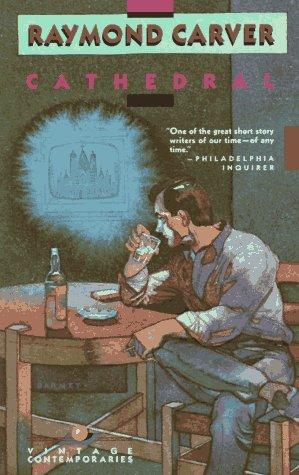
Raymond Carver’s Cathedral might be one of the most simple and beloved American short stories, but Benny is determined to overthink it anyway.
On meta-deception: before we dive in, Benny obsesses over “meta-deception” and feels betrayed by magicians.
On jealousy: is it OK for your wife to write intimate poetry about another man tenderly stroking her face? Also, what does it take to be a good host?
Moment of transcendence: what is the narrator transformed by drawing the cathedral, or is this just an over-interpreted moment in American fiction? We talk about sincerity, empathy, and seeing other people.
benny mad at magicians using magic
Benny: I’m so busy. I have so much school work, and I somehow squeezed in a five-hour video debunking Oz Perlman yesterday. That’s how I’m spending my time. Meta-deception.
Rich: What did you say? Meta-deception?
Benny: These people who go around claiming that they can read your body language and then get your PIN number, or get you to think of your third grade teacher, and then they just pull it out of you with a series of questions, that sort of deal. And he’s just like one of the best at this in the world. And this video was just going through debunking his claims.
Cam: Did he go on Rogan? He said his pin number, and Rogan was at five.
Benny: He said his pin number. Yeah, exactly.
Cam: I mean, that would be pretty hard to fake, but did he just get it from someone?
Benny: He’s done this with a bunch of people. The point of this video was to go through and show you how this stuff’s been done.
Rich: But how does he get Joe Rogan’s pin number and say that it’s from priming or something? Does he say I’m reading your body language, that’s a one and that’s a three? Because that just sounds like obviously fake to me.
Cam: Yeah, I think he says shit like that. He’s like, oh, you started thinking about that, so I know it’s not this number.
Benny: Exactly. I was just watching a clip of him and Chris Williamson where he’s guessing Chris Williamson’s third grade teacher or some friend that he thought of. And he’s like, oh, you paused and smiled when I said that, so that means the last name is hyphenated. Just absolute total bullshit. But Chris is totally bought in — he just thinks this guy is reading his mind, basically.
Rich: I don’t know if I have a problem with that, to be honest. This just sounds like magic, and there’s always misdirection about the manner in which they’re doing it, right? Like they’re always lying to you.
Cam: Yeah, you sound like the skeptics community back when they’re doing talking to ghosts and shit — you’re like, taking advantage of everybody.
Benny: They are taking advantage of people. So for instance, Oz is selling books based on this pseudo skill set that he claims he has, that no one has and that he certainly doesn’t have, of reading body language and stuff, when he’s just using mental magician tricks. So what’s going on is they’ll say things like, yeah, you know, I’m not magic. Of course I’m not magic. What I am is an extremely astute observer of human behavior.
Rich: This is so embarrassing for Kahneman and the behavioral economists in general, that their research field has become like the new ghosts and Ouija boards and talking to the dead.
Benny: Yeah, it’s so funny. It’s true.
Rich: And stuff. So it’s progress of a sort, I guess. It’s funny that you’re so heated about it.
Benny: I’m fired up now. It’s like I have a new cause du jour — I’m gonna go around yelling about meta-deception to people.
Rich: Yeah, the magicians are lying to me in the wrong way. You know that Derren Brown thing about they convince a guy to kill a guy — is that real or fake?
Benny: Now I’m thinking it’s all fake.
Cam: They actually killed the guy, bro.
Benny: It’s as real as it gets, man. That guy’s no longer with us.
Rich: No, I just use it as an example of an informal replication of the Milgram experiments. I might have referenced that in a blog post or maybe even in my book. I hope not — it would be kind of embarrassing if it was just fake.
Benny: See, but this is a great point — this is part of the problem. You have psychologists citing, for instance, some of Oz’s studies as evidence about how the human brain operates. They’re lying about what they’re actually doing. You don’t have to divulge how you’re doing it, but you should be placing the boundaries of expectations around what you’re actually doing, instead of moving it 500 feet to the left and claiming you’re doing something that has absolutely no relation to what you’re doing. We need to have some sort of social contract around it.
Rich: I don’t know, I think that’s on the scientists, and that’s on me for uncritically citing it. It’s a fucking magician — of course you should never believe it.
Benny: But that’s the thing, they claim they’re not magicians. It’s not your fault in some sense, because — I agree, it’s part of the act. I’m saying that’s unethical for it to be part of the act. You guys are less heated than me.
Cam: I somewhat agree with you.
Rich: If I reference Derren Brown then I think it’s not all right and I’m taking advantage of people. And if I didn’t, then it’s fine.
Benny: But if you didn’t, it’s all in good fun.
carver’s plain writing
Cam: So we didn’t have any segue, but today we decided to do another short story. This time, Raymond Carver’s Cathedral, which is the titular story from his 1981 collection. It’s about 10 to 20 pages, longer than last week’s.
Rich: Mine’s eight pages, but anyway.
Cam: Ah, I could have done it in one session. It’s essentially about the man and his wife, and the wife has this friend who’s a blind man who is coming to visit. I just thought, what were our thoughts towards this narrator in that first third of the section? Did we like him?
Benny: I think I couldn’t help but like him because of how he’s written. I enjoyed his sort of inner monologue. I’ll just read maybe the first sentence of one of these paragraphs. He’s talking about the blind man who’s going to come stay with him. He says:
Anyway, this man who’d first enjoyed her favors, the officer to be, he’d been her childhood sweetheart. So, okay. I’m saying that at the end of the summer, she let the blind man run his hands over her face, said goodbye to him, married her childhood etc., who was now a commissioned officer, and she moved away from Seattle.
So, the use of the word “et cetera” embedded in the actual prose there, and the short sentence. I found that very refreshing, and it made me identify with him pretty quickly. He’s just kind of this casual guy trying to sort out his thoughts. It feels like he’s not trying to hide anything from you — he’s just trying to figure it out.
Cam: It’s very non-pretentious. I started thinking about natural phrasing as well, because have you ever seen a transcript of someone really? Or — it’s kind of fun to do with people you know as well. If you listen to your mother-in-law and wife talking or something, and then you read it, it’s barely understandable when you actually read what people say. Sometimes even a little bit postmodern. This felt quite natural, an element of realism, I suppose.
Rich: It’s quite a skill — it’d be quite a skill to write dialogue like this, deceptively simple and clean but with that realism. Clip sentences, sentence fragments, slightly non-grammatical strings, things like that. I reckon it would be quite hard to do.
poetry not the first thing we pick up
Benny: I also liked the line:
I can remember I didn’t think much of the poem. Of course I didn’t tell her that. Maybe I just don’t understand poetry. I admit it’s not the first thing I reach for when I pick up something to read.
Rich: Oh, this is why you like this narrator.
Benny: I identify with this guy.
Rich: Yeah, fellow philistine.
Benny: Exactly.
Cam: The way you phrased it — yeah, it’s probably not the first thing I pick up to read. It was like the last thing I would pick up to read.
tribulations of being a good host
Rich: I also don’t mind his low-level hostility towards the blind man coming to his house, because I find it really relatable. Having an upcoming social obligation that’s maybe not one that I’ve chosen, and I present myself in the world quite differently to my internal monologue, where I’m kind of grumbling to myself. He’s talking about, like, I don’t want a blind man in my house. The friend would be one thing, but being blind just adds this extra little element of not just being a bit unsure about what your obligations will be and how to handle them, and having never encountered someone like that in real life. It just feels like a little bit too hard. But then it’s very endearing that the minute the blind guy Robert actually turns up, he’s like, welcome, let me help you with your suitcase, can I get you a drink. He’s actually a very good host. But there’s this disconnect between what he’s thinking and how he behaves, which I also relate to, because I will still be very polite. I think I’m good at hiding my resentment, mostly, in a situation like this.
Cam: Although I don’t think he hides it from the wife.
Rich: No, no, he doesn’t. There’s a Negro comment.
Benny: He genuinely seems like he’s trying to be nice, and his wife is giving him these side glances. Like, why’d you say that? What a stupid thing to say. Which I’m sure we’ve all experienced, when you’re like, I feel like I’m acting totally normally and fine, and whoever you’re with is just totally annoyed by it.
Cam: It almost reminded me of Larry David sort of comments as well. Like, before the guy arrives he’s like, maybe I could take him bowling. She’s like, what are you — I mean, take him bowling. But like, you’re not sure how much he’s winking at the camera or not. I think it was that — Fyodor and Brothers Karamazov, it’s like the father, when he said he knows he’s been the clown somewhat, and he knows people kind of look down on him a bit, but he can’t help being that clown.
Benny: He can’t stop.
Cam: It’s funny, I find myself doing that a little bit as well. Yeah, you’ve been a bit kind of at your expense almost.
Benny: But you lean into it a bit.
Cam: Yeah, and he had other comments as well. I think that’s what he asked him, like the train ride — it’s kind of small talk, did you enjoy the train ride? And he’s like, which side did you sit on? Because he’s thinking of the view and stuff. And then she gets a bit annoyed with him, and I also related to that.
Rich: Actually it’s not just that — it’s that he thinks about saying something, thinks, oh, I better not say that, like I better not ask what side of the train he sat on to take in the view obviously, and then immediately blurts out what side of the train did you sit on. That is very relatable too, where you’ve quickly thought about it, decided against it, and then for some reason feel compelled to do it anyway. Which happens to me quite often. That Fyodor Pavlovich, somewhat self-destructive clownish impulse.
Cam: And it’s funny in that scene as well, because she immediately gets annoyed at him. She even tells him off in front of the guest. But then the guest is fine, he kind of takes it okay, he just answers, yeah, I sat on the right side of the train. I even related to that a bit. Sometimes I know I’m pushing the button a little bit, but I know it’s going to be fine, and your partner is almost more annoyed, even potentially, than is warranted. But you probably shouldn’t be doing it. It’s sometimes hard to know if it’s okay or not.
Rich: Well, sometimes it is and sometimes it isn’t. And you yourself don’t know as you’re saying it, which is part of the thrill, I think. But there’s some interesting gendered stuff in here that I hadn’t quite thought of until you said that. A lot of what men do when they’re getting to know each other is kind of teasing and making fun of each other. And you don’t want a woman or any other third party to kind of get in the way of that too much, or you can actually kind of kill the process.
Cam: You’re ruining my bit.
Rich: Yeah, I was thinking about this recently because my father-in-law was giving me shit for running my half marathon on a really flat fast course, and he was like, come and do this trail marathon, don’t be a pussy kind of thing. And I was like, oh wow, we’re really growing closer together, our relationship is really blossoming, which I enjoy.
Benny: Yeah, nice.
Rich: I mean, that’s why I like to bully Cam — because I love you, man.
Benny: The ultimate out.
Cam: Just bully the idiot. And speaking of — I mean, the other aspect of this guy, the narrator, is he’s a bit parochial and small-minded, which I kind of didn’t mind. I sort of like the aspects of capturing a normal person in the ’80s. He has a couple of comments about his preconception of what the blind man would be like, and what his marriage and wife would be like. It’s kind of funny the way he’s talking about the blind man — he’s so worried about the blind man coming, and he’s like, I don’t even know about — I just know blind men from TV, that’s the only way I know them. And of course when he comes, he sort of subverts expectations. But I did wonder about that whole “I know people from TV” thing. One thought I had is, the obvious take is like, oh, this guy is so small-minded, he just knows a blind man from TV, and like, that’s obviously wrong and shallow, and then you actually meet them and there’s more to them — how could someone be so parochial? But then I thought, I just reckon a lot of people have their worldviews very shaped by TV. I talk to people sometimes — there’s that TV show Adolescence, an English TV show about a young kid and gender dynamics and violence and stuff. People would talk to me about it — I didn’t see this new show — and like, oh my god, look what England’s like. And I’m like, but this is a show, this is fiction. It’s really shaped their worldview. The same people that might laugh at this guy for saying everything I know about blind people is from TV.
getting reality from tv
Benny: Good show though, Adolescence.
Rich: Oh, I didn’t like it. I thought it was bullshit.
Benny: This is the one that was shot each episode as one continuous take, right? The cinematography is crazy.
Rich: Yeah, but that’s a gimmick, right? That doesn’t need to be the whole time. A couple of scenes, sure, that’d be great, the chase thing.
Benny: That’s meta-deception. You’re like, what’s so bad about an edit?
Rich: Well, exactly. It’s like, shows would be shot like that if that was the way to do it. But it’s not — we have cuts and stuff for a reason.
Cam: It’s a signalling aspect of like, I can’t believe you managed to —
Rich: But they also butchered the incel-y stuff. It was kind of like a show made by people who’d heard about it third-hand or something. They clearly didn’t understand the phenomenon that they were trying to describe, and in a way that kids would find super inauthentic, I reckon. And then they were making kids watch this fake moralizing TV show.
Cam: There’s a Baudrillardian aspect to it, right?
Benny: What do you mean, they’re making kids watch it? In real life, they’re making kids watch it?
Cam: It’s like part of your homework.
Rich: For the reason that Cam’s saying — people are like, oh, this is so important to watch, we’re going to do mandatory viewings of it for all the at-risk young boys who are misogynist killers in waiting kind of thing. Just so embarrassing.
Benny: Okay, but that’s not the show’s fault, right? That’s a cultural problem around taking shows too seriously. But I think you have to analyze the show independently of that.
Cam: But I think it’s part of the same phenomenon. But yeah — so in one sense it’s silly to get your worldview shaped by TV, but in another sense, it’s just true sometimes as well. Fiction sometimes is a way to understand people, to empathize.
Rich: Is this — are you slowly getting around to saying that we should actually read a book by a non-white male author?
Cam: No, because we wouldn’t understand. We’ll get the wrong idea. Well — speaking of, he also has comments around the blind man’s wife. He essentially asks, is she black?
Benny: Oh yeah, Beulah.
Cam: But he says, is she a Negro? Because it’s like the ’90s — I don’t have the cultural context. Is that the same as just asking, are you black, or is it a little bit more tinged?
Benny: Maybe it’s like Beulah —
Cam: It’s sort of adding to him being this parochial guy, that he knows he’s probably annoying his wife by asking that as well, and he does it anyway. She gets a little bit annoyed. I think she even calls — what are you, nuts? Like, what are you, drunk?
Benny: Are you crazy? Have you just flipped or something? She picked up a potato — I saw it hit the floor.
boundaries on friend zones
Rich: In this guy’s defense for a second — if this was a story about a non-blind man and his wife having this long, quite intimate correspondence with another man, don’t you think it’d be kind of patronizing if he wasn’t in some sense resentful or worried about it, just because the guy’s blind, whereas he would be if it was an able-bodied person? You should — it’s kind of big of him to be annoyed about this the same as he would for her being friends with any other heterosexual man, in quite an involved and intimate way. And the other thing I realized is that Beulah, his wife — guess how he met her. She was, same way he met this guy’s wife — she was his assistant, reading stuff for him after the narrator’s wife left that position.
Cam: But — you’re going to the jujitsu instructor and she’s saying don’t worry about it, don’t worry about it, like, he’s got a wife. Then you find out how they met — it was like, yeah, someone else’s girlfriend. Is he doing jujitsu with him as well? But yeah, you’re right. There’s also specific aspects, like, touching someone’s face is probably a no-go for most relationships, but if you’re blind, there’s an obvious reason why a blind person would need to touch someone’s face. One of your friends is touching your wife’s face — a bit different if they were blind or not. But you’re right as well.
Rich: But even that, she found it so moving and interesting that she wrote a poem about it. She tried for a long time to write poetry about this moment. That’s an important moment.
Cam: Yeah, it meant a lot to her.
Rich: So all more reasons why I kind of sympathize with this guy. And I still have that opinion — you do have to be a little bit wary about having a very close friendship with — your wife is very close with a man, your husband is very close with a woman, has a work wife or whatever. It’s not at all crazy to be slightly concerned about that, and have that be a bit of a red flag on your radar.
Cam: And also on your own part. You know, just slightly aware of that, growing friendships as well. Even at the time, sometimes there’s no feelings there, but closeness itself can beget future feelings. So there’s kind of like removing temptations or future scenarios that could happen. Some people have different views on that and just think it should be fine to have opposite-sex friendships.
Rich: Well, it is fine. There are just certain unspoken rules about how to conduct it. You just conduct it a little bit differently than you otherwise would, that’s all.
Cam: Yeah. So the other thing with the narrator’s views on the blind man’s wife — he started wondering about their relationship. This ends up circling back, perhaps, to the ending and realization. The thing he’s focusing on is maybe what an odd relationship that was, and he started feeling bad for him, who had never seen his wife, and then he started feeling bad for the wife, who knew that — yeah, that she’d never been seen.
Benny: I’ve never been seen. Yeah, that’s tough.
Cam: I suppose we’re just talking about what it’d be like to live as a blind person, but to never see — it’s a bit banal saying all of that.
dining in the dark
Benny: I did a dining-in-the-dark experience recently, so it gave me some sympathy.
Rich: Oh, really?
Cam: You did a what, sorry?
Benny: I did a dining-in-the-dark experience. So you go in and they blindfold you and you can’t see any of the food. So I really know what it’s like, basically. What I’m trying to say is, I’m an expert on the blind, of the three of us. It was hard to eat, and you didn’t know what you were getting. It was a three-course meal — appetizer, main and dessert — and you weren’t sure what it was. So I ended up eating about half of it with my hands. Because, I mean, if you think about it, even to use a fork and a knife, you have to know what you’re even aiming for. Aiming itself is hard, but you have to know, is this a knife-able food, a fork-able food? You don’t know what it is. So they’re tapping around on your plate, and everyone there is blindfolded. So you’re not very self-conscious, which is nice — which is a huge departure from obviously how it would be if you were truly blind in, say, a restaurant, when you would be hyper-aware that everyone can see you, you can’t see everyone. And so if you have food on your face or something, then everyone’s going to see it.
Cam: Do I have something on my tooth?
Rich: But did it enhance your tasting, your other senses? Like, did it mean that you could taste more intently, or you lost something from not having the visual element?
Benny: I’m not sure I would say I lost something. I actually found the experience quite enjoyable. I’m not sure if I would go so far as to say it actually enhanced my taste. My reading of that is that that takes a long time. There are these claims that, you know, if you lose your eyesight, then your hearing and your touch start to compensate. I think that’s over time — like the activations from your retinas get taken over in some ways by other neurons. I don’t think that’s an instantaneous, like you close your eyes and all of a sudden you can hear better sort of thing.
Rich: Yeah, but there must be some attentional, immediate thing, right? Where you shut off some senses and you don’t get super senses, but you’re just left with more focus to —
Cam: Suddenly her chewing is just driving you insane, yeah.
Benny: Just driving you crazy. One quite fascinating social by-product was that people felt much less of a need to talk. So they put you at a table of six. I went with a date, and there were six of us in total at the table. Before the blindfolds are on, people are meeting each other for the first time. We’re chatting about what we do and where we come from, etc. Soon as the blindfolds were on, there was a bit of conversation, but not nearly as much. I think it makes sense, right? A big part of feeling like you have to maintain conversation with people is because you feel like they might be looking at you, or you can sort of almost see spatially the awkwardness between you if everyone’s just sort of sheltered and not looking at each other. As soon as that visual element’s gone, I think everyone just sort of relaxed. There was a bit of conversation but nothing forced. You could just sit there in silence if you want, precisely because you didn’t know what anyone else was doing. For all you know, they’re eating right now and they can’t talk anyway, or they’re gone from the table and you don’t even know. So that was actually a very interesting by-product for me.
Rich: Did you wear the big glasses and the cane? Was that considered offensive?
Cam: That’s — you learn that from TV, Rich.
Benny: Only once everyone else’s blindfolds were on — that’s when the cane came out.
Rich: Did you peep at all? Just peep a little bit, just once?
Cam: Just before the set — we’re good.
Benny: I actually ended up closing my eyes because you can’t get a perfect seal. If you really looked down, I could see light coming in from underneath.
Rich: Oh, the room’s not dark.
Benny: No, it’s a bit dimmed, but the servers have to walk around and give you food and clean up and grab your plate and stuff, so they need to be able to see.
Rich: The servers can see.
Benny: Yep.
Cam: That would be funny — it’s like a Monty Python sketch, is everyone blind? Like the silly walks. But yeah — so we’re in the blindfold. I could imagine, you expected the blind man — you would be expecting the glasses, wouldn’t you? And I can imagine him coming, he doesn’t have them, and sort of thinking about that. Not quite Larry David asking about it.
Benny: Yeah, leave your glasses at home.
Cam: Should I grab the glasses?
Rich: Some of his expectations I didn’t quite understand. Like, he was surprised that he had a beard. He’s like, this blind man — he was wearing a full beard. A beard on a blind man? Too much, I say.
Cam: Yeah, that was weird. If anything, maybe you kind of expect that, because it’d be a bit tougher to shave, right?
Benny: Yeah, less work, right? Totally.
Cam: Anyway, so they come in, they have a long dinner, where they don’t say a word to each other and they just eat. It was a bit odd. But, you know — Benny, where you were saying why, maybe — they just seem to be really hungry.
Benny: Like all of a sudden, all three of them are famished.
Cam: Yeah.
Benny: That was super bizarre. And just hammering drinks, too — just one after the other.
Rich: I like that scene, though. He says:
We dug in. We ate everything there was to eat on the table. We ate like there was no tomorrow. We didn’t talk. We ate. We scarfed. We grazed that table. We were into serious eating.
For some reason I love that phrase, “we were into serious eating.”
Benny: Yeah, that’s a great line.
Rich: And he starts admiring the blind man here. He watched with admiration as he used his knife and fork, right away located his food, knew just where everything was.
Cam: I imagine that you would. Then they go into the lounge and chat, and he eventually puts on TV, which — I don’t know, it’s like maybe a little bit rude. But again, I think it goes back to the thing — he’s like, well, you know, he might like it. I’m just sort of making him feel at home. Just chuck the TV on in the middle of his wife and the wife’s friend talking.
winding down for the night
Benny: I mean, to be honest, sometimes moves like that are actually the most comfortable for both people, but no one wants to bring it up. If you’re in someone’s house and you’re the guest, it can be hard if you feel like now you’re supposed to maintain conversation the whole time. Some part of you just wants them to do their normal routine, and you’ll just hang out and chat a bit. Let them live your life, because it brings the pressure off of you as well as the guest, if you feel like you’re not getting in their way. But it’s one of these unspoken social rules that you’re not really supposed to do that.
Rich: I think it’s fairly late now too. They’ve had dinner, they’ve had two or three more drinks, Robert and his wife have been updating each other on the last 10 years. So I’m guessing it’s like, everyone’s reasonably tired, and probably a lull in the conversation.
Benny: Yeah, the wife starts to pass out, right?
describing cathedrals
Cam: Yeah, but she changes to her pyjamas, which at one point — I think he noticed the robe sort of off her leg, and he’s like, well, actually it’s probably fine. But yeah, so then on TV it’s a documentary type thing, where it’s looking at cathedrals. The narrator first asks if the blind man knows about cathedrals, and he does, but then he kind of realizes, like, well, you know, I’ve never really seen one I suppose. Can you describe it to me? And he tries describing it. I think he meant to take away that it doesn’t describe it that well. But then I thought, you know, it’s a pretty hard thing to describe. I’m not sure if I could describe it that well. So maybe the point is that no one can really — you can’t substitute describing it for seeing it.
Rich: I see why you empathize with this character, Cam. Is it about the difficulty of describing things, or is it about low verbal acuity?
Cam: Well, okay, I thought about you guys. When we were talking earlier, Richard, I was like, I don’t know if I have much to say, and I was like, it’s very on theme. And then Benny’s reading fucking Reddit threads and shit, and I’m like — don’t read a Reddit thread about the story. It was like the narrator trying to describe the cathedral via its infrastructure and stuff.
Benny: They were also useless. I’m just now reading the part where he tries to describe the cathedral verbally. I’m just reading it in Cam’s voice:
They’re really big, I said. They’re massive. They’re built of stone. Marble too, sometimes. In those olden days, when they built cathedrals, men wanted to be close to God. In those olden days, God was an important part of everyone’s life. You could tell this from their cathedral building. I’m sorry, I said. But it looks like that’s the best I can do for you. I’m just no good at it.
Rich: Should have thrown an “anh” on the end there to get the Cam voice. Marble and —
Benny: Yeah.
Rich: I did have the thought that this is Raymond Carver attempting to answer the question, or addressing the maxim that, there are cathedrals everywhere for those with the eyes to see — and then being like, but what about for those who don’t have the eyes to see?
Cam: I didn’t make that — I didn’t think of that Jordan Peterson quote. Yeah, that’s a good one.
Rich: Wait — Jordan — that’s not a Jordan Peterson quote, is it?
Cam: Yeah, there’s even a meme around — oh, I can’t believe something so poetic like that is Jordan Peterson talking about a fucking water bottle on a plane.
Rich: Wait — are you serious? Did that actually originate from Jordan Peterson?
Cam: Like, I believe so. He’s just talking about a water bottle or something. It’s like this throwaway tweet.
Rich: Wow, I love Jordan Peterson again. I’m back in.
Benny: That’s a good line.
Cam: That’s a great line.
Rich: I thought that was like some ancient wisdom from Saint Augustine or something. I don’t know. Wow. Are we going to do a real-time fact check, or should we let it lie? Jordan Peterson needed a win, so I’ll let him have it. But Carver was not responding to that — the timeline does not work.
Cam: Don’t fact-check me on that, Benny. Self-fact-check. The choice of cathedral itself, I think, is obviously important in both phrases. In this way that is hard to describe without sounding cliché or banal around the beauty or the sacredness of a cathedral, and what it can mean to people. One of my takeaways from this story was: cliché, when sincere, even though it sounds corny, is good actually. It’s kind of the Wallace-ian theme.
Benny: So okay, so at the end, he has this transformative experience. He’s seeing, quote unquote, this cathedral for the first time, you know, he’s embodied in this experience. But it’s really unclear to me at the end of the day what he’s learning or even what he’s really experiencing.
Rich: Well, we haven’t described that yet, right? So we better say what happens.
Benny: Yeah, I know, but I’m just trying to speed us up here. I was kidding.
Cam: Yeah, well, it fails to describe it. It seems to be failing to describe it, and then the blind man suggests, why don’t you draw it, draw it with me, so I can sort of follow along with the drawing, and see the drawing in a sense. Which, like — kind of not the point, but have you guys ever done that exercise where you draw on someone’s back, and you have to guess what they’re drawing? Or you write on someone’s back and you have to guess the phrase. It’s often quite hard. I did just wonder, would it even work like that? I’m not even sure if you would see the drawing in the same way.
Rich: But that might be his extra-developed tactile senses, right? Spatial.
Cam: I suppose a blind person would know. I just wondered, would that even work? Was that a non-blind person’s take of something that works? Anyway, not the point.
Rich: I remember doing it in high school, and it was quite easy, because that would always be like a penis, or “you’re gay” or something.
Cam: Oh yeah, yeah. It’s like one of three things. Like, I think we said that in Mapping the Territory — you either draw military, like guns, or dicks.
Rich: We had these science textbooks in year 11 science class, and they’d been passed down over the years, and every single beaker or anything the slightest bit phallic-looking was transformed into a cock and balls. Our English teacher was this really lovely guy, this English chap, and he would methodically twink out all of the cocks and balls and try and restore them. And then when we found a new one, he’d be like, well, you can never twink out all of the penises or something. Just engaged in this endless quest, this very philosophically —
Cam: Updated mythicist. Yeah, I’m just trying to white out graffiti penises in textbooks.
Benny: Sisyphean battle.
Rich: You just imagine — you’re just constantly teaching a flood of 14-year-old boys, and they never mature year after year.
Cam: That’s like the marking that teachers complain about at the end of the day. It’s just using white-out on everyone’s homework. It’s just taking out unpaid work for the teachers.
Rich: Do you know what “twink” is, Benny? Or I guess Americans call it something else.
Cam: Well, I think it’s a New Zealand term — they call it whiteout, I think. So that could be confusing.
Rich: Yeah, white-out.
Cam: My partner did that at work, she mentioned, and everyone’s like, what? Over in Australia they’ve got another one that’s like “thongs,” not too much better, which they refer to the sandal type things.
Benny: Yeah. I was associating “twink” with a different thing. I think the English do that too, right? The thongs.
Cam: Nah, I don’t think so. Anyway — that’s kind of the setup. He’s drawing, and then the blind man says close your eyes. The narrator closes his eyes, and there’s kind of this line where he feels sort of transcended somewhat and not really in his body. I think the exact phrase — I didn’t feel like I was inside, he said. I knew I was inside the house, I didn’t feel like I was inside anything. He’s kind of with the cathedrals at some level of mindfulness. We’ve just — he’s a kind of quotidian guy, who you know, making banter comments and having his drink and his weed and watching TV. So what did you take away?
on gaining empathy
Rich: I mean, the basic-level reading is that he’s just having the experience of what it’s like to be blind. So he’s gone from being totally ignorant and kind of hostile — not hostile, but just that natural slight aversion towards the other that everyone has, right — and then he’s ended the story by having a direct first-person experience of it, facilitated by a blind man. The blind man says like, I bet you never expected to find yourself doing something like this in your life, right? And he gets to experience what it’s like. Then the second layer is — I think he is quite inarticulate, and he says like, oh boy, that was really something, and that’s how the story ends. He’s struggling to convey what we assume is genuinely like a very transcendent moment to us the reader, or to whoever he’s telling this story to, in the same way that it’s hard for him to communicate or it’s hard for anyone to communicate what a cathedral looks like to someone who can’t look at anything. So yeah, again, the Wallace-ian fixation on the difficulty of letting anyone else share your subjective experience of the world. This is just a more exaggerated version of it, where someone is just literally missing a sense that everyone else, or almost everyone else, happens to have. But that’s not actually different to the condition that we are all in fundamentally, right?
Cam: Yeah, I could imagine this being a vignette or a snippet in Infinite Jest, actually. It fits with the theme that I think we kind of concept-handled it as the communication problem. I feel a bit stupid, but I didn’t really even think about, yeah, he’s empathizing with what it’s like to be blind. I took it more like, this guy was struggling to connect — there’s this kind of feeling of maybe isolation with others. And maybe it’s just that I’m so influenced by the Wallace and Infinite Jest thing, where everyone’s kind of, you know, every man is his island, every man’s in their own cage and you can’t communicate. But there potentially are ways to escape that, or to communicate, and perhaps it’s things like religion, or fiction, or love, friendship. And those are hard to articulate themselves. This experience in a cathedral is one of them. It’s hard to describe a cathedral to a blind person, but it’s hard to just state what’s special about a cathedral.
what we get from cathedrals
Rich: Have you guys been to any good cathedrals?
Cam: You know, when I was a bit younger, I feel like I was doing the tourist thing, tick them off. I don’t think I got what I needed. Well — okay, maybe it’s actually this. It’s hard to describe what’s sacred and special about the cathedral, for someone that is currently not religious or spiritual or has felt a certain way about things. I probably had this view back when I viewed cathedrals — well, you know, it is quite nice architecture, but I suppose I didn’t care too much about it.
Benny: Some stones, some marble, a little bit of stained glass.
Cam: Yeah. I mean, the blind man asks if the guy’s religious. What do you guys feel from cathedrals? Do you feel anything? Do you have eyes to see?
Rich: I think I mostly admire them architecturally and visually, and I don’t feel a deep sense of spirituality. But I like sitting in them, I like sitting in cool old churches in general. I guess for me, my values are more human growth and human endeavor, and that’s something that is reflected in every feature and every block of stone and so on as well, right? So I’m probably bathing in it for slightly different reasons than a religious person is. But to me, my reasons are just as good. Like, the level of cooperation that humans had to get to in order to build cathedrals is incredible. And that’s good enough for me, I think. They even mention it in the story — they’re building them over hundreds of years, such that any given person who works on the cathedral probably won’t ever see it completed. Most of them won’t even see it completed. So, building things that persist beyond your own lifespan — it’s nice. And they’re just visually wonderful. St. Paul’s Cathedral in London is the only really impressive cathedral that I’ve probably been to, which is more domey than spirey. But I’d love to go visit some of those awesome Italian cathedrals. So Benny, you might have seen a bit more Europe or France — like the Notre Dame.
Benny: Yeah, I think the best ones I’ve seen are in France, actually. I haven’t done much cathedral spotting in Rome, but France has got some amazing cathedrals, obviously. But yeah, for me, it’s probably roughly similar to Rich. There is a sense of awe, but it’s not awe at some god-like spiritual presence or something. It’s awe just at the building itself, and at the architecture — how long it took to organize fleets of people, to sacrifice a lot of their lives to build this thing.
Cam: I think that’s part of why the Jordan Peterson quote, again, don’t fact-check me, Benny — it’s so good. You can see cathedrals in a water bottle manufacturing system, or what it would be like.
Rich: Yeah, it’s funny — I can’t believe that’s from Jordan Peterson. I think it’s a genuinely profound and wonderful quote, and I think about it often.
Cam: Just before the benzos, maybe.
on still being a good host
Rich: Something where I part ways with the narrator a little bit — and I admire the narrator, and I think he is not a bad guy at all — is that, at this point in the evening, his wife’s asleep, it’s late, they’ve smoked a joint together, which we didn’t mention, and then the blind man goes — well, first of all, you said that the blind man asked him to describe the cathedral, but I don’t think he did. He volunteered it. He wanted to make the connection. He was trying to build a bridge between them. And then the blind man said, hey, let’s go get some paper and pen, let’s draw it together. There’s lots of outs for the guy here. If I put myself in his shoes at this point, I’m high, I’m probably a little bit in my head, and not exactly paranoid but not feeling like holding hands with a strange man. I’d probably be like, oh man, you know what, I’m so tired, I think I’m gonna turn in, kind of thing. It’d be so easy to just not do arts and crafts hour together.
Cam: You could not find the paper.
Rich: Yeah, exactly. And he just — like, this is the moment of sincerity or something, where he — yeah, he even can’t find paper, he has to use a paper grocery bag. He’s getting inventive in service of making this happen. And then he does it, and he doesn’t pull away from it or cringe away from it, in a way that I worry that I probably would, and miss out on having this transcendent moment. So I thought that was pretty cool.
Cam: Yeah, no, that’s cool. I just imagine now, drawing on a paper bag — I find myself thinking, a plastic bag or something, this is very hard to do, the drawing. I’m gonna imagine — I’m not sure if you guys have seen those memes before, it’s like, one of the first ones, hedgehog cake or something — it’s like what you see in your mind, what you want to make, and reality. You make a really bad cake. But I’m just imagining this really transcendent — his eyes are closed, he’s with the cathedral, he’s out of time. He opens his eyes, and it’s just a really bad drawing —
Rich: Yeah, just scribbles.
Cam: You know, sort of two of you. Just absolute mess. You can kind of make out a house.
Rich: Totally. It’s almost a comic ending I think, for that reason, because the blind guy says like, take a look, what do you think? And then the narrator keeps his eyes closed, and he’s saying, it was really something. And then it’s this beautiful moment and then the story ends. But you know that the next immediate moment is him opening his eyes and seeing that he’s just scribbled — he’s just drawn absolute crap.
Cam: He’s just drawing from a TV.
Benny: He drew on the table. He missed the bag completely.
Rich: Or even the next morning, when he’s sober and not high anymore, and he comes down and —
Benny: He had to deal with a wooden table covered in that.
Rich: He just sees this brown paper bag with just random scribbles all over it, and you can imagine feeling like, oh —
Benny: He’s like, what the fuck is that?
Cam: Childlike drawing.
Rich: Yeah, it’s not exactly —
Benny: So much for the transcendent experience.
Cam: But which does capture an aspect of transcendent experiences sort of after the fact.
Benny: It’s true, yeah. The fact that it seems mundane after the fact.
Rich: But sometimes you feel cringe about it. You feel like it wasn’t a transcendent moment, I was just high. Hopefully that wouldn’t be the case here, but it might be — you might feel embarrassed about it after the fact.
benny still not getting it
Benny: What do you guys make of that nearly final line of:
My eyes were still closed. I was in my house. I knew that, but I didn’t feel like I was inside anything.
Cam: This is in the sort of mindful sense — you know, people talk about feeling like you’ve lost your head from meditating, or riding a wave or something like that. He was one with the universe almost. That was my takeaway from it. How about you? Was that when I lost you? I’m sorry, I lost you — I’ve not read it.
Benny: That’s when I realized I was too stupid for this story, I think. That line right there. It’s funny, because I really want to like it and I really like the writing and I enjoyed reading it. But I feel like I just haven’t landed on a good thesis of what really happened at the end.
Cam: We haven’t convinced you?
Benny: Maybe you’re right. Maybe it’s just that. That’s true. I could re-read it with my eyes closed, maybe.
Cam: I mean, the good thing about short stories is you can re-read them, right? You could re-read it tonight.
Rich: It’s a chunky eight pages.
Benny: Might help.
Rich: So, Benny, you didn’t like the story? You don’t like the story?
Benny: No, I did — like I said, I really enjoyed reading it. I just couldn’t articulate why. I just feel like I’m not doing it justice somehow. I feel like there’s a thesis there that I’m not landing on.
Cam: But are you thinking we haven’t done it justice?
Rich: It seems like good enough, isn’t it, to unlocking it.
Benny: Somehow. Just shut your eyes, baby, and imagine whatever you want to imagine. Are you inside your house right now?
Cam: Just listen to us talk. Just shut your eyes.
Benny: Yeah, no, I mean, you guys are onto something I think. But —
Rich: Don’t make me do the gay interpretation of this story, which I’ve shown remarkable restraint in holding back from.
Benny: It’s coming. Seriously, it’s there for the taking. Especially when the wife says, what’s going on? Robert, what are you doing? What’s going on?
Rich: Baby, we’re just drawing cathedrals.
Cam: It’s definitely good for a second. One other part — I’m not sure if it’s related to what I said already, but he was quite — I’m not sure if prejudiced is the right word — but he was quite judgmental on the blind man’s relationship with the wife, and just how maybe inadequate that would have felt, and how the blind man can’t see her, and she probably never felt seen. But as a reader, we’re kind of noticing — like, is this guy seeing his wife? Is this guy seeing anybody? Because at one point when he’s complaining, she’s that whole thing, she’s like, I would put effort in, if your friend was coming. He’s like, well, I don’t have any blind friends. But then she’s like, you don’t have any friends. So he seems like kind of an isolated guy. And then you kind of think, but he’s judging this blind man for not seeing — oh, well actually, he’s the one that can’t see others. And then at the end, he kind of realizes.
Rich: He was the blind man all along.
Cam: Yeah. The clichés can be good — when you state them out, they’re not, but you know, you read them in a story.
Rich: Yeah, that’s why the story is so good. It’s not a deep puzzle story. I think you just read it, and it’s pretty easy to get the message, and it’s a nice message, and you probably just read a bunch more stories in the collection, kind of thing. It’s nice.
Benny: Sure, yeah. I agree, it’s a nice story. Maybe let me ask you this, just a final question, Cam, before you go — how would it have changed things if it wasn’t a cathedral? Say if it was like a lake that he was drawing.
Cam: I think the fact that the cathedral is important — it’s kind of invoking the sacredness or something. I think it would still be there. It would probably still work if it was just something else. But the fact is, the cathedral — there’s this religious element to it as well. He’s asked earlier if he’s religious, and he says, maybe. There’s kind of a difference of religion and spirituality. Maybe you don’t need religion to achieve spirituality, but it is a very useful vehicle to achieve spirituality, I think, for most people. So one aspect of religiosity, I think, is spirituality. So I think there’s that aspect there. And yeah, maybe you can get that from a tree, especially if you’re high on acid or something. Maybe it doesn’t hit as hard as a cathedral.
Rich: I think it has to be a human-made thing for the reasons that we talked about — cooperation and connection and people building things together and stuff. He says you can’t — it’s not a church without people, when he asks him to add some people in. You couldn’t be like, it’s not a lake without droplets of water or something. It doesn’t really hit as hard. So I think it’s pretty obvious why it’s a cathedral.
Benny: Got some black swans.
Benny: All right. Interesting.
Cam: All right, what are we reading next, Rich?
next book announcement
Rich: Okay, I’ve decided we’re gonna do George Eliot’s Middlemarch, since Benny said he wanted a big summer book. T.S. Eliot’s cousin — yeah, apparently sheilas can write books too.
Cam: Who’s he? Haven’t heard of him as an author.
Rich: So I thought about it a lot. Apparently she’s described as the Tolstoy of the English language, which is huge. I’m sold on that alone.
Benny: Wow.
Cam: Speaking of huge —
Rich: It is a big book. I think it’s sort of Anna Karenina-like in its scope and size. So probably looking at at least three parts. I think it’s about seven or eight hundred pages. We’ve got a three week break, so we’ve got three weeks of reading to do, to attack a pretty solid chunk of it.
Benny: I’m excited.
Cam: Sounds good.
Benny: Cool. All right, we’ll see you guys in three weeks, I guess.
Cam: Don’t forget to email us — future listener mail at do-you-even-lit@gmail.com. You spelt just the letter “u,” so D-O-U-even-lit. We always look forward to hearing from you.
Benny: All right, over and out.
Rich: See you later.
Cam: See ya.