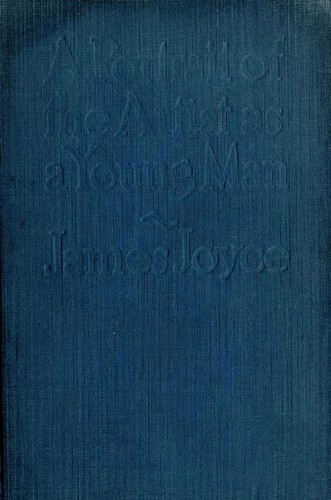
This week we’re reading James Joyce’s semi-autobiographical novel A Portrait of the Artist as a Young Man, published in 1916.
Moments of adolescent significance: on heated dinner-time conversations, a child’s keen sense of injustice, the fear of burning in Hellfire, contemplating eternity, sexual guilt, and teenage rebellion. Which did we relate to the most?
Theory of aesthetics: why are evo psych explanations distasteful? Do Aquinas’ three criteria give us an objective description of art? How about Stephen’s ‘impelled action’ theory? Can we tell propaganda, pornography and sermonising apart from the real deal? Does Joyce’s novel kinda fail by its own lights?
Overall vibes: What did we think of the prose style evolving in line with Stephen’s maturation? Is Joyce fully sincere here or kinda making fun of himself? Is Stephen Dedalus a romantic hero or a teenage blowhard? Dare we tackle Ulysses or Finnegan’s Wake?
intro
Rich: Question for you guys — are you aware of James Joyce’s fart fetish?
Rich: I can tell by your expressions that the answer is no. I thought I hadn’t read James Joyce before, and then I remembered these quotes that do the rounds on the internet quite often, where he writes these incredibly filthy letters to his lover, and they’re absolutely disgusting. You can’t — I can’t even read them out, but a lot of them have to do with farts, so I’ll read out one bit which is actually safe for the podcast, I think. “I would know Nora’s fart anywhere. I think I could pick hers out in a room full of farting women. It’s a rather girlish noise, not like the wet windy fart which I imagine fat wives have. It is sudden and dry and dirty, like what a bold girl would let off in fun in a school dormitory at night. I hope Nora will let off no end of her farts in my face so that I may know their smell also.” This kind of affected my reading of the book, because I remembered that and I couldn’t separate it out. In the back of my mind I’m trying — it’s trying to be like a serious work of literature.
Benny: Oh my god. Alright, I have to go back and reread the entire book now with this knowledge.
Benny: Death of the author. Death of the flatulence was not on the table.
Cam: You’re like, wait a minute, I love hell now. This smells good.
Rich: Well, there were bits where he was talking about the stench, and I think there’s some freaky monsters that drop turds everywhere, and I was like, is he — this does actually change the — separate the fart from the artist. Um, but yeah, it reminded me — have you seen that headline in the New York Times? I haven’t read the article, but it’s like, “we should know less about each other.”
Cam: I’ve heard that phrase before, within a relationship.
Rich: Yeah, I keep thinking about it. I’m like, yeah, we should know less about each other. They did him so dirty by publishing these letters. They published them in like a collection of James Joyce’s letters, and they’re fucking disgusting.
Benny: I wonder if the editor just didn’t even read through all the letters. He was just like, oh yeah, the collected writings of James Joyce, perfect, I’ll just put it out there, and then boom.
Rich: It’s so brutal, man. I hope at least they must have published them posthumously.
Cam: So wait, are you telling me that girls fart? That’s the great mystery.
Benny: Not any girls you’ve dated for sure.
Rich: Anyway, so people were like porn-brained and into fart fetishes and stuff 100 years ago. So he really was like going to hell, basically, you know.
Cam: He’s really torn up about it. It’s spinning.
Rich: Yeah, I mean, when you read that — oh, we’re getting ahead of ourselves — but you know, a lot of the book is about his intense guilt and shame around sex. And when you read that, you’re like, oh, it’s this young virginal man, it’s probably just normal stuff about thinking a woman’s body is dirty or something. But then you’re like, oh no no, actually, you should be ashamed of those thoughts.
Cam: The Catholic Church is a bit tough — understand the guilt you feel, you hear what it’s about.
Rich: Anyway, we’re reading James Joyce, A Portrait of the Artist as a Young Man, which was published in 1916. It’s Joyce’s first novel, looking at his childhood and early adolescence in sort of basically autofiction — fictionalised memoir — experimenting with all kinds of interesting literary forms and covering his rejection of the Catholic Church, of Ireland and Irish nationalism and various other structures, and his becoming an artist. It’s split into five different sections. Cam, do you want to take us through the first one or two?
Cam: Yeah, so the whole book kind of spans his very early infancy almost to a young adult, and the first two chapters are him as a child and then a teenager or early teenager at boarding school. The main character is Stephen Dedalus. And in a nice Irish name like Seamus or something, we get this odd Dedalus last name. So yeah, Benny, were you happy when you first saw the name Dedalus, with all your Greek mythology learning?
Benny: Yeah, that’s a good point. Basically, Daedalus and Telemachus out on a stroll sniffing farts together — that brought me a lot of joy.
Rich: So who is Daedalus? Flew too close to the sun, is that him? No, or is that Icarus?
Cam: That was Icarus, his son.
Benny: I don’t think Daedalus is actually a well-known Greek hero.
Cam: Oh, he is now. No, I think he’s really — he’s the master of crafts and stuff.
Rich: Oh yeah, maybe he built the labyrinth for the Minotaur.
Cam: Built the labyrinth, built the wings for Icarus that melted or fell off, right? So he flew too close to the sun — his wings were attached with wax.
Benny: A symbol of wisdom, knowledge, and power.
Cam: So we think it probably signifies him — well, he has this realisation later as an artist. But yeah, an odd name in an early 20th century Irish setting. So it follows him from a young lad, quite literally starting out as a kid, you know, saying funny things like “moo cow” and thinking his mother’s sneezing was giving a “chew,” and follows him through boarding school.
Baby tuckoo and the moocow
Rich: Cow coming down along the road, and this moo cow that was down along the road met a nice little boy named Baby Tuckoo. Like, what was your reaction to that? Because I read this first page and I was like, what the fuck?
Cam: I was in conflict about talking about this because it’s kind of embarrassing, but I read the first few pages and I didn’t know what the fuck was going on. I was just so confused. Maybe the first five or ten pages, I was so confused, and I started thinking I was stupid. And then I got my partner to read it with me. She just — the first few pages, she read it aloud, and I’m sitting there — the whole punchline is meant to be “see what the hell.” And then she just goes, “oh yeah, he’s a kid,” and starts pointing out things about it and understands it. And once I reread the first five pages, it became quite obvious what was going on. But I started going through my own torment around, why can’t I understand things?
Cam: I was certainly very confused and dumbfounded at the start, but he was like a five-year-old. I mean, when you say moo cow, he’s extremely young, right?
Rich: Yeah, this phase doesn’t last too long, because if it lasted too long, it would be hard to get past.
Cam: Yeah. I mean, a quick point on the writing though as well — when you jump in the first few pages, it’s going to be very different when you jump in the middle and jump in the end. Stephen Dedalus the character is grown older, and the language seems to fit that, to sort of match his understanding and sphere of vocabulary, probably.
Rich: That gives me an idea. Has anyone ever written a book that’s really long and that is designed to take the reader along with them as they grow up? Like, you know, targeted at a 10-year-old or a five-year-old, and then —
Cam: Okay, like a 20-year book in writing process? Well, there was a movie kind of like that — Linklater’s Boyhood. He filmed every year for like 15 years.
Rich: I’m thinking of it like catering to the reader’s abilities. Because this is the other way around — it’s like written how Stephen would view the world as a small kid. But maybe Harry Potter — like you read the first one when you’re —
Cam: Harry Potter. You’re winding 35, having kids.
Rich: I could live without that.
Cam: The problem is every Harry Potter fan doesn’t have kids. But sometimes I get that feeling when you get into an artist who’s maybe a similar age to you, and you get into the early work, and it’s at the right — you know, maybe you’re in your early 20s or something and it relates to you there. And then if they’ve evolved, and you evolve, your taste evolves as well and you sort of grow with them.
Benny: Actually, a nerdy — very nerdy — example of this is, maybe, have you guys heard of Christopher Paolini? He wrote this fantasy series. He started writing it when he was about 14, I think. You can tell — the first book is good, but you can tell it’s written by someone who’s quite young. And then he finishes the series maybe in his late 20s or something, and at that point he’s much more of a developed writer, much more of a mature writer, and it comes across. So it’s kind of an interesting experience to read the series.
Cam: No more moo cows.
Rich: Did he get it published like that — you know, the version that he wrote when he was 14?
Benny: He did, yeah. He was kind of hailed as a wunderkind because of that. I think it was published when he was 18 or something, and then it was — I mean, it was good enough that it kind of made the world aware of him.
Rich: It’s great, but it’s also potentially such an albatross around your neck, because I’m embarrassed of everything I’ve ever written, but the first stuff that I wrote was probably when I was about 25. And I can’t imagine if I’d written — my 14-year-old immortalised, my 14-year-old words in print, Jesus Christ. Sorry, I interrupted you. You’re going to chapter two.
Cam: Anyway, sorry — no no, it’s all good. So yeah, is that the boarding school, Clongowes?
Benny: Oh, maybe — sorry, let me just interrupt you once more. Just back to the actual speech. So I think this is called free indirect speech, what Joyce is doing here. And I think he sort of invented this style — I don’t think anyone had done this before him. And what is unique about it is that it’s third — it’s written in the third person, but from the first person’s perspective. So he has all the — like, it’s a third person narrative, but you have all the access to the inner world that a first person narrative would. You know, if you were to walk in a room, Joyce wouldn’t have written, like, “I was hungry,” right? That would be first person. You’d say “he was hungry,” referring to Stephen. But you know that Stephen is hungry. So you can say all of this objectively. Which, I don’t know how interesting this is, but it just kind of made me realise that people need to invent these literary devices. And surely there were reviewers who were annoyed by Joyce’s choice here, but someone had to do this first. And presumably it’s been done lots in the interim.
Cam: Wait — I’m not sure if I followed what you just said. He invented the third person? Surely not.
Benny: No no no. It’s third person basically ventriloquising a first person narrator.
Cam: So is the God’s-eye view never been done before? They’re like “he was hungry” — and he’s correct?
Benny: I think — we should look this up. But I think free indirect speech —
Cam: What did he use to — “he looks hungry”?
Benny: Okay, I guess — oh god, I don’t know how to pronounce his name — Goethe, Goethe.
Rich: Goethe, I think.
Benny: I guess he was — he and Jane Austen, I guess, were the first to do this consistently. So I take back that this was an invention by Joyce. But someone still had to admit — it’s not an obvious thing to do.
Rich: Wait, that is crazy.
Cam: Even that seems like — I just feel like that was part of the novel. But I suppose this is the evolution of the novel. “When Darcy was hungry, though” — oh my god, how do they know?
Rich: That is — my mind is actually blown by this. That this had to be —
Benny: No no, because third person normally has objective knowledge about everything in the world, like both one character’s inner thoughts but also other people’s inner thoughts. But this is third person who’s only in one character’s head.
Rich: I see. And it uses their own idioms and their own ways of thinking.
Benny: Yeah, hence the language changes as he grows up.
Cam: Yeah, Infinite Jest has that a little bit, where you have this omniscient narrator, but it seems to be infused by whatever character is talking about, and it’ll get your language wrong or idioms as well.
Benny: Yeah, that’s a good point, actually.
Rich: Even this other device of making the sophistication of the text match the developmental stage of the narrator — I don’t think I’ve ever seen that before. I’m guessing surely this was the first time, but it’s interesting that in 100 years I actually haven’t even seen that mimicked, so it still came across as original to me. Perhaps because it only works within coming-of-age type stories or something, in which your character has a developmental arc from childhood. It’s still pretty cool, once you get your head around what’s going on.
Cam: I mean, the conceit was a little bit in that sci-fi book, Flowers for Algernon, where he starts off dumb and gets smart. I think it’s like sort of spelling mistakes at the start.
Rich: That’s true. Or in the Ted Chiang story — uh, is that more third-person-y?
Cam: Yeah, maybe.
Rich: No, Flowers for Algernon is a good example.
Cam: Yeah. So at the start we get this kid writing, and then more teenage-type writing. And yeah, he’s at quite a strict Catholic — well, it might be a Jesuit boarding school. I might be mistaken — he goes to two schools. And yeah, there’s bullies, and he’s non-athletic. You can tell he’s a bit of a sensitive soul and a bookworm. There are scenes which I quite liked where he’s sort of eavesdropping almost on adult conversations, not really knowing what they’re about but knowing they’re serious and important and heated.
Cam: There’s not too much plot around here. Events happen — he’s at the school and he gets in trouble unfairly for not doing his work, even though he had a reason why he wasn’t doing his work. And then he goes through puberty during sort of chapter two, and we start getting the inner thoughts and feelings around what that encompasses — first having sexual urges. But he’s had this sort of strict Catholic upbringing, so he has a lot of hang-ups around that. But he eventually sees a prostitute at a pretty young age. I didn’t quite know how old he was, but I think he was below 16, because I think he says he’s 16 later on.
Cam: So, what do you think of these first chapters? I actually quite liked them myself, once I got myself grounded on the moo cows.
Dinner time convos and unjust punishments
Rich: I like what you said about him sort of hearing these adult conversations and knowing that they’re important but not exactly knowing why. And ironically they had that effect on me as well, as an adult, because I just don’t know the subject matter. The one I’m thinking of is, there’s this very intense dinnertime debate about religion. It’s about Catholicism versus Protestantism —
Benny: Versus Protestantism.
Cam: And Irish politics.
Rich: I just know nothing about any of that history, and I’m not particularly interested in doctrinal differences and so on. So it did remind me of being a child, where you can tell that people are angry and upset about something, you don’t necessarily have an opinion on it, and you can’t quite put your finger on why, but you can feel the weight of the discussion.
Rich: And then a lot of stuff in these sections similarly, I just didn’t have the context for. It’s 100 years old for one thing, and it’s in Ireland, so there’s all this slang which I don’t understand — all of these schoolyard banter and insults which I have no idea what they’re talking about. But you pick up the general vibe of it. And also that’s kind of what adolescence is like anyway, because you can’t admit when you don’t know stuff. You have to parrot what the popular kids are doing and just sort of go along to get along. So it sort of worked on me in a way that I don’t know if — maybe even better than it might have worked on the Irish reader from the early 20th century. Anyway, that’s my coat for my ignorance.
Cam: Well, that’s a good point. I think it’s partly intentional, now I think about it — especially the use of slang, or the references that don’t further explain it. There’s this one scene at the boarding school — there’s this odd slang word like “smugging” or something like that, which you kind of infer is like boarding school boys going off, you know, playing soggy biscuit or something, like masturbating or something, but it’s never quite defined. I think it’s still argued to this day of what exactly it meant.
Benny: Soggy biscuit.
Cam: Don’t ask Richard — Richard was the school champ at our school.
Benny: Speaking of slang, that’s something else. I don’t know.
Cam: But you sort of don’t quite know what it is, and that’s kind of the point, I think. He’s this young kid and he knows these boys are getting in trouble for it, and he doesn’t quite know what it is, but he knows it’s something wrong, perhaps. And same with the politics — you don’t quite know what it’s about at this point. So he’s got this family friend, or this aunt called Dante, which is significant. We’ll get Richard — our Dante expert, the soggy biscuit champion, the Dante expert — to talk about it. But she’s like a very pious Catholic, and she’s arguing with Stephen’s dad around — I think Parnell was the Irish leader at the time who one, wanted Irish independence, but two, had this big scandal where he had an affair, which caused his downfall. So young Stephen is witnessing Dante or Mrs. Riordan feel very strongly about how he’s not a good leader because of this and he’s a bad Catholic, and then his dad being more like, well, the bishops should stay out of it. But not really knowing what’s going on amongst these heated religious and political discussions.
Benny: I like that there are these very clear developmental milestones that you see him going through, that you can usually — or at least I was able to sort of map onto my own life. Like what you were saying about becoming aware that there are sort of serious topics around you, being at the dinner table when people are yelling at each other. And then also things kind of like the first time you show a lot of agency and stand up for yourself. There’s this scene where his glasses break for independent reasons, I think, and then he gets scolded unfairly by one of the priests at the school. And then sort of egged on by the other kids, he approaches the rector of the school and complains about this harsh punishment. And the rector sort of agrees with him, says, yeah, sorry, you were unfairly punished, you’re right. And he feels extremely good about this. I think we all have had those moments growing up where you actually sort of take matters into your own hand and show a bit of agency, and things work out. So it’s just cool mapping these kind of little — there are sort of these very unique little scenes all throughout the first three chapters, and it’s cool to sort of map some of that back onto your own life.
Cam: Yes, his indignance was visceral, I remember, around getting in trouble. He just really felt wronged by it, and nervous.
Rich: Yeah, it’s not even about the — because also he doesn’t get scolded, he gets beaten. He gets his —
Benny: Yeah yeah, he gets the strap.
Rich: Yeah, but he’s more upset about having the injustice of it. And that’s a feeling that you know — such a strong sense of injustice you have as a child when the adults won’t listen, or they’re not being fair. I love that scene as well — he’s walking and there’s this turn-off, this passageway that goes to the rector’s office, and he’s like, will I or won’t I? And then he finds himself turning off and he’s like, you know, the die is cast, I have to go through with it and knock on the door. And then the rector is quite funny as well, because he’s just quietly amused, basically. He’s like, yeah, we’re going to have to haul in the priest and tell him off. Yeah, it was great. Also a bit brutal how they — that’s the other weird reminder that the past is a foreign country, of beating children for minor infractions. And this priest’s job, I think, is like — he’s the punishment priest basically, who just wanders from classroom to classroom with some kind of paddle or some kind of —
Cam: He seemed like a sadist.
Benny: Yeah, it was bizarre, meting out justice.
Rich: Bash or something.
Cam: He was called a pandybat or something. And someone — I think Stephen’s dad — called it the turkey, or something, because it leaves you with red skin. So that sounded pretty bad.
Cam: By the way, I think there’s some bobbling or knocking going on with maybe one of the mics. But let’s stop now.
Rich: What are you doing with that other hand down there, Benny?
Benny: Oh shit. I’m meting out justice with my pandybat. I’m getting my pandybat ready.
Rich: Stop playing with your pandybat.
Cam: Off thinking of going to hell.
Benny: I don’t know what’s — it must be me shaking my legs or something. I don’t know what to do with my hands.
Cam: Yeah. So the other big thing — speaking of the other big thing that happens in these sections — is just his sexual awakening and conflict with his Catholic upbringing. He feels really bad about it, that he’s sinning. I related to this less, I think, just because — you know, the past is a foreign country sort of thing. I could imagine someone relating to it, but I just feel like there wasn’t the same kind of taboo around being a 15- or 16-year-old or something and first exploring, like, “oh, this is like the worst, I’m doing the worst thing ever.”
Rich: To get the sense of why he feels that way, we have to talk about chapter three and the vision of hellfire. Because that is going to make you feel — that is going to put the fear of God in you about playing with your pandybat. Like, that’s what we’re missing. I assume you guys both grew up in like secular households, pretty much? Oh, did you? Okay. Did you believe in —
Benny: No, I went to church and stuff as a kid, yeah.
Rich: God and hell and so on?
Benny: Yeah, passively, until — it’s honestly hard to say. I will say, I’m not sure how seriously I took the idea of hell. I can’t remember staying up at night terrified that I’d done something wrong that would land me in hell. What I do remember very vividly is being terrified at the concept of infinity. Right? So you go up to heaven and then you’re there forever. And I would almost — not true panic attacks — but I remember just kind of freaking out intellectually about, like, however long you imagine that to be, you have infinitely longer after that. And kind of being like, I don’t know if I want that. I don’t know if I just want to be up there for all time. And then at some point I dropped — but just the fact that it lasted forever.
Rich: Dude, I knew I was a winner, I knew I was going to heaven, are you kidding me?
Benny: Yeah, you run out of things to do up there, you know. You want to be able to end the game at some point.
Hell and the true nature of eternity
Rich: Yeah yeah, no, that is also scary for sure. But this passage — there must be like 20 or 30 pages, I think — and it’s this priest lecturing on what is the nature of hell. And I don’t know how standard this is, because I didn’t have a Catholic upbringing, but it’s the most terrifying and visceral, incredibly detailed depiction of hell I’ve ever come across. And I actually found it scary. Some tiny part of me was like, I should Pascal’s-wager this sucker, because I really don’t want to go to hell. It didn’t really fully rattle me, but it was a horrible, horrible thing. And then you imagine being a child and being in a society where everyone you trust, every authority figure, everyone around you, all of your family believes in this — to break away from it is a huge act, requires incredible courage and conviction. And I’m guessing that if I was in that environment, I would have just gone along with it like everyone else. But some of the depictions were — it was just sort of almost sense by sense. Like, what can you see in hell? Nothing, because every square inch is filled with compressed bodies, writhing in pain. What can you smell? What can you hear? What extra tortures are the demons doing? What is the nature of infinity? And there’s a good bit, there’s a good riff on trying to spell out exactly what infinite means, which again is something that kids probably wouldn’t initially really get — they just think, oh, it’s a long time. But here he’s —
Rich: Something about a bird pecking a mountain of rock.
Cam: Yeah, for a million years. And still, at the start, it kind of had a beginning of infinity — shouting it that it’s still as much eternity left.
Rich: Yeah, there’s exactly as much by the time it’s shifted one grain of sand at a time, a mountain of rock from — I can’t remember what the exact example was. But just to drill into these kids’ heads. And yeah, it sort of awoken — I don’t know if I have much interesting to say, except it just reawoke the Reddit atheist in me, thinking, for one thing, this is like psychological abuse, to instil this belief in the heads of children, is absolutely wild. And then secondly, just from taking it on its own terms, the punishment is just so incredibly disproportionate to the crime of sinning, right? Like, you do something wrong and you’re punished for eternity in the most ghastly, nightmarish, sickening ways imaginable. And also, like, the exact sequence of events matters — so if you do something bad but you manage to cop up to it in time, you’re fine and you live life with God in heaven for infinity. But if you slightly fuck up, you’re just completely doomed. And it might include even babies and children. It’s just absolutely mind-blowing. And then as I was reading it, I was thinking that. And then they addressed my exact complaint, where the priest is like, “oh, you know, some people of weak conviction might think that this is not fair and it’s out of proportion.” And then he says, like, “God would not be God if he didn’t punish the transgressors,” or something like that. So, just I guess like the Catholic God is a grotesque figure, I think, a horrible God. This is the main cudgel that they beat you with. It’s fucking crazy.
Cam: Yeah, it’s a good question of how common it would have been in a Catholic upbringing to — I mean, everyone knows hell’s bad, but to really be exposed to it and convinced of — how was it? I’d never really thought about it, but he described it as dark as well. He says the fire is as intense and hot as possible, but I think it was pitch black as well, so it was like a lightless fire. And he emphasised the intensity of it, of the suffering and the torture.
Rich: Yeah. Any one torment would be horrifying, right? Like, an isolation chamber where you can’t see anything — that alone would be horrifying. But then you’re also being tortured in every possible way at the same time.
Cam: And then the eternity is kind of a separate thing. So not only is it the most — you know, it sparks the brightest — but it also goes on forever.
Cam: Okay, so that part moved quite quickly for me as well. I just remember being quite taken by it all.
Rich: That was my favourite section of the book, I think. Even though it was shocking, it’s just extremely well written as well.
Benny: And no wonder it had an effect on him. Like, no wonder it changed his behaviour for a while and became this pious observer of Catholicism for a while thereafter.
Cam: So I think the other thing we didn’t mention was — oh no, you did, you said it was autofiction. But you sort of got to assume that these things happened to him, because he went to the boarding school. I think James Joyce himself literally lost his virginity to a prostitute, or at least he used to boast about that, I think. And you’ve got to assume he was pious himself, until he goes through his transformation.
Rich: So basically what happens is he has this realisation that he needs to get right with God. He’s been sneaking around sleeping with prostitutes and getting them to fart in his face or whatever. And he starts becoming incredibly pious and seeks confession and finally confesses all of his sins. And then he becomes so pious that he starts getting groomed by the Jesuits to become a Jesuit. And they give him the choice, basically — like, do you want to join the brotherhood? And this is a huge juncture, another massive possible turning point in his life, which he ultimately rejects. I think I know why, but — is that — do you guys want to add anything to that, the pious chapter?
Benny: I thought it was interesting that one of the motivations for becoming a priest was — there were a few, but one was sort of this element of power. Like, he would be able to hear other people’s confessions and sort of lay judgment on them, represent this powerful figure in the church that can — you know, they’d have communion and stuff, so it’d be like blessing bread is the body of Christ and wine is the blood of Christ and things like that. And he was sort of open about the fact — or I guess the narrator was open about the fact — that that element of power was intoxicating a little bit. And you have to wonder how many priests are just priests for that reason, right? You get to sit in a booth and pass judgment on people, hear how bad, quote unquote, everyone’s been, be looked upon as the ultimate conduit to God. Basically, like, be able to elevate yourself above your fellow man. That’s just one thing from a priest perspective I had never actually considered before.
Cam: Well, I think one of the priests said in the book as well that, like, we’re the most — we have more power than God or Jesus, you know. He probably didn’t mean it literally, but he said even they didn’t have the power to consecrate others, you know, that’s us. And that was one of the appeals for Stephen. And I mean, at this point, Stephen did feel genuinely in love with God, right? He is — he saw God in nature, etc., like, and his senses —
Rich: Yeah, it wasn’t a true — it wasn’t a Pascal’s wager situation, it was an actual come-to-Jesus moment. I guess priests are kind of like rock stars in this environment, where there are no rock stars, but there are these guys who have cool outfits and are doing these cool rituals and getting everyone to chant in unison with them, and who have the power to send you to heaven, basically. And there’s this good bit where he’s fantasising even about the way in which he’s going to wear his robes and how he’s going to do the Eucharist, and the particular manner in which he’ll swing the chain of incense around and stuff. Just the stylistic outward performance bits, where he’s already sort of mentally trying it on in his mind, of how cool he’s going to look — which is kind of funny, and not exactly in line with the purest motivation to become a man of the cloth.
Cam: Add his own flavour to it. But this doesn’t last long, does it? His journey with God.
Epiphany (seeing a hot girl at the beach)
Rich: All he needs to do is see one hot girl at the beach and it all comes undone again.
Benny: It all comes suddenly down. But who among us? Who among us?
Cam: The best — to call a girl “bird,” right?
Rich: Yeah yeah. He goes bird-watching. This is so funny — I don’t know how intentional or not it was, but he goes on a long walk at the beach and he’s processing his future, I suppose, and ruminating on all of this. And he just literally sees a beautiful girl, a hot girl, and just looks at her and has this crazy epiphany. So I’ll just read out a bit of it. “A girl stood before him in midstream, alone and still, gazing out to sea. She seemed like one whom magic had changed into the likeness of a strange and beautiful seabird. Her long slender bare legs were delicate as a crane’s and pure, save where an emerald trail of seaweed had fashioned itself as a sign upon the flesh. He felt his soul was swooning into some new world, fantastic, dim, uncertain, as under sea, traversed by cloudy shapes and beings.” And from this point on, he chooses art. He chooses to become an artist and a scholar and rejects the church. And yeah — am I right that this is the turning point? Am I kind of remembering that correctly?
Cam: Yeah, this is the epiphany. I also grabbed the passage from it as well. “Where was his boyhood now? Where was the soul that had hung back from her destiny, to brood alone upon the shame of her wounds and in her house of squalor and subterfuge to queen it in faded raiments and in wreaths that withered at the touch? Or where was he?” Yeah, so I think this is his decisive break from his former self.
Rich: Yeah, it’s really interesting, because what he’s really trying to do is figure out a way that you can have beauty and art and so on without it being like a base pleasure or a sin or pornography or something like that. And he sees this beautiful girl, and I think the idea is that he can behold her and have this transcendent experience of gazing upon her, but without her being a sexual object of desire and without having to be ashamed and so on. But then on some level you’re like, okay, but you saw a hot girl at the beach, is what happened. And so I don’t know whether it’s meant to be a kind of almost a joke, or —
Cam: Yeah, okay. Like some irony from the reader.
Rich: Either way, it works. And he makes the turn, and then starts to even lay out exact theories of what constitutes the good and beauty, what differentiates art from porn or propaganda and so on, which we can talk about.
Cam: Yeah, let me just quickly though — it just occurred to me now. I didn’t really think about the reading of him as an unreliable narrator, which feels maybe quite obvious now, of him being young. I took him quite seriously, and his ideas and his transformation and his view of self as an artist or as a pious priest. But maybe on the reread, there’s more of an ironic reading or unreliable reading to it as well for these sort of things.
Rich: Yeah, that’s one of my big open questions, because I could see it either way. I thought it was sincere as I was reading it. And then I came to the end and I was reflecting on it. It should be this heroic journey or something. He is doing things — I mean, he’s in this romantic tradition of stepping out alone and rejecting the strictures of the church and family and so on. But he doesn’t actually do anything heroic. He just talks a lot about it, and he hasn’t made good on any of that yet. And it kind of — he is definitely this quite pompous sort of a guy, very self-serious kind of a guy. I don’t know, maybe Joyce is just like that too. But then there’s enough humour in here — like, there’s some quite funny stuff in here — that I have to think that Joyce is kind of a funny guy as well, and that he’s maybe making fun of himself a little bit, or a lot even. I genuinely don’t know — it could be completely sincere, or he could be totally lampooning himself.
Benny: Yeah, I mean, I also don’t doubt that if you’re having concerns or you’re really questioning whether you should go a certain way in life — a way that you’re sort of being pushed and encouraged — I don’t doubt that you can come upon a scene, seeing a girl at the beach or whatever, and that being the tipping point that really changes your mind. Because that’s really what happened here, right? He was sort of questioning whether he should do something, and then he’s on a walk, sees this beautiful girl, realises that he wants to have a life where he’s allowed to talk and write and think about beauty and aesthetics, and that he doesn’t want a life where he has to feel ashamed of doing that. He wants to explore those sorts of themes. It doesn’t seem crazy that something like that could change you from a yes to a no.
Rich: Yeah, I don’t discount the concept of epiphany, let me put it that way. I think that people experience epiphanies, and that it’s usually just the straw that breaks the camel’s back, or something. It’s like the culmination of a lot of thinking that you’ve been doing, or subconscious things that are bubbling around, and then something just makes it clear. And yeah, this could even come in the form of a girl with long bare legs standing at the beach. Totally. It’s just funny that that is the form, given what we know.
Rich: It’s like the most perfect, long drawn-out fart. It’s like an angel’s trumpet.
Benny: Yeah, exactly.
Stephen’s theory of beauty and aesthetics
Cam: Okay, and I mean — so you kind of hinted at it, Rich — but let’s move on to his theory of art, or theory of aesthetics, or theory of beauty, in contrast to things like sermons or porn or others. Do you want to —
Rich: Yeah, so this is in, I think, part five of the book, where he is studying at — wait, what university is he at? Trinity College, is that right?
Benny: Oh, it’s just University College Dublin.
Rich: Okay. Anyway, there’s a lot in this section of intellectual talk between Stephen and his fellow students. And he’s just spelling out — the thesis that he’s working on has to do with aesthetics. And he just spells it out in conversation with one of his friends or frenemies. He first gives us an evo psych explanation of why we might find certain things attractive — talking about women in this case. “Every physical quality admired by men in women is in direct connection with the manifold functions of women for the propagation of the species.” And he says, oh, this is a very dreary explanation, and he dislikes it. “It leads you out of the maze into a new gaudy lecture room, where MacCann, with one hand on The Origin of Species and the other hand on the New Testament, tells you that you admired the great flanks of Venus because you felt that she would bear you burly offspring, and admired her great breasts because you felt that she would give good milk to her children and yours.” Which is great. I didn’t know that this evo psych thinking went back that far, but it’s exactly the kind of things that people talk about today.
Cam: Schopenhauer, who crazily enough even was pre-Darwin, kind of predicted some of the stuff of this is why we’re attracted to the other sex — is for them being a good parent.
Rich: I was interested to see it this early on for sure. And that he’d also not dismissed it, but just didn’t like it, because it’s not very aesthetically appealing. As a theory, it sort of strips something out of it.
Cam: Unweaves the rainbow, as — was it Keats? I can’t remember who said that. But I get it.
Rich: Yeah, but then he goes on to give his actual theory, what he thinks is the save, which is — he’s riffing on Aquinas’s theory of beauty, which is three things are needed: wholeness, harmony, and radiance. That’s the translations that I’ll use from Latin. Wholeness is “a bounding line drawn about the object to be apprehended” — so it’s self-bounded, self-contained against the measurable background of space or time which is not it. So you apprehend it as one thing and you apprehend its wholeness. Harmony is when it has some kind of internal —
Cam: Just quickly, well, just on wholeness — so is that kind of like seeing a piece of art within its whole context, I suppose? Was that your understanding of it? Or was it the opposite?
Rich: Um, almost the opposite.
Cam: Oh okay, I thought it was seeing it in the context. Are you saying just seeing it almost in a vacuum?
Rich: I think it’s just like, basically, reality doesn’t come in discrete packages almost ever, apart from mathematical objects and subatomic particles. So you have to carve it up into single objects, and that that’s like the first condition for something to be beautiful or a work of art — that, like, an apple is an apple, and an apple is not just a diffuse cluster of atoms that sort of blends into the rest of its environment or whatever. Maybe that’s an overly literal interpretation of it.
Cam: No, that’s a nice interpretation of it. So, you know, just point out you have to cut reality at its joint somewhere, and that’s how you get something that you can appreciate and understand.
Rich: Well, so yeah, you have to make the cuts in a way that lends itself to something beautiful, I suppose. Because there are sort of infinite ways you could do it. So part of what it means to have good art is to exercise good judgment, in how you draw the boundaries — drawing nice distinct boundaries around the thing so that it can be contemplated. To be clear, I don’t really sign on to any of this, I’m just trying to figure out a way for it to make sense. And then it has to be harmonious, which I think is about — its internal structure all meshes together nicely. So for that it’s easy to imagine, because you just think of literal harmonics, or harmonious notes within a piece of music, or something like that — that the subcomponents play together in a pleasing way.
Benny: It seems similar — those seem like the same criteria in some sense, right? If you’re carving up the object correctly, somehow you’re seeing it as a whole. But then you’re also cutting it up such that it’s harmonious. It’s hard to see what the difference is there. Like, could you cut it up in a way that it’s whole but not harmonious, or vice versa?
Rich: That’s a good question.
Cam: Isn’t it kind of the forest and trees distinction as well? Like, you can see something as a gestalt, or — hell, even like you take Ulysses itself, or Infinite Jest, something — you kind of see the whole thing, and then you can cut it up and you can see all the different details and how they relate to each other and they’re interconnected. Which feels very Joyce, you know — like, that you can notice all these different layers to it.
Benny: I guess you can — that’s true. So you can correctly separate an object from its surrounding, like identify the object as a whole. But then you have to take a step further and appreciate the inside of the object, or what actually like the interior or the intricacies of the object itself. So fair enough.
Rich: Yeah yeah, you could have a piece of music which is like a bounded, contained thing, but it’s not harmonious or something, right? Which would mean it satisfies one criterion but not the other.
Benny: Yeah, nice.
Rich: And then the third criterion is clarity, or radiance, which I really don’t quite get what this means. Stephen also says it’s rather vague, and Aquinas uses a term which seems to be inexact. “It baffled me for a long time. It would lead you to believe you had in mind symbolism or idealism, the supreme quality of beauty being a light from some other world.” But that is literary talk. So the supreme quality — I think it is like the sublime, the concept of the sublime. “So the quality is felt by the artist when the aesthetic image is first conceived in his imagination. The mind in that mysterious instant shall we liken beautifully to a fading coal.” The instant we’re in that supreme quality of beauty, the clear radiance of the aesthetic image is apprehended luminously. All of this stuff seems to me to be like, not exactly tautological or something, but I have no idea how you would use it as a criterion for objectivity, when it seems perfectly, almost perfectly subjective and to do with someone’s own experience of engaging with a piece of art.
Benny: Yeah. Or maybe just like something more familiar, like you have to be in the right headspace to appreciate something. I’m sure we’ve all listened to the same piece of music, or watched the same movie, or looked at the same painting, but been affected differently by it. And sometimes you couldn’t give a shit, because you’re in a rush, or you’re grumpy or you’re hungry, and it’s hard to appreciate something. But then sometimes you’re more patient and you’re more open to experience, and so then you can actually engage with the work a little more.
Rich: Yeah, but that’s — I mean, maybe that’s not a problem, but that’s something that says that that quality lives in the observer of the artwork, not in the artwork itself. I’m not actually now sure if Dedalus is trying to talk about objective beauty, or if he’s just talking about beauty in general, in which case it’s fine to have the beholder’s share being part of the picture. But that’s — yeah, I like that a lot, and that’s like a very Popperian way of thinking about it, that, you know, all observations are theory-laden, as applied to the world of art. Which is that you are always bringing your own model of the world into the situation whenever you engage with something. And so there’s no innocent eye. There’s no way to be perfectly neutral towards a piece of art. It’s something that Gombrich talks about quite a lot, which is interesting — he’s like one of Popper’s contemporaries, or, like, I think they were friends. He’s like the art critic version of Popper, and he talks about how there’s a thing that you contribute to an artwork that’s not found in the artwork itself, that’s your share that you necessarily contribute. So I guess that works fine for a subjective theory of beauty.
Rich: Yeah, what do you guys think of those three criteria? Does that do anything for you?
Cam: As we were talking about them, I quite liked the first two — you know, parts and parts, first whole. But I mean, was this even the main part of his theory as well? Because didn’t he also have the thing around being arrested or causing stasis?
Rich: Yeah, that was pretty cool. Do you want to explain that?
Cam: Well, I’m a little bit confused — I have some open questions about it. But he talked about aesthetic stasis or being arrested as this kind of spiritual maybe state of pleasure induced by the artwork itself. And he contrasts it with like a kinetic emotion or kinetic art, where it causes a desire in you for something else. So it might be — I don’t know, it might be you see an advertisement of KFC, and that causes you to desire chicken. Or pornography does that — and I think even like the sermon —
Benny: Pornography also encourages you in the kinetic realm. Same effect.
Cam: Yeah, gets rid of all desire afterwards. But I think even with didactic sermons that cause you to loathe things or to love things, or to be moral — which I think would maybe even — think of the sermon about hell earlier in the book, as he viewed as also this kind of kinetic and improper art, which is causing you to want things outside of it. As opposed to what he thinks is a proper piece of art, where it causes this kind of immense spiritual pleasure or beauty from the object itself.
Rich: And you should want to linger with it and stay with it, rather than go do some other thing.
Cam: Yeah.
Rich: Right. So if you see a beautiful nude painting or something, you should want to gaze upon it transcendently, not go jerk off, kind of thing. You know, that’s the kinetic versus static. Which is an interesting idea, but I don’t know if it’s true. I feel like, why shouldn’t art also compel you to take action sometimes? Because his criticism — the things that he considers bad, basically, which is like propaganda of various forms or lust, or — I mean, I don’t actually think he would consider lust bad by the end, but, like, making you, yeah, impelling you to take action, I don’t really quite get why art shouldn’t do both.
Cam: Maybe — well, maybe that’s the thing, at least it has to be both. Maybe a softer version is, it has to kind of stand on itself as well. It has to be good enough to be lost in it and to satisfy you. But things — some other things may still have a kind of instrumental value, and even an aesthetic component to it. But yeah, always — something like porn is kind of like an instrumental thing, as opposed to —
Rich: That’s good, I like that.
Cam: Yeah, nudity in a movie or something. Which, yeah, may also titillate you.
Rich: So you have to be able to admire Venus’s breasts, at the very least, whether or not you jerk off to them later.
Cam: And want the milk. Milky milky, mummy mummy.
Rich: I actually was at the art gallery yesterday, and I was thinking, why I don’t like most art. And a lot of it is like message art, I would say — like, people’s sort of grievances about their personal psychology or their culture or their history or whatever. And you have to read the plaque to have a sense of what they’re trying to do, and the art doesn’t stand on its own very well. Maybe it’s something like that, where what they’re trying to do is to get you mad, or get you to feel the injustice that they went through, or take action to support them or something. And it’s like, but you forgot about the art. You forgot that I should be having some transcendent moment just with the art as well by itself, independent of the type of action that you want me to take from having engaged with your art. Because it is sort of — I wouldn’t call it propaganda, but it has some kind of political ideological elements to it. Whereas the ones that I liked the best were just like good old impressionist, you know, beautiful peasants and sun-dappled light, relaxing on the side of the road or something. And I don’t need to look at the plaque, I don’t need to read anything, it’s just this wonderfully, masterfully composed and executed picture. I don’t need to know who did it, I don’t need to know the history.
Cam: Yeah. I remember Wallace wrote an essay on the biography of Borges, and he was so disappointed with it because he said the author focused on Borges’ personal life so much and how it might relate, you know, his troubles with women. And Wallace was like, this is such a betrayal, because it’s just totally misunderstanding what is great about Borges. And it’s nothing to do with his personal stuff. He’s transcendent around these themes of infinity and stuff. That’s why we’re reading a biography of Borges, is for the work, first and foremost.
Rich: But then pity the poor biographer who’s not allowed to try and draw connections between his personal life and his work, or only draw the —
Cam: Yeah, I’m not sure I fully agree with Wallace on that, because I think it is quite nice to find out what Jane Austen had with her tea in the morning as well, and the colours, how you think about her work. And yeah, it’s the same — I did also wonder around this book, like, if it holds up sort of on itself. Like, is it an important work on itself, or is it because Joyce is so much more famous for Ulysses, right? And this book is kind of a biography as a way to understand the author’s evolution towards that, but also just his life — like, this is heavily biographical. This kind of instrumental purpose of this book, I wondered.
Rich: It’s funny you say that, because I didn’t choose this book on its own merits exactly. I chose it because I know that it’s a stepping stone to Ulysses. And I thought, we’ve read the Odyssey and we’ve read Virginia Woolf and some other modernists, and now we read this, and it’s sort of stepping us towards the actual thing.
Did we like the book?
Rich: I mean, I guess that leads to the question of, did you guys like this book? What did you think, Benny? Did you enjoy this read?
Benny: I enjoyed parts of it. I think, for whatever reason, yeah, it didn’t grab me like I was expecting or hoping. But I did like it as a sequence of somewhat independent little portraits of someone’s life who’s slowly maturing and finding their way in the world and becoming independent and developing their own theories about how one ought to be acting in the world. So yeah, overall I did enjoy it. It was a bit of a slog, I’m going to say, just in terms of the writing style. I really had to pay attention. And I mean, that’s probably just to be expected for a book that was written in 1916 — I think any work that’s over 100 years old is going to take some paying attention to. But I mean — I’m struggling to answer, so — suppose Ulysses had never been published, how famous do you think this book would be, right? My sense is most people do read it precisely for the reason you outlined, Rich, that it’s a stepping stone towards his masterpiece. But it’s still good, it’s still got — I mean, it’s got all these theories of aesthetics, it’s got a lot of cool Irish history in it, it’s got discussions of good and evil and maturation and agency. And so yeah, it hits on a lot of good stuff. But I can’t shake the feeling that it really wouldn’t be held up as a monumental work of the 20th century had Ulysses not come later.
Cam: I wonder if there are any hot takes of this is the best work from people.
Rich: Only one way for us to find out.
Benny: Yeah.
Rich: We’ve got to read them all, boys.
Cam: Well, apparently Dubliners is most accessible.
Rich: Yeah, I’ve got that. I’m going to dip into that at some point. Dubliners was written before this, so I think it’s less formally experimental. And it’s short stories, though. You know, short attention span. What was your overall reaction, Cam?
Cam: Yeah, I mean, I was going to ask you, but I think you can probably guess. I questioned my reading comprehension ability and literacy. I don’t know. I struggled, but, you know, I got things from it as well. And this always happens, but when we talk about it, I see a lot of value in these works. I mean, the hell section moved very quickly for me, and that’s when I really felt the kind of strong writing. But the section after that, I think, with him loving God and stuff, I paused there, I found that tough. And then even the aesthetic beauty stuff — I was going to ask you when we were talking about it — around inserting a philosophy into a character’s mouth, what’s happening pretty directly. I mean, in a meta sense, it did feel like it related to it, because, like, yes, this is this theory of art and aesthetic, and in a book that is meant to be a paragon of that, so you can kind of think of the work itself, whether it succeeds. Yeah, I think maybe it’s the taste thing — I struggle with modernism. But sometimes I think I’m too autistic for a design, with the kind of literary style. I like the start, actually — even though it feels kind of like almost filler or prep for the later stuff, I did quite like the start, from the childhood perspective and being at the boarding schools and the dinner party scene. Potentially it’s my favourite. I mean, I like the hell section as well.
Rich: There’s definitely some Wallacean things of playing around with the form and being goofy and stuff, which I wondered if you would like, because it is a bit distracting of like, look at me, how clever I am. But it’s also, you know, provides some novelty. And I think he goes even harder on that in subsequent work. Like Ulysses is — I don’t know, but each chapter might be written as a totally different type of text, like a review and a journalistic dispatch, and it becomes this pastiche, almost like early signs of postmodern playfulness. It’s not quite as much of it in here, I guess.
Cam: I think it’s potentially designed to be read more than once. And I think I have this general issue, I suppose, with hard works, where you’re just trying to get your bearing in, trying to understand the submarine. I think Nabokov even talked about this — he said it’s hard to fondle the details when you’re just trying to understand the submarine. That’s the wrong lens of art. You really need to kind of know the submarine, know the outline, and then get lost in the details. And so when it’s your first read through a classic, I think there’s that tension a little bit of maybe not getting everything that you can be getting from it.
Rich: Yeah, maybe I’m less scrupulous than you are around trying to figure everything out. I skimmed large parts of this, and just didn’t understand stuff and just kept going. I definitely did not fondle the details.
Cam: You’ve talked about a lot of details, but yeah, carry on.
Rich: Yeah, but I just mean, like, for instance, there’s just large sections of it where I couldn’t follow the conversation. I just didn’t know what they were talking about, especially in that last section at the college where they’re sort of insulting each other and bantering and stuff. And I just don’t understand their banter because of the slang and because of the setting. It’s just kind of impenetrable to me. But I didn’t really try that hard, I just sort of moved on until I got to something I did understand. And then yeah, as you say, like, they dump in those quasi-philosophical theories very explicitly, that you can sort of evaluate, which is fun for me.
Rich: Yeah, I didn’t love this book. I had no problem reading it. I think I read it more from a scholarly point of view, of being like, let’s try to understand James Joyce and this book. And it is useful and fun to do that, but it didn’t have emotional resonance for me. Not because of any deficiency on Joyce’s part — because he is a very good writer — but I think just none of Stephen Dedalus’s problems are very close to my problems, except in kind of shallow ways, of nostalgic ways of feeling what it’s like to be a child and so on. But like, I never had any of these problems with Catholic guilt or breaking free from religion, or like a nationalist movement that I wanted to escape or anything like this. So just to — if you think of like everything about why Stoner was so good for us, I think it is just because we resonate so closely with that character and his development and his choices and so on. Whereas all of this, it’s just yeah, a bit of an alien kind of a mind for me.
Rich: Yeah, I’m glad we read it, but I’m not in a big hurry to reread it. And I do actually want to read Ulysses, or at least try, but also not in a huge hurry to do so. And I think when I do, it probably will be more with a scholarly interest of, like, looking at his formal tricks and stuff. I’m curious to see what other tricks he has up his sleeve. I don’t know if it’ll be like an Infinite Jest type book which really makes you feel strongly things, but who knows. Maybe.
Cam: It’s funny because, I mean, yeah, that struck a chord where I had a scholarly interest of the importance and the influence of it. I also would have struggled, I think, to finish this if I was just reading it myself. I was sort of giving a little of the boys and getting there. And also my partner helped me at points as well — she just joined me for some of it. But which makes me think, I wonder if it kind of failed on its own terms, in terms of art, like in terms of my reading. I got there, and I got value from it for these other reasons, but yeah, that kind of spiritual pleasure and just the artwork itself, I had less of.
Rich: I kept opening it and reading one page and then having to go furiously jack off. So it failed me as well.
Cam: They — need to find out what that word was. Yeah.
Rich: Alright. To relieve it there, anyone else got something to add?
Benny: No.
Rich: Be any next book announcement? Ulysses, or are we going straight to Finnegan’s Wake?
Benny: Yeah, can you imagine I just drop Ulysses on you right now?
Cam: Oh, I forgot. I’m trying to get to work, man. Holy shit.
Benny: Oh man. Now I’m kind of tempted, to be honest, that would be something. No, so yeah, we talked about it actually in the group chat, so I think you guys know what’s coming, but we’re going to do Norwegian Wood by Murakami. Fairly short, one of his more popular ones, one of the ones that people typically cite. Yeah, shortish — I think it’s like 250 pages, 300, something like that.
Rich: And do we know what it’s about, roughly?
Benny: Yeah, it’s about some school kids in Japan, or growing up in Japan. I think it’s a bit of a bildungsroman.
Cam: A nostalgic story of loss — looks back on his days as a college student living in Tokyo. Which, for the listeners, I am going to Tokyo.
Benny: Yeah, so this is in honour of Cam’s trip, even though he said don’t pick a book.
Cam: Well, I’m a bit Japaned out, I’ve been getting a bit of fucking stress.
Benny: Don’t pick a Japanese novel — I said fuck that.
Rich: What do you mean you’re Japaned out? You haven’t even set foot on the soil yet.
Cam: I know, that’s why I’m worried. I’m burning out before I fucking go there. It’s been a week trying to find a hotel and a way to stay in Tokyo.
Rich: Got mercury poisoning from all the sushi you’ve been eating.
Cam: Yeah.
Rich: Alright.
Benny: Any listener mail or anything? We’re good to go.
Rich: I don’t think so. I didn’t check, but we’ll leave it till next time. Write into us if you have any comments on James Joyce or any other episode — always keen to go back and revisit things from the past. Drop us a line, doyouevenlit@gmail.com, just the letter U, not the word “you.” And yeah, give us your feedback and we’ll read it out on air. Otherwise, see you next time. Bye.