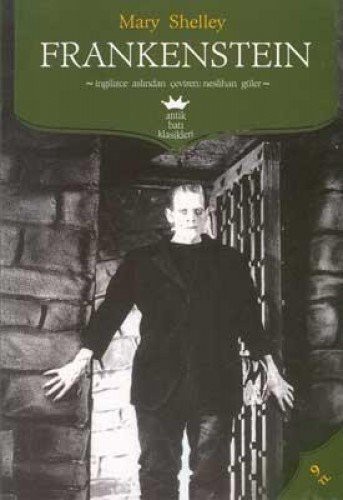
Wrapping up Mary Shelley’s Frankenstein, which we all loved.
Nature vs nurture: the monster as proto-incel, to what extent do we feel sympathy for him, should Victor have made him a bride, self-loathing and recrimination, and whether hot people are actually more virtuous than ugly people.
Also: why rousseau was a giant piece of shit, the monster as Byronic hero, importance of pariahs and moral entrepreneurs, pitbull discourse, etc
Just grave robber problems
Benny: You almost can’t even just stitch together existing body parts. They’d have to somehow take like a big bicep here and a big tricep there. Because everything’s like — no single person, unless you take like Yao Ming’s corpse, no single person is going to have all the right proportions.
Cam: But Frankenstein is massive. Like even Yao Ming, he’s like seven foot — we’re chucking another foot on that. It’s hard to even fathom how tall that guy is.
Rich: Do we imagine that Frankenstein’s got a huge hog on it?
Cam: Yeah, no, I think a big green fucking veiny — that’s the one thing that was great. I’m assuming you grabbed a human one.
Rich: And there’s no lightning. There’s no flashback. No Igor lab assistant.
Benny: Also, it seems like a bit of a gradual process, in that he was surprised when the monster opened its eyes, right? He describes sort of looking to the side and realizing, oh, one eye is open and looking at me — as opposed to hitting a switch or sending that bolt of electricity through the body and then having it wake up. So it must have been a more gradual process and then all of a sudden.
Cam: But we don’t really know how he did it, eh? Shelley kind of left it and took the cheat option. It would have been cool hearing her try to deal with the science of the time and how you potentially would do it. But I suppose we still don’t really know how.
Benny: It would have been harder to read nowadays though. I think she made a good decision for it to be more timeless. You’d be balancing humours and stuff.
Cam: Descartes has a whole theory of where the soul lives. Where is this? Some part in the spine or some shit? Yeah, this is one other spot.
Rich: It works out, because obviously it fits well with the story of not wanting the secret to get out.
Benny: Yeah, maybe we should just dive into that. Like, how do you guys feel about not wanting to let the secret out? Suppose you create this thing, or substitute the monster for any sort of dangerous technology — even though you’ve released something into the world that you regret, would you not still want other people to know how to do it in some sense? Like, how are you ever going to learn to control it if you don’t tell anyone else how to do it? Or would you want that sort of knowledge to die with you? Say you’re the first person to discover how to extremely easily disseminate smallpox or something. Would you let that secret die with you?
Rich: It’s kind of question-begging that in her case the technology is really dangerous, because Victor just assumes that to be the case from the outset and treats the monster accordingly. But there’s no reason why that actually has to be the case, and it seems like the creature really has the capacity for good and evil that anything does. Like, so it is like a person — and clearly it’s a reasoning, thinking being. You know, in a Deutschian sense it’s a person. So I don’t think it was like an existential threat in the first place. But he doesn’t even really weigh it up. He’s just so sure. Well, he’s so scared of taking the risk. Yeah, which to be fair — I don’t know, you might have summoned a demon or something.
Cam: But yeah, it’s a bit implausible that it happens like — you know, he surely had a plan. As soon as he sees the eye open, oh shit. He’s been there the whole thing.
Rich: And also being surprised by how ugly it is. It was laying there on the slab the whole time. Like, what did you expect? Just puts his glasses on and he’s like, ah, been doing surgery with me. That would explain a lot actually.
Cam: In terms of it being a being, Walton actually, near the end, he refers to it as a being. Or maybe at the start. And I think most people don’t, right? You call it the demon.
Benny: A monster or something.
Cam: Yeah, I’m not sure if people call it the monster too much, and that’s more of a pop culture thing. Maybe they do.
Benny: Well no, but Frankenstein referred to it as the monster throughout his tale, right?
Cam: Okay, I thought he said it was a demon.
Rich: He calls it all kinds of things. He calls it like vile wretch and filthy insect and bug — all kinds of mean names.
Benny: Did you guys read the short essay after the book titled How to Read Frankenstein?
Rich: I don’t know if I had one in mine.
Benny: Whoever wrote that made some interesting points related to this. Shelley, in her introduction to the novel, actually refrained from — she used very neutral terms for the being or the monster or whatever you want to call it. Which was probably deliberate in some sense. I think she wanted to frame it as: it was Victor’s choice to call it a monster, and that represented how he thought about the whole situation. But perhaps he had the capacity to be not evil if he had reacted differently. So she used more neutral terms. And I think Percy Shelley did as well when he wrote something about it later on.
Cam: I read his review actually — I just happened to see it. He was a fan.
Benny: Or should we do a summary?
Peephole language learning montage
Rich: So we’re up in the mountains in Geneva and we finally get to hear the creature’s point of view about what’s happened to it since it was brought to life. Victor has agreed to listen to its story at least. And it describes how when it first fled from his home and it came across humans, they were really cruel to it and terrified, and threw rocks at it. So it fled into the forest and lived there for a while before it came across another little village. This time it learned from its mistakes and crawled basically — I think into a shed thing adjacent to a house, which had a crack in the wall, a pigsty kind of, and then it was able to make that into a —
Cam: It’s almost like this eight-foot thing, he’s just sort of able to hide. It felt like — I just thank God there’s a shack for him to hide in. But I was sort of thinking, how would this eight-foot guy hide from all the people?
Rich: It was convenient, but I didn’t struggle to suspend disbelief for that.
Cam: I think once we have suspension of disbelief from the start, like creating Frankenstein — this whole village area sort of has a lot of suspension of belief as well.
Rich: Yeah, I mean this monster must be smart as hell, because he learns language within — what, a few months? Six months maybe?
Cam: Yeah, yeah, by like creeping through a fucking hole and looking with one eye and looking at how they talk, and then he learns the language. Like, come on man.
Rich: He even brags about learning it faster than the Turkish lady who’s come to stay — who’s come to get married to Felix.
Cam: Yeah, because she learns —
Benny: But he had a head start though. He had a head start.
Cam: So he learns language in general, and then — oh no, so she’s learning German or French or whatever the family is, because she’s Turkish.
Rich: This is German, I think.
Cam: Well, they’re in Germany. They might be a French family, because they got — I mean, there’s parallels between this family being like an outsider family as well. They got driven out of their home.
Benny: They’re the De Lacey family, right? Which I think is French.
Cam: Yeah, I think they’re a French family in Germany and they’ve been driven out, so they’re outside. And then this woman Safie, she’s a Turk but she’s like a Christian Arab, and she’s kind of an outsider as well. So there’s slight parallels there.
Rich: I really like this section. I found it really cool.
Cam: Yeah, I liked it as well.
Rich: I guess it’s kind of — it’s like the montage scene, where he’s learning about personhood and observing and practicing making the sounds. It’s really cool. So he learns language. He starts reading. He reads Paradise Lost — which was what I was thinking of last week. He actually compares himself to Milton’s Satan.
Cam: Well, he reads it as a factual history. He doesn’t realise — which is, you know, potentially totally based. But yeah man, Adam and Eve, this fucking happened. Just like me for real. But doesn’t he find these books in the woods as well?
Rich: He definitely borrows one from inside the house, that Felix reads aloud to the old man.
Cam: Yeah, what does he get? He gets Paradise Lost, he gets like Goethe — like, Sorrows of Young Werther, Plutarch’s Lives. Not bad mate. He’s like the fucking monster, right?
Rich: Not a bad foundation.
Cam: It’s kind of like that joke with Norm Macdonald — when you’re racing Oscar Pistorius and you get home to the wife, she goes, how’d you go? The guy with no legs beat me. It’s kind of like, you know, this hideous monster is more well read than us.
Rich: Well, this is it, right? I hadn’t actually thought about this, but for me the whole way through I was like, of course the monster is a person who’s capable of good and evil. It didn’t even really ever feel to me like he was an evil being. This motherfucker is so erudite and so thoughtful and —
Cam: Oh, well that point when we strangling someone, mate.
Rich: Look, who am I — who amongst us hasn’t strangled a small child to death.
Cam: Bit of an over-action. Abandoned by my father, I’m gonna kill someone innocent. I’m gonna kill his fucking younger brother.
Rich: Yeah, all right, but his fingers — he kind of did it by accident though.
Cam: Swings and roundabouts. It’s almost like Lenny from Of Mice and Men with the mouse.
Rich: If you read that scene closely, yeah, he doesn’t know his own strength.
Benny: Yeah, he’s huge.
Cam: He was just trying to look after the kid.
Rich: Yeah, he was trying to keep his neck warm or something. Okay, that’s fair. But I mean, he has the capacity to learn, and he loves these people. He really has a lot of affection for this family, and he’s so excited to try and become one of them. And he makes this great plan for how he’s gonna win their trust and affection — he’s doing chores for them every day, bringing in firewood and shoveling the snow off the walk and stuff like that.
Cam: Yeah, so that’s like the Prometheus shout-out — of fire. Like he’s sort of scared by fire because it burns him. But then he’s like, oh, fire makes food. Fire makes you warm. I was also thinking, man, fire was such a big deal in these days. It’s all electricity, right? You don’t really use fire. Maybe if you’ve got a gas stovetop.
Rich: Oh yeah, I missed the fire bit actually. He was in the woods and he discovered fire.
Cam: Yeah, yeah. And isn’t that Prometheus story? Didn’t he get punished because he’d given fire to man?
Rich: Yeah, yeah. But anyway, he goes in to see the blind man by himself and pretends to be a traveler and starts trying to win him over and preparing him for the big revelation.
Cam: They get on, right? The blind guy sees him for the intelligent being that he is. Then the family — which he’s become super fond of — come back, and uh —
Benny: The family comes back. Yikes.
Cam: Frankenstein’s one Achilles heel — the stick. Beat him with a stick, and Frankenstein runs off, and he’s kind of heartbroken, right?
Rich: He could have fucked them up, I reckon. But he just —
Cam: Yeah, he chose not to. Unless it’s just the stick that’s like the one weapon. A motherfucking villager with a stick. Yeah, now he could have snapped it, but I think he was hurt, because he was so fond of his family, right?
Benny: Yeah, of course. I mean, how devastating would that be? This is like your soul connection, and you’ve built up a — this is the ultimate parasocial relationship, right? He’s just been spying on them for months and they’ve introduced him to everything he knows about the world and life. And he finds them very charming too. He understands their struggles.
Cam: It’s finally turned around on humans. Yeah, they’re good people. They’re kind of a Wordsworthian sort of family in the woods.
Rich: Yeah, this is his surrogate family. So he’s rejected by his actual father or creator — that’s his first dealing with humans. His second dealing with humans is being beaten and pelted with rocks. His third dealing with humans is being rejected again by his new surrogate family. And then there’s one more where he saves the little girl from drowning and then her dad comes along and shoots him. So I mean, I’m not saying that he had justification for becoming a murderer, but come on, like, things could have turned out otherwise.
Nature vs nurture debate
Cam: Oh no, definitely. I think the novel is ambivalent towards the role of nature and nurture. Well, not ambivalent — but yeah, I think ambivalent, like it doesn’t sort of weigh down. Which is interesting, because William Godwin, Mary’s father, is like big time, it’s all nurture, it’s just totally culture and how you’re raised.
Rich: This feels like a nurture argument to me.
Benny: Yeah, I was going to say.
Cam: Maybe, but just to have that in you — to be able to murder someone when you’re like upset and abandoned like that — there’s some kind of badness in there that is also in humans, right? I don’t think it’s necessarily that he’s more evil than humans; he’s just maybe a bit more capable of murder.
Rich: But also imagine that you’re never brought up with a shred of affection or love. This is the analogy, right? Like, you probably will be more akin to what we would think of as a sociopath if you never learn the normal rules of engagement. And also you don’t do physical play where you figure out your own strength and figure out what you’re capable of, and how to do emotional regulation. Not that Mary Shelley would have had most of these concepts, but I think she still gravitates towards the same idea. I read it as more of a nurture argument, although I agree that it’s not totally explicit — that perhaps he is corrupt, or a demon in his soul or something.
Cam: I mean speaking of romanticism, I did think of like Jean-Jacques Rousseau. You know his famous opening line, “we’re born free, in society —” it’s all kind of culture. The noble savage gets corrupted by society. But like Rousseau was from — he was Swiss, right? Or famously from Geneva. I think he signed his documents as citizen of Geneva. But yeah, I did think there was potential influence there, in terms of society corrupting people.
Rich: I don’t think Mary Shelley would have been a fan of Rousseau. Well, maybe — I doubt it though, because he was a fucking piece of shit. He had very regressive views on women, for instance. He believed that the duty of woman was to work on their beauty and presentability, and that they did not have equal capabilities to men.
Cam: Yeah, there’s this interesting Rousseauian problem that people deal with — when he’s all about self-discovery and being important and society corrupting people in his book, and then when he writes about women that they should just be enabling men. So he would have been less radical than her own parents. But at the time, I’m not sure how much she would have hated him. She probably would have got a lot of value — yeah, I don’t know.
Rich: Yeah, maybe not. I mean, maybe if you’re Mary Shelley, you’re just so used to that being the normal attitude amongst men that it doesn’t seem like a particular sting or insult. But he also abandoned his family, didn’t he? So he kind of was like — the crickety version of, he abandoned his children.
Cam: Rousseau had kids and he threw them in an orphanage.
Benny: Really? I didn’t know that.
Cam: Yeah, yeah. And then he wrote all about how to raise a child. He’s got this famous book about how to raise a fucking child.
Rich: Yeah, he’s a real piece of work.
Benny: Wow. How old were they when he chucked them in?
Cam: Oh, like, when they’re born. He just took them into an orphanage.
Benny: Just one or two — like, that, you’d want to be born and then, oh really, that’s an inch?
Cam: Yeah, when they popped out, he just never raised kids. And it was with his housemaid, sort of thing, I think. This all came out in his Confessions at the end of his life. I think there’s no external proof of these children as well. But yeah — a bit inconsistent.
Benny: Yeah, in general here, I really feel for the being, to be honest. For the big guy. I think there’s also a heartbreaking moment when he looks at himself in a lake’s reflection for the first time. He’s been watching this family for seriously, man — for months — and then presumably assumes that he also resembles them. Looks at himself and recoils. That’s gotta be a terrible moment.
Cam: Gorgeous Turkish woman.
Cam’s crank theory that hot people are more virtuous
Cam: So that moment — in movies, you know, when someone does a body switch or something, and then they wake up and they sort of go pee, and then they’re in the mirror and they haven’t looked at themselves properly. It takes a while, and then they finally see. Which — maybe I’ll just bring it up now — makes me wonder around beauty, or aesthetics, and like, if they’re objective. In a lot of literature villains are ugly, and depictions of hell are ugly, and the good is beautiful. And I was just sort of wondering if there’s something there. Because of course the argument against that is like, this is superficial. And you know, sans the murder, like Frankenstein’s a good guy. So I just wondered, like, what would be the best case for like, villains should be ugly, and there’s kind of a physical representation of the evilness? Or do you think that’s just dumb?
Rich: This is dangerous territory.
Cam: Yeah, yeah, yeah — thinking of your ex-wife.
Rich: No, no, it reminds me of like Roald Dahl, and how he gets criticised for making fat people, for instance, often more villainous, or whatever, and ugly, and so on.
Cam: Yeah, but there’s something about the witch — I remember watching Roald Dahl’s Witches, and the ugliness — to take that away from it I think loses something.
Rich: Yeah, there’s all this kind of talk about, you get the face you deserve and stuff like that. And I just — I think it just has to be wrong, right? I can’t imagine why that would be true.
Cam: Well, maybe the nuance is, in some sense, you can be born with deformities. I mean, to be honest, I love the book and children’s book and movie Wonder, of this little kid — have you guys seen that? Just a little kid with like massive facial deformities, and just like, oh man, it’s totally heartbreaking. But at the margin I wonder, if you’ll kind of live an evil life — if you do become, you know, your physiognomy becomes uglier. Potential bullshit.
Rich: What’s the mechanism though? Like, I want to believe it, but just based on nothing.
Cam: Well, maybe just in terms of, is someone being virtuous, or happy — it’s good for the wrinkles and all that.
Rich: No, smiling gives you worse wrinkles.
Benny: Good for the wrinkles?
Cam: Well, there’s also — yeah, fuck moisturiser, man. But there’s also this reverse causation. Yeah, I’ve had the, you know, rule one for Tinder, be good looking; rule two for Tinder, be good looking. It’s like, what else, you do is, let’s just be happy, man, you’re gonna be good looking.
Rich: When you reject girls, you can be like, it’s not because you’re ugly exactly, it’s because your ugly physiognomy implies that you’re also evil.
Benny: You’re also a serial killer, so I’m not taking my chances.
Cam: Suppose shallow — what was the argument against it? There’s potentially like a reverse causality though, where, you know, that thing of like — you know, some hot girl, she’s like, oh, everyone’s so nice to me, and it’s like, oh yeah, like who would have thought, you know what I mean? But like, if everyone’s nice to you the whole time, you’re just gonna be this nice person with less hang-ups. I mean, you might get caught up in infinitely recursive status games that you can never satisfy yourself, to be the vainest, the prettiest of them all. But aside from that, you know, just like — people don’t like to say it, but good-looking people sometimes are pretty lovely, because, you know, got nothing to complain about.
Rich: Yeah, but you can make up the exact same story for the opposite, right? Where ugly people have more humility and modesty, because they’ve never been able to be arrogant or pushy or whatever, and so they develop more virtue in other ways. So yeah, I think you could make up a cute story either way.
Cam: Yeah, it’s like that Goldilocks zone of finding someone that was ugly and became beautiful, but they were kind of shaped in humility.
Rich: Yeah, get in at the ground floor. I want to find Frankenstein and take him to a surgeon in Thailand or something. Get his face fixed up and —
Cam: Keep the cock.
Rich: Deck reduction surgery.
Cam: It’s like — well, there’s kind of that meme where girls find Shrek hot, have you seen that?
Rich: What?
Cam: Girls fancy Shrek, man. Which also made me think, Frankenstein — to make people fuck him, he just needs a talking donkey to be his companion.
Benny: I’ve been going out with this girl I’ve seen a couple times recently. She’s a model, and she says the downside is that people assume she’s dumber than she is. Which I find interesting, because I think the actual correlation is the other way around. I think if you’re better looking — yeah, which no one has the right intuitions for, strangely enough, but seems to be true.
Cam: I wonder if it’s like U-shaped or some shit, because, you know, the Bill Gates type — I mean, Bill Gates isn’t bad looking, but it’s that kind of nerd physiognomy. He’s not gonna be on Love Island or something.
Rich: I think it’s because the correlation is just really small, so you won’t notice it. All positive traits are correlated, because it has to do with having low mutational load. So if you have fewer defects — like, most genes have multiple outcomes, right? So there’s a weak correlation between intelligence, beauty, good health, height, any other positive trait that you care to name. But it’s nowhere near strong enough for us to have a stereotype or intuition about it, especially when some of the cultural practices probably cut the other way. Like if you are really good looking, maybe you do spend less time being a nerd and spend more time capitalising on your looks.
Cam: I knew these two girls once — the oldest sister, she was pretty interesting. And then the younger sister was kind of vapid. Like, she wasn’t necessarily lower IQ, but she was just into Instagram and shit. The way the sister talked about the younger one was, like — the younger one was the better looking sister, and it’s hard to know how much resentment was coming from. But the older sister talked around how — because her younger sister was so good looking and was always the queen bee, that kind of formed her, and she was just, that’s all she was into. She didn’t have time to read books and all that.
Benny: I can see that, yeah.
Rich: It actually kind of reminds me of the universality stuff. I won’t distract our conversation with it, but I think I’m getting universality-pilled, and I can see how it can square with intelligence or any other trait which seems to indicate different capabilities. Similar to the pathway of like a hot girl spending more time doing hot girl stuff and less time doing intellectual stuff.
Benny: You gotta write that essay.
Rich: Yeah, I will. I just need a little break.
Cam: So if we were all really hot, we wouldn’t be as insightful and erudite.
Benny: We can only do this book club because we’re hideous.
Rich: Yeah, there’s a reason we’re not enabling video.
Cam: Alright, where were we? So we got Frankenstein in the woods, learning, you know, 18th century university courses through the peephole. One quick thought I had was — there’s this interesting irony around Frankenstein the monster. He was seeing this really happy family, and there’s irony that that further enabled his loneliness, because he didn’t have that. And there’s this kind of resentment element or jealousy, which is like — sometimes you want to be happy for everyone, but there’s this thing sometimes you see someone really happy, especially if you’re miserable or depressed, you’re like, fuck them, man. I thought he — maybe I was just reading it into it.
Rich: But he didn’t have that instinct, right? Or do you think he had it like after the fact?
Cam: I feel like he did. Well, maybe as a reader I was just juxtaposing this. Because at first he kind of saw the family and then he felt bad for them, because they were poor and he’s like, oh, you know, poverty causes there’s no more money. But then he realised they were like —
Rich: Exiles.
Cam: Yeah, this lovely family. And they had each other. That was the most important thing ever — they were all the outsiders, but they had each other.
Rich: And he saw romantic love as well, right? He saw this beautiful blossoming relationship between Felix and Safie.
Cam: Well, I suppose that’s the segue into the next stuff. Frankenstein wants a girl.
Frankenstein as the original incel
Rich: This is basically the original incel story.
Cam: I got that written down — there’s a reading of incel sex redistribution.
Rich: Yeah, hard out. It’s like, build me a sex bot.
Cam: So he chases down — he finds Victor again, right, and he says, build me a woman.
Rich: This is during the same scene on the mountain.
Cam: So this is kind of after we’ve got his background of the village, and yeah, so he says —
Benny: Well, we learn he kills William first, right? We should not leave that out, I guess. Because he decides to pursue Frankenstein and go find him, and then he runs across Victor, and Victor’s screams annoy him, and he realises — well, he gets shot, which you guys said, and then he develops a hatred in some sense for mankind. He happens to run across William, and then realises William is related to Frankenstein, and then kills William, and then goes to actually find Frankenstein.
Cam: Blood feud.
Rich: He convinces — to framing Justine as well.
Benny: That was also — took some suspension of disbelief, that he’s this ape-hooka and he just snuck up behind her and put William’s little locket in her pocket. Like, how did that work?
Cam: Sneaks a bow in. Yeah, he’s got those big fucking sausage gorilla fingers, just sort of slips it in quietly while she sleeps.
Rich: Yeah, no, he said he learned how to be sneaky through sneaking around all the time in the village, trying not to get caught, trying not to get lynched. There’s a lot of quasi-supernatural elements at play in this story, where he just pops up in the right places all the time, and he can climb mountains super fast and he’s got super strength.
Cam: Which I think is cool. It adds to the horror of it all, right? But it is kind of a suspension of belief.
Rich: Yeah, never bothered me.
Cam: It’s kind of like fucking giraffes, bro. Giraffes are faster than you think. Those motherfuckers go quick. Faster than leopards and bison and shit. Well, I think so. So if you’re in a safari, man, you can’t outrun a giraffe.
Benny: I have been, but I didn’t see shit. It’s the worst safari ever — very little.
Cam: Oh really? You didn’t see anything? A few wild dogs? Damn. Be expensive as well, bro.
Rich: I reckon I could boot a giraffe in like a 10-meter sprint.
Cam: Maybe — yeah, maybe five, ten metres when they get going, man.
Rich: Because they must take a while to get up to full speed, right? They got, like — just imagine all those legs just flailing around.
Cam: And they got good turning for big fellas as well. So you kind of think, yeah, just like fucking zigzag through the bush.
Benny: So elephants versus giraffes — who’s gonna win?
Cam: Yeah, I don’t know about elephants. But rhinos are pretty quick. I mean, bears, as you know, as a Canadian — they’re motherfucking quick. I mean, there’s that joke, you just got to outrun your friend. But it’s kind of like, how’s the big thing so quick? Crazy.
Rich: Have you guys seen that survey, where it asks men which animals they think they could defeat in single combat?
Cam: That’s one of my favourite graphs, man. Because it’s something you can bring up — it’s not some weird online hot take. It’s just something everyone’s kind of keen to talk about.
Rich: Yeah, it’s such a beautiful insight into the male psyche. Five percent of men think they could defeat a grizzly bear in unarmed combat.
Cam: More crazy, like — five percent of men think they can beat a bear, or like 20% of men think they’d lose to a rat? Like, I don’t know, what’s more deluded? Because doesn’t Scott Alexander talk about — Scott Alexander talks about the lizardman constant, right, in surveys where three to five percent of people are always gonna say lizard men exist. So they’re just fucking with you. I’ve heard someone talk about, we should call it the grizzly bear constant. Five percent of people believe they could beat a grizzly bear, so you have to ignore that.
Benny: Discount them.
Pitbull digression
Cam: Discount five percent of the survey. I do want to — do you guys reckon you could take a dog? Like a pit bull?
Rich: Uh, I’ve thought about it. I don’t know, it could go either way. I think I could hopefully send it off, but I don’t know if I could kill it.
Benny: Yeah, I mean, a really angry dog is pretty scary. And a pit bull — like, what — yeah, I don’t know.
Cam: I’m a bit scared of dogs. I’ve been chased by them and stuff. But I think you get them on their front legs, that’s the weaker part, and you snap that. And potentially you just punch it in the head.
Rich: You have to go for its balls — in its stomach — for a pit bull. And you can potentially break its ribs and get its internal organs, but it’ll never unlock its jaws.
Cam: Most dogs don’t have balls, bro.
Benny: That’s the thing — if it catches your fist, if you try and punch it and it latches onto your fist, you’re fucked.
Rich: And it won’t give up on a fight. Yeah, I’ve had to think about this, because we’ve got these fucking pit bulls that our dipshit neighbor has, that just lets them roam around all the time.
Cam: That’s some bullshit.
Rich: They’re out much less frequently, but I might even — I mean, they’re out much less.
Cam: Bro, with a young girl, baby girl walking around, you know, it’s just —
Rich: Yeah, I know. I’m actually thinking of carrying a little pocket knife, so I can stab the shit out of it if I have to. Because if I’m with my kid, I’m just going to kill that dog, you know.
Cam: A thousand percent.
Rich: But I’m not actually super confident that I could kill it with my bare hands.
Benny: They’re fenced off, or no?
Cam: Bro, they fucking walk around the streets, man. When I went and stayed with Rich, bro — I kind of pussied out. I was going to show up to the house and there’s two fucking big-ass bully types knocking about.
Benny: Cam calls you like, I’ve been outside for two hours, I can’t make it.
Cam: Low key, bro, I doubled back.
Rich: Yeah, I’ve seen someone get bailed up against the fence outside my house and they had to get rescued by a passing car and stuff. It hasn’t been as bad lately, they’ve fixed their fencing or something. But I’m becoming — I don’t know, just having kids and getting older, I’m becoming way more — what would you call it — not tolerant of antisocial behavior, whatever it might be. Like way more of a boomer, or a Karen or whatever you want to call it.
Cam: Even — I mean I don’t have kids, I even remember noticing, I was at a — having lunch with colleagues, and they’re still in their 20s, and there’s one guy talking about how they’re having parties like every weekend. And he’s like, the neighbours always send noise control over, and he’s complaining about it. And I’m just like, my lens now is like, fuck that’d be awful, like every weekend, these fucking 20-year-old neighbours just like not caring about you at all, going to 4am.
Rich: Yeah, but I was that guy, so it’s definitely hypocritical. Oh, Duke — I reckon I could beat Duke in a fight, to be completely honest.
Cam: Some people get scared of even little dogs.
Rich: Well, you just said there’s 20% of guys who think they’d lose to a rat.
Cam: Yeah. I’m not sure if it was just men — it might have been women as well.
Rich: Or maybe it had men and women, and that was part of what made it funnier — like the gulf between the two.
Ethics of making Frank a bride and letting him go
Cam: There was a difference between Americans and British. Anyway, wait, wait, wait. So Frankenstein is chasing — he’s chasing Victor around everywhere. But he tells him he has to make him a wife, and then he kind of agrees. If you do that, I’ll just leave humans, and I’ll fly off — well, not fly, but I’ll go off to South America with his honey and just kind of live.
Rich: Change my name. Get a facelift.
Cam: Yeah, yeah, yeah.
Rich: Nazi-style move to Argentina.
Cam: Monogamy, totally.
Benny: Yeah, cut off the bottom two feet of my legs.
Cam: Yeah, cut off the shins.
Rich: So I was trying to think about, would I take this deal? His ultimatum is, I will harass you to the ends of the earth and you will never be rid of me, or you can make me a wife and I will never do anything evil again. And also we’re leaving out that he makes a really good case for Victor’s responsibility towards him, and that he deserves a taste of the good life — or at least companionship is all he has ever wanted. And he’s very compelling, very sympathetic in his story. At least as a reader, you’re left thinking, oh, in some sense, he really does deserve this, in spite of the murders.
Cam: I think even Victor’s thinking that as well. I think he’s somewhat convinced of the monster’s case.
Rich: Yeah, he is. And the monster killed his brother, and he’s still convinced — this is how persuasive he is. And I think with good reason. I think I would have made the partner, and taken the punt — not because I’m a good person, but mostly out of fear that he would fuck with me and my family. I would be way too scared that he’s gonna come after me, and that he’s apparently extremely good at sneaking around and killing. So I just think I would have taken the more cowardly — but which also happens to be the morally correct choice — and just made him his bride and let him fuck off to South America.
Cam: Yeah, I think what you’re talking about gets called inverse akrasia or something. Akrasia is where you’re dealing with first-order and second-order desires, I think. Am I getting that right? Do you guys know the word akrasia?
Benny: No, I’ve never even heard of this before now.
Rich: I know what akrasia is, but I don’t know what inverse akrasia is.
Cam: Explain akrasia quickly, just to make sure I’m talking about the right one.
Rich: Akrasia is like weakness of will, where you want to do something on some level but you can’t bring yourself to do what you think you want to do.
Cam: Yeah — weakness of will. So you eat the cake rather than remaining fit. But inverse akrasia is when you have this weakness of will, but it happens to be the correct thing to do. So like what you’re saying there. I heard it talked about in Huckleberry Finn — he thinks it’s actually morally right that you have the separation of black slaves and white freemen, but he just gets on with the guy. So there’s this weakness of will, like he just wants to hang out with him, and then it happens to be the correct thing to do.
Rich: I don’t get why it’s reverse akrasia, but anyway. Because akrasia is not a moral stance, it’s just about motivations.
Cam: Well, okay, I think akrasia is usually laden with — you’re doing the wrong thing because of weakness of will. So you eat the cake, but if eating the cake was a good thing to do — you happen to be doing the right thing because of weakness of will. And everyone else happens to be incorrect, and they’re better at practicing their will to do what they think is correct, but happens to be incorrect.
Benny: Yeah, nice. So I mean, the question is, if you trust the monster, right, and you make him his female companion, then they’re sort of unleashed onto the world. Can you trust your creation? Because at least he’s capable of murder. So the question is, do you think they would actually disappear into the ether and never bother humanity again? Or are they going to start getting selfish, I guess, in their lifestyle?
Cam: And is he more worried about a female — a Franken-lady? I don’t know, you could probably read some gender politics into that. And maybe that’s wrong. He’s certainly worried about — what if they have kids? And they just start spawning everywhere. Which, to be honest, if you were worried about their evilness, and then you can promise me you don’t have kids, it would be a rational thing to worry about.
Rich: Yeah, he should have made a bargain. I’ll make you a wife, but I’ll also snip your bits at the same time.
Cam: Catholic method.
Rich: Yeah.
Cam: Or nothing. Has to pull out his whole life. Is it really living? Condoms. Okay. Well, you rather, fuck it, don’t bother.
Rich: But what would you guys do? I’m curious.
Cam: Well, I couldn’t even tell if he was planning on doing it and then he kind of pussied out, or was he always not going to do it?
Rich: No, he was planning on doing it, but he just changed his mind.
Benny: No, I think he was planning on doing it.
Cam: He saw that Frankenstein image —
Rich: He literally just saw his face and got the ick again. He’s not thinking things through rationally and logically. He’s just like, oh, what am I doing? He got that post-nut clarity again.
Benny: This is where the romanticism comes in, I guess. He’s just following certain ideals and his passions instead of reasoning everything out, abiding by logic, etc. Although it is debatable what the logical thing to do is in this scenario, I suppose.
Rich: But if you’re truly following your passion, you would protect Elizabeth at all costs, right? And your father and Henry and everyone else you love. That would be my motivation in that scenario. I’d be like, fuck the South Americans, they can handle this. I’m going to look after me and mine. I don’t want this monster coming after me and my family.
Cam: I suppose it depends on how much you trust the monster, right? Victor’s so far gone that he’s somewhat convinced, but he’s got this gut instinct that there’s badness there. And this monster’s got to die, or certainly not have a wife.
Benny: Yeah, and I think from his perspective it’s a virtuous thing, right? He views himself as not letting this evil — if you just let the monster stand in for some sort of evil, he’s just convinced that he can’t allow more evil to enter the world, sort of regardless of the consequences. And to be fair, it’s bizarre how this doesn’t cross his mind, but he doesn’t seem to think that at any time Clerval or his father or Elizabeth are in danger. He mostly seems to think the monster, if anything, will come after him.
Cam: Until the monster says, you’re waiting — watch out.
Benny: No, but even then, he’s convinced he’s in danger. Right? Because he sends Elizabeth to bed, he has the gun.
Cam: So there’s that narcissism in there maybe.
Rich: Well, this was my only actual moment where I struggled to suspend disbelief. Was when the monster said that, and then Victor’s like, and I was worried — I thought that he might come and kill me. And I was like, no, he’s obviously gonna kill Elizabeth.
Benny: Yeah, like, obviously.
Cam: He fucking told you, mate.
Rich: I found that really implausible, that he wouldn’t — I mean, maybe this helps explain why he made this decision, and he would have made a different decision if he thought that his family members and Elizabeth were in danger. I mean, that did feel a bit off to me. Like, of course the monster — he’s killed your brother out of spite, and he’s effectively killed your foster sister Justine. Of course he’s gonna come after people other than you.
Cam: Yeah, Victor’s like that academic boffin that can’t see the commonsensical stuff. But just on what Benny was saying — given the monster is evil, or given you truly believe the monster is really evil, it would feel very irresponsible. I’m always imagining years later, the police detective finds you, and he’s like, you invented it, you created it, all this destruction’s happened. And he’s like, yeah, sorry. And he’s like, well, you made another one? You know, there’s kids everywhere. Stop with the first one, mate. Sorry, mate, you know, he convinced me. He convinced me he needed a partner. Evil incarnate. Yeah, so, I don’t know.
Rich: Yeah, but there is a third option here, right? You could alert the world to what you’ve done, and take responsibility, and then put your family in whatever the ye olden equivalent of witness protection is. Like, just go hide somewhere, but tell people. Get up — if you’re really worried about evil, you should be getting a posse together to try and hunt this monster down and kill him.
Cam: Yeah, I was interpreting him keeping it as a secret more as an allegory for dealing with the monster inside you or something. You know, you’re burdened with this big secret, and you’re similar to this monster in this way — that’s your solitude. But literally, like, if there’s this monster out there, you get the posse together, you get the troops, and it wouldn’t be that hard to take him down if the whole world was —
Rich: Yeah, if everyone knew about it. But this is something I wanted to talk about. I only sort of noticed after I’d finished the book that the monster and Victor have a lot of parallels between them — two different sides of the same coin. They’re both heroic figures or anti-heroic figures, and they’re alienated from their common man or their common society because of their obsessive desires and forbidden knowledge and secrets that they can’t share with other people. They can’t form any kind of community with other people. They have this burden that they each have to bear. And it’s ironic, because either of them has the key to absolute absolution for the other, that would let them solve their problems and form a community and relieve their anguish. But neither can let the other be at peace.
The monster as the true Byronic hero
I was thinking about it because I was reading about the concept of the Byronic hero, and what that entails. And a lot of it is like almost a precursor of what we would call an anti-hero. Where it’s not a Western, John Wayne hero or whatever — it’s a brooding, conflicted, alienated hero who has to do maybe morally dubious things, or has to do things that are outside the bounds of polite society in order to achieve what they need to achieve. So I was thinking, oh, Victor’s clearly meant to be the Byronic hero, but actually the monster is almost a better fit for it, if anything. Or at least a Byronic anti-hero, perhaps.
Cam: Yeah, but you’re definitely right that there’s parallels. Even the way the narratives were intertwined sometimes — it would go from Victor to Frankenstein during the chase and stuff. There’s also this irony where in pop culture everyone calls the monster Frankenstein, right? Including me during this episode. This kind of, quote, mistake that everyone makes. But there’s this irony that they kind of are the same person. The monster is Frankenstein.
Benny: Yeah, interesting. That’s so funny, because Victor Frankenstein is taken as one of the ultimate examples of the romantic hero, right? But it’s true that when you just read descriptions of typically what romantic heroes are, the monster fits it pretty well. The romantic hero is often, quote, “placed outside the structure of civilisation, and therefore represents the force of physical nature, amoral or ruthless, yet with a sense of power and often leadership that society has impoverished itself by rejecting.” This is the monster, full stop.
On a similar note, I was also noticing — just speaking of parallels between Victor and the monster — they both have this aspect of self-loathing that arises out of this situation. We’ve talked a lot about how the monster goes around killing all these people, but we haven’t talked about that if you take the monster’s word for it, then he feels sort of compelled to do these things. And killing is not actually bringing him a lot of joy — he feels compelled by his situation to engage in these acts, as if he’s forced to. He’s not sure how else to deal with his situation, and just feels like, fuck it, if I’m going to be miserable everyone’s going to be miserable. But it doesn’t actually bring him joy or pleasure, so he kind of hates himself. And obviously Victor hates himself for the evil he’s wrought onto the world. And then I think even — maybe this is stretching it slightly too far — but there’s maybe some notion of self-loathing for Captain Walton, where he ends the book by going back to England. Is that where they’re sailing from, what was the original port? I think somewhere in the UK, anyway. So they end up sailing back, and his whole thing was, he was trying to make it to the Arctic, to the north, and he doesn’t really make it there. So, self-loathing slash —
Cam: Yeah, there’s parallels with Walton — to solitude.
Benny: Solitude. And no one at the end of this book got what they wanted. The monster — sure, Frankenstein dies, but then he’s going to go off and kill himself, because he can’t stand to be around anymore. And Frankenstein, all his family or most of his family dies. The family that’s left alive, like his father — he’s going to be completely miserable now for the rest of their life. And then Captain Walton, yeah, like I said, doesn’t get what he wants either. They go back to the UK instead of pursuing onward to knowledge.
And then I guess this ties in a bit to — last time we were talking about the theme of what is Shelley trying to say about the pursuit of knowledge, progress. And it was left a little ambiguous after part one, because we don’t know exactly what the monster has done or will do at that point. But I think now I’m basically firmly on the side that this was just a warning against the unchecked pursuit of knowledge. I think it’s hard to read this book any other way. I think this is basically saying, pursuing knowledge without the wisdom to handle it is just a bad idea, full stop, and can have horrible consequences.
Cam: And caveat, right? It’s like, without — it’s not like, don’t pursue knowledge at all. It’s like, be judicious and careful and wise around what you do with it. Because the story is, if you neglect Frankenstein, the monster, that’s when it’s dangerous. I think we’re meant to read, like, if Victor had been better, this new life that they created wasn’t necessarily a bad thing.
Rich: Yeah, it’s interesting as well that Percy Shelley and Lord Byron were also writing about Prometheus, but their writings were sort of applauding Prometheus’s actions in some sense — the stealing the fire from the gods. Whereas Mary Shelley’s take is way more cautious, or at least ambiguous. It’s definitely not in favour of it. It seems like she’s urging more on the side of caution, or responsibility at least.
Cam: Yeah, just quickly, to go back to the parallels between Victor and Frankenstein, and potentially reading that as kind of a Jekyll and Hyde-ish type thing about a person — I mean, I imagine Jekyll and Hyde is potentially influenced by this. There’s also, I think, differences between the two, or at least, maybe between the two sides of a personality. Frankenstein the monster is becoming more self-aware and understanding about the world. But Victor, I think, as the novel goes on, he’s becoming more narrow and narcissistic, and his self-consciousness is narrowing down on just this single point. Whereas the monster is kind of opening up.
I was thinking around — at the end, so just some more summary, we get this character Walton, which we talked about at the start.
Rich: Is it Walton or Dalton?
Cam: Dalton.
Benny: I think it’s —
Cam: I’m thinking of Walmart, aren’t I?
Benny: Wait, no, I think it’s —
Rich: Oh, sorry, you’re right, it’s Walton. I think I’ve been calling him Dalton.
Benny: I don’t think it’s Walden.
Cam: Walton. Yeah, who is also seeking knowledge of creating a big Walmart empire. Is Walmart good for the world? So Walton’s traveling to the Arctic, on this exploration. And he comes across Victor, and they become good friends, and Victor confides in him — the only person that he tells — that he’s created this creature. And Walton kind of nurses him back to life. But Victor warns Walton that discovering knowledge — watch out for it. And Victor ultimately dies.
Walton also stumbles across the creature and learns from the creature. And Frankenstein the monster weeps over Victor dying. And I was just wondering — I’m not sure if Victor would do the reverse, and maybe he would, I don’t know. But I thought that’s a potential difference there, and makes the monster seem more redeeming than Victor. They were both seeking the other’s destruction, but the monster kind of was upset and torn around, and physically weep.
Rich: Yeah, I think that’s right. And this is the other attribute of the Byronic hero or romantic hero — as opposed to a Grecian hero like Odysseus or whoever, where the greater the acts of war they wage and the destruction they wreak, the better, right? There’s no self-recrimination, or at least it’s not a big feature of their character development. But the monster is self-critical and has some regrets, and wishes things were other than how they are.
Yeah, I like that observation, Cam, because that also helps explain this confusion I had — where Frankenstein is urging Walton’s men to keep going north, even though they’re stuck in ice and they’re all dying and everything’s going horribly wrong. And he’s saying, he’s calling them cowards and saying, this is — remember the glory of your mission. You’ve got to be bold and be brave. Clearly because he wants to keep pursuing the monster, basically. But then he’s telling Walton at the same time, beware, you know, beware of your ambition, and just try and live a tranquil life and don’t strive too hard. Which is a total contradiction. So I think the resolution maybe is that he is just being selfish there. And he’s willing to risk other people’s lives. He’s already ruined so many people’s lives, if you count the monster’s destruction as in some sense his fault as well — which he himself admits to. So he is becoming more and more narrow and obsessive. And I don’t think he would weep over the monster’s corpse. But the monster feels like he has no other — there’s nothing else that he can really do. But he still feels bad about it. And he also just wants to die in the end, right? Like, he’s just going to go to the North Pole and set himself on fire.
Cam: Burn himself. Yeah, brung back the fire.
Benny: Do you think he’ll do that?
Cam: Yeah, I think so.
Sympathy for the devil
Rich: I trust the monster this whole way through. I never find him to be deceptive. And I never think he’s a Satan whispering lies or whatever. I think he’s sincere the entire way through. And without justifying his actions, I still find him to be a very sympathetic character. And I don’t hate him and revile him sort of out of hand. And plausibly — the way he tells it — it could honestly have been something of an accident.
Benny: The monster definitely does always do what he says he will do, perhaps with the sole exception of murdering William, which seems to come slightly out of nowhere. And it’s early on.
Cam: And it was early on. He’s just getting used to things. He was angry and he didn’t mean to kill him, perhaps.
Rich: It almost was an accident.
Benny: Right. Which is — I don’t know. Yeah, maybe some other theme that we haven’t touched on is just the accidents of history, and how it sets things up for success or failure in the future. If he hadn’t killed William, and then had approached Frankenstein, would Frankenstein have been much more willing to just create him a mate, and then everything else would have locked into place and everyone would have lived happily ever after? Probably. He probably would have been much more —
Cam: Yeah, so the one fly in the ointment, bloody murdered. Sorry, mate. Big regret.
Rich: I don’t know about that, because — no, when they were having their conversation, he didn’t keep being like, but you killed my brother or whatever. He didn’t even mention it. His concerns seemed to be more around, what if I unleash a new species of horror onto the world? Like, more existential stuff.
Benny: But the horror comes from the fact that he killed William, right? I don’t think it has to do necessarily with his looks. I think it’s more that I unleashed this thing into the world, this thing killed William, therefore it’s a horror.
Cam: Well, he was already pretty horrified by it. I definitely think — I mean, it must have added to it, right? Like, that’s why it’s in the story. It’s like this thing which you know — which you’re not sure if it’s his fault — like, is able to murder innocent people.
Rich: Yeah, I think counterfactually if he didn’t murder William, he wouldn’t have believed him. Because remember that he just decided that the monster had killed William with zero evidence whatsoever, except for that he’d seen him.
Benny: Oh, sorry — I mean a counterfactual world in which the monster actually didn’t kill William, and therefore William is alive.
Rich: Oh, I see, right.
Benny: Because he just came through this period — this intense month or so of intense mourning — and so that’s affecting his mood and how he sees the world. And so if you imagine him meeting the monster not having gone through that, he went back to Geneva, met his family, was in a happy mood — if William hadn’t died, and then the monster approaches him, I would imagine in that case —
Cam: And he was quite receptive to the monster, right? Like, even with his brother dying, he kind of thought, yeah, a couple good points there. He’s a bit surprised.
Rich: Do you think the monster would have succeeded if he just wore a paper bag over his head all the time, with just a little couple of eye holes?
Cam: Yeah, that’s funny.
Rich: Because he’s very persuasive, and friendly, and —
Cam: Well, okay, paper bagging reminds me — like, there is incel reading here. You know, people hate, like, uppercase-I Incels, because they do a bunch of vile shit online and they’re kind of nasty. But, like, how much does it stem from society having no — they’re like the one group that has absolutely zero sympathy from anyone. And then there’s this question of agency and responsibility, like how much do you foster it yourself. No one wants to be with you. And it’s not just sex, right? It’s this connection as well. But not to say that sex isn’t important in all of itself. And then, how much do you foster it yourself and deserve the scorn, and how much does the monster do that and not work on himself? How much should we have sympathy? Robin Hanson famously thought, yeah, here’s an area that people are unlucky, and maybe we should help. And he used this phrase like, redistribute sex. And he’s like, no, I didn’t mean coercively do that, but just think of policies that would maybe help that — creepy.
Benny: Did he ever actually describe those policies? Like, what on earth would that look like?
Cam: Oh, well, one of them’s just right — monogamy norms. Because as soon as you have less monogamy in dating life, and then you annex that with Tinder, suddenly the best, you know, alpha Chads start to get everyone. You know, dating discourse.
Rich: He wants to cut you off at the knees, Benny. Leave some pussy for the rest of us.
Cam: Yeah, you’re going to be getting pussy every fucking day.
Benny: You guys are the ones in happy long-term relationships, complaining about — his model girlfriend or anything. People looking at my tits too much and not hearing what I say.
Benny: Leave my tits out of it.
Rich: But there is a difference here, which is the monster’s not actually that interested in romantic love.
Cam: That was my next question, though. It’s interesting that he really wanted Mrs. Frankenstein.
Rich: He probably would have been okay with having a brob as well, right? He’s just got no community and no family. So if you get one person, you might as well make it your wife, right?
Cam: The talking donkey goes a long way for Shrek. That redeems Shrek.
Rich: I think he would have been happy if he had a platonic relationship with a good friend or something. And I think he wouldn’t have demanded it.
Cam: I’m just imagining the monster Frankenstein asking for the wiping, and how everyone else would react.
Rich: No, he’s specified to make her extra freaky.
Cam: Yeah, yeah. Big fucking hands.
Rich: He needs to be as ugly as me so that she can’t also be horrified of me. He’s one of the rare self-aware incels who’s like, oh, you just gotta lower your standards and match accordingly.
Cam: And then like, Hypergamy hits her, and she’s getting Tinder matches with Tom Brady lookalikes and stuff for a one-night stand. Sorry, Frank.
Benny: Do we want to close out with romanticism, Rich? Or have we already touched on it to your satisfaction?
Rich: Yeah, we’ve touched on quite a bit of it. What haven’t we talked about on the romantic heroism thing? So basically the rejection of social ideals and social constraints to live a more individualistic life. So Mary Shelley — but like, for instance, Percy Shelley abandoned his wife and ran away with Mary, an 18-year-old, or probably 17-year-old at that time, and moved to France or — I can’t remember where wherever it was they lived, Germany perhaps. And that sort of fucked up their life and had all kinds of repercussions. Like, his original wife killed herself ultimately, and that was extremely disturbing, for reasons that you can probably imagine.
Romantic heroes as moral entrepreneurs
I was thinking, this notion of a Byronic hero is probably important and necessary for progress to be made. It sort of bleeds into moral entrepreneurship or something like that, where you need people to ignore societal constraints and do crazy things. But part of the reason it’s heroic is that there’s going to be a lot of casualties along the way, because most people are not ready for this kind of lifestyle of being pariahs and being subjected to criticism from the tribe and from their elders.
Cam: Or you need, like the Elon Musk — but then, like, fuck being married to him.
Rich: Yeah, pretty much. If you are going to live like this, like, imagine — maybe Aella would be a good contemporary example, where she’s publicly living a very non-conventional life. And I imagine she receives a huge amount of criticism and cruel comments and stuff as a result of it. And most people are not going to be tough enough to bear that. Mary Wollstonecraft was criticised — she was a pariah.
Cam: Yeah, she got a lot of shit for being a slut, right?
Rich: And then Mary, her daughter, also received the same treatment. Not only for writing Frankenstein, but for her sort of — I don’t know what you’d call it — romantic lifestyle, I guess. Libertine, somewhat libertine lifestyle, and violating various religious taboos and taboos around relationships and so on. So yeah, I do think those people are necessary, and they are heroic in some sense, even if they leave a trail of carnage in their wake. But this is why we have the notion of romanticising — and maybe a reflection of people marrying for love rather than for economic good fortune, and things like that. Things that we take for granted now, but people actually had to be at the vanguard of that movement, and they had to make sacrifices of their reputation, or their social credit or whatever you want to call it. Which is cool.
Cam: Alright, should we sign off on that?
Benny: Yeah, that was excellent.
Cam: Romanticism lives? Good session, boys.
Benny: What are we doing next?
Cam: Yeah, good question. Let’s get the list up. Yeah, speaking of living a romantic life, I’ll just get my spirit chewed up.
Benny: Yeah, I really enjoyed that book, I gotta say. I thought that was a highly enjoyable read.
Cam: Yeah, it’s classic. That’s a good one.
Benny: Like, yeah, it was great.
Rich: Yeah, it was really cool. I can’t believe a freaking teenage girl wrote this book. And it’s like the first in its genre, I think.
Cam: So precocious.
Benny: How old was she?
Cam: I think she was 16 when she started — or no, maybe —
Rich: She must have been 17 or 18. Like, imagine — she’s so erudite, and she’s a girl at a time when women couldn’t learn this kind of stuff, and her book is the first of the genre, and it holds up for 200 years. What the hell?
Benny: That’s incredible. I couldn’t write like that in my life. Her vocabulary far outstrips mine.
Cam: Her vocabulary is insane. But I think she was massive in like — I was reading, because William Godwin was such a renowned figure when she was young, she was talking to — she met Wordsworth and people like that as a kid. And she would have been reading all — she was reading a lot of Political Justice and a bunch of novels. And I think in her environment, she was the one girl who was allowed to do all this shit. Her dad was just like, fuck it, you can do anything. Except for runoff with fucking Percy Shelley. And then I’ll never talk to you ever again.
Rich: It’s just crazy what an impact the small community of non-conformist thinkers can have, right? Like, these — there’s very few number of people who really shaped an entire intellectual movement. Another crazy example I just found out is that Lord Byron’s daughter is Ada Lovelace, who first came up with universal computation.
Cam: Oh wow. Yeah, like, no, I knew that. I fucking knew —
Benny: No way. That’s unbelievable.
Rich: I didn’t know that. Yeah, it’s crazy.
Cam: I mean, to bring it back to genes, man — like this house, fucking genius is there.
Benny: Cam’s gonna spiral.
Rich: I mean, you could equally say it’s culture. I think this is more a glaring example of culture, because these are the people who dare to defy the dominant culture. But yeah, I mean, that just blows my mind.
Cam: So one thing is, I’m not sure if I’ve ever got The Fall — I’m on me right now, so maybe one of the others —
Rich: Should we do Metamorphosis then? Because that’s very achievable.
Cam: Yep. Let’s lock it in.
Rich: And I’m pretty sure we can find a PDF online if you don’t have a copy.
Cam: Maybe buy as well.
Rich: Yeah, okay, I’ll pick that up. Sweet — see you later, fellas.
Cam: Catch you guys.
Benny: See you guys next week.