As Gregor Samsa awoke one morning from uneasy dreams he found himself transformed in his bed into an enormous insect.
(who amongst us, etc)
This week we’re talking Kafka’s 1915 novella The Metamorphosis.
Rich swoons over Gregor and is deeply moved by his plight. Cam wonders whether the giant freaky bug might bear some responsibility for events. Benny starts out sorta lukewarm on the whole thing but comes around in the end.
Is this story meant to be a depiction of depression? An autobiographical work about an artist becoming alienated from his philistine family? A Marxist commentary on capitalism? A subconscious Freudian incest thriller?
We fearlessly explore all of these interpretations… and if you can believe it, even more
reinterpreting kafka thru the lens of richard dawkins tweets
Cam: Kafka’s Metamorphosis is called a major work of literature. Why? If it’s science fiction, it’s bad science fiction. If, like Animal Farm, it’s an allegory — an allegory of what? Scholarly answers range from pretentious Freudian to far-fetched feminist. I don’t get it. Where are the emperor’s clothes? So that one went super viral. I think he misses the point.
Rich: And he’s not even trolling like…
Cam: That’s why Dawkins has fans — because he’s sincere. He had this other one, I think, around he couldn’t get his honey through the TSA — whatever, through the airplane — and he’s going on this rant about it. And then he’s got this other one and he’s like, imbeciles, it’s not about the honey. It’s about the principle. And everyone’s just controlling them and stuff.
Rich: I love Dawkins.
Cam: Anyway, yeah, I love Dawkins. He’s a treasure.
Rich: So Dawkins, if you’re listening, sit your ass down and listen — you might learn something.
Cam: This is what it’s about. And yes, it’s allegorical.
Benny: I’m like halfway towards Dawkins on this one.
Cam: Oh, don’t.
Benny: I do think it’s a bit overhyped. I think it just lives large in the culture for probably separate reasons that don’t all have to do with its quality. So I was a little bit underwhelmed reading it first. I still enjoyed parts of it, and I think there’s probably lots to discuss, but I wasn’t blown away. And I liked The Trial more.
Cam: My overall reaction is I think it’s great. How about you, Rich?
Rich: I liked it. I enjoyed it. Not the greatest thing I’ve ever read. Might not stick with me, but I am excited to talk about it.
Cam: I think it’s going to stick with me. I’ve read it probably 1.7 to 1.8 times.
Rich: So based on your usual rounding scale, that’s what?
Cam: That’s like 4.5.
Rich: You’ve read it 0.6 times?
Cam: I usually round up, man.
Rich: You’ve read the Wikipedia page and…
Benny: Which chapter did you skip? I skimmed this part.
what kinda filthy vermin are we dealing with here??
Cam: Read a bit of analysis, read some Dawkins tweets. Okay, so we’re introduced to Gregor Samsa, and we learn that he lives with his family — his mother and father and his sister — and he’s working as a salesman, and he supports them financially, gets up 4am each morning. But we have this amazing — well, this arresting opening line — that the book starts with, and I’ll read it out in English.
Cam: “As Gregor Samsa awoke one morning from uneasy dreams, he found himself transformed in his bed into a gigantic insect” — or gigantic vermin.
Rich: Can you give us the German now?
Cam: Yeah, so — well, I can’t pronounce German, but for that last word, Ungeziefer. I was looking at what it means, and I think it…
Benny: Which is more ambiguous in German than “bug,” right?
Cam: …literally means an animal unclean for sacrifice. But in today’s German — and I don’t know if that means 2010s German or 1910s German — it means vermin. But it often gets colloquially used to mean bug. I do think it’s interesting, like the entire book, he never explicitly says what Gregor Samsa has turned into.
Rich: Nabokov has some theories.
Cam: He knows the exact fucking beetle, mate.
Rich: I read his review of this story, which includes his line of notes in the margin of the copy that he was reading. And it’s really funny because he’s just sperging out — he’s an amateur entomologist, I think, right? So he’s like, right, so it must belong to the class arthropod, and described as having numerous legs — we’ll say six is probably enough to elicit the response of humorous. And he’s like, many critics have called it a cockroach. Wrong — obviously it’s a beetle of some description. He settles on a beetle, but not a dying beetle.
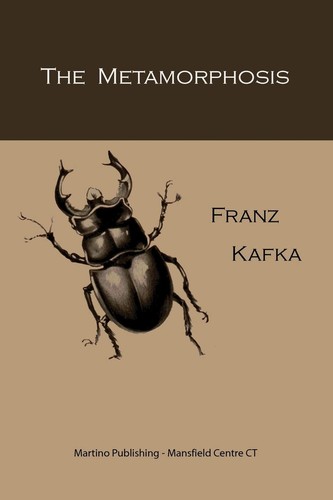
Cam: Yeah, he knows. So people talk about cockroaches, general insects, beetles — a lot of people talk about dung beetles. I saw when Kafka was talking to the publisher, they wanted to draw an insect on the front, and he was very staunchly against that. He’s like, whatever you do, don’t draw it. And so I think the original copy just had a door that was dark. So in terms of the medium as a message, it would be hard to make this as a film, I think, because a lot of it is — you’re not exactly sure what it is, and it’s up to our interpretation.
Rich: It would actually be impossible, wouldn’t it? Because how would you convey Gregor’s point of view?
Cam: I think so, yeah.
Rich: You’d have to do subtitles, or like Peep Show interior monologues.
Cam: Just have this bug.
Benny: Or just do first person.
Rich: Yeah, actually that would be cool.
Benny: That’d be crazy — and just see hints of legs and rocking around. But that’s the only way you could do it, I think. See some tentacles.
Cam: I wonder if anyone’s tried to do it. I did see there was a movie called Kafka with Jeremy Irons that looked quite good, that I was meant to watch — like a 90s film. It had a Brazil vibe — just really a bit weird and camp and abstract. But I think it was more an intertwined Kafka with some of his work, but not with this work — with like The Trial.
Benny: But we should say, you do learn throughout the book that he’s got numerous legs. He’s got a big shiny shell on his back. He’s got a hard back and a brown tummy. And to get out of bed he has to rock himself out, which is kind of a funny scene. And he’s able to scurry up the walls and stay on the ceiling and whatnot.
Cam: Yeah, it crawls, and everyone obviously finds him hideous. So anyway, he wakes up, not sure if it’s a dream, and then he’s a bug. He gets worried about missing work, and he doesn’t feel like he can call in late for work — call in sick, sorry — because he’s never called in sick. And he starts getting worried about being late, which is kind of funny — it’s just quite a pedestrian concern when we’re like, you’ve woken up as a bug. And then he’s talking to his family through the door, and one of his colleagues — the “chief” — my translator, it was the… what was your translation for that position?
Rich: Chief clerk for me.
Benny: Yeah, same.
Cam: Someone above him in the hierarchy, his colleague, comes over as well, and that’s what gets him out of bed. He’s talking to him through the door. I think he even says at one point his voice sounds like him but has a weird squeak to it, but we learn that he’s pretty much unintelligible to the others. Then they see him — they open the door, they’re horrified, the chief clerk eventually runs away. Gregor really wants to work, he says this won’t last, and he tries to follow him. He feels that he can’t, and then he ends up on his belly and finds it easy to move, and he follows him. Causes his mom to feel faint, and then his dad shoos him into the room with the cane. So that’s kind of part one. You can probably just keep going with part two — Benny, you can…
arguing about what Gregor’s initial reaction means
Benny: Yeah, I was going to ask what your reactions were — that he wakes up as this bug, realizes something’s horribly wrong, and then is immediately fixated about the consequences for his job. At first he’s trying to convince himself, I missed the five o’clock train, that’s really distressing him. And he convinces himself, I can probably catch the seven o’clock train if I can just get out of bed, right? He barely even thinks about the fact that his body’s literally transformed into something else. He’s basically immediately fixated on the ramifications for work. And it struck me as a semi-humorous, semi-sad situation.
Cam: A semi-relatable situation as well. I mean, I didn’t relate to it hugely, but I’ve seen it in other people — getting really neurotic about some pedestrian thing when the much bigger issue, like, that stuff doesn’t matter. But it’s almost — I don’t know, maybe like a coping mechanism or something. You can just solve that small, solvable problem and it’ll work.
Rich: Yeah, we should probably also canvas — has this ever happened to you guys? Have you ever woken up and been a giant bug before?
Cam: Not literally. But that does remind me — it’s sudden, right? Like, he goes to bed and he suddenly wakes up as a bug. So it’s this sudden transformation rather than gradual. If it’s a descent into illness, it probably could have been gradual, and then suddenly — whether it’s a trigger or something else, or a realisation, cognizance of it — then it feels like a sudden transformation.
Rich: But psychologically, it’s not at all realistic, right? Except as metaphor. Because — if you wake up as a bug, you don’t just be like, oh, that’s weird, anyway. He’s completely calm about it. And also the prose is very matter-of-fact. There’s no sense of horror or trying to convince you how nightmarish this is or whatever. It’s very pedestrian, and so it just heightens the absurdity. It makes it seem more like a parable or something right from the outset, where you’re like, okay, here’s a bug, and he’s thinking about going to work.
Cam: I suppose it’s got a psychological break, like people have breaks. Yeah, it’s very chill — that’s what’s weird about it.
Cam: The prose is interesting because it’s very plain and kind of boring. And it’s long sentences. Apparently that was important — people talk about that with the translation. In German, because these long sentences in German have flexible word order, it’s quite important to have these long sentences and then emphasis at the end. It’s a long sentence about Gregor waking up, and then he’s suddenly a bug. That, I think, happens at other points and it can be quite hard to translate. But I did find it quite boring, and I wonder if that was intentional, or just a sign of the times, or just a sign of Kafka’s writing. But this bleakness of the whole story — part of it is this bleak prose.
Benny: I don’t know. I thought the fact that he was focused on work was insightful, especially before its time in terms of human psychology. So we should say — I guess this is written in 1915 — and I think now we have all this research that people retreat back to their baseline level of happiness in life pretty quickly. So there’s this whole line of work where, like, either…
Cam: If you lose your arm.
Benny: Yeah, yeah.
Cam: You’re all good. It’s like worse to live somewhere noisy than to lose both arms or something.
Benny: Yeah, so there are extreme events that’ll kick you out of your local minima or local maxima for more extended periods of time. But overall, humans are actually pretty robust to changes — even pretty significant changes in their day-to-day life, both positive and negative. We typically overestimate how much something good happening to us will increase our happiness, and we underestimate how likely we are to rebound from something bad happening. So yeah, being like — what, Gregor, don’t worry, who hasn’t woken up as a bug?
Cam: Just imagining you as his therapist, with all this therapy speak of like, you’re going to bounce back. This insect sitting next to me is just fucking depressed. Yeah, be fine, mate.
Rich: I don’t think it’s about this though, Benny, because he never suffers in the first place. There’s nothing to bounce back from. He’s just immediately completely calm and at peace with the situation. I don’t know if it’s meant to be…
Cam: Do you mean before he turns, or…?
Benny: No, no, it’s totally not. He’s totally not calm and at peace, right? He’s worried about work, right? And work is such a big part of his life that he wakes up and he can’t help it. But regardless of this huge external shock, anyone else looking at this objectively says, you have bigger problems right now.
Rich: Exactly. I mean, imagine you wake up as a three-foot-long beetle tomorrow — how would you feel? You’d be panicking. You won’t be worried about work, you’ll be having a fucking panic attack.
Cam: Yeah, you’ll be like, what the fuck. But that’s the surrealness of it, right? It’s a metaphor, Rich.
Benny: That’s exactly right, though. Like, when you look at someone else’s life, often you think that they should feel better or worse about various states of affairs. Something horrible happens to someone, often it’s like, holy shit, I don’t know how they’re still carrying on. But humans just have this weird capacity to revert back to baseline happiness almost regardless of what happens. So I don’t know if he was trying to get that across — and he wrote this super early on.
Cam: Well, I was just interpreting it like he was supplanting his anxiety just towards these pedestrian concerns. Like, my mum has depression — no, hi Mom — and I remember that some of her worst times, it would be like she spills the milk of the cereal or some shit and just fucking breaks down. Like, I’ve spilled the fucking milk. And it’s like — it’s not about the milk. But that was everything for her at the moment. She’s like, she’s a bug. She’s been a bug for the last week. She’s worried about the milk. That’s how I interpreted it. Also, I just thought it was funny — to be concerned about work. He’s like, can I get the next train? He gets up early — he gets up like 4am — and then he’s like, oh shit, 7am, he’s late. Those’d be early hours for me, mate. I’m pushing 9am.
Rich: And when he’s charging after the chief clerk, he’s like begging him to let him go into the station late and stuff. So he still hasn’t grasped it at all. He’s like, I work long hours and it’s a tough life, but I don’t mind it, I’m up for the task. Like, let me just get my briefcase and I’ll get the 10 o’clock train. It would be so cute.
Benny: Yeah, he’s like, I’ll still make it in.
Cam: There’s definitely a capitalistic — imagine putting the hat on this big bugger with the suitcase. Just hold off, hold off — hold that train.
Benny: Yeah, I wanted to bring up the Marxist — Cam, did you want to bring up — yeah, I think we should talk about Marxism, capitalism.
Cam: Well, yeah, he’s working his ass off, with his family. He thinks he does a pretty good job — it’s unclear how good his job was, because I think the chief clerk implies he’s not as irreplaceable as he thought. But yeah, working these long hours. His work doesn’t have much sympathy for him as a bug, right? They’re just annoyed with him.
Benny: So obviously, a big theme — I think we’ll get into this especially later — is just alienation, this whole thing, right? He’s now alienated from his previous life, his friends, his family, even his tastes and all this stuff. And that’ll become more evident in the later parts.
Cam: Yeah, there’s an open question of what caused the metamorphosis, right? And potentially it was the job, or part of it.
Benny: Yeah, so when I first read it, I thought that one of the themes was straightforwardly a Marxist type theme of work — like, being part of industrial processes causes you to be alienated from your own interests and the rest of society, etc. So it was a negative view of work and where society was at that time. But then as I thought about it more, I’m not sure it’s that straightforward. There are certain things about his work that bring him lots of pleasure, right? So he talks about — I forget if it’s during the first part or the second part — but he talks about wanting to send his sister, who he thinks is a talented violinist, to the academy to be able to study music. And he’s proud of himself, or at least I got the sense he was proud of himself, for being the breadwinner for his family, right? So now his family doesn’t really have to work. They seem to be maybe lower-class bourgeoisie or something at that time. Petty bourgeoisie, I guess, is the right term.
Cam: I’m not sure if they’re lower class, because they have…
Benny: They’re not…
Cam: They have servants and stuff. But I think back then, everyone had a servant, right? That’s one thing. Anyway, all this progress, mate — can’t have servants, too expensive. It’s because of the opportunity cost.
Benny: Yeah, that’s what petty bourgeois means, right? You’re not high class.
Cam: You go in the third world, yeah.
Benny: But you have enough money to afford help and whatnot. They’re definitely not working class. And I think he likes that.
Cam: Yeah, which I think is an important point. He provides quite well for his family.
Rich: Yeah, it says that he earns decent money. He’s supporting the whole family on one income.
part two synopsis: I didn’t choose the bug life
Cam: Yeah, so this is going into part two now, and his sister Greta…
Benny: Greta, I think.
Cam: …she looks after him, and he’s quite enamoured by that. She gives him milk and bread, he finds those disgusting, but she’s still a bit scared of him. He comes out at night when they all go to bed, and he finds a sanctum under the couch — he ensconces himself under the couch and hides himself with blankets under there. But the sister’s the only one looking after him. She then tries to give him an array of foods to try, and he’s disgusted by all the normal fresh stuff and ends up quite liking these old veggies and old cheese. He also likes standing on his chair and observing the outside, and the sister notices that, so she always makes sure she puts the chair back to the window. Then the sister and the mother think, maybe we should remove all the furniture in his room — because he crawls around, there’s footprints around, he’s literally crawling on the ceiling and walls. And they’re going back and forth whether they do that, because the mother starts getting worried — if maybe he liked the furniture. You learn that he probably wants it all gone, because he loves crawling so much. And then the sister actually shows some independence and goes, yeah, no, we’re going to remove it. Gregor suddenly realizes he doesn’t want it gone, because of out of nostalgia, and then he comes out of hiding and his mother faints from how hideous he is. Causes all this commotion. The dad gets home, he’s super angry that the mother’s fainted, the daughter says Gregor’s got loose, and the dad starts hurling apples at Gregor, and hurts him quite bad and dislodges an apple, and then gets him back into the room. He’s quite hurt. Which actually reminds me — in Wellington, New Zealand, where this guy called Blanket Man — who actually is a bit on theme in terms of alienation and vermin — he literally wears like a Mowgli flap and a blanket. He’s passed away now, but he was there for 20 years and always quite visible in the city. Everyone knew him as Blanket Man. One time, my ex’s mum — he was asking for food, she gave him a bag — we were asking for money, and she gave him a bag of apples. And then as we were leaving, she started hurling apples at us. He just disappointed her. And apples, in terms of fruit you want to throw, apples are right up there in terms of a weapon.
Benny: Yeah, an apple gets lodged in his side, right?
Benny: It’s true. We should also maybe say that near the beginning of part two, the family starts having some consultations about — now that Gregor’s not going to be able to go into work, they’re going to have to start working again. So they need to make arrangements for how to…
Cam: Yeah, and we might as well say that they end up all getting work. The mother becomes a seamstress, the daughter becomes a salesperson and starts going to school, and the dad wears the uniform — what was the idea exactly? Something with a uniform.
Benny: He’s like a repairman or something.
Cam’s incest theory: who is the real parasite?
Cam: Yeah. And they’re all starting to improve their lot while Gregor is crawling around the walls. So now there’s indications of the sister and him having this special relationship — she’s caring for him, she’s putting a lot of effort in, and he’s very fond of her. I think there’s even indications now, and a bit more later, that it could push into incestuous territory — his fondness for her.
Benny: I got zero of that.
Cam: Yeah, I think once it’s there, it totally refactors the way you view the story. Like all works like this, it’s a very open interpretation.
Benny: I’m going to need to see some textual evidence.
Rich: Yeah, I didn’t get any incest stuff.
Benny: Do you have some lines or something? I need to summon some evidence for me.
Cam: It’s near the end, where he wants the sister to himself, in his room. That’s the only textual thing. And I think one straightforward reading is, it’s just this familial love and they’ve got a bond and he’s mourning losing his special sister.
Benny: I thought that had to do more with the music. That’s what you’re talking about, right? When she’s playing the violin and then he wants her to come in his room and…
Cam: Yeah, yeah. Okay, so let’s just quickly…
Rich: On these philistines.
Cam: Yeah, so let’s quickly say what happened. So the family are all working now, and they start letting him out a little bit, and they hire a new cleaner, who’s this strong cleaner, and she actually doesn’t mind him too much. She goes in and talks to him a bit. And they get three lodgers to come in to live with them. And then the sister starts playing violin. At one point she’s playing it and it touches Gregor — he thinks it’s really deep and meaningful. And he comes out, and he just wants to watch. And the lodgers see him and start causing this commotion of, this is totally disgusting, you’ve got a bug here. And it just causes the violin to drop. And then even the sister just starts losing it with Gregor and says, we can’t live with Gregor. She makes a distinction between Gregor and the insect. But they end up shooing him into his room, and he essentially starves to death by himself. And then the family take the day off, and then they take a vacation. And it’s said explicitly that they’re moving on.
Benny: And they seem extremely happy at the end of the story. Like, they’re thinking about their future prospects, and they realize they’re not too bad, and they realize the daughter Greta is this beautiful woman — they can start thinking about possibly marrying her off to someone and living future happy lives. And they realize, I think, that their jobs aren’t so bad, they have prospects, and all this stuff.
Cam: Yeah, and the cleaner disposes of the bug and tells them, and they’re not mourning over it, really. So on that — the potential incest take, my first reading was, it was actually very sad. I was extremely sad when I was reading him listening to his beloved sister play violin, and he just wants to be around them, and then he ruins everything just by being there. But it’s just said he wanted her to himself in his room, and like — maybe that’s just to listen to her play violin and stuff. But suddenly I thought, what if it’s this family member who is vermin, and there’s reasons why the family can’t live with him, and they need to protect the sister, and then the sister finally grows up without him. And then it’s just this interesting take — there’s still this alienation and sadness of this person, but you really just can’t live with someone like that either. I’m not sold that there’s definitely one take, but there certainly is a take. And you can replace incest with something else — just, he’s a bad person, he’s a parasite to the family, perhaps. And the other reading is not — the family’s a parasite on him, and he’s just depressed and alienated.
Benny: Yeah, we should say — I think an important moment for him is when he’s drawn towards the music. He thinks to himself, how can I be an animal if I’m so enthralled by this music? Like, would animals — would bugs — be able to appreciate this music? And so I think he’s struggling at that point with what he actually is. And that same struggle, I think, showed up in part two when Greta wants to…
Cam: Well, even just on that point — she even says he can’t be Gregor anymore, because Gregor would know that we can’t live with this insect.
Benny: Yeah, which is interesting. I mean, he seems to acknowledge it after, and then he doesn’t really try to leave his room or anything. He just sinks into a stupor, doesn’t eat anymore.
Cam: Crawls a bit.
Benny: I mean, it’s unclear if they are feeding him at that point, but then he just falls off and dies. But I think he had that same struggle in part two, where the sister proposes cleaning up the room so he can crawl all over the walls, and he originally thinks this is a good idea. And then his mom says, no, this is his stuff, this is Gregor’s stuff — if we want to hold on to hope that Gregor will actually come back to us, then we shouldn’t be getting rid of all his stuff. That’s admitting that we’ve lost him and that he’s this vermin forever. And then he realizes — oh shit, she’s got a point. That’s true. Like, why don’t I want my stuff in my room? And so even he, throughout the story, seems to slowly lose his sense of self. And then you get this hint at the end that there’s some hope for him, and then the hope is extinguished when he dies. So maybe just to — the major theme for me was alienation, and just thinking about how slowly he’s losing everything throughout this work, and then it’s sad that at the end he dies and his family actually seems to be better off. So that was a major theme for me. I thought it was interesting, but not fantastic. So I’m curious why you guys thought it was better. What else did you get out of it that I didn’t get out of it?
Cam: Yeah, it’s so sad.
Metamorphosis as Kafka’s autobiographical self-therapy
Rich: I think the interpretation that I like best is the Nabokov. I don’t buy the incest one at all, not only because there’s no textual evidence, but because there’s way better evidence for the other interpretations. So yeah, I think it seems to be like an autobiographical self-therapy type story. So I’ll make the case for that. Kafka was a clerk who worked in the bureaucracy. He lived at home with his family in an apartment until his 30s. He had a domineering father who tried to tell him that his writing was pointless and tried to put him down. His mother was basically very passive and meek. He had a good relationship with one of his sisters, who was his closest ally in the family, up until a point where she turned against him and agreed with the rest of the family that he should increase his hours as a bureaucrat. And then he wrote The Metamorphosis right after that happened. So I don’t think it takes a giant leap to figure out that this is actually fairly straightforwardly based on the real events and situation of his life, and that it’s not a critique of Marxism or feminism or incest or anything like that. In a way, it’s the most pedestrian interpretation.
Cam: No, I agree.
Rich: But the bit that Nabokov brings to it, which is actually quite interesting I think, is that he says something like — what it’s about is being an artist surrounded by philistines, fundamentally. So you have this irony where Gregor is a man trapped in the body of a bug, whereas his family are insects trapped in the body of humans. So there’s an inversion there. He’s the one who understands the beauty of the violin music, while all the humans are bug-like automatons. They’re incapable of thinking interestingly. When he turns into a bug, they react in boring, monotonous ways. They just shut him up in there. They don’t actually try and help him. They don’t act how humans would act — they’re not particularly moved in any direction.
Cam: Well, the sister tries to help him.
Rich: Yeah. And so the metamorphosis is twofold, right? It’s Gregor becoming more of a bug as he becomes alienated from the people around him who don’t appreciate him for who he is. And then the sister also — her betrayal is like the reverse metamorphosis of her coming to be a bug-person like the other people in the book. And then there’s a little bit of metaphor around her blossoming body as well — right at the end she’s stretching her legs out on the train or something, and her parents start thinking about how she’s blossomed into a beautiful young lady who needs to find a husband.
Cam: Yeah, I saw Nabokov thought it was about a genius surrounded by mediocrity. And he obviously related to that in the story as a fellow genius. And Kafka obviously was a genius. I’m not sure if I buy so much the family turning into bugs. The family were leeches in the beginning, and the daughter — one read of the daughter’s metamorphosis, or her transformation, is becoming this adult independent woman who is realizing her goals and is no longer burdened by this other in her family. But she does betray him — that’s the big thing. But it’s very understandable: if you take it literally, you’re dealing with a bug who can’t communicate with you. At some point you have to move on. But then you read it as a metaphor of mental illness, and it’s like a classic suicidal ideation — that people are going to be better off without me, and I’m just this burden, and once I die they’ll all be better off. And then the tragic thing in the story is — they are right.
Benny: That’s true.
Cam: And I assume Kafka had those thoughts. But I thought one reading of the daughter’s transformation is a good thing for the daughter — she becomes this — the parents even say, you’re becoming a great person.
Rich: Yeah, I think it is a good thing for her. But I think the Nabokovian perspective is something like, this is the justice of the animal kingdom, or the justice between parasite and host, where as a parasite you grow fat off of the labor of your host and you come into your own and flourish through someone else’s efforts. So yeah, it is a good outcome for her, but she’s like the hot young thing and he’s the withered husk who’s been sucked dry, right? He literally starves to death as well. I don’t think he dies from the apple wound. I think he just eats less and less, and they even vaguely notice it but don’t do anything about it, and he just goes on like a hunger strike equivalent, and just wants to — in some sense must want to die. So I think that is compatible with the reading that Greta has a good outcome somewhat at the expense of Gregor having a bad outcome.
Cam: I think it stops, yeah.
Cam: The other obvious reading of this whole thing — my first reading — was just someone suffering from depression, and this is a metaphor of spiraling into depression. And I think in the story, it’s definitely clear that he’s literally an insect. It’s not ambiguous whether he thinks he’s an insect and everyone else doesn’t. But depressed people feel like they’re — whatever that German word is — Ungeziefer, right? And these normal people living normal lives. It’s hard to live with people suffering severe mental illness, right? You try and care for them, but it can drain you. Yeah, it’s tough. And then it’s super tragic for the depressed person, right? Or the mentally ill person.
Rich: Yeah, I’m less — I mean, I think that is true to some degree, but one thing that’s worth noting is that when he has his original metamorphosis, it’s not game over for him. He’s a healthy beetle. He’s been turned into a beetle, but I don’t know — he might be a good-looking, vibrant beetle, right? And he’s got a good appetite, and he’s exploring his environment and so on.
Cam: Depends on the colour. It’s huge if he’s brown or something.
Rich: So Nabokov used to conceive of his authorial self as like a beetle, apparently, but not in a negative way. There was a part of him that went out into the world and socialized with other people, and then apparently his metaphor of himself was like a beetle that would remain at home. This seems like the most straightforward interpretation. And then, as time went on, he would describe himself in more and more negative terms — as being made of slime and dirt and muck and so on. And this is the exact transition that Gregor goes through. It’s not that he’s doomed from day dot — it’s that through the alienation, and through the cruelty and ignorance of his family, he gets dirtier, he gets injured — one of his legs gets broken off, he gets the apple stuck in his back, he starts wasting away because he’s not being fed, his environment becomes disgusting. So he’s declining in response — he’s being shaped by his environment and the people around him. But I think it’s noteworthy that he doesn’t start out like that.
Cam: I think the environment’s also been shaped by the fact that he’s a motherfucking bug. It’s understandable that they’re scared of him, and they find him hideous, and that you can’t communicate with him. And it’s chicken-and-eggy, I think — the family are not supporting him enough because of how hard a job this is and how much of a burden he would be, and then he’s spiraling more and more because he’s not receiving that support.
Rich: Well, yeah. The irony is that he’s supported them all these years. He’s been the one who’s made sacrifices on behalf of everyone else, and then they’re not prepared to make those sacrifices for him.
Cam: That’s where I just had one thought — the genius Nabokov–Kafka level — like, maybe it’s not that much of a sacrifice, right? You’re working a nine-to-five, but for a genius — you want me to work? I should be creating, that…
Benny: So speaking of that — where’s the actual textual evidence that Gregor Samsa is some genius? I don’t think there is. That’s why I don’t love this reading, to be honest. You have to do a lot of work to just try and map it onto — even to be like, some misunderstood artist, right? Like, Gregor doesn’t have any of those aspects to him.
Cam: Yeah, no, I don’t think there is. I think it’s Nabokov reading what Kafka’s like and relating that to his life.
Rich: Even saying Kafka’s a genius — that even seems question-begging.
Cam: Mate. Kafka, mate.
Rich: I think he’s an incredibly admirable person. I love Gregor — he’s so sweet throughout this whole book, right? He’s so concerned with helping other people and with managing people’s reactions. And even at the end where he’s dying, he’s filled with love and tenderness towards his family who’ve basically led to his death. He has all these markers of being a creative being — he wants to sit by the window and take the view, and he’s moved by the music when the lodgers aren’t…
Cam: So rather than genius, is the claim that he’s more human than the rest of the family, and because they’re not humanistic towards him…?
Cam: I think you’re overrating that a bit. Oh, mate. They can sum me up to Harvard — I look out the window sometimes. But yeah, I think Nabokov is reading a bit too much of himself, or Kafka, into Gregor. But I think that’s what’s cool about art, right?
Benny: Yeah, me too.
Rich: Well, in the spirit of knocking down one explanation, you’ve got to propose a better one, right? And so far you’ve given incest, which I think is definitely not true.
Cam: Oh, no, no…
Benny: No, you just have to point out things that aren’t consistent with your reading.
Alienation and depression
Cam: Well, the most straightforward thing is — alienation is one. He’s obviously alienated in both these readings. And I think just this metaphor of mental illness, or physical illness — suddenly having a psychotic break or having this physical issue, and then suddenly becoming this burden. And then how alienated you get. I was just thinking of old people and homeless people and stuff.
Rich: Yeah, those are the core handicaps, definitely. That’s what came through to me. I don’t know if it works very well for mental health, but — I think if you read it more closely again, he’s not full of despair and hopelessness. He’s like, right, how am I going to get out of bed, how am I going to get to work? He becomes hopeless and helpless over the course of it. He doesn’t start out that way. It doesn’t match very well to a sudden break or being plunged into depression or whatever. It’s a journey of becoming depressed and becoming helpless. The bug bit is the catalyst, but it doesn’t immediately plunge him into despair.
Cam: This is disgusting. That’s — maybe it’s telling on myself too much — but that was definitely my biggest reading.
Cam: I suppose I just read the bug thing as this metaphor of mental illness. But yeah, I see what you’re saying. The counter-argument is that he seems jolly at first, but he is stressed about work.
Rich: Yeah, it’s very important to explain the interactions with the family, right? Is what I’m trying to get at. Your model of what this book means has to include some term for what that’s meant to be about.
Benny: So how does your reading square with the fact that the sister is really trying hard at the beginning to look after Gregor and goes out of her way to try and figure out what food he likes, continues cleaning the room, etc.? Like, I didn’t read it as necessarily the family entirely gives up on him and then he dies as a result. I more read it as — there’s just a slow process by which he both becomes more lethargic and gives up. He stops eating. He doesn’t necessarily blame it on the family. At one point his sister is still bringing him lots of food, putting the food in there every day, he’s just not eating it, right? And so you have to explain why he’s lethargic in spite of his family — and his sister in particular — still wanting to take care of him.
Cam: And then also, he literally wants to hide, right? He goes under this couch and he hides himself with a blanket.
Rich: Well, he wants to hide because that’s instrumental for making other people feel good. He doesn’t want to hide for its own sake, as an end unto itself. He wants to be in the world. He wants to live a normal-ish life.
Cam: Well, he also wants some relationship, right? And that’s this parasocial — he’s just witnessing others, but he can’t do it directly because he causes everyone to freak out. But — maybe the depression — I think obviously the depression is caused by, well, partly genetic, but by his family’s attitude towards him. Like, even pre-transformation, they’re all leeches off him, and he starts spiraling, and everyone hates him.
Benny: So also, here’s one more detail that is in part three. After he stops eating of his own accord, seemingly, the family has this policy where they start leaving the door open so that he can partake. He can basically listen to them having dinner because they assume he likes that. And their conversation isn’t as lively anymore. So he doesn’t enjoy it as much. But that’s their attempt to bring him into the fold in some sense. And so you also have to explain why he’s declining, I guess, in spite of all these interventions made by the family on his behalf.
Cam: Yeah. Because I’m imagining — I don’t know, you have some severely schizophrenic son or something, and you’re doing some of these measures to try to help, but you can never fully integrate them. And you’re trying these measures, and they’re just getting more and more alienated. And mentally, people know that. Even homeless people — they know that everyone else views them as disgusting. It’s not like they lose that. And it just becomes all the more tragic.
Rich: Yeah, I’m not saying there are no signs of affection or whatever, or demonstrations of humanity — because there are, especially from the sister. It’s just that — yeah, not from the dad.
Cam: Probably none from the dad.
Rich: And on net, it obviously goes in the other direction. To try and make it more concrete: imagine if this was a metaphor for mental illness or whatever, and you have someone like this — maybe a schizophrenic person — what you guys think is showing some signs of goodwill is like, locking them in their room all day, shoving some food in, not even bothering to clean up after a while, making their environment deliberately — just putting a bunch of junk and crap in there. And then throwing them occasional concessions, like letting them listen in on the dinner-time conversation or whatever. No calling for a doctor, no showing curiosity about their condition, no taking any creative steps to try and connect. To be really boring about this — obviously you could communicate with this guy. You could come up with a binary code, or you could use Morse, or you could use an alphabet chart or something. I know that’s not the point of the book, but…
Cam: Oh yeah, I totally agree that the family is not doing enough, and they’re originally parasites, and then he has this transformation and they don’t support him. I suppose I think the flip side is, it can be very hard to support an insect, right? Like, that’s very hard work — and getting over this feeling of disgust or fear. And then I suppose this is an open question of how disgusting and scary is Gregor — either metaphorically, as a bad person, or just as this giant scary bug. You don’t see the old Gregor you knew in this person anymore — they’ve become this monster. And we’re still trying to help, but it’s — and then they’re better off without him. The burden’s been released.
Benny: Yeah, that’s fair. That’s fair.
Rich: Yeah, I think there is a synthesis here, which you guys are right about — which is that, by the end of this, Gregor is a burden upon the family, they are better off without him, he thinks as much, and maybe in some sense wants to die or wills himself to die. But the reason he got that way is through this process of becoming alienated and not being seen and not being treated as a human, and so on. So both of these things can be true at once.
Cam: Yeah, I think so.
Rich: And whether or not Kafka is right about how his family treated him or whatever, I suppose, is not really material. It’s just that a thing like this can happen, and it has very sad outcomes. But the catalyst is not turning into a bug, exactly. The bug is trying to represent being a different way to other people, being a different type of thing to other people, and then that catalyzing this process of becoming alienated.
Cam: Yeah, exactly. I think that’s right. And just how fucking tragic that is. Like when you see the schizophrenic homeless man on the street, and then it just becomes this self-perpetuating thing where he’s been more and more alienated, and he’s alienating himself because of all this behavior.
Benny: Nice. Yeah, I like it more now. Actually I’m convinced — I’m convinced it’s got a little more depth than I’d thought.
genuinely upset about Gregor’s plight
Rich: Yeah, I wanted to ask you guys — were you moved by Gregor’s plight? Because I felt really sad for him, and I found it quite emotionally affecting, even though it’s an absurd parable about a guy turning into a bug. I felt this story.
Cam: Yeah, the main thing that hit me was when he was trying to listen to the violin, and he just wanted to be there, and it touched him. He still had the human in him, and he just wanted to be in the background, in the shadows, and not bother anyone. And then he still did. And yeah, it’s fucking tragic. And then his dad just always hates him and blames him and views him as a problem for just existing. No, I definitely felt it.
Benny: Yeah, I thought the hardest part was actually the apple in the side. As absurd as that is, there’s something about it just getting lodged there and no one doing anything about it. And like — it’s perfect, and it’s painful, and it’s perfectly representative of situations where it’s extremely hard for someone to relieve themselves of some burden. In his case, it’s just this physical thing — but he’s a bug, he can’t reach onto his back. It would obviously be extremely easy for his family to come in and do it. It’s presented to them right there, right? They could just unlodge the apple. And so it’s these situations in life where it’s very hard to relieve your own burden — someone else could do it more easily for you, but they’re just refusing to do it, either out of ignorance or malice. It’s unclear which. Or just, I guess in this case, they just don’t care enough to even maybe realize that he’s injured.
Cam: And it was painful, right? Yeah, yeah. No one got it out.
Rich: Just inertia.
Benny: And so — I agree, the music was somewhat affecting, but it was something about the apple in the side, and it just getting worse and worse over time. By the third part — I think that happens in the second part, right? — in the third part, he’s barely mobile anymore. He can’t crawl up to the ceiling. And you can just imagine this thing getting infected and oozing, and he’s just lying on the ground because of this. So yeah, if you don’t take care of problems at their root somehow, they just have a tendency to get worse. And if you don’t have those support systems in your life to cut off shit when it happens, things will just spiral, like you said, Cam, and then you’ll just get into these vicious feedback loops and things will get worse.
Rich: The mental image of him gathering these sheets around him — and it says that it took him four hours of painstakingly concealing himself so that his mother wouldn’t be hysterical when she came into the room. So he’s just so thoughtful towards these people who are not thoughtful towards him. I just think he’s a beautiful, loving, lovable character, and it makes it much more tragic than if he was bitter towards them, or deliberately trying to scare them, or being a pain on purpose — which they blame him for. And the big betrayal — when his sister says, oh, he wants us out of the apartment, he wants it to himself, he’s ruining our lives, we’ve got to get rid of this guy — it’s like, that’s just not true at all. And it just twists the knife so much harder that she was the one — he had this plot to send her to the academy. He loved her, and she loved him. And yeah man, that’s rough. He really loved her, if you believe Cam’s there.
Cam: He loved it.
Benny: He just lost it all by the end, for sure.
Cam: I suppose I just take the fact he’s this hideous vermin as a case that it’s understandable that it’s difficult to support, and I think they don’t do enough — but then if you read it metaphorically, he could be XYZ for what’s difficult to live with and support. It shows the importance — well, the nobility of people that do it, or the importance of society that does it for people that require this. Because textually, the family’s life would be worse off if they did. One other thing we haven’t mentioned — well, you indicated it with Kafka’s life — is there’s this Freudian take, the Oedipus complex.
Benny: Oedipus?
Cam: Of his, sorry — yeah, Oedipus. His father is just evil towards him, and potentially the main driver towards his transformation, the way I probably read it, right, is his relationship — well, either his work, but I think mainly his relationship with his father, and then the rest of the family later on. But the mum wants to love him, she just finds it hard. She wants to see him. The father just doesn’t have any time.
Rich: I don’t think the mother there is like the object of his affection, right? There’s no battle for the mother. So I’m not sure if there’s a very good Oedipus reading.
Cam: All sister-brother, all sister, baby. One other thing I had a thought about was whether he’s a reliable narrator. Because at the start, even at the start, he thinks he’s dreaming, and then he’s a bug — so he’s not even sure he’s a bug at first. And then he thinks it’s only going to last a few days, he’ll get over it. And then he tells us he’s a strong worker, but then the chief clerk doesn’t think he’s as strong as he thought. And he also thought his family just could not — would totally rely on — and they just could not imagine them doing it themselves. And then actually it turns out the father’s got some savings, and then it turns out they all do get jobs, and he’s surprised that the father is looking very fit and stuff. But yeah, potentially he’s misinterpreting things.
Rich: But that’s presented as evidence of their duplicity and their being parasites — that the father has lied about having — he’s been putting money aside that he doesn’t need Gregor/Kafka’s salary. And he’s also capable of working, but he would just rather mooch off someone else’s labor.
Cam: Yeah, I think that’s probably right.
Rich: And even Gregor, when he talks about his sister, he doesn’t say that she’s not capable of work. He’s just like, oh, she’s young, it’s nice that she can just muck around and enjoy a fairly leisurely life. I don’t think he thinks that she couldn’t possibly earn a living.
Cam: Well, then he’s certainly wrong. I think he thinks his father just couldn’t work, rather than his father could and — and he’s a merchant. And he certainly thinks his mother couldn’t work, and then his mother — yeah, okay.
Rich: No, that’s what I mean. He thinks that, and then they reveal that they’ve been tricking him, basically.
Benny: Nice, well, I’m definitely more satisfied with it now. I feel more positive about it.
Is Kafka meant to be funny?
Cam: I didn’t find it that funny. And I just recall David Foster Wallace’s essay about Kafka — apparently neighbours used to hear Kafka laughing hysterically when he was writing the stories, and apparently Kafka would go to dinner parties and tell some of these stories, and people would laugh. And I don’t know if it’s like — humour doesn’t last culturally. And also reading it — because I think Kafka was this small, skinny Jewish guy, probably a Woody Allen type. And I was imagining — yeah, okay, Woody Allen type, telling the story about turning into the bug and dealing with all the annoyances of that. It could be quite funny. But I didn’t actually find it funny reading it.
Rich: I found it a little funny, but definitely not laugh-out-loud funny. But yeah, I was pretty baffled by the Wallace. I read Wallace’s piece on why Kafka is funny, and I couldn’t really understand what he was getting at. But he was also saying that the act of deconstructing Kafka is like trying to explain why a joke is funny — like, of course, it inevitably ruins the joke.
Cam: I can see the humour in Kafka’s other works — just the absolute absurdity of bureaucracy and unfairness.
Rich: The double binds. He says basically that Kafka is doing a very unsubtle humour, where he is almost bringing turns of phrase to life. So in this case, it would be something like — oh, Gregor Samsa really has to eat shit or something like that, and be like, oh, what would that look like if it was true? Like, oh, he’s actually a bug, or a dung beetle, or whatever. So he’s saying that it’s not that it’s so sophisticated that we can’t get it, but…
Cam: So is that around, like…
Rich: We’re looking for entertainment, and it’s more of a — I don’t know. I don’t really understand what his point was.
Cam: Is that around like — if you make some of these things literal, it’s revealing what these metaphorical idioms — which become so diverged from the original metaphor that we just use them without thinking — it’s revealing what it’s truly like to call someone a creep. Like, what is it truly saying about someone — really take that and turn them into a creep.
Rich: Yeah, it brings it back to some actual deep truth about the human condition or whatever. So I’ll just read these lines, in case you guys understand what this means. “No wonder they cannot appreciate the really central Kafka joke — that the horrific struggle to establish a human self results in a self whose humanity is inseparable from that horrific struggle, that our endless and impossible journey towards home is in fact our home.” I’ve thought about that, I don’t really know what that means.
Benny: Is that in relation to The Metamorphosis in particular, or just Kafka’s writing in general?
Rich: Kafka in general, but he mentions Metamorphosis as a central example.
Cam: So is it saying that you’re actually okay in the struggle, and you’d rely on — that’s your home? I’m just now thinking of what the sister said to Gregor — like, if Gregor — she was telling the dad to not view the monster as Gregor, and if it was Gregor, he’d know that we can’t deal with this. But his home is this suffering.
Benny: It sounds like a Wallace-upped version of those fridge magnets that say — what is it — the destination is the journey, or something.
Rich: Yeah, I think that’s it. I think that’s it.
Cam: I did have a thought around — we all knew what this was about broadly. Everyone’s heard of Metamorphosis. And I imagine reading this in the 1920s or 1930s — just how original it would feel. Like, how taken aback — this guy wakes up as a bug — you’d just be like, holy shit. Not knowing anything about it. It reminded me a bit of — I suppose there’s a bit of influence on — what’s the director’s name? Yorgos Lanthimos, who does The Lobster, all the weird movies, Killing of a Sacred Deer and stuff. But just the absurdity of, like, you turn into a lobster.
Refreshing subversion of realism
Rich: It gave me more appreciation for this genre, because I was taken by surprise a little bit. Because he wakes up and he’s turned into a bug, so I’m like, okay, now we’re gonna get like the internal screaming and the panic, and we’re gonna get him the freak out — and no, he’s just like, anyway, I’m late for work. And I love that because you don’t really — it’s something that you don’t see that often. Like, I guess realism has taken over for the most part.
Cam: Yeah, you don’t. And you get that in The Lobster, right? But it’s this combination of realism with the surreal — there’s one thing that’s surreal, and then everything else is ordinary. Well, maybe not realism, but yeah.
Rich: Yeah, well I mean, I think the reactions of his family are also not realistic, right, in the sense that they’re disgusted and so on, but they’re not inquiring about how he turned into a bug, or trying to call the doctor or whatever.
Cam: Sure. I suppose that’s what I mean — this is one suspension of disbelief, and then everything’s back to normal. It’s like, oh yeah, we love the bug. Even the colleagues are like that. They’re disgusted by it, but it’s not like you’re not starting to question your metaphysics.
Rich: Yeah, it’s fun.
Benny: All right, fellas, so what’s next?
Cam: I think that’s Nabokov’s favourite, or second favourite. One other thing I think Nabokov said — because he knew the exact fucking type of beetle he was — he thought he had wings. The beetle had wings, because he had this hard shell, and that was why. And then he thought there was one moment when the windows are open — there’s actually an opportunity for Gregor to fly away, and either he doesn’t see it, or doesn’t realize, or doesn’t take advantage of that.
Rich: This is the funniest bit in his review — he points out that based on the type of beetle he is, he must have had wings, and that he could have discovered them. And then he says, this is a very nice observation on my part, to be treasured all your lives.
Benny: That’s too funny.
Cam: One thing that’s funny about Nabokov interpreting it as symbolic — towards surrounded by mediocrity or philistines — I’ve heard Nabokov complain elsewhere of reading books too symbolically. He’s like, no, it’s just all about the details. And you just get sick of people reading his metaphors and stuff. And then he did that in this case. But maybe I was misunderstanding his other critiques.
Rich: Well, he definitely shits on the Freudian one and the Marxist one and so on. He just says it’s about — he says it’s Kafka expressing his frustration with his life, basically. So it’s like, not that symbolic, really.
Cam: About beetles, man.
Benny: Yeah. I mean, we should also maybe say — I don’t know if we probably all know this, but we didn’t say it explicitly — Kafka was not famous during his life, and when he reached the end of his life, he asked his friend to burn everything he’d written. And there’s some indication that he asked a specific friend because he assumed that friend wouldn’t actually carry through on his promise, etc. So there’s some caveats there.
Cam: Yeah, little wink wink, get rid of all that. I think actually when he said burn it all — he didn’t say to burn Metamorphosis. There was like one or two stories he didn’t — that was to destroy.
Benny: Oh, really? Okay, I think that’s right, yeah. I’d forgotten about that.
Rich: But The Trial was meant to be burned, and then it was even assembled in random order, right? Like, we don’t even know if that’s how Kafka intended it. Yeah bro, just put it together like that. But we don’t know if that’s how it’s meant to be.
Benny: It’s like, screw it.
Cam: But it’s just fascinating to think of this guy being not well-known at all and living in mediocrity.
Benny: It’s fascinating to think how many other people have been like that, where their friend did burn it. They didn’t understand the secret wink wink, and they just burned all their work. Poor bastard.
Cam: There’s an interesting ethical question of whether you burn it if your friend’s dying wish — and it’s just like, wow, these are masterpieces, this will be a loss in society.
Benny: Yeah, there is. There is.
Rich: I think this guy used the wink thing as too much of a defense, because he also published private correspondence between Kafka and his dad and stuff. He’s like, no, he would have wanted me to.
Cam: Yeah, everything — the diaries and all that. Money’s coming in.
Benny: His porn preferences. I’m going to publish Cam’s browsing history if he dies.
Cam: My messengers — sorry Rich, was it…?
Rich: Yeah. Oh, and they’re just saying — whoever stipulated the book shouldn’t be illustrated with a depiction of the bug, clearly that’s been steamrolled over too. Because my copy that I got off Amazon a hundred percent has a bug on the front of it.
Benny: Yeah, totally.
Cam: All bugs, mate. But I do think it’s an important part of the original story — it’s up to the reader to interpret what he turns into.
Benny: I don’t know, I think Rich has convinced me a bit with his reading, and I think on that reading it’s actually less important. I think that particular style of bug, modulo Nabokov’s bizarre obsession with wings — other than that, I don’t think it really matters exactly whether he’s a cockroach or a dung beetle or beetle magnificus or whatever.
Rich: Yeah, I don’t think it matters either. It doesn’t seem like Kafka had a great deal of knowledge about insects either, right? So he might not have even had anything in particular in mind, apart from that beetle that he conceptualizes himself as.
Benny: Wait, you said that was Nabokov — or was that Kafka?
Rich: No, that was Kafka. This is why the autobiographical reading is so strong.
Benny: Kafka conceptualized himself?
Rich: Like, he literally calls himself a beetle.
Benny: Oh — I thought you meant that was Nabokov. Oh, that’s funny.
Cam: I think it’s definitely — Kafka suffered from depression and alienation during his life. And he had a bad relationship with his father. That’s definitely what inspired him to write it. I didn’t mean that wasn’t the — if that was coming across.
Rich: Yeah, no, it’s just funny how on the nose it is, basically, if you dig into it. Also, he compared his name to Samsa — he said Kafka and Samsa are meant to be the same pattern, and stuff like that.
Cam: Yeah, true. That’s actually a good catch.
closing thoughts
Rich: This is Kafka’s own observation. I didn’t come across anything — would you guys read more Kafka on this basis, or feel like that’s enough?
Cam: Is there any interpretations of the names aside from that, like Gregor or Samsa? Do they mean anything? No.
Benny: No, I don’t feel sick of it at all yet. I would read more.
Cam: Yeah, definitely. For this, I’d be happy to do future Kafka.
Rich: So maybe we could do The Trial or something.
Benny: Maybe not for the next book, but yeah, I think I’d really like to try.
Cam: For sure.
Rich: Yeah, I didn’t find it that hard to read either. It was fine. Flipped along pretty nicely.
Cam: I do sympathize with the Dawkins take of — I could probably, if I was young or something, I could imagine reading that and then — this is this legendary text, and then you’re just like, so what, here’s a bug. I sympathize with that reaction, which I think is shallow.
Rich: Yeah, I think if I didn’t have the ability to read interpretations and autobiographical details about Kafka’s life, I think it would have been a lot less satisfying to me. I would have just got the general alienation and isolation theme, and maybe the parasitic-type theme. And I think that would have been quite a bit less interesting. It’s definitely enriched by knowing all the things that we know — which is an unfair test. It should stand and fall completely on its own merits, right?
Cam: So I suppose the other thing we didn’t mention is that there’s this language problem — which is a big theme in Wallace’s work — where he can’t communicate with others, as just a driver of alienation. I saw this one bit of text — it was near the end, when the narrator was explicitly saying that the family’s burdens have been lifted, and it was like a confirmation that their new dreams and intentions around the daughter — that she can stretch her young body. But I saw one person, one professor, emphasizing the word “like” there. As in, it was like a confirmation. So the narrator is actually not saying it is this confirmation of the burden being lifted — they just interpret it that way. That’s all my notes.
Rich: All right, fellas, I got to bounce. Benny’s got to go to sleep.
Cam: Adults.
Benny: Yeah, I gotta go to bed.
Cam: Sweet dreams, man.
Benny: Alright, fellas.
Rich: Yeah, I hope you don’t have tortured dreams. Strange dreams.
Cam: It was all a dream — that’s my interpretation of…
Benny: We’ll see what happens when I wake up. It was all a train.
Cam: That was my English — my 14-year-old English, is it?
Benny: None of it happened.
Rich: The Spielberg movie adaptation.
Benny: Nice. Alright.
Cam: See you guys.
Rich: Sweet. See you later.
Benny: See you guys later.