These days every bestselling author writes novels about how their dad was too strict and they got bullied for bringing stinky indian food to school etc.
But Karl Ove Knausgaard walked so millennial narcissists could run.
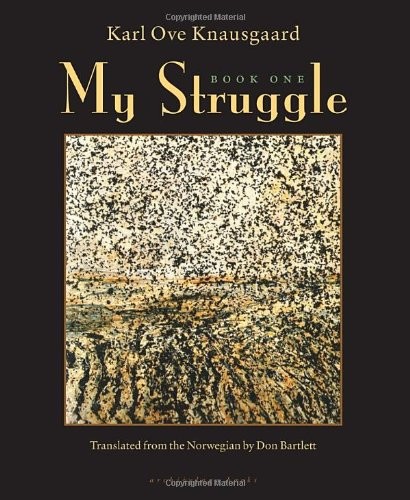
This week we get absorbed in part 1 of his epic six-part autobiographical novel My Struggle, published in 2009.
The big central question: what makes a book which spends five pages describing the author making a cup of coffee so good? The prose is nice but prosaic, there are few major insights, and no plot beats or narrative tension. But we (mostly) agree that it is in fact a good or even great book.
On the performance art aspect to Knausgaard’s project, the barriers to being truly sincere and honest, pathological self-awareness, why early memories are so often dominated by shame, nostalgia for premature ejaculation, and MORE.
Patient zero for the autofiction disease
Cam: Just talking? Well, what’s the show about? It’s about nothing. No story? No, forget the story. You gotta have a story. Who says you gotta have a story?
Cam: Welcome to the Book Club Podcast, Do You Even Lit? Where three former STEM tragics try their hand at reading fiction, one novel at a time. Today, we’re talking about the 2009 Norwegian bestseller, Karl Ove Knausgaard’s novel, slash memoir, slash, we’re not totally sure what it is, My Struggle, Volume 1. I’m Cam, and as always, I’m joined by my friends, Rich and Benny. Next episode, we’ll be doing Nabokov’s infamous Lolita, if you wanted to read along beforehand. But today, it’s our struggle.
Cam: Richard, you got like a million notes saying you kind of hated, well not hated, but — what do you think of this? The boring details, seemingly not for any purpose.
Rich: I have been reading — this is a contemporary genre of fiction that’s very popular, which is essentially something like narcissistic elder millennials who are obsessed with mining trivial incidents from their past to dig up trauma, even though they had comfortable upbringings. And they think that the minutiae of their lives are fascinating enough to justify writing an entire book about. I just don’t like this genre. All the people are kind of the same type of person, and their witticisms and insights are very shallow, but they’re the kind of thing that they clearly think is deep.
Rich: When I was reading this, I was surprised that it fit exactly into this genre and probably was actually the progenitor of this genre. It just seems so arrogant to think that anyone cares about which party you got invited to or not, and how daddy was mean to you and that shaped your self-esteem or something. So I was kind of writing it off because of that, and then I think as I got further and further in I got a better sense of what he was trying to do, which is actually he’s not self-important or narcissistic at all, I don’t think, because he’s really just trying to do this artistic project of honesty and talking about the quotidian details of life, and being self-aware that it is not particularly interesting all of the time.
Rich: So once I realized that he is self-aware about this, I started getting on board with it, and then my preconceptions dissolved and I got past that block and I just started to enjoy being immersed in his life. I got really into it. But the notes that I had at first were — I mean, to be honest, there is some stuff in here where it’s like the anti-Chekhov. One thing I highlighted: “I took a seat at the front, I pulled the belt across my chest and clicked the buckle into the locking mechanism.” It’s like, yeah motherfucker, I know how seat belts work. You don’t need to explain every tiny little thing. There’s a lot of stuff like that, which honestly is probably just unnecessary.
Rich: And then the plot beats, as it were, are mundane. You think, okay, it’s going to be incredible prose, or there’s going to be really great insights woven from it. And the writing is good. It’s very realistic, but it’s not poetic or evocative at all. It’s just totally every day. It’s very immersive and I actually do think it’s good, but it’s not beautiful. There’s no amazing turns of phrase that you’re going to be wowed by.
Cam: It’s prosaic. Yeah, exactly. And it’s not difficult to read in the sense of like Joyce might be because it’s very literary, or Wallace or Pynchon because it’s complicated. If it is difficult — which a lot of people find it the opposite and find it very intoxicating — but it’s because it’s sort of boring and prosaic and flat and exhaustive. He’s talking about his guitar he got as a teenager and he’s just talking about the knobs and stuff.
Cam: I was kind of in between you guys a little bit. It’s not like we know what it’s like to grow up in Norway in the 80s, but I kind of feel like we do a little bit now, which is what fiction wants to do, and especially what it was like for Knausgaard to do that. I related to things in the childhood, like sort of how momentous things can feel as a child looking back — they’re kind of whatever. That New Year’s Eve party — he spends about 80 to 100 pages on, which is literally about him hanging out with his parents at first, killing time before he gets picked up. Then he has to get alcohol because he’s like 16, 17, and this older guy gets some alcohol, and then they get taken off so they have to get it again and they hide it in the garden, and they walk in the winter, and then it’s kind of this failed New Year’s Eve party. He’s got this eye on this girl who he’s trying to get invited to this other party.
Cam: I have certain memories that stick and feel momentous. To be honest, one of them was like one of the first times going to a party with a friend. I remember being in the car and — this comes through in his writing as well — it’s like these memories and these senses kind of set things off. I remember Black Eyed Peas. Oh, we lost Benny. Getting bored to Knausgaard and my explanations.
Benny: Sorry, I realized — I think why it was slow on my end is because I had my ExpressVPN on, so I was routing through somewhere else, and I’m assuming that fucked it up. I’m going to restart it just to make sure. But then Cam, you might want to restart your explanation of what you liked. We probably have it, but just to be safe.
Cam: Wait wait wait, I was just saying — yeah, well, it’s the Black Eyed Peas, “I Gotta Feeling.” I remember the night and the lights and going there and just how big a deal it was to be independent. And it was just — there was nothing big about it. Some movies set that off in terms of adolescence and childhood. I remember Project X, which is just kind of like a popular movie that has that as well.
Rich: That Kid Cudi song, that’s iconic.
Cam: Yeah, exactly. Doing drugs was a massive thing. But also in My Struggle, also My Struggle is just like everyday little things seem much more important. When I think — early on he’s walking, he notices cars, and there’s something almost sinister about it, which didn’t lead anywhere, kind of the Chekhov’s gun thing, but just had a sort of meaning to him. He talks about this documentary that he watched as a kid — I think it was a show called Mysterious Island or something like that, I can’t remember. It was this amazing thing, and I kind of related to that as well, because — maybe because it’s a similar theme — I remember watching Man vs Wild as a very young kid and just being totally in awe. Looking back, it’s a bit silly. I thought I related to that aspect of childhood.
Rich: Yeah, this is kind of what I meant by the micro insights. It’s like, not really anything that you could put into words even, but just little triggers that cause you to think, oh yeah, about some thing from childhood or some nostalgic item that you’d forgotten you felt a certain way about. It doesn’t rise to the level of a big conceptual takeaway or something. It’s these tiny little things that are kind of cute to think about.
Cam: Oh yeah, premature ejaculation. He described — I had to double take. It was like his first encounter, and the way he talked about it —
Benny: Wasn’t it his friend? Or was it him?
Cam: No, I think it was him. He went off in the room with the girl, and he described the room as cold. He said it’s colder than the rest of the house, which — that hit something for me. They’re getting down early, and then suddenly his whole mood changed and he wasn’t sure what it was. I think he realized later. It was with the girl that eventually dumped him because he asked for a photo of her hot cousin — the centerfold was made out of town — because he wanted to prove —
Benny: That was funny, that was like a 50-page saga he went through. How to get this picture, like oh man.
Cam: Yeah. But I also had moments like Rich where I was just like, 200 pages of this, I was ready to put it down multiple times. Talking about eating sardines for five pages with his family. There was like pockets of cool things — he’s talking about his band. It was kind of funny that his band was shit and the mall cop kicked them out because they were so bad. I liked the name of his later band was Kafkatrakterne or something, and I looked what that — there’s a play on words of coffee maker in Norwegian. Kaffetrakter is “coffee maker” and Kafkatrakter is a fun name. So there are fun spots in it, but it’s tedious at times. It’s laborious, which as Rich says, I think is the point. It’s this project of wanting to be honest about life, which includes this stuff and includes other stuff — momentous stuff in childhood, but also death.
Benny: I think he was actually in the middle of writing another novel and was experiencing severe writer’s block, and then just picked this up as a way to almost just get things down on the page. It only became a fully fledged project in and of itself later, I think when he ran it past a friend or something. But at the beginning he was just writing — like, okay, I just need to get over this other project.
Cam: Well, I think the failed novel over a decade was meant to be around his relationship with his father. He wanted to write a novel representing that, and he couldn’t quite do it. I think his issue was he felt like he was never being fully honest, he was never capturing it. So then he just started writing about it. But it’s funny though, because the first half, 200 pages of the book, is writing about boring aspects of his life, of his childhood, to kind of get there to the moment of the death of his father.
My Struggle as performance art
Rich: So we should say here a word about how we actually went about doing this, which is — literally, I’m sure he edited it a little bit, but this is how he wrote it. As Cam said, he wrote the first 50 pages in 24 hours or something, and just vomited out onto the page as quickly as he could without allowing himself to self-moderate or self-criticize.
Cam: It feels like that as well. You feel that when you’re reading it. It feels very unedited. Well, actually, the first part, the first essay — that felt more crafted and structured around the essay.
Rich: Yeah, that was crafted for sure.
Cam: That felt quite different from the rest of the book, which was just kind of this direct flow from his head to the page almost.
Rich: Yeah, but just this frantic breakneck pace of writing to try and allow himself to write about his father’s death and process that fully, and break his writer’s block and actually create something again.
Cam: Have you guys been writing about your day? To get out of writer’s block? Making coffee and…
Rich: I mean, the idea of writing a diary is fine, but where it gets crazy is writing about people in your life. Do you want to go there now or later?
Cam: Yeah, let’s talk about that. So what do you think of the ethics of that? People do that in their diary, and we don’t know how much he was planning on publishing this when he was writing it, but then he got to a place where he’s like, I want to publish this. At the very least. And then there’s this question — it’s almost this Faustian bargain of, do I fuck up all the relationships in my life? Half of his dad’s side don’t talk to him anymore. His uncle hasn’t talked to him since the first volume came out.
Benny: Is that Gunnar? Or is that someone else?
Cam: His uncle said, you can’t use my real name and you can’t use his father’s name, which he never mentions the name.
Rich: His father’s family sued, I think. Leaving aside the ethics for a second, this is what actually elevated it to art for me, and is actually what got me on board with it. We talk about how the form of a text can sort of mirror its themes, and we’ve talked about that before for other books, like Philip K. Dick and Hemingway. I don’t think that’s enough — that’s not a free pass to write a boring book if it’s about a boring subject. But this works for me because you see his project, which is kind of like performance art or something, where he’s writing this thing, he’s forcing himself to reveal incredibly vulnerable details about himself and people he really loves, and then in real time he’s writing about the response to that and what results from that, doing this delicate little dance where he has to separate himself from external feedback and criticism and just remain true to his own lived experience, whilst also presumably trying not to actually blow up his life or destroy anyone else’s life. But he kind of does — I think his ex-wife had a breakdown after this book came out, and then in a later volume of the book he writes about her breakdown. So it’s just like ongoing artistic project of relentless honesty of how life is and how things are. That’s what gets it over the line for me and makes it worthwhile — committing to the bit so hard, and there’s something at stake here and there is a price to be paid, albeit not entirely by him but by other people.
Benny: How would you have felt about it, Rich, if he had just done exactly what he did but he changed everybody’s name — maybe used a different last name, maybe a pseudonym, but he just changes all the names? I’m just wondering what part of it for you is the written word on the page, and how much of it is the fact that you know — not even the knowledge these people exist — is there something inherently worthwhile about it because he’s using people’s real names? Like, how much of it is that for you?
Cam: I think so, but we’ll let Rich answer it.
Rich: Yeah, I think so too. I think it would be a lesser work if he flinched at all and hesitated at all. And it would be even better if he could call his father’s brother by his real name and so on. Again, I’m trying to put aside the ethics of it and think about it as some kind of performance art project. For the context here, he’s writing in Norwegian for a Norwegian audience. This is before it becomes a global phenomenon. There’s like four or five million people in Norway — it’s a tiny ass country like New Zealand, roughly the same. And it sells so well that one in ten or one in eight Norwegians owns this book.
Cam: Yeah, like half a mil copies.
Rich: Half a million in Norway. So everyone knows this, and you’re in a fish bowl where everyone can look in at you and know all these very intimate things about you. I just think that is fascinating. It is a crazy thing to do, and what makes it really exciting for me is that you can imagine like a sociopath or a narcissist doing this, kind of in the modern influencer reality TV style. But we know — or at least if we are to believe him — that he’s not like that at all actually, and his big problem is pathological self-consciousness. He’s very obsessed with what people think about him and how they’re perceiving him and how they’re judging him. This kind of trait that David Foster Wallace has, and that I personally feel a lot of kinship with. So that’s what makes it like, this guy’s kind of a hero to me, because hey, they do judge me.
Cam: But lots of people do judge you, Rich. Sorry, carry on.
Rich: My nightmare is to drop all of the pretences and just tell the world exactly who I am with no mask up. The one question I’d love to ask him is, after all of this, has it cured him of his crippling self-awareness, or has it made it worse? I don’t know — I wonder if it was therapeutic, or whether it just was always some kind of heroic struggle and act of cloistering yourself away from the world.
Cam: I wonder if it’s a bit schizoid now as well. I imagine when you’re still talking to people and small-talking and stuff, you’d go back into this performance. But then on the written page, the written Knausgaard may be more honest and sincere than the real-life one, you know, chatting or talking about it, because then it’s just so hard to do. I’m not sure if I could do what Knausgaard did. The big theme or the style of the book — what it’s showing is just this honesty, or sincerity I think is probably a better word. It’s related to the mundane details, and if he wants to talk about what honestly happened with the death of his father — I think it’s very deep. Anyway, before I get into that, I want to hear — I think Benny maybe was saying something.
Rich: Yeah, I’d love to hear you describe where you started to fall off as well, and how your experience changed.
Benny: Yeah, so it’s not as if I dislike it now. I think just the mundane details started to become a bit much. It’s not as if I dislike it though. I think it’s a worthwhile book to read.
Cam: You’ve now gone 360 after this conversation.
Benny: Yeah, I’ve now gone 360. I think I did lose the plot a bit, especially the first part of part two in volume one, where he’s all of a sudden an adult. I found the childhood section extremely easy and interesting and addictive even to read. I flew through that. And then the first part of him being an adult, I don’t know if it was the context switch, or just that all of a sudden he skips like 20 years forward in his life. He’s got a pretty normal, if somewhat unhappy life. I found maybe the 100 pages after the beginning of part two to be a bit of a struggle. But I’m liking it again now.
Shame and pathological self-consciousness
Benny: I’m very interested that you guys describe him as DFW-esque, as pathologically self-conscious. That wasn’t part of the experience for me. I actually got the sense that he was maybe a slightly depressed, slightly anxious, but fairly normal psychologically. He had had some bad luck. He’s just not extremely pleased with the form of his life. But I don’t get him as like…
Cam: He talks about how much he hates small talk, and how fake he is to everybody when he’s drunk.
Rich: Let me read a couple of quotes that I think perfectly get at it. “As a rule, I was always aware of how I looked, of how others might think of what they saw. Sometimes I was elated and proud, at others downcast and full of self-hatred, but never indifferent.”
Benny: This is when he was a kid though, right?
Rich: This is in the context of reflecting on, in particular, his relationship with his brother, whose name I have no idea how to say — Yngve, maybe Yngva — which I think is really one of the saddest manifestations of this. He’s really close with his brother and he feels like he’s one of the only people that he can just be the real authentic Karl Ove around, where he’s not trying to put on any particular type of pose, and they’ll just chatter. He talks about chattering with his mum as well very freely and loosely without reservation. And then there’s a point — maybe you might not have even got to it, Benny — where he starts having to guard his responses around Yngve as well, and becomes less close to him because he’s having to think carefully about the image that he wants to project. It’s really sad that they lose that intimacy.
Cam: And he’s not sure if Yngve has that with him.
Rich: Yeah. This is right when the dad — when they’re dealing with the death of their dad together, and it’s a time to come together with your brother. He says, “Often it felt to me as if I were false or deceitful, since I never played with an open deck. I was always calculating and evaluating. That didn’t bother me anymore, it had become my life. But right now at the outset of a long car journey, now that dad was dead, I experienced a yearning to escape from myself, or at least the part that guarded me so assiduously.” So that’s where I’m getting this impression that he is sort of unable to — I always think of this as pathological self-awareness, but that might not be the best way to describe it.
Cam: The other thing — a recurring thing that pops up is shame. Even as a kid he often has this deep shame that he deals with. You have that early set piece where he sees the face in the sea, and then he wants to see it on the news, and he stays up late to watch over from the banister, his parents watching the news, because he thinks there must be big news. And then there’s no face in the sea, and he just has this deep shame. It comes up throughout the book — sometimes these seemingly trivial things, and he seems like quite a sensitive kid, and he has this deep shame. Even that I related to. Sometimes there’s some things I think back to that at the time I had deep shame, and then it was last seen as this kind of — yeah.
Rich: There’s something about the emotional footprint or fingerprint of shame that persists more than other things, I think. I have very few childhood memories and I would not be able to write a book like this because I just don’t remember anything. The few things that I remember really acutely and can picture really vividly in my mind’s eye are almost all shame or transgressions, basically. They still even make me cringe to this day, from something I did when I was like eight years old. I can perfectly picture the scene, but I can’t picture the same thing for, I don’t know, tranquility or joyful moments. Something about it — maybe it just registers more in your mind.
Cam: Yeah, I’m the same. But I think that’s true for Knausgaard. Selection effects, right? Because his mum is quite absent from it, but he’s quite positive towards his mum. She seems to introduce him to books, and she’s a good cook, and I assume he’s got a still good relationship with her if she’s alive. Perhaps the dad is so present because he has this difficulty with him. And these events often are around sort of shame and failure.
Rich: Why would shame stick in your mind so much more? Do you guys feel the same way, or do you have a more balanced mixture of memories?
Benny: It’s natural maybe for it to stick around in your memory because it’s really something you don’t want to repeat. If you’re ashamed about something, that’s one of the worst feelings, and you really want to try and extract as many lessons from that moment as possible, because in that moment and afterwards you realize, wow, I really never want to do that again. That was horrible. So I can imagine those moments lingering.
Rich: Yeah, it’s just crazy that it’s a more intense memory than major physical pain or something, which presumably you’d also want to avoid. But maybe the physical pain is kind of random.
Cam: It’s the shit you want to forget the most.
Rich: Yeah, that’s true. Is there a dad connection too? Dads are the ones who wield the most power to make you feel a certain type of way, so I feel like that is definitely the case for Knausgaard.
Cam: And it’s interesting because his father isn’t — it’s not like he’s obviously super abusive or really bad. I mean, maybe he’s a bad father because he’s absent. But Knausgaard seems to be also hinting that he might be worried that he’s going to turn out to be like his father. He kind of sees his father in the mirror sometimes. I think at one point the way he strokes his hair was maybe similar. His father’s an alcoholic, and at one point Knausgaard sort of says he doesn’t drink anymore. It just felt something sinister, but it was never obvious abuse. He was very laconic, and he kind of took up the whole presence of the house. When his brother who had left home came back, I think there’s one line — his father was the one that affected the presence of everyone else, so it wasn’t the brother or the mother.
Cam: I wanted to quickly go back to this — the boring trivialities, or the “boring” — because I think at times they’re quite fun. And how it’s connected to death, really. Because death seems to be this major theme. It starts with death, it starts with an essay on death, and it ends with his father’s death, which seems maybe to be the most important moment of his life up until then.
Rich: Can you just describe that, Cam, before we talk about what happens with him and Yngve?
Cam: Yeah, it’s a great scene. He finds out his father’s died — who he probably hasn’t been talking to for a while, because he’s had this strained relationship with him. He calls his brother and he flies there, and they drive back home. And as Rich said, this kind of touches on his relationship with his brother. They get home, and his father has been living with his grandmother and drinking himself to death, essentially. There’s a few question marks around the death. The place is just in squalor — like junkies have been living there. They get there and they just want to clean it up. And going back to the style of this book, it’s just documenting this.
Rich: It’s like cleaning porn, you know, like those little YouTube videos that come up — YouTube shorts where they water-blaster a patio or something.
Cam: Oh yeah, those are pretty good.
Rich: It was honestly really satisfying to read that. Just talking about exactly which bottle of Jif he’s going to use on the bathrooms.
Cam: It’s, yeah — what really sticks with you is just how bad, and it’s tragic, how the father’s died. “Yngve stood in the hall surveying the scene. The blue wall-to-wall carpet was covered with dark stains. The open built-in wardrobe was full of loose bottles, and bags of clothes had been tossed all over the place. More bottles, clothes, shoes, unopened letters, advertising brochures, and plastic bags were strewn across the floor. But the worst was the stench. What the hell could reek like that? ‘He’s destroyed everything,’ Yngve said, slowly shaking his head. ‘What is that godawful stench?’ I said. ‘Is something rotten?’ ‘Come on,’ he said, moving towards the stairs. ‘Grandma’s waiting for us.’ Empty bottles were strewn halfway up the staircase. Five, six maybe. But the closer we got to the second floor landing, the more there were.”
Rich: There’s like shit on all the furniture and piss. It’s actually fucking wrecked.
Cam: With mold. And the grandma stinks of urine. And then it turns out that the grandma, who’s obviously been suffering as well, is not just a witness of the father’s alcoholism but probably is a sort of co-conspirator —
Benny: An enabler maybe?
Cam: Yeah, well, she’s an alcoholic as well. He realizes this after a day or two staying there, that the grandma’s maybe going through withdrawals, and they kind of offer her a drink because that’s a lesser drink. But even he can’t stop drinking, and they regret it the next day because they have to go to the funeral. So yeah, that was one of the strongest parts of the book for me, which is essentially the end. It kind of tied it all together for me somewhat as well, these mundane details.
What makes Knausgaard so good?
Benny: So here’s a question — insofar as you guys view this as a successful project, was it successful because he was able to be more honest than other writers who are trying to do similar things? Or is it because he was the first person to conceive of a project like this in the first place? He was the first person who said, fuck it, I’m gonna write many volumes — presumably didn’t know how many volumes it was going to be when he first sat down to start writing — but I’m going to be the first person to write as honestly and mundanely as possible, and not try and hide anything from the reader. Is he especially good at that, or is he just the first to do that?
Rich: Good question. I don’t think I’m qualified to say if he’s the first, but I think probably that doesn’t matter as much, and it is that he’s unusually good at it. Back in the day, there are people who wrote — he gets compared to Proust, right? But the difference there is that you don’t have this kind of performance aspect where your work is being discussed and it’s having an impact on real people in the world at the same time as you’re iterating on it and doing your next volume of the same thing. Because publication lags and stuff like that wouldn’t have been like that in the past.
Rich: But I also think it is superior to the narcissistic autofiction stuff that I’ve been reading that gets recommended in the New York Times and is all from the Iowa Writers Workshop type people. I don’t know why though. Maybe it is partly the originality of it. Well, I’ll let Cam answer it, but another question might be revealed preference. Like, do you want to keep reading more of this? Do you want to keep reading more books in this genre? I think I actually don’t really — even the reason why I haven’t finished this book even though I really liked it is that every time I picked it up, it felt immersive and I didn’t want to stop. But because there’s no substantial plot, because there’s no narrative tension, because there’s no through line of conflicts to be resolved in the way that traditional novels have, there was never any incentive to pick it up again. I felt big resistance to read it when I could read something more exciting that would compel me. So it’s this weird sensation I’ve never had where I enjoyed the act of reading it but I don’t really feel compelled to keep reading it. I will finish it, but I don’t think I’ll continue on with much more stuff in this genre. What about you, Cam?
Cam: Yeah, I think descriptively, people find Knausgaard very moreish. It’s kind of hard to explain the success of it. It’s hard to explain this book to people why it’s good. I don’t know what it is that makes it weirdly readable, because it feels like it shouldn’t be. Maybe it’s just you feel like you’re kind of there reliving it with him or something.
Rich: Very unchallenging stylistically and philosophically, right? You’re not forced to grapple with very much. So it’s kind of got that junk-foodie sort of element to it, of easy reading before bed type stuff.
Benny: And he’s doing a lot of the judging for you, right? How you should feel as the reader is almost given to you on the page. I felt like it’s easy to sort of agree with his emotional overlay of everything that’s going on. I didn’t feel like I had to challenge that narrative a lot. Whereas with other novels, you’re always asking yourself, how do I actually feel about what’s going on here? You may or may not agree with the narrator.
Rich: That’s an interesting consequence of trying to write a really truthful, unadorned novel, actually — is that it does remove a lot of ambiguity around how reliable is the narrator, and whether or not the author is trying to play some kind of trick on you, or doing some Nabokovian shenanigans or anything like that. It’s like, no, it’s actually just very straightforward, which is good in some senses. And in other senses, it deprives you of challenges. I mean, it’s nice to have an easy book once in a while. I’m not complaining, but…
Benny: Yeah, that is interesting — especially because even if you want to stand apart from the book and judge him, it doesn’t feel like he’s trying to defend himself, so your criticism just sort of falls flat in some sense and is a little pointless. Whereas if someone’s writing a more pointed book with a message, you are able to fight with the author a little more. But here it just feels like the author — the gloves are down. He’s not going to fight back. If you want to judge him, it feels fine from his perspective. He’s not trying to hide anything from you, so there’s sort of no job to do there.
Rich: Yeah, exactly. Which is why I stopped getting mad after a while. I was like, oh no, this guy knows exactly what he’s doing and who he is.
Benny: He’s beating himself up already. I don’t have to hop on.
Cam: Which is impressive that he’s able to convince us of that, because we all want to convince others that we’ve been sincere.
Rich: What if this is a big meta charade where he’s carefully, perfectly curated — another mask behind the mask? We’ll never know for sure.
Benny: He’s gonna run for Norwegian prime minister after this.
Cam: He’s actually a psychopath. It is interesting to think, though, of how authentic some of it is. One of the reasons why the uncle was pissed is he said that last scene was inaccurate. He said it wasn’t a mess, and that’s not how the father died — by a heart attack, I think, or his heart stopped working. Knausgaard kind of says he drank himself to death, and it was in squalor. And I think Knausgaard says now, it’s like, well, that’s my memory of it, that feels true. I think it probably is true, but it may be exaggerated. As we know, we have fallible memories, and sometimes two people looking at the same thing have completely different movie reels of it.
Cam: One interesting point — he was talking about him and his brother were interviewing someone. I don’t know — I was meant to Google him — it was either a musician or some Norwegian someone. They tried to do it without taking any notes, and then they’re like, oh shit. So they called him back for like 20 minutes and he’s scrambling notes down this time. Then he released — he had written it and he sent the draft to the person it was about, and then the person’s like, what the fuck, this is not at all what happened. I felt like that was almost a wink at the camera of saying, yeah, my memory — I think at one point he says he has a terrible memory, and that obviously happened with this book. So he’s not trying to say everything happened beat by beat.
Cam: But also it’s not like — who was that guy? I forget his name. There’s a guy — A Million Little Pieces, in the early 2000s. There was this author who wrote this memoir and it came out — it was like he faked types of it. But it was all high-octane shit. He’s like, the police busted him in this big crash, and he spent a week in jail, and none of that happened. It doesn’t feel like that. It doesn’t feel like he’s making stuff up to — he has to recreate these things. Unless you have superhuman memory, you have to recreate these conversations. He’s probably putting himself there and trying to recreate them. But you just feel he’s been honest and sincere. I did, at least.
Rich: It definitely complicates it from kind of a journalistic practice point of view, or whatever you want to call it, where you are using everyone’s real names, real characters, but you’re just fabricating things that they said. Because you know they didn’t actually say that. He must have made up the dialogue essentially, right? He claims to not have a good memory, but I couldn’t come anywhere close to capturing anything like this from my teenage years or childhood, especially not dialogue. I wouldn’t remember a single line.
Cam: Well, I think he must be putting himself in there — in his room now, writing about it, remembering it, kind of playing it like a film and writing about it, recreating it and fictionalizing it, but trying to be honest to his memory. Then sometimes that takes him to these boring spots, or these sensory things that are Proustian.
Next book announcement
Benny: So is that a wrap on this book, fellas? How are we feeling? On to volume 2 next week?
Cam: Just do the six volumes. Take over our life.
Benny: I’d rather do the next five volumes of this than read Infinite Jest again right now, to tell you the truth.
Cam: Really, motherfucker. I need to write a book — My Struggle of convincing you guys to do Infinite Jest.
Benny: I’m just saying right now. Eventually, I’m fine. All right, so what’s next?
Cam: I think we talked about Nabokov’s Lolita, if everyone’s on board.
Benny: Yeah, let’s do it. Oh, reading some Humbert Humbert this week. That always puts you in some sort of mood.
Rich: I’m nervous to hear how the discussion’s gonna go. We’re gonna get a definition of like a paedophile or whatever it’s called.
Cam: I know my autistic ass gets — I’ve gotten in trouble so much for autistically talking about the difference of pedophile versus the teenager-phile for no reason. The response to me is always, why are you talking about this?
Rich: Just unforced errors, yeah. If anyone’s listening to this, you may never hear the Lolita episode. We’ll see.
Benny: But know that it happened. And if we didn’t air it, it’s for a reason.
Cam: Release the tapes. No.
Rich: Have you guys got any plugs or any other business?
Benny: I don’t know — I guess I’ve never plugged my — I have a bi-monthly newsletter that you can check out. If you go to my website you can sign up for that.
Cam: If you’re into reading boring exhaustive sentences about someone’s life, you’ll love Benny’s newsletter.
Benny: Exactly. I’m logging my day-to-day over there.
Rich: And what’s the address, Benny?
Benny: You can just go to benchug.com, I think, or just type in “ben chug” to Google, I’ll pop up. I think I’m the only Ben Chug — just like there’s only one Karl Ove Knausgaard. We share a similar burden. Hopefully my child is not a criminal, otherwise it’s going to be trouble.
Cam: And your Nordic roots. And Rich is now growing out — he’s getting the Knausgaard hair.
Rich: He’s quite a handsome fellow, actually.
Cam: I wonder how much that was part of the literary success. Of him being like — because he’s right on the front cover of the book, just smoking and stuff. Oh man, it was making me want to smoke. Fuck. When I come visit you, Rich, soon, I was thinking I was going to vape. But I’m not sure if I should now.
Rich: No. Stay strong. Stay strong. Mostly, I don’t want you to because I don’t want you to tempt me. I don’t care about your welfare.
Cam: Yeah, I knew that.
Rich: Cool, alright fellas.
Rich: How long is Lolita? Can we one-shot it or do we need two?