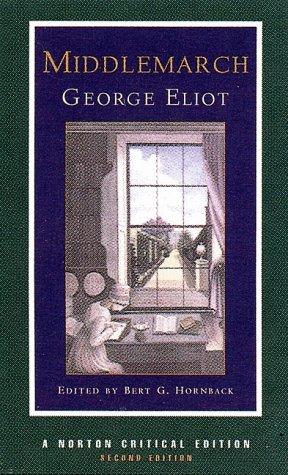
For our big summer read we’re cracking into Middlemarch, the 1871 doorstopper written by Mary Ann Evans under her pen name George Eliot.
This chat covers the first 30 chapters. Not a whole lot has happened so far but it’s a very cosy read.
On Eliot and Tolstoy: which way does the influence go? How does this compare with our beloved Anna Karenina?
Worst honeymoon ever: did we buy Dorothea and Casaubon as a couple? how were age-gap relationships treated in ye olden days? Did they even bone? And if girls like Dorothea exist in real life, where might we find them today?
Lydgate and Rosamond: who he will vote for as chaplain at the new hospital? Tyke or Farebrother? The stakes are higher than they might first appear.
Fred and the Garths: a charming failson coasting on a rich uncle’s dangled inheritance. We debate whether every heir ought to be lightly humiliated before they’re allowed to inherit.
Plus, from the listener mailbag: have the boys ever read a book by a black person?
the guardian’s #1 novel, aka English Anna Karenina
Rich: Did you guys see the Guardian list of the top 100 English-language novels?
Benny: I scrolled through some of it.
Cam: Why do you ask?
Rich: No reason.
Benny: I couldn’t help but notice A Man Without Qualities is right in there.
Rich: There’s some good-looking books on that list, man — there’s some inspo on there.
Benny: But also, we’ve covered a fair number of them, which I was impressed by.
Cam: Yeah, we have. It makes me wonder about causation and correlation — are they choosing it based on us, or are we basing it on them? Maybe these are just great books, and that’s causing both of us to choose them. And did you guys see who was number one?
Rich: I counted 14 — we’ve actually done 14 of the top 100 just in book club, let alone what you’ve read on your own time, which I’m guessing is still 14 for both of you guys.
Benny: Nice. But we’re getting 14 and a half.
Rich: Impossible to say. Oh, who was it? I didn’t spot it.
Cam: Okay, well, if you scroll all the way down to the bottom, through the first hundred — number one is Middlemarch by George Eliot.
Rich: What the — oh my gosh, that’s a crazy coincidence.
Cam: You know, my mother-in-law even mentioned it a few days ago. She goes, “Oh, Middlemarch is the greatest novel on the Guardian list,” and I happened to be holding it, and I threw it at her on the couch. It’s pretty heavy — luckily it didn’t hit her.
Rich: Damn, that’s good. Was she impressed?
Cam: Yeah, yeah.
Rich: Doesn’t sound that impressed.
Cam: Well, I think she’s not impressed. She was like, “Yeah, yeah, I’ve got it at home.”
Benny: She’s like, “I’m still in the doghouse, but…”
Rich: She was probably panicking because she’d implied that she’d read it and that she knows what it’s about, and you’re about to call her out. So I chose Middlemarch for our current book —
Benny: “Exactly what do you think of Casaubon?” She’s like, “Oh boy.”
Rich: I didn’t choose it on the basis of this list, but it gave me a little boost of motivation to see it at the top there — just to think, keep going, it was a good choice. Hopefully the critics are united in saying so. And it’s in very good company. It’s up there with To the Lighthouse, which we also really loved, Ulysses, In Search of Lost Time, Anna Karenina and War and Peace. So we’re reading Middlemarch — A Study of Provincial Life, which I didn’t even realize was the subtitle, and it’s extremely descriptive of the contents of the book.
Benny: I was going to say, it’s very accurate.
Rich: It’s 1871, written by George Eliot, the pen name of Mary Ann Evans.
Cam: I’ve made that joke, haven’t I — every episode: “this is a girl.”
Rich: But yeah, I can very much believe that a woman wrote this book — not in a disparaging way. We’re going to do the first three of eight books. It’s a big old girl, it’s about 800 or 900 pages, so we’re going to talk about the first third of the book today. So I thought I’d throw to you first, Cam — how’s your initial reading experience been?
Cam: I mean, it kind of feels like we’ve read 300 pages and not heaps has happened.
Rich: It does feel that way.
Cam: And there’s a lot of characters — it’s worth writing all these different characters down. I actually made a diagram of the characters and how they’re related to each other, which I forgot to send you guys because it’s on my work computer.
Benny: Yeah, that would be helpful, honestly.
Rich: I’ve heard that one before. “I had all these really good notes, but they’re on my other computer.” You heard of the fucking cloud?
Cam: I’ll fuck you guys up — the diagram.
Rich: Do you reckon students can still say, “Oh, I accidentally deleted my assignment,” in the age of the cloud? Is it still possible to get away with that one — “my computer crashed and I lost it all”?
Benny: Probably not, no way.
Cam: I never use that one.
Rich: Yeah, it’s Google Docs, baby.
Cam: No, you get away — I still get away with that.
Benny: You’re like, “Here, just log into your Apple account on my computer, here you go.”
Cam: One of my takes — it reminded me quite a lot of Anna Karenina, which was also on the list and also read by us. I think they were written about the same time. It’s like every 19th-century novel, about two relationships in parallel, just going through them and contrasting them.
Rich: It doesn’t compare that favorably so far, does it?
Cam: No, I don’t think so. But it definitely feels like an English version of that.
Rich: I mentioned to you guys that someone told me George Eliot was the Tolstoy of the English language, and that phrase has been haunting me as we’ve been reading this book — because it’s so clearly similar to Anna Karenina. But at this point in Anna Karenina I was wildly in love with Anna, and I was rooting for my boy Levin, and I was chuckling and feeling sympathy for that scallywag Stepan. And at this point in this book, the highest level of conflict is which vote he’s going to cast for the chaplain at the new hospital.
Cam: My favorite part is the argument.
Benny: He’s like, “What — Tyke versus Farebrother?” Oh my god.
Cam: For the listeners, I’ve seen it in the group chat — Benny was like, “What the fuck is this part?” and Rich is like, “It’s my favorite part.”
Rich: Oh, you thought I was kidding.
Cam: But it’s similar, right? I think they’re both written in the 1870s. It reminded me — Benny, you might know: is there a name for the effect when different inventions happen at the same time? You know, like Darwin and Wallace, and Newton and Leibniz, and Nietzsche and Dostoevsky, which we talked about in Crime and Punishment — I can’t believe they didn’t read each other.
Rich: There’s actually a direct connection. Tolstoy was a George Eliot fan, not the other way around, and he was reading Middlemarch during and immediately prior to writing Anna Karenina, so go figure — it very clearly influenced him.
Benny: No way. Wow.
Cam: Okay, so he popped it.
Rich: He was a big Eliot head, but she hadn’t read him, because she was later in her career, and, you know, translation takes time — it takes time to get translated into English. So there’s no evidence she had ever engaged with his work, but he very much had engaged with hers. Isn’t that funny?
Cam: Nice. That raises the notch for Middlemarch — so maybe even higher than the Guardian list. Well, there’s nowhere to go really. But yeah, that was my main take, and it’s pretty slow going. How about you guys?
Benny: Yeah, it’s so on point. And I hadn’t actually thought to compare it to Anna K, as embarrassing as that is. But now that you’re pointing that out, I can’t help but do it — and then, yeah, mildly disappointed by the results. But it is, as you say, cool to know that Tolstoy was influenced by Eliot. And we’ve run into this problem a lot before, right? Where you read the author that was sort of responsible for starting a certain style or movement. I’m not sure if we can quite say that about Eliot, but she was close, right, to this modern realist vibe. And we’ve run into this problem before — the first person to do something is often not the best, because people can improve on the style after. So that makes me respect it all the more. But I will say, I’m enjoying it more as we get into it, just because you get familiar with the characters, you develop sympathies for their problems and their vices. And there’s something about, as I get older, just reading about other people’s lives is sort of comforting and nice.
Rich: This is a cozy read. This is like a cozy book.
Benny: Yeah, that’s a good way to describe it, actually. And, you know, just all the quirks of people misreading other people, and then being embarrassed about certain things, or getting engaged too hastily — all that stuff, which has happened to us all multiple times. I find that entertaining to read. But you’re right that I’m still missing maybe the big emotional hook of the book. I don’t have one character that I’m really, really rooting for, or that I care really deeply about. So I’m kind of hoping that develops over the next 600 or so pages.
Dorothea as wish-fulfilment fantasy for sperges
Cam: I was kind of drawn in by Dorothea — we’ll get into her as a character — but I liked that she was smart and curious, and hearing things from her perspective made me think of smart, curious females and just be like, “Read this, you’ll like this book.” It’s kind of a scary thing to say.
Rich: Okay, I know why you like this book, Cam.
Benny: How old is she again in the book? She’s early 20s, or is she not even that old?
Cam: She’s like 20, she’s young. She’s a beautiful mid 20-year-old from the Midlands, England.
Rich: Is she mid? I thought she was kind of hot.
Cam: Well, “beautiful mid” is kind of a meme — you just need to find yourself a beautiful mid. It’s like, you are beautiful. I think in the first section —
Rich: I literally have no idea what he’s talking about. Fucking brain rot over here.
Cam: In the first section she’s kind of described in contrast to her sister — at least she viewed herself as the less attractive one. I think the narrator even described her a little bit as plain and brown — brown hair, as a contrast to blonde, that happens sometimes. But then, when the guys are quite transfixed with her in Rome —
Rich: Let’s back off a little bit, and I’ll just say who we’re talking about. So the first character that we meet is Miss Dorothea Brooke. She is falling head over heels with an older gentleman, Mr. Casaubon. Benny, how would you say that? It sounds kind of French.
Benny: Oh man, I was always saying in my head “Casaubon,” but I’ll follow your lead. I didn’t read it as French, though, to be honest.
Rich: Casaubon, yeah — I don’t think it matters. In my head I say “Casaubon,” whatever. It’s funny that a woman wrote this, because Dorothea is written like a wish-fulfilment fantasy for some old nerd. You could imagine a nerdy male author who’s like, “My main character is going to be this hot young girl, and she really likes older men who are really studious, and she loves nothing more than to listen to them talk about their niche, esoteric nerd-dom interests, and that’s literally her purpose in life. She can’t think of any higher calling than to take notes for them and be useful to them in their pursuit of learning and erudition.” It’s a wish-fulfilment fantasy for us is another way of putting it, I would have thought. Did you guys find that kind of attractive? Did you know women like this exist?
Cam: Oh yeah, for sure. What a catch.
Rich: They not only tolerate your spergy info-dumps, but that’s their raison d’être.
Cam: They want to serve you, they want to make it easier. You’re right.
Benny: Yeah, they just want to transcribe all your research and learn other languages for you. Where are all these women?
Cam: But Mary Ann Evans, aka George Eliot, is the one that existed in history that is just like this — so it’s not just a fantasy.
Rich: I’m interested to see where this is going — whether the moral of the story will be that Dorothea’s interests were misguided and that she should be trying to develop her own intellectual capabilities, or something like that. But the real reason she feels this way is because she’s a devout Christian, and so she feels this great sense of duty. One way of fulfilling that duty is helping the poor — so she’s interested in housing schemes to improve the life of the working poor — and the other is to be a very dutiful wife, and she just takes that really seriously. She takes ideas seriously, which I also like, even if I think they’re not the ideas that I take seriously.
Cam: And I think she’s fairly well-read, even early on. I think they say she can quote Pascal, and she wants to learn Hebrew and ancient Greek and stuff. She’s still young.
Rich: Yeah, she wants to be able to read the classics. I’ll just read one quote. She says: the really delightful marriage must be that where your husband was a sort of father, and could teach you even Hebrew if you wished it. So she’s in this crazy age-gap relationship where she’s 19 or 20 and Mr. Casaubon is 45 or thereabouts. And he’s this incredibly dried-up scholar who’s just lost in his work — a lifetime bachelor, all his energy and all his passion goes towards his work. I would say there’s not much left over for being a romantic husband.
Cam: She’s quite taken with how impressive she finds him early on. I think she describes him as a reservoir of intellect. With these kind of massive age gaps, I always wonder how normal that was in the setting, because it was kind of true in Anna K as well. There’s a good painting actually, around the same time, called Unequal Marriage — of an elder guy and a young bride who doesn’t look that happy. We do get that one character, Mrs. Cadwallader, who’s anti them getting together straight away — partly because she was the matchmaker with the other guy, Sir James Chettam, so I think she’s partly annoyed because Dorothea was going against her matchmaking. I couldn’t tell how much it was also just because this older guy — and she thinks Dorothea doesn’t know what she’s getting into.
Rich: There’s an element of that, right? It’s not as if people are completely on board with it. A lot of people are like, “Seriously, this bright young spark is marrying this dried-up, shrivelled old ball-sack?” They’re basically saying similar things that we would say today, except ultimately still signing off on it. Her uncle, who is kind of her guardian or head of household, signs off on the marriage because he considers Casaubon to be a good enough type, and, you know, there’s no accounting for taste.
Benny: And he’s got enough resources, at least, to give her a happy material life.
Rich: And he’s respectable, which is very important to these people.
Benny: He’s got good career prospects.
Rich: He’s from the right kind of family, he’s got the right kind of house, and he has the right kind of interests.
Benny: But he seems to study something.
Cam: What’s he do, you know? What’s this guy doing? We don’t really know what Casaubon’s job is.
Benny: I didn’t quite catch what he’s actually working on.
Rich: I’ve got something here which I think is meant to be taking the piss: “She had listened with fervid patience to a recitation of possible arguments to be brought against Mr. Casaubon’s entirely new view of the Philistine god Dagon and other fish deities, thinking that hereafter she should see this subject which touched him so nearly from the same high ground.” He’s not lighting the world on fire. His work is not considered to be very important, and he’s very insecure about it as well.
Cam: I didn’t really notice that when we first started reading it, but it is layered in there. Once you realize a bit later on that maybe he’s not as impressive as we first thought — or at least as Dorothea first thought — there are clues to that. Even his letter to her felt a little bit obscurantist, or needlessly fancy.
Benny: Did you guys have a sense, when they got together, that things were not going to go so well eventually? Or did you think she had made the right choice and things would work out?
Rich: I think I bought it initially. I was like, “She knows what she wants, she’s really smart,” and I kind of admired her for defying social conventions — well, not exactly, but doing what she considered to be in accordance with the highest duty. We should also mention that Casaubon is not a fine physical specimen. Dorothea’s sister was basically calling him an ugly freak in front of Dorothea —
Benny: Yeah, with like a big mole on his face.
Rich: — and then Dorothea is like, “We’re engaged.”
Benny: Oh man.
Rich: He looks like John Locke, which I didn’t realize was a sick burn until Cam said that I look like John Locke on Google.
Cam: No, that’s not what I was saying.
Rich: And it’s true, unfortunately.
Benny: You look like a young John Locke, though. John Locke looks like he’d be a great runner, put it that way.
Rich: No, I’ve got the intellectual physiognomy. I could make major contributions to philosophy, thank you.
Cam: Yeah, just like Casaubon.
Rich: I suspect we’ll have similar careers.
Cam: But she kind of digs it — I brought this up as well. She digs that he looks like John Locke, and she’s just fantasizing about doing things for him and helping him learn stuff. At one point I think she imagines what it would be like to marry John Milton after he was blind — which reminded me, I remember reading a New Yorker or NYT biography of Derek Parfit, the philosopher. He’s this weird guy — he’s got a wife and stuff, but she’s constantly reading. That was the one thing I remember from there — he only eats things that he can hold in one hand so he can constantly read, and she deals with all this weird stuff, and she probably likes that about him. I was kind of buying that at the start. I was like, here’s this top-percentile smart young woman, and she really wants a similarly omnivorous, voracious reader-researcher who’s weird.
Rich: You know what I was thinking? Why don’t girls like this exist today? And then I realized that they do, and that this is kind of like effective altruism type behavior — having a strong sense of duty, and buying into ideas harder than other people around you, and being willing to do weird things in service of them, and apply your energies in a very self-sacrificial way to something that other people are like, “Why are you doing that?” So I think these types of people still exist — they just get channeled in a different direction in our culture.
Cam: But it doesn’t go well, right?
Elliot’s language: the civilised art of the subtextual dagger
Rich: It doesn’t go well. But next thing I want to touch on — this is something that I found challenging at the start of the book — is that Dorothea is beautifully eloquent, so well-spoken, and Mr. Casaubon is like a walking fucking encyclopedia. He speaks in this insanely formal, clipped prose, as if he’s writing a formal letter with every sentence he issues. So, Benny, you’re our man on the ground in merry old England: is it that people just talk that fancy over there?
Benny: Yeah, everyone is unbelievably eloquent over here. Even the homeless people on the street, as you pass them by, they say, “Excuse me, sir, would you not mind furnishing me some…?”
Cam: Tyler Cowen, in his book Talent, when he’s talking about interviewing people — he said, actually, watch out for the English accent, because you can overrate someone, because it just sounds so good and so eloquent. When I think of some pop intellectuals — Stephen Fry types — I really like the way they speak, and there’s an Englishness to it.
Rich: It’s beautiful.
Benny: I feel like you guys inherit a bit of that bias, to be honest, at least from the American perspective.
Rich: No, we get the opposite, don’t we? Don’t we sound horrible? Don’t we sound kind of South African or something?
Benny: Probably depends on where in the world you’re from.
Cam: Maybe Aussies and Kiwis sound good to everyone else.
Benny: I think to Americans you sound pretty good. But yeah, maybe that’s just me.
Rich: I reckon we sound interesting, but we don’t sound smart. We sound kind of rural, right?
Benny: Yeah, perhaps, maybe that’s right.
Rich: Benny, are you going to come back with an affected plummy British accent after you’ve done your stint?
Benny: I wish. I lived here for a year beforehand, and I don’t think I came back with any traces of an accent, unfortunately, although I tried my best. So we’ll see what four can do for me.
Rich: It’s a bit of a meme in New Zealand that you go and do your gap year in London and then the girls in particular come back with an affect, like, “Yes, this is just like it was in London, yes, this reminds me of when I was in London.”
Cam: I bleed into it sometimes, I think, because I watched so much Ricky Gervais as a young one, so when I go into bits sometimes I go into his affect — I can’t shake it. I think I sent you guys a voice note once, and you were like, “Are you doing a character?”
Rich: Sorry to do this to you boys, but I just need to read a snippet of Mr. Casaubon’s speech so that the listeners know what we’re dealing with here. I think this is part of the —
Cam: Is this the letter, or him just —
Rich: It’s an excerpt of his letter — that’s kind of unfair, then, because it literally is a letter. But it’s not dissimilar to how he talks in normal conversation. So he says: “And but for the event of my introduction to you, which, let me again say, I trust not to be superficially coincident with foreshadowing needs, but providentially related thereto as stages towards the completion of a life’s plan, I should presumably have gone on to the last without any attempt to lighten my solitariness by a matrimonial union.” So you have to translate every single fucking thing that these guys say to each other into plain English. But the other interesting thing is — did you guys notice that people are not only incredibly eloquent, but they’re really intentional and careful and deliberate about the exact words that they choose to describe people or a situation? There’s this very diplomatic phrasing of things, where people have to pick up on subtext, and generally they’re not very direct — or if they are direct, it’s considered to be incredibly rude.
Cam: There are moments even when they fight, right, where they’re almost being passive-aggressive to each other, but they keep this element of propriety in terms of how they interact with one another.
Rich: The way they fight is so civilized. The things they say to hurt one another are completely tame by our standards.
Benny: And it’s still polite speech, just with a dagger of an undertext. It’s a more impressive way to argue with someone, to be honest, because you’re arguing at this subtextual level that’s not immediate from the speech itself. Do you guys think this is reflective of how people actually spoke? I have this question in general about older movies and older books, where characters’ prose and speech is typically more sophisticated than it even is in modern novels and modern movies. I’m not sure if this is reflective of the actual times — that people were just more eloquent in their speech, especially the upper classes — or if that’s just how books were expected to be written.
Cam: I think part of it is that the author is a 145-IQ generational talent, a strong verbal genius. But I imagine the upper classes back then —
Rich: I have a totally unjustified belief that people really did talk, if not exactly like this, then much more like this than we do today. And I can’t back that up on anything except the consistency of the way people talk in old texts. I know one reason it would sound like written prose is because it literally is written prose — someone wrote this conversation down. But if there was a strong verbal culture of careful, deliberate verbal jousting, and conversation was a bigger part of life, then perhaps you could pick up the skill of speaking really eloquently and dropping all of these layered meanings and little subtextual barbs. I can’t imagine doing that without having minutes to think in between.
Benny: Exactly. I’m just not smart enough for it, I think.
Rich: It feels like smartness, but maybe it’s just skill issue.
Benny: Maybe. It’s hard to imagine an entire culture of people who are this verbally fluent — an entire town where everyone you talk to is capable of such sophisticated language use.
Rich: It’d be funny — if you were dropped into this town, you would be smarter, both in raw intelligence than most people, and you’d have way more crystallized knowledge, but you’d sound like the village idiot. You would not be received in polite society.
Cam: No, I’d be like that guy who has to explain electricity, and I’m like, “Uh, I don’t know how it works.” Well, actually, I would have a lot of insight.
Rich: Yeah, I was more meaning Benny. Cam’s trying to explain memes to them — “It’s a beautiful, beautiful mid, it’s like you’re mid but you’re beautiful.” It’s like, “Be gone, knave.”
Cam: “Wood” is kind of an Eliot-ian, Shakespearean turn of phrase, I think. Here’s one quote from their argument: “‘My love,’ he said, with irritation reined in by propriety —”
Rich: One thing I was going to mention as a parallel with Tolstoy is there are lots of good little psychological insights about the minutiae of quotidian family life in here. There’s this line that says something like — “‘My love,’ said Mr. Casaubon” — and then in parentheses, “he always said ‘my love’ when his manner was the coldest.” I have literally gotten in trouble for that from Phoebe recently. She’s like, “You need to stop calling me ‘my love’ when you’re mad with me, because it’s tainting the words.” And that’s exactly what I do. So I have to make a conscious effort to not say “my love” when I’m frustrated — like, “My love, we need to…” you know that kind of thing. So I’m like Mr. Casaubon in too many ways.
Cam: With Casaubon’s letters and way of speaking — this is what I wasn’t sure about, thinking back now, because we know what happens with Dorothea’s view on Casaubon’s scholarship in a few chapters, where he’s less impressive and it’s lacking some creativity or spark. It made me think, well, actually, all these letters are a bit old and crusty and pretentious, perhaps, and maybe that was meant to come across like that.
Rich: What do you mean? Like she missed the initial cues?
Cam: Well, yeah, she did. But even as a reader, when you read that letter, you’re like, “This reads like some academic” — it’s not actually insightful. Even then, are we meant to be not that impressed with the way he speaks compared to others?
Rich: I think, to be fair, he comes across as plenty smart. He just speaks in this highfalutin manner. I think we get drip-fed reasons to think that his work, which he’s so consumed by, is also not enormously impressive and is perhaps not going anywhere in particular. But we don’t really find that out until Rome, where they go on their honeymoon. And she asks him, “Why don’t you hurry up and put out your great book that is going to change the world?” and he’s like, “Shut the fuck up” — extremely politely — “don’t ever ask me about that again,” except imagine it phrased in the most incredibly ornate way.
Cam: Although in fairness, when Will Ladislaw, his younger cousin, criticizes Casaubon’s work to Dorothea, there’s a moment where she gets quite offended on his behalf — like, “How dare you.”
Benny: But I sort of got the sense that she was offended precisely because she actually shares some of those same concerns —
Cam: Yeah, different. Like, “Fuck you.”
Benny: — but in the privacy of her mind. He hit a little close to the mark.
worst honeymoon ever
Rich: She’s questioning herself. Because what’s happened is they go to Rome for their honeymoon, which should be awesome, and freaking Casaubon is so consumed by visiting the local archives and studying whatever he needs to study that he just leaves her alone on their honeymoon almost the entire time. She sees him for maybe one meal a day, and he’s really tired, so it’s a terrible failure in his duty. He’s not letting her help him with his studies, which is what she would be fine doing — he just leaves her with a chaperone to show her the sights of Rome by herself.
Cam: Which she doesn’t like, right? She’s just not loving Rome.
Rich: It’s a honeymoon, and I can’t help but think — why are they not fucking? We don’t know, but it’s just never mentioned. So I’m thinking, okay, this should be a momentous occasion for both of them — Dorothea, because she’s young and this is part of her consummation, I’m sure it’s a very impactful moment as a young woman, and Casaubon, who’s a lifelong bachelor, maybe even a virgin, he’s probably not getting much pussy in his life as this old dusty scholar. It should be worthy of note, but it’s Victorian, so you can’t mention it — you can obliquely refer to it, but there’s not even an oblique reference. So I thought maybe they didn’t even consummate the marriage, and maybe that’s the point — this honeymoon was so bad that a newlywed couple didn’t have sex. Can you even imagine that? It doesn’t even make sense, right?
Benny: Yeah, that’s crazy.
Cam: Good point. I was going to respond that I’m not sure if she would have mentioned it, but you’re right, you kind of obliquely note it. I remember, I think we even missed it in Anna Karenina — when she had the affair, we were like, “Did that happen?” There’s almost like an ellipsis. It happens off-screen. But yeah, good point. I think it’s part of their relationship that she’s initially attracted to his mind.
Rich: He’s 45 — he’s not that old, is he? He’s a red-blooded male, he just married this hot young piece of ass. How can there be no blood running through his veins at all? Maybe if he’s 70, then it makes sense, but he’s 45, he’s not exactly got one foot in the grave. It kind of took me out of it a little bit. Either he’s asexual, or just an absolute singular individual, or the Victorian censorship is so strong that George Eliot just had to completely not make any reference, subtle or otherwise, to it. But she spent 250 pages giving these minute details of their interactions and their dynamics, and sex is important — it’s especially important for these guys — and to omit something that’s clearly so important, from a modern point of view, is just weird to read. But it could be clever — it could be a deliberate omission, hinting that nothing in fact happened, and that’s part of the problem.
Casaubon is a little too much like us
Benny: I’m curious if part of your dislike of Casaubon stemmed from the fact that he’s a bit like you. That happened to me a bit, where he reminds me of the parts of my personality that I don’t like — where I do have this tendency to sometimes shut people out too much, or just want to go do my own work or my own thing, and wish people would leave me alone for a bit.
Cam: Just want to read.
Benny: And I’ve definitely handled that poorly in the past. Part of growing up has been trying to learn how to not handle that poorly, and to recognize the benefits of other people. Obviously it’s not to the same extent as Casaubon himself, but there was something in his personality that reflected some part of my own, and that made me a bit uncomfortable. It was part of my dislike for him, because it’s like looking at the parts of yourself in the mirror that you don’t like.
Cam: Yeah, I know what you mean. I could imagine being away and wanting to spend a day doing some research, when it’s like, “Why have we come?”
Benny: Yeah, you’re like, “Do you mind just doing your own thing for today? I want to go to the library and get some shit done. I know we’re on a honeymoon, but come on.”
Cam: “It’s really important to me.”
Rich: I felt almost a little more compassion for him on that front, because I can relate more, and it helps a lot that George Eliot is such a compassionate author. Again with the Tolstoy comparison — she reminds me of Tolstoy in that she loves her characters, and she doesn’t set them up as objects of ridicule. Even though Casaubon is being ridiculed by other characters, she, the author, understands him. She has this great paragraph — I think the author just sometimes speaks in this book, am I right about that?
Benny: Yeah, just gives their opinion on what’s going on, every once in a while, kind of out of nowhere. She’ll just be like, “Personally, this person seems a little weird.”
Rich: So she starts this paragraph saying, “For my part I am very sorry for him.” I won’t read the whole thing, but she describes him as “a small hungry shivering self,” and each of these things could apply to me: “always to be scholarly and uninspired, ambitious and timid, scrupulous and dim-sighted.” Which is quite relatable, I think. I love the scholarly life, but I don’t think I’m going to get anywhere in particular with it, and I don’t have that greatness in me, probably — but I can’t put it aside. I have to be who I am. I’m way more moderate than him, I’m not a 45-year-old bachelor, and I would be smashing all day every day if I took my bride to Rome.
Cam: I highlighted that passage as well — I liked that she showed compassion to him; it would be easy to just demonize him. Do you want to move characters? I thought we might as well quickly finish off what happened in Rome in book two.
Benny: Sure.
Cam: So Dorothea runs into Casaubon’s young cousin, who’s a similar age to her — Will Ladislaw, who’s described as good-looking and interesting and totally obsessed with Dorothea. When he sees her at the Vatican museum, he’s almost defensive of her — the German wants to paint her, he views her as aristocratic. Will is kind of shocked, he wouldn’t want that to happen. He really wants to spend time with Dorothea, and sparks are sort of flying between the two, and Dorothea is starting to realize —
Rich: Do you think Will’s got the hots for Dorothea?
Benny: Yeah, I think so, for sure.
Rich: Is that obvious? I didn’t quite pick up on that, actually.
Cam: Oh, I thought it was clear.
Benny: I think definitely. And what’s a bit less obvious, but is slowly happening, is that she’s developing the hots for him, because he’s such a stark contrast to her husband and actually pays attention to her. So that’s going to cause some issues, I think, further on.
Rich: Oh, right. I saw him as the object that demonstrates Casaubon’s flaws, but I didn’t make the connection that she might actually be interested in him himself.
Cam: I think it’s mainly that she’s gone to Rome, she’s disillusioned by the marriage, disillusioned with Rome, and meets this guy. What’s missing in Casaubon’s intellectualism — one thing, as Will points out, is he doesn’t even read German. This is a big thing. He’s doing all this research and he’s not reading all the contemporary scholars.
Benny: What a pussy.
Cam: So I thought, is he just writing all this shit totally isolated from all scholarship, and he’s like 100 years out of date?
Benny: Was it Will who pointed out that the modern work in that area is being done by the Germans? That was Will, right?
Rich: Yeah.
Cam: I think Will almost knew more about the work, just because of that whole thing of reading about things. He just kind of knows that Casaubon’s behind the times.
Rich: He said that to Dorothea, so maybe there’s also somewhat of an ulterior motive — that he’s deliberately undermining his uncle.
Cam: Yeah. And then is it also that there’s a romanticism or something missing from Casaubon that seems to be there in Will, and even Will’s friend —
Rich: Oh, I think it’s pretty obvious what’s missing from Casaubon.
Cam: No, on the intellectual side of things.
Rich: Oh, no, no.
Cam: Is that what you’re saying?
Benny: Yeah, I think we’re slowly being led to think that his intellectualism is a bit empty, right? Like you said, he’s maybe behind the times, just doing his own thing for its own sake, almost, instead of really being in a place to contribute to whatever the literature actually is at that point. He seems to be a bit afraid of even putting his work into book form and putting it out there to be published, probably because he realizes that it’s not that good.
Cam: And he’s touchy about that, right? Because she asked him — she’s like, “Why are we not putting them into the book?” and he goes off at her.
Benny: He’s very touchy about it.
Rich: He keeps this one negative review of some pamphlet he’s written locked in a drawer in his desk. He’s clearly really taken it to heart. I think he’s a small talent, and deep down he’s aware of it and insecure about it, but hasn’t worked through that and come to terms with it, like I have.
Benny: Like Stoner has.
Cam: The dynamic reminded me of being a kid and sometimes being so wowed by teachers — you come across a pretty smart teacher and there’s just so much to learn. Or you join a new workplace and the person showing you the ropes, maybe you’re a young grad, and you’re pretty wowed by them, and then you realize a few years in, “Well, they just kind of knew what they were doing because they’ve been here for a while,” and they’re not as impressive as I first thought. That’s Dorothea’s mindset at the start, when you’re so impressed with something and so keen to learn.
Rich: We’d better pick it up a little bit, boys. Should we move to the next characters?
Cam: Yeah, we’re going to go as slowly as George Eliot.
Lydgate the ambitious outsider
Benny: Should we move on to my boy Lydgate?
Rich: Yeah, let’s go.
Cam: Tertius Lydgate.
Benny: So, Lydgate — ambitious young doctor —
Rich: Benny, you might need to back off the mic a little bit, by the way. You’re clipping a little bit.
Benny: I think I got a little bumped during the travels.
Rich: Try to resist the temptation.
Benny: Just wait until I vom all over it with the volume up. That’ll be something — and not putting my lips around it, it takes so much self-control, you have no idea.
Rich: I know, it’s hard having a phallic object in front of you and having to keep your distance.
Benny: So yeah, Lydgate — ambitious young doctor from a well-connected family in another town, decides to move to Middlemarch. He has some complaints about how medicine is practiced, thinks it’s not scientific enough. He wants to take some notes from people in Paris who are doing more of what we might recognize as modern medicine, and he wants to come to Middlemarch to set up his own practice to do that, and also to work with the poor. My sense is he feels like if he was to move to London, which is where most doctors would go, he’d be a small fish in a big pond, but in Middlemarch he can be a big fish in a smaller pond. I get the sense that he is pretty well-intentioned. He is ambitious, but I think he genuinely wants to help people and advance science, not solely for selfish status-seeking means. He thinks by transforming medicine in the ways he envisions, he will help more people. He’s very well-mannered, because he comes from this well-connected, well-to-do family — I don’t think we know exactly what their status is, but he’s obviously got well-polished manners and is some sort of aristocrat. But he seems a bit socially naive.
Cam: He’s an outsider, because there are even rumors that his father might be someone else.
Rich: Is he called Tertius Lydgate?
Cam: Yeah, what’s up with that? Is that Latin or what?
Benny: What a badass first name, though.
Rich: That implies the existence of a Primus and a Secundus, so there have got to be others.
Benny: Oh, I didn’t even put that together.
Cam: So why is he just called “third”?
Rich: It literally means third. So, okay, he’s probably from some fancy family.
Cam: Well, yeah, I think he’s definitely from a fancy family, because that’s part of why Rosamond is kind of interested in him — because he’s from a fancy family.
Benny: She sees herself climbing up the social ladder.
Cam: And no one knows his family either, because there are rumors going around town later on that maybe he’s related to Bulstrode.
Rich: The town banker.
Cam: That was one of the rumors.
Benny: So yeah, he seems a bit socially naive in the sense that he doesn’t anticipate there being that much politics in Middlemarch. My sense is he thinks he can just go in and set up his practice and that’ll all be fine — he doesn’t anticipate some of the local politics. And also when it comes to romance, he’s a bit naive as well. There’s this woman, Rosamond, the daughter of the mayor — this young woman who’s obviously very taken with Lydgate. Lydgate finds her very interesting, she’s attractive, and they flirt quite a bit. She’s very into him and is sort of envisioning their wedding as they’re flirting.
Cam: She’s more into him at this stage.
Benny: She thinks, based on his behavior, that he’s very interested in her and is basically just waiting to propose. But in his mind, he’s just having a bit of fun. He thinks he’s too young to get married and doesn’t envision himself with someone like her, but thinks it’s basically harmless. So they both misread the situation, but him perhaps more so — because if someone is paying you that much attention, it’s probably more usual for them to be interested in you and to propose after some time. So I think the fault was more on his side than on hers. But they were both mistaken to some degree. And he gets himself embroiled in a little bit of the local politics when he takes money from Mr. Bulstrode, who’s the town financier. Bulstrode is responsible for funding — I didn’t quite understand this part — I think he’s funding the hospital. I couldn’t tell if it’s going to be Lydgate’s own hospital, or if this is just an existing hospital where Lydgate will go to work.
Cam: I thought it was a new hospital, and Lydgate was excited about doing his new ideas, and this is a chance. He doesn’t see eye to eye with Bulstrode, but he kind of wants to leverage it, because medicine’s so backward across all of England, and in this new town and this new hospital, if he can get on the right side, he can have influence.
Rich: And Bulstrode is pulling all the strings in the town because of the loans he makes to everyone. He wields power over everyone, and they say explicitly in the text that you just don’t want to get on the wrong side of him.
Benny: He’s the power broker of the town.
Cam: He’s well-connected. And he’s also an outsider, and people are a little bit wary of that, I think — hence some of the rumors.
Rich: People don’t like him, for good reason.
TYKE VS FAREBROTHER!!!! hold onto your seats
Benny: So there’s a bit of drama as they’re choosing the chaplain for this new hospital. There’s some board of directors, which Bulstrode is on, and they’re all voting on who the new chaplain will be. They want someone else, Mr. Farebrother.
Cam: Mr. Farebrother — who Lydgate meets. Lydgate goes to his house and just gets on with him, and he’s like, “This guy’s smart, he seems to be scientifically minded, he doesn’t come from a lot of money, he’s got his family that needs support — this would be a great job for him.” And he’s good at billiards and cards.
Rich: He’s gambling the parish bells at the moment — he’s playing cards, he’s like a card sharp.
Cam: And the other option is this super religious guy that he’s a bit wary of.
Benny: Yeah, Mr. Tyke.
Cam: And that’s why Bulstrode wants him.
Benny: Mr. Tyke, right. Bulstrode’s voting for Tyke, and basically, at the end, Lydgate feels pressure to also vote for Mr. Tyke and sort of gives in and does that. So that’s a welcome to the world of politicking in Middlemarch.
Cam: He kind of strategically does it, right? He’s like, “I need to keep Bulstrode onside.” I think even Farebrother says that to him. He’s like, “You voting for me is just not going to be a good idea for anything.” But he feels bad about it.
Rich: I didn’t quite read it that way. I read it as maybe meta-contrarianism, where he comes into the meeting late and everyone’s already voted, and it’s a tie — he has to give the casting vote. Some of the people in the room are like, “Oh, you’re just Bulstrode’s toady, you’re just going to — we need to see what you write, it’s obvious.” And Lydgate is kind of like, “Fuck you,” so he deliberately votes in line with that, to prove that he’s not afraid of being tarred with those kinds of accusations. He doesn’t bend to their will; instead he does what they expect him to do, but does it unabashedly. He’s sort of rationalizing to himself why Farebrother might not have been the great choice — because the playing cards is a bit unseemly, and things like that. But I think it represents a corruption of his plans to be a bold, independent man, rather than being worked upon by the society of men.
Benny: Yeah, exactly.
Cam: It’s kind of funny — you’re like, “Oh, this guy would be so much better, he’s like-minded with me, and I should vote for him, I’ve got the one vote.” And then they’re like, “You’re just going to vote for Bulstrode,” and he’s like, “Oh, fuck you, I will vote — help us, Farebrother.”
Rich: Don’t you think it kind of felt that way a little bit, though? I know he was going to vote that way anyway, probably, but he also was just like, “Yeah, man.”
Cam: I thought he was being a bit strategic.
Rich: He was, but he was lying, I reckon. He’s somewhat deceiving himself about it, because he considered it a real moral quandary. He was like, “Obviously I want to make sure the best candidate gets the job,” and went and paid a visit to the guy and put some real thought into it. Basically, the puzzle here, as I was joking about in the chat, is that 200 pages into the book, this is genuinely the biggest conflict — a vote on a board of which he’s just one of about 10 guys, to appoint a chaplain for a hospital. That’s the main stakes in this book 200 pages in, which is crazy. So I was thinking, why is that important? I think it has to be the first sign of him getting pulled into the muck of Middlemarch base politics.
Cam: And as I mentioned, how historically accurate is this? This is written in the 1870s and set in the 1830s, around when — is this when medicine was starting to get reformed? I probably should Google that. Maybe there was someone like Lydgate who was reforming medicine for the better, and it was quite hard to come up against all these old aristocratic ways of doing things.
Rich: It would be funny if the new medicine he wanted to introduce was like bloodletting — like draining the humours, just another layer of total bullshit.
Cam: Yeah, anti-Joseph Henrich, just taking out all that cultural knowledge.
Rich: I think there’s a bit of a parallel with our boy in Anna Karenina — I’m losing my mind a little bit — Levin. There’s a bit of a parallel with Levin, because he’s got these big ideas, and the world is changing, and he’s sort of an agent of the changing world, and has to push back against —
Cam: Levin, yeah, definitely.
Rich: So, if the first third of Anna K was the best and the last third was the worst, then we need this book to invert that formula. That’s the hope I’m clinging onto.
Cam: So maybe the last section of the book, Lydgate will be like, “Well, actually, I’ve come to realize that Mr. Tyke and his love of God is the way.” So fingers crossed, this will flip.
Benny: Yeah, that would be great.
Cam: I think Lydgate also considers Dorothea. I think he meets Dorothea early on, and he kind of thinks she’s a bit too earnest for him. So he does like the crazy girls.
Rich: I just want to read one quote before we move on, which is a reflection that Lydgate has about how most middle-aged men once meant to shape their own deeds and alter the world a little. He says: “the story of their coming to be shaped after the average, and fit to be packed by the gross, is hardly ever told even in their consciousness,” until one day their earlier self walked like a ghost in its old home and made the new furniture ghastly. Which I really like as a line, and I think rings true — he’s conscious that this can happen to idealistic men, that you tend to be smushed out by the average of other people. And yet he will similarly have this happen to him, I think — or at least that’s the hint from the chaplain scene. Which is another nice but somewhat depressing note.
Cam: There’s another little passage as well I liked about Lydgate, saying how intellectually curious he is — because part of his whole thing is, I think he wants to understand the primitive tissue, or something. He views the body as a system.
Rich: This is my primitive tissue. And he loves reading — he loves reading the dictionary, or the Bible, or literally anything. Oh, is that what you’re going to read?
Cam: When hot from play, he would toss himself in a corner and in five minutes be deep in any sort of book he could lay his hands on. Might be Gulliver, so much the better, but Bailey’s Dictionary would do. Or the Bible. It’s something he must read when he was not riding the pony, or running, or hunting, or listening to the talk of men. All this was true of him at 10 years of age. So he’s just a bit of an info-bore.
Rich: I like that, because I was like that when I was a little kid — I couldn’t have a moment without having a book in front of me. The classic, like, “read the cereal packet” if there’s nothing else at hand. While eating, I’ll always want to read; while I’m in the car, always want to read. It would just be a wasted moment otherwise. I read so much when I was a kid, and then I lost it in my teens and 20s, and now it’s coming back.
Benny: Oh, were you like that as a kid? Interesting. I didn’t know that about you.
Cam: There’s another passage just before, as well, that I related to and really liked. It said: “Most of us who turn to any subject we love remember some morning or evening hour when we got on a high stool to reach down an untried volume, or sat with parted lips to listen to a new talker.” When I first read it, I thought it was like when you were young and perusing your parents’ bookshelf — you find something you don’t know about.
Rich: The first time you hear Sam Harris’s podcast. Wow.
Cam: Well, for a lot of millennials, it kind of was those bloody New Atheists that sparked the intellectual curiosity — Dawkins owning some bishop or something. You watch some YouTube, and then you read these books and you’re like, “Oh wow, this is great” — as long as you’ve grown out of it, right?
Benny: I think there’s no reason to be embarrassed about it, honestly. I think it was great. Awkwardly, I probably haven’t.
Cam: You guys will get there.
Rich: I got hooked by what’s probably Dawkins’ worst book, The God Delusion. That was one part of my intellectual awakening, I reckon, and I’ll love Dawkins forever.
Cam: Yeah, Dawkins is great. And he’s a great tweeter.
Benny: What a legendary tweeter.
Cam: He’s got bangers. You guys might have missed it — did you see, I think it was actually misreported, but him saying Claude was conscious?
Benny: Yeah, the Claude stuff.
Cam: He’s like, “Claude.”
Rich: Claudia, please.
Cam: Yeah, just imagine this — 89-year-old Dawkins in a room for a weekend, and coming out, “She’s real.” It’s really funny.
Benny: She better be real, because of what we just did in there.
Cam: But I think what he actually said was fairly normal, although he does have some philosophical clangers.
Rich: No, no, it was bad. It was really bad, yeah.
Benny: It wasn’t bad. Dude, he seems so philosophically naive sometimes. It just blows my mind.
Rich: Anyway, we’ve got to whip through this next section, boys, because I’m hanging on by a thread here — I’ve got to get gone.
Cam: Yeah, it’s getting late for you now.
Benny: We got two sick people. This is the lowest-energy podcast we’ve ever done.
Rich: Yeah, it’s kind of in keeping with the subject matter — this is another example of formal mimesis.
Benny: For a low-energy book.
Cam: It’s like George Eliot’s first 300 pages.
Rich: Oh, you should see how I’m going to edit this up.
Benny: But we’re all significantly less eloquent than even the dumbest character in the book, which is a bit depressing.
Cam: So we have another clan who we haven’t talked about.
Benny: Cam won’t say anything throughout the whole edited episode.
Fred the affable failson
Rich: All right, Cam, you take us through Fred the failson — take us through him in record speed and with high energy.
Cam: So we have this other clan, the Vincys — Fred and Rosamond, who we mentioned earlier. Fred’s kind of — it’s funny, I think the narrator describes him as someone with this implicit belief that he has the right to be free from anything, quote, “disagreeable,” such as debt or manual labor. So he’s one of these guys who just thinks he doesn’t have to work, and that’s part of his personality, and it causes issues. One of his other big characteristics is he’s bad with money, partly because he doesn’t want to work, and so he’s amounted these debts. But funnily enough, he remains very optimistic. It’s a hundred-times-slower-paced Safdie brothers movie, where he only needs debt to cover his debts. But he doesn’t seem to panic too much. Here’s one quote — the narrator says he has a hopefulness, that “the wisdom of providence, or the folly of our friends, the mysteries of luck, or the still greater mystery of our high individual value in the universe, would bring about agreeable issues.” So he’s okay.
Rich: Or a rich uncle who’s about to die.
Cam: So that’s the other context — he’s got this rich uncle. Did you guys catch as well that Featherstone, who’s this rich, dislikable — I suppose, is the narrator being compassionate to him? Because he’s kind of annoying, right?
Rich: He’s just a straight-up asshole.
Cam: So he’s Fred and Rosamond Vincy’s uncle, via marriage with his second wife, and he’s got no kids himself, and he’s got all his wealth. So there are all these rumors around town that the money is probably going to go to Fred — probably partly due to Fred circulating some of these rumors — and this is somewhat affecting Fred’s behavior. But Featherstone kind of wants to make a point, like, “I don’t want to share with you now.” He likes flaunting his money and how others don’t quite have it yet.
Rich: He’s pissed off that Fred has been borrowing money against the promise of one day inheriting his property, and he’s like, “I’m not dead yet, and I could write a codicil to my will at any time. You’re not guaranteed to inherit.”
Cam: Which Fred denies. He threatens him with that, right? “I can change my will.”
Benny: Which, to be fair to him, it would be kind of annoying, right? You have this nephew who’s just assuming he’s going to get your inheritance and is acting as if he already has the money.
Cam: I agree, but I wonder — one of my closest friends from high school comes from a pretty wealthy family, and his parents don’t help him financially that much, but he’s going to get this massive inheritance. Part of me wonders, why don’t they just help him more now? But there’s this thing of, well, it can be bad — it’s probably better for his financial habits to not have it. There’s also this feeling of, “I worked really hard for this.” Featherstone probably didn’t work for it — this is just old money — but there’s this sort of boomer appearance of, “I want to make it tough for you, and then you’ll get my five houses and all that in 40 years.” Part of me wonders, just give Fred the money now. I suppose it wouldn’t help a lot of Fred’s behaviors, but Featherstone is kind of dangling it.
Rich: I think the old guy just loves playing games with people. I don’t know if he particularly cares, but he knows it’ll piss off Fred’s dad, who’s the brother-in-law, and he knows it’ll piss off Bulstrode, who he enjoys aggravating. He tells Fred to ask Bulstrode to write a note saying that, to his knowledge, Fred has not in fact been trying to borrow money against the unearned fortune that he doesn’t yet have — which is a very humiliating thing to do.
Cam: And it doesn’t even really work. You’re right about him playing games — he’s like, “I heard you’re putting my name down,” and to cover his dad, Fred’s like, “No, no, I’m not doing that.” Then Fred’s dad has to go and convince the wealthy Bulstrode to write this letter, and the letter clears Fred’s name, and then Featherstone’s like, “Well, I’m not sure I believe this letter now.” And Fred’s like, “Well, why did you believe the rumors before?” He’s just kind of messing with him.
Rich: “So I got the letter, I got the fucking letter.”
Cam: “Here’s the fucking letter, it says I didn’t do it.”
Rich: I think it’s the right of rich old guys to make people do slightly humiliating things — jump through hoops. It’s kind of like the concept of game shows, where to get the chance to win a lot of money you have to humiliate the contestants a bit. Every heir to a fortune should be lightly humiliated before they’re allowed to inherit. I think that would be good character-building.
Benny: That’s the inheritance tax we’ve been looking for. Humiliation.
Rich: I kind of feel for Fred, though, because imagine you do stand to inherit heaps of money — it really is going to undermine your motivation. It doesn’t mean he should gamble, and the worst thing is he’s frittered away the money that he borrowed off his poor friend, who’s a really good man — that’s all unacceptable. But the lack of motivation that everyone chews him out for, where he doesn’t want to take his vocation seriously — honestly, I’d probably do exactly the same thing in that position. I’d be like, “Should I work really hard and try to make something of myself, or should I wait until I can be a foppish landed-gentry guy, as I’ve been accustomed to my whole life?”
Cam: There are modern archetypes of that throughout history — sons of super-rich billionaires just fucking about and being failsons. But it’d be sort of hard not to. On the question of whether he put Featherstone’s name to the thing — to be fair, I’m not actually sure if he did do that. I think at one point he reflects, “Well, maybe I was being a bit loose in how I’m talking, and Featherstone’s probably going to hear about it.” So he’s in debt 160 pounds, due to the horses, to Mr. Bambridge — I googled that 160 pounds is like 20k in modern times, but by another metric it might be closer to a year’s household income, so maybe closer to 100k. So it’s big money that he’s in debt. The first plan is to get this money from Featherstone, and Featherstone gives him 100 pounds, and he’s a little bit disappointed — “This is not going to be enough.” So then he comes up with his plan.
Rich: He humiliates him again. Fred determines not to count it, and Featherstone’s like, “Aren’t you going to count it, boy?” and makes him count it in front of him and pretend to be stoked.
Cam: “Well, it won’t be enough,” yeah.
Rich: So contextualizing that, Cam — Featherstone just gave him a random out-of-pocket gift of like 15k or something, cash in hand. That’s fucking crazy, man.
Cam: Yeah, no, crazy, right?
Rich: For some reason I was envisioning it more like a few hundred dollars.
Cam: Well, because it was a hundred — yeah. So it’s a lot of money, but he needs more of it — hence the Safdie brothers movie comparison. He has this idea where he goes, “What if I trade my horse and 20 pounds for this other horse, and then I can sell that?” This is him going back to being super optimistic — “It’s going to work out.” He trusts his judgment as well; he thinks he has particularly good judgment. He’s like, “Yeah, this horse will definitely be worth 80, and that will give me the amount.” And then he does it, and the horse is aggressive or something — it kicks out and lames itself, and then it’s just worthless. So he’s kind of fucked. But to his credit, he goes and confesses to this other family, the Garths. Mary Garth — there’s kind of a romantic thing there as well, and she’s working for Featherstone, we’ve met her earlier. Her father, Caleb Garth, was the one that put his name as a guarantor for Fred. The Garths seem like a pretty modest family, and Caleb values hard work, and they’ve been a bit wrecked by Fred’s profligacy. Caleb’s name’s on it, so Fred has to come to them and come clean — “I’m like 100 short.”
Benny: Oh man, that was rough.
Rich: There’s also an echo that Caleb himself was bankrupted, even though he’s a hard worker. He’s got a bad head for business, and it’s implied that he’s too generous — he undercharges people. So he’s been bankrupted and kind of shamed, and he’s worked hard to try to restore the family, but they’re still poor. And then he’s made this loan without telling his wife. Oh, you feel for him. He says this quote when he goes to talk to his daughter Mary about it: “You see, Mary” — Caleb’s voice became more tender, and finally he turned his eyes on his daughter — “a woman, let her be as good as she may, has got to put up with the life her husband makes for her. Your mother has had to put up with a good deal because of me.” I was almost tearing up at that point, because he’s such a sweetheart of a man. And the wife takes it in her stride so graciously as well, and immediately goes into problem-solving mode, like, “Okay, we can get some money from here, I’ve been saving up —”
Cam: I think it’s for their son, for university or school.
Rich: And they’re going to take Mary’s minuscule wages that she’s been making from working for Featherstone. Sad, man.
Cam: The father just captured that type of guy — super nice and generous, but maybe a bit naive. He even says that when Fred asks him to be his guarantor: “Oh, I probably shouldn’t do this, but I trust you, you’re a good man, you’re a man of your word.” He has this belief in him.
Rich: He perennially thinks too much of people, or is too generous with people.
Cam: He is a kind man, but he maybe doesn’t have the right principles that you want in a husband.
Rich: He’s basically saying, “Please don’t marry this guy. I love him, but don’t marry this guy.”
Cam: Which — why? She’s disappointed with him, but it is kind of weird. She seems to still be sticking with him, and they’re not formally together yet, I think.
Rich: I would say she’s fully ruled him out as a romantic partner.
Cam: Okay.
Rich: She’s nobody’s fool. She’s very sharp and satirical.
Benny: Wait, you think she has ruled him out as a romantic partner?
Rich: Yeah, she says so. I mean, maybe that will change.
Cam: Well, she’s super upset with him.
Benny: My sense is that she’s saying, “Until you get your shit together, this is not going to go anywhere — but if you get your shit together, then yeah, I’m interested.”
Rich: So he just needs to go and make one more big bet to win it all back. Or start a new crypto token or something.
Cam: Another horse, get rug-pulled by Bulstrode.
Rich: Fred’s big concern with this whole gambling problem, where he’s really fucked things up for the Garth family, is just his own reputation and what they’ll think of him, and whether Mary will still respect him. It takes him so long to comprehend that the real tragedy is what has happened to this family — the actual consequences they have to bear — not whether or not they’ll forgive him. So he’s absolutely obsessed with himself, in kind of a charming way. I quite like Fred, I don’t judge him too harshly. He’s just a bit oblivious, and I think that’s just from being raised that way. And Rosamond mirrors that.
Benny: It’s quite relatable too, I think, right? Where something bad happens and your immediate instinct is to be worried about how this makes you look, or the blowback — but not necessarily in an unvirtuous way. You’re just like, “Oh man, I really fucked up, I did poorly here.” But then at some point you have to step outside of yourself and realize, “Wait, the consequences are bigger than just the negative blowback on me — something actually bad has happened here.”
Cam: My mum is so bad at that. Not in a flattering way — I remember one time she was over here, and she left something out, and the dog got it, and I had to rush the dog to the vet. Mum was really upset, and I could tell she was mainly worried that it was her fault and it looked bad on her, rather than worried about the dog.
Rich: I suppose it is human nature, isn’t it? But maybe people are just better at concealing it, or at voicing the things that you’re meant to give voice to, rather than being like, “Do you forgive me? It wasn’t really my fault.”
Cam: So I think we’ve covered most of the characters now. There’s a lot to keep track of. You have the Vincys and the Garths, all related to Featherstone, and then Lydgate is kind of the one going around being everyone’s doctor.
Rich: One point in favor versus Tolstoy — at least they’re not all Russian names with stupid diminutives.
Benny: With multiple names per person — their formal name and their informal names — except for Dorothea and Miss Brooke, which one of you got confused by early on.
Rich: Dorothea becomes Dodo. Oh yeah.
Cam: It was very confusing at first — it called her Miss Brooke, and then it said Dorothea Brooke, and I wasn’t sure if it was the last name.
Benny: How many young hotties is Casaubon marrying? This is crazy.
Rich: He’s insatiable.
Cam: So, after two and a bit hours of talking about 300 pages, do we still think it’s the best novel of all time, like the Guardian voters?
Rich: Best English-language novel. Tolstoy’s not a contender for this one.
Cam: Oh, is that the list?
Benny: No — because wasn’t Anna K on there?
Cam: Best female novel.
Rich: Oh yeah, what the fuck? I thought it was best English-language — it says “the greatest literature ever published in English.” So are they including translations? Well, that’s a weird cop-out.
Benny: It must include translations, I guess. That is bizarre.
Cam: Well, that’s the purpose of the whole fucking thing. In the original it would be number one — Tolstoy.
Rich: I just noticed it was a very English-heavy list. Virginia Woolf was on there a bunch, James Joyce was on there — I suppose he’s not English — Jane Austen, Brontë. That top 10 is almost all — oh, Dickens is right up there.
Benny: That’s one thing we haven’t done — have we done no Dickens?
Rich: We’ve got to do Dickens, we’ve got to do it.
Cam: While in England, in like six months’ time, probably.
Benny: Yeah, I’m next — I pretty much have it picked out, to be honest. I’m excited.
Rich: A Man Without Qualities.
Benny: Yeah, exactly.
Cam: Okay, one final take on this book. I think it’s potentially better as a whole. I’m just thinking about the name of it — it’s the name of a place, you’ve got all these characters, and it’s realism, and I imagine it captures this kind of era and place, and it all kind of fits together, is my guess.
Rich: You mean once we’ve finished it, it’ll all hang together better?
Cam: Yeah, I think more so than other books. The greatness is probably as a whole, the gestalt, rather than the first 200 pages or so. That’s what I’m hoping for.
Rich: I’m nowhere near ready to write it off. I’m reserving judgment, and I’m enjoying it — it’s a good, cozy little read. It’s just not lighting me on fire, but it’s getting good. I love a small chapter in a book — you feel like you’re accomplishing something.
Benny: Yeah, I agree. Chapters are flying by now.
Cam: Yes, I do like small chapters.
Benny: Just try and do like three chapters a day or whatever.
Rich: So are we going to go up to roughly page 600 for the next section?
Cam: Yeah, that sounds good.
Rich: Chapter 60 inclusive, let’s shoot for that. So tune in next time for the middle bit. And boys, we’ve got to do some listener mail now — have you got 10 more minutes?
Benny: I do, I got all day, baby. Let’s go.
Listener mail: on the merits of assigning authors by race
Rich: Okay, so Eric Teague sent us a really long message, and I just wanted to whip through the postscripts that he attached to it. He says: “P.S. — From my list of your published podcasts, I don’t think you’ve looked at a book by a black author. I could be wrong. If not, may I suggest you consider Invisible Man, Things Fall Apart, Native Son, Song of Solomon, Go Tell It on the Mountain, or Kindred.” Have you guys ever looked at a book by a black author?
Benny: It’s never even grazed my eyeballs, let alone having read one.
Cam: No — Benny’s end-of-year list every year is like some conservative black economist.
Rich: Only it has to be a conservative economist, bang smack in his wheelhouse.
Benny: Actually — yeah, I have read Things Fall Apart, actually, on this list. And I had this funny experience in high school where I wrote an essay on it, and the essay went really well, I got good marks on it. And thereafter, regardless of what the prompt was, just because I knew the book so well, I’d always try to write about that book. We have these big provincial exams at the end of the year there, and I would always try to write about that book, even if the prompt did not fit it at all — I was always trying to squeeze it in. Needless to say, the marks on the subsequent essays were never as high as they were on that original one. But that’s always what I think of when I think of Things Fall Apart.
Rich: Oh, you would have done amazing in that like 2016-through-2020 era. “This is one of the original great works of Nigerian literature, it’s about colonialism.”
Benny: That’s true, yeah. I was just a bit before my time.
Cam: It’s like when you have a comedian on a podcast and they’ve obviously got this bit, and they’re like, “Did you say fire trucks?” because they just want to say their bit about fire trucks. It’s like, “This reminds me of Things Fall Apart.”
Rich: Hey, you guys are all frozen for me. Am I frozen? How do I unfreeze you?
Benny: Nah, I see you both.
Rich: Damn. Okay, I’ll just imagine what you look like.
Benny: Hopefully we look good.
Cam: But yeah, back to Eric — we’ll definitely consider one of those books.
Rich: I’m the chief diversity officer, and I actually considered Things Fall Apart.
Cam: And Guardian number two, you considered as well.
Rich: Yeah, Benny, I started reading Things Fall Apart because I thought it’d be good to go to the African continent and see what’s going on there, and I ended up reading the whole thing. I liked it, but I thought it wasn’t quite a book-club book. But now I’m gutted, because you could have had an opportunity to absolutely hold forth and regurgitate all of your old talking points again — it would have been great. What do you guys think about this question of thinking about things through the lens of race? On one level I kind of balk at it. It annoys me to think of an author and be like, “What skin color do they have?” It’s this American absolute obsession with race, which pisses me off. But on the other hand, that’s probably not a bad provocation. I don’t know.
Cam: As someone who is obsessed with race — no, I don’t mind it. You can see different lenses from different countries or different groups of people within a country, which I think is useful. There’s also now this identity stuff, the “pale, male and stale” stuff you have to cast aside, which I don’t love, but I’m keen to read some of the stuff.
Benny: For me, it boils down to, why are you doing it? Does it feel culturally mandated somehow, that you have to read certain books by some subset of people in order to be acceptable? I definitely balk at that, and I’m like, “Fuck you, we’re going to read whatever books we’re going to read.” But I totally take the suggestion of, “There’s interesting literature from all over the world, and you might just be missing some part of the world that has interesting, thought-provoking questions to ask in its literature — here are some suggestions for interesting things to read on that front.” I think that’s totally acceptable and good. It’s good to point us in those directions, just as it’s good to point you in the direction of female authors, or authors from the 18th century, or the 17th century — other things you’d miss. It’s just as valid to be like, “You should read more modern-day authors,” or fewer modern-day authors, or whatever. So if it’s just a suggestion for interesting books to read, that’s great. But as soon as it’s, “For certain reasons, you must read these authors with these superficial criteria,” then I start getting a bit annoyed.
Cam: I think one reason — I don’t know if it’s spicy or not — but one reason it can be quite good is, black authors can have a pass sometimes. There can be certain art or descriptions of black America that, if a white guy wrote it, people would be like, “That’s racist” — but it’s kind of like black comedians can do this as well. All comedians, within their own groups, can point out observations safely. And even movies in the ’80s and ’90s, like the hood movies — you get a kind of realism from someone who’s from there and understands it well, and who can safely describe this stuff without accusations of racism or hatred. So it can be good in that sense. A contrarian take, I suppose.
Benny: Yeah, this guy’s reading black authors just so he can say things that you wouldn’t be able to say.
Rich: Which word in particular do you like it when they say?
Cam: Yeah, let’s read some of these books.
Benny: Let’s read some passages aloud.
Cam: But, you know, Eric is missing the Guardian’s number two book.
Rich: Wait, what was number two, actually? Oh, Beloved. Well, he’s got Morrison on there, hasn’t he — Song of Solomon.
Cam: Morrison, yeah. Well, I do hear Beloved is a bit overrated, even within Morrison’s work.
Benny: Was this list voted on for the Guardian, or how did they generate it?
Cam: I think they just got people to list their top 5 or 10, and then aggregated.
Rich: It’s actually quite janky. I looked at the methodology, and because it was such a small sample of people, you only needed a very small number of votes to get on the list. Maybe you only needed three or four votes to get in at number 100, and even the top 10, you only needed like 10 or 15 votes. All these lists are just generative.
Cam: Yeah, that’s janky. Sometimes you see that on Reddit-forum lists as well, where just a few people see it and it comes up. I thought their metric was just going through Richard’s list and pretty much nailing it one-for-one.
Benny: I see that Cam’s been listing his favorite books on Twitter.
Cam: I did have one final take on the Guardian list, because there was a little bit of discourse around some of it being overrated or not. I think ultimately it’s a pretty good list. And then I started thinking about the 4chan list, which I think we’ve also talked about, which is also a good list — but they’re kind of different lists, and they’ve got crossovers, because things like Middlemarch will definitely be in both. One of my texts is, maybe one was a bit more female-coded and one a bit more male-coded — you’ve got a boy list and a girl list, but there’s crossover because they’re all great books. Just be aware there’s that kind of slight bias lens between the lists.
Rich: Yeah.
Cam: I reckon we should save that Shakespeare one for next time.
Rich: We can’t, man.
Cam: He’s split it up — he’s got five P.S.’s.
Rich: Yeah, but we can’t take so long. We should have done this last time. It’s your fault.
Benny: Yeah, let’s just get through it.
Cam: Well, we can mention Faulkner — we’ll read Faulkner as well, I think. That Shakespeare one I think would be interesting to chew on.
Rich: All right, well, we can talk about it next time we do a Shakespeare.
Cam: Even better, Rich.
Rich: P.P.S. — “Don’t forget Faulkner.” We haven’t forgotten him. I’m interested in people’s opinions, so write in and tell me — I think I decided that As I Lay Dying would be a good starting point, and Absalom, Absalom! is maybe better, but it’s not the best starting point. I don’t know, so if you are a Faulkner head — Eric, if you’re listening — write in and tell us, I’d love to get a suggestion on that. And then there’s another note here about reading Hamlet in translation versus in the original Shakespearean English, which we will discuss at a future point, because we’re going to do another Shakespeare. We should do that soon — we should get that in the lineup.
Cam: Yeah, well, Benny’s in England.
Rich: Okay, well, let’s leave it there. Write in if you have any suggestions or feedback on Middlemarch — no spoilers please — doyouevenlit@gmail.com, that’s “do,” just the letter U, “evenlit” at gmail.com. And we will see you next time for a cozy return visit to Middlemarch. Get a blankie and a cup of cocoa and come and snuggle up with us, and we’ll see what’s happening with our lovable characters.