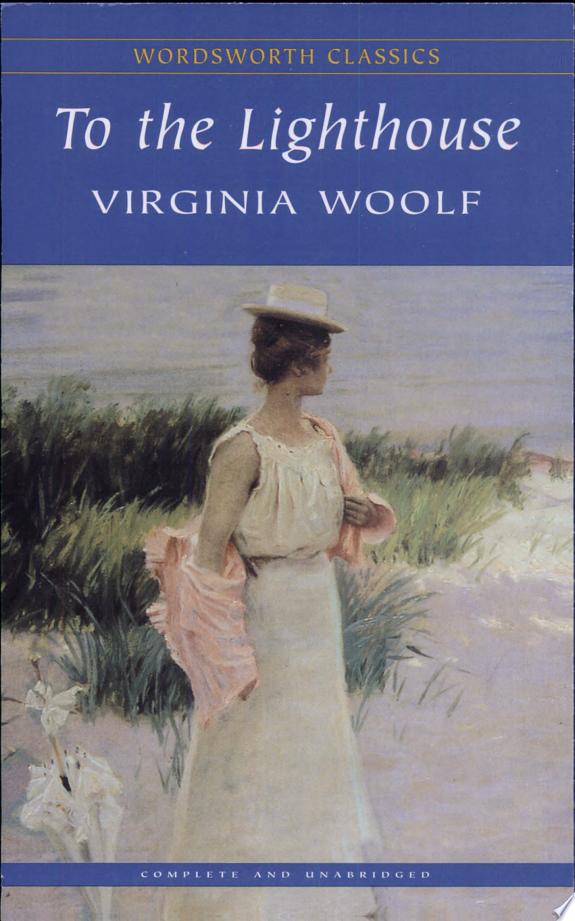
Normative ethics and incest cold open
Cam: You’re a non-virtue ethicist, say, Richard. Do virtue ethicists annoy you a little bit?
Rich: No — I mean, my unifying thing is that they always cash out in consequences. My prescriptive view could be different from my normative view, which is that — practically speaking — no one calculates utility. We’re going to use virtues and we’re going to use rules, i.e. deontology and virtue ethics. It’s just that those happen to encode things which lead to good consequences. And if they don’t, we should change the rule and we should change the virtue. So I don’t really see a huge conflict.
Cam: But I suppose a virtue ethicist would be hesitant to change it. Because it’s all the classic thing — you get rationalists tying themselves in knots over stuff like incest or bestiality. And one response is the Jonathan Haidt thing — it’s fucking yuck, man. That’s your answer. And it’s pretty hard to argue against.
Rich: Well, I sympathize more with the rationalists in that instance. Not necessarily those exact examples, but in terms of — we would never make any moral progress if we held on to our existing intuitions so strongly that we never updated them. So sometimes you do have to do the calculus. It’s just that we’re never going to get a world where moral behavior is dictated by constantly doing calculations. We’re always going to have a world in which people act according to rules and heuristics. So I want to occasionally do the math to update our rules and heuristics, but we’re still going to use rules and heuristics.
Cam: Yeah, and people that are worried about society getting into a place where incest and bestiality are happening — which, to be honest, I don’t think it’s crazy to think of, like…
Rich: I know, man, this is the gays and now the trans people.
Cam: Well, yeah, but you can kind of see a consistent principle — if no one’s getting harmed.
Rich: Yeah, oh, for sure. I mean, I kind of abstractly agree with both of those, but I also just don’t care that much about the rights of the 0.001% of people who want to have a consensual incest relationship or whatever. It’s easy to see the harms of that being normalized. So it’s just unsympathetic groups, but they’re probably technically right in a super spergy kind of way. I think Singer has made this argument before on both of those points, and I think he’s right, but.
Cam: Yeah, I don’t know if I’m de-evolving or not, but I used to have that thought. I remember this girl threw a glass at me — I was drinking at a party — because she thought I wanted to fuck my sister or some shit. I was just saying, well, if I did, don’t throw a glass at me. That was my point, not that I wanted to.
Benny: That’s fine.
Rich: You love making people think poorly of you. It’s crazy — I actually admire that.
Cam: She didn’t think I was autistic, but yeah, it was just — I think I’m back on that, because I’d probably read Jonathan Haidt’s thing, the emotional dog and its rational tail, and said it’s pretty hard to argue against. And then when I sort of ran that argument at a party, I looked around and there was this look of absolute disgust.
Benny: What was going on? Like, I can understand expressing disgust at you.
Cam: I wasn’t talking to her — I was still talking to everyone, and she was just…
Rich: Was that girl your sister?
Benny: I had some people over the other weekend and we were playing Arlo’s card game. You guys seen this thing? Did I tell you about this? It’s pretty fun. You gotta think about who you’re playing it with, because there’s some…
Cam: Prep him for your interview, bro.
Benny: Oh, dude, I didn’t even think about it. Actually, I probably will bring it up. That’s a good little opener.
Cam: I played it last night. She ain’t gonna fuck you, bro.
Benny: I play it by myself. And a card about incest came up. And I was just making the classic Jonathan Haidt points verbatim. And it was interesting — there was a group of Colombians there, from Colombia. And Colombia is quite a Catholic place, most people are raised Catholic, even if they abandon it later. And you could just see the idea bounce off their heads. I was just like, well, if you can guarantee no pregnancy and that people are enjoying it, like, what’s the issue? And it’s just like the whole moral dumbfounding thing — being like, it’s just gross, it’s just wrong, it’s just disgusting. There’s just no penetrating that. It’s fascinating.
Rich: But if you’d brought up fucking donkeys they would have been like, yeah, that seems fine.
Cam: That’s why Eeyore always looks so depressed.
Rich: And half of this has to be — if you bring up the incest thing, in any given group of people, there’s a pretty good chance that one of them has been molested by their dad or their uncle or granddad or whatever.
Cam: That’s the other thing, that’s why I don’t go there. I’m more sympathetic, even just to someone raised religious and who’d find it offensive. At the end of the day, when I was 16, 17, I was pissing everyone off, but I just kind of feel like it’s nicer not to go there sometimes — not to say you’ve been an asshole, but especially with sexual assault and stuff, being close to it sometimes. I’d had one too many drinks and—
Rich: How many drinks have you had thrown in your face, Cam? I lose count.
Benny: It’s higher than your body count.
Cam: Your body count for the week is probably higher than my fucking body count. I remember — did everyone go through that point when you’re kind of young, in your 20s, where you count? You almost know the exact number, and sometimes people write a list, and there’s this pride about having the exact number.
Rich: I mean, I would have known for ages just because it wasn’t that high. I reckon I could still have a decent guess — like plus or minus two or something.
Cam: You kind of forget. There are people that you completely forget about, and if someone else brought them up you’re like, oh shit, yeah.
Rich: So how many drinks thrown at you?
Cam: Well, there was one that wasn’t really a drink. There’s one girl — I actually kind of regret that comment, but I was just really into rap and battle rap. I used to sometimes freestyle, which is corny unless you’re good at it. A lot of rap from the 2000s and early 2010s can be quite sexist, and I’d sometimes riff on famous people’s battle rap bars. And I had this one — I said something like, “your mom has slept with hundreds of men, when I fisted that bitch I swear I shook somebody’s hand,” or some shit like that. Which is a funny bar, right?
Rich: That’s nasty.
Cam: I know, and I was just saying it in general, but the one girl around me — she slapped me. I remember being shocked.
Rich: Did everyone go “oh!”?
Cam: I’m not a rapper. Yeah, she was annoyed. And then it was like the incest comment, and then that one. But in general I wasn’t that offensive to people — you know me, I was like pretty normal.
Rich: Yeah. Oh, if we’re going to talk about the book we should probably talk about it, because I think Benny’s only got like 20 minutes left on the clock. We might not even need that long.
Cam: You’ve got 20 minutes for your favourite book, Benny.
Rich: Well, we’ll be doing this for like 10 more weeks based on your guys’ reading speed.
Cam: I actually did some reading this week.
Benny: Yeah, I’m still not done, but I’m happy for this to be the last meeting.
Cam: I kind of skimmed the “Time Passes” section, so I probably need a little bit of a summary there, but then I kind of read the—
Rich: How are you skimming five pages?
Cam: This is about time, bro. I didn’t actually realize it was five pages. I didn’t even look. I was just prioritizing the lighthouse trip.
Rich: I don’t know, maybe it’s eight pages or something.
Benny: I’d like to see a stream of consciousness account of Rich’s perception of these conversations, where he’s like, “how have these motherfuckers failed to read this motherfucking book for the third goddamn week in a row? Jesus Christ.”
Cam: So Benny, did you read the last section?
Benny: I read the dinner scene. Some of “Time Passes.”
Cam: Benny, Benny, Benny.
Benny: I’m bad at skipping around, especially in fiction. I don’t know. It feels wrong.
Cam: No, I know what you mean — that feeling of it being wrong. I can just do things that feel wrong.
Rich: He does it and then feels bad about it.
Benny: Yeah, stop it.
Infectiousness of social energy
Benny: I think one thing that struck me this time that I don’t think we discussed last time was — especially during the dinner scene — capturing the tones of emotionality of one person’s perspective as other people come in and out of the picture. So from Lily’s perspective, she’s feeling really good at some point. And then — what’s the other girl’s name?
Rich: Minta?
Benny: Because she’s really pretty and newly engaged. The newly engaged couple comes in and sort of captures everyone’s attention. And then Lily kind of feels smaller. And I think Mrs. Ramsey also notices that she seems smaller in relation to this other person. And this is something that — I think you don’t see this alluded to in writing, but it happens all the time in your day-to-day life — the extent to which your psychological state is affected by who else is around. You’re not an island, right? You can be feeling better or worse depending on how you feel in relation to other people. The dinner scene for me was just all about that, and how people’s emotions would swing over time depending on the conversational dynamics.
Tansley, for instance, starts out feeling really mad, feeling overlooked. And because he’s mad, he starts convincing himself that people are talking about inconsequential things — these are all idiots, I wish I could leave. But then Lily shows him a little bit of kindness and he all of a sudden feels much better about himself. And then when he starts feeling better about himself he’s able to be nicer to her. That classic thing — when you’re feeling good, it’s easy to be nice. But character emerges when you can be nice even when you’re not feeling so good.
So yeah, I think that was my biggest takeaway from the dinner scene. There’s this amazing ability in Woolf to capture the dynamics of your emotional state in relation to other people as things evolve over time, just the fluctuations. It’s almost a good advertisement for meditation, or some exercise in being able to centre yourself regardless of what’s happening around you, because it’s so apparent how people’s moods are changing based on nothing to do with what they’re doing — just what’s happening externally. Ramsey gets super pissed that someone’s having another serving of soup. Like, it’s comical. How are you letting this affect you that much? But I think that’s realistic — people do let other people affect them that much. That’s the status quo. That’s the normal state of your psychological life. You have to work hard to overcome that. And yeah, I think when thinking about those dynamics, I’ll probably refer back to this book and this scene in particular as some of the best writing I’ve seen that actually captures those sorts of effects.
Cam: Yeah, it’s funny — something about that status quo, people getting super neurotic about other people, you just want them to chill out. But then sometimes it happens to you, right? People differ with how worked up they get. It definitely happens to me, but going back to the free will stuff — you can’t really change your makeup and how neurotic you get. But it would just be a fix for so many people if they could just be stoic about it, like, this thing doesn’t—
Rich: That’s what Benny was saying about the meditation thing too, right — the first step is just noticing how your own thoughts and moods change and how that might be to do with external stuff, and then you can get some distance. If you’re able to notice it, you can correct yourself, give yourself a little moment to catch your breath before you say or do something stupid, before you start fucking getting mad about this guy eating another serving of soup.
The Chad Carmichael vs the Virgin Tansley
Cam: Yeah, that’s CBT, right? Cognitive behavioural therapy. So Tansley’s a bit worked up as well, which we haven’t mentioned. There’s a class thing going on with him — he’s got a humble background and he’s with all these upper-class people, but part of him kind of loves it. I kind of related to that a little bit. I’m kind of a mutt, with my dad coming from a working-class background, my mum kind of middle, but I’ve got this upper-class friend and when I go around his family and they’re talking about good movies and good literature and stuff — I respected it and I got involved. And sometimes you feel insecure about your background, but then sometimes not. Sometimes you feel proud of it, like a diamond in the rough. Was that going on a bit with Tansley, or am I reading too much into that?
Rich: Yeah, that was going on for sure. I think he tries to use it to demonstrate his own superiority to these people, but it just makes him look like a twat. Just going on about how they couldn’t go to the circus when they were kids, and I only buy this brand of cheap tobacco. It just makes everyone else think he’s a dickhead, basically.
Rich: So it definitely backfires.
Cam: Yeah — he thinks he’s better than everyone else because of where he comes from, but he’s also insecure about it, so he’s got this—
Rich: Yeah, exactly. And everyone can see straight through that. If he held it lightly, or was funny about it, or just — literally any other way of being would have been better.
Benny: And that’s another thing she captures, actually — the ability for other people to register what’s sometimes hidden from the people themselves, and the true motives. So Lily and Mrs. Ramsey see straight through Tansley and know exactly what’s going on. And the Ramsey kids are able to see that Mr. Ramsey is furious before he is. And that’s also pretty reflective of real life — often people can notice, especially if you know someone really well, that they’re about to get worked up before they’re even aware of it.
Cam: And raising it and mentioning it will make it worse.
Benny: Yeah. You’re about to get pissed. And the kids are sitting there excited — oh, Dad’s about to blow his shit.
Rich: Yeah, yeah. And I like Carmichael, the guy who was drinking the soup. He’s just this old chiller poet, and he’s totally serene.
Cam: He just chills on the lawn.
Rich: Yeah, he’s an interesting character because he’s immune to both Mr. Ramsey and Mrs. Ramsey. He doesn’t get bothered when he’s lying on the lawn and Mr. Ramsey’s prancing around shouting out Tennyson — he’s just happy lying there napping or writing a poem. And other characters get disturbed by Mr. Ramsey’s manic energy. But he’s also unaffected by Mrs. Ramsey, who keeps trying to charm him — would you like some tobacco or a newspaper? — and he’s like, no thank you, and just bows very formally when she passes by. He doesn’t allow her to gain that social power over him. He’s just completely impervious to it. It’s kind of awesome — he’s just a big fat chiller. And, spoiler alert, his poetry gets some serious accolades later in life. He becomes a known entity. But he doesn’t change at all. He still just lies around on the lawn taking naps.
Cam: Yeah, that feels a little Wallacian as well — the Ted Schacht character, being the potential role model of not caring about his performance. He seemed to be the one person who transcended status games. And the irony of that is that you kind of win the status games by doing it, but you still don’t care about it.
Rich: Yeah, I don’t even know if we’re meant to think anything about him in particular, except that he serves as a good counterpoint to the other characters being driven mad by one or both of the Ramseys.
Cam: Well, I think it’s interesting that he’s accomplished, and Ramsey is worried about being accomplished — and Carmichael’s not worried. So being immune to Ramsey’s disturbances.
I quite like the start of Part Three where Lily suddenly realizes she wants to paint — to finish her painting. And during it she’s just infuriated by Mr. Ramsey; every time he comes over she just knows he’s going to disturb her, and she just wants to find her own space. Do you guys get that sometimes when you’re reading? You just want to read and don’t want to be interrupted. Reading is quite an interruptible thing. I’ve heard Murakami complain about it — he probably never gets interrupted now, but he’s said if you’re playing a game of tennis, someone doesn’t just come over mid-set and interrupt it. And Murakami’s like, if you know tennis is important, then reading is far more important. But there is a funny thing where if someone’s reading in the lounge, you’d probably come over and just chat with them — not continuously, but you would kind of interrupt it. And it can be hard to find a space. I imagine painting is maybe similar — someone comes over and talks to you and she just needed her space to be creative.
Rich: Yeah, and it’s interesting in that scene — what struck me is it’s not even that Mr. Ramsey literally came up and interrupted her. It’s just that she knows it’s the kind of thing that he does. His presence is so distracting — striding back and forth, threatening to impose himself upon her — that she can’t concentrate on the painting. And I even feel that. If I’m trying to do something and there are people in close vicinity who I know could interrupt me at any point in time — this is why you’ve gotta have a room of one’s own, right? You’ve gotta have a study.
Cam: Well, actually, you’re right. I think she said that — metaphorically and literally — you need it.
Benny: You got a bit by yourself, boys.
Entropy and the passage of time
Rich: Should we talk about what actually happens in the middle bit? There’s the last — well, I did go back and read it again. I found it oddly satisfying. It’s one of the places where the poetic stuff is perfectly on point, I think, because there are very few human events happening. It’s just a really nice representation of the forces of entropy taking over. And it does go into the concrete specifics of the chunks of plaster falling out of the roof, the rats eating bits and pieces, what happens to the garden and the lawns. Yeah, I thought it was actually a really good passage. There’s a bit about the fingers of the night dealing out the dark one after another. I enjoyed the poetry in there.
And it was just really good juxtaposition — this house was bustling with life, full of eight children and all the hangers-on, and then it’s just empty and falling to pieces. There’s just this one ancient cleaning lady coming and sort of tokenistically trying to prevent it from completely falling apart. It reminded me of Ramsey’s concerns about his legacy, whether his work will endure, whether anyone will read his book in the future — and just the ravages of time. It’s pretty depressing.
Cam: Emphasizing entropy seems right. That kind of is the best of your time.
Rich: Exactly. But it’s such a vivid account of it, both in terms of the poetic language and the exact descriptions of what literally happens to the house. The books all get this type of mould on them and have to be laid out in the sun. It’s really sad and poignant. And then the bits where they mention what happened to the humans are so perfunctory that it almost heightens the impact — it’s like, oh, and by the way, Andrew got shelled to bits in a split second. They don’t even mention the war or anything — they’re just like, yeah, Andrew died in France. And Mrs. Ramsey died — it was just in a little parenthetical aside, I think.
Cam: Yeah, there’s something around grief and bereavement — what this book did in that middle passage is it kind of wasn’t focused on people. And then when we’re dealing with the characters dealing with the loss of Mrs. Ramsey and others in different ways, in the final section — it’s relevant that it’s kind of 10 years later, or whatever it was. They’re finally in this position to deal with it, rather than in the immediate aftermath.
Rich: Yeah, it skips all of the big dramatic beats, right? What would have otherwise been the wailing and gnashing of teeth type stuff. It’s just like those events happen in parenthetical asides, and then you’re back to the relative calm once life has moved on. It’s a crazy way to do it, but I think it makes sense for the book, because it’s not about that.
Lily Briscoe as Virginia Woolf
Cam: So — spoiler alert, Benny — in the final section, they finally go to the lighthouse. Mr. Ramsey with two of the kids, Cam, who’s the daughter, and James. And James has this hatred for him, but he’s also realizing he has this love and respect as well. He sees his sister has that too. But they get there. It kind of feels like this catharsis of finally getting there. And Lily is trying to paint, struggling to finish that painting she struggled to finish 10 years ago. And the last page, she completes it with this — she has this moment of inspiration and realizes she needs to draw a few lines. What did you interpret that as, Rich? It kind of felt like they both symbolized the same thing, and I don’t know if it was acceptance of Mrs. Ramsey’s death, or that you can complete creative projects sometimes.
Rich: Yeah, I didn’t find it satisfying, as my meta note. That third section was a real squib for me. It didn’t feel like a very good payoff. I think definitely the dinner scene was far and away the highlight of the book for me. And I liked the middle section as well. I don’t know, maybe talking about it will be helpful, to try and bring something out of it.
Cam: Well, I honestly don’t really know what it means. Essentially — add anything I’m missing — she’s struggling to paint reality, to capture something, and she doesn’t quite know it, and then she finally sort of completes it. And during that final section she’s also missing Mrs. Ramsey.
Rich: Yeah. So if we think about what we know about Lily — who turns out to be kind of the most important character — she’s in awe of Mrs. Ramsey, and maybe there’s some undercurrent of romantic attachment or a crush or something. She wants to be a painter and an artist, but she’s been put down by men like Tansley who tell her that women can’t do this. And then whenever she’s trying to actually do the thing, she gets put off by the presence of Mr. Ramsey. And she knows that her work is fated to be rolled up and put in the servants’ quarters, or left under a couch somewhere. She knows it’s not even going to be viewed as great.
Cam: But she’s also struggling with the object-level of creating great work for herself, her own standards. She’s struggling to complete it.
Rich: Yeah, it’s like she has to reconcile herself to the death of Mrs. Ramsey and her feelings about Mrs. Ramsey — which I assume is a stand-in for the death of Virginia Woolf’s mother. And then her frustration with Mr. Ramsey and the male intellectualism, which she’s both drawn to and repelled by. The positive version of it is William Bankes, who actually takes the time to try and learn about abstract art and understand what she means when she talks about balancing the shadow and the form, and why she would represent a mother and child as a purple triangle or whatever it is that she’s painting. She’s so frustrated, and then she gets enough distance from Mr. Ramsey, and Mrs. Ramsey because she’s dead, that she can finally put the final stroke on her painting and it all coheres and comes together.
The only thing I could think of is it’s kind of like her finding the balance between the sociality of femininity and the intellectualism of masculinity or something. But I don’t know, that’s not very good. And it’s like that Houellebecq thing — a work of art being very central to understanding the book, and then of course they’re never going to actually depict it. So it’s such a vague thing — you have a literary description of an abstract painting that symbolizes the book, and we’re never going to see what it looks like, and we have to take it on faith that she adds this vertical line or something and now everything is unified.
Cam: But I wondered — I imagine that sort of thing could happen with her writing the book itself. And maybe it did happen. She realizes what she needs to put in there to feel like it’s completed. And sometimes it happens — you just have this stroke of inspiration, this one idea that totally brings the book together, and then you have to do the perspiration phase of writing it.
Rich: It’s something to do with Mr. Ramsey being far enough away from her that she can feel fond of him again. And maybe something to do with the fact that he’s literally reached the lighthouse. She’s looking out over the bay at the boat’s progress. He gets to the lighthouse.
Cam: So I think with Virginia Woolf’s biography — her mum died, she had several breakdowns — this was written like a decade after, and she finally got to this place. She had all these hang-ups of comparing herself to her father, and maybe her mother. And it’s kind of this thing of identity, I suppose. Persistent over time. And it’s a thing with young James too — becoming an adult, his identity.
Rich: With Lily as well, because she knows she’s now, you know, an old maid, and she knows she’s not as beautiful as some of the others, as Mrs. Ramsey or as Minta. Also, funny thing — the constant references to her little Chinese eyes. Like, what the fuck?
Benny: Yeah, that was weird.
Rich: Did you guys notice that?
Cam: Yeah, I missed it, I think I was just bouncing around.
Rich: Oh, dude, I thought you would have been all over that.
Benny: Right up your alley.
Rich: They’re in Scotland, so I assume she’s like — a Lily Briscoe type, not necessarily Chinese, just the description of the eye shape. I guess it’s meant to be a description, not to imply she’s actually Chinese. But anyway — I knew this would be a distraction. I shouldn’t have mentioned the eyes.
Cam: Well, you’re right, it’s sort of up my alley. We went hiking the other day and one of the girls — there’s this Chinese-Australian girl — was saying she hates having an Asian nose because sunglasses were falling off her face. And everyone was like, and I was just like, what’s an Asian nose? I don’t actually know what it is, unfortunately.
Rich: Like not much of a bridge to put them on.
Cam: Yeah, I think so. I’ve got a bit of a honker, to be honest.
Benny: Same. All right boys, I think I gotta run. I’ve made Cam the host so you guys can chill out here, keep chatting.
Rich: Yeah, yeah.
sidebar on which book to read next
Cam: Do we just really quickly — what are we reading next?
Rich: We’re doing Gravity’s Rainbow, right?
Cam: I thought maybe we’re going to do Brief Interviews.
Rich: Are we? Oh.
Cam: Which I was kind of excited about, but we don’t have to if you don’t want to.
Rich: Gravity’s Rainbow is fucking hard. If you found this hard, what the fuck?
Cam: I know, that’s what I’m worried about. I need a bridge.
Rich: And it’s 800 pages.
Benny: Oh, boy. Jesus.
Cam: I know. I’m worried about doing it in general. I think it’ll hopefully be worth it, but I don’t want to do it next — I’m at the brink of just going back to non-fiction, bro.
Benny: Woolf broke him.
Cam: Nah, but I read a bit of Gravity’s Rainbow and I was just like, oh, it’s going to be much longer sessions.
Rich: Well, we want something easy. Is Brief Interviews easy? Because I don’t know what it is. I’ve never read it.
Cam: I don’t know, but if you guys aren’t worried about it, I’m happy to jump into Brief Interviews.
Rich: Sweet. Sounds good.
Benny: Sounds good. All right. See you guys.
Rich: See you, Benny.
On finally getting to the lighthouse
Cam: Anything else? Well, I also just wondered what the lighthouse is sort of meant to—
Rich: Yeah, yeah, yeah. That’s the last thing I had on my list.
Cam: I suppose it’s kind of the same thing. No, you go — I don’t really know.
Rich: I don’t really have anything, man. Like, the main thing is the two kids are sitting there in this silent rebellion that their father is totally unaware of, right? They’re like, fuck this guy, we will not be given to tyranny. They’ve been dragged along, they don’t want to be there. And in some sense, 10 years later, nothing’s changed — he’s still making people do things they don’t want to do to sort of make him feel good. And he’s still probably unaware that he’s doing that. This is a classic sort of trait that we talked about last week.
Cam: Yeah. And there’s this Freudian complex going on where — you can tell James doesn’t just hate him because he’s annoying. There’s something around — the Oedipus complex, or whatever it is — of comparing yourself to your father, and to be your own person, you have to either metaphorically or literally defeat your father. So he’s just got daddy issues in general, not just because Mr. Ramsey is selfish, which is also part of it.
Rich: Yeah, I think that’s right. But then he doesn’t do anything to demonstrate his independence — he’s still desperately craving approval. Or at least, we don’t know that, but that’s what Cam your namesake speculates. So basically, he’s at the tiller, he’s in charge, and he’s waiting for his father to rebuke him the whole time — he’s sure his father’s going to be cruel to him and not acknowledge his work. He gets them there, and then his father says “well done.” And Cam’s belief is that James is just going to savour that moment, and it’s a huge breakthrough. He’s scowling because he doesn’t even want to share it or acknowledge it — he just wants to hold on to it for himself. We never actually get James’s interior view.
Cam: Yeah, you’re right. When I read it I kind of interpreted that as a big moment.
Rich: I mean, we have to assume it is. But I still don’t — it doesn’t really fit the pattern of besting your father, does it? You’re still enthralled to him. Is it meant to be satisfying that his father praises him after 10 years? That’s a pretty pathetic outcome, right? Father still doesn’t show any self-awareness, and James still wants to kill him and is just sitting there seething for this entire boat ride. Still not a great outcome.
Cam: Yeah, I find that literal seething rage hard to relate to. I know it comes up in fiction — Succession being a recent one. I think the softer versions of it — your father as a rival, wanting appreciation — are more relatable.
Rich: Also the rival for your mother’s affection, right? But his mum’s dead now, so that even removes that powering element from the picture.
Cam: So it seems like going to the lighthouse is this kind of way of dealing with the loss — at least for Mr. Ramsey. I wonder what it is about it, because it’s quite a thing that happens — you know, you try and do some big hike or some big expedition as a way of dealing with grief. Did you watch the movie Wild with Reese Witherspoon, based on a true story? She’s had this shitty life because of her own decisions, and she has this way of getting over it — just this big walk.
Rich: Yeah, this is a pilgrimage type thing, right?
Cam: Yeah, I suppose it is. And it’s a pilgrimage.
Rich: What is it called in Europe where they do the big walks? It’s not exactly like a pilgrimage but it’s a similar concept — you walk and think and reflect.
Cam: Yeah, there’s that one in Barcelona, right?
Rich: Yeah — the Camino, like 30 days I think is traditional.
Cam: Yeah, I suppose that’s why you can just think. But I suppose this is a bit different — you go with your kids on a boat to the lighthouse. I know it’s meant to symbolize finally going back and doing it, but the mechanics of it — I don’t quite understand—
Rich: It didn’t land for me. Because I know we open on James wanting to go to the lighthouse, and he gets to go there, but he doesn’t want to go there when he finally gets there. And the other thing is I know that there’s a lot of stuff online saying there’s a whole lot of symbolism associated with the lighthouse, but it’s so vague that you could read literally anything onto it.
Cam: What are some other symbols?
Rich: I mean, the obvious thing is that it’s a constant in a changing world. And it’s quite literally in rough water — there’s a storm, and rocks.
Rich: Yeah, exactly, it’s like the safe harbour that never changes. I did like the bit in the middle section where the lighthouse’s beams are sweeping through the empty rooms of the house. It’s so evocative — this house that’s sort of in disarray, and then the one thing that’s still there is these beams of light that just keep going and going. I didn’t read too much into what it means, I just noticed people saying there’s meant to be some symbolism there.
What’s the significance of Lily’s painting?
Yeah, I’ve got to say, that third part didn’t really do that much for me. Maybe I want to read more about what Lily’s painting means — I feel like that’s the key.
Cam: I assume the fact that this is considered such a classic is probably because that third part hits quite hard for some readers. I mean, have you lost anyone? Semi-close to.
Rich: No, not really.
Cam: Yeah. Mine’s just grandparents, which is always quite normal and removed and acceptable.
Rich: Yeah, same kind of thing for me.
Cam: So maybe that’s part of it.
Rich: I don’t know about that, because there’s zero explicit stuff about grief — it’s all completely implicit. I mean, to be fair, this is never a plot-driven book. I don’t think it needs to have some very clever symbolic payoff where this represents that and that’s how you understand it. I think it’s still a good book for all the stuff we talked about last week, but I do feel like it peaked in the first section and doesn’t resolve in a particularly interesting way.
Cam: Yeah. I did quite like — just one small thing I haven’t mentioned — in the third section, Lily seems to be in a dissociative state when she’s dealing with the grief. She’s thinking about it but almost not feeling anything. She’s just witnessing herself and she can’t focus on anything.
Rich: Which I don’t really get myself.
Cam: But I’ve talked to someone that does. You’re right actually — there is explicit stuff about grief in there. She sort of cries aloud, “Oh, Mrs. Ramsey,” a couple of times. I mean, she’s been dead for years, but just coming back to this place and trying to paint a portrait of her where she’s no longer there.
Rich: I guess that’s kind of like really hitting home as well, right? She’s literally working on that same painting — is that right? Like she dug out that old painting?
Cam: Yeah, she remembers the painting she hasn’t finished, and then that becomes what she’s obsessed with — that’s what I want to do. And then she can’t get a space to do it, and she has to — it’s almost like “I have to get to the lighthouse” — I have to finish this painting. And then she finally does. And Virginia Woolf has finally finished the book about her parents.
Final thoughts on why this book gave us trouble
Rich: Yeah. Part of the problem we’ve had maybe is that our format hasn’t jived very well with how you should really read a book like this. You shouldn’t be reading 100 pages of this a week probably — you should be just dipping into it without feeling pressure to get through it.
Cam: I wonder if even talking about it is hard as well. This format is more for, “here’s this philosophical issue that this thing’s touching, what are the implications?” — rather than this, which feels like something that seeps into you and it’s hard to articulate what’s good about it.
Rich: Yeah, I think that’s true of the writing. I don’t think that’s true of the content, though — I think we’ve articulated pretty well why it’s good in terms of the actual subject matter. And then yeah, the writing — I think maybe, like a lot of poetry, it less reveals deep truths about the world and is more just a beautiful reading experience. Which is going to be hard to talk about. You just enjoy this particular configuration of words.
Or it’s like — yeah, there’s this bit in here, the passage talking about night’s fingers, and I was like, damn, that’s such a great description. There’s nothing I can really say about it, it doesn’t reveal anything to me, it’s just a beautiful thing to read.
Rich: That bit about the darkness spreading — that’s good as hell. Just that first page of “Time Passes.” And then —
Cam: That’s top ten material, mate.
Rich: Oh my goodness. “Night, however, succeeds. To-night the winter holds a pack of them in store and deals them equally, evenly, with indefatigable fingers.” Yeah, this is good as hell. I’m going to read this a third time, but I won’t do it on the call.
Cam: Read that passage again. Or the book.
Rich: Just go back to the first of the “Time Passes” section — just read like the first two pages.
Cam: Yeah, I might do “Time Passes” now.
Rich: Good, it’s good as hell. And don’t look for information, because there’s not really information in there — well, there is, but it’s all in parentheticals.
Cam: Yeah, I think it’s probably an important work to just…
Rich: I totally set you wrong too — it’s like 16 pages, not 5.
Cam: I mean, even if I did half of it. Oh — you want to say hi to Cam’s shirt?
Rich: I like your shit.
Cam: Oh, thanks. My beach shirt.
Rich: I don’t like it. So it balances out.
Cam: We should call it anyway.
Rich: Yeah, I’ve got to go look after my child.
Cam: Yeah, sounds good.
Rich: Benny got mad and actually left the call early.
Rich: He was jealous of Cam’s shirt.
Cam: Yeah.