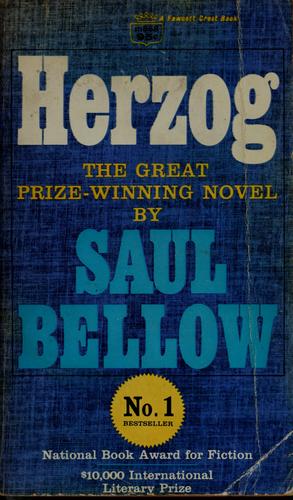
Wrapping up Saul Bellow’s Herzog, where the going gets tough and the tough take baths.
First up, the failed murder. Herzog gets his dad’s old revolver, works himself into a state of total conviction that killing his ex-wife Madeleine and her lover is not just justified but righteous, and then loses his nerve at the last moment while watching the guy give his daughter a bath. A brothers K rerun?
Up next, potato love: Herzog’s own dismissive term for humble, unglamorous sentimentality. The stuff he’s spent the whole book mocking while secretly craving it. And Rich’s new favorite concept handle.
Finally, the Nietzsche breakup. A final burst of letters, an uncalled for closing shot at semen reabsorption as the fuel of creativity, and the implication that Herzog doesn’t resolve his arguments so much as simply stop needing to win them. Plus the book’s real-life backstory.
intro, and loving Herzog more the second time around
Benny: Welcome back to Do You Even Lit, part two of Herzog. We’re stepping out of his brain somewhat, finally, in this episode, and some things actually start to happen in the book, which is either depressing or refreshing depending on how you look at it. So before I give a brief gloss — how did you guys feel about it? Did you like the second half? Did your predictions hold up?
Rich: I love this book now. I had such a good time.
Cam: You liked it the first time, didn’t you?
Rich: Yeah. But I really liked it now. I don’t even know why I liked it. I was just really enjoying it, and it was a bit of a page-turner. And it was only after I was finished that I tried to think about what it all even meant, but I was just very happy to be on the journey. I think I got some clarity and resolution on it — maybe at least as much as Herzog does, which is —
Benny: Arguably not that much.
Rich: Yeah. Circled from obvious mental illness to maybe mental illness.
Cam: No longer writing letters. It’s progress.
Rich: Decrepit country house to lying in decrepit country house, still eating beans out of the tin. But it’s about the journey, and I had fun. What about you, Cam?
Cam: Yeah. I mean, I don’t have too much more to add, but I liked it.
Rich: I’ll wrap up now.
Cam: The second half is a little less discursive and more plot-driven.
the custody plot: Herzog gets his dad’s gun
Benny: Let’s just dive into the first major plot point here. So if people will recall, we left him in his house, lying around on the sofa and thinking a lot about the letters he’d like to write people, and that took us about an hour and a half to analyse last time.
But the first major thing that happens is he is convinced that he wants to regain custody of his daughter June, or at least see her for more significant periods of time. So he goes to visit his lawyer to discuss the possibility. In the courtroom, he sees some additional hearings, one of which is a mother who’s been accused of killing her own child — I forget if it’s a son or daughter — by, I think, bashing the child against the wall, which is pretty gruesome. But it’s written in an absurdist style almost, where you can’t believe what you’re reading.
And then, convinced that he really wants to get June back, he gets his dad’s old gun and tells himself that he’s gonna go kill Valentine and Gersbach and take June away with him.
Rich: Madeleine and Gersbach.
Benny: Oh, yeah. Sorry. Madeleine and Gersbach. And how that story ends exactly in his head is unclear — what he’s actually gonna do once he gets June and has committed two homicides. He doesn’t exactly think about it. But he definitely wants to see his daughter. There’s no question about that.
And he tries to go do that, and fails, because he basically sees Gersbach being nice to his daughter through the window as he’s spying on them — sees Gersbach helping his daughter take a bath, basically — and decides he doesn’t wanna do that, and runs away with his tail between his legs. So that’s the first major piece of action, which only happens one half to three quarters of the way through the book.
So there’s a couple of interesting things to analyse. One is just why he actually changed his mind. Why did he fail on this mission? Was it just that he saw Gersbach being a good guy and decided he can’t kill him for being good and for being nice? Or is there something deeper going on — what actually affected his psychology? And second, all of us, I guess, realised — me with the help of a random essay I came across about Saul Bellow’s life — that there’s some connections with Brothers K here.
Cam: I made that connection myself.
Benny: That’s — I mean, I’m genuinely impressed. This would not have been on my radar at all. I would not have thought about this. And in fact —
Rich: Do you mean Crime and Punishment, or do you mean Brothers K?
Benny: No, I mean Brothers K.
Rich: Oh, okay.
Benny: Were you thinking of Crime and Punishment? Oh, interesting.
Rich: I’m intrigued.
Cam: I also keep thinking of Nabokov. It’s like Pale Fire as well, this book.
Benny: Look at this guy, man.
Cam: Well, just how he’s kind of crazy, right?
Rich: Can I just stress one thing up front, which is that this isn’t a half-hearted, going-through-the-motions kind of thing that he’s planning, where he’s inevitably gonna wimp out? He has total steely conviction, and he says that he is in the perfect state of mind for being able to commit a justifiable murder. And he will do it with a clear conscience, and they deserve to die. And there’s no need to explain anything to them, because they already know why. He’s gonna do it. Unreliable narrator aside, we don’t get any hint that he’s —
Benny: He’s faking it.
Rich: Yeah. Which is just interesting to begin with, because I don’t think I can imagine being in that state. I can imagine being in more of a Raskolnikov-y state of being like, I hope this goes well, and I can be a big tough guy, but it might not.
Benny: But can you imagine yourself being in the state of wanting to commit murder, even if you’re not sure that you’re going to be able to pull it off? Can you imagine yourself angry enough?
Cam: I’ve never really got there.
Rich: Every day. Every single day.
Benny: Whatever — Cam’s fucking microphone doesn’t work.
Rich: People who leave their dog shit on the footpath, playing their stupid-ass music out loud in public — every single day I enter a homicidal rage, but it recedes quickly. It wouldn’t see me through to killing. It would just fizzle out.
Cam: Yeah. This is like that David Foster Wallace, halfway through Infinite Jest — the woman he loves doesn’t want him back, and he’s thinking about murdering her husband, throwing plates.
Rich: I just think it’s the kid thing that really breaks the realism for me. And sorry, maybe this is jumping around slightly, but since it comes to mind — his relationship with June —
Benny: No, this is good.
Rich: — who is supposedly the one that he’s doing this for, is really shallow.
And one thing I found jarring throughout the book was — being a dad, the thought of being separated from my daughter is existentially terrifying, and I’d do anything to stop it. But he never talks about his kids except in very abstract ways. There’s no tenderness between them. They’re not constantly in his thoughts.
And then when we get to the Gersbach scene, which we’re probably gonna talk about, when Gersbach is bathing June and being really cute with her, that’s the first moment of actual fatherly tenderness that we see in this whole book, and it’s between another man and his child. It’s just very cute and wholesome, just nice, quotidian, everyday love kind of thing. He cares in an abstract way, but we never get to see it. We never get to see him musing or remembering fondly this or that, or being heartsick about the prospect of not seeing them. He’s just kind of trying to do his duty.
Benny: Yeah. He feels almost motivated by the feeling that someone in his position ought to act this way. Like, if this had happened in one of the great books I had been reading, then surely the main character in that book would have tried to enact revenge on these two people and stolen the daughter away. That’s surely what a great man would have done — to bring it back to some of the great man stuff we talked about last time. And so he feels like he ought to step into that role, and is convincing himself of trying to do that.
Cam: So do you think he’s almost consciously playing out a Brothers Karamazov scene? Because he’s been writing letters to — whoever else.
Benny: Yeah. I think there is this tension where he has all this knowledge of all these books, and he’s writing letters to their authors, writing letters to these philosophers. It feels like he knows a lot intellectually about certain principles and certain plots and certain storylines, and he feels like he ought to live a life that belongs in one of these great books. And yet his day-to-day existence doesn’t comport with that at all. And ultimately, he breaks from that, I would say.
the Brothers Karamazov parallel: two men who couldn’t pull the trigger
Rich: Just for the benefit of the audience, can one of you guys spell out the Brothers K connection here? And not because I’m feeling slow, but for the —
Cam: For the audience. Sure. So he’s planned to murder his ex-wife and his ex-best friend with the revolver, and he sneaks through the backyard and goes right up to the window and sees Gersbach bathing June, and has a change of heart. And that was reminiscent of the scene — I might get it wrong — but I think Dmitri, in Brothers Karamazov, decides to kill his father —
Benny: Fyodor. Yeah.
Cam: — with the pistol, and, you know, the Freudian, phallic pistol. And he goes in, and he doesn’t get a change of heart, but he doesn’t commit the murder, because the father’s not home, but then ends up getting into trouble. So I suppose there’s one difference. I think Dmitri ended up maybe killing Smerdyakov, or I might be bungling it. But he gets into trouble with the law, and here we see Herzog gets into some trouble — almost trouble with the law — but ultimately is okay.
But it did seem like he was just throwing his life away, and maybe he has a little bit, with June, where he had this idea, he has this change of heart, and then he still gets into some legal trouble for having the gun on him.
It reminded me of a take I remember seeing once, which I liked, about the movie Fargo, where the William H. Macy character wants to set up a fake home invasion and kidnapping of his wife, and it goes wrong. And the take was something like, you can’t ever fake things like this. If you’re setting up a fake kidnapping, you are setting up a kidnapping. It’s hard to distinguish the two. And that’s kind of what happens with Fargo, and a little bit what happens with this. Even though he didn’t go through with it, there’s still consequences.
Rich: You mean because he’s got the gun on him when he gets into the traffic accident, and it’s got two bullets in it, and Madeleine tries to argue that they were for her?
Cam: Yeah.
Benny: For both Dmitri in Brothers K and Herzog here, they both get pinned, essentially. I mean, Herzog ends up getting away with it, but they both get pinned. They both didn’t do it — they both backed out at the last second. But in Dmitri’s case, he runs across Grigory, the servant, and does bash him in the head, and so he gets himself covered in blood. And then, importantly, in Brothers K, Fyodor actually does get murdered that evening, just not by Dmitri. And so Dmitri is found later covered in blood, admitting that he was at the scene of the crime, and everything looks very suspicious, and then he gets pinned with the murder.
Here, a similar thing happens, where he decides to leave the house, starts driving away, but then gets into a car accident, and the cop finds this loaded gun with two bullets in it, and he’s unable to talk himself out of it, and so they bring him to the station. So in both cases, the person does get pinned. It’s a little less severe in Herzog’s case. Ultimately, this is more of a comedy, I guess.
But there is this element of planning to do something, not doing it, but then facing the consequences regardless, which is an interesting moral luck kind of thing. In some ways, you’re still the person who planned to do this bad thing. So should you be fully exonerated? Because there’s something in you that almost has the capacity. Okay, sure, at the last second you backed out, but are we to believe that you would never be able to actually do such a thing had the circumstances been slightly different?
Rich: Oh, yeah. Are we thinking that if he arrives at the house and Madeleine and Valentine are doing the dirty at that moment, then he will kill them in cold blood, perhaps — rather than stumbling upon a wholesome expression of mundane human love?
Cam: Well, I mean, so this is seeing this happen, right? When you first see him bathing the child, you hope it doesn’t go the other way. But we’re seeing this nice, wholesome act of fatherhood, or stepfatherhood. That’s kind of what changes his mind, right? And he realises it all, and he’s like, what am I doing here? I think he even says something like, this is all just theatre. This is ridiculous. But that’s the moment he totally changes his mind, right?
Rich: He realises he would be the fool, not the others. He would lose his self-regard by following through with it.
And the other little echo that I wanted to mention was that his own father, who he loves and remembers very fondly, owned this gun. His own father was also kind of a softy, pushover guy of bright ideas, who would sometimes get beaten up by criminals and have his merchandise stolen and stuff like that. And the only time he pulled his gun out, it was to threaten his son, who he considered contemptible, with his elitism and being a layabout and so on. But of course, he never followed through with it either. And Herzog thought that he was acting out the type of manliness that he thought he ought to have. And it’s not exactly subtle symbolism that he takes his father’s own gun and then tries to act out the same manliness and fails in the same way, I think.
potato love: Herzog’s word for humble, unglamorous love
Rich: And just to blow my load right up front — I think the arc of the book is just this realisation that the sentimentality and softness in people is not something to be ashamed of, or not something contemptible, and that it can be something beautiful and worth preserving, and maybe even what makes humans special.
So maybe we can talk about that later, but I just wanna flag that this is his term “potato love,” which he keeps referring to throughout the whole book, usually in a very self-deprecating or dismissive way — making fun of the peasants and their potato love, and his own humble origins of growing up poor with potato love. And then I think in the end, I don’t know if he comes to embrace potato love, but he certainly rejects the Nietzschean hard man, master morality stance, I think. Actually, we should talk about that, but I think that’s kind of what’s going on. So he gets some moral resolution and clarity about what is the good in life, or at least what to avoid in life.
Cam: It’s probably worth just unpacking what potato love is, because it’s kind of an odd phrase, right? But I mean, my understanding is this. In the first half of the book, he’s often quite dismissive of it, and he notices it in other people. When he goes to see the lawyer, he notices instances of potato love in others. And he initially characterises it as this superficial sort of love, where you’re not treating people as an individual — just being nice to guests and things like that, maybe complimenting a nice dress and stuff like that. It’s the things that humans do. Anything else to add to potato love?
Rich: I’ll just read this one quote, which I wrote down from last time:
Hearts quaking with cheap and feeble charity, or oozing potato love, have not written history.
Which is what we talked about last time, about the idea of being the kind of person who will be a singular individual who history will remember. And so he’s giving voice to the thoughts of some of those thinkers that he’s read who would make fun of that. A little bit like what we talked about with Middlemarch and George Eliot.
Benny: So it’s the kindly acts of normal people who are taking care of others in their day-to-day environment, as opposed to, I don’t know, grand, romantic, historic gestures.
Rich: Yeah. I wasn’t quite sure why potatoes, but I think it’s just because it’s for poor people — cheap, ordinary.
Benny: But you can live on a potato diet pretty healthily for a long time.
Rich: Yeah, totally. It’s not grand. It’s just humble and unassuming.
But I’d already noticed this throughout the first half of the novel, that there is this tension. He’s often mocking ideas that he himself actually acts out. And one of them is that he’s mocking potato love, but all of his reminiscences of Napoleon Street — of growing up with his heaps of siblings and being poor and his dad being a kind of failed hustler and so on — are all really rose-tinted and warm. I think he’s almost universally very fond and nostalgic about that, and bends people’s ear about it. And Madeleine gets pissed off with how much he talks about Napoleon Street, and Mama Herzog and Papa Herzog.
So there was already that tension in him, I think, where he’s kind of just coming back to what he already knew right from when he was a child — if my thesis is halfway right — that he’s thinking that actually that is the point. Or at least if it’s not the point, it’s a point. It’s something special to hold on to.
Benny: Yeah, that’s very interesting. Okay. So I was thinking that one reading of the book — which I’m not sure I agree with, and I can’t imagine is actually right, given what we know about Saul Bellow — but one possible reading, I think, is that all these highfalutin ideas that he’s carrying around with him — these philosophers and these authors, these famous people, this world that he’s entered where he wants to be famous writing these books, et cetera — that this is all quite useless, and is just making him unhappy, and is giving him these grand narratives for his life that he ultimately doesn’t fulfil. And that he realises later he needs to cast them away, and that’s done by the end of the book — to just go there right away — where he stops writing letters and doesn’t feel the need to do that anymore, and then to engage, perhaps, in potato love.
I don’t know what to make of that. It’s hard for me to totally discard that thesis, because there is this arc to the book where it’s this very disturbed but learned individual that’s running through all these narratives in his head of these great thinkers. They ultimately turn out to be quite useless for him, and they seem to just make him depressed and anxious. And then ultimately he doesn’t engage with them anymore, and he seems much happier.
Rich: Oh, now I’m getting Anna Karenina flashbacks, of Levin renouncing philosophy as being totally useless.
Benny: Yeah, almost something like that. Or you could take a great man view of it and say he just wasn’t one of Dostoevsky’s great men, and so he shouldn’t be engaged in the world of ideas and philosophy. That’s not for people like him — for normal people like him, like us. We should just be living our lives in the potato way, and forgetting all these grand ideas.
So again, I don’t actually love that thesis. For some reason I’m hesitant to adopt that about the book, but I think it is one way to take it.
Cam: I’m not sure if this is potato love or not, but I remember — this is the cynic in me — one time I was, like, one of the most frustrated I’ve —
Rich: I fucked the potato.
Cam: The potato. Mashed potato.
Benny: It was mashed after, at least, for sure.
Cam: Well, one time I remember my mum was visiting, and I think I had a friend over as well, and they were chatting. They were just doing small talk, and they were talking about their travels. And it was so superficial, and I was getting driven insane. The whole thing — “Oh, I went to Italy.” “Oh, that was lovely.” And I was just like, it was all just nothing. And that’s half the reason people travel, you know, and it’s nice. There’s an element of it that is nice, but there’s this lack of specificity.
Rich: Just voicing generic platitudes, and low-information chatter. Yeah, I think that’s right.
Cam: And I wondered if there’s this other aspect of potato love where it’s loving the idea of somebody more so than the individual person. Loving the idea of this nice, ideal wife, very feminine stuff, but not actually loving the person you’re with, necessarily.
the child-killing trial, and humanity’s urge to bite and pity its food
Benny: Okay, one other thing that I just briefly glossed over that I wanna mention — I’m not sure how it links to what we’ve just been discussing — is this trial of the mother who is charged, at least — I’m not sure if we actually see her convicted, I can’t remember — with killing her son, and how this is just a reductio ad absurdum of the suffering Olympics that we talked about last time.
So we discussed that there’s this perspective on Gersbach where he’s actually maybe more of a victim than Herzog even is, because — oh man, you’re forcing me to sleep with your wife. How dare you do that to me? Imagine what that does to my psyche.
Cam: He’s got the peg leg as well. He gets a lot of points for that.
Benny: Yeah. And then in the courtroom, he just runs into this case where it’s absolutely pointless to try and run a similar logic on this woman, right? No one in their right mind is gonna try and say that a woman killing her son is suffering more than the son did, especially when the death was by smashing the kid against the wall.
And one wonders if seeing this kicks him into reality enough where he’s like, oh, actually, this victim suffering complex is bullshit, and now I don’t feel bad for Gersbach at all. I realise I’m pronouncing Gersbach’s name differently every second sentence, but forgive me. It’s the lack of sleep. And if this is finally what puts him over the edge — like, I’m gonna kill him now, because I don’t view him as a victim, and he’s just been a dick to me, and now it’s game over for him.
But I didn’t know what else to make of that scene. Not that it didn’t fit in the rest of the book, but I was like, I’m not sure what this is doing.
Rich: Well, I just have a more pedestrian reading of it — which I’m sure there’s more to it than this — but it’s just that it acts as the catalyst to get him to go and try and take custody of June, because he’s already been having these little fantasies, or suspicions, about whether June could be being mistreated. And then he sees, oh look, negligent parents literally killing their little defenceless child. Therefore, I have to go and be the hero and save the day and do what’s right. It’s feeding into his fantasy, or delusion.
And maybe another, slightly deeper layer to it is just being forced to see the worst in the world and the worst in humanity, and remember that some people are like that. And so you could project that onto other people, or onto yourself, and say: people are just violent brutes. There’s no depths they won’t stoop to. Everything is justifiable. Might is right. Why shouldn’t I kill, you know?
Benny: Which is always ironic for the killer to say right before they’re about to engage in an act of violence themselves, right?
Rich: Yeah. Maybe just let me introduce this one passage, which I found really interesting, and which I think slightly maps onto this. I just really liked it — he’s talking about Schrödinger’s little booklet, What Is Life? And he says:
You say that in all of Nature, only man hesitates to cause pain. As destruction is the master method by which evolution produces new types, the reluctance to cause pain may express a human will to obstruct natural law.
And then he goes on to point out that humans also have all of the normal, base animal instincts to take what you can get and plunder and rob and steal and do whatever you can to survive, in the more nature red in tooth and claw sense of it. And there’s just that fascinating tension in humanity. So the way he puts it is:
To have everything, to combine all elements with immense ingenuity and greed, to bite, to swallow, at the same time to pity your food.
Which, maybe now that I say it out loud, is almost cliché — good and evil lie in everyone’s heart. But it is just interesting to say that the one special thing about humans, maybe, is to feel sentimental, and to feel a feeling of brotherly love towards unrelated people and so on, alongside the impulse to smash their heads in, depending on whether they cut you off in traffic or something. Anyway, I just really like that passage.
Cam: Yeah. And I agree — this seemed like the big instigating point of his decision to murder, right? It’s feeding his paranoia. I think there was a little kernel planted earlier, which maybe I mentioned last time, when he found out about June being locked in the car during an argument. So he’s got this idea that she’s being abused, and Gersbach must be a bad stepfather.
Rich: Well, actually, her being in the bath — now that you say that, it’s very powerful, because it’s such a vulnerable state. It’s a grown, strange man alone with your little daughter, naked in the bath. It’s just the perfect setup for horror, right? And then what you see is just the total inverse of that.
Cam: Yeah. You can kind of imagine he’s got the gun ready, and Gersbach is putting his hand in the bath, and then he’s just grabbing the rubber ducky or something like that.
Rich: Well, it’s just fascinating. Not only is he bathing her in a brisk but loving way, he drains the tub and then wipes down the tub and powders everything and stuff. I’m like, damn, I don’t do any of that shit for my own kids.
Benny: What kind of a dad am I?
Rich: Like, powdering them. What do you powder children with, by the way? Is it powder that’s meant to be put on a child?
Cam: I feel like I’ve seen it in movies, right? It sort of clouds up. It’s probably called baby powder.
Rich: So that’s what baby powder is.
Benny: What age do kids start taking proper baths at? What age do they get out of their little kid baths that you can put in the sink?
Rich: Oh, we just put her in the big bath right from the outset. Just a few centimetres of water —
Benny: Really? Oh, wow.
Rich: — and they love to splash about.
Benny: Nice. That’s cool.
Rich: It’s a powerful image that he chose there. More powerful than I realised as I was reading it.
Cam: I mean, speaking of parenthood as well, I also liked when he’s with June, finally, and she asks him to tell her her favourite stories. And I just liked his stories. One of them was about the boy with freckles, and each freckle was like a star in the solar system or something. But one was unexplained, and they’re asking all these scientists, and no one knew, and then they asked some old monk or shaman or something, and he’s like, oh, that one is the one star he’s been tracking.
But I just had the thought — Bellow is this great author, and has kids, and he’d be able to make good stories, fun stories, and the kid would have great bedtime stories.
Rich: I like this better than Dosto, I think. It is kind of in the same vein, but just tighter and better writing, and less saccharine, more ambiguous.
Cam: So should we move on? Next, I mean, he just kind of goes and retires in Ludeyville, right?
Madeleine takes June, and an unreliable narrator’s sob story
Benny: Yeah. So he gets in some trouble with the cops. Madeleine shows up, takes June away, gives him this very scathing look. And for me, it was actually that scene where I thought we’re perhaps in the most danger of being taken in by an unreliable narrator, because he paints Madeleine as pure evil — showing up to just steal June away from him, and to show her good side to the police officers, to dupe them, to make it seem as though it was all Herzog’s fault. But in some ways, objectively, the situation is that he showed up to kill these people, then he got in a car accident with June.
Rich: Yeah, but she’s the bad guy.
Cam: But he changed his mind! Oh, that is funny.
Benny: I just realised I’m confused about something. How did he actually get June? June was in the car when he got in the car accident, right?
Cam: Yeah. But she was alright — he was sore, but he didn’t puncture her lung or something. She was fine. That’s what I was first worried about.
Benny: But he just collected her at some point? When does he actually get her?
Cam: So he had a friend who I think was dating the babysitter for June. So that was his in to get June, because Madeleine would never let him get June.
Rich: They did the third-party handover thing.
Cam: But would Madeleine know it was going to Herzog?
Rich: Yeah. She said it’s fine. She just doesn’t want to see him.
Benny: They just don’t wanna see each other.
Cam: That’s important. Yeah. Doesn’t wanna see him.
But it’s funny — I was gonna say, you said how she came in and she was trying to dupe the police officers. I think there was even one scene where she’s coming in, and from his perspective being really unreasonable, and he kind of goes to the cop, like, can you believe this woman? This is what I have to deal with.
Rich: He senses she’s overplayed her hand at one point, right? And that the cop is being like, methinks the lady doth protest too much, kind of thing.
Cam: Maybe when she’s saying there’s bullets for her, right? And she’s like, “This bullet — this gun.” And he’s like, can you believe this one? This is what I have to deal with. Crazy.
Rich: And he’s like, well, but there’s two bullets. So who would the other one be for?
Cam: I know, but she doesn’t respond, right?
Rich: Because she can’t — because she doesn’t wanna say in front of the cop that it’s his best friend who she’s having an affair with. Which makes her lose the moral high ground a little.
Benny: Yeah, that’s true. That is funny.
Rich: But she’s definitely trying to stitch him up in that scene, right? Or — I mean, maybe we have to discount it because of the unreliable narrator. But when I was reading it, I was like, yeah, Madeleine is a sneaky motherfucker. She is trying to insinuate that he’s been violent and abusive, and that she took out a complaint against him and just hadn’t followed up on it, and that sort of thing. She wants to just take June away from him permanently.
Cam: Like, get him in jail, right?
Benny: Yeah, but then you have to think, also from her perspective — she’s showing up to the police station to collect her daughter, who’s just been in a car accident with her ex-husband, who has been found with a gun with bullets in it. Maybe you’d also be slightly paranoid and angry and wanting your daughter out of there, you know.
Rich: My reading of it was that she did not think Herzog was, in fact, trying to kill her and Valentine, because she doesn’t think he’s capable of that kind of thing. But she was trying to suggest that that could be what’s happening.
Benny: I know. That’s what it felt like, being written from his perspective. But I guess I’m just saying that was a point in the book for me where I felt like, okay, are we getting some unreliable narration here? Is he just trying to pull us too much into his manic worldview, where everything she does now is tainted and dishonest? I don’t know. Maybe.
Anyway, his brother comes to pick him up from the police station. When he’s discharged, they go back to his house in Ludeyville, that he had originally bought with his dad’s inheritance money — $20,000, I believe — out in the country. And interestingly, he is becoming more and more at peace while he’s there. He starts to do some gardening, recovering his strength. From the reader’s perspective, I think we’re seeing him become less manic, less crazy, regaining his composure, his sense of self-control, his sanity.
But it’s interesting from other people’s perspective in the book. It’s almost at this point where they realise that something is maybe wrong. His brother, for instance — his brother and his wife are now convinced that he needs to go to therapy or be hospitalised or something. And so there’s this inversion, where he seems more normal to us for the first time in the book, and less normal to everyone else, and people start to worry about him.
Cam: They start intervening, right?
Benny: Yeah. I’m not sure what to make of that. One of us is wrong, surely. Both of those perspectives can’t be right.
Cam: Well, they just didn’t see how bad he was, right?
Rich: You should have seen me a week ago.
Cam: Don’t worry.
Benny: Couple of letters here and there. No big deal.
Rich: I mean, he got back on the letters, though, too, we need to say. He started this book manically writing letters. He had another good burst of letters at the end here, before he finally puts his pen down and decides that enough is enough.
Benny: They seem to have a more final tone to them, though. He was coming to terms with, I don’t know, either his life or something. I got the sense that they were less random, and they were more —
Rich: Less fragmented, too. Less jumping all over the place. We got some fairly long ones — a long one to Nietzsche, a long one to, maybe it wasn’t to Kierkegaard, but it was to a scholar regarding Kierkegaard. Just kind of laying out reasonably cohesive positions.
Cam: It might have been one of Kierkegaard’s pen names. He’s got, like, five of them. I don’t know.
Benny: Right. And didn’t the one to Nietzsche say — the spirit of it was, if I remember, just: we’re gonna agree to disagree here. I don’t think you’re fully right about this, but I understand where you’re coming from, and that’s that.
the final letters: making a clean break with Nietzsche
Rich: He also had some sick burns on Nietzsche in another letter that he was writing, when he said:
Nietzsche said strong natures could forget what they could not master. Of course, he also said that the semen reabsorbed was the great fuel of creativity. Be thankful when syphilitics preach chastity.
Benny: That is funny.
Rich: So I kind of got the impression he was really making a clean break with Nietzsche, with Nietzsche’s ideas. Making fun of Nietzsche, where previously he had been making fun of the people who Nietzsche makes fun of — i.e. Christians and, I suppose, slave moralists.
Benny: Yeah. But I didn’t get the sense that he had really resolved his questions. It was more that he’s gonna stop asking them, and that he’s okay with uncertainty, and doesn’t feel the need now to continuously engage in these arguments with these thinkers and tell them why they’re wrong about all this stuff, right? It’s kind of like, okay, I just don’t feel the need to criticise them anymore. It’s not as if he felt that he had actually resolved the issues, or aligned his worldview with theirs, or anything like that.
Cam: And so he’s writing these letters at the end, but the final line is something like, he has nothing left to say, right? I’m just trying to find it. Yeah:
At this time he had no messages for anyone. Nothing. Not a single word.
So his manic letter-writing spell is over. He’s potentially found peace, at least momentarily.
Rich: I think the strong implication is that he has settled something in his own mind, even if we’re not fully privy to it, or we have to speculate. Or at least the urgency of it has died down, and he’s more willing to live in the ambiguity or something like that. But there’s definitely this real sense of peace and tranquillity in this last section, which makes it kind of a feel-good book, in spite of the fact that he’s still kind of a sick, crazy guy living in his shack, falling apart.
Cam: The other thing he seemed to change on, perhaps, is his attitude towards women, or Ramona. He seems open to the idea of marriage or something — it’s not all about sex with her. It’s this way of searching for, or finding, something that’s missing. But he won’t rush it, as well. He won’t rush into marriage either.
Ramona, and giving up the ‘great man’ act for good
Rich: Yeah. At first I thought this was a somewhat misogynistic book, or at least that Herzog the character’s mindset was fairly misogynistic. But I don’t know if it is. I think more what’s happening is his hatred and rejection of Madeleine, his ex-wife — he resolves that in a peaceful way. I don’t know if he gets over it, but he makes progress on that front. And as you say, he becomes more mature in his attitudes towards Ramona, which is kind of like opening his heart to female love again.
And there is this quote in here where another self-limiting belief that he has is that to look for fulfilment in interpersonal relationships was a feminine game. You entered the female realm if you shopped from woman to woman with the desire for pure love. And he talks about Napoleon giving away his power when he enters the boudoir.
Cam: Yeah, I remember him saying that. What does he mean by that?
Rich: He was saying that basically this idea that you get meaning in life from your interpersonal relationships with people — from love, or deep friendships or whatever — is kind of, in modern parlance, you’d probably say it’s gay or something. Whatever the slur of the day is. But the slur of that time is that it’s girly, or sissy, or feminine — which, to my immediate reaction, is like, of course that’s stupid. But I think he probably thinks that to some degree, and so he’s making progress.
And Ramona, from what I remember, is nothing but a great woman, from what we see of her, who seems to be very good for him. He’s very sweet with her, and it would be great if they ended up together and had a nice life together. And we don’t see that happening, but we see real, really good, meaningful progress in that direction. And worth noting that she comes to visit him here at his country estate for the first time, shortly before the end of the book, and I think they have a really nice dinner together, is that right?
Benny: Yeah.
Rich: In this romantic setting. Which — the other point is that he’s a scholar of Romanticism, and it only just clicked for me that he bought this country place out in the Berkshires so that he could live this romantic, bucolic fantasy. And now he’s living in the ruins of that fantasy.
And I was gonna ask you guys — I wasn’t sure whether it was meant to be ultimately an endorsement of that element of Romanticism, of returning to nature and so on, or a condemnation of it. Because the actual text says:
No one came here. He had only gentle, dotty old neighbors rocking themselves to death on their porches, watching television. The nineteenth century quietly dying in this remote green hole. Well, this was his own. His hearth, these were his birches, catalpas, horse chestnuts, his rotten dreams of peace.
But he is at peace, or he’s moving in the direction of being peaceful. So I don’t know. What do you guys think about that?
Benny: Yeah. I mean, I’m struggling with the overall thesis of the book here, because I can’t help but go back to this anti-intellectual frame of things, where it’s just like, early on, he was thinking too much. He was engaging too much in these fruitless endeavours of trying to come up with grand historic narratives, and have them compete with the grand historic narratives of other great thinkers. And now that he’s not pursuing that anymore, he’s free to be at peace, and relax, and be himself, and take joy in the things around him and the people around him. And I can’t help but think that this is a somewhat simplistic reading of it, but I just can’t escape it, for whatever reason.
Cam: Yeah. No, that feels right. So, like, to pass it back on to Rich’s question — it seems to be sympathetic to nature, but not endorsing the fantasy of escaping humanity via nature, or whatever it is. There’s this fantasy, and it doesn’t work, and it doesn’t live up to it. But once he’s confronted his ex-wife and his daughter, and seen the ridiculousness in the courtroom, et cetera — I suppose now that he’s not looking for it to save him or something. I don’t know. When you say it, it sounds kind of —
Rich: No, I think you’re kind of onto something. It’s like he realises the vanity of his own pursuits — that he was chasing a type of image, or trying to emulate something that some philosopher said or something like that, and that it’s a kind of silly, goofy thing to do. But then just enjoying those things purely on their own merits, and maybe in a more authentic way — that’s probably more in keeping with the actual tradition of Romanticism. Probably would help to know a little more about Romanticism here, but, yeah, we’ll get there.
Saul Bellow’s real-life betrayal, and why he wrote a book instead of more letters
Cam: I was reading about Saul Bellow, and I think Benny mentioned last episode that apparently this book wasn’t that biographical.
Benny: At least according to him, I think. Right.
Cam: Yeah. But I was reading about it, and it turns out that this book does seem pretty biographical, at least in terms of plot points. Maybe not character analysis, I don’t know.
So Saul Bellow had this best friend at university called Ludwig something — I forget his last name. And Ludwig sort of idolised Bellow, and everyone kind of saw that, but Bellow didn’t mind it. It was kind of nice having this guy who kind of wants to be him. And they were good friends, and they also socialised as couples — Bellow and his wife and stuff like that.
And then suddenly Bellow’s wife leaves him, and it kind of breaks him. But she says, it’s not for anyone else, I’m just not in love anymore. And then after that happens, I think he goes to Europe, and he womanises a little bit, and he comes back, and he finds out his best friend, Ludwig, has been sleeping with his wife. And he feels betrayed.
And that’s when it hit me as well, reading about him — just the betrayal in this book, that it’s really this double betrayal. I probably didn’t quite think of the significance the first time. But he’s his best friend, right? So imagine your best friend doing that to you, as well as your wife.
So this happens, and then maybe the big difference between Bellow and Herzog is, instead of writing letters, he writes his book. And apparently the group of critics and writers at the time kind of knew this — they kind of knew his wife — but in all the reviews, no one mentioned the biographical underpinning.
Rich: And he tried to deny it.
Cam: Yeah. And I think the ex-wife read it, and I think there’s a Ramona stand-in as well, and she’s like, oh yeah, she’s not like me. Ramona’s more sexual or something like that. And I think even the friend, Ludwig, he reviewed it as well — because he’s a university writer as well — and doesn’t mention it.
Rich: I love that. It’s like, they’ll never figure it out. Sends copies to all of the thinly veiled people for review.
Benny: That’s funny.
Cam: That’s why it’d be hard to be an author, right?
Rich: Jeez. Or hard to be married to an author —
Cam: Lay it all out there.
Rich: — or in the personal vicinity of an author. Horrible people.
Cam: Just see yourself in there.
Benny: Alright. Well, end of Herzog. Hopefully you guys enjoyed that one. I think it was great. I’m still not entirely sure what my take is on the book, but I did really enjoy the overall reading experience. Highly recommended if you’re the kind of person who shares our taste, I think. So, who’s choosing the next book?
Cam: It’s been chosen.
Benny: Is it you?
Cam: No, this is more of a group one.
Benny: Oh, did we decide something?
Cam: I’ll hand it to Rich.
Rich: Yeah. I think we’re doing Ada or Ardor, with a special guest. So we will crack into that shortly, which I’m pretty excited about.
Benny: Write in to us. Tell us what we got wrong. douevenlit@gmail.com — just the letter U. And check out Rich’s website, because it’s fucking sick. Sometimes I just look at it.
Cam: Check out Benny’s Substack, tweet feed, where he’s just hyping us up. He’s like, yeah, I love this guy.
Benny: Yeah, I’m just hyping you guys up. Let’s go. The best thing I’ve ever read.
Rich: Check out Cam’s Substack, which has finally got signs of life.
Cam: Am I back in action?
Benny: Back in action. The boys are back.
Rich: There’s life in the old dog yet. He read You Can Just Do Things, and he’s a changed man.
Cam: Click send on the unsent letters.
Rich: Oh my gosh.
Benny: Nice. Alright.
Rich: Nice one. Good one, boys. See you later.
Benny: See you guys next time.
Cam: See you, guys.