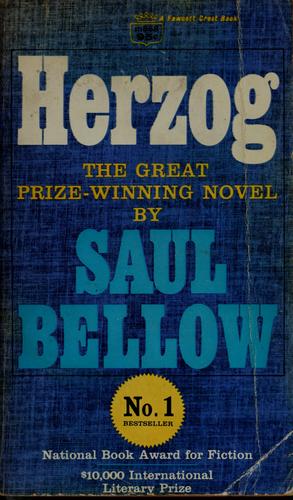
If I’m out of my mind, that’s okay with me.
Part 1 of our dive into Moses Herzog’s breakdown. Like all the best books, Herzog follows a manic academic, freshly dumped by his second wife for his own one-legged best friend, who processes the whole disaster by firing off unsent letters to everyone from his mother to Eisenhower to Spinoza.
We get a peak into the 1964 version of the suffering olympics, which Rich obviously tries to tie back to New Zealand MPs and Nietzschean slave morality.
Plus: how Christianity’s meaning-making project curdled into Romanticism, then Hegelian historicism, then modern secular doomerism.
how would a wizard signal being gay?
Cam: So what do you think? You chose it as well.
Benny: I am happy I chose this book. Are you — was that a backhanded way to say that you’re not happy I chose this book? Judging by your reading pace, I would say you’re definitely not happy I chose this book.
Cam: I think it’s outside factors with me, with the health stuff. But I mean, it is tough. It’s tough to follow, with the discursiveness. I was confused at points, until I realised that these are literally letters that don’t seem to be sent, and then sometimes it will turn into a memory, and then sometimes it will be contemporaneous.
So you kind of do have to take it slowly. And then, as we’ll get into, it gets into some fairly deep philosophy and academic stuff as well. So it’s not necessarily a super easy book.
Rich: You say this every single time.
Benny: I was going to say — we’re still waiting for the one book that Cam is like, you know what? This went down real smooth.
Cam: I don’t know.
Benny: I don’t know what it’s going to have to be. At some point we’ll read Harry Potter. It’ll be great.
Rich: Would it be fun to do Harry Potter, or would it be hard to find something to say about it? No, no — pick the best one.
Benny: Definitely not the whole series.
Rich: Number three, maybe. It’s probably just been absolutely mined to death, but it kind of is a classic. I kind of want to just go into bat for it and just say this rules, basically.
Cam: Yeah, I think with the caveat that it’s a children’s book. There are people — you meet a Harry Potter nut who, you know, they’re overrating it as a thirty-year-old.
Rich: But it’s still fine. I’m going to enjoy reading it to my kids.
Cam: Oh yeah, but good children’s book.
Rich: I’m listening to it in Spanish at the moment, which is what made me think of it. It’s only sad if it’s like arrested development and you never move on from it. But I know that Benny — he’s already admitted he re-reads that shit as a comfort read.
Cam: That’s right.
Benny: Yeah. I’m aware, I’m aware. It’s embarrassing. Okay, that’s the difference between us.
Rich: Exactly.
Cam: You don’t mention it.
Rich: Benny has the good grace to be ashamed of himself.
Benny: Exactly. Hide it under my bed, my fourteen copies of each book.
Rich: Cam just likes it because JK Rowling hates trans people.
Cam: Yeah, but she’s one of us.
Benny: Yeah, and then she said Dumbledore was gay. How do you feel about that?
Rich: Oh, death of the author. Don’t worry, death of the author.
Cam: Yeah, that’s a death of the author. There are funny memes around that, that just keep making it more and more extreme and more and more sexual and stuff like that. Just, by the way, extra stuff.
Rich: Imagine being in the wizarding world and you have to signal that you’re gay. Every dude is running around wearing essentially dresses, and —
Benny: Capes.
Rich: Yeah, it’s already incredibly gay. Riding on phallic objects.
Benny: That’s true. Nah, there’s ways to do it surely. You cut the sleeves off your robes or something, you know?
Rich: You’ve got to have a really long wand.
Cam: There might be something else. Yeah, there must be a little bit of a measuring contest with the wands.
Rich: Maybe it’s like wizarding micro-dicks, you know, where — because the wand chooses you, you don’t get any choice in it, and you get this tiny little stubby wand.
Cam: Yeah. Unfortunately, we don’t choose our wands.
Benny: You’re getting your wand and you’re like, are you sure? Are you sure it’s not that big one behind you? This little stubby one? Fuck.
Rich: Okay Benny, what’s the boring-ass book that you’ve chosen for us to do instead of Harry Potter, which would have been awesome?
announcing Herzog: Bellow’s “bitch wife” genre and Jewish New York neuroticism
Benny: All right, so — welcome to Do You Even Lit. We’re doing Saul Bellow’s novel Herzog, written in 1964, as it happens. That’s one year before our beloved Stoner was released.
Cam: Yeah.
Benny: And in some ways they’re similar books, in some ways they’re very different books. But they’re similar in the sense that we’re following around an academic. This one is perhaps a little more tortured than Stoner was, but both have some depressive parts of their personality.
Rich: Both got bitch wives.
Benny: I — yeah.
Cam: The male condition.
Rich: I’m classifying these books in the “my bitch wife” genre.
Benny: Yeah, I mean, I think in this case there’s some questions as to his reliability, of how bitchy his wife actually was — whereas in Stoner I think we got more of a god’s-eye view onto the situation.
Cam: Speaking of similarities though, I feel like we’ve just read a lot of stuff around Jewish New Yorkers. I remember we did Enemies, and Philip Roth. I’m not sure of any others, but yeah, it comes through a lot in this book.
Rich: We’re doing Jewish neuroticism. I think we’ve mined it pretty well.
Benny: So — five pages or something every two days, and couldn’t finish a 300-page novel in four weeks. So we’re actually only going to go halfway.
Rich: What’s your thesis on how Christianity leads to Romanticism and then to Hegelian denialism? Because if you don’t have a good answer, then I think you’re reading too quickly.
Cam: I tend to take the Hulme thesis. Is that his name?
Rich: Do you go for Spengler, or Comte?
Benny: I’m a big Spengler boy.
Rich: I prefer Comte.
Benny: No way. The Decline of the West — speaking of bedtime reading.
Rich: Saul Bellow is such a cool name, by the way. Holy shit, what an awesome name.
Cam: It’s one of those names where you always say the whole name as well, otherwise it sort of sounds weird. Some people, you often will say their whole name.
Benny: Okay, so let me just give a brief gloss on the setting. I mean, there’s really not that much plot to spoil.
So we’re launched immediately into the psychology of our main character, who’s Moses Herzog, who at the beginning is basically undergoing some sort of mental breakdown. He’s had two wives, Madeline and Daisy. He left Daisy earlier. Madeline has just left him — and has just left him for his ex-best friend, Gersbach. How do you guys pronounce that? How is it in your head — Gersbach?
Rich: Your guess is as good as mine. You have to do the throat clear at the end.
Benny: And we meet him at his house somewhere in New York after he’s been left by Madeline. And he’s, I believe, sort of sleeping on a mattress and eating raw beans out of the can, and trying to come to terms with what has happened. And he’s at turns gloomy and anxious and depressed, and yet somehow overconfident in some of his abilities.
And the trademark of the beginning — especially the first half of the book — are these letters that he’s writing to various characters from his past, sometimes famous characters like Eisenhower or Heidegger or Spinoza. And they range from the mundane aspects of the details of his life to philosophically interesting tracts or theses about these writers’ works and whatnot. And we’re just caught in this guy’s discursive thoughts about his life and how it’s not going how he wanted it to go. How did you guys feel about that first hundred pages, just being launched into this guy’s insanity, almost?
Cam: Well, it reminded me of your co-host Vaden talking about a moment of him doing that.
Rich: Of him doing what? Writing heaps of letters?
Cam: He spoke about it, right, Benny? Writing to Karl Popper and other thinkers like that, but realising he was losing his grasp on things a little bit, so he stopped.
sampling Herzog’s letters and the appeal of saying what you really think
Benny: Yeah, he did. So maybe I’ll even just give a little sampling of some of the letters here, just to give the audience a sense of what they’re like.
Dear Doktor Professor Heidegger, I should like to know what you mean by the expression “the fall into the quotidian.” When did this fall occur? Where were we standing when it happened?
Dear Mr. President, I listened to your recent optimistic message on the radio and thought that in respect to taxes there was little to justify your optimism. The new legislation is highly discriminatory, and many believe it will only aggravate unemployment problems by accelerating automation. This means that more adolescent gangs will dominate the underpoliced streets of big cities.
Stresses of automation, the race question, and so on and so forth. And even writing to himself sometimes:
Dear Moses E. Herzog, since when have you taken such an interest in social questions, in the external world? Until recently you led a life of innocent sloth. But suddenly a Faustian spirit of discontent and universal reform descends on you. Scalding. Invective.
So just ranging from the totally mundane to the quite interesting.
Rich: And he’s in a manic state, is what is implied. He is enjoying himself in some way. And I think even in some of these scenes — like when he’s on the train, he’s just swept up in his own ecstatic brilliance and sort of finally telling everyone what he thinks. An incredibly relatable desire to have everyone know your opinions on things, and to tell people that they’re wrong and that they should mend their ways or reform themselves.
It’s just funny. I quite relate to Herzog. It’s like if you just turned off your filter for once and just told everyone what you actually think — which would be an incredibly destructive thing to do if you actually followed through with it. Like the classic texting your ex when you’re drunk or whatever, but imagine that for all the figures throughout your life, plus historical figures.
Benny: I’m not even sure it’s about turning off your filter. I think it’s just about paying attention to it. The kind of thoughts you have when you’re walking around day to day would seem insane if you were to write them down, right? If you were to broadcast them to anyone else, people would just think you’re nuts. You’re repeating the same thing to yourself over and over again, worrying about the same things. Then you’re thinking about some other random person, thinking about what you would like to say to them. And then thinking about how you reflect on yourself, how you just looked in that interaction. I think it’s actually a decently vivid description of probably what most of our internal psychology is like.
Rich: But in particular the character of the letters is telling people that they’ve made some mistake, or that they’ve wronged him or something — right? Or am I selectively remembering? I think a lot of them have that flavour to them.
Cam: They kind of range between his friends and relatives — and that’s usually about the big relationship issues that he had, and often blaming them or complaining to them — and then public figures, and it will usually be, if it’s praising them, he’ll be saying his opinion on why, and otherwise giving pointers and stuff. And then far more scathing and argumentative answers to academic rivals, which he hates. And then the dead — he’ll weigh in on the famous philosophers’ corpuses and things like that.
the kaleidoscopic, disorienting structure of the opening chapters
Benny: I think manic is a good way to describe it. That actually didn’t occur to me until yesterday, when I was thinking about the severe fluctuations in mood. But I think that’s exactly right. He’s energetic, but in directions that seem totally random.
So sometimes he’s very severely castigating himself, as, you know, he’s a bad husband to Daisy. Sometimes he becomes almost pompous and very confident — he’s describing himself as a genius who wrote this first amazing book, who’s at some point going to release a second amazing book that will overturn everyone’s conceptions of, I guess, the political philosophy in the 17th and 18th centuries. And then sometimes he seems self-aware that this is just a manuscript that’s sort of rotting away beneath his bed, and he actually has nothing to offer the world. And then he’s back to thinking himself a bad father. And then he’s thinking about how the world is out to get him, his therapist was never on his side, he’s on his ex-wife’s side, et cetera.
So it’s just highly energetic inside his own head. And so there’s a certain element of the book where it’s almost exhausting to keep up with him sometimes. I think this is what you’re getting at, Cam, where in terms of the words on the page it’s not hard to read, but there is an element at which you’re just racing ahead in this guy’s head, and that can sometimes make it hard to read — because he’s bouncing from one idea set to another, writing one letter to himself and then to his mom and then to Spinoza. All of that can happen on the same page.
And there’s a totally frantic energy about the whole thing, where you do have to be quite locked in reading it to think: is he reminiscing about something, is he describing what’s actually happening to him right now? And you just sort of slide back and forth between the present and the past in ways that can catch you off guard if you’re not careful.
Rich: Yeah, I found that opening section pretty challenging just because it is so kaleidoscopic, and you’re just being introduced to character after character and person after person. And I did lose my momentum there, to be honest.
And then I regained momentum in the next section, where it becomes more of a plain prose style, where he is still jumping around in time but at least it is fully or reasonably well fleshed-out scenes with characters that take place at a certain point. It’s not just all and sundry. So the beam is very broad and then it narrows somewhat, which was useful for sucking me in. And that’s also when I started to actually enjoy the book, because I started picking up on not just who this guy is but what he’s thinking about, where he stands in relation to his wife and some of the other more prominent characters. There’s a little bit more foundation to stand upon, whereas I was sort of all at sea to begin with, just trying to pick out these fragments.
But yeah, I think it’s hard work, but it’s really been paying off. I’m excited in particular about some of the philosophical stuff that he is ranting about. I found it very thought-provoking, and surprising how much in particular he exemplifies the cult of victimhood, or the oppression olympics kind of stuff that we talk about today — which I sort of had in my mind as being a modern scourge or a modern phenomenon, but it’s very clearly not. How old is this — 60 years old, I guess? It really rhymes with a lot of what is happening today.
So I think it’s a timeless book, and that makes it really interesting to me. Plus it’s got this good philosophical stuff that helped me connect the dots on a bunch of things that I’m interested in — in particular, the modern secular doomerism, and how you could trace its roots back through these various other intellectual movements to Christianity itself, which I’d never thought of before, and which is kind of more relevant than ever.
Cam: What’s the victimisation thing you’re talking about? How he’s viewing it all as his ex-wife’s fault and everyone is agreeing with her — which, when you think about it, is potentially telling, but everyone’s kind of against him and blaming him? Or are you talking about something else, more around identity stuff as well?
Rich: Yeah — am I jumping ahead, Benny, or is it okay to talk about this now?
Benny: Yeah, what do we think? I do want to get there shortly. I was thinking before that we might want to talk about sort of unreliable narrator stuff, and the fact that he is trapped in his head. And Cam, you just made an allusion to it, where it’s like we have a negative perception of all these other characters, but it’s unclear how seriously to take that. And it might be telling that everyone in the world seems to be taking, for instance, his ex-wife’s side, right?
Like, okay, to what extent should we believe him? And so maybe let’s trace that territory just right before we get to Romanticism.
is Herzog a reliable narrator of his own infidelities?
Cam: Yeah. I mean, as we’ve kind of hinted at, he seems at least a little bit nuts, or neurotic at the very least. And the book starts quite early — it sort of starts off with an admission from him where he says, quote, “If I’m out of my mind, it’s all right with me.” And we’ve also talked about his kind of cheerfulness at times as well.
So he seems to be aware that he is — I think he also calls it disintegrating and stuff. So I think he’s aware he’s maybe not fully reliable. But one lens you can view him through is just as an obvious victim, in a way. His wife has been having an affair with his best friend.
Benny: His one-legged best friend.
Cam: Yeah, yeah. It’s like that Norm Macdonald joke, I think, where you lose to Oscar Pistorius, come home and tell the wife, you know, the guy with no legs beat me in the race.
So as part of these letters, he’s talking to his ex-mother-in-law and his ex-friends and people involved, and everyone seems to kind of be against him, or at the very least telling him to sort of toughen up and stuff.
Rich: But just on the facts of the matter for a moment — he’s also a serial philanderer, right? So I don’t think he has any special status in that regard. He cheated on his first wife. Maybe he was also cheating on Madeline — is that right?
Cam: Yeah, I was going to say, I don’t think it’s clear with Madeline. But we learn that with his first wife, with Daisy, he had a Japanese mistress. Which — this is when I get a bit confused as well, because he’s writing the letter and then he remembers stuff, and then I get confused: did it happen, or is he creating something in his head when someone’s accusing him of being a serial womaniser or something? Is he fabricating this in his head or not?
Rich: And what about Ramona? Isn’t that his current side piece?
Benny: His current side piece, yeah. I think that’s after Madeline. She was an ex-student, though.
Rich: Oh, okay.
Benny: And so there’s a bit of a grey area there. And he even acknowledges it — he says you should never sleep with students, and then, well, but Ramona is a bit special, you know, because she’s got this international background, she’s more mature than regular students. But oh, but she’s also looking for a husband — I’ll ignore that at the moment. That’s no good.
Cam: But is she the one he goes to see at Martha’s Vineyard near the end, and then he’s just like, no, no, I need to go? Well, there’s Libbie.
Benny: No.
Rich: No, that’s another.
Cam: Was it Libbie Vane, who’s the friend, but he can tell she’s kind of attracted to him as well? I need to get the fuck out of here.
Benny: Yeah, he shows up and then he has to leave immediately.
Cam: I learned enough on the train ride.
Rich: Well, maybe another way to put it is: whether he’s a victim — did you guys feel sympathy, like, oh, poor Moses, the whole world is against him? Because that wasn’t my impression. I was just like, oh yeah, this guy’s super neurotic, he’s got a messy personal life. I wasn’t feeling really sorry for him. I just kind of roughly lump him in with all the others in terms of doing some things that he probably shouldn’t. What goes around comes around. Very different to how I feel about a character like William Stoner.
Cam: Yeah, I had a bit of both. I had sympathy for him because he’s borderline depressed, and he’s manic, and it would be tough, what’s happened to him. But a lot of it seems to be self-imposed, and he’s blameworthy in other respects, and in related respects.
And it’s hard to also take at face value some of these things that he’s complaining about. Because you can imagine — one of the people he’s complaining about taking her side is the psychiatrist, and he’s sort of ganged up on him and convinced her to do the divorce. That could potentially happen, right? That sort of thing could happen and wouldn’t be good. And then I think he uses his mother-in-law as kind of part of the conspiracy of getting him out of the house or something. So again, these things could happen.
And the lawyer as well, he gets annoyed with — but that’s more like the lawyer, Himmelstein, kind of tells him he’s a schmuck. He’s just like, get over yourself, you think you’re too smart, you’re away with the fairies, you’re just a bit of an idiot, you’ll be fine.
Rich: Yeah. So if he’s an unreliable narrator, he’s not even doing a very good job at sugarcoating his own case, right? He’s not making us, the reader, like him more. If anything, maybe even the opposite — because we get so much insight into his psychology, and his sort of embrace of wanting to be perceived as the one who has been victimised and who is suffering the most and so on, which is a very unattractive trait.
is Madeline really the schemer Herzog paints her as?
Benny: But I think I do, or I did, feel lots of sympathy for him with respect to Madeline in particular. So it is true that there are other aspects of his personal life that seem rather chaotic and that he’s been ill-behaved. But with Madeline, I think he does a pretty good job of presenting her as this conniving, almost evil character who deliberately made him move out to Chicago, spend his father’s inheritance doing that — all the while she had the plan that basically, once they were in Chicago, to leave him for his best friend at that point, Gersbach.
And I think a big open question to me is how reliable that is. Is it possible that he was misbehaving in all these other areas of his life but was faultless in this relationship with Madeline, and that she had no reason to actually want to leave him? And that there’s no justified reason for her wanting the kids to not see him, herself not wanting to see him anymore, cheating on him, and so on and so forth? And so it’s in that respect where there’s the biggest open questions for me about how unreliable he is.
Cam: Yeah, the mother-in-law certainly complains about something — not so much womanising, I think, with Madeline, but at the very least she’d very obliquely reference it if that was the case. But it was more around: you moved out to the Berkshires, upstate New York, and there’s no one around. What did you expect? You’ve got no friends.
Cam: What is she — and “you’re hard to be with, you’re away with your work” — I think she calls him a dictator, a tyrant sometimes. And she kept saying she did love you. And I think he’s saying, well, she never did, this was always kind of part of her plan. And there was probably a point where she didn’t, and she was planning on leaving him, and did it the way that suited her more.
Rich: No, I agree with you though, Benny. I think on the point of Madeline he does a very convincing job of painting her as evil and conniving and taking pleasure in bringing him down and stamping him under her heels, I think he literally says. And we know that he must be hard to deal with, and a hard person to be around, sure. But it still seems like Madeline has in fact done him harm and done him wrong, if you believe this.
Cam: I think there was a former — I’m not sure if it was a student — but Geraldine Portnoy. There was a letter from her, but she was the babysitter of Madeline, and Madeline’s new husband, and Herzog and Madeline’s kid. And she wrote to Herzog because she thought he deserved to know. But she does mention Herzog’s neuroticism as well.
She mentions this incident where Madeline and her husband lock the kid in the car while they’re having an argument in the house. And this kind of infuriates Herzog as well — he’s already angry at them. And it’s sort of hard to read, we’re hearing it secondhand, how bad this incident is.
Rich: But even at the end of that letter she says, I do think Madeline’s a good mother though.
Cam: Yes, she does.
the suffering Olympics: how Gersbach out-victims the man he betrayed
Rich: She kind of takes the weapon away from him.
So what I was trying to get at before is that Herzog straightforwardly accepts and embraces this idea that whoever has suffered the most is special — and it sort of backfires on him. You know how Madeline and I think Valentine both have a religious phase? So Madeline is a Jew and she converts to Catholicism, and it is just a phase, but she gets into it, and she tries to drag Herzog into it.
And he makes this observation that Valentine — who is his best friend, who is cheating on his wife with him — has somehow managed to come out of the whole scenario as the biggest victim of all. So he says:
You have a dialogue with a man, you have intercourse with his wife, you hold the poor fellow’s hand, you look into his eyes, you give him consolation, you deprive him of his daughter, and somehow it is all mysteriously translated into religious depth. And finally your suffering is greater than his too, because you are the greatest sinner. And so you’ve got him coming and going.
Which is very good. It’s funny, because Herzog can’t really object — he’s earlier said that under his own rules, the man who had suffered more was more special, and he conceded willingly that Gersbach had suffered harder. So he is trying to play this game. He knows what the game is, the suffering olympics type thing. He plays it, and he still loses at the game anyway.
I don’t know — maybe it didn’t jump out to you guys quite as much, but for me it was just like, this is clearly one of the big maladies of our age. What is the equilibrium here, where moral authority goes to whoever has been hurt the most, or can proclaim to have been hurt the most? Where does that stop, and what is incentivised? Because the best thing that you can do is, like Gersbach, be the person who’s doing the injury — i.e. boning your best friend’s wife — while pretending to be the one who is most injured. That’s the greatest position.
And it reminds me a lot of the vicious woke politics of trying to destroy people. What’s the cry bully —
Cam: The cry bully as well is an archetype. People crying and acting like a victim, but actually being a bully — but kind of in a Goodhart’s-type metric, they are viewed as victims.
Benny: Yeah. It also reminds me of all the discourse back during the 2020 insanity of abolish the police and everything. One of the big talking points there was that these people who are locked up for these crimes, they’re suffering just as much as the actual victim. To even contemplate perpetrating a crime, that means there’s some serious internal suffering going on.
And there was this attempt — and that might be true insofar as it goes — but there was an attempt to dismiss what they’d actually done and argue that they’ve been harmed by society just as much, if not more so, than their actual victims. And therefore we need to just bring them back in and reintegrate and just have this big process of coming together and holding hands and singing kumbaya, you know?
Cam: Well, it sort of sets up a framework where the worst thing you can do — you just make it worse and worse, and that is more evidence of, if I was to do something so bad —
Benny: Exactly. How much of a victim you are.
Rich: Yes.
Benny: Like, he raped her — can you imagine how much internal suffering he must be going through? It’s just gross.
Rich: That is so funny when you take it to the absurdum like that. It happens so much. I noticed it today with the ongoing saga of this New Zealand MP who shoplifted.
She lost her job, and she tried to appeal and have her conviction overturned or something.
Benny: Is that still happening? Is that still in the news cycle?
Rich: The discourse point that I heard today was something like, oh — I think it was women, or migrants, or whatever it was — they never shoplift because it’s a thrill, it’s because of necessity, it’s because you’re so stressed or whatever. And it’s like, this is a woman who earns hundreds of thousands of dollars a year, and she was shoplifting designer clothing.
Cam: Bags and shit.
Rich: Designer handbags. That’s the same kind of thing. You’re trying to portray yourself as being the most injured while getting away with the most injury you can, taking as much as you can. It’s such a sneaky trick.
Cam: Well, the other big thing in the news at the moment is this murder case — or manslaughter by insanity. I forgot her name, Lindsay something. Did you see the woman who killed her kids from postpartum depression? It’s just taken over normie TikTok. Everyone’s watching, everyone’s convinced she’s the ultimate victim of all sorts, because what would lead her to do that? And they’re all going down severe rabbit holes of, did it actually turn out to be the husband.
Rich: No, I didn’t see it. The funny thing is, there is some truth to it, right? I always think of people who are bad — who would want to be that way? Being that way is its own punishment in some sense. But also we need to punish them for other reasons, because incentives matter, for deterrence, just to take harmful people off the street.
Cam: Well, I flatted with someone once, and everyone ended up hating this person, because she was just kind of awful. But you felt so sorry for her — really struggled with friends and stuff, and she was really insecure about it, and your heart went out, and you tried to show her sympathy and a shoulder. And then she always just did something and you’re like, oh yeah, this is why everyone fucking hates you.
Benny: And she wouldn’t take the garbage out. Fuck.
Cam: And you’re like, I’ve tried, I’ve tried so hard.
I think I kind of missed this as a theme, but looking at it now it’s definitely there — that it’s important to Herzog, this idea that the more you suffer, the more special you are. And so with Gersbach, because he had a missing leg and he was disabled, that’s the main reason. And it’s also because he had the affair. I don’t quite buy how that one gets you points, because you’re sinning, I suppose.
Rich: The logic of that one is, oh, I’ve betrayed my best friend, I’m such a bad guy, now I have to repent.
I don’t think the utils check out on that — like, who’s feeling worse about that situation? But this is the Christianity theme in particular. Without Christianity, that one’s a bit more up in the air. But I suppose if you’re a devout Christian, then you’re like, oh, I’ve caused a great harm to my eternal soul and I must get right with God and so on — which you could use to balance the scales, to put your thumb on the scales and inflate your own.
And my point was just to say that all this follows directly from what Nietzsche calls slave morality, coming out of Christianity, which is basically the weak people weaponising their weakness in an interesting and creative way to demand moral consideration against people who would consider themselves the greater people of history, or the big people of history.
Which is a funny tension with Herzog himself, who obviously has a very inflated idea of his own position in history as a great and influential figure — or at least having the potential to be a great and influential figure, if it wasn’t for all of these people trying to undercut him and bring him down at every turn.
Herzog’s genius delusion, from Kanye West to Nietzsche
Cam: But he seems to have a view that history kind of needs Moses Herzog, right? And his academic output.
Rich: Which is so disjoint from what we know about what he does, which is — he’s a scholar, his book was called Christianity and Romanticism. I’m not sure what his second book is about, but I imagine it’s more of the same.
Benny: The second book’s not written yet, right? It’s the one he’s planning to release. So I don’t think it has a title.
Rich: Yeah, I think that’s right.
Cam: Just quickly — this dynamic reminds me of when Kanye West was first losing his mind, and maybe when it hadn’t got so bad but he was starting to. It must be quite hard when you’re a genius in some way — and you can quibble over that description of Kanye West, but musically it’s incredibly impressive — and you get these people trying to give you advice and you’re just like, you don’t fucking understand, no one else is like me. And there are some people where it’s true, where most people don’t understand at the Kanye West level, at least in his domain.
And then I remember this comment once, when he went and saw the Steve Jobs movie. It was kind of an average movie, but he comes back and he’s just like, Steve Jobs, he gets it — just saw himself in Steve Jobs. And like, how do any of these people tell me otherwise? And Herzog is losing his mind as well. And if he was truly great — which we’re a little bit sceptical of, but maybe he is; he’s certainly very intelligent and well read.
Rich: But even then, people are great within their domain, right? So Kanye is a great producer, he makes great beats, sure — he shouldn’t listen to other people’s opinions on that so much. But no one is a genius of everything such that they should ignore everyone.
Cam: These beats are dope.
Rich: This is the classic guru-itis thing, right? You become famous, or a guru of some kind, because generally you are genuinely really impressive at some thing. And then you have this horde of acolytes who are just constantly licking you up and down, and you start to get confused and you think that you’re a genius at everything — even including stuff that you just learned about yesterday. Elon Musk would be a good example, but it seems to happen to almost every single man who becomes famous.
And then you have essentially lost the ability to hear reason from anyone, because you extrapolated out from being a genius in one area to being just an all-round genius. Which I’m guessing is true of nobody, because how could it be true?
Benny: Yeah, but I think the point is that psychologically, that’s easy to do. So I heard Coleman once talking about Kanye, and he said, you have to look at the world from his perspective. So from his perspective, he entered music. People told him that what he was trying to do would never work and was no good, the kind of beats he was trying to produce, et cetera. Then he revolutionises music to some extent and becomes ultra successful.
Cam: And he changed the style up several times, and was successful several times.
Benny: Yeah, it changes and just worked every time. He changed the game. And then apparently he did the same thing in fashion, which I didn’t know. He did some fashion stuff, and again people were like, this is not going to work, stick to your lane, stick to music. And then he does it again.
And so now you have this person where every time they venture into some new area they’ve been told this isn’t going to work, and every time you’ve become a huge success in that area. Is it a huge surprise that you now discount people’s scepticism towards you when you enter a third, a fourth, a fifth arena? Probably not. And you can argue, yeah, epistemically it’s still not appropriate to have confidence in yourself, but I think psychologically it’s very easy to understand why you would have such confidence.
Cam: But to be honest, my problem with Kanye is that he doesn’t have good epistemic hygiene. But you shouldn’t listen to most people, right? There’s lots of quotes just saying you’re going to go insane if you listen to the average person’s opinion. We kind of trust ourselves because we kind of trust our inputs. And even within ourselves, as a group, we’d maybe quibble around the edges with different people. And then I don’t know, you get these people that are maybe a next level up and they’re just like, yeah, you guys just don’t get it. I might get too bogged down on this point.
Rich: Let’s get further bogged. But part of what you do is you install people around you whose judgment and values you trust.
Cam: They ground you, yeah.
Rich: And usually it will be your family or friends, or a mentor within the field or something like that. It’s pretty weird not to listen to — I mean sure, don’t listen to the baying crowd of know-nothings who’ve never fucking done anything in their lives.
Cam: So do you think that’s true of Herzog, that he doesn’t really respect what anyone has to say because he thinks of himself as great?
Rich: I think we don’t know exactly why he has this belief. It’s interesting, because it sort of conflicts with his dismissal of historicism and Marx and Nietzsche and so on. It’s like, in spite of everything, he thinks that he has the potential to be great.
But it might just be the flip side of the coin of wanting to be the biggest sufferer. Which is that one easy way to answer the question of why isn’t my name up in lights, why aren’t I the greatest person, is that all the haters and wreckers in my life keep ruining it for me. And that lets you kind of have it both ways, right? Where you’re like, I’m a brilliant genius, and I’m suffering a lot because people don’t realise that I’m a brilliant genius.
Which I think is maybe a bit of a cruel way to say it about Herzog, but I think something like that is true of him. And he is self-aware about it. He says himself:
One way or another, the no doubt mad idea entered my mind that my own actions had historic importance, and this (fantasy?) made it appear that people who harmed me were interfering with an important experiment.
Is that the sense in which he’s mad? Is it mad to think that? I don’t know — he is really smart, he might have extremely —
Cam: Yeah, well, it can be hard. That dynamic is somewhat true, right?
Rich: I’m interested in his ideas about philosophy. I don’t know if they’re good, but they’ve been somewhat illuminating for me, so it at least passes the sniff test. I’m not like, this guy’s a total crank.
Benny: No. And back to the having a successful track record — his PhD thesis, I think it was quite impressive and turned into this first book, which was translated into several languages. And so clearly people in the field thought it was impressive work. And even to get the professorship and whatnot in the first place, presumably people thought he was a worthy enough scholar to pay him to think about these things.
And so he does have a successful track record. And so it doesn’t seem at all crazy to think that you have it in you to be successful and change the field. And in some sense you want to always think that about yourself as well. To some extent I think it’s healthy to have a vision of yourself that you have it in you to do great things.
And then there’s just a question of, okay, how distorting are you going to let this vision of yourself be? Are you going to throw away everything else in your life and lock yourself in a room for nine hours a day because you think you are the world’s next great genius? Or are you just using it as some sort of lever to give yourself self-confidence in your endeavours? There’s a big difference between those two modes.
Rich: Yes. Surely it’s kind of like — every person who achieved incredible things probably did have an irrational degree of belief in themselves, but not every person who has an irrational degree of belief in themselves achieves great things. So it’s necessary, but not sufficient.
Cam: Oh yeah, just with the inconsistency between great man theory and slave morality or suffering — because I’ve thought about this as well. One of his problems with Nietzsche, I think in his letter to Nietzsche, he said — he talks a lot about the Dionysian, you know, looking suffering in the eye and still swallowing it and still having fun, and being able to revel in destruction.
And then he’s kind of like, you look at the destruction, especially recently, of the world wars and stuff, and you just can’t do that. So he’s saying he can’t bite that bullet, the suffering is too great. And a lot of us kind of share that sympathy, right? Just going full barbarism, just crushing your enemies — sometimes an element of that, maybe it’s cool metaphorically, but it’s hard to swallow all of that.
But then in other domains, like creating great art or creating great companies, we’re like, yeah, we want great men. And in this academic domain, he’s this great man and he wants it.
Cam: He doesn’t necessarily co-sign all the violence and stuff that comes with Nietzsche. That seemed to be his discomfort with Nietzsche.
tracing modern doomerism back to Christianity, via Romanticism and Hegel
Rich: Nietzsche sets himself up as being an anti-Christian, right, and opposed to the slave morality of the Christians — but he points out that Nietzsche also falls into this category of bemoaning an imagined golden age that we’ve fallen from and that we must work our way back to. Which is literally the central myth of Christianity: that you see the present moment as always being in some type of crisis, and that you’ve fallen from something that was classically great. Which is usually not true, or almost never true, I would say.
Which gives us this interesting through line — should I quickly rattle through that? There’s a through line from Christianity to modern doomerism, which I thought was interesting.
Cam: Yeah, I think that’s interesting. Just one quick thought though, around what you just said. It’s probably why we always talk about Christianity every fucking episode, right? You can create this philosophy that totally rejects the idea of caring about the victim, and so the core ideas of Christianity, and then you’re like, well, technically it’s still Christian. In this other sense, everything’s Christian, no matter what you do.
Rich: Yeah, exactly. I’ve just never heard that before, so I thought it was funny — like, Nietzsche doesn’t think like the pagans that he idolises really think. I mean, also, I’m pretty wary — I’m going to sound like an idiot talking about Nietzsche, because I’m pretty confused about what Nietzsche actually thinks about anything.
Cam: That’s part of the meme, right?
Benny: Yeah, it’s part of the meme. Don’t worry, this podcast is that meme.
Rich: But let me try and give the version that’s without Nietzsche. Christianity is a meaning-making project. Nietzsche points out — and some of the existentialists point out — the problem of, you know, God is dead and we have killed him. How do we find meaning and purpose for our lives?
And so Herzog’s position is that Romanticism is the direct secular answer, where you move the meaning-making project inside of yourself. So you don’t need God — it’s all about personal transcendence, it’s about individualism, forging your own path through life, the James Joyce stuff that we talked about in A Portrait of the Artist. While maintaining that idea of having a fall from some previously imagined wonderful time, which in the Romantics tends to manifest as the beauty of nature and the pristine environment and the more naive — not Hobbes, Rousseau, I suppose — man was born free and everywhere he is in chains kind of thing.
And then the second branch of it, or the alternate route, is the Hegelian historicism thing, which I sort of hadn’t realised takes the same form. Which is that you move the meaning-making project not into individual people but into history itself, as this sort of living being — I think Spengler calls it almost like a biological entity, right? He talks about civilisations as entities.
And so you can map your meaning-making onto the course of history, whether you call it the great world spirit that moves through you, or the Comte positivism where things are moving inevitably towards some better future, or the Marxian variant, where his strain of historicism was that the proletariat will inevitably rise up and there will inevitably be revolution against the bourgeoisie, as a matter of historical inevitability.
And then, just to fuse it into the final form — I think both Romanticism and Hegelian-style historicism are out of favour, Marxism is mostly out of favour today, they’re more like curiosities, at least from my point of view. So he says that later you take what he calls post-Hegelian declinism, which is taking the Hegel component, that history has a structure to it and a causality to it independent of the agents who make up history, and then you add the Romantic mood of loss and mourning and wanting things to be what they once were. And then you get this trendy intellectual fashion of apocalypse — basically of wanting to be sophisticated by talking about how bad things are and how bad things are getting.
Which kind of inverts the classical Hegelian or Comte thing about being on a positive trajectory. It’s like, no, we’re actually on this negative trajectory. And it’s like the plebs can now take part in this project of shitting on the past and saying how things used to be better than they once were, which used to be the domain of the aristocrats, and now it’s sort of available to everybody. It’s like the cocktail party thing that you talk about. And I hardly need to spell out how it manifests today, but it’s absolutely threaded through every element of the discourse today.
Cam: With the path from Christianity to Romanticism — I had never really thought about that, and Herzog’s interested in it, but I think he also maybe even views that step in a negative light. Taking the transcendence from this thing that’s outside of you to yourself, the individual, the human aspect.
He has this one phrase — I think he called it the dampness of this religious emotion, that now happens in a secular sense. So this emotion has kind of been filled up in the religious sense, but it’s spilling over the side in this kind of secular domain. And it maybe doesn’t quite hit as hard.
Rich: I would definitely place him more on the Romantic side than the Christian side. He’s very resentful of the efforts of the people around him to do what he sees as trying to destroy his individualism and his personhood, and trying to grind him into generic mush and bend to the forces of historicism.
So I think he doesn’t like the Christian version of that, but he also doesn’t like the post-Christian, post-liberal version of that either. I’m not sure if he would be a straight Romantic. One of the things I’m most confused about is what — how to map this onto Herzog’s actual personal life? Because it seems like he embodies a lot of the things that he is critical of himself, right? Like he’s making fun of and mocking the slave morality which he himself holds. And he also — yeah, maybe save more for later.
Bellow’s own Marxist phase, and historicism’s swing from hope to doom
Benny: Yeah, I think a common theme throughout Bellow’s novels is that a lot of his characters are autobiographical in some way. I was listening to Martin Amis talk about Bellow and this book, and I think he said that Bellow didn’t consider Herzog to be the most autobiographical. Clearly he is in some ways, but apparently the one that actually most closely resembles what Bellow was like in life, and his attitudes towards things, was a character from another book.
So I think there are some autobiographical elements here, but not totally. But interestingly, he did go through a period of fascination with Marx and socialism and communism and stuff, and then really fell out of love with that. As, I guess, a lot of people throughout the 50s and 60s would have gone through a similar arc, right? Where communism seemed amazing and then the wool was removed from their eyes.
Rich: That would have been crazy — being so excited about communism in say the 40s and 50s, and then seeing the evils of Stalin and being like, oh no.
Benny: Yeah. Oh, we have made a huge mistake.
It’s super interesting that you feel like there’s been these multiple historicist movements — meaning movements which have viewed the progression of society as some sort of inevitable force. But then those went from somewhat positive views of the course of civilisation to negative ones. So did you claim that Hegel’s view was more positive? I guess Marx’s view of historicism also would have been positive.
In the sense that he was hoping for the proletariat revolution, right? And thought that once we had finally gotten rid of capitalism we’d be in some sort of communist utopia.
And then, I guess, more in the 20th century — I forget when Spengler was, but I think he was 20th century — you get sort of more negative views of this evolution, where it’s not necessarily happy rainbows at the end of the day. You might just get some inevitable cycle of violence and calm and things like that.
So one, I guess: was that accurate? And two, I never really thought about Hegel’s historicism as optimistic or positive, but I also don’t know that much about it, to be honest. I know he was a historicist, but I never actually thought about the tone of his historicism.
Rich: Neither did I. I can’t weigh in on that. I might even be getting mixed up with Comte, the positivism stuff. But I certainly think that it wasn’t declinism, put it that way. Perhaps it was more neutral, or more cyclical like Spengler. But the declinism is adding in — call it either a Christian influence or a Romantic influence, which gets it from Christianity — of “we must return.”
I mean, the modern trad stuff as well. We must return to the golden age. Look what they took from you. All those kinds of memes. And yes, all of which is essentially nonsense from my point of view. Whichever type of historicism you buy into, whichever paradise you believe we’ve fallen from, I think is almost always wrong. But he’s taking target in particular at Spengler, T.S. Eliot, Heidegger, I don’t know who else. I’m just not super familiar with that school of thought.
Cam: What’s Herzog’s issue with it, do you know?
Rich: With the declinism? I don’t know. Maybe he’s criticising it from — well, I don’t know, because he doesn’t come out and say that historicism is nonsense. We’d probably have to go person by person, because he has some critiques of Marx, he has some critiques of Hegel.
Cam: Yeah, at the margins, everybody.
Rich: I think it’s fairly obvious why. He talks about the trap of getting caught up in ideologies. He’s kind of just a professional hater as well, in a sense where it doesn’t even feel that personal or directed. He just likes pointing out the flaws in things, which is very relatable to me. I’m just like, shitting on things.
Cam: Well, sometimes you’ll follow an intellectual, or an amateur intellectual, and their whole thing is kind of hating. And they’re very smart and have a good way with words. You see that with SneerClub and stuff, right? It can be fun consuming it.
misunderstood genius or deluded narcissist? plus predictions for part 2
Rich: Yes. Let me try and give two opposed ways of putting it.
One is that Herzog is this brilliant genius who could make these great contributions, and people keep tearing him down, and his psychologising of why they’re tearing him down is accurate, and it has to do with this whole project that I’ve just laid out about the influence of Christianity and trying to tear down individualism, blah blah blah.
And the other mirrored interpretation is that Herzog is a borderline deluded narcissist, and just comes up with incredibly elaborate intellectualised nonsense about trying to guess at the motives of other people to do what are probably actually quite rational things.
So it’s kind of fun, because you live within that tension throughout this book. And it’s quite funny as well — it’s very bleak but funny, because it’s not exactly obvious whether this guy is a total raging fantasist or not. And because he has self-awareness, which is my favourite attribute that any person can have, and makes me forgive so many sins if you’re just self-aware about it.
Cam: That’s how I get away with things.
Benny: I’m tempted to leave it there for this week. I think there is more to talk about along many of those lines, to be honest, but I say we finish the book and then come back, reconvene, and see if we can flesh out any more of these theses.
Rich: Do you want to give us a little clue, Benny? Are we on the right track? Can you give us a little hint of how future plot events are going to — are we going to change our mind radically about anything?
Benny: So my prediction as to how you react to the rest of the book is no, it’s not going to radically change your mind, and it’s not going to give you clean, cosy answers to the kinds of questions that you have. Not that they’re questions, right — there’s sort of just more theses about, I guess, what he’s thinking and how it relates to various schools of thought.
Rich: Yeah, I have no expectation that this is going to neatly resolve — either that the plot events will resolve neatly and it’ll be like, and then I got my wife back and got custody over my child, or that we’ll get this very neat position statement of exactly what his psychology is and what it’s in response to. I assume it will just be more of the same. That’s my prediction, and we’ll be sort of just attacking similar related questions again.
Benny: The book does change in style a bit. So there’s fewer letters, I would say, in the second half, and it’s a little bit more plot driven. But that’s all I’ll say for now, I guess.
Cam: It sounds like there’s going to be less, or none.
Rich: Is Herzog already with Ramona, or is that up for grabs? Have they consummated their fling? I think they have, right?
Benny: I don’t know. It depends where you guys are, I’m not sure.
Rich: Not important.
Benny: Madeline — I mean, we’ll talk about Madeline, or Madeline, I’m not sure how to pronounce it. We’ll talk about her more next time, I’m assuming, because she makes more substantive appearances in the second half.
Which gets very interesting.
Rich: Cool, all right. I’m looking forward to it, I’m invested. I’m going to read the second half quite a bit faster than the first half. That’s my prediction.
Benny: Yes, I think that will happen for sure.
I mean, to me, this book was a good one for us, to be honest. Just in terms of — it was a little bit tough going earlier on, but in terms of just themes, it’s this manic academic, which sums all of us up to some extent. Weird insecurities, weird theses about how the world works, some underlying angst — combined with both underlying angst and an underlying sense that you’re better than everyone. Surely we all have a bit of that.
Rich: A potent brew. We should talk more about his personality next time, and then we’ll decide definitively which one of us is the most Herzog-like.
Benny: Yes, that’ll be good.
Cam: Well, Claude can tell us that, right?
Benny: See you guys next week.
Rich: See you guys next time.
outro: Rich’s new site and building an AI oracle from your back catalog
Benny: Oh yeah, go check out Rich’s fancy new website for us, which is fucking awesome — and which Vaden now wants to steal for Increments, by the way, so you have to keep your guard up.
Rich: Every podcast needs to do this. Every podcast should do this.
Benny: Yeah, I think we will do it. It’s fucking amazing. The transcripts, and also just the cataloguing ideas and everything is just so great, and now it’s easy to do. We just have to figure out what the Increments style is.
Rich: And the next level is to have it queryable by LLM. Sorry, this is off topic, but one of my favourite podcasts is Theory of Anything, which is similar to Benny’s other podcast Increments in that it’s about epistemology and Karl Popper and David Deutsch. I downloaded all of his transcripts and I made a Claude project where I can just query — what I call my Bruce oracle. I’ll just send it a blog post and be like, what would Bruce say about this? And it will just give me the condensed version, it’ll tell me the high level, and then it will give specific quotes, like, in episode 34 he said this and this.
It’s so useful on a large back catalogue, and it works really well for actual smart thinkers like Bruce. It would work much less well for this particular podcast, because who the hell cares? But just in general, I wish more podcasters would do stuff like that, so that we could just ask, what did Benny and Vaden think about this? Or how did their views change over time? Or what is the consensus? It’s super handy.
Benny: Did you create the transcripts for Bruce’s app, or did they exist?
Rich: Yeah, I just got Claude to write a script to download every MP3 and run every MP3. But it’s much worse than if Bruce did it himself, because I don’t have access to, for instance, the split audio files, so I can’t distinguish between Bruce versus Peter versus his guests. So it just has to infer that. It’s better if you clean and post the transcripts yourself, if you’re the person who makes the podcast.
But anyway, sorry, before we keep dragging on — goodbye, goodbye wonderful listeners. And did you say write in to us, Benny? douevenlit@gmail.com — d-o-u, just the letter u. The website’s doyouevenlit.com. And see you next week, and I love you.