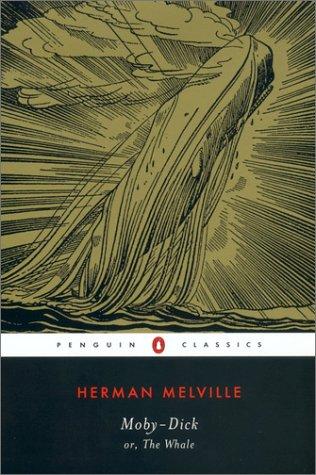
Tell me if you’ve heard this one: A mentally unstable old man abuses his position of power to pursue his own personal agenda. He alternates between smooth talking—tremendous moxie, the best speeches—and threatening the LOSERS and HATERS who stand in his way. He runs roughshod over checks and balances, ignores the norms of civil society, and whips his followers into a fervour against an imagined enemy. In his egotistical mania, he takes down everyone else with him.
We are talking of course about Herman Melville’s Moby Dick (chapters 81-135).
Rich gets political: On Melville’s egalitarian dream, the milk and sperm of human kindness, Ahab as demagogue, why the crew don’t mutiny, parallels to the current political moment, and Latin America as a cautionary tale. Does Rich have a point here, or has he fallen victim to Ahab Derangement Syndrome?
Benny is all symbolism-ed out: Bad omen after bad omen, we get it. We can see the ending coming a mile away. Has Melville created too rich of a feast for us? Does the explicit fatalism make Ahab a more or less interesting character? Did any of us feel any narrative tension in this last third of the book? What is with the pacing?
What’s it all about: Cam proposes the ‘interpretation interpretation’. We talk about the limitations of Ahab’s approach to meaning-making, vs Ishmael’s more pluralistic approach.
And our final thoughts on tackling this behemoth of a book.
Don’t cry for me Argentina
Benny: Rich, tell us about Argentina. How was it, mate?
Rich: It was a bit disappointing, to be completely honest. Wouldn’t recommend.
Cam: God damn it. Buenos Aires.
Benny: You wouldn’t recommend because — it’s tough as a family trip, or just because in general you don’t think it’d be great?
Rich: I mean, it’s a bit hard to disentangle, but I knew that I’d be on family mode and wouldn’t be that free. But I don’t know. Honestly, it’s just a bit depresso. Like, it used to be great. It clearly used to be great, and now it’s not great. Put it that way. And you’re just constantly reminded of — it’s like living in the ruins of an empire or something. I don’t think I’ve experienced that before. A really visceral reminder that progress is not inevitable and that you can just go backwards.
Benny: Damn. So what does that actually look like on the ground? Just like buildings that were obviously once well-maintained and nice are now empty and graffitied and vacated? Like, what does that actually mean?
Rich: It’s partly that. I mean, first is the juxtaposition of the visual landscape, where you have beautiful old buildings from the turn of the 20th century that are designed by Parisian architects — this is when the country is flourishing and it’s got a huge cultural literary scene — and then, I don’t know, just little things like beautiful wrought iron railings and fences and those cool old lampposts. Everything’s designed with so much intentionality and so beautiful, and it’s well-planted — there’s great mature trees everywhere. And then you juxtapose that with the fact that everyone’s poor as fuck and they’re struggling to get by, and there’s homeless people everywhere, there’s shit everywhere, there’s rubbish everywhere.
And then they’re not making the best of their heritage. Like, I tried to do some Borges tourism — I went to see the National Library, which is where he was the director. It’s this really cool brutalist building, fascinating building. And they actually had an exhibition on, a Borges exhibition. The side of this giant building has got this huge poster that’s like “Borges ELF exhibition, blah blah blah.” I tried to go there and it’s only available between 12 and 3 p.m., so I was like, okay, I’ll come back at 12 to 3 p.m., and I came back and tried to get in, and they were like, oh no, you can only come on Mondays. So there’s a three-hour window in the entire week that you can possibly see this exhibition that’s supposedly massively advertised on the side of the building.
Everything was like that. All the Google opening times were wrong. Anything that’s a publicly operated thing was just completely half-assed, shut. Or you can go and see Silvina Ocampo’s house, but you can’t go and look around because there’s no one there. Yeah, it’s just kind of a fumble on their part, I think. I thought Borges would be like a hero over there, but maybe that’s just because he’s like a god to me. He was just an afterthought. There’s one bust of him and there’s a street named after him, and other than that, that’s it.
Benny: I mean, that probably says something about his cultural influence. Not that many people would have a bust and a street named after them, presumably.
Rich: No, this is a city that every corner has a statue on it. Every traffic roundabout has a 20-metre statue of someone or other.
Benny: I see. The bust per capita ratio is high.
Rich: Yeah, yeah. It’s real busty, if that’s the kind of bust you’re into. Which for me, it is.
Cam: What’s the public transport like?
Rich: I didn’t try that, to be fair — Ubers were so cheap that we just Ubered everywhere for convenience. Everything was really expensive — consumer goods and accommodation and food and stuff, insanely expensive. The only stuff that was cheap was human labour. So Ubers were cheap, babysitting was cheap. I’m guessing service jobs and stuff would be reasonably cheap. But yeah, tough times for the Argentinians.
Cam: Yeah, I mean, it’d be interesting to see what happens with the Milei stuff over the next 10 years.
Rich: Yeah, I think the experiment is sort of not completed. So it’s got inflation under control — whichever one acknowledges it’s down to a mere three percent a month, which is like 50 percent annualised or something — but prices have stabilised really high, which I wouldn’t have expected and which I still don’t fully understand the macro reasons for. Yeah, stabilised, but in a way that’s made everything expensive and made life very tough for just ordinary people at the exact same time as all the aid programmes being slashed to the bone.
Cam: It’s an interesting case study to try and think about macroeconomics, which is confusing.
Rich: I find it hard. But I might actually come back to this later, possibly. I’ve got a possible tie-in to Moby Dick.
Cam: There we go. Just past Ecuador.
Benny: Is it that they sailed close to South America, and it’s close to Argentina, and you’re like, okay, I got the in, let’s go?
Rich: I’ve got two tie-ins now. Thanks.
Cam: So Spain next trip maybe.
Rich: When’s our next boys’ trip, boys? It’s been one year since the South Island. So sad.
Benny: I’m coming to Australia next December or something at some point. So Rich, if you want to pop on over —
Rich: Shit yeah, I will.
Cam: How likely is that?
Benny: I’m pretty set on it. There’s a big conference over there, so I’ll submit some stuff to it and then hopefully get some papers in. But even if not, it’s in Sydney.
Rich: Oh nice. Do you know which city it’s in?
Benny: Sydney, yeah. So, yeah.
Cam: You have like total beef with Brett Hall, right? Like, he wouldn’t want to meet with you, or is that —
Benny: Is this going to be Carter?
Cam: Oh, we started recording? Oh my bad, I thought we hadn’t. Okay, my bad.
Benny: I don’t think he’d want to meet.
Cam: So Moby Dick, yeah.
Benny: Yeah, he’s my Moby Dick.
Cam: But let’s get into it actually, because — yeah, yeah, yes, totally indifferent to you and Bayden.
Rich: Doesn’t even feel your little barbs, your tiny little barbs that you’re slinging at him.
Benny: Doesn’t even think about me. I think about him every day. Obsessed with him.
Cam: Bayden sets up this big to-and-from essay debate with him about, I forgot what it was about, economics or something. He just sends something and hasn’t even put any effort to it. Yeah, he doesn’t mention Bayden.
Benny: He doesn’t even mention his name. That’s so funny. Yikes.
Cam: Fuck you, Brett Hall.
Cam: Do I — I reckon I don’t actually mind him, but I’ll stay out of the beef. I’ll be Switzerland.
Rich: Move on. Move on.
What did we think of the final section?
Benny: All right. Moby Dick part 3, boys. How do we feel?
Cam: Go Benny, you start. What did you feel about this last — and about this book as a whole?
Benny: Sure, I’ll start. I’ll take some meat. I gotta say, I think — I’ll say I’m a bit disappointed. After especially the hype of our second episode, when we were roughly two-thirds of the way through, I was enjoying it. I think I was absorbing some of Rich’s enthusiasm, perhaps. By the end of it, I just kind of felt like the ratio of information dumps that I really just couldn’t pretend anymore to care about them — the ratio of those info dumps to storyline was too high, I guess. And the payoff was not big enough for me. Like, I kept expecting — I figured the last 100 pages of this book would be the great chase. But it ended up being about the last 15 pages of the book.
I mean, okay, definitely part of what’s possibly going on here is just the classic phenomenon we run into a lot when we’re reading older books, which is that an author can do something very well the first time, but then that strategy is improved over time by other authors. Clearly Moby Dick has influenced scores of other authors, but I think we can just say that the craft of that kind of story has been improved. To the point where Moby Dick is, I don’t know, kind of a mediocre novel for me. I’m sort of ready to have my mind changed, because I think there are little gems in it here and there, and there are aspects I liked, and I did enjoy the overall reading experience. So it’s not like I’m totally down about it or would tell someone to never ever read it. But I did just feel like he was toying with me slightly too much, and he was not keeping the reader in mind when he was writing all of these details down.
I also have one criticism that occurred to me only this morning, actually, that I’m curious if you guys would agree with, which is that there’s actually too much symbolism embedded in the book. So there’s all these chapters that hint at the eventual great chase, at the eventual fate of the book, at Ahab’s mania, at his obsession, at the crew’s hesitancy, at what the whale could actually mean, at what the ocean means. There’s like chapter after chapter punching you in the face with symbol of what is this book about, what is it going to mean when everyone eventually dies, all of this stuff. And it’s just — it’s too much by the end. So much so that I stopped caring. Like, you see what’s going to happen from 17 miles away, and so the end is no great surprise at all. So yeah, that’s also kind of what got to me — it’s just like reading an author that’s trying to be clever and hint things at you subtly, but doing it chapter after chapter, almost like he can’t help himself. Like he’s just getting obsessed with how clever he is. So I think that started to really bug me by the end as well. Anyway, so that’s where I’m at.
Rich: Tell us how you really feel.
Cam: With the fact you knew what was coming?
Benny: I actually didn’t. I realised I didn’t know the end of Moby Dick when we actually started reading it. So I think I can dispel that charge. I mean, I figured it out about — yeah, I figured it out while reading the book.
Rich: I mean, he mentions all through the book stories of how whales are capable of sinking ships, and this and that historical incident in his affidavit to prove that this could be true and all that kind of thing, right?
Cam: Well, there’s even a prophecy, right?
Rich: Yeah, now I’m so with you. This final third of the book was such a flop and hugely anticlimactic. I still like the book, but as a narrative it’s got major problems, I think. Like, the pacing of it just is —
Cam: Needs an editor.
Benny: Yeah, that’s what it is, yeah.
Rich: To get explicit about it: this is a book named Moby Dick. The whale Moby Dick, the object of his fixation, appears in chapter 133 of 135. The last two percent of the book is the very first time we encounter Moby Dick. And then that bit just feels — even though it’s given three chapters to chase it, it just feels so flimsy. It’s just exactly what you thought would happen, and then suddenly it’s all over and that’s that. All of my previous defences and enthusiasms about the info dumps just did not — as you say, they did not carry me through this last bit. There’s still lots of good stuff in there. I’ve got heaps of highlights of funny things and interesting bits, sort of just a little collection of interesting morsels, but as a narrative I can’t get behind this book.
I mean, I knew that the ship gets sunk and that Ishmael’s the only survivor. I don’t know how I knew that — maybe through pop culture osmosis or something. So there’s that. But I also think any reader would have seen that coming a mile away, as you say. The whole thing about how it’s all the hand of fate and “I can’t be turned from my course” — it’s just marching towards inevitable. There’s nothing surprising about it.
Cam: I read that Ishmael surviving near the end was potentially even added a little bit after, because people were like, how do we know about this whole story? Like, if everyone died — I’m not sure if this was apocryphal or not — so then he wrote a little half-page epilogue. Whoops.
Benny: Good point, good point. Although that would surprise me, because the way he survives by clinging onto Queequeg’s coffin — because that had been replaced as the —
Rich: Oh, symbolism, symbolism, Benny. Did you catch that?
Benny: Yeah, yeah. It’s rather poetic. But my sense is that that was probably baked into his plans, right? Hit me — hit me over the head real hard. That would be awfully convenient if he was like, “oh wait, I have this coffin I can use that he can grab.”
Cam: Yeah, I think they set it up literally as a life buoy earlier on. I mean, it can still just symbolise death — it’s at the front of the boat, and they’re marching into their death. But then him floating away on this life buoy created for a pagan, symbolising death —
Rich: There are even other characters from the other boats they meet that see the coffin on the front and they’re like, “oh, that doesn’t bode well.” They’re like, “I wonder what’s gonna happen.”
Cam: Yeah. I mean, I kind of agree with you guys about the ratio of the info dumps for the whole book. I wonder what the ratio was. I don’t think it was quite one-to-one, but it wouldn’t be crazy to characterise it as that, almost.
Rich: No, it was way more than one-to-one, I would have thought. Which way are you going with it?
Cam: Oh, do you reckon it was —
Rich: I would have thought it was easily two-to-one info dumps versus narrative.
Cam: Okay, yeah, I’m misremembering. I mean, I thought maybe there was more plot than info.
Rich: I guess it blurs somewhat when you have the intricate descriptions of the sperm whale fishery, which technically is plot but allows Ishmael to hold forth at great length upon the mechanisms and so on.
Cam: Part of me now wants to do a spreadsheet to find out.
Rich: Oh yeah.
Cam: Yeah, this last third especially, it’s just a bit too long and a bit too much info. I mean, that’s why I suppose all these abridged versions exist.
Rich: Did you also catch Melville’s excuse for why this is such a long rambling book? Because it has to be befitting of the subject matter. So he’s saying, well, I’m writing about the Leviathan, so I need a condor’s feather as my quill and I need Vesuvius’s crater as my inkwell. And if I was writing a book about the flea, then it would be a different — you’d get a different kind of a book.
Benny: Get a little pamphlet. Wow, did he really say that? That’s hilarious.
Cam: I think there’s something to that.
Rich: So I don’t know. He still cracked me up. He cracked me up so much throughout this last bit. But yeah, I’m happy that our voyage has come to an end and I can see my wife and child again.
What does it all mean?
Cam: Yeah. So my main takeaway of this novel — we kind of discussed it last session — this idea of, I call it the interpretation interpretation, or this idea that there are many meanings or interpretations of Moby Dick, but of art in general. And often they feel unrepresentable or inscrutable at times, or we add these meanings to ours. So the textual evidence we talked about last time was the whiteness of the whale itself being a combination of all the colours and the absence of a colour at the same time, meaning kind of everything and nothing.
I mean, what we had in this session, this last third, there was the gold doubloons, and everyone had a different interpretation of the Ecuadorian coin. I think Starbuck thought it was — one of them thought it was like the three biblical, the Trinity. And Ahab thought it was his ego. And someone just thought it was just money.
Rich: The character called Goldstein was like, yeah, it’s just money.
Cam: It’s just money. But yeah, and we’ve talked about this as well. I suppose it’s a good symbol of that. And I think there are particular readings you can have of Moby Dick, which we’ll maybe talk about — like religion being a big one. And I think those can be valid readings as well. But I mean, I’m starting to feel a bit, I don’t know, subjectivist — like, I think particular religious readings might be valid, but almost there are other readings that are also valid.
Rich: I think the main thing that you got right last week, Cam, is that there can’t be a canonical meaning for Moby Dick, because that would be self-defeating, because it’s meant to represent the blankness, the vast blankness of the universe, and that you have to write your own message onto it. But then I don’t think this falls into the trap of some of the stuff that I’ve disliked in the past where there’s too many different interpretations, or it’s just so vague as to invite you to map literally anything onto it. Because there’s some cool ways you can take it, but they’re very clearly pointed out in the text.
Cam: Yeah, it’s not just nonsense, right?
Rich: Yeah. Like religion, the classical allusions to Milton and Paradise Lost and stuff, the existentialist stuff, politics — which I want to talk about later.
Cam: Yeah, like if Moby Dick was legible, that would kind of lose something and lose the importance of this work.
Relatedly, this other thing I think about this book that will stick with me is this — I don’t know, like existential orientation or something. Before he goes sailing, Ishmael is in this malaise. And even the malaise itself can be hard to describe. It’s just kind of maybe a sameness or boredom or lack of meaning, or maybe even a depression. Often what comes along with that is this yearning for meaning. But the object you yearn for, it’s like it’s often unspecified, I suppose. It’s unnamed. And it’s different for different people, and it starts to sound a bit vague and stuff. But people relate to this idea, and that’s why it kind of speaks to them. Maybe you have to be at a certain age or something, I don’t know.
But yeah, like — I’ll say, like Cato chose the sword, like he chose the hunt. People choose different things. You guys aren’t online as much anymore, but there’s this recent penguin meme. It’s from a documentary of Werner Herzog filming penguins. There’s one penguin — he just kept walking off, like in the Arctic, and the crew tried to turn him around, bring him back, and he kept walking out. There’s this majestic picture of him walking towards the mountains, this vast sheet of ice, and it just went viral because everyone relates to this penguin. My first thought was Ishmael going to hunt the whales and the sea. Like, what is it? And in one sense it seems so crazy and irrational — like, what is this penguin doing? Everyone’s like, we understand the penguin. It reminded me of that Caspar David Friedrich painting of the Wanderer over the Sea of Fog or something.
Rich: Yeah, you put that in the group chat, right? And I had no idea what it was, but it reminded me of that. Or maybe you wrote that. But yeah.
Cam: Yeah, but even that itself — it’s kind of hard. There’s an inscrutable element to it that comes through in this book, I suppose.
Ahab vs Ishmael’s meaning-making project
Rich: Where do you want to take it? Because I think Ishmael’s meaning-making project is pretty noticeably different from Ahab’s. So where to?
Cam: Yeah, yeah. I mean, you definitely contrast — Ahab’s described several times as monomania. He has this monomania, and he’s so focused on this one thing, which also is inscrutable. But Ishmael is kind of the opposite, right? I mean, this is related to the religion aspect. I suppose you could interpret Ahab as like a monotheism, or like a corrupt version of that. And then Ishmael is more pluralistic. And then you’ve got the pagans as well.
Rich: Yeah.
Cam: And this book does feel sympathetic to the pagans.
Rich: Ishmael feels like he’s got much more of a grounded, humanistic type of meaning-making going on, where he gets a lot of joy out of being in the brotherhood of fellow men, and physical labour, and the vast blue yonder. And he’s joyous when he’s up in the crow’s nest sometimes. Whereas Ahab —
Benny: When he’s squeezing all the oil with the other fellows — they’ve got their hands in big vats.
Cam: Enjoys the brotherhood.
Rich: Yeah, yes, we have to talk about that. He’s less — has less of a laser-like focus, but it still is kind of — it’s diffuse, but it’s also just the more mundane, normal ways that people get meaning, right? Like community and human contact and exploring new frontiers and adventure and so on. And then Ahab is just casting away every single other thing. Like when he throws his pipe overboard — even just simple pleasures, in pursuit of this one inscrutable thing.
Cam: Yeah. And part of me just feels like I don’t have enough religious background to interpret a lot of the stuff. But do you guys have thoughts on Ahab’s relationship to Moby Dick — i.e., probably God? It seems like this thing maybe represents God for him, but he’s inverting it somehow. Like he wants to conquer it. I mean, even at one point when he makes the harpoon, they do this ritual and he uses blood instead of water, and he even says he baptises not in the name of the father but the name of the devil or something. So yeah, would people have any thoughts on that?
Benny: Yo, one thing that actually caught me off guard about Ahab was — so right before the great chase, I think literally sort of the chapter before the great chase starts, him and Starbuck are sort of exchanging stories about their wives and their kids. I had to reread it several times actually to figure out exactly what was going on, but it seemed like Ahab was displaying some sort of sadness or almost regret about the fact that he was compelled to chase Moby Dick. And Starbuck sort of encourages him to just let go of this obsession, and they can turn around and go back to their family and friends. But Ahab refuses, because he says he’s just compelled to go on, and it’s sort of fate at this point. Like, he has to do it. Which I actually didn’t see coming, because his attitude throughout the rest of the book struck me as if he was really set on this mission. You know, he felt like an agentic sort of character, didn’t feel like he was being compelled by external forces. But then finally there you get a glimpse into his psychology, and it’s that he feels like he has to do this for whatever reason, even if he doesn’t want to.
Rich: It did feel like it robbed him of his agency a bit, and robbed the narrative of yet more tension, because he sort of conceives of himself as a bit of a puppet with the strings being jerked by the fates or something. And I don’t find that interesting. I mean, it makes him a richer villain in that he’s got the self-awareness that he knows what he’s doing is crazy, and he knows that he’s imperilling himself and everyone else. But I’ll just read the quote, because it’s a nice line. He says:
Ahab is forever Ahab, man. This whole act’s immutably decreed. ‘Twas rehearsed by thee and me a billion years before this ocean rolled. Fool! I am the Fates’ lieutenant; I act under orders.
Cam: Yeah, that scene reminded me — I thought of characters like Alex Honnold, who recently climbed up the Taiwan building and is most famous for the cliff in Yosemite. He’s got kids and he’s got a wife, and it’s just mad what he’s doing. But there’s no way you could convince him to do anything else. There’s maybe fair criticism now that it’s more about being famous and money and stuff, but that first cliff he wanted to do, he just wanted to conquer that cliff. It was about that. It wasn’t about anything else, it wasn’t about status. And I’ve heard Jocko Willink, the navy SEAL, talk about that. He has wife and kids, and he’s just ready to die. It’s so important to do these missions. He doesn’t want to die, but —
Rich: Yeah, but I mean, even those don’t compare that well, right? One of them is just like, you’re climbing up a building to get Netflix cash and —
Cam: Well no, I think the first cliff is more analogous.
Benny: I think like El Cap, though, that’s not it. Yeah, that’s not bad. Maybe think of what a ruthless gift, giving him Moby Dick — like, a copy of Moby Dick would be. What a ruthless gift.
Rich: Oh yeah, that’s gonna get through to him.
Cam: Yeah, the recent Netflix skyscraper building would almost be like Moby Dick 2. Ahab’s got this commercial thing going, and it’s just — totally perverting his meaning the first time around.
Rich: But I think you’re onto something there, Cam — that we talked before about Ahab as maybe being more almost like a hero, like a Promethean hero or a romantic hero. And what sets him apart — where he becomes perverted as a hero, I think — is that he brings other people into it. I’d feel quite differently if he was just this Alex Honnold type character who’s trying to best nature in some way and spit in the eye of God. Which, I like — it appeals to me a lot, and probably to you guys as well, from the sort of Deutschian lens of thinking that we have ultimate dominion over our environment and nature, and being willing to put up his own life and death and disfigurement in the process. I don’t — it’s not a path I want for myself, but I do admire it in other people. But as soon as you start recruiting other people towards your cause and sacrificing them for your cause, that’s where it crosses the line. And that’s where I have contempt for Alex Honnold, to be honest. I mean, I still admire him obviously on some level, but he’s got children that depend on him, and it’s time to stop being selfish and just take up your new role and change your story accordingly. You can’t keep chasing those thrills. You’re going to ruin other people’s lives. It’s not fair, they didn’t ask for that.
And Melville knows this. It’s also interesting to get that reveal that Ahab’s got a young wife and child back home too, just like Starbuck does. So it’s not even like he’s this old crusty mariner — I mean, he’s 58 years old and he’s kind of a tough guy to get along with. He’s still managed to get himself a lovely young wife and child. Like, come on, you’ve been blessed. You’re gonna throw away your blessings to —
Cam: I think there is a book out there called Ahab’s Wife. It’s from the perspective of the family. Just waiting.
Benny: It’s gotta be a short book.
Rich: A real short book.
Overdosing on omens and symbolism
Benny: To go back a bit to what you were saying earlier, Cam — I think I do think a possible defence of this book goes something like the following. It’s hard to write a book where the meaning-making isn’t too obvious and doesn’t punch you in the face, or isn’t too vague and it succumbs to Rich’s criticism of, you can read whatever you want into the text, right? Just like what you were saying earlier, dwelling a little bit on the whiteness of the whale. Making a whale in the first place — this Leviathan that you’re chasing — was a good move from the sense of trying to find some object that could symbolise this quest, that has enough of a dangerous element to it to be able to give the story some backbone, but not enough to be able to — I guess, make it just totally vacuous. So I feel like he walked that line between being too vague and too vacuous pretty well. And so even if the chapter-by-chapter storytelling wasn’t very good, there is lots of meat on the bones in terms of the meaning-making parts of the story. But that’s why most people remember it, I guess. They remember Ahab’s mad quest, they remember the crew was set against him and didn’t want to do this thing but he took them along anyway and made them go along with him, that different people on the crew saw the whale differently, saw the ocean differently, were leading their lives in different ways. And that’s maybe the actual most important parts of the story.
Cam: It’s funny though, because even some of those annoying chapters of info dumps, they do fit in with some of the themes. He’s talking about how whales cannot be understood taxonomically — that fits the theme of inscrutability. He thinks all drawings of them are inadequate, you can’t capture their essence. That fits. And I’m also thinking — I mean, this is not really info dump, but there’s that painting right at the start in the Spouter-Inn, where he doesn’t really know what it is. It’s a sort of dark seascape, this black blob, and then he kind of realises it’s probably a whale about to fall on a ship. But even then it’s hard to interpret. And the whiteness, of course, as I said. So I imagine it’s quite hard to abridge, because you want a lot of plot, you want the philosophical ruminations, and then even some of these info dumps you’re like, that’s also important.
Rich: In this latter third I felt there were more info dumps that could have been cut, where it’s just once again telling us about how badass sperm whales are and how much better they are than right whales. And like, yeah dude, we get it.
Benny: It just alternated between info dumps and prophecy. Like, honestly, the final third was just bizarre. And then finally, the chase.
Cam: Well yeah, okay, I mean you had the major prophecy from Fedallah, who is this weird character I still don’t fully understand — which is perhaps the point. But he says two things have to happen before he dies. One by hemp or something, which is rope, and you kind of think it’s suicide by hanging yourself, but he ends up prophesying that he gets caught with the rope. But with the other — there was also hints of prophecy in the jams or the gams, where they meet other ships. I mean, what do you guys think about all those other ships? I feel like we met about 10 different ships in this last third as well.
Rich: I don’t even care about the plot details at this point. I just want to zoom out.
Benny: I fucking hate this book. I hated my trip, I hated this book. If we can delete the month of January from 2026, I would have lost nothing.
Rich: No, I’m feeling good. I’m back on my beautiful home country. I’m grounded, I’m calm —
Cam: Opposite of Ahab.
Rich: I’m moisturised.
Benny: Yeah, I guess I should maybe say symbolism instead of outright prophecy. But it was always prophetic symbolism.
Rich: Are you saying, Benny, that it was too heavy-handed, all this stuff?
Benny: Yeah, yeah, and just too often. Maybe each instance of it on its own was good, but it kept happening. I started writing them down at some point. It was like the doubloon chapter, when they’re talking about what the actual coin means on the mast.
Cam: I don’t mind that, I don’t know.
Benny: Okay, so that was interesting — people had their different interpretations. And then right after that you had this candles chapter, where they get stuck in a storm, and then after the storm the masts are lit up in some way by the sky. Ahab thinks that this is a good omen and Starbuck thinks it’s a bad omen. Right after that, you have this quadrant chapter, where the quadrant, I guess, is something — it’s not the compass, but it’s something they steer by. Ahab gets mad at it and smashes it underfoot because —
Cam: Yeah, because it can’t tell him where Moby Dick is.
Benny: Yeah, so exactly. He breaks it because he just wants to be in total control of the ship. Then right after that, you have Fedallah’s actual prophecy. Then right after that, you have like four chapters just about the nature of the sea and how it’s unknowing and wild and how whales are in it. Then right after that, you have the seals that are screeching at night, and then everyone thinks that’s a bad omen because they’re related with spirits and all this. And Ahab tells them to stop being superstitious. Then after that, you have all the issue with the life buoy, where someone falls in from the mast and they throw the life buoy in to save him, and the life buoy fills with water and the guy drowns. So they replace the life buoy with Queequeg’s coffin. Then you have the hawk stealing Ahab’s hat right after that, as he tries to go up on the mast.
Cam: You’re white-pilling me. Yeah, that was good as well.
Benny: It’s just on and on. Okay, I agree each one of these scenes is interesting and well-written on its own. But literally this was just in the course of — I just started noticing this around chapter 100 of 133. You could have done this the entire book. It’s just over and over. It’s just alternating between, here’s like 17 random things about a whale that you should know, and then, oh, here’s this thing is doomed — just in case you hadn’t noticed the other 99 hints I’ve given you, here’s another one. So it’s just like — that’s stuff where, again, he’s still a good writer, and each scene on its own was fun to consume. But trying to sit down in a morning and read 30 pages of Moby Dick and then have 17 prophecies thrown in your face was a little hard to handle.
Cam: Well, I feel like — you keep using prophecy. I feel like — what’s that called, that movie? Princess Bride name —
Benny: I don’t think — yeah.
Rich: Like, omens. Everything’s an omen. Everything is like, oh, what does this mean? Watch out.
Benny: Oh, man, there we go. That’s about it right there.
Rich: Yeah, I so agree, Benny. It’s like, if anyone wants to argue that this is a great book for its narrative, and has wonderful narrative and pacing, and an editor shouldn’t and couldn’t have changed anything — I will fight them. It absolutely could have used an editor. I understand why it’s a great book, and I still think it’s a great book. It’s just frustrating from a story point of view. So much build-up and so much teasing that becomes just totally over-egged, and then just makes the inevitable conclusions such a nothing burger. The tension just dissipates, I think. There’s no tension in this last third. Or there is, but I don’t know — it’s hard to get invested, it’s hard to get a sustained sense of tension building.
Benny: Yeah, that’s what it is. It’s hard to get invested. At some point you just feel like, okay, I don’t know if Melville wants me here as a reader. Like, I don’t really know what game he’s playing, but I’ve been out of it for a while, and you just kind of —
Rich: Just keep waiting for Bulkington to come back. Where’s Bulkington at?
Cam: I forgot his name. I was trying to think of it before.
Cam: Yeah, I suppose what we’re kind of saying is the reading experience is kind of annoying at times and could have been improved. But how this book holds up as a whole — there’s almost little vignettes of something happened, like the bird takes Ahab’s hat or something. I can imagine a good lecturer having a whole afternoon on that, and people get argued to the end of time of what are all these different meanings of that exact scene. And you have many of those, and part of them rely on literary and biblical erudition.
Yeah, but the actual reading itself can feel a bit annoying sometimes.
Rich: Also, plenty of them don’t. It’ll say it in the text. It’ll be like, compass magnets stop working because of the lightning, the sailors consider this to be bad luck and it’s gonna turn the men against the mission, Captain Ahab magnetises a new needle from the ship’s sewing kit and doing so restores the crew’s faith in him as a capable leader. It’s like, it just tells you everything you don’t need.
Pip the cabin boy
Cam: Yeah, I think that’s fair, so not all of them have richer interpretations to be made. What do you guys think of Pip, the young boy? Again, like, I don’t fully really understand his role there, but I imagine you could focus on him and try to think — like, Ahab takes him kind of under his wing a little bit. Reminded me of the judge and the idiot in Blood Meridian. And at one point also, Ahab tells Pip to stay in the room because he worries Pip’s gonna make him less mad, or normalise him. Ahab needs his madness to do this hunt, so it is a choice. But he’s aware that he needs this madness and fate. And I think at one point, Pip interprets Moby Dick as God as part of his hallucinatory ramblings. And also I think when they’re looking at the gold doubloons, Pip’s the one that makes the point that they all have different meanings, they’re all kind of real. I don’t know, it seems important.
Rich: Just to be clear, Pip is the little black cabin boy who serves on a whale ship and does terribly, falls overboard and has to get rescued. I think he fucked it up twice, actually. And then he becomes like a shell of himself, and starts talking about himself as if he’s already dead — he talks about Pip being dead and how sad it is and what a coward he was, in the past tense. So he’s gone. He’s mad. And Ahab feels companionship with him. Madness recognises madness and has compassion for him — maybe the compassion that he can’t have for himself or something. It’s like rarefied in this third party. And it’s a nice little bit of storytelling to keep humanising Ahab a bit, because Ahab just continuously goes further and further off the rails, but there’s some countervailing forces like that. And like when he sort of reconciles with Starbuck and they’re bonding over their wives — they hug each other or something. You get that sense that he wishes it could be other than what it was.
Cam: And then he reminds us who he was when there’s that one ship — Benny, you might remember what ship it was. The Rachel.
Benny: The Rachel, I think.
Cam: Where they’ve just seen Moby Dick and they’ve lost some men, including his son, and they said, please help us, just for 48 hours. And Ahab’s like, no.
Rich: And isn’t he like, “get off my deck within five seconds or my men will begin to offload you” or something? He’s so ruthless.
Cam: Because the reason he doesn’t want is because he’s gonna waste time. He’s like, Moby Dick’s in his grasp. He even says, this is wasting my time. I’m already annoyed at you, there’s no way I’m gonna help you.
Benny: And then the Rachel ironically is the ship that picks up Ishmael and saves him at the end.
Cam: Oh, what’s that? Okay.
Benny: Yeah, I mean, Pip serves sort of like a classical plot device that — I don’t know, maybe originated in Moby Dick, which is, like Rich said, madness recognises madness, or the madman is the only one who can really tell the truth and say it how it is. So like in the doubloon chapter, when they’re all staring at this coin and giving their interpretations, Pip is the one who reads into it what’s actually going to happen to the ship. He reads disaster into it and basically says that everyone’s going to die. The one who’s able to clearly see that Ahab’s madness is going to lead them all to disaster.
Rich: Which wouldn’t have been clear before he said that, right? We’ve only had like 30 to 40 other omens.
Benny: Definitely, yeah. We would have had no idea if that was true. But I feel like this is a theme that often emerges, where the madman is the one who can often foresee what’s actually gonna happen.
Cam: Yeah, I think he also says something — I can’t remember what it was — when Queequeg gets really sick. Maybe we talk about this thing quickly as well. Queequeg’s really sick, and so they want to build him a coffin. He said he wants a canoe coffin, maybe because his tribal people used to do that. There’s this weird carpenter character — a funny old guy who reminded me of some of the themes of Infinite Jest as well. The carpenter views everybody he helps and works for as a machine. He’s totally indifferent himself. And at one point Ahab actually gets annoyed at him — how can you make my leg, then make this coffin, then make this other thing, totally indifferently? “It’s all the same to me.” But he makes this coffin for Queequeg, who is totally sick, and Ishmael looks at him and says there’s still some life in his eyes, but in general looks really bad. And then he’s like — suddenly, like, I forgot — it’s almost like he forgot the stove was on or something. I can’t remember what it was, but he’s like, “this is a thing I need to do at home,” and he’s like, “I’m deciding not to die now,” which was kind of funny. I always imagine like a cartoon, sort of springing up with life.
But I think Pip says something as well. I can’t remember what it was, but he thought it was brave and noble what Queequeg was doing.
Rich: I thought of just at that moment too, Cam, because I could see on my Kindle that we’re at close to 90% into the book, and we meet this carpenter, who to be fair is a fascinating guy. But then we start getting this long backstory of the carpenter, and it reminded me of Infinite Jest when at the very end of the book, it starts going into the long backstory of Barry Loach, this assistant — I don’t know, whoever he is, some minor-ass character. I’m like, what about the ending of the book? Like, what are you doing? This is not the time for it. And that was the earliest part of my frustration with this book that just would not end. It’s like, yeah, now we’re going to talk about this new character at 85% into the book, and tell you all his life story and his role on the boat. I’m like, come on, bring it home.
Cam: Yeah. I think I did that with the blacksmith as well — I can’t even remember, who helped make the harpoon. He was missing legs or something like that.
Rich: Oh, one of them, yeah. I might be misremembering.
Cam: Yeah, no, I agree, I think it was both.
The milk and sperm of human kindness
Rich: Before we run out of time, can I talk about something that I liked about the book — like, the politics reading of it? So we’ve previously talked about —
Cam: Yeah, yeah, of course.
Cam: I have no idea where you’re going to go with this. I don’t know why I laughed.
Benny: I’m expecting Argentina to pop up somewhere here.
Cam: It’s like Peronian Argentinian politics.
Benny: How’s it gonna make this?
Rich: It’s gonna be so artful you won’t even notice.
Rich: So we talked previously about how being at sea is this weird, quite meritocratic or egalitarian state of being, where it matters that you’re good at your job and it doesn’t particularly matter what your skin colour is or what language you speak. There’s people from all over the world on this boat. And that definitely steps up in this last third with the famous sperm passage that we have to talk about. So I’ll just read out a little bit of it:
Squeeze! squeeze! squeeze! all the morning long; I squeezed that sperm till I myself almost melted into it; I squeezed that sperm till a strange sort of insanity came over me; and I found myself unwittingly squeezing my co-laborers’ hands in it, mistaking their hands for the gentle globules. Such an abounding, affectionate, friendly, loving feeling did this avocation beget; that at last I was continually squeezing their hands, and looking up into their eyes sentimentally; as much as to say,—Oh! my dear fellow beings, why should we longer cherish any social acerbities, or know the slightest ill-humor or envy! Come; let us squeeze hands all round; nay, let us all squeeze ourselves into each other; let us squeeze ourselves universally into the very milk and sperm of kindness.
Which I thought — he cannot be serious, right? How did you read that — as straight, or as like, he’s just totally goofing off? The milk and sperm of kindness.
Cam: Yeah, I —
Rich: You had no reaction reading that passage?
Benny: Yeah, I didn’t think too deeply, but I mean, I thought it was hilarious as I was reading it. I didn’t think to myself, you know, what’s he trying to do here. I don’t know. But there’s enough of this slightly weird elements throughout the book, especially at the beginning — the relationships between Ishmael and Queequeg. I just kind of took it to be that kind of book, honestly.
Cam: Yeah, kind of like what sailors are up to and stuff.
Benny: Yeah, I mean, just realistically too — he’s got three years aboard these whale ships. There’s no girls around. Surely some stuff is going on, you know?
Rich: Yeah, different rules apply. But anyway, I think it’s really silly, it’s really goofy, but it’s also like — this is a glimpse into his actual politics of what we were talking about, of why Ishmael’s meaning-making project is more successful — of finding companionship with other people in a shared job, some physical labour, bonding over a shared project, this kind of stuff. And I found a letter to Nathaniel Hawthorne in which Melville describes his own politics as being a ruthless democracy or radical egalitarianism. So I think we read him right there, on his description of how this band of brothers at sea works — it’s kind of aspirational. But then that’s in tension with the fact that the boat is still yoked to Ahab’s will, and Ahab leads everyone to their death — or everyone except Ishmael.
Ahab the demagogue
So yeah, not exactly a utopian vision, but maybe pointing at the way that things could be and then the way that things actually are. I thought it was cool that Ahab is not actually a tyrannical dictator figure. He is more like a demagogue or a populist or something like that. He’s in a position of authority over these men, but there’s stories about mutinies, and there’s talk of Starbuck considering mutiny. His position is somewhat tenuous, so he has to hold on to it by whipping up the men into a fervour and aligning them to his cause. And like, you guys will make fun of me, but I just can’t help but map it onto our current political moment. I think it’s a really good depiction of demagoguery, really — of political process gone bad, where you have the seeds of an actual meritocracy, and then it’s perverted by someone who deliberately abandons reason and criticises institutions and creates this common enemy for everyone to fight against, when that enemy was never in fact an actual threat to them, or it’s not a rational thing to concern yourself with. But it consolidates the power for Ahab by getting everyone to turn against it. And you can fill in the blanks for your own demagogue of choice in modernity, of the kind of common enemies that they whip people into a lather about.
Yeah, and the Argentina tie-in is just that I didn’t think about this because of Trump initially. I thought about it because of the Peróns in Argentina, who were — President Perón was a very proto-Trumpian figure who didn’t really have any strong principles, but was good at sort of whipping people up into a fervour. His wife was famously extremely good at this too. And the consequences of that for Argentina have been devastating — not just Perón, but just the general tendency of having populist leaders who bring people with them on a journey that is nonsensical and not evidence-based and doesn’t lead to good outcomes, but inflames the passions of your followers. So Perón would call the English both communists and oligarchs in the same breath kind of thing, which makes no sense whatsoever, but just to fan up the flames of opposition.
And then what I was saying about Argentina being sad is just that you just ping-pong between populist leaders, and then maybe the pendulum swings too far over and you get a military junta or authoritarian right-wing government, and then that gets overthrown by the next leftist revolutionaries, and it just creates this huge fucking mess. And, I don’t know — probably like many people, I’ve just been thinking about this a lot more lately and becoming more politically conscious than I had before. And it’s scary for me. I think things are going really badly in this direction. And it’s just a stark reminder of, you can go backwards, you can lose 100 years of progress, you can have total institutional collapse.
Yeah, anyway, that’s my little soapbox moment. I don’t know what I’m trying to say. It’s just what it made me think about. Orange man bad.
Cam: Trump and Megan and YouTube. But I agree with your last point — it seems like everywhere is kind of, the Brazilification of the West, where it kind of swings. That seems to be happening everywhere. And maybe would differ slightly of how much blame we’d apportion to either tribe, but yeah.
Rich: Forget about the Trump thing, it could be just a general observation. As you say, Brazil is a good example too. People maybe have forgotten or are unaware of how bad this pattern can get.
Benny: It’s interesting to ask why the crew didn’t end up revolting against Ahab.
Cam: Yeah, I had that thought. It did make me think about power dynamics in general. I mean, Rich just kind of articulated it, but you’re like, why can’t you just stop it? How does any leader who’s some old frail injured man have control over everybody? You have to get numbers or military strength behind you.
Benny: Yeah, but the thing about Ahab is he doesn’t really have whatever that equivalent is, right? He’s really a one-man show when it comes to leading the Pequod. At the beginning, he sort of gets people on his side, but that’s at the beginning —
Cam: Well, he whips everyone up with that, when they’re drunk out of their hearts.
Benny: But then you get the sense, as time goes on, that people all sort of lose interest in his monomaniacal vision. Because when they meet that other ship — there’s so many ships, I can’t remember — but they meet that ship that’s basically on its way back —
Rich: The party ship.
Benny: Was it the Enderby? Or the Bachelor, I think.
Cam: That was the Bachelor. The Delight was the one that was destroyed by Moby Dick, and the Bachelor everyone was happy. They were like, yeah, we had a great time, got a bunch of sperm.
Benny: Yes, yes. And everyone — they’re like, don’t worry about Moby Dick, come party with us.
Cam: Forget about the whale, don’t worry about it.
Benny: Come party, things are good. And it seems like the crew of the Pequod wants to go party with them. They probably would have if it wasn’t for Ahab saying, no, we’re going to continue on, let’s not go visit with this ship. I kind of put that to mean, maybe everyone but Ahab is really interested in this vengeful journey against this whale. And so when you’re in that sort of situation, it feels slightly weird that there wasn’t more of an organised pushback against Ahab being captain, or some sort of mutiny. But I guess it is just a sort of tragedy of the commons problem, where if you act and no one else does, no one else backs you up, then you could be in trouble. And so you’re just afraid of being the first person to say anything or do anything.
Cam: I mean, there is that scene where Starbuck thinks about killing him, which also reminded me of Blood Meridian, when the kid has an opportunity to kill the judge. And I think Tobin, if I’m not mistaken, the ex-priest, has a chance, and they both choose not to. Starbuck sees him sleeping and thinks about saving everyone, essentially, by killing him. And then I think Ahab screams out in his sleep — maybe for whatever reason, they convince him not to do it. I mean, do you think he made the wrong call there? Do you think he should have just ended it? I mean, I suppose with hindsight, it would have been better off.
Benny: In hindsight, yes.
Rich: I mean, yes, obviously. But maybe I’m pattern-matching too much, but these are such interesting questions of, when does political violence become an option on the table, when you have a tyrant who has overstepped their boundaries? For Ahab, I didn’t find it to be a plot hole, but part of the problem for Ahab is that he has overruled and ignored all the traditional constraints that should have reigned in his power. So the ship’s investors are actually the bosses of the ship, for all intents and purposes, but he’s undermining them right from the outset. And then at one point he says, like, fuck them basically — I don’t give a shit about those guys, I’m going to do whatever I want. So he’s just choosing to steamroll over whatever things should have constrained him, as well as just basic prudence and Christian morality, something as well that would have been considered to be — I don’t know.
It’s like the parallel to the current environment is, we’ve discovered that there are a lot of things that were more like norms — like strongly held norms — for how far you should push the boundaries of political power, than were explicitly baked into the system, right? So if you’re a person who is totally unscrupulous, or who just simply chooses not to abide by the norms, then you can do what you want. And that’s a problem, depending on your point of view, with our political system. That’s exactly what happens here. And then as well, you have the incredible charisma and the getting the buy-in with the gold doubloon, which is like — in theory anyone could earn that doubloon, but then in practice it was interesting that it seemed like Ahab was pretty keen to win it for himself.
Cam: Yeah, well, he earned it, right? Because he was the one — well, I wondered if he wanted — I actually took that as, it got to the end where he didn’t trust anyone. It was almost like he was going so crazy, and he’s like, it’s almost like he didn’t trust his crew to either be competent enough to spot the whale or to maybe tell him. I don’t know. I wonder as well, he was just almost paranoid that he has to go do it himself. He has to go up on the mast and then he finds it. “Yeah, I’ll come claim my prize.”
Rich: Yeah, but he uses the carrot and the stick, right? He’s offering these great rewards and trying to get genuine buy-in. And then he’s also saying to Starbuck, I will shoot you dead if you defy me. What does he say? Like, on this boat, it goes captain and then God, or captain is God or something like that. Just absolute authority and direct threat of murder, which again, classic tactics for maintaining power over a populace.
Do you guys think I’m reading too much into this?
Cam: No, no, no, I think it’s — I think you’re right. I had a thought as well around — also, just one other thing I’ll add to that: when Starbuck wondered whether he should kill him or not, I just sort of thought, well, I imagine if he does kill him, people will probably revolt around that, right? And it reminded me of Nick Bostrom’s argument — he’s this anti-AI guy, and he says if you act really hard to stop AI risk or to stop pandemic risk, or pick your risk, and if it works, after the fact it always looks like this overreaction. And that would probably apply to killing Ahab. Why do you kill the captain, man? It’s like, just trust me. I mean —
Rich: Didn’t you see the omens?
Benny: Yeah, yeah, exactly.
Cam: Yeah, yeah, the omens, the bird — you didn’t see the bird? Yeah. And then there’s this — and this also relates to the current political dynamic, where you get this chicken-and-egg aspect as well, of like, I need to kill him, I need to stop him killing him. I mean, one way it probably doesn’t track on is, Ahab just does have this one vision that seems external to just — I don’t know, just wanting power in and of itself or something. He just needs to kill this whale. I’m not sure how that would track on exactly.
Rich: Yeah, I don’t think that maps on that cleanly, but I mean, sort of — it’s just about making your own personal interests, whether they be vengeance or greed or power hungriness, and then subordinating everything else to that. I think that’s probably a pretty good representation of some leaders.
Benny: All right, well, should we leave this somewhat depressing book on that somewhat depressing note?
Rich: Benny’s been quiet. He doesn’t want to get invaded. Worried about having to live in the 51st state.
Benny: Bro, I’m in. This is my apolitical podcast.
Cam: Benny gets too mad. You’ll leave that for your other podcast to whine about politics.
Rich: Yeah, sorry. I just finished listening to your episode with Fadi, where you were like, “should we talk more about politics, or it seems like everyone else has kind of got that covered?” And he’s like, “no, we’re doing it.” I’m like, oh, fantastic.
Cam: My sympathy.
Rich: It’s an interesting question though.
Benny: And every time I pawn with Cam, I end up arguing about politics for two hours.
Cam: My political tendencies — Benny’s white whale of what it went into.
Benny: Yeah, exactly.
Rich: Hey Cam, you had your chance when we talked about all of the phrenology of the whale skulls and stuff. You got your time to shine.
Cam: I wonder how this will read in a year.
Benny: My general sense for this book is going to be — it’s going to be one of the ones that we actually end up referencing a lot, because obviously it’s got a lot of big themes and it’s got a lot of hooks that we can use when discussing other works. But the actual reading experience itself is not one that I can say I overly recommend.
Rich: Yeah, I’m glad to have read it. I don’t consider it a mistake.
Benny: Exactly. Yeah, exactly. That’s a good way to comfort yourself, Rich, given that you fucking chose this book. I don’t regret having read it. I wouldn’t do it again, though.
Rich: Yeah, I’m so good at rationalising. I don’t know. I was thinking about the Argentina trip, because people keep asking, how’s the trip, and that’s how I feel. It’s like, the process was right. I’m glad that it happened. But I wouldn’t recommend you do it. I don’t know how to reconcile that. Maybe it’s pure cope. But a lot of our book club books end up like that, where Phoebe will say, should I read Moby Dick, or should I read whatever? And I’ll say, probably not — even though I did, and I enjoyed it, and I got a lot out of it, and I’m glad that I did it. So riddle me that, I don’t know.
Benny: Yeah, there probably is a bit of curse of knowledge with respect to reading, to be honest, where after you’ve read a book, you maybe think some of the insight is obvious, or some of the talking points weren’t worth having read them, but in fact they are. It might be too tempting to not notice how much someone can get out of reading a book after you’ve read it, because the insights are all obvious for you now.
Yeah, I enjoyed it. You won’t love it. Go watch your fucking Netflix show.
Rich: Go watch Love Island, yeah.
Benny: Yeah, yeah, exactly.
Cam: Don’t knock it, mate. I do think there’s something to the whole reading about books, talking about books without necessarily reading them. Skim them a bit.
Rich: Well, we always managed to shoehorn stuff in there, like politics. It’s probably —
Cam: Oh no, sorry, I mean like talking about books without reading them — like kind of knowing about, reading the wiki, the commentary, talking to people that have read it, reading parts of it.
Benny: Is that how you’ve been doing this whole book club?
Cam: Yeah, I just haven’t read a word.
Benny: Always complaining about the reading. Oh, this was a rough one.
Cam: Yeah, that would be funny.
Cam: I always wait. I always wait to see what you guys think.
Benny: He never goes first, you’ll notice.
Next book announcement
Rich: True. What’s next, Benny?
Benny: What’s next is — so the next novel is Atomised by Houellebecq. We’re going to do — it’s our second Houellebecq novel, which I’m excited about. I think we did get a lot out of the first one, so we’ll see how the second one goes.
Cam: This one’s, I think, the late 90s, is it? I’m not sure if it’s his first one, but it’s often considered his —
Benny: Yeah, I don’t know. It’s older than I thought, for sure. And then I have a proposal — that before we do Atomised, we have a little palate cleanser and do The Royal Game by Stefan Zweig. Because it’s just a fun little read, and honestly, it’s pretty easy to read in one day and exciting enough that it’s pretty easy to binge in one day. So if you guys are up for that —
Cam: That’s funny — you often hear that whole thing of, like, when people like a book and it’s a small book and they’re like, “you can just read it in a session.” And everyone always says that, and I’m like, that never happens to me. I think it happened to me like once. I remember it — I was in university and I was meant to be studying, and I just read this 80-page book in a sit. But other than that, you know, phones and YouTube and stuff get in the way.
Benny: This could be it, dude. It’s fun, I think you’ll like this.
Rich: Didn’t a reader recently ask if we could do some more Houellebecq? So we’re granting someone’s wish right out the gate.
Cam: Yeah, well, I’m not sure he asked, but he certainly said he enjoyed it. Near this book club that sometimes didn’t pick books he loved. Yeah, maybe that’s right.
Benny: Yeah, I think someone found us because of Houellebecq or something.
Rich: What is this one about? I mean, I guess I’m about to find out, but it’s not the Islamic one, right?
Cam: No, that’s Submission.
Benny: No, that’s Submission. That one’s more recent, I think, right?
Rich: Oh, this is sort of in Sérotonine or something?
Cam: Yeah, I think so. This is probably around gender dynamics.
Rich: Oh, right on.
Benny: See, Rich, I’m leaning into the politics for you. You can go nuts. Let’s go.
Rich: Yes, let’s see how I can spuriously talk about politics in every book club. I don’t know, I’ve never been a — I’ve never been a very political guy, but I’m starting to feel might be time. I’m learning a bit more.
Cam: I think that’s a real feeling for a lot of people. People can go either way, but a lot of fairly apolitical people for years now starting to become more politically conscious. I mean, it may be good to distract. But I do sometimes think about our sphere, where a lot of, you know, this kind of rationalist sphere online, like — it is quite apolitical. Or maybe that’s wrong, but they don’t apply their thinking towards politics so much. And that’s kind of the tradition we came from. We’re kind of into philosophy and game theory and social dynamics. But politics often is a big gap.
Rich: I think part of it for me is that from reading Deutsch and secondhand hearing about Popper, just getting an even more strong appreciation of classical liberal principles and just how crucially important they are and how tenuous they are. I kind of just have assumed throughout my life that things will always be this way, and I no longer think that’s true. And it clearly isn’t true. So I’m like, damn, we’ve really got to hold on to this stuff. So yeah, that’s what it’s been for me, as well as seeing the erosion of those principles playing out in real time. Anyway, enough about that.
Cam: Yeah, I mean, I’m interested to talk about it. I think we should maybe cut the mic. Has it — have we stopped? I don’t think —
Benny: No, we haven’t. We can stop.
Cam: Do you want to —
Benny: All right, so you guys — so okay, so next thing is A Chess Game, right? Boom.
Rich: Yeah, great.
Benny: Read your chess.
Rich: 4D chess. Cool. See ya.
Benny: All right, so Cam’s going to argue in favour of fascism now, and here we go.
Cam: No, no, I was going to —