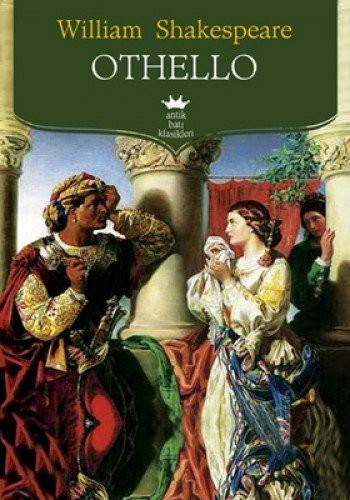
O, beware, my lord, of jealousy; It is the green-eyed monster which doth mock The meat it feeds on.
Tackling Shakespeare’s 1604 play Othello. It goes a lot better than last time, altho Rich gets a bit of a fright when the lead actor comes out in blackface.
Othello the outsider: Was interracial marriage an uncrossable divide for a man of Othello’s station? What do we think of race-swapped casting? What exactly is a Moor anyway? A special investigation.
Iago as master manipulator: Why does he keep escalating his schemes? How did the most conniving man in Venice get the nickname ‘honest Iago’? Is he too OP to be believable? We try to make sense of whether he’s motivated by ambition, sexual jealousy, or is purely in it for the love of the game.
Sexual jealousy as a uniquely destabilising force: How does a general who can stare down an armed mob go to pieces over his wife’s handkerchief? Benny runs through Othello’s many epistemological mistakes. Cam gives us the evo psych line on why men have a deep-seated fear of being cucked. Some embarrassing personal confessions emerge.
when an old black ram is tupping your white ewe
Rich: Welcome back to Do You Even Lit. This week we are reading a very famous play called Othello, in which William Shakespeare taps into one of the deepest, most primal fears known to man: what if my daughter got married to a black guy?
Cam’s giving me nothing on that.
Cam: I thought you were going somewhere else. What if my wife was sleeping with a black guy? Was the second deepest primal fear.
Rich: Yeah, a variation on the theme. I knew nothing whatsoever about Othello, and I didn’t know that the main character is a black guy, or that that fact would be very salient to the plot. So Cam, you chose this play, or you suggested it — did you know that you were gonna plunge straight back into the culture wars, except 1604 edition?
Cam: No, it was just like George Eliot. I sort of opened it up — George Eliot’s a woman, I thought, I was black… I was as surprised as you. No, I roughly knew, but yeah, that wasn’t part of the decision.
Benny: What gave it away? The subtitle?
Cam: Well, the Moor of Venice.
Rich: Yeah, I didn’t see the subtitle, but it would have made my jump scare even worse. When I watched — I think it was the Royal Shakespeare Company production of it, with Laurence Olivier and Maggie Smith — I started watching on YouTube, and a few minutes in, Laurence Olivier comes swaggering out covered in bling and absolutely coated in black paint, and it gave me the fright of my life.
Benny: When was that produced?
Rich: That’s the 80s — no, I’m sorry, that’s the 60s, Maggie Smith in her youth. It’s the familiar names, that’s what I found surprising. But of course Maggie Smith is — is she dead, or is she pretty old?
Benny: She’s dead, I think.
Rich: She’s dead. But yeah, it got me thinking that it’s kind of surprising to have a very prominent play with a person of colour as the main character as early as the 1600s — and not only as the main character, but depicted in the beginning of the play in a very sympathetic and, I’d say, quite flattering way.
So our main guy Othello is a general in the Venetian army, and he’s very powerful, he’s highly capable, he’s well spoken, etc. And the opening premise of the play, which I referred to, is that Othello has secretly married the daughter of a Venetian nobleman, and his secret marriage is being revealed to her father by two conspirators, Iago and Roderigo. So Iago is Othello’s — is he his third in command, I suppose?
Cam: He’s high up, working for Othello.
Rich: And he’s talking to Roderigo, who is in love with Desdemona, Othello’s young wife. And they run to her father’s house and yell, wake him up and tell him, “an old black ram is tupping your young white ewe,” I think is the way that they very memorably put it. So once the father realises that they’re not bullshitting, he sort of rounds up — I’m imagining kind of like a lynch mob — and they go to try and find Othello and figure out what’s happening.
Cam: Well, I think they tell the father that he kind of captures her, right — steals her away, and maybe uses some black magic or witchcraft.
Rich: Yeah, they insinuate that there’s something untoward about it. So what happens basically is, it’s all very dramatic. Weapons are being drawn. Othello is cool as a cucumber. He has this really cool line where he’s like, “keep up your bright swords, for the dew will rust them.” So he’s just pretty unbothered and not at all panicking when he’s being confronted by all Brabantio’s armed men. He argues his case, which is that they’ve just fallen in love naturally and that he hasn’t enchanted her. If anything, it’s the other way around, kind of thing.
Cam: He just told her a few stories, right?
Rich: Told her about his military exploits, I think.
Cam: Yeah, works every time. He just tells her about his life.
Rich: Is that what it was? Yeah. Telling her some cool war stories.
Cam: And what he got into. And then I think someone’s listening, like, oh yeah, I can see how that worked, you know.
Rich: Totally. I mean, he seems really cool — it’s the least surprising thing in the world, really. But then what clinches it is that Desdemona comes and testifies, and so she gets him in the clear, and says, basically, yes, I do this of my own free will, I love him, I pledge my allegiance to him. And so having done that and having cleared his name, you would have thought — it’s not as if her father forgives all, because he just thought it was some kind of untoward, underhanded thing, that he was stealing her away. He’s still deeply mad about it. So I think the suggestion is that just the interracial marriage is in fact what is so scandalous, right? Was that your guys’ interpretation as well — not the fact that they were courting each other secretly so much as just the straight-up race factor?
Cam: We assume it’s part of it, but I actually thought the father was all right with it once he found out it wasn’t untoward.
Benny: No, he like disowns her, basically.
Cam: Okay, well — I mean, we’ll talk about the translation at the end, but sometimes it’s hard to know what’s going on.
Rich: Yeah, I was trying to pull up the quote — do you remember, Benny? It’s something about… I got it: “look to her, Moor, if thou hast eyes to see. She has deceived her father, and may thee.” Which is the very first little foreshadowing of what is to come.
Cam: Yeah, so it’s probably both, right? It’s probably partly the deceiving and lying from him, and the race, you’d assume.
Rich: But do you think, even in the best circumstances, there’s no way he would have let that happen, right?
Cam: I don’t know.
Benny: That’s a good question.
Cam: He’s quite high status and noble and well thought of by everybody. That may be different than being part of the family.
Benny: Yeah, I mean, the race dynamics are pretty interesting, because clearly there’s sort of no upper bound on what sort of positions you can get in society. But there does seem to just be underlying prejudice. I mean, there’s lots of sentences referring to his blackness and whatnot.
Cam: Well, it comes through in the slurs, right? When everyone’s angry with them.
Benny: Right. Yeah, exactly.
Rich: Some of which are… okay.
Cam: I didn’t tabulate them.
Rich: I thought you might have done a statistical analysis or something.
Cam: Well, I did wonder around where he was from as well — essentially whether he’s sub-Saharan African or North African, which I think is ambiguous. There seems to be some evidence — I mean, he’s literally a Moor, and Moor is mainly North African, but I think it’s not open and shut.
Benny: I think Moor is sort of a blend.
Rich: It seems to be an umbrella term that could be even just an Arabic person, or a North African, or a Berber.
Cam: Yeah, I think it’s mainly used for them, but it’s not only — it can be a bit wider. And he’s called Barbary at one point, which is essentially North Africa. But then also they call him black, and he calls himself black. They mention his lips — thick lips at one point.
race-swapped casting and a brief history of blackface
Rich: And going by the interpretations that I’ve seen, and the shades of boot polish that have been involved, it’s been a very deep black up until the 60s, and then they’ve had what’s called the Bronze Age of Othello, where they’ve lightened him up a bit and made him a bit more Arabic. So you have Anthony Hopkins in the 80s playing Othello, and he’s just a little browned up — more like Trudeau style, not full minstrel show.
Cam: I saw Patrick Stewart did a race swap, and Othello was white and everyone else was non-white.
Rich: I would love to see that. It’s a cool idea.
Cam: Which, to be honest, kind of works. You could be a white guy in Korea or whatever, right? The main thing is he’s exotic — he’s an outsider.
Benny: As an outsider, yeah.
Rich: I can’t believe it didn’t occur to me that obviously white guys would be playing this character, because all Shakespearean actors were white.
Cam: They played women, right, as well.
Rich: Women as well, yeah — it was ages before a woman played… so of course. But for some reason I’m so lib-brained that I still just got the biggest fright when I saw it. And it made me think it’s so good that a black guy can act as a black guy now. Not because I particularly care about who gets cast in what role — because you’re an actor, right — but in a situation like this where it’s very salient what race the character is, it just completely takes you out of it. Like Laurence Olivier, who’s this famous Shakespearean actor — I couldn’t watch a minute of it. He’s just swaggering, and he’s putting on a black accent and the face, and it just ruins your experience of the thing itself. Quite apart from trying to get more diversity in casting, or give roles to people who are well suited to them or whatever. So it’s just a funny little observation — some things are actually getting better in our society if you zoom out. I’m very thankful for some of these changes.
Cam: Yeah, well, I think blackface now is particularly triggering, right? It’s one of the worst things someone can do now. We’ll see those photos of Trudeau and stuff — I always just have this image of Trudeau skydiving into the NFL halftime show with blackface, just like a big smile.
Rich: Wait, how bad was his? It was brownface in my memory, right? Oh no, it was quite dark, actually.
Cam: It goes to your point, because he was actually being — I think he was dressing up as Indian, but you always go quite dark. But I imagine it wouldn’t have taken audiences out of too much suspension — it would have been less clashing and triggering.
Rich: Oh yeah, no, he’s gone full send on that. No, clearly it didn’t — I mean, they cast it this way until the 80s. Oh, I see what you’re saying. It makes sense for me, but it didn’t matter for contemporaries at the time.
Cam: Yeah, I was reading there was even a black American guy who went to England in the 1800s, I think, and he just got every gig for Othello. They cast him once as Othello and everyone liked it, and then he was just part of the travelling cast.
Rich: Yeah, well, it’d probably be hard — there wouldn’t be a big pool of black actors, let alone black Shakespearean actors, right?
Benny: Oh shit, we lost Cam.
Rich: Cam, are you still there, mate? Oh no.
Benny: Oh no!
Rich: Here we go again.
Okay, we’re back. All right — we’re talking about race, things got really heated, Cam said some stuff that we just cannot actually publish, so we’ve had to cut that bit out, or leave it to your imagination. Probably best if we move on.
Cam: We could just put a beep in.
Benny: A 15-minute-long beep. You went on your little rant.
Cam: My Iago rant.
Rich: It’s crazy that your home internet got cut off, because whoever, like, the censors…
Cam: Yeah.
Rich: The FBI, whoever was listening — they don’t want the truth out there, man. All right, any other reflections on Othello’s initial character, or should we just move on to Iago?
Benny: I mean, it’s interesting that we don’t actually get much from Othello about his own race. People clearly bring attention to it mostly when they’re insulting him, but we don’t get any reflections by him on the fact that it’s difficult or something to be an outsider.
Cam: Yeah, it doesn’t come up that often. I mean, he does reference it occasionally, but it’s usually the contrast — sometimes like the blackness of my face to the whiteness of the hope, or something. I can’t remember exactly. But yeah, not so much about him being an outsider within society — that kind of doesn’t come up much.
Rich: Yeah, you get the feeling that it’s just kind of a non-issue, except perhaps in the specific context of marrying a young white noblewoman. I don’t know if that’s true or not, but he’s so praised within the play — other characters highly respect him, and he has earned his way to a very high position. He’s a general. I don’t know how the military works, but general is about as good as it gets in our contemporary military.
Benny: And I mean, he’s asked to lead the fleets to Cyprus and everything. He’s the go-to man when the Turks start attacking.
Cam: Against the evil Turks. But yeah — I assume you’d never heard of Iago either, Rich? As this kind of archetypal villain?
Rich: No, I just thought, is that a character from Aladdin or something? Is that right?
Cam: Is it the parrot?
Rich: Yeah, I don’t know — it’s kind of Middle Eastern sounding, so I got confused about who was meant to be the Arab for a minute.
Cam: Well, it is kind of funny, these Shakespearean names as well. There’s this English playwright, and this one happens to be set in Venice, but sometimes they’re set in England or wherever, and they always have these Latin or Greek sounding names, even if it’s set in England.
Rich: Yeah, I mean, that’s fine for this setting though.
Cam: Yeah. Okay, one final point on race: sometimes I feel like with Shakespeare as well — like with Othello it’s important that he is different and an outsider, but in general Shakespeare feels like a vehicle for performances and stuff. So whether Denzel plays him or Olivier plays him or whoever, it feels like it doesn’t seem to matter so much with Shakespeare, perhaps compared to other works of fiction. I don’t know.
Rich: Well, let’s linger on that a second, actually, because it comes up a lot in the modern discourse of casting, say, usually black characters in roles that traditionally went to white actors or people of European heritage — like the Lord of the Rings series with the black dwarves and hobbits and stuff. And at first I was like, yeah, this is kind of annoying — almost like stunt casting or something. But then I watched that TV show and it just didn’t matter one little bit from my point of view. I simply could not care less.
I think I have the same perspective on it I have with separating the art from the artist, where you know that someone is a pretty shitty person in real life — I just don’t care unless it affects the art. And if it affects the art, then don’t do it, and if it doesn’t, it simply doesn’t matter. In the case of that Lord of the Rings shit, it just doesn’t matter. In the case of this, it really did matter for me when Laurence Olivier was playing Othello. But I’ve seen Denzel play Macbeth in the Coen brothers film, and that was great — it didn’t take me out of it at all. So I think it’s just: does it take you out of it, and does it affect your aesthetic experience of the film? If so, then it’s annoying, and if not, then who cares.
Benny: We’ll see how you feel about Achilles in the upcoming Nolan film.
Rich: Oh, who plays Achilles? Oh, is that — Elliot Page?
Benny: It’s going to be the ultimate test.
Cam: I don’t think so, no. I think — I’m not even sure if it is Achilles.
Rich: Surely he’s not playing Achilles. That would make me mad.
Cam: That would take you out of it, yeah. No, I don’t think it’s Achilles — maybe someone else. But there is heaps of discourse around the movie. Also Helen of Troy was African in the upcoming movie. Anyway, I think we’re going to do the Odyssey or something.
Rich: Yeah — where the hell were we, Cam?
Cam: Iago. We’re trying to transition to Iago, but we can’t get off Othello.
Benny: Can’t get off the race.
So You’ve Been Passed Over For Promotion
Cam: So Iago is this great kind of Machiavellian villain, I suppose. I do want to talk about his motives a bit, but it seems like he has this concrete grievance to start us off, and it kind of starts the play off. Iago served Othello — so he’s under Othello, and he served loyally for years, and he expects this promotion to, I think, lieutenant, or whatever rank it is. And instead Othello chooses Cassio, who I think we’re to understand is kind of Othello’s mate as well — chooses his buddy Cassio. And Iago dismisses this choice because Cassio is inexperienced on the battlefield. I think he calls him a mathematician or arithmetician or something — like he’s bookish, he has all this bookish knowledge but no battlefield experience.
Rich: That’s why he’s got that nickname, I think — after the calculator.
Cam: Well, I did have that thought as well. I wondered — are the calculators… probably not.
Benny: That’s too funny.
Cam: I suppose it would be like industry employing Benny — you know, this boffin maths guy who doesn’t understand getting things delivered — instead of someone like me or something.
Benny: Couldn’t keep pace with Cam’s intense government job. That sounds extremely demanding. You need to be highly skilled for that sort of position.
Cam: Easy, easy on the doxxing, man.
Rich: Yeah, be putting in huge 20-hour weeks.
Cam: Exactly. Hey, during COVID we worked right up until 5pm Friday. It was a busy time, you know.
Rich: Not including holidays, of course. Hey, I forgot to thank you as an essential worker. Thanks, man.
Cam: All right, so this is like Iago’s core grievance, and he wants to start scheming against, I suppose, both Othello and Cassio, right? His first idea is he wants to remove Cassio from the position, and I think even early on he gets this idea that he also wants to create jealousy with Othello and his wife, Desdemona.
Rich: Yeah — if it wasn’t clear, it was Iago who set up Roderigo to tell Desdemona’s father about the secret relationship. So yes, he’s trying to get Othello in shit, and I guess he almost gets him lynched. Like, it could have worked out that way. So that was kind of his first plot foiled, I suppose.
Cam: Yeah, no, that’s true — I just didn’t think about that. This is like his first plot, and he’s a bit like that as well. I don’t think it’s like Moriarty, a grand scheme of things right from the start. I think it’s more opportunistic, right? He has this grievance and he has these rough ideas, and when things present themselves, he wants to do it.
So this is the first one — can we get Othello in trouble right from the get-go? And he uses other people as his pawns. He’s using Roderigo, who funnily enough is in love with Desdemona. He wants to cause beef between Cassio and Roderigo first, because he wants Cassio to get into trouble. His basic idea is: get Cassio drunk, have Roderigo provoke him, Cassio loses control — because apparently he’s this bad drunk — causes a public scene, and then Othello sees him as unfit for command. And Roderigo is willing to go along with this and provoke Cassio because Iago convinces him that it’s in his benefit to get Cassio out of the way. Because I think he says, well, Cassio is this heartthrob guy — Desdemona, you know, she’ll eventually get bored of Othello, but she might go for Cassio.
And I had this thought — well, Roderigo believes it, Othello believes it — like maybe there’s some Straussian reading, maybe there’s something there, that everyone’s believing Desdemona has a thing with Cassio. But I don’t… I don’t know.
Rich: I think it bears pointing out here that Roderigo is not the sharpest tool in the shed. The ways in which Iago manipulates him to get involved in his schemes become ever more tenuous. The first one — pretty clear cut: try and get Othello in trouble. Obvious. This one, where he’s like, but what if she falls in love with Cassio, you better provoke him into a fight — it’s like, oh, okay. But Roderigo goes along with it because he trusts Iago, and because I think he’s just pretty dumb, I guess.
Cam: But he’s like some rich merchant, I think, as well. I forget his exact position.
Benny: Yeah, he’s got some money.
Rich: Yeah, he’s got money and he’s in love — and you know what you wouldn’t do? Steal a wife from someone else. If you really, really love someone, steal them away from their existing husband and kill any other potential rivals for their affection. And if you haven’t done that to secure your lover, it’s not clear whether you actually really love them. You gotta lock in.
Benny: You’re not taking it seriously.
Cam: Yeah, I just got a galaxy brain idea — it’s this idea like, you know, if someone’s in love with my wife, it’s like, well, I won’t get Cam out of the way — I’ll get Benny out of the way, just in case, like, she goes for Benny next, you know what I mean?
Rich: Yeah, it’s that classic procrastinating.
Cam: Yeah, he doesn’t actually love her. It’s just all cope — just getting everyone out of the way, not the main obstacle. But anyway, so this main plan: Iago knows Cassio’s bad with alcohol, so he plans to get Cassio really drunk, and then Roderigo comes and provokes him, and it works. Cassio gets really angry and ends up having a fight — like, almost kills a guy. It’s pretty serious.
Rich: That bit made me a little bit sad, because Cassio is refusing the drinks at first, and he gets peer pressured into it — basically the olden equivalent of “don’t be a pussy.” And I’m imagining him with his hundred days token around his neck or something. And then he finally falls off the wagon — it’s like, no, don’t fall off the wagon, man.
Cam: I think this does touch on one potential theme, where because Iago is just this evil manipulator causing all this stuff — but in this first instance, ultimately the bad thing he does is convince Cassio to drink, and then Cassio behaves badly. And there’s this question of responsibility, right? And we can touch on that with Othello as well. I know you can talk about, if you get drunk or on drugs you’re not your real self, but Cassio does some bad stuff himself. And Iago’s relying on his knowledge that that will happen.
Rich: So this leads Cassio to lose his rank of lieutenant. Othello is mad with him basically and demotes him. And at this point you’ve got to think — Iago wants to replace Cassio, so you think, okay, he hasn’t been appointed yet, but he’s sort of got what he wanted, so he’ll stop. That’s that, right? He’ll just wait till Othello appoints a new lieutenant and hopefully it’ll be him. But he doesn’t stop.
Cam: Done and dusted. The play could have just ended now, right?
Rich: But he doesn’t stop.
What does Iago actually want?
Benny: Well, I think this is what starts raising questions about Iago’s actual motivations, right? Because he says one thing to Roderigo at the beginning of the play — that he’s mad at Othello because he was passed over for this lieutenantship. Okay, fair enough. You kind of understand, if not support, his initial attempts to unseat Othello. But then what he actually wants is kind of in view, and he just doesn’t take notice of it at all. He just pivots his plans to try and ruin Othello’s life. And then you have to start asking yourself, okay, why is he actually doing this? What does he want?
He has a little soliloquy — I believe it’s a soliloquy — where he says, I’m mad at Othello because there are rumours that he slept with my wife. And a big open question for me is just, are we supposed to take that reason seriously? I think in Shakespeare’s plays, you’re typically supposed to assume that what a character says in a soliloquy is to be taken as true — meaning the concept of the unreliable narrator is not really one that Shakespeare played with. But in this case, it does seem sort of unbelievable. Othello never hints at it. Iago only brings it up once — he never says it again.
Rich: Isn’t it in that same soliloquy that he says he doesn’t believe the rumours, he thinks they’re false, but it’s a good enough pretext? My memory of that was that he knows it’s not true, but he still finds it annoying that people should even spread rumours at all — or he’s going to pretend that they’re true to justify seeking an even greater vengeance upon Othello.
Cam: Yeah, he literally says at one point it’s eating away at him, but then he’s like, I know it not to be true — but I’m gonna act like I’m sure of it, or something. So it’s like, is this a cognitive dissonance type thing, or is he intentionally looking for something? I think there are some interpretations where he’s just looking for whatever he can be angry at Othello about.
I even have this one — I wonder if he kind of put it into his own head, because his whole scheme is to cause jealousy between Othello and Desdemona and Cassio, and then he’s got that in his head, like, what if that happened to Othello and Emilia? But he does bring it up twice, Benny, I think — he sort of says this and says, well, I know it’s not true but I’m gonna act like it’s true, and then later on I think he says, yeah, it’s eating at him.
Benny: Hmm, okay, interesting. I’ll have to go back and reread this soliloquy. I interpreted it as: he’s not sure if it’s true, but just the fact that the rumour exists now is enough for him to take action against it, because you can’t have people thinking that that might have happened between Othello and his wife.
Cam: Yeah, there’s this question of proportionality. Even if he is jealous that someone’s sleeping with your wife — you probably are pretty livid and you do whatever. But if it’s just the first one, hey, there’s this big question. It’s like, this guy’s been passed over for a promotion, and then everybody must die. That’s related to the situation.
Rich: Yeah, is Iago just kind of a psycho? What is the archetype here of someone who just loves to scheme and plot and create havoc and respond in a disproportionate way?
Benny: Yeah, is he just supposed to be evil incarnate or something? Where there’s just no rhyme or reason?
Cam: Is it kind of like the Joker as well — but smarter? He’s just in love with causing issues. And I think Harold Bloom said he even has this artistic element to his causing of suffering — he grows in love with that, like his artistic project is fucking with people over, rather than fucking people over.
Rich: He definitely has this playfulness to him that I notice in particular with Roderigo, where I think he loves the cat and mouse game, and I think he loves playing Roderigo because he’s so pliable and such an easy person to puppet around. He’s definitely finding it thrilling intrinsically, not just as a means to his apparent end. So that has to be true. And then the only thing that makes me wonder is, how does a person like that reach a reasonably high rank in the army? It reminds me of BPD or something, some kind of crazy personality disorder. And if you have a crazy personality disorder, you typically don’t end up in a highly hierarchical profession.
Cam: Well, now you mention it, this may be the reason why Othello passes Iago over, right? Yes, he was this great person on the battlefield and caused all this havoc, but now it’s the time of peace — I’m not sure if it is, because we had the two — but when you need some more stability and stuff, he’s the wrong choice.
Benny: But Othello still relies on him and treats him as a good friend, right? And you’d think you’d be a little more discerning.
Rich: He’s got like a Homeric epithet — he’s constantly called “honest Iago.”
Benny: Yeah, honest, honest Iago. And so he’s built up this reputation amongst tons of people at this point. You have to wonder, how has that happened if he’s just been this conniving twat throughout his whole life? And so that does make you think that something changed in him, where he actually was Othello’s good friend at some point.
Cam: That’s quite a good one. It’s almost like, how has no one noticed? Because I feel like you always get a feeling from these sort of guys — even characters like Littlefinger in Game of Thrones and stuff, there’s this feeling that you can’t fully trust them. But he does continue to be friendly during the play, right, even after he’s started to scheme against everyone. And he’s clever about it as well. Like when Cassio has the public brawl initially, Iago’s kind of somewhat supportive of Cassio — he seems reluctant to dob him in. He’s like, he’s a good guy, he’s not immediately throwing him under the bus. He’s keeping up the act.
the crusty handkerchief and ‘eavesdropping conversation’ gambit
Rich: Do you want to take us through his next plot, Benny?
Benny: Yeah, so the handkerchief is sort of the set piece that’s really used to drive Othello mad. The background is just that Othello received this handkerchief from his mum, gave the handkerchief to Desdemona as a token of his love. Iago asks Emilia, his wife, to steal the handkerchief. She’s not able to for a while, but then one day Desdemona just drops the handkerchief. Emilia takes it, gives it to Iago. And Iago’s plan is to simply leave the handkerchief in Cassio’s room, so that Cassio is then seen with the handkerchief by Othello — even though Cassio won’t know where it came from. To see him brandishing it about in some public place will presumably drive Othello mad, once Othello is suspicious, or at least on the lookout for signs that Desdemona is actually cheating on him.
And so Iago basically has to very slowly introduce this idea that Desdemona might not be loyal into Othello’s mind. And the psychological games here are just on another level. So he makes certain almost noises of discontent when he sees Cassio and Desdemona together, just kind of says under his breath, oh, that’s odd, you know, when he’s walking with Othello. He just leaves enough clues that he thinks something’s potentially going on, that Othello feels like he’s got to ask Iago what he thinks about the situation. Like, okay, you’re clearly hiding something from me, tell me. All these classical psychological tricks where you make it seem like the other person is dragging this unwanted information out of you, instead of you actually planting it into their head.
Othello has interesting reactions to all of this. At first he is hesitant to think that Desdemona is possibly up to something at all. But then Iago basically just says, just look out for it, right? I’m just looking out for you as a friend. I’m sure she is loyal, I’m sure everything’s fine, but just be on the lookout. And Desdemona, meanwhile, is friends with Cassio — Cassio was the go-between between Desdemona and Othello as Othello was trying to court Desdemona. So they do know each other, and Desdemona likes Cassio, and is trying to get him reinstated after this fucking kerfuffle.
Cam: Well, Iago sets that up as well, though. When Cassio loses his position, Iago goes, this is a great opportunity, and says, why don’t you ask Desdemona to help you out here and convince Othello?
Benny: So he’s manipulating her behind the scenes to make sure that Cassio is going to be spending time with Desdemona, basically, and just taking advantage of her good nature to try and get this guy reinstated. So that means Cassio is trying to hang out with Desdemona — not behind Othello’s back, but it ends up being behind Othello’s back, because he’s asking her to plead on his behalf. So Iago’s just slowly getting all these pieces together.
And then finally, once Othello is suspicious, two things happen. Him seeing Cassio with the handkerchief, and then, as the icing on the cake — Cassio gets Othello… this is a slightly unbelievable scene. This would be hard to pull off in an actual play or a movie, but it works over text. He gets Othello to hide behind a corner, in bushes or something, as he stages a conversation with Cassio. And what he does is — there’s this lady, I think they just call her a whore in the book, that Cassio is sleeping with.
Rich: No, she has a name.
Cam: Bianca. Bianca the whore.
Rich: Yeah, he’s sleeping with some slut.
Benny: Right. And I guess her and Cassio have just been kind of seeing each other. Cassio doesn’t take it too seriously, because he’s this high-ranking officer, he’s never going to marry her or anything, but they’re just having fun. She’s sort of in love with him. And he just gets Cassio to start talking about Bianca, and how silly she is. And then, once he’s talking about her and not using her actual name — not using the name of Bianca — he beckons Othello over as Cassio was making all these jokes about her being a whore, and not wanting to marry her, and just toying with her, that sort of thing. And Othello just naturally thinks that Cassio is actually talking about Desdemona.
Cam: You said it doesn’t work in performance, but I feel like that’s such a classic movie scene, right? Someone’s overhearing someone else talking, and they’re totally mistaken about who they are talking about.
Rich: Yeah, and it is Shakespearean in particular, right? Remember in Hamlet, where Hamlet is hiding behind a tapestry or something and then he stabs the king through it? Imagine some guy just hiding behind the curtains — that’s meant to be… yeah. But basically it’s high risk, because at any moment Cassio could say the name Bianca.
Benny: Oh, that’s true, yeah, I’d forgotten about that. He could say the name.
Rich: Any other detail which would not fit with the Desdemona story, which would reveal that he’s talking about Bianca and not Desdemona.
Cam: It’s high risk in terms of not working out — in terms of causing Othello to be jealous and angry. But I don’t think Iago’s risking his reputation too much, because he could probably just be like, oh — I forget how exactly he primed Othello. Maybe it would be obvious that he’s just set this whole thing up. But if Cassio mentioned Bianca by name, Iago could just be like… have plausible deniability. Oh, okay — he’s talking about Bianca, and he has a relationship with her.
Benny: The way he really arouses Othello’s suspicions originally is to tell him that he sleeps beside Cassio, and Cassio is having these dreams where he says Desdemona’s name in his sleep and stuff.
Rich: Not just that — he says, “oh, Desdemona, oh I love you, oh we’ve got to make sure Othello doesn’t find out.” It’s so good. When they introduced that scene, I thought it was going to be like some dream interpretation, where it’s these symbols and that means Desdemona — but it’s just, no, he’s just straight up saying it.
Benny: How on the nose is this? It’s insane. That part’s very funny.
Cam: “Oh baby, baby, Desdemona.” Imagine that being the one thing that gets you — if you have an affair, or something, just in your sleep. Which, to be honest, you’d have to be like, that was just a sex dream, baby, you know, I was just… that was my dream self. I can imagine someone getting into trouble for that.
Rich: And in his dream he called you a Moor.
Cam: This is all to say, I think Iago would be in a bit of a bind, right? Because he’s told Othello that he’s hearing Cassio talk about Desdemona in his sleep, and then if it comes out that Cassio was talking about Bianca in this conversation, I think Othello would be like, okay, well, something doesn’t track here.
Rich: No, I reckon Othello is smart enough that he would at that point know that Iago is the villain and has been trying to drive the two of them apart — because he brings him to that conversation telling him, I’m going to show you.
Benny: Yeah, true.
Cam: Yeah, okay, so it is very high risk. I was just thinking, is there a way that it could have been set up that it was lower risk for Iago? Because usually when it happens in movies, it’s just kind of a bit of randomness — someone comes halfway through a conversation and mishears what it’s about, and then leaves. It could always be resolved if they just came in and asked about it, but usually then they leave because of randomness, not because it’s been manipulated that way. It almost feels a bit too cute, doesn’t it, this scene?
Rich: Which came up in Middlemarch, right? We had the same exact trope, with the endless misunderstandings between Dorothea and Will.
Cam: Yeah, yeah, I just thought of that as well.
Benny: But yeah, Othello’s reaction to all of this I find quite interesting, because he very quickly pivots from thinking Desdemona is most likely innocent, thinking there’s nothing wrong, sort of heeding Iago’s warnings but not letting him get to it too much. It’s an impossible beginning, but he’s not driven crazy by it. And then basically —
Cam: This bitch needs to die.
Benny: Yeah, he literally is like, he’s got to die. And I think that even happens — do I have this right? — that he decides Cassio’s got to die before even the conversation between Cassio and Iago, and before the handkerchief. But then Iago tells him about the dream, right?
Cam: I mean, he’s angry, but he keeps asking for proof. Like, give me proof, Iago. And then…
Benny: So Iago plants these suspicions in his head. Othello starts to be driven mad by the fact that he’s suspicious, right? And he’s like, I need proof one way or the other. He’s not convinced about Desdemona’s guilt. But then Iago tells him about this dream, and my sense of Othello at that point is he’s like, all right, this is it, this has happened. And then the handkerchief and the conversation between Cassio and Iago are after that point, basically when he’s already convinced.
Confirmation bias and bad epistemology
Cam: Maybe. But I think you’re about to go into why even these two bits of evidence — you know, to a pure rationalist this is bad epistemology, but this does feel pretty strong. I could imagine at this point Othello doesn’t feel that dumb to be convinced. Once you’ve seen the handkerchief, and you’re hearing this…
Benny: Right, because your good friend is telling you about this dream, and you’re like, okay.
Cam: Yeah, then you hear Cassio talking about who you think is your wife in this way, and then the prized handkerchief comes — you’re gonna be like… confirmation bias, is that the point?
Benny: Yeah, I mean, I do find it surprising, I guess, how quickly. Some confirmation bias — you could linger on that for a long time. But I guess the overall point is just that your jealousy can fuck with your head so much, right? I’m sure we’ve all been there. You can read as much Houellebecq and stuff as you want, but it’s silly to think your emotions don’t just totally overshadow your ability to think at some point. And you just see that happen so quickly with Othello, in a very powerful way, where he goes from this very charming, very self-possessed man to just someone who you can barely recognise and barely trust on screen. He’s throwing temper tantrums, he’s demanding evidence of Iago, he’s just totally tormented by his own thoughts. This guy’s totally transformed, and trying to have a rational conversation with him at that point is clearly not going to work.
Rich: Yeah, and were you going to say something about the difference between confirming and disconfirming?
Benny: Yeah, that’s a good point.
Rich: I’ll just give a quick anecdote about it. You know those games you can play where you have to guess a rule for a sequence of numbers? It’s like two, four, six, eight, and you have to guess — what’s it called?
Cam: The Wason test, I think — the Wason or the Wusson test.
Rich: Okay, so the way the game works is you have to guess the rule, and you can test your hypothesis. So if you think, oh, the rule is just all even numbers, then you put in odd numbers and see if it disproves it or not. And the classic thing is that people chronically — well, it’s not that they under-test their hypotheses, it’s that they do tests that confirm the rule they already have in mind, instead of trying to disconfirm it, because it’s just such a natural impulse. So you’ve got it in your mind and you shape all of your evidence-gathering around that. All of which to say, me in Othello’s shoes, I think I would have been suckered as well. I very much sympathise with him being hoodwinked in this manner. I don’t think he’s an idiot.
Cam: But that said, I could imagine being angry and jealous, but I can’t imagine not asking either party, right? That just seems… I don’t even think we need to get into confirmation bias stuff — most people would ask Cassio, or Desdemona your wife, about it. And I suppose in a way he does that, but you’d definitely bring it up. You’d say, my friend is saying — because she’d be like, why do you think this? — you’d say, my friend is saying. I mean, does he go so crazy that he forgets that Iago’s kind of whispering in his ear? Maybe.
Benny: I think so. I mean, it’s an interesting question, but I think his beginning was subtle enough to lead Othello there without explicitly making the connections himself — letting Othello connect some of the dots. But then after that, I think you’re right — wouldn’t you just be like, okay, I gave you this handkerchief, now Cassio has the handkerchief, what the hell happened there? Or asking Cassio about it, even if you’re not going to believe your wife. And one answer there is just, okay, the norms of the time change, right — you wouldn’t trust your wife to be honest with you at that time. But when he’s about to strangle her, basically, he’s like…
Cam: I think he does confront her on the handkerchief, and she’s just like, I don’t know. She’s like, just trust me, I don’t know. She doesn’t have too long.
Rich: It would be fun to do the modern thriller-style version of this, where you don’t see Iago’s point of view and you think he is a good guy — you’re basically the Othello point of view throughout — and then at the end you get the Sherlock Holmes reveal, where it’s like, it was I who planted the handkerchief here, and I who whispered in his ear, and it’s cutting back to all the things, and you’re putting the clues together and realising that. And then you can kind of judge, from Othello’s point of view, whether or not Iago was laying it on too thick. But of course we know right from the very outset.
Cam: The scene slowly pans out to seeing a little bit of handkerchief coming out of Iago’s pocket or something, as he slowly walks away.
Let the bodies hit the floor
Rich: I think here it’ll probably benefit — we’re already straying into it — to just quickly get the ending out of the way. So I’m just going to quite quickly rattle through this.
Benny: Yeah, let’s do it.
Rich: We’ve got a sequence of deaths and injuries, starting with Roderigo. Now, this is complicated enough that I’ve had to write it down, so sorry, I’m just going to read this off my notes. Iago talks Roderigo into killing Cassio, which he says is the final way to make sure that his path to Desdemona is clear — which incidentally is where my suspension of disbelief broke slightly. In that scene, Roderigo is like, what, you want me to kill him? And he’s like, yeah, get him out of the picture, splatter his brains. And Roderigo’s like, yeah, I don’t know about that, and then a couple of sentences later he’s like, all right, I guess so. He’s just so pliable, and it’s so non-obvious why he needs to kill Cassio. That’s a huge escalation for Roderigo as well — actually trying to commit murder rather than trying to bring disgrace down upon people. Not every character is cut out to actually do murder.
But anyway, Roderigo attacks Cassio, Cassio wounds Roderigo instead, and then Iago, who has been lurking in the background, stabs Cassio, but non-fatally, and then runs away. There’s a big ruckus, and everyone comes back to see what’s happening. Cassio says, oh, Roderigo attacked me, points him out, and Iago pretends to be Cassio’s ally, runs in, and quickly stabs Roderigo to death so that he can’t talk — because obviously he would squeal and reveal Iago’s hand in the whole matter.
Cam: But that’s kind of one point where it’s started to unravel for Iago, and he’s even failed in this. He wanted Cassio dead, and Cassio is not dead.
Rich: Well, he actually wanted one or the other of them dead. He didn’t want them both to live. Both dead would be great, but he said it’s a no-lose for me.
Cam: Oh, I thought he wanted them both dead.
Benny: Yeah, both is preferable, I think.
Rich: If Cassio dies — he expected them to battle until one of them dies, right — so if Cassio dies, great, that’s my plan. If Roderigo dies, great, because he’s bitching and moaning to me trying to get his jewels back, and he’s probably gonna have to silence him at some point anyway, because he knows about all of Iago’s plots. But then he fortuitously manages to kill Roderigo anyway.
So then the big denouement is that Othello kills Desdemona. We don’t really have too much time to go into the specifics.
Cam: Which just kind of sees him in a fit of rage, right?
Benny: Yeah, just strangles her in bed, right?
Rich: Yeah, it’s pretty gruesome, and she’s just pleading and proclaiming her innocence until the end. And then there’s this wonderful scene where Emilia — who is Desdemona’s maid and Iago’s wife — is outside, and she learns that he’s killed her, and when he tells her why, she’s like, are you nuts? Of course she wasn’t cheating on you with Cassio. Who told you this? And then Othello reveals that Iago has been priming him to think this, and Emilia — I did not see this coming — she just completely turns on her own husband and is like, you foul brute, I can’t believe what you’ve done, you piece of shit. She’s castigating both Othello and Iago, and Iago is going, shut up, shut up, go, shut up. But she can’t. She is the most honourable and principled person, and it was so great to see Iago get his comeuppance, because I just thought he was going to get away with it. It made me wonder again why she married a man like that. So, to our point earlier, he’s clearly either had a character change, or he’s been very good throughout his life at keeping his plots from getting out of hand.
Cam: I think probably the latter is what I felt. But yeah, she’s noble, but she’s also brave, because her going against Iago specifically — I think she knows Iago’s going to kill her over the stuff, and she’s like, well, I don’t care. She even says something like, I don’t care if you kill me twenty times, the truth will come out.
Rich: And he kills her, right? Iago kills Emilia. Iago gets arrested but not killed.
Rich: And Othello, upon learning about this great betrayal, and that he’s killed the love of his life, kills himself.
Cam: Oh, that’s right. Yeah, that’s a big part.
Rich: So Iago is the only one who survives, although he has been arrested, so we presume he will receive his just desserts.
Cam: I was a little surprised he got his just desserts. I actually thought he was going to get away with it. I just wondered — that story of the evil manipulator who then gets away with it all and has destroyed everyone around him.
Sexual jealousy as a uniquely destabilising force
Rich: Yeah, well, it didn’t occur to me until this conversation — when Benny, you were mentioning that Iago also is potentially spurred on by his sexual, romantic jealousy — so maybe it’s just to have some good parallels there between Othello and Iago. Essentially Iago is nuts from the beginning, but Othello isn’t — he loses his mind and becomes this very violent, passionate person. It’s very fascinating that there’s something about sexual or romantic jealousy in particular that seems to have the power to get these guys shook up. Because for one thing, Othello is a general, which is not like a common soldier — you have to be very cool-headed and calm under pressure, you have to be very rational, and I think he displays that really well when the mob is coming, as we talked about. And then he just absolutely goes to pieces here.
So I don’t know — is there something about… women have a unique ability to — maybe that’s not the right way of putting it — but sexual jealousy is uniquely destabilising to an otherwise rational man, or something like that. Is that the trope of the day? Is that still a trope that exists in our day?
Cam: It strikes a chord with me a little bit. How about you guys? Have you guys had romantic or sexual jealousy strongly enough that it’s kind of destabilised you a little bit? Are we telling ourselves too much? Should we leave that between us and the beer post?
Rich: I mean, I’ll go first, then. I’m sure I have, but I don’t think I’m a cool, rational person anyway, so it’s not unusual. I can get spun out about all kinds of various stupid bullshit, so if I do, then it’s not exceptional. I’d be a horrible general in a war, put it that way, because I wouldn’t have the constitution for it.
Benny: Yeah, because that’s the question. Does it spin you out more than other forms of envy or jealousy?
Rich: Or just spin you out more than anything.
Cam: Yeah, not necessarily just other jealousy, just other emotional reactions — like this is what truly destabilises. I mean, there’s an obvious evolutionary psychology type argument of why, especially for men, sexual jealousy is this huge thing, because you end up cuckolded and raising someone else’s offspring.
Rich: When you think about it, you should be least worried about being cucked by a black guy if you’re white, right? Because in the pre-DNA-testing age, you’re like, if you’re gonna cheat on me, I hope it’s with a black guy, because then I’ll find out.
Cam: Yeah, that’s why I have the cuck chair, man. That’s funny.
Rich: I mean, maybe.
Cam: That’s a good point — we could write an evo psych paper on it. But it is pretty strong. I know a lot of dudes, and borderline even myself when I think way back, you can have this totally unfair, inconsistent thought. You can imagine trying to reassure the girl, like, oh come on, this didn’t matter, she didn’t mean anything to me, you know, it was just a Thai massage parlour or something, it doesn’t mean anything. And then you find out a hint of her potentially having an affair, and you’re like, holy fucking shit, what is this, this is the worst thing ever. And you kind of hold those two things at once, and it can just drive you nuts.
I had this anecdote when I was younger — years ago, when I was sort of seeing someone, and it kind of ended, and she planted the seed about someone else, and it just sat with me. I just knew, I was like, oh, this is potentially bad faith, it’s potentially not true, and I just couldn’t let it go away, and then I had to raise it, I had to bring up this thing — I won’t get into the details — but that just caused Pandora’s box to open. It was potentially a misunderstanding, a bad fact, potentially someone putting a bad idea in my ear, but it was just this misunderstanding, and it caused far more issues. It kind of seeded in some jealousy as well, and I just couldn’t let it go. So I lost all reasonability.
Rich: At least you didn’t murder her.
Cam: Well, that’s the thing — it’s like, when these happen, you usually go to the wife or the husband and you’re like, what’s going on, I know you’re having an affair, let’s sort through it.
Benny: Or anyone else, ideally.
Cam: So I did lose a little bit of belief on that — talking about the disproportionality of Iago, and this probably of Othello as well. The erection, like — I’m gonna murder my wife…
Benny: Over a hanky. That’s rough.
Cam: Maybe it was a crusty hanky. I don’t know.
Rich: Gross. Yeah — “beware, my lord, of jealousy; it is the green-eyed monster which doth mock the meat it feeds on.” Benny, you’re so quiet, but anyway.
Cam: I mean, one thing about Othello’s jealousy which I didn’t relate to — and I’m not sure if it is that relatable in general — eventually his thoughts… Othello at one point says, I wish I didn’t know, she could be sleeping with half the army and that would be better, now I have this image in my head. He has this “don’t ask, don’t tell” thing, like that would be better. And that doesn’t strike me as awfully true. You can take a step back and be like, yeah, I would be stable and normal if I didn’t know about it, but you just don’t want it to happen — that’s the main thing. If anything, you’d want to know.
Rich: “Oh, baby, I don’t want to know / if you’re playing me, keep it on the low.” Well, it’s unrelatable though. I’ve never thought about those lyrics before, but it’s like, no, I definitely want to know.
Cam: Yeah, that’s a good point, that’s a piece of evidence against my theory. Well, I think there is some truth to it, maybe more of female sexuality, to be a little bit evo psych bro on it.
Rich: Is that a song by a man? That’s a song by a man, isn’t it? Isn’t it, like — here’s a black guy.
Cam: Yeah, I think so. Is it like Craig David or something?
Rich: Something like that, yeah.
Cam: Mario Winans is definitely a big one-hit wonder.
Benny: Is that your Google search history? It’s all black.
Rich: I never heard of him. Italian guy. Okay. Oh — I thought the princess was boning Luigi. What were we talking about?
Cam: I was going to get in some evo psych — the “don’t ask, don’t tell.” I know there are instances of it. I knew this — my girlfriend at university, she was friends with someone who was dating an athlete or something, and it was kind of an open secret that the famous athlete was having affairs and stuff, but you just couldn’t mention it, because that would cause the common knowledge issue. But she was kind of okay with it, as long as everyone played into the delusion that it wasn’t happening.
Rich: Well, that makes sense to me, because that’s more like — the hurt that’s being done to you is losing social status. But the hurt that’s being done to a man in your evo psych story is being cuckolded and raising a child. That’s not there.
Cam: As a man, it’s the act of face-fucking your wife.
Rich: Right. So is that a…
Cam: No, I think I did see that somewhere as well — just the face-fucking. Yeah, I’ve seen it somewhere.
Benny: I don’t know if that’s true for the average woman, though. I don’t think it’s just a social standing thing.
Rich: No, I just mean in that case that Cam mentioned, where you’re dating a famous guy, and you kind of accept that — say it’s a rock star and they’ve got a history — you pretty much know that they’re not going to be faithful to you, but you want to pretend that they are, or not have it rubbed in your face at least.
Cam: The evo psych bro science just-so story about it is: for a woman, it’s more important to have commitment — a guy staying around and giving resources and helping raise your children, because there’s never a question, this is my child. But for a guy, it’s more about the act of having sex.
Benny: And I guess for the female, if you can be assured of that — the issue with cheating from their perspective is that now you can’t be assured that he’s going to stick around, right? You don’t want him running off with another woman. But if you can be assured that he’s going to stick around, and he’s just going to sleep with some women on the side, it’s actually less of a big deal than the man being cheated on, when there’s actually this risk that you’re just raising someone else’s kid.
Cam: So you’re saying, Benny, the double standards are justified.
Benny: Yeah, justified. Yeah, I’m saying women should let me cheat on them. That’s what I’m saying. What’s the big deal?
Rich: I watched that Netflix — the Louis Theroux one. And there’s a term for it — like one-directional monogamy or something, that I heard in that documentary. Where some of these guys are like, she’s monogamous with me, but I’m allowed to sleep around.
Cam: That sounds like a rationalist phrase.
Rich: Unilateral monogamy or something.
Cam: I think polygyny is the… yeah. So maybe we should quickly go into — Rich, you wanted to say — I mean, maybe we’ve talked about it a little bit, but Iago being OP. Is that like, you kind of don’t believe how OP he is, or just, wow, he is super impressive?
Rich: I think I’ve said enough about that already, I don’t have too much more to add — just that suspension of disbelief got a little bit hard towards the end, where I was like, okay, he’s just got the most silver tongue ever and he can perfectly convince anyone of anything. And then I did enjoy that he ultimately got derailed by his very plain-spoken wife. But yeah, maybe it slightly went a little bit beyond the limits of belief. So I like Iago as a character, but I’m also a bit confused by his motivations, his arc, and the stuff we’ve talked about of how a person like this ends up in that station in life.
But yeah, I don’t have anything more to add. Just because Benny’s got to go soon, I reckon let’s roll straight into: what did we think of the play, and how did we go, engaging with our second crack at the Bard? Who wants to go first?
original vs modern translations discourse
Cam: Benny, did you actually read the play?
Benny: I did, but sort of in scattershot fashion, to be honest. I didn’t just read it front to back. I would read various sections where I wanted to understand the original text, or at least know how different the original text was from the play I was listening to. So we should say, I guess, for the listeners — I listened to… what’s it called?
Cam: We can put it in the show notes, but there’s a really good modern translated audio.
Benny: Oh, Play On. Play On or something?
Cam: On Spotify.
Benny: Yeah, good modern play for podcast audiences, basically. So audio only, but really excellently done. Much more modern English, but not totally modern, right? So if you ran across someone speaking like that in their daily life, you’d think they’d lost their minds a little bit. Some sort of cross between Shakespearean English and modern English, tilting more towards modern English. But it just made me appreciate it way more. It was something in between watching the play and reading the book, which is fantastic. And yeah, I really enjoyed the whole experience, honestly.
I had to wrestle with the fact that Othello didn’t confront Desdemona, or to a lesser extent Cassio. The first time I listened through it, that seemed to be the hardest part for me to believe. But I think in retrospect it’s really just about what I was saying earlier — the power of jealousy to infect your mind and make you distrust everyone. So I think the response there is just that it wouldn’t have mattered if he confronted her, because he was just not in a state at that point where he was looking for the truth. He knew the conclusion he believed in, and it didn’t matter what she or Cassio was going to say at that point. And once that clicked for me, then I think I understood the structure of the play a little better. So overall, great. I think I enjoyed it more than Hamlet, to be honest. And looking forward to whatever the next Shakespeare play is. What about you, Cam?
Cam: Well, I’m also interested — what do you guys think of reading the original? Do you have a take, like, should one read the original, or is that overrated? Is it cheating not doing that?
Benny: Honestly, at this point it’s just so obvious to me that personally I get way more out of more modern translations. I just wouldn’t have been able to appreciate what was going on nearly to the same extent if I had only read the Shakespearean version, as opposed to listening to this more modern version. And so it would feel cheap of me to say that everyone should always stick with the original. I think the story is the story, and whatever makes you appreciate and understand the story the most is the version you should read or listen to or watch. And that’s kind of where I’m at with it.
Cam: I wonder if in 20 years’ time we’ll become like, no, the original is really good — like you kind of reread stuff you already know about. But at the moment, I just can’t imagine dying on that hill. It’s so hard to figure out what’s going on. I think maybe the steelman soft case for it is: figure out what’s going on first — read a synopsis, listen to a modern translation, or watch the play — I mean, there’s also the other question, these are plays as well, should they even be read? — and then once you know it, try and read it.
Rich: Yeah, I did exactly that. I tried to read the original text because I thought, oh, we’re experienced lit bros now, we’ve already read Shakespeare before, I’ve read the original last time. I know it didn’t go that great, but — and I just got immediately humbled, and I couldn’t understand fucking anything. And then I read the Wikipedia synopsis, and it didn’t even really help that much, so I was actually really dispirited. And then when you sent me that Play On podcast — which, shout out, I’ve got it up here, it’s translated by Marcus Gardley — it was so good, and that’s when I started enjoying myself. I listened to it, I had the story, and I went back and read some of the original text. I didn’t finish the play because I just ran out of time, but I read the original and I was able to parse what was going on from having the context fresh in my mind. So I totally endorse doing it that way. If you know the story already quite well, then the original text is great, and if you don’t, there’s just no point — it’s basically impenetrable, you just need to be told what’s happening.
Cam: Yeah, you’re fooling yourself that you’re going to figure out what’s going on, I think, because there are some phrases that don’t mean what they mean now. Like — I’m looking at the text now — when Iago was getting jealous about potentially Othello and Emilia, he said “he’s done my office,” and apparently “done my office” means sleep with your wife. That’s just what it meant. So there’s shit like that. And I had the exact same experience as you, Rich — I was struggling, and I wasn’t ready to do this week. I was in disbelief — more disbelief than belief at Roderigo’s plot points. You guys are ready to go, and Benny’s like, oh, I’m loving this, sounded like he’s on a second read. But then that audio is amazing, and it’s quite quick — I’ve done a few runs listening to that, it’s dramatic.
Benny: Yeah, it’s a short plot.
Rich: And there’s so much context from hearing the way that they say certain lines, and the little stank that they put on it. Like when Iago is being really cute and being like, oh, yes, no, nothing, nothing much — just trying to be coy — things that I just totally misread on the page. So as you said, Cam, it’s just so much better viewed as a performance, or at least listened to.
Cam: Well, if we don’t have time — should we leave the thing open and do listener mail next time?
Benny: Should I try and leave this open and let you guys do listener mail and stuff?
Rich: Yeah, and then do we just click X when we’re done?
Benny: I don’t think you can. I think I just have to come back and stop it.
Rich: Okay, let’s just — all right, should we just message you? Or do it next time?
Cam: Do it next time.
Rich: Maybe we’ll just wrap up. Okay, cool. So that was Othello — that was heaps of fun. Coming up next, we are going to talk about the Chris Nolan Odyssey, which I’m going to see tomorrow, you boys are going to see at some point soon, and do a little bit of compare and contrast. So we’ll get back to you with that, and then we’ve got some more book announcements coming up soon.
In the meantime, our mailbox is a little light. I was going to read out some funny comments from our Odyssey YouTube video, but I’m sure you can do better than the YouTube commenters, because they make Roderigo look like a genius, to be honest. So send us in something at doyouevenlit@gmail.com — that’s d-o-the-letter-u-even-lit at gmail.com — and we’ll read anything at this point, because we’ve got nothing. So just, Anchorman-style, whatever you write, we will read out loud on the show. It’d be really great to hear from you — Shakespeare scholar, question, comment, any other episode that you’ve been listening to and have something to say — that would be great. And other than that, we’ll see you next time to talk about the Christopher Nolan Odyssey. Bye, everybody.
Cam: Adios.
Rich: Bye.