A man hasn’t played in a year. He sits back down at the piano in front of a crowd, fumbles through the first set to polite applause, and then, with a little help from the band, wades out into the deep water without drowning.
That’s the ending of the 1957 short story we read this week. It’s also roughly what happened to us. It’s been a month since our last episode, the Nabokov we promised is off the table, and this was our first time back at the piano.
Somewhere between a long argument about respectability politics, a detour through Isaiah 51, and a real investigation into whether scotch and milk is an actual drink, we found the rhythm again.
For, while the tale of how we suffer, and how we are delighted, and how we may triumph is never new, it always must be heard. There isn’t any other tale to tell, it’s the only light we’ve got in all this darkness.
Raise your glasses of milk punch you filthy heathens.
Next up: Cam has picked something “on the easier side”. It’s Dickens.
synopsis: a Harlem algebra teacher and his heroin-addicted kid brother
Benny: Alright. Well, did you guys read this story or what?
Cam: No. Of course not.
Benny: Yeah. None of us read it.
Rich: I read it twice, actually.
Benny: Oh, nice. Did you like it?
Rich: Yeah. It’s a good story. I did like it.
Cam: Has it got Sonny in the name?
Benny: Yeah. How could it be bad?
Cam: Friend of the show?
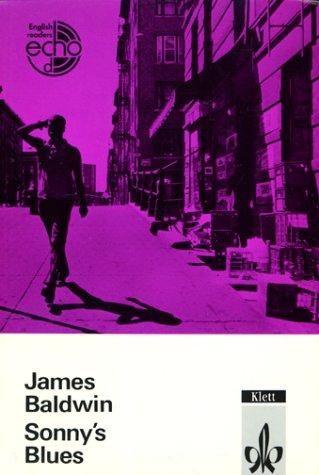
Benny: Yeah. We should say we’re talking about James Baldwin’s short story, Sonny’s Blues, written in 1957, I think.
To my eye, it touches on a lot of themes, honestly. A little bit of jazz. I was actually wondering about the story, because it’s a bit dreamy, right? It’s got a bit of a Christopher Nolan time warp. You’re not quite sure what’s present and what’s reminiscence sometimes.
I was wondering if a jazz aficionado would recognise jazz in how the story was written. Could you say the story is jazz-like? But I honestly know next to nothing about jazz.
Cam: So it’s non-linear at points of the story?
Benny: Yeah. It was definitely not linear, I think. Right? So, just to give a brief gloss on the arc. The story centres around a narrator who’s a school teacher in Harlem, who I believe remains nameless for the entirety of the story, and his brother, Sonny, has been arrested for heroin use.
And at this point, things start to get a little non-linear. So the narrator’s younger daughter, whose name I’m forgetting, dies—
Rich: Grace.
Benny: Grace. Okay. Which eventually prompts the older brother to reach out to Sonny in prison. They had been estranged for a bit. They hadn’t chatted for a while, and he wants to repair that relationship. And then this brings about various reflections on the relationship in earlier parts of their life.
It was a rough childhood. They grew up, I think, also in Harlem, quite poor. Father died when they were both young, and the mother, right before she died, asked the brother to take care of Sonny, who’s younger than the narrator. The narrator sort of took that to heart, but sort of didn’t. He moved away to the army, and Sonny went to live with his fiancée, or maybe even wife at that point.
But Sonny was just really interested in music and jazz. Wanted to be a musician, didn’t wanna go to school. They found out later he was just skipping school all the time and pursuing a path that his brother frowned on. And then you pop back into the present, where they’re trying to repair the relationship after Sonny gets out of prison.
I think Sonny’s living with them once he gets out, and the narrator then goes to a jazz bar where Sonny’s playing, at Sonny’s behest, and witnesses him playing jazz — him in his element, in his world — and is reflecting on whether his advice had been right and how beautiful jazz is. And so it ends on this ambiguous note. I think there’s lots to say, but I’ll pause. I’m curious to hear any initial reflections, or what you guys thought, whether you liked it.
Taking Children Seriously in 1950s Harlem
Rich: Yeah. I really liked it. There’s heaps of interesting themes to touch upon. The first thing that I thought was worth noting was there’s almost a Taking Children Seriously-style message in here, which is that you have this one brother who’s trying to be the father figure, or the authority figure, to Sonny, because he’s seven years older and his mom has specifically charged him with looking after his brother.
And he’s in the military at that point in time, and he’s trying to straighten him out and tell him what he should and shouldn’t do, and put him off becoming a musician. And it doesn’t work, because it’s after that point that Sonny eventually gets into heroin and so on.
And it’s only when the elder brother tries to relate to Sonny on his own terms, and listen to him and understand where he’s coming from, and just be present and be there for him and make a connection with him, that he actually develops a real relationship with him and maybe has some ability to help him solve his problems.
Which I think is true, and just interesting that he made that observation in the fifties, when I assume most people still thought that you gotta be a harsh disciplinarian or authoritative with your children, or your — you know, your charges. So this is probably quite a revolutionary kind of a message. It’s still a bit revolutionary today, so it must have been even more so in a conservative Christian black community in the fifties.
Benny: It really made me reflect on a tension that was surely present in these kinds of poor communities from the get-go. Right? So on one hand, you’d have people saying, life is tough. You’ve gotta trod the road that you’re on, basically. Follow tradition. Just try and get an education. Try and get a minimum wage job after that, work your way up the ladder. Things are gonna be tough, but generation after generation, hopefully things can get better and better.
And then you have people who wanna say, no. I wanna step outside of this tradition. I don’t care about the status quo. I want to be a musician, be an artist, be a dancer, and whatnot.
And what’s interesting is the black community, especially in the fifties and sixties, was known for creating a huge number of amazing musicians. Right? So jazz culture was really born in the Southern US in precisely these sorts of subcultures. I never really reflected on what that looks like from an individual family’s perspective. Right? It’s a very, very risky undertaking to try and be a musician or something.
And so I imagine there’s many, many conversations around dinner tables where you have the dad or the brother or the mom saying, no. You gotta go to school. You gotta just keep grinding. And then kids saying, no, no, no, what the hell?
And I mean, Sonny says it in here multiple times. He’s like, I don’t want to go through all this shit to be happy. I just want to be happy. I just want to do what I love. Why do I have to go through all this nonsense to only be able to do what I love on the weekends or in the evenings or something?
But then you also see the dark side of that impulse, which is heroin addiction. And so you see the good side of the impulse in music, and you see the bad side in, yeah, I’m just gonna take drugs to also immediately feel good. And parsing out the difference there actually takes some care.
Cam: I was just thinking about what you’re saying about the parenting stuff. I did wonder if it’s kind of an interesting little case study of within-family variance. You know, same parents, same Harlem environment. I suppose one’s a bit older. But one brother — and it’s probably more of a stand-in for James Baldwin, the narrator — ends up in this kind of stable, if somewhat joyless, profession as a teacher. I mean, I suppose Baldwin became a writer. But he’s a bit of a square.
And then the other is a high-variance kind of heroin addict, but also with high musical ability. So, just the dynamic of siblings being very different.
Rich: I think they’re both facets of James Baldwin, because he’s an artist—
Cam: The writing is a bit more like the other. Yeah.
Rich: —and he’s an outsider. I think he was gay or bisexual and didn’t necessarily connect to people around him, so he moved to Paris fairly early in his career and established himself in Paris. He wanted to escape from Harlem.
But looking at his biography, he’s the first of nine children, and played this parent-substitute role that older children often have to inhabit. So I’m sure he had a lot of responsibility for his siblings and little brothers, and maybe their paths through life didn’t have as good an ending as his did. I don’t know anything about what happened to his family, but he had to step up at a very young age and fulfil the elder brother role.
And the other backdrop is just that, apparently, heroin is a big scourge at this time, especially in these communities. And who’s the jazz artist who he name-checks in here? Is it Charlie Parker?
Benny: Yeah. Charlie Parker.
Rich: Yeah. I don’t know if he OD’d, but heroin was a factor in his death, and it was around this time.
which way, African-American man? respectability vs art born of suffering
Rich: It’s interesting. In these two figures, it also seems like a bit of a fork in the road for black American culture of, you know, which way, African-American man? Because you’ve got the elder brother who’s all about respectability, working at your job. He works as a school teacher. He’s straight-laced. He’s been in the military.
Benny: Yeah. Exactly.
Rich: And then you’ve got this rebellious artist who — there’s also the threads of — I don’t wanna say victimhood culture, but of fixating on things that are bad or… No. That’s not a very good way of putting it. Creating art from your troubles and suffering and the plight of your people and so on. All of which is totally valid, but it’s interesting if you think about which of those paths has been the better one on the whole.
I’m probably gonna get myself in trouble in this conversation, but as a non-American and a non-Black person, I think that it’s almost like Black people have created great art that we all benefit from, at the expense of — it would have been better for them to go down the boring Christian nuclear family, strong marriage ties, emulating white upright culture-type pathway. Middle class, you know, middle class white culture. I don’t know. That’s my uninformed take on it.
I was just listening to a Coleman Hughes podcast recently that had me thinking about it. He was talking about how 70% of black kids are in a one-parent family. They don’t have dads, basically. And how that wasn’t the case up until — I can’t remember what time period it was, but it’s not that that was always the case. Initially, black communities were very Christian, very God-fearing, very conservative. They had strong family structures, etcetera.
And then certain liberal projects changed that, for better and for worse, and that’s part of the reason why there’s the disparity of outcomes that there are today. Obviously, it’s a multifaceted kind of a problem, but his guest that he had on was a black sociologist who was saying that it’s a very underrated element of what’s happened to create some of those disparities. I don’t know. That’s just what came to mind anyway. Just quite stark, the fork in the road.
the uncle scene: how much is down to white oppression?
Cam: Well, Baldwin does make a move in this story as well that does kind of lend credence to the victimhood, or the white oppressor, causal explanation. Because one of the major themes is suffering. Right? And then also this backdrop of black suffering, and living it through your music, and connecting via that.
But there is this scene — because the story is done in flashbacks, and so there’s flashbacks to when his brother was younger, but also flashbacks to his father and conversations with his mother. And so his father died, and he realised his father had his own trauma, where his uncle was with his father, and they were out drinking, and they got run over by a group of white drunks.
And the mother recounts it as saying maybe they weren’t trying to kill him, but they were being reckless, and then maybe they were trying to scare him. Right? So it’s this father’s trauma, which he even recalls right at the end, when the narrator is listening to the music and connecting everyone’s suffering, and it calls back to this.
But one of the themes of this is that this backdrop of the suffering is this kind of imposition from white society, just to add that. So I think it’s in Baldwin. And Baldwin’s kind of a darling of academic disciplines analysing his work from…
Rich: You’re referring to the extremely subtle scene when a car full of drunk white guys runs his uncle over and murders him, basically.
Cam: Yeah. And that is set up as the exogenous reason for his father’s suffering, and maybe you could even take it to be all of his suffering — that it’s from racism, essentially. Which, you know, I think is part of it, but I’m less sympathetic to that being the only thing explaining why Sonny is hanging with the wrong crowd and doing lots of drugs and stuff, whilst being this autistic genius, potentially.
Benny: Yeah. I guess I didn’t reflect on that scene too much. But to my eye, at least in this essay, I don’t think Baldwin is just making a simplistic point that all of the problems are due to this single cause of oppression. I take him to be grappling with cultural issues as well, which to me is the main theme of the story.
Given that you’re in this situation, okay, you can discuss how this situation came about. I think obviously racism and Jim Crow and slavery played a part there. Right? But regardless of whatever those exogenous factors were, you have a group of people in a specific condition, both culturally and socioeconomically. And the question is, what do you do in the face of that sort of suffering?
And that is a very interesting question. Do you just try and pull yourself up by your bootstraps and pull yourself up the socioeconomic ladder in very traditional ways? And, I mean, to Rich’s point, there’d be many black academics today saying, yeah, that’s exactly what you should be doing. Right? This would echo the sorts of criticisms of Thomas Sowell or Glenn Loury or Roland Fryer, John McWhorter — these sorts of voices who are like, you should play the game. You should play the traditional game, and you should play it really well.
And there’s a reason that game is successful as well. I guess this is what I meant at the beginning by it’s, in some ways, a story about tradition. How much do you hew to the tradition of people who have made it playing this game previously? And a lot of that has just been nuclear family, working your way up the corporate ladder.
And then how much do you give in to other temptations, to pursue passions and to pursue music and to pursue art, even though those don’t have any sort of straightforward payoff? They don’t have a straightforward line to how you’re gonna go from today to tomorrow and how it’s gonna improve your life. So, yeah, the main point I wanted to make is that I don’t see him as making the overly simplistic point that all the suffering came from this one source.
Cam: I mean, I don’t think it’s all the story is saying. I just think it’s obviously an important scene in the book, and it’s an important symbol. And it’d be a very different meaning if he reminisced about his uncle who was shot by another black youth or something when they were young. That has a different meaning than what it is. And that is, I think, one of the themes of Baldwin’s work as well.
Rich: But it is interesting that while that scene is not particularly subtle, the rest of the story — and it’s reasonably long for a short story—
Cam: It is.
Rich: —has, as far as I can remember, not a single mention of any white person. And there’s even an explicit line where his mom, when retelling the story, says something along the lines of, it’s not about vengeance or blaming people. I think she was more telling it as a parable about looking after one’s brother.
Cam: You’ve got a brother too.
Rich: Yeah. You’ve got a brother, and unlike your father’s brother, he’s still alive. You still have the potential to help him and change him.
But, yeah, obviously it’s revealing that that was the manner in which the brother was killed. But it’s kind of funny, because this is during the Jim Crow era. This is during a very racist, actually incredibly oppressive part of American history. And it’s not dripping with, you know, modern woke-type messaging. Or maybe it’s just assumed to be so obvious that it doesn’t even need to be brought into the text other than in that particular scene.
is Sonny’s dream childish magical thinking?
Rich: It’s a really interesting question that I think James Baldwin is raising and grappling with himself. And it’s one that I don’t really have a good answer to either. I think for me, because I’m a boring — in my boring boomer arc, I would favour respectability politics and middle-class striving kind of thing. And something about Sonny’s aspirations feels a bit childish to me, of being like, why can’t I just have fun all the time? Why do I have to go to school and get a job? I don’t know. I kind of associate that with economic naivety and magical thinking, I suppose.
But then on the other hand, every great person, every great artist has rejected middle-class mainstream society—
Benny: Yeah. Exactly.
Rich: —necessarily, and they’re kind of heroes. Right?
Cam: Yeah. I mean, you can even take the race stuff out of it and just wonder about that decision, whether to try and make it. One other angle I sometimes think about is, imagine trying to do that. I would feel this kind of, I don’t know, envy or impostor syndrome or something when I’m hanging out with others that took the more standard path and are doing really well, earning lots of money, doing well in tech and stuff. And then you’re like, I’m just kind of poor and trying to make money and trying to make it.
And even if you kind of made it — I think if you’re good enough, you just get this respect. But I would worry about proving it, I suppose.
Rich: You mean from Sonny’s point of view, of envying?
Cam: Yeah. If you made that decision, like, I just wanna be a writer or a musician or a painter or something, and all my friends—
Rich: Yeah. But look at his brother. His brother still lives in Harlem, lives in the projects, and is very disparaging about where he lives and thinks it’s pretty grim, basically. So Sonny doesn’t have that much to lose. Maybe that is the aspiring middle-class dream in that geography, at that point in time, but it’s not glamorous at all.
Cam: That is true. And I have thought about it in the past, and I even get more respect for someone like Sonny’s brother, the narrator archetype, still living in a rough area. Right? Just the kind of good, decent guy who’s trying to — yeah. Just becoming a teacher, and you’re probably at this pretty rough school, and it can get pretty insane. And you’ve got this shitty fucking house. You’ve got this shitty pay, and you’re just doing it because you think it’s the right thing to do, and you want to set an example for these kids. And a part of you is like, I wanna get the fuck out of here.
There’s that archetype sometimes in movies. Trying to stick it out, either in a small business or a teacher-type role or something, and it would be tough.
Rich: Have you guys followed the Nikole Hannah-Jones story in the New York Times about—
Cam: Yeah. Kinda.
Rich: —except that she sacrificed her kid. But imagine if she…
Benny: I’ve only seen that referenced. Can someone catch me up on what actually happened there? So she sent her kid to a bad school for equity reasons or something?
Cam: Yeah. Her kid called her out in the New York Times. Said mom sent her to a bad school.
Rich: Yeah. She deliberately sent her to a majority black, poor — well, not poor, but low-performing public school, with the idea of solidarity and not wanting to segregate and stuff like that.
Benny: She sent her to an all-black school with the idea of anti-segregation. It seems odd.
Rich: I know. But you understand how it makes sense from her point of view.
Benny: Yeah. I know what you mean.
Rich: And her daughter’s academic performance was crap, and the teachers weren’t even showing up. Didn’t even grade the work. And her daughter was like, Mom, what the fuck are you doing? Why are you sacrificing me for your ideology? Can I go to a normal good school, please?
Benny: Oh, wow. Oh, man. How old is her daughter?
Rich: I don’t know. Twelve or something. I can’t remember.
Cam: It’s like her daughter is Sonny, wanting to take the brother’s path.
Rich: Yeah. It’s like reverse parenting. I mean, she’ll obviously be fine no matter what, but still, it’s not great.
whose side is the reader meant to be on, Sonny’s or his brother’s?
Benny: So it’s interesting, Rich, that you’re not super sympathetic to Sonny. My sense is that the story is meant to be written where the reader feels more sympathetic with the brother early on and then feels increasingly more sympathetic to Sonny as time goes on. Right?
So I think Sonny is portrayed basically as this miscreant early on who’s just trying to deliberately trash his future, and isn’t up to any good, and you feel quite aligned with the brother at those points. You’re like, yeah, you should just stay home, go to school, don’t drop out. But then as time goes on and you realise Sonny is this musician, I think the average reader is gonna feel more and more sympathetic with his choices and think, okay, maybe this is the right thing to do overall. But maybe you’re the opposite.
Rich: No. I was sympathetic with him from the outset, I think. I never found him to be unsympathetic. It’s just that I have mixed feelings about his desires in life.
One way of putting it is coming back to being your brother’s keeper. If it’s some guy out in the world who’s a junkie and is living this crazy degenerate lifestyle, but potentially producing great art and having some cultural impact, I kind of feel okay about that, because it’s none of my business, and I benefit from it.
Cam: You get all the benefit. Yeah.
Rich: But if it’s my brother, now I feel a bit differently about it. You know? I’m not like, yeah, hell yeah, dude, live your truth or whatever. I’m like, I’m fucking worried. What about your health insurance, your retirement — let alone getting into serious drugs?
It makes it much more of a difficult, highly salient thing. Which, again — it was a very cleverly constructed story. I like how ambiguous it is.
Cam: I’m glad these people exist. It’s not a path I would have chosen. It’s not a path I would have chosen for a family member. And not even necessarily just being a degenerate, like Hunter Thompson or something, doing a lot of drugs but making good art. Also the suffering angle.
Sometimes I think about that. One of the themes seems to be that suffering can be a vessel for creating good art. Right? And I think at some point the story even says it’s all based on suffering. And so sometimes I think of some of my favourite artists or writers who have suffered a lot. They have this kind of genius side and this suffering, depressed side. And I’m kinda glad they exist because they produce this art, but, man, I wouldn’t…
I’m not trying to name-drop the main one that I read, but I wouldn’t wanna trade places. But sometimes I think I would.
Rich: Wait. You’re talking about Kanye?
Cam: Oh, no. I was talking about Wallace. But, yeah, Ye might also fit.
Rich: Ding.
Benny: Ding.
Cam: I think them both. But sometimes I’ve thought I would wanna trade places. You read their work, or you listen to this music, and it’s like, oh, man, I wish I could do this. But if you took the whole package of their life, I wouldn’t.
society needs extremists, just not in your family
Benny: It is so interesting. I’ve never analysed artistry at this level. I pointed out before that there’s a similar dynamic with public conversation. You don’t wanna be dogmatic. You don’t want your friends to be dogmatic. And yet you’re happy, or you should be happy, I claim, that there are dogmatic people in whatever intellectual sphere or public conversation you’re trying to engage with, because they provide these anchor points and these strong arguments for specific positions that you can then use to try and triangulate to the truth.
Rich: Who could he be referring to?
Benny: Yeah. It’s funny. Maybe this is just a condition of society at large, where on all these different metrics, it’s very helpful to have high variance at the population level. So you get all these extremes, and the extremes contribute to your own welfare in a certain way. But you never wanna be one of the extremes. You don’t want your family to be one of the extremes. You wanna benefit from the extremes. And then maybe our duty is to be extreme in one sphere, and then reap the benefits of extremism in all the other spheres of our life.
Rich: It’s definitely true of entrepreneurship, which is the first realm where I had this observation. It’s a point that I make a lot, that contrary to the current societal tendency to shit on tech bros and so on, to be an entrepreneur — which I would also include any small business owner not working in tech, just someone who’s trying to start something — is a heroic act, in that it’s negative net expected value for you as an individual. You will very likely fail.
You will very likely not only not make money, but lose money, waste time, and work incredibly long hours. And the rewards are distributed non-normally. Right? With a fat tail, so that some tiny number of people will do extremely well, but that doesn’t make it a rational endeavour for the typical person. The modal outcome is bad, put it that way.
And then artists are the same, except arguably even more heroic, in that — or maybe you could say they could also potentially earn a big financial return, but that’s even less likely, because it’s art. They’re trying to make art.
Benny: Yeah. The modal case is probably worse.
Rich: Yeah. I think so. And you’re not getting marketable skills. At least if you’re a failed entrepreneur, you probably learn a bunch of economically valuable skills. If you’re a failed artist — maybe you still do, but again, I think less so.
So I always think about stand-up comics. I used to go and watch the Auckland Comedy Fest each year, and there’s these young comics, and you see them year after year trying to make it. And it’s very likely that they’re just scratching out a living, and they need to catch some break to be able to turn it into a reliable income source. And then they get into their thirties, and you’re like, fuck, man, these people are crazy or heroic or something — that is, the ones who are still sticking at it. Because they’re almost certainly gonna fail. I feel for them, and I admire them.
Cam: And you’ve seen everyone around you get the job. They’re getting promotions, having families, and you’re still trying to make it as a comic. And you’re poor, and you’re like, these people are probably all judging my choices. I would struggle with that big time. And then some of them make it eventually.
scotch and milk, the cup of trembling, and the final set
Rich: Or dare I bring up PhD student as another example.
Benny: I was gonna say, I’m doing my bit for society here. At least buy me a drink, like Sonny’s brother. Some milk and some whiskey.
Rich: Who the hell drinks — what kind of a cocktail is milk and scotch? Is that a real drink? Are we imagining a cold glass of milk with some whiskey poured in it?
Benny: “Mixing milk and Scotch whisky creates a surprisingly smooth, creamy drink known traditionally as Scotch milk punch.”
Rich: That sounds horrible.
Benny: I don’t know. It doesn’t sound terrible, honestly.
Cam: I’m not really a milk guy myself.
Rich: If it’s warmed-up milk, I’m feeling it a little bit more, but a cold glass of milk? I wasn’t sure if it was a metaphor designed for the story, because, you know, the milk of human kindness, or little kids drink milk, and he’s looking after his brother. The two things, hard liquor and mother’s milk, in one glass, or something like that. But then I was like, is this even a real drink?
Benny: What did you guys make of that last line, where he’s talking about the cup? He says:
For me, then, as they began to play again, it glowed and shook above my brother’s head like the very cup of trembling.
What does “cup of trembling” mean here?
Rich: It’s a biblical reference. You want me to pull it up?
Benny: Sure. I didn’t know that. That’s cool.
Rich: So just to be clear, the older brother sends Sonny up a scotch and milk, and it’s sitting on the piano above his head, and it’s glowing and shaking in time with the music.
So that phrase is from Isaiah 51. Jerusalem has drank the cup of the Lord’s fury, and God promises to take the cup of trembling out of her hand so she won’t drink from it again. So it suggests deliverance from suffering, but the cup’s still sitting there, still shaking.
It ties in well with, again, the ambiguity of this ending, which is that the narrator finally understands Sonny’s world and how he’s trying to work through his problems. But we don’t actually know if Sonny’s gonna make it, or if Sonny’s gonna get right, or if Sonny’s gonna be okay. That’s still totally uncertain. Or if there’s any way to escape from his suffering except in the moment, as he’s being absorbed into this flow state of improvisational jazz. So it’s a very good image to end on.
Cam: And the phrase itself, I suppose, is kind of a wordplay. So this is a reference that Rich pointed out from the Bible, and it represents suffering. But it’s literally on the piano. Right? So it’s probably shaking.
Rich: Yeah. And it’s above his head, so it’s like a halo, kind of a round, white glowing circle.
Cam: So it’s literally trembling.
Rich: We should probably talk about that last scene a bit more fully, just to explain what happens, which is that Sonny finally invites his brother to come watch him play music. And I think we are to understand that this is the first time that he ever has.
And it doesn’t go well to begin with. Sonny is fresh-ish out of prison, so maybe he hasn’t been playing much, or he’s quite rusty.
Cam: Yeah. It’s implied.
Rich: Hasn’t played for a year. So he can’t find his rhythm with the band, and it feels like he’s a bit uncertain, finding his way around the keyboard. And the crowd’s just giving a little bit of muted applause. It’s not like he’s setting the room on fire.
Cam: I like that metaphor of the bandmate, Creole, wanting Sonny to get there. And I think they talked about wading into the water. Right?
Benny: Yeah. He’s inviting him into the deep waters.
Cam: And it’s not synonymous with drowning. It’s taking that leap of faith.
Benny: Yeah. Leaving the shore, I think, and just striking out into the deep waters. The writing of the last couple of sections here, when he’s describing the music and the interaction between the bandmates, and how they’re playing with each other and suggesting things to each other and picking up from each other — it made me really wish I understood jazz and blues more, honestly.
Cam: Hey. Do you wanna pick up the guitar?
Benny: The bongo drums start ripping.
Cam: Been playing all night.
Benny: Yeah. Honestly, it sounds amazing. It’s beautiful writing.
Rich: Yeah. Really well done. And bringing it back to your point right at the start, I’m sure there’s some scholarly analysis of how the formal structure of this story has perhaps got some jazz-style elements to it. It’s very musical prose as well, I think. He’s a very wonderful writer, obviously.
We should just point that out. I don’t think we’ve read out many quotes, but there’s a lot of amazing imagery in here. Especially, I like the one right at the start — actually, also another little structural trick. At the beginning of the story, he finds out that Sonny has been arrested for heroin. We don’t know that Sonny is his brother. We don’t find that out for several paragraphs, which is a nice little mini reveal. But the narrator is talking about how:
A great block of ice got settled in my belly and kept melting there slowly all day long, while I taught my classes algebra. It was a special kind of ice. It kept melting, sending trickles of ice water all up and down my veins, but it never got less. Sometimes it hardened and seemed to expand until I felt my guts were going to come spilling out…
Etcetera. All of this is prior to the reveal that Sonny is his kid brother.
do great artists need heroin?
Cam: I’m just thinking now about the heroin addiction, and the great artist doing that. And I think jazz specifically had a lot of them. I think even Miles Davis did a lot of heroin. He maybe quit cold turkey. All the big names kinda did it. I think we mentioned the name-dropping here with Charlie Parker. He was very well known. And so Sonny is another one of these guys, and maybe he’s one that didn’t make it, right?
But I feel like when you think back to a lot of rock and roll and stuff, they’re all just doing a lot of drugs. Maybe not necessarily heroin. So it’s two questions. Is it kinda necessary to create this certain type of art? And then my other was — almost like the Lindy Man guy — I don’t really see that much anymore. I’m not sure if you see heroin-addicted rock stars these days. I wondered if it really happens now. And then if that’s worse, or maybe it’s just not, and you actually can just, I don’t know, soberly create stuff.
Rich: I will say that being a drug addict, or having other addictive problems, doesn’t mean you will create great art or anything. But I will say that there is some art that is the product of drug addiction.
Cam: Yeah. Of the lifestyle.
Rich: I’m thinking of John Frusciante, who’s the guitarist for the Red Hot Chili Peppers. He released some solo albums when he was in the depths of his heroin addiction, and I really like them. And they’re completely insane. Horrible production values, totally bizarre lyrics. Maybe kinda outsider music, outsider art or something. There’s no way that they would have sold any copies or charted or anything like that. But I think it’s good art, and I think that he wouldn’t have created that if he was sober. So there’s at least one existence proof that exploring these realms of human experience, or conscious states or whatever, can produce interesting things.
Benny: Yeah. Or even a happier example might be the Beatles with Sgt. Pepper’s Lonely Hearts Club Band. They go to India. Right? And they all drop a shitload of acid, and then they come back and release Sgt. Pepper’s.
Rich: Yeah. Let’s just say there’s hundreds or thousands or an infinite number of inputs that can lead you to make interesting art. And let’s just say that taking drugs is one of them. It doesn’t mean it’s the only way, but it is a way.
Cam: Yeah. It seems to be a common one. Right? And I did wonder if it happens these days. I feel like — maybe there’s just not as many good musicians now, and it’s all kind of pop, and respectable pop. I don’t really have a reference for heroin, of what that would be and what that would bring to these kinds of jazz nights.
Rich: I don’t think it would be very conducive to playing music. I don’t think you could.
Cam: Yeah. But I suppose it’s not just that you get high and you make it. I suppose it’s the whole lifestyle of these guys. You know? You don’t have this job, and you’re with a bunch of other artists, and that’s kind of all that matters.
But, I mean, the other theme is around the suffering. And so drugs is one way to alleviate the suffering, and making art is perhaps another way. I’m not sure if alleviate is the right word, but it’s certainly mediated through the art.
And then Sonny’s brother, the narrator, when he’s listening to the music in that final scene, I suppose he starts to think about his own suffering, and his father’s, and maybe the black community’s, and losing his daughter. But there’s this idea that you can consume art. And I’m not sure if I’ve had this much with music, but I imagine most people do. Sonny’s suffering has been put into the music, and then as a consumer, you can kinda channel that. Making kind of the banal point that good art can be universal, and people can relate to it, I suppose.
Rich: This is where someone who knows about music would step in—
Benny: Yeah. Exactly.
Rich: —and say something smart.
Sinners: a modern take on this story, or corny Oscar bait?
Rich: Did you guys watch that movie Sinners that came out last year?
Benny: I did.
Cam: No, bro. I know of it.
Rich: I feel like it was going for something like this, but it was incredibly corny. After reading this, I wondered if this was maybe a source of inspiration for it.
Cam: Yeah. Could be, probably.
Benny: My mom has a funny story about this movie, which is that she was having some friends stay over for the weekend, and they wanted a good movie to watch. And if you weren’t part of the public discourse around it, and you just watched the preview, you would just think it’s one sort of movie about, like, Southern Baptist culture and their love of music. And so they started watching the movie thinking it was that, and then it just becomes this horror, and they’re all just absolutely freaking out. I thought that was hysterical.
But it also, in my mind, represents what I think is a sin of this kind of media, which is that it doesn’t give you any hints that that’s what’s about to happen. We’ve critiqued this move in books before, where it started out in some traditional way, and then all of a sudden it’s supernatural.
Cam: What, you mean there’s no foreshadowing within the movie itself?
Benny: Yeah. There’s no hint that you’re actually not in our universe.
Cam: The third-act Houellebecq murder mystery.
Benny: Exactly. Yeah.
Rich: It was just a very incoherent movie. It was trying to do all kinds of different things. Some of the scenes that people lauded honestly made me laugh out loud at how corny they were.
My favourite thing is Tamler from Very Bad Wizards lauded the movie, and Dave was not so sure about it. And it’s become a running joke where everyone’s roasting Tamler, who’s meant to have good taste in movies, for liking such a schlocky kind of Oscar bait.
Cam: Yeah. I had a friend that watched it over here, and he came back and said it’s one of the best movies he’s ever seen, and it just cracked me up. I haven’t even seen it. But I was like, no way. That’s this random movie. And then it got all the fucking Oscars. Right? But I said, let’s talk in ten years, and we’ll see.
Rich: Yeah. Actually, we could have done a dual analysis with this story, I reckon.
Cam: So what are the main themes? Trying to be an artist, suffering, white oppression?
Rich: Yeah. I mean, we’re not gonna do it. Whatever. You should watch it. It’s got good elements to it, and it’s kinda interesting for the discourse.
Cam: The story did make me wanna check out some jazz. This is one of the holes in my music-listening journey.
Rich: I feel like jazz is not very beginner-friendly.
Cam: Yeah. A bit.
Rich: I used to go to jazz bars quite a lot for a period of my life, but I just enjoyed hearing big bands or brass sections and stuff, and I’d be kinda drunk and chatting with friends. At jazz bars, depending on the bar, you can kinda switch between chatting and listening to the music. And it’s just a fun live music experience, but I certainly never came to really know or appreciate the music. Most jazz I hear sounds bad to me, put it that way, to my untrained ear.
Creole’s blues speech + next book
Benny: Maybe let me just read this final passage about the blues and Creole, just to tie everything together, which is nice and gives people a sense of what the prose style was like. So this is when the brother is watching the band play on stage:
Then Creole stepped forward to remind them that what they were playing was the blues. He hit something in all of them, he hit something in me, myself, and the music tightened and deepened, apprehension began to beat the air. Creole began to tell us what the blues were all about. They were not about anything very new. He and his boys up there were keeping it new, at the risk of ruin, destruction, madness, and death, in order to find new ways to make us listen. For, while the tale of how we suffer, and how we are delighted, and how we may triumph is never new, it always must be heard. There isn’t any other tale to tell, it’s the only light we’ve got in all this darkness.
Rich: Hell yeah.
Benny: That’s some writing right there.
Rich: I’ll raise a glass of milk and whiskey to that.
Benny: Alright. Nice, fellas.
Rich: That was good. Good pick, Benny.
So we were gonna read a Nabokov book that we may have mentioned. I can’t remember if we did. So we’re not doing that. We just bounced off of it.
Benny: Yeah. We did. If you wondered why it’s a month later and we haven’t released anything, that’s what happened.
Rich: Yeah. And this was our first time sitting back down at the piano. You know? And we went in some weird directions, but we came back. We found out how to wade in the deep water but not drown.
And we’re gonna try something easier for our next book, which is — Cam, what are we doing, baby?
Cam: Yeah. I thought we’d just go on the easier side, especially after last month. We haven’t done Dickens yet. So I thought we’d choose a Dickens book.
Benny: Did you say on the easier side?
Rich: That’s not easy, is it?
Cam: Charles Dickens.
Rich: Unless it’s A Christmas Carol.
Cam: Come on, lads. Well, I might change my choice then. No. So, yeah, I just thought we’d go Great Expectations. You know, there’s Bleak House and A Tale of Two Cities, so…
Rich: This man knows his Dickens.
Cam: Just reading the Wiki right now.
Rich: So we’re doing a Dickens, and possibly the title to be confirmed.
Cam: No. No. Great Expectations is the title.
Rich: Definitely that one? Okay. Cool.
Benny: Awesome. Alright. Well, write in at doyouevenlit@gmail.com. Wait. Do we have a new email address yet? Weren’t we gonna do that?
Rich: Let’s not worry about that for now. We’ve got a good listener mail, which we need to do sometime.
Benny: Oh, do we?
Cam: It’s potentially a whole episode. Right? The question is, what’s the point of doing heroin and jazz and just reading novels?
Benny: Maybe we do it next week. You guys wanna get together next week, same time, and just do an entire episode based on it?
Rich: Yeah. I think it deserves a good half hour or more, maybe.
Benny: Yeah. We could do that. Just catch up, chat, and do this. It’d be fun.
Rich: Yeah. Sweet as. Alright. See you guys next week. Look forward to it.
Benny: Alright. See you guys next week.