WOKE classics professor DESTROYED by three random guys who’ve never read Homer before!!!
just kidding we love it.
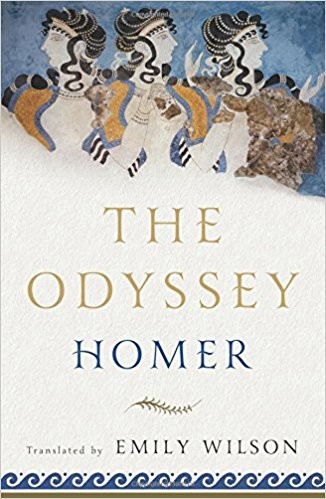
Wilson translation discourse: is she really importing her feminist beliefs into the text? has she stripped the grandeur out to take ‘complicated’ Odysseus down a peg? what are the connotations of sluts and slaves? is the fancy language of other translators really just stylistic anachronism? who would win in a fight between the yass queens and the greek statue avatars?
Odysseus the hero: what’s with all the false modesty? where is the line between seeking glory and outright hubris? did he do the Cyclops dirty or did the rude savage get what was coming to him? a comparison of the Greek heroic obsession with honour and social status vs Byronic heroes and modern superheroes.
Bronze age morality: which ethical framework does it correspond to? is the hospitality stuff a useful cultural adaptation? same for the tit-for-tat honour culture? do the greek gods enforce morality, or they more like regular capricious people who happen to have super powers? what are the other big differences to judeo-christian morality?
This episode is pretty light on actual plot and character stuff but I promise we will get into it much more next week: especially the ousting of the suitors, cunning Penelope, Telemachus arc, etc.
Intro and initial reactions
Rich: Before we get into the translation discourse and start comparing things, I want to know what you guys thought of this book in its own right. So Cam, do you want to start?
Cam: Yeah sure, I can start. I think I have to admit that I loved it. I loved the reading experience, warts and all. I think there are some legitimate criticisms of word choices and motives as a whole, but that said, I really really enjoyed it and I’d recommend this. At times it felt like I was eating the lotus plants or the siren song — I sort of couldn’t stop. It felt easy and it was weird, you kind of had that nagging feeling that reading Homer shouldn’t feel this easy. Yeah, I loved it, it was great, I’m glad we picked the book.
Benny: Yeah, that’s funny. I think I’m totally aligned with Cam on this one, honestly. Wilson’s translation was so easy to read that it felt like cheating at some points — like, how are we just going through it this fast and I can understand everything this easily? But it made the experience just fantastic and you were just able to get right into the story. There were absolutely no hiccups when it came to language or understanding or anything, which for me as a first-time reader of the Odyssey was fantastic. I think if I was to go back and read it again now understanding the storylines, then I’d be tempted to read another translation.
Rich: I read the Robert Fagles translation several years ago, which is probably the canonical go-to translation these days, or at least prior to this one. And then I was also the one who was agitating for us to read Emily Wilson. I was really hyped about it. I basically made us do this book. And once I actually started reading it, I freaked out. I messaged you guys saying like, shit, shit, shit. Maybe this is not the one. Maybe we should read Fagles because I don’t want your first experience of Homer to be sort of flat and muted and contemporary. And then you guys said that you were enjoying it. And then I kept reading more and I just started to really enjoy it as well. I basically found it, as you’ve said, very crisp and modern and easy to read.
Rich: A good test is when you’re going to sleep at night. Some of the books we’ve read, I try to read them and I’m like, I just don’t have the brain juice to tackle this right now. But this one is just a nice story that you’re being told. You can read it as you’re drifting off. No worries.
Cam: Quickly — that metric there is funny though, because when you’re thinking of great books, almost you’d want to wonder if that’s like an anti-metric, you know, that it’s like a beach read. It’s so easy. So I feel a little bit ambivalent about it.
Does Wilson strip the majesty out of the poem?
Rich: Well, we might be overstating it slightly as well, because it’s kind of relative to what you expected, right? You thought it would be quite a battle and a bit dusty and boring, but in actual fact, it moves along nicely and doesn’t have too many weird words that you have to look up and so on. But some people want it to be more difficult, which is the first substantive criticism of the book, basically: that the Wilson translation strips out some of the majesty and pomp and ceremony from the poem, which a bunch of people are mad about.
Rich: I think it’ll be very useful just to compare a few passages. I’m going to go from Fagles to Wilson just to get a sense of what people are talking about. And I’m going to start with the very first lines of the poem, which I think give a really good example of the differences. So Wilson starts out: “Tell me about a complicated man, Muse. Tell me how he wandered and was lost when he had wrecked the holy town of Troy, and where he went, and who he met, the pain he suffered on the sea, and how he worked to save his life and bring his men back home.” So compare with Fagles: “Sing to me of the man, Muse, the man of twists and turns, driven time and again off course, once he had plundered the hallowed heights of Troy. Many cities of men he saw and learned their minds, many pains he suffered, heartsick on the open sea.” So you can see that Fagles is — I think more poetic in the colloquial version of the word — in the type of language choices he’s making there.
Rich: I’ll read a little bit from the end of that passage now. Wilson again: “Goddess, child of Zeus, tell the old story for our modern times. Find the beginning.” Whereas Fagles says: “Launch out on his story, Muse, daughter of Zeus, start from where you will, sing for our time too.” I think actually I like the Wilson bit much better, even though it’s sort of more clipped and precise. I love the phrase “find the beginning”, which I’m pretty sure is a Wilsonism and which is really stuck in my head. There’s a certain sort of poetry in being quite terse and finding ways to strip things down to their bare essence, which I actually really like. So I’m kind of ultimately on the fence as to which version I like better. But first, have you guys dipped into the Fagles at all, or any other translation, and do you have any strong opinions either way?
Benny: Yeah, so I dipped into Fagles and I also dipped into Samuel Butler’s, which I’m not sure if that’s older or newer than Fagles. And Butler actually made the interesting choice to not write it as poetry. So we should say, obviously the Odyssey is a big epic 12,000-line poem written in dactylic hexameter, which is particularly — say that five times fast —
Cam: Say that five times.
Benny: — which is, I guess, a particularly good fit for ancient Greek. And then Emily Wilson actually uses a different rhyming scheme. She uses just iambic pentameter.
Cam: Just quickly for the listeners — so a dactyl is kind of those like da-da-dum, da-da-dum. And if you think of ancient Greek, like a lot of words fit into that. Perseus, Theseus, Sophocles, Plato, Telemachus, Socrates. So it’s kind of working like that. I actually ended up — I used to write double-dactyl poems, which kind of have this meter. And last night when I woke up in the middle of the night, I wrote one about this reading experience, just to give an example of the meter. My one goes: “Higgledy, piggledy, Emily Wilson’s contemporary Odyssey is easy to read. Although her explicit progressive agenda may make it a bit complicated indeed.” So that’s called a double dactyl.
Benny: Wait, sorry, that was dactylic hexameter, what you just did?
Cam: Double dactyl. The dactyls are the da-da-da-da-da-da, and then “are easy to read” is slightly different. But yeah, as you were saying, Wilson uses a different meter, right?
Benny: Yeah, she uses a different meter, which is arguably — I mean, meters make more or less sense in different languages. And as you were just saying, a lot of the words and names in particular in ancient Greek fit really nicely into dactyls. But then Butler just went out of his way to — he just wrote it as a story. So it’s like you open the book and it’s just written like any other book would be written. Which honestly started to make me think, what is the benefit of having this written as poetry? Arguably there’s a benefit when it’s an oral tradition, because it makes things easier to remember in certain ways. But as soon as you transcribe this thing onto the page, did you guys get anything particular out of it being poetry, besides knowing that you’re hewing to the original in some sense? Did you read it any special way that it affected your reading of it? Or did you sort of just read it as a normal story that’s broken up into stanzas?
Cam: Well, Wilson’s translation is this weird kind of borderlands or liminal space. It’s metrical, so it’s poetic in that sense, but it also just reads as prose. And just to echo Rich’s point before — Wilson has a way with words as well. So when we say it’s kind of stripped and plain, sometimes it feels a little bit deflated, but a lot of the time, as you said, “find the beginning” — I think there’s some controversy around that with accuracy reasons — but just as a turn of phrase is sort of beautiful, and a lot of it’s very elegant.
Cam: When I was 12 years old, as an Eminem fan, I got into rap and I got into rhymes and meter then. If you’ve never actually tried, I’d recommend just trying it. These added constraints with writing make it so much more impressive. It’s very impressive that she’s done this in meter, and some of her translation choices are because of that.
Rich: She went line for line as well, crucially, right? Other people changed the length, and she forced it — well, she worked hard to make it fit the original schema.
Cam: Yeah, which is interesting though, because actually I saw someone else talk about how hers is maybe a bit of an abridgement of the poem. Because the constraint of going line for line, you can’t fit it all in. That’s a lot of the reason why the other translations spill over — because you can’t fit it in one line in English. So a lot gets, as we were saying, stripped out. And then you can argue, well, you’re losing some of these details here and some of this nuance there, which is this trade-off. I saw someone said that maybe up to a third of it you could argue has been stripped out.
Benny: Oh, wow. That’s significant.
Cam: Yeah, maybe that’s on the high end. And other translators sometimes add things in, as Wilson does occasionally. I just want to quickly go back to the Wilson versus other translators. You wouldn’t be surprised at my preference for this kind of plain language thing. I remember reading I think the literary critic Cyril Connolly demarcates two types of writing — he calls it the mandarin, which is kind of the ornate flowery stuff, and then vernacular. At the time he’s talking about James Joyce as the former and Orwell and others as the latter. I definitely like the kind of more plain style stuff.
Cam: And even at the end there — so in the proem, the first 12 lines that Richard read out, they kind of say what’s going to happen. One of the points is that Odysseus and his crew go to an island of the sun god and eat his cattle, and they’ve been warned, like, just don’t do that, we’ll kill you if you do that.
Rich: It’s the one thing you must not do. You have one job.
Cam: Yeah, whatever you do, don’t do that. It’s kind of like — oh Jesus, I’m getting brain fog. What’s the Cillian Murphy TV show?
Rich: Peaky Blinders.
Cam: Yeah, the Peaky Blinders. “No fucking cattle. Like, don’t eat the fucking cattle.”
Rich: “No fucking fighting.” “I’m listening.”
Cam: And then his crew doesn’t fucking listen to him. But they say this in the first 12 lines. Wilson renders it as: “and the god kept them from home” — talking about the sun god, if they eat the cattle isn’t going to let them get home — which felt a little bit sterile. And then I saw T.E. Lawrence renders this as “the sun god blotted out the day of their return”, which just had a bit more aura around it. So sometimes I prefer the Wilson stuff and sometimes I prefer others.
Cam: Here’s actually one of my takes. I think if you read the whole thing, especially if it’s the first time, I much prefer the Wilson translation. But almost any given line you take out of context, I often prefer the other translations, which give a bit more context and a bit more colour. But when you read it all at once, that can be more tough.
Benny: And also probably because you know exactly what’s going on, because of the Wilson translation already — it’s been very easy to follow. So now when you go back and read Fagles’ line, you know exactly what’s supposed to happen, so you don’t get caught by any of his language. You’re able to just purely enjoy the poetry.
Rich: Yeah — just one thing I noticed with some of the Twitter dunks is that they would take a single line and say, look at this artless, sterile way of phrasing this particular sentence, and it would be a single sentence fragment. Which I’m sure you could do — you could be extremely selective about it. There are 12,000 lines to choose from. Some of them are going to come across more or less well compared to where other translators have taken a little bit of liberty to make it sound cooler. And there’s always that balancing act between authenticity and whether or not you want to make it sound cool.
Rich: This other element which comes up a lot is what she calls stylistic archaisms. I thought was a really fascinating point. I love the Cormac McCarthy style Old Testament biblical prose with lots of weird archaic words that you don’t quite know the meaning of, and roundabout ways of saying things. At first I was thinking, yeah, Fagles is just better, because you want to revel in the language and enjoy some of these turns of phrases. But then she made this really fascinating point in her translator’s notes, which is that all modern translations of Homer in this case are equally alien to the original work. So if you dress it up in Shakespearean language and you use thee and thou and thine and you throw in some old-timey words or something, that’s larping. That’s not Homer. That’s got nothing to do with a book that was sung 3,000 years ago. It’s a kind of sham artifice that gives a flavour of being old and classical, but from a translation accuracy point of view, it’s not a mark of authenticity. It’s just a weird stylistic tic that we’ve all sort of swallowed.
Rich: I think that’s fascinating — it’s such an obvious point in retrospect. I’m torn here because I like that artifice. I like the McCarthy style, which some people might think is a bit pretentious aesthetically, but I can’t deny that she has a really good point there, and I think it sort of shuts up — it’s a great rebuttal to some of the haters.
Cam: I think I want to push back on that slightly. There’s obviously a good point there, but if you go too far, you kind of end up in the land of total relativism. Which sometimes in some of the commentary, she sounds like she’s going. Like, you can have no — there’s kind of no accuracy or no spirit to this thing, like everything’s just like a totally entirely different work. At one point she said that it’s not an entirely different work. If I was to translate some of these lines and use modern-day internet speak or slang — let’s say modern-day slang or colloquial, you know, New Zealandisms or something — I think you’re losing the audience. If you’re saying they’re both equally as different as Homer — well, you can always say, we don’t actually know, maybe he was talking in slang. It’s just fairly obvious he wasn’t.
Rich: But she doesn’t use slang in here. She doesn’t use modern slang.
Cam: It’s not that. And it does feel a bit — never too bad. It does feel a little bit like — Stephen Fry has all these mythical books that he released over the last five years, including the Odyssey recently, which I bought but didn’t read. Every now and then Stephen Fry — who is one of the great wordsmiths of the time — talks in these almost parochial Englishisms. You know, “now the gods enjoyed their tea and biscuits” or something like that, which is lovely, but it’s obviously departing from what the original was. The point I’m making is, you can have more or less accuracy. You can probably never have complete accuracy. But also along the lines of the spirit of it or the grandeur of it — that could be a real thing that you could find from the original work, kind of epic connotations or something like that, rather than quotidian. That said, I think it’s a really strong point as well that you kind of forget. “Oh, this is just how we all learned it from the classics tradition, this is why we think — yeah, that’s just because they were the first to do it.”
Rich: And also just on the accuracy point — I mean, obviously I don’t know personally, but I believe that even people critiquing Wilson’s translation say that actually yes, Homer is often spoken — it’s quite terse, clinical language, not unlike Wilson’s, and he is not about pomposity and grandiosity. There’s going to be some connotational stuff which we’re going to get into and which I think is worthy of criticism. But in terms of hamming the text up to make it kind of like a medieval re-enactment, I think there’s no strong basis for doing that. In terms of accuracy, it’s fine to use neutral modern language. Shakespearean language would not be in any way more accurate.
Cam: In terms of accuracy, I suppose, yep.
Wading into the woke and anti-woke accusations
Rich: Since you’ve brought it up, I think this is the next major criticism to address: that the connotational stuff around possibly stripping out some of the grandeur from the language, in the sense of changing what Homer may have meant in the text. So let me back up a little bit. This book came out in 2018. Emily Wilson is the first woman to translate the Odyssey into English, and there was huge press about this. 2018 is probably not quite peak woke, but it must be in the ballpark of peak woke.
Benny: It’s getting there.
Rich: And so naturally there’s a media firestorm. Everyone is hyping up this book, saying great things about it. And equally naturally you get a backlash from anti-woke type people who think that this is some kind of DEI thing or Wilson is importing her feminist ideals into the book. So the first thing to say is that, having listened to some interviews with Emily Wilson and read a bit about her, she is clearly an incredibly skilled, knowledgeable scholar. She’s been doing this for decades, and you can hear when she talks how much she absolutely loves this shit. The fact that her book came out at this time has nothing to do with her. Whatever media narrative was spun around it is not her doing at all. I think it doesn’t bear on the work at all.
Rich: So I think we should basically leave that aside. But then the actual substantive criticism is — has she tried to impose modern sensibilities onto an ancient text? That’s the real crux. And I think it’s a really interesting question. So we should look at the textual evidence as to whether she has done that. Cam, do you want to talk about some of the decisions that she made and give us a bit of a jumping-off point?
Cam: Yeah sure. Some listeners would have already heard about this one, and Emily Wilson even wrote a whole essay on it. One of the word choices that caused the most discussion comes right at the start — it’s like the first or second line. She says, this is a story about Odysseus, a complicated man. (Well, she doesn’t say it like that, but this is a story about a complicated man.) You know, if you don’t know this book or this poem, you could think, yeah, whatever. But it caused a shitstorm — and not just from all these people that hate it because they’re not aligned politically. Some people said to her, you know, I love everything about this translation apart from calling him complicated.
Cam: So just to be clear, the ancient Greek was polytropos, which is only used once in this poem, and it was used at the start to describe Odysseus. There are these things called Homeric epithets which often get used to describe different characters — you get like grey-eyed Athena, or Hector from the Iliad is “breaker of cities”, or you get “rosy-fingered dawn”, or “the wine-dark sea” is the classic. Which is a bit of confusion because the sea doesn’t seem that wine-dark. I saw a joke online —
Rich: Oh yeah. Didn’t the Greeks not have the colour blue or something? Like people think that they had no mental representation for the colour blue.
Cam: Oh yeah, maybe that. Did that come up in linguistic stuff — like if you don’t have the colour for blue, then you’re into second cities and killing your enemies?
Rich: Yeah. It was the Sapir-Whorf thing.
Cam: Anyway, so we get this word polytropos. It’s worth looking at how some other people do it. Fagles calls him “a man of twists and turns”. What it literally means is poly, as in “many”, and tropos, “to turn”. So it’s this weird way to describe someone — of many turns. It sometimes gets translated as “a man of many turns” or “a man of twists and turns”. I think Wilson hummed and hawed about this one, and then went for “complicated”.
Rich: Imagine if she just said “problematic”.
Cam: Yeah, I had that thought as well. That would have caused — I mean, I don’t know, I can imagine warming to it.
Rich: Which would also be funny using it in like the Popperian sense. It wouldn’t even be inaccurate.
Benny: That would be funny.
Cam: I don’t love “complicated”. I can imagine maybe warming to it a little bit, but it seems a little bit psychologizing or internalizing for what that’s meant to be. Which maybe is a tendency of her, and there’s also a potential tendency in her portrayal of Odysseus — she wants to kind of bring him down a peg potentially. You can do that in commentary of the Odyssey — you can say, well, is this guy really a hero, which we’ll discuss maybe in the next episode. But that’s separate from “is Homer saying that”. So I think it’s kind of deservedly become a bit of a meme.
Rich: But hold on — to me this seems like the height of anti-woke backlash, to fixate on this word. Because he is complicated. The narrator is describing him as many-sided or whatever. The narrator is imposing a judgment no matter how you slice it. And in this particular version where they’re calling him complicated, I think people are inserting a word in there that doesn’t exist — like “morally complicated” or something. But it’s not there. And he clearly is a complicated man. I don’t like that translation — I like “a man of many turns” or “a man of twists and turns” much better. But I think people are just reading way too much into that word choice.
Cam: I think you’re wrong invoking that it was an anti-woke backlash, mainly because a lot of people that maybe weren’t as progressive as her, but weren’t anti-woke either, didn’t love that translation. One, because it comes at the start. And two, this was the one word that describes him, right? It’s this way to describe him — and then to change it to “complicated”… describing someone as “complicated”, I could imagine like some NPR voice, “he’s complicated”.
Rich: Yeah, the sin is that it’s a bit of a nothing word. It suggests that you are pointing to something else really, at least in modern parlance.
Cam: Well, I think it’s psychologizing. If I say “Richard, my friend, is a complicated man” — I’m not at all alluding to this man or these journeys that ended up in circles. Anyway, that said — the reason we’re talking about it is because there’s a big shitstorm. You sort of don’t notice it especially if you haven’t read it.
Rich: Should we talk about slaves and sluts and whores?
Cam: Yeah, sure.
Benny: Just on the wokeness stuff — my understanding was that this issue mostly came up for her translation of the Iliad, which was much more recent, 2024, like eight months ago.
Cam: I think it’s just come up again. A man of many — a problem of many turns. I think it keeps coming up.
Rich: Yeah. Eternal recurrence.
Benny: I don’t remember this being a huge deal at the time, and I’m wondering if we’re making a bigger deal of it in retrospect than it actually was in 2018. Or if I just totally missed the political boat.
Rich: No, this is like modern discourse, Benny. I mean, I’m not on Twitter anymore, but when I was, there were tweet battles going around between people saying, “you know, slay queen, you’ve got to read this amazing Emily Wilson, finally a woman is doing it” kind of thing. And then counterpoints from scholars or Greek statue avatars being like “Emily Wilson’s translation is trash, and here’s why, and here’s the side by side”. But let’s not talk about “complicated” anymore. Let’s move on.
Rich: Another good example — previous translators have translated… basically Greeks had house slaves, not quite chattel slavery — well actually, yes, chattel slavery. And Wilson just calls them what they are. Sometimes she says “house girl” or “house boy”, but usually she says “his slave” or “her slave”, and just doesn’t shy away from that. She also reverses imputation where some translators have called women “sluts” or “whores” or “bitches”, where she reckons that’s not actually implied by the original Greek. So people have also jumped on that as a point of saying, why is she emphasizing that they keep slaves? Again, I think this is ridiculous. Her calling them slaves is what I want. If the Greek society had slaves, I want them to be called slaves. I don’t want weird euphemisms to protect modern sensibilities, which is what she’s being accused of doing. To the extent that she’s right and they are slaves — call them slaves, don’t call them servants.
Cam: I’m going to do that thing where I say “that’s not happening, and that’s good”. I’m not sure if people complain about her using “slaves”. Most stuff I’ve seen is “yeah, fair enough, that’s actually maybe a good direction” — the literal translation. Ultimately, yeah, I think it’s fine. But when you’re thinking of the spirit of the translation — if you’re going back to Homeric Bronze Age morality and their views of slaves, it probably would have been a lot more similar, including from the slave’s perspective perhaps, to how we might view a maid or a servant or something. So to capture the feeling of that for modern readers, that might be better. That said, it is this way to whitewash it and to forget that ancient Greek society had all these slaves. I think “house slave” might be a slight misnomer, but that doesn’t really matter. So it’s probably best just to talk about slavery and call them all slaves, in this pithy way of like, yeah, this is my loyal slave and this is my disloyal slave. That just being a normal element of things.
Rich: I mean, these very books, the Iliad and the Odyssey, talk about capturing women in battle and taking them as your slaves. It’s absurd to call them anything other than what they are. Even though some of them probably are more like the somewhat more benign Roman-style slaves that were in your family for a couple of generations and who you might free when you feel kindly towards them or something — which is somewhat less brutal than the African slave trade.
Cam: Yeah, your war brides. People don’t have a big issue with that — if anything I’ve seen people praising that as well. Okay, so I’ve seen some other stuff, nothing terrible, but when you take it all together, you kind of think, okay, there seems to be a motive here at play. For context, she’s explicitly talked around an ideological angle to this — she’s often talked about, you know, white man’s thing or patriarchal thing, like translation itself is kind of gendered and it exalts the original. Take gender aside, that shouldn’t be a problem.
Cam: I’m getting some of this from an essay which I think is quite a balanced and ultimately quite a positive essay. But it points out at one point — near the end in Book 24 — Odysseus and his son Telemachus are preparing for battle and they’re debating who’s the better warrior. Odysseus’s father Laertes says this quite famous line: “What a happy day for me from the gods — my son and my grandson are arguing about” — in the ancient Greek they use the word arete. Emily Wilson renders that as how they’re “arguing about how tough they are”. This might not be political, but it just seems to be an incorrect choice there. There are probably dozens of theses just talking about arete, which means something more like virtue or excellence. I’m sure there’s a chapter in Richard’s book labelled like arete. It’s not “toughness”.
Benny: Do you want me to read out the actual passage? I have it in front of me.
Rich: But can we maybe just pin that, Cam, and talk about that in the context of what the Greeks valorized, and then we can look at whether or not Emily Wilson is undermining what they valorized?
Cam: Yeah, sure. We can table that.
Rich: Just on the explicit feminist stuff — she claims that her personal identity and beliefs are unlikely to have influenced it any more than anyone else’s. Imagine how intoxicating it must have been at that point in time. You’re getting yass-queened up the wazoo, and you are probably, you know, a modern feminist liberal woman. Imagine how hard it would have been to resist leaning into that and being like, yeah, I’m finally smashing the patriarchy and telling the story the way it should be told. And she didn’t — she never said anything like that.
Cam: I think she did.
Benny: No.
Rich: Bring evidence, bro, bring receipts. Because I couldn’t find anything. The only thing I could find is that in her introduction she talks about how it’s interesting to examine male fears about female power, and the thing that you mentioned about how you are in some sense revering a presumably male author as a translator. Some people would say maybe she’s trying to sort of have it both ways, by bringing up those points whilst also claiming to not be injecting her politics into her translations. But — are all the male translators being grilled on their exact gender politics and the extent to which it’s influenced the way that they translate the work? No, obviously not. And I’ve never seen her try to cash in on any of the stuff, even though it would have been pretty hard to resist getting swept up in all of that. So yeah, I just think that’s kind of a non-starter.
Cam: I don’t have a million receipts, but okay. First of all, I think I disagree there, but first of all, ultimately with this translation, it doesn’t seep through that much. I think it’s slightly there in some of these choices. She’s been explicit around it in her commentary. Maybe you think she hasn’t been swept up in it that much, but even if we grant that she did get swept up in it a bit, I don’t think it comes through that much in the translation. It ultimately is translating Homer, and the main thing is that it’s stripping things out and it’s plain English. It’s almost like that free speech meme — it’s like, “actually, it’s a pretty good translation, there’s not much to worry about” — even if there’s some truth to these concerns around “I think she’s choosing this because of these political leanings”, which you can make.
Cam: You see some stuff online saying she’s like “the crimes of the humanities” and shit like that — it’s just absolutely absurd. And as you said, you have the opposite as well saying like “yass queen, we finally got it” — the reason they love it is because she shares our politics. It’s like, finally…
Rich: And you know that neither of these people on either side have actually — they came up with their conclusion first and then went out and looked for evidence to back it up. I don’t think they did a neutral and dispassionate analysis and then decided the caliber of the work afterwards. But Cam, you have a substantive critique that I agree with and want to talk about — around how she might convey Bronze Age morality through the lens of modernity. But before we get there, can we just give a bit more background context? The historical timeframe — you wanted to talk about civilization and barbarism here as well. Do you want to talk about that? And we’ll come back to it after we go through some of the Bronze Age morals.
Civilisation vs barbarism: sympathy for the Cyclops
Cam: Yeah, okay. Well, this is related to what we’re talking about. There’s a scene in the Odyssey where Odysseus, quite early on in his journeys — he’s gone to the land of the lotuses and he ends up in the land of the Cyclops.
Rich: One of my favorite scenes, by the way. The Cyclops interaction.
Cam: Yeah. Do you want to — does someone else want to quickly describe what’s cool about the Cyclops?
Rich: I could try and do a quick gloss on it if you like. So Odysseus and his men reach this land of shepherds and they find a hut belonging to this one shepherd called Polyphemus. They go and knock on the door of his hut or his cave. They have this demand that people must be hospitable towards you when you’re a wandering traveler. But he’s not home. His men want to steal his stuff, ransack the cave, and leave. But Odysseus forces them to wait until he gets home. He gets back. Odysseus demands that he give them sustenance because they are guests, and Polyphemus is like, no, absolutely not. He traps them in the cave and then starts eating Odysseus’s men. He just brutally murders and eats them raw. So Odysseus has to hatch a plan to get out of the cave, because it’s blocked by a giant rock. I don’t know if I said, but Polyphemus is a Cyclops — he’s like a damn —
Cam: Like a 60-foot tall monster who eats people.
Rich: Burying the lede.
Benny: Also, can I just inject one thing here, which is that Cyclopses are a non-trivially powerful race of being in this world. The primordial deities, which sort of kickstarted the universe in Greek mythology, gave birth to the Titans, which was the first generation of gods, and the Cyclopses. So the Cyclopses, in terms of power, are at the same level as the Titans. And then the Olympians, which were the second generation, had the battle with the Titans and won. So the Cyclopses have been around since pre-Olympian times and are a pretty powerful race of being. It’s not as if they’re just battling with —
Rich: Just some tall guy with one eye.
Benny: Basically, yeah. And this Cyclops in particular is Poseidon’s son. So that creates some problems for them later on.
Rich: Which is hugely relevant. He’s like the last guy you want to pick on if you’re —
Benny: If you’re trying to get home on the sea, yeah.
Rich: Do you want to tell the rest of it, Cam? Because it might be relevant to whatever it is that you want to talk about.
Benny: Trying to hand it off, Rich. Someone want to pick it up from me — you’re doing such a great job.
Cam: One other major theme in the Odyssey is around hospitality. The Greek word is xenia, and we’ll talk about that a bit more with Bronze Age morality perhaps. It’s obviously really important to the people of the time. We get this early on — the first four books of the Odyssey are actually about his son Telemachus, which we’ll talk about later. You get instances where he travels and there’s hospitality shown to him. When Odysseus first goes to the Phaeacians, this kind of utopian place, they show him a great feast. So this is really important. When he gets to the land of the Cyclops, the reason he kind of wants to stay is, “I might get a gift here or something”. The Cyclops comes back and blocks the cave, traps them in there with a boulder, and eats some of the crew. It’s just an assault on sensibilities, the opposite of hospitality.
Cam: I had this thought around civilization versus barbarism, which felt important here. To go back to word choices again — Polyphemus the Cyclops is described with the Greek word athemistos, which often gets rendered as “lawless”. It literally means like “without a sense of divine right or wrong”. Wilson uses “maverick”, which doesn’t quite fit her aesthetic either — it kind of jumps out. So I think what’s going on there — Wilson’s explicitly said this in commentary — she wants to raise the status of the Cyclops. And I kind of understand it in this civilization versus barbarism framework.
Cam: Okay, so the economist Arnold Kling talks about these different frameworks of trying to understand the left-right divide, which is an interesting question — what causes people to swing left or right. A lot of people have ideas. Thomas Sowell has this one about being constrained versus utopian. I think Bryan Caplan’s one is just “anti-markets versus anti-left”, which is somewhat tautological. There’s this other online guy who talks about empathy versus systemizing. Anyway, Arnold Kling has this idea —
Rich: Many twists and turns.
Cam: Many twists and turns, well — but it’s related, I mean, we’re talking about politics and stuff, right? And I think it directly relates to this. So Arnold Kling says there’s different frameworks. Like “oppressed versus oppressor” is one framework, and then “civilization versus barbarism” is this other framework. He also talks about freedom and tyranny, but you can put that aside for now. He thinks that’s a good explainer for the political divide.
Cam: When you think of Polyphemus and the Cyclops, there’s this thing where I’d say it comes through in the poem and a lot of people view it this way, or at least have rendered it this way — coming to this barbaric land where they’re literal monsters and literal cannibals, and they’re not giving us a feast and wine and stuff, they’re trapping us there. That’s one framework. And then you can use this other framework where it’s like, well, actually this is just another culture, and be a bit more relativistic about it. But also, it’s the colonial aspect of going there and viewing these natives as evil people. I think that is playing a role — one, in how she talks about it, but two, maybe in some of these translation choices. She doesn’t want to make the Cyclops seem as negative as they have been by other translators, and potentially as Homer is doing. There’s another word which I think she translates as “arrogant” or “insolent” elsewhere, but with the Cyclops it gets called “high-minded”. Maybe you can go too far. It’s not too bad, but I did think that was an interesting framework to think about.
Rich: There’s still plenty of barbarism in here. Let me just read a quick passage about when the Cyclops attacks them: “He reached his hands towards my men, seized two, and knocked them hard against the ground like puppies, and the floor was wet with brains. He ripped them limb by limb to make his meal, then ate them like a lion on the mountains, devouring flesh and entrails and marrow bones.” And then later on there’s a bit about how he’s spewing up gobbets of human flesh that are half-digested and stuff like that. It’s fucking gross and it’s meant to be gross, even by the standards of the day.
Rich: But yeah, I do remember also having the thought when I was reading the Odyssey for the first time and I got to this bit and I distinctly remember thinking, oh shit, Odysseus is not a storybook hero. Odysseus is kind of a piece of shit. I mean, sure, the Cyclops attacks and kills his men, but Odysseus is being cheeky by demanding that he give him gifts and stuff, right? Surely that is taking the piss and stretching the concept of hospitality — to break into someone’s house and demand, with a bunch of armed men, by the way, that they feed you. Not even ask politely, right?
Cam: Yeah, and another thing — it’s something Odysseus kind of gets wrong, even just for the safety of him and his friends. Often it’s his crewmates as well, but with this one, he kind of fucks up. I think the crewmates just want to take the sheep and get out of here. And he’s like, no, let’s stay. And even later on they can’t escape this cave because there’s this boulder in the way, and they can’t just kill the Cyclops because they can’t move the boulder. So he manages — I think they hide under the sheep, right? They hold onto the sheep’s belly and somehow hide. Well, I suppose it’s the blind Cyclops. We’re forgetting the main part actually: they blind the Cyclops. And he wins with a pun, so Scott Alexander and all that would be happy. He asks the Cyclops —
Benny: By getting him drunk, we should say.
Cam: Yeah, gets him drunk. The Cyclops asks his name, and he gives a fake name. It’s just a normal night out, right? The Cyclops asks his name, and he says “my name is Nobody”. Emily Wilson renders it as “no man, my name is no man”, which by the way is a slightly better pun in ancient Greek, because “nobody” or “no man” is Outis, like it sounds like “Odysseus”. So that’s kind of cool. You can even nerd out a little bit on the grammar of “is anybody there”, “nobody’s there” — it kind of fits grammatically.
Cam: Anyway — Polyphemus is blinded by Odysseus, and then his Cyclops buddies are yelling out, “you okay in there? What are you yelling out? What’s happening to you?” And he’s like, “nobody is killing me, no man is doing me harm”. And they’re like, “okay, sweet, he’s right, he’s gone off again. That sounds like Polyphemus.” That’s kind of cool, this wordplay element.
Benny: On the subject of Odysseus being sort of irresponsible with his men’s lives as they’re trying to leave — he taunts the Cyclops to such an extent that the Cyclops is enraged. They’re in the boat at this point, trying to sail away, and he enrages and taunts the Cyclops, and the Cyclops throws a boulder after them, and that creates such waves that it drives them back towards the shore. They only escape in the end by sheer luck basically. Odysseus does have this element of wanting to always show that he’s the master of each situation. Even the second time they’re trying to escape, he wants to taunt the Cyclops again. And all his men are like, no, no, no, shut up, we just need to get out of here. So he does have this sort of —
Cam: Bragging element, yeah.
Rich: Well, he can’t bear to be “where there’s no name”, right? He needs to actually —
Cam: He says his name. That’s when he says his name, right, when he’s leaving — which is a big fuck up.
Cam: It’s kind of like the anon who finally let his name out. He doxxed himself.
Rich: Yeah, he doxxed himself.
Cam: And now the gods are coming for you. As we said, Polyphemus the Cyclops is one of Poseidon’s kids.
Benny: Son, yeah.
Walking the line between fame and hubris
Rich: But I think we should probably just get into some more of the Bronze Age virtues, because that example just there, I believe, falls under the category of kleos, which is this idea of wanting your deeds to be known far and wide. So basically what we would call glory, or being remembered in the history books. And that’s why Odysseus does that, right? He can’t bear to escape without the Cyclops knowing who it really was who did this, so that his legend can live on. In his culture that’s a good thing.
Rich: It is interesting to consider though that at the exact same time it’s portrayed as an example of hubris, right? And Odysseus recognizes it himself when he’s retelling the story. Maybe not that bit, but certainly the bit about where he refuses to leave the cave — he’s like, “oh yeah, probably shouldn’t have done that”. Do you guys remember if he regrets calling out his name and drawing Poseidon’s wrath upon him once again?
Cam: I don’t think he explicitly regrets it. I think it’s more the reader notices that’s kind of where he may have fucked up — one of the few times.
Benny: No, I don’t remember him really expressing regret. I mean at this point when he’s telling us this, he’s recounting it firsthand to a king and queen of an island he’s landed on, so we’re sort of hearing it secondhand. And yeah, he doesn’t put much of a morality spin on things, or even any sort of normative spin on his storytelling. I think it’s mostly just he’s laying out the facts for them, which is an interesting device that Homer used to actually talk about these adventures, so that it’s all a little potted.
Cam: Well, I’m not sure “normative”, but he is — okay, so the context is, he’s at the Phaeacians, which happens early on in the poem, this utopian sort of people. He talks about all his adventures, and this is where he tells them about the Cyclops, and his bragging about the Cyclops. But in the story where he’s telling how he’s bragging about the Cyclops, he’s also bragging to these people. The way he says it — it’s not normative, but he tells them, “I’m a man of many skills, I’m of the most skills in the world”, and he says that quite a few times. Huge hands. So yeah, like — don’t get me wrong, he did blind the bloody Cyclops, but he’s saying that first thing when he gets there. Which I wasn’t aware of until —
Benny: No, he’s not saying it first thing when he gets there. He waits a while. He doesn’t divulge who he is.
Cam: Oh yeah, strips down, rubs some oil —
Benny: And then he asks the singer there if he can sing about the Battle of Troy, I believe.
Cam: Gets comfortable. Yeah, you’re right, sorry.
Benny: And then the singer starts singing about it and he starts crying because of that. And I think they sort of make an inference based on the fact that he’s crying, because of this story about — I think it’s specifically about the Trojan horse, actually. And then they figure out who he is. This has been one thing that kind of bugged me about the whole poem, to be honest — that he wavers back and forth between wanting his name to always be known wherever he is, and then sort of playing coy with people. This happens even when he gets home. He doesn’t tell Penelope or even Telemachus who he is instantly. But with other people, he’s very proud to let them know his name is Odysseus. And I can’t quite get inside his head enough to figure out when he wants people to know and when he doesn’t.
Rich: I’m reading it as kind of like he’s very strategic and scheming about the opportune moment to reveal who he is, but he always does ultimately want to do so. And there also seems to be this Greek custom that I picked up with Telemachus’s interactions with the households that he stays with as well — where you sort of pretend to be modest and a little taciturn until you’re called upon to say your piece. But you do actually want to hold forth — you’re kind of observing the ritual of being asked to tell your story or something like that. You don’t come in all guns blazing. Does that resolve it at all? I’m not actually 100% on that, but that was just the general impression.
Cam: It’s a bit like when someone offers to pay for something, right? You’re like, “no, no, no” — but everyone kind of wants it, or wants a little bit of it. You don’t want to say it. You’re almost annoyed if they accept it. “Hey, you’re like, now I’ll pay” — and you’ll be like, “no, no, don’t worry about it” — and then okay, and they’re like, what?
Rich: But Benny, I want to pose you a broader question on Bronze Age morality as a whole. How would you frame it in modern language if you had to? What is your read on the sort of general ethical framework that they subscribe to, to the extent that there is something cohesive?
Bronze age morality: you gotta give respect to get respect
Benny: I think that’s a good question. I hadn’t actually thought about it like that. Mostly I just went through a list of what I think comprise Bronze Age morality. But if we were to step back and try and draw some more general principles, I think the closest framing we have of it today has got to be something like virtue ethics. And then the virtues are things like strength, a certain cunning, and showing respect until someone disrespects you — sort of a tit-for-tat type thing.
Cam: Beauty, excellence.
Benny: I think there is a general element in society where you’re supposed to sort of begin with respect, and this manifests in terms of hospitality. So if a traveller or wanderer just shows up to your door, it seems like you’re sort of expected to offer them food and maybe even gifts and help them get where they’re going. But if they disrespect you in any way, then it seems like, okay, all of a sudden your honour is insulted and now it’s your duty to either kill them or at least maim them in some serious way and defend your honour.
Benny: So I think virtue ethics is sort of the closest modern framing we might have to what they’re after here. And then the question is just like, what sort of virtues is it? The interesting thing is, again, the question between the gods and mortal men. Are the gods actually held to any sort of virtuous standards? Are they expected to maintain any sort of moral norms? And I think my answer is basically no. It seems like the gods sort of create the norms, or at least — I guess the gods are quite arbitrary in how they deal with humans. At the end when Athena is deciding to either help Odysseus kill the rest of the townspeople who are sort of rebelling against his return — she decides to step in and stop it, and Zeus sort of tells her, like, do whatever you want with it, here’s my recommendation, but this is up to you, I don’t care. So I think we’re supposed to view the gods as sort of handing down arbitrary punishment from on high. And then there are these virtues that people are supposed to respect, and hopefully if you do that and sacrifice enough to the gods, then you won’t get in too much trouble.
Cam: I’m not sure I’d quite say that the gods don’t hold themselves to standards. They’re certainly capricious and hypocritical and petty. But I think there’s even a scene in this — it’s one of Demodocus, the poet in the Phaeacians. He starts randomly talking about the gods. Ares, the god of war, who is married to Aphrodite — wait, no —
Rich: No, no. Hephaestus is married to Aphrodite, and he gets cucked by Ares.
Cam: I’m getting mixed up. Hephaestus, yeah. He gets cucked, yeah. This is a theme in the story, where Agamemnon, king of the Greeks, who’s more famous in the early — you know, he gets home and his wife Clytemnestra has found a new man, and they’ve plotted and they kill him. So it’s like he’s cucked but he’s also ambushed and killed. And this is set up as a direct foil, a direct contrast with Odysseus getting home and being concerned if he can trust his wife. But it’s also in the gods, and they kind of make fun of — there seem to be ethics and standards around the gods as well, virtue, them holding up to virtue, but they’re all hypocrites as well. They’re very human.
Benny: I’m not sure. It seems to be just a matter of will and strength among them, to be honest. It’s like Poseidon’s pissed at Odysseus, and if he has his way and Zeus gives him permission, he’s going to punish Odysseus. And then if Athena gets her way, Odysseus won’t be punished and he’ll make it home. I’m not sure I see any through-line with how Zeus is dealing with the rest of the gods. It seems to just come down to self-interest.
Cam: Well, “will” seems to be one of the big virtues, right — this will-to-power thing. What do you think about that, Rich?
Rich: Yeah, I’m more on Benny’s side that my conception of these Greek gods is that they’re extremely different to what we would consider our modern conception of gods, who are moral arbiters and who uphold the moral law and expect good behaviour. I think they’re basically men. They’re basically humans who live forever and have superpowers. And I think they are, as far as I can tell, almost completely immersed in the honour-culture, virtue-ethics-style, very socially mediated, socially conscious behaviour that all the humans are embroiled in. I don’t think that they are particularly trying to enforce any norms other than, you know, you’ve got to give respect to get respect — the sacrifices, showing hospitality, these kinds of things. I think they are weirdly really similar to the men. They just have superpowers, which is a crazy fucking thing to think about. Like, imagine today — imagine there’s another type of human that are just way more powerful than us and can never die. And you just have to live with that. It’s so weird. They’re not like God who loves you and wants you to go to heaven and stuff. They’re just like people who have weird petty beliefs and rivalries and conspiracies. It’s such a different conception of divinity. It’s really fascinating to try and take on what that would be like.
Cam: It was always weird when there’s a scene where someone’s like, “this person might be a god”. Just that being a thing — someone’s acting a bit weird, or transforming — is this person a god? And the gods are sleeping with them. Yeah, they’re just kind of part of everyday life.
Rich: But there’s also that wink-wink thing again, where instead of coming down as a god eight foot tall and glowing eyes or whatever, they come down as a person, have their interactions, and then they transform into a bird and fly off. So they’re observing this weird ritual again, where they’re pretending to be modest for a while — just like Odysseus pretending to be some humble traveller or whatever — and then they’re like, “oh by the way, actually, I’m a god, and I need you to know that”. It’s really funny. There’s some kind of politeness norm or something. Honestly, I think the gods’ behaviour is just so similar to the mortal behaviour, that they are just like cousins or something. How did we get started on the god track again?
Benny: Okay, just before we leave —
Cam: Benny’s got a quick point.
Benny: I think this is — arguably, if we’re just looking at the evolution of God as a sociological phenomenon, I think it makes way more sense to start to have cultures that start with a conception of God that is like humans with superpowers. I think that’s sort of the natural starting place, where you just wonder, where’s the weather coming from? What’s going on? Okay, there must just be super-powerful beings who are in charge and controlling all of this. And you look around you, and some people are stronger than other people, some people are more clever than other people, and then you just say, well, presumably this hierarchy sort of continues and there are just these ultimate beings with superpowers. And it’s not until you start getting certain conceptions of exploring the natural world, and science and philosophy, that you start realizing, okay, there are certain problems with this. And then your conception of God has to get more sophisticated, more nuanced, more abstract. And then you start moving towards Abrahamic gods or just even more sophisticated conceptions of polytheism and stuff.
Benny: Second, though — I think it’s sort of ironic that this conception of gods solves the problem of evil, I think, in a much better way than a modern Judeo-Christian conception of God. A modern conception of God has this problem where you posit the existence of this being that’s infinitely good and wise, and then you ask yourself, well, okay, is “good” a concept that transcends them? So they’re just sort of channeling what good really is. And then it’s like, well, if good sort of transcends whatever this being is, then in some sense they’re not the ultimate being, because they can’t change what good is, right? And like, why do we need them? We can just sort of appeal to what is good directly. But on the other hand, if they’re kind of creating what’s good, it seems very unsatisfactory to say, well, they could snap their fingers tomorrow and murdering babies could be considered a good thing. It just seems too arbitrary and gross. But here the Greeks basically just lean into the arbitrariness, and they just say, yeah, we’re not going to talk about good and bad. We’re just going to talk about virtues and then trying to not piss off the gods. And that’s actually a way more coherent way to deal with how the gods are meting out justice and punishment and stuff than the 2,000-years-later, when we’re arguing about whether Jesus can channel ultimate good and stuff. So there’s ways in which this conception of religion is actually more technically sophisticated than modern conceptions, which I think is pretty interesting.
Cam: It is interesting. It’s interesting that the founding myth of a people or culture is ultimately about a man who’s really strong and impressive and of many turns and skillful and gets his way. And then all these gods are kind of just about virtue and getting what you want and feeding others. Yeah, in contrast to other founding myths where it’s really more sort of didactic — here are the 12 rules to live a good life, and you have to show reverence to them and make sacrifices and stuff. Maybe to bring it back to Bronze Age morality a bit more — do you have thoughts on what you think Bronze Age morality is, Rich?
Rich: The main thing I took away from this book, what I hadn’t appreciated before — we’ve talked a lot in previous book clubs about might-is-right and the will to power and that type of stuff around how Christianity is a huge innovation in sort of valorizing the victims rather than the heroes, heroes in the Homeric hero sense. What I’ve been able to add to that based on this read is how social connections are everything. So to me, this is very much about the opinions of other people. Not everyone, of course, but the opinions of other people who matter. Everything that is considered virtuous is about raising people’s opinion of you, and/or their respect or fear of you.
Rich: Reminds me — honestly, reminds me of the Sopranos so much. The same kind of, you know, you’ve got to give respect to get respect. It’s literally just that. And I think that is like the primitive way of — not “primitive”, but that is the way that you deal with living in a very violent society. It’s not the best equilibrium — we’ve found better equilibria, but it is an equilibrium that you settle into.
Cam: It’s gossip all the way down.
Rich: Gossip, but paying respect, demonstrating your loyalty. What I’m trying to say is, with the modern concept of heroism — with the superhero type, everyone is a goody-goody. But also with the Byronic hero, the Mary Shelley Frankenstein-type hero, it’s very different too, where what is heroic is to be an individual in the world and to rebel against society. John Milton’s Satan, or Victor Frankenstein, or the monster himself — to be a sort of tortured soul who is out of step and out of sorts with the prevailing social and moral norms. That’s another conception of morality. This is very different to that. It’s very trad. Everything is by the book, doing what everyone expects you to do — that’s what it means to be moral. I just hadn’t quite realized that, but it makes sense within its cultural context.
Benny: Yeah, that’s a great point. I was wondering how much of these are sort of cultural adaptations to let groups of people survive. So if you look at hospitality — obviously plays this role, right? If there’s this expected norm where as a traveller you show up and you’re often gifted food and then perhaps a way to get to your next destination, this is obviously extremely helpful, because travelling at this time would have been incredibly dangerous and there’s no telling how you might be injured on your way to the next town or whatever. So if an entire country of people adopts this norm — “we’re going to sort of help travellers, that’s going to be our first instinct” — that’s going to be a positive-sum aspect that’s going to help everyone get around.
Benny: And then more generally, if you make the norms known — if it’s clear that if you kill someone’s son, for instance, that they’re going to come and try and kill you — that also may seem brutal, but somehow plays this important communicative role in society where, okay, if the norms are established, we all know what to expect from one another, and it makes interactions more safe and easy. So in that sense, virtue ethics — it’s easier to navigate a world where everyone’s acting like a virtue ethicist and you know what the virtues are beforehand, than if everyone’s their own sort of private brand of consequentialist and you don’t quite know how they’re thinking about things, and you’re not sure what their expectations are, and you’re not sure what’s going to make them angry or when they’re going to mete out justice or any of this stuff. So it’s the legibility of a lot of these rules. Everyone seems to be on the same page about what to expect and what not to expect, which makes it advantageous in some way for everyone.
Cam: To cite something from the text just around that point — later on, we should talk about this more in the next episode, where Odysseus returns and metes out justice to the suitors. Rough justice — I should say, well, Bronze Age — but to keep it on this topic, like Bronze Age justice. One of the suitors seems not as bad as the others. A lot of them are described as kind of pretty nasty, arrogant people, and then one of them just seems not as bad, but he’s kind of caught up with it. But he still gets the rough justice. There is kind of this question of, was that extra rough justice for that guy? But I think to Benny’s point — yeah, there are these clear lines. If you are complicit with this, and you went and took the food that you shouldn’t, you get it as well. And the gods say this as well — for all Odysseus’s men, if you don’t — if you eat the cattle, you’re done. There’s no way out really.
Rich: Okay, cool. So let’s wrap up for this week, because we’ve still got heaps more to talk about next time. We’re going to talk about the vanquishing of the suitors. We haven’t talked about Penelope at all. We’ll get more into Odysseus’s character, yeah, Telemachus, I think maybe some more about Athena, possibly some more chat about the gods, and I think the morality. So yeah, looking forward to that, but we’ll leave it here for now. Cool, sweet, epic.
Benny: Epic.